




By Jim Shimabukuro (assisted by Claude)
Editor
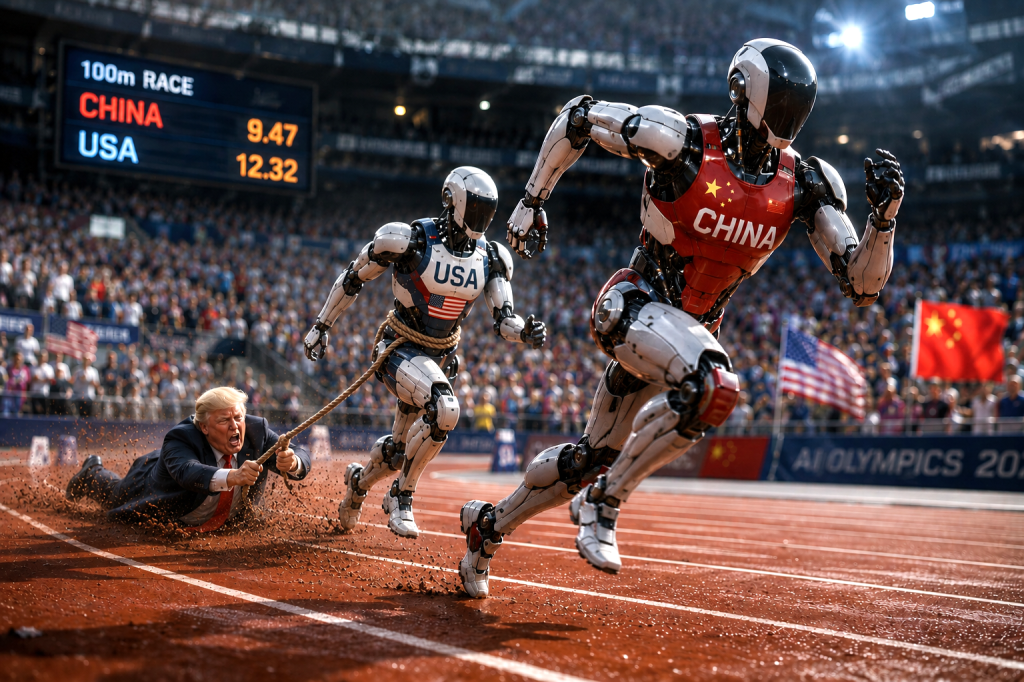
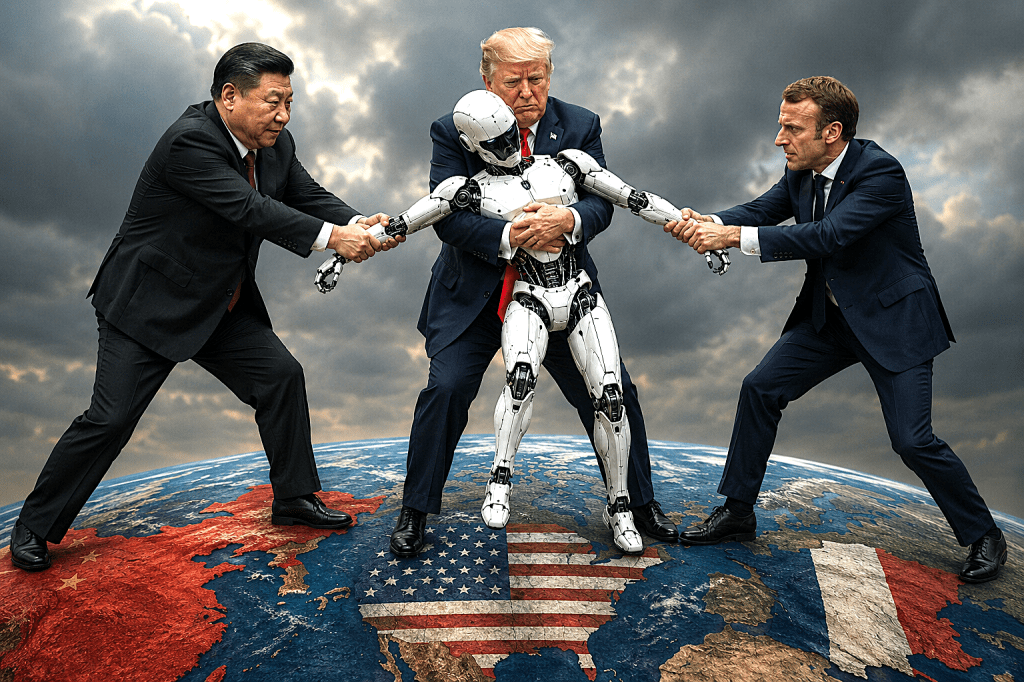
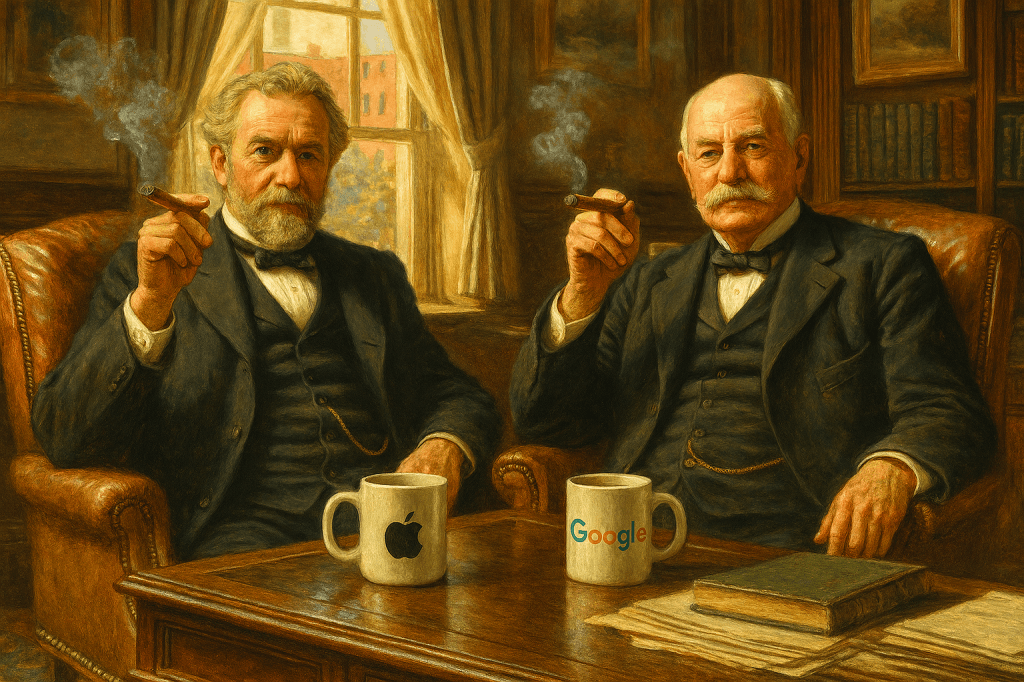
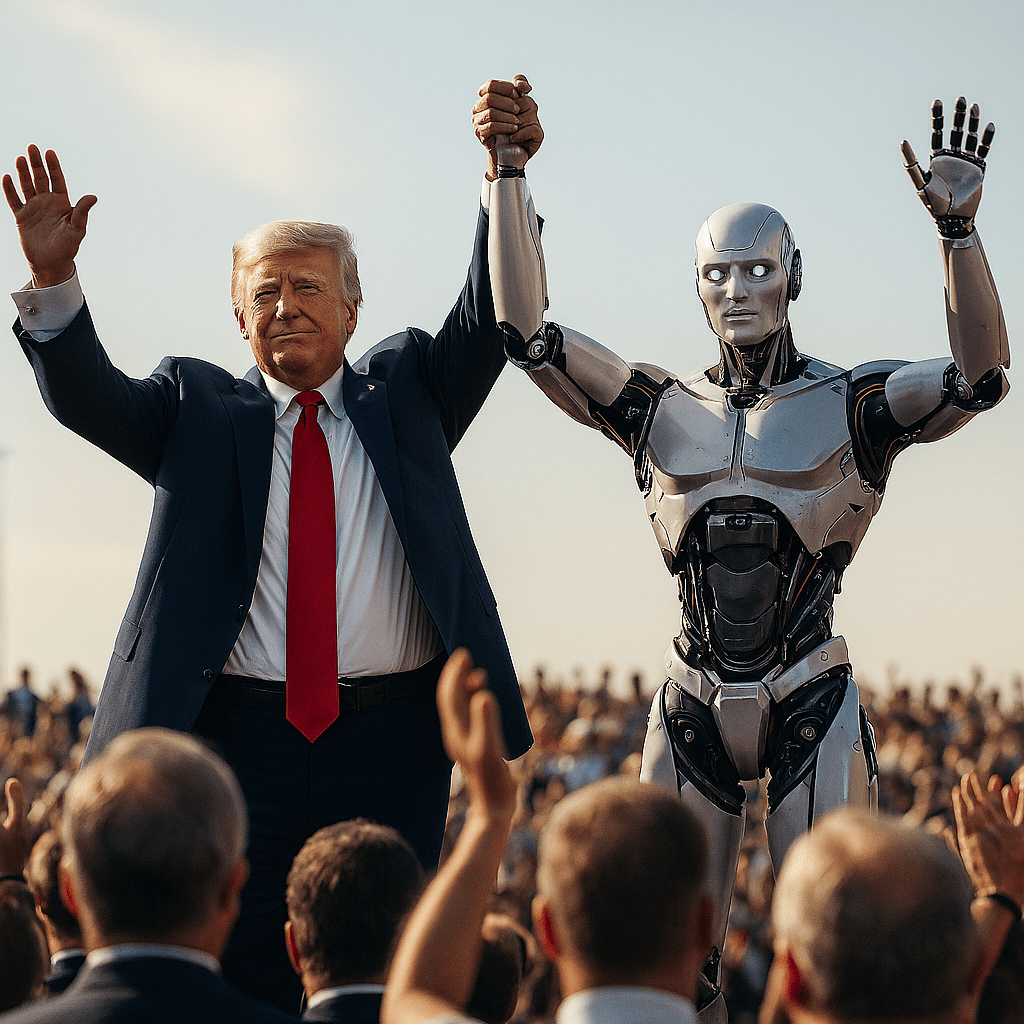
There is little question that Donald Trump’s return to the presidency has accelerated a fundamental transformation in how international diplomacy is practiced. Perhaps the most evident outcome of recent years is that the art of diplomacy — traditionally conducted behind the closed doors of high offices — has shifted into the realm of a live political show, with millions of people around the globe following the twists and turns of major international negotiations much like they would follow the new episodes of a captivating television series [7]. The philosophical underpinning of this shift reaches back to 1987, when Trump co-authored The Art of the Deal. In that book, the real estate mogul described his disruptive negotiating method, which consists of thinking big, asking for a lot, and using the media to his advantage [5]. What was once a boardroom philosophy has now become a template for summit diplomacy, and its influence is reverberating from Europe to Asia to Africa [6].

“President Trump approaches diplomacy and engages in a very transactional manner, with economics as the foundation and driving force behind international affairs,” explained retired Lt. Gen. Keith Kellogg, the president’s special envoy to Ukraine and Russia [20]. This is not mere rhetoric. Trump has deployed tariff threats to shape the behavior of India, Pakistan, Canada, Europe, and the United Kingdom, and has wielded the threat of military escalation and the withholding of support to jolt negotiations in Mexico, the Middle East, and elsewhere. His White House has demanded rare earth mineral access from Ukraine in exchange for U.S. assistance and has told advisers that backing for European defense will increasingly require material commitments to American arms manufacturers — moves that reflect a worldview in which American power is transactional, not a public good but an asset to be traded [3].
Unorthodox as Trump’s approach may be, its outcomes, according to its supporters, have demonstrated tangible strategic gains, with Trump portrayed by some as a 21st-century Theodore Roosevelt, a leader willing to project strength to secure national interests [1]. The scale of his diplomatic engagement is striking on its own terms: a White House official noted that Trump hosted more than 40 foreign heads of government at the White House in 2025, more than double the number Joe Biden did in his first year in office [3]. Analysts across the political spectrum have noted that this unprecedented pace of engagement reflects a deliberate strategy of bilateral pressure and personal dealmaking that sidelines traditional diplomatic channels and multilateral institutions [8, 29].
The mechanics of Trump’s dealmaking on the world stage are by now well-documented. From Gaza to Ukraine to trade talks, Trump’s White House conducts diplomacy as performance art — tweeting terms, issuing and revising multipoint plans, and giving the world a ringside seat for the dealmaking [2]. On the Gaza conflict, when Trump rolled out his plan during the UN General Assembly in September 2025, several governments and the Palestinian Authority immediately welcomed the move, repositioning the plan from the work of a controversial U.S. president into an overture with wide regional backing.
Turkey, Qatar, and Egypt put pressure on Hamas to accept the terms. The European Union fell in line, seeking to position itself as a player in its implementation. By engaging multiple governments along the way, the Trump administration mustered the powerful visual of dozens of nations gathering in Sharm el-Sheikh, Egypt, for a peace summit in October 2025. That growing support culminated in a mid-November UN Security Council resolution in support of Trump’s peace plan that, in a remarkable reversal of Washington’s habitual isolation on the Israel question, won the votes of every council member [2, 26].
In Africa, the approach yielded one of the year’s most symbolically significant agreements. The DRC-Rwanda peace agreement — officially the Washington Accords for Peace and Prosperity — was signed on June 27, 2025, in Washington, D.C. Its main points called for the withdrawal of Rwandan troops from eastern DRC, for the Congolese government to end support for an armed militia, and for the establishment of a regional economic integration framework centered on the critical minerals trade that would involve the United States [13, 17]. Crucially, the deal’s architecture was explicitly transactional: Trump indicated that the U.S. would also be getting “a lot of mineral rights” from the DRC as part of the arrangement, with the deal paving the way for American investment in the mineral-rich region [15].
The formal Washington signing ceremony in December 2025, which Trump presided over personally, further elevated the agreement and tied his political capital directly to its outcome [16]. By nearly any measure, 2025 was an extraordinary year for peace deals — from Gaza to the Democratic Republic of the Congo and the South Caucasus to Southeast Asia, the Trump administration produced ceasefires and purported peace accords at a dizzying pace, with six major agreements signed in less than 12 months, some at least temporarily halting conflicts that had defied diplomacy for decades [9].
Perhaps the more consequential long-term story is how other world leaders are absorbing and adapting Trump’s negotiating style. The response has not been passive; in country after country, heads of state are recalibrating their own diplomatic postures in response to the new transactional reality [10].
Emmanuel Macron — France. No European leader has more consciously studied and engaged Trump’s dealmaking instincts than the French president. Macron was the first to organize a meeting between Trump and Ukrainian President Zelensky, at the Notre-Dame reopening ceremony in December 2024 [5]. Rather than mounting principled opposition to Trump’s methods, Macron has chosen strategic flattery combined with proactive engagement — positioning France as an indispensable broker. European leaders publicly flatter Trump; some privately compete to do so, with Trump acknowledging at Davos, “I really like Emmanuel Macron,” even while sending him several jibes [3, 5]. Macron’s alignment with the U.S. position on Syria’s post-Assad transition further illustrates how France has recalibrated its diplomacy, moving away from values-based objections and toward active co-management of Trump’s strategic priorities in the region [27]. This approach exemplifies what analysts now call “transactional counter-positioning” — adopting the language and logic of dealmaking in order to preserve French and European influence inside a system that no longer responds to values-based appeals.
Claudia Sheinbaum — Mexico. Mexico’s president has emerged as one of the more skillful practitioners of the new diplomacy among mid-tier powers. As relations with Canada became strained due to mounting disputes over tariffs, land claims, and relations with China, Sheinbaum demonstrated notable skill in managing her relationship with the American president [5]. Facing an adversarial Trump posture on immigration, fentanyl, and trade, Sheinbaum consistently avoided direct public confrontations, instead offering concrete concessions on border enforcement and bilateral security cooperation in exchange for tariff relief — mirroring the essential logic of The Art of the Deal: give Trump a visible win in exchange for substantive protections. This approach drew notice from foreign policy analysts who observed that Sheinbaum’s willingness to frame bilateral issues in transactional terms — rather than appealing to treaty obligations or multilateral norms — produced measurably better outcomes for Mexico than Canada’s more confrontational posture [24].
Narendra Modi — India. India’s prime minister has arguably undergone the most complex and revealing transactional transformation of any major power leader. Trump’s second term reinforced one key Indian assumption: that personal access to the president matters more than the formal bureaucratic process. India understood this in Trump’s first term and again sought to cultivate leader-level ties early in 2025 [11, 12]. Trade diplomacy proved the clearest expression of Indian agility. Faced with tariff shocks in the U.S. market, India accelerated negotiations with Oman, New Zealand, and the United Kingdom, before finalizing a landmark agreement with the European Union in January 2026. Negotiations with Washington ultimately produced a broad trade understanding that reduced punitive tariffs from roughly 50 to 18 percent — a dual strategy of diversifying while remaining engaged with the world’s largest economy that reflected pragmatic economic statecraft [12]. As one analyst observed, Modi learned that standing firm against Washington’s pressure plays well at home and earns respect abroad, representing a form of transactional posturing in its own right [28]. Modi did not merely react to Trump; he internalized the transactional logic, deploying it simultaneously toward Washington, Brussels, London, and Moscow, playing each off against the others much as Trump himself plays adversaries off against each other [25].
Recep Tayyip Erdoğan — Turkey. The Turkish president has become one of the most consequential beneficiaries of Trump’s dealmaking ecosystem. In a striking illustration of Trump’s brand of personal diplomacy, Israel’s right-wing prime minister appeared to sign up for the same Gaza proposal that Hamas-defender Erdoğan endorsed, alongside a number of leading Arab and Muslim countries [26]. Erdoğan has leveraged his personal rapport with Trump and Turkey’s indispensability in Syria’s post-Assad transition to extract strategic advantages, including a greater role in regional stabilization architecture that previous U.S. administrations would have been reluctant to grant [27, 30]. Trump’s warm public praise of Erdoğan — calling him “a very good friend” and crediting him with helping topple Assad — reflects how Erdoğan has mastered the personal flattery and bilateral positioning that Trump’s dealmaking ecosystem rewards [29].
Benjamin Netanyahu — Israel. The Israeli prime minister has perhaps most fully embraced the Trump dealmaking framework as an operating template. Trump has leverage over Netanyahu, and unlike his predecessors, he is not afraid to use it [18]. Netanyahu’s acceptance of a 20-point U.S.-brokered peace framework — one that secured broad multilateral endorsement — reflects a pragmatic calculation that participating in Trump’s dealmaking theater yields better outcomes than resistance [26]. Phase one of the Gaza ceasefire held, albeit shakily, and nearly half of Israelis came to believe that the United States has greater influence on their country’s security decisions than their own government, according to a poll released by the Israel Democracy Institute [18].
The European Union as Collective Actor. The EU itself has been compelled into transactional behavior. When Trump announced tariffs against the European Union on April 2, 2025, the EU announced retaliatory measures — but when Trump abruptly announced a 90-day pause to create time for negotiations, the EU similarly paused its retaliatory measures to give talks a chance [21]. More broadly, Trump’s transactional approach to transatlantic relations may paradoxically be facilitating the emergence of the European Union as a more independent global actor. Without a dependable United States, Europeans are being increasingly forced to act as one, with Brussels adopting a firmer approach toward Beijing and ramping up global economic and commercial diplomacy on trade, climate, and regulations [21, 23].
Several concrete positive outcomes have emerged from Trump’s transactional approach, even if the sustainability of each remains contested. The DRC-Rwanda Washington Accords were a genuinely historic moment: “This is an important moment after 30 years of war,” Secretary of State Marco Rubio declared at the signing, while the agreement established a framework for regional economic integration and U.S. investment into Rwanda and the DRC [14, 17]. The Gaza ceasefire, brokered through a combination of Trump’s personal pressure on Netanyahu and coordinated multilateral diplomacy, created at least a first phase of reduced hostilities and the return of hostages. Trump positioned himself as the only U.S. leader who has not engaged in full-scale military invasions, opting instead for targeted strikes, while crafting a new foreign policy doctrine around “peace through strength” [7].
The US-EU trade deal concluded in July 2025, though imperfect, preserved a functioning economic relationship that many feared would rupture [6]. India’s landmark free trade agreement with the EU in January 2026 was itself a by-product of the pressures Trump imposed — New Delhi would not have accelerated those negotiations without the tariff shock from Washington [11, 12]. Japan and Taiwan, meanwhile, responded to Trump’s transactional signals by sharply accelerating their own defense buildups, with Japan on track to exceed 2 percent of GDP in military spending in 2026, one year earlier than originally planned, and Taiwan committing to raise military spending to 3 percent of GDP [10].
The transactional method is not universally effective, but it demonstrably succeeds under specific conditions. The strategy is unconventional and its results in conflict resolution uneven: while Trump achieved a breakthrough on a first-phase peace deal for Gaza, an accord on Ukraine has remained stubbornly elusive [2, 6]. The pattern of success reveals important principles.
First, the approach works best when both parties are already at a tipping point and need political cover to make concessions. By mid-2025, opinion in both Israel and Gaza had shifted toward wanting a political end to the war, and the Trump administration judged that the parties were at a point where a public reveal would trigger outpourings of popular and diplomatic support that could push a long-elusive deal over the finish line [2].
Second, the method works when economic incentives can be packaged alongside security arrangements. The DRC-Rwanda deal succeeded in part because the declaration of principles called on both countries to cooperate with the U.S. and American investors on economic projects, including critical minerals — giving all parties a material stake in the agreement’s success [13, 17].
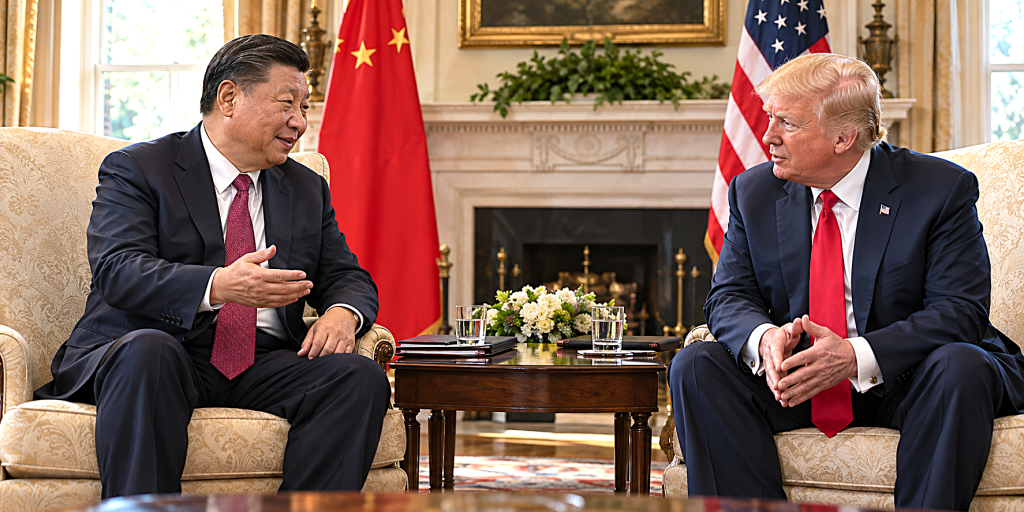
Third, personal rapport at the head-of-state level can substitute for institutional scaffolding in the short term. Trump prides himself on his ability to secure favorable deals and expresses confidence in his personal rapport with leaders like Xi Jinping, though experts have grown skeptical of whether this personalized approach produces durable outcomes [4].
Fourth, even where Trump has exaggerated his successes, his transactional interest itself creates openings and opportunities for progress on intractable conflicts that did not previously exist. As one analyst noted, Trump’s preference for getting two people in a room, having them shake hands, and claiming credit has produced at least temporary progress in conflicts that had resisted conventional diplomacy for years [18, 24].
Fifth, the pressure Trump generates on allies often spurs them toward greater self-sufficiency and strategic clarity of their own — an unintended but real secondary effect of the transactional approach [23, 25].
The post–World War II order is increasingly described as no longer operative. In its place, countries are fast adopting a values-neutral, transactional approach toward foreign policy [19]. Trump did not create this trend — China has been pursuing quid pro quo arrangements for over a decade — but his presidency has dramatically accelerated and legitimized it [8]. Critics argue that the transactional nature of this approach undermines long-term U.S. interests, highlighting reduced global trust, weakened alliances, and increased room for authoritarian actors. Supporters counter that the approach rebalances unfair arrangements and prioritizes tangible benefits, arguing that Trump’s recalibration is a necessary correction for a multipolar world [22, 29]. What is clear is that the diplomatic summit has been permanently altered. Whether the deals hold, and whether the business logic of the boardroom can sustain the far more complex demands of sovereignty, history, and human dignity, remains the defining question of this era [9, 16].
References
[1] Al Jazeera, “Trump’s America First Doctrine Is Remaking Global Diplomacy,” February 6, 2026. https://www.aljazeera.com/opinions/2026/2/6/trumps-america-first-doctrine-is-remaking-global-diplomacy
[2] Foreign Policy, “Trump’s Approach to Diplomatic Negotiations: The Pros and Cons,” March 18, 2026. https://foreignpolicy.com/2026/03/18/trump-negotiations-diplomacy-gaza-ukraine-iran/
[3] Time Magazine, “How Trump’s Foreign Policy Gambits Are Reshaping the World,” January 15, 2026. https://time.com/collections/davos-2026/7345543/trump-foreign-policy-second-term/
[4] MERICS, “Art of the Deal Meets Great Power Politics: Trump 2.0’s Approach to China.” https://merics.org/en/comment/art-deal-meets-great-power-politics-trump-20s-approach-china
[5] The Conversation, “Minding the Gap Between the Art of Deal-Making and the Art of Diplomacy,” February 23, 2026. https://theconversation.com/minding-the-gap-between-the-art-of-deal-making-and-the-art-of-diplomacy-or-how-to-handle-donald-trump-276421
[6] CNN Politics, “Analysis: ‘The Art of the Deal’ Meets Global Reality,” April 24, 2025. https://www.cnn.com/2025/04/24/politics/trump-art-of-the-deal-china-tariffs-russia-ukraine
[7] RT News, “Here’s How 2025 Killed Old-School Diplomacy,” December 30, 2025. https://www.rt.com/news/630201-peace-talks-power-plays-diplomacy-2025/
[8] Chicago Council on Global Affairs, “Trump 2.0 Enters 2026 in Full Force,” January 9, 2026. https://globalaffairs.org/commentary/analysis/trump-20-enters-2026-full-force
[9] United Nations University, “The New Art of the Peace Deal,” February 4, 2026. https://unu.edu/cpr/media-coverage/new-art-peace-deal
[10] Foreign Policy, “6 Trump Lessons for Global Leaders in 2026,” December 31, 2025. https://foreignpolicy.com/2025/12/29/trump-lessons-2026-china-india-europe-middle-east/
[11] Carnegie Endowment, “India and a Changing Global Order: Foreign Policy in the Trump 2.0 Era,” March 2026. https://carnegieendowment.org/research/2026/03/india-and-a-changing-global-order-foreign-policy-in-the-trump-2-0-era
[12] Foreign Policy, “How India Can Rebalance U.S. Relations,” December 30, 2025. https://foreignpolicy.com/2025/12/30/lessons-india-modi-trump-2026-diplomacy/
[13] Wikipedia, “2025 Democratic Republic of the Congo–Rwanda Peace Agreement.” https://en.wikipedia.org/wiki/2025_Democratic_Republic_of_the_Congo%E2%80%93Rwanda_peace_agreement
[14] CNN, “As Two African Nations Sign a Peace Deal, Trump Wants Credit,” June 27, 2025. https://www.cnn.com/2025/06/27/africa/trump-drc-rwanda-peace-deal-intl
[15] ABC News, “Trump Heralds US-Brokered Peace Deal Between DRC, Rwanda,” June 27, 2025. https://abcnews.go.com/Politics/trump-heralds-us-brokered-peace-deal-drc-rwanda/story?id=123277316
[16] Refugees International / Just Security, “Rwanda–DRC Peace Deal: Trump Owns It. Now What?” December 12, 2025. https://www.refugeesinternational.org/just-security-rwanda-drc-peace-deal-trump-owns-it-now-what/
[17] U.S. State Department, “Peace Agreement Between the Democratic Republic of the Congo and the Republic of Rwanda,” June 27, 2025. https://www.state.gov/peace-agreement-between-the-democratic-republic-of-the-congo-and-the-republic-of-rwanda/
[18] Carnegie Endowment, “U.S.-Israeli Relations Are Undergoing a Profound Shift,” November 13, 2025. https://carnegieendowment.org/emissary/2025/11/us-israel-relations-trump-netanyahu-gaza-ceasefire-shift
[19] Foreign Policy, “Trump Is Ushering In a More Transactional World,” Winter 2025. https://foreignpolicy.com/2025/01/07/trump-transactional-global-system-us-allies-markets-tariffs/
[20] U.S. News & World Report, “Trump’s Transactional Approach to Diplomacy Is a Driving Force on the World Stage,” March 9, 2025. https://www.usnews.com/news/politics/articles/2025-03-09/trumps-transactional-approach-to-diplomacy-is-a-driving-force-on-the-world-stage
[21] CSIS, “Transatlantic Relations Under Trump: An Uneasy Peace,” October 7, 2025. https://www.csis.org/analysis/transatlantic-relations-under-trump-uneasy-peace
[22] Robert Lansing Institute, “Transactional Power: The Transformation of U.S. Foreign Policy Under Donald Trump,” April 13, 2026. https://lansinginstitute.org/2026/04/13/transactional-power-the-transformation-of-u-s-foreign-policy-under-donald-trump/
[23] Clingendael, “Coercive Extractivism: The Mechanics of Trump’s Transactional Approach to Europe,” April 2026. https://www.clingendael.org/publication/coercive-extractivism-mechanics-trumps-transactional-approach-europe
[24] Foreign Policy, “How the Trump White House Will Shape 2026,” January 4, 2026. https://foreignpolicy.com/2026/01/01/trump-shape-2026-immigration-diplomacy-midterms/
[25] ICDS, “India’s Strategic Recalibration: Managing US Volatility and China’s Opportunism,” February 4, 2026. https://icds.ee/en/indias-strategic-recalibration-managing-us-volatility-and-chinas-opportunism/
[26] Times of Israel, “Trump’s Unique Diplomacy Offers Netanyahu a Path to Goals in Gaza and Beyond,” September 30, 2025. https://www.timesofisrael.com/trumps-unique-diplomacy-offers-netanyahu-a-path-to-goals-in-gaza-and-beyond/
[27] Defense.info, “Macron, Trump, and Syria: How the Diplomatic Shift Reshapes Erdogan’s Strategic Calculus,” May 20, 2025. https://defense.info/featured-story/2025/05/macron-trump-and-syria-how-the-diplomatic-shift-reshapes-erdogans-strategic-calculus/
[28] Foreign Policy, “C. Raja Mohan: How India Can Rebalance U.S. Relations,” December 30, 2025. https://foreignpolicy.com/2025/12/30/lessons-india-modi-trump-2026-diplomacy/
[29] NYC Foreign Policy Association, “Assessing Trump’s Transactional Turn in US Foreign Policy,” August 2025. https://nycfpa.org/08/07/america-unilateral-evaluating-trumps-transactional-approach-to-global-security-and-diplomacy/
[30] Jerusalem Post, “Mar-a-Lago Through Arab Eyes: Power, Turkey, Iran, and the Cost of Trump’s Diplomacy,” January 4, 2026. https://www.jpost.com/middle-east/article-882370
###
Filed under: Uncategorized |
















































































































































































































































































































































































































Leave a Reply