





By Jim Shimabukuro (assisted by Claude)
Editor
[Related: The AI Revolution in Weather Forecasting: Five Transformative Innovations]
When we published “The AI Revolution in Weather Forecasting: Five Transformative Innovations” in February 2026, the field was already moving at a dizzying pace. In just the three months since, several new developments have emerged that are worth tracking — from a new open-source model architecture out of NVIDIA, to the world’s first AI-native satellite constellation, to breakthroughs in predicting tornadoes a full week in advance. The momentum hasn’t slowed; if anything, it has accelerated.

NVIDIA’s Earth-2 Atlas Architecture and the Open-Source Turn
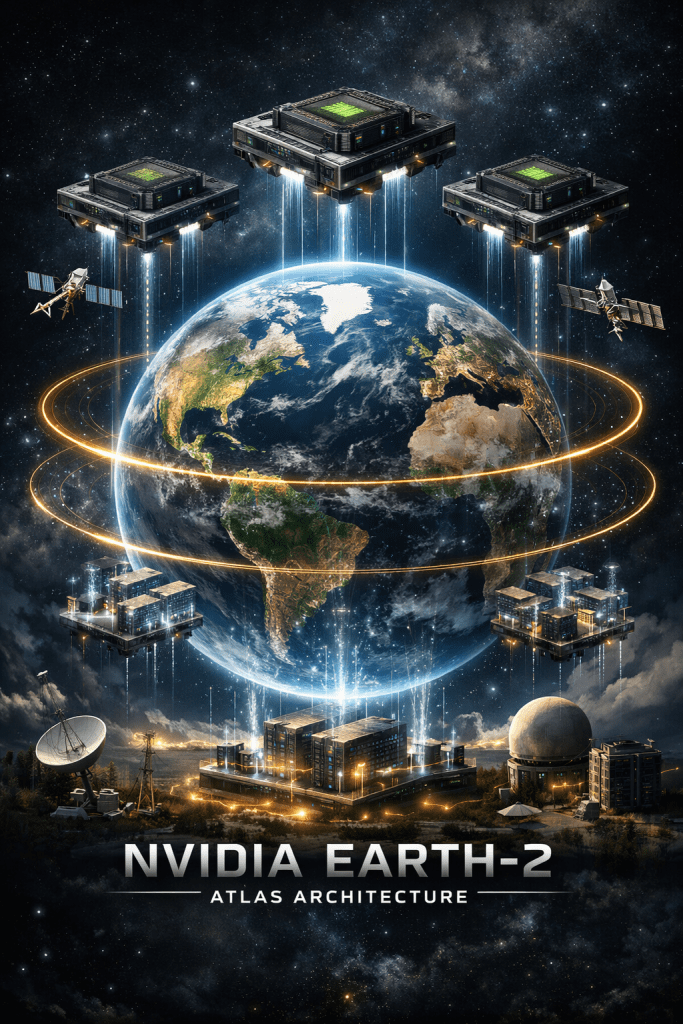
One of the most significant developments since February came from NVIDIA, which unveiled its expanded Earth-2 platform on January 26, 2026 — just two weeks before our original article. At the American Meteorological Society’s Annual Meeting, NVIDIA unveiled the Earth-2 family of open models, libraries, and frameworks, offering what it describes as the world’s first fully open, accelerated weather AI software stack. The centerpiece is a new model architecture called Atlas. Earth-2 Medium Range, which is based on Atlas, is aimed at medium-range forecasts up to 15 days in advance and outperforms Google’s open GenCast mid-range model across more than 70 weather variables. Notably, the philosophy behind Atlas is a deliberate simplification. As NVIDIA’s lead researcher described it, “Philosophically, scientifically, it’s a return to simplicity. We’re moving away from hand-tailored niche AI architectures and leaning into the future of simple, scalable transformer architectures.”
The Earth-2 suite also introduces two companion models. The Earth-2 Nowcasting model, powered by an architecture called StormScope, produces kilometer-scale forecasts from zero to six hours out. NVIDIA says it is the first AI model to outperform traditional physics-based systems in simulating storm dynamics. The third model, Earth-2 Global Data Assimilation, is built on an architecture called HealDA and addresses a longstanding computational bottleneck in weather prediction. Historically, data assimilation — combining real-world observations with model data to create an initial atmospheric snapshot — consumed nearly half of the supercomputing cycles in traditional forecasting. HealDA changes this by generating precise initial atmospheric conditions in seconds on GPUs, a task that traditionally took hours on CPU-based clusters. The entire Earth-2 suite is openly available, a move that levels the playing field for national meteorological services, academic researchers, and even startups that previously lacked access to supercomputing infrastructure (1,2,3).
Microsoft Aurora Goes Fully Open-Source
Microsoft’s Aurora, the 1.3-billion-parameter foundation model for the Earth system that we discussed in our February article as an emerging contender, entered a significant new phase in late 2025 and early 2026. Microsoft reaffirmed its commitment to Aurora, announcing that Aurora’s source code and model weights, already open, would be extended further — with future releases of Aurora and new models built upon it, including training pipelines, to be open-sourced in collaboration with Professor Rich Turner of the University of Cambridge through a Microsoft AI for Good grant.
The practical applications of Aurora have also widened considerably. By March 2026, Aurora was available on Microsoft Foundry, elevating on-demand weather forecasting from a self-hosted experience to managed deployments and readying Aurora for broader enterprise and public adoption. Utility companies can now integrate Aurora into their operational pipelines through Microsoft Planetary Computer Pro, fusing forecast outputs with enterprise geospatial data. Aurora beats existing numerical and AI models across 91 percent of forecasting targets when fine-tuned to medium-range weather forecasts, according to a peer-reviewed study published in Nature. The foundation-model approach also means Aurora extends well beyond weather: researchers have fine-tuned it for air pollution prediction, ocean wave modeling, and tropical cyclone trajectory forecasting. Critically, each such fine-tuning experiment — which would have taken years with traditional numerical methods — reportedly took a small engineering team only four to eight weeks (4,5).
Tomorrow.io’s DeepSky: The First AI-Native Satellite Constellation
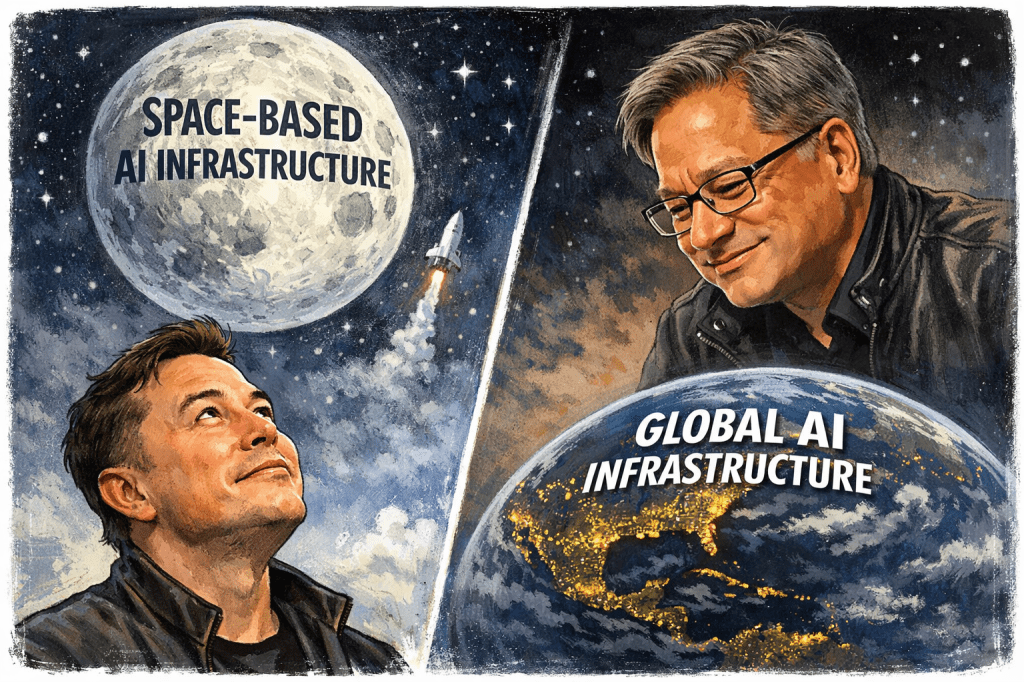
If the first wave of AI weather innovation focused on what to do with atmospheric data, the next wave is addressing where that data comes from. A striking development in early 2026 is the emergence of satellite infrastructure designed from the ground up for AI-era forecasting. On January 22, 2026, Tomorrow.io announced DeepSky, described as the world’s first AI-native, space-based atmospheric and oceanic sensing network, designed to make Earth’s atmosphere and oceans continuously observable in real time. The announcement came just days after Tomorrow.io completed its first constellation. On January 12, 2026, the company announced it had achieved a 60-minute global weather revisit rate with the completion of its first satellite constellation, a milestone that historically required billions of dollars and national-scale space programs.
The motivation for DeepSky is revealing. As AI models advance, forecast performance is increasingly constrained not by algorithms or computing power, but by the global observing system itself. AI systems depend on dense, high-frequency, and diverse observations — coverage that today’s satellite infrastructure cannot consistently provide. DeepSky is built to close this gap. To fund the expansion, Tomorrow.io announced a $175 million equity financing led by Stonecourt Capital and HarbourVest to accelerate the deployment of DeepSky. The DeepSky satellites are described as significantly larger and more capable than the cubesats in the first constellation, hosting “multiple very-high-impact, co-located sensors” spanning much of the usable electromagnetic spectrum — though specific sensor details have not yet been disclosed. The company envisions the constellation serving civilian meteorological agencies, severe weather and hurricane forecasting centers, defense and national security organizations, and international partners (6,7).
NSF NCAR’s Breakthrough in Severe Weather Prediction
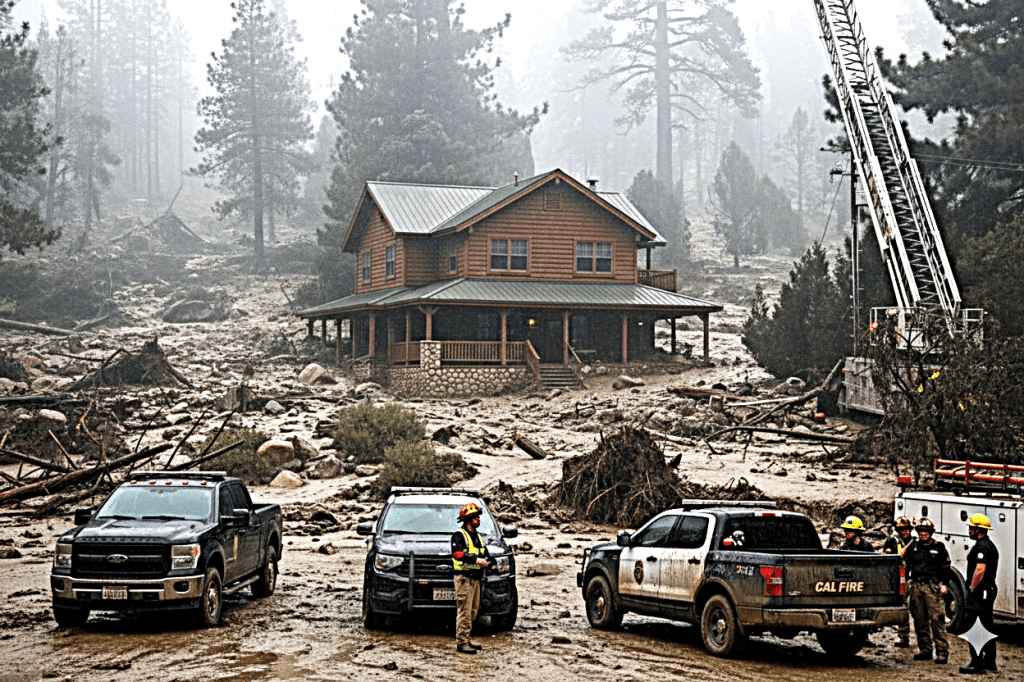
Perhaps the development most immediately relevant to public safety is a new AI system from the NSF National Center for Atmospheric Research (NSF NCAR) that dramatically extends how far in advance forecasters can identify potential tornado and severe storm outbreaks. NSF NCAR’s Medium-Range, Real-Time Convective Hazard Forecasts leverage AI weather models — which tend to outperform traditional models in the three- to eight-day time horizon — with the goal of improving our ability to predict the potential for tornadoes, large hail, and damaging winds a full week in advance.
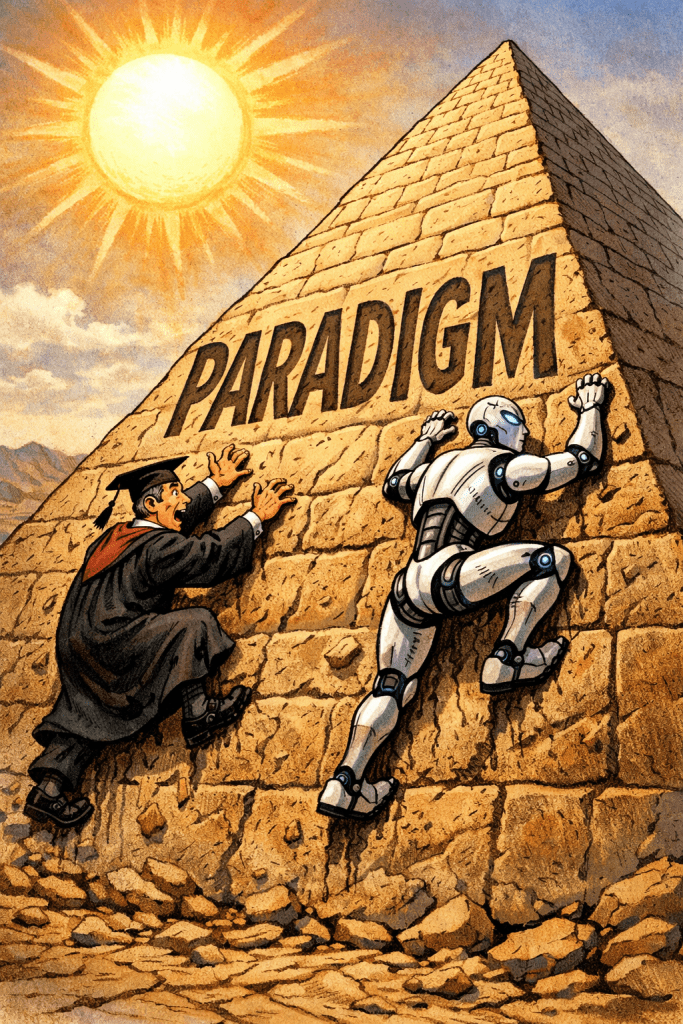
This is a problem that has long resisted solution. These phenomena are too small to be captured by traditional weather models. Even the high-resolution models most suited for severe weather prediction cannot simulate an individual tornado — much less an individual hailstone — but they can simulate the larger storms that produce these hazards. The NSF NCAR system uses a decoder-only transformer to post-process output from AI weather model emulators, generating daily probabilistic forecasts that are freely available online and being evaluated at NOAA’s Hazardous Weather Testbed. Lead researcher Ryan Sobash described this as “part of a paradigm shift in how we model severe weather hazards.” In a notable cross-institutional collaboration, new for 2026, hazard forecasts are also being generated with the WeatherNext2 64-member ensemble mean forecast, produced in real-time by Google DeepMind. The practical implications are substantial: emergency managers and the public who currently receive meaningful warnings hours in advance may soon receive probabilistic guidance days ahead, enabling more systematic preparation for tornado season outbreaks (8,9).
The Underlying Trend: From Models to Infrastructure
Taken together, these four developments signal that the AI weather revolution is entering a second phase. The first phase was about proving that neural networks could match or exceed traditional physics-based models on standard forecasting benchmarks. That argument has largely been won. In 2026, leading AI models match or exceed traditional forecasts across most metrics while running thousands of times faster. The second phase, now underway, is about building the full ecosystem: open-source model frameworks (NVIDIA’s Earth-2, Microsoft’s Aurora) that allow anyone to build and customize; satellite infrastructure (Tomorrow.io’s DeepSky) that generates the high-frequency observational data AI models need; and specialized downstream applications (NSF NCAR’s severe weather system) that translate raw forecast capability into life-saving guidance for specific hazards. The revolution documented in our February article was real — but it is far from over.
References
- NVIDIA Blog, “NVIDIA Launches Earth-2 Family of Open Models — the World’s First Fully Open, Accelerated Set of Models and Tools for AI Weather” (January 26, 2026): https://blogs.nvidia.com/blog/nvidia-earth-2-open-models/
- TechCrunch, “Nvidia’s new AI weather models probably saw this storm coming weeks ago” (January 26, 2026): https://techcrunch.com/2026/01/26/nvidias-new-ai-weather-models-probably-saw-this-storm-coming-weeks-ago/
- Next Platform, “Nvidia Takes The Open Road In AI Weather Forecasting” (January 26, 2026): https://www.nextplatform.com/ai/2026/01/26/nvidia-takes-the-open-road-in-ai-weather-forecasting/4092131
- Microsoft on the Issues, “The Next Phase of Aurora: Open and Collaborative AI for Weather and Climate Forecasting” (November 13, 2025): https://blogs.microsoft.com/on-the-issues/2025/11/13/the-next-phase-of-aurora-open-and-collaborative-ai-for-weather-and-climate-forecasting/
- Microsoft Community Hub, “Unified AI Weather Forecasting Pipeline thru Aurora, Foundry, and Microsoft Planetary Computer Pro” (March 5, 2026): https://techcommunity.microsoft.com/blog/azure-ai-foundry-blog/unified-ai-weather-forecasting-pipeline-thru-aurora-foundry-and-microsoft-planet/4497648
- Tomorrow.io, “Tomorrow.io Announces DeepSky, the World’s First AI-Native Space-Based Weather-Sensing Constellation” (January 22, 2026): https://www.prnewswire.com/news-releases/tomorrowio-announces-deepsky-the-worlds-first-ai-native-space-based-weather-sensing-constellation-302667455.html
- Tomorrow.io, “Tomorrow.io Announces $175M Financing to Deploy DeepSky” (February 3, 2026): https://www.prnewswire.com/news-releases/tomorrowio-announces-175m-financing-to-deploy-deepsky-the-worlds-first-ai-native-weather-satellite-constellation-302677432.html
- NCAR & UCAR News, “Identifying severe weather hazards further in the future with AI” (May 5, 2026): https://news.ucar.edu/133068/identifying-severe-weather-hazards-further-future-ai
- NSF NCAR Medium-range AI NWP Convective Hazard Forecasts (project page): https://www2.mmm.ucar.edu/projects/ncar_ensemble/ainwp/
Filed under: Uncategorized |
























































































































































































































































































































































































Leave a Reply