





By Jim Shimabukuro (assisted by Claude)
Editor
Summary: The prospect of AGI‑augmented animals forces society to confront whether intelligence is a right, a risk, or a redesign of Earth’s biological hierarchy. –Copilot

The question of whether humanity’s accelerating progress toward Artificial General Intelligence (AGI) could one day be translated into deliberate efforts to boost the cognitive capacities of other living organisms is not as fantastical as it might initially sound. It resides at the crossroads of neuroscience, synthetic biology, genetic engineering, philosophy, and ethics — a space that is rapidly being occupied by serious researchers, bioethicists, and technologists. The notion of intentionally elevating the intelligence of dogs, birds, monkeys, ants, bacteria, trees, flowers, vegetables, and fungi represents an extraordinary extension of what has long been imagined in science fiction and is now beginning to attract the attention of mainstream science. As AGI draws closer to realization — with leading researchers placing its emergence within three to ten years (1) — the tools and conceptual frameworks driving it are converging with breakthroughs in genomics, brain-computer interfaces (BCIs), and synthetic biology to make the concept of cross-species cognitive uplift at least theoretically plausible.
This report reviews the key literature on this topic, examines the major obstacles and breakthroughs, considers the principal arguments for and against inter-species cognitive enhancement, and surveys the potential advantages of such a project. The organisms considered span the full range of biological complexity: from cognitively rich mammals such as chimpanzees and dolphins to the comparatively distributed “intelligence” of mycorrhizal fungal networks and the biochemical signaling of bacteria.
From AGI to Universal Intelligence Amplification: The Conceptual Bridge
A clear line must first be drawn between Artificial Intelligence as a technology for automating tasks and AGI as a system that replicates the full breadth of human-like cognitive flexibility. Analyses of the AGI trajectory emphasize that current large language models and reasoning systems are already matching or surpassing human performance across a growing range of cognitive benchmarks (2). This rapid convergence is significant for the question of biological enhancement because the tools developed en route to AGI — machine learning, neural network modeling, large-scale genomic analysis, and computational neuroscience — are precisely the tools that make targeted biological cognitive enhancement increasingly tractable.
The concept of Intelligence Amplification (IA), sometimes called cognitive augmentation, predates AI. It was first proposed in the 1950s and 1960s by cybernetics and early computer pioneers, referring to the use of information technology to enhance human cognitive capabilities such as reasoning, learning, problem-solving, and decision-making (3). The contemporary discussion has extended IA to embrace the idea that AI systems could function not merely as tools but as genuine extensions of biological minds (4). If AI can extend and enhance a human mind, it is only a modest conceptual leap — though a vast technical one — to ask whether it might do the same for the minds of other creatures.
A 2025 study published in Scientific Reports examined five key pathways shaping AGI’s development: societal integration, technological advancement, explainability, cognitive and ethical considerations, and brain-inspired systems that leverage human neural models to improve learning and reasoning efficiency (5). The last of these pathways is particularly relevant: if AGI is increasingly built on models inspired by biological neural architectures, then it stands to reason that the insights gained could be fed back into efforts to redesign or amplify those biological architectures in non-human organisms.
Key Works and the Intellectual Landscape
Science Fiction as Conceptual Pioneer
Long before the laboratory, literature staked out the territory. H. G. Wells’s 1896 novel The Island of Doctor Moreau was the earliest literary exploration of deliberately raising animal intelligence through biological intervention. The concept was later formalized and made famous by science fiction author David Brin in his Uplift series, beginning with Sundiver (1980) and most celebrated in Startide Rising (1983) and The Uplift War (1987) — both Hugo and Nebula Award winners. In Brin’s universe, advanced civilizations “uplift” lesser species through genetic engineering, creating patron-client relationships across the galaxy (6). The term itself — “uplift” — entered the broader scientific and philosophical discourse from this series.
On his official website, Brin frames the ethical and biological dimensions of the real-world version: “Dolphins and apes — especially — seem trapped under a ‘glass ceiling’ that limits their ability to speak, to argue, to create, to use tools, to invent and take part in Terran culture. But what if we, the first species on Earth to cross the wide gulf of sapience, were to turn around and offer a hand to others?” (7) This literary framing has directly influenced bioethicists and transhumanist philosophers who now engage with the question in earnest.
Scientific and Philosophical Literature
George Dvorsky, director of the Rights of Non-Human Persons program at the Institute for Ethics and Emerging Technologies, has been among the most prominent advocates for what he calls “animal uplift.” In an influential essay, he argues that it would be just as unethical to deny augmentation technologies to cognitively capable animals as it would be to exclude certain groups of humans from enhancement (8). Dvorsky envisions that uplifted animals will likely arrive not through intentional programs but as an unintended byproduct of enhancement technologies developed for humans.
The Stanford Encyclopedia of Philosophy’s entry on Human Enhancement, updated in 2025, situates animal uplift within the broader transhumanist framework, noting that some transhumanists argue for a more optimistic and inclusive stance toward recognizing the political and moral rights of cyborgs, post-humans, and — by extension — cognitively enhanced non-human animals (9). The entry acknowledges that enhanced cognitive capacities in non-human animals would complicate existing frameworks for rights, personhood, and legal standing.
A 2025 article in the Trends in Cognitive Sciences journal argued that animal cognition research — particularly in species with miniature brains such as bees — provides a treasure trove for developing bio-inspired technologies and neuromorphic systems, while simultaneously deepening our understanding of the evolution of intelligence in the human brain (10). This bidirectional flow of insight — from studying animal cognition to designing AI, and from AI back to understanding biological cognition — is the intellectual bridge that makes the idea of artificially elevating non-human intelligence increasingly grounded.
On the microbial frontier, a 2025 editorial in Frontiers in Genetics laid out a research agenda for embedding AI within synthetic organisms, describing how synthetic biology could be used to design and implement AI methods — “biological versions of computational algorithms” — within living microorganisms, enabling them to sense their environment and make autonomous decisions (11). This is perhaps the most radical instantiation of the idea: not enhancing an existing nervous system, but engineering primitive cognition into organisms that currently possess none.
The mycorrhizal network research of Suzanne Simard, detailed in her landmark book Finding the Mother Tree (2021) and continuing through the Mother Tree Project’s 2025 publications, has revolutionized the understanding of plant-fungal communication (12). Simard and her collaborators have demonstrated that trees communicate through underground fungal networks by exchanging chemical, hormonal, and electrical signals — signals that bear resemblances to neurotransmitters and that facilitate what can reasonably be called learning and memory at the ecosystem level (13). This research does not claim that trees think in any human sense, but it establishes that the raw infrastructure for information processing already exists within the plant kingdom.
The Technologies That Could Make It Possible
CRISPR and Genomic Engineering
Among the most powerful tools in the enhancement toolkit is CRISPR-Cas9 gene editing, which has been described by the Library of Congress as enabling “targeted gene modifications with high efficiency” across organisms from bacteria to non-human primates (14). In 2025, researchers introduced GeneFix-AI, a novel AI-powered system designed to automate mutation detection and correction using CRISPR-Cas9 in non-human species, integrating machine learning with CRISPR to streamline guide RNA design and real-time monitoring of gene-editing outcomes (15). Pharmacological strategies for cognitive enhancement have included genetic changes that boost learning and memory activities in animal models, with CRISPR offering a precision instrument for such interventions (16).
The capacity to target specific genes associated with cognitive function across species is rapidly advancing. While the somatic application of CRISPR raises fewer ethical issues than germline editing, enhancement applications — modifying a normative non-disease trait to make an improvement — inevitably invite intense ethical scrutiny (14). Nevertheless, the technical barriers to using CRISPR to selectively enhance cognitive gene expression in animals are shrinking with each passing year.
Brain-Computer Interfaces
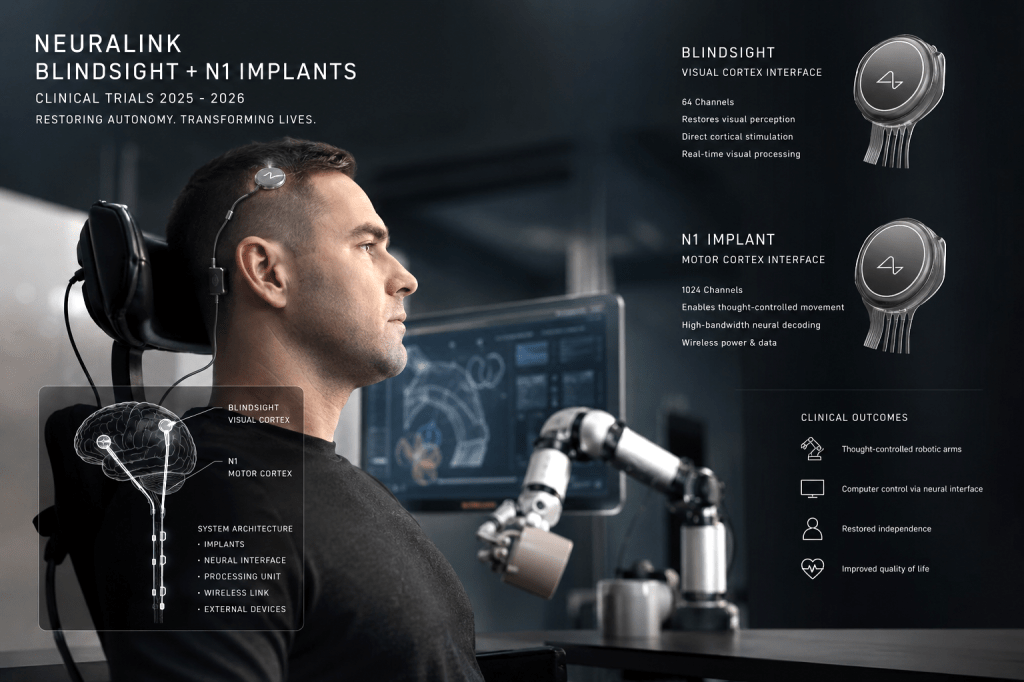
Brain-computer interface (BCI) technology, which measures brain activity and converts it into functional outputs in real time, is transitioning rapidly from science fiction to clinical reality. As of mid-2025, companies such as Neuralink and Synchron have moved from animal studies to human trials, with Neuralink reporting five individuals with severe paralysis using its implants to control digital and physical devices through thought alone (17). Neuralink’s initial platform was developed in part through years of animal tests — famously including a 2021 demonstration of a monkey playing the video game Pong with its mind (17). This trajectory illustrates that the same technology that one day might enhance human cognition has already been tested, to augmentative effect, on non-human animals.
Looking ahead to 2026, a STAT News analysis identified three major trends to watch in BCIs: better ways of capturing brain signals, brain implants for mental health conditions, and intensifying international competition (18). As BCI resolution and bandwidth improve, the possibility of applying them to enhance the sensory or cognitive capacities of animals — rather than merely paralysis patients — moves from theoretical to conceivable.
Synthetic Biology and Microbial Intelligence
At the far end of the biological complexity spectrum, synthetic biology offers a pathway to engineer functional analogs of cognitive processing into organisms that currently lack it. The 2025 Frontiers in Genetics editorial describes ongoing research into recurrent neural networks in synthetic cells, as well as simulations designed to endow bacteria with the capacity to sense their environment and replicate reaction-diffusion systems (11). A parallel 2025 paper in Microbial Biotechnology explored how AI integration with microbial technology enables new levels of understanding of complex biological systems through data-driven approaches “without prior knowledge of these systems” (19).
These developments do not produce anything resembling consciousness in bacteria. What they do is demonstrate that the algorithmic principles underlying cognition — sensing, processing, response — can be engineered into biological substrates, including microbial ones. This represents a rudimentary but meaningful step toward the deliberate augmentation of non-neural biological intelligence.
Plant and Fungal Networks
An August 2025 analysis of mycorrhizal networks published in The Average Scientist synthesized the latest findings on the “Wood Wide Web,” noting a landmark February 2025 study in Nature in which researchers used a specially designed imaging robot to track the flow of carbon and nutrients through mycorrhizal fungal hyphae (20). A 2025 Oxford modeling study suggested that what has been described as interplant “warning signals” may function more precisely as passive information eavesdropping — the byproduct of biochemical processes rather than deliberate signaling — but that fungal intermediaries may amplify these signals to stabilize the network (20).
A 2025 paper in Cuadernos de Educación y Desarrollo compared the adaptive, decentralized behaviors of mycorrhizal fungi — adjusting growth patterns in response to resource availability through feedback loops — to the processing architecture of artificial neural networks, noting that “these decentralized, adaptive behaviors mirror how artificial neural networks process information” (21). Simard herself has argued that viewing forests through the lens of cognition and intelligence may contribute to a more holistic approach to studying ecosystems (13). Deliberately augmenting those information-processing networks — for example through engineered fungal strains — could represent an entirely novel form of plant intelligence enhancement.
Obstacles and Breakthroughs
The Nature of Intelligence
One of the most fundamental obstacles is conceptual: there is no scientific consensus on a single, universal metric of intelligence. As science writer Kat Eschner has observed in her synthesis of expert opinion, humans are prone to treating intelligence as a linear scale with themselves at the pinnacle, but science offers no such dimension for ranking different species (8). Each organism’s cognitive capacities are shaped by evolutionary pressures entirely different from those that produced the human brain. A dog’s extraordinary olfactory intelligence, a crow’s remarkable tool-use, or a bee’s navigation by polarized light are forms of cognitive excellence that no simple intelligence ranking can accommodate.
This complexity raises the uncomfortable question of what it would even mean to “enhance” a bee’s intelligence. Inserting human-style abstract reasoning into a bee might be as biologically incoherent as installing sonar into a dog. Any meaningful program of cross-species cognitive enhancement would need to be developed in close concert with a deep understanding of each target species’s existing cognitive architecture.
Technical Barriers
Even with CRISPR, BCIs, and synthetic biology, the technical obstacles to lifting the cognitive ceiling of any complex animal remain enormous. Cognitive function is not controlled by a handful of genes but by thousands, interacting in ways that are still poorly understood. Brain augmentation research has noted that pharmacological and genetic strategies have been shown to boost learning and memory in animal models (16), but the scale, precision, and safety of such interventions for enhancement — as opposed to disease correction — are far beyond current capability.
For organisms without complex nervous systems — plants, fungi, bacteria — the obstacles are categorically different. They lack neurons altogether. Any form of genuine cognitive augmentation in these organisms would require not merely enhancing an existing system but engineering an entirely new one from biochemical components. While the 2025 synthetic biology research reviewed here points toward early steps in that direction, it remains extremely preliminary.
Ethical Obstacles
The ethical terrain is at least as challenging as the technical one. Bioethicists have pointed out that developing uplift technologies will require highly invasive animal experimentation that will cause considerable suffering to the very animals the project purports to help (8). This is not merely problematic in the case of standard animals; it becomes more morally fraught if experimental subjects have had their cognitive capacities partially enhanced before being subjected to further procedures.
A deeper ethical problem concerns consent and welfare. A cognitively enhanced chimpanzee or dolphin — sufficiently aware to suffer more acutely, to experience existential confusion about its identity, and to comprehend its own captivity — presents moral obligations of a kind that society is not currently equipped to fulfill. The Stanford Encyclopedia of Philosophy notes that post-human entities, including potentially uplifted animals, might rightfully claim rights proportional to their capacities (9) — creating possible legal and philosophical crises for which no existing frameworks exist.
Breakthroughs Narrowing the Gap
Against these obstacles, a set of significant breakthroughs is narrowing the distance between imagination and possibility. The convergence of AI-guided CRISPR systems such as GeneFix-AI (15) with large-scale genomic databases is making targeted cognitive gene editing increasingly precise. BCI technology has demonstrated proof of concept for bidirectional brain-machine communication in animals (17). Synthetic biology has shown that algorithmic intelligence can be embedded within living organisms at the cellular level (11). And mycorrhizal network research is revealing that nature has already engineered sophisticated information-processing systems — not just in animals, but across the entire tree of life (13,20).
The emergence of AGI itself may prove to be the decisive breakthrough. A sufficiently advanced AI system would be capable of modeling the complete cognitive architecture of any organism, identifying the specific interventions — genetic, pharmacological, or electronic — most likely to produce a given enhancement outcome, and simulating the results before any biological test is conducted. This is the pathway George Dvorsky anticipated: uplift coming not through intentional programs but as an emergent consequence of enhancement tools developed for other purposes (8).
Arguments For and Against
The Case Against
Critics raise several compelling objections. The first is the argument from disruption: artificially enhancing the intelligence of wild species could create profound and unpredictable ecological imbalances. Predator-prey dynamics, foraging behaviors, social structures, and interspecies relationships are all calibrated to existing cognitive levels. Introducing a significantly more intelligent predator or competitor into an ecosystem could trigger cascading collapses.
A second objection is the argument from hubris: cognitive enhancement assumes that “more human-like intelligence” is inherently better for any organism. This assumption is anthropocentric and may be false. A highly intelligent ant colony, aware of its exploited condition, would be a suffering ant colony. The transhumanist argument that enhancement is rational and good for its subjects has been challenged on the grounds that the epistemic gap between a pre- and post-enhancement being may be too large for the pre-enhancement being — or any external party — to make a truly informed decision (22).
A third objection is practical: the suffering caused en route to any enhancement breakthrough would be severe and certain, while the benefits are speculative. Research ethics requires weighing known harms against hypothetical gains — a calculus that currently favors extreme caution.
The Case For
Proponents of animal cognitive uplift marshal several powerful arguments. The most ethically resonant comes from Dvorsky and the animal rights tradition: if enhancement technology is developed, withholding it from non-human animals — particularly those already recognized as possessing high cognitive and emotional complexity, such as great apes, cetaceans, and elephants — would be a form of discrimination. “The idea of humanity entering into an advanced state of biological and/or postbiological existence while the rest of nature is left behind to fend for itself is distasteful,” Dvorsky argues (23). Uplift, in this view, is an act of interspecies solidarity.
A second argument is epistemic: the diversity of enhanced minds could enrich humanity’s understanding of the universe in ways that are currently impossible to anticipate. An uplifted dolphin, perceiving the world through echolocation and the fluid dynamics of ocean currents, would generate knowledge that no human mind, however enhanced, could access in the same way. The AGI and Transhumanist Technologies framework published in 2026 emphasizes that cognitive enhancement in education and research contexts can generate unprecedented intellectual diversity (24), and this argument extends naturally to the non-human realm.
A third argument is conservation-oriented: many of the species that most urgently need protection — great apes, elephants, cetaceans — are already cognitively sophisticated enough to be educated, in rudimentary ways, to avoid human-caused threats. Even modest cognitive enhancements might enable them to navigate fragmented habitats, recognize poaching risks, or engage in more sophisticated communication with human conservationists.
The Advantages: A Positive Outlook
Interspecies Collaboration and Enriched Partnership
Perhaps the most transformative potential advantage of cross-species cognitive enhancement is the prospect of genuine interspecies collaboration. The animal AI research environment documented by the New York Academy of Sciences in 2025, which links cognitive strategy, neural mechanisms, and AI to better understand animal group behavior (25), points toward a future in which animals are not merely observed but actively participate as cognitive partners in research. Enhanced dogs could serve not just as companions and service animals but as co-investigators in sensory environments inaccessible to humans. Enhanced primates could contribute meaningfully to medical research in ways that reduce rather than increase suffering. Enhanced dolphins could assist in ocean monitoring and conservation at a level of sophistication currently requiring fleets of robotic sensors.
Ecosystem Intelligence and Environmental Resilience
Augmenting the information-processing capacity of plant-fungal networks could have profound implications for ecosystem management and climate resilience. The mycorrhizal network research reviewed here suggests that forests already possess the rudiments of a distributed intelligence, one that manages carbon flows, coordinates defense responses, and supports seedling growth across species boundaries (12,13). An engineered augmentation of these networks — perhaps through AI-designed fungal strains optimized for carbon sequestration signaling or drought-stress coordination — could transform forest ecosystems into far more effective carbon sinks and more resilient communities in the face of climate change.
Expanding the Moral Community
The philosophical benefits of taking cross-species enhancement seriously may be as significant as the practical ones. Engaging genuinely with the question of how other organisms process information, communicate, and experience the world fosters a deeper human empathy for nature. Simard’s forest intelligence research has already shifted public and scientific discourse toward a more cooperative, less extractive model of ecosystem management (12). The broader project of understanding and eventually amplifying biological cognition across the tree of life invites a radical expansion of what philosophers and ethicists consider the moral community — not as a distant ideal but as a practical imperative grounded in biology.
Advancing Medicine and Neuroscience
Every step toward understanding how to enhance non-human cognition deepens the scientific foundation for treating human neurological disease. The 2025 research on brain augmentation and neuroscience technologies published in PMC notes that the insights generated by pharmacological and genetic strategies for cognitive enhancement in animal models are directly informing strategies for treating Alzheimer’s, Parkinson’s, and other neurodegenerative conditions (16). Enhancement research and therapeutic research are not opposed; they are two faces of the same scientific enterprise.
Enriching Scientific and Cultural Knowledge
Finally, the emergence of genuinely enhanced non-human minds would be one of the most culturally transformative events in human history. It would challenge, in the most concrete possible way, the human assumption of cognitive uniqueness. It would generate forms of art, communication, and knowledge that no human civilization has yet encountered. And it would provide, for the first time, an empirical test of some of philosophy’s oldest questions about the nature of mind, consciousness, and moral standing. The 2025 animal cognition research from Trends in Cognitive Sciences is explicit that “studying animal intelligence can also deepen our understanding of the evolution of intelligence in human brains, and inspire other societal innovation” (10). Deliberate enhancement would accelerate this feedback loop immeasurably.
Conclusion
The idea of transferring the intelligence gains from AGI research to other living creatures is neither idle speculation nor imminent reality. It is, rather, a well-grounded long-term hypothesis sitting at the confluence of the most powerful scientific developments of the twenty-first century. The tools converging to make it conceivable — CRISPR-based genomic editing, AI-powered synthetic biology, brain-computer interfaces, and a deepening scientific understanding of distributed cognition in plants and fungi — are real, advancing rapidly, and already yielding preliminary results. The obstacles — conceptual, technical, and ethical — are equally real and will demand decades of careful work to address.
What is clear is that the conversation can no longer be postponed. As AGI approaches, the ethical, legal, and scientific frameworks governing cognitive enhancement will need to expand beyond the human species. The vision articulated by David Brin — of an Earth civilization filled with diverse and beautifully different minds — remains far off, but it is no longer categorically impossible (7). And the case for beginning the conversation in earnest, across disciplines and institutions, grows stronger with each passing year.
References
1. aimultiple.com, “AGI/Singularity: 9,800 Predictions Analyzed” (2026). https://aimultiple.com/artificial-general-intelligence-singularity-timing
2. Saif, Hossam, et al. “Path to Artificial General Intelligence: Past, Present, and Future.” ScienceDirect (2025). https://www.sciencedirect.com/science/article/abs/pii/S1367578825000367
3. Wikipedia. “Intelligence Amplification.” https://en.wikipedia.org/wiki/Intelligence_amplification
4. Danaher, John. “Artificial Intelligence and Human Enhancement: Can AI Technologies Make Us More (Artificially) Intelligent?” Cambridge Quarterly of Healthcare Ethics (2023). https://www.cambridge.org/core/journals/cambridge-quarterly-of-healthcare-ethics/article/artificial-intelligence-and-human-enhancement-can-ai-technologies-make-us-more-artificially-intelligent/961CB8F0C97C68E017BBB2EDD7A74585
5. Navigating Artificial General Intelligence Development: Societal, Technological, Ethical, and Brain-Inspired Pathways. Scientific Reports (March 11, 2025). https://www.nature.com/articles/s41598-025-92190-7
6. Grokipedia. “Uplift (Science Fiction)” (January 14, 2026). https://grokipedia.com/page/Uplift_(science_fiction)
7. Brin, David. “David Brin’s Worlds of UPLIFT.” DavidBrin.com. https://www.davidbrin.com/uplift.html
8. Eschner, Kat. “If We Can Make Animals Smarter, Should We?” Vice (2024). https://www.vice.com/en/article/if-we-can-make-animals-smarter-should-we-v27n1/
9. Allhoff, Fritz et al. “Human Enhancement.” Stanford Encyclopedia of Philosophy (2015, updated 2025). https://plato.stanford.edu/entries/enhancement/
10. Howard, Scarlett R. “The Value of Ecologically Irrelevant Animal Cognition Research.” Trends in Cognitive Sciences (2025). Reported at phys.org, May 20, 2025. https://phys.org/news/2025-05-animal-cognition-reveals-treasure-trove.html
11. Gutiérrez, Martín Eduardo, Rafael Lahoz-Beltrá, and Alberto J. Donayre-Torres. “Towards the Embedding of Artificial Intelligence into Synthetic Organisms: Engineering Intelligence in Microorganisms.” Frontiers in Genetics (February 5, 2025). https://pmc.ncbi.nlm.nih.gov/articles/PMC11835967/
12. Simard, Suzanne W. Finding the Mother Tree: Uncovering the Wisdom and Intelligence of the Forest. Penguin (2021). Mother Tree Project publications, 2025. https://mothertreeproject.org/background/journal-articles/publications-all/
13. Simard, Suzanne W. “Mycorrhizal Networks Facilitate Tree Communication, Learning, and Memory.” In: Memory and Learning in Plants. Springer (2018). https://link.springer.com/chapter/10.1007/978-3-319-75596-0_10
14. Congress.gov / Library of Congress. “Advanced Gene Editing: CRISPR-Cas9.” CRS Report R44824. https://www.congress.gov/crs-product/R44824
15. GeneFix-AI: AI-Powered CRISPR-Cas9 System for Real-Time Detection and Correction of Mutations in Non-Human Species. bioRxiv (May 4, 2025). https://www.biorxiv.org/content/10.1101/2025.05.04.652132.full.pdf
16. Dubljević, Veljko, et al. “Brain Augmentation and Neuroscience Technologies: Current Applications, Challenges, Ethics and Future Prospects.” PMC / Frontiers in Neuroscience. https://pmc.ncbi.nlm.nih.gov/articles/PMC9538357/
17. Andersen Lab. “Neurochips: The State of Brain-Computer Interfaces in 2025” (July 21, 2025). https://andersenlab.com/blueprint/bci-challenges-and-opportunities
18. Broderick, O. Rose. “Brain-Computer Implants Are Coming of Age. Here Are 3 Trends to Watch in 2026.” STAT News (December 26, 2025). https://www.statnews.com/2025/12/26/brain-computer-interface-technology-trends-2026/
19. Yu, et al. “Microbial Technologies Enhanced by Artificial Intelligence for Healthcare Applications.” Microbial Biotechnology / PMC (March 2025). https://pmc.ncbi.nlm.nih.gov/articles/PMC11917392/
20. The Average Scientist. “How Do Trees Talk? Exploring the ‘Wood Wide Web'” (August 20, 2025). https://theaveragescientist.co.uk/2025/08/20/how-do-trees-talk-exploring-the-wood-wide-web/
21. Gutiérrez et al. “Learning from Mycorrhiza in the Age of Artificial Intelligence.” Cuadernos de Educación y Desarrollo, v.17, n.11 (2025). https://ojs.cuadernoseducacion.com/ojs/index.php/ced/article/download/9985/6650/26679
22. Lyreskog, David M. and Alex McKeown. “On the (Non-)Rationality of Human Enhancement and Transhumanism.” Science and Engineering Ethics (2022). https://pmc.ncbi.nlm.nih.gov/articles/PMC9626409/
23. Dvorsky, George. “The Ethics of Animal Enhancement.” Institute for Ethics and Emerging Technologies (July 29, 2011). https://ieet.org/index.php/IEET2/more/dvorsky20110729
24. Sisman-Ugur, S. “Integrating AGI and Transhumanist Technologies in Education: An Integrative Framework of Cognitive Enhancement and Ethical Implications.” Lecture Notes in Computer Science, AGI 2025, Springer (2026). https://link.springer.com/chapter/10.1007/978-3-032-00800-8_21
25. New York Academy of Sciences. “Artificial Intelligence and Animal Group Behavior.” Annals of The New York Academy of Sciences (October 31, 2025). https://www.nyas.org/ideas-insights/blog/artificial-intelligence-and-animal-group-behavior/
###
Filed under: Uncategorized |


























































































































































































































































































































































































































































Leave a Reply