






By Jim Shimabukuro (assisted by Gemini)
Editor
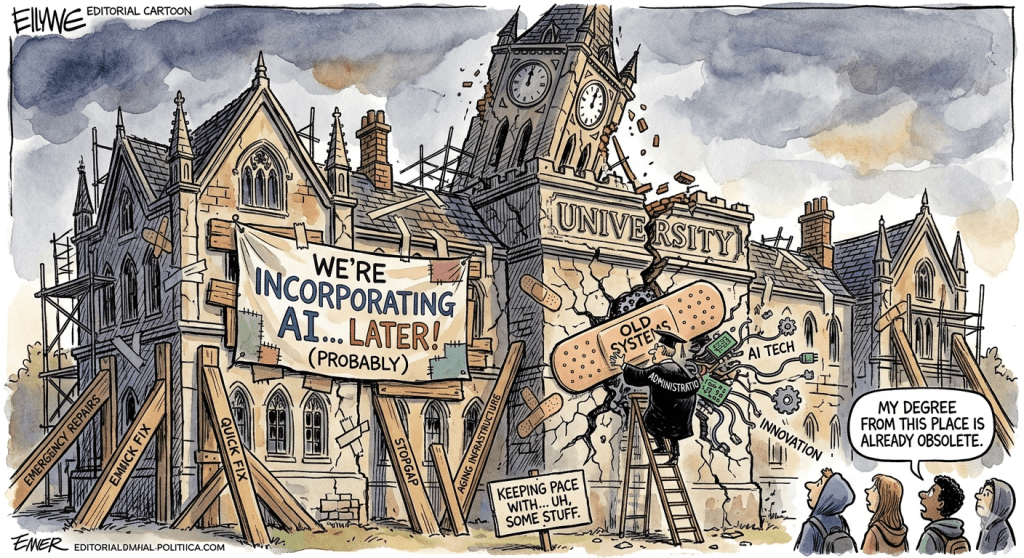
Summary: The brutal job market for new grads exposes a widening gap between academic training and AI‑shaped workplace reality—forcing universities to rethink relevance itself. –Copilot

A paradox has emerged in the mid-2026 corporate landscape: artificial intelligence is driving an unprecedented surge in specific corporate technical and advisory roles, yet recent university graduates are experiencing the most hostile entry-level market since the turn of the decade (1). This labor polarization ignited the recent headline broadcast by CNN Business, noting that while AI is sparking an absolute jobs boom, it is explicitly “not for newbies” (1,2). The foundation of this disruption lies in an economic restructure termed the “barbell economy” (1). In this paradigm, capital investments are flowing heavily into two distinct extremes: high-end specialized engineering and governance infrastructure on one side, and manual, physical service sectors on the other (1,3). The core casualty is the traditional corporate middle, which has historically absorbed fresh university graduates for foundational training (1).
In the current macroeconomic cycle, early-career candidates face structural friction due to how generative AI alters task distribution. Historically, an entry-level professional spent up to seventy percent of their routine labor executing tasks like drafting basic prose, sorting data sheets, compiling introductory market research, and writing baseline application code (2,4). These functions operated as an informal, paid apprenticeship model—allowing corporate “newbies” to gradually absorb business logic and operational nuance under senior guidance (4).
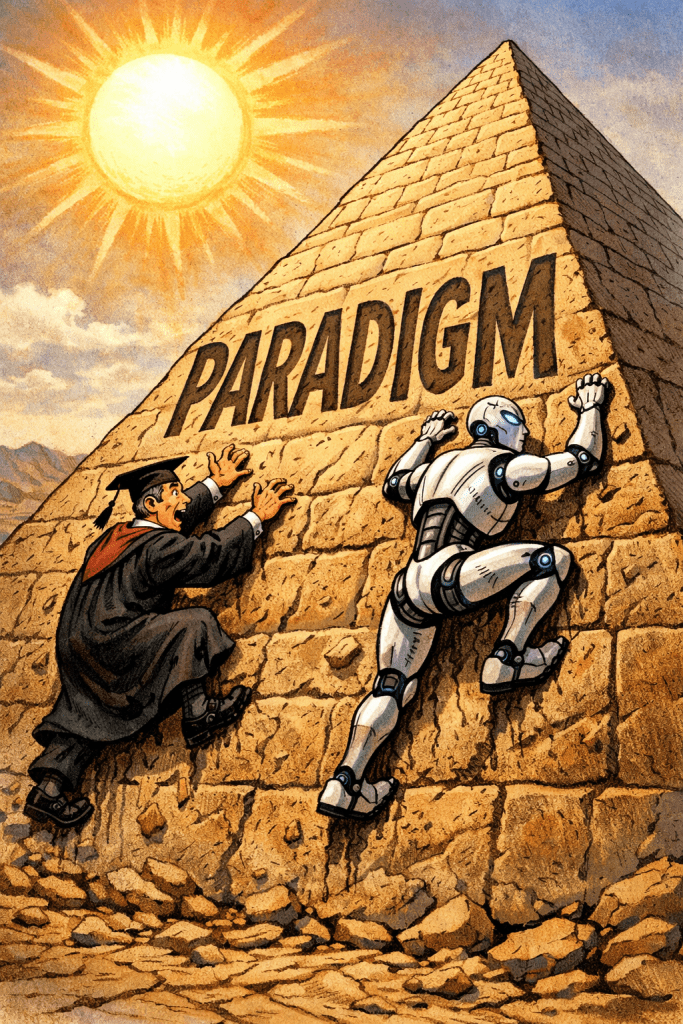
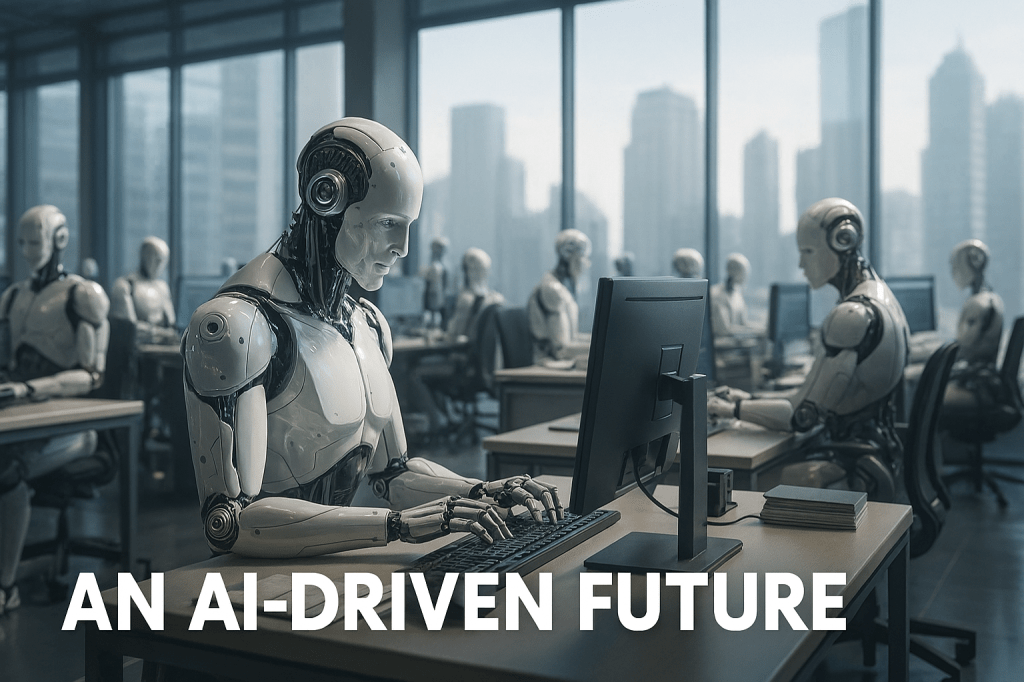
Today, large language models and autonomous agents execute these administrative and preparatory tasks instantly, flawlessly, and at near-zero marginal cost (2,4). Consequently, organizations are compressing workflows. A senior executive or experienced manager can now leverage an array of bespoke AI tools to manage an entire project pipeline directly, eliminating the structural need to oversee, correct, and guide a junior associate (1). The traditional entry-level rungs of the career ladder are effectively being digitized, leaving a severe gap between academic instruction and corporate expectations (4).
The contraction of introductory employment is not uniform across all market segments; rather, it diverges dynamically based on corporate scale, capitalization, and industry nature. The compression is most aggressive within highly institutionalized knowledge economies, particularly large technology conglomerates and corporate financial firms. For example, aggregate payroll data reveals that graduate hiring at fifteen of the largest tech organizations plummeted by over fifty percent compared to pre-pandemic baselines, compressed heavily by AI consolidation directives (1).
Conversely, an dynamic, reverse trend is unfolding among mid-sized companies and highly tactical small businesses. These lean operations utilize AI to aggressively scale their output without incurring heavy full-time headcounts, frequently seeking agile, early-career professionals who possess immediate, applied AI development capabilities rather than standard academic credentials (1,5). Furthermore, a complete immunity to this structural compression is observed in localized physical sectors—such as advanced manufacturing, infrastructure construction, and skilled mechanical trades—where data center buildouts are creating a severe, localized blue-collar talent shortage unaffected by white-collar generative software automation (3,6).
The fundamental deficit plaguing modern graduates is not a lack of theoretical understanding of artificial intelligence, but a critical shortage of situational judgment, deep context, and tangible execution. Generative software has commoditized basic information and formulaic generation (1). What corporations are actively paying a premium for is the capacity to oversee, audit, and direct the machine’s output—a capacity that relies entirely on industry-specific domain expertise and nuanced business reasoning (4).
Newbies inherently lack historical operational context, client-relationship experience, and the qualitative intuition required to catch sophisticated AI hallucinations or align machine outputs with strict regulatory compliance standards (4,7). Additionally, standard university curricula fail to cultivate practical operational fluency. A baseline familiarity with generic prompt interfaces is no longer a distinct competitive advantage; modern employers prioritize candidates who have actively deployed iterative, shipped AI systems to resolve real-world industry pain points (1,4).
| Key Metric: Handshake platform data indicates a substantial fifteen percent reduction in entry-level white-collar job listings over the past two years, contrasted sharply against a three hundred percent surge in applications per role and a four-fold increase in requirements for explicit AI operational application (1). |
This market squeeze is not a transient economic hiccup driven by standard business cycle contractions, but rather a permanent structural reconfiguration of white-collar labor. The traditional professional career ladder—which relied on routine administrative tasks to transition individuals from novices to experts—is structurally broken (4). While historical technological transitions eventually generated entirely new industrial sectors, the immediate velocity of AI task-automation is outstripping the organic rate of institutional job creation (1,2). This rapid asymmetry creates severe corporate friction, signaling a long-term evolution where the baseline requirements for entering white-collar work have permanently escalated.
The compression of entry-level hiring carries profound, long-term risks for both corporate resilience and socioeconomic stability. For the corporate sector, substituting junior headcounts with automated software solves immediate quarterly operational budgets but triggers a critical, long-term corporate talent deficit (1). By closing off introductory pipelines, organizations are effectively destroying their future middle management and executive leadership pipelines, creating an unsustainable institutional vacuum where there are no experienced professionals rising to replace retiring seniors (1,4). On a broader level, this imbalance intensifies socioeconomic anxieties for a generation that invested record capital into higher education, only to find the standard corporate entry gates locked by automated code (1,2).
The polarization of the labor market stems directly from corporate optimization strategies that aggressively use AI to maximize per-employee output and lower structural overhead (1). This is exacerbated by an educational system that remains fundamentally unaligned with rapid market shifts, continuing to teach legacy, modular skills that are easily automated, rather than focusing on applied, iterative AI problem-solving and qualitative domain synthesis (1,4).
Resolving this talent friction requires proactive, systemic changes across both individual and corporate levels. Early-career job seekers must abandon reliance on traditional academic credentials alone. They must build public, tangible portfolios by actively identifying specific niche industry problems and deploying iterative AI tools to build, test, and ship functional solutions (1). Demonstrating the capacity to engineer, deploy, and audit an actual applied product provides a distinct competitive advantage that cannot be replicated by standard academic cohorts (1,4).
Simultaneously, progressive corporate leaders must deliberately step in to fix the broken career ladder. Rather than erasing introductory headcount entirely, forward-thinking organizations are restructuring entry-level frameworks into structured AI-immersion apprenticeships (1). By explicitly training junior staff on advanced prompt engineering lifecycle management, model evaluation frameworks, and compliance auditing, companies can rapidly accelerate the novice-to-expert curve, securing their internal talent pipeline while building a highly fluent, modern workforce (1,7).
References
(1) Matt Britton Corporate Briefing – AI Pressure on Entry-Level Work (May 2026): https://www.mattbritton.com/tv-appearances/ai-pressure-entry-level-jobs-class-of-2026
(2) CNN Business Insights on Generative AI Labor Dynamics (June 2026): https://www.reddit.com/r/jobs/comments/1ps3bnz/ai-hiring-is_here_its_making_companies_and_job/
(3) Fortune Analysis on Infrastructure and Technical Talent Shifts (May 2026): https://employerengagementnetwork.com/news
(4) Community College Daily Workforce Review – Entry Level Evolution (February 2026): https://www.ccdaily.com/2026/02/entry-level-jobs-in-the-age-of-ai/
(5) Study.com Hiring Manager Intelligence Report on AI Roles (2026): https://study.com/resources/top-entry-level-ai-jobs.html
(6) White House National Economic Intelligence Briefing (May 2026): https://www.whitehouse.gov/releases/2026/05/jobs-report-trump-economy-roars-ahead-with-big-private-sector-job-gains/
(7) Warner Bros. Discovery & CNN Global Applied AI Operational Requirements (June 2026): https://careers.wbd.com/global/en/job/R000104663/Specialist-AI-Innovation-CNN-Digital-Products-Services
Filed under: Uncategorized |

































































































































































































































































































































































































































































Leave a Reply