





By Jim Shimabukuro (assisted by Claude)
Editor
Summary: If learning isn’t “muscle training,” AI forces educators to rethink schooling around cognition, curiosity, and conceptual agility rather than repetition. –Copilot

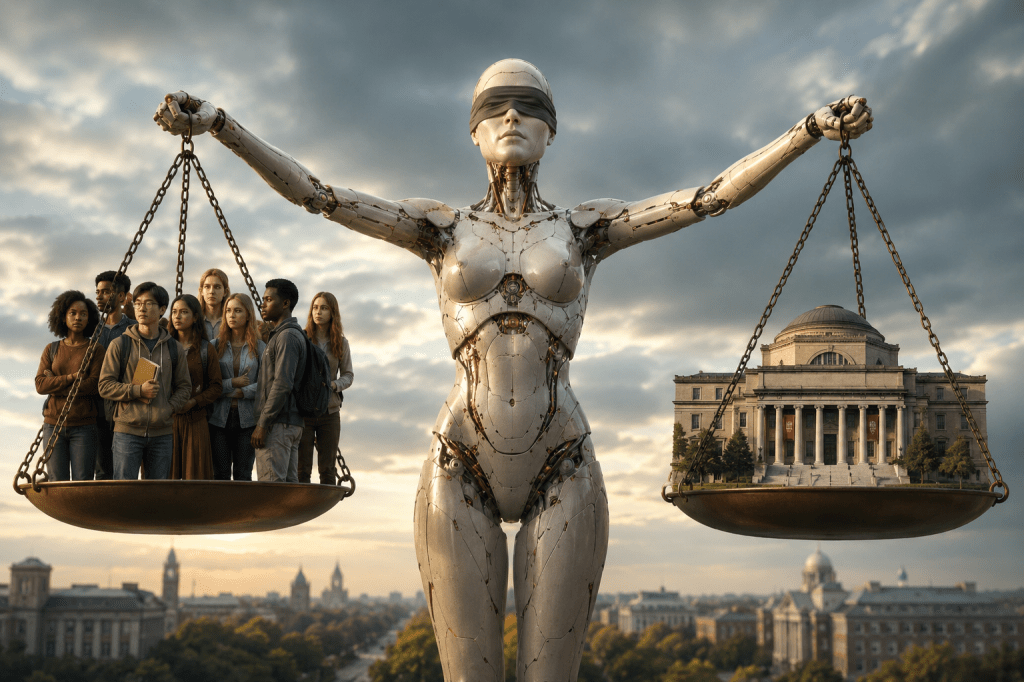
The brain-as-muscle metaphor has long served as the moral backbone of academic arguments against labor-saving technology. In this view, trudging through library stacks, compiling reams of notes, and manually searching databases are not simply means to an end—they are the end itself, cognitive reps in a workout that builds intellectual strength. To automate any of this labor, the argument runs, is to skip the gym. The metaphor carries real rhetorical weight, but it rests on a category error: the brain is not a muscle, effortfulness is not equivalent to productive learning, and the removal of mechanical friction does not create a mental void. What it creates is an opportunity. The question for writers and educators is not whether AI has cleared this cognitive space but what to put in it—and how to ensure that what fills it is the kind of thinking that machines genuinely cannot replicate.
Before addressing the opportunity, the risk deserves an honest acknowledgment, because it is real and the research confirms it. A 2025 MIT Media Lab study by Kosmyna and colleagues measured neural activity via EEG headsets as 54 participants wrote essays using ChatGPT, Google Search, or no tools (1). The ChatGPT group showed the weakest brain connectivity across networks associated with memory and creative integration, and memory retention dropped so sharply that participants struggled to recall sentences from essays they had produced just minutes earlier (1).
A separate large-scale study by Gerlich at the SBS Swiss Business School found that heavy AI use was significantly correlated with lower critical thinking scores, mediated by cognitive offloading and a measurable decline in reflective engagement—what Gerlich termed “cognitive laziness” (3). Writing in EDUCAUSE Review, student researcher Kate Hurley offered a pointed synthesis: “While AI may free us from time-consuming, smaller tasks so that we can focus on larger ones, we may lose some of the brainpower we need to do just that” (2).
These findings do not vindicate the brain-as-muscle traditionalists—they describe outcomes that emerge specifically when AI use is unstructured and passive, when writers delegate rather than direct. The path forward is not to restore the drudgery but to replace passive substitution with active cognitive engagement at genuinely higher levels of thinking. Getting there requires concrete strategies for individual writers and a rethinking of how educators design the work writers are asked to do.
Where AI Works and Where Humans Must
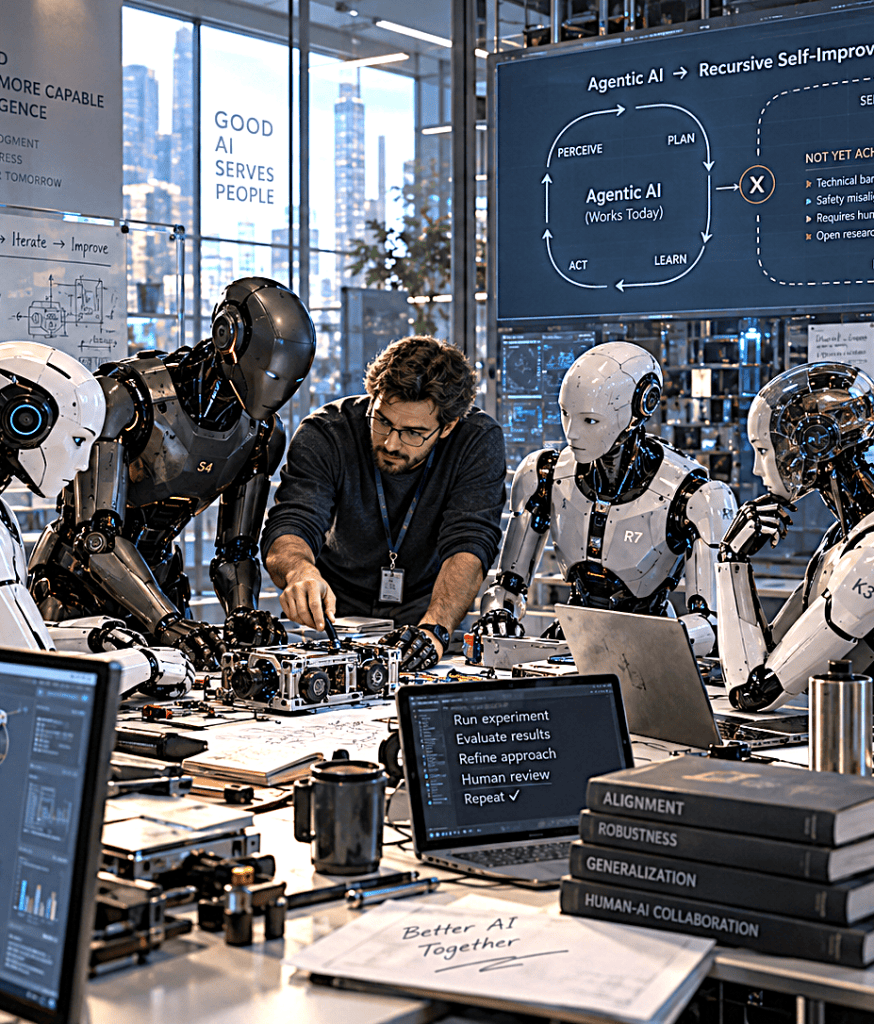
The most useful framework for understanding what AI should and should not own in the writing process is the revised Bloom’s Taxonomy of cognitive skills, which moves from lower-order operations—remembering, understanding, applying—to the higher-order work of analyzing, evaluating, and creating. Generative AI performs reliably at the lower levels: it can retrieve, summarize, paraphrase, and produce fluent prose on virtually any topic. Its performance degrades predictably as tasks require genuinely higher-order judgment: assessing the validity of a specific argument, detecting the assumptions embedded in a source, weighing competing interpretations of ambiguous evidence, and producing an original synthesis that no training corpus has anticipated (5).
A 2026 study by Gonsalves revisiting Bloom’s in light of AI capabilities confirmed this gradient, finding that while AI can scaffold the recall and comprehension stages of academic writing effectively, it consistently falls short at evaluation and creation when the criteria are genuinely novel and judgment-dependent (10). The pedagogical implication is direct: writers who let AI compress the lower-order stages—gathering, cataloguing, and summarizing sources—should consciously redirect that recovered time and attention to the upper levels of the taxonomy, where their reasoning, judgment, and original contribution are irreplaceable.
An ambitious extension of this logic appears in a 2026 arXiv paper proposing the Augmented Cognition Framework, which revises Bloom’s taxonomy for an era of routine human-AI collaboration (6). The framework introduces a seventh level called Orchestration, governing the writer’s capacity to decide which cognitive tasks to delegate to AI and which to retain for themselves, and in what sequence to engage each mode of cognition. The central insight is that effective human-AI writing is not simply AI substituting for human effort but a new cognitive practice that requires its own competencies: deliberate allocation of attention, critical oversight of AI output, and conscious design of what the human writer will actually think through (6).
Strategies for Writers
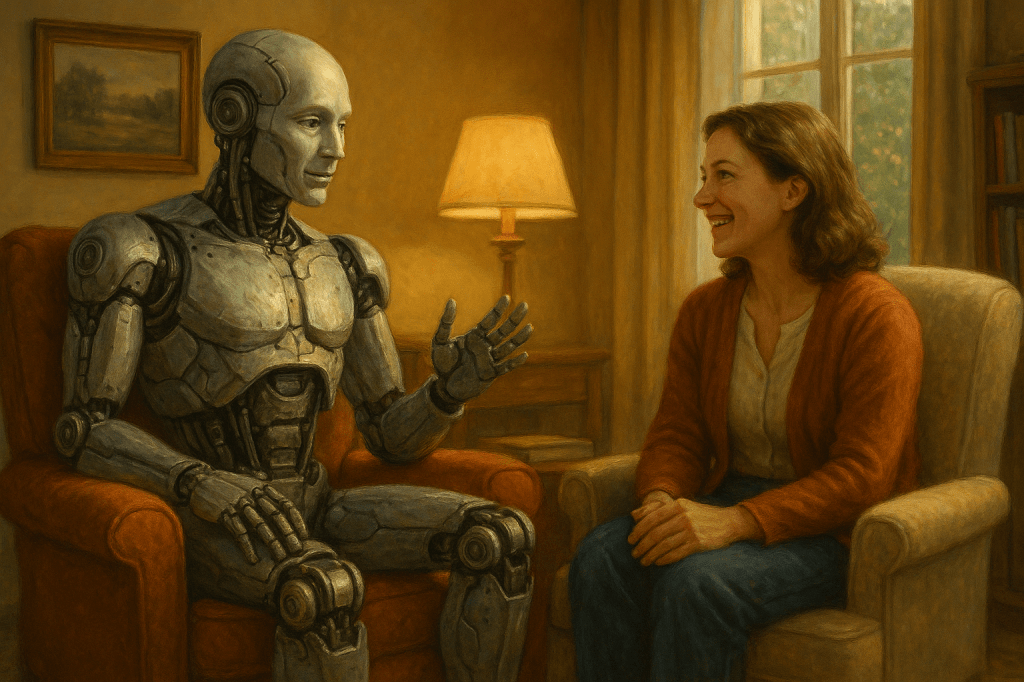
The first and most productive strategy is to use AI as a Socratic interlocutor rather than a ghostwriter. Instead of asking AI to draft text, writers can prompt it to interrogate their ideas: to identify the weakest premises in a proposed argument, to generate the strongest counterarguments a critic could raise, to expose what the writer has not yet considered. A 2025 study by Fakour and Imani, drawing on surveys and interviews with 230 university students in Taiwan, examined how Socratic tutoring methods—whether delivered by humans or AI—affect critical thinking development (9).
The study found that the qualities students most associated with genuine critical thinking gains were open-ended questioning, the challenging of assumptions, and probing rather than simply confirmatory feedback—precisely what Socratic-style AI interaction, properly structured, can supply (9). The authors concluded that the most promising approach combines AI’s accessibility and tireless availability with the assumption-challenging character of Socratic dialogue, a hybrid that writers can construct simply by framing their AI prompts as interrogative rather than generative. The writer who asks AI “What is the most serious objection to my thesis, and how would I answer it?” is performing analysis; the writer who asks AI “Write my introduction” is not.
A second strategy is to treat the planning and ideation stage as fully human-owned, completed before any AI interaction begins. Research on VISAR, a cognition-preserving AI writing tool deployed in undergraduate writing courses over two semesters with 49 students, found that when students engaged structured scaffolding for planning and argument construction before turning to AI for generation, they demonstrated better argumentative quality and more active critical engagement than peers who opened the AI interface first (8).
The study found that students naturally gravitated toward the planning and critical-thinking affordances when the tool made them salient, and that this pattern—mapping claims, identifying evidence gaps, committing to a structure—was positively associated with essay quality (8). The practical takeaway is immediate: writers should draft a thesis, map an argument, and identify their key claims before invoking AI assistance. The AI then serves as a respondent to ideas already formed rather than a generator of ideas never attempted.
A third strategy is to treat AI output as a first draft for critique rather than a finished product for incorporation. A 2025 review in Frontiers in Psychology found that the central risk of cognitive offloading is not AI use per se but the passive acceptance of AI-generated content without critical scrutiny—and that the writers most capable of preserving genuine analytical engagement were those who actively compared AI output against their own reasoning, questioned its assumptions, and pushed back against its framings (4). Writers can formalize this practice by requiring themselves to answer a set of analytical questions about every AI-generated passage before using it: What does this argument assume? What does it omit? Where does it oversimplify? What counterevidence would a specialist in this field immediately raise? This interrogative stance—which takes more effort than passive incorporation but far less time than the manual research it replaces—is precisely where the freed cognitive capacity should flow.
Strategies for Educators
The strategies available to individual writers depend in significant part on the conditions that educators create. A 2025 qualitative study by Khlaif and colleagues, drawing on interviews and focus groups with 61 faculty members, found that the approach most consistently associated with maintained academic integrity and genuine critical engagement was assessment redesign—replacing AI-susceptible written assignments with tasks that require students to demonstrate their own analysis in real time. Oral defenses, structured debates, and live explication tasks were identified as particularly effective because they make immediately visible whether a student can independently perform the analysis that AI was supposed to free them to develop (7).
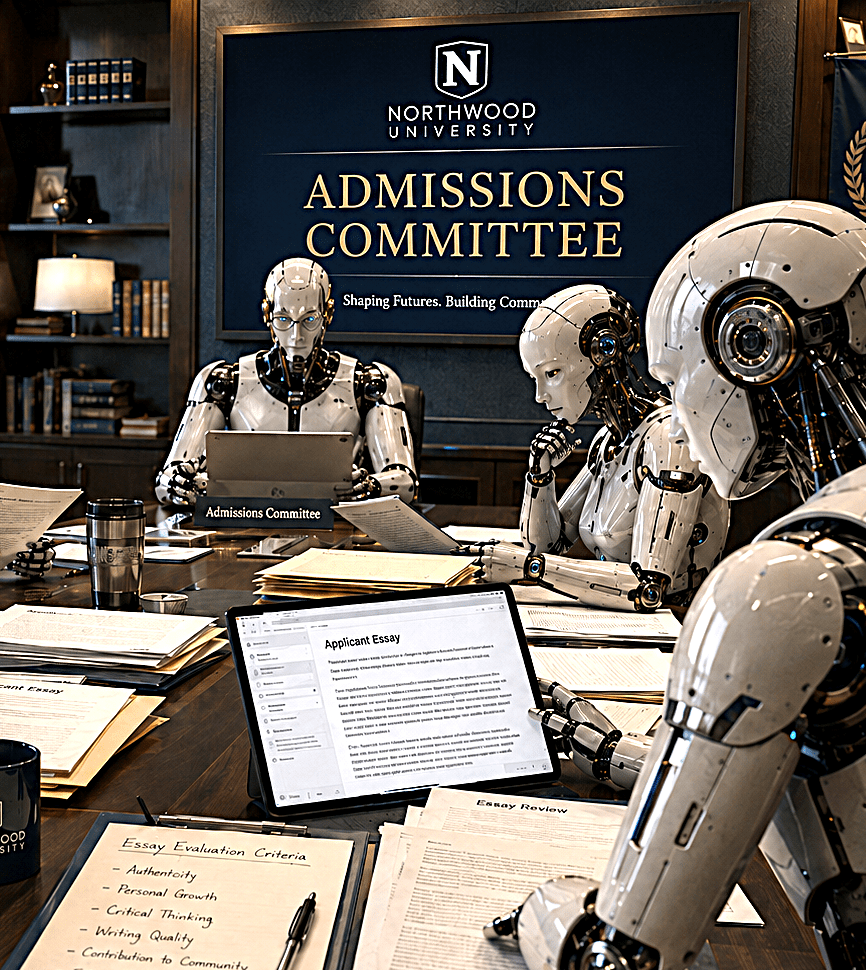
Lubbe, Marais, and Kruger, writing in Education and Information Technologies, offered a Bloom’s-centered complement: concentrate assessment at the evaluation and creation levels, assigning tasks that require students to judge competing arguments, propose and defend original positions, and apply knowledge to situations genuinely novel enough that no AI training corpus could have produced the answer (5). A 2026 systematic review in Frontiers in Psychology, focused specifically on writing assessment in the AI era, concluded that authentic skill growth requires assessment paradigms that treat AI output as a starting point to be transcended—assignments in which the student’s explicit task is to improve upon, challenge, or extend what AI produces, demonstrating judgment that the AI itself cannot supply (13).
At the course design level, the Interactive Cognitive Offload framework, tested in a 2025 study presented at the International Conference on AI-enabled Education, offers educators a concrete structural model. In this approach, AI is explicitly assigned the lower-order tasks—source retrieval, initial summarization, surface-level editing—while students are required to complete structured argument maps and evidence evaluations before any AI-generated text enters their papers. Students in the structured group showed significantly greater improvements on critical thinking assessments and produced essays with stronger logical coherence than control groups, demonstrating that when the division of cognitive labor is made explicit and enforced rather than left to chance, the liberation argument holds (12). A large systematic review of 136 studies published in Frontiers in Education reached a compatible conclusion: AI integration reliably improves text quality—coherence, argumentation, and discursive organization—most consistently when it is embedded in pedagogical frameworks that actively direct higher-order cognitive work to the human writer (11).
Conclusion
The brain-as-muscle metaphor fails not because cognitive effort is irrelevant but because it mistakes the nature of productive effort. What builds analytical capacity is not the physical labor of retrieving sources—it is the intellectual labor of evaluating them, arguing with them, and synthesizing them into an original position that could not have been generated without the writer’s own judgment. AI can compress the former; it cannot replicate the latter. For writers, the freed space is best occupied by deliberate Socratic engagement with AI, by planning and argument-mapping before any generation begins, and by interrogating AI output critically rather than absorbing it passively. For educators, it is best occupied by assessments that make higher-order thinking visible and obligatory—tasks in which AI provides the raw material and the human writer provides the judgment that shapes it. The metaphor’s most serious failure was not that it defended rigor but that it located rigor in the wrong place: in the mechanical labor of gathering rather than in the intellectual labor of thinking. Removing the first does not weaken the mind. Failing to cultivate the second does.
References
1. Kosmyna, Nataliya et al. “Your Brain on ChatGPT: Accumulation of Cognitive Debt When Using an AI Assistant for Essay Writing Task.” arXiv, June 2025. https://arxiv.org/abs/2506.08872
2. Hurley, Kate. “The Paradox of AI Assistance: Better Results, Worse Thinking.” EDUCAUSE Review, December 15, 2025. https://er.educause.edu/articles/2025/12/the-paradox-of-ai-assistance-better-results-worse-thinking
3. Gerlich, Michael. “AI Tools in Society: Impacts on Cognitive Offloading and the Future of Critical Thinking.” Societies 15, no. 1 (2025): 6. https://doi.org/10.3390/soc15010006
4. Jose, Binny et al. “The Cognitive Paradox of AI in Education: Between Enhancement and Erosion.” Frontiers in Psychology, April 2025. https://www.frontiersin.org/journals/psychology/articles/10.3389/fpsyg.2025.1550621/full
5. Lubbe, A., Marais, E., and Kruger, D. “Cultivating Independent Thinkers: The Triad of Artificial Intelligence, Bloom’s Taxonomy and Critical Thinking in Assessment Pedagogy.” Education and Information Technologies 30 (2025): 17589-17622. https://link.springer.com/article/10.1007/s10639-025-13476-x
6. “Revising Bloom’s Taxonomy for Dual-Mode Cognition in Human-AI Systems: The Augmented Cognition Framework.” arXiv, January 2026. https://arxiv.org/abs/2602.00697
7. Khlaif, Z.N. et al. “Redesigning Assessments for AI-Enhanced Learning: A Framework for Educators in the Generative AI Era.” Education Sciences 15, no. 2 (2025): 174. https://www.mdpi.com/2227-7102/15/2/174
8. “Lessons from Real-World Deployment of a Cognition-Preserving Writing Tool: Students Actively Engage with Critical Thinking and Planning Affordances.” arXiv, 2025. https://arxiv.org/abs/2603.15777
9. Fakour, H. and Imani, M. “Socratic Wisdom in the Age of AI: A Comparative Study of ChatGPT and Human Tutors in Enhancing Critical Thinking Skills.” Frontiers in Education, 2025. https://www.frontiersin.org/journals/education/articles/10.3389/feduc.2025.1528603/full
10. Gonsalves, Chahna. “Generative AI’s Impact on Critical Thinking: Revisiting Bloom’s Taxonomy.” 2026. https://journals.sagepub.com/doi/10.1177/02734753241305980
11. “The Impact of Generative AI on Academic Reading and Writing: A Synthesis of Recent Evidence (2023-2025).” Frontiers in Education, 2025. https://www.frontiersin.org/journals/education/articles/10.3389/feduc.2025.1711718/full
12. “Enhancing Critical Thinking: Interactive Cognitive Offload Instruction with Generative AI in English Essay Writing.” Proceedings of the 2025 International Conference on AI-enabled Education. ACM. https://dl.acm.org/doi/10.1145/3768421.3768447
13. “Reimagining Writing Assessment for the AI Era: A Systematic Review on Balancing AI Support and Authentic Skill Growth.” Frontiers in Psychology, 2026. https://www.frontiersin.org/journals/psychology/articles/10.3389/fpsyg.2026.1809174/full
###
Filed under: Uncategorized |


































































































































































































































































































































































































































The brain-as-muscle metaphor may be weak, but it’s real. Repetition of some mental activities will improve performance. As you suggest, the metaphor must be applied properly.
Here’s my simple approach. When writing, I use AI for two purposes: as a research assistant and as an editor. I won’t use it to write drafts, but I am not encased in the pressure cooker of a college anymore. I choose my writing to be me, warts and all.
I use AI to check spelling and grammar as I write, but I was doing that before AI was truly involved. It’s often incorrect, and I learned not to trust it, or, at least, to “trust but verify.” I discard many of its suggestions as incorrect. Over the years, it has improved, but it still makes mistakes, misunderstanding intent.
One benefit of using AI in this fashion has been improved writing. If AI corrects you often enough, you learn to stop some of your poor writing habits.
— Harry
The metaphor of brain-as-muscle is counter-productive when it prioritizes drills over practice to improve target performance. For example, repeatedly running laps and lifting weights instead of actually practicing increasingly complex plays won’t help a football team improve its execution of offensive schemes. By the same token, requiring students to spend countless hours manually gathering and processing library sources into annotated bibliographies instead of devoting precious time to actually practice higher order writing process skills such as planning, drafting, and reviewing may not improve writing performance. In short, the brain is not a bicep that grows stronger by endless reps with dumbbells. A big strong body is not the same as a nimble mind. -Jim