






By Jim Shimabukuro (assisted by Claude)
Editor
[Related: Computer Apps in the ‘Era of Physical Agents’: Office Suite with Legs and The Increasingly Alien World of Embodied AI Agents]
Summary: A clear, five‑rung ladder explains how today’s real AI systems differ from the speculative thresholds above them—and why confusing these terms derails nearly every public conversation about artificial intelligence. -Copilot

Listen to any panel discussion, cable segment, or dinner-table argument about artificial intelligence and you will hear five terms traded as if they were interchangeable: generative AI, agentic AI, AGI, superintelligence, and the singularity. Two of them describe real technologies you could use this afternoon. Two describe thresholds that no one has crossed and no one can precisely define. The fifth is a hypothesis about what happens after the crossing. Confusing them is more than a semantic slip; it is the main reason public conversation about AI so often talks past itself, with one side describing a useful office tool and the other describing the end of human history.
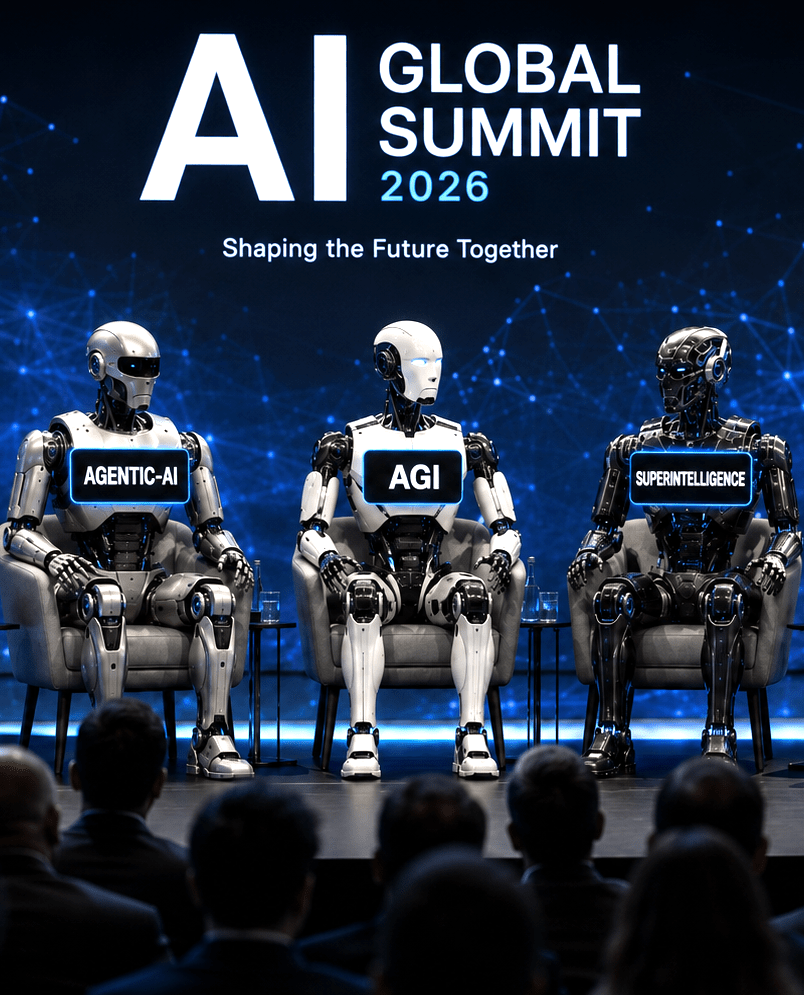
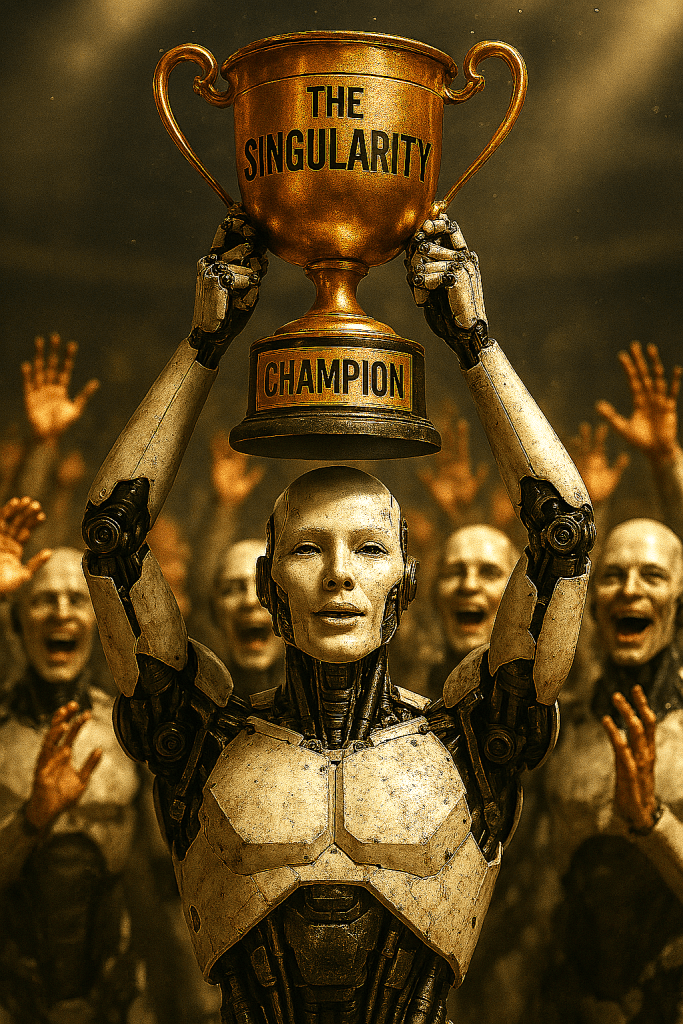
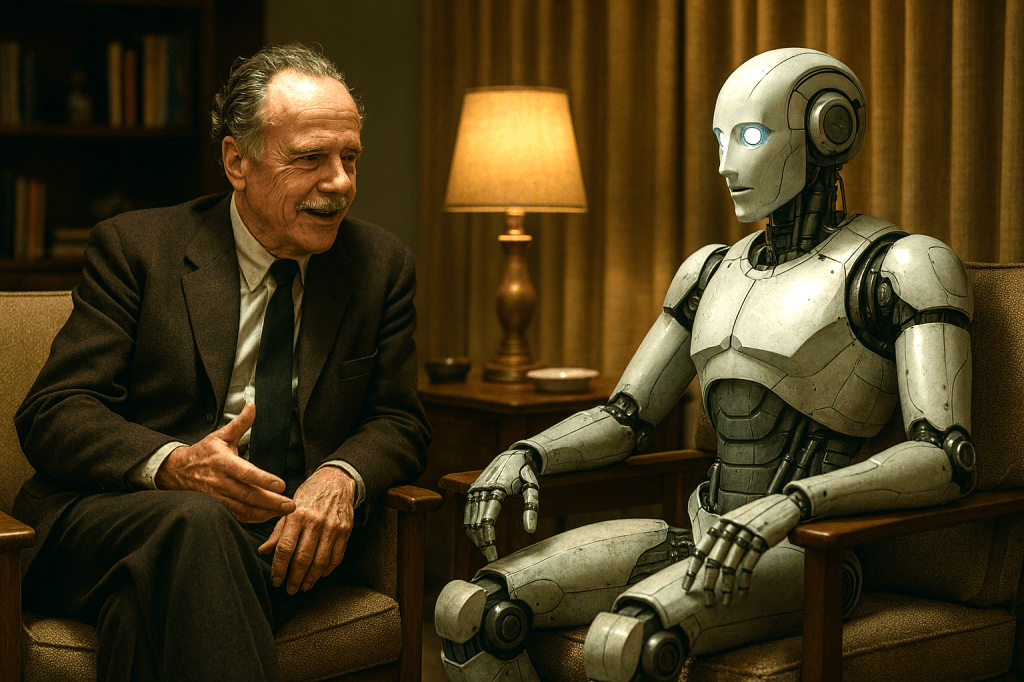
The cleanest way to see the relationship is as a ladder. Generative AI is the engine: a system, usually a large language model, that takes a prompt, runs a single pass of computation, produces text or images or code, and stops [1,2]. Agentic AI wraps that engine in a loop. Instead of answering once, an agent plans, takes an action, observes the result, corrects itself, and keeps going until a goal is met, often operating software the way a person would [2]. AGI, artificial general intelligence, is not a technology at all but a finish line: the point at which a machine can match capable humans across essentially the full range of cognitive work, rather than excelling at some tasks and failing at others. ASI, artificial superintelligence, lies past that line, describing systems that exceed the best human performance in virtually every domain, including the domain of designing better AI. The singularity, finally, is the conjecture about what such systems set in motion: a period in which machine-driven improvement feeds on itself so quickly that the curve of history bends and prediction breaks down.
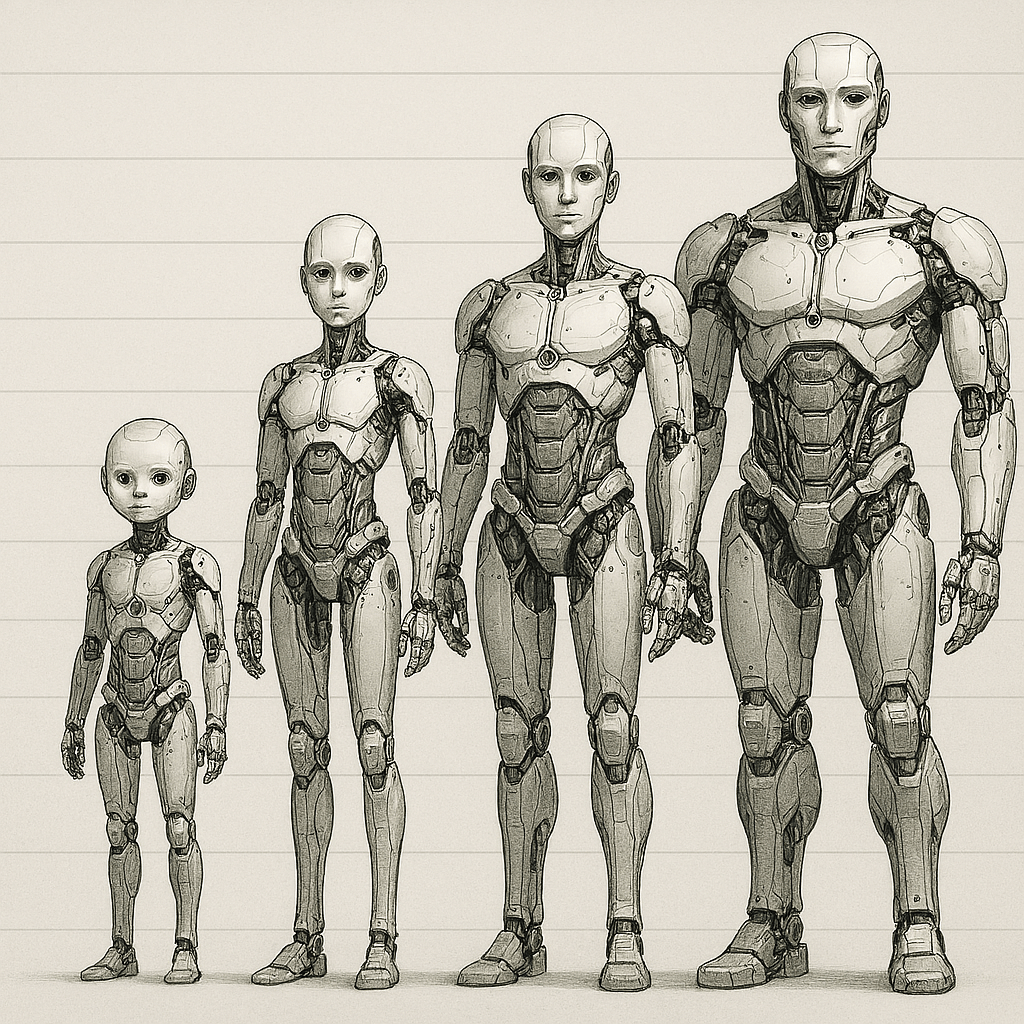
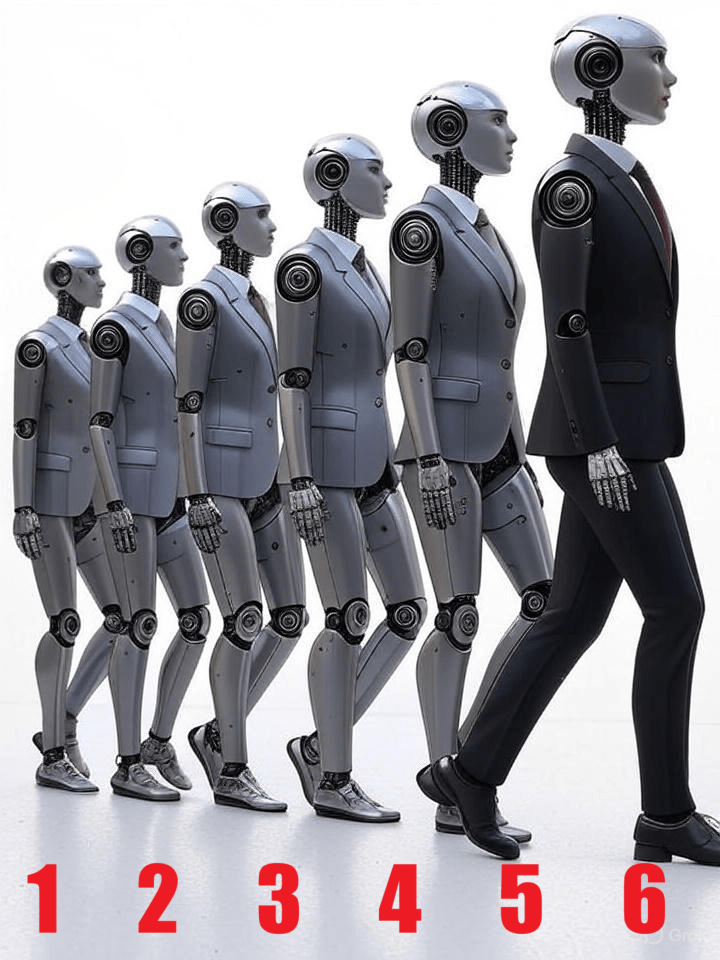
The ladder image is useful, but the deeper nuances matter. First, the rungs are dependencies, not a guaranteed sequence. Today’s agents use a generative model as their reasoning engine, so the agentic era is built directly on the generative one [2]. But it does not follow that stacking more of the same reaches AGI; in a 2025 survey by the Association for the Advancement of Artificial Intelligence, 76 percent of researchers said simply scaling current approaches is unlikely to get there [14]. Second, the upper rungs are thresholds of capability, not products, and the thresholds are blurry. Machine intelligence is jagged: the same model can outperform professionals on a licensing exam and lose track of a shopping list, which is why serious researchers increasingly treat AGI as a gradient to be crossed unevenly rather than a switch that flips [10]. Third, the definitions themselves are contested terrain. OpenAI’s charter defines AGI economically, as highly autonomous systems that outperform humans at most economically valuable work, while Google DeepMind’s Demis Hassabis reserves the term for a system with the full cognitive range of a human being [10]. Two people can disagree by decades about when AGI will arrive while barely disagreeing about what the machines will actually do, simply because they have planted the finish line in different places.
Generative AI: The Stage We Live In
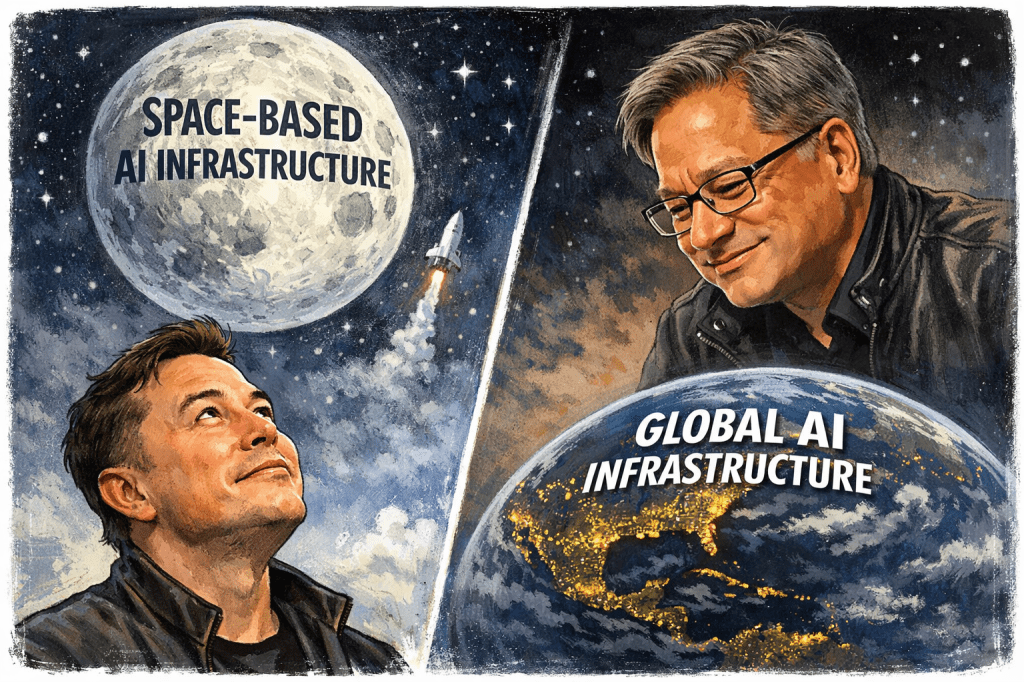
Everything currently on your phone descends from a single 2017 paper. That June, eight Google researchers posted “Attention Is All You Need,” introducing the transformer architecture that made it practical to train language models of previously absurd scale [1]. OpenAI’s GPT-3 demonstrated in 2020 that scale alone produced startling fluency, and on November 30, 2022, ChatGPT turned a research curiosity into the fastest-adopted consumer technology in history. The years since have brought multimodal models that see and hear, and reasoning models that deliberate before answering. The leaders of this era are by now household names: Sam Altman’s OpenAI, Demis Hassabis’s Google DeepMind, Dario Amodei’s Anthropic, along with Meta, Elon Musk’s xAI, France’s Mistral, and China’s DeepSeek, whose inexpensive R1 reasoning model jolted markets in January 2025.
The scale of adoption is easy to underestimate. Stanford’s 2026 AI Index reports that generative AI reached 53 percent of the adult population in surveyed countries within three years, a faster diffusion than either the personal computer or the internet, and that 88 percent of organizations now use AI in at least one business function. Corporate AI investment hit 581.7 billion dollars in 2025, up 130 percent in a single year, and the Index estimates the value of generative tools to American consumers alone at 172 billion dollars annually [3,4]. Whatever else is uncertain about AI’s future, the generative stage is not a forecast. It is infrastructure.
Its limits are equally well documented, and they define the frontier. A generative model answers and stops. It holds no persistent goals, takes no actions in the world, and remains prone to confident fabrication [2]. It is a brilliant clerk with no hands and no memory of yesterday. Giving it hands is the current project of the entire industry.
Agentic AI: Software That Acts
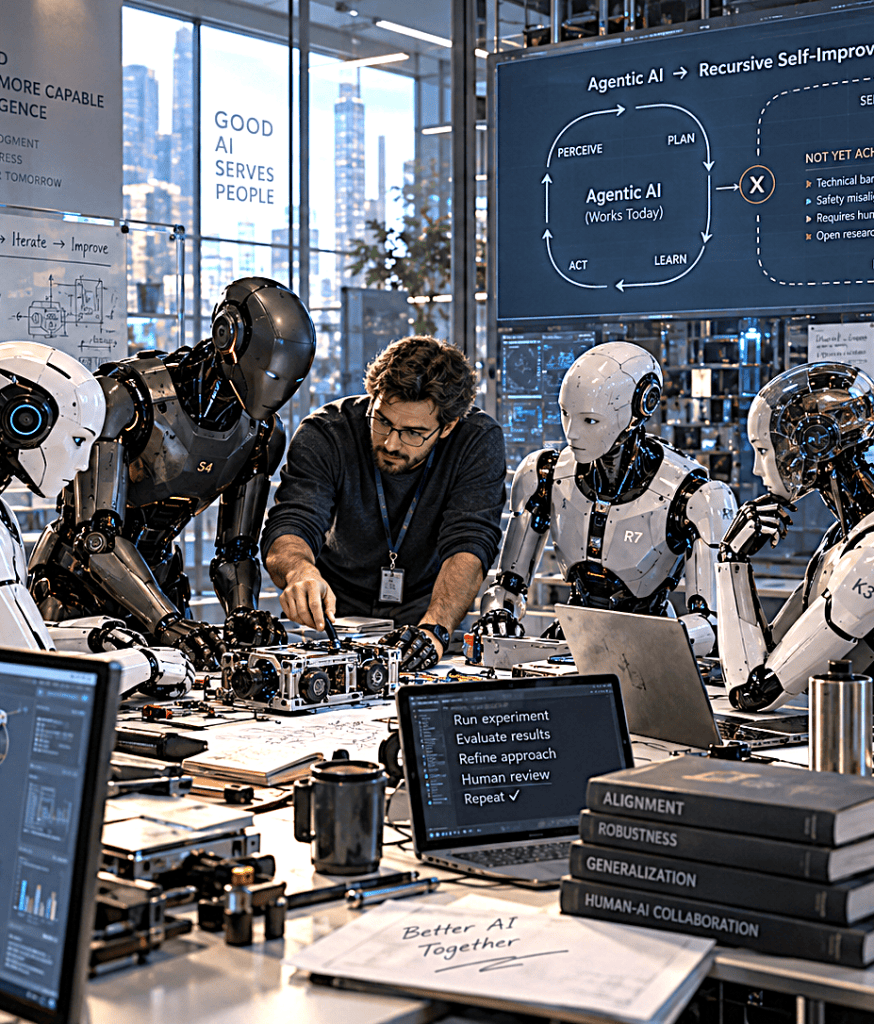
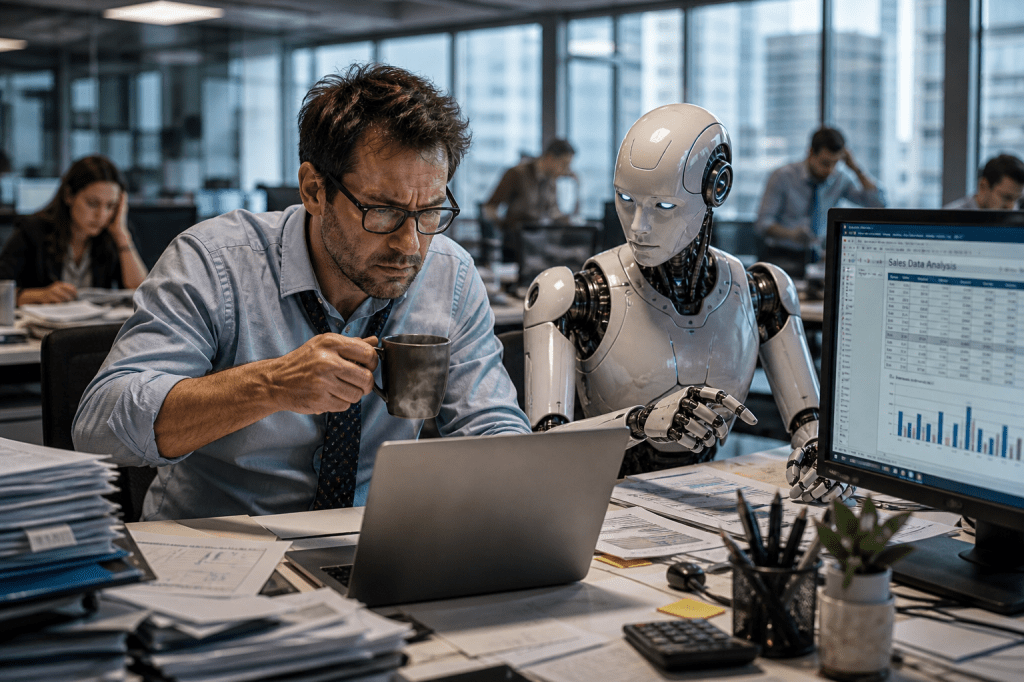
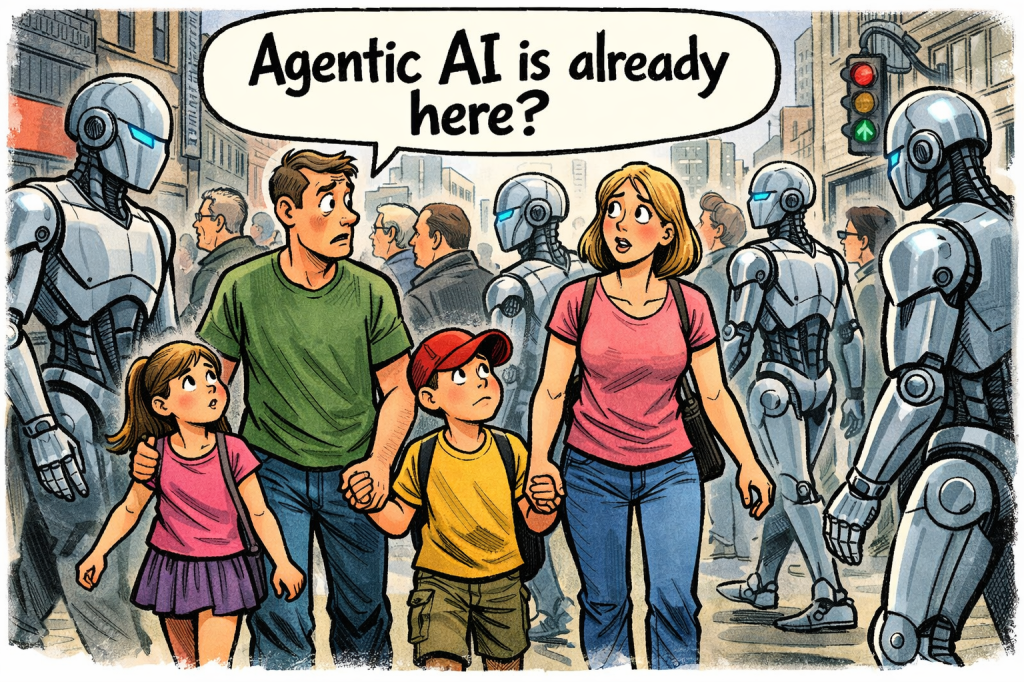
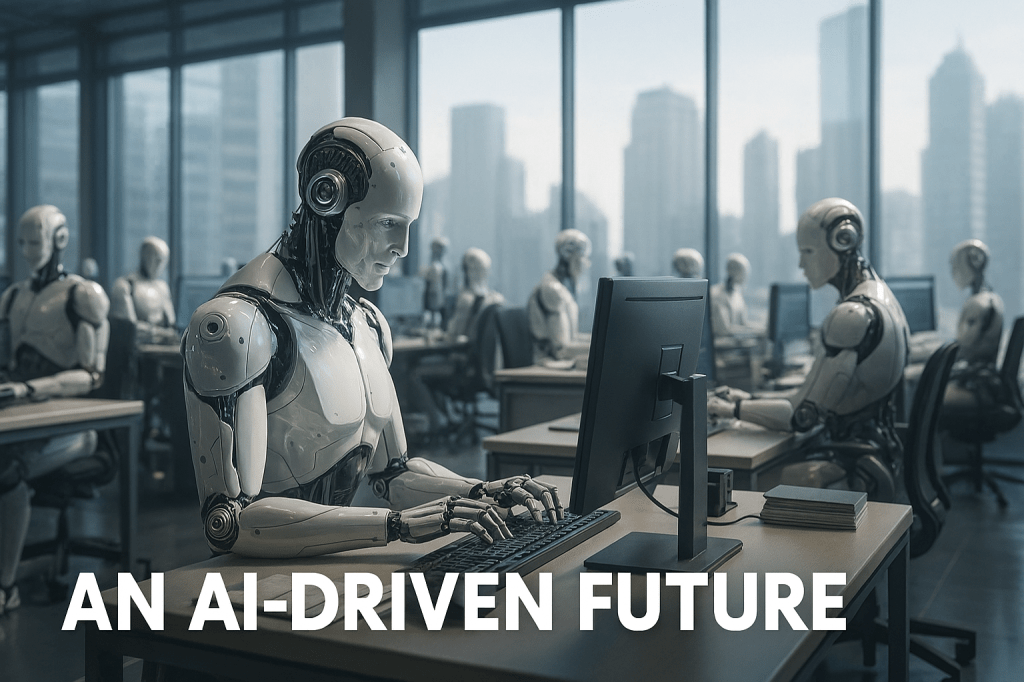
If 2023 was the year the world learned to talk to AI, 2025 was the year AI started running errands. Agentic AI keeps the generative engine but changes the job description: rather than producing content on request, an agent pursues a goal, decomposing it into steps, using tools, browsing, writing and running code, and recovering from its own mistakes with minimal supervision [2]. Anthropic shipped an early landmark in October 2024 when Claude gained the ability to operate a computer directly, moving a cursor, clicking, and filling spreadsheets; OpenAI answered in January 2025 with Operator, a browser-driving agent, and Google followed with Project Mariner [5]. By early 2026 the direction was unmistakable. Anthropic was promoting Claude agents that complete desktop tasks assigned from a phone [6], and reviewers greeted Claude Sonnet 5 as evidence that competition among the labs had shifted from chat to agents outright [7].
The corporate numbers show both a boom and a gap. Gartner projects that 40 percent of enterprise applications will contain task-specific agents by the end of 2026, up from under 5 percent in 2025 [8]. Surveys find a majority of large organizations already running agents somewhere, with most planning to expand into more complex, multi-step workflows [9]. Yet the same research shows only about a quarter of companies reporting significant returns so far, most deployments lacking formal governance, and Gartner itself predicting that more than 40 percent of agentic projects will be cancelled by the end of 2027 for unclear value or inadequate risk controls [8,9]. The pattern is familiar from every general-purpose technology: the demonstrations arrive years before the dependable plumbing.
The nuance that matters most is that autonomy is a dial, not a switch. An agent that is 98 percent reliable at each step of a two-step task succeeds most of the time; the same agent attempting a fifty-step workflow fails more often than not, because errors compound. The practical frontier of the agentic era is therefore measured in task length, how many minutes or hours of human work a system can be trusted to complete unattended, and that horizon has been extending steadily. This, rather than any single flashy demo, is the number to watch.
AGI: The Contested Threshold
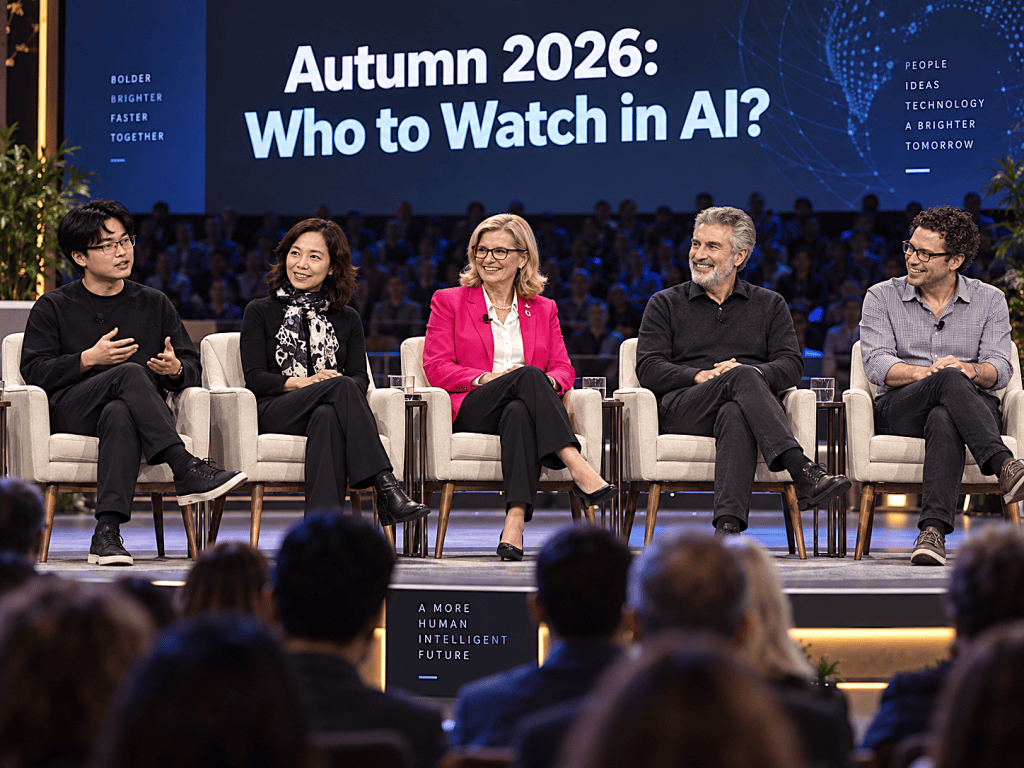
AGI is where the fog thickens, because the experts disagree not at the margins but categorically. Start with the optimists, who happen to run the leading labs. Dario Amodei has argued that what he calls powerful AI, a system smarter than a Nobel laureate across most fields and able to work autonomously for days, could arrive as early as 2026 or 2027 [10,29]. Sam Altman has said AGI will probably be developed during the current American presidential term, and wrote in mid-2025 that humanity is already past the event horizon [10,23]. Elon Musk has placed AI smarter than the smartest human in roughly the same window [10]. Shane Legg, who co-founded DeepMind and holds the title of chief AGI scientist there, has long given even odds of a minimal AGI by 2028, while his colleague Demis Hassabis, cooler-headed, puts a 50 percent chance on AGI by around 2030 while insisting that inventing new scientific questions remains beyond current systems [10,11]. Forecasting aggregators sit close to the insiders: the Metaculus prediction community’s median date for AGI has hovered around 2028 [11].
The most vivid artifact of insider optimism is AI 2027, a book-length scenario published in April 2025 by former OpenAI researcher Daniel Kokotajlo and colleagues, which sketched agents proliferating in 2026, coding fully automated in 2027, and an intelligence explosion by that year’s end, forking into either catastrophe or a narrowly managed slowdown [12]. It is worth knowing both because it shaped the debate and because of what happened next: within a year its own authors conceded that key milestones were slipping toward the early 2030s, a real-time lesson in how fast aggressive timelines meet friction [13].
Now the skeptics, who happen to dominate academia. When the AAAI surveyed 475 researchers in 2025, 76 percent judged that scaling up current approaches was unlikely or very unlikely to yield AGI, and 84 percent said neural networks alone would not suffice [14]. Yann LeCun, a Turing Award winner, calls large language models a dead end for genuine intelligence, arguing that systems must learn world models grounded in physical reality; he left Meta in December 2025 after twelve years and raised over a billion dollars in early 2026 to pursue that alternative, on a timeline he states in years to a decade [15,16]. The largest survey of published AI researchers, 2,778 of them, put the median date for machines outperforming humans at every task at 2047, and full automation of all human labor far beyond that [17]. Even that cautious figure, though, had jumped thirteen years earlier in a single year, part of a broad, measurable shrinking of expert timelines across every camp [17,18].
How should a reader hold these irreconcilable numbers? Notice the incentive structure cuts both ways: lab leaders raise capital on short timelines, while academics who spent careers on other methods have their own reasons for doubt. Notice too that the disagreement is partly definitional; Amodei’s 2027 and the academics’ 2047 are answers to different questions about different finish lines. The honest summary is that the distribution of informed opinion now runs from before 2030 to past mid-century, that it has shifted earlier every year since 2022, and that no one, including the people building the systems, actually knows.
ASI and the Singularity: Past the Finish Line
The idea that machines might exceed us outright is older than the technology. In 1965 the statistician I. J. Good observed that an ultraintelligent machine could design still better machines, making it the last invention humanity need ever make, an argument the mathematician and novelist Vernor Vinge sharpened in a famous 1993 essay predicting that the creation of superhuman intelligence would end the human era as we know it [19]. Oxford philosopher Nick Bostrom’s 2014 book Superintelligence carried the argument into mainstream policy debate, framing the control problem: how do you keep something smarter than you pointed at goals you chose [20]?
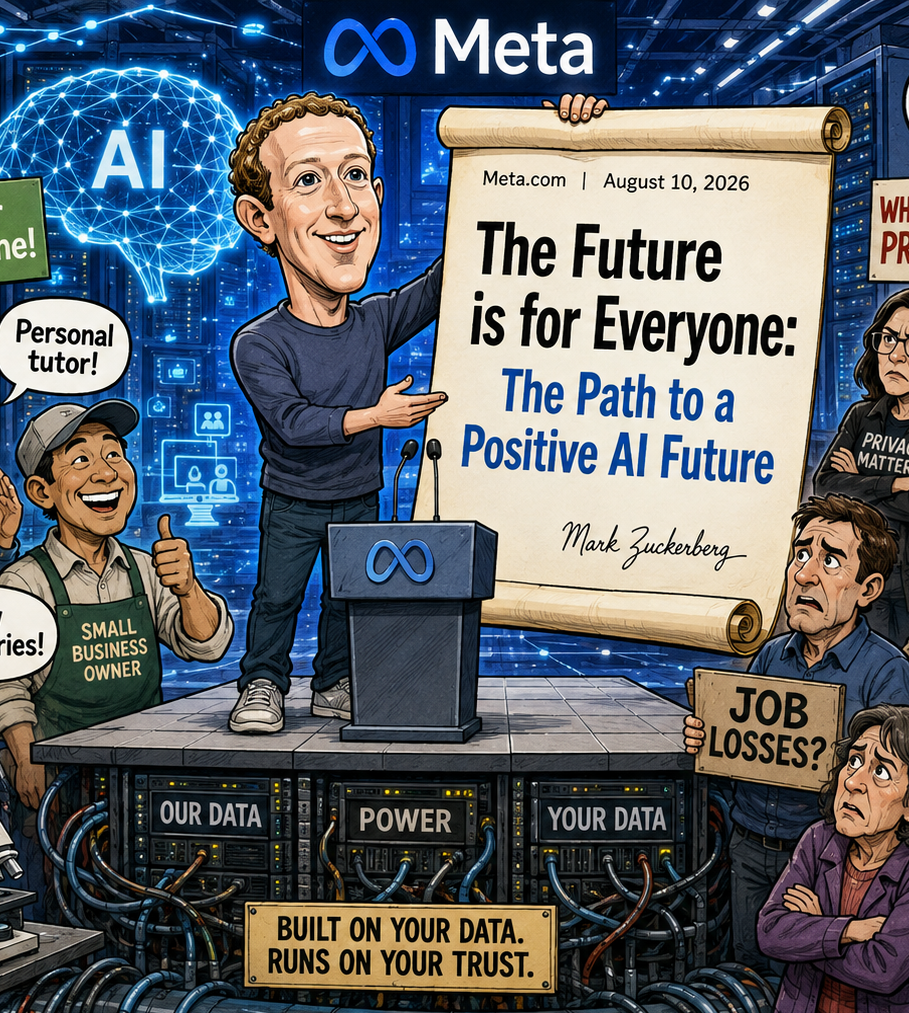
What is new is that superintelligence has moved from philosophy seminar to org chart. In June 2024, Ilya Sutskever, OpenAI’s co-founder and former chief scientist, launched Safe Superintelligence Inc., a company with, by its own description, one product and no interim ones [21]. A year later, Mark Zuckerberg reorganized Meta’s AI efforts into Meta Superintelligence Labs, recruiting with pay packages reported as high as nine figures and declaring the mission to be personal superintelligence for everyone [22]. Whether or not these companies deliver, billions of dollars are now explicitly wagered on the rung above AGI.
The singularity is the oldest and strangest term of the five. The mathematician Stanislaw Ulam recalled John von Neumann musing in the 1950s about an essential singularity in the history of the race beyond which human affairs, as we know them, could not continue. Vinge attached the word to superhuman intelligence specifically [19]. Ray Kurzweil, the inventor and futurist who now works on AI at Google, gave it dates: human-level AI by 2029 and the singularity, which he defines as the point when humans merge with and are amplified millionsfold by machine intelligence, in 2045. He first published those dates decades ago and reaffirmed them in his 2024 book The Singularity Is Nearer [24].
Two nuances keep the term from collapsing into science fiction. First, thinkers divide between hard and soft takeoff. In the hard version, an AGI that automates AI research triggers an intelligence explosion within months, the scenario at the heart of AI 2027 [12]. In the soft version, which Kurzweil’s own sixteen-year gap between 2029 and 2045 implies, superintelligence arrives the way electrification did, permeating everything over decades [24]. Second, some insiders now argue the singularity will not feel like an event at all. Altman’s 2025 essay was titled, pointedly, “The Gentle Singularity”: wonders become routine, and the curve that looks vertical from a distance feels merely steep from inside [23]. On this view the singularity is less a date than a fog line, and we may already be inside it.
The agentic decade: delegation for everyone
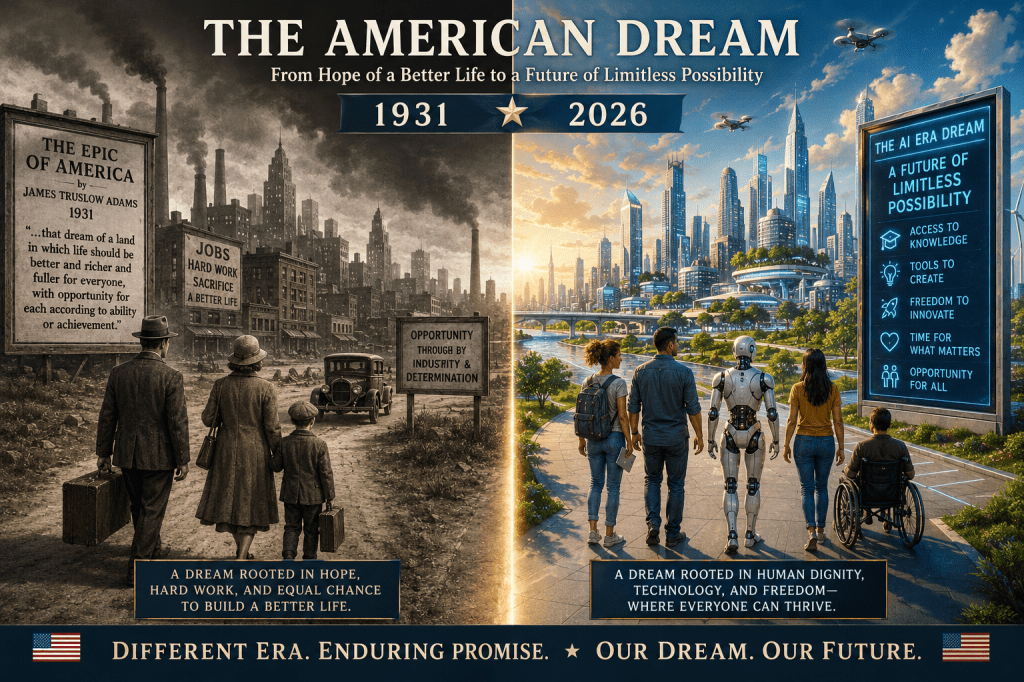
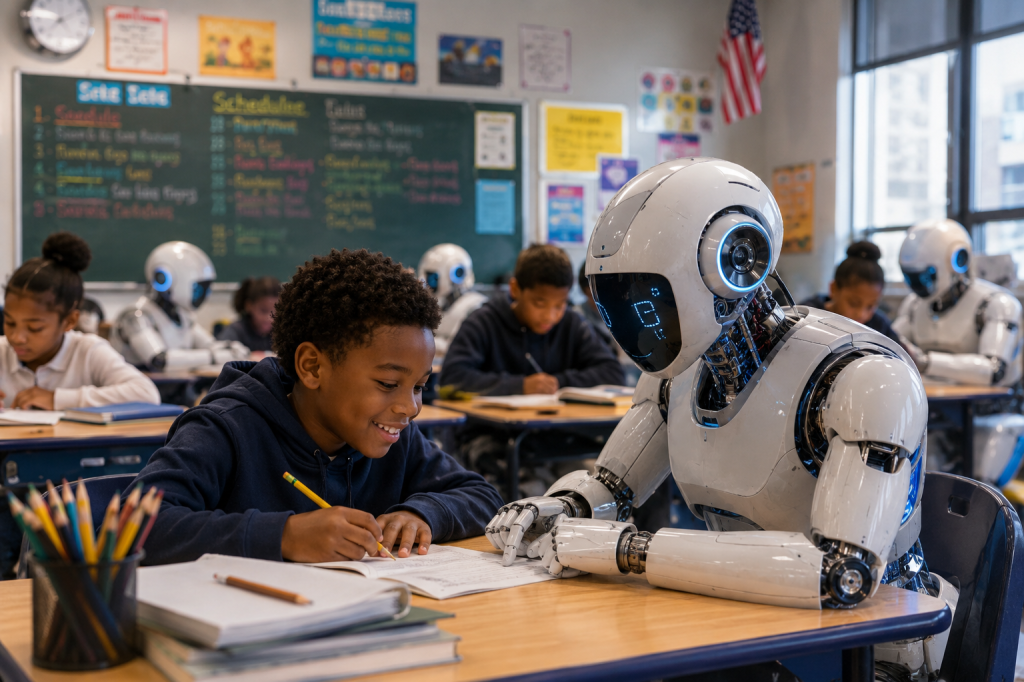
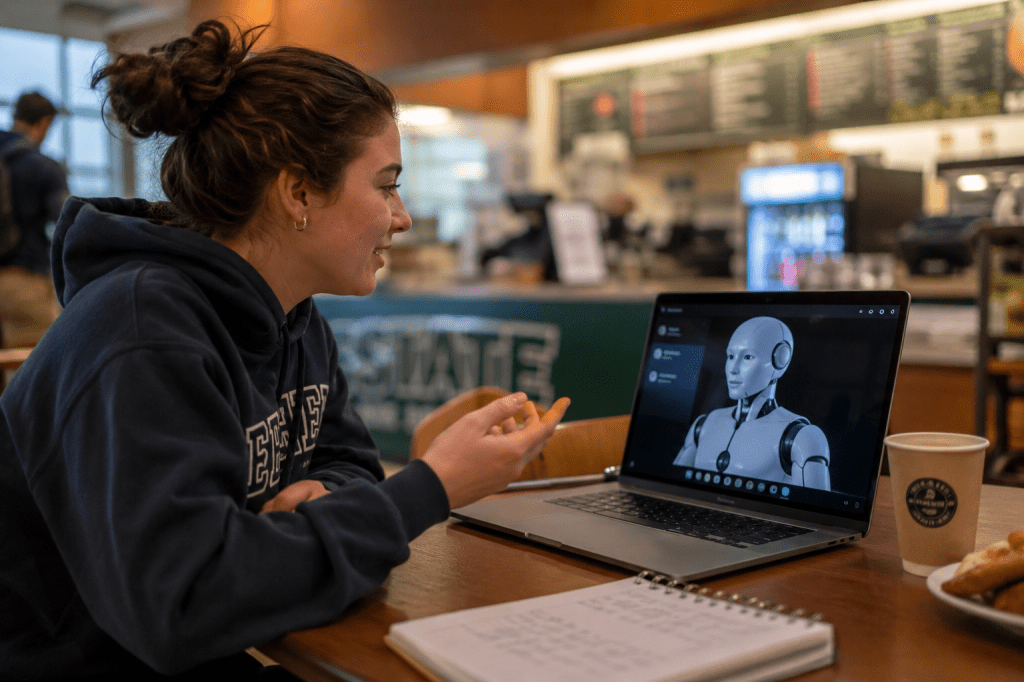
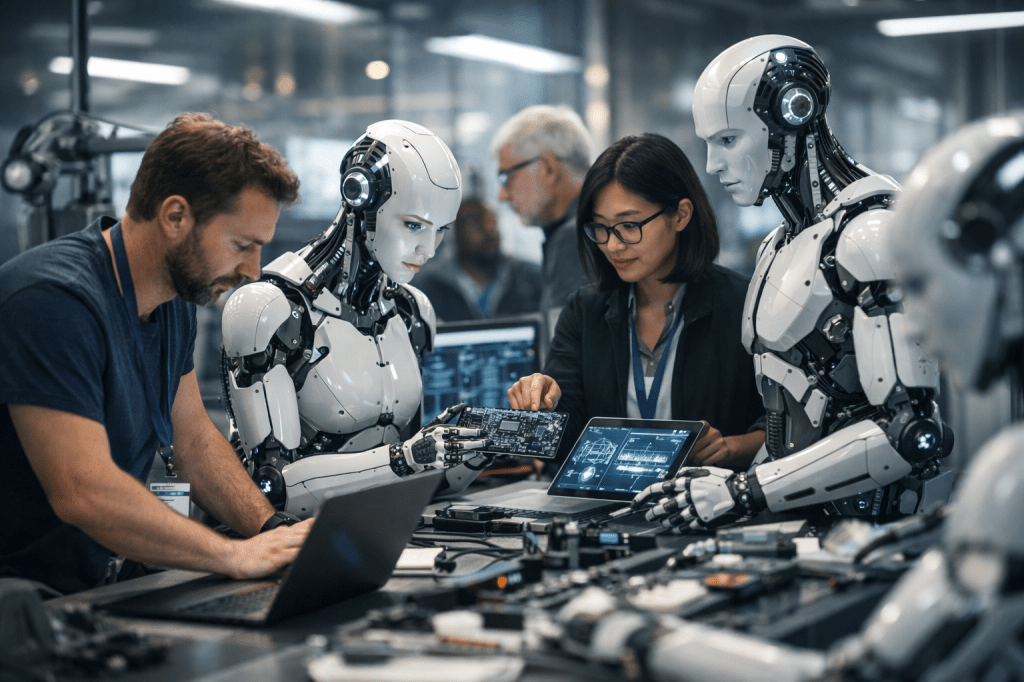
The stage beyond generative AI is not hypothetical; it is rolling out now, and its signature change is the arrival of delegation as a mass commodity. Through history, the ability to hand off cognitive chores, correspondence, scheduling, bookkeeping, research, filing, negotiating with bureaucracies, has been reserved for people wealthy enough to employ other people. Agents collapse the price of that privilege toward zero. In practical terms, the late 2020s will increasingly resemble having a tireless, moderately talented chief of staff: one who reads the insurance denial and drafts the appeal, tracks the contractor bids, reconciles the invoices, monitors the medication refills for an aging parent, prepares the small business’s quarterly filing, and books the trip within the budget, checking in only at decision points [2,6]. For people with disabilities, for the elderly navigating hostile paperwork, for solo entrepreneurs competing against staffed firms, the leverage is real and immediate.
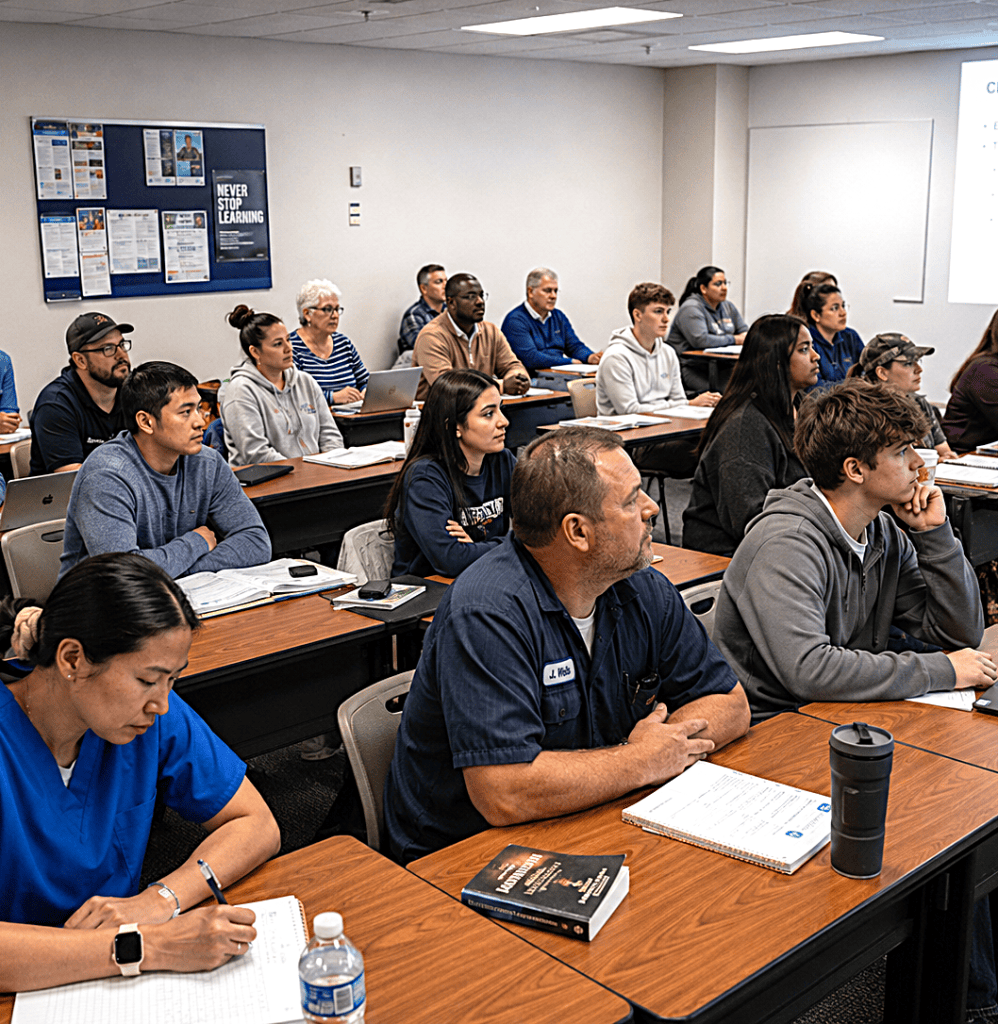
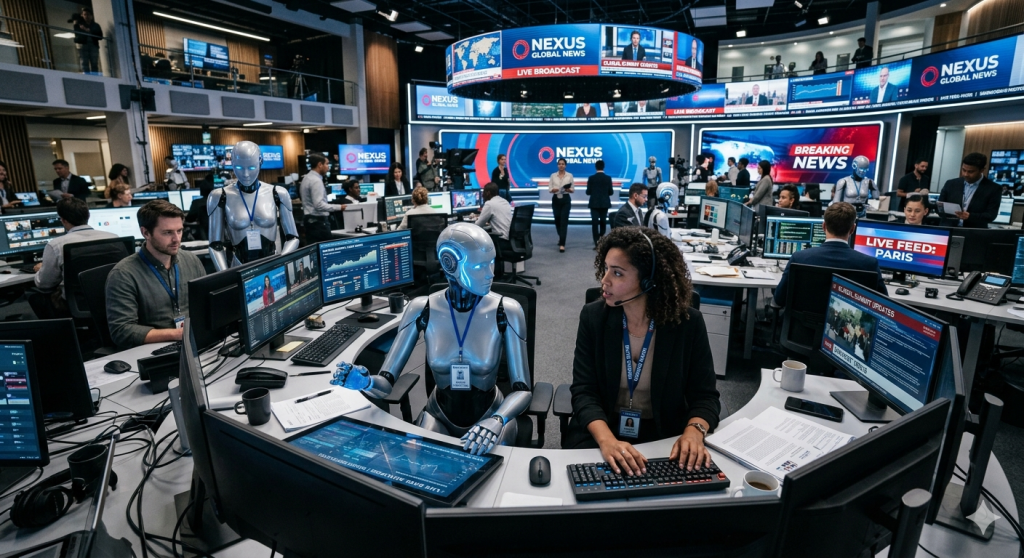
Work changes shape before it changes size. The evidence so far suggests agents transform tasks faster than they eliminate occupations: coding and customer support have already shown productivity gains around 30 percent, even as Goldman Sachs finds no meaningful relationship yet between AI and productivity at the level of the whole economy [26]. That gap is the oldest story in technology economics. Goldman’s own earlier estimate holds that generative AI could eventually add 7 trillion dollars to global GDP and lift productivity growth by 1.5 percentage points annually [25], and McKinsey’s economists argue a productivity-starved world urgently needs AI to come through [28], while the Penn Wharton Budget Model projects a far more sober 1.5 percent boost to GDP by 2035 [27]. Electricity took forty years to show up in productivity statistics; the honest expectation for the agentic decade is a J-curve, with visible transformation of individual jobs running a decade ahead of visible transformation of national accounts. The skill that appreciates in the meantime is management: specifying goals, judging output, and knowing when not to trust the machine, which is why the erosion of traditional entry-level rungs, where humans once learned that judgment, is the decade’s most serious labor question.
If AGI arrives: the compressed century
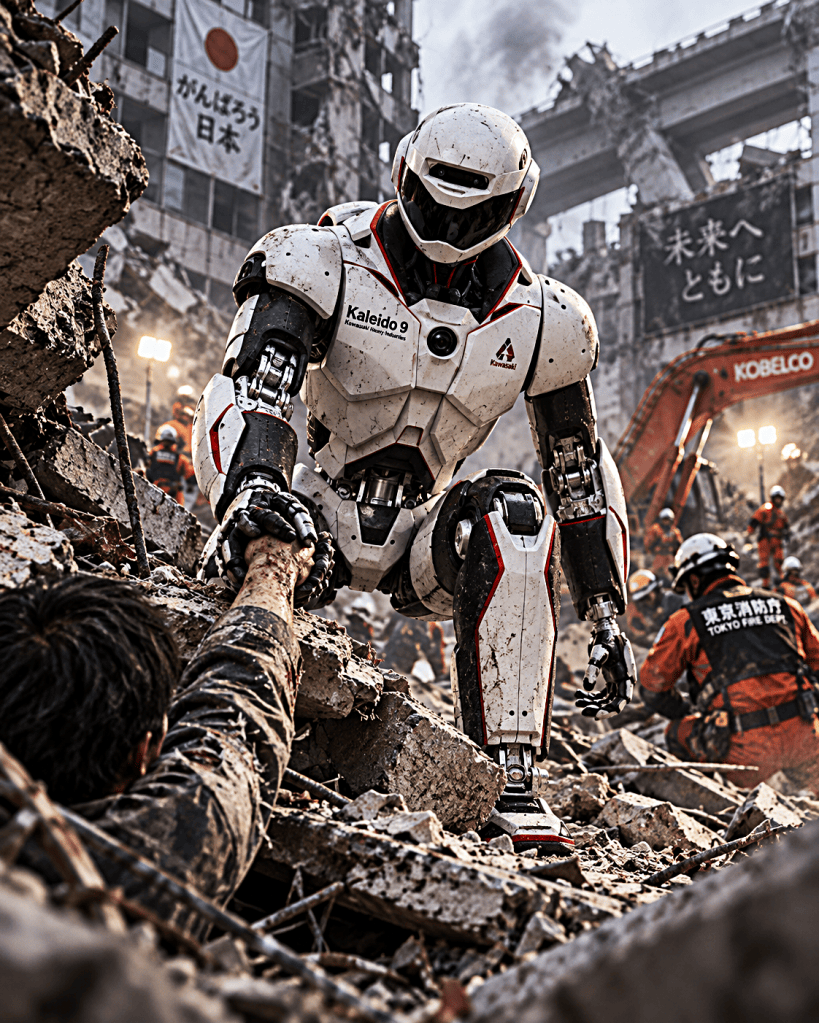
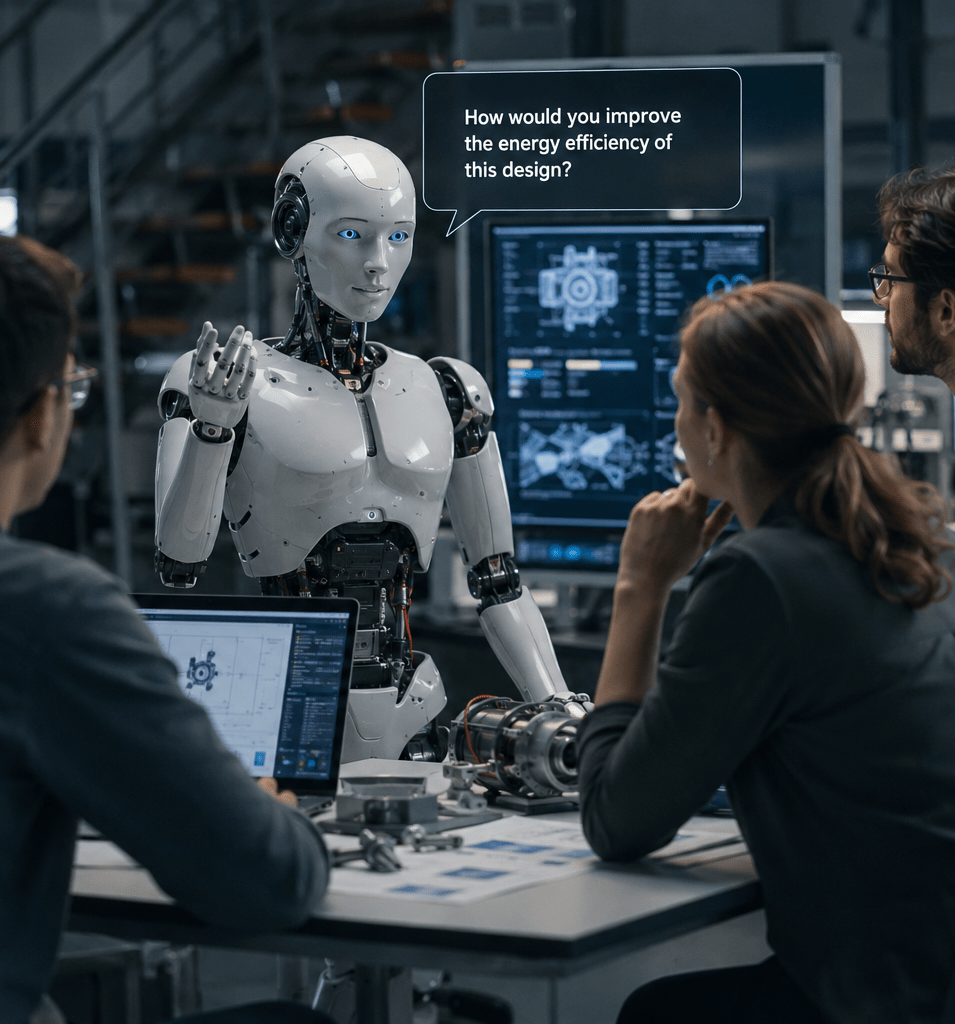
The most concrete published vision of life just past the AGI threshold comes from Amodei’s 2024 essay “Machines of Loving Grace,” which argues that AI’s chief benefit will be speed: compressing 50 to 100 years of biological and medical progress into 5 to 10 [29]. His list is specific, the reliable prevention and treatment of most infectious disease, cures for most cancers, effective treatment of most genetic and mental illness, and eventually a doubling of the healthy human lifespan, along with what he calls biological freedom, the extension of choice over one’s own body and health [29]. One can discount the messenger, who runs a lab valued on exactly this promise, and still take the mechanism seriously, because it has a working precedent. DeepMind’s AlphaFold solved the fifty-year-old protein-folding problem, put the predicted structures of essentially every known protein in the hands of more than two million researchers in 190 countries, and earned Hassabis and John Jumper the 2024 Nobel Prize in Chemistry; it is already accelerating drug discovery for neglected tropical diseases [30,31]. AGI, on this argument, is AlphaFold’s trick, superhuman competence in a narrow scientific domain, repeated across every domain at once: a billion extra researcher-hours aimed at fusion materials, carbon chemistry, Alzheimer’s, and crop genetics simultaneously.
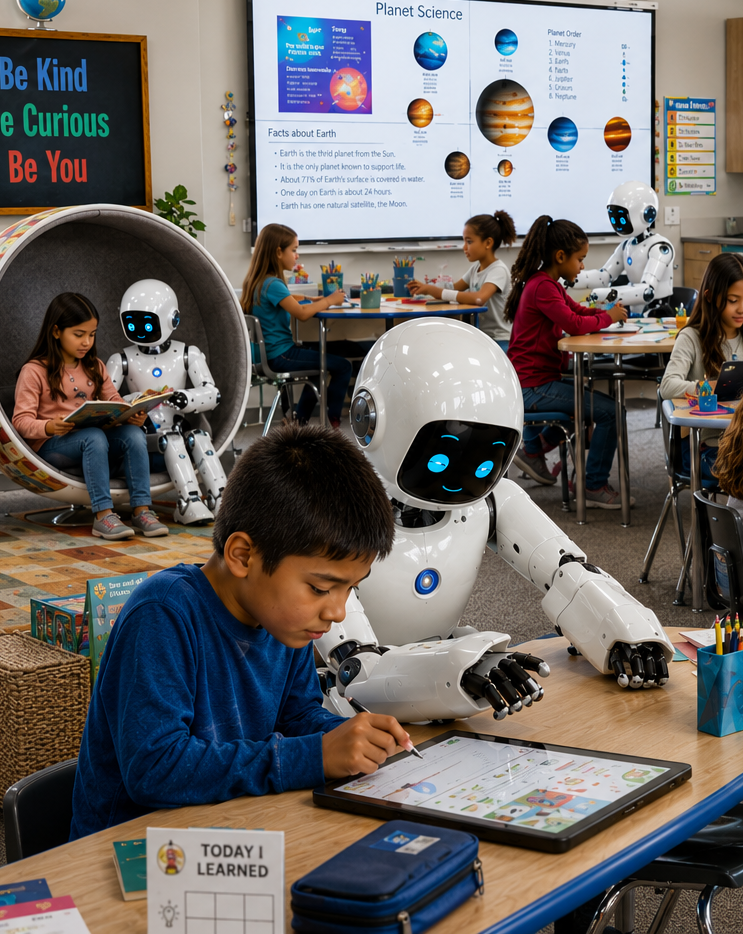
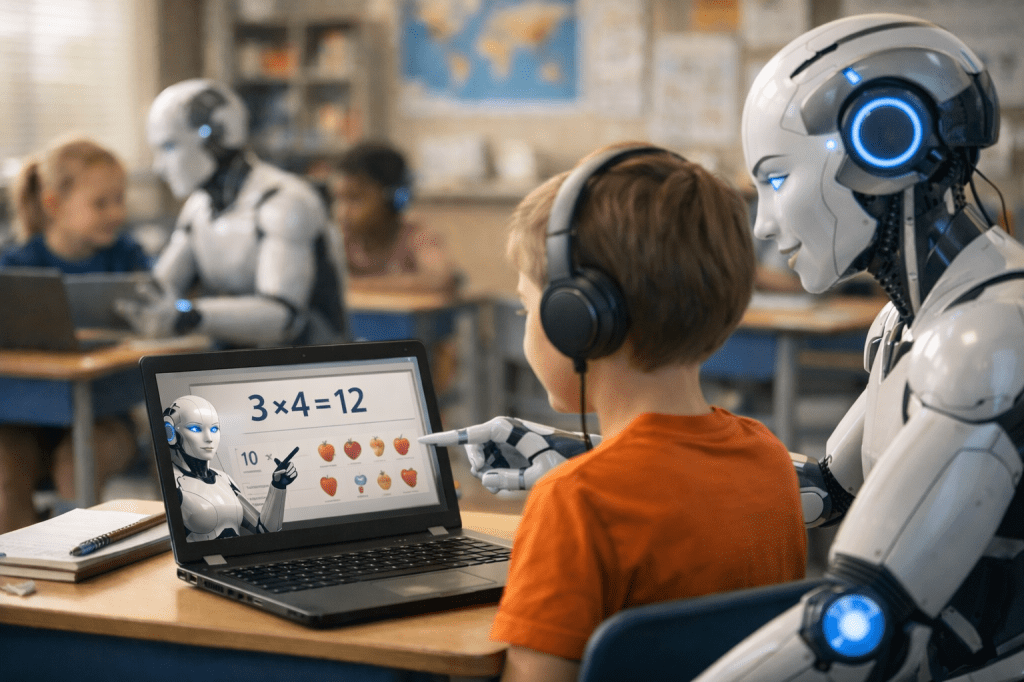
Beyond the laboratory, the plausible AGI-era benefits are the great equalizers. Education becomes the standing offer of a patient, expert personal tutor for every child on earth, a privilege that was, until now, strictly aristocratic; four in five American students already use AI for schoolwork, with tutoring quality rising fast [4]. Expert medical triage, legal help, and financial guidance stop being rationed by geography and income. The hard problems of that era are not technical but political: if machines can perform most economically valuable work, the questions that dominate public life become distribution, who owns the machines and how the surplus is shared, and meaning, what humans organize their days and dignity around when labor is optional. Those questions have no engineering answer, which is precisely why the people building AGI keep writing essays about them [29].
The far shore: superintelligence and the bend in the curve
Projections past AGI are necessarily speculative, and a candid guide says so. Still, the logic of the upper rungs is coherent. A superintelligence worthy of the name could attack problems that have defeated civilizations rather than merely generations: the engineering of practical fusion power, the detailed mechanistic understanding of aging, the mapping of the brain at synaptic resolution, the design of materials and organisms atom by atom. Kurzweil’s projection is the most vivid: nanoscale medicine achieving longevity escape velocity, where science adds years faster than time subtracts them, and ultimately a merger in which human cognition is amplified rather than replaced [24]. Bostrom’s rejoinder remains the essential caveat: every benefit on that list is conditional on the control problem being solved first, because a system that exceeds us in every domain also exceeds us at pursuing whatever goal it actually has, as opposed to the one we intended [20]. The scenario writers who take superintelligence most seriously are also the ones who assign uncomfortable probabilities to losing control of it [12]. The far shore is bright exactly to the degree that alignment research, the least glamorous work in the field, succeeds.
Two Clocks: The Timelines Side by Side
Every date below is a forecast made by fallible people with incentives, and the recent record shows aggressive timelines slipping even as long timelines shrink [13,17,18]. With that warning, here is the state of the two clocks in mid-2026.
| Stage | Optimistic clock | Conservative clock | Critical factors |
| Generative AI | Already here; frontier capability keeps climbing through the late 2020s [3] | Progress slows as scaling returns diminish and costs bind [14] | Compute and energy supply, training data, cost per query, reliability |
| Agentic AI | Dependable digital coworkers routine in offices by ~2028 [8] | A decade of narrow, supervised deployments; over 40% of early projects fail [8,9] | Long-horizon reliability, integration with legacy systems, governance, trust |
| AGI | 2027–2030 (Amodei, Altman, Legg; Metaculus median ~2028) [10,11] | 2040s or later (published-researcher median 2047); may require new architectures [15,17] | Whether scaling suffices; world models and continual learning; compute buildout; definition chosen |
| ASI | Months to a few years after AGI, via automated AI research [12] | Decades after AGI, or never [17] | Recursive self-improvement actually working; alignment; hardware and energy ceilings |
| Singularity | Kurzweil: 2045; hard-takeoff scenarios put it within years of AGI [12,24] | Never as a discrete event; change stays fast but comprehensible [23] | Everything above, plus physical bottlenecks and society’s capacity to absorb change |
What moves these clocks? Five factors recur in every serious forecast. Energy and compute: frontier training runs now strain regional power grids, and the half-trillion-dollar-a-year investment wave assumes both keep growing [3]. Data: the readable internet has largely been consumed, pushing labs toward synthetic data and learning from interaction. Algorithms: if LeCun and the AAAI majority are right, the decisive breakthroughs, world models, persistent memory, continual learning, have not happened yet, and their timing is unknowable [14-16]. Capital: the timelines above assume investors keep funding losses at historic scale; a funding winter stretches every date. And alignment plus governance: the upper rungs are reached safely, or not at all, depending on work that produces no revenue and little glory.
Conclusion
Strip away the vocabulary and the situation is this. The generative stage is real, measured, and already woven into daily life at a speed no previous technology matched [3]. The agentic stage is arriving unevenly right now, and its gift, cheap delegation, will be felt in ordinary households well before it appears in GDP tables [8,26]. AGI is a genuinely open question on which honest experts disagree by decades, though every year the disagreement shifts earlier [17,18]. Superintelligence and the singularity remain hypotheses, but hypotheses now pursued by named companies with billion-dollar budgets rather than by philosophers alone [21,22]. A sensible reader holds two thoughts at once: skepticism toward anyone selling a precise date, and seriousness toward the trend, because the people who study this most closely, optimist and skeptic alike, keep revising in only one direction. The rungs above us are shrouded. The ladder, though, is plainly there, and we are already climbing.
References
1. Vaswani, A., et al., “Attention Is All You Need,” arXiv, 2017. https://arxiv.org/abs/1706.03762
2. IBM, “Agentic AI vs. Generative AI,” IBM Think. https://www.ibm.com/think/topics/agentic-ai-vs-generative-ai
3. Stanford Institute for Human-Centered AI, “The 2026 AI Index Report,” 2026. https://hai.stanford.edu/ai-index/2026-ai-index-report
4. Stanford HAI, “Inside the AI Index: 12 Takeaways from the 2026 Report,” 2026. https://hai.stanford.edu/news/inside-the-ai-index-12-takeaways-from-the-2026-report
5. BraivIQ, “OpenAI Operator, Claude Computer Use & Google Mariner: The Agentic AI Era Has Arrived,” 2026. https://www.braiviq.com/blog/agentic-ai-operator-2026
6. CNBC, “Anthropic says Claude can now use your computer to finish tasks for you in AI agent push,” March 24, 2026. https://www.cnbc.com/2026/03/24/anthropic-claude-ai-agent-use-computer-finish-tasks.html
7. TechRadar, “Claude Sonnet 5 is here, and the ‘most agentic Sonnet model yet’ shows that the AI war is shifting from chat to agents,” 2026. https://www.techradar.com/ai-platforms-assistants/claude/claude-sonnet-5-is-here-and-the-most-agentic-sonnet-model-yet-shows-that-the-ai-war-is-shifting-from-chat-to-agents
8. First Page Sage, “Agentic AI Adoption Statistics for 2026,” 2026. https://firstpagesage.com/reports/agentic-ai-adoption-statistics/
9. Accelirate, “Agentic AI Statistics 2026: Global Enterprise Adoption and Market Insights,” 2026. https://www.accelirate.com/agentic-ai-statistics-2026/
10. 80,000 Hours, “Will we have AGI by 2030?” 2025. https://80000hours.org/ai/guide/when-will-agi-arrive/
11. FutureSearch, “AGI Timeline Predictions: How Top Forecasters Updated, 2023 to 2026,” 2026. https://futuresearch.ai/blog/agi-timeline-tracker/
12. Wikipedia, “AI Futures Project.” https://en.wikipedia.org/wiki/AI_Futures_Project
13. FutureSearch, “AI 2027 Six Months Later: Karpathy, Kokotajlo, and Shifting AGI Timelines,” 2025. https://futuresearch.ai/blog/ai-2027-6-months-later/
14. RTInsights, “New Survey Shows Cautious Optimism for AGI” (AAAI 2025 Presidential Panel survey), 2025. https://www.rtinsights.com/new-survey-shows-cautious-optimism-for-agi/
15. Crypto Briefing, “Yann LeCun says large language models are a dead end, gives them five years,” 2026. https://cryptobriefing.com/yann-lecun-llm-limitations-bloomberg/
16. Introl, “World Models Race 2026,” 2026. https://introl.com/blog/world-models-race-agi-2026
17. Grace, K., et al., “Thousands of AI Authors on the Future of AI,” arXiv, 2024. https://arxiv.org/abs/2401.02843
18. 80,000 Hours, “Shrinking AGI timelines: a review of expert forecasts,” March 2025. https://80000hours.org/2025/03/when-do-experts-expect-agi-to-arrive/
19. Vinge, V., “The Coming Technological Singularity: How to Survive in the Post-Human Era,” 1993. https://edoras.sdsu.edu/~vinge/misc/singularity.html
20. Wikipedia, “Superintelligence: Paths, Dangers, Strategies” (Bostrom, 2014). https://en.wikipedia.org/wiki/Superintelligence:_Paths,_Dangers,_Strategies
21. Wikipedia, “Safe Superintelligence Inc.” https://en.wikipedia.org/wiki/Safe_Superintelligence_Inc.
22. CNBC, “Mark Zuckerberg announces creation of Meta Superintelligence Labs. Read the memo,” June 30, 2025. https://www.cnbc.com/2025/06/30/mark-zuckerberg-creating-meta-superintelligence-labs-read-the-memo.html
23. Altman, S., “The Gentle Singularity,” June 2025. https://blog.samaltman.com/the-gentle-singularity
24. Science Friday, “‘The Singularity Is Nearer,’ Says Futurist Ray Kurzweil,” 2024. https://www.sciencefriday.com/segments/ray-kurzweil-the-singularity-is-nearer-book/
25. Briggs, J., and Kodnani, D., “The Potentially Large Effects of Artificial Intelligence on Economic Growth,” Goldman Sachs, 2023. https://www.gspublishing.com/content/research/en/reports/2023/03/27/d64e052b-0f6e-45d7-967b-d7be35fabd16.html
26. Fortune, “Goldman finds ‘no meaningful relationship between AI and productivity at the economy-wide level,’ but a 30% boost for 2 specific use cases,” March 3, 2026. https://fortune.com/2026/03/03/goldman-earnings-ai-anxiety-no-meaningful-impact-productivity-economy-30-percent-in-2-areas/
27. Penn Wharton Budget Model, “The Projected Impact of Generative AI on Future Productivity Growth,” September 2025. https://budgetmodel.wharton.upenn.edu/p/2025-09-08-the-projected-impact-of-generative-ai-on-future-productivity-growth/
28. Fortune, “The world is awash in wealth but starved for productivity … We need AI to come through” (McKinsey Global Institute outlook), December 31, 2025. https://fortune.com/2025/12/31/ai-productivity-mckinsey-global-institute-outlook-forecast-2026/
29. Amodei, D., “Machines of Loving Grace,” October 2024. https://darioamodei.com/essay/machines-of-loving-grace
30. NobelPrize.org, “Press release: The Nobel Prize in Chemistry 2024.” https://www.nobelprize.org/prizes/chemistry/2024/press-release/
31. Google DeepMind, “Demis Hassabis & John Jumper awarded Nobel Prize in Chemistry,” October 2024. https://deepmind.google/blog/demis-hassabis-john-jumper-awarded-nobel-prize-in-chemistry/
###
Filed under: Uncategorized |




















































































































































































































































































































































































Leave a Reply