






By Jim Shimabukuro (assisted by Gemini)
Editor
In early October 2026, the Big Lever Institute (BLI) launched its online learning community to the public, offering free, un-paywalled cohorts designed to cultivate adult talent in AI systems and entrepreneurial operations. What sets the institute apart is not merely its non-profit, 501(c)(3) legal framework or its subsidy model underwritten by private equity due-diligence work. Rather, its most radical feature lies in its operational footprint: a core human team of just two to ten employees running a sprawling educational organization without an expensive administrative apparatus. This operational leverage—termed the ‘AI multiplier’—relies deeply on agentic automation. By deploying custom AI agents that manage grading feedback loops, document generation, community moderation, and administrative triage, the institute collapses the traditional marginal cost of serving additional students toward the bare cost of cloud computing APIs (Big Lever, 2026).
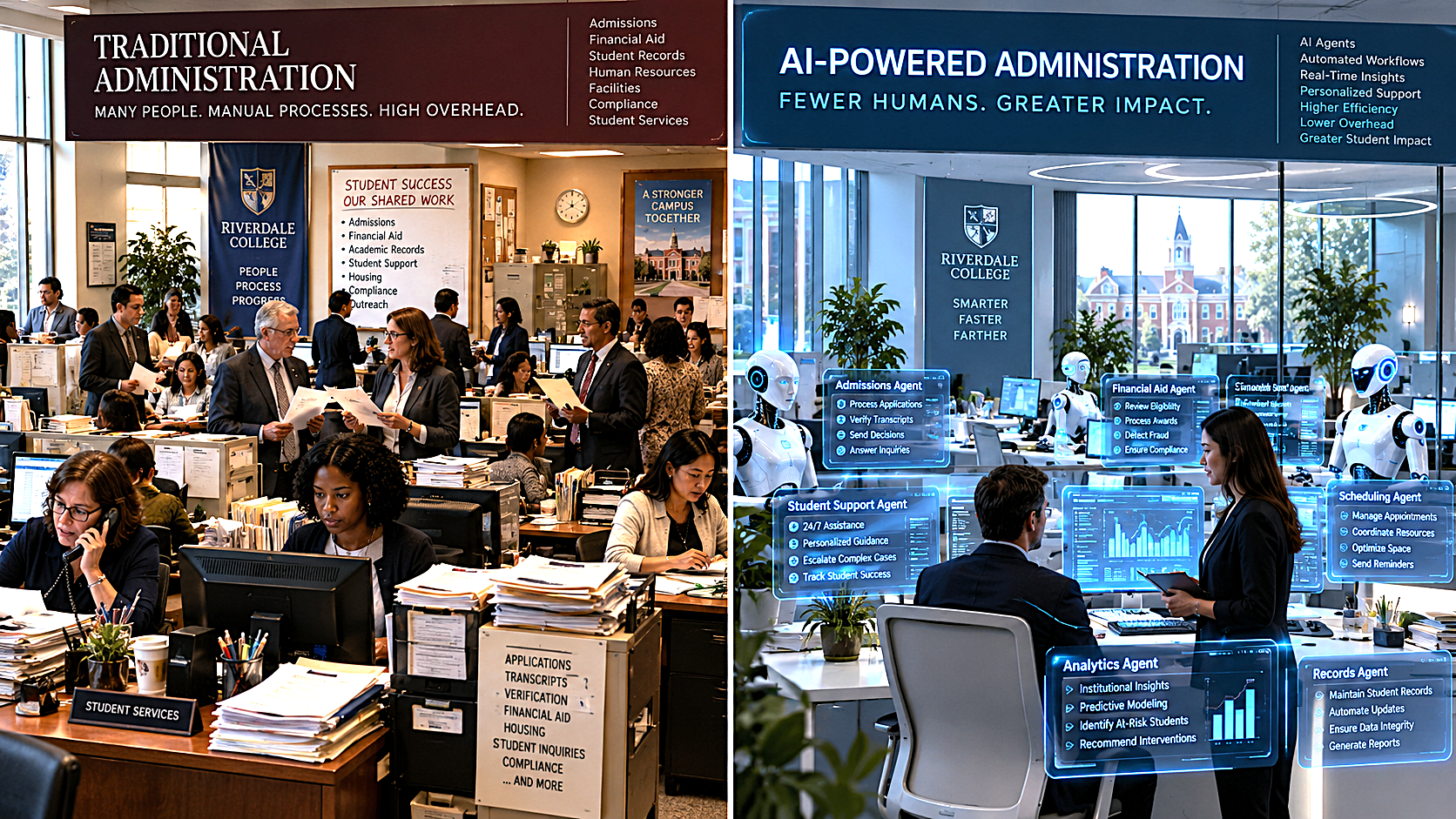
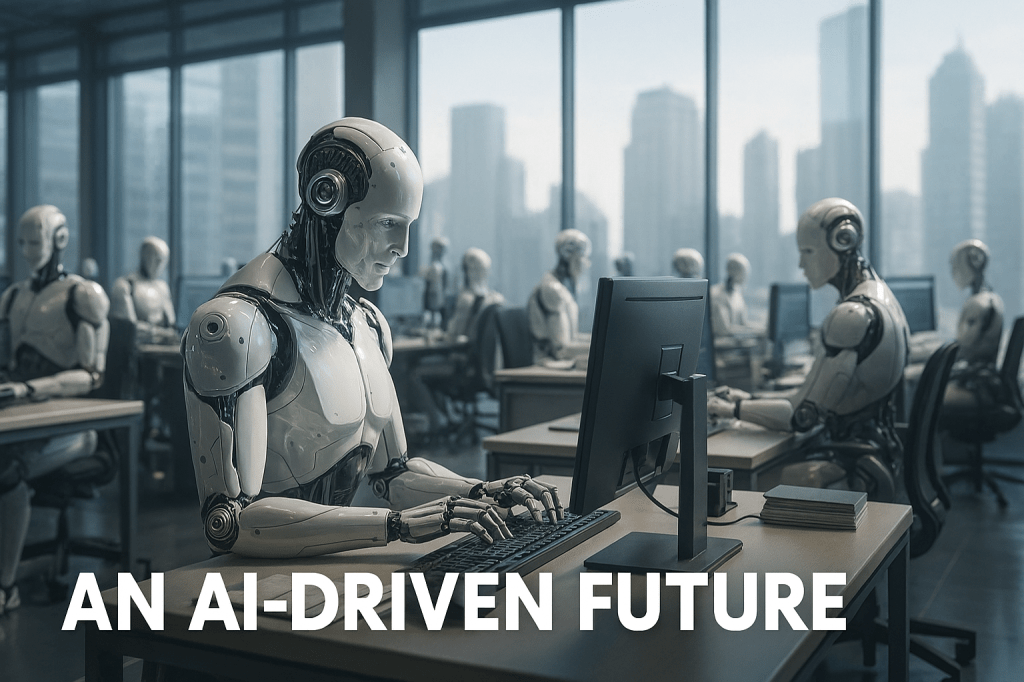
This operational model signals a profound shift in higher education and corporate learning. Historically, expanding an educational institution required a proportional expansion in human overhead. Adding a thousand students meant hiring dozens of teaching assistants, administrative officers, and customer service staff. Under an agentic framework, that linear scaling relationship breaks down. As autonomous multi-agent architectures mature across 2026, the AI multiplier is evolving from an intriguing experiment in lean startups into a structural force that threatens to rewrite the economics of both K-12 and post-secondary schooling over the next decade.
Deconstructing the Machine: How the AI Multiplier Operates
To understand the mechanics of the AI multiplier, one must distinguish between the generative AI tools of 2023 and the agentic architectures operating in 2026. Early generative AI acted primarily as a passive text generator, requiring constant human prompting to produce isolated outputs. Agentic AI, by contrast, operates with goal-directed autonomy. It executes multi-step workflows, interacts with digital tools, queries external system databases, and coordinates with other specialized agents across enterprise software backbones.
At the Big Lever Institute, this workflow functions as a synchronized multi-agent environment. When a student submits a course project, an ingestion agent parses the submission and checks formatting; a evaluation agent evaluates the work against programmatic grading rubrics; and a community moderation agent routes relevant discussion prompts into learning channels—all without requiring a human administrator to click ‘submit.’ Human staff remain in the loop, but their role shifts from primary processing to exception handling and strategic mentorship.
This approach reflects broader patterns in institutional software deployment throughout 2026. Production data published by DRUID AI in May 2026 revealed that higher education institutions deploying autonomous agents achieved dramatic operational efficiencies, including an 85% first-contact resolution rate and a 40% reduction in student service processing times across campus systems (Balaceanu, 2026). In these environments, agents do not simply answer static FAQs; they query student information systems, manage financial aid documentation tracking, and execute administrative workflows across web portals, mobile apps, and institutional chat platforms around the clock.
Similarly, enterprise learning platforms such as Cornerstone Galaxy launched adaptive learning agents in early 2026 designed to orchestrate continuous skill development, automated course assistance, and real-time knowledge synthesis across large organizations (Cornerstone, 2026). In recruitment and admissions, data published by Inside Higher Ed and EdSurge indicates that nearly 47% of enrollment management teams have adopted agentic AI to manage application-completion workflows, compressing outreach cycles and improving admit-to-enroll yields without expanding admissions staff (Digital Applied, 2026).
Projecting the Five-to-Ten Year Trajectory: Dissemination and Application
Over the next five to ten years, the dissemination of the AI multiplier model into K-12 school districts and higher education institutions is likely to follow three distinct phases: immediate administrative consolidation, structural curricular customization, and systemic labor reorganization.
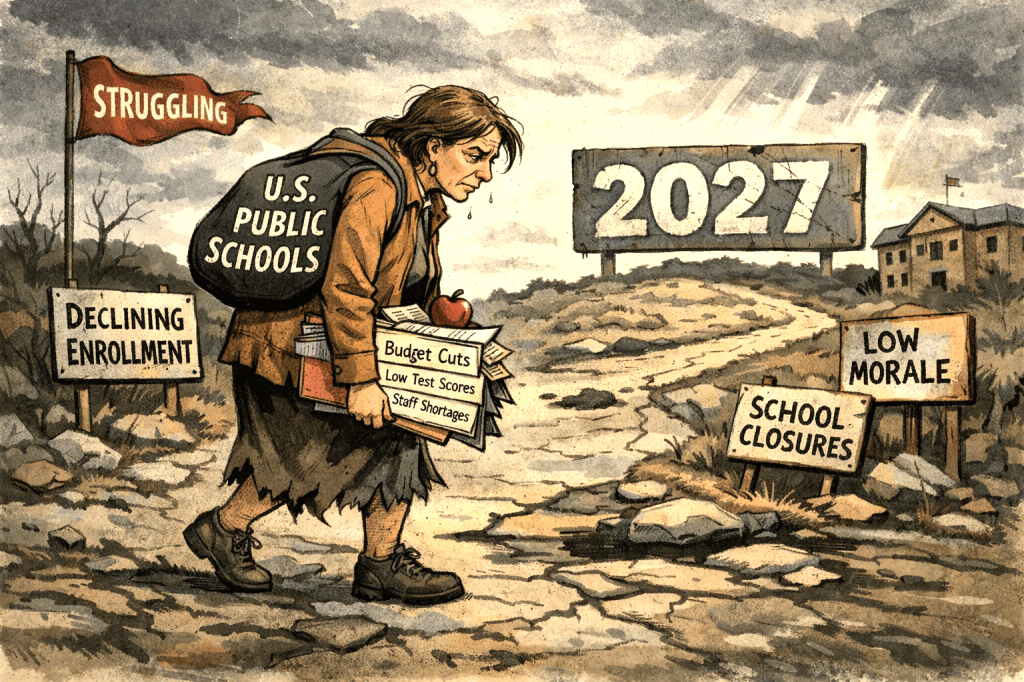
In the short term (one to three years), school districts and university systems facing severe budgetary constraints and enrollment declines will adopt agentic automation primarily for administrative survival. In K-12 systems, multi-agent frameworks will automate localized lesson plan generation, state compliance mapping, individualized education program (IEP) tracking, and routine parental communication (Fullestop, 2026). Higher education institutions will expand agentic recruiting, automated credit transfer evaluation, and 24/7 financial aid navigation. By shifting administrative workloads onto agentic layers, institutions can maintain operational continuity even as staff headcount shrinks through attrition.
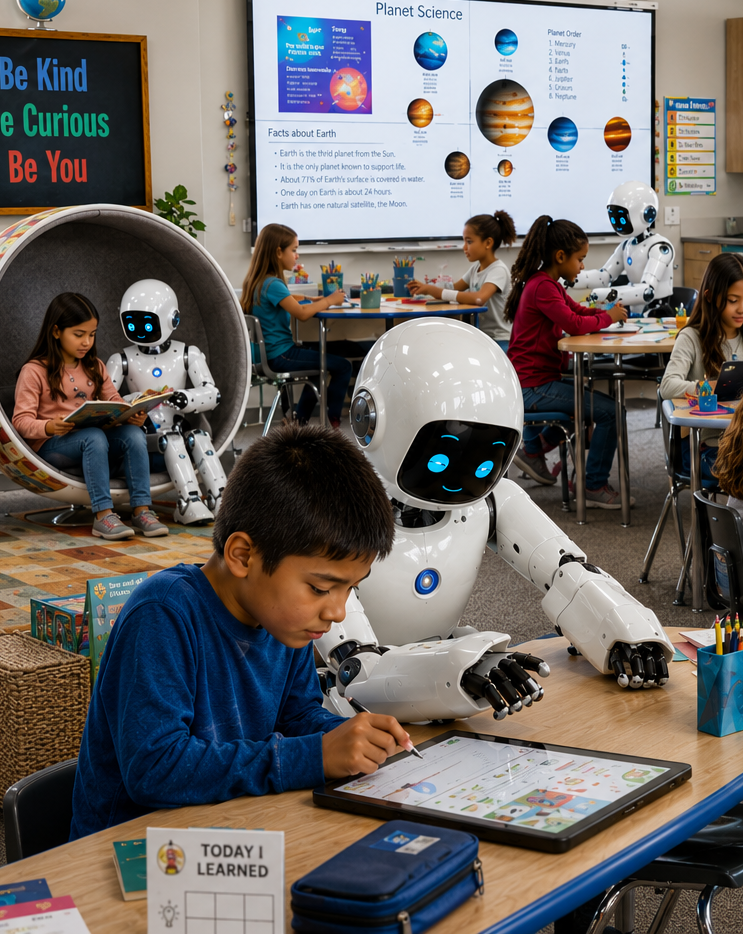
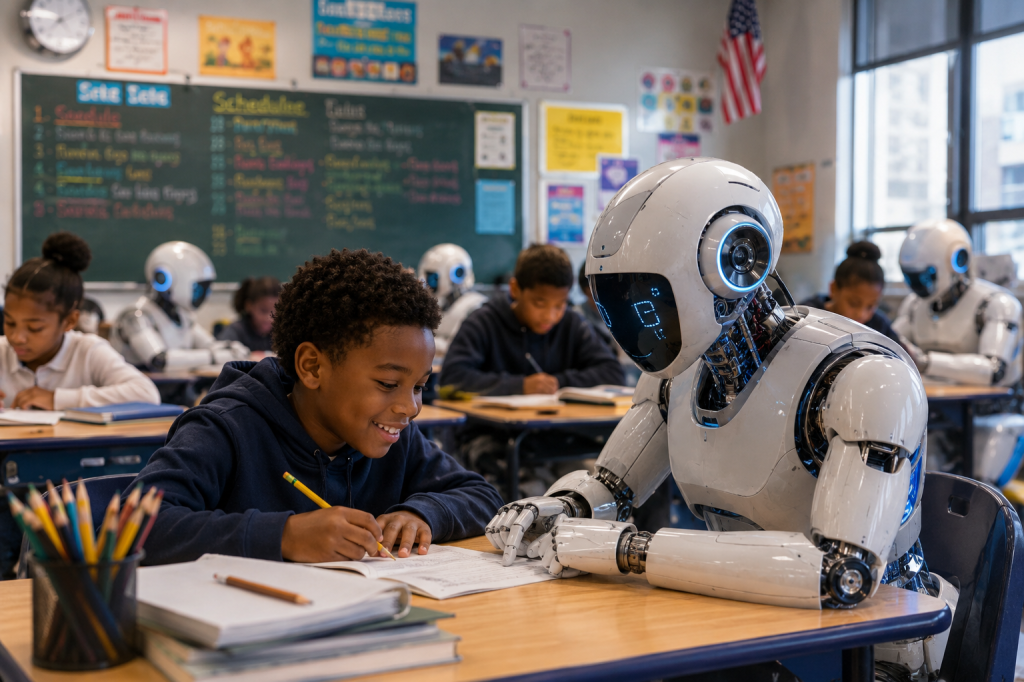
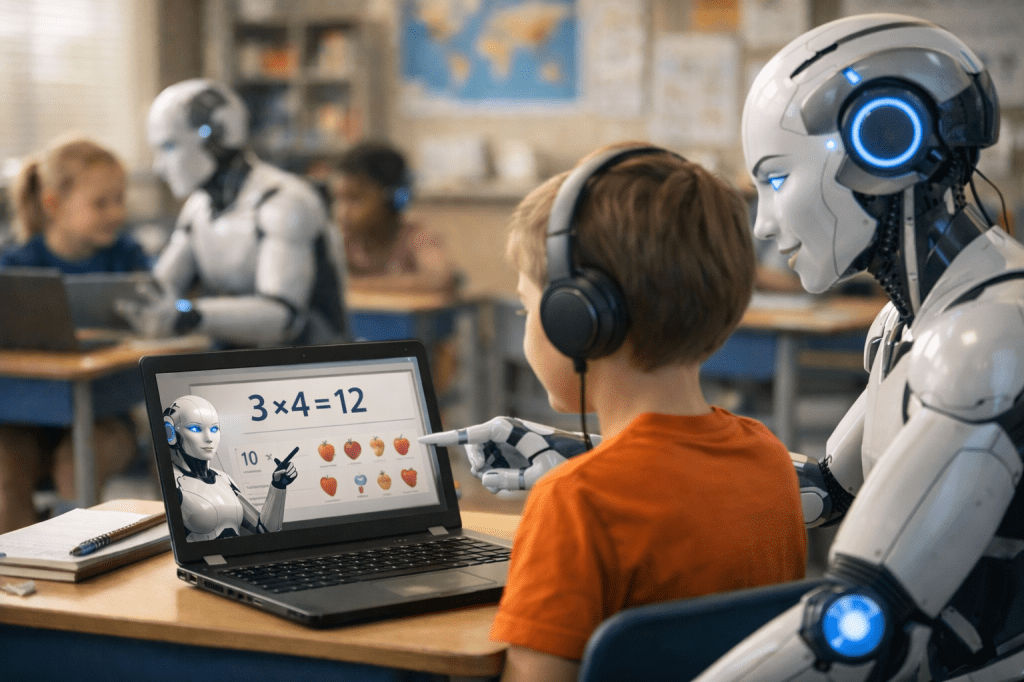
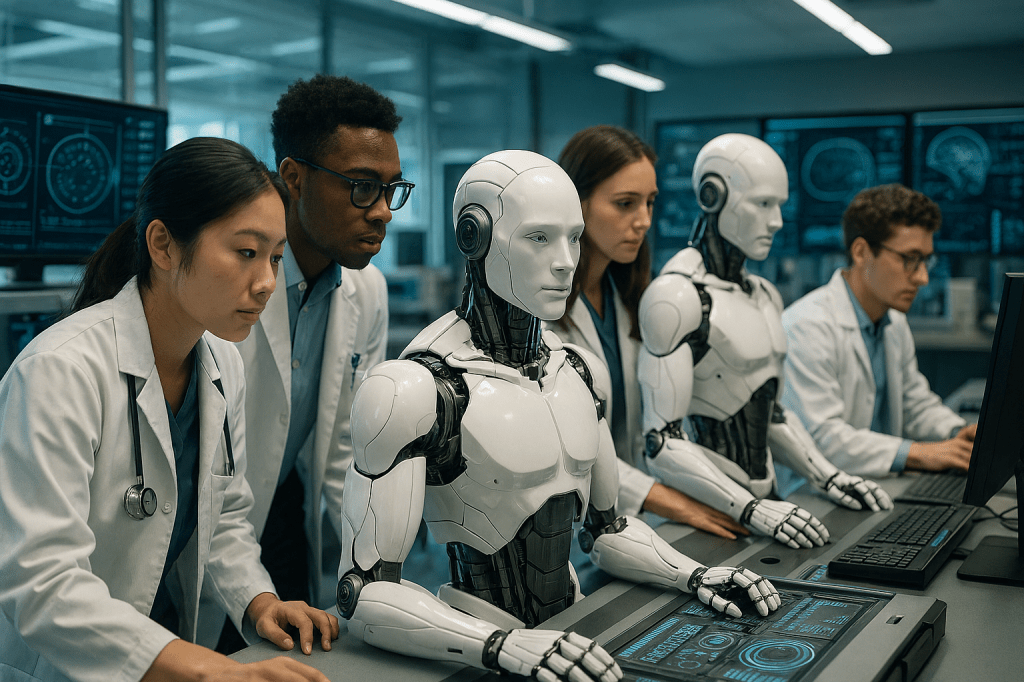
In the medium term (three to seven years), the AI multiplier will shift from administrative triage to core pedagogical delivery. Modern edtech architecture is already evolving toward ‘multi-agent orchestration,’ where dedicated teacher agents design course pathways, proctor agents monitor academic integrity, and adaptive mentor agents provide real-time cognitive scaffolding to individual learners (Fullestop, 2026). In large online higher education programs, this capability could dramatically reduce student churn and drop-out rates. Research in computer science and higher education literature highlights that agentic AI can dynamically restructure learning difficulty, offer Socratic feedback, and adapt instructional styles based on real-time student interaction patterns, delivering individual coaching at a scale previously reserved for elite private tutoring (IEEE Computer Society, 2026).
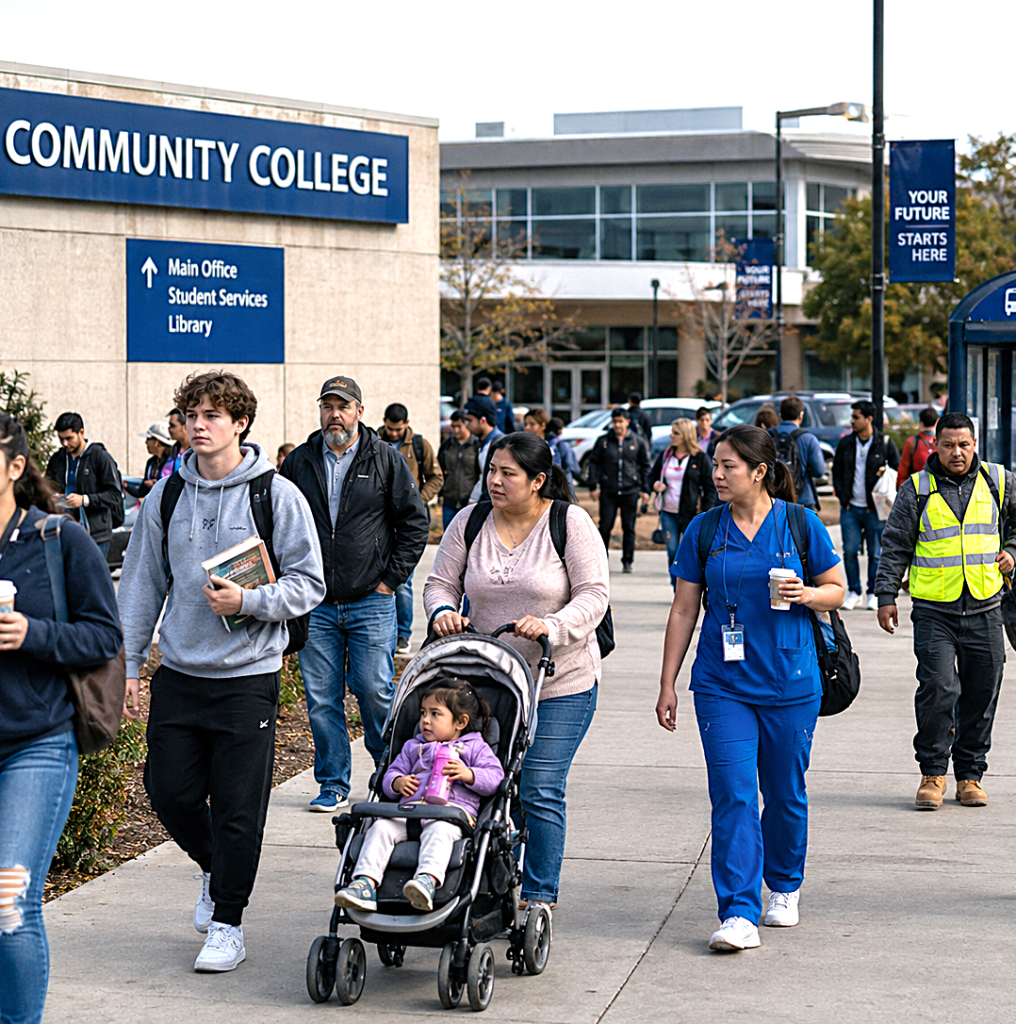
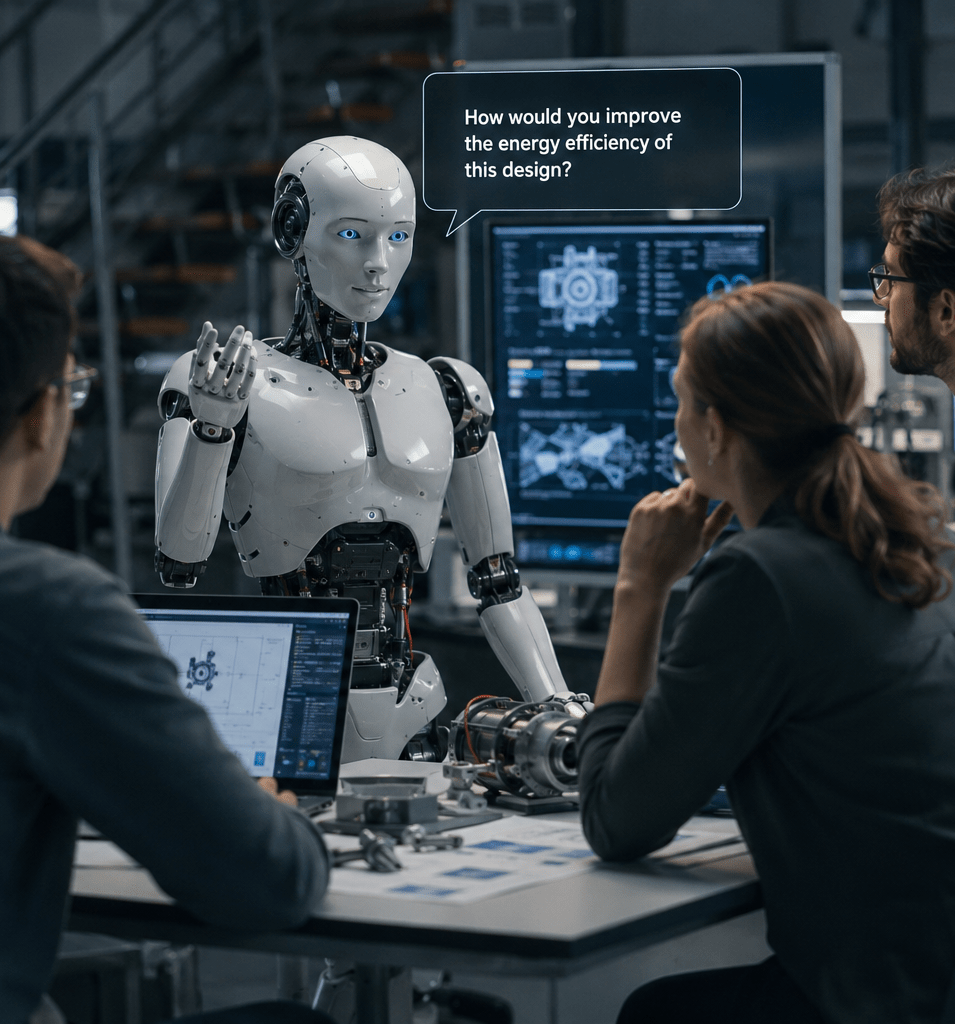
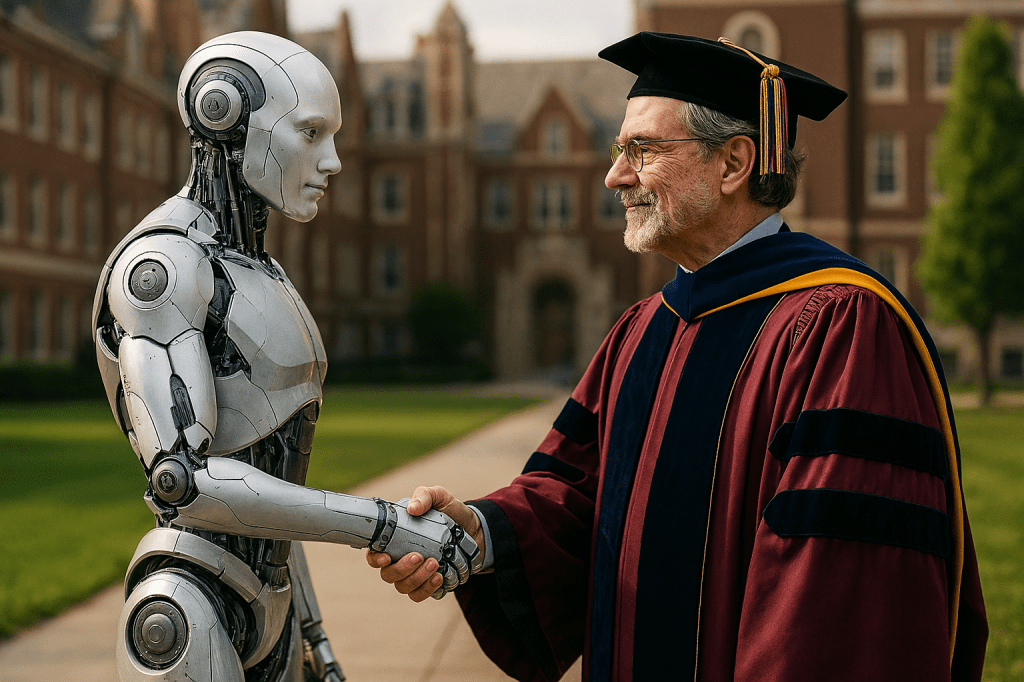
In the long term (seven to ten years), the widespread dissemination of the AI multiplier could decouple course capacity from human faculty counts. Community colleges, regional public universities, and large K-12 virtual academies will be capable of supporting tens of thousands of learners with lean instructional core teams. Human faculty will transition away from routine grading, lecture delivery, and basic assessment management, operating instead as high-level curriculum architects, ethical supervisors, and specialized mentors for complex edge cases.
Critical Perspectives: The Debates Around Autonomous Educational Infrastructure
As the AI multiplier gains traction, prominent thinkers, researchers, and educational analysts are actively debating its institutional consequences. Rather than presenting a uniformly utopian vision, commentators highlight stark tradeoffs between efficiency and educational quality.
Advocates of agentic integration emphasize democratic access and institutional sustainability. Proponents point out that traditional educational models are economically unviable for millions of adult learners and underfunded public school districts. By eliminating the marginal cost of administrative overhead, the AI multiplier enables high-tier education and career upskilling to be delivered free or at nominal cost, as demonstrated by the Big Lever Institute’s non-profit model. Furthermore, advocates note that automating routine paper-pushing liberates human educators to focus on meaningful, high-touch interactions with students who need targeted intervention.
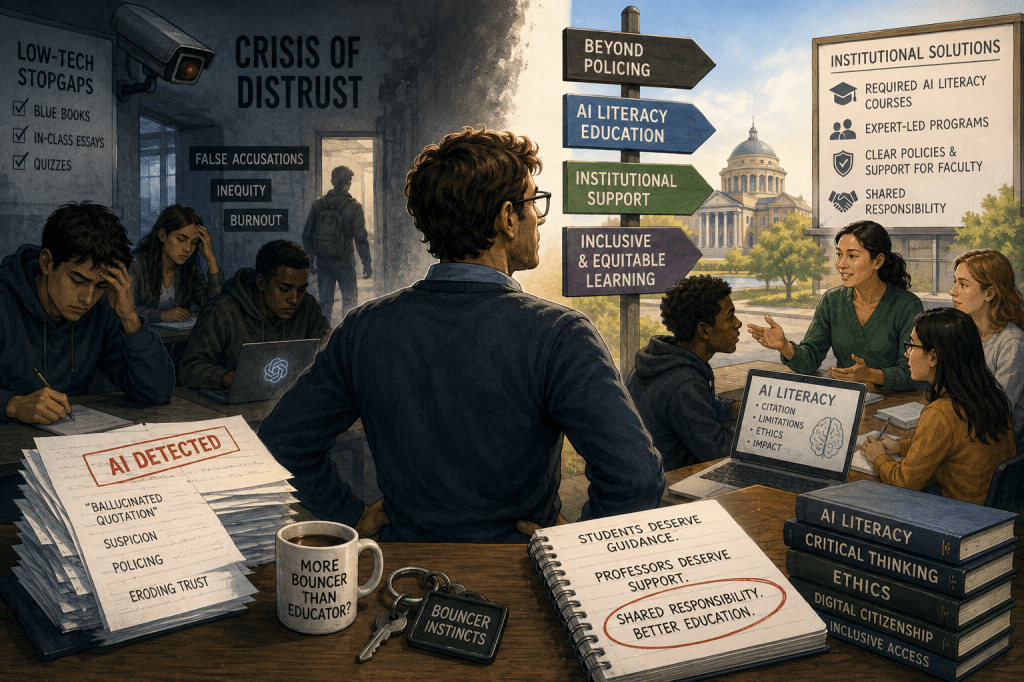
Conversely, critical scholars raise significant warnings regarding cognitive offloading, algorithmic bias, and the erosion of human connection. In a comprehensive analysis published in IEEE Computer Society, researchers argued that replacing traditional instructional loops with autonomous systems introduces deep risks of cognitive dependency, noting that ‘if AI systems take on too much of the thinking, planning, remembering, and problem-solving, students may engage less deeply, reducing opportunities for developing critical thinking, resilience, and metacognitive skills’ (IEEE Computer Society, 2026, p. 34). Critiques also stress that agentic models learning from historical data can inadvertently amplify institutional inequities at scale without transparent human oversight.
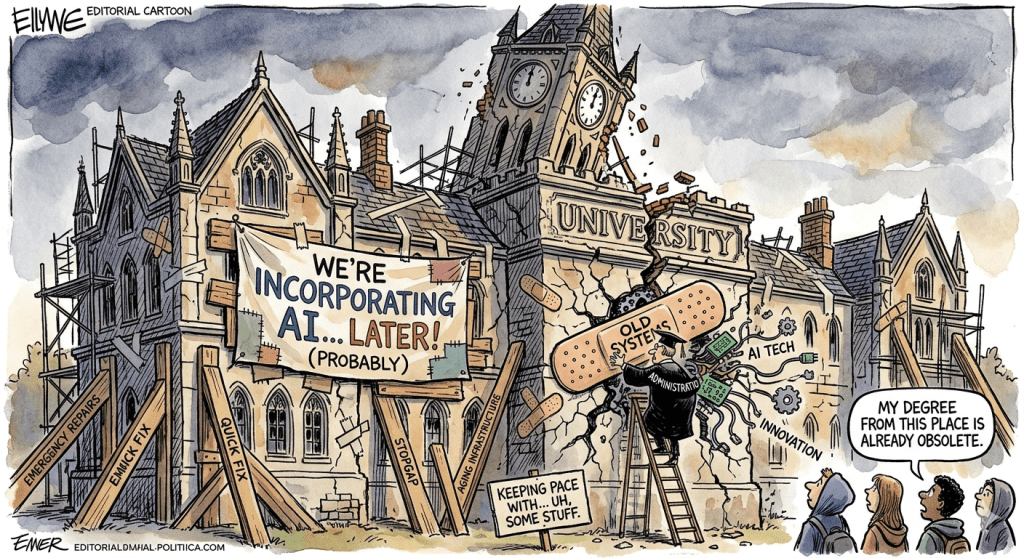
Labor researchers and faculty unions also voice profound skepticism regarding the phrase ‘AI multiplier.’ They argue that in cost-conscious university systems, the model will be weaponized by administrators to justify severe faculty downsizing, converting tenure-track teaching positions into low-wage supervisor roles tasked with managing automated software systems.
Implications: A Glimpse into the Future of Education
Is the AI multiplier model deployed by the Big Lever Institute a genuine glimpse into the future of AI in education? The evidence suggests that it is, though not without profound qualifications.
The model proves that high-quality, scalable learning communities can operate without massive institutional bureaucracies or predatory tuition fees. It demonstrates that agentic automation can effectively dismantle the traditional trade-off between scale, cost, and personalization. Institutions that successfully integrate agentic architectures will achieve unprecedented agility, offering adaptive learning pathways that evolve rapidly alongside global workforce needs.
However, the future of education will not be defined by the technical capability of AI agents alone, but by the intentionality of human guardrails. If institutions deploy the AI multiplier solely as a cost-cutting mechanism to replace human relationships with algorithmic pipelines, they risk hollowing out the essential social, moral, and metacognitive foundations of learning. Conversely, if schools and universities leverage agentic software to eliminate administrative friction while preserving deep human mentorship for complex problem-solving, the AI multiplier could democratize world-class education at a global scale.
References
Balaceanu, D. (2026, May 26). Agentic AI in higher education: Redefining student experiences. DRUID AI Blog. https://www.druidai.com/blog/agentic-ai-in-higher-education
Big Lever Institute. (2026, October 19). Big Lever Institute opens free AI learning community to the public [Press release]. FOX47. https://fox47.marketminute.com/article/prlog-2026-10-19-big-lever-institute-opens-free-ai-learning-community-to-the-public
Cornerstone OnDemand. (2026, March 16). Moving at speed with the AI Multiplier: Cornerstone launches AI-powered course assistant and adaptive learning agent. Cornerstone Press Releases. https://www.cornerstoneondemand.com/company/news-room/press-releases/moving-at-speed-with-the-ai-multiplier-cornerstone-launches-adaptive-learning-agent/
Digital Applied. (2026, April 29). Agentic AI for higher-ed recruiting: Vertical playbook. Digital Applied Insights. https://www.digitalapplied.com/blog/agentic-ai-for-higher-education-recruitment-marketing
Fullestop. (2026, April 16). Generative AI in education 2026: Scaling edtech with AI agents. Fullestop Tech Insights. https://www.fullestop.com/blog/generative-ai-in-education-use-cases-benefits-and-challenges
IEEE Computer Society. (2026, March). Agentic artificial intelligence in higher education. IT Professional, 28(2), 31–36. https://www.computer.org/csdl/magazine/it/2026/03/11578158/2hAev60tdjq
###
Filed under: Uncategorized |



























































































































































































































































































































































































































































Leave a Reply