







By Jim Shimabukuro (assisted by Claude)
Editor
What Jensen Huang’s return to Nvidia shows about who holds power in America in November 2026

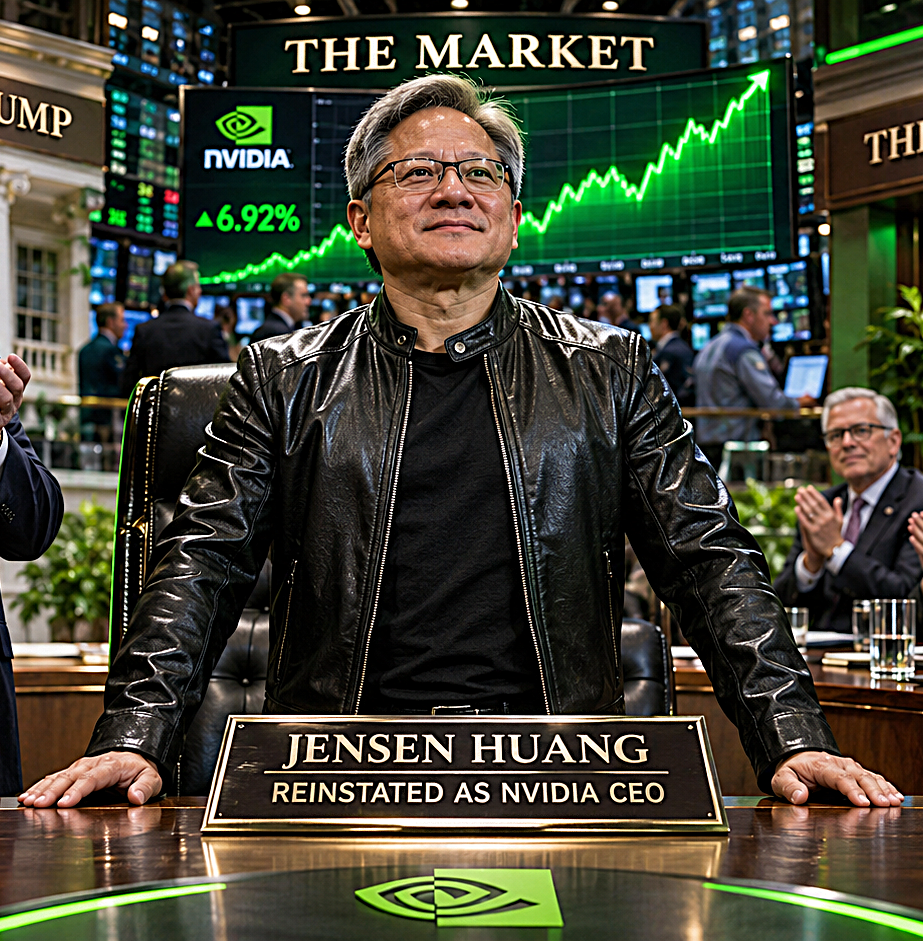
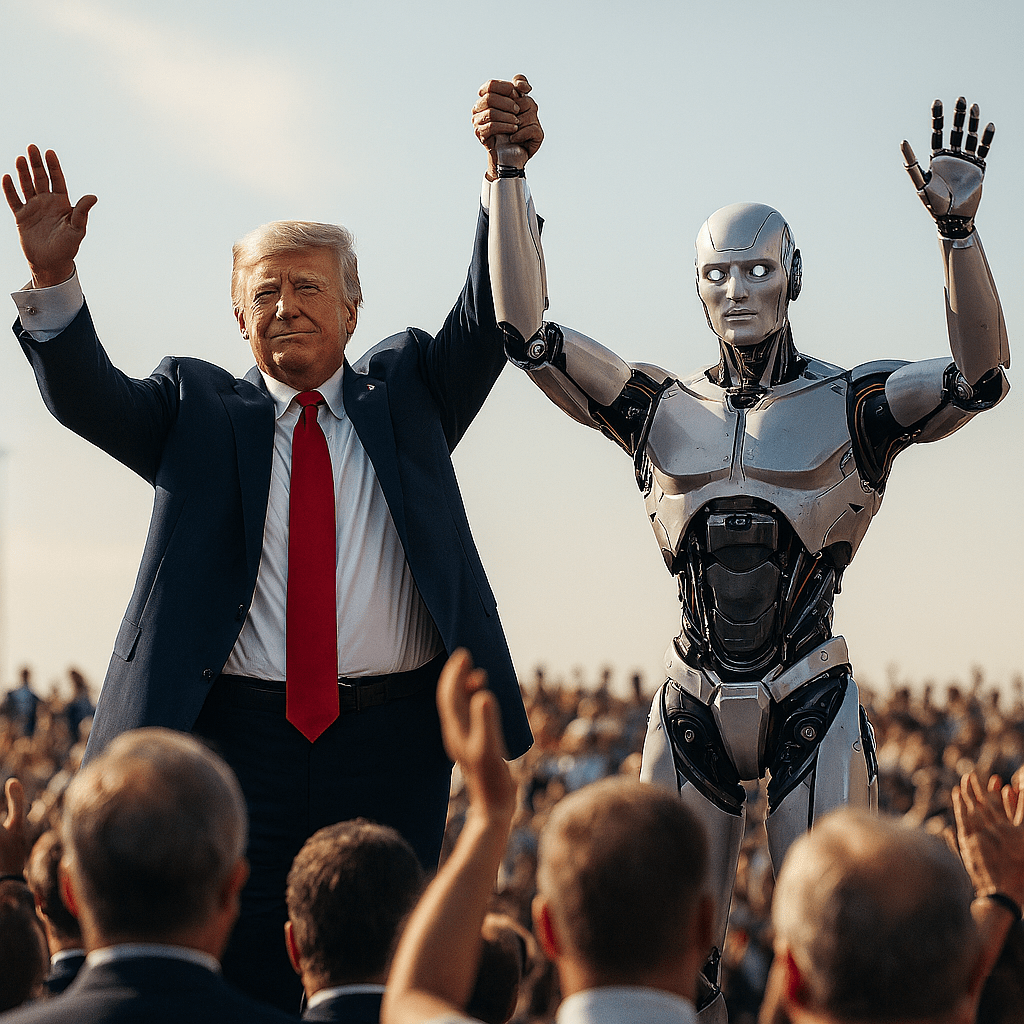
On the afternoon of November 17, 2026, Harvey Jones opened Nvidia’s quarterly earnings call with a sentence meant to end a discussion. Jensen Huang, the company’s co-founder and chief executive for 33 years, had resigned five days earlier, and the board, Jones said, “does not intend to reinstate Jensen as CEO” (Motley Fool, 2026). Six days later the same board voted unanimously to give Huang back the titles of president, chief executive and director. Nvidia’s shares closed up 31.5 percent that day, adding close to $1 trillion in market value (Reuters, 2026a), the stock’s largest one-day gain since May 2003 (Bloomberg News, 2026a). President Donald Trump took the credit. He told CNBC that he had spoken to the directors and convinced them, adding, “I’m doing it for the country” (Cooper & Kinnard, 2026). A board decision that had looked final on a Tuesday was reversed the following Monday on the word of the president.
Most coverage has settled on one of three readings. The first is cronyism: a president who holds millions of dollars in Nvidia stock rescued a friend. The second is founder worship: Silicon Valley decided that the man who built the company could not be replaced, whatever he had done. The third is a spy story about an affair with a Chinese businesswoman whom U.S. officials suspect of working for Beijing’s Ministry of State Security. Each reading holds part of the truth. None of them explains why a board that had cited its code of conduct reversed itself within a week, or why the reversal came with a statement that the federal government had found no national security risk in a case its own investigators had not finished.
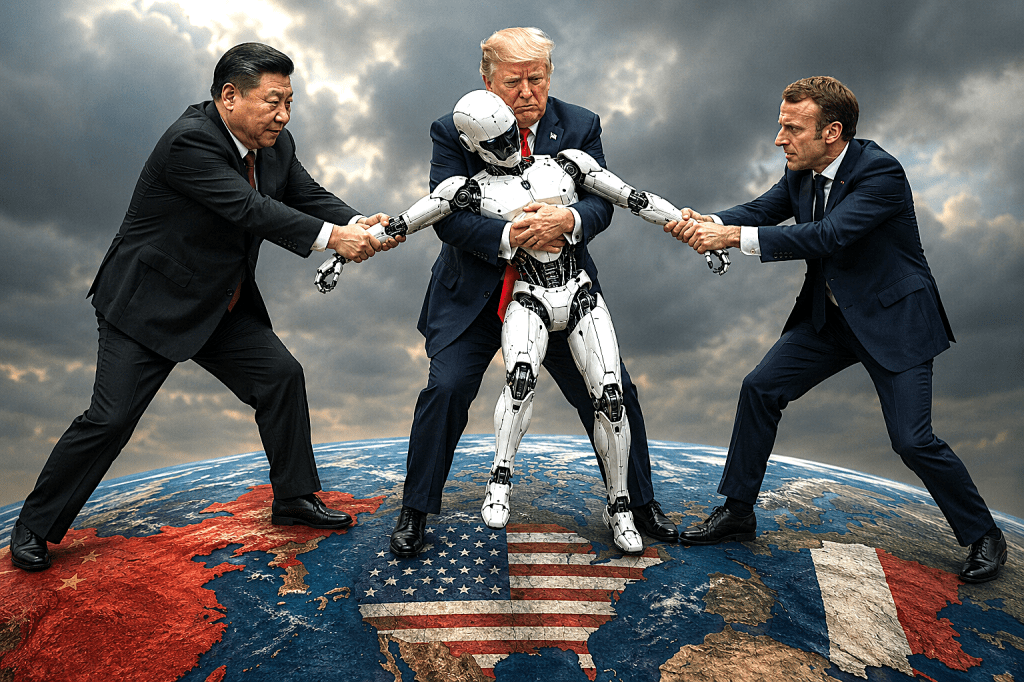
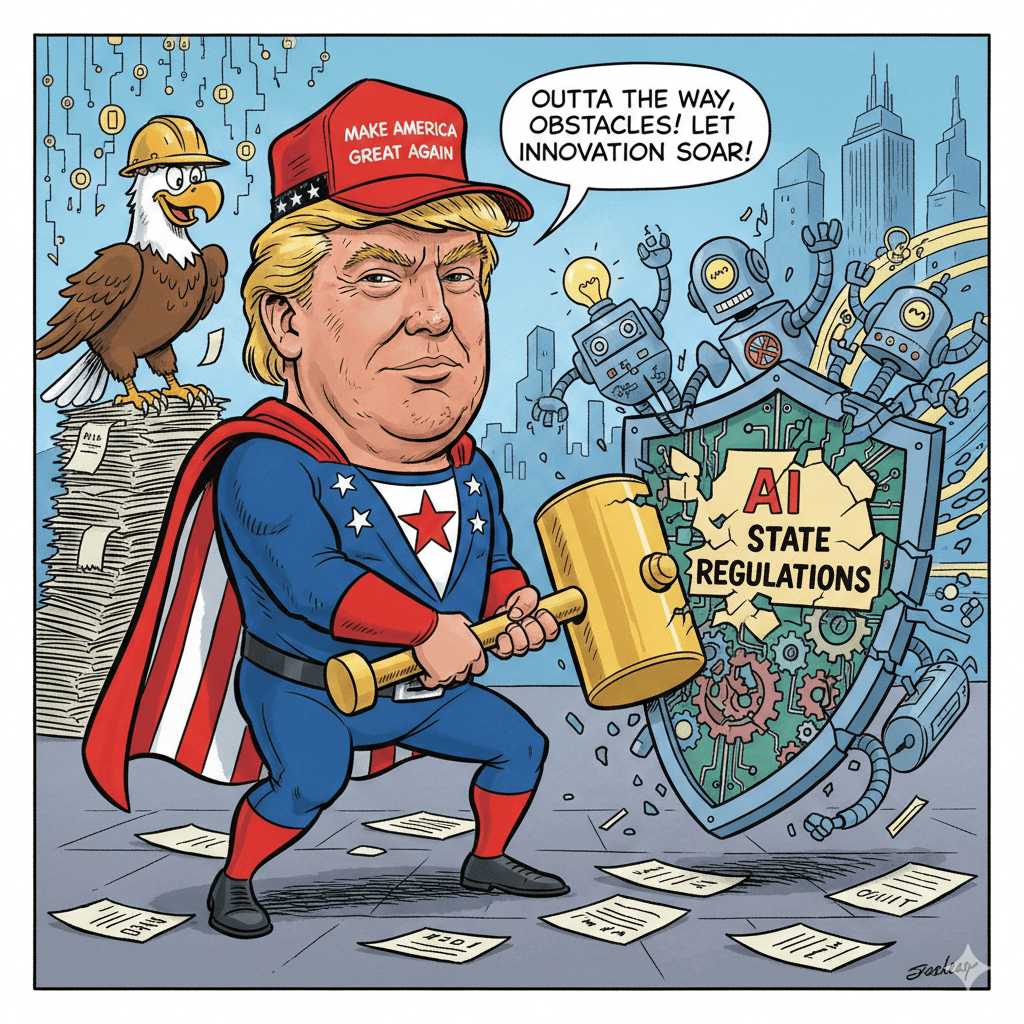
The full record of the eleven days points to a plainer conclusion about where power sits in the United States in late 2026. The decisive force was an alliance between the president and the capital markets. In under two weeks it overruled a corporate board, a faction of the national security establishment and the ordinary rules of executive conduct, in order to protect a company that has become too central to the stock market and to the AI race with China to be left to its own governance. The institutions that lost this round still exist, and some of them won concessions. The order in which the actors moved, and the order in which they gave way, describes the current hierarchy of American power more accurately than any organizational chart.
How the Fall Was Arranged
That hierarchy was visible first in Huang’s fall, which was itself an exercise of power by one part of the government against another. The New York Times reported on October 29 that U.S. officials had concluded that Alice Huang (no relation), a former executive at the Singapore data center company Megaspeed, was a Chinese intelligence asset, and that Jensen Huang had been identified as the American in contact with her (Business Standard, 2026). The same reporting said Trump had been briefed on the intelligence about a year earlier and had chosen not to act (CBS News, 2026). The information had sat inside the government for months; what changed was who decided to use it. According to the Washington Post, Marco Rubio, who serves as both secretary of state and national security adviser, drafted a memo based on a CIA report but stated its findings in more assertive terms, and the Post described Huang’s ouster as a victory for the China hard-liners who had long tried to limit his influence over Trump’s China policy (Duncan et al., 2026). CNN reported that the memo went to a small group of senior officials and that officials disagree about how strong the evidence is that Alice Huang was recruited by Chinese intelligence (Bertrand et al., 2026). The spy allegation remains unproven, and China denies it. The memo nonetheless did its work once its contents reached the press.
The memo reached the press in the middle of a fight inside the administration over Nvidia’s customers. The Commerce Department had been investigating Megaspeed since 2024 on suspicion of diverting Nvidia chips to China, and the Justice Department later took over the case (U.S. Department of Commerce & U.S. Department of Justice, 2026). Megaspeed had reportedly bought more than $4.8 billion in Nvidia chips since June 2024 (McCausland, 2026). Axios reported that at a White House Situation Room meeting two days after the November 3 midterm elections, Treasury Secretary Scott Bessent confronted Commerce Secretary Howard Lutnick over why Megaspeed was still not on the Entity List, the government’s export blacklist; Commerce denied that the exchange took place (Axios, 2026a). Bessent then said on CNBC that Treasury, War, State and the U.S. Trade Representative had favored the listing for months but that Commerce “has the pen” (Bloomberg Government, 2026). The security agencies stood on one side of that dispute, and Lutnick’s department, which had stalled the listing, stood on the other. Outside government, Huang was the most effective advocate for the Commerce position. He had won Trump’s approval to sell Nvidia’s H20 and later H200 chips to China in exchange for a share of the revenue going to Washington (McCausland, 2026). Exposing his private life weakened the strongest voice for continued chip sales at the moment the hawks were pressing their case.
That sequence has led some analysts to argue that the scandal was a political operation from the start. Milton Mueller of Georgia Tech’s Internet Governance Project wrote on the day Huang resigned that the leak tied a private affair to an export policy it had nothing to do with, and he described the result as “a success, shoring up the flagging case for export controls” (Mueller, 2026). Mueller’s argument rests on inference; he concedes that no evidence on the spy question has been made public. The hawks have a substantive case of their own. Gregory Allen, a former Pentagon AI policy official, argued in the Financial Times after the reinstatement that Huang’s central premise, that selling to China would keep Chinese developers dependent on Nvidia, has been wrong since 2022 (Allen, 2026). Because chip production capacity is fully booked for years, Allen wrote, every chip sold or smuggled to China is one that American and allied buyers would have bought. Mueller and Allen disagree about export controls, and both of their accounts describe the same target. For the officials who circulated the memo, the object was a China policy, and Huang was its most persuasive defender.
The Board Tries, and the Market Answers
Inside Nvidia, the board had to decide what the scandal meant for the company, and for about ten days it acted the way governance manuals say a board should. It opened an independent investigation on November 8 while expressing confidence in Huang (NVIDIA Board of Directors, 2026). After the New York Times reported a second relationship, with an Nvidia executive, the board accepted his resignation, named chief financial officer Colette Kress interim CEO and appointed Jones as the company’s first board chair (NVIDIA, 2026a). It hired an executive search firm and formed a national security committee. At an all-hands meeting on November 18, Jones told employees that the board had accepted the resignation because Huang had not been candid with it (Business Standard, 2026). Ordinary corporate norms supported the board. One of the allies organizing Huang’s comeback conceded to the Financial Times that an affair with a subordinate is a fireable offense (The Next Web, 2026). University of Colorado law professor Ann Lipton observed that boards have dealt with affair and harassment scandals before, but she knew of no precedent for a chief executive caught up in a suspected honeypot (Reuters, 2026b). On conduct and candor alone, the board had firm ground for letting Huang go.
The board’s position lasted only as long as the market tolerated it. Nvidia fell as much as 13 percent on the morning of the resignation (McCausland, 2026), and after the earnings call it dropped nearly 14 percent again on November 20, to $125.53, its worst day since January 2025 (Business Standard, 2026). Those losses reached ordinary savers. Axios reported that Nvidia made up about 8 percent of the S&P 500 and that about 40 percent of the index was tied to the AI buildout; a 30 percent fall in Nvidia alone took about $2,400 from every $100,000 held in an S&P 500 fund (Axios, 2026b). Investors applied pressure more directly as well. The day after the resignation, Brad Gerstner of Altimeter Capital and Gavin Baker of Atreides Management, whose funds held about $2.1 billion in Nvidia stock, asked the board for a slow and deliberate search that kept Huang’s return on the table (Business Standard, 2026; Wealth Professional, 2026). A public petition passed 180,000 signatures, including more than 8,800 people who said they were current Nvidia employees, and Elon Musk and Epic Games chief Tim Sweeney were among its backers (Reuters, 2026c). Huang’s allies also assembled what they called a war room of executives to lobby the board and the White House (The Next Web, 2026). Within a week the costs of the board’s decision were being counted in retirement accounts, and the people counting them had direct lines to the directors.
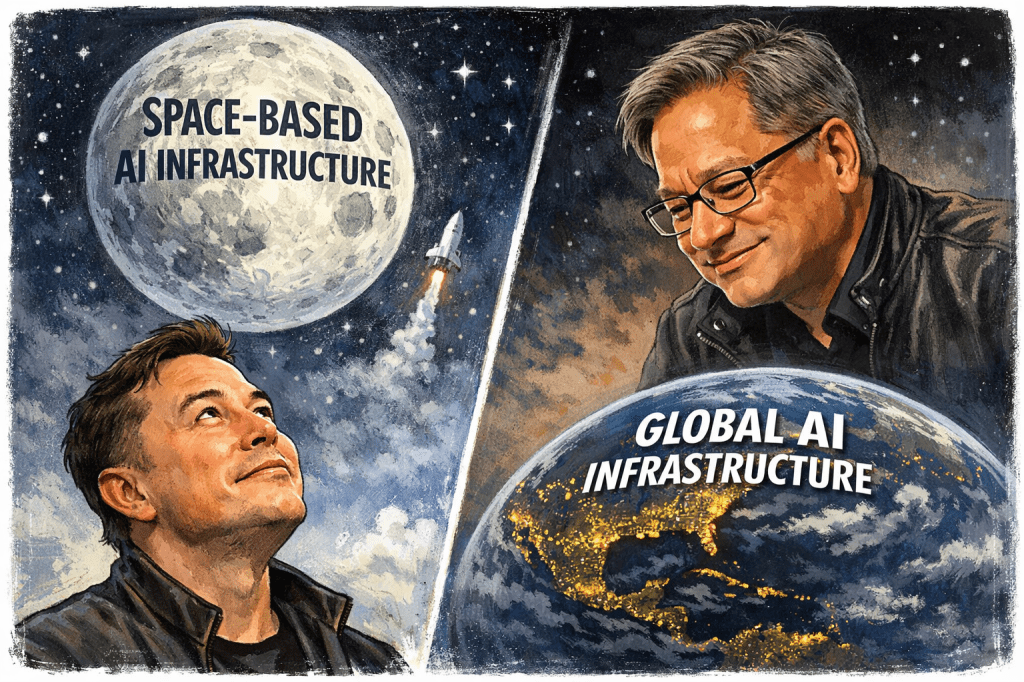
The force of that campaign is easier to understand once Nvidia’s role in the AI economy is clear: the company sells chips, and it also finances much of the industry that buys them. Its first quarterly report without Huang showed $390 billion in commitments to buy from suppliers, up from $279 billion three months earlier (Rosen, 2026). SiliconANGLE’s analysts described Nvidia as “serving as the industry’s underwriter” (SiliconANGLE, 2026), and Allen notes that the company has used its balance sheet to guarantee loans to smaller “neocloud” start-ups (Allen, 2026). Much of that network rests on Huang personally. Rebecca Patterson of the Council on Foreign Relations pointed out that he had about 60 direct reports and has said he does not believe in succession planning (McCausland, 2026). For the investors and companies that depend on Nvidia’s money and allocation decisions, his exit threatened contracts and credit, along with the share price. One of his allies told the FT, “Everyone that matters in tech outside the frontier labs loves Jensen” (The Next Web, 2026). The exception the ally named fits Allen’s account: the largest AI labs and cloud companies are the customers best able to build their own chips, while the smaller firms that Nvidia helps finance have the most riding on Huang. Behind the market’s verdict sat an industry whose credit lines ran through one man.
Not every motive in the campaign was financial, and the other motives help explain why it drew such broad support. Huang has led Nvidia since 1993, and when he returned to headquarters on November 23 employees cheered him (Reuters, 2026a). The Gerstner and Baker letter stopped short of demanding his reinstatement and accepted that the final decision belonged to the board (Wealth Professional, 2026). Writing in the New York Times, the economist Natasha Sarin rejected Lloyd Blankfein’s view that founders are easily replaced, arguing that Huang is central to the AI industry and to the wider economy (ThePrint, 2026). These are arguments about competence and loyalty, and many of the people making them meant them. They explain why the pressure was broad. They do not explain the timing of the board’s reversal, because the competence arguments were the same on November 17 as on November 23. What changed in between was the political cover available to the directors.
A Presidential Clearance
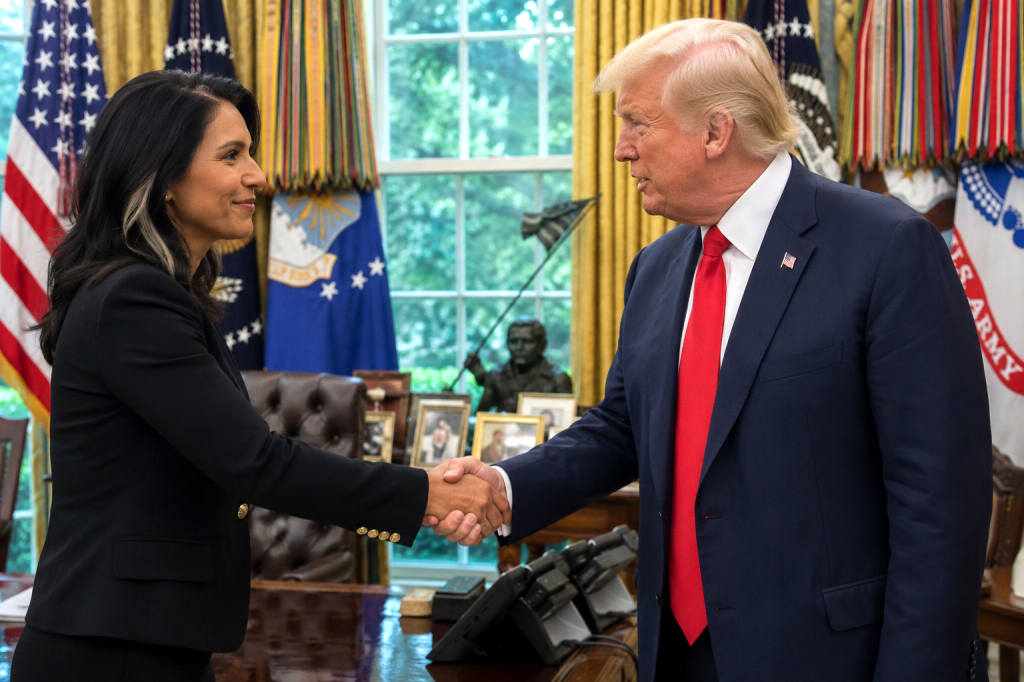
That cover came from the president, who turned the market’s losses into an instruction to the board. Trump had first suggested Apple’s Tim Cook for the job, then said on November 16 that he “would certainly not mind” Huang’s return (Mitchell, 2026). Over the weekend of November 21 and 22, he asked Vice President JD Vance to talk with Huang, and the administration sought assurances that Huang was not a security threat and faced no criminal charges (Business Standard, 2026). Bessent, who a week earlier had called for an outside chief executive and a dramatic shake-up at Nvidia, reversed himself on television: “he’s on the outside now” (Business Standard, 2026). Trump posted that he hoped the board would rehire Huang, and the board voted the same day. Afterward Trump told CNBC that the board had done what the administration wanted (Collinson, 2026), and he told Reuters, “I believe my intervention was very important to get Jensen Huang back” (Reuters, 2026a). Bloomberg reported that the board made the reversal without consulting Huang’s top lieutenants (Bloomberg News, 2026a). The decision that the governance system assigns to directors was made, in practice, in conversations between the White House and Huang.
The president’s motives, as far as the public record shows them, combine personal money, market politics and a policy belief. A Reuters review found that Trump owns between $11 million and $55 million in Nvidia stock and that the reinstatement rally could have raised his net worth by as much as $17 million; the White House says independent managers run his portfolio (Reuters, 2026a). Nvidia also gave $25 million to Trump’s White House ballroom project, a donation Senate Democratic leader Chuck Schumer has linked to the administration’s approval of chip sales to China (News Tribune, 2026). The government itself takes a share of Nvidia’s licensed China revenue, which led Patterson to ask what responsibility Washington now bears for the company’s conduct (McCausland, 2026). The stock market, meanwhile, had become the president’s most visible scorecard at a weak moment. Democrats won both chambers of Congress on November 3, in what NPR described as the start of a new period of divided government (NPR, 2026). CNN’s Stephen Collinson noted that the Nvidia rally eased concerns about falling markets that Trump had voiced in his social media posts (Collinson, 2026). A president with a financial stake, a policy stake and an election loss behind him had reasons of every kind to want the share price back.
Trump’s stated reason should also be taken at face value, because it is the argument that persuaded the people around him. “The bigger threat would be losing the brain power of somebody like Jensen,” he told CNBC, and he said that Xi Jinping had described Huang as the most brilliant person in his field (CNN, 2026). He also suggested that China might otherwise have tried to recruit Huang (Ceballos et al., 2026). In this view the AI race is a contest among a few irreplaceable people, and the government’s job is to keep them on the American side. The view treats a chief executive the way a state treats a strategic asset. It explains why the president regarded a personnel decision at a publicly traded company as his business, and it is one belief that the hawks who wrote the memo and the president who overrode it share.
Once the president had made the decision, national security became something the White House declared rather than something investigators established. Nvidia’s announcement said that, on the basis of input from senior government officials, the board was confident that Huang’s return “poses no national security risk” (NVIDIA, 2026b). CNN described the government’s finding as a Justice Department determination, and Rep. James Walkinshaw, a Virginia Democrat, said no thorough investigation could have been completed in that time (Collinson, 2026). The board’s own investigation is still running, and governance experts told Reuters that the reversal called the board’s independence into question (Reuters, 2026a). The federal finding also mattered to the directors for a practical reason. They face a shareholder lawsuit alleging that Nvidia concealed Huang’s relationship with Alice Huang, as well as an investigation by California’s attorney general (Reuters, 2026a; Ceballos et al., 2026), and a written assurance from the federal government moves the security judgment from the board to Washington. In public, Trump waved the spy question away; asked about Chinese intelligence contacts, he said China probably talks to everybody. His own director of national intelligence, Jay Clayton, had said a day earlier that China had illicitly obtained advanced Nvidia chips despite U.S. export controls (Collinson, 2026). The clearance answered the board’s legal problem without answering the security question that started the affair.
The hawks lost the fight over Huang himself and gained ground on the policy they cared about, and the timing raises the question of whether the two were connected. On the day Huang returned, the United States added Megaspeed and Alibaba’s Singapore subsidiary to its trade blacklist, the step Bessent and four agencies had sought for months; U.S. authorities had also tightened licensing rules for overseas data centers serving Chinese companies (Reuters, 2026a). Huang has agreed to testify at a public Senate Banking Committee hearing on December 3, and the committee’s Republican chairman, Tim Scott, has asked Lutnick to appear on December 10 (Reuters, 2026a; Mitchell, 2026). Nvidia has created a board committee on national security and export controls and is hiring a chief compliance officer who reports to the board (NVIDIA, 2026b). No public reporting describes these steps as terms of a deal. The outcome has the shape of one all the same: Huang returned, and the export-control side received enforcement it had been denied while he held the job. Allen’s column sets out the hawks’ position for the next round, which is that Huang’s return must not bring back the “lax government policy and enforcement” he promoted (Allen, 2026).
Republican dissent shows how far the episode strained the president’s own coalition. Sen. Pete Ricketts of Nebraska said Huang’s return did not relieve Nvidia of answering for national security concerns, and lawmakers from both parties renewed calls to pass the Chip Security Act, which targets the diversion of legally exported chips to China (Reuters, 2026a). Sen. Kevin Cramer of North Dakota warned of the “risk of extortion by a Chinese asset” (The Hill, 2026a). Sen. Dave McCormick of Pennsylvania said on Bloomberg Television that executive-branch pressure on a board’s decisions puts the country on a “slippery slope” (Bloomberg News, 2026b). These senators belong to the same China-hawk constituency that Rubio’s memo served. Their objections did not stop the reinstatement, which marks the limit of the security faction’s power when the president and the market move together against it.
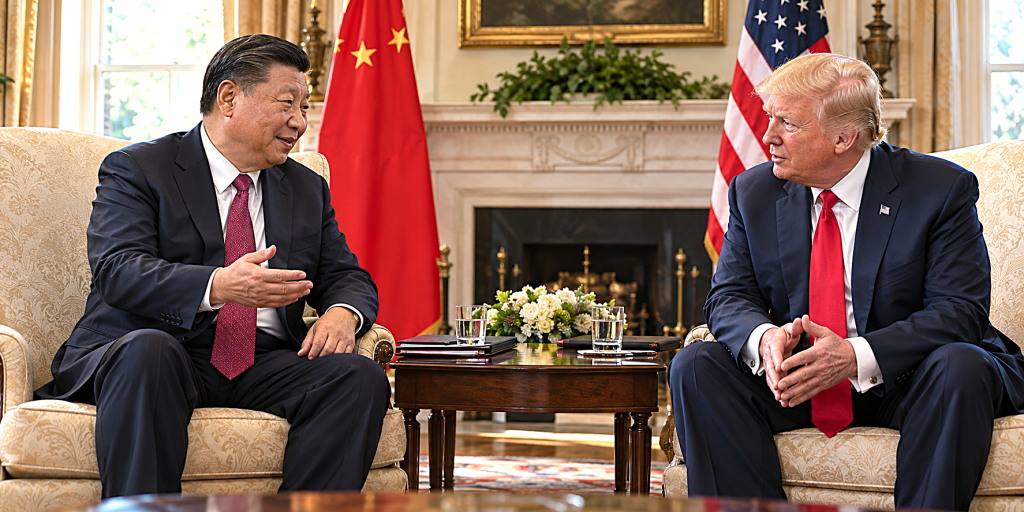
Beijing has its own reasons to welcome the outcome while denying the premise behind it. China’s foreign ministry has called the spying allegations groundless speculation (McCausland, 2026). Trump said he mentioned Huang only briefly at his dinner with Xi Jinping during the APEC summit in Shenzhen (Reuters, 2026d), and Reuters reported that Huang’s departure had led some Chinese customers to cancel or delay orders (Reuters, 2026a). Before the summit, Rush Doshi, who directs CFR’s China Strategy Initiative, warned that Huang’s presence beside Trump could teach Beijing that working through American business interests is an effective way to move U.S. policy (McCausland, 2026). Whatever Alice Huang’s role turns out to have been, the episode showed Chinese leaders how much one executive’s standing could move the American president, the American stock market and American export policy within two weeks.
What Still Pushes Back
The alliance that won this round faces limits, and several of them arrive on a fixed schedule. The new Congress takes office in January with Democratic majorities in both chambers (NPR, 2026). Rep. Jamie Raskin, the incoming chair of the House Judiciary Committee, described the country as living in “something like a monarchical corporate state” (Collinson, 2026), and Democrats including Sens. Ruben Gallego and Elissa Slotkin have already framed the intervention as proof that ties to the president outweigh national security (Cooper & Kinnard, 2026). California’s attorney general says his office’s investigation will continue, the Justice Department’s Megaspeed case remains open, Singapore is still investigating the company, and a securities suit is pending (Ceballos et al., 2026; Reuters, 2026a). Inside Nvidia, the new committee gives independent directors formal authority over export compliance that they lacked before, and Huang apologized to employees on November 24 for violating the company’s code of conduct (Bloomberg News, 2026c). Criticism also came from outlets that rarely line up together. The Financial Times’ Lex column called the return “a triumph of money over morals” (ThePrint, 2026), and the Wall Street Journal’s editorial board warned that the intervention would carry legal and political costs (The Hill, 2026b). The checks remain in place; most of them operate after the fact.
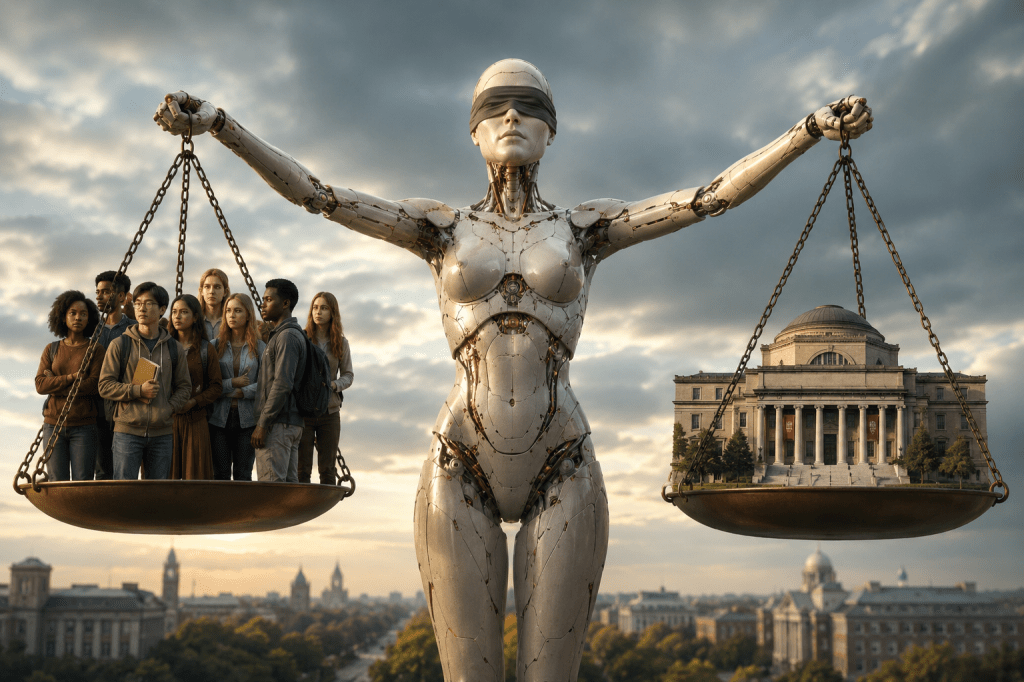
Taken together, the eleven days describe a hierarchy with three tiers. At the top sits the president, who can override a board, issue a national security clearance on his own schedule and treat a handful of founders as national assets. Next to him sit the capital markets: index funds, large investors and the companies that Nvidia finances, whose losses gave him both a reason to act and the political cover to do it. Below them are the institutions meant to check both. The security agencies can still wound a powerful executive with a memo and a leak, but they could not keep him out. The board could enforce its code of conduct until the share price made enforcement too expensive. Congress, the states and foreign regulators can investigate, mostly after the decisions are made. Angela Zhang, a University of Southern California law professor who studies Chinese technology regulation, wrote that in its effort to contain China, America “is increasingly beginning to resemble China” (Ceballos et al., 2026). The comparison goes too far in one respect, because American courts, an opposition Congress and a free press all shaped this story and will shape its next chapter. On the question that mattered in November 2026, though, the thesis holds. The president and the market decided who would run the world’s most important chip company, and the board that was supposed to make that decision ratified their choice.
References
Allen, G. (2026, November 24). Jensen Huang’s return should not stop tighter US chip controls. Financial Times. https://www.ft.com/content/55a32e72-2cee-4a7f-874f-0936e2581a8a
Axios. (2026a, November 11). Scoop: Bessent confronts Lutnick in Situation Room over China inaction. https://www.axios.com/2026/11/11/bessent-lutnick-megaspeed-nvidia-china-chips
Axios. (2026b, November 15). How Nvidia’s scandal knocked thousands off your 401(k). https://www.axios.com/2026/11/15/nvidia-stocks-401k-retirement-accounts
Bertrand, N., Atwood, K., Lillis, K. B., & Liptak, K. (2026, November). Intel intercepts implicating Jensen Huang in affair sparked classified Rubio memo. CNN (republished by KEYT). https://keyt.com/?p=1500718
Bloomberg Government. (2026, November 13). Treasury wanted to blacklist Megaspeed for months, Bessent says. https://news.bgov.com/artificial-intelligence/treasury-wanted-to-blacklist-megaspeed-for-months-bessent-says
Bloomberg News. (2026a, November 23). Nvidia rehires Huang in stunning reversal after Trump push. Bloomberg. https://www.bloomberg.com/news/articles/2026-11-23/nvidia-reinstates-jensen-huang-as-ceo-with-government-input
Bloomberg News. (2026b, November 24). McCormick warns of slippery slope after Trump pressured Nvidia. Bloomberg. https://www.bloomberg.com/news/articles/2026-11-24/mccormick-warns-of-slippery-slope-after-trump-pressured-nvidia
Bloomberg News. (2026c, November 24). Nvidia’s Huang to host all-hands meeting a day after his return. Bloomberg. https://www.bloomberg.com/news/articles/2026-11-24/nvidia-s-huang-to-host-all-hands-meeting-a-day-after-his-return
Business Standard. (2026, November 24). Nvidia’s board made a U-turn on Jensen Huang: What changed in just 11 days? https://www.business-standard.com/world-news/nvidia-board-jensen-huang-reinstates-ceo-extramarital-affair-trump-investors-126112400224_1.html
CBS News. (2026, November 13). China warns against new U.S. export controls on chips in wake of Nvidia’s Huang scandal. https://www.cbsnews.com/news/china-us-export-controls-chips-nvidia-huang-scandal/
Ceballos, A., McDaniel, J., Rector, K., Harter, C., & Jarvie, J. (2026, November 23). Huang’s reinstatement, at Trump’s urging, prompts national security concerns, outcry from lawmakers. Los Angeles Times (republished by Yahoo News). https://www.yahoo.com/news/politics/articles/huangs-reinstatement-trumps-urging-prompts-214745139.html
CNN. (2026, November 23). Jensen Huang reinstated as CEO of Nvidia [Live updates]. https://www.cnn.com/2026/11/23/business/live-news/jensen-huang-reinstated-as-ceo-of-nvidia
Collinson, S. (2026, November 24). Trump’s stunning show of raw power and what it means. CNN. https://www.cnn.com/2026/11/24/politics/trump-nvidia-jensen-huang-doj-newsom
Cooper, J. J., & Kinnard, M. (2026, November 24). Trump’s intervention on behalf of Jensen Huang gives Democrats more 2028 campaign fuel. PBS NewsHour (Associated Press). https://www.pbs.org/newshour/politics/trumps-intervention-on-behalf-of-jensen-huang-gives-democrats-more-2028-campaign-fuel
Duncan, I., Dorfman, Z., & Strobel, W. P. (2026, November 13). Behind Jensen Huang’s spy scandal, a shadow war for Trump’s ear on China. The Washington Post. https://www.washingtonpost.com/technology/2026/11/13/behind-jensen-huangs-spy-scandal-shadow-war-trumps-ear-china/
McCausland, P. (2026, November 12). Huang resigns from Nvidia. Here are the stakes for U.S. foreign policy. Council on Foreign Relations. https://www.cfr.org/articles/nvidia-chinese-espionage-and-the-ai-race-four-foreign-policy-issues-to-watch
Mitchell, E. T. (2026, November 16). Trump answers if he maintains confidence in key cabinet secretary. The Daily Signal. https://www.dailysignal.com/?p=262600
Motley Fool. (2026, November 17). NVIDIA (NVDA) Q3 2027 earnings call transcript. Nasdaq. https://www.nasdaq.com/articles/nvidia-nvda-q3-2027-earnings-call-transcript
Mueller, M. (2026, November 12). The hit job on Jensen Huang. Internet Governance Project. https://www.internetgovernance.org/2026/11/12/the-hit-job-on-jensen-huang/
News Tribune. (2026, November 13). Trump faces questions about cozy ties to Huang. https://www.newstribune.com/news/2026/nov/13/trump-faces-questions-about-cozy-ties-to-huang/
NPR. (2026, November 3). Democrats win full control of Congress, ushering in a new era of divided government. KUOW. https://www.kuow.org/npr-news/2026-11-03/democrats-win-full-control-of-congress-ushering-in-a-new-era-of-divided-government
NVIDIA. (2026a, November 12). NVIDIA announces CEO transition [Press release]. https://nvidianews.nvidia.com/news/nvidia-announces-ceo-transition
NVIDIA. (2026b, November 23). NVIDIA board reinstates Jensen Huang as president, CEO and board director [Press release, Exhibit 99.1 to Form 8-K]. U.S. Securities and Exchange Commission. https://www.sec.gov/Archives/edgar/data/0001045810/000104581026000090/nov23pressrelease.htm
NVIDIA Board of Directors. (2026, November 8). Statement from NVIDIA Board of Directors. https://nvidianews.nvidia.com/news/statement-from-nvidia-board-of-directors
Reuters. (2026a, November 23). Huang returns as Nvidia CEO after Trump intervention in abrupt board reversal. Investing.com. https://ca.investing.com/news/stock-market-news/nvidia-reinstates-jensen-huang-as-ceo-amid-pressure-from-president-trump-investors-4976255
Reuters. (2026b, November). Analysis: Nvidia’s clubby board faces a sticky “honey pot” test. Zawya. https://www.zawya.com/en/insights/nvidias-clubby-board-faces-a-sticky-honey-pot-test-2159627
Reuters. (2026c, November). Nvidia board rules out Huang comeback. Otago Daily Times. https://www.odt.co.nz/news/world/nvidia-board-rules-out-huang-comeback-q4r70rcr
Reuters. (2026d, November 19). Trump says he referred to ex-Nvidia boss Huang’s situation “briefly” in talk with Xi. bdnews24.com. https://bdnews24.com/world/fr8bhqsrqv
Rosen, P. (2026, November). Jensen Huang left Nvidia a $390 billion bet. The payoff won’t be clear for years. Inc. https://www.inc.com/phil-rosen/jensen-huang-nvidia-390-billion-payoff/91438830
SiliconANGLE. (2026, November 19). What we learned from Nvidia’s first earnings call without Jensen Huang. https://siliconangle.com/2026/11/19/what-we-learned-from-nvidias-first-earnings-call-without-jensen-huang/
The Hill. (2026a, November 24). Jensen Huang’s dramatic return to Nvidia: 5 takeaways. https://thehill.com/homenews/analysis/6238763-trump-drives-nvidia-ceo-return/
The Hill. (2026b, November 24). Trump’s intervention on Huang will exact “heavy cost” on rule of law, national security: WSJ editorial board. https://thehill.com/homenews/media/6239781-donald-trump-jensen-huang-national-security-nvidia-return-wall-street-journal-editorial-board/
The Next Web. (2026, November). Jensen Huang’s allies reportedly build a “war room” as Bessent pushes back. https://thenextweb.com/news/jensen-huang-war-room-nvidia-return-bessent
ThePrint. (2026, November 24). Commentators call Jensen Huang’s return as Nvidia CEO a blow to accountability. https://theprint.in/feature/bloomberg-nyt-jensen-huang-nvidia-ceo-accountability/3107187/
U.S. Department of Commerce & U.S. Department of Justice. (2026, November 16). Joint statement from Department of Commerce and Department of Justice on Megaspeed investigation. https://www.justice.gov/opa/media/1472536/dl
Wealth Professional. (2026, November). Shareholders and a 160,000-signature petition push Nvidia’s board to weigh Jensen Huang’s return. https://www.wealthprofessional.ca/investments/equity-markets/us-treasury-chief-urges-nvidia-to-hire-its-next-ceo-from-outside-the-company/394022
###
Filed under: Uncategorized |

















































































































































































































































































































































Leave a Reply