






By Jim Shimabukuro (assisted by Claude)
Editor
University language programs have settled on AI as a practice partner. They have yet to show what that practice produces.

When the ACTFL Annual Convention opened in San Antonio on November 20, 2026, its program listed dozens of sessions on artificial intelligence, with titles such as “Keeping Language Learning Human in the Age of AI” and “Making AI Transparent: An Ethical Framework for Language Classrooms” (ACTFL, n.d.). In two weeks, the Centre for Language Studies at the National University of Singapore will mark its 25th anniversary with a conference called “Beyond Borders: Language Education in the Era of AI,” whose call for papers affirms the central role of the human teacher in technology-mediated learning (National University of Singapore Centre for Language Studies [NUS CLS], 2026).
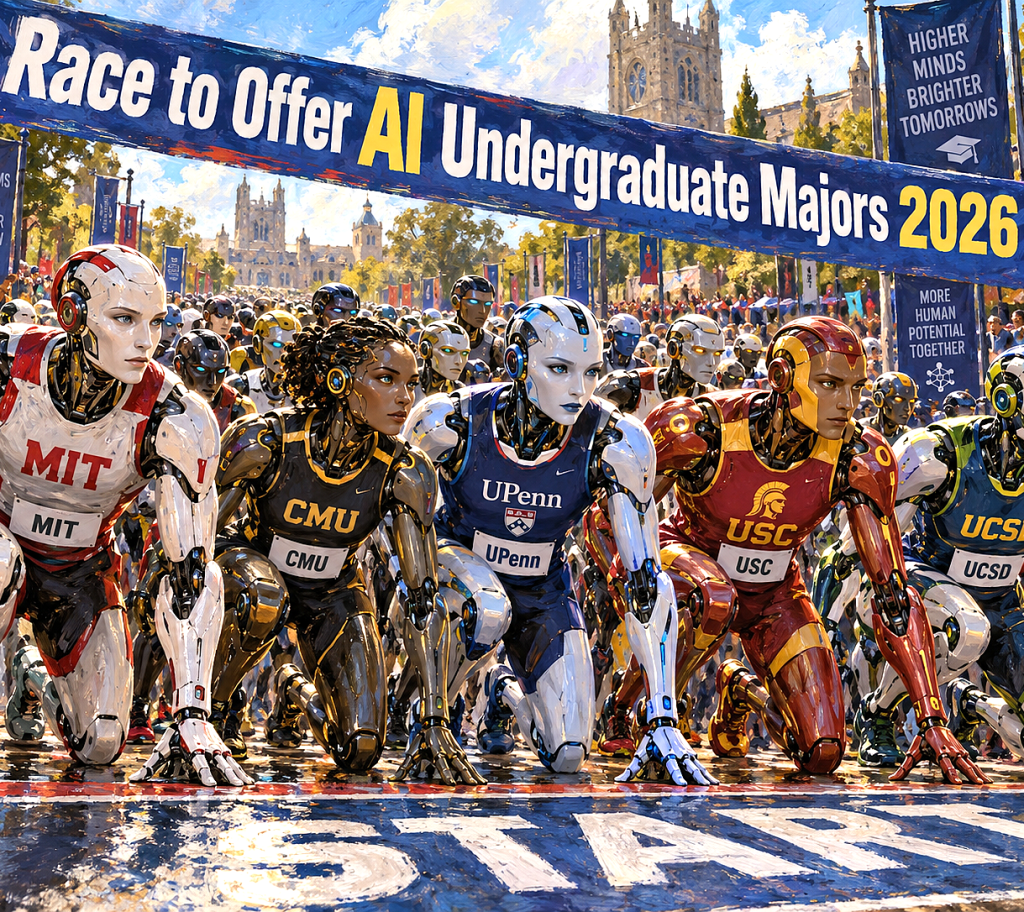
The question university language teachers argue over in 2026 is what AI should do in their courses and how to grade work it has touched. This article surveys the university programs that have gone furthest, describes what they built, and draws from them a status report for mid-November 2026. Its central claim is that the leading programs have settled on one main use of AI, a teacher-configured conversation partner that multiplies speaking practice, and on two competing answers to the assessment problem that partner creates. They have not yet produced program-level evidence that the extra practice becomes proficiency, and that gap matters because the tools are arriving in departments that administrators already view as candidates for cuts.
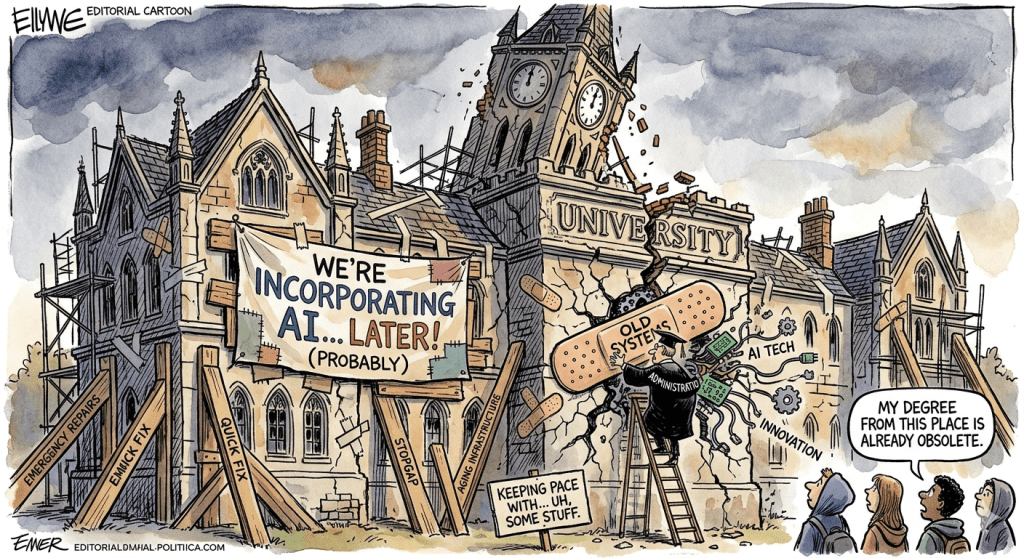
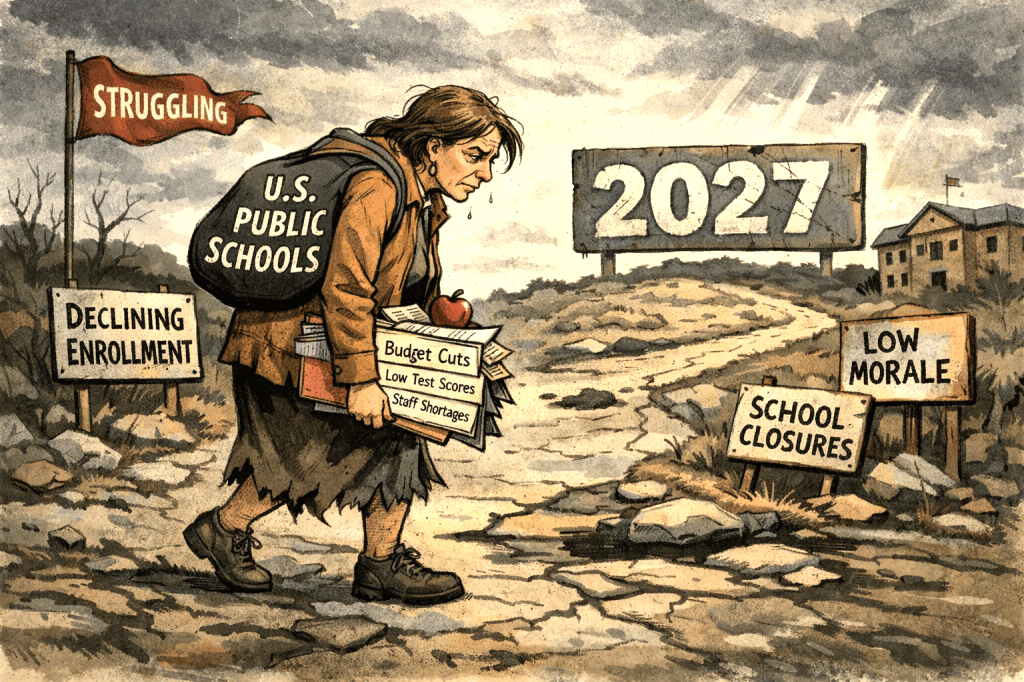
The pressure on those departments explains why so many have turned to AI so quickly. In the United States, the Modern Language Association’s most recent census found that college enrollment in languages other than English fell 16.6% between fall 2016 and fall 2021, and that 961 language programs disappeared over the same five years (Axios, 2023). A May 2026 analysis by CSA Research, a language-industry research firm, called the decline part of a longer structural shift and named the MLA’s forthcoming report on 2022 to 2027 as the test of whether the erosion continues (DePalma, 2026). In the United Kingdom, four language professors writing in Times Higher Education in November 2025 reported that the University of Nottingham’s council was to consider closing all of its undergraduate degrees in modern languages and cultures and that Leicester was withdrawing its modern language courses (Ayres-Bennett et al., 2025).
The sharpest signal came from China, where universities need ministry approval for their programs. Rest of World reported in June 2026 that a May survey of 70 Chinese universities announcing program changes found cuts to eight Japanese, five German and five translation studies programs, and it quoted the consulting firm MyCOS as saying that AI translation tools were forcing foreign-language fields to rethink how they train students (Lo, 2026). Machine translation and chatbots therefore weaken the case for studying a language at the same time that they offer the most promising new tool for teaching one.
The Missing Conversation
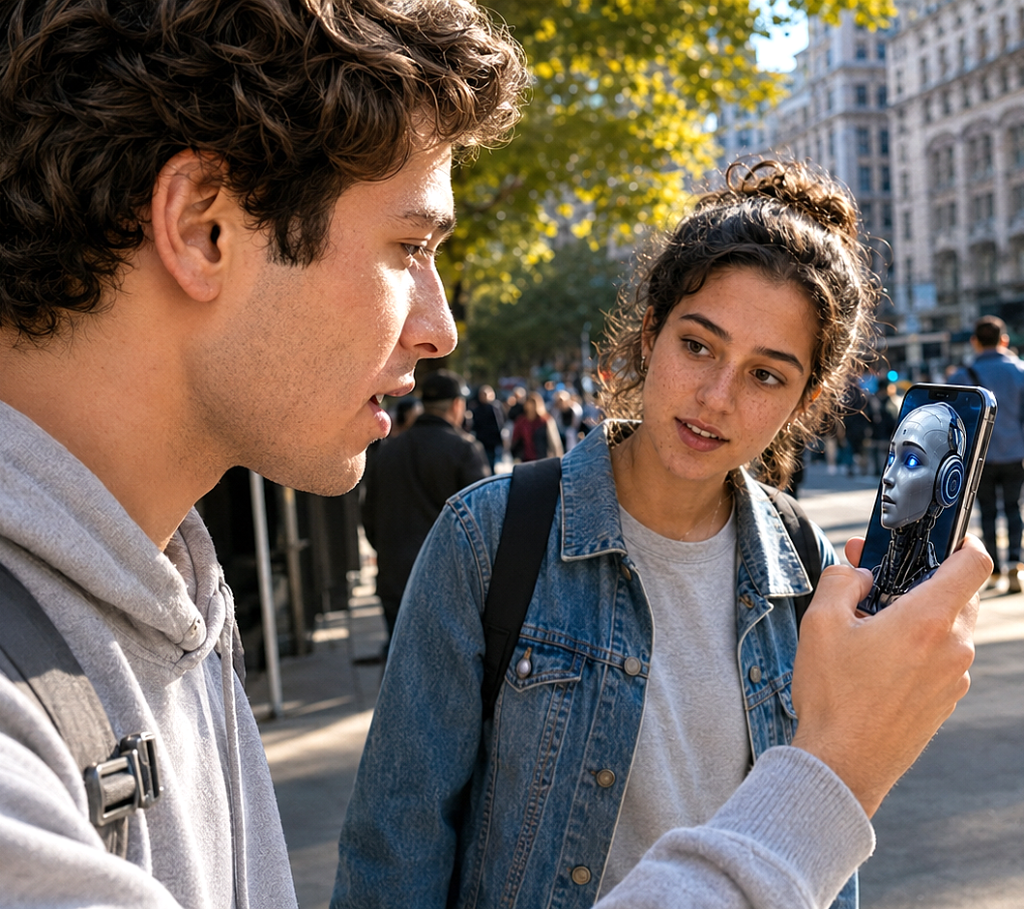
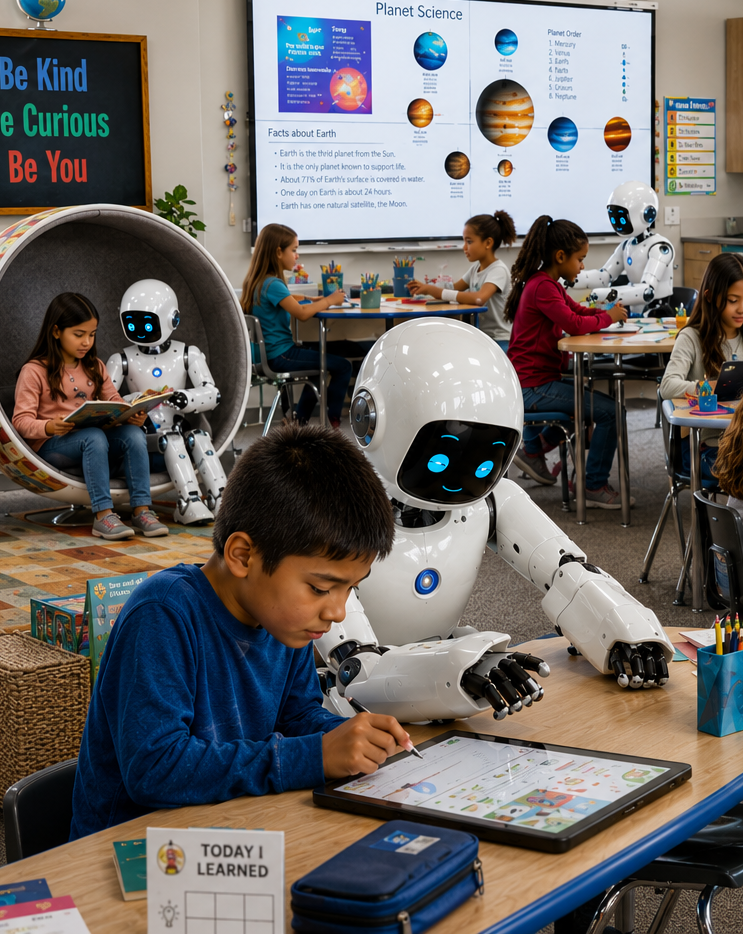
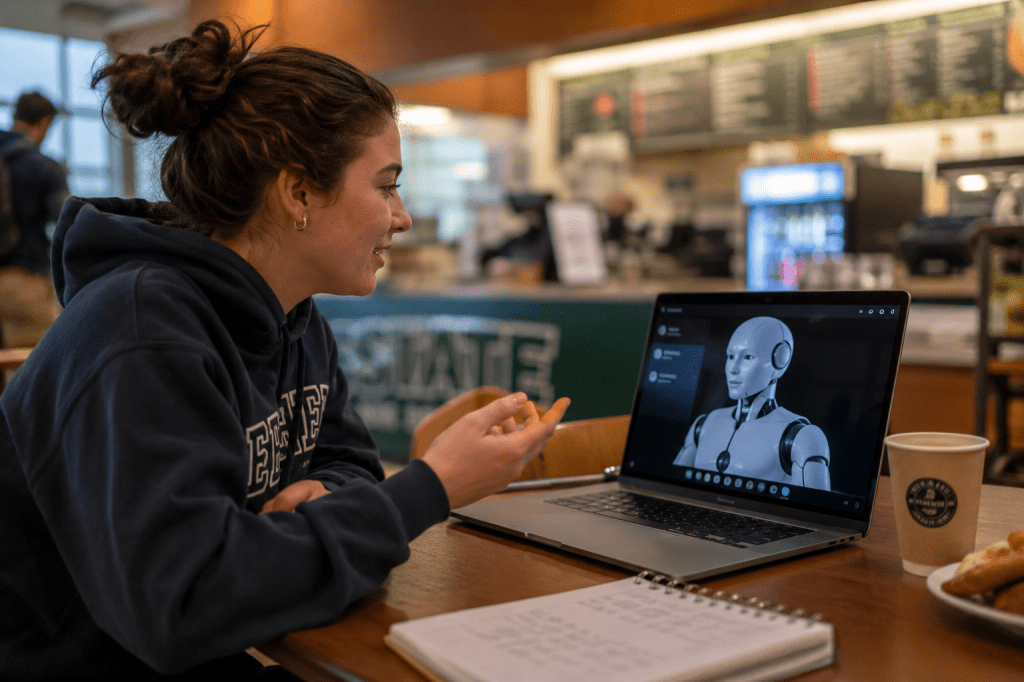
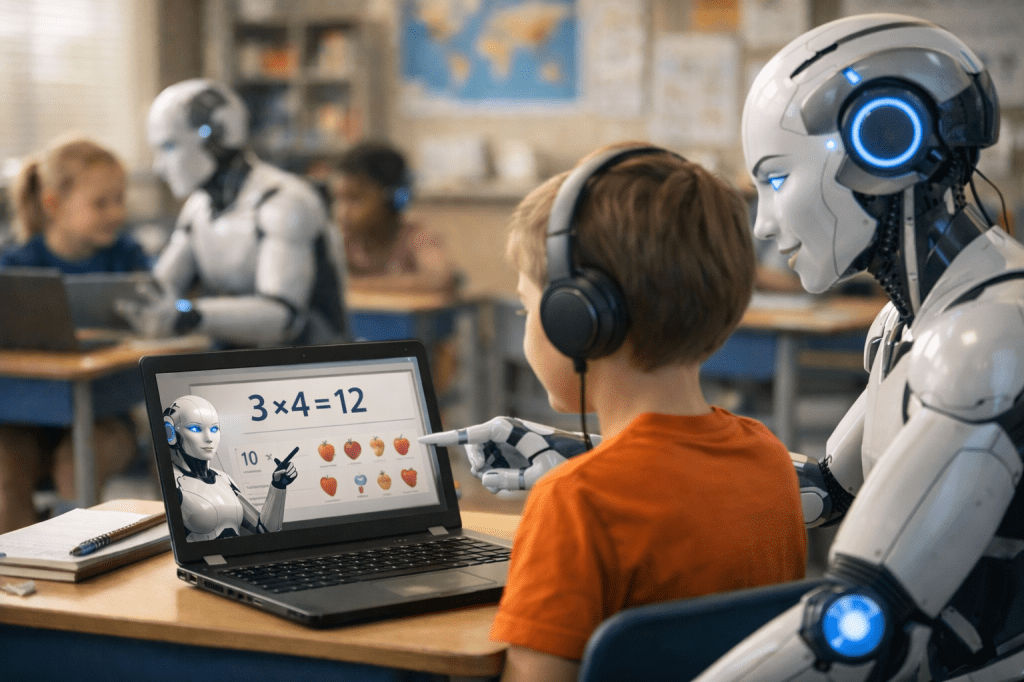
The programs that moved first share a diagnosis that has little to do with translation. Their founders describe a practical shortage: students do not get enough time speaking the language. Christiane Reves, who built the best-known example while teaching German at Arizona State University, started with online and asynchronous sections in which students had no regular partner to talk to (OpenAI, 2026). A team at the University of Waterloo describes the same shortage of low-stakes conversational practice and calls it particularly acute in fully online, asynchronous courses (University of Waterloo, 2026a). Nicola Work, an associate professor of French at the University of Dayton, tried conversation hours that few students attended and partner recordings that students struggled to schedule, before finding that the partner her students would actually use was an AI “available 24/7 and never got tired of repeating the same question” (Work, 2026). The first wave of AI in language departments was built to supply that missing conversation.
Reves’s “Language Buddy” is the clearest model of that first wave and the one other programs cite most often. She and her colleagues in ASU’s School of International Letters and Cultures built it as a custom GPT in ChatGPT Enterprise through the university’s AI Innovation Challenge, and in summer 2024 it was offered in an online section of German 101, where 30% of the class chose to try it (ASU News, 2025). Students opened the bot on their phones, chose a conversation prompt, and spoke with it in German about first-semester topics such as introductions, schedules, hobbies and family; the bot gave immediate feedback and produced a transcript that the instructor could review and comment on (OpenAI, 2026). ASU then prepared a revised pilot for a Spanish 101 course in fall 2025 (ASU News, 2025). Reves has since moved to New York University, where she directs the German language program and continues the work in NYU’s generative AI pilot with OpenAI (OpenAI, 2026). Her approach is pedagogy-first. The bot was designed around communicative competence and level-appropriate interaction, and instructors keep control of the content so that each speaking task matches a course goal.
The most useful finding from Language Buddy concerns the students more than the software. Early users ran into level mismatches, a speaking pace that was too fast, and accuracy problems, and Reves responded by teaching students to prompt the bot, stay in German, pause naturally and ask for clarification. “The tool became stronger when students knew how to use it,” she told OpenAI’s education newsletter in May 2026 (OpenAI, 2026). Students valued the bot’s availability, its privacy and the feeling of real conversation, and most said they would use it again once the problems were fixed. The evidence is qualitative, and Reves lists formal outcome studies as a next step. For other universities, the lesson is that a conversation bot is half of an intervention; the other half is a short course in how to use it.
Smaller projects at other universities have reached the same conclusion about training while adding detail about design. At Yale, Sarab Al Ani used the commercial platform Speakology in fall 2025 in Elementary Modern Standard Arabic for Heritage Learners, co-developing 12 thematic role-play assignments with the company and setting the target grammar, vocabulary, conversation length and type of feedback for each (Poorvu Center for Teaching and Learning, n.d.). Students mapped their progress against ACTFL “Can-Do” statements and reflected on how talking with an AI differed from talking with a person. Al Ani reported that hesitant novices gained confidence and that full transcripts and audio let her give individual feedback, and she recommended specialized training for instructors because the platform has so many settings. At Louisiana State University, Mike Dettinger had the nine students in an upper-level German course rehearse each essay topic in conversation with ChatGPT’s Voice mode (Dettinger, 2026). Open-ended questions produced long information dumps, so he switched to prompt templates telling the bot to speak only German, speak slowly, keep answers short and ask questions back. Several students then held five- to seven-minute dialogues without notes. His list of problems is as instructive as his results: the free tier ran out of minutes, replies ran long, and one bot answered in Spanish until a student’s sixth attempt in German. In each project, the instructor’s settings for level, length, language and feedback are what turned a general chatbot into a usable partner.
Carnegie Mellon University supplies one of the few controlled comparisons from inside a university course. In fall 2024, lecturer Bo Zhan taught two sections of Elementary Japanese I with identical classroom instruction; 12 students practiced speaking with ChatGPT, prompted to give feedback on grammar, vocabulary, response structure and pronunciation, while 11 practiced with classmates (Zhan, n.d.). Both groups improved, but the ChatGPT group improved faster and scored significantly higher on the post-assessment, while gains in self-reported confidence were the same in both sections. The study is small and short, with pre- and post-assessments two weeks apart, but its result points the same way as the qualitative reports and gives the practice-partner model some quantitative support.
From Bots to Platforms
Once individual instructors had shown that a configured bot could work, the next problem was scale, because each custom bot depends on one instructor’s skill at prompting. The University of Waterloo in Canada has taken on that problem directly. Its Teaching and Learning AI Fellowship project, led by Kanstantsin Tsedryk of French Studies with co-investigators Nicolas Hebbinckuys and Annik Bilodeau and collaborators in German and Spanish, is building task-based bots in a first phase and, in a second, an instructor-facing platform where faculty create course-specific bots from tested templates by uploading course documents, setting targets and adjusting voice settings, with no coding (University of Waterloo, 2026a).
The team’s rationale names a problem other programs had met: general AI tools tend to over-explain, write text for the student, and ignore CEFR levels, course objectives and cultural context. Its bots therefore run controlled communicative tasks, such as recounting an experience or asking a favour, as sequences of 10 to 15 questions, and students can slow the bot’s speech. A project update posted in November 2026 reports ethics clearance, written setup guides and instructors building agents for their courses (University of Waterloo, 2026b). The team has also learned that exercises easily come out too simple or too complex, that calibrating difficulty takes substantial testing with instructors, and that rapid changes to commercial AI platforms can force redesign. That last lesson applies to every department, since a program built on one vendor’s tools inherits that vendor’s release schedule.
Lancaster University in England has placed the conversation partner inside an immersive scene. Alícia Moreno Giménez, a senior teaching associate in Hispanic studies, built virtual reality scenarios in Unity, such as a restaurant, in which Spanish learners speak with AI-driven characters; the system uses OpenAI’s Whisper for speech recognition, GPT-4o for dialogue and CEFR-aligned feedback, and Amazon Polly for the characters’ voices, and a web version lets students practice on any device (Moreno Giménez, 2026). The course runs as a flipped class. Students prepare with short videos and model dialogues, spend an hour in pairs or small groups talking with the characters while classmates watch on a screen, and then receive feedback reports and assess one another. More than 70% of participants reported a positive effect on their learning, citing speaking confidence and listening comprehension most often, and beginners benefited most. Moreno Giménez is candid about costs: headsets, technical support, staff training and new scenarios are expensive, staff workloads rise, and some students and colleagues object to AI’s environmental and ethical footprint. Her article gives no sample size or study design, so the model’s value for now rests on its design and on what students say about it.
The University of Sydney’s School of Languages and Cultures shows what happens when the practice partner is built into a whole first-year curriculum and matched to a new assessment policy. With a 2024 university grant, four academics, four casual tutors and 16 paid student partners working in French, German, Japanese and Korean redesigned seven first-year units for 2025 (Stott, 2025). They built agents on Cogniti, an AI platform developed at the university, for three uses: a study buddy for reading, writing and listening practice before secure in-class tests; an editing agent that comments on written homework and drafts; and a teaching assistant that gives practice in Asian-script writing and conversation drawn from uploaded course material. Assessment tasks were redesigned to be “either open or secure,” following the university’s two-lane approach, and staff and students co-wrote the school’s guidelines on AI use. Carolyn Stott’s account reports informal feedback and no outcome data. The project’s distinctive contribution is structural: students helped write the rules they would study under, and the practice tools were matched to assessments designed to account for them.
Hong Kong offers the most centralized version of the model, with AI-supported language learning made compulsory. Starting in the 2026/27 academic year, the Hong Kong Polytechnic University requires students to take “AI-as-a-Tool for Language Learning,” in which they use AI to improve speaking, writing and interview skills before choosing language electives freely; Vice President (Education) Cao Jiannong described the change as replacing traditional proficiency streaming with autonomous, AI-supported learning (Hong Kong Polytechnic University [PolyU], 2026a). The university’s English Language Centre gives students in the course unlimited use of premium accounts on the speaking-practice tools Yoodli and Talkpal in its self-access center (PolyU, 2026b).
At the Hong Kong University of Science and Technology, the Center for Language Education lists a required generative AI literacy module that has reached 8,774 learners, a 2025 audit of every language course for AI-resilient design, student-built apps for Putonghua and English speaking practice, and funded cross-university projects on AI-assisted feedback and grading under human review and on turning students “from users to builders” of agentic language-learning tools (Hong Kong University of Science and Technology Center for Language Education [HKUST CLE], n.d.). These programs mainly teach English and Putonghua to students who need them for study and work, which makes them a different case from a U.S. department offering German as an elective. They show what full institutional commitment looks like, and HKUST’s course-by-course audit is a step that few Western departments have taken.
The Grading Problem
Taken together, the profiles share a pattern that holds across countries and languages. Each program configures a general AI model narrowly, by level, task and length; each finds that students must be taught to use it; and each runs into grading as the hardest remaining question. A tool that gives a student unlimited speaking practice will also draft that student’s essay, translate the homework and polish a recorded presentation. Departments have answered with two incompatible policies.
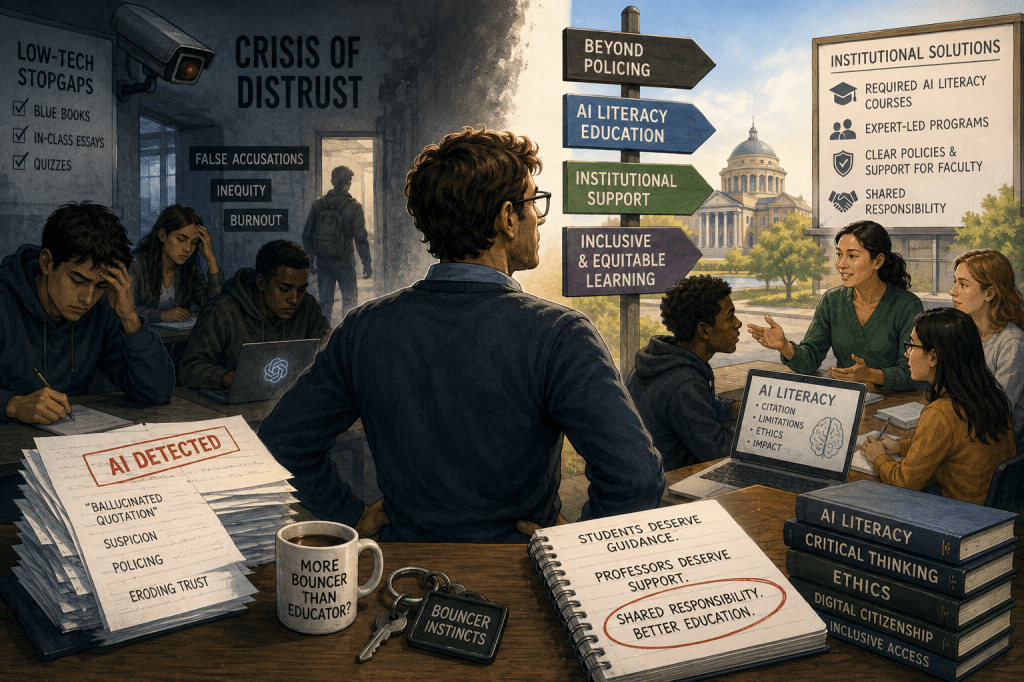
The first answer keeps AI out of assessment. At the London School of Economics, the Centre for Language Studies applies the strictest of the school’s three positions to its degree courses in French, German, Mandarin, Russian and Spanish: generative AI may not be used for formative or summative assessment, and using it counts as academic misconduct (London School of Economics Centre for Language Studies [LSE CLS], n.d.). The center’s reasoning is specific to language learning. Assessment tests the student’s own creative and critical use of the target language, and markers treat errors as useful evidence of what a student has yet to learn. Trinity College Dublin’s School of Languages, Literatures and Cultural Studies, in a policy updated in July 2026, “does not allow the use of Generative AI in assessed student work” unless a module coordinator permits it, a stricter rule than the university’s default (Trinity College Dublin School of Languages, Literatures and Cultural Studies [TCD SLLCS], 2026).
University College London’s language center bars software-based language and writing review in its modern foreign language modules because students are being assessed on their own ability to use the language (University College London Centre for Languages and International Education [UCL CLIE], 2026). The secure lane protects the meaning of a grade. It also leaves practice and assessment pulling in different directions, with take-home work policed by declarations and suspicion.
The second answer opens assessment to AI and changes the task so that students must own what they submit. Sydney’s two lanes are one version, with open tasks set alongside secure in-class tests (Stott, 2025). Richard Robin of George Washington University proposes a sharper version in a July 2026 article built on his Russian courses. In his “copy-and-master” assignment, students write a short review of a film or series with any AI or translation tool they like, then must handwrite the text and reproduce it from memory in class or office hours, explaining why they chose particular words and forms (Robin, 2026). In a second assignment, students write without help, ask an AI to correct the draft, and accept or reject each change, and every change they accept becomes vocabulary they are expected to use. “The learning is in the editing,” Robin writes. He grants that weaker students will use AI only to finish the assignment, and the live reproduction test is designed to expose them. His method adds instructor time, and he reports no trial data. The open lane lets practice and assessment work toward the same goal, at the cost of more one-on-one teaching.
A third group of programs treats AI as something students should study as well as use. The Berkeley Language Center at the University of California, led by Kimberly Vinall and Emily Hellmich, used a 2023–2026 U.S. Department of Education International Research and Studies grant of $150,000 to develop materials that teach students how machine translation works, how to use it to support reading and writing, and how to weigh its ethics in multilingual workplaces (Berkeley Language Center [BLC], n.d.; UC Berkeley College of Letters & Science, 2023). The materials were planned in eight languages, including Arabic, Mandarin, Filipino and Hindi, and by mid-2025 the center had published 18 activity templates, guides to translation and other online tools, and an annotated bibliography as open educational resources (UC Berkeley Arts & Humanities, 2023; BLC, 2025). The same approach appears in China, where the Communication University of China redesigned a Swahili translation course so that, in the words of instructor Ao Manyun, it would “cultivate their skills to direct and manage AI translators” (Lo, 2026). Programs in this strand assume that graduates will use translation tools at work and set out to make them competent and skeptical users.
The most deliberate institutional responses in the United States come from departments that have organized their faculty to study the question before settling it. MIT’s Global Languages section, directed by Per Urlaub, has funding for academic year 2027 to form an Artificial Intelligence and Multilingualism Departmental Action Team that will develop, assess and critique AI-informed teaching through what the project calls iterative, evidence-based inquiry, along with a Language and AI Learning Alliance to share the results across MIT and beyond; Urlaub and French program leader Eva Dessein are the principal investigators (MIT Registrar’s Office, n.d.-a). The section already offered a spring 2025 Japanese course, designed by Takako Aikawa, in which ChatGPT served as a “co-language teaching assistant” for students of mixed proficiency (MIT Registrar’s Office, n.d.-b).
Aikawa had told Inside Higher Ed in 2024 that her team’s three-year effort to build an AI tutor for Japanese writing was overtaken when ChatGPT “just did everything that we wanted to do” (Coffey, 2024). At Dartmouth, language program directors Roberto Rey Agudo (Spanish and Portuguese) and Tania Convertini (Italian) launched a provost-sponsored faculty seminar in February 2026 on AI and foreign language teaching, covering assessment, the uneven representation of languages in AI models, and critical digital literacy; Rey Agudo described it as “a space to welcome critical voices” (Dartmouth College, 2026). These departments deploy more slowly, and what they offer other universities is a method: AI adoption treated as a research question, with a faculty body charged to answer it.
What the Evidence Shows
The research literature gives the practice-partner model reasonable support, which makes the thinness of the programs’ own evidence more conspicuous. A 2026 meta-analysis in Discover Computing by Mirka Saarela and colleagues at the University of Jyväskylä pooled 51 studies and 175 effect sizes and found “large, statistically significant effects” of generative AI tools on language proficiency and on outcomes such as confidence and anxiety, with stronger effects for productive skills, informal settings and less commonly taught languages (Saarela et al., 2026).
A Belgian team including Serge Bibauw and Piet Desmet presented a meta-analysis of dialogue-based systems at the EUROCALL conference in September 2026, covering 67 studies from 2011 to 2025 with 4,544 participants (Wang et al., 2026). It found a medium overall effect (g = 0.61), the largest estimate for recent LLM-powered chatbots (g = 0.64), and gains that held on delayed posttests. The same analysis found no significant effect on comprehension, and the type of technology was not a significant moderator, a result consistent with the programs’ experience that task design matters more than the particular model. Against that literature, the model programs report small samples (nine students at LSU, 23 at Carnegie Mellon), self-reported satisfaction (Lancaster, Yale, Sydney) or evaluations still to come (NYU, Waterloo). None of the programs profiled here has published proficiency results from a full course sequence or a comparison across years.
The gap matters more than an ordinary research lag because the case made for AI tutors can be turned against language teachers. In 2023, Macquarie University in Australia proposed dropping more than half of its language programs and shifting toward “cultural proficiency,” arguing that linguistic fluency had become less suitable given “the ease with which generative AI and machine translation can translate between languages” (Ross, 2023). John Hajek, president of the Languages and Cultures Network for Australian Universities, called the plan “wrong-headed” and argued that universities should raise students’ proficiency instead. Chinese universities are now making comparable decisions at national scale (Lo, 2026).
Professional bodies have begun to respond. The Modern Language Association has created a Task Force on World Languages and Generative AI alongside its broader AI task force (Modern Language Association [MLA], 2026), and the broader task force’s statement on AI and assessment, approved by the MLA Executive Council, holds that AI should not replace instructors’ feedback and is meant to help faculty resist administrators who want to use AI for efficiency without critical thought (MLA Task Force on AI in Research and Teaching, 2026). ACTFL lists AI courses, articles and convention sessions among its resources but no AI-specific position statement; its most recent position statement on technology dates from 2017 (ACTFL, n.d.). A department that cannot show what its AI-supported courses produce will have trouble answering an administrator who reads the same evidence as a reason to employ fewer teachers.
As of mid-November 2026, then, AI in university world-language teaching has a recognizable shape. The leading programs, from New York and Waterloo to Lancaster, Sydney and Hong Kong, use AI chiefly as a conversation partner that instructors configure to a level, a task and a length, and all of them have learned that students need training to use it well. Departments have divided over assessment, with some securing it, as LSE and Trinity College Dublin have, and others rebuilding it so that students must own AI-assisted work, as Sydney has and as Robin proposes. A smaller group, including Berkeley, MIT and Dartmouth, treats AI as course content and as a research question for the whole faculty. The research literature supports the practice-partner model, while the programs’ own results remain small, self-reported or pending.
For a university deciding where to begin, the model programs suggest a sequence. Start with the speaking shortage that every pioneer identified, and build or license a partner that instructors can configure. Train students to use it, as Reves and Dettinger learned to do. Decide for each assessment whether it is open or secure, and audit existing courses as HKUST did. Teach translation tools as course content, as Berkeley does. Most important, measure proficiency from the first pilot onward, because the missing piece in the 2026 record is data on what students who practice with AI can do at the end of a year. The programs that collect that data will be in the strongest position when budgets are next decided, and they will answer the question this survey cannot: whether the extra practice AI now supplies at scale makes students more proficient speakers of other languages.
References
ACTFL. (n.d.). AI resources. Retrieved November 20, 2026, from https://www.actfl.org/educator-resources/ai-resources
ASU News. (2025, August 11). Improving language proficiency through AI. Arizona State University. https://news.asu.edu/20250811-science-and-technology-improving-language-proficiency-through-ai
Axios. (2023, November 15). College students bid adieu to foreign language classes. https://www.axios.com/2023/11/15/college-students-foreign-languages-enrollment-french-spanish-korean
Ayres-Bennett, W., Burdett, C., Cayley, E., & Cazzoli, M. (2025, November 14). The latest threat to UK modern languages is yet another faux pas. Times Higher Education. https://www.timeshighereducation.com/opinion/latest-threat-uk-modern-languages-yet-another-faux-pas
Berkeley Language Center. (n.d.). Background [Language & AI: Resources for instruction]. University of California, Berkeley. Retrieved November 20, 2026, from https://blc.berkeley.edu/projects-and-initiatives/language-ai/resources-instruction/background
Berkeley Language Center. (2025, June 10). 2024–2025 year in review. University of California, Berkeley. https://blc.berkeley.edu/news/2024-2025-year-review
Coffey, L. (2024, June 6). Lost in translation? AI adds hope and concern to language learning. Inside Higher Ed. https://www.insidehighered.com/node/152686
Dartmouth College. (2026, February 10). University Seminars explore AI, and also the medieval world. https://home.dartmouth.edu/news/2026/02/university-seminars-explore-ai-and-also-medieval-world
DePalma, D. (2026, May 4). The quiet erosion of US language capacity. CSA Research. https://csa-research.com/l/blog/article/the-quiet-erosion-of-us-language-capacity
Dettinger, M. (2026, November). ChatGPT Voice to assist in German language conversation. The FLTMAG. https://doi.org/10.69732/KXKM2998
Hong Kong Polytechnic University. (2026a, May 23). PolyU to launch compulsory AI language course as teachers and students keep pace with the times (featured in Wen Wei Po). https://www.polyu.edu.hk/iherd/news-and-events/news/2026/20260523-polyu-to-introduce-compulsory-ai-language-course/
Hong Kong Polytechnic University. (2026b, September 10). Taking LEI1101? Improve your speaking with AI at CILL. English Language Centre. https://www.polyu.edu.hk/elc/about-elc/news-and-events/2026/taking-lei1101-improve-your-speaking-with-ai-at-cill/
Hong Kong University of Science and Technology Center for Language Education. (n.d.). AI at CLE. Retrieved November 20, 2026, from https://cle.hkust.edu.hk/ai
Lo, K. (2026, June 22). Chinese universities are cutting language majors to make way for AI. Rest of World. https://restofworld.org/2026/chinese-universities-drop-humanities-ai/
London School of Economics Centre for Language Studies. (n.d.). Learning and assessment. Retrieved November 20, 2026, from https://www.lse.ac.uk/languages/current-students/learning-and-assessment
MIT Registrar’s Office. (n.d.-a). Language and intercultural education in the age of artificial intelligence. Massachusetts Institute of Technology. Retrieved November 20, 2026, from https://registrar.mit.edu/faculty-curriculum-support/education-initiatives-funding/funded-projects/language-and-intercultural
MIT Registrar’s Office. (n.d.-b). Collaborative and adaptive language learning with generative AI. Massachusetts Institute of Technology. Retrieved November 20, 2026, from https://registrar.mit.edu/faculty-curriculum-support/education-initiatives-funding/funded-projects/collaborative-and-adaptive
MLA Task Force on AI in Research and Teaching. (2026, June 26). “The making of… Statement on AI and assessment.” Modern Language Association. https://mlaai.hcommons.org/2026/06/26/the-making-of-statement-on-ai-and-assessment/
Modern Language Association. (2026, March 18). MLA Executive Director Paula M. Krebs to step down in 2027. https://news.mla.hcommons.org/2026/03/18/mla-executive-director-paula-m-krebs-to-step-down-in-2027/
Moreno Giménez, A. (2026, June 23). What virtual reality and AI can do for language learners. Times Higher Education Campus. https://www.timeshighereducation.com/campus/what-virtual-reality-and-ai-can-do-language-learners
National University of Singapore Centre for Language Studies. (2026). CLaSIC 2026: Beyond borders: Language education in the era of AI. https://fass.nus.edu.sg/cls/clasic/clasic-2026/
OpenAI. (2026, May 30). A language buddy that meets students where they are [Interview with C. Reves]. ChatGPT for Education Newsletter. https://edunewsletter.openai.com/p/a-language-buddy-that-meets-students
Poorvu Center for Teaching and Learning. (n.d.). Using Speakology AI to improve Arabic communication skills. Yale University. Retrieved November 20, 2026, from https://poorvucenter.yale.edu/resource/using-speakology-ai-to-improve-arabic-communication-skills
Robin, R. (2026, July). Cheating with AI? If you’re serious about language learning, sure! The FLTMAG. https://doi.org/10.69732/FTHK2466
Ross, J. (2023, November 14). Languages face chop as Macquarie focuses on “cultural fluency.” Times Higher Education. https://www.timeshighereducation.com/news/languages-face-chop-macquarie-focuses-cultural-fluency
Saarela, M., Gunasekara, S., & Kumarage, P. (2026). A meta-analysis of generative AI effects on language proficiency and affective–cognitive outcomes in language learning. Discover Computing, 29, Article 116. https://doi.org/10.1007/s10791-026-10015-1 (open access: https://urn.fi/URN:NBN:fi:jyu-202603022354)
Stott, C. (2025, December 18). To Gen AI or not to Gen AI: Collaborating with student partners on the two-lane assessment approach. Teaching@Sydney. University of Sydney. https://educational-innovation.sydney.edu.au/teaching@sydney/?p=24631
Trinity College Dublin School of Languages, Literatures and Cultural Studies. (2026, July 2). GenAI policy. https://www.tcd.ie/langs-lits-cultures/current-students/ai-guidelines/
UC Berkeley Arts & Humanities. (2023). Berkeley Language Center receives grant to support critical uses of A.I. in language instruction. https://artshumanities.berkeley.edu/news/berkeley-language-center-receives-grant-support-critical-uses-ai-language-instruction
UC Berkeley College of Letters & Science. (2023, October 23). Berkeley Language Center receives grant to support critical uses of A.I. in language instruction. https://ls.berkeley.edu/node/1081
University College London Centre for Languages and International Education. (2026). CLIE policy on student use of generative AI (2026-27). https://www.ucl.ac.uk/study/clie/clie-policy-student-use-generative-ai-2026-27
University of Waterloo. (2026a). From custom chatbots to a scalable instructional platform for language teaching and learning. Office of the Associate Vice-President, Academic. https://uwaterloo.ca/associate-vice-president-academic/custom-chatbots-scalable-instructional-platform-language
University of Waterloo. (2026b). Five projects exploring new possibilities for teaching and learning [GenAI Teaching and Learning Fellowship project updates]. https://uwaterloo.ca/associate-vice-president-academic/genai-teaching-and-learning-fellowship-project-update
Wang, Z., Bibauw, S., Noreillie, A.-S., & Desmet, P. (2026, September 8). Hype or hope? A meta-analysis of conversational chatbots on L2 learning [Conference presentation]. EUROCALL 2026, Ulster University, Belfast, United Kingdom. https://research.dial.uclouvain.be/entities/publication/29791a54-111b-40eb-bacb-346494980619
Work, N. (2026, February 14). Parlez-vous français? AI as a conversation partner—and a tool for interaction and feedback. The OFLA Cardinal. https://the-ofla-cardinal.org/2026/02/14/parlez-vous-francais-ai-as-a-conversation-partner-and-a-tool-for-interaction-and-feedback/
Zhan, B. (n.d.). [Generative AI teaching as research project: Elementary Japanese I]. Eberly Center for Teaching Excellence and Educational Innovation, Carnegie Mellon University. Retrieved November 20, 2026, from https://www.cmu.edu/teaching/gaitar/project-descriptions/zhan.html
###
Filed under: Uncategorized |




















































































































































































































































































































































































































































































Leave a Reply