



By Jim Shimabukuro (assisted by Claude)
Editor
I have been a reader all my life, and from an early age I understood that reading is not one activity. It is at least two. When I open a novel, I start at the first page and read until the end. The enjoyment is in the sequence. When I open anything written to inform me — a manual, a report, an article, a study, a news account — I scan. I hunt for what interests me or answers my questions. When I find them, I read that part closely and move on. A forty-page document might cost me four minutes or four hours, depending on my purposes. That decision is mine, and I make it early.

For most of my life this was a private habit, the kind of thing a reader works out alone and rarely discusses. It turns out to have a long pedigree, a substantial research literature behind it, and, in the last three years, a powerful new instrument. Artificial intelligence has not changed the first kind of reading at all. It has transformed the second one, and the transformation has been faster and larger than most of us anticipated.
In 1625, Francis Bacon published an essay called “Of Studies” containing a sentence that every serious reader eventually arrives at independently: “Some books are to be tasted, others to be swallowed, and some few to be chewed and digested; that is, some books are to be read only in parts; others to be read, but not curiously; and some few to be read wholly, and with diligence and attention” (Bacon, 1625). Bacon was not describing three kinds of books so much as three kinds of appetite. The same reader, on different errands, brings a different jaw to the page. A few lines earlier he had written, “Read not to contradict and confute; nor to believe and take for granted; nor to find talk and discourse; but to weigh and consider.”
Three centuries later Mortimer Adler built a whole pedagogy on that division. How to Read a Book, first published in 1940 and revised with Charles Van Doren in 1972, sorts reading into four levels. Elementary reading is decoding. Inspectional reading, the second level, is the one Bacon called tasting, and Adler treated it as a discipline rather than a shortcut — “the art of skimming systematically,” in which the reader asks what the book is about before asking what any sentence in it says (Farnam Street, n.d.). Analytical reading is the slow, complete, possessive pass. The fourth level, syntopical reading, has the reader work through many books on a single subject, set them against one another, and construct an analysis that appears in none of them. Adler considered syntopical reading the most demanding thing a reader can attempt. It is also, as any graduate student will tell you, the most time-consuming, and for that reason the level most readers skip.
Louise Rosenblatt gave the same division its cleanest names. In The Reader, the Text, the Poem (1978) she distinguished the efferent stance from the aesthetic one. Efferent comes from the Latin efferre, to carry away: the efferent reader is after something portable — the gist, the number, the instruction — and once it is in hand, the words that carried it can be discarded. The aesthetic reader is doing the opposite, living inside the words while they last, attending to rhythm and image and the particular way a thing is said (Raines, 2016). Rosenblatt’s point was that the stance belongs to the reader and not to the text. You can read a poem efferently, to answer a test question, and you can read a tax form aesthetically if you have an unusual disposition. The text does not decide. You do.
This is worth dwelling on, because it explains why the arrival of AI has provoked such different reactions. If reading is a single thing, then a machine that reads for you is a threat to all of it. If reading is two things with one name, then the machine is operating almost entirely on one side of the line.
The internet made the efferent stance the default long before anyone had heard of a large language model. In September 1997, Jakob Nielsen published a short article with an unanswerable opening: “People rarely read Web pages word by word; instead, they scan the page, picking out individual words and sentences.” His usability study found that 79% of test users scanned any new page they encountered, and only 16% read word by word. Nielsen’s practical advice to writers was to strip out promotional language, because “promotional language imposes a cognitive burden on users who have to spend resources on filtering out the hyperbole to get at the facts” (Nielsen, 1997).
Ziming Liu documented the same shift among readers holding advanced degrees. His survey, published in the Journal of Documentation, found that a decade of digital reading had produced a recognizable pattern: more browsing and scanning, more keyword spotting, more one-time and non-linear reading, and less sustained, in-depth attention (Liu, 2005). Liu was careful to say that the behavior was adaptive. Readers were not getting worse; they were getting more selective under a heavier load.
The selectivity had a measurable cost when readers misapplied it. In 2018, Pablo Delgado and colleagues at Valencia, the Technion, and Haifa pooled 54 studies covering 171,055 participants and found a consistent comprehension advantage for paper over screens, with an effect size of g = −.21. Two details in that meta-analysis matter more than the headline. First, the print advantage grew when reading was timed and nearly vanished when readers set their own pace: g = −.26 under time pressure against g = −.09 when self-paced. Second, the advantage showed up for informational texts and for mixed sets, and not for narrative texts read on their own (Delgado, Vargas, Ackerman, & Salmerón, 2018). Screens did not damage the reading of stories. They damaged the reading of documents, and mostly when the clock was running.
That finding lines up with something readers already sense. The efferent stance under time pressure is where technique matters. A reader who scans a repair manual with a clear question in mind does fine. A reader who scans a dense argument with no question in mind absorbs very little and often does not realize it.
The arrival of capable AI moved the scan. For thirty years the sequence was search, click, scan, extract. Now the extraction often happens before the reader arrives.
Pew Research Center surveyed 5,119 U.S. adults in February 2026 and found that 60% say they read the AI summaries that appear at the top of search results; 30% say they skip them (Gottfried et al., 2026). Half of American adults — 49%, up from 33% in 2024 — now use AI chatbots at all, and about a quarter use one daily. Among adults under 50, 57% use ChatGPT specifically.
The click data tells the same story from the other end. Rand Fishkin, analyzing Similarweb’s clickstream panel, reported that 68.01% of U.S. Google searches in the first four months of 2026 ended without a click on anything, up from 60.45% in 2024 and roughly 45% a decade earlier. “That’s the fastest acceleration of this phenomenon in the last decade,” he wrote, “almost certainly driven by the massive growth in AI Overviews” (Fishkin, 2026).
News is following. The Reuters Institute’s Digital News Report 2026, covering roughly fifty markets, found that 10% of people now use AI chatbots for news in a given week, up from 7% the year before, and 16% of those under 35. The users are not casual: 38% of them fall into the report’s “news lover” category, against 22% of the general sample. What they value most is the follow-up question — 42% named the ability to ask for a deeper explanation as the feature that matters (Egan, 2026).
Among researchers the shift is close to complete. Wiley surveyed 2,430 researchers in August 2025 and found 84% using AI tools of some kind, up from 57% a year earlier, with 62% using them for specific research and publication tasks and 85% reporting improved efficiency (Wiley, 2025). A Frontiers survey of about 1,600 academics across 111 countries found more than half had used AI while peer reviewing a manuscript, which is to say while performing the most demanding efferent reading in the profession (Naddaf, 2025).
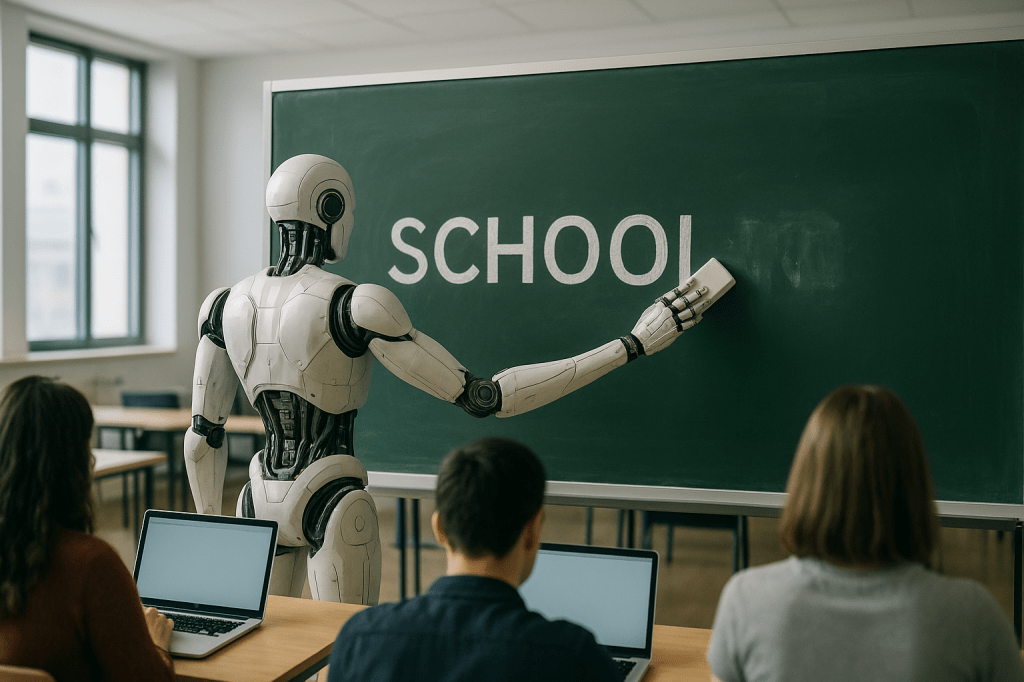
Students have adopted it faster than anyone. The Higher Education Policy Institute’s 2026 survey of 1,054 UK undergraduates found 94% using generative AI for assessed work and 95% using it in at least one way. One student described the workflow exactly as I would: “AI tools allowed me to quickly summarise dense readings and generate drafts or outlines for assignments, saving hours of tedious work and letting me focus on critical analysis and deeper understanding” (Stephenson & Armstrong, 2026).
And the economists have now measured what people actually ask for. Aaron Chatterji, David Deming, and colleagues classified a representative sample of ChatGPT conversations through July 2025 and found that “Practical Guidance,” “Seeking Information,” and “Writing” together account for nearly 80% of all conversations (Chatterji et al., 2025). Two of those three are efferent reading by another name.
Triage, then read. The most useful practical account of AI-assisted reading I have come across was written by Oren Etzioni, the founding CEO of the Allen Institute for AI, in an essay for GeekWire. Etzioni is not anti-summary. He simply insists on knowing what a summary is. “That summary is merely a skeleton,” he writes. “It strips away the voice, the best lines, the telling details, and the nuances that can make or break your understanding.” His rule follows directly: “Treat the summary as a triage tool, not a destination. Use it to decide whether a document deserves your time” (Etzioni, 2026).
Triage is the right word, and it describes what I have done by hand for fifty years. The difference now is speed and reach. I can put a hundred-page report through a first pass in under a minute, ask it three questions, and know whether the thing is worth an hour. When it is, I read it the old way, because the summary was never the point.
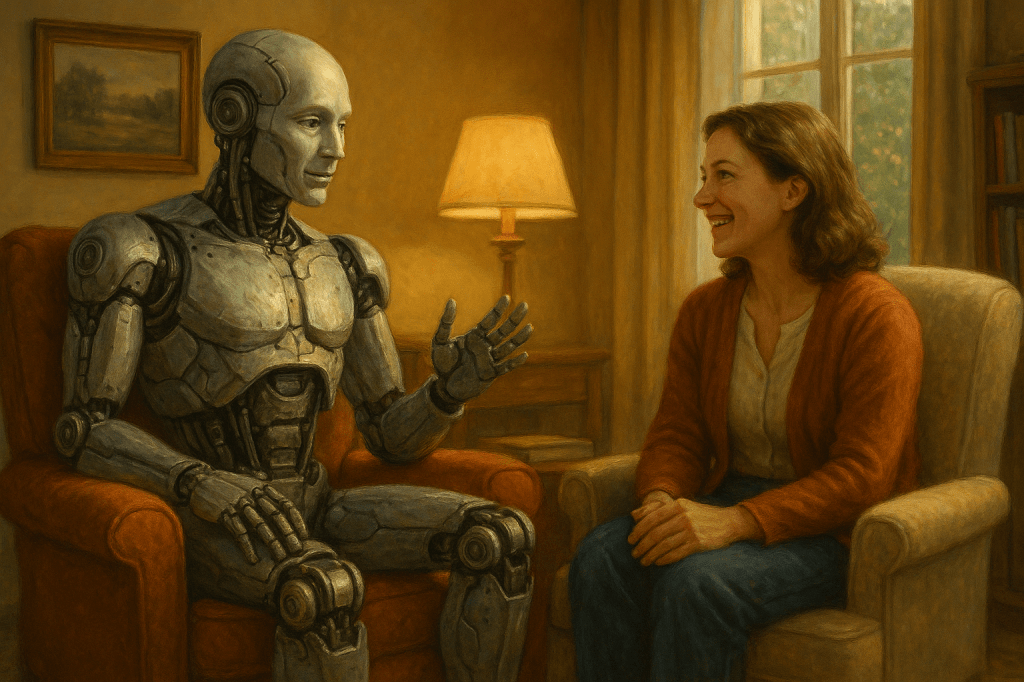
Etzioni’s second rule is about what happens after triage: “AI-assisted reading rewards curiosity.” The payoff comes from the dialogue — asking the document what its weakest evidence is, where it disagrees with a rival account, what a skeptic would say about its third section. This is where the practice stops resembling skimming and starts resembling something Adler would have recognized.
In fact it resembles the level Adler thought almost nobody reached. Syntopical reading — assembling twenty sources on a question, aligning their vocabularies, mapping where they agree and where they quietly diverge — used to be a semester of work. It is now an afternoon. That is the single largest gain, and it is easy to undersell because it does not look dramatic. A reader who could previously afford to compare three sources can now afford to compare thirty, and the thirty-source view of a contested question is a different view.
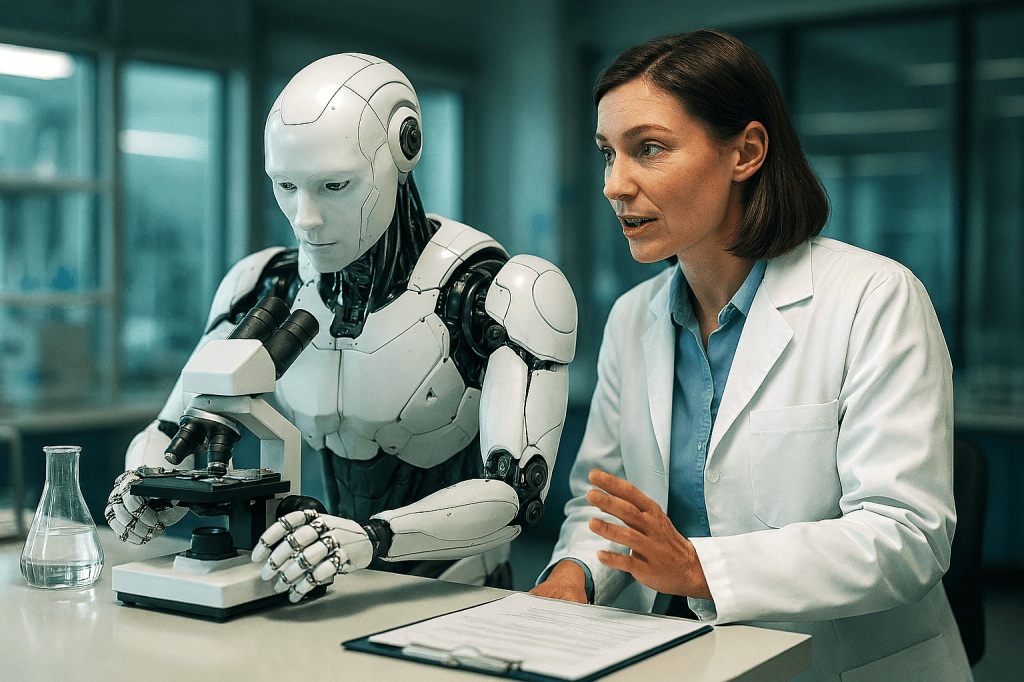
The research frontier is already past summarizing. In September 2026, Nature reported on Paper2Agent, a system from James Zou’s group at Stanford that converts a published paper into a working agent. The system reads the paper’s text, code, and data, builds tools that apply the paper’s methods to new data, and then talks to the scientist. Applied to the AlphaGenome paper, it produced a functioning agent in about 45 minutes at a computing cost of roughly $14; the agent answered genetics questions with near-perfect accuracy and outperformed other biomedical tools given the same questions. Zou told the reporter the approach “can help us to reimagine what knowledge looks like in the future” (Glickman, 2026b). A paper you can interrogate, and that can run its own analysis on your data, is not a document being summarized. It is closer to a colleague.
The reader is the critical variable. The most interesting recent finding is that the tool matters less than the person holding it. Ran Yu and colleagues ran a preregistered study in August 2026 comparing what people learn about contested topics through a search engine against what they learn through a chatbot. One hundred ninety-four participants were assigned a debated topic and one of the two interfaces. The differences in learning were negligible. Argument expansion came in at 2.58 for search and 2.77 for chat; critical reasoning at 2.85 and 2.82. What did seem to move the needle was who the reader was. “What users bring to the task, such as their attitude strength and level of intellectual humility, might be more important in shaping learning outcomes than the information access tool,” the authors concluded (Yu, Rieger, Karatoprak Ersen, & Liu, 2026). Chatbot users did spend considerably longer on the task — 479 seconds against 329.
A second study shows the same variable operating over eight weeks. Chinaza Ironsi and Hanife Bensen Bostanci ran a quasi-experiment with 86 B1-level university English learners in four intact classes. The classes with a generative AI reading assistant gained 3.1 points on the comprehension posttest over the control classes and reported higher autonomy. The qualitative half of the study is the part worth reading. Early on, students used the assistant to get unstuck: “When I do not understand a sentence, I paste it to ChatGPT and ask it to explain ‘like I am B1’. Then I can go back to the text.” By week six the pattern had changed. A teacher observed that students “were using it more to test their understanding and to compare different interpretations.” The authors concluded that quality of interaction, not quantity, was the critical factor (Ironsi & Bostanci, 2026).
The contrast with the study that gets cited most often in this debate is instructive. Yue Fu, Joel Wester, Niels van Berkel, and Alexis Hiniker followed 15 undergraduates for eight weeks and collected 838 prompts across 239 reading sessions. Comprehension prompts — summarize this, explain that — made up 59.6% of everything students asked, and 72% of sessions contained exactly three prompts, which happened to be the assignment’s required minimum. The authors’ summary of the behavior is precise: students “effectively read through AI rather than with it: using AI output as the primary material to process and triage, with the original text serving as a secondary resource consulted selectively” (Fu, Wester, van Berkel, & Hiniker, 2026). The same paper records that students knew better. They “recognized that effective prompting required effort and yielded better results, yet they rarely applied this knowledge in practice.”
Read the three studies together and a clear picture emerges. The assistant does what the reader’s purpose tells it to do. A reader with a real question gets a research partner. A reader with a deadline and no question gets three summaries and a completed checkbox. Alexander Sidorkin, who has written about academic life since 2006, put the pedagogical version of this plainly: “The educational task is not to protect every page from compression. It is to teach students when compression is the work, and when the missing page is the point” (Sidorkin, 2026).
Marc Watkins, who directs an AI institute for teachers at the University of Mississippi, locates the failure a step earlier. “Students struggle not with reading but with understanding why reading matters to their learning,” he wrote in July 2026. “We’ve effectively stopped communicating why reading matters. Instead, we’ve adopted judgmental, paternalistic, and dismissive stances about student reading habits” (Watkins, 2026).
AI in reading is not without issues. Shiri Melumad and Jin Ho Yun ran seven experiments with 10,462 participants and found that people who learned a topic from an LLM summary developed shallower knowledge than people who learned the same material from web links, and then gave advice that was “sparser, less original” and less likely to be adopted by its recipients. The effect held even when the summaries carried live source links (Melumad & Yun, 2025). The mechanism they propose is the absence of the search itself: discovery and synthesis are where the learning happens.
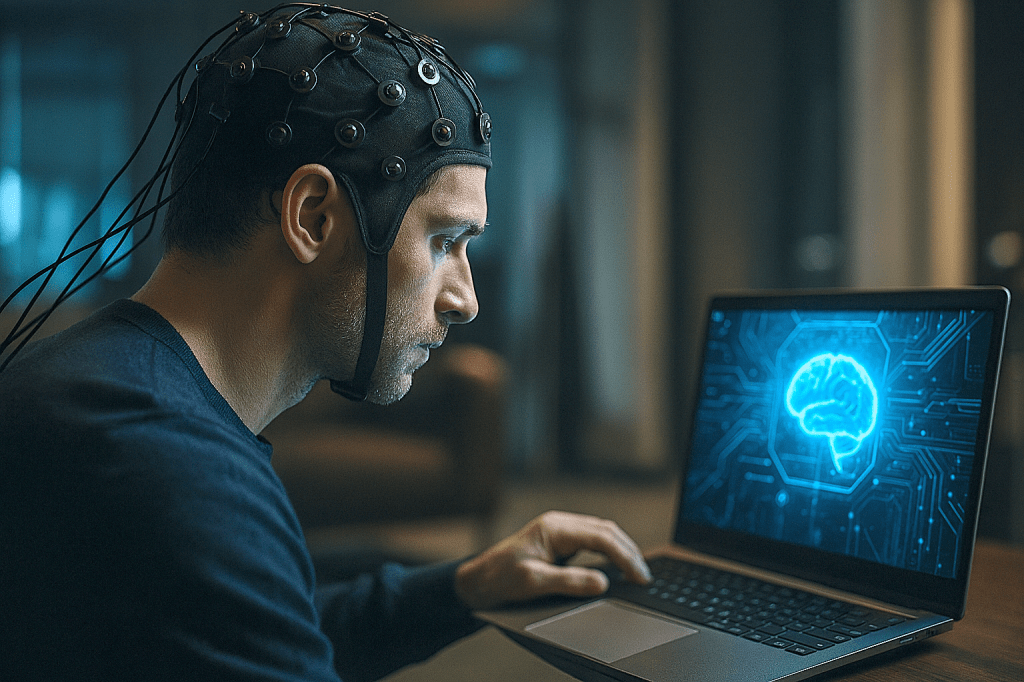
Nataliya Kosmyna and colleagues at the MIT Media Lab put 54 participants in EEG caps and had them write essays with an LLM, with a search engine, or with nothing. Unaided writers showed the strongest neural connectivity; LLM users showed the weakest. Participants who wrote with an LLM reported lower ownership of their work and had trouble quoting their own sentences back. Those who switched from the LLM to unaided writing in a fourth session showed reduced engagement, which the authors call cognitive debt (Kosmyna et al., 2025).
The European Broadcasting Union and the BBC coordinated the largest audit yet of AI assistants on news: 22 public service media organizations in 18 countries and 14 languages, more than 3,000 responses from ChatGPT, Copilot, Gemini, and Perplexity. Forty-five percent of the answers contained at least one significant problem, 31% involved sourcing and 20% involved accuracy, and the rate held across languages and territories. “These failings are not isolated incidents,” said EBU Media Director Jean Philip De Tender. “They are systemic, cross-border, and multilingual” (EBU & BBC, 2025).
And people are reading less on their own. Government time-use data released in September 2026 shows 16.1% of Americans aged 15 and over reading for pleasure on an average day in 2025, against 27% in 2005, with daily reading time down to 16 minutes from 23 a decade ago (Sparber, 2026). A twenty-year analysis of the same survey in iScience found the decline running at about 3% a year and widening by education and income (Bone, Bu, Sonke, & Fancourt, 2025). None of that decline is attributable to AI, which arrived at the tail end of the series, but it is the ground the new tools are landing on.
But snapshots aren’t patterns. Both sides of the problem are under active repair, and the repairs are arriving faster than the criticisms.
On the reader’s side, the working strategies are now specific enough to teach. Etzioni’s are as good as any: treat the summary as triage rather than an answer; ask follow-up questions instead of accepting the first output; and verify anything that matters, because models “fabricate quotes, invent statistics, and present fiction with the serene confidence of a tenured professor” (Etzioni, 2026). Sidorkin’s framing gives instructors the corresponding move — decide, for each assignment, whether compression is the skill being taught or the thing being avoided. The eight-week EFL study shows what happens when readers get that far: by week six they had stopped asking the machine what the text said and started asking it whether their own reading was right.
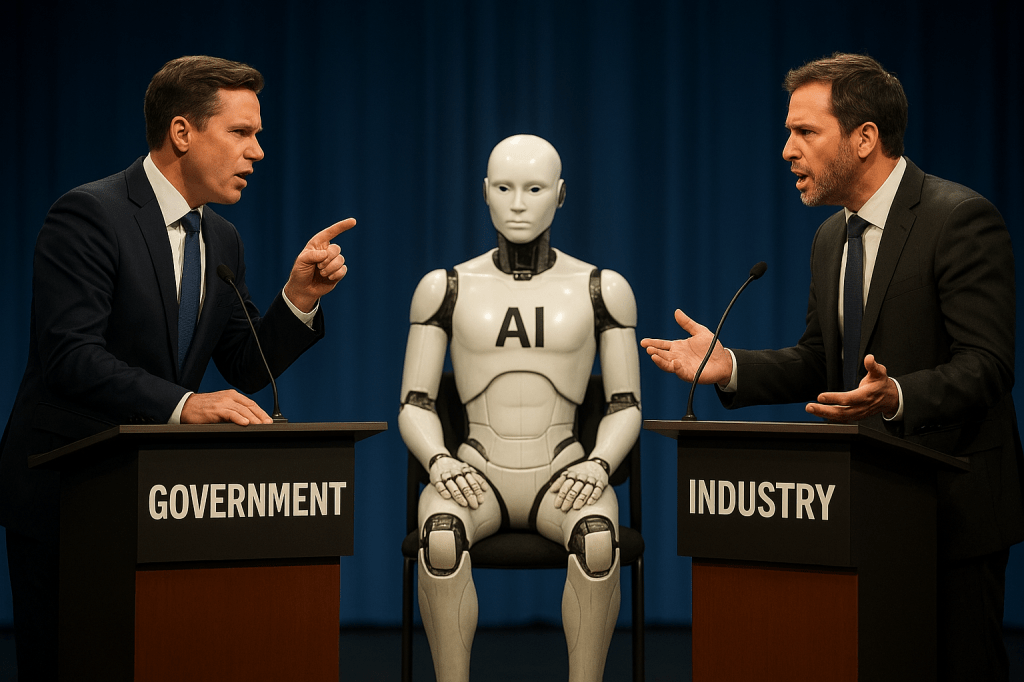
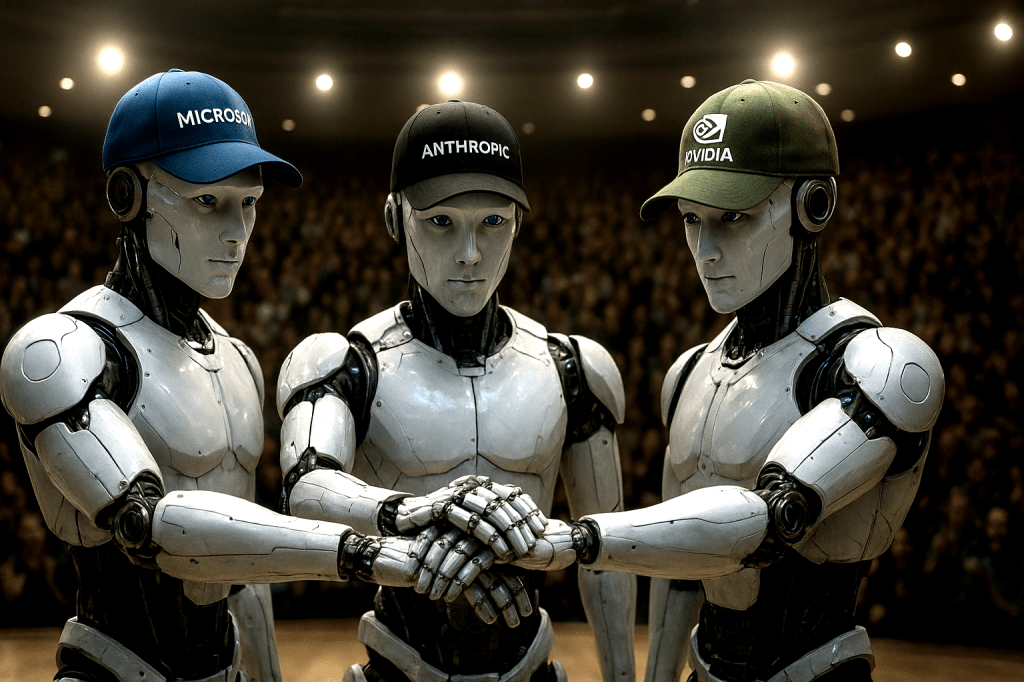
On the developer side, the changes are structural. Google added a Further Exploration section to AI Overviews, a block of curated links to the specific articles, case studies, and reports behind the answer, along with labels marking links from publications the reader already subscribes to; early testing showed readers were significantly more likely to click through (Stan, 2026). AI Mode, Google’s conversational search surface, passed a billion monthly users in its first year and is built around follow-up questions rather than a single static answer (Reid, 2026). The EBU and BBC published their audit alongside a News Integrity in AI Assistants Toolkit, which turns the study’s criteria into a repeatable benchmark that developers and broadcasters can run against any assistant (EBU & BBC, 2025). Researchers themselves are pushing in the same direction: 73% of the researchers Wiley surveyed want publishers to issue clear guidance on AI use, and 57% named the absence of training and guidelines as their main obstacle (Wiley, 2025).
There is also a volume problem that only machines can now manage. In August 2026, Nature reported an analysis finding that almost nine out of ten biomedical papers published in December 2025 showed signs of AI-assisted writing (Glickman, 2026a). Whatever one thinks of that, it means the quantity of prose competing for a specialist’s attention is climbing steeply. The efferent reader needs better triage every year simply to stay level.
Taste, swallow, chew. Naomi Baron, who has studied reading and technology for three decades, published Reader Bot in January 2026 with a premise stated in five words: “AI doesn’t read the way that humans do.” Her book is an even-handed accounting of what we gain and lose by handing over the task, and her conclusion is that inviting AI into our reading lives always involves a trade (Baron, 2026). That seems right, and it is a more useful frame than either enthusiasm or alarm, because it puts the decision back where Rosenblatt put the stance: with the reader, case by case.
For my own part, the accounting has been lopsided. I read more now, across more subjects, with far less time wasted on documents that turned out to be irrelevant. Questions I would once have abandoned as too expensive to answer, I answer. The comparison of twenty sources that Adler reserved for scholars with a semester to spend is available to me on a Tuesday afternoon. Etzioni’s closing line names the condition on all of this exactly: “The machines are happy to read for you, but they won’t understand for you. The choice, as always, is yours” (Etzioni, 2026).
Bacon’s three verbs still hold. Most of what crosses my desk gets tasted, and AI does the tasting faster and more thoroughly than I ever could. Some of it gets swallowed. A few things get chewed and digested, and for those I close the assistant, open the document, and start at the top. And when I open a novel, I still start on page one.
References
Bacon, F. (1625). Of studies. Fermat’s Library. https://fermatslibrary.com/s/of-studies
Baron, N. S. (2026). Reader bot: What happens when AI reads and why it matters. Stanford University Press. https://www.sup.org/books/media-studies/reader-bot
Bone, J. K., Bu, F., Sonke, J. K., & Fancourt, D. (2025). The decline in reading for pleasure over 20 years of the American Time Use Survey. iScience, 28(9), 113288. https://pmc.ncbi.nlm.nih.gov/articles/PMC12496190/
Chatterji, A., Cunningham, T., Deming, D. J., Hitzig, Z., Ong, C., Shan, C. Y., & Wadman, K. (2025). How people use ChatGPT (NBER Working Paper No. 34255). National Bureau of Economic Research. https://www.nber.org/papers/w34255
Delgado, P., Vargas, C., Ackerman, R., & Salmerón, L. (2018). Don’t throw away your printed books: A meta-analysis on the effects of reading media on reading comprehension. Educational Research Review, 25, 23–38. https://www.uv.es/lasalgon/papers/Delgado%202018%20dont%20throw%20away%20your%20printed%20books.pdf
Egan, J. (2026, June 16). Overview and key findings of the 2026 Digital News Report. Reuters Institute for the Study of Journalism. https://reutersinstitute.politics.ox.ac.uk/digital-news-report/2026/dnr-executive-summary
European Broadcasting Union & BBC. (2025, October). News integrity in AI assistants. https://www.ebu.ch/research/open/report/news-integrity-in-ai-assistants
Etzioni, O. (2026, April 9). Etzioni on AI: How to read with AI. GeekWire. https://www.geekwire.com/2026/opinion-how-to-read-with-ai/
Farnam Street. (n.d.). The four levels of reading. https://fs.blog/levels-of-reading/
Fishkin, R. (2026, June 9). In 2026, less than one third of Google searches still send a click. SparkToro. https://sparktoro.com/blog/in-2026-less-than-one-third-of-google-searches-still-send-a-click/
Fu, Y., Wester, J., van Berkel, N., & Hiniker, A. (2026). How college students use AI to navigate course readings: Evidence from an eight-week study (arXiv:2602.09907). https://arxiv.org/abs/2602.09907
Glickman, K. (2026a, August 20). Staggering 90% of biomedical papers now show signs of AI help. Nature. https://www.nature.com/articles/d41586-026-02551-z
Glickman, K. (2026b, September 16). AI tool turns any paper into an ‘agent’ that can collaborate and answer complex queries. Nature. https://www.nature.com/articles/d41586-026-02899-2
Gottfried, J., Bishop, W., Anderson, M., Faverio, M., Park, E., & McClain, C. (2026, June 17). Americans and AI 2026: Chatbots, smart devices and views on impact. Pew Research Center. https://www.pewresearch.org/internet/2026/06/17/americans-and-ai-2026-chatbots-smart-devices-and-views-on-impact/
Ironsi, C. S., & Bostanci, H. B. (2026). Enhancing the reading comprehension and autonomy of foreign language students using generative AI-integrated assistant. Frontiers in Education, 11, 1763238. https://www.frontiersin.org/journals/education/articles/10.3389/feduc.2026.1763238/full
Kosmyna, N., Hauptmann, E., Yuan, Y. T., Situ, J., Liao, X.-H., Beresnitzky, A. V., Braunstein, I., & Maes, P. (2025). Your brain on ChatGPT: Accumulation of cognitive debt when using an AI assistant for essay writing task (arXiv:2506.08872). https://arxiv.org/abs/2506.08872
Liu, Z. (2005). Reading behavior in the digital environment: Changes in reading behavior over the past ten years. Journal of Documentation, 61(6), 700–712. https://www.emerald.com/jd/article/61/6/700/204933/Reading-behavior-in-the-digital-environmentChanges
Melumad, S., & Yun, J. H. (2025). Experimental evidence of the effects of large language models versus web search on depth of learning. PNAS Nexus, 4(10), pgaf316. https://academic.oup.com/pnasnexus/article/4/10/pgaf316/8303888
Naddaf, M. (2025, December 15). More than half of researchers now use AI for peer review — often against guidance. Nature. https://www.nature.com/articles/d41586-025-04066-5
Nielsen, J. (1997, September 30). How users read on the web. Nielsen Norman Group. https://www.nngroup.com/articles/how-users-read-on-the-web/
Raines, A. S. (2016, March 1). The best reading style for tomorrow’s voters. National Council of Teachers of English. https://ncte.org/blog/2016/03/best-reading-style-for-voters/
Reid, E. (2026, May 19). Google Search’s I/O 2026 updates: AI agents and more. Google. https://blog.google/products-and-platforms/products/search/search-io-2026/
Rosenblatt, L. M. (1978). The reader, the text, the poem: The transactional theory of the literary work. Southern Illinois University Press.
Sidorkin, A. M. (2026, July 12). AI summaries are not killing reading. They reveal what reading already is. AI in Education and Society. https://ai-in-society.blogspot.com/2026/07/ai-summaries-are-not-killing-reading.html
Sparber, S. (2026, September 13). Americans are still in a reading rut. Axios. https://www.axios.com/2026/09/13/reading-books-daily-data
Stan, A. M. (2026, May 6). Google updates AI Overviews with Further Exploration links, subscription labels as 58% publisher click decline triggers antitrust suits. The Next Web. https://thenextweb.com/news/google-ai-overviews-publisher-links-search-traffic
Stephenson, R., & Armstrong, C. (2026, March 12). Student generative AI survey 2026. Higher Education Policy Institute. https://www.hepi.ac.uk/reports/student-generative-ai-survey-2026/
Watkins, M. (2026, July 22). Reading in an age of thinking machines. Rhetorica. https://marcwatkins.substack.com/p/reading-in-an-age-of-thinking-machines
Wiley. (2025, October 7). AI adoption jumps to 84% among researchers as expectations undergo significant reality check. https://newsroom.wiley.com/press-releases/press-release-details/2025/AI-Adoption-Jumps-to-84-Among-Researchers-as-Expectations-Undergo-Significant-Reality-Check/default.aspx
Yu, R., Rieger, A., Karatoprak Ersen, R., & Liu, J. (2026). Search or chat? Comparing how we learn about debated topics (arXiv:2608.14113). https://arxiv.org/abs/2608.14113
###
Filed under: Uncategorized |
















































































































































































































































































































































































































Leave a Reply