






By Jim Shimabukuro (assisted by Claude)
Editor
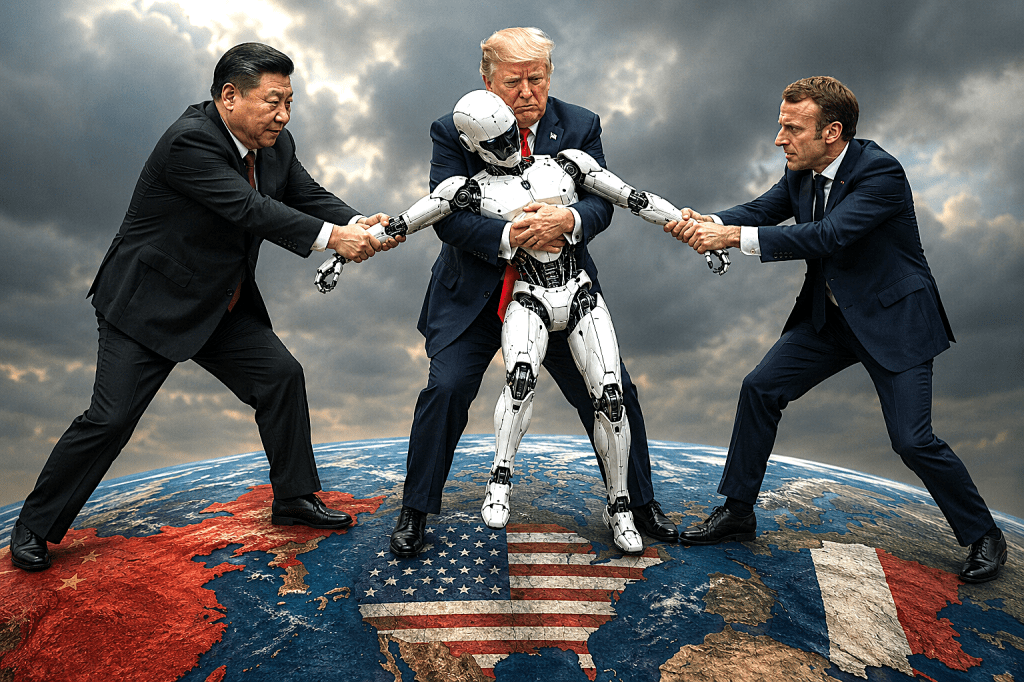
Three news items from the past two days, from San Francisco, Ann Arbor and a joint campus in Hebei Province, China, ask what students still have to do for themselves when AI is in the room, who decides the rules for using it, and whether AI education can cross borders that governments are starting to police. The first story supplies today’s title. A reporter in San Francisco found teachers pulling the take-home essay to keep AI out, and the numbers he gathered suggest students were already writing less well before ChatGPT arrived. The second story follows the University of Michigan as it writes campus-wide AI principles. The third follows a Scottish university opening an AI college in China two weeks after Britain’s security service warned universities about Chinese espionage.

1. Taking the Essay Out of Homework (story idea suggested by Claude)
Wallach, E. (2026, October 21). AI is changing how students learn to write — and think. The San Francisco Standard. https://sfstandard.com/2026/10/21/ai-changing-students-learn-write-think/
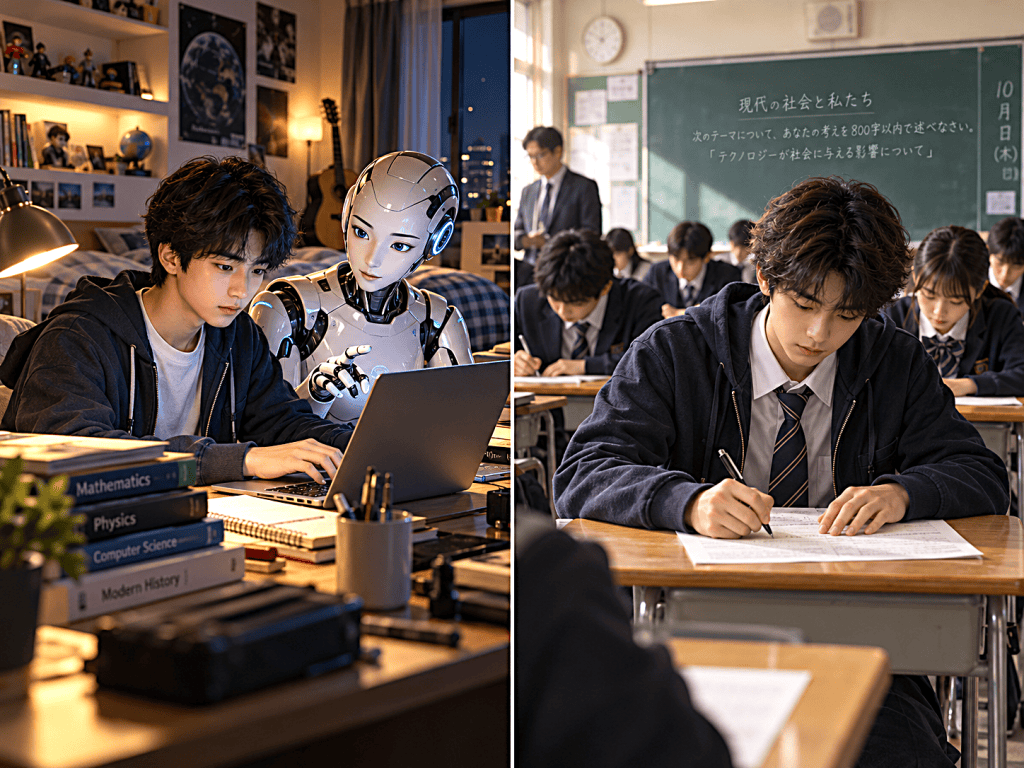
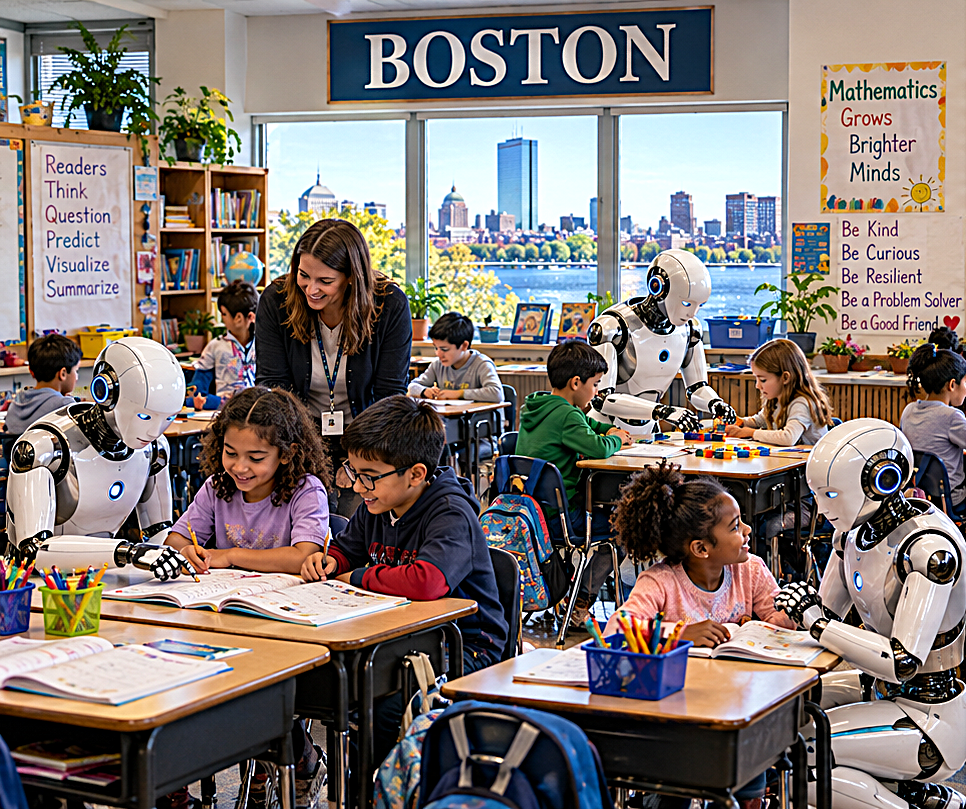
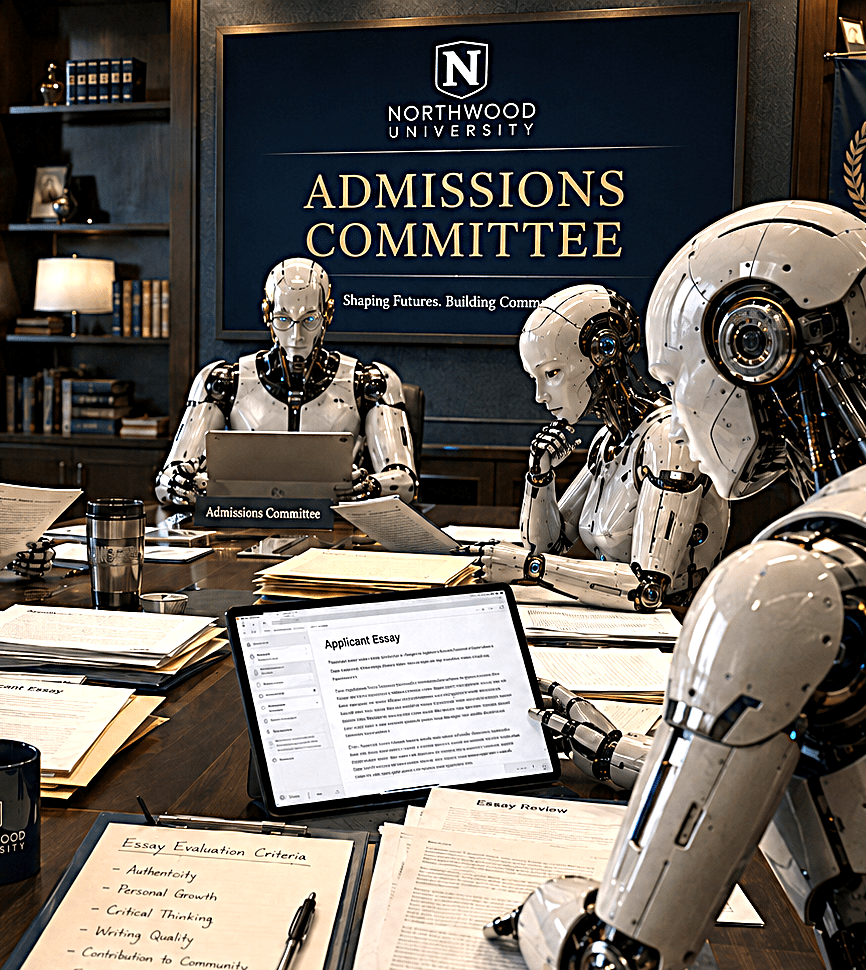
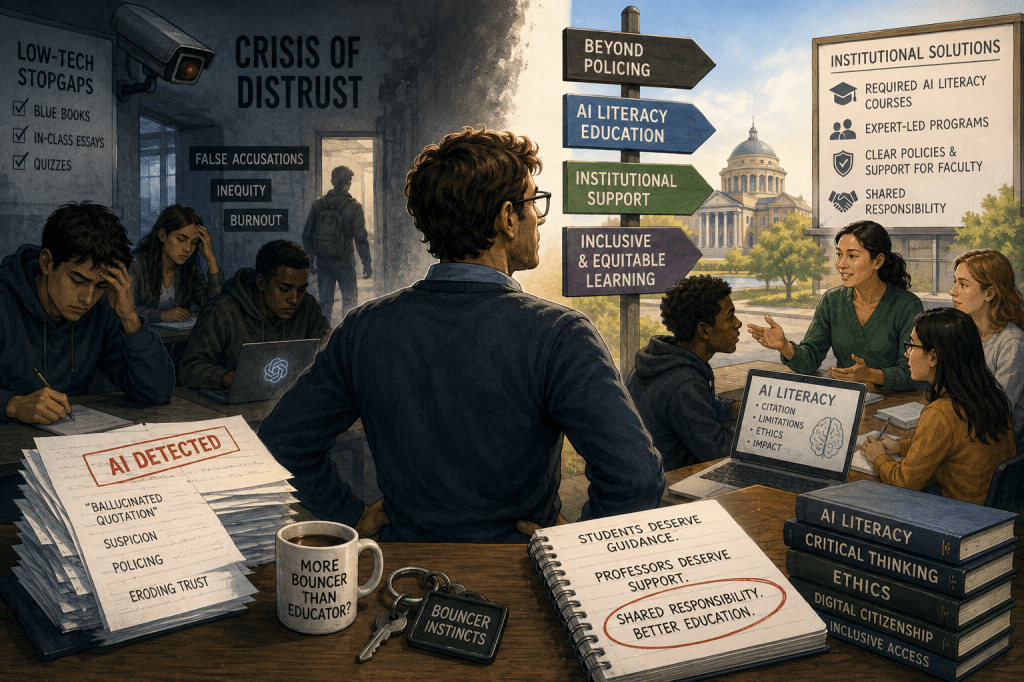
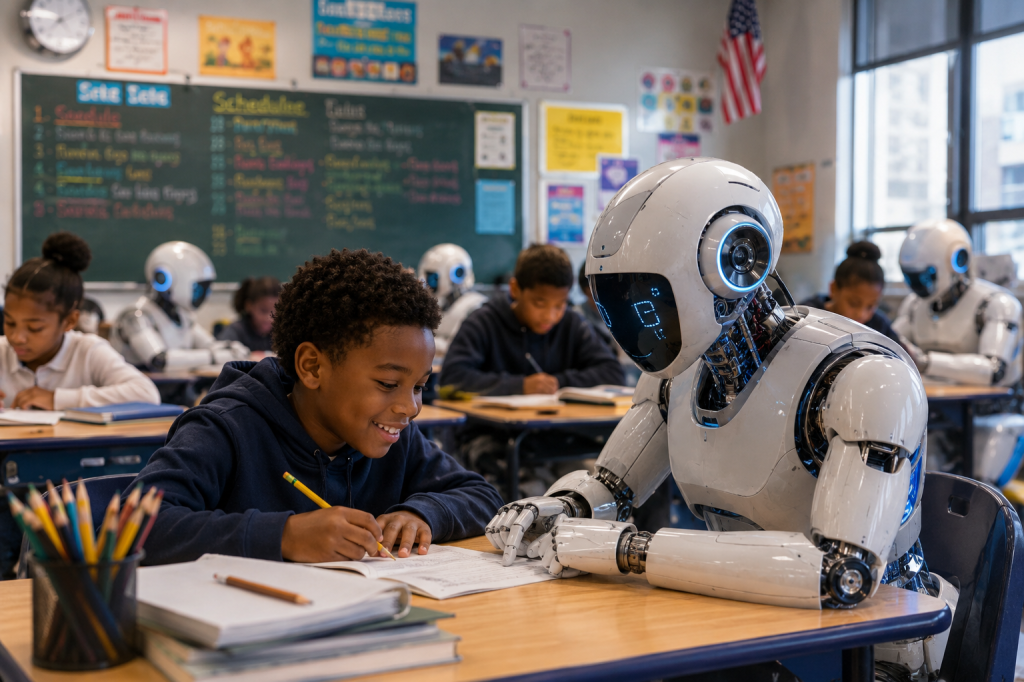
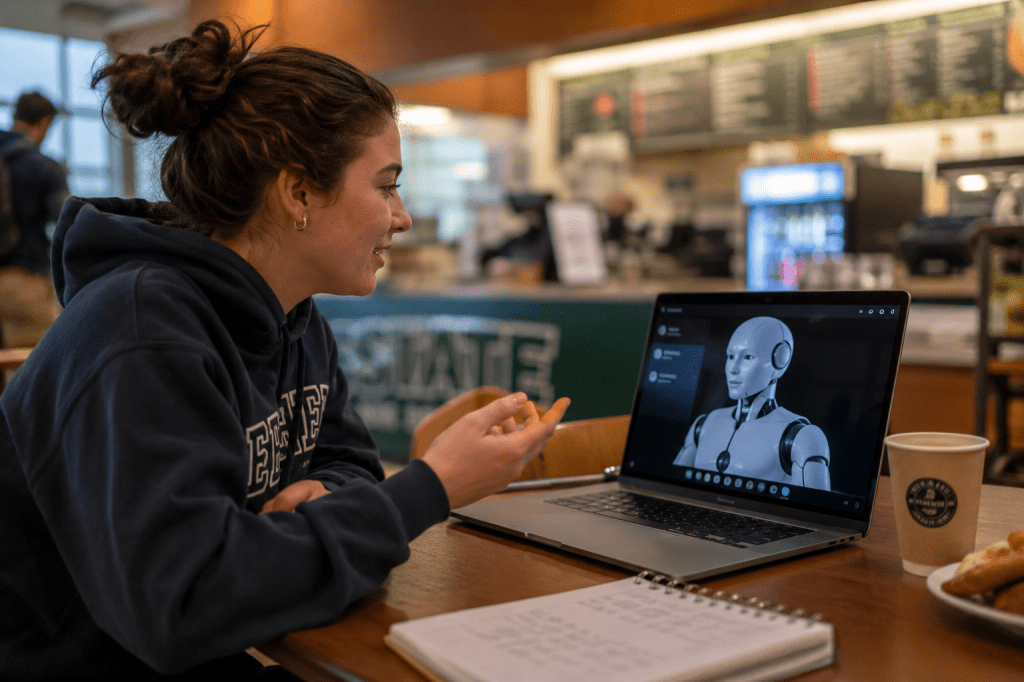
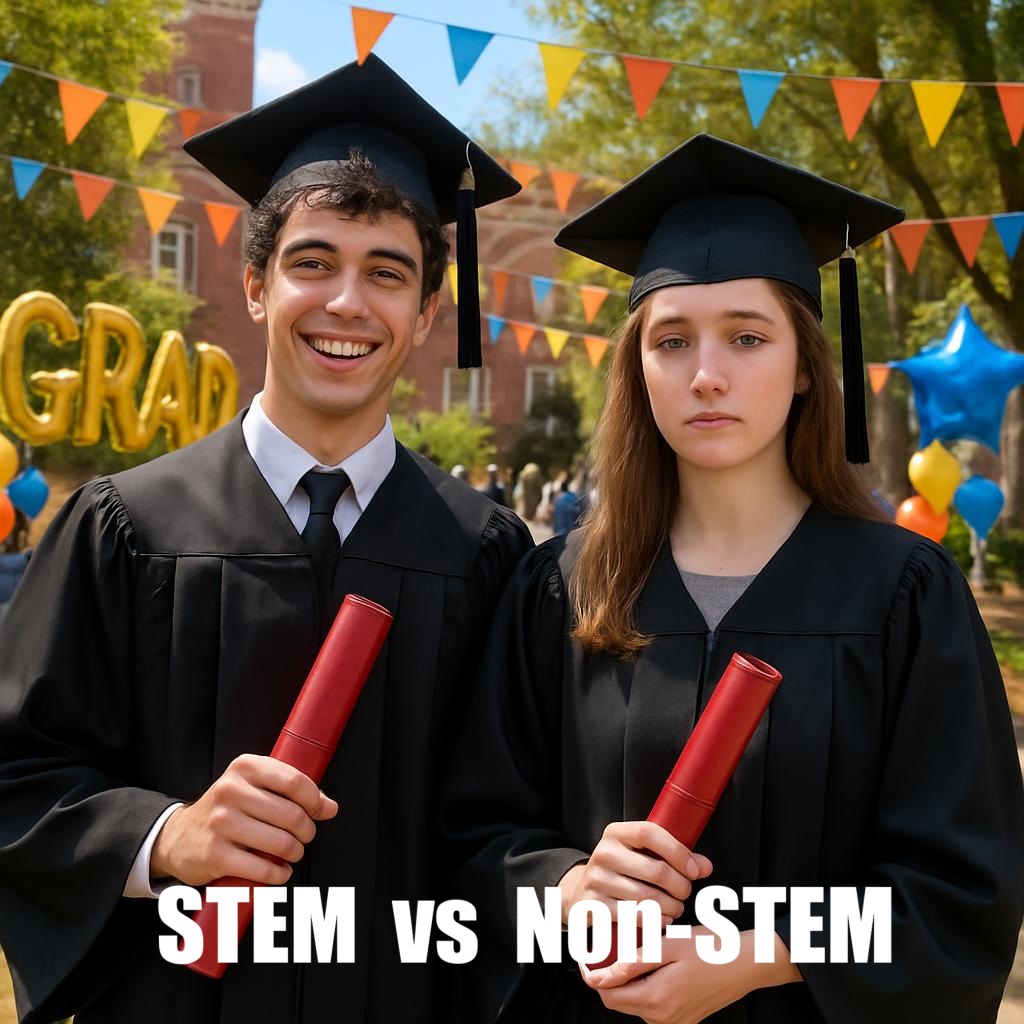
In September 2024, Eliza Russo, head of the English department at Lincoln High School in San Francisco, noticed that her students’ take-home papers looked polished but had, in her words, “nothing of substance or value.” She stopped assigning them. Her students now write essays by hand in class. Ezra Wallach’s report in The San Francisco Standard uses Russo’s decision to raise a larger question: if teachers move writing into the classroom to keep AI out, will students lose the long practice that teaches them to think (Wallach, 2026)?
Wallach’s account shows that writing was losing ground well before ChatGPT. California dropped its fourth- and seventh-grade writing tests in 2013 and later eliminated a high school exit exam that included an essay. The University of California’s own placement measure records the result. About 29% of the roughly 12,000 California freshmen entering UC last fall had not met its Entry Level Writing Requirement, up from 23% in 2015. At Berkeley, 1,109 incoming freshmen missed it, more than five times the 2016 figure. AI arrived on top of that weakness. Wallach cites a study of nearly 27,000 Chinese students in which AI raised homework scores 18% while closed-book exam scores fell 20% within six months (Wallach, 2026).
That study deserves a closer look. David Strömberg of Stockholm University and Victor Lei and Yanhui Wu of the University of Hong Kong followed 26,811 students in grades 7 through 12 in one Chinese county for 30 months, using monthly closed-book exam records. The losses were concentrated among students whose homework patterns showed they had handed the work to AI, finishing quickly and accurately. Students who kept spending about as much time on homework as non-users showed small losses (Strömberg et al., 2026). The penalty tracked the amount of work students skipped.
A 2026 review in Trends in Cognitive Sciences by Trent Cash, Megan Kelly, Brooke Macnamara and Evan Risko reaches a similar conclusion. Handing tasks to AI can erode specific skills when people stop practicing them, while basic capacities such as working memory appear stable. Design also matters. In one study the authors review, a custom AI tutor “designed to probe their knowledge and fill gaps in their learning” left students no worse off once the AI was taken away (Cash et al., 2026). For schools, the practical test is whether students still do the hard part themselves.
Teachers report the same pattern from the classroom side. A Leger poll of Canadian teachers in grades 6–12, commissioned by the Fraser Institute and released in August, found that 72.9% believe in-class writing and analytical skills have worsened over the past five years, and 78.6% say some students’ in-class work is weaker than their take-home work (Fraser Institute, 2026).
In-class writing, however, is short writing. A 50-minute handwritten essay does not give students the drafting, rereading and revising that a two-week paper requires. Writing is also a learning tool in its own right. A 2020 meta-analysis by Steve Graham, Sharlene Kiuhara and Meade MacKay found that writing about content improved learning in science, social studies and mathematics, with an average effect size of 0.30 (Graham et al., 2020). If the take-home essay disappears, schools lose that benefit unless they rebuild long writing inside class time through staged drafts, teacher conferences and revision done where the teacher can see it.
Some faculty are choosing a different tool. Joe Cruz, who chairs the philosophy department at Williams College, told Wallach that “having a durable record of complicated steps in thinking isn’t the same as being insightful,” and he urged colleges to consider discussion and oral exams (Wallach, 2026). Several U.S. colleges moved in that direction last spring. Emily Hammer of the University of Pennsylvania told the Associated Press that cheating was only part of the motive: “We’re doing this because students are actually losing skills, losing cognitive capacity and creativity” (Associated Press, 2026).
The evidence so far supports a narrower claim than the headline question. Sustained mental effort is essential to learning, and extended writing is one of the most reliable ways schools have found to require that effort and to see it. Oral exams can confirm what a student understands at the end of a unit. The weeks of drafting in which students work out what they think still need a place in the school week, and schools that drop the take-home essay will have to find one.
2. Michigan’s Six Guidelines for Using AI (story idea suggested by Muse)
MLive Express Desk. (2026, October 21). University of Michigan outlines 6 guidelines for using AI. GovTech. https://www.govtech.com/education/higher-ed/university-of-michigan-outlines-6-guidelines-for-using-ai
The University of Michigan has finalized six principles to guide how it uses artificial intelligence in teaching, research and operations. According to the report, distributed by Tribune Content Agency and published by GovTech, the principles grew out of a 2026 report by the university’s AI in Education Working Group, which drew on research, comparisons with peer institutions and a faculty survey. Faculty, staff and students commented on a draft, and university leaders folded that feedback into the final version (MLive Express Desk, 2026).
The six principles commit Michigan to human-centered AI that strengthens human abilities instead of replacing them; to integrating AI where it serves the university’s mission; to building critical thinking alongside AI literacy; to continuous improvement; to ethics, integrity and transparency; and to protecting data privacy and community wellbeing. The article describes them as a shared foundation, and it says they create no new policy. Separate rules on operational AI use are still being written. Provost Laurie McCauley said the clearest theme from the comment period was “that human responsibility and judgment must be at the core of what we do.” She added that the university “must empower our educational community to determine if and when it should be used” (MLive Express Desk, 2026).
That second sentence narrows the gap between Michigan and the Maryland colleges covered here on Monday. The Baltimore Sun reported that most Maryland campuses leave AI rules to individual instructors, departments or programs. Carroll Community College approves only Microsoft Copilot, Khanmigo and Adobe Firefly. Harford Community College requires instructor permission to use generative AI “in any capacity.” Howard Community College has no formal policy. A University of Maryland student, Joseph Sherman, called the result “completely inconsistent” (Fine, 2026). Michigan has written shared values at the top, but the decision about AI in a particular course still rests with the instructor, as it does in Maryland.
Even so, Michigan is ahead of most institutions. In Inside Higher Ed’s 2026 survey of 376 chief academic officers, conducted with Hanover Research in July and August, about one in 10 said their institution has a centralized AI strategy, and only 20% agreed that their institution has a coherent vision for how AI will change what it teaches (Whitford, 2026). EDUCAUSE found that fewer than 40% of colleges had formal AI acceptable-use policies as of November 2024. Katie Thompson, a student outreach consultant at Indiana University, noted that a student with several professors “could have six very different AI policies” (Sourwine, 2026).
Do principles without enforcement change anything for that student? California offers a test case. After a 2023 survey, San Diego State began requiring faculty to address AI use in their syllabi in 2025. The rule does not tell instructors whether to embrace or restrict AI. It requires them to say which. Across the California State University system, only 68% of teaching faculty include AI language in their syllabi. James Frazee, San Diego State’s vice president for information technology, described what students face without such a rule: “Students are facing this patchwork of expectations even within the same course taught by different instructors” (Rix, 2026). A syllabus requirement is modest, but a department chair can check it, and a student can read it.
The implications for teaching follow from that example. Michigan’s commenters named “productive struggle” in learning as one of their main themes (MLive Express Desk, 2026). That theme connects directly to the Chinese study in the first story, where students who skipped the struggle lost ground on exams. A principle that names productive struggle gives faculty a shared reason to design assignments in which AI cannot do the effortful part. It does not tell any instructor how to do that, and it does not tell students what to expect when they walk into a given class.
If Michigan wants its six principles to reach students, the likely next step is a small, checkable requirement: every syllabus states what AI use is allowed and why, and links the rule to one of the principles. That would leave instructors the judgment McCauley wants them to keep, while giving a student with six professors one clear statement in each course. Until then, Michigan and Maryland differ mainly in where the values are written down.
3. China-Britain Partnership in AI College (story idea suggested by ChatGPT)
University of Stirling. (2026, October 22). University of Stirling and Hebei Normal University open new digital education college [News release]. https://www.stir.ac.uk/news/2026/october-2026-news/university-of-stirling-and-hebei-normal-university-open-new-digital-education-college/
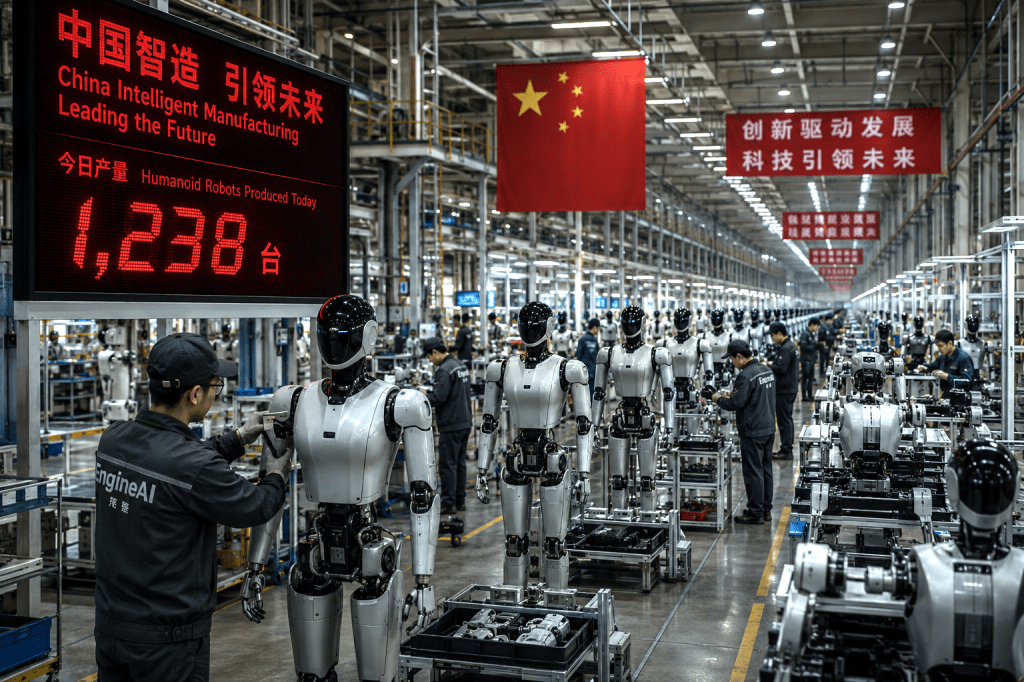
On October 13, Scotland’s University of Stirling and China’s Hebei Normal University held the opening ceremony for Stirling Digital Education College, a joint institute approved by China’s Ministry of Education. Students combine a Hebei Normal undergraduate degree with a Stirling BSc (Hons) in Data Science and Artificial Intelligence or in Mathematics and Artificial Intelligence. The first year enrolled 184 students. The four-year programme is taught entirely in China, Stirling staff helped design and deliver the curriculum, and graduates receive degrees from both universities and may go on to postgraduate study at Stirling. Stirling’s principal, Sir Gerry McCormac, said “this collaboration builds on a partnership that spans more than a decade.” Hebei Normal’s principal, Li Guijun, called the college “a bridge connecting the Chinese and British education systems” (University of Stirling, 2026). The announcement is a university press release, so it presents only the case for the partnership.
The college opened two weeks after MI5 issued a public espionage alert to British universities. On September 30, the security service said the China General Technology Research Institute (CGTRI) is a front for China’s Ministry of State Security and that more than 100 UK-linked academics had contributed to projects it funded, including work on artificial intelligence and cybersecurity (Kachroo, 2026). Security Minister Dan Jarvis wrote to vice-chancellors asking them to end all arrangements with CGTRI, and MI5 reminded academics of possible criminal liability under the National Security Act 2023 (Skillen, 2026). The Chinese embassy called the accusations “imaginary and purely fabricated” (Lakshmanan, 2026).
The alert concerned research funding. Stirling’s college is undergraduate teaching in fields whose textbooks are published worldwide, and universities will lean on that distinction. The American experience shows that politicians may not accept it. In January 2025 the University of Michigan ended its two-decade joint institute with Shanghai Jiao Tong University after a warning letter from Rep. John Moolenaar, chair of the House Select Committee on the Chinese Communist Party. Michigan’s president at the time, Santa Ono, said the university “must also prioritize our commitment to national security,” and Moolenaar urged that “American universities should end these types of joint institutes” (Walker, 2025). Oakland University and Eastern Michigan University wound down their China-based programs after similar letters, although both said the programs were educational only and involved no research or technology transfer (Desai et al., 2025).
Money explains part of the British appetite for such partnerships. Ten of Scotland’s 18 higher education institutions reported operating deficits in 2024–25, and the Scottish Funding Council warned that its forecasts depend on optimistic assumptions about international fees. Its finance director, Tiffany Ritchie, said the “volatility in that income stream is unprecedented” (Rowsell, 2026). Programmes taught in China do not depend on UK student visas, which the council flagged as a recruitment risk. George Freeman, a former UK science minister, argued after the MI5 alert that reliance on overseas income “has rather driven them into the arms of China” (Jones, 2026). The funding council’s report does not single out Stirling.
China, meanwhile, is expanding AI education at home. In June, China Daily reported that nine universities had been approved to launch undergraduate programs in embodied intelligence, and that the University of Science and Technology Beijing would direct all of its additional places to new materials, integrated circuits and AI (Zou, 2026). Joint programs such as Stirling’s give Chinese students a foreign credential within that expansion, and they give British partners a place inside China’s fast-growing AI education system.
For educators, the immediate implication is a shift in where due diligence happens. Research security reviews have focused on funded projects and laboratories. Teaching partnerships in AI will now draw the same questions about who funds them, who teaches in them and where their graduates go next. Andrew James of the University of Manchester told Times Higher Education that the UK’s forthcoming research security strategy is a chance for clearer guidance, while Grace McConnell of the Association of Research Managers and Administrators warned of the added burden on research offices that are already cutting staff (Jones, 2026).
The answer to the opening question will probably be settled case by case, by field, level of study and source of money. Stirling’s college sits at the least sensitive end: undergraduate, teaching only, in published subjects. Its harder test will come when its first graduates apply for Stirling’s postgraduate programmes, because that is where teaching turns into research, the activity the MI5 alert addressed.
References
Associated Press. (2026, April 22). Perfect homework, blank stares: Why colleges are turning to oral exams to combat AI. WTOP News. https://wtop.com/education/2026/04/perfect-homework-blank-stares-why-colleges-are-turning-to-oral-exams-to-combat-ai/
Cash, T. N., Kelly, M. O., Macnamara, B. N., & Risko, E. F. (2026). Is AI making us stupid? Trends in Cognitive Sciences. https://doi.org/10.1016/j.tics.2026.06.004
Desai, R. D., Prince, D., Narasimhan, S., & Harris, M. (2025, June 13). Rising congressional warnings to American universities signal greater scrutiny over PRC-linked university programs. Paul Hastings. https://www.paulhastings.com/insights/client-alerts/rising-congressional-warnings-to-american-universities-signal-greater-scrutiny-over-prc-linked-university-programs
Fine, G. (2026, October 19). Maryland colleges let educators set their own AI policies. GovTech. https://www.govtech.com/education/higher-ed/maryland-colleges-let-educators-set-their-own-ai-policies
Fraser Institute. (2026, August 27). Four-in-10 Canadian teachers grades 6–12 believe more than half of their students use AI to complete homework; majority report declining critical thinking skills, in-class writing and analysis [News release]. https://www.fraserinstitute.org/sites/default/files/2026-08/survey-of-canadian-grades-6-12-teachers-on-ai-use-newsrelease-ntl.pdf
Graham, S., Kiuhara, S. A., & MacKay, M. (2020). The effects of writing on learning in science, social studies, and mathematics: A meta-analysis. Review of Educational Research, 90(2), 179–226. https://doi.org/10.3102/0034654320914744
Jones, F. (2026, October 2). UK universities ‘driven into China’s arms’ by funding woes. Times Higher Education. https://www.timeshighereducation.com/news/uk-universities-driven-chinas-arms-funding-woes
Kachroo, R. (2026, September 30). MI5 issues rare warning over Chinese spy agency posing as academic institute. ITV News. https://www.itv.com/news/2026-09-30/mi5-issues-rare-warning-over-chinese-spy-agency-posing-as-academic-institute
Lakshmanan, R. (2026, October 3). MI5 says China’s MSS funded research involving 100+ U.K.-linked academics. The Hacker News. https://thehackernews.com/2026/10/mi5-says-chinas-mss-funded-research.html
MLive Express Desk. (2026, October 21). University of Michigan outlines 6 guidelines for using AI. GovTech. https://www.govtech.com/education/higher-ed/university-of-michigan-outlines-6-guidelines-for-using-ai
Rix, K. (2026, April 1). Cal State students widely use AI tools, but mistrust results and fear job impact. EdSource. https://edsource.org/2026/csu-students-widely-use-ai-tools-but-mistrust-results-and-fear-job-impact
Rowsell, J. (2026, October 1). Scottish universities face enduring deficits – funding council. Times Higher Education. https://www.timeshighereducation.com/news/scottish-universities-face-enduring-deficits-funding-council
Skillen, R. (2026, September 30). MI5 issues China espionage warning to UK universities. Times Higher Education. https://www.timeshighereducation.com/news/mi5-issues-china-espionage-warning-uk-universities
Sourwine, A. (2026, March 6). Student tech hangups include Wi-Fi, AI policy, tool overload. GovTech. https://www.govtech.com/education/higher-ed/students-struggle-with-wi-fi-ai-policy-and-tool-overload
Strömberg, D., Lei, V., & Wu, Y. (2026). The generative AI learning penalty: Evidence from Chinese secondary education (CEPR Discussion Paper No. 21577). CEPR Press. https://cepr.org/publications/dp21577
University of Stirling. (2026, October 22). University of Stirling and Hebei Normal University open new digital education college [News release]. https://www.stir.ac.uk/news/2026/october-2026-news/university-of-stirling-and-hebei-normal-university-open-new-digital-education-college/
Walker, J. (2025, January 15). University of Michigan ends Chinese partnership following pressure from GOP congressman. CNY Central. https://cnycentral.com/news/nation-world/university-of-michigan-ends-chinese-partnership-following-pressure-from-gop-congressman-shanghai-jiao-tong-university-china-ccp-john-moolenaar
Wallach, E. (2026, October 21). AI is changing how students learn to write — and think. The San Francisco Standard. https://sfstandard.com/2026/10/21/ai-changing-students-learn-write-think/
Whitford, E. (2026, September 23). From AI use to funding cuts: How provosts are navigating 2026. Inside Higher Ed. https://www.insidehighered.com/news/governance/executive-leadership/2026/09/23/ai-use-funding-cuts-how-provosts-navigate-2026
Zou, S. (2026, June 25). China’s top universities expand enrollment in AI, strategic fields. China Daily. https://www.chinadaily.com.cn/a/202606/25/WS6a3cdaeea310986e2b461e23.html
###
Filed under: Uncategorized |





















































































































































































































































































































































































































































Leave a Reply