





By Jim Shimabukuro (assisted by ChatGPT)
Editor
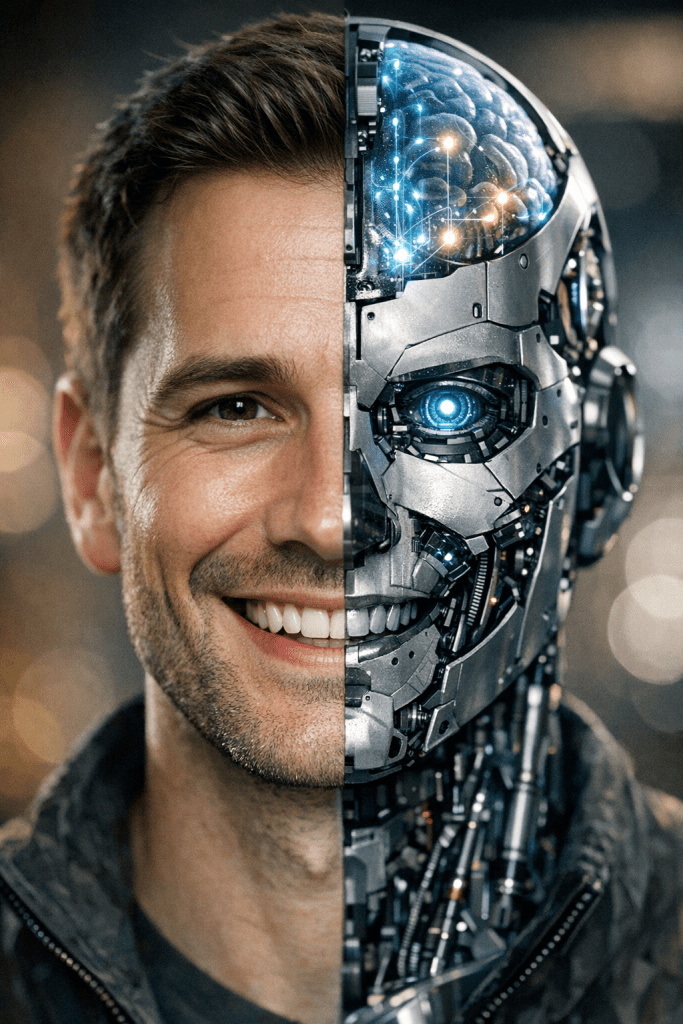
Summary: As exoskeletons move from clinics to everyday life, the line between human capability and engineered strength becomes a cultural battleground. –Copilot

Consumer bionics is no longer a purely medical or industrial story. In 2025 and the first half of 2026, lightweight powered exoskeletons moved into a new public-facing phase: outdoor mobility, hiking assistance, walking support, and fatigue reduction. The clearest examples are Hypershell, WIRobotics, Ascentiz, and Skip with Arc’teryx. These products are not yet household appliances, and they should not be described as widespread in the way smartphones, hearing aids, or fitness trackers are widespread. A more accurate description is early commercial availability: some devices are shipping or sold through direct channels, some are in reservation or pre-order queues, and others are still being demonstrated at CES, in pilots, or in limited institutional deployments.
The field is also splitting into three related but different markets. The first is recreational and consumer mobility: hiking, walking, travel, running, cycling, and daily stamina. The second is clinical and assistive mobility: rehabilitation systems, personal exoskeletons for people with serious mobility impairment, and clinician-supervised gait training. The third is occupational and public-safety augmentation: passive or powered systems meant to reduce fatigue, back strain, load carriage, and injury risk for workers, soldiers, firefighters, emergency medical personnel, and search-and-rescue teams.
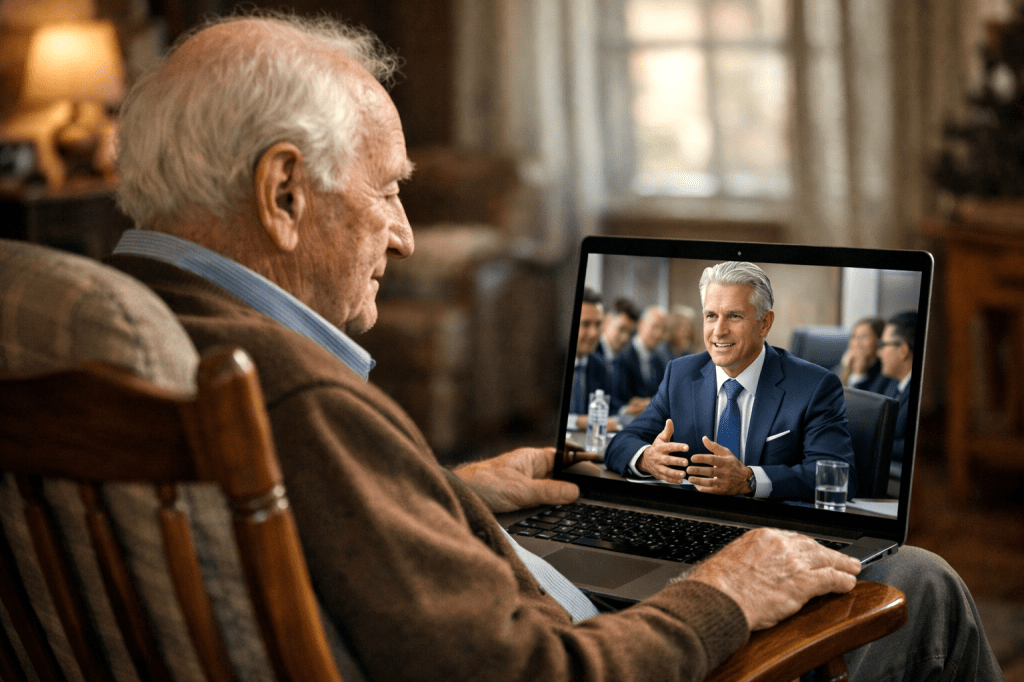
For older adults who are prone to falls, the story is more complicated. A few research systems have been designed to detect loss of balance and assist balance recovery, and the idea is credible in the lab. However, consumer fall-prevention exoskeletons that actively catch or stabilize older adults are not yet a common retail category. What is commercially farther along is the adjacent field of ambient AI fall prevention, such as Helpany’s camera-free radar system, which monitors motion patterns in senior living settings and alerts caregivers before risk becomes acute. That is not bionics in the strict sense because it does not apply force to the body, but it may reach frail elders sooner than powered leg exoskeletons.
What counts as “consumer bionics”?
In this report, consumer bionics refers to wearable robotic or robotic-adjacent systems that augment human motion outside a hospital or laboratory. That includes powered hip, knee, and leg assistance; passive back-assist exosuits; and soft wearable robotics. It does not include ordinary fitness trackers. It does include fall-risk sensing only when the system is discussed as part of the wider mobility ecosystem, because fall prevention is one of the strongest public needs driving this field.
The word “consumer” needs caution. Some companies now use consumer language and pricing, but distribution remains uneven. Hypershell and WIRobotics are much closer to consumer channels than medical rehabilitation systems such as EksoNR. Skip and Arc’teryx’s MO/GO is a consumer-facing product, but with premium pricing and delayed delivery windows. Ascentiz presents itself as a modular consumer exoskeleton company, but its 2026 status is still tied to reservation, Kickstarter, and early commercial rollout. HeroWear’s Apex 2 is not a consumer hiking product; it is a commercial back-assist exosuit for work sites. Ekso Bionics remains mainly medical and institutional, with personal mobility products framed around disability and rehabilitation rather than mass recreation.
Hypershell: outdoor exoskeletons as the first visible consumer category
Hypershell is one of the most visible examples of the new consumer bionics wave. Its X Series is marketed as an AI-powered outdoor exoskeleton for hiking, travel, sports, and fitness. The company’s CES 2025 release said the system would be available globally starting January 20, 2025, with prices beginning at $799, a weight of 2.4 kg including battery, a 17.5 km range, 800 W of assistive power, and claimed reductions in physical exertion (1). The CES Innovation Awards page for Hypershell Carbon X described it as combining robotics, ergonomics, and AI in a compact outdoor exoskeleton form (2).
The 2026 message is that Hypershell is no longer merely a render or lab prototype. It is a real consumer-facing product line with public demonstrations, reviews, and retail listings. A February 2026 CES hands-on account described the Hypershell X Ultra as a lightweight AI-powered outdoor exoskeleton that adapts assistance in real time based on gait, with dual motors, a 1,000 W peak output, and support for walking, running, cycling, and other movements (3). A 2026 retail listing for the Hypershell X Pro described it as an AI-powered foldable outdoor exoskeleton weighing about 4.4 pounds and aimed at hiking, running, climbing, and cycling (4).
The likely near-term market is not frail eldercare but active people who want to extend walking or hiking range, reduce fatigue, climb more comfortably, or recover confidence after injury. That matters because mass adoption usually begins where the safety demands are manageable and the users can tolerate setup, straps, batteries, app control, and occasional imperfect assistance. Hypershell’s public positioning suggests an “e-bike for legs” category more than a medical device category.
WIRobotics: WIM S and WIM KIDS
WIRobotics is another important example because it has placed walking assistance, aging tech, and digital health close together. Its WIM product was introduced at CES 2024 and was recognized in CES innovation categories for robotics and aging tech; Exoskeleton Report describes WIM as a consumer/commercial powered exoskeleton for hiking and exercise, worn at the front of the waist and using one motor to actuate both legs (5).
For 2026, WIRobotics announced that it would demonstrate WIM S at CES 2026 Unveiled in Las Vegas. The company said WIM S had first been released in Korea in 2025, and that CES attendees would be able to wear and walk with it (6). The official WIM S product page emphasizes a 1.6 kg walking-assist robot intended to help users walk easier and go farther (7). Separately, WIRobotics announced that WIM KIDS won a CES 2026 Innovation Award in digital health. WIM KIDS is described as a walking-assist wearable robot for growing children, with company media referring to a 990 g device that helps children keep stable steps during active play (8,9).
This makes WIRobotics especially interesting for readers concerned with older adults. WIM is not advertised as a fall-catching exoskeleton, but its CES history and aging-tech association show that walking assistance and confidence for independent mobility are central to its public story. Its release in Korea in 2025 and CES 2026 demonstrations suggest a staged international rollout rather than broad global availability.
Ascentiz: modularity, BodyOS, and the 2026 Kickstarter-to-market path
Ascentiz is new but worth watching because its design approach is modular. Exoskeleton Report describes Ascentiz as a wearable-robotics company founded in 2023 that develops modular exoskeleton technology and a related software platform called BodyOS (10). At CES 2026, Ascentiz presented a modular system built around swappable hip and knee assistance. Its January 2026 technical announcement said the hip module uses a high-torque quasi-direct-drive system and that embedded AI called “Motion Cortex” provides responsive torque amplification; the company claimed up to 35 percent reduction in leg effort during running and stair climbing (11).
The consumer signal is strong but still early. A January 2026 hands-on report from Tom’s Guide described the Ascentiz H1 Pro as lightweight and comfortable, weighing about 4.4 pounds without battery, with quick setup, AI-based stride analysis, and a modular H+K system that could combine hip and knee assistance. The same report cited Kickstarter pricing from $699 to $1,498 and shipments expected in February 2026 (12). As of the company’s current public site, Ascentiz H Pro is marketed with an early-bird price of $1,099 and regular price of $1,499, using a $100 reservation deposit (13).
The modular strategy may be important. A one-piece exoskeleton asks the user to accept one use case. A modular system can separate walking, stair climbing, running, knee support, and heavier terrain. If Ascentiz can deliver, the trajectory points toward a consumer ecosystem rather than a single gadget. The risk is also clear: crowdfunding and early reservations are not the same as mature, high-volume distribution with long-term service, replacement parts, and safety data.
Skip and Arc’teryx: MO/GO powered pants
Skip and Arc’teryx’s MO/GO may be the best example of exoskeleton technology trying to enter outdoor gear culture rather than medical-device culture. Arc’teryx announced the partnership in 2024, describing MO/GO as powered pants that use wearable robotics to address mobility challenges caused by aging, fatigue, and injury. The original announcement said reservations began in July 2024, with shipments planned for late 2025 (14).
The current public purchase page shows how difficult the transition from prototype to consumer product can be. Skip’s page now invites a $99 pre-order deposit, lists the total price at $4,999, and states that the product ships in 2027, with winter 2026 and spring 2027 slots marked full and summer 2027 available (15). That is still a consumer product, but not a mass one. Its price, delivery window, and sizing process place it closer to premium early-adopter gear than to mainstream mobility aid.
MO/GO matters because the form factor is familiar. A person may hesitate to wear a visible mechanical frame but accept powered pants from an outdoor brand. If the product works reliably and comfortably, apparel-integrated exoskeletons may become a bridge between medical orthotics and recreational wearables.
Ekso Bionics: established exoskeleton company, but not a mass consumer brand
Ekso Bionics is an established name in exoskeleton technology, but it belongs to a different part of the market. Its current home page frames the company around rehabilitation, spinal cord injury, stroke, brain injury, multiple sclerosis, and clinical mobility support (16). Ekso’s EksoNR page describes a rehabilitation exoskeleton that helps patients stand and walk during clinician-guided therapy (17).
Ekso is relevant to consumer bionics because clinical technology often precedes consumer technology. It is also relevant because personal powered mobility for people with spinal cord injury or other serious impairments is not merely recreational enhancement; it is assistive technology. A January 2026 Mobility Management report noted that Ekso’s Indego Personal is a known lower-limb powered exoskeleton in the complex rehab technology field and that the company also sells Ekso EVO for industrial upper-extremity support and Ekso Walker as a standing and walking aid (18).
The takeaway is that Ekso’s products are real and in use, but the adoption model is medical, institutional, clinical, and insurance-adjacent. That is not the same as widespread consumer ownership. For a general reader, Ekso is proof that exoskeletons can be serious mobility tools, but it is not evidence that powered exoskeletons have become everyday consumer goods.
Helpany: fall prevention, but not a bionic exoskeleton
Helpany should be included with a clear label. It is not an exoskeleton and does not augment motion by applying force to the body. It is an AI-powered, radar-based, camera-free fall-prevention system for senior living. Helpany says its system can reduce falls by up to 72 percent across assisted living, independent living, and memory care, using a ceiling-mounted device called Paul with no cameras and no microphones. The company describes Paul as analyzing daily movement patterns, including restlessness, reduced mobility, irregular routines, gait, posture, and stability, then alerting caregivers when residents appear to be at higher risk (19).
A 2025 senior-living article about Fellowship Square-Mesa described Paul as “AI Technology from Helpany” and emphasized that it uses radar-based motion detection rather than video or audio: “No wearables. No video. Just precise, privacy-preserving motion tracking” (20). This is not bionics, but it may be the more practical near-term answer to elder fall risk because it avoids the hardest problem in wearable robotics: persuading frail older adults to wear, charge, fit, calibrate, and trust a powered device every day.
Consumer bionics for elder balance loss and fall injury
The honest answer is: not yet in the mature consumer sense. There are three layers of activity.
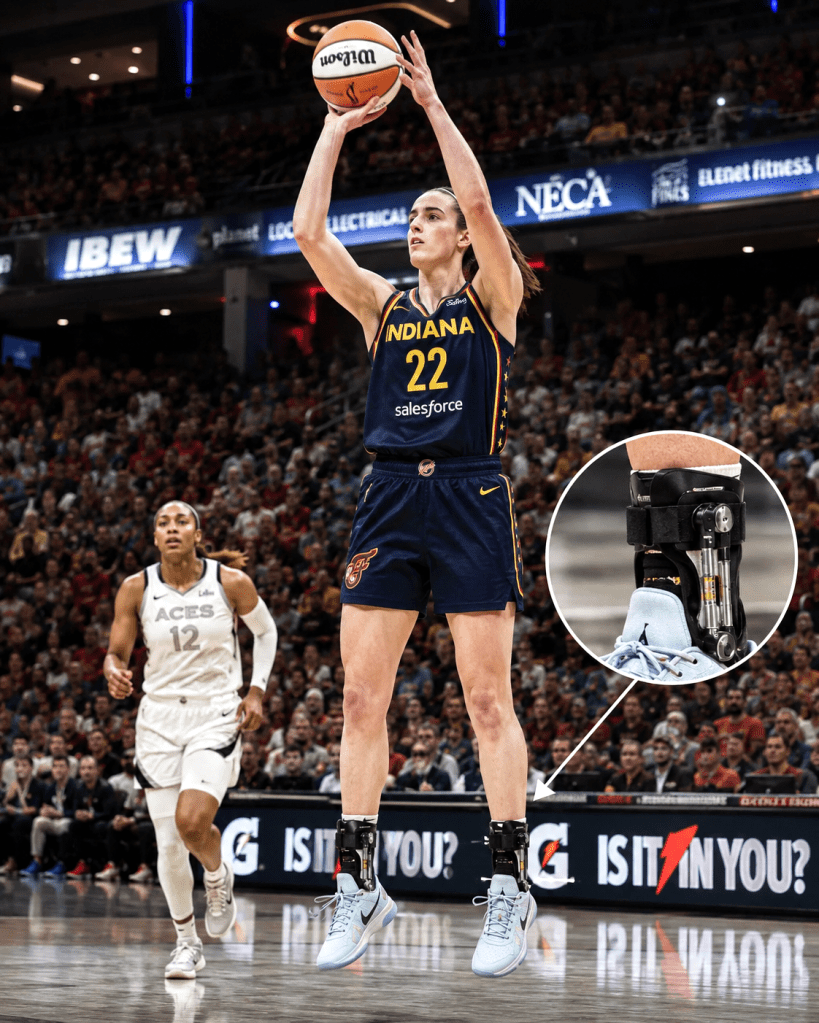
First, there is research on active balance assistance. A widely cited 2017 Scientific Reports study from Scuola Sant’Anna and collaborators showed that an “ecologically controlled” exoskeleton could improve balance recovery in older adults and transfemoral amputees by recognizing loss of balance and applying assistance through an active pelvis orthosis (21). This line of work is important because it proves that fall-related robotic assistance is technically plausible. However, it has not turned into a common consumer product that older adults can buy at retail.
Second, there is current caution from newer balance research. A 2025 study on ankle exoskeletons found that powered ankle exoskeletons can hinder standing balance in simple tasks and warned that devices meant to assist older adults may create unexpected balance challenges under some conditions (22). That does not condemn exoskeletons. It does show why elder fall prevention is harder than recreational hiking assistance. Helping a person walk uphill is different from safely intervening during a stumble, lateral sway, trip, medication-related instability, neuropathy, or sudden vestibular loss.
Third, there are smart wearable and ambient systems for fall risk, balance rehabilitation, and caregiver alerts. A 2025 JMIR Rehabilitation and Assistive Technologies review examined smart wearable systems for balance rehabilitation in older adults at risk of falls and compared available systems with emerging telerehabilitation decision-support tools (23). These systems are often sensor-based, exercise-oriented, or clinician-guided rather than powered exoskeletons. Helpany, Butlr, VSTAlert, camera AI, thermal sensing, radar sensing, and LiDAR systems are therefore nearer-term competitors or complements to fall-prevention exoskeletons.
For the elderly, then, consumer bionics is advancing around mobility assistance and stamina, but active fall prevention remains mostly research, clinical testing, or adjacent sensing. The most plausible near-term pathway is not a full robotic suit. It is likely a lighter hip or ankle device that helps with gait, stair climbing, and fatigue, paired with AI sensing that warns of rising fall risk. A device that automatically “catches” an older adult in all real-world fall scenarios will need more evidence, regulatory scrutiny, comfort testing, battery reliability, and liability protection before broad release.
Current status of the field
Consumer bionics is in a mixed stage. It is no longer only R&D. It is also not widespread. The best phrase is early commercial rollout with uneven maturity.
Hypershell is commercial-facing and appears to be the closest to ordinary consumer purchase among the powered outdoor systems. WIRobotics has released WIM S in Korea and is using CES 2026 to broaden awareness. Ascentiz is in the Kickstarter/reservation and early shipment phase. Skip and Arc’teryx have a premium product with public pre-orders, but the current delivery window reaches into 2027. Ekso Bionics is commercially established in rehabilitation and personal mobility niches, but not as a mainstream consumer product. HeroWear’s Apex 2 is commercially deployed in workplaces, but it is passive industrial assist rather than powered consumer bionics. Helpany is commercially deployed in senior living, but it is ambient AI fall prevention, not wearable robotics.
Market forecasts should be handled carefully because they vary widely. MarketsandMarkets projected the exoskeleton market growing from about $0.56 billion in 2025 to $2.03 billion by 2030 (24). A separate 2026 market estimate from Coherent Market Insights placed the market much higher, at $5.08 billion in 2026 and $15.34 billion by 2033 (25). The disagreement itself is useful: analysts agree on growth, but the boundaries of the market are fuzzy. Some forecasts include medical rehabilitation, industrial systems, defense, software, parts, and services, while others focus more narrowly on wearable robotic systems.
The trajectory is clear enough even if the exact numbers are not. Through 2026 and 2027, expect more consumer outdoor devices, more rentals and demos, more specialty retail, more senior-living pilots, and more insurance or employer-driven deployments. Widespread home ownership by older adults is unlikely before the technology becomes lighter, cheaper, easier to fit, and more clinically validated.
Emergency response, military, and similar developments
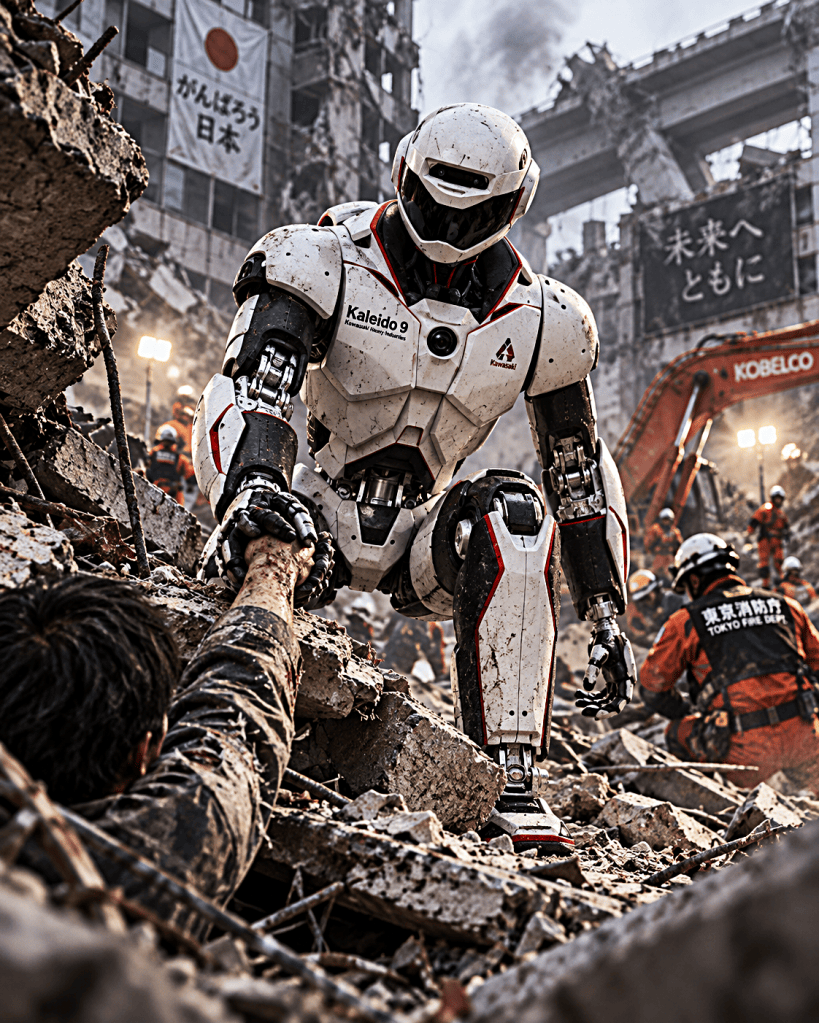
Emergency response is an obvious target because responders carry heavy loads, climb stairs, lift patients, work in awkward postures, and move through dangerous terrain. The challenge is that emergency environments punish complexity. A firefighter cannot spend minutes calibrating a device during a call, and a powered suit that fails in smoke, heat, water, rubble, or electrical interference can become a hazard.
For that reason, near-term public-safety adoption may favor passive exosuits and narrow-task supports rather than full powered armor. HeroWear’s Apex 2 is a good example of the practical end of the market. The company describes it as a 3-pound soft back-assist exosuit that reduces back strain and fatigue without motors or batteries (26). Its product page claims reductions in lower-back muscle fatigue and strain of up to 40 percent (27). The company’s industrial focus makes it directly relevant to EMS, logistics, hospital orderlies, disaster supply handling, and fireground support tasks, even if the product is not marketed primarily as a firefighter exosuit.
Firefighting-specific research continues. A 2025 University of Maryland thesis developed and tested a firefighting exoskeleton to reduce stress and strain. It used spring housings, leg attachments, and an upper-body harness to store and return energy during squatting and rising, and the system was tested through several phases including the ASTM 2025 Exo Games and testing at NIST (28). The same work concluded that requirements from military and firefighting use overlap, and it pointed to HeroWear’s SABER military exoskeleton as one of the closer analogues for firefighter needs (28).
For military use, the field has a longer history of ambitious powered systems and more recent movement toward lighter, task-specific devices. The U.S. Army and DEVCOM-sponsored SABER back-assist exosuit, developed with Vanderbilt University and HeroWear, is one example from the recent past and remains relevant because it took a soft, low-bulk approach to soldier load handling rather than a cinematic full-body powered suit. In 2026, Exoskeleton Report noted that certain DoD-funded developmental exoskeletons had crossed into ITAR-controlled sensitive military technology, a sign that military exoskeleton work is now being treated as strategically important rather than merely experimental (29).
The cautionary example is the full-body powered industrial suit. Sarcos’s Guardian XO attracted years of attention as a powered full-body exoskeleton for heavy lifting. Robot Guide describes Guardian XO as a full-body robotic exoskeleton for factories and warehouses, with battery-powered motors intended to augment strength without restricting movement (30). However, the broader lesson from Sarcos is that spectacular prototypes are difficult to turn into durable commercial businesses. Full-body powered suits remain expensive, complex, and hard to maintain. For emergency response, the more credible near-term products are likely to be partial systems: back, knee, hip, shoulder, or load-carriage assistance, plus AI sensing and command support.
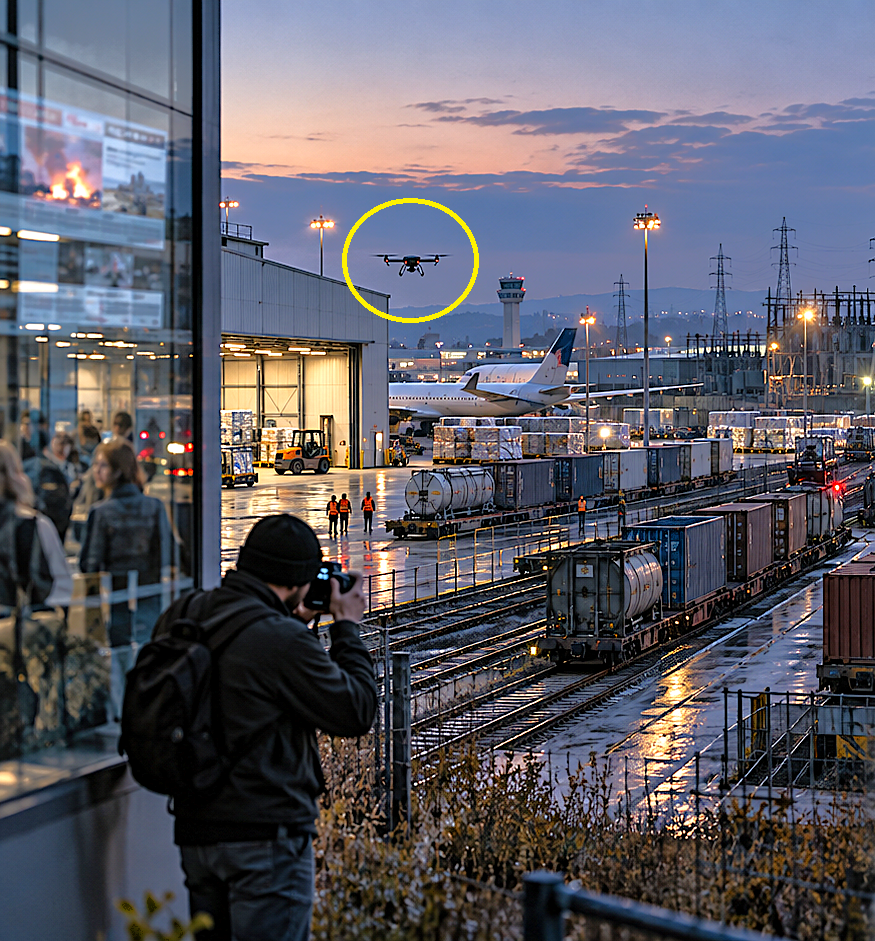
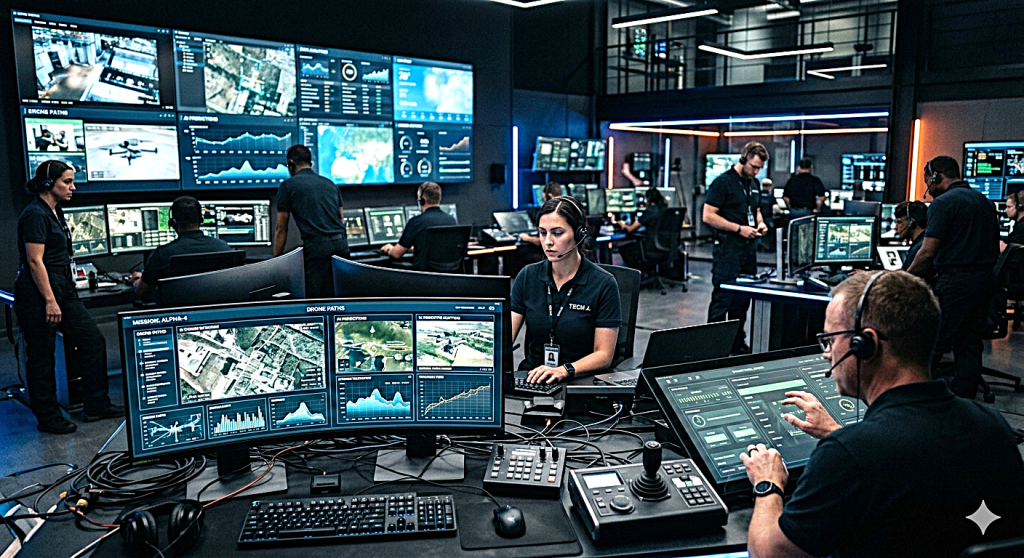
Search and rescue also brings an adjacent robotics trend. Instead of placing all robotic capability on the rescuer’s body, agencies are increasingly testing ground robots, quadrupeds, drones, and sensor systems to map buildings, detect gases, inspect tight spaces, and reduce human exposure. Wearable robotics will probably enter this ecosystem as one layer: a responder may wear a back-assist or knee-assist device while drones and ground robots do reconnaissance.
What role does AI play?
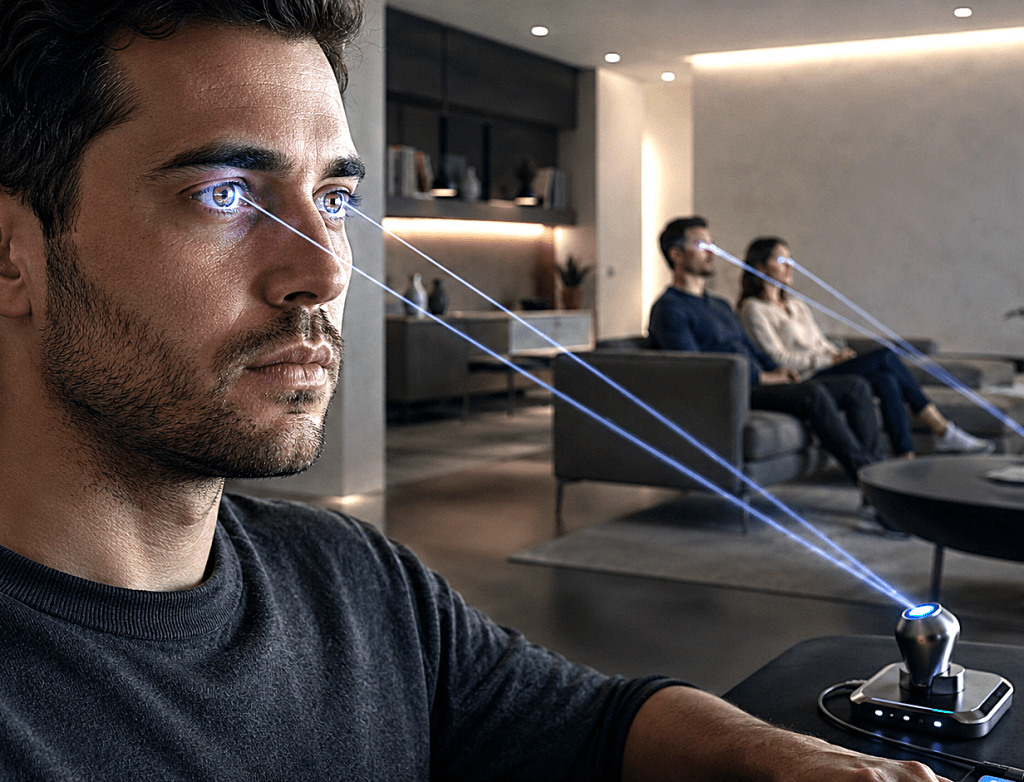
AI is becoming the control layer that makes modern exoskeletons feel less mechanical. In powered walking systems, AI or machine-learning language usually refers to gait detection, intent estimation, adaptive torque, terrain response, and assistance timing. Hypershell markets “adaptive power” that responds automatically to how a user moves (31). Ascentiz describes an embedded AI Motion Cortex that delivers responsive torque amplification (11). Tom’s Guide reported that Ascentiz models use AI to analyze stride for natural movement assistance (12). WIRobotics emphasizes responsive assistive performance in hands-on demonstrations (6).
This AI role is practical rather than magical. A useful exoskeleton must answer small questions many times per second: Is the user starting a step? Going uphill? Descending stairs? Accelerating? Stopping? Carrying load? Losing rhythm? Fighting the motor? The device must apply help at the right joint, in the right direction, at the right moment, and then get out of the way. Bad timing feels worse than no assistance. This is where sensors, control algorithms, and learned movement models matter.
In elder fall prevention, AI has a different role: risk recognition rather than power amplification. Helpany’s Paul uses radar and AI to detect changes in movement patterns and alert caregivers before falls happen (19,20). Other ambient systems use thermal, LiDAR, or camera AI. These systems do not make the body stronger, but they can identify night wandering, gait changes, repeated bathroom trips, reduced mobility, or instability. For senior living, that may be more immediately useful than powered legs.
In emergency response, AI’s role may expand beyond the exoskeleton. Wearable AI can give responders hands-free information through helmets, glasses, radios, biomonitoring, and command systems. The Information Technology and Innovation Foundation argued in April 2026 that wearable AI can help first responders make faster decisions without screen distraction, including law enforcement, firefighters, and emergency medical technicians (32). The exoskeleton itself may become one node in a larger wearable AI network that tracks fatigue, posture, load, heat stress, location, air quality, and mission context.
Key constraints slowing adoption
The barriers are not only technical. The first is fit. Human bodies vary by height, weight, joint alignment, gait pattern, injury history, clothing, footwear, and tolerance for pressure points. A device that feels natural to one reviewer can feel awkward to another. Apparel-integrated systems like MO/GO address this partly through sizing, but sizing also complicates manufacturing and returns.
The second is safety. A recreational exoskeleton that mistimes assistance can cause discomfort or a stumble. A fall-prevention exoskeleton that mistimes assistance can cause the very event it is meant to prevent. The 2025 ankle-exoskeleton balance study is a reminder that assistive force can have unintended effects (22).
The third is cost and service. A $799 to $1,999 hiking exoskeleton may be reachable for enthusiasts, but a $4,999 powered-pants system remains premium. Maintenance, batteries, warranties, replacement straps, firmware updates, and repair networks will decide whether the category survives beyond early adopters.
The fourth is evidence. Consumer claims about reduced exertion are useful, but older adults, insurers, clinicians, fire departments, and military buyers will require stronger evidence: fewer injuries, fewer falls, lower fatigue, better task performance, lower workers’ compensation costs, or faster rehabilitation.
The fifth is regulation and liability. A device marketed for hiking can be treated differently from a device marketed to prevent falls in older adults. As soon as a company claims to prevent injury in a vulnerable population, testing and liability expectations rise.
Near-term outlook: 2026 to 2030
The most likely 2026-2030 path is gradual normalization, not sudden cyborg transformation. Outdoor exoskeletons will become more visible first because hiking, travel, and fitness users are willing to experiment. Industrial exosuits will keep expanding where the return on investment is easy to calculate: fewer back injuries, less fatigue, more retention, and better productivity. Clinical exoskeletons will remain specialized but may benefit from better sensors, lighter actuators, and improved reimbursement pathways. Senior fall prevention will advance through ambient AI first, then through gait-assist wearables, and only later through active fall-recovery exoskeletons.
For readers following the field, the key question is not whether exoskeletons “exist.” They do. The better question is whether a device has crossed four thresholds: it can be bought or deployed, it works outside a demo, users will wear it repeatedly, and there is evidence that it improves the outcome claimed. Hypershell, WIRobotics, Ascentiz, Skip/Arc’teryx, Ekso, HeroWear, and Helpany each cross different parts of that threshold. None by itself proves mass adoption. Together they show that wearable robotics and AI mobility assistance have entered the early commercial era.
References
(1) Hypershell X Series: Redefining Mobility at CES 2025. https://ces.vporoom.com/2025-01-07-Hypershell-X-Series-Redefining-Mobility-at-CES-2025
(2) CES Innovation Awards 2025: Hypershell Carbon X. https://www.ces.tech/ces-innovation-awards/2025/hypershell-carbon-x/
(3) CES 2026: Hypershell Exoskeleton, Podfeet. https://www.podfeet.com/blog/2026/02/ces-2026-hypershell/
(4) Hypershell X Pro Exoskeleton, RMUS. https://www.rmus.com/products/hypershell-x
(5) WIM product page, Exoskeleton Report. https://exoskeletonreport.com/product/wim/
(6) WIRobotics to Showcase WIM S at CES 2026 Unveiled, PR Newswire. https://www.prnewswire.com/news-releases/wirobotics-to-showcase-wearable-walking-assist-robot-wim-s-at-ces-2026-unveiled-302637589.html
(7) WIRobotics WIM S official product page. https://corp.wirobotics.com/en/product/wim-s
(8) WIRobotics WIM KIDS wins CES 2026 Innovation Award, EQS/PR Newswire. https://www.eqs-news.com/news/corporate/wirobotics-walking-assist-wearable-robot-wim-kids-wins-ces-2026-innovation-award-in-digital-health/8997d758-adf0-4a35-91a6-5ede19d68b30_en
(9) WIRobotics media page. https://corp.wirobotics.com/en/media
(10) Ascentiz company directory, Exoskeleton Report. https://exoskeletonreport.com/exoskeleton-companies-and-organizations-directory/ascentiz/
(11) Ascentiz CES 2026 technical announcement, PR Newswire. https://www.prnewswire.com/news-releases/ascentiz-unveiled-modular-designed-exoskeleton-at-ces-2026-a-technical-deep-dive-into-biomechanical-intelligence-302657578.html
(12) Tom’s Guide: I powered around CES 2026 with an ultra-lightweight exoskeleton. https://www.tomsguide.com/wellness/fitness/i-powered-around-ces-2026-with-some-help-from-an-ultra-lightweight-exoskeleton
(13) Ascentiz official site. https://ascentizexo.com/
(14) Arc’teryx and Skip Introduce MO/GO powered pants. https://blog.arcteryx.com/news/arcteryx-and-skip-partner-to-introduce-mo-go-revolutionizing-mobility-with-the-worlds-first-pair-of-powered-pants/
(15) Skip x Arc’teryx MO/GO pre-order page. https://www.skipwithjoy.com/buy/p/style-01-ej5na-hbs9d
(16) Ekso Bionics home page. https://eksobionics.com/
(17) Ekso Bionics EksoHealth / EksoNR. https://eksobionics.com/eksohealth/
(18) Mobility Management: Ekso Bionics pursues merger, possible separation of exoskeleton business. https://mobilitymgmt.com/ekso-bionics-pursues-merger-possible-separation-of-exoskeleton-business/
(19) Helpany fall prevention platform. https://helpany.com/
(20) Fellowship Square-Mesa: Using AI to Prevent Falls – Not Just Detect Them. https://www.fellowshipsquareseniorliving.org/campus/az/mesa/fellowship-square-mesa-blog/posts/2025/5/22/using-ai-to-prevent-falls-not-just-detect-them/
(21) Monaco et al., An ecologically-controlled exoskeleton can improve balance recovery after slippage, Scientific Reports. https://www.nature.com/articles/srep46721
(22) Raz et al., Ankle Exoskeletons May Hinder Standing Balance in Simple Balance Tasks, 2025. https://pmc.ncbi.nlm.nih.gov/articles/PMC12013802/
(23) Nairn et al., Smart Wearable Technologies for Balance Rehabilitation in Older Adults at Risk of Falls, JMIR Rehabilitation and Assistive Technologies, 2025. https://rehab.jmir.org/2025/1/e69589
(24) MarketsandMarkets: Exoskeleton Market Size, Share and Trends. https://www.marketsandmarkets.com/Market-Reports/exoskeleton-market-40697797.html
(25) Coherent Market Insights: Exoskeleton Market Analysis & Forecast 2026-2033. https://www.coherentmarketinsights.com/market-insight/exoskeleton-market-1424
(26) HeroWear Apex 2 official site. https://herowearexo.com/
(27) HeroWear Apex 2 product page. https://herowearexo.com/the-apex-2-back-assist-exosuit
(28) Bigot, Firefighting Exoskeleton to Reduce Stress and Strain, University of Maryland DRUM, 2025. https://drum.lib.umd.edu/items/6078a3f2-7b7b-49f1-b2a8-e5268c2df308
(29) Exoskeleton Report: Exoskeleton News, May 30 2026 – ITAR control and other developments. https://exoskeletonreport.com/2026/06/exoskeleton-news-may-30-2026-week-22-itar-control-over-40000-muscle-suits-shipped-and-more/
(30) IEEE Robots Guide: Guardian XO. https://robotsguide.com/robots/guardianxo
(31) Hypershell official site. https://hypershell.tech/en-us
(32) ITIF: The Promise of Wearable AI – Opportunities Across Emergency Response, 2026. https://itif.org/publications/2026/04/15/the-promise-of-wearable-ai-opportunities-across-emergency-response/
Filed under: Uncategorized |
















































































































































































































































































































































































































































Leave a Reply