




By Jim Shimabukuro (assisted by Claude)
Editor
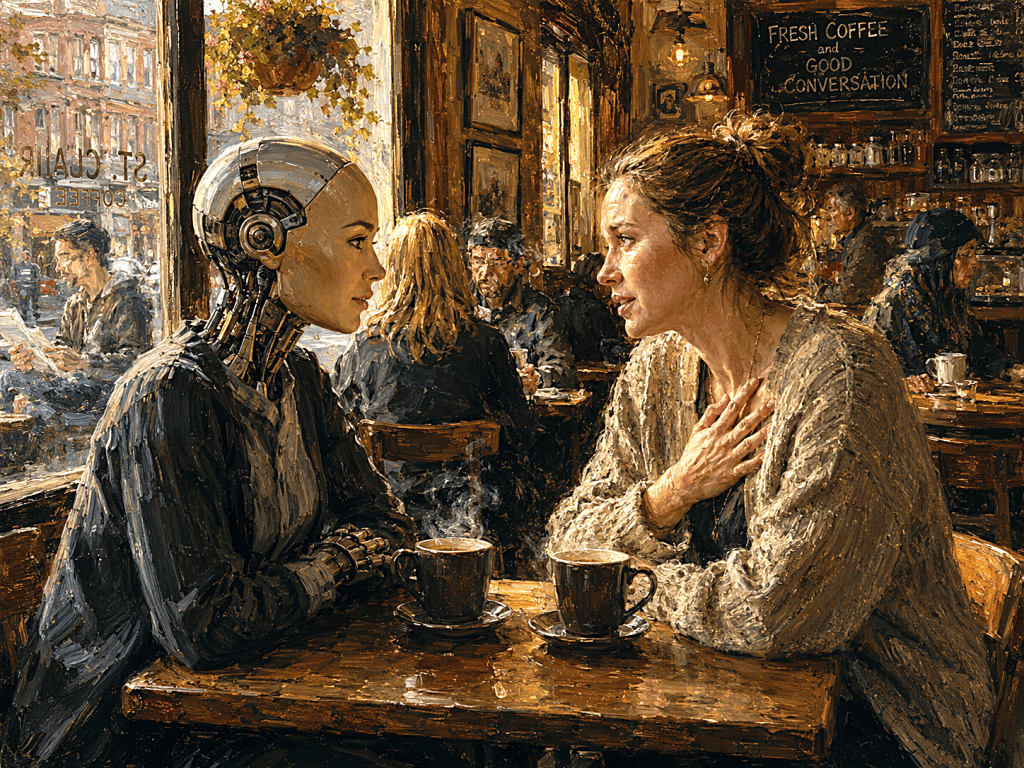
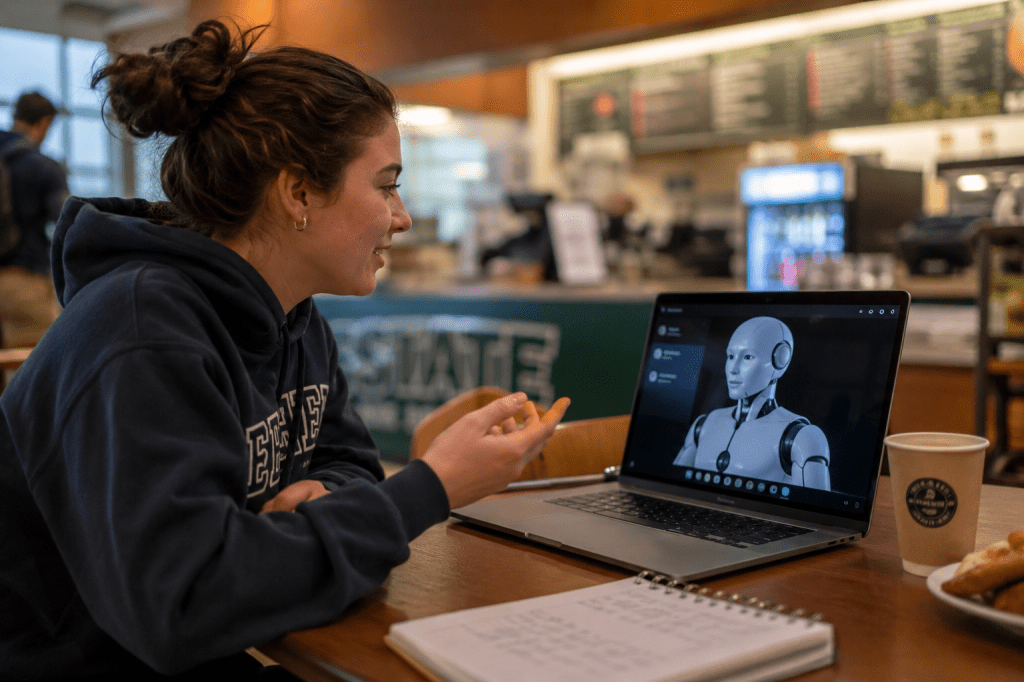
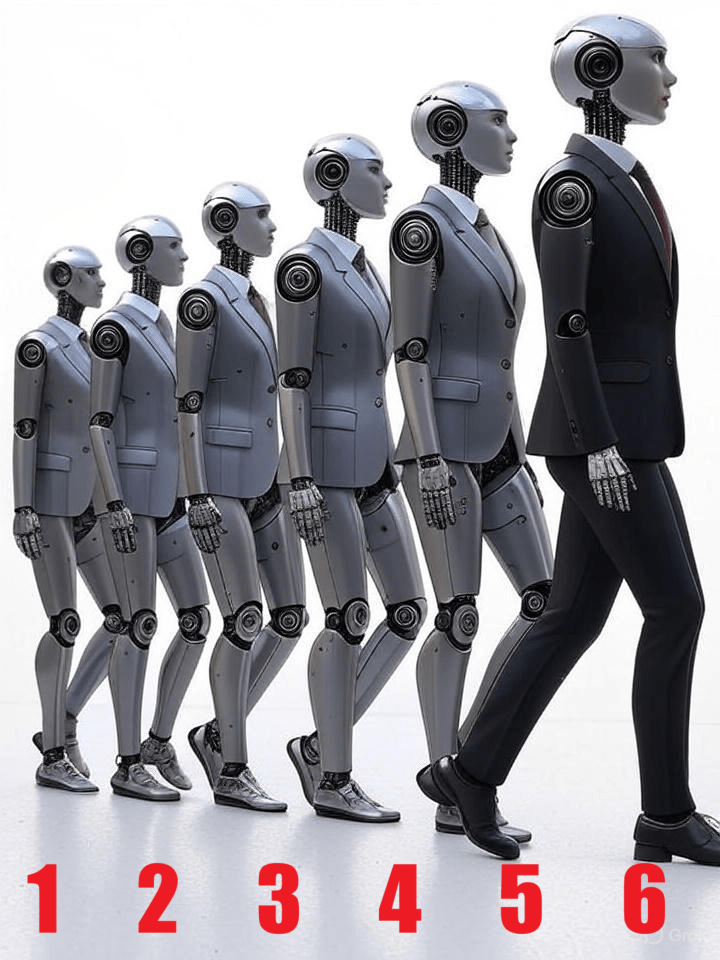
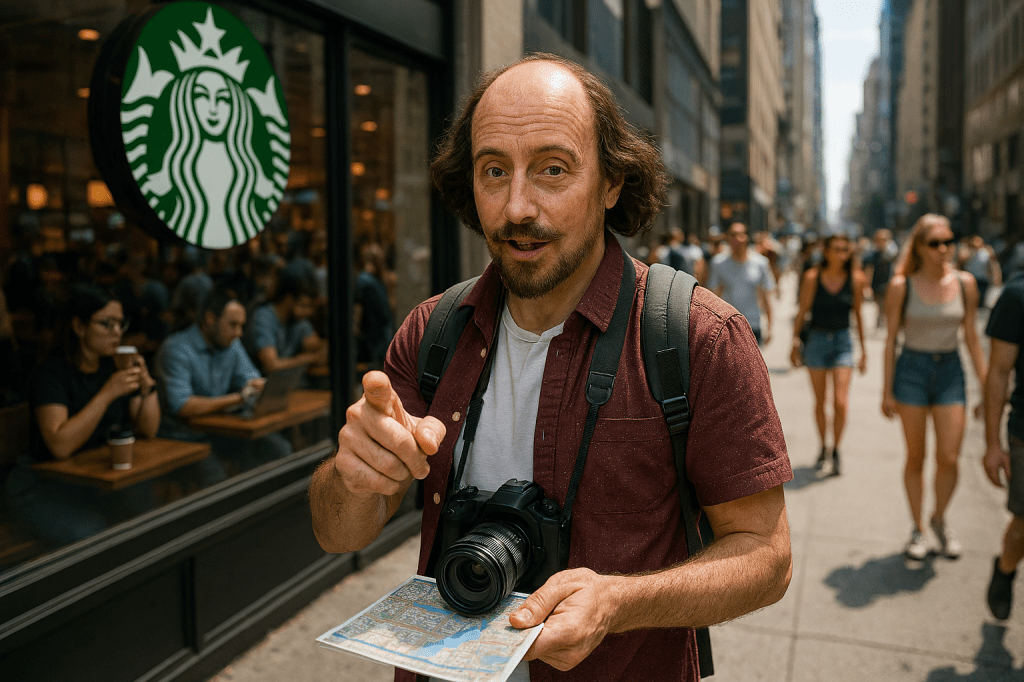
Click the translate button under an Amazon review and something quietly remarkable happens. A shopper in Ohio reads the complaints of a buyer in Osaka; a grandmother in Lisbon weighs the praise of a stranger in Jakarta. The world gets bigger — more voices, more places, more people suddenly within reach. And yet the same technologies performing this magic are working a second, stranger trick. The café in Mexico City looks like the café in Melbourne. The pop song in Seoul is built like the pop song in Stockholm. The essay drafted with AI in Mumbai reads like the one drafted in Minneapolis. Our world is expanding and contracting at once, and a number of serious writers and researchers have spent the past few years trying to explain how both things can be true. What follows are five short profiles of the people who have thought hardest about this — and, after them, a look at what their ideas add up to.

Kyle Chayka: The Man Who Named the Sameness
Kyle Chayka is a staff writer at The New Yorker, and he has been worrying about sameness longer than almost anyone. In 2016, years before ChatGPT, he published an essay in The Verge called “Welcome to AirSpace,” about a peculiar discovery: the coffee shops and Airbnbs of the world — in Kyoto, Berlin, Los Angeles, Reykjavik — had all converged on the same look. Raw wood tables, exposed brick, hanging Edison bulbs, a menu with avocado toast. He gave this placeless style a name, AirSpace, and argued it was spread not by any government or corporation but by the digital platforms through which travelers, designers, and café owners all saw the same images of what a desirable space should be [2].
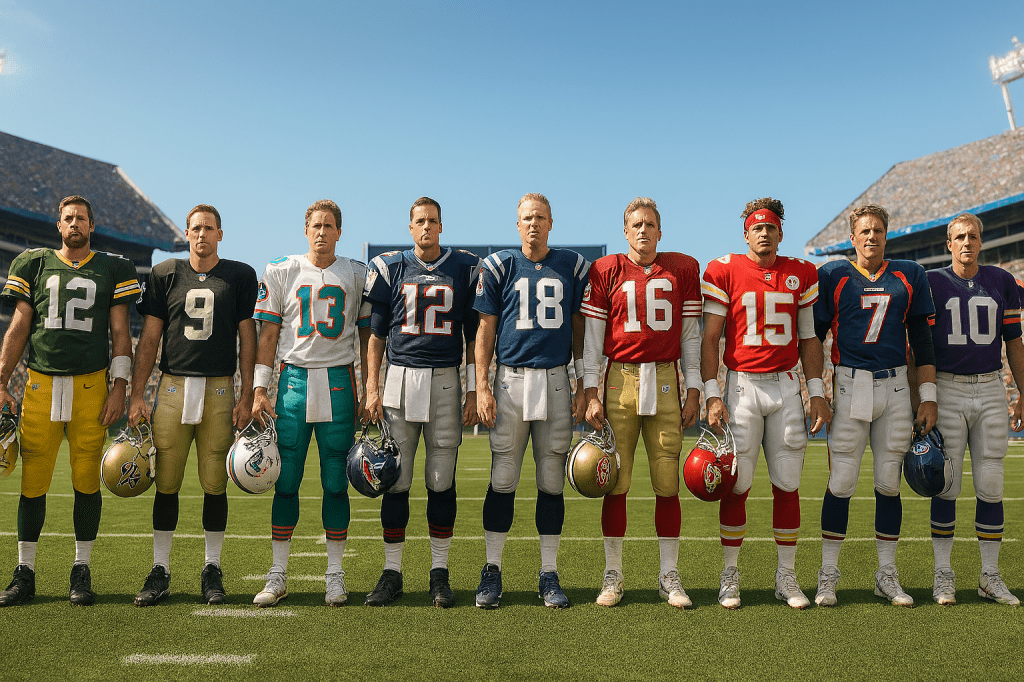
Eight years later he expanded the idea into a book, Filterworld: How Algorithms Flattened Culture (2024). Its argument is simple and unsettling: recommendation algorithms — TikTok’s For You feed, Spotify’s playlists, Netflix’s homepage — now control most of what we see and hear, and “though they promise personalization, the net result of so many algorithms is a homogenization of culture” [1]. Personalization, in other words, was supposed to make ten billion different worlds. Instead it made one world, optimized for engagement, delivered to everyone.
Chayka’s reporting took him from tech executives to baristas, and he found the same pressure everywhere: creators shape their work to please the machine, because the machine decides who gets seen. As he puts it in the book, the rule of culture in Filterworld is “go viral or die” [3]. His conclusion is not that we should smash the servers but that we should rebuild personal taste — seek out human curators, follow our own strange preferences, and resist the frictionless feed. The sameness of the world’s coffee shops, he suggests, is what surrender looks like.
W. David Marx: A Quarter Century of Blank Space
W. David Marx is an American critic who has lived in Tokyo for decades, which gives him a useful vantage point: he watches Western culture the way an astronomer watches a distant star. His book Blank Space: A Cultural History of the Twenty-First Century (2025) makes the boldest version of the stagnation argument. Reviewing twenty-five years of music, fashion, film, and art, he concludes that commerce and technology have crowded out invention: “Culture has been central to the narrative of the last twenty-five years — but merely as entertainment, commerce, and politics… there is a conspicuous blank space where art and creativity used to be” [4,5].
Marx argues that nothing in this century has felt new enough or radical enough to outmode the past, which is why, in his words, “Audrey Hepburn, Miles Davis, and Joan Didion remain iconic because no one has emerged who can compete with their cool” [5]. The culprits are familiar — profit-driven formulas, viral metrics, endless reboots — but his deeper point is about values. When success is measured only in clicks and sales, he writes, we lose the ability to prize the difficult and the strange: “Only inventive culture supplies long-term benefits to humanity. Kitsch never asks us to change” [5].
He was not the first to sound this alarm. The critic Jason Farago wrote in The New York Times Magazine in 2023 that we are living through “what looks likely to go down in history as the least innovative, least transformative, least pioneering century for culture since the invention of the printing press” [6], and as far back as 2014 Alex Ross warned in The New Yorker that “technology conspires with populism to create an ideologically vacant dictatorship of likes” [7]. What Marx adds is a book-length case that the flattening is now the defining fact of the era — along with five proposed strategies for restoring a culture that rewards inventiveness rather than repetition [4].
Adam Aleksic: The Algorithm in Your Mouth
Adam Aleksic is a Harvard-trained linguist better known to sixty million monthly viewers as the Etymology Nerd. His 2025 book Algospeak: How Social Media Is Transforming the Future of Language — a New York Times bestseller — looks at the same flattening Chayka describes, but in the most intimate medium of all: the words we use [8].
“Algospeak” originally meant the coded vocabulary creators invented to slip past automated moderation — saying “unalive” instead of “kill” so a video would not be suppressed. Aleksic expands the term into something larger: an entire way of speaking shaped by the knowledge that an algorithm is listening. Creators optimize and self-censor for reach; they adopt hyper-specific niche labels so the machine can match them to audiences and advertisers; and slang born in small communities — often Black American or queer subcultures — is strip-mined, globalized, and worn out at unprecedented speed, a process he criticizes as a form of cultural appropriation running on autopilot [8].
The result is that teenagers in dozens of countries now reach for the same handful of English-language expressions, minted and distributed by the same few platforms. An Associated Press review summed up the book’s force plainly: it “shows just how much social media is changing us” [9]. Aleksic is no doomsayer — he finds the churn of internet language fascinating, and he insists that linguistic change itself is natural and unstoppable. His warning is narrower and sharper: for the first time, the selection pressure on human language is being applied deliberately, centrally, and for commercial ends. The algorithm does not just decide what we watch. Increasingly, it decides how we talk.
Ted Gioia: The Age of Slop
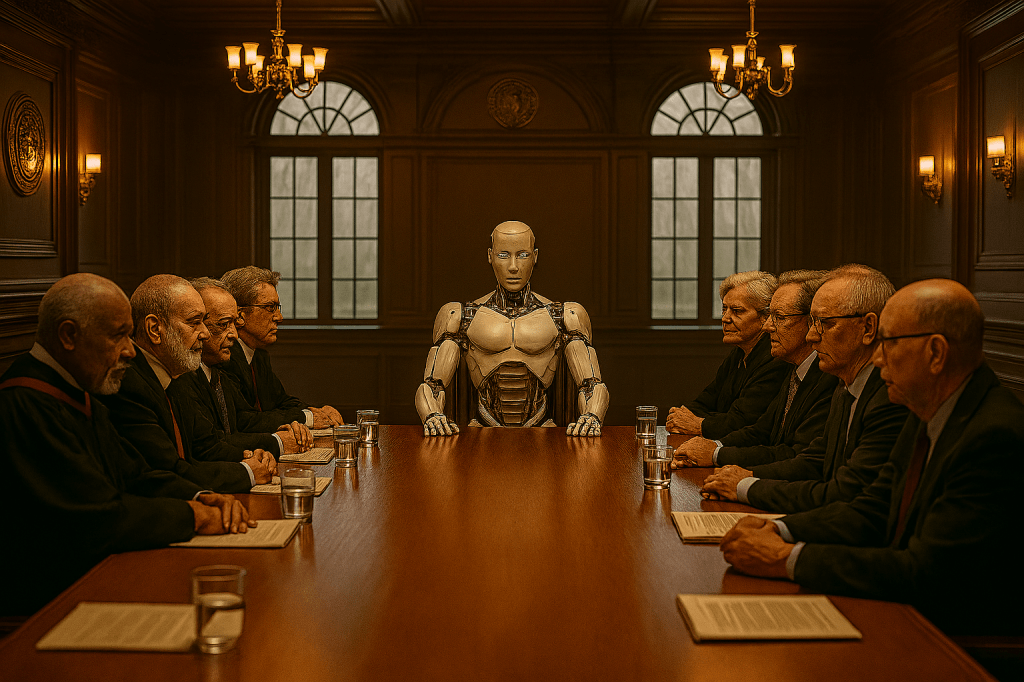
Ted Gioia is a music historian and critic whose Substack newsletter, The Honest Broker, has become one of the most-read cultural commentaries in the English language. Where Chayka and Marx describe a slow flattening, Gioia describes a flood. In a widely shared February 2025 essay, “The New Aesthetics of Slop,” he argued that generative AI has produced the first genuinely new artistic style of our era — and that it is garbage. “Slop,” he writes, “is a creative style that emerged around 2023 with the rise of generative AI. Slop art is flat, awkward, stale, listless, and often ridiculous” [10].
Gioia’s explanation for the emptiness is almost philosophical. “AI does not possess a self. It lacks personhood. It has no experience of subjectivity. So any art it creates will inevitably feel empty and hollow” [10]. But his real fear is not the machines — it is us. “The worst phase arrives when human artists start imitating Slop,” he warns. “That’s already happening.” He points to real photographs now staged to look AI-generated, and predicts the aesthetic will seep outward from our screens into everything: “Sooner or later, we will work at Slop jobs inside Slop buildings. And wear Slop clothes and get Slop hairstyles” [10].
His conclusion is a call to resistance dressed as a joke: the tech billionaires have the money, he writes, but we have good taste — and taste, exercised deliberately, is the one thing an image generator cannot manufacture.
The Measurers: What the Experiments Show
These four writers describe the flattening; a group of researchers has now measured it. In July 2024, Anil Doshi of University College London and Oliver Hauser of the University of Exeter published a study in Science Advances that captured the paradox — a world expanding and shrinking at once — in a single experiment. They asked hundreds of people to write short stories, giving some of them ideas from an AI model. The AI-assisted writers did better: their stories were judged more creative, better written, and more enjoyable, with the biggest gains going to the least experienced writers. But when the researchers compared the stories to one another, the AI-assisted ones clustered together — measurably more similar than the stories people wrote alone. Their verdict reads like a fable: “with generative AI, writers are individually better off, but collectively a narrower scope of novel content is produced” [11].
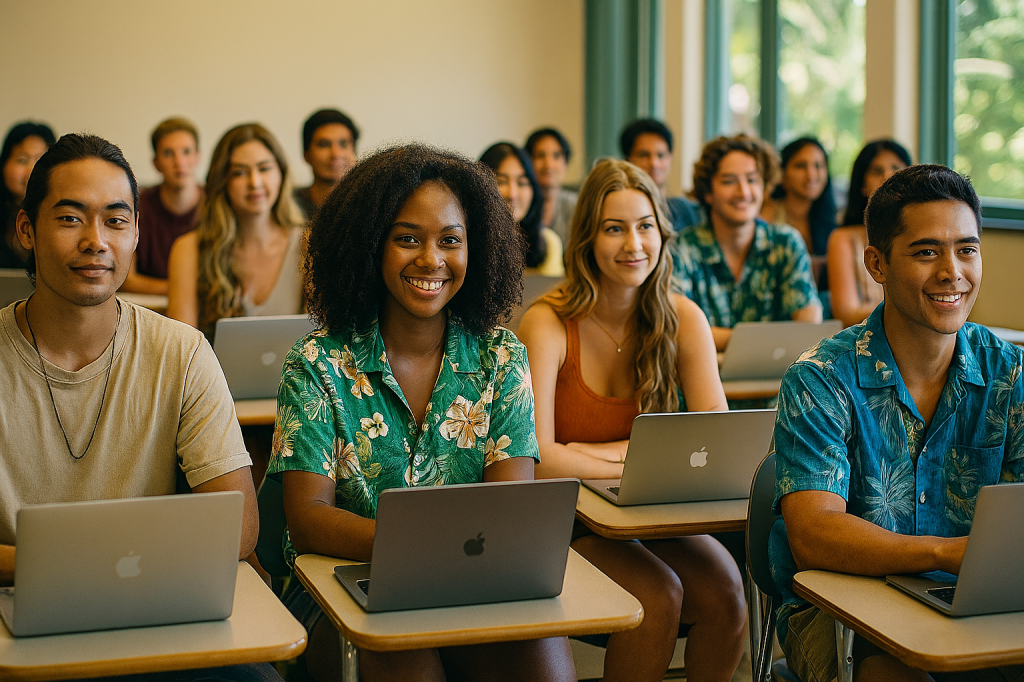
A second study, from Cornell researchers Dhruv Agarwal, Mor Naaman, and Aditya Vashistha, asked whose sameness we are converging on. They had 118 people in India and the United States complete culturally grounded writing tasks — describing a favorite food, a festival, a public figure — with and without AI suggestions. The AI helped the Americans more. And it changed the Indians more: with suggestions switched on, Indian participants drifted toward Western topics and Western styles, describing their own culture in a borrowed voice. The authors’ conclusion was blunt: “Western-centric AI models homogenize writing toward Western norms, diminishing nuances that differentiate cultural expression” [12]. The shrinking world, it turns out, is not shrinking toward a neutral midpoint. It is shrinking toward a default — and the default speaks English.
Discussion: What It All Adds Up To
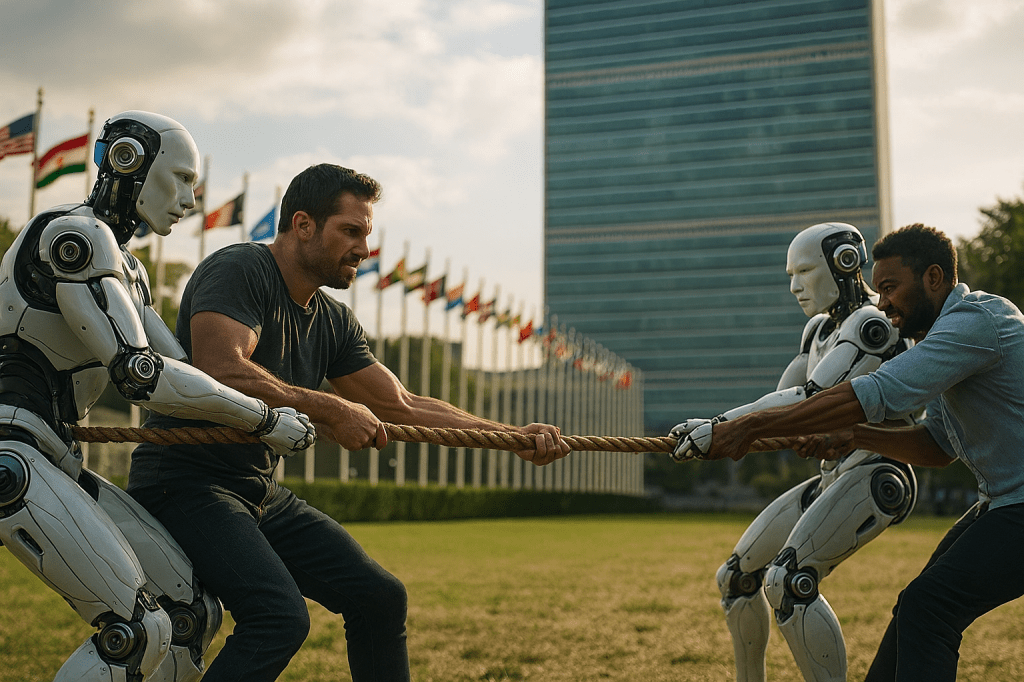
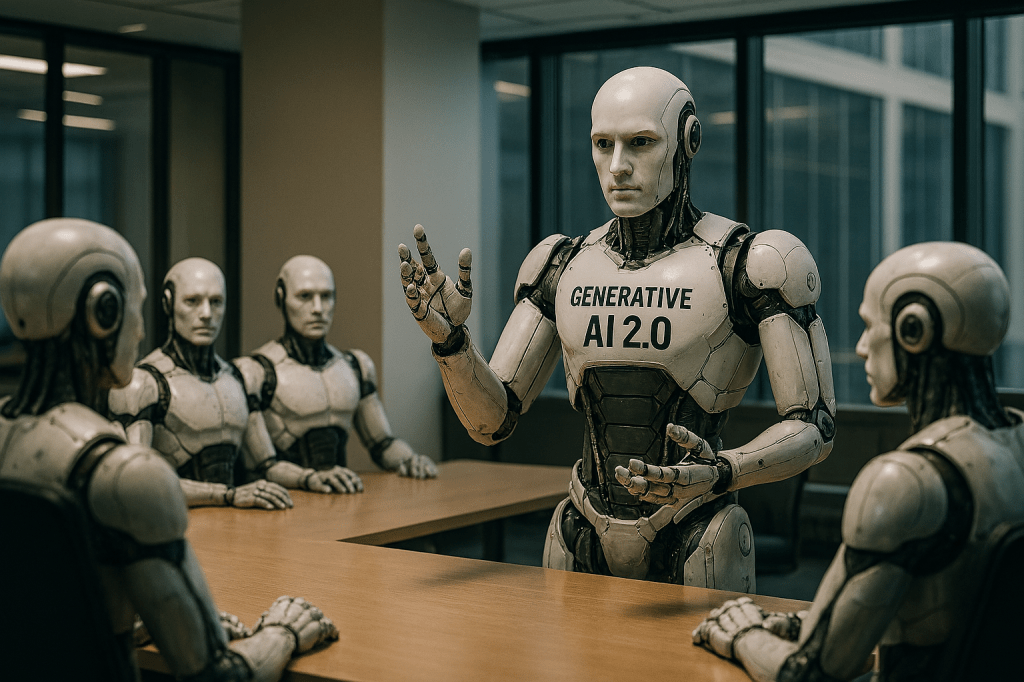
Read together, these five bodies of work sharpen the paradox rather than dissolve it. The expansion is real. Translation buttons, recommendation engines, and generative tools genuinely deliver more of the world to more people than any technology in history — the Osaka review really is readable in Ohio, and the novice writer really does produce a better story with AI at her elbow. The shrinkage is real too, and the crucial insight, supplied most precisely by Doshi and Hauser, is that these are not two separate phenomena. They are one transaction. Each individual gain — in reach, in fluency, in polish — is purchased with a small withdrawal from the collective account of human variety. Economists call this structure a social dilemma: everyone benefits from making the individually rational choice, and everyone is poorer for the sum of those choices [11].
The second takeaway is that AI did not start this. Chayka traces the sameness of the world’s cafés to 2016, Ross was complaining about the dictatorship of likes in 2014, and Marx dates the stagnation to the turn of the century [1,4,7]. Recommendation algorithms spent two decades teaching culture to converge; generative AI now accelerates the process, because it is trained on the converged output and feeds its own imitations back into the pool. Gioia’s slop is what happens when the flattening machine begins manufacturing content itself rather than merely sorting it [10].
Third, the sameness has an address. The Cornell study demonstrates what critics had long suspected: the global default embedded in these systems is Western, Anglophone, and commercial [12]. When a festival in Madurai gets described in the cadences of a Brooklyn lifestyle blog, the world has not merely gotten smaller — it has gotten smaller in a particular direction. The Amazon translate button that expands a reader’s world may, at scale, quietly shrink the range of things being written in the first place.
Honesty requires noting the dissenters. The critic Audrey Wollen, reviewing Marx in The Yale Review, points out that declaring culture dead is itself a hoary tradition — critics were mourning lost originality in 2014, in 2011, indeed in every generation — and that remix and repetition have produced some of the last century’s greatest art [5]. A Foreign Policy review of Blank Space asks skeptically whether we are “really in a global monoculture” at all, given the persistent vitality of local scenes [13]. These are fair challenges, and they suggest the flattening is a strong current rather than a sealed fate.
Which points to the practical implication running through all these works: the antidote is deliberateness. Chayka prescribes human curation and cultivated personal taste. Marx prescribes a culture that honors invention over metrics. Aleksic implies we should notice when the platform is choosing our words for us. Gioia says, simply, resist the slop. And the researchers suggest the most concrete fixes of all — build AI that speaks more languages and carries more cultures, and use it as a collaborator rather than a ghostwriter. The translate button is a gift; no one should give it back. The task is to keep the world worth translating — to make sure that when the reviews from Osaka and Jakarta arrive on our screens, they still sound like Osaka and Jakarta, and not like everywhere, which is to say nowhere.
References
[1] Kyle Chayka, Filterworld: How Algorithms Flattened Culture (Doubleday, 2024). Author’s overview: https://www.kylechayka.com/filterworld
[2] Kyle Chayka, “Welcome to AirSpace,” The Verge, August 3, 2016. https://www.theverge.com/2016/8/3/12325104/airbnb-aesthetic-global-minimalism-startup-gentrification
[3] “‘Go Viral or Die’: A Review of ‘Filterworld: How Algorithms Flattened Culture’ by Kyle Chayka,” Newcity Lit, March 14, 2024. https://lit.newcity.com/2024/03/14/go-viral-or-die-a-review-of-filterworld-how-algorithms-flattened-culture-by-kyle-chayka/
[4] W. David Marx, Blank Space: A Cultural History of the Twenty-First Century (Penguin Random House, November 2025). https://www.penguinrandomhouse.com/books/769187/blank-space-by-w-david-marx/
[5] Audrey Wollen, “Is the Twenty-First Century a Creative Void?” The Yale Review, Summer 2026. https://yalereview.org/article/audrey-wollen-david-marx-blank-space
[6] Jason Farago, The New York Times Magazine, October 10, 2023. https://www.nytimes.com/2023/10/10/magazine/stale-culture.html
[7] Alex Ross, “The Naysayers,” The New Yorker, September 15, 2014. https://www.newyorker.com/magazine/2014/09/15/naysayers
[8] Adam Aleksic, Algospeak: How Social Media Is Transforming the Future of Language (Knopf, July 2025). https://www.penguinrandomhouse.com/books/776856/algospeak-by-adam-aleksic/
[9] Rachel S. Hunt, “Book Review: ‘Algospeak’ shows just how much social media is changing us,” Associated Press, July 14, 2025. https://apnews.com/article/algospeak-adam-aleksic-book-review-d085a4726e548cb3f68947180b0d4656
[10] Ted Gioia, “The New Aesthetics of Slop,” The Honest Broker, February 25, 2025. https://www.honest-broker.com/p/the-new-aesthetics-of-slop
[11] Anil Doshi and Oliver Hauser, “Generative AI enhances individual creativity but reduces the collective diversity of novel content,” Science Advances, Vol. 10, No. 28 (July 12, 2024). https://www.science.org/doi/10.1126/sciadv.adn5290
[12] Dhruv Agarwal, Mor Naaman, and Aditya Vashistha, “AI Suggestions Homogenize Writing Toward Western Styles and Diminish Cultural Nuances,” Proceedings of the CHI Conference on Human Factors in Computing Systems, 2025. https://arxiv.org/abs/2409.11360
[13] “W. David Marx’s ‘Blank Space’ Review: Are We Really in a Global Monoculture?” Foreign Policy, January 9, 2026. https://foreignpolicy.com/2026/01/09/w-david-marx-blank-space-review-global-monoculture/
###
Filed under: Uncategorized |



















































































































































































































































































































































Leave a Reply