






By Jim Shimabukuro (assisted by Copilot)
Editor
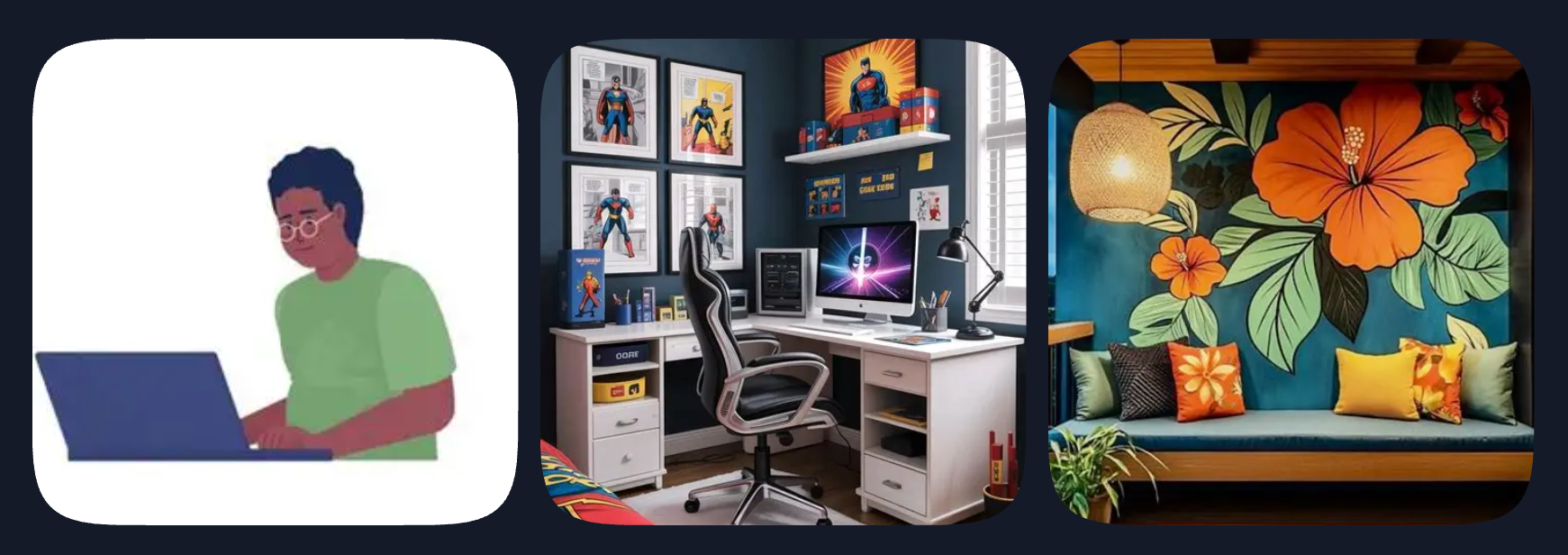
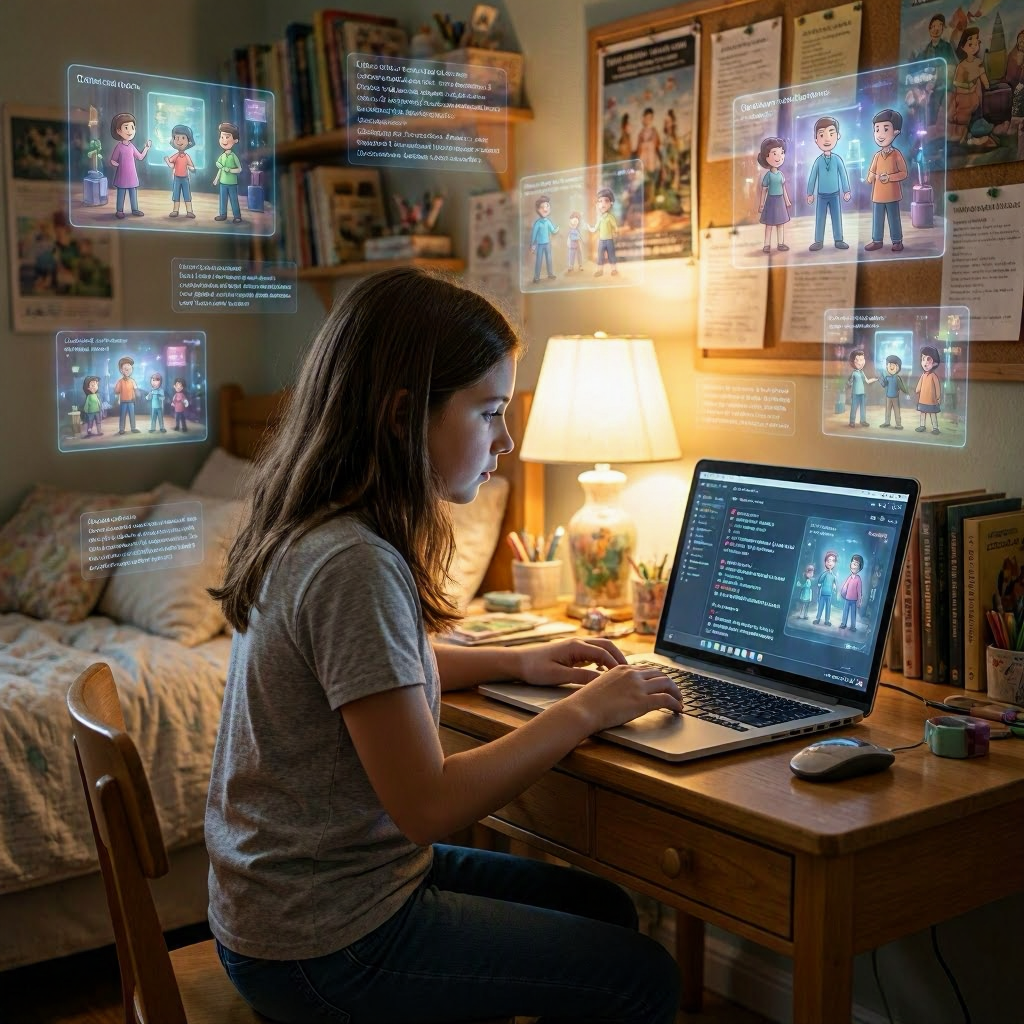
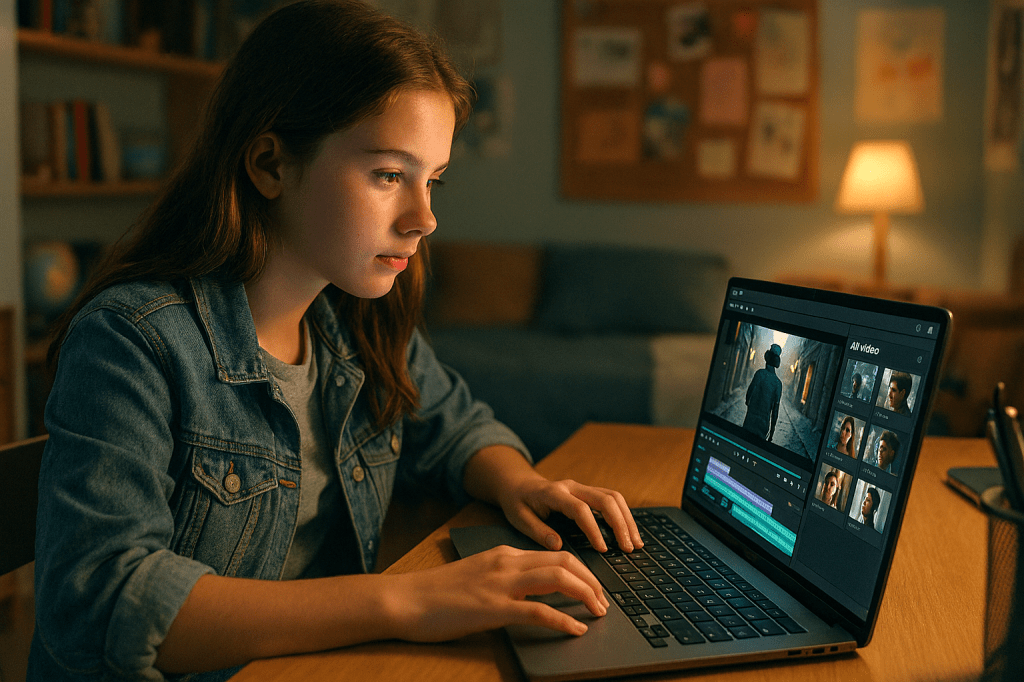
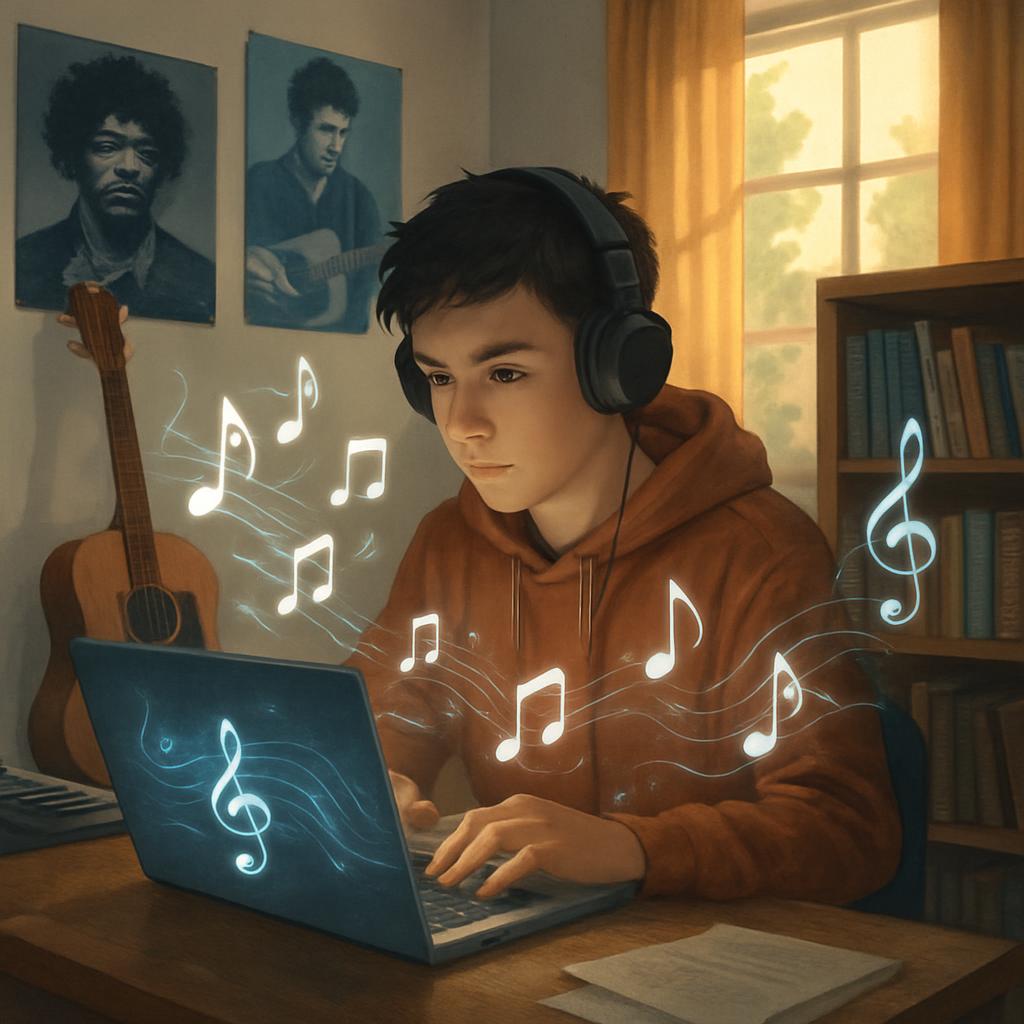
In the early 2030s, the idea of making a movie no longer feels like a distant dream reserved for studios or professionals. It feels like something a teenager might do after finishing homework. That is exactly how sixteen‑year‑old Kai Nakamura begins his first feature film: not with a camera, not with a crew, but with a laptop on a desk in his bedroom in Honolulu, the trade winds drifting through the window as he opens an app called CineForge Studio, a free AI filmmaking suite that has become as common as word processors once were.

“The Weight of the Sky”: How a Teenager in the 2030s Makes His Own Feature Film
Kai has always loved superhero stories, but the ones he grew up with felt distant — cities he had never visited, powers he could never imagine having, characters whose struggles were cosmic rather than personal. His own life, though quieter, had its own gravity: a father deployed for long stretches, a mother working two jobs, a younger sister who looked up to him as if he were already heroic. He decides his film will be about a boy who discovers that the ordinary burdens he carries are, in fact, the source of extraordinary strength. The superhero he imagines is not a billionaire vigilante or an alien demigod, but a local kid whose powers emerge from empathy, responsibility, and the invisible weight of caring for others.
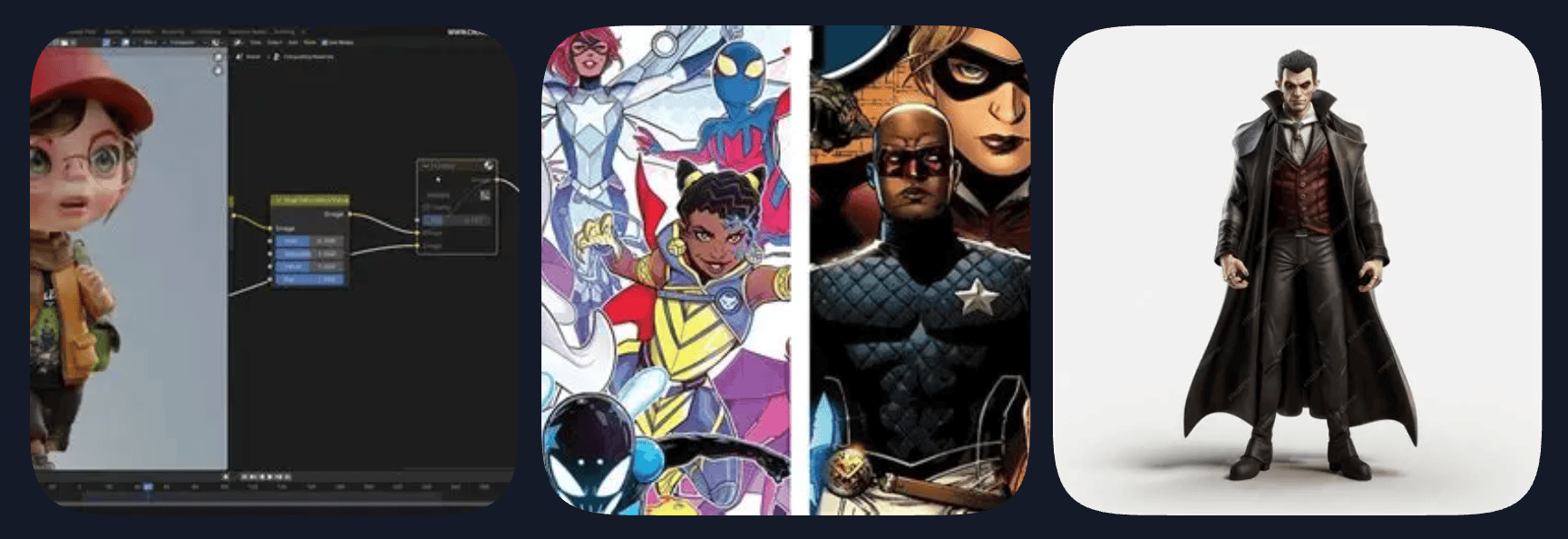
CineForge begins by asking him to describe the protagonist. Kai types: “Sixteen, Japanese‑Filipino, lives in Honolulu, quiet but observant, carries the world on his shoulders without saying so.” The system generates a photorealistic character model, complete with subtle mannerisms drawn from Kai’s own webcam recordings. The boy on the screen looks like someone Kai might sit next to in class — not perfect, not polished, but real. When Kai adds that the character’s power manifests as shimmering distortions in the air when he feels overwhelmed, the system produces a visual effect that resembles heat rising off asphalt on a summer day.
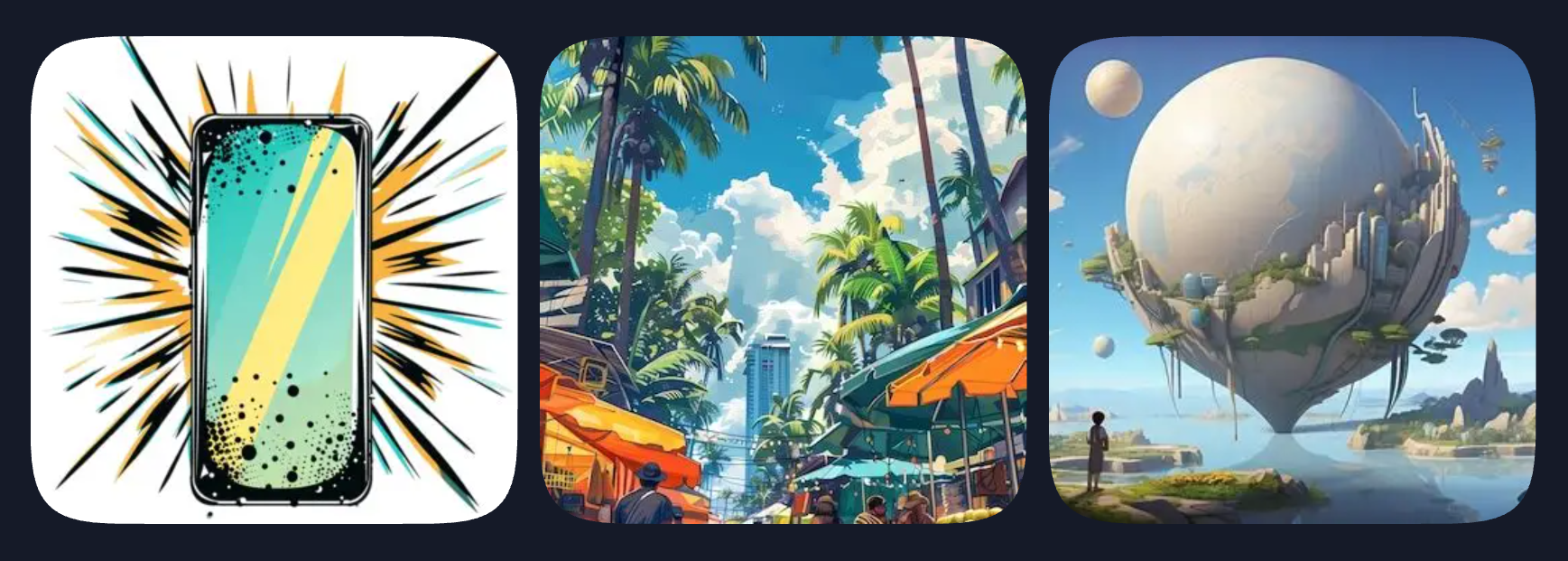
Next, Kai builds the world. He walks around his neighborhood with his phone, capturing 3D scans of the streets, the basketball court behind the school, the shoreline where he and his sister sometimes watch the sunset. CineForge stitches these into editable environments, allowing him to adjust lighting, weather, and time of day. He sets the opening scene at dawn, the sky pale gold, the city still quiet. The protagonist bikes to school, passing familiar landmarks that now carry cinematic weight. The realism is startling: reflections on windows, the texture of concrete, the way palm trees sway in the morning breeze. It feels like a film shot on location, even though no camera was ever used.
Dialogue comes next. Kai writes conversations the way he hears them in real life — clipped, casual, layered with subtext. When he struggles to capture the emotional tension between the protagonist and his mother, he speaks the lines aloud, and CineForge analyzes his tone, rewriting the dialogue to preserve the emotional truth while sharpening the dramatic arc. The actors’ voices, generated from a blend of Kai’s recordings and licensed vocal models, deliver the lines with natural pauses, breaths, and imperfections. Nothing sounds synthetic. It sounds lived‑in.
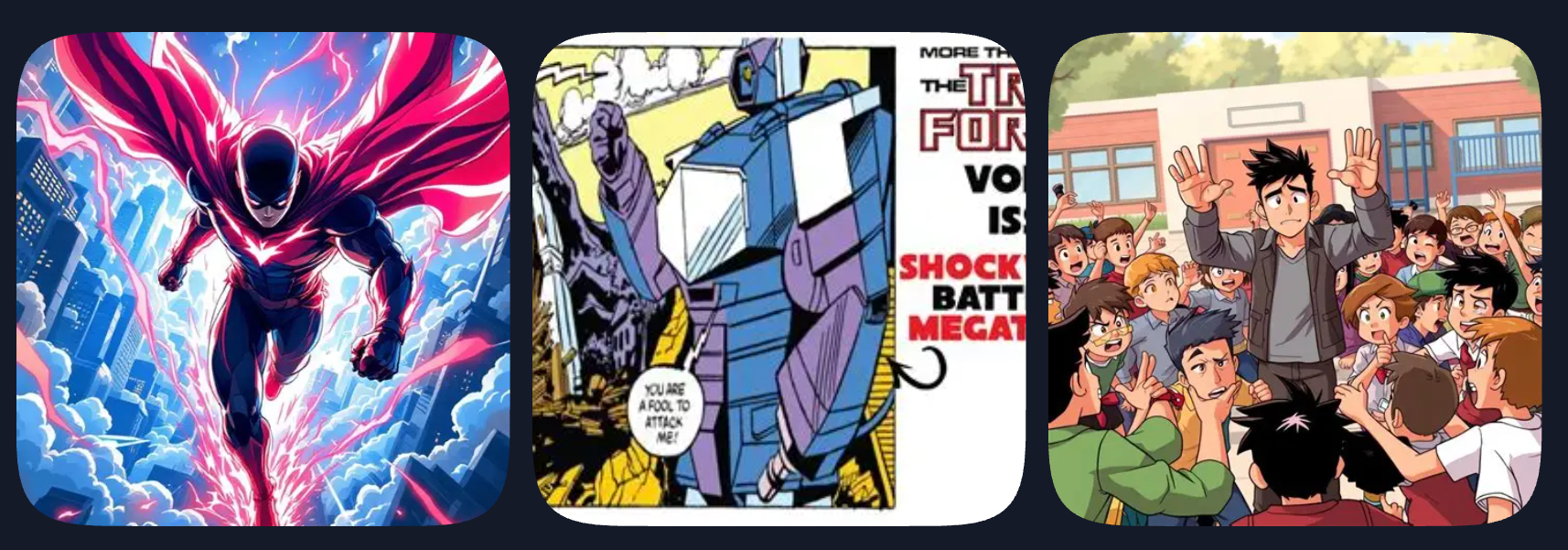
Action sequences are harder. Kai wants a scene where the protagonist’s powers erupt during a confrontation behind the school. He sketches the moment: a bully shoves him, his emotions spike, and the air ripples violently, knocking everyone off their feet. CineForge translates this into a choreographed sequence, using physics‑accurate simulations to make the shockwave feel weighty and dangerous. Kai adjusts the timing, the camera angles, the expressions on each character’s face. He spends hours refining a single three‑second moment, discovering that filmmaking is less about spectacle and more about precision.
As the film grows, so does Kai’s confidence. He adds a subplot about the protagonist’s sister, who becomes the emotional anchor of the story. He writes scenes where they talk late at night, sharing fears they never voice during the day. The AI actors perform these moments with heartbreaking subtlety — a glance downward, a tremor in the voice, a hesitation before speaking. Kai realizes that the tools are not replacing human creativity; they are amplifying it, allowing him to express feelings he never knew how to articulate.

The completed film, Weight of the Sky, runs ninety‑four minutes. It looks like a studio production. It feels like a personal confession. When Kai uploads it to a student film festival, viewers assume it was made by a team of professionals. They do not know that it was created by a teenager in a bedroom, with a laptop, a handful of free tools, and a story drawn from the world immediately around him.
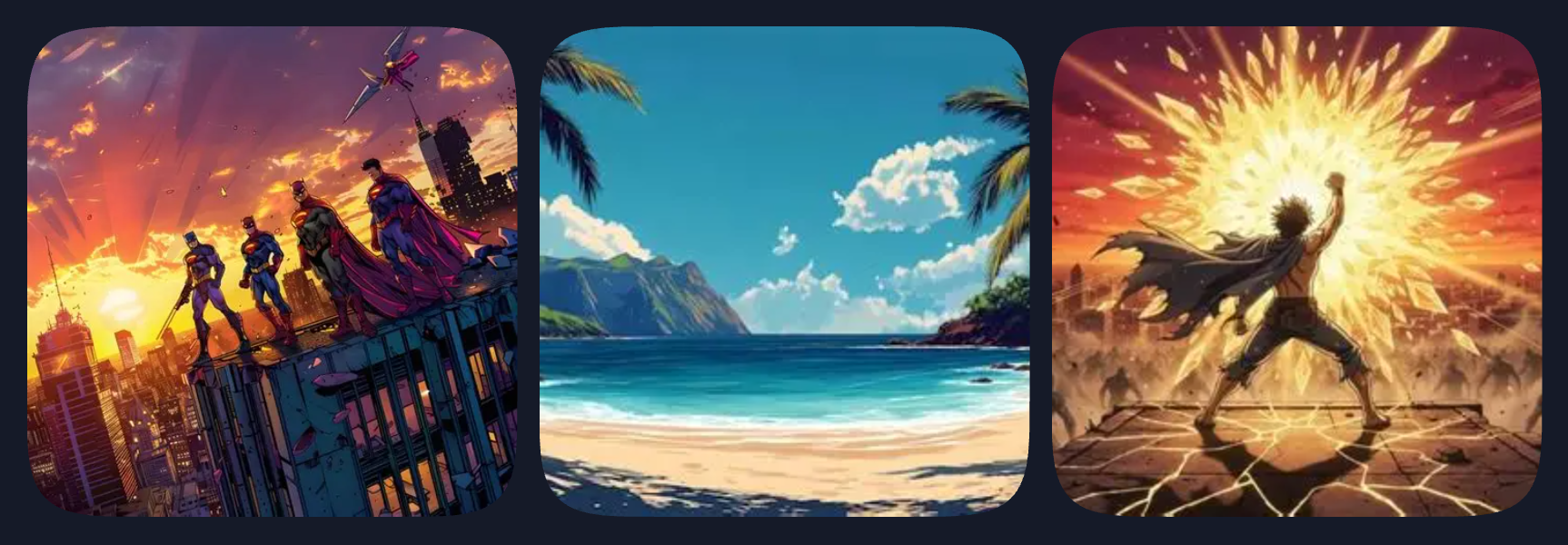
This is Phase 4 — Personal Hollywood — the moment when cinematic creation becomes democratized, when the boundary between lived experience and visual storytelling dissolves, and a high school student can turn the weight he carries into a superhero myth that resonates far beyond his own life.
The Road to Personal Hollywood: How Phases 1–3 Made Phase 4 Inevitable
The arrival of Personal Hollywood in the 2030s did not happen suddenly. It emerged from a decade of rapid, uneven, and sometimes chaotic innovation in AI video generation. The path from early short‑form realism to full narrative filmmaking unfolded in three distinct phases, each building on the breakthroughs — and limitations — of the previous one.
Phase 1 began in the mid‑2020s, when AI video tools first demonstrated the ability to generate short, photorealistic clips. Systems like Runway Gen‑2, Pika 1.0, and Google’s early Veo models could produce five‑ to ten‑second scenes with convincing lighting, motion, and physics. These clips were impressive but fragile: characters changed appearance between shots, dialogue was impossible, and continuity was nonexistent. Still, the shock was real. For the first time, a person could type a sentence and watch it become moving imagery that looked like it had been filmed with a real camera. The industry recognized that pre‑visualization — once the domain of expensive software and professional teams — had become accessible to anyone with a laptop.
Phase 2 emerged as the tools matured. By 2026, AI systems could maintain consistency across multiple shots, generate reusable character models, and produce environments that could be edited like sets in a virtual studio. Dialogue generation arrived in early forms, with lip‑sync improving dramatically by 2027. Motion capture became democratized through smartphone apps, allowing creators to animate characters with their own movements. Indie filmmakers began using AI to produce entire scenes, blending them with traditional footage. The hybrid era had begun: AI was no longer a novelty but a practical tool for reducing costs, accelerating production, and enabling experimentation.
Phase 3 marked the transition from scenes to sequences. Between 2028 and 2030, AI video engines gained the ability to maintain narrative coherence across minutes rather than seconds. Character identity became stable. Emotional continuity improved. Tools could track props, wardrobe, and lighting across multiple environments. Filmmakers could write a script and watch the system generate a rough cut of an entire sequence, complete with dialogue, blocking, and camera movement. The limitations were still visible — uncanny moments, occasional inconsistencies, and the persistent challenge of long‑form storytelling — but the trajectory was unmistakable. The gap between amateur and professional filmmaking was narrowing.
By the time Phase 4 arrived, the infrastructure was ready. The computational cost of video generation had collapsed. Consumer laptops could run models that once required data centers. Free and low‑cost apps emerged, offering full script‑to‑film pipelines. The cultural shift was equally important: young creators had grown up with AI as a natural part of their creative process. They were comfortable blending personal experience with cinematic expression, using tools that felt intuitive rather than technical.
This is how a teenager like Kai could make Weight of the Sky. Not because he had access to extraordinary resources, but because the world had changed around him. The tools had become democratized. The barriers had fallen. The idea of filmmaking had expanded to include anyone with a story to tell and the willingness to shape it into something larger than life.
Personal Hollywood is not the end of this trajectory. It is the beginning of a new era in which storytelling becomes a universal skill, and the line between lived experience and cinematic narrative becomes increasingly porous. The next generation of creators will not ask whether they can make a film. They will ask what kind of film they want to make — and what truths they want to reveal through it.
###
Filed under: Uncategorized |























































































































































































































































































































































Leave a Reply