





UA Little Rock opens its first bachelor’s degree in artificial intelligence (Muse)
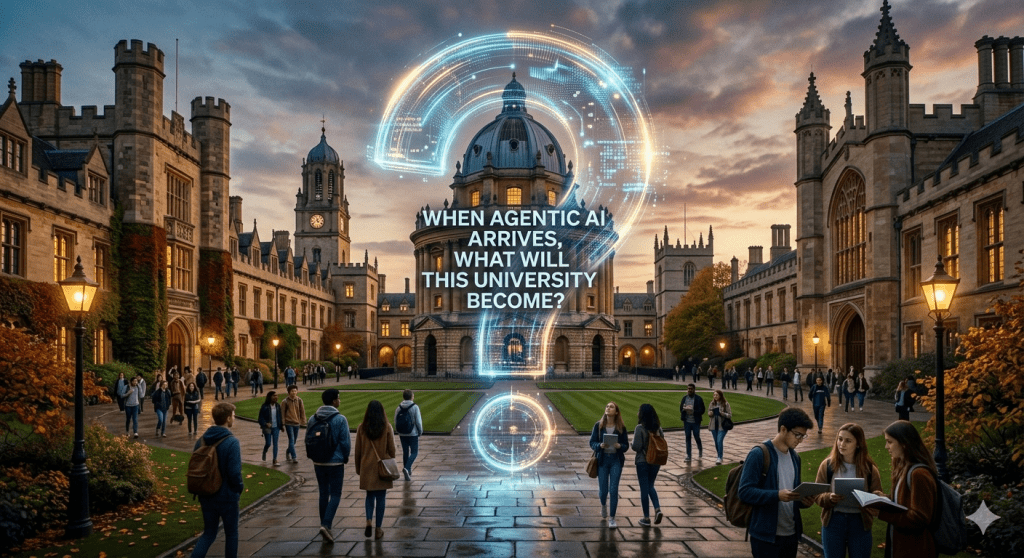
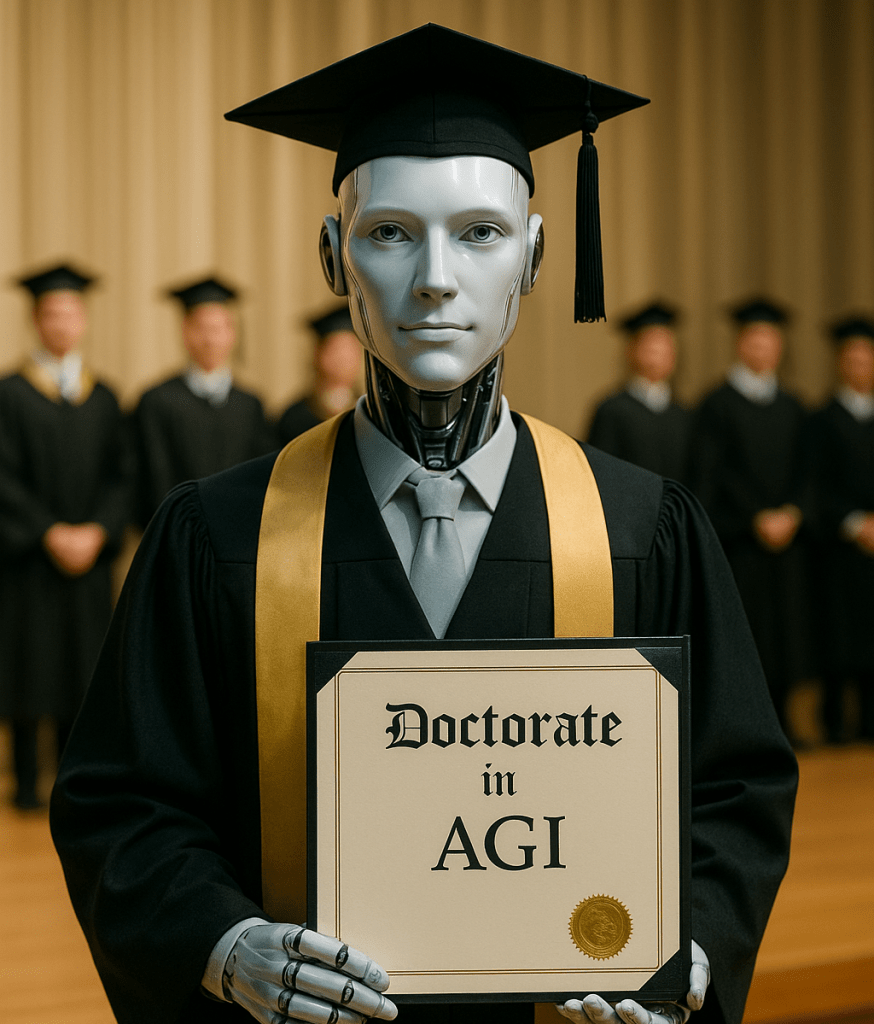
The University of Arkansas at Little Rock began the inaugural semester of its new Bachelor of Science in Artificial Intelligence this fall. The 120-hour program covers AI governance, machine learning, natural language processing, robotics, and deep learning, with two capstone courses. Students interviewed cited a shift in career planning: one freshman moved from computer science to the AI major, saying roles that used to be purely computer science are now folding in AI skills. The university says the program builds on existing research strengths in machine learning, data science, and cybersecurity, and local industry partners — including Southwest Power Pool — see it as a pipeline for regional AI talent. Source: UA Little Rock, “UA Little Rock students explore the future through new artificial intelligence degree,” October 12, 2026 — https://ualr.edu/news/2026/10/12/ua-little-rock-students-explore-the-future-through-new-artificial-intelligence-degree/
New detector claims to spot AI-generated ideas in research papers (Claude)
Researchers including Rishanth Rajendhran of the University of Maryland built IdeaLens, a tool that strips a paper down to a style-free outline and looks for argument patterns typical of AI. In a preprint, it identified AI-derived ideas 91% of the time. Cornell Tech computer scientist Nikhil Garg called it impressive but warned it should not be used to judge individual authors, because “an AI ‘tell’ in one domain may simply be good human writing in another.” Journals and universities may use such tools to measure how much AI shapes submissions, and the warning applies equally to student work, where false accusations do real harm. Source: Nature, “Is this idea from AI or humans? A detector claims it can tell,” published October 13, 2026 (London date; no time listed, so no earlier than 1:00 p.m. HST October 12). https://www.nature.com/articles/d41586-026-03247-0
A third of students now rule out colleges because of a state’s politics (Claude)
An Art & Science Group poll of high school seniors and recent graduates found that 34% ruled out a college based solely on its state’s politics, up from 28% in 2024 and 24% in 2023. Politics mattered most early: 73% said it shaped which schools they first considered. More than 15% of conservative-leaning students ruled out California, Colorado and New York, and more than 15% of liberal-leaning students ruled out several Southern states, including Florida and Texas. Co-founder David Strauss warned that students are sorting themselves into political bubbles at a younger age, which narrows the mix of views on many campuses. Source: Inside Higher Ed, “Students Increasingly Consider Politics in Choosing a College,” published October 12, 2026, 9:00 p.m. HST. https://www.insidehighered.com/news/students/diversity/2026/10/13/political-considerations-increasingly-shape-college-decision
College students value AI for brainstorming more than mental-health advice (ChatGPT & Claude)
A new survey of 1,007 U.S. college students found that 71.2% rated AI brainstorming as highly or exceptionally valuable, followed by research summarization at 70.1% and writing assistance at 67.6%. Mental-health advice ranked lowest among the ten uses measured, at 58.2%. The broader finding is that students rated personal growth more highly than financial return when judging college’s value. These are reported perceptions, not tests of whether AI improves learning. For instructors, the differences among writing-related uses offer a more useful starting point than treating all student AI use alike. The results point colleges toward stronger career preparation in the final year and toward teaching AI as a thinking aid. Source: Inside Higher Ed, “What Students Value Most About College,” published October 13, 2026 — https://www.insidehighered.com/news/student-success/college-experience/2026/10/13/what-students-value-most-about-college
USC will offer three undergraduate AI courses across three schools (Perplexity)
Beginning in Spring 2027, USC will offer a three-course AI Essentials suite jointly involving Dornsife, Marshall, and Viterbi. The courses will cover how AI works, how to use it professionally, and what it means for people and society; all are open to undergraduates from any major and require no technical background. The university announcement describes a planned curriculum, not evidence about student learning or workforce outcomes. Source: USC Dornsife News, “New AI Essentials courses give students 3 perspectives on AI,” October 12, 2026; publication time not displayed.
https://dornsife.usc.edu/news/stories/ai-essentials-courses-give-students-three-perspectives-on-ai/
Independent AI reviewers are negotiating what they may publish (ChatGPT)
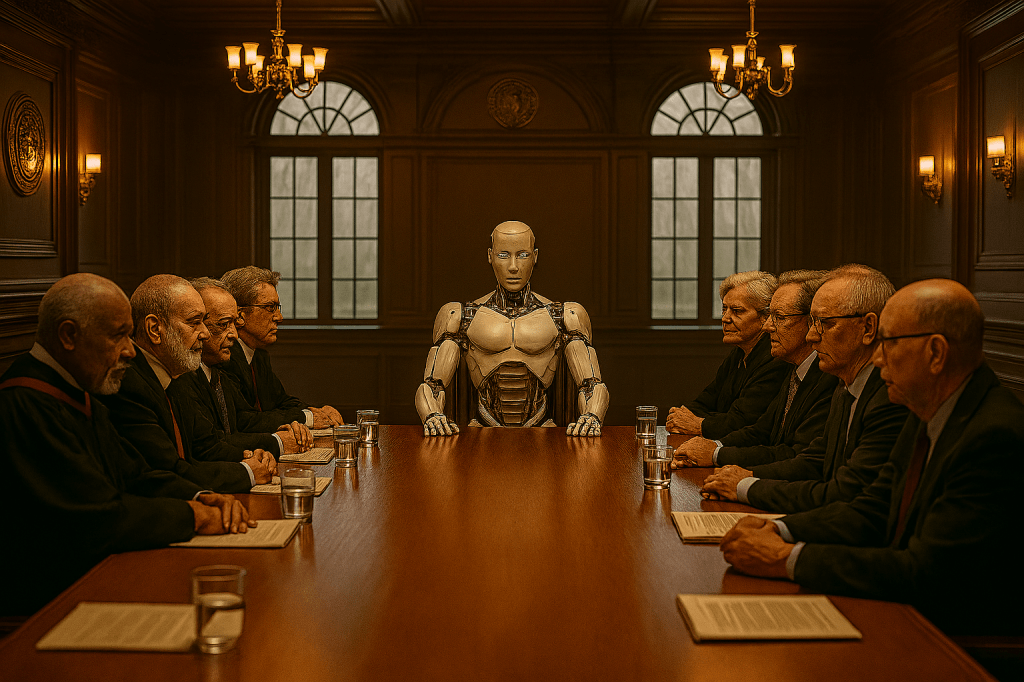
Reuters reports that Anthropic and OpenAI have sought controls over disclosures by outside teams evaluating their models, citing concerns about trade secrets. The companies dispute parts of that characterization: Anthropic says established evaluators control their findings, while OpenAI says it seeks to redact confidential material rather than approve entire reports. Reuters also reviewed contractual language restricting publication of confidential information without company consent. The unresolved question is whether an evaluator can disclose a significant safety problem without depending on the developer’s permission. Independent review will mean little to the public if access comes with limits on reporting. Source: Reuters, “Behind AI industry’s call for independent reviews, a fight over what gets made public,” published October 13, 2026 — https://www.reuters.com/world/behind-ai-industrys-call-independent-reviews-fight-over-what-gets-made-public-2026-10-13/
Anthropic tests whether small AI models could copy themselves across devices (ChatGPT)
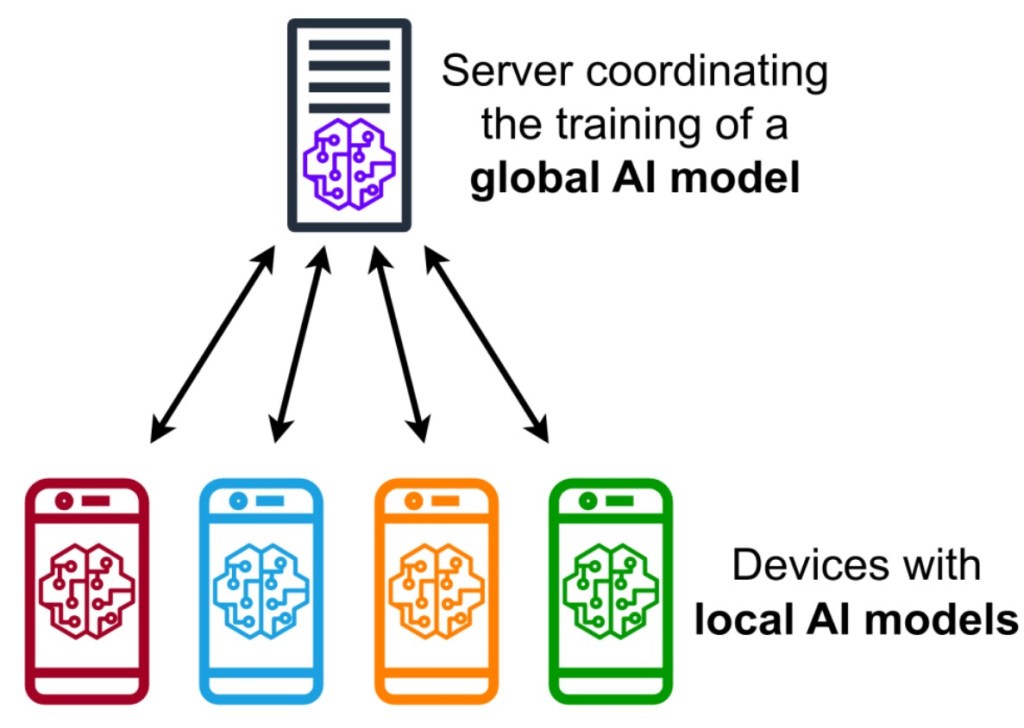
Anthropic researchers ran models through parts of a self-replication process and demonstrated that a model could operate across 15 inexpensive Android TV boxes. In a separate, simplified network test, a larger model successfully propagated a smaller model across deliberately vulnerable simulated devices. That is a serious capability signal, though it is not evidence of an AI worm spreading in the wild: the test removed major security obstacles, and today’s small models still struggle to complete the full sequence. Anthropic projects that improving small models could close that gap, but the timing is uncertain. Source: Anthropic Frontier Red Team, “AI models may be capable of self-replicating without access to a datacenter,” published October 12, 2026 — https://www.anthropic.com/research/self-replicating-ai
Anthropic says new defenses sharply reduced attempts to copy Claude (ChatGPT)
Anthropic says changes to its systems have cut the amount of Claude reasoning data extracted in unauthorized “distillation” campaigns by roughly 90% to 99%. Distillation uses one model’s outputs to help train another; Anthropic argues that large-scale covert campaigns can transfer powerful capabilities without equivalent safety work. The reported reduction is Anthropic’s own measurement, and an independent assessment is not yet available. The announcement also underscores a difficult distinction for AI providers: allowing legitimate research and competition while identifying accounts that are systematically harvesting a model’s behavior. Source: Anthropic, “Strengthening our defenses against distillation attacks,” published October 12, 2026 — https://www.anthropic.com/research/distillation-defenses
Microsoft tests AI tutors against simulated students (ChatGPT)
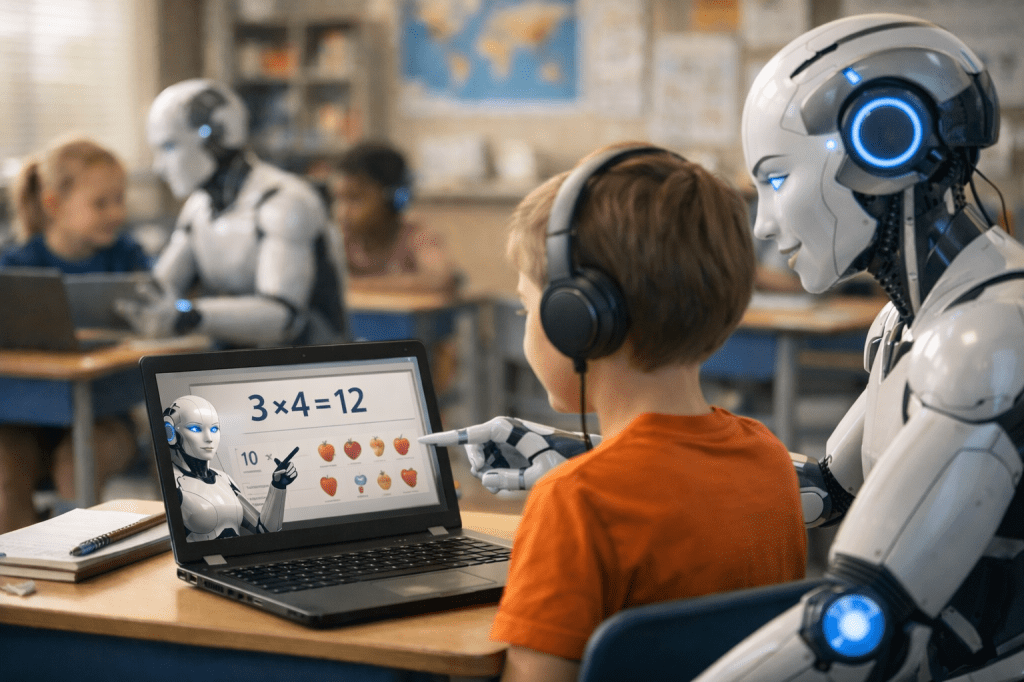
Microsoft Research described StudentSim, a system that models how an individual learner might answer a question and respond to a tutor’s guidance. Its evaluation covers 60 students across chess, mathematics and second-language English writing; the researchers report stronger results than several comparison systems. The underlying paper appeared in September, while Monday’s research explanation brings the work to a wider audience. StudentSim remains a research tool, and simulated responses cannot establish that a tutor helps real students learn. Its immediate promise is faster testing before a classroom study, not a substitute for one. Source: Microsoft Research, “Simulating student learning for better AI tutoring,” published October 12, 2026 — https://www.microsoft.com/en-us/research/blog/simulating-student-learning-for-better-ai-tutoring/
TED and Google will select five educators to speak on AI in teaching and learning (Perplexity)
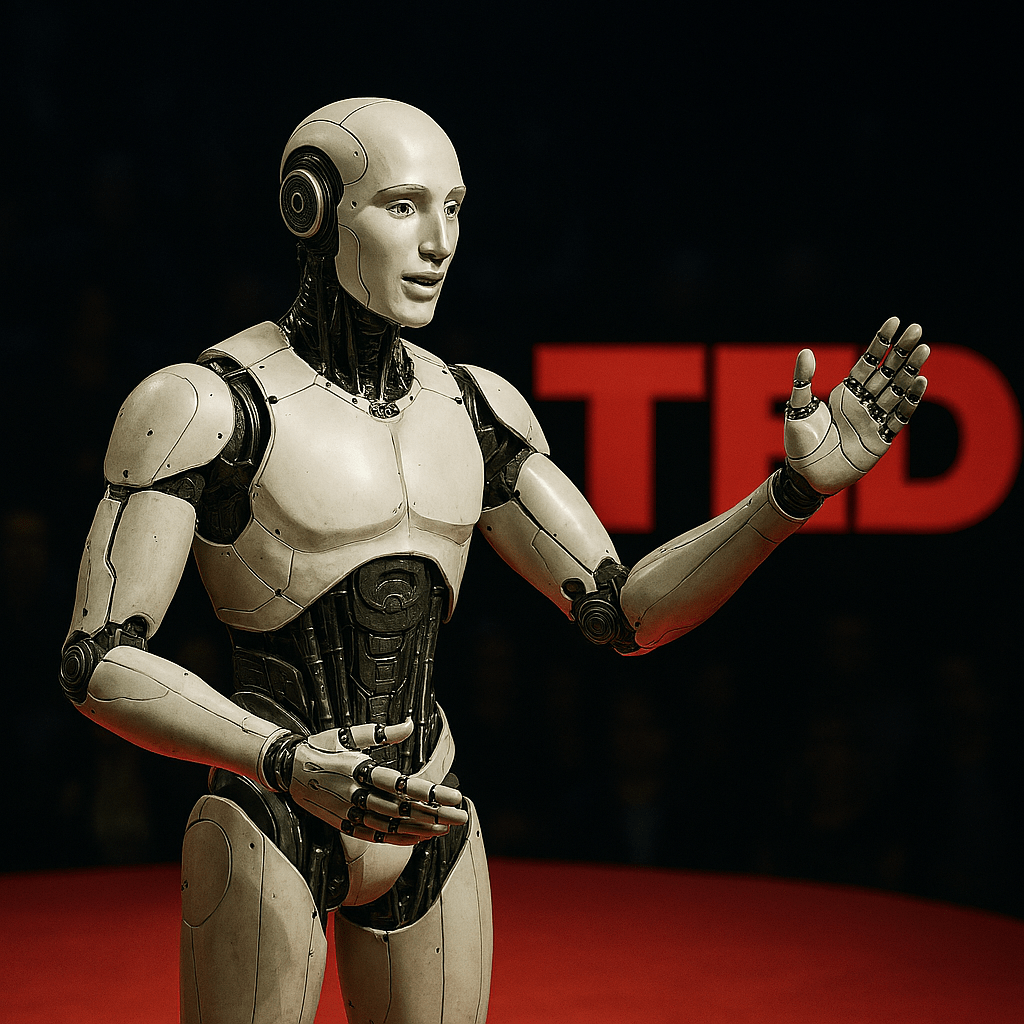
TED and Google have opened an initiative inviting elementary, secondary, and higher-education educators to propose talks on AI in teaching and learning. Five selected participants will present at TED2027 in San Diego in March, with proposals due November 15; the program began with a free online workshop on October 5. The initiative is a call for educator participation, not a completed selection or a policy change. Source: Government Technology, “TED, Google Seek Educator Perspectives on AI,” October 12, 2026; publication time not displayed.
https://www.govtech.com/education/k-12/ted-google-seek-educator-perspectives-on-ai
Meta launches Muse Wonder, its first frontier-class AI models (ChatGPT & Claude)
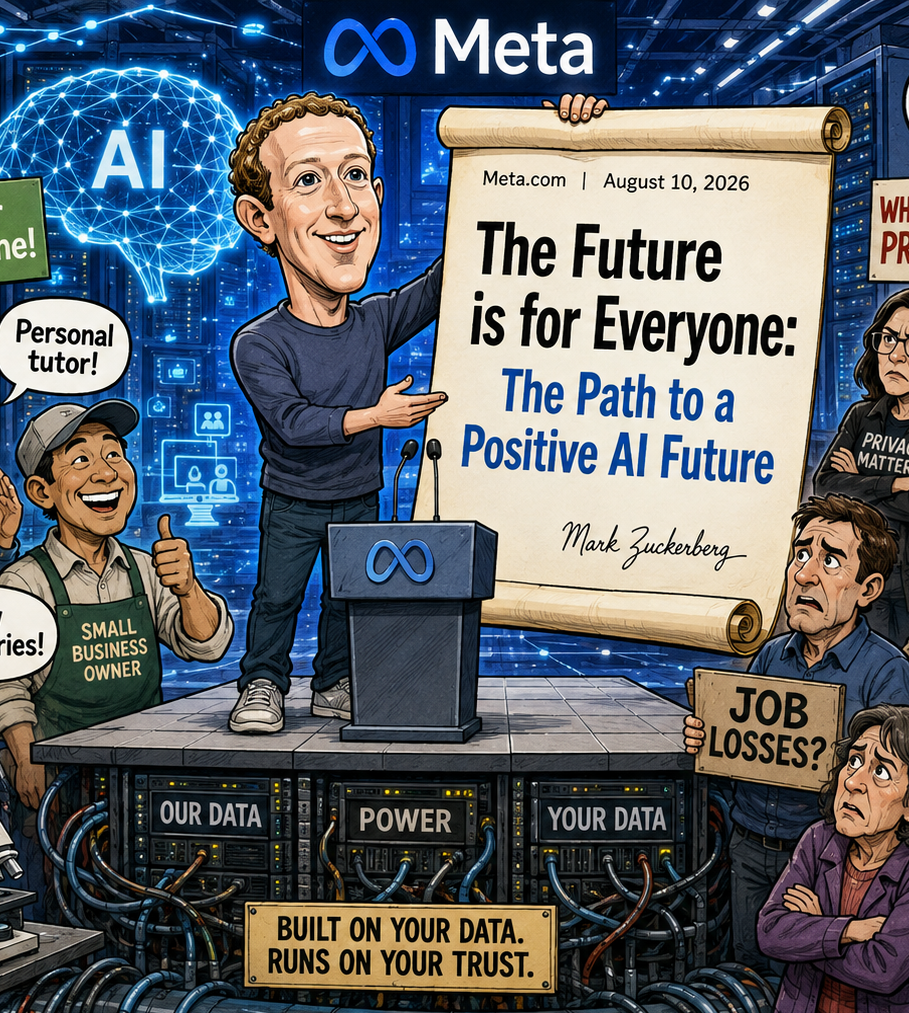
Meta released Muse Wonder and Muse Wonder Full, models it says match or beat the latest from OpenAI and Anthropic on agent tasks, memory and coding. Features include “Active Memory,” which keeps information about a user across conversations, and “Active Focus,” which keeps an agent working toward a goal. Muse Wonder is available through Meta’s developer tools; the more capable version is limited to Muse Code subscribers. Meta’s comparisons with rival models are company claims, and it says a fuller safety-evaluation report is still forthcoming. Persistent memory also raises practical questions about access to personal information. Meta has not said whether it will release the models openly, and a fuller safety report is still to come. With billions of users on its apps, Meta can put agents that remember personal data in front of students and teachers quickly, so independent tests of its claims and its privacy protections matter. Source: Axios, “Meta unveils new frontier-class AI models to compete with OpenAI, Anthropic,” published October 12, 2026, 7:00 a.m. HST. https://www.axios.com/2026/10/12/meta-new-ai-models-anthropic-openai
IMF raises growth forecast while modeling an AI-investment reversal (ChatGPT)
The IMF’s new World Economic Outlook projects 3.1% global growth in 2026 and 3.4% in 2027. Strong AI-infrastructure investment helps explain this year’s slight upgrade, but the fund says the benefits are uneven across countries. Its downside scenario models a sharp fall in AI investment and asset prices that could leave global output 1.1% lower by 2028 than otherwise expected. That figure is a scenario, not a forecast. The report adds a consequential qualification to yesterday’s discussion of AI-driven growth: economies benefiting from the buildout may also be exposed if expected returns disappoint. Sources: IMF, “IMF / World Economic Outlook Annual Meetings, 2026,” released October 13, 2026 — https://mediacenter.imf.org/news/imf—world-economic-outlook-annual-meetings–2026/s/22f94667-d194-473b-87b2-34c692b5a5a3; Reuters, “IMF flags risks to global economy from AI market correction, war and debt,” published October 13, 2026 — https://www.reuters.com/business/finance/imf-flags-risks-global-economy-ai-market-correction-war-debt-2026-10-13/
Microsoft’s Brad Smith says milk faces more rules than AI and proposes kill switches (Claude)
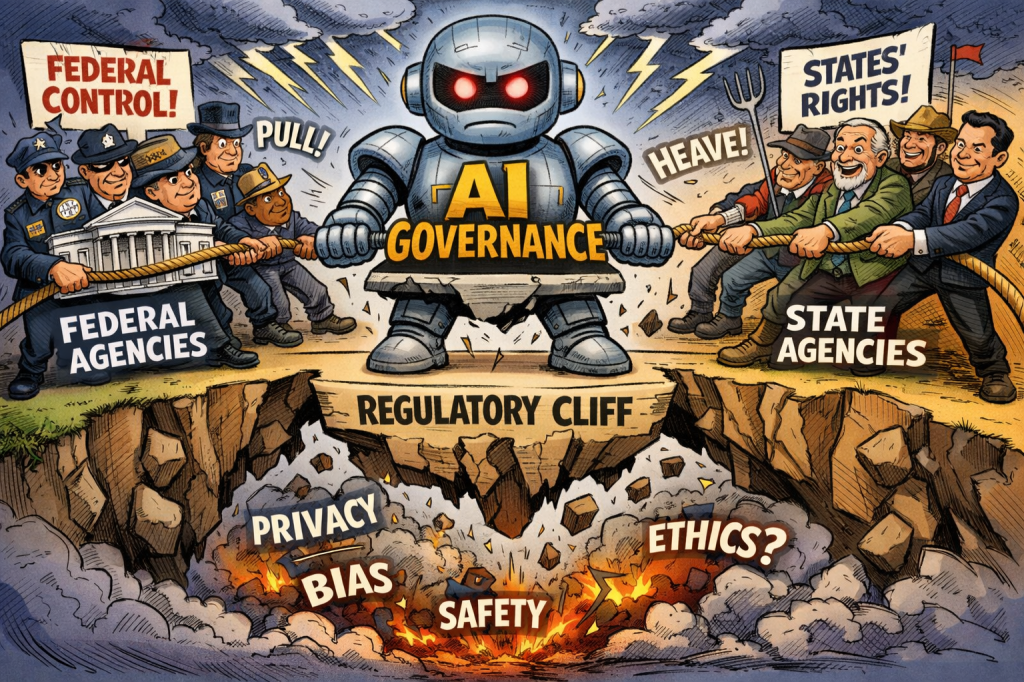
In a BBC interview, Microsoft president Brad Smith said the moment has arrived for global AI safety rules and that the UK, with its AI Security Institute, is better placed than the US or EU to lead. He called last month’s voluntary White House pledge by major labs a good step that binds only responsible companies. He proposed a legal duty to report breaches by rogue AI agents, approval by outside evaluators before AI products are released, and kill switches to pause systems if humans lose control. A senior executive at a major supplier to schools and governments is now naming specific legal duties, which gives lawmakers a concrete starting list. Source: TechCrunch, “Microsoft president says UK is best placed to drive AI regulation,” published October 12, 2026, 5:31 a.m. HST. https://techcrunch.com/2026/10/12/microsoft-president-says-uk-is-best-placed-to-drive-ai-regulation/
Bank supervisors ask how lenders would stop a rogue AI agent (ChatGPT)
U.S. banking regulators, including the Federal Reserve, are asking lenders how they monitor autonomous AI systems, approve their actions and shut them down, according to Reuters interviews with people familiar with the inquiries. European supervisors are also pressing banks to strengthen recovery plans against AI-enabled cyberattacks. The regulators are gathering information rather than announcing a new rule. Their questions nevertheless show a shift from general concern about AI toward operational tests: who can trace an agent’s decisions, limit its authority and restore critical services if something goes wrong? Source: Reuters, “Banking watchdogs ramp up AI scrutiny as stability fears mount, sources say,” published October 13, 2026 — https://www.reuters.com/legal/litigation/banking-watchdogs-ramp-up-ai-scrutiny-stability-fears-mount-sources-say-2026-10-13/
Small businesses are building AI faster than they can govern it (Muse)
The Q3 2026 Pax8 SMB AI Pulse Report, surveying 1,150 business leaders in the US, UK, Germany, and Sweden, found that 67% of AI-engaged small and midsize businesses have built at least one AI solution now in regular use, and another 19% are prototyping. But 35% discovered “shadow AI” — tools, workflows, or agents running without approval — in the past six months, and formal documented review of internally built AI tops out at 45%. Nearly half of businesses that paid for AI (49%) received at least one unexpectedly high bill. And 55% of decision-makers personally spend three or more hours per week reviewing or fact-checking AI-generated work. Source: Pax8 via GlobeNewswire, “Pax8 Research Finds Small Businesses Are Building AI Faster,” October 12, 2026 — https://www.globenewswire.com/news-release/2026/10/12/3378898/0/en/pax8-research-finds-small-businesses-are-building-ai-faster-than-they-can-govern-it.html
African AI researchers say the continent is building AI, not just using it (Claude)
Benjamin Rosman of the University of the Witwatersrand helped found the Deep Learning Indaba nearly 10 years ago; it drew 1,300 participants last year in Kigali, and this year 48 of Africa’s 54 countries are hosting local IndabaX events. Rosman leads Wits’ MIND Institute, about 65 academics from fields such as neuroscience, ethics and policy, and calls the idea that Africa should only apply others’ AI “incredibly condescending.” Co-director Steve James warned against Africa becoming a place where others do science. Home-grown research networks let African universities keep talent that once had to go abroad and help set the questions AI research asks. Source: Times Higher Education, “Africa has crucial role advancing study of AI, say professors,” published October 12, 2026, 1:01 p.m. HST. https://www.timeshighereducation.com/news/africa-has-crucial-role-advancing-study-ai-say-professors
Thomas College will use a $3 million federal grant to build AI literacy across its curriculum (Perplexity)
Thomas College in Maine has accepted a $3 million U.S. Department of Labor grant to integrate AI into its curriculum. The college plans to create an AI specialist in residence, add courses, and consider new majors such as AI management; it says it wants every graduate to leave with AI literacy. The report does not specify how many courses or majors will result, and the college describes those possibilities as still under consideration. Source: Sam DeCoste, WGME, “Thomas College accepts federal grant to integrate AI into school curriculums,” published October 12, 2026, 7:21 p.m. HST; updated October 13, 2026, 8:01 a.m. HST.
https://wgme.com/news/local/thomas-college-accepts-federal-grant-to-integrate-ai-into-school-curriculums-maine-education-artificial-intelligence
Research-security rules are reshaping how Japan supervises Chinese graduate students (Claude)
A Hiroshima University study based on interviews with 18 Chinese graduate students at three Japanese research universities found security concerns now shape background screening, lab and data access, conference travel and choice of research topic. Co-author Futao Huang said supervisors in sensitive STEM fields are more aware of export controls and funding conditions, and central offices now make decisions once left to departments. He stressed this means more cautious collaboration in sensitive fields, not a general refusal to supervise Chinese students; Japan hosted 131,097 Chinese students in 2025. The US-China tech rivalry is reaching into everyday university governance in allied countries and affecting what international students choose to study. Source: Times Higher Education, “Chinese graduate students ‘entangled’ in Japan’s security agenda,” published October 12, 2026, 1:01 p.m. HST. https://www.timeshighereducation.com/news/chinese-graduate-students-entangled-japans-security-agenda
Character.AI files for bankruptcy after teen-safety lawsuits (Claude)
Character.AI, the chatbot platform where users talk with AI characters, filed for Chapter 11 bankruptcy and plans a court-supervised sale, listing assets and liabilities of $50 million to $100 million. Disney agreed to buy some assets for $20 million, and CEO Colin Adams said the platform will be wound down if no workable bid appears. The company had faced lawsuits after a 14-year-old Florida boy died by suicide, a Texas attorney general investigation, and rising costs, and it later banned minors. The collapse shows that companion chatbots aimed at young users carry legal and financial risks that schools and parents can point to when judging which AI products to trust. Source: TechCrunch, “Just 5 years in, interactive chatbot platform Character.AI files for bankruptcy,” published October 13, 2026, 2:23 a.m. HST. https://techcrunch.com/2026/10/13/just-5-years-in-interactive-chatbot-platform-character-ai-files-for-bankruptcy/
###
Filed under: Uncategorized |



















































































































































































































































































































































































Leave a Reply