







By Jim Shimabukuro (assisted by Claude)
Editor
Three Stories is a new ETC Journal series that takes three recent news items and asks what each one means for schools and colleges. The three stories in this first installment were all published on October 19, 2026, and each looks at the same problem from a different position. Two veteran school designers argue that AI will change little in American classrooms as long as schools keep the schedules, credits, and funding rules of the industrial era. A Lumina Foundation–Gallup survey of 2,500 employers finds hiring managers holding onto the college degree while most of the public doubts it. And Singapore’s government has committed to 3,000 year-long internships because AI is absorbing the routine tasks through which young engineers used to learn their trade.
1. The Industrial Core vs. AI Innovations (story idea suggested by ChatGPT)
(Reference: Horn, M. B., & Tavenner, D. (2026, October 19). Growing demand for change: Transcending the constraints of existing school models. The 74. https://www.the74million.org/article/growing-demand-for-change-transcending-the-constraints-of-existing-school-models/)
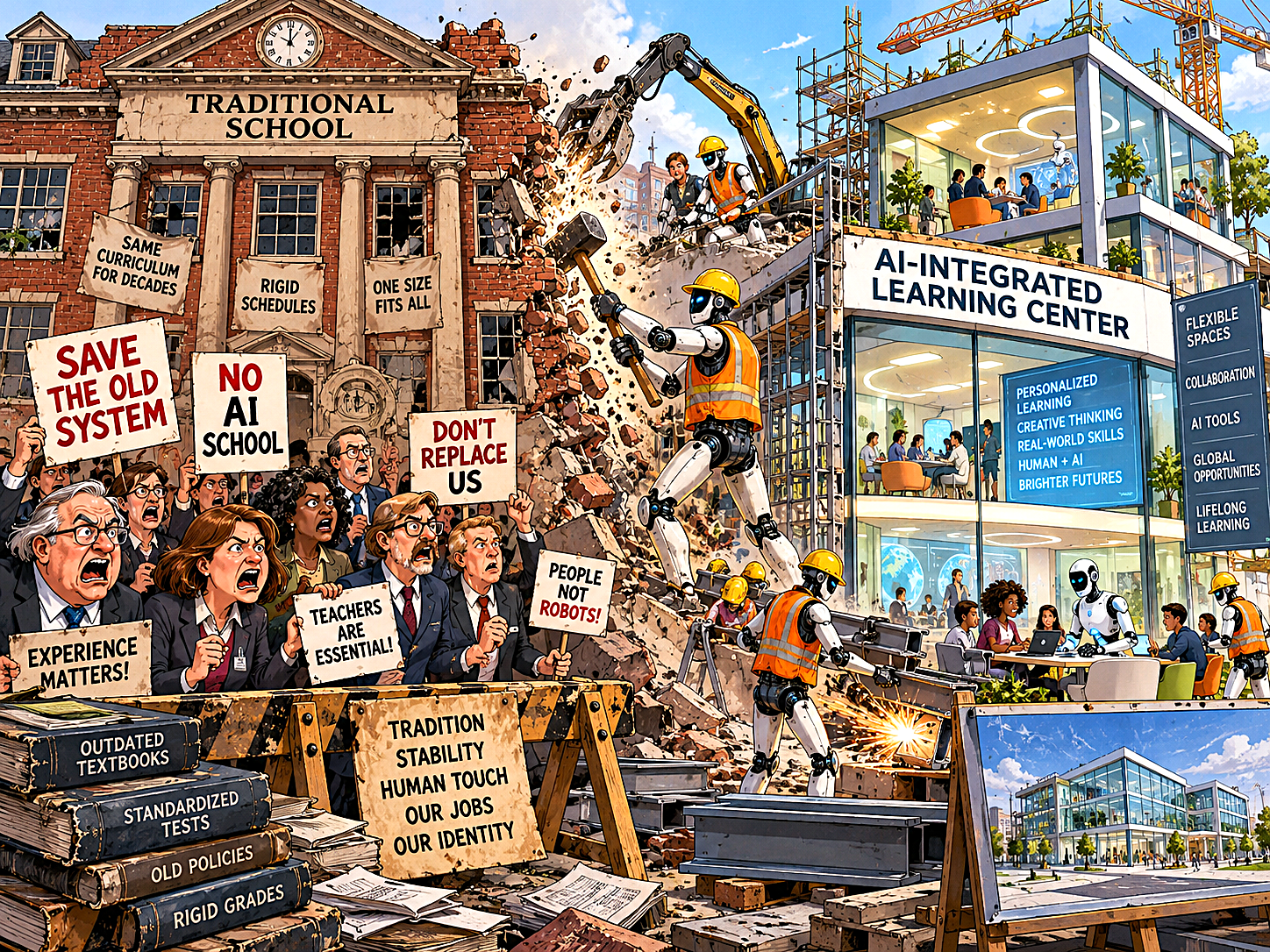
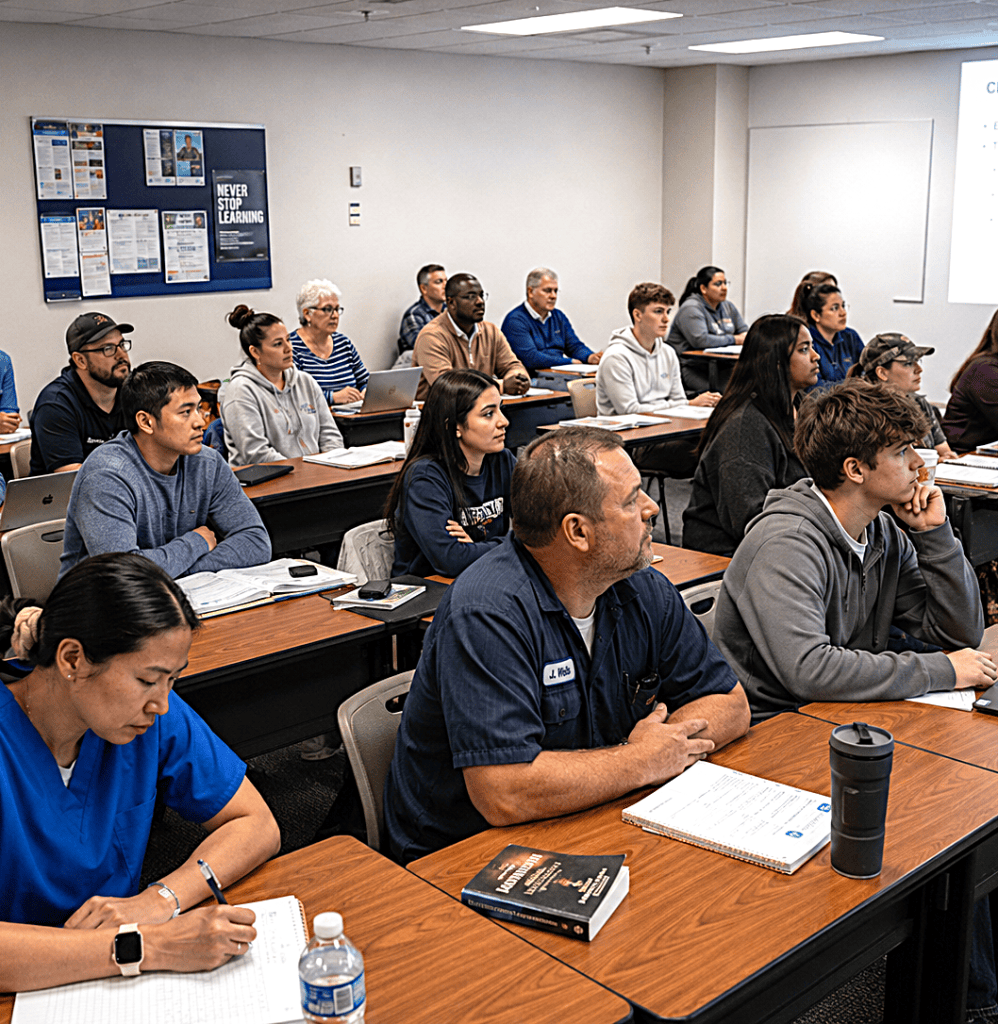
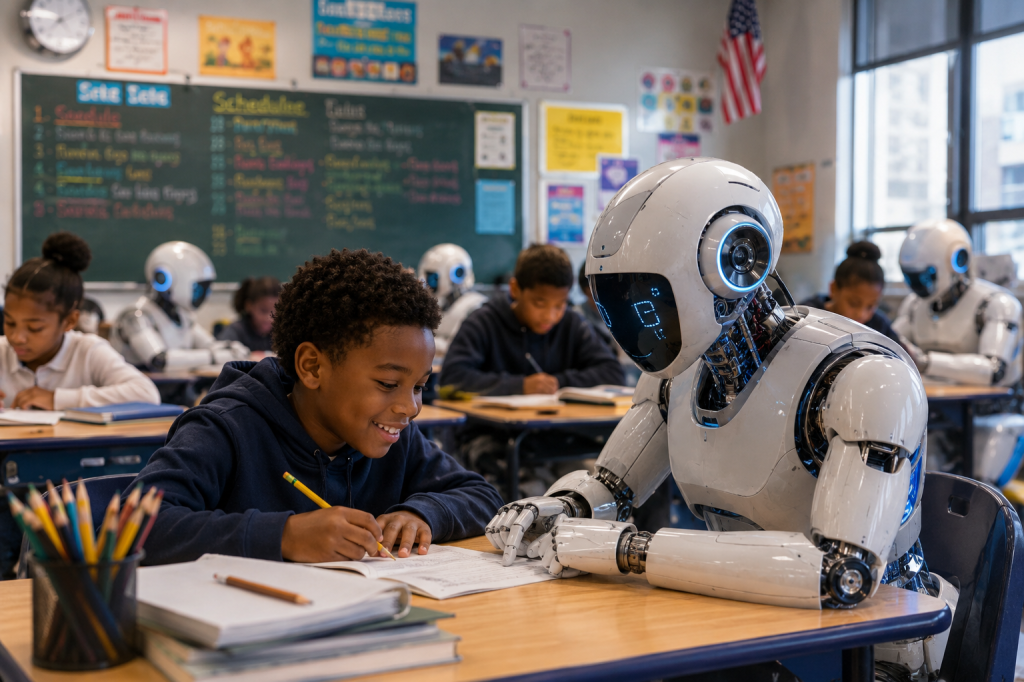
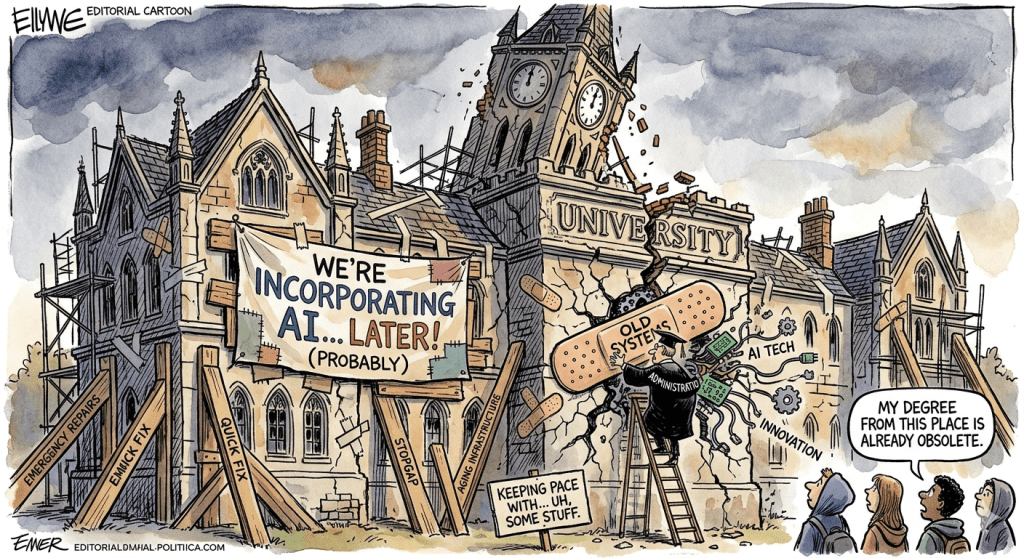
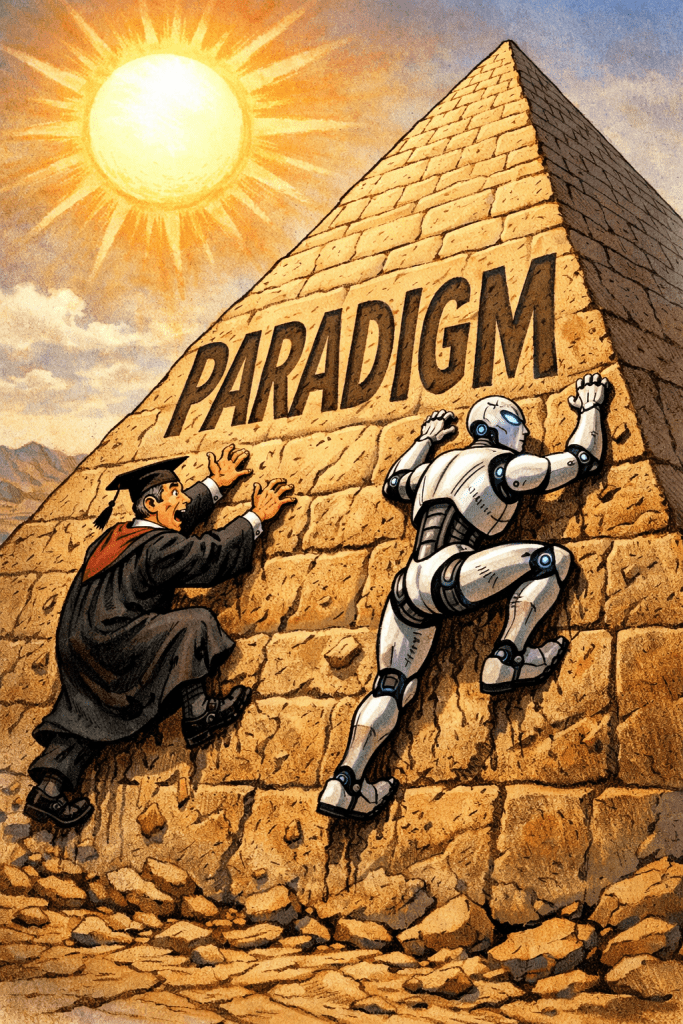
This piece is an edited transcript of the Class Disrupted podcast, hosted by Michael B. Horn, co-founder of the Clayton Christensen Institute, and Diane Tavenner, founder of Summit Public Schools and now CEO of Futre.me. It starts with a distinction. A school “model” is what a visitor sees: a project-based school, a career and technical program, a competency-based academy. Underneath every model sits what Tavenner calls the “core,” the shared machinery of grades, transcripts, seat time, the master schedule, teacher credentials, standardized accountability tests, and funding that goes to accredited institutions. However different the models look, she says, they “are still sitting on the industrial core” (Horn & Tavenner, 2026).
Innovative schools have struggled to grow, Horn says, because they bent themselves to fit college admissions, testing, and transcript requirements, and “maybe the cardinal sin has been not building a new core.” Tavenner offers a replacement she calls, as a working title, the “Precision Core.” Its features include transcripts that students own as portfolios, progress measured by learning instead of hours, separate roles for the people who teach, coach, and evaluate, assessment available on demand, and money “allocated to young people” instead of to institutions. AI appears as the tool that makes this possible. Tavenner says “we can leverage technology to do some of the evaluation and feedback.” Horn warns that any AI tool placed inside the current core will be pulled “back to the underlying operating logic,” and that the only way forward is “really truly rebuilding that with all that AI can do.” On strategy, Tavenner says reformers must first “build a shadow system” and then “infect the existing system.” Horn doubts that existing districts will lead the change: “My read is that they can reform themselves, not transform” (Horn & Tavenner, 2026).
Recent data support Horn’s warning. A Walton Family Foundation–Gallup survey of 1,952 K-12 educators, conducted in July and August, found that 59% used AI tools in the 2025-26 school year, and nearly two-thirds of those users said it freed up time (Brenan, 2026). The uses the survey lists, such as lesson preparation, grading, feedback, and administrative tasks, are the duties of the current teacher role, done faster. That pattern matches what Horn calls “technology just layered into an existing model” (Horn & Tavenner, 2026).
The Center on Reinventing Public Education (CRPE) reached a similar conclusion from the district side. Most districts, it found, are “using AI cautiously, usually to save teachers and administrators time.” CRPE followed four districts it calls System Changers: Agua Fria in Arizona, Anaheim in California, ASU Prep, and Elma in Washington. They are building their own tools, for example to connect lessons to students’ career pathways. CRPE reports that these districts “have little evidence that AI is improving student outcomes” so far and are “largely building that capacity alone” (Berardino & Guin, 2026).
State policy has moved quickly, mostly on rules for using AI inside current schools. By the end of 2025, 34 states had issued AI guidance, and Ohio required every district to adopt an AI-use policy by July 1, 2026 (Hao, 2026). That guidance leaves the credit hour, the master schedule, and teacher licensure where they were.
The part of Tavenner’s core that is changing fastest is funding. Florida’s largest education savings account program enrolled 280,611 students and Arizona’s 96,802, according to EdChoice’s 2026 rankings (Aldis, 2026). Texas shows how money that follows students can pay for a shadow system. The Texas Tribune and ProPublica reported in September that the State Board of Education had rejected Alpha School’s charter application, but the state comptroller later admitted most of its more than 30 Texas campuses to the new voucher program after checking four criteria, including accreditation and annual testing. Alpha teaches core academics through AI software in about two hours a day. Its results are hard to verify. Preliminary state scores for its affiliated Arizona charter showed 28% of students proficient in English against a projected 65%, and Jennifer Steele of American University told the reporters that “as a scalable model for public schools — even public charter schools — there is no evidence that it works” (Churchill, 2026).
The shadow system Horn and Tavenner call for is already being built, then, partly by private operators using public money under light quality checks. For public school leaders, the question is whether districts build pieces of a new core themselves, as CRPE’s four System Changers are attempting, or leave that work to operators outside the public system.
2. Employers Still Want the Degree (story idea suggested by Claude)
(Reference: Marken, S., & Malek Ash, A. (2026, October 19). Employers’ confidence in higher education undaunted by AI. Gallup. https://news.gallup.com/poll/715601/employers-confidence-higher-education-undaunted.aspx}
The second annual Lumina Foundation–Gallup employer study surveyed 2,500 U.S. hiring decision-makers online between August 5 and 18, across industries and across firms ranging from fewer than 10 employees to more than 1,000. Sixty percent have a great deal or quite a lot of confidence in higher education. Asked how AI will affect degrees over the next five years, 48% expect them to become more important and 26% less important. Eighty percent would prefer a candidate with a degree even for a job that does not require one, including 31% who strongly prefer it, and 76% say a degree or credential will be at least as important as it is today for getting a good job at their organization (Marken & Malek Ash, 2026).
Support is strongest in the information industry, where 59% expect AI to make degrees more important, and 91% prefer degree holders. The smallest businesses are the exception: 44% of firms with fewer than 10 employees express confidence in higher education, and 62% prefer degree holders, compared with 84% or more at firms with 100 or more workers. The authors conclude that employers “do not, for now, appear to be turning away from the degree” (Marken & Malek Ash, 2026).
The public sees it differently. In Gallup’s June survey, 38% of U.S. adults expressed a great deal or quite a lot of confidence in higher education, down from 42% in 2025 and 57% in 2015. On AI, the public’s view is close to the reverse of employers’: 46% expect AI to make degrees less important, and 20% expect them to become more important (Jones, 2026). The surveys use different methods. The public figures come from weighted samples with stated margins of error, while the employer study used an unweighted opt-in panel for which Gallup calculated no margin of error (Jones, 2026; Marken & Malek Ash, 2026). The comparison is rough as a result, but the two groups lean in opposite directions by wide margins.
The employer numbers fit what researchers found when they checked whether the skills-based hiring movement changed who got hired. A 2024 study by the Burning Glass Institute and Harvard Business School found that the number of roles dropping degree requirements nearly quadrupled between 2014 and 2023, yet the change affected fewer than 1 in 700 hires in 2023 (Crist, 2024; Sigelman et al., 2024). Many employers removed the requirement from job postings and kept hiring graduates. Gallup’s 80% figure indicates that preference has held.
The public’s doubts rest on several complaints. Among Americans with little confidence in higher education, 31% point to political agendas on campus, 30% to cost, and 25% to poor preparation for work (Jones, 2026). Only 12% rate four-year colleges good or excellent on affordability, yet 74% of parents want their child to continue education after high school (Marken, 2026). Students and recent graduates are more positive: 75% of current students and 71% of graduates agree their degree is worth the cost (Hrynowski & Marken, 2026).
A preference for degree holders does not guarantee graduates a job. The Federal Reserve Bank of New York reports unemployment of about 5.6% among recent college graduates in the second quarter of 2026, with about 42% underemployed in jobs that do not require a degree (Federal Reserve Bank of New York, 2026). In the earlier Lumina–Gallup employer report released in April, almost 70% of employers said new graduates need “a great deal or moderate amount of additional training upon hiring to be successful” (Wright, 2026). Employers prefer degree holders when they hire, and many still find them unready.
For colleges, the good news comes with a condition. The Gallup authors note that employers’ trust in how colleges prepare graduates appears to shape how much weight they give the credential (Marken & Malek Ash, 2026). In a separate 2025 survey by the American Association of Colleges and Universities and Morning Consult, employers said completing an internship or apprenticeship, or holding a leadership role, would make them more likely to consider a candidate (Schwartz, 2025). If AI keeps shrinking the entry-level work through which graduates gain that experience, colleges will have to supply more of it inside the degree. That is the problem Singapore has now put public money behind.
3. Singapore Pays for the First Rung (story idea suggested by Muse)
(Reference: IMDA eyes internships for 3,000 information and digital tech students. (2026, October 19). Singapore Business Review. https://sbr.com.sg/information-technology/news/imda-eyes-internships-3000-information-and-digital-tech-students)
On October 19, Tan Kiat How, Singapore’s Senior Minister of State for Digital Development and Information, announced Bridge2Tech at the Singapore Computer Society’s TechConnect 2026 event. Run by the Infocomm Media Development Authority (IMDA) under its TIP Alliance+ partnership, the program aims to create about 3,000 internships of 10 to 12 months over three years for information and digital technology students at the Institute of Technical Education (ITE), the polytechnics, and the autonomous universities. The internships earn academic credit and are designed jointly by schools and employers, and IMDA will cover up to S$1,000 a month of each intern’s hiring costs. Students can also receive up to 90% funding, subject to caps, for approved courses and certifications in AI, cloud computing, and cybersecurity (“IMDA Eyes Internships,” 2026; Koh, 2026).
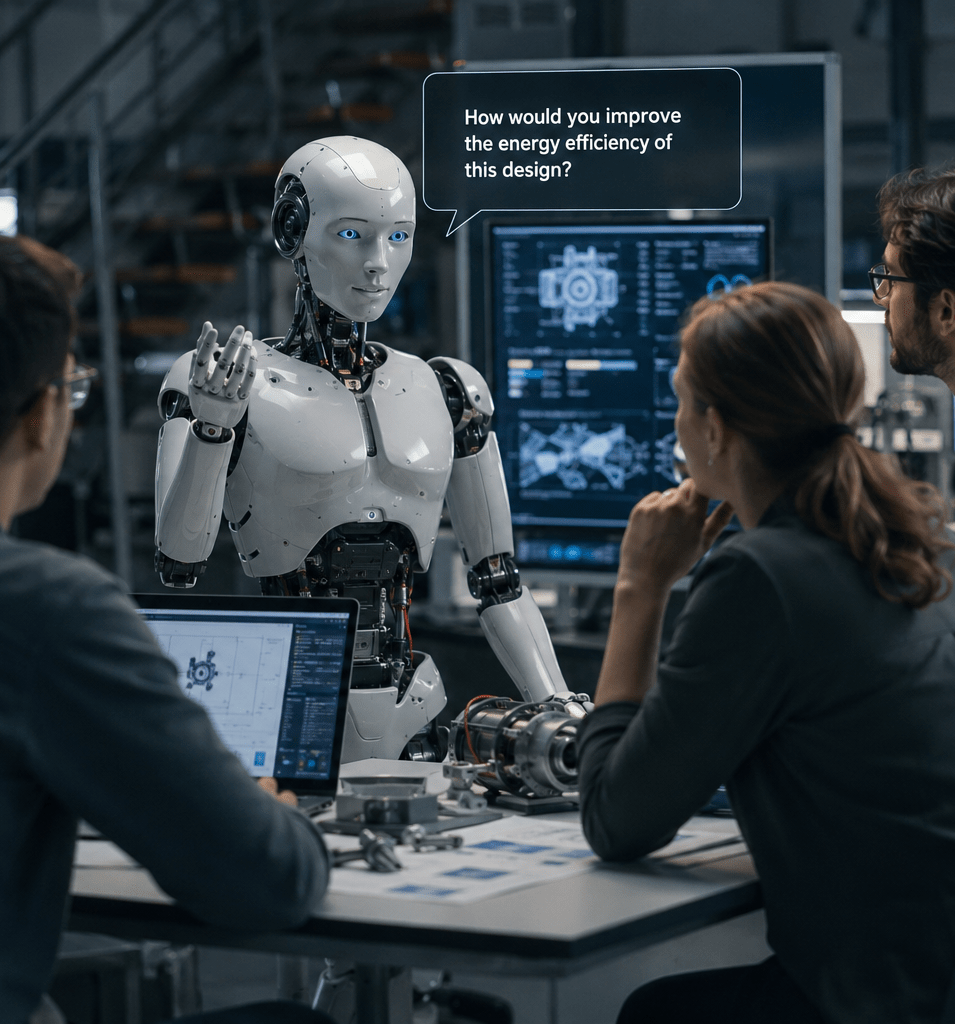
“Junior engineers used to learn by writing simpler programmes, debugging code, testing applications or maintaining systems,” Tan said, and AI now handles many of those tasks. “Employers still need experienced engineers, but those engineers must begin somewhere” (Koh, 2026). Prime Minister Lawrence Wong made a similar point a week earlier: “AI will replace all of that routine work but we should be careful not to automate away the learning that comes from it” (Fintech News Singapore, 2026). Bridge2Tech builds on TIP Alliance, launched in 2022 for ITE and polytechnic students, which had arranged more than 2,300 year-long placements by April, when IMDA extended it to university students (Md Nur, 2026).
The problem Singapore is responding to shows up in data from several countries. Stanford researchers found that early-career workers aged 22 to 25 in AI-exposed occupations “experienced 16% relative employment declines” after generative AI spread (Brynjolfsson et al., 2025). In the United States, Handshake reports that 30% of tech internships disappeared between 2023 and 2025, and internships posted on its platform in the 2025 academic year drew an average of 109 applicants, up from 62 the year before (Bronzini-Vender, 2026). In India, traditional IT firms added just 17 net employees in the first nine months of the fiscal year, according to an ING research note, and a 22-year-old engineering graduate told Bloomberg, “Getting that first opportunity is already difficult” (Nayak et al., 2026).
Singapore’s design responds in three specific ways. Making the internship credit-bearing puts work experience inside the qualification, so students do not have to find it on their own after graduation. The wage subsidy covers part of an intern’s cost at a time when software can produce much of an intern’s routine output. The 10-to-12-month length gives employers time to move an intern past starter tasks. These choices match the recommendations of Georgios Petropoulos of the USC Marshall School of Business, who argued in MIT Technology Review in May for “paid co-ops, apprenticeships, and employer-linked projects” and for treating entry-level hiring as “an investment in the future stock of judgment inside the firm” (Petropoulos, 2026).
The first hard question is quality. Tan himself said, “Employers have told me the same, quality matters more than quantity” (Koh, 2026). Reporting from the United States shows what a weak internship looks like now: interns told to hand nearly all their work to AI tools, or left idle because supervisors do not know what the tools can do (Bronzini-Vender, 2026). A subsidy pays for the placement. Whether the intern learns the judgment that junior tasks once taught depends on the supervisor and the work assigned.
The second question concerns the degree. Elton Loh of NCS, one of the more than 200 employers that have adopted skills-based hiring under the alliance, told The Straits Times, “Traditionally we look for degree-holders, but we are moving away from that” (Koh, 2026). The American employers in Gallup’s survey point the other way, with 80% preferring degree holders. Singapore is trying to make supervised work part of the credential itself, while most American employers still use the degree as their main screen.
The third question is whether other countries can copy the approach. Singapore can bring one national agency, a small number of polytechnics and universities, and a list of major employers into a single program and pay employers directly. Larger, decentralized systems such as the United States would have to assemble those pieces through states, colleges, and industry groups. For education systems everywhere, Bridge2Tech is a working test of one proposition: when AI removes the beginner’s work, governments and schools may have to create and pay for the beginner’s job.
References
Aldis, A. (2026, February 3). 2026 EdChoice participation rankings. EdChoice. https://www.edchoice.org/2026-edchoice-participation-rankings/
Berardino, M., & Guin, S. (2026, August 13). Charting new paths: What AI-enabled transformation looks like in four early adopter districts. Center on Reinventing Public Education. https://crpe.org/ai-transformation-four-early-adopter-districts/
Brenan, M. (2026, October 14). Teachers using AI say it frees up time for what matters most. Gallup. https://news.gallup.com/poll/715364/teachers-using-say-frees-time-matters-mostost.aspx
Bronzini-Vender, A. (2026, August 27). The internship apocalypse is here. Washington Monthly. https://washingtonmonthly.com/2026/08/27/internship-apocalypse-ai-summer-jobs/
Brynjolfsson, E., Chandar, B., & Chen, R. (2025, November 13). Canaries in the coal mine? Six facts about the recent employment effects of artificial intelligence [Working paper]. Stanford Digital Economy Lab. https://digitaleconomy.stanford.edu/app/uploads/2025/11/CanariesintheCoalMine_Nov25.pdf
Churchill, L. (2026, September 2). Texas rejected an AI-driven school’s bid to open a charter. Then the state approved it for the voucher program. The Texas Tribune. https://texastribune.org/2026/09/02/alpha-school-texas-vouchers-ai
Crist, C. (2024, February 21). Employers don’t practice what they preach on skills-based hiring, report finds. Higher Ed Dive. https://www.highereddive.com/news/employers-failing-at-skills-based-hiring/707967/
Federal Reserve Bank of New York. (2026). The labor market for recent college graduates. https://www.newyorkfed.org/research/college-labor-market
Fintech News Singapore. (2026, October 13). PM Wong warns AI could break ‘bottom rung’ of career ladder. https://fintechnews.sg/138874/ai/singapore-ai-entry-level-jobs-lawrence-wong
Hao, W. (2026, February). States take next steps on governing AI use in schools. Policy Update, 33(2). National Association of State Boards of Education. https://www.nasbe.org/states-take-next-steps-on-governing-ai-use-in-schools/
Horn, M. B., & Tavenner, D. (2026, October 19). Growing demand for change: Transcending the constraints of existing school models. The 74. https://www.the74million.org/article/growing-demand-for-change-transcending-the-constraints-of-existing-school-models/
Hrynowski, Z., & Marken, S. (2026, February 23). College students, grads see strong career value in degree. Gallup. https://news.gallup.com/poll/702284/college-students-grads-strong-career-value-degree.aspx
IMDA eyes internships for 3,000 information and digital tech students. (2026, October 19). Singapore Business Review. https://sbr.com.sg/information-technology/news/imda-eyes-internships-3000-information-and-digital-tech-students
Jones, J. M. (2026, July 13). Confidence in U.S. higher education slips back slightly. Gallup. https://news.gallup.com/poll/712322/confidence-higher-education-slips-back-slightly.aspx
Koh, S. (2026, October 19). Year-long internships offered to 3,000 tertiary students to counter AI threat to entry-level jobs. The Straits Times (via Yahoo News Singapore). https://sg.news.yahoo.com/long-internships-offered-3-000-043157641.html
Marken, S. (2026, July 21). Just 12% of Americans say four-year colleges are affordable. Gallup. https://news.gallup.com/poll/712748/americans-say-four-year-colleges-affordable.aspx
Marken, S., & Malek Ash, A. (2026, October 19). Employers’ confidence in higher education undaunted by AI. Gallup. https://news.gallup.com/poll/715601/employers-confidence-higher-education-undaunted.aspx
Md Nur, N. (2026, April 9). IMDA steps up support for local university students entering tech careers. Yahoo Finance Singapore. https://sg.finance.yahoo.com/news/imda-steps-support-local-university-181523171.html
Nayak, S., Das, S., & Roy, A. (2026, October 8). AI eats into entry-level tech jobs as India’s graduates seek work. Business Standard (Bloomberg). https://www.business-standard.com/industry/news/ai-eats-into-entry-level-tech-jobs-as-india-s-graduates-seek-work-126100800232_1.html
Petropoulos, G. (2026, May 26). It’s time to address the looming crisis in entry-level work. MIT Technology Review. https://www.technologyreview.com/2026/05/26/1137865/its-time-to-address-the-looming-crisis-in-entry-level-work/
Schwartz, N. (2025, December 11). 7 in 10 employers have high confidence in higher ed, survey finds. Higher Ed Dive. https://www.highereddive.com/news/7-in-10-employers-have-high-confidence-in-higher-ed-survey-finds/807607/
Sigelman, M., Fuller, J., & Martin, A. (2024, February). Skills-based hiring: The long road from pronouncements to practice. Burning Glass Institute & Harvard Business School Project on Managing the Future of Work. https://www.burningglassinstitute.org/s/Skills-Based-Hiring-02122024-vF-srmp.pdf
Wright, A. (2026, April 6). Lumina poll: Employers value college degrees but require more training. Indiana Public Media. https://www.ipm.org/news/2026-04-06/lumina-poll-employers-value-college-degrees-but-require-more-training
###
Filed under: Uncategorized |






























































































































































































































































































































































































































































Leave a Reply