



By Jim Shimabukuro (assisted by ChatGPT)
Editor
[Note: This article, which was first published on 7 August 2026, has been revised on 10 August 2026. Specifically, the section on each person’s latest accomplishments has been expanded. -js]
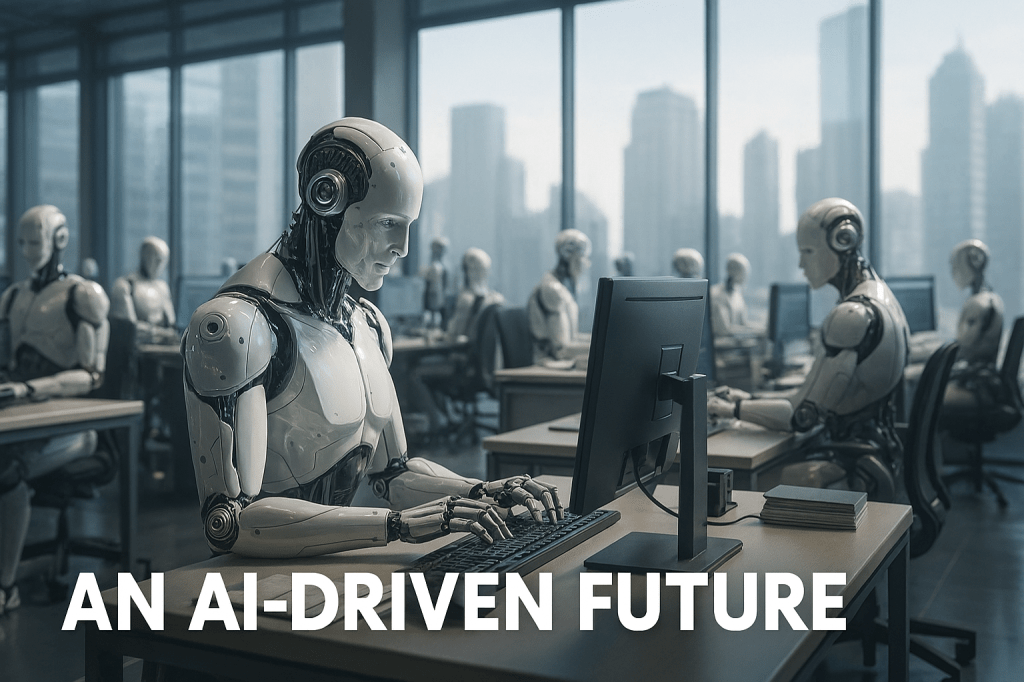
Artificial intelligence has become a contest over much more than clever software. The decisive advantages now include access to advanced chips, electricity and data centers; the ability to place a useful assistant in front of hundreds of millions of people; the patience to finance long research programs; and the standing to tell governments what should — or should not — be allowed. Stanford’s 2026 AI Index describes a widening gap between what the technology can do and how ready institutions are to absorb it. That gap is where many of the people on this list exercise their power. [1]

I. Tier 1 — The people who set the pace
These twelve can change the direction, cost or public meaning of frontier AI through a single corporate decision, research breakthrough or platform shift.
1. Jensen Huang — The tollgate
United States (Taiwan-born American) | NVIDIA — founder, president and chief executive officer
At GTC in March, Huang did more than unveil another faster chip. He presented Vera Rubin as a complete computing platform: the Vera processor for the control-heavy work of AI agents, Rubin graphics processors for the heavy calculation, BlueField-4 for moving data and new networking and storage components to bind thousands of chips into one machine. NVIDIA also moved its Dynamo inference software into production and said it could make some Blackwell systems serve generative and agentic workloads up to seven times faster. NemoClaw and OpenShell extended the push into software for autonomous agents, with privacy and security controls built around them. [2,56]
The numbers show what Huang has built around those releases. NVIDIA reported a record $75.2 billion quarter in May, 92 percent above the same period a year earlier. OpenAI committed to use three gigawatts of NVIDIA capacity for everyday AI responses and another two gigawatts for training on Vera Rubin systems. Huang told investors that NVIDIA could see roughly $1 trillion in AI-chip revenue opportunity through 2027; Reuters separately quoted an analyst estimating the company’s share above 90 percent in both model training and inference. [3,5,56]
That is why Huang remains first. He does not need to choose which model wins; he supplies much of the machinery on which nearly all of them compete. He has also widened NVIDIA from a chip vendor into a supplier of complete AI factories — processors, networking, software and developer tools. A change in NVIDIA’s product schedule, pricing or supply relationships can alter the plans of laboratories, cloud companies and national governments at once.
2. Sam Altman — The organizer of frontier ambition
United States | OpenAI — co-founder and chief executive officer
Altman’s clearest accomplishment is turning a research laboratory into a service used at population scale. In February, OpenAI reported more than 900 million weekly ChatGPT users, 50 million consumer subscribers and nine million paying business users. Its coding agent, Codex, had 1.6 million weekly users then and passed four million by late April. OpenAI also began moving beyond a single chatbot: Frontier gives large organizations a way to build and supervise teams of agents, while Codex works across software, research and document-heavy tasks. These figures are company reports, but they describe a product that has become part of daily work and study on a scale few technologies reach so quickly. [5,79]
Altman has paired that reach with an extraordinary financing and infrastructure campaign. OpenAI announced $110 billion in new investment at a $730 billion pre-money valuation, including $50 billion from Amazon, and agreed to consume about two gigawatts of Amazon Trainium capacity. It also reserved three gigawatts of NVIDIA inference capacity and two for training, while Stargate’s earlier plan called for as much as $500 billion in U.S. AI infrastructure over four years. OpenAI’s 2026 plan still looks beyond products to an automated research assistant, a broadly useful personal system and a governance structure intended to spread the gains. [4,5,36,57]
Altman matters because he combines model development, fundraising, partnerships, distribution and public argument in a single job. OpenAI helped make generative AI a mass-market habit; its next choices will influence how quickly capable systems become ordinary tools, how much they cost and whether the company can keep public trust while expanding at industrial scale. His central achievement is not any one model. It is the coalition of users, capital, chips and cloud partners assembled around them.
3. Satya Nadella — The distributor
United States (India-born American) | Microsoft — chairman and chief executive officer
Nadella has made AI part of Microsoft’s ordinary commercial machinery. By July, annual Azure revenue had crossed $100 billion for the first time and Microsoft 365 Copilot had more than 30 million paid seats. At Build 2026, Microsoft connected the main routes by which companies adopt AI: business users could create agents in Copilot Studio, developers could build and govern them in Microsoft Foundry and software teams could use them through GitHub. The company also showed new AI-oriented hardware and a Cobalt 200 cloud processor designed to improve performance on agent workloads. The accomplishment is less theatrical than a model launch, but more durable: AI is now sold through the same contracts, identities, security systems and support channels enterprises already use. [6,58]
Nadella has also managed a difficult two-track strategy. Microsoft remains OpenAI’s central partner: Azure keeps exclusive rights to host OpenAI’s stateless programming interfaces, and OpenAI’s first-party products continue to run on Azure. At the same time, Nadella gave Microsoft AI room to train its own models, co-design its own Maia silicon and compete for customers who want alternatives. The February agreement even anticipated OpenAI’s Amazon partnership without dissolving Microsoft’s intellectual-property and revenue-sharing rights. Holding cooperation and independence together is a major strategic accomplishment in its own right. [59]
He matters because distribution often determines which technology becomes normal. Microsoft can place AI in front of employees who may never compare model benchmarks or visit a specialist chatbot. Nadella controls a delicate portfolio: a deep partnership with OpenAI, Microsoft’s own model work and the infrastructure that serves competitors. His power lies in making AI a line item in the world’s existing technology budgets — and in making that line item difficult to remove.
4. Demis Hassabis — The scientist with an Alphabet-wide brief
United Kingdom / United States | Alphabet — chair of Google DeepMind and chief scientist; Isomorphic Labs — chief executive officer
The work behind Hassabis’s promotion is unusually broad. In February, Google DeepMind described a Gemini Deep Think research agent that could generate a mathematical argument, check it, revise it and admit when it had failed. Working with human experts, the system examined 700 open problems related to Paul Erdős’s conjectures, autonomously solved four listed questions and contributed to several research papers. On another project it produced a counterexample that overturned a decade-old assumption in optimization; in physics it found a new route through difficult calculations involving radiation from cosmic strings. DeepMind was careful not to call these landmark breakthroughs, but the examples moved AI from answering textbook questions to participating in research. [8]
Those 2026 results sit atop a longer sequence Hassabis helped direct. AlphaGo defeated a world champion in a game once thought too intuitive for machines. AlphaFold then tackled protein folding, and DeepMind ultimately made predictions for more than 200 million protein structures freely available, giving biologists a searchable starting point for experiments that once demanded months of laboratory work. Isomorphic Labs grew from that breakthrough into an AI drug-design company. On August 5, Alphabet made the pattern official: Hassabis became chair of Google DeepMind and chief scientist of Alphabet while continuing to lead Isomorphic Labs. [7,60]
Hassabis matters because he keeps making the case that AI is not merely a writing or search tool: it can become an instrument for discovery. His record connects games, biology, mathematics, software and drug development, and it shows an unusual willingness to publish both successes and limits. His new position gives that scientific program influence across Alphabet rather than inside one laboratory alone.
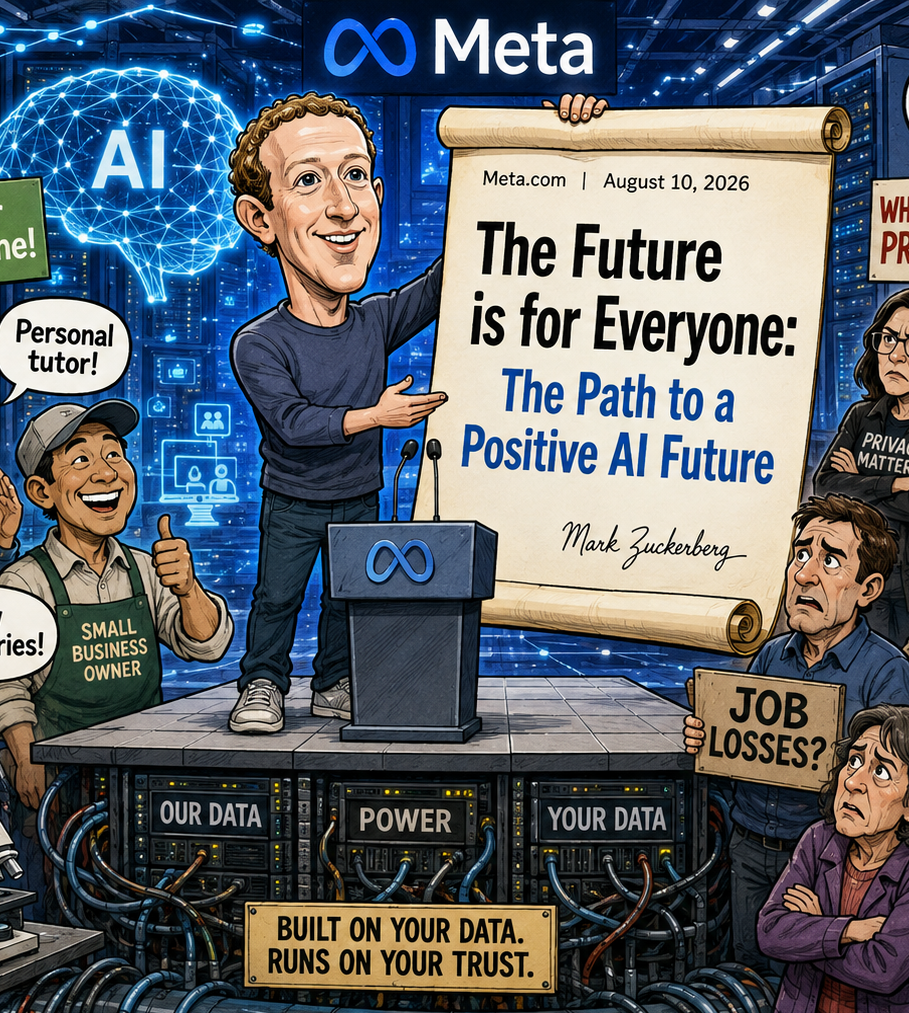
5. Mark Zuckerberg — Capital at planetary scale
United States | Meta — founder and chief executive officer
Zuckerberg first changed the AI market by releasing the weights of Meta’s Llama models, letting developers download, alter and run them without sending every request to a proprietary service. That strategy stumbled when Llama 4 disappointed, but Meta rebuilt its model effort around Meta Superintelligence Labs. In 2026 the new group released Muse Spark, then Muse Image inside the Meta AI assistant and Muse Code for long software tasks. On August 10 Meta added Muse Glimmer, a compact open-weight model designed to run agent tasks on a laptop or a single graphics card, and promised an open-weight release of the more capable Muse Spark 1.2. The sequence restored open releases to the center of Zuckerberg’s strategy. [11,34,61,80]
The other accomplishment is the physical scale behind those models. Meta expects to spend $130 billion to $145 billion on capital projects in 2026. It signed for as much as six gigawatts of AMD processors, while its Broadcom program begins with more than a gigawatt of custom AI silicon and is meant to grow across several chip generations. Broadcom is also working on advanced packaging and networking, the less visible systems that keep thousands of accelerators working together. Zuckerberg is no longer merely buying computers; he is assembling a diversified supply chain large enough to influence what chipmakers design next. [9,10,38]
He matters because few executives can convert advertising cash flow into research talent, data centers, chips and global consumer distribution on this scale. Meta can place a new model inside Facebook, Instagram, WhatsApp and its standalone assistant, then learn from billions of interactions. The strategic freedom created by that spending matters: Zuckerberg can influence both how much AI is shared and how aggressively the largest platforms build private advantage.
6. Dario Amodei — The frontier builder who keeps safety in the room
United States | Anthropic — co-founder and chief executive officer
Under Amodei, Anthropic has turned Claude from a careful chatbot into a working system for programmers and large organizations. Claude Code began as an internal command-line tool and became a coding agent able to inspect a software project, make coordinated changes and keep working across long tasks. In June the company released Claude Sonnet 5 for coding and professional work at scale; in July it followed with Opus 5, its highest-capability tier for long-running agents, difficult software jobs and research-heavy work. Anthropic also secured more than 300 megawatts of capacity — over 220,000 NVIDIA processors — at SpaceX’s Colossus 1 site. Benchmark claims come from Anthropic, but the product cadence, infrastructure and shift toward sustained, tool-using work are concrete. [13,62,81,93]
Amodei has made safety and public policy part of the laboratory rather than a separate public-relations department. The Anthropic Institute, launched in March, studies employment, model behavior, resilience and governance using evidence gathered while the systems are being built. Anthropic also says it was the first frontier company to deploy models on classified U.S. networks and at national laboratories, while refusing two categories of use: mass domestic surveillance and fully autonomous weapons without adequate safeguards. In July, Amodei argued that ordinary open-weight models are “a public good,” while drawing a line around systems with genuinely dangerous capabilities. [12,14,82]
Amodei matters because Anthropic is one of the few laboratories able to challenge the largest frontier developers while making safety part of its commercial identity. He has shown that a company can sell capable models, publish unusually detailed risk positions and accept real commercial friction when those positions are tested. That blend of builder, employer and policy advocate gives him influence over both the race and the proposed guardrails.
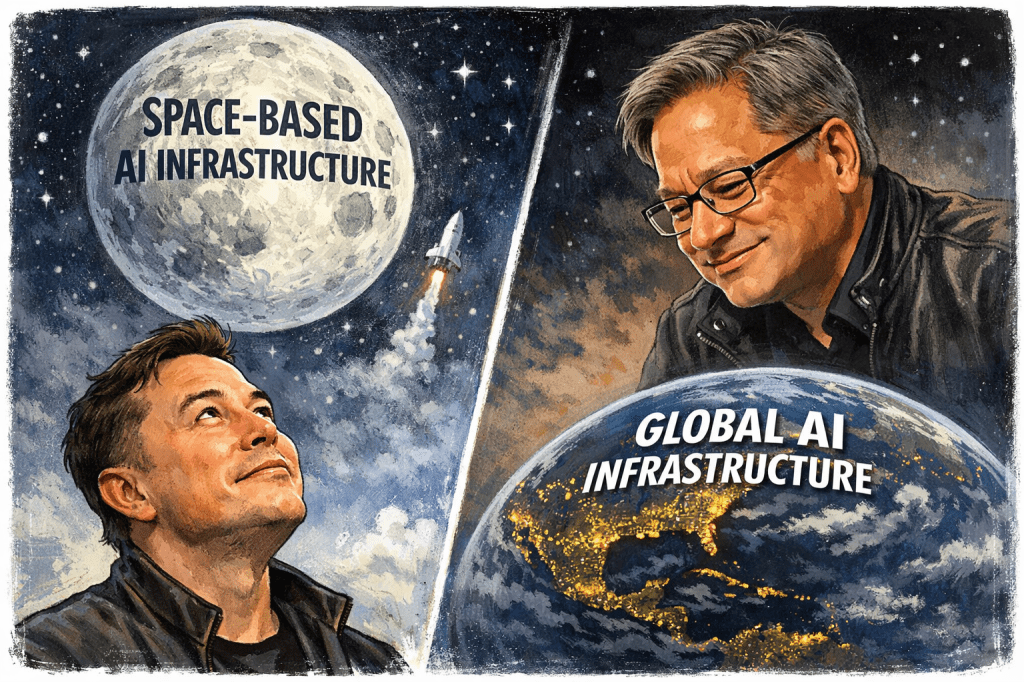
7. Elon Musk — Models, media and a giant computer under one owner
United States | SpaceX / xAI (SpaceXAI) — founder and controlling leader
Musk’s most tangible AI accomplishment is Colossus, xAI’s Memphis supercomputer. The company says it brought the first cluster online in 122 days, then doubled it in another 92 days to 200,000 interconnected NVIDIA H100 processors. Whatever one thinks of the environmental and community disputes around large data centers, that timetable is a striking feat of logistics: power, cooling, networking and tens of thousands of machines had to arrive and work as one. In July, xAI paired that capacity with Grok 4.5, a model aimed at coding, research and multi-step work, and placed it immediately on the web, mobile devices and X. [16,17]
He has also been collapsing the walls between his companies. SpaceX acquired xAI in February in a transaction Reuters reported at a combined value of $1.25 trillion, putting rockets, Starlink, X, Grok and Colossus under one corporate roof. In August, SpaceX and Tesla announced an initial $16.8 billion plan for a Texas semiconductor complex intended to make AI chips for robots, autonomous vehicles and possible space-based computing; the larger vision remains unbuilt, but the commitment shows Musk trying to control the supply chain rather than merely buy from it. [15,63]
Musk matters because his control spans computing, data, public attention, communications networks and physical infrastructure. That can speed deployment dramatically: a model can be trained on his cluster, distributed through his platform and linked to products in his other companies. It also means that decisions affecting a widely used model and a major communications platform are concentrated in one person to a degree unmatched elsewhere on this list.
8. Liang Wenfeng — The price disruptor
China | DeepSeek — founder and chief executive officer
Liang’s accomplishment is best understood as a series of constraints turned into a design philosophy. DeepSeek’s R1 model established the company’s reputation for producing strong reasoning at a reported fraction of the expense associated with larger American laboratories. In April 2026, the V4 family pushed the argument further: the models could work across a one-million-token context, were released with downloadable weights and were adapted to Huawei’s Ascend 950 hardware. That meant a developer could examine and modify the system, feed it very long documents and run it without depending entirely on the most restricted American chips. [18]
Then DeepSeek used price as a competitive weapon. In May it made a 75 percent cut to V4-Pro’s programming-interface prices permanent. By August, the independent evaluator Artificial Analysis described V4-Flash as the cheapest widely known model at its capability level; Reuters reported prices of about 14 cents per million input tokens and 28 cents per million output tokens. DeepSeek has also begun recruiting chip designers for a possible inference processor of its own. The chip remains a project, not an achievement, but it reveals Liang’s direction: squeeze more intelligence from each unit of computing, then remove as many outside tolls as possible. [19,64,65]
Liang matters because he changes the economics and the geopolitics at the same time. A cheaper, openly released Chinese model puts pressure on premium pricing, gives developers more choice and shows that software efficiency can partly offset restrictions on the most advanced hardware. DeepSeek’s lead is not assured, but every major laboratory now has to answer the question Liang made unavoidable: how much performance should users receive for each dollar of computing?
9. Mustafa Suleyman — Microsoft’s bid for model independence
United States / United Kingdom | Microsoft AI — executive vice president and chief executive officerUnited States / United Kingdom | Microsoft AI — executive vice president and chief executive officer
Suleyman’s team delivered the clearest evidence yet that Microsoft can build serious models without borrowing another laboratory’s work. At Build 2026, Microsoft AI introduced seven in-house systems spanning reasoning, coding, images, transcription and voice. MAI-Thinking-1 was trained from scratch on licensed data; MAI-Code-1-Flash went directly into GitHub Copilot and Visual Studio Code; MAI-Transcribe-1.5 handled specialized vocabulary in 43 languages; and MAI-Voice-2 generated speech in 15. These are Microsoft’s own performance claims, but the breadth matters: Suleyman built a family, not a demonstration. [66]
He also connected those models to places where they can prove useful. Microsoft AI reported that a version tuned for Excel matched the company’s chosen GPT-5.4 comparison while using up to one-tenth the computing cost. The team is co-designing models with Microsoft’s Maia 200 chip and says the pairing has already produced a 1.4-fold efficiency improvement. In health, Suleyman joined Mayo Clinic to develop a specialized clinical model using de-identified data and longitudinal records, initially for diagnosis and treatment planning inside Mayo’s own environment. In March, Nadella moved day-to-day Copilot leadership elsewhere so Suleyman could concentrate on this model and superintelligence program. [20,66]
Suleyman matters because he now sits at the center of Microsoft’s effort to control more of its technical destiny while the company maintains its OpenAI partnership. The task is unusually demanding: he must build models good enough for Microsoft’s global products, explain why they are safer or cheaper and keep “humanist superintelligence” from becoming a slogan. If he succeeds, the world’s largest software distributor becomes a frontier-model maker in its own right.
10. Robin Li — China’s established AI operating system
China | Baidu — co-founder, chairman and chief executive officer
Robin Li has spent more than a decade turning Baidu from a search company into an AI portfolio, and the first quarter of 2026 showed the pieces beginning to reinforce one another. Revenue from the company’s AI-powered businesses reached 13.6 billion yuan, up 49 percent, and for the first time supplied more than half of Baidu’s general-business revenue. AI Cloud Infrastructure rose 79 percent to 8.8 billion yuan; the portion tied to graphics-processor cloud service rose 184 percent. Baidu also released ERNIE 5.1, which the company said led Chinese models on one public text leaderboard, and introduced DuMate, an agent designed to complete multi-step work across applications and files rather than merely answer questions. [21]
The most visible example is Apollo Go. During the quarter, Baidu’s robotaxis completed 3.2 million fully driverless rides, with weekly rides topping 350,000 in March. By April, cumulative rides exceeded 22 million; by May the service had reached 27 cities and logged more than 220 million kilometers with no safety driver. Baidu also launched service in parts of Dubai and prepared tests in Switzerland and London. The figures come from Baidu, but they make the accomplishment concrete: Li has carried AI from data centers into cars that repeatedly navigate real streets with paying passengers. [21]
Li has called AI the “new core of Baidu.” [22] The phrase matters because his influence is not tied to one chatbot. Baidu combines foundation models, cloud services, search, marketing, enterprise agents, its own Kunlunxin chips and autonomous driving inside China’s largest long-established AI platform. Robin Li matters as a commercialization test: he can show whether a domestic ecosystem can turn Chinese research and infrastructure into services used across business and everyday life.
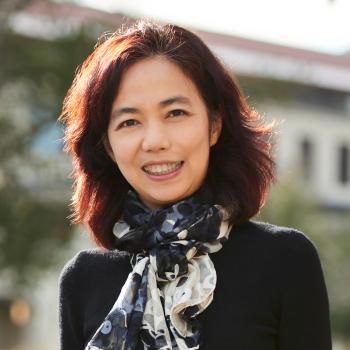
11. Fei-Fei Li — The builder of people and institutions
United States (China-born American) | Stanford University — Sequoia Professor and special adviser on AI to the president; World Labs — co-founder and chief executive officer
Li’s foundational accomplishment was to give computer vision a shared proving ground. ImageNet organized millions of labeled pictures into thousands of categories and invited researchers to test whether machines could recognize what they saw. The annual challenge helped reveal the dramatic 2012 leap in deep learning and gave competing laboratories a common measurement system. The result was not a product but an accelerant: advances in visual recognition became comparable, reproducible and easier to improve. At Stanford, Li later co-founded the Institute for Human-Centered Artificial Intelligence, which now connects more than 400 scholars across medicine, law, education, engineering and the humanities. In May 2026 she became a special AI adviser to Stanford’s president as the university brought its AI and data-science work under that institute. [23]
In 2026 she also gave her long-running argument for “spatial intelligence” a company and a working product. World Labs raised $1 billion and released Marble, which can turn text, photographs or video into persistent three-dimensional worlds that people and software agents can explore. In July, the company acquired SceniX, a robotics-simulation team, to connect generated worlds with the training of machines that must judge distance, motion, contact and cause. The project extends Li’s career-long concern with vision: from teaching a system to name an object in a photograph to helping it understand what might happen when that object moves in space. [67,68]
Li matters because the field grows through trained people, shared research and credible public institutions as much as through corporate products. She has helped build all three and has now returned to company-building without leaving Stanford’s policy and educational work. Her influence travels through ImageNet, former students, public-interest research, health projects and a new generation of machines meant to reason about the physical world.
12. Clément Delangue — The commons keeper
United States / France | Hugging Face — co-founder and chief executive officer
Delangue turned Hugging Face from a chatbot startup into the public workshop of open AI. By March 2026, the site had 13 million users, more than two million public models and more than 500,000 public data sets. The Hub lets a student in Nairobi, a laboratory in Paris and an engineer inside a large company inspect the same model card, download the same weights and compare modifications. Spaces provides live demonstrations; the Transformers and Datasets libraries standardize much of the otherwise awkward work of loading, training and evaluating models. In practical terms, Hugging Face has made sharing an AI model feel closer to sharing software. [24]
The ecosystem is also moving from experiments into production. Delangue says roughly half of the Fortune 500 now uses Hugging Face. In 2026 the company worked with Microsoft to make Hub models deployable through managed enterprise computing, and its Transformers integration with the vLLM serving system reached or exceeded hand-tuned performance on several very different model sizes in company tests. Those details are easy to overlook, but they are what allow an open release to survive contact with a security review, a crowded server and a real operating budget. [69,83,84]
Delangue matters because open AI needs more than a philosophical commitment; it needs dependable plumbing. Hugging Face supplies the catalog, software tools, evaluation spaces and community habits that let smaller teams work with models they could not afford to train from scratch. When an open model spreads rapidly across countries and industries, Delangue’s ecosystem is often the road it travels.
II. Tier 2 — The specialists, gatekeepers and force multipliers
These leaders may not individually control the frontier-model race, but they command essential parts of the stack: research direction, manufacturing, capital, education, sovereignty, robotics and public legitimacy.
13. Yann LeCun — The dissenter with a new laboratory
France / United States | AMI Labs — executive chairman; New York University — Jacob T. Schwartz Professor
LeCun’s career has repeatedly moved ideas from the edge of research into everyday machines. His early work on convolutional neural networks taught computers to recognize patterns in images; versions of that approach later became standard in handwriting recognition, photography, medical imaging and autonomous driving. At Meta, he built and guided a large research culture that published openly and pursued self-supervised learning — systems that learn structure from raw data without requiring a person to label every example. NYU’s 2026 record closes that Meta chapter in 2025 but keeps him in the classroom and laboratory as the Jacob T. Schwartz Professor. [25]
His current accomplishment is to turn a long-running scientific dissent into a funded institution. AMI Labs raised $1.03 billion in March at a reported $3.5 billion valuation before the investment, one of Europe’s largest seed rounds. The laboratory is developing “world models” using the family of ideas LeCun calls JEPA: instead of generating every visible detail, the system learns a compact internal picture of how a scene changes and what an action is likely to cause. The wager is that such models will let AI plan in medicine, robotics and the physical world rather than remain primarily a fluent predictor of words. [26,70]
He matters because a field moving this quickly needs credible dissent. LeCun helped establish the methods behind modern computer vision, then used his stature to argue that today’s dominant language-model approach is not the final architecture. Even when colleagues disagree, his alternatives influence where researchers, students and investors look next — and AMI gives those alternatives the money and institutional home to be tested seriously.
14. Geoffrey Hinton — The warning that governments hear
Canada (British-Canadian) | University of Toronto — University Professor Emeritus; independent researcher and public advocate
Hinton’s technical accomplishment is foundational: he helped show that layered neural networks could learn useful internal representations by adjusting the strength of their connections from examples. At a time when many researchers dismissed neural networks as a dead end, his work on backpropagation, Boltzmann machines and distributed representations kept the approach alive. Those ideas eventually supported speech recognition, computer vision and today’s generative models. The 2024 Nobel Prize in Physics, shared with John Hopfield, recognized that contribution and gave Hinton unusual authority to explain both what the field achieved and what its builders may not control. [27]
In 2026 he used that authority as a public-interest researcher. Hinton joined more than 100 experts contributing to the International AI Safety Report, an assessment commissioned through a process involving 29 countries, the United Nations, the OECD and the European Union. The report separates demonstrated harms from plausible but uncertain ones and identifies gaps in present safeguards — exactly the evidence base governments need before writing rules. A $700,000 grant also supported Hinton’s independent safety work through the University of Toronto’s Schwartz Reisman Institute, giving his warnings research support rather than leaving them as a lecture circuit. [28,71]
That makes his power moral and political rather than operational. When Hinton speaks about loss of control, labor disruption, cyber misuse or autonomous weapons, officials listen because he helped create the intellectual foundations of the systems in question. He can elevate risks from specialist conferences to cabinet rooms while acknowledging uncertainty. Few independent voices can do that with comparable scientific credibility.
15. Sundar Pichai — The scale of default
United States (India-born American) | Alphabet and Google — chief executive officer
Pichai’s achievement is deployment at a scale that is difficult to visualize. At Google I/O in May, he said the company’s AI systems were processing more than 3.2 quadrillion tokens a month, seven times the previous year’s figure. More than 8.5 million developers were building with Gemini models each month. The Gemini app passed 900 million monthly users; AI Overviews in Search reached 2.5 billion; AI Mode passed one billion in its first year. Google’s image models had generated more than 50 billion pictures. In other words, Pichai did not wait for people to adopt a new category of software: he put AI into Search, Android, Maps, YouTube, Gmail and Docs, where enormous audiences already lived. [29]
He has also financed and coordinated the stack beneath those products. Google expects 2026 capital spending of roughly $180 billion to $190 billion. Its eighth-generation tensor processors split into a training chip and a faster inference chip; Pichai said the training system could distribute work across more than one million processors in multiple locations. At I/O he launched Gemini Omni Flash for generating across media, expanded conversational features such as Ask Maps and Docs Live and reported that SynthID had invisibly watermarked more than 100 billion images and videos. The record combines hardware, models, products and a mechanism for identifying AI-made media. [29]
Pichai matters because he can make AI the default behavior of products people already use. Hassabis ranks above him here because he is closer to the scientific breakthroughs. Pichai’s distinct power is deciding when those breakthroughs become global services, how visibly they alter the web and how much risk Google will accept when it changes the habits of billions.
16. C.C. Wei — The manufacturer everyone waits for
Taiwan | TSMC — chairman and chief executive officer
Wei runs the factories that turn the industry’s most ambitious diagrams into working silicon. TSMC manufactures leading processors for NVIDIA, AMD, Apple and many custom-chip programs; it also performs the advanced packaging that places a compute chip beside stacks of high-speed memory. In April the company showed a new A13 process and a larger version of its CoWoS packaging that can fit more silicon into one package. That packaging is crucial to AI: a brilliant chip starved of memory or unable to exchange data quickly with its neighbors cannot deliver its advertised performance. [30,85]
The operating results show how successfully Wei has expanded that bottleneck. TSMC reported $40.2 billion in second-quarter revenue, 33.7 percent above a year earlier, with net income up 77 percent in New Taiwan dollars; its newest two-nanometer process already supplied 3 percent of wafer revenue. The company raised its 2026 investment plans and committed another $100 billion to expand in the United States while maintaining Taiwan as the center of its research and most advanced production. July revenue then rose almost 45 percent from the previous year. [31,86]
Wei matters because the AI boom is physical. The most advanced designs from NVIDIA, AMD and many in-house chip programs must still be manufactured and packaged at extraordinary precision. TSMC is the central foundry in that system. Its factory schedules, yields and geographic expansion determine how quickly new processors become real machines — and how exposed the supply chain remains to disruption around Taiwan.
17. Alexandr Wang — From data broker to model chief
United States | Meta — chief AI officer; Meta Superintelligence Labs — leader
Wang first made his name by solving one of modern AI’s least glamorous problems: models need enormous quantities of carefully labeled and evaluated data. Scale AI built the workforce and software that turned raw images, text and sensor records into training material for laboratories, automakers and governments. Meta’s roughly $14.3 billion investment in Scale in 2025 brought Wang inside as its first chief AI officer. He then led a nine-month rebuild of the company’s model stack — infrastructure, architecture and data pipelines — rather than trying to rescue the disappointing Llama 4 system piece by piece. [32,72]
The first result was Muse Spark in April 2026, a multimodal model that could reason across text and images, call software tools and coordinate several specialized agents. Independent tests reported by Reuters found it competitive in some areas while still behind leaders in coding and reasoning. Wang’s group kept shipping: Muse Image entered Meta AI in July; Muse Code arrived in August for long-running software tasks and parallel sub-agents; and Muse Glimmer put a distilled open-weight model on a single consumer graphics card. The progression from base model to image tool, coding product and laptop-scale release is the first visible body of work from Meta Superintelligence Labs. [33,34,61,80]
He matters because he has moved from supplying nearly everyone to commanding one of the best-funded teams in the field. Wang’s network across data, talent and frontier laboratories makes him a powerful recruiter and operator. His immediate test is concrete: can Meta’s vast spending become models and products that change the competitive order? The Muse releases show that the team is moving; they do not yet settle whether it has caught the leaders.
18. Masayoshi Son — The financier of scale
Japan | SoftBank Group — founder, chairman and chief executive officer; Stargate — chairman
Son has made himself the financial engine behind OpenAI’s expansion. In February, SoftBank agreed to invest another $30 billion, bringing its expected cumulative commitment to $64.6 billion and an estimated 13 percent ownership position. Reuters reported in August that SoftBank had committed more than $60 billion to OpenAI and related infrastructure projects even as analysts questioned the debt and asset sales needed to finance the push. Son is not spreading small bets across hundreds of startups; he is concentrating capital around a few assets — OpenAI, Arm and large computing facilities — that he believes will form the backbone of the next economy. [35,73]
He is also chairman of Stargate, the venture announced with OpenAI and Oracle to invest as much as $500 billion over four years in U.S. AI infrastructure. The plans have begun to take physical form. OpenAI and SoftBank each invested $500 million in SB Energy, which is developing a 1.2-gigawatt data center in Texas, while the international Stargate program includes a one-gigawatt cluster in Abu Dhabi whose first 200 megawatts are expected online in 2026. Son’s role is to assemble the capital, partners and political support required before a single model can run there. [36,89]
Son matters because large models increasingly depend on power plants, land, chips and patient capital. He can assemble funding on a scale that changes where data centers are built and which companies have room to train the next generation of systems. His bets can be volatile, but his appetite for concentrated risk makes him one of the few financiers capable of turning an AI blueprint into a national infrastructure project.
19. Lisa Su — The credible second source
United States (Taiwan-born American) | AMD — chair and chief executive officer
Su’s answer to NVIDIA is no longer a single accelerator card. In July, AMD put its Helios rack-scale system into production: MI455X graphics processors, sixth-generation EPYC central processors, Pensando networking and the ROCm software layer assembled as one machine. OpenAI said it expected to bring Helios online in the fourth quarter of 2026, while AMD and OpenAI worked together to optimize both silicon and software. AMD’s second-quarter data-center revenue more than doubled from a year earlier, and Su said the company entered the second half with Instinct deployments scaling and Helios beginning to ramp. [37,74]
Just as important, Su converted technical road maps into very large customer commitments. Meta plans to deploy as much as six gigawatts of AMD processors, with shipments for the first gigawatt beginning in the second half of 2026. Anthropic signed for up to two gigawatts of the MI450 family, and OpenAI’s multigeneration agreement also contemplates six gigawatts. These are future deployments rather than machines already humming in data centers, but they give AMD something it has long lacked in AI: anchor customers willing to tune their own software alongside AMD and validate an alternative supply chain. [38,88]
Su matters because competition at the chip layer affects the price of everything above it. A serious alternative to NVIDIA gives cloud companies and laboratories leverage on cost, supply and software terms. AMD does not need to displace the market leader to change the economics; it needs to become good enough, available enough and easy enough to use that buyers can credibly say no.
20. Arthur Mensch — Europe’s sovereignty test
France | Mistral AI — co-founder and chief executive officer
Mensch has built Europe’s most credible full-stack AI challenger by emphasizing capable models that customers can control. Mistral Medium 3.5, released in May, is a 128-billion-parameter model with a 256,000-token context window; the company says it can run on as few as four high-end graphics processors and lets a user choose between a quick reply and a more deliberate reasoning pass. Mistral also released remote coding agents in Vibe and enterprise connectors that can act on internal data. The products are designed for organizations that want useful AI without shipping every document and decision to an outside American service. [39,40]
The company has also moved into specialized industrial work. Mistral OCR 4 reads documents in 170 languages, returns the location and type of tables, equations and signatures and can run inside a customer’s own systems; its programming interface starts at $4 per thousand pages. Mistral acquired Emmi AI to add physics models and engineering tools, and joined NVIDIA’s Nemotron coalition to help train an open base model for other developers to adapt. Mensch’s European policy program makes the connection explicit: sovereignty requires models, data centers, software and engineering expertise, not regulation alone. [41,75,76,87]
Mensch matters because Europe needs more than regulation if it wants strategic influence. Mistral offers governments and companies a European provider, models they can run under their own control and an alternative to total reliance on American or Chinese platforms. Its scale is smaller than the leaders above it; its symbolic and practical importance to technological sovereignty is much larger than its size.
21. Ren Zhengfei — China’s hardware resilience
China | Huawei — founder, director and chief executive officer
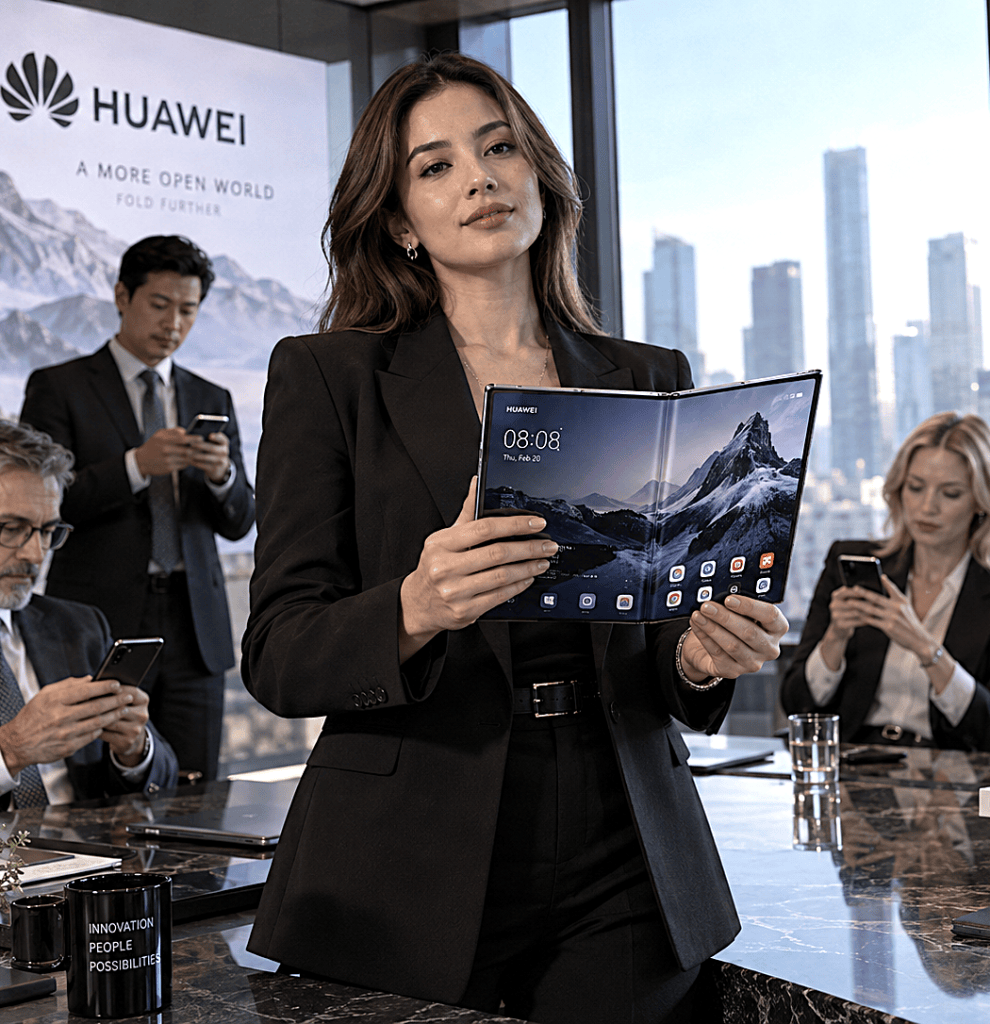
Ren’s accomplishment is institutional endurance under sustained pressure. Huawei spent 192.3 billion yuan on research and development in 2025 — nearly 22 percent of revenue — across chips, software, manufacturing tools and communications. It reported more than 165,000 active patents. Ren has acknowledged that Huawei’s individual AI chips remain a generation behind U.S. leaders, but the company’s answer is to connect many processors so they work as a larger system. That candor explains the strategy: if one chip cannot win, improve the network, memory, software and scale. [42,43]
Huawei has now published a three-year Ascend road map rather than hiding its ambitions. Two versions of the Ascend 950 are due in 2026, followed by the 960 in 2027 and the 970 in 2028. The accompanying Atlas supernodes are designed to connect thousands of accelerators, and Huawei says it has developed proprietary high-bandwidth memory for the new line. In April, an Ascend 950-based system added full support for DeepSeek V4; Reuters reported that Huawei processors were also used during part of the model’s training process. These steps do not erase the manufacturing limits imposed by export controls, but they show a usable domestic stack taking shape. [44,77]
Ren matters because export controls have turned AI hardware into a question of national resilience. Huawei is building processors, memory, networks and software intended to keep China’s AI ecosystem moving when leading American chips are difficult to obtain. Ren is not the day-to-day product spokesman, but his long control of Huawei makes him a central strategic figure in the attempt to build a parallel computing stack.
22. Andrew Ng — The teacher who multiplies the workforce
United States | DeepLearning.AI — founder; AI Fund — managing general partner; LandingAI — executive chairman
Ng has repeatedly converted scarce AI knowledge into institutions that other people can use. He founded the Google Brain project, later led a 1,300-person AI organization at Baidu and co-founded Coursera before building DeepLearning.AI. His official biography now counts more than eight million people who have taken one of his classes. “AI for Everyone” teaches nontechnical managers how to recognize appropriate projects and avoid exaggerated claims; the Deep Learning Specialization gave engineers a structured path into neural networks; newer short courses cover prompt design, coding agents, retrieval systems and evaluation. The accomplishment is scale with range: a factory manager and a graduate student can enter through different doors. [45,78]
In 2026 Ng kept the curriculum close to current practice. His Agentic AI course asks learners to build systems that plan, use tools, check their own work and repeat a task until it is done. The April AI Dev conference gathered more than 3,000 developers around coding agents, memory, security and reliable deployment. Beyond education, AI Fund pairs entrepreneurs with technical teams to create companies, while LandingAI has focused on making visual and document AI usable by businesses without frontier-laboratory budgets. Ng does not merely describe adoption; he trains the people and incubates some of the organizations that carry it out. [78,92]
He matters because adoption depends on people who can recognize useful problems, supervise systems and build modest products — not only on the small group training giant models. Ng has made advanced ideas teachable at global scale and then helped founders turn them into companies. His influence is cumulative: millions of learners carry it into workplaces the frontier laboratories will never visit directly.
23. Reid Hoffman — The connector
United States | Greylock — partner; entrepreneur, investor and co-founder of LinkedIn, Inflection AI and Manas AI
Hoffman has worked on AI from nearly every side of the table. He was an early OpenAI investor and board member; co-founded Inflection AI, which built the conversational assistant Pi; served on Microsoft’s board through its first $1 billion OpenAI investment and later AI expansion; and used Greylock to back a wide network of software companies. In public, he has argued for “superagency” — the idea that broadly available AI can expand human choice — while also urging companies to test the technology in weekly, practical cycles rather than wait for a perfect corporate plan. His 2026 forecasts focused on agents moving beyond coding into education, creative work and ordinary business operations. [46,47]
This year he shifted from connector back toward operator. Hoffman left Microsoft’s board after nearly a decade to spend more time on Manas AI, the drug-discovery company he co-founded with physician and cancer researcher Siddhartha Mukherjee. Manas describes an end-to-end effort: use models informed by chemistry, physics and biology to propose molecules, then move the strongest candidates into laboratory testing. In January it announced a deep integration with Schrödinger’s computational platform to help build a physics-based world model of how molecules bind to disease targets. It is early-stage biotechnology, not a cure, but it is a concrete attempt to move AI from advice into the long, expensive search for medicines. [90,91]
He matters because influence in AI is often relational. Hoffman can connect a startup founder to capital, a corporate chief to an adoption strategy and a policymaker to a network of technical advisers. He does not control a frontier laboratory today, which is why he sits in Tier 2. But few people move as easily among Silicon Valley boards, venture firms, media and government conversations. His power is the ability to make an idea travel — and occasionally to turn that network back into a company.
24. The open chair — Four candidates, no winner yet
Leaving the final place open is the most honest choice. The next durable source of power may come from a new computing hub, a machine that acts in the physical world, a creative model with a new business structure or an open infrastructure movement that has not yet found its institution. These four candidates represent those possibilities.
David Holz — The creative-model wildcard
United States | Midjourney — founder and chief executive officer
Holz runs an independent, community-funded laboratory whose image models helped define the visual culture of generative AI. The Midjourney release log lists Version 8.2 as current after a much faster V8.1 launch in April 2026. [48,49] He has a claim if creative models become a durable platform rather than a feature inside larger suites. For now, Midjourney is influential, but it is not yet an infrastructure gatekeeper.
Emad Mostaque — The comeback case
United Kingdom | Schelling AI and Intelligent Internet — founder; Stability AI — former co-founder and chief executive officer
Mostaque’s candidacy rests largely on the precedent of Stable Diffusion and on his current advocacy for decentralized, broadly accessible AI. His present biography identifies him with Schelling AI; Reuters documented his 2024 departure from Stability AI during a financial and leadership reset. [50,51] To claim this seat, he would need to turn a compelling open-infrastructure thesis into an organization with renewed technical and economic weight.
Tareq Amin — The sovereign-compute builder
Saudi Arabia | HUMAIN — chief executive officer
Saudi Arabia’s Public Investment Fund describes HUMAIN as a full-stack company spanning data centers, cloud platforms, models and applications. Plans reported by Reuters called for initial 100-megawatt data centers using American chips and a multibillion-dollar AMD partnership. [52,53] Amin’s case is the purest infrastructure case: if HUMAIN delivers at the announced scale, it could make the Gulf a major computing center. The open question is execution, not ambition.
Wang Xingxing — The physical-AI contender
China | Unitree Robotics — founder and chairman
Unitree priced its August 2026 Shanghai offering at a valuation of about $9 billion, becoming the first mainland-listed maker focused on humanoid robots. Reuters reported 2025 revenue of 1.7 billion yuan, with humanoids already larger than its four-legged-robot business. DeepSeek took a strategic stake and plans to combine its AI work with Unitree’s motion control and physical-world data. [54,55]
Wang has the strongest current claim if AI’s next power center is a mass-produced body. Robots remain much less capable than the demonstrations suggest, and Unitree’s profit fell as spending rose. Still, the pairing of affordable machines, real-world data and a leading Chinese model developer is precisely the kind of combination that could create a new gatekeeper.
What this ranking reveals
The list is dominated by the United States, but the dependencies are global. Taiwan fabricates leading chips. China is pressing on price, domestic hardware and robots. France is trying to keep Europe in the model business. Japan and Saudi Arabia supply patient capital and new infrastructure. Canada, Britain and American universities continue to shape the scientific and political argument.
It also shows that AI power is becoming less like a single ladder. Huang and Wei govern supply. Nadella, Pichai, Zuckerberg and Musk govern distribution. Altman, Hassabis, Amodei, Liang and Wang govern model direction. Son and Hoffman allocate money and relationships. Li, LeCun, Hinton and Ng shape the people, ideas and public choices that determine what the technology becomes.
The ranking will move. It should. By the end of 2026, the most revealing question may not be who trained the best model, but who turned intelligence into an affordable, dependable service — and who persuaded the public that the service deserved a place in ordinary life.
References
All links were checked for public accessibility on August 10, 2026. Corporate performance claims are identified as company reports where appropriate; Reuters and institutional sources provide independent or contextual support.
1. Stanford Institute for Human-Centered Artificial Intelligence, “2026 AI Index Report,” 2026. https://hai.stanford.edu/ai-index/2026-ai-index-report
2. Reuters, “Nvidia CEO set to reveal new chips, software at AI megaconference GTC,” March 16, 2026. https://www.reuters.com/world/asia-pacific/nvidia-ceo-set-reveal-new-chips-software-ai-megaconference-gtc-2026-03-16/
3. Reuters, “Nvidia to focus on competition-beating AI advances at megaconference,” March 13, 2026. https://www.reuters.com/technology/nvidia-focus-competition-beating-ai-advances-megaconference-2026-03-13/
4. OpenAI, “Built to benefit everyone: Our plan for AI,” 2026. https://openai.com/index/built-to-benefit-everyone-our-plan/
5. OpenAI, “Scaling AI for everyone,” 2026. https://openai.com/index/scaling-ai-for-everyone/
6. Microsoft Source, “Microsoft Cloud and AI strength fuels fourth quarter results,” July 29, 2026. https://news.microsoft.com/source/2026/07/29/microsoft-cloud-and-ai-strength-fuels-fourth-quarter-results-4/
7. Sundar Pichai, Google, “The next chapter of our AI momentum,” August 5, 2026. https://blog.google/company-news/inside-google/message-ceo/next-chapter-ai-momentum/
8. Google DeepMind, “Accelerating mathematical and scientific discovery with Gemini Deep Think,” 2026. https://deepmind.google/blog/accelerating-mathematical-and-scientific-discovery-with-gemini-deep-think/
9. Meta Platforms, “Meta Reports Second Quarter 2026 Results,” 2026. https://investor.atmeta.com/investor-news/press-release-details/2026/Meta-Reports-Second-Quarter-2026-Results/default.aspx
10. Meta, “Meta Partners With Broadcom to Co-Develop Custom AI Silicon,” April 2026. https://about.fb.com/news/2026/04/meta-partners-with-broadcom-to-co-develop-custom-ai-silicon/
11. Meta AI, “The Llama 4 herd: The beginning of a new era of natively multimodal AI innovation,” April 2025. https://ai.meta.com/blog/llama-4-multimodal-intelligence/
12. Anthropic, “The Anthropic Institute,” March 11, 2026. https://www.anthropic.com/news/the-anthropic-institute
13. Anthropic, “Claude Opus 5,” July 24, 2026. https://www.anthropic.com/news/claude-opus-5
14. Anthropic, “Anthropic’s position on open-weights models,” 2026. https://www.anthropic.com/news/position-open-weights-models
15. Reuters, “Musk’s SpaceX to merge with xAI in deal valuing combined company at $1.25 trillion,” February 2, 2026. https://www.reuters.com/business/musks-spacex-merge-with-xai-combined-valuation-125-trillion-bloomberg-news-2026-02-02/
16. xAI, “Colossus,” current company project page, 2026. https://x.ai/colossus
17. xAI, “Grok 4.5,” July 2026. https://x.ai/news/grok-4-5
18. Reuters, “DeepSeek V4 Chinese AI model adapted for Huawei chips,” April 24, 2026. https://www.reuters.com/world/china/deepseek-v4-chinese-ai-model-adapted-huawei-chips-2026-04-24/
19. Reuters, “DeepSeek’s new AI model is by far cheapest of well-known models to run, research firm says,” August 3, 2026. https://www.reuters.com/business/retail-consumer/deepseeks-new-ai-model-is-by-far-cheapest-well-known-models-run-research-firm-2026-08-03/
20. Satya Nadella, Microsoft, “Announcing Copilot leadership update,” March 17, 2026. https://blogs.microsoft.com/blog/2026/03/17/announcing-copilot-leadership-update/
21. Baidu, “Baidu Announces First Quarter 2026 Results,” 2026. https://ir.baidu.com/news-releases/news-release-details/baidu-announces-first-quarter-2026-results
22. Reuters, “China’s Baidu tops quarterly revenue estimates,” February 26, 2026. https://www.reuters.com/business/media-telecom/chinas-baidu-tops-quarterly-revenue-estimates-2026-02-26/
23. Stanford HAI, “Stanford merges AI and data science efforts under single institute,” 2026. https://hai.stanford.edu/news/stanford-merges-ai-and-data-science-efforts-under-single-institute
24. Hugging Face, “State of Open Source on Hugging Face: Spring 2026,” March 17, 2026. https://huggingface.co/blog/huggingface/state-of-os-hf-spring-2026
25. NYU Tandon School of Engineering, “2026 Commencement Program: Yann LeCun,” 2026. https://engineering.nyu.edu/life-tandon/student-life/commencement/2026/program
26. TIME, “World models are AI’s next frontier,” July 15, 2026. https://time.com/article/2026/07/15/world-models-are-ai-s-next-frontier/
27. University of Toronto, “Geoffrey Hinton wins Nobel Prize in Physics,” 2024. https://www.utoronto.ca/news/geoffrey-hinton-wins-nobel-prize
28. International AI Safety Report, “International AI Safety Report 2026,” 2026. https://internationalaisafetyreport.org/publication/international-ai-safety-report-2026
29. Sundar Pichai, Google, “Google I/O 2026: Keynote remarks,” 2026. https://blog.google/innovation-and-ai/sundar-pichai-io-2026/
30. TSMC, “Executives: Dr. C.C. Wei,” current corporate biography, 2026. https://www.tsmc.com/english/aboutTSMC/executives
31. Reuters, “TSMC’s second-quarter profit seen hitting record on AI boom,” July 15, 2026. https://www.reuters.com/world/asia-pacific/tsmcs-second-quarter-profit-seen-hitting-record-ai-boom-2026-07-15/
32. Meta, “Alexandr Wang,” current leadership biography, 2026. https://www.meta.com/about/leadership/alexandr-wang/
33. Meta AI, “Introducing Muse Spark,” April 2026. https://ai.meta.com/blog/introducing-muse-spark-msl/
34. Reuters, “Meta launches new AI coding tool powered by Muse Spark 1.2,” August 5, 2026. https://www.reuters.com/technology/meta-launches-new-ai-coding-tool-powered-by-muse-spark-12-2026-08-05/
35. SoftBank Group, “SoftBank Group to make follow-on investment in OpenAI,” February 27, 2026. https://group.softbank/en/news/press/20260227
36. OpenAI, “Announcing the Stargate Project,” January 2025. https://openai.com/index/announcing-the-stargate-project/
37. AMD, “Advancing AI 2026: AMD delivers full-stack compute for the agentic AI era,” 2026. https://ir.amd.com/news-events/press-releases/detail/1294/aai-2026-amd-delivers-full-stack-compute-for-the-agentic-ai-era
38. AMD, “AMD and Meta announce expanded strategic partnership to deploy 6 gigawatts of AMD GPUs,” 2026. https://ir.amd.com/news-events/press-releases/detail/1279/amd-and-meta-announce-expanded-strategic-partnership-to-deploy-6-gigawatts-of-amd-gpus
39. Mistral AI, “About Mistral,” current company biography, 2026. https://mistral.ai/about/
40. Mistral AI, “Vibe, Remote Agents and Mistral Medium 3.5,” May 22, 2026. https://mistral.ai/news/vibe-remote-agents-mistral-medium-3-5/
41. Mistral AI, “European AI: A playbook to own it,” April 2026. https://europe.mistral.ai/
42. Huawei, “Board of Directors: Ren Zhengfei,” current corporate biography, 2026. https://www.huawei.com/en/executives/board-of-directors/ren-zhengfei
43. Huawei, “Company facts,” current corporate information, 2026. https://www.huawei.com/en/media-center/company-facts
44. Reuters, “Huawei’s Ascend supernode to support DeepSeek V4,” April 24, 2026. https://www.reuters.com/business/media-telecom/huawei-ascend-supernode-support-deepseek-v4-2026-04-24/
45. Andrew Ng, official biography, current in 2026. https://www.andrewng.org/
46. Reid Hoffman, official biography, current in 2026. https://www.reidhoffman.org/
47. Every, “Reid Hoffman makes five predictions about AI in 2026,” 2026. https://every.to/podcast/reid-hoffman-makes-five-predictions-about-ai-in-2026
48. Society for Science, “David Holz,” current board biography, 2026. https://www.societyforscience.org/people/david-holz/
49. Midjourney, “Version,” current release documentation, 2026. https://docs.midjourney.com/hc/en-us/articles/32199405667853-Version
50. Peter H. Diamandis, “Emad Mostaque: The current state of AI,” 2026. https://www.diamandis.com/podcast/emad-mostaque-current-state-of-ai
51. Reuters, “Cash-strapped Stability AI raises $80 million with new CEO and board,” June 25, 2024. https://www.reuters.com/technology/artificial-intelligence/cash-strapped-stability-ai-raises-80-mln-with-new-ceo-board-2024-06-25/
52. Public Investment Fund, “HUMAIN,” current portfolio profile, 2026. https://www.pif.gov.sa/en/our-investments/our-portfolio/humain/
53. Reuters, “Saudi’s Humain to launch data centers with U.S. chips in early 2026,” August 25, 2025. https://www.reuters.com/world/middle-east/saudis-humain-launch-data-centers-with-us-chips-early-2026-bloomberg-news-2025-08-25/
54. Reuters, “Chinese humanoid robot maker Unitree prices IPO at $9 billion valuation,” August 6, 2026. https://www.reuters.com/world/asia-pacific/chinese-robot-maker-unitree-prices-shanghai-ipo-2026-08-06/
55. Reuters, “DeepSeek invests $20.8 million in Unitree’s Shanghai IPO,” August 6, 2026. https://www.reuters.com/world/asia-pacific/deepseek-invests-208-million-unitrees-shanghai-ipo-2026-08-06/
56. NVIDIA, “NVIDIA Announces Financial Results for First Quarter Fiscal 2027,” May 20, 2026. https://nvidianews.nvidia.com/news/nvidia-announces-financial-results-for-first-quarter-fiscal-2027
57. OpenAI, “OpenAI and Amazon announce strategic partnership,” February 27, 2026. https://openai.com/index/amazon-partnership/
58. Microsoft, “Microsoft Build 2026,” June 2026. https://news.microsoft.com/build-2026/
59. OpenAI and Microsoft, “Joint Statement from OpenAI and Microsoft,” February 27, 2026. https://openai.com/index/continuing-microsoft-partnership/
60. Google DeepMind, “AlphaFold: Five Years of Impact,” November 25, 2025. https://deepmind.google/blog/alphafold-five-years-of-impact/
61. Reuters, “Meta launches new AI model as Zuckerberg champions open-weight push,” August 10, 2026. https://www.reuters.com/world/china/meta-launches-new-ai-model-zuckerberg-champions-open-weight-push-2026-08-10/
62. Anthropic, “Higher usage limits for Claude and a compute deal with SpaceX,” May 6, 2026. https://www.anthropic.com/news/higher-limits-spacex
63. Reuters, “SpaceX, Tesla to initially spend $16.8 billion on Terafab chip plant in Texas,” August 6, 2026. https://www.reuters.com/business/media-telecom/spacex-says-terafab-be-built-texas-with-initial-investment-168-billion-2026-08-06/
64. Reuters, “China’s DeepSeek to make permanent 75% price cut on flagship V4-Pro AI model,” May 23, 2026. https://www.reuters.com/world/china/chinas-deepseek-make-permanent-75-price-cut-flagship-v4pro-ai-model-2026-05-23/
65. Reuters, “China’s DeepSeek developing its own AI chip, sources say,” July 2026. https://www.reuters.com/world/china/chinas-deepseek-developing-its-own-ai-chip-sources-say-2026-07-07/
66. Microsoft AI, “Building a hill-climbing machine: Launching seven new MAI models,” June 2, 2026. https://microsoft.ai/news/building-a-hillclimbing-machine-launching-seven-new-mai-models/
67. World Labs, “World Labs Announces New Funding,” February 18, 2026. https://www.worldlabs.ai/blog/funding-2026
68. World Labs, “World Labs Acquires SceniX,” July 21, 2026. https://www.worldlabs.ai/blog/scenix
69. TechCrunch, “Hugging Face’s CEO on why companies are done renting their AI,” July 10, 2026. https://techcrunch.com/2026/07/10/hugging-faces-ceo-on-why-companies-are-done-renting-their-ai/
70. TechCrunch, “Yann LeCun’s AMI Labs raises $1.03B to build world models,” March 9, 2026. https://techcrunch.com/2026/03/09/yann-lecuns-ami-labs-raises-1-03-billion-to-build-world-models/
71. University of Toronto Faculty of Arts & Science, “What happens when AI is smarter than us? Gift supports Hinton’s global AI safety mission,” January 7, 2026. https://www.artsci.utoronto.ca/news/what-happens-when-ai-smarter-us-gift-supports-hintons-global-ai-safety-mission
72. Reuters, “Meta unveils first AI model from costly superintelligence team,” April 8, 2026. https://www.reuters.com/sustainability/sustainable-finance-reporting/meta-unveils-first-ai-model-superintelligence-team-2026-04-08/
73. Reuters, “SoftBank’s AI funding plans face reckoning at earnings,” August 4, 2026. https://www.reuters.com/business/media-telecom/softbanks-ai-funding-plans-face-reckoning-earnings-2026-08-04/
74. AMD, “AMD Reports Second Quarter 2026 Financial Results,” August 4, 2026. https://ir.amd.com/news-events/press-releases/detail/1295/amd-reports-second-quarter-2026-financial-results
75. Mistral AI, “Mistral AI partners with NVIDIA to accelerate open frontier models,” March 16, 2026. https://mistral.ai/news/mistral-ai-and-nvidia-partner-to-accelerate-open-frontier-models/
76. Mistral AI, “Emmi joins Mistral to accelerate the AI-native industry,” May 23, 2026. https://mistral.ai/news/accelerate-ai-native-industry/
77. Reuters, “Huawei unveils chipmaking, computing power plans for the first time,” September 18, 2025. https://www.reuters.com/business/media-telecom/huawei-unveils-chipmaking-computing-power-plans-first-time-2025-09-18/
78. DeepLearning.AI, “Courses,” current catalog in August 2026. https://www.deeplearning.ai/courses
79. OpenAI, “OpenAI models, Codex, and Managed Agents come to AWS,” April 28, 2026. https://openai.com/index/openai-on-aws/
80. Reuters, “Meta expands generative AI tools with Muse Image rollout,” July 7, 2026. https://www.reuters.com/technology/meta-expands-generative-ai-tools-with-muse-image-rollout-2026-07-07/
81. Anthropic, “Introducing Claude Sonnet 5,” June 30, 2026. https://www.anthropic.com/news/claude-sonnet-5
82. Dario Amodei, Anthropic, “Statement from Dario Amodei on our discussions with the Department of War,” February 26, 2026. https://www.anthropic.com/news/statement-department-of-war
83. Hugging Face and Microsoft, “Hugging Face Models on Foundry Managed Compute,” July 7, 2026. https://huggingface.co/blog/microsoft/foundry-managed-compute
84. Hugging Face, “Native-speed vLLM transformers modeling backend,” July 8, 2026. https://huggingface.co/blog/native-speed-vllm-transformers-backend
85. TSMC, “TSMC Debuts A13 Technology at 2026 North America Technology Symposium,” April 23, 2026. https://pr.tsmc.com/english/news/3302
86. TSMC, “TSMC Reports Second Quarter EPS of NT$27.25,” July 16, 2026. https://investor.tsmc.com/english/encrypt/files/encrypt_file/reports/2026-07/a80d7933be643644081584087731f73b22ea5a2c/2Q26%20EarningsRelease.pdf
87. Mistral AI, “Mistral OCR 4: SOTA OCR for Document Intelligence,” June 23, 2026. https://mistral.ai/news/ocr-4/
88. AMD, “AMD and Anthropic Announce Strategic Partnership to Deploy up to 2 Gigawatts of AMD Instinct MI450 Series GPUs,” July 22, 2026. https://ir.amd.com/news-events/press-releases/detail/1292/amd-and-anthropic-announce-strategic-partnership-to-deploy-up-to-2-gigawatts-of-amd-instinct-mi450-series-gpus
89. Reuters, “OpenAI, SoftBank invest $1 billion in SB Energy as Stargate buildout expands,” January 9, 2026. https://www.reuters.com/business/energy/openai-softbank-invest-1-billion-sb-energy-2026-01-09/
90. Manas AI, “Moving medicine forward,” current company profile in August 2026. https://manasai.co/company
91. TechCrunch, “Reid Hoffman is leaving Microsoft’s board to go ‘founder mode’ with startup Manas,” June 5, 2026. https://techcrunch.com/2026/06/05/reid-hoffman-is-leaving-microsofts-board-to-go-founder-mode-with-startup-manus/
92. DeepLearning.AI, “AI Dev 26 x SF,” April 28–29, 2026. https://ai-dev.deeplearning.ai/
93. Anthropic, “The Making of Claude Code,” July 6, 2026. https://www.anthropic.com/features/making-of-claude-code
####
Filed under: Uncategorized |

























































































































































































































































Leave a Reply