





By Jim Shimabukuro (assisted by Claude)
Editor
Summary: This article argues that in an age of limitless machine answers, human progress will depend on the quality of the questions we dare to ask. –Copilot

There is a peculiar asymmetry at the heart of human intelligence that has fascinated thinkers for millennia: the act of asking a well-formed question may require more intellectual courage, creativity, and perception than the act of answering one. To answer is to retrieve; to question is to reach. Every significant intellectual rupture in history—every paradigm shift, every breakthrough discovery, every revolutionary pedagogy—has been preceded not by an answer but by a question that no one had thought to ask before. The Nobel laureate physicist and legendary teacher Richard Feynman put it simply: “There is no learning without having to pose a question” (4).
This essay profiles six key writers and thinkers who have explored the relationship between questioning and intelligence. Beginning with the classical Socratic tradition and moving through twentieth-century educational philosophy and twenty-first-century innovation research, it traces an intellectual lineage that leads, perhaps inevitably, to the threshold of artificial intelligence. The essay then examines what this long tradition of inquiry implies for the ongoing development of generative and agentic AI—and why the ability to ask the right question may turn out to be the most important capability we can build into the machines we are building to think alongside us.
The Original Inquirer: Socrates
The starting point must be Socrates himself, though he left no writings of his own. What we know of his method comes primarily through Plato’s dialogues, and it is through those texts that Ward Farnsworth—Dean of the University of Texas School of Law and a scholar of classical rhetoric—examines Socratic practice in contemporary terms. Farnsworth writes not as a classicist but as a practitioner, convinced that the method retains full living force in law, politics, medicine, and everyday life. Farnsworth’s The Socratic Method: A Practitioner’s Handbook was published in 2021 by David R. Godine. The Socratic dialogues it draws on date to the fourth century B.C.E.
Farnsworth’s argument is that the Socratic method represents “an ethic of patience, inquiry, humility, and doubt” (1). At its core is a counter-intuitive insight: not-knowing, properly embraced, is itself a form of knowing. Socrates’ famous profession of ignorance—“I know that I know nothing”—was not false modesty or rhetorical maneuver but the genuine engine of his inquiries. By refusing to lecture, refusing to deliver verdicts, and insisting on posing questions instead, Socrates forced his interlocutors to think rather than receive, to discover rather than memorize.
The method works, Farnsworth explains, by testing principles. Socrates identifies a belief his interlocutor holds with confidence, then constructs edge cases and analogies that reveal hidden inconsistencies. The goal is not to humiliate but to expose the foundations—or lack of foundations—beneath confident claims (1). Six types of Socratic questioning emerge from the dialogues: questions that explore meaning, questions that test principles against cases, questions that seek implications, questions that surface assumptions, questions that demand internal consistency, and questions that propose analogies. The intellectual richness of the method lies in the way these types interact: each answer opens the space for a deeper question.
Farnsworth’s work matters because it reminds us that the philosophical infrastructure for the primacy of questioning predates psychology, innovation theory, and cognitive science by two and a half millennia. Socrates was doing something we are only now beginning to theorize with rigor: he was demonstrating that the willingness to not-know is a prerequisite for genuine learning, and that the design of good questions is a more demanding intellectual exercise than the retrieval of existing answers (1). In an age when factual answers are available instantly from digital systems, the Socratic tradition stands as a reminder that intelligence is not a database; it is a method.
Neil Postman: Teaching as the Art of Questioning
Neil Postman (1931–2003) was an American media theorist, cultural critic, and professor of communication arts and sciences at New York University. Best remembered by general readers for his later critique of television culture in Amusing Ourselves to Death (1985), his earlier work in educational philosophy was equally radical in its implications. Teaching as a Subversive Activity, co-authored with Charles Weingartner, was published in 1969, in the midst of widespread disillusionment with American educational institutions.
Postman and Weingartner opened with a provocation: the most important skill any student can develop is what they called a built-in “crap detector”—the capacity to identify nonsense, manipulation, and received wisdom masquerading as truth (2). The instrument of that detection, they argued, is the question. Traditional education was organized around the production of answers: students absorbed prescribed knowledge and were graded for the accuracy of their retrieval. This, Postman and Weingartner argued, was not education at all; it was training in intellectual passivity.
Their alternative was what they called the inquiry method: structuring lessons around genuine questions rather than correct answers. Students should be encouraged to ask questions that arise from authentic curiosity, questions without easy answers, questions that require investigation and argument (2). A good teacher, in their model, is not a conveyor of knowledge but a creator of the conditions in which students are compelled to ask the right kinds of questions. Crucially, teachers were advised to avoid giving direct answers in favor of asking more questions—mirroring, whether consciously or not, the Socratic tradition.
Postman and Weingartner were writing at a moment when public institutions were losing the trust of citizens who had been trained to receive answers rather than pose questions and were therefore uniquely vulnerable to manipulation (2). More than fifty years later, in an environment saturated with algorithmically curated information and confidently delivered misinformation, their diagnosis seems not merely prescient but urgent. The capacity to ask good questions is precisely the capacity that resists the acceptance of readymade answers—whether those answers come from television, social media, or, in our own moment, from artificial intelligence.
Paulo Freire: Questions as Instruments of Liberation
Paulo Freire (1921–1997) was a Brazilian educator and philosopher whose intellectual formation was shaped by the poverty and illiteracy he witnessed among rural workers in northeastern Brazil. After living through political exile following the military coup of 1964, he produced his most enduring work while abroad. He later returned to Brazil to serve as Secretary of Education for the city of São Paulo. Pedagogy of the Oppressed was completed in 1968 and published in Portuguese in that year and in English in 1970. It remains one of the most widely read texts in educational philosophy worldwide.
Freire diagnosed what he called the “banking concept” of education: students treated as empty receptacles into which teachers deposit knowledge. The banking model produces passivity, intellectual dependence, and an inability to perceive or challenge the social conditions that maintain oppression (3). Its antidote was “problem-posing education”—a dialogical approach in which both teacher and student engage the world as a shared problem, posing questions together and arriving at knowledge through genuine inquiry rather than transmission.
For Freire, the act of questioning was not merely pedagogically useful; it was humanizing. To question the world is to assert one’s status as a subject—a thinking, acting person—rather than an object shaped by forces beyond one’s understanding. He wrote of “conscientization”: the process by which people develop critical consciousness and learn to see their circumstances as something that can be named, questioned, and changed (3). A person who cannot formulate questions about their world is, in Freire’s framework, not fully free, regardless of their formal educational credentials.
Freire’s unique contribution is to locate the politics of questioning. He was the first major educational theorist to argue systematically that the suppression of inquiry is not accidental but structural—that systems of power have a direct stake in producing populations that ask fewer rather than more searching questions (3). In an age when public discourse is increasingly defined by the circulation of confident, often misleading assertions delivered by algorithmically amplified sources, Freire’s insistence that questioning is a precondition of freedom retains its full force. His work also prefigures a central concern about AI systems: the danger that technologies designed to provide confident answers will produce users less and less practiced in the art of formulating genuine ones.
Richard Feynman: Questioning as Scientific Virtue
Richard Feynman (1918–1988) was born in Far Rockaway, Queens, New York. He earned his undergraduate degree at MIT and his doctorate at Princeton, and spent the most productive decades of his career at the California Institute of Technology (Caltech). He is widely regarded as one of the most creative physicists of the twentieth century and received the Nobel Prize in Physics in 1965. Feynman’s most sustained reflections on questioning and learning appear throughout his published lectures, interviews, and the memoir Surely You’re Joking, Mr. Feynman! (1985). A 2026 retrospective published by the American Council of Trustees and Alumni revisited his legacy with particular attention to his pedagogical methods and his philosophy of inquiry (4).
Feynman credited much of his scientific disposition to his father, Melville Feynman, who taught him from childhood to distinguish between knowing the name of something and understanding it. As the ACTA retrospective describes, father and son would read encyclopedia entries together and his father would immediately translate the abstract into the experiential: “This thing is 25 feet high, and the head is 6 feet across” became “that means that if he stood in our front yard, he would be high enough to put his head through the window” (4). The exercise trained a lifelong habit of mind: no proposition was acceptable unless it could be grounded in reality, tested against experience, and explained to a freshman.
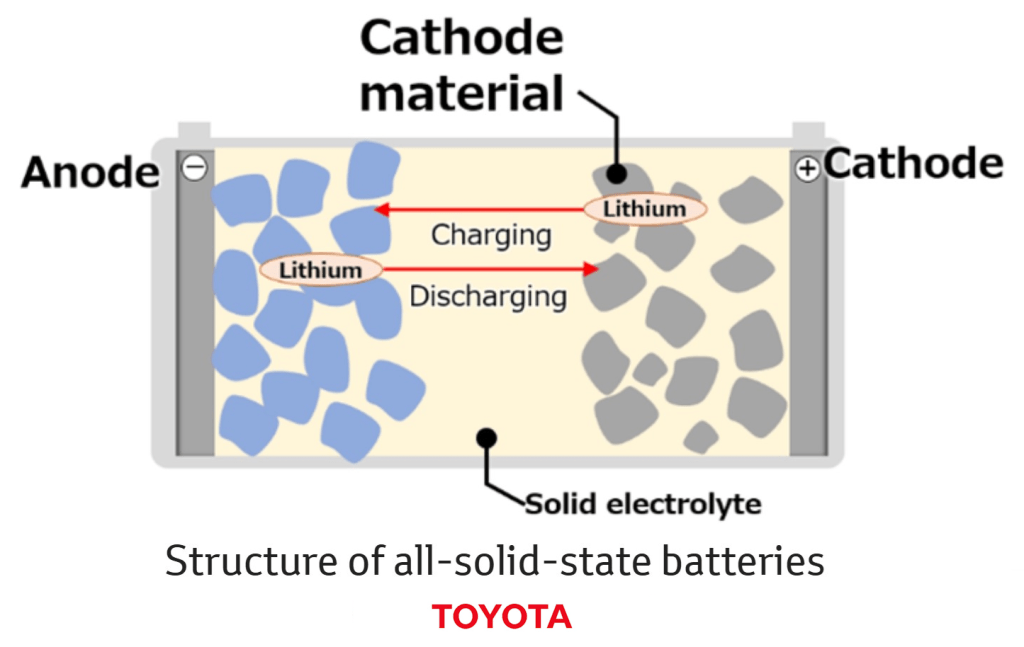
Feynman became famous—and beloved—for asking what colleagues privately considered naive questions. His willingness to appear ignorant, to ask “Is a cathode plus or minus?” in a room full of experts, was not a performance of humility but a genuine method: he had learned that the questions that everyone considers too obvious to ask are often the questions that, when actually pursued, yield the deepest answers (4). His approach to learning—now widely known as the Feynman Technique—rested on a single diagnostic principle: if you cannot explain something simply, you do not yet understand it. This principle is itself a form of self-questioning: a constant interrogation of the gap between apparent and genuine understanding. Feynman also advocated keeping what he called a set of favorite problems—a dozen or so open questions held perpetually in mind, against which every new idea, method, or piece of evidence is tested.
Feynman embodies the argument that questioning is not merely a pedagogical technique but a scientific virtue—perhaps the central scientific virtue. His career demonstrates that the capacity to ask a question everyone else has accepted as settled is more valuable, and rarer, than any amount of technical expertise (4). In his investigations into the Challenger Space Shuttle disaster of 1986, he arrived at the truth—the catastrophic failure of an O-ring in cold temperatures—precisely because he had no institutional ties to NASA’s bureaucracy and was free to ask the obvious questions that insiders had unconsciously suppressed. In an era when AI systems can retrieve and synthesize factual knowledge at superhuman speed, Feynman’s insistence on the primacy of the question becomes more rather than less important.
Warren Berger: The Beautiful Question
Warren Berger is an American journalist and innovation writer based in the United States. He has contributed to publications including Wired, Fast Company, and the New York Times, and spent years systematically studying the relationship between questioning and creative breakthrough, drawing on hundreds of interviews with innovators in business, technology, design, and science.
His most significant work, A More Beautiful Question: The Power of Inquiry to Spark Breakthrough Ideas, was published in 2014. It has since been updated and reissued and remains one of the most widely read contemporary accounts of questioning as a creative force.
Berger begins from a paradox: children ask hundreds of questions a day; adults ask almost none. The capacity for inquiry, which peaks in early childhood, “falls off a cliff” as children enter formal schooling and workplace culture (5). Schools, he argues—echoing Postman and Weingartner—reward the right answer rather than the provocative question. Corporations, similarly, tend to reward employees who execute instructions efficiently over those who ask why the instructions make sense in the first place. The institutional incentive structure, in short, systematically selects against exactly the cognitive capacity that drives breakthrough innovation.
Yet Berger found, after years of research and hundreds of interviews with innovators, that the most creative breakthroughs—from the founding of Netflix to the redesign of the modern hearing aid—began not with answers but with what he called “beautiful questions.” He defines a beautiful question as “an ambitious yet actionable question that can begin to shift the way we perceive or think about something—and that might serve as a catalyst to bring about change” (5). The best innovators, Berger found, are distinguished not by their answers but by their willingness to ask questions that challenge the premises everyone else has quietly accepted.
He offers a three-part framework for the inquiry cycle: Why (challenging the status quo), What If (imagining new possibilities), and How (taking the first steps toward action) (5). The most important and most neglected phase, he argues, is the Why. Most innovations fail not at the How stage but at the Why stage—because the people involved never thought to question the premise in the first place. The Why question is uncomfortable, and discomfort is what institutions are best at suppressing.
Berger’s contribution is to translate the philosophical insight about questioning into a practical framework accessible to organizations, educators, and individuals without philosophical training (5). He makes the case that the declining emphasis on questioning in education and organizational culture is not a soft cultural loss but a quantifiable economic one, with direct consequences for creativity, adaptability, and progress. More broadly, he demonstrates that the capacity to ask better questions is not a fixed trait of personality or intelligence but a skill that can be deliberately cultivated and organizationally nurtured—or just as deliberately suppressed.
Hal Gregersen: Questions as the Engine of Leadership
Hal Gregersen is a scholar of leadership and innovation who served as Executive Director of the MIT Leadership Center at the MIT Sloan School of Management and as Senior Lecturer in Innovation and Leadership. He collaborated with Harvard Business School’s Clayton Christensen and Brigham Young University’s Jeff Dyer on one of the most extensive empirical studies of innovative leadership ever conducted, drawing on more than six years of research and hundreds of interviews with founders and senior executives. He co-authored The Innovator’s DNA: Mastering the Five Skills of Disruptive Innovators in 2011 and published Questions Are the Answer: A Breakthrough Approach to Your Most Vexing Problems at Work and in Life in 2018 with HarperCollins.
The Innovator’s DNA identified five core discovery skills shared by the world’s most creative leaders: associating, questioning, observing, experimenting, and networking. Questioning, Gregersen found, was the central skill—the one from which the others emerged and the one most reliably associated with breakthrough innovation at the executive level. In a 2018 interview with MIT News, he stated: “For 30 years I’ve tried to figure out how great leaders do their work exceptionally well. I found they were all exceptional at asking better questions—questions that are catalytic, that transform something from what is to what in a very amazing way might be” (6).
He described the best questions as having a “catalytic quality”—they dissolve barriers to creative thinking and channel the pursuit of solutions into new, accelerated pathways. Often, the moment a catalytic question is voiced, it has the paradoxical effect of being “utterly surprising yet instantly obvious” (6). In Questions Are the Answer, Gregersen introduced the “Question Burst”—a structured brainstorming exercise in which participants spend four minutes asking questions about a challenge rather than proposing solutions. No answers are permitted during the burst (7). After testing this method with thousands of leaders across organizations including Chanel, Disney·Pixar, Genentech, Patagonia, and Salesforce, he found that in at least 80 percent of cases, the challenge was reframed in a more productive way and at least one valuable new idea emerged.
Gregersen also identified what he called the primary enemy of good questioning in organizations: isolation. Leaders at the top of institutional hierarchies are insulated, he found, by layers of filtered information—information that has been “massaged and manipulated and packaged to fit into your world view” (6). The result is that the leaders who most need to ask bold questions are the ones most organizationally prevented from doing so. His prescription was deliberate structural intervention: getting out of the office, seeking out uncomfortable perspectives, and building organizational cultures in which challenging questions are rewarded rather than suppressed.
Gregersen translates the philosophical and pedagogical insights of his predecessors into a rigorous, empirically grounded account of how questioning operates in practice at the highest levels of organizational leadership (6,7). His research establishes questioning not merely as a virtue or a technique but as a measurable, learnable, and economically significant competence. His identification of isolation—the tendency of leaders, institutions, and, as we will see, algorithmic systems to filter information so that it confirms what is already believed—is particularly prescient in the age of AI. The insight that good questioning requires a deliberate escape from comfort and confirmation has direct implications for how we design, train, and deploy intelligent systems.
Implications for Generative and Agentic AI
The Inversion of the Question-Answer Relationship
For most of the history of computing, the relationship between human beings and machines was asymmetrical in a particular direction: humans asked, machines answered. The human posed the query; the system retrieved or computed the response. This architecture reinforced, at the level of technology design, the same answer-delivery model that Postman, Freire, and Berger identified as the central deficiency of conventional education. The computer, like the traditional classroom, was an answer machine.
Generative AI, and its more autonomous successor, agentic AI, are beginning to alter this relationship in ways that are only partially understood. In a January 2026 report, IBM’s experts described 2026 as an inflection point at which AI systems transition from passive responsiveness to proactive initiative (10). As IBM’s Kevin Chung of Writer observed in the same report: “As reasoning capabilities improve, systems won’t just follow instructions—they’ll anticipate needs,” transforming AI from a “passive assistant into an active collaborator capable of meaningful problem-solving and decision-making” (10). Microsoft’s chief product officer for AI experiences, Aparna Chennapragada, described the same shift: “If recent years were about AI answering questions and reasoning through problems, the next wave will be about true collaboration” (9).
Microsoft’s Peter Lee of Microsoft Research articulated what this means in practice: in 2026, AI will not merely summarize papers, answer questions, and write reports—it “will actively join the process of discovery in physics, chemistry and biology,” generating hypotheses, using tools to control scientific experiments, and collaborating with both human and AI research colleagues (9). The AI of 2026 is no longer simply an oracle responding to queries; it is beginning to pose queries of its own.
The Dangers of AI-Directed Questioning
But this evolution carries significant risks that are beginning to attract serious scholarly attention. In a March 2026 article in the Harvard Business Review, IMD Business School professors Arnaud Chevallier and Frédéric Dalsace conducted comparative research involving more than 1,600 executives and 13 leading AI models. Their finding was striking: “AI systems use markedly different question mixes than human leaders, often overemphasizing interpretive analysis while underweighting productive and subjective questions.” Because different types of questions surface different kinds of information, these imbalances—invisible to most users—“can create blind spots, skew discussions, and subtly steer outcomes” (8).
This finding is directly continuous with the concerns raised by Postman and Freire half a century ago. The danger was never that questions would cease to be asked; it was that the wrong kinds of questions would crowd out the right ones, or that the capacity to formulate original questions would atrophy in populations trained to receive readymade ones. Chevallier and Dalsace’s specific recommendation is that managers “treat AI’s questions as inputs to guide thinking, not as substitutes for leadership,” and actively probe for the perspectives—particularly those concerning execution and stakeholder consequences—that AI question mixes systematically underweight (8). This is, at its core, a Socratic prescription applied to the era of machine intelligence.
Agentic AI and the Question as the New Unit of Capability
The transition from generative to agentic AI is, at its technical core, a transition from systems that answer questions to systems that ask them—of data sources, of tools, of other agents, and of users. IBM’s experts described the core capability loop of agentic AI as perceive, reason, act, and learn (10). Embedded within the reason phase is a process that looks structurally identical to what Gregersen described as catalytic questioning: the agent identifies what it does not yet know, formulates a query designed to fill that gap, retrieves or generates an answer, and then determines whether the answer is sufficient or whether another question is required. IBM Distinguished Engineer Chris Hay described the emergence of “super agents” that can “plan, call tools and complete complex tasks” across environments including browsers, editors, and inboxes—precisely the kind of inquiry-driven, iterative problem-solving that Gregersen identified as the hallmark of the world’s most innovative leaders (10).
IBM’s 2026 report also noted the democratization of agentic capability: “The ability to design and deploy intelligent agents is moving beyond developers into the hands of everyday business users” (10). This is a development that would have delighted Berger, who spent years documenting how the capacity for creative questioning—and for acting on the answers—was locked behind institutional barriers to which most people have no access. The question is whether the democratization of agentic AI will also democratize the questioning capacity that drives it, or whether it will, as Postman and Freire feared, further erode it by making confident answers even more effortlessly available.
Designing for Inquiry: What the Tradition Demands
The literature surveyed in this essay converges on several implications for the ongoing development of generative and agentic AI. First, the primacy of questioning in human intelligence suggests that the evaluation of AI systems should include not only the accuracy of their answers but the quality of their questions. A system that generates confident, accurate answers to the questions users have thought to ask may be significantly less valuable than one that generates productive questions users have not thought to ask—the kind of catalytic, assumption-challenging questions that Gregersen identified as the distinctive mark of innovative leadership (6).
Second, the findings of Chevallier and Dalsace argue for the explicit calibration of AI systems to produce diverse question types, including questions that challenge premises, surface hidden assumptions, and explore what-if scenarios (8). Current systems, their research suggests, are systematically biased toward the interpretive and analytical at the expense of the productive and the subjective. Correcting that bias requires not more data but a different theory of what AI systems are for—one grounded in the understanding, articulated by every thinker in this essay, that the most valuable intellectual act is not the delivery of an answer but the formation of the right question.
Third, the insights of Freire and Postman suggest that organizations deploying AI should monitor whether their use of these systems is increasing or decreasing the questioning capacity of their human employees (2,3). The danger of agentic AI is not only that it might act autonomously on flawed goals; it is that it might produce populations of users who, because answers are always instantly and confidently available, become less and less practiced in the demanding art of forming good questions. The Socratic method, after all, does not transfer to machines; it belongs irrevocably to the human being who is willing to acknowledge what they do not know.
Microsoft’s Aparna Chennapragada captured the essential aspiration: “The future isn’t about replacing humans. It’s about amplifying them” (9). The thinkers reviewed in this essay collectively suggest that the most important amplification AI can offer may not be the amplification of our capacity to answer questions. It may be the amplification of our capacity to ask them. Whether we build systems equal to that ambition will depend on whether we take seriously the insight that questioning, not answering, is the deepest expression of intelligence—and that this has been known, in one form or another, since Socrates sat in the agora and refused, with devastating patience, to give anyone a straight answer.
References
1. Ward Farnsworth, The Socratic Method: A Practitioner’s Handbook (Boston: David R. Godine, 2021).
6. Hal Gregersen, “Asking the Questions That Unlock Innovation,” MIT News, April 6, 2018.
9. Susanna Ray, “What’s Next in AI: 7 Trends to Watch in 2026,” Microsoft Source, January 2026.
10. Anabelle Nicoud, “The Trends That Will Shape AI and Tech in 2026,” IBM Think, January 1, 2026.
###
Filed under: Uncategorized |






















































































































































































































































































































































































































































Leave a Reply