






By Jim Shimabukuro (assisted by Claude)
Editor
Summary: Across 250 years, America’s most enduring gifts—from democracy to the internet—show how a flawed nation can still reshape the human condition at planetary scale. –Copilot

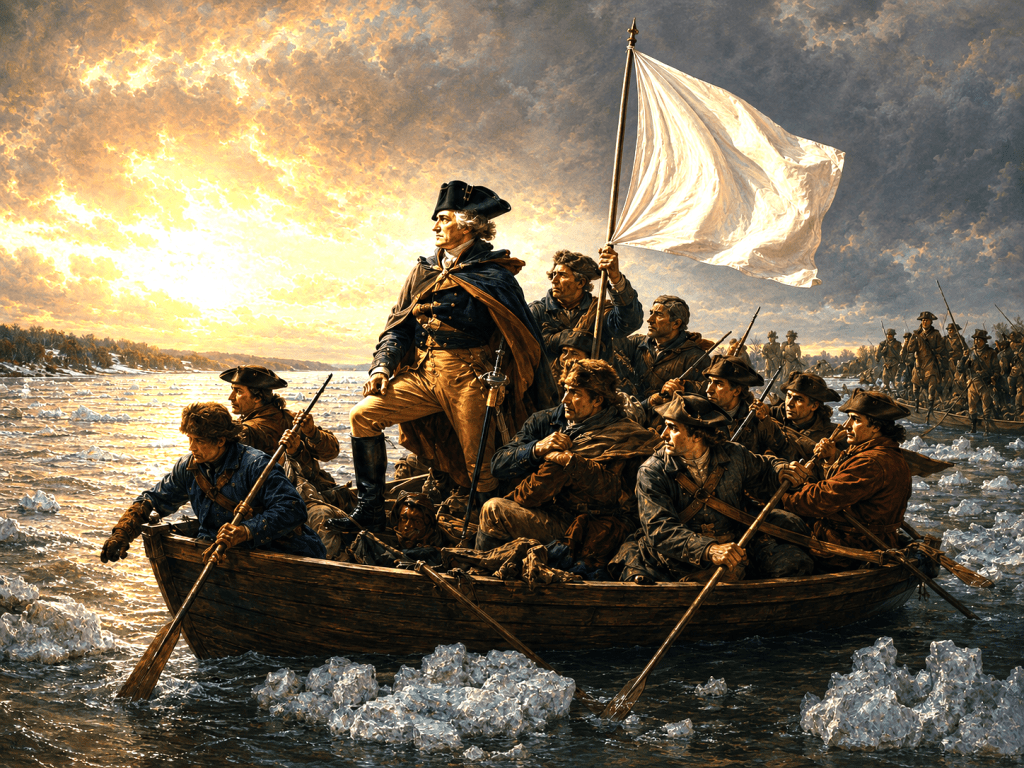
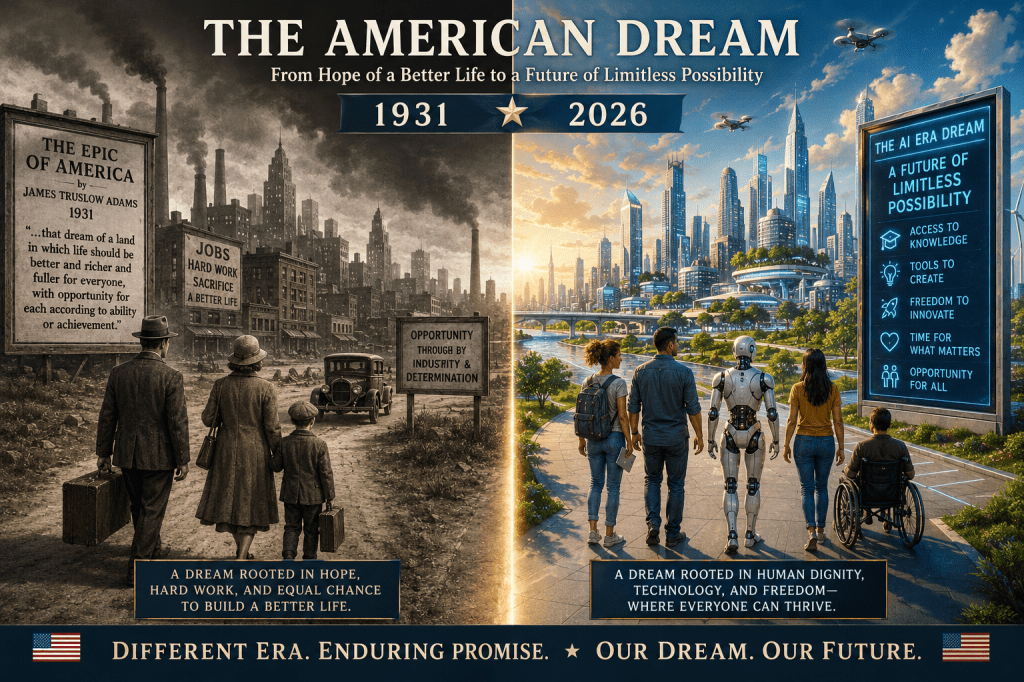
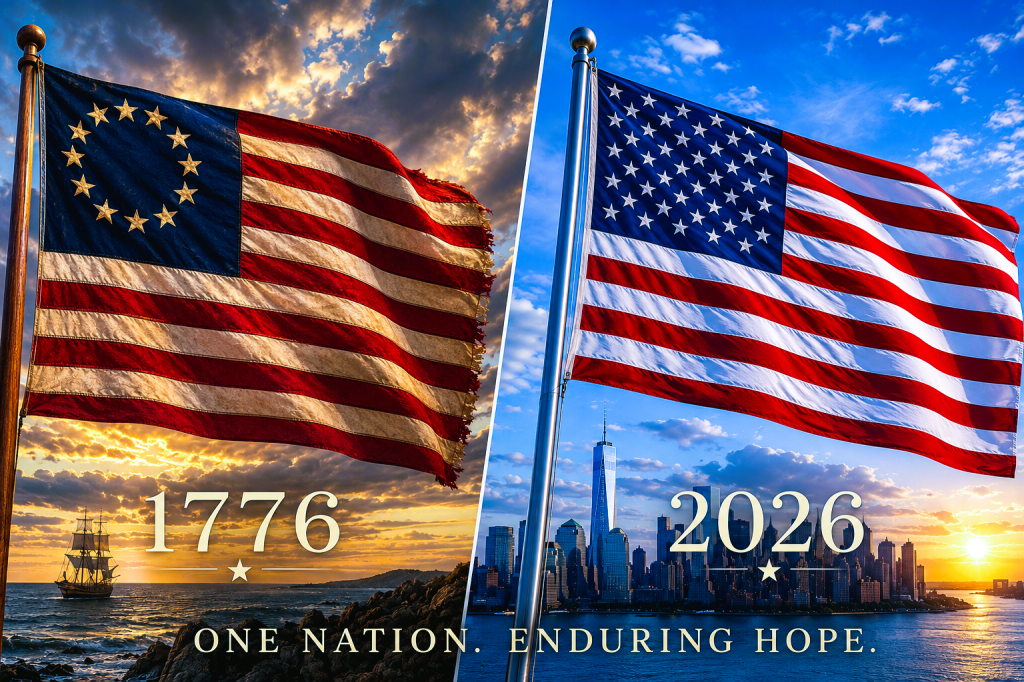
Two and a half centuries after fifty-six delegates to the Second Continental Congress affixed their signatures to a document announcing a new kind of nation, it is worth asking what that nation has actually given the world. The record is not without blemish: slavery endured for nearly a century after 1776, racial segregation for another, and the gap between America’s stated ideals and its practiced realities has been the central tension of its history. Yet the ledger, taken whole, shows a civilization that produced constitutional democracy, defeated the worst tyrannies of the modern age, rebuilt a shattered continent, eradicated one of history’s most feared diseases, and fed approximately one billion people who might otherwise have starved. The ten contributions that follow are gifts that, regardless of America’s internal contradictions, have altered the conditions of human life for people who never set foot on American soil.
The ranking reflects both scale and durability. A contribution that changed the fundamental structures of political, biological, or technological life ranks above one whose effects, however significant, were confined to a particular era or region. The rankings are necessarily judgments rather than measurements, and readers may reasonably rearrange several of these entries. What is harder to contest is the composition of the list itself.
Gift 1: Constitutional Democracy (July 4, 1776)
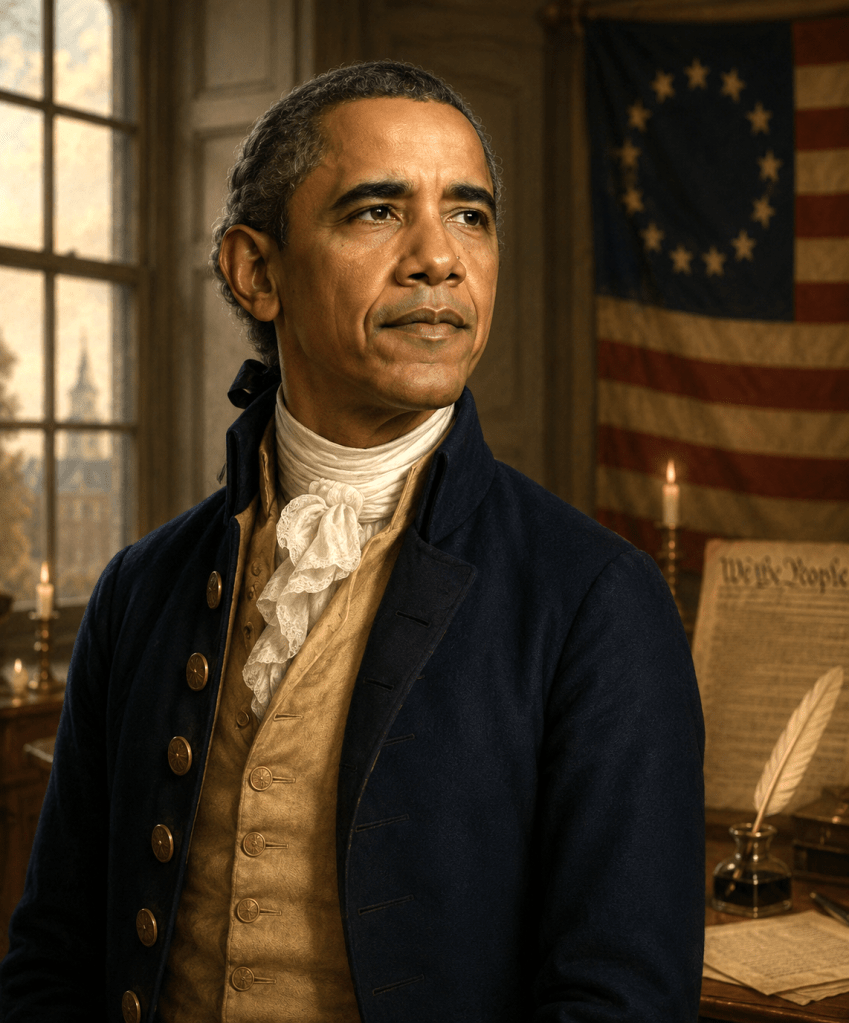
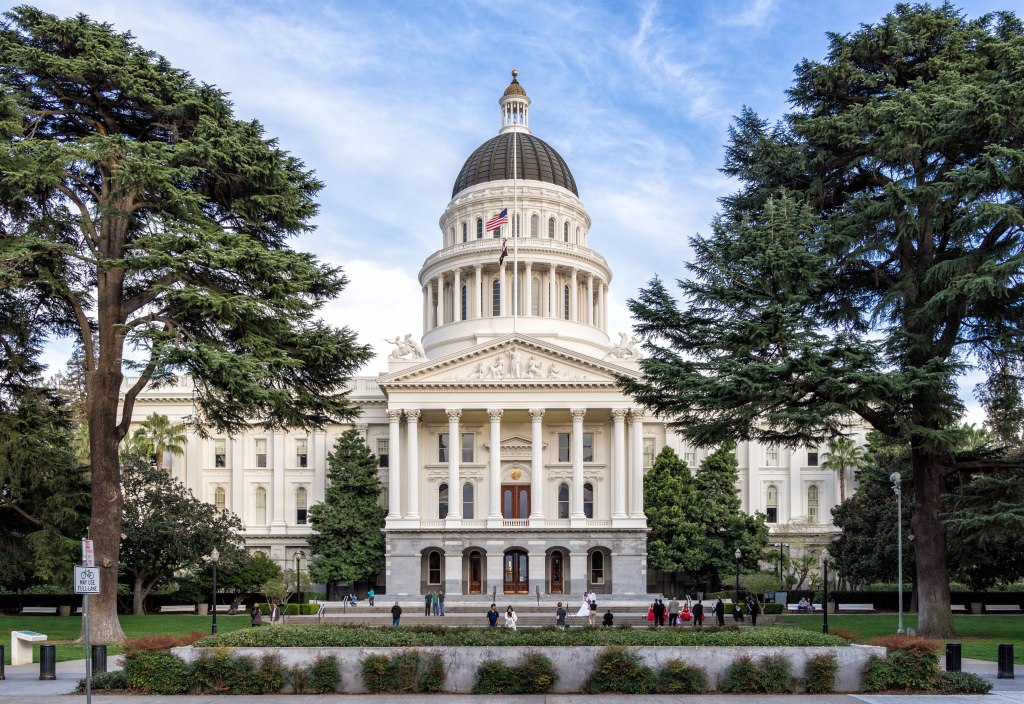
The leaders were Thomas Jefferson (principal drafter of the Declaration of Independence), James Madison (principal architect of the Constitution and Bill of Rights), Alexander Hamilton (co-author of The Federalist Papers and first Secretary of the Treasury), Benjamin Franklin, and George Washington, among the founding generation. The Declaration of Independence (1776), the U.S. Constitution (1787), and the Bill of Rights (1791) together constitute the first successful experiment in written constitutional self-government, establishing the philosophical and structural template for modern democracy. The Declaration was adopted on July 4, 1776, in Philadelphia. The Constitution was drafted in that same city during the summer of 1787 and ratified in 1788. The Bill of Rights was ratified on December 15, 1791, in Philadelphia, Pennsylvania, with the ratification debates unfolding across all thirteen original states.
Written constitutions are now nearly universal among independent nations, and the American model is the common ancestor of most of them. The Declaration’s second sentence—”We hold these truths to be self-evident, that all men are created equal, that they are endowed by their Creator with certain unalienable Rights, that among these are Life, Liberty and the pursuit of Happiness”—has been called one of the most significant and famed lines in world history (1). More than one hundred declarations of independence have been issued since 1776, from Haiti (1805) to Greece (1822) to India (1947), many echoing the American document’s language and structure (1,2). Argentina’s 1853 constitution and Brazil’s 1891 constitution replicated the U.S. Constitution’s institutional framework almost word for word; nationalists from José Rizal of the Philippines to Sun Yat-sen of China drew inspiration from American constitutional principles in their struggles for self-determination (3). No nation in the modern era has declared its sovereignty without some reference, explicit or tacit, to the American precedent.
Gift 2: Defeating Fascism in World War II (1945)
Notable leaders were President Franklin D. Roosevelt (commander-in-chief), General Dwight D. Eisenhower (Supreme Allied Commander, Europe), Admiral Chester Nimitz (Commander-in-Chief, Pacific Fleet), Generals George S. Patton and Omar Bradley, and approximately sixteen million American servicemen and women who served during the conflict. Following the attack on Pearl Harbor on December 7, 1941, the United States mobilized its industrial and military resources on a scale without parallel. American shipyards, factories, and farms supplied the Allied war effort across two oceans simultaneously. The D-Day landings of June 6, 1944—the largest seaborne invasion in history—opened the Western Front and compressed Germany between Allied armies advancing from the west and Soviet forces from the east. December 7, 1941 (Pearl Harbor) through September 2, 1945, when Japan signed the instruments of surrender aboard the USS Missouri in Tokyo Bay. Germany surrendered unconditionally on May 7, 1945 (4). The principal American theaters of operation included North Africa, Italy, Western Europe (from Normandy across the Rhine into Germany), and the Pacific Ocean from Guadalcanal to Okinawa.
Fascism’s defeat ended the Holocaust and prevented a regime that had murdered six million Jews and millions of others from consolidating permanent control over the European continent (5). The Allied victory also produced the Nuremberg trials—the first international tribunal to hold individuals personally accountable for crimes against humanity and war crimes, establishing precedents that reshaped international law and gave rise to the modern system of international criminal justice (5). The postwar American-led order established democratic institutions across Western Europe and Japan that endured: the Federal Republic of Germany and Japan became stable, prosperous democracies within a generation, a transformation that would have been unimaginable without the defeat of fascism and the American occupation policies that followed.
Gift 3: The Marshall Plan (1947)
The leaders were Secretary of State George C. Marshall and President Harry S. Truman, who together persuaded a skeptical Congress to fund the largest peacetime economic aid program in history. Marshall, who had commanded Allied forces in the Pacific during the war, regarded the reconstruction of Europe as a strategic and moral obligation. On June 5, 1947, at Harvard University’s commencement, Marshall delivered a speech of barely eleven minutes proposing American economic assistance for European reconstruction. His stated purpose was a policy “directed not against any country or doctrine but against hunger, poverty, desperation, and chaos” (6). Between 1948 and 1952, the United States transferred $13.3 billion—equivalent to roughly $137 billion today—to 17 Western European nations under the European Recovery Program (7,8). Marshall’s speech was delivered on June 5, 1947, in Cambridge, Massachusetts. The European Recovery Program operated from April 1948 to December 1951. Key locations were Harvard Yard (the speech); Western Europe, from France and Britain to Greece and Turkey (the implementation).
The Marshall Plan is perhaps history’s most consequential act of national generosity toward former adversaries and wartime allies alike. West Germany, not long before the aggressor in the deadliest war in history, received aid alongside its former victims and produced what became known as the Wirtschaftswunder—the economic miracle that transformed it into the anchor of Western European democracy (8). The plan gave birth to the Organization for European Economic Cooperation, which eventually became the OECD, institutionalizing transatlantic economic cooperation that endures to this day (8). By preventing Western Europe’s economic collapse in the immediate postwar years, the Marshall Plan blocked the Soviet-backed communism that was already absorbing Eastern Europe from advancing into the continent’s heartland. Nothing quite like it—a victorious nation spending enormously to rebuild the countries it had defeated—had been attempted before.
Gift 4: The Internet (1969)
Notable leaders were J.C.R. Licklider, who as director of ARPA’s Information Processing Techniques Office first articulated the vision of an interconnected global network; Robert Taylor, who secured funding for ARPANET; Leonard Kleinrock, who hosted the first network node at UCLA; and Vinton Cerf and Robert Kahn, who designed the TCP/IP protocols that became the internet’s operating language. In 1969, the U.S. Defense Department’s Advanced Research Projects Agency connected computers at four university research centers through a packet-switched network called ARPANET—the world’s first. Over the following two decades, the network expanded, protocols were standardized, and in 1991 the World Wide Web made the internet navigable by ordinary users. The modern internet, now reaching more than five billion people, traces its lineage directly to ARPANET. The first ARPANET message was transmitted on October 29, 1969, from Kleinrock’s lab at the University of California, Los Angeles, to a terminal at the Stanford Research Institute. ARPANET was formally decommissioned in 1990 as commercial internet infrastructure took over (9,10). Key locations were UCLA (first network node), Stanford Research Institute (second node), UC Santa Barbara (third), and the University of Utah (fourth). The backbone spread across the United States before going global.
No American invention has more thoroughly reorganized daily life on earth. The internet has restructured commerce, journalism, education, medicine, entertainment, and political organizing. It allows a smallholder farmer in sub-Saharan Africa to check commodity prices in real time, a dissident in Minsk to share evidence of state violence with the world, and a student in rural Pakistan to take university-level courses free of charge. Whatever unease surrounds the internet’s social effects, its foundational architecture—ARPANET, TCP/IP, the internet backbone—was an American government investment, paid for by American taxpayers, and released to the world without patent or royalty.
Gift 5: The Green Revolution (1943)
The leader was Norman Ernest Borlaug (1914–2009), an agronomist born in Cresco, Iowa, who spent the better part of his career working in Mexico, Pakistan, and India under conditions that combined scientific precision with physical hardship. He was awarded the Nobel Peace Prize in 1970. Beginning in the early 1940s at the International Maize and Wheat Improvement Center in Mexico (then called the Cooperative Wheat Research and Production Program), Borlaug developed successive generations of high-yield, disease-resistant “dwarf” wheat varieties that channeled energy into grain rather than stalk. His methods, exported first across Mexico, then to South Asia and Latin America, transformed food production across the developing world. Borlaug’s key research began in 1943 in Mexico’s Sonoran Desert and Toluca Valley. By the mid-1960s, his varieties were planted across Pakistan and India, where yields nearly doubled within five years (11). Research originated at the Centro Internacional de Mejoramiento de Maíz y Trigo (CIMMYT) in Mexico and expanded to the wheat fields of Pakistan and India.
The results are almost beyond reckoning. In Pakistan, wheat production rose from 4.6 million tons in 1965 to 7.3 million tons in 1970; in India, from 12.3 million tons in 1965 to 20.1 million tons in 1970, making that country self-sufficient in cereal production by 1974 (11,12). When the Nobel Committee awarded Borlaug the Peace Prize, it credited him with averting a famine that could have cost hundreds of millions of lives. Journalist Gregg Easterbrook, writing in The Atlantic in 1997, estimated that Borlaug’s methods had prevented one billion deaths. Josette Sheeran, then executive director of the World Food Programme, endorsed that estimate when she said Borlaug “saved more lives than any man in human history” (13). He holds the Nobel Peace Prize, the Presidential Medal of Freedom, and the Congressional Gold Medal—the only person on record to have earned all three.
Gift 6: Penicillin Mass Production and the Polio Vaccine (1955)
The leaders were American pharmaceutical companies, led by Pfizer’s research team in Brooklyn, New York (penicillin mass production); and Dr. Jonas Salk with his colleagues at the University of Pittsburgh (polio vaccine). Salk’s field trial was organized by the National Foundation for Infantile Paralysis and remains the largest controlled medical experiment ever conducted. Although Alexander Fleming discovered penicillin in Britain in 1928, it was American industry—working under wartime government contracts—that solved the mass production problem through deep-tank fermentation, a process pioneered chiefly by Pfizer. Scientists manufactured 2.3 million doses in preparation for the D-Day landings alone (14). The Salk polio vaccine, announced on April 12, 1955, resulted from a four-year trial involving 1.6 million children in the United States, Canada, and Finland (15). Pfizer’s deep-tank fermentation process was developed in 1943–1944 in Brooklyn, New York. The Salk vaccine was announced on April 12, 1955, at the University of Michigan in Ann Arbor (15). Key locations were Pfizer’s Brooklyn plant (penicillin); the University of Pittsburgh and clinical trial sites across North America and Finland (vaccine development); Ann Arbor, Michigan (the public announcement).
Mass-produced penicillin changed medicine’s fundamental relationship with bacterial infection, converting previously fatal conditions—septicemia, pneumonia, syphilis, wound gangrene—into treatable diseases and saving enormous numbers of Allied soldiers in the final year of the war (14). Salk’s vaccine achieved something once thought impossible: the near-elimination of a viral disease that had paralyzed or killed hundreds of thousands of children every year. Annual U.S. polio cases fell from roughly 58,000 in 1952 to just 161 by 1961 (15). By 1994, polio had been eradicated from the entire Western Hemisphere. Salk’s decision not to patent the vaccine—he famously asked reporters, “Could you patent the sun?”—meant the formula was immediately available to any nation that could manufacture it (16), a choice that represents one of the greatest acts of medical generosity in the twentieth century.
Gift 7: Space Exploration and the Moon Landing (1961)
Leaders were President John F. Kennedy, who set the goal before a joint session of Congress; NASA Administrator James Webb, who built the organizational infrastructure to achieve it; and the Apollo 11 crew—Neil Armstrong (commander), Buzz Aldrin (lunar module pilot), and Michael Collins (command module pilot)—along with the roughly 400,000 engineers, scientists, and technicians who supported the mission. On May 25, 1961, Kennedy challenged the nation to land a man on the Moon and return him safely before the decade ended. Eight years and two months later, at 10:56 p.m. EDT on July 20, 1969, Neil Armstrong descended the ladder of the lunar module Eagle and stepped onto the Moon’s surface, transmitting: “That’s one small step for man, one giant leap for mankind.” The crew splashed down safely in the Pacific Ocean on July 24, 1969. Kennedy’s challenge was issued on May 25, 1961. The Moon landing occurred on July 20, 1969, in the Sea of Tranquility. Launch from Cape Canaveral, Florida; landing in Mare Tranquillitatis (Sea of Tranquility) on the lunar surface.
An estimated 650 million people—roughly one in five humans then alive—watched the Moon landing live, making it the most widely shared single moment in recorded history to that point (17,18). Apollo’s extraordinary engineering demands accelerated advances in miniaturized computing, materials science, and telecommunications that rippled through every subsequent technology industry (18). GPS navigation, satellite communications, and the medical imaging systems in use today all carry debts to the program. Beyond technology, Apollo demonstrated that sustained human effort and public investment could accomplish something the world had considered physically impossible as recently as 1960. The photograph of Earth rising above the lunar horizon, taken by the crew of Apollo 8 in December 1968, became the defining image of the modern environmental movement and the first visual evidence, available to every person on the planet, that Earth is a single, finite, and fragile body.
Gift 8: Aviation (1903)
The leaders were Wilbur Wright (1867–1912) and Orville Wright (1871–1948), self-taught bicycle mechanics from Dayton, Ohio, who approached the problem of powered flight as a systematic engineering challenge rather than an act of daring. At 10:35 a.m. on December 17, 1903, the Wright Flyer lifted from the sands of Kill Devil Hills, near Kitty Hawk, North Carolina, in the first powered, controlled, sustained heavier-than-air flight in history. The first of four flights that morning lasted 12 seconds and covered 120 feet. The fourth and final flight covered 852 feet in 59 seconds (19,20). The date was December 17, 1903, at Kill Devil Hills, Dare County, North Carolina. Key location was Kill Devil Hills, on the Outer Banks of North Carolina. The brothers chose the site for its consistent winds and soft sand, which reduced the danger of injury during test crashes.
The Wright brothers did not merely build an airplane; they established aeronautical engineering as a systematic discipline, using a homemade wind tunnel and iterative flight testing to derive the principles every aircraft designer has followed since (19). Within two decades, powered flight had changed the character of warfare. Within four, it had compressed the planet. Commercial aviation now carries more than four billion passengers annually, makes same-day organ transplant possible across continental distances, and has woven distant cultures together in ways that maritime shipping never could. The twentieth-century world—in commerce, diplomacy, disaster relief, humanitarian aid, and tourism—was shaped in decisive measure by the twelve-second flight at Kitty Hawk.
Gift 9: The Universal Declaration of Human Rights (1948)
The leaders were Eleanor Roosevelt, who chaired the United Nations Commission on Human Rights through the drafting process; René Cassin of France and Charles Malik of Lebanon, who served as principal co-drafters; and the delegates of the 48 nations that voted to adopt the Declaration. Adopted by the United Nations General Assembly on December 10, 1948, by a vote of 48 to 0, the Universal Declaration of Human Rights is the first document in history to articulate a comprehensive set of rights belonging to every human being regardless of nationality, ethnicity, religion, or sex—thirty articles ranging from freedom from torture and the right to a fair trial to the right to education and participation in cultural life. The final vote was taken at four minutes to midnight on December 9, 1948 (Paris time), and the Declaration was formally adopted in the early hours of December 10, now observed worldwide as Human Rights Day (21). The location was Palais de Chaillot, Paris, France.
Eleanor Roosevelt herself regarded the Declaration as her greatest achievement—more consequential than anything she had accomplished as First Lady. History has supported that judgment. The UDHR is the foundational document of the entire modern human rights system: it gave rise to the International Covenant on Civil and Political Rights, the Convention Against Torture, the Convention on the Rights of the Child, and hundreds of national constitutions that incorporated its language verbatim. Roosevelt chaired over 3,000 hours of deliberation to reach agreement among nations whose political systems and cultural traditions were profoundly at odds (21,22). The task required her to convince a resistant U.S. State Department to accept economic and social rights alongside civil and political ones, and simultaneously to persuade the Soviet bloc not to obstruct the civil and political provisions (22). The Declaration’s influence has grown rather than faded: it is cited today in domestic courts, international tribunals, and constitutions on every inhabited continent, serving as the moral and legal vocabulary through which people articulate what they are owed by their governments and by one another.
Gift 10: American Music—Jazz, Blues, and Rock and Roll (1895)
The leaders represented a generation of African American musicians—among them Louis Armstrong, Duke Ellington, Robert Johnson, Muddy Waters, Chuck Berry, and Little Richard—whose work became the grammatical foundation of virtually all popular music in the twentieth and twenty-first centuries. Jazz originated in New Orleans in the late nineteenth and early twentieth centuries, rooted in African rhythmic traditions, the blues of the Mississippi Delta, and the harmonic language of European music. Rock and roll emerged in the early 1950s from the same soil—rhythm and blues, gospel, and country—and swept the globe after 1955. Both genres became the bedrock of modern popular music worldwide. Jazz took shape in New Orleans from roughly 1895 to 1920. The blues crystallized in the Mississippi Delta between 1900 and 1930. Rock and roll received its canonical recordings from Berry, Little Richard, and Presley between 1954 and 1958. Key locations were New Orleans, Louisiana (jazz); the Mississippi Delta (blues); Memphis, Tennessee, and Chicago, Illinois (electric blues and rock and roll).
No American export has traveled farther or taken deeper root. The Beatles, the most commercially successful musical act in history, credited American blues and early rock and roll as the direct source of their work. The Rolling Stones took their name from a Muddy Waters song. Jazz bands formed from Tokyo to Oslo to Havana, reinterpreting and localizing an art form whose global reach Carnegie Hall’s timeline of African American music traces across every inhabited continent (24). Beginning in 1956, the U.S. State Department sponsored jazz musicians as cultural ambassadors, dispatching Louis Armstrong, Dizzy Gillespie, Duke Ellington, and Dave Brubeck to the Middle East, Asia, and Africa during the Cold War on the theory that a trumpet could go where a diplomat could not (23). The theory proved sound. American music did not merely entertain the world; it gave the world a common emotional language at a moment when political ideologies were dividing it.
References
1. Constitution Center. “The Declaration of Independence’s Influence Around the World.” https://constitutioncenter.org/essays/the-declaration-of-independences-influence-around-the-world
2. Gilder Lehrman Institute of American History. “The Declaration of Independence in Global Perspective.” https://www.gilderlehrman.org/history-resources/essays/declaration-independence-global-perspective
3. National Archives (Prologue Blog). “Global Influence of the U.S. Constitution.” https://prologue.blogs.archives.gov/2021/09/17/global-influence-of-the-u-s-constitution/
4. The National WWII Museum. “The End of World War II, 1945.” https://www.nationalww2museum.org/war/topics/end-world-war-ii-1945
5. United States Holocaust Memorial Museum, Holocaust Encyclopedia. “Defeat of Nazi Germany, 1942–1945.” https://encyclopedia.ushmm.org/content/en/map/defeat-of-nazi-germany-1942-1945
6. Organisation for Economic Co-operation and Development. “The ‘Marshall Plan’ Speech at Harvard University, 5 June 1947.” https://www.oecd.org/en/about/history/the-marshall-plan-speech-at-harvard-university-5-june-1947.html
7. Library of Congress. “For European Recovery: The Fiftieth Anniversary of the Marshall Plan.” https://www.loc.gov/exhibits/marshall/marsh-overview.html
8. U.S. Department of State, Office of the Historian. “Marshall Plan, 1948.” https://history.state.gov/milestones/1945-1952/marshall-plan
9. Britannica. “ARPANET.” https://www.britannica.com/topic/ARPANET
10. History.com. “The Invention of the Internet.” https://www.history.com/articles/invention-of-the-internet
11. Britannica. “Norman Ernest Borlaug.” https://www.britannica.com/biography/Norman-Borlaug
12. PBS American Experience. “The Green Revolution: Norman Borlaug and the Race to Fight Global Hunger.” https://www.pbs.org/wgbh/americanexperience/features/green-revolution-norman-borlaug-race-to-fight-global-hunger/
13. University of Minnesota. “The Man Who Saved a Billion Lives.” https://twin-cities.umn.edu/news-events/man-who-saved-billion-lives
14. American Chemical Society. “Penicillin Production through Deep-tank Fermentation.” https://www.acs.org/education/whatischemistry/landmarks/penicillin.html
15. National Institutes of Health, PubMed Central. “Jonas Salk (1914–1995): Pioneering the Fight Against Polio and Beyond.” https://www.ncbi.nlm.nih.gov/pmc/articles/PMC11489307/
16. Salk Institute for Biological Studies. “The Day Polio Met Its Match: Celebrating 70 Years of the Salk Vaccine.” https://www.salk.edu/news-release/the-day-polio-met-its-match-celebrating-70-years-of-the-salk-vaccine/
17. NASA. “Apollo 11.” https://www.nasa.gov/mission/apollo-11/
18. National Air and Space Museum. “Apollo 11 and the World.” https://airandspace.si.edu/stories/editorial/apollo-11-and-world
19. National Air and Space Museum. “The Wright Brothers Made History at Kitty Hawk.” https://airandspace.si.edu/stories/editorial/wright-brothers-made-history-kitty-hawk
20. NASA. “120 Years Ago: The First Powered Flight at Kitty Hawk.” https://www.nasa.gov/history/120-years-ago-the-first-powered-flight-at-kitty-hawk/
21. National Park Service. “Eleanor Roosevelt and the Universal Declaration of Human Rights.” https://www.nps.gov/elro/learn/historyculture/udhr.htm
22. History.com. “How Eleanor Roosevelt Pushed for a Universal Declaration of Human Rights.” https://www.history.com/articles/eleanor-roosevelt-universal-declaration-human-rights
23. U.S. Department of State. “Jazz Diplomacy: Then and Now.” https://2021-2025.state.gov/jazz-diplomacy-then-and-now/
24. Carnegie Hall. “Global Jazz—Timeline of African American Music.” https://timeline.carnegiehall.org/stories/global-jazz
###
Filed under: Uncategorized |






























































































































































































































































































































































































































































Leave a Reply