






By Jim Shimabukuro (assisted by Perplexity)
Editor
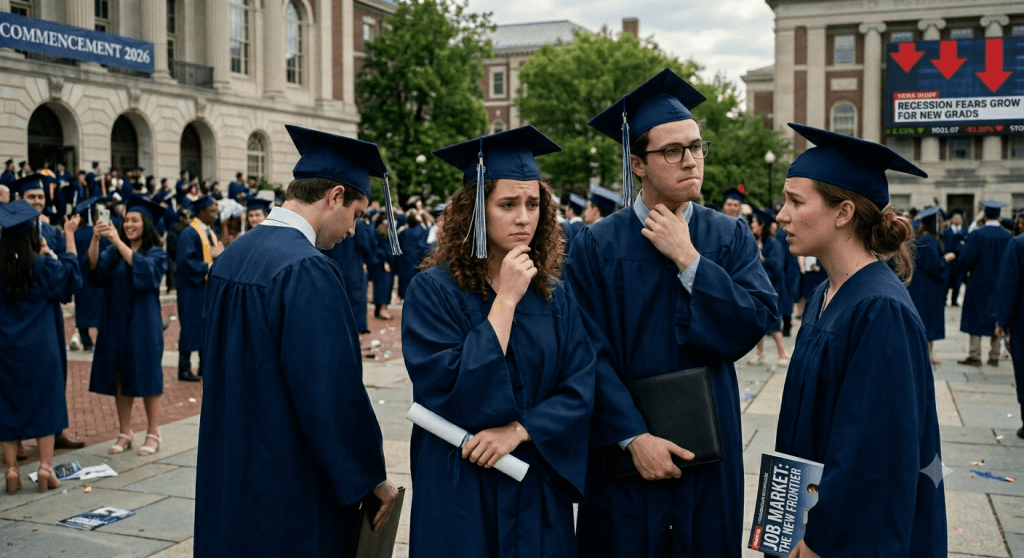
There is a kernel of truth, but the claim is usually overstated. Recent, credible evidence supports a narrower version of it: many students and adults can read at only modest comprehension levels, and many younger people have limited experience with cursive, but that does not mean “college graduates can’t read critically” in any absolute sense (1,2,6).

Reading skill claims
The strongest evidence comes from large-scale assessments, not viral anecdotes. The 2024 NAEP Grade 12 Reading report says the average U.S. twelfth-grade reading score was 3 points lower than in 2019 and 10 points lower than in 1992, and it explains that NAEP Proficient is not the same as grade-level proficiency in the everyday sense (2). The 2023 U.S. PIAAC results show that 13 percent of adults with more than a high school education were at literacy Level 1 or below, up from 6 percent in 2017, which supports the idea that some college-educated adults have weak functional literacy skills (6). These are credible, public, government-backed data sources, but they measure broad literacy and comprehension more than “critical reading” as a single skill (2,6).
A useful nuance is that “10th-grade level” claims often come from reporting shorthand, not from a precise educational diagnosis. NAEP’s own description of the twelfth-grade reading scale shows that the Basic level mainly involves locating and identifying relevant details, while Proficient requires connecting details and drawing complex inferences; that gap helps explain why people interpret ordinary adult reading performance as “below critical reading” (2). In other words, the evidence supports concern about many readers’ ability to handle inference, evidence, and argument, but it does not support the sweeping claim that graduates broadly cannot read critically (2,6).
Critical reading study
A 2025 peer-reviewed study directly relevant to critical reading is “Critical Reading: Which Measures Best Predict Academic Performance in Undergraduate Students?” by researchers publishing in a Taylor & Francis journal. The authors were academics studying undergraduates in two samples of 100 students each, and the paper was published on April 2, 2025. Based on the abstract, their conclusion was that ACT Reading scores predicted GPA, while subjective measures of metacognitive awareness and critical reading did not predict GPA in either sample. The study matters because it suggests that some common self-report or classroom-oriented notions of “critical reading” may not track academic success as well as standardized reading performance does (1).
How did they support that claim? They used two undergraduate samples and a direct replication design, which strengthens confidence that the result was not a one-off finding. They compared multiple reading-related predictors, including comprehension, vocabulary, metacognitive awareness, and critical reading, against GPA. Since the sample is small and limited to undergraduates, it supports a careful claim about academic prediction rather than a general conclusion about all college graduates. Still, it is relevant because it shows that even in college settings, some reading-related abilities are not translating cleanly into measurable academic outcomes (1).
Adult literacy evidence
The 2023 U.S. PIAAC results from NCES are especially important because they include adults of all education levels, not just current students. NCES reports that literacy Level 1 or below increased between 2017 and 2023 across all educational attainment groups, including adults with more than a high school education. The authors here are not individual researchers but a federal statistical agency working with OECD’s PIAAC framework, and the findings are based on nationally representative survey data. This matters because it gives the claim a stronger foundation than social-media anecdotes: some college-educated adults do have weak literacy skills, even if that does not apply to all of them (6).
The support is statistical and comparative rather than experimental. PIAAC measures literacy, numeracy, and adaptive problem solving and allows comparisons across years, showing a deterioration in some literacy indicators between 2017 and 2023. That is enough to justify concern about reading readiness and workforce literacy, but not enough to conclude that a whole generation “cannot read critically.” The more defensible statement is that a meaningful minority of adults struggle with basic-to-intermediate literacy tasks, which can make higher-level critical reading harder (6).
Cursive reading claim
The cursive rumor is more plausible, but it is also narrower than people make it sound. There is evidence and repeated reporting that many students have limited ability to read cursive because formal instruction declined after cursive was deemphasized in U.S. standards (4,5). The University of Iowa’s 2024 discussion of cursive notes that students can have difficulty reading cursive, and it points to research and teaching efforts aimed at improving that skill (4). A 2025 FGCU library post similarly says it has become increasingly common to encounter students unable to read cursive handwriting, though that is a professional observation rather than a controlled study (3).
The better evidence here is indirect: the issue is not that college students are universally unable to read cursive, but that many are less practiced than older generations (4,5). The 2026 Nature piece notes that handwriting instruction, including cursive, had faded from curricula in places such as the United States, while some states are now bringing cursive back. That context helps explain why some students struggle with historical manuscripts, notes, or signatures, especially if they have never been explicitly taught cursive decoding (5). The claim has truth in a practical sense, but it is a skill-gap issue, not proof of general illiteracy (3-5).
Conclusion
Taken together, the best evidence supports three narrower conclusions. First, U.S. reading performance is concerning at the population level, including among some adults with college experience (2,6). Second, “critical reading” is harder to verify and less often measured directly, but recent undergraduate research suggests that some reading-related measures do not predict academic success very well (1). Third, cursive reading is a real weak point for many younger readers because it is less commonly taught and practiced (3-5).
So the rumor is partly true only if it is translated into something precise: many students and graduates have weaker reading and handwriting-literacy skills than people assume, especially for inference-heavy reading and cursive text (1-6). It is not accurate to say that high school graduates or college graduates in general cannot read critically (1,2,6).
References
- Critical Reading: Which Measures Best Predict Academic Performance in Undergraduate Students? https://www.tandfonline.com/doi/full/10.1080/10790195.2025.2489925?src=exp-la
- NAEP Report Card: Grade 12 Reading https://www.nationsreportcard.gov/reports/reading/2024/g12/
- The Kids Can’t Read Cursive!? – FGCU library https://library.fgcu.edu/blogs/system/the-kids-cant-read-cursive
- Looping Back to Cursive Handwriting https://irrc.education.uiowa.edu/blog/2024/10/looping-back-cursive-handwriting
- How learning handwriting trains the brain: the science behind cursive’s comeback https://www.nature.com/articles/d41586-026-00320-6
- PIAAC Highlights of U.S. National Results https://nces.ed.gov/surveys/piaac/2023/national_results.asp
###
Filed under: Uncategorized |


























































































































































































































































































































































































































































































Leave a Reply