






By Jim Shimabukuro (assisted by Claude)
Editor
Summary: NPUs are quietly becoming the new backbone of everyday computing — because the shift to on‑device AI is already reshaping how fast, private, and battery‑efficient our machines feel. –Copilot

Neural processing units (NPUs) have gone from spec-sheet trivia to the headline of this summer’s sales flyers. Are they a marketing invention, or the biggest change in personal computing since the graphics card? A look at the evidence, the machines, and the people already living with them.
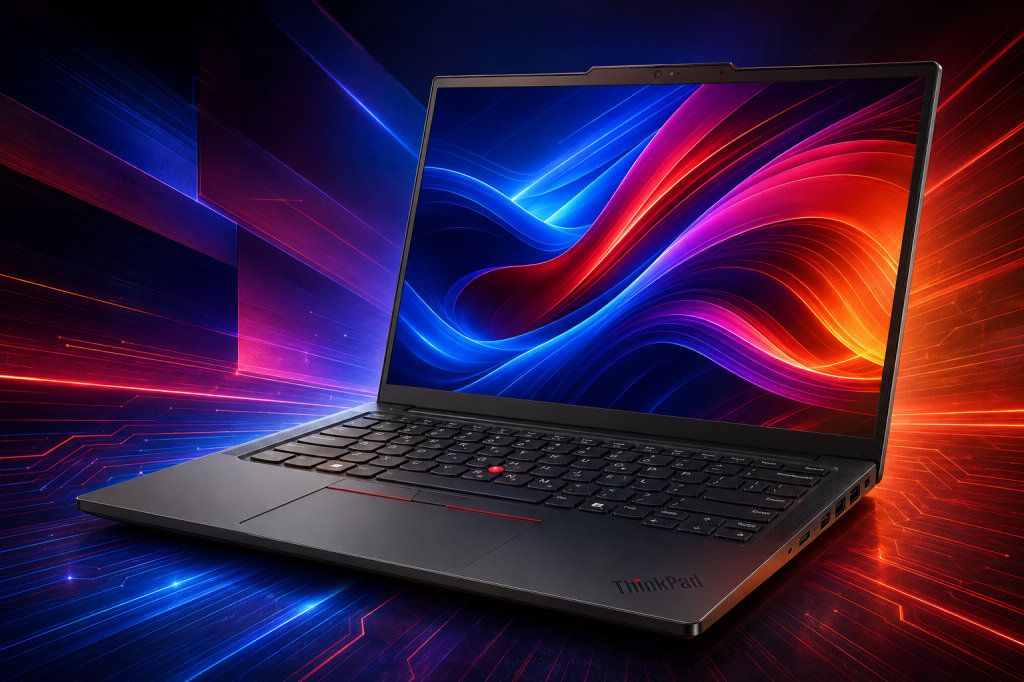
If you skimmed Best Buy’s Fourth of July sale this year, you saw the future of the personal computer priced like a back-to-school special. An Acer Swift Go 16 AI with Intel’s newest Core Ultra 7 processor, 32GB of memory, and an OLED touchscreen was marked down from $1,550 to $899.99. A Samsung Galaxy Book6 and a Lenovo Yoga 7a with an AMD Ryzen AI chip each went for $900, and an HP OmniBook running on a Qualcomm Snapdragon processor dropped to $550 [1]. Nearly every one of those machines carried the same badge, “Copilot+ PC,” and every ad led not with gigahertz or screen size but with a part most shoppers had never heard of three years ago: the NPU.
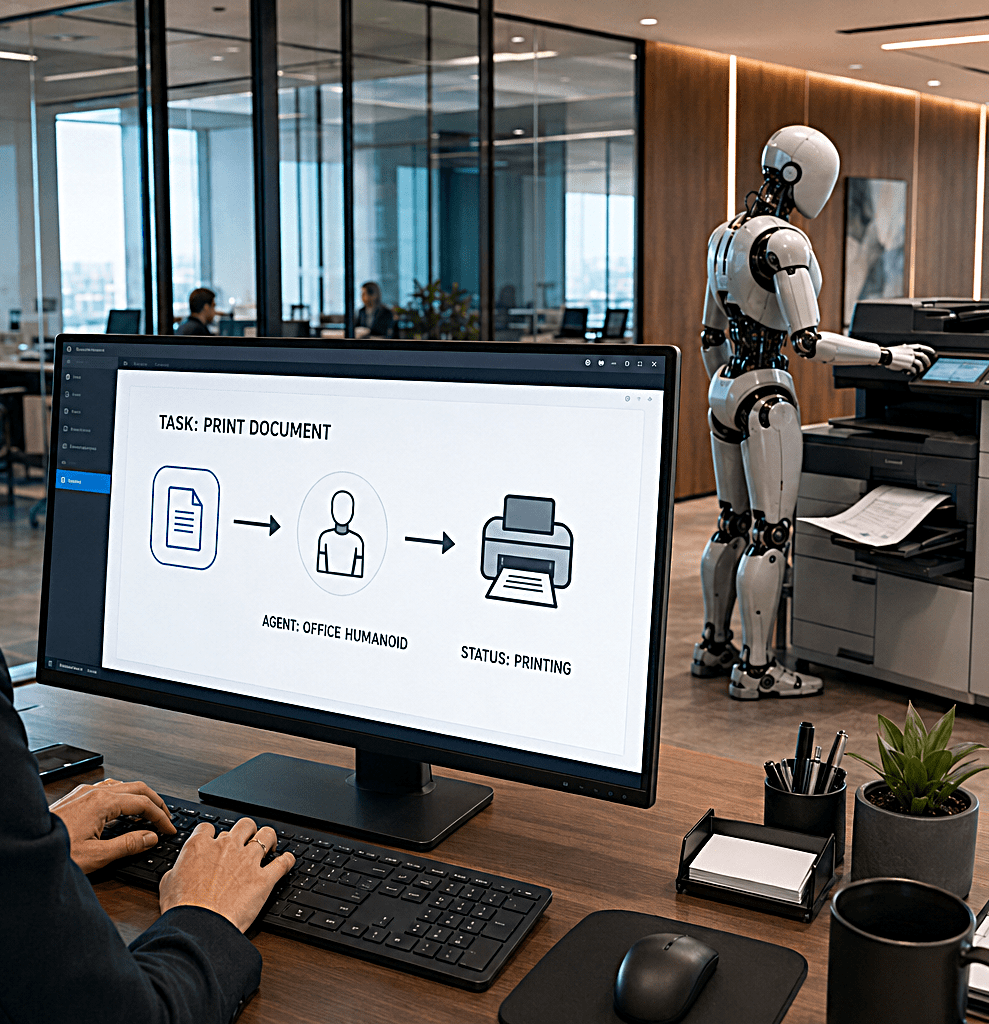
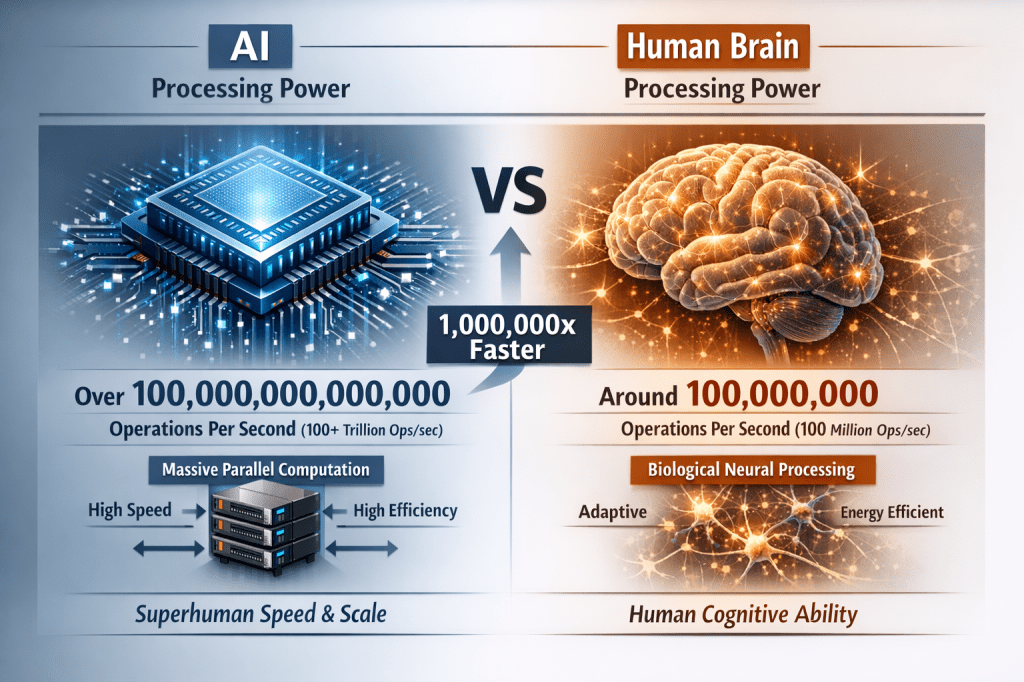
A neural processing unit is the third major processor to move into the personal computer, and the division of labor is simple enough. The CPU is the generalist that runs your operating system and applications. The GPU is the specialist that draws graphics and, in recent years, moonlights as an AI workhorse. The NPU does one thing: the repetitive matrix arithmetic that underlies neural networks, the math behind transcription, image recognition, translation, and language models. It performs that work at a fraction of the electrical power the CPU or GPU would burn on the same task, which is why its performance is measured in TOPS, or trillions of operations per second, and why its arrival matters most on battery-powered machines [2]. When your laptop blurs your background on a video call all afternoon without spinning a fan, that is the NPU earning its keep.
Hype, or the natural next step? The honest answer is that the NPU is both a genuine architectural shift and, at this moment, an overpromoted one. The substance first. Analysts who track the industry no longer treat AI-capable PCs as a niche: Gartner estimated they would account for 31 percent of worldwide PC shipments by the end of 2025 [3], projects roughly 143 million units and 55 percent of the market in 2026 [4], and Counterpoint Research similarly expects NPU-equipped machines to pass half of global shipments this year [5]. Within a few product cycles, buying a laptop without an NPU will be like buying one without Wi-Fi, not because you asked for it, but because the silicon simply ships that way.
Now the caveat, and it is a real one. Daniel Rubino, editor-in-chief of Windows Central and a reviewer of laptops for nearly two decades, opened 2026 by warning that the hype may be running ahead of reality. His complaint is not that the hardware is weak but that the software has not caught up: Microsoft’s Copilot assistant still runs almost entirely in the cloud and “never touches your NPU,” while the features that do use it remain a short list. He invokes Windows RT, Microsoft’s abandoned 2012 experiment, as the cautionary ghost, though he concedes the risk to buyers is low because the NPU is not an add-on you pay extra for, and Snapdragon machines in particular deliver “real” benefits like exceptional battery life regardless [6]. Dell executives said the quiet part out loud at CES 2026, acknowledging that the AI-PC pitch had largely failed to resonate with consumers, who found the label more confusing than compelling [7]. So the skeptics have a point about marketing. What they no longer dispute is the direction of travel.
The machines in this July’s ads are built on a generation of chips that arrived over the past ten months, and the specifications tell you how seriously the industry is taking this. Qualcomm announced its Snapdragon X2 Elite and X2 Elite Extreme in September 2025: 3-nanometer Arm processors with up to 18 cores, clock speeds reaching a record 5 GHz, and a Hexagon NPU rated at 80 TOPS, the fastest yet fitted to a laptop [8]. Devices carrying them, including Microsoft’s Surface Laptop line and HP’s OmniBook X, reached shelves in the first half of 2026 [9]. Intel answered at CES 2026 with the Core Ultra Series 3, code-named Panther Lake, the first PC platform built on its 18A process; its NPU delivers 50 TOPS on its own and up to 180 TOPS across the whole chip when the GPU joins in [10]. AMD’s Ryzen AI 400 series fills out the mainstream, powering many of the sub-$1,000 deals [1]. Apple, which never uses the term NPU, moved in the same direction: its M5 chip, launched in October 2025, pairs a 16-core Neural Engine with a neural accelerator inside every GPU core, delivering over four times the peak AI compute of the M4 [11]. Microsoft’s Copilot+ badge sits on top of all the Windows entries, certifying an NPU of at least 40 TOPS and 16GB of memory, the floor required to run its on-device AI features [12].
Specifications are abstractions; daily use is the test. The tech writer ELLA spent three months with current Copilot+ machines and published a detailed account in June. Her findings are worth quoting because they are concrete. Windows Recall, the searchable visual memory that caused a privacy uproar at its 2024 announcement and was rebuilt as an opt-in, locally encrypted feature, found “that chart about quarterly projections I was looking at Tuesday” in under two seconds. Click to Do, which lets you act on anything on screen, summarizing a paragraph, translating a caption, pulling text from a screenshot, saved her 20 to 30 minutes on a heavy writing day. Live Captions subtitled Spanish-language video in real time with no internet connection at all. And after Windows Studio Effects cleaned up her webcam feed through the NPU, a colleague asked whether she had bought a new camera. Her verdict on the Surface Laptop she used as her primary machine for two weeks: “I stopped thinking about the battery, stopped thinking about performance, and just worked” [13].
The pattern repeats beyond reviewers. Windows Central’s survey of NPU software found the chip doing quiet, useful work in Adobe’s photo tools, in videoconferencing apps, and most strikingly in Cephable, an accessibility program that lets people control a computer with head movements, facial expressions, and voice, processing all of that video on the NPU so the data never leaves the machine [14]. That last detail points to the NPU’s most underrated argument: privacy. Work that once required a round trip to a data center, transcription, translation, screen search, now happens on your desk, offline.
Even Rubino, the skeptic, allows that Recall is “super impressive” and barely dents battery life [6]. The complaint is not that the NPU fails at its job; it is that not enough software gives it a job yet.
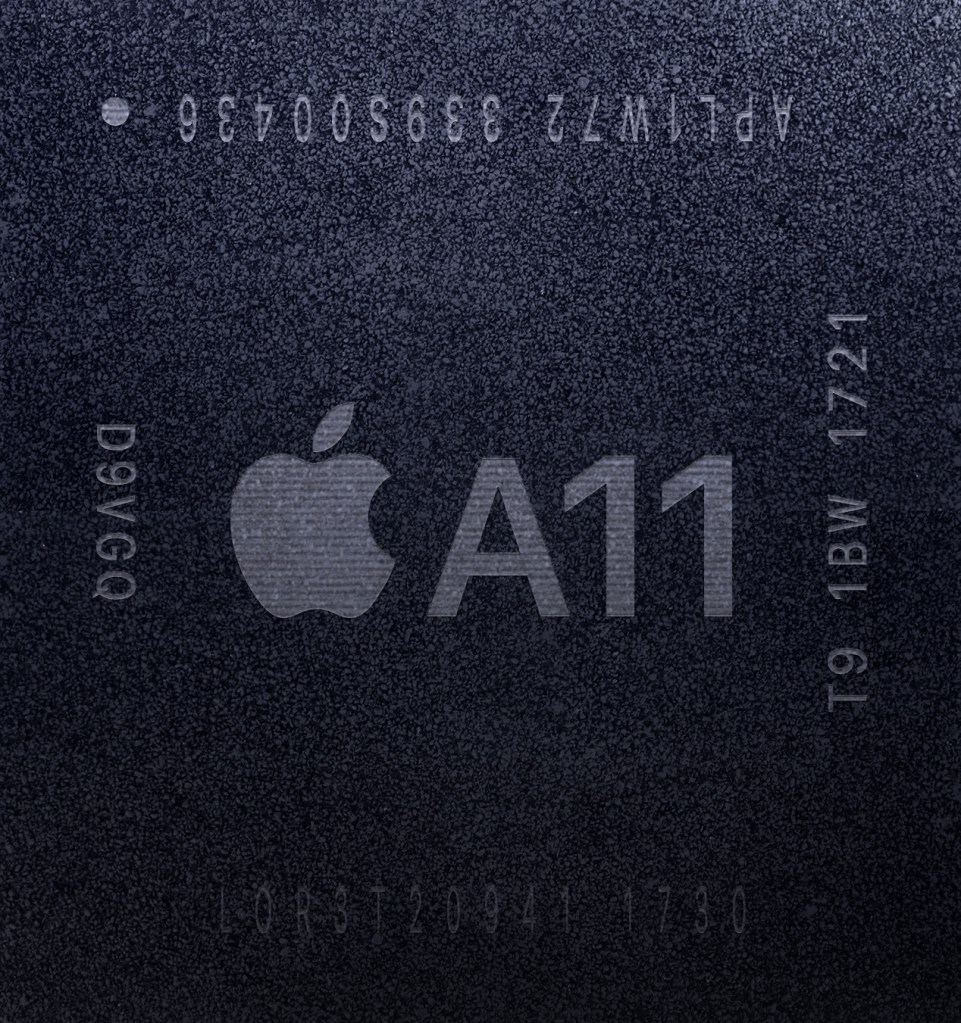
None of this appeared from nowhere, and the backstory explains why the engineers are confident. The first NPU most people ever owned was in a phone. Apple’s A11 Bionic chip, introduced with the iPhone X in September 2017, carried a two-core “Neural Engine” capable of 600 billion operations per second, built to run Face ID and Animoji [15]. Huawei shipped dedicated AI silicon in its Kirin 970 the same fall, and Qualcomm folded tensor acceleration into the Snapdragon chips that power most Android phones shortly after [16]. For seven years the NPU labored anonymously, unlocking phones, sharpening photos, filtering calls, while nobody called their handset an “AI phone.” What changed in May 2024 was Microsoft’s decision to set a 40-TOPS floor for its Copilot+ program [12], which turned a background component into a marketing category and set Intel, AMD, and Qualcomm racing. The current generation is roughly a hundredfold more capable than that first iPhone engine. The NPU is not a novelty; it is a decade-old technology finally arriving on the desk.
The question underneath all of this is whether AI and the computer are fusing into a single idea, and the evidence says yes, with a timetable. Every mainstream processor now ships with neural hardware; the analysts agree the majority of PCs sold this year will carry one; the operating systems are being rebuilt around it. The trajectory looks like the GPU’s: a specialist part that arrived before most software used it, then became so foundational that no one remembers debating it. If your current machine runs well, nothing in July 2026 demands panic buying, and waiting a cycle will bring more software and lower prices [13]. But if you are replacing a computer anyway, buying one without an NPU now means buying into the past. The sensible play is the one the sales flyers accidentally endorse: pay no premium for the AI label, insist on 16GB of memory or more, and let the discounts on machines like that $899 Acer do the arguing [1]. The features you use on day one will be modest, the battery life will not be, and the chip will quietly grow into its job, which is, after all, exactly how every important chip before it entered our lives.
References
[1] Karthik Iyer, “Best 2026 Copilot+ PC deals under $1,000 from Best Buy’s 4th of July sale,” 9to5Toys, July 3, 2026. https://9to5toys.com/2026/07/03/best-2026-copilot-pc-deals-from-best-buy-4th-of-july-sale/
[2] “What Is an NPU? Why Neural Processing Units Matter,” HP Tech Takes. https://www.hp.com/us-en/shop/tech-takes/what-is-npu-neural-processing-unit-explained
[3] “Gartner Says AI PCs Will Represent 31% of Worldwide PC Market by the End of 2025,” Gartner press release, August 28, 2025. https://www.gartner.com/en/newsroom/press-releases/2025-08-28-gartner-says-artificial-intelligence-pcs-will-represent-31-percent-of-worldwide-pc-market-by-the-end-of-2025
[4] Gyanendra Ojha, “AI PCs to surge, claiming over half the market by 2026,” Computerworld. https://www.computerworld.com/article/4047019/ai-pcs-to-surge-claiming-over-half-the-market-by-2026.html
[5] “AI Advanced PCs to Surpass Half of Global Shipments in 2026 as NPU-powered Laptops Go Mainstream,” Counterpoint Research. https://counterpointresearch.com/en/reports/ai-advanced-pcs-to-surpass-half-of-global-shipments-in-2026
[6] Daniel Rubino, “From the Editor’s Desk: AI PCs in 2026 — Microsoft’s big bet or consumer misfire?,” Windows Central, January 18, 2026. https://www.windowscentral.com/hardware/laptops/from-the-editors-desk-ai-pcs-in-2026-microsofts-big-bet-or-consumer-misfire
[7] John P. Mello Jr., “AI PCs’ Unmet Promise Dragging Down Adoption,” TechNewsWorld. https://www.technewsworld.com/story/ai-pcs-unmet-promise-dragging-down-adoption-180100.html
[8] Paul Alcorn, “Qualcomm’s new Snapdragon X2 Elite Extreme and Elite chips for PCs stretch up to a record 5 GHz,” Tom’s Hardware, September 2025. https://www.tomshardware.com/pc-components/cpus/qualcomms-new-snapdragon-x2-elite-extreme-and-elite-chips-for-pcs-stretch-up-to-a-record-5-ghz-3nm-arm-chips-sport-new-oryon-prime-cores
[9] “Snapdragon X2 Elite: Performance Leap,” Qualcomm. https://www.qualcomm.com/laptops/products/snapdragon-x2-elite
[10] “CES 2026: Intel Core Ultra Series 3 Debut as First Built on Intel 18A,” Intel Newsroom, January 2026. https://newsroom.intel.com/client-computing/ces-2026-intel-core-ultra-series-3-debut-first-built-on-intel-18a
[11] “Apple unleashes M5, the next big leap in AI performance for Apple silicon,” Apple Newsroom, October 15, 2025. https://www.apple.com/newsroom/2025/10/apple-unleashes-m5-the-next-big-leap-in-ai-performance-for-apple-silicon/
[12] “Copilot+ PCs and AI Features for Businesses,” Microsoft. https://www.microsoft.com/en-us/windows/business/devices/copilot-plus-pcs
[13] ELLA, “Copilot+ PCs in 2026: Are They Actually Worth It? (I Spent 3 Months Finding Out),” Medium, June 28, 2026. https://medium.com/@Ella456/copilot-pcs-in-2026-are-they-actually-worth-it-i-spent-3-months-finding-out-263a76cad490
[14] Kevin Okemwa, “I found 7 Windows apps that use your PC’s NPU to improve efficiency and performance with AI,” Windows Central. https://www.windowscentral.com/artificial-intelligence/apps-use-npu-ai-pcs
[15] “Apple A11,” Wikipedia. https://en.wikipedia.org/wiki/Apple_A11
[16] “What Is a Neural Processing Unit (NPU)?,” Built In. https://builtin.com/articles/npu-neural-processing-unit
Filed under: Uncategorized |



























































































































































































































































































































































































































































Leave a Reply