








By Jim Shimabukuro (assisted by chatbots)
Editor
DeepSeek developing AI requiring less human input
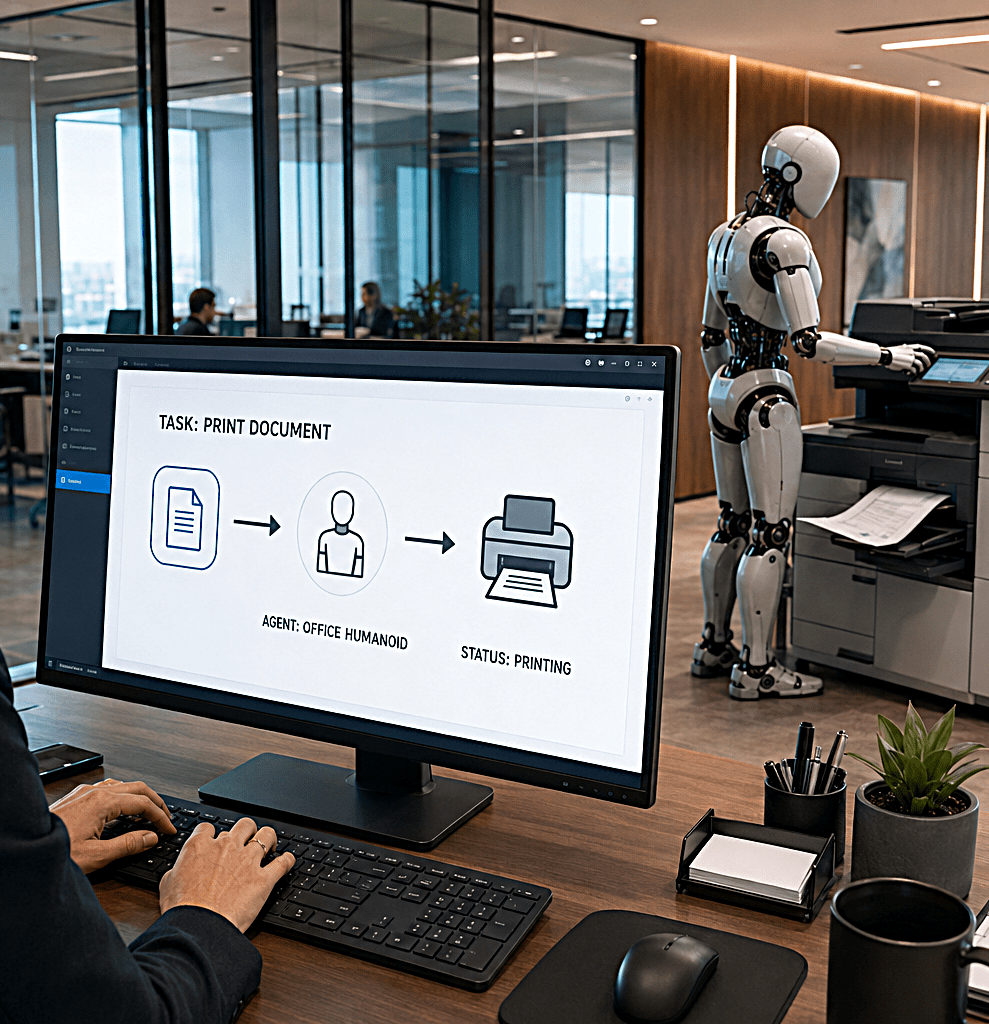
DeepSeek’s Harness team published a research prototype, under an MIT license, for a “super agent” that breaks work into parts, assigns them to separate agent sessions, and tracks their progress, so a developer reviews results instead of coordinating each session. The team argues that a person can oversee only three to five agent sessions at once, and the prototype listens to an authorized repository and returns proposed results such as pull requests. DeepSeek describes the code as a research prototype, not a finished product. It matters because as agents take on longer, multi-step work, the binding limits become permissions, human review, and audit trails, not only how well a model writes code. Cointelegraph. (2026, November 1). DeepSeek developing AI requiring less human input. Cointelegraph. https://cointelegraph.com/news/deepseek-developing-ai-agent-requiring-less-human-input-report/ (Muse)

Apple confirms iOS 27.3 beta is coming next week with Apple Intelligence in China
Apple confirmed that testing of Apple Intelligence in mainland China will begin November 4 in the next iOS developer beta, with a public release in December alongside iOS 27.3. The first rollout covers the iPhone only, requires Siri and the device language to be set to English or Simplified Chinese, and lets users reach Alibaba’s Qwen from Siri, Writing Tools, and Visual Intelligence, while Siri AI itself stays unavailable. It matters because a leading Chinese model will now operate inside Apple’s most personal products under Chinese regulatory approval, giving regulators, developers, and users in China a shared stake in how the two systems’ rules fit together. Mendes, M. (2026, October 30). Apple confirms iOS 27.3 beta is coming next week with Apple Intelligence in China. 9to5Mac. https://9to5mac.com/2026/10/30/apple-confirms-ios-27-3-beta-is-coming-next-week-with-apple-intelligence-in-china/ (Muse)
China’s robot makers have mastered the moves. Now comes the race for brains
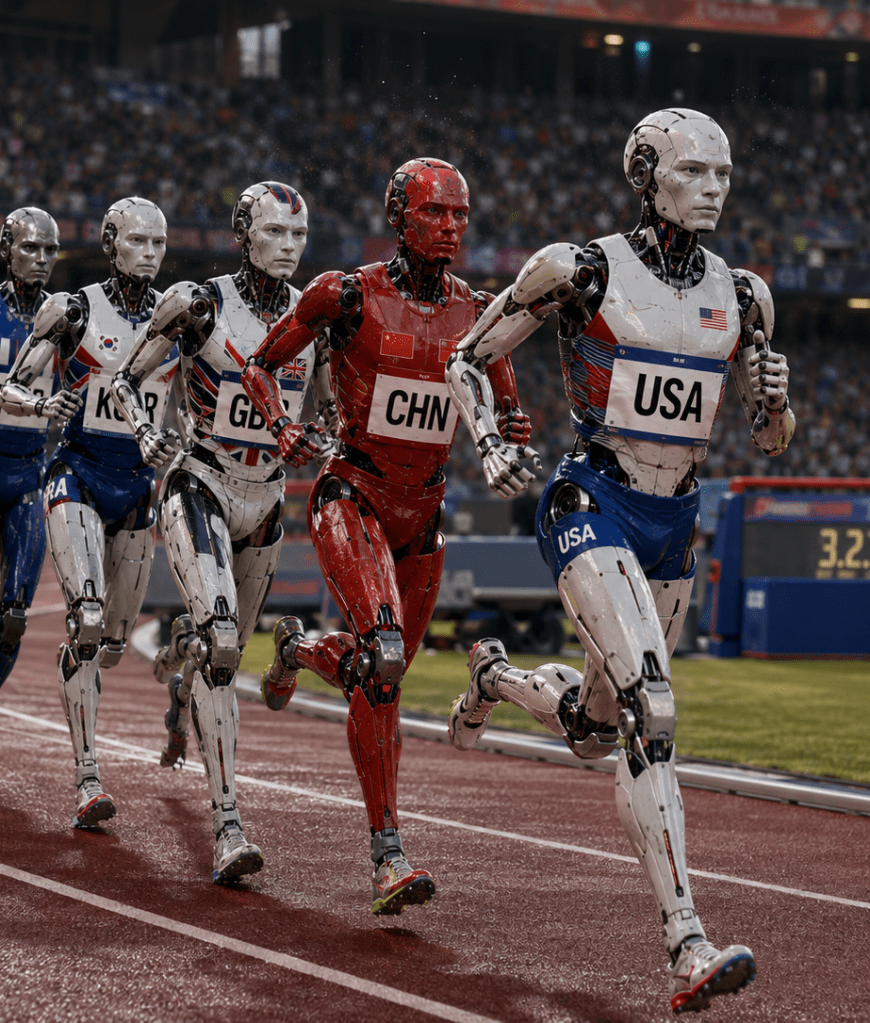
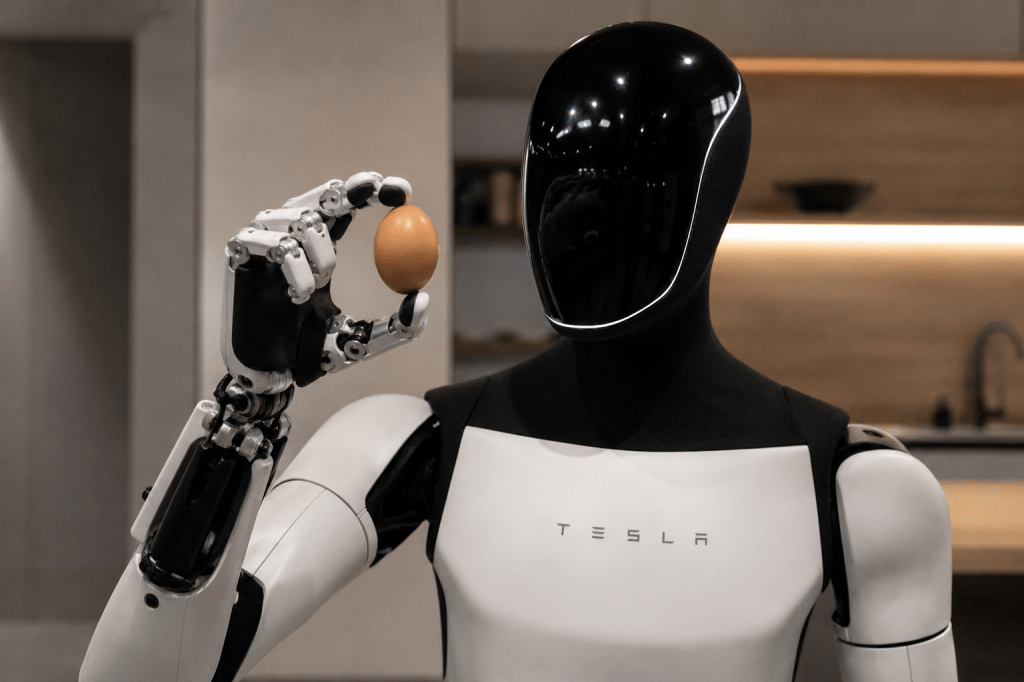
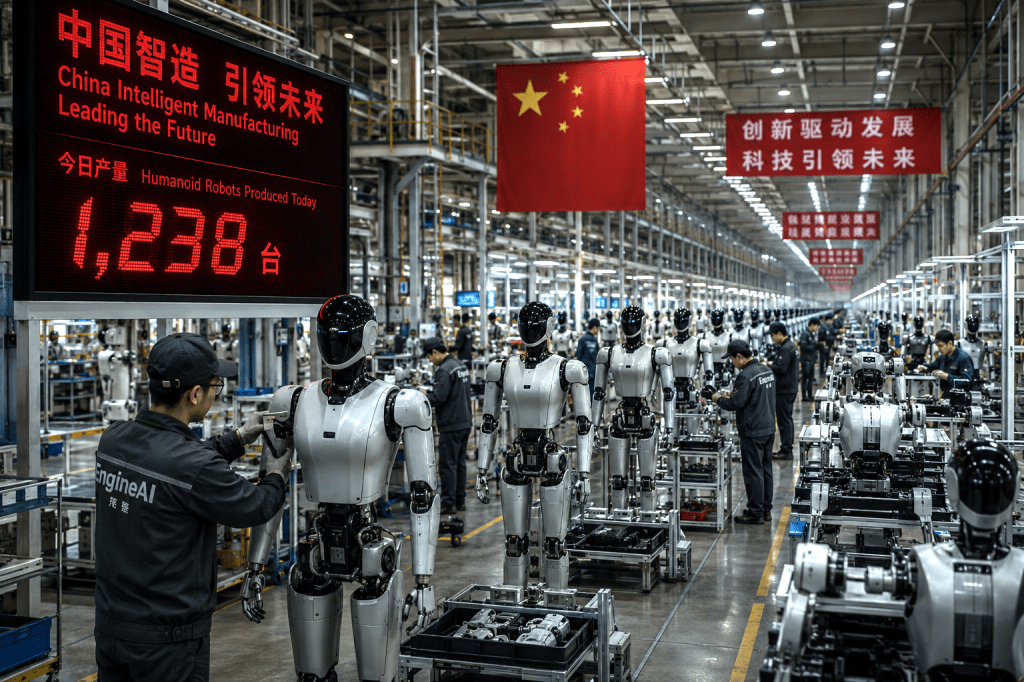
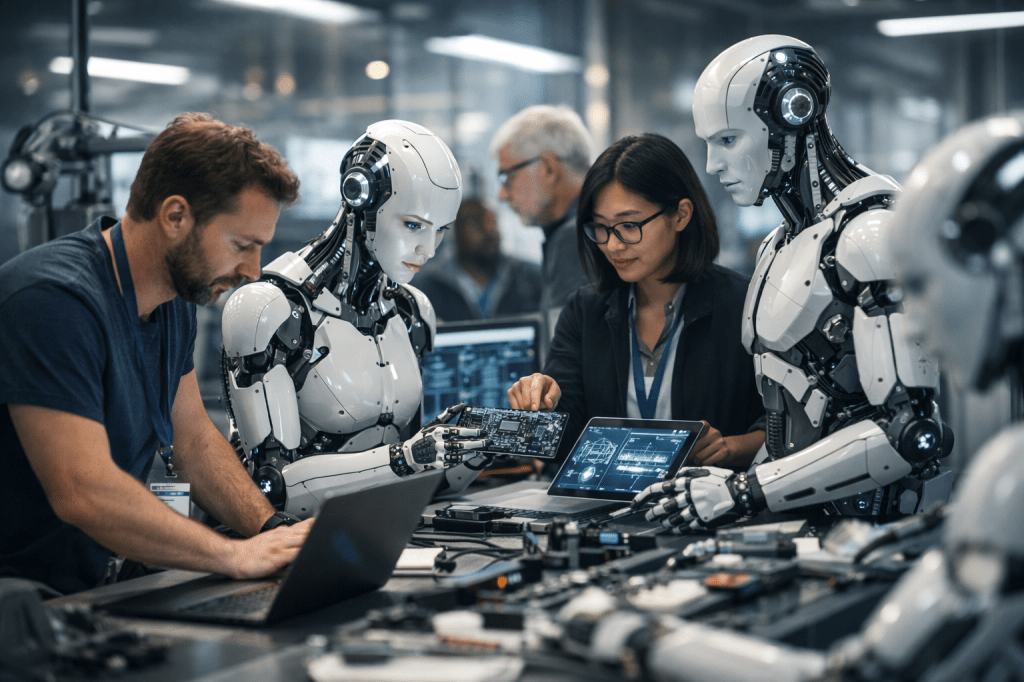
Chinese robotics companies are increasingly concentrating on the AI systems that allow machines to understand unfamiliar environments, learn new tasks, and work without extensive reprogramming. Reuters reports that China’s embodied-AI sector attracted approximately $13 billion in investment during the first half of 2026, five times the amount raised a year earlier, as companies combine human demonstrations, industrial data, and simulated environments to develop more adaptable robots. The competition now includes American developers such as Physical Intelligence and Skild AI, with China’s manufacturing capacity offering a potential advantage in testing and deploying intelligent machines. The ability to give relatively inexpensive robots transferable intelligence could accelerate automation in manufacturing, logistics, and services, with substantial consequences for employment, workforce education, and international industrial competition. Chen, L., & Baptista, E. (2026, November 2). China’s robot makers have mastered the moves. Now comes the race for brains. Reuters. https://www.reuters.com/world/china/chinas-robot-makers-have-mastered-moves-now-comes-race-brains-2026-11-01/ (ChatGPT)
The tech industry is investing in mega gas plants to power their data centers
Reporting published by The Washington Post on November 2, 2026, detailed a significant shift in enterprise energy strategy, as major technology corporations invest directly in large-scale natural gas power plants to meet the staggering electricity requirements of next-generation data centers. Despite previous corporate pledges to power computational infrastructure using exclusively renewable energy, the escalating continuous power demands of training and serving advanced foundation models have forced technology firms to underwrite fossil fuel generation to guarantee grid reliability. This shift matters because it places the rapid expansion of artificial intelligence infrastructure in direct friction with international decarbonization goals and regional power grid capacity, creating complex trade-offs for regulators, municipal planners, and environmental stakeholders. Halper, E., & Schaul, K. (2026, November 2). The tech industry is investing in mega gas plants to power their data centers. The Washington Post. https://www.washingtonpost.com/business/technology/ (Gemini)
Meta partners with Chinese robotics firm to test consumer robots
Meta is working with Chinese robotics company Fourier on humanoid prototypes meant for housework and other everyday consumer tasks, according to The Information’s October 31 report, which cited unnamed sources. The companies have built a first prototype, Max, about five feet tall with an expressive face and five-fingered hands, and are now building Max 2 with better manipulation, a projector, and sensors for walking up and down steps. Meta told The Information the effort is internal research and experimentation, with no plans to sell these units. It matters because a robot built to work inside homes would handle voice, gesture, and household information, and a United States company developing it with a Chinese partner raises questions for regulators, workers, and consumers well before any product reaches a store. PYMNTS. (2026, November 1). Meta partners with Chinese robotics firm to test consumer robots. PYMNTS. https://www.pymnts.com/news/artificial-intelligence/2026/meta-partners-with-chinese-robotics-firm-to-test-consumer-robots/ (Muse)
Anthropic’s IPO puts its mission to a $2 trillion test
Reporting on November 2 examined Anthropic’s planned public listing and the tension between its identity as an AI-safety-focused public-benefit corporation and the expectations that accompany an extraordinarily large valuation. The article highlights disclosures concerning rapid revenue growth, major long-term cloud-computing commitments, and governance arrangements intended to preserve founder control after the offering. This matters because the IPO will provide an unusually visible test of whether a leading AI company can maintain safety-oriented commitments while facing public-market pressures for continued growth and competitive performance. Dimitropoulou, A. (2026, November 2). Anthropic’s IPO puts its mission to a $2 trillion test. CEOWORLD Magazine. https://ceoworld.biz/2026/11/02/anthropic-ipo-mission-2-trillion-valuation/ (Copilot)
Texas A&M to open fully automated metallurgy lab, using AI and robotic workers to develop metal alloys
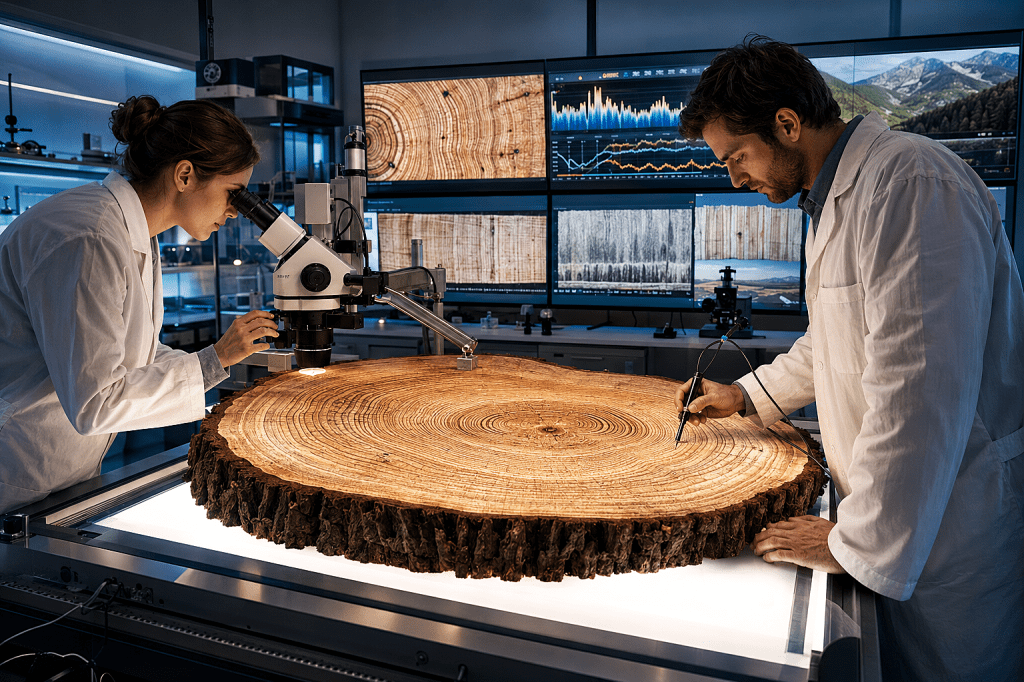
Michael Adkison reports that Texas A&M University plans to open the Aggie AI Foundry, a $2 million laboratory where AI and robotic equipment will mix, melt, and test metal alloys. Its developers say the system could shorten development from months to days and give students more time for higher-level investigation, although some students and researchers question whether automating laboratory work will weaken their preparation as metallurgists. University leaders, faculty, students, and research funders should examine whether automated laboratories expand access to experimentation while preserving the practical knowledge scientists need to evaluate results and recognize mistakes. Adkison, M. (2026, October 31). Texas A&M to open fully automated metallurgy lab, using AI and robotic workers to develop metal alloys. Houston Public Media.
https://www.houstonpublicmedia.org/articles/technology/2026/10/31/565726/texas-am-to-open-fully-automated-metallurgy-lab-using-ai-and-robotic-workers-to-develop-metal-alloys/ (Perplexity)
Study shows AI may improve patient discharge summaries
A study published in npj Digital Medicine and highlighted by Stony Brook University on November 2, 2026, evaluated the use of large language models for drafting complex inpatient hospital discharge summaries. In a blind retrospective evaluation combining hospitalist and primary care physician reviews, evaluators overwhelmingly preferred the artificial intelligence-generated discharge summaries over human-authored ones in 95% of assessments, citing superior factual accuracy, conciseness, and structural completeness. This development matters because discharge documentation represents a major administrative burden in clinical care, and validating high-quality automated drafts offers a concrete pathway to reduce physician burnout while improving continuity of post-hospitalization patient care. Stony Brook Medicine. (2026, November 2). Study shows AI may improve patient discharge summaries. Stony Brook University Newsroom. https://news.stonybrook.edu/newsroom/press-release/medical/study-shows-ai-may-improve-patient-discharge-summaries/ (Gemini)
New York Times, Daily News sue over AI scraping, selling content
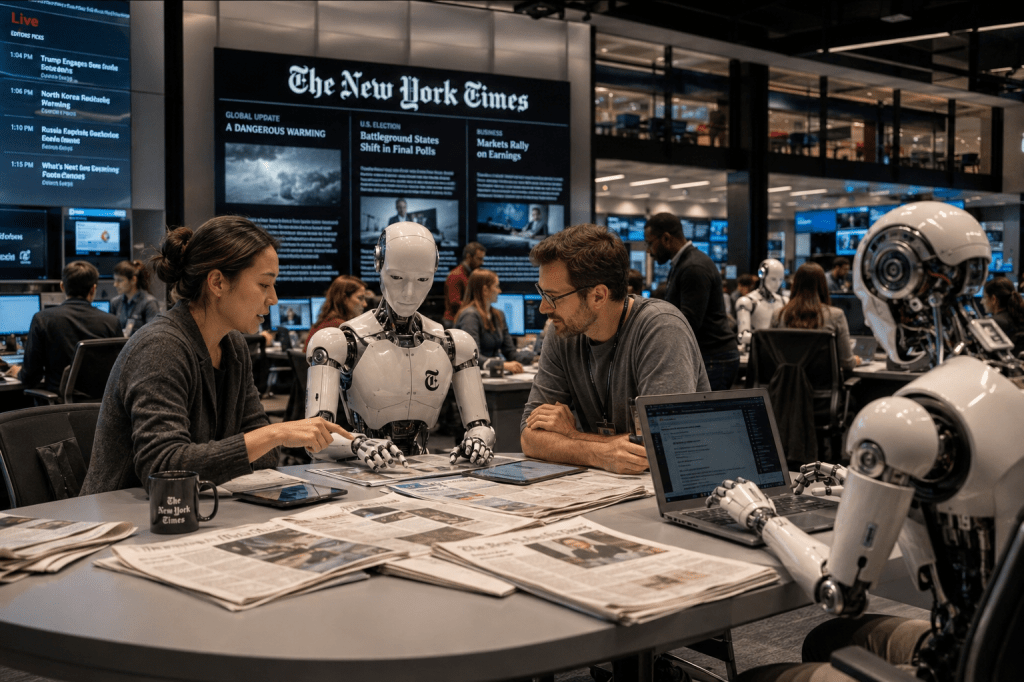
On November 2, the New York Times Co. sued Brave Software in federal court in Manhattan. The complaint says Brave scraped Times articles to train its own large language models and sold that content through its search index to other AI developers, including Anthropic and Perplexity. The New York Daily News also sued, and the complaints accuse Brave’s browser of helping readers get around paywalls. The Times’ complaint says Brave “acts both like a burglar that misappropriates the content of publishers” and like a dealer of what it takes. This matters because the copyright fight now reaches the data suppliers that AI labs buy from, so a ruling against Brave could affect every developer that licenses a search index instead of crawling the web itself. Paoli, N. (2026, November 2). New York Times, Daily News sue over AI scraping, selling content. Bloomberg Law. https://news.bloomberglaw.com/ip-law/new-york-times-daily-news-sue-over-ai-scraping-selling-content (Claude)
Nearly 2 out of 3 teens and tweens use AI chatbots, new research shows
NPR reported on two new surveys. Common Sense Media’s 2026 census found that nearly half of American 9-to-12-year-olds have used an AI chatbot or companion, and the share rises to 73% by age 13. The JED Foundation surveyed 5,500 students aged 9 to 17 and found that 90% had used a chatbot. Nearly two-thirds use one both for schoolwork and as a companion, or when they feel stressed, lonely, anxious or overwhelmed. A JED researcher said the data do not show that chatbot use causes poor mental health. This matters because teachers, parents, counselors and lawmakers now face a generation that reaches for the same tool for homework and for comfort, while New York’s new limits on AI companion features for minors don’t take effect until January. Chatterjee, R. (2026, October 30). Nearly 2 out of 3 teens and tweens use AI chatbots, new research shows. NPR. https://www.npr.org/2026/10/30/nx-s1-6022278/ai-artificial-intelligence-teens-jed-common-sense-media (Claude)
SpaceX accelerates AI infrastructure layout! Colossus leads global computing power rankings; Musk claims space AI computing power may surpass ground-based
The projection of AI compute off-planet: On October 30, SpaceX CEO Elon Musk stated on X that monthly newly added orbital computing power could surpass newly added ground-based computing power around the end of 2028, with the gap widening in 2029. The statement follows SpaceX’s early-2026 FCC filing for up to one million data center satellites and plans to deploy systems in low Earth orbit at 500 to 2,000 kilometers for AI inference and machine learning, with first Starmind satellites equipped with NVIDIA chips planned for late 2027. Commercial analysis cited in the same coverage estimates a one-gigawatt orbital data center at approximately $170 billion, more than three times a ground equivalent. In short, a launch provider is arguing that power, cooling, and land constraints will push new capacity to orbit, backed by vertical integration of rockets, satellite manufacturing, and chip development. It matters because it reframes data-center governance from local energy and zoning decisions to orbital debris, spectrum, launch licensing, and the economic question of whether avoiding community backlash justifies a cost structure that, for now, remains far above terrestrial alternatives. Zhitong Finance APP. (2026, November 2). SpaceX accelerates AI infrastructure layout! Colossus leads global computing power rankings; Musk claims space AI computing power may surpass ground-based. Longbridge. https://longbridge.com/en/news/303890518 (Meta)
Google’s AI model achieves a milestone with first response from space in Project Suncatcher
Google has successfully operated its Gemma 4 AI model aboard a prototype satellite, using an onboard Tensor Processing Unit (TPU) to generate a haiku in response to a prompt transmitted from Earth. The October 31 report describes an early milestone in Project Suncatcher, which is investigating whether orbiting satellites, powered by abundant solar energy, could eventually support large-scale AI computing. Google’s next tests will examine how well its processors withstand radiation and thermal stress in space. If orbital AI computing becomes technically and economically practical, it could alter where data centers are built, how their energy needs are met, and which companies and nations control critical computing infrastructure. APA reference: Asian News International. (2026, October 31). Google’s AI model achieves a milestone with first response from space in Project Suncatcher. EdexLive. https://www.edexlive.com/amp/story/news/google-s-project-suncatcher-achieves-first-successful-ai-response-from-space (ChatGPT)
Silicon Valley is grappling with a flood of bugs found by AI
Kate Conger reports that AI-assisted vulnerability discovery is producing a surge of security problems that software maintainers must investigate and fix before attackers exploit them. The article follows coordinated repairs to widely used software, including PHP and Node.js, and describes how the growing workload falls partly on open-source developers whose projects support much of the internet. AI developers, governments, businesses, and open-source funders need to consider whether investment in finding vulnerabilities is matched by sufficient support for the people responsible for verifying reports, repairing code, and distributing fixes. Conger, K. (2026, November 1). Silicon Valley is grappling with a flood of bugs found by AI. Honolulu Star-Advertiser. https://www.staradvertiser.com/2026/11/01/breaking-news/silicon-valley-is-grappling-with-a-flood-of-bugs-found-by-ai/ (Perplexity)
AI giants promise publishers new way to block some scraping
Agence France-Presse reports that OpenAI, Google, Microsoft, and Anthropic have pledged to recognize a common instruction allowing website operators to opt out of future AI model training. Implementation will proceed on different schedules, and the instruction will neither prohibit other forms of crawling nor change the default permission to scrape unless publishers actively select the opt-out. Publishers, writers, website operators, and policymakers should scrutinize whether a voluntary, opt-out arrangement provides meaningful control over content use, particularly when companies warn that refusing training could reduce a publisher’s visibility in AI services.Agence France-Presse. (2026, October 31). AI giants promise publishers new way to block some scraping. Tech Xplore. https://techxplore.com/news/2026-10-ai-giants-publishers-block.html (Perplexity)
Black October: LLMJacking wave exposes AI infrastructure’s credential crisis
In late October 2026, cybersecurity research highlighted a severe threat to software development environments after coordinated security breaches targeted nine major artificial intelligence developer platforms. Dubbed the “Black October” LLMJacking wave, these incidents involved attackers exploiting credential vulnerabilities to compromise enterprise developer platforms and redirect high-value computational infrastructure for unauthorized usage, resulting in over $100,000 in downstream losses. This incident matters because it demonstrates that the primary bottleneck in enterprise security is shifting from foundation model guardrails to the peripheral pipeline infrastructure, where compromised access credentials can expose corporate networks to catastrophic operational costs and cross-cloud data exposure.Futurum Group. (2026, October 31). Black October: LLMJacking wave exposes AI infrastructure’s credential crisis. Futurum Group Insights. https://futurumgroup.com/insights/black-october-llmjacking-wave-exposes-ai-infrastructures-credential-crisis/ (Gemini)
How to write “No AI training” in one line: What site operators and note creators should decide now regarding the common robots.txt signal from OpenAI, Google, Microsoft, and Anthropic
On November 2, a widely discussed report summarized a new technical proposal supported by OpenAI, Google, Microsoft, and Anthropic to create a standardized mechanism through robots.txt for expressing whether website content may be used for AI training. The proposal seeks to replace a growing patchwork of company-specific controls with a shared signal that content owners can implement across platforms.This matters because disputes over training data have become one of the central governance issues in AI, and a broadly adopted technical standard could reshape how publishers, educators, researchers, and creators manage rights over digital content. Honma, R. (2026, November 2). How to write “No AI training” in one line: What site operators and note creators should decide now regarding the common robots.txt signal from OpenAI, Google, Microsoft, and Anthropic. note. https://note.com/ryohonma/n/nd8dbff433ba3?hl=en (Copilot)
Anthropic’s IPO puts its mission to a $2 trillion test
Reporting on November 2 examined Anthropic’s planned public listing and the tension between its identity as an AI-safety-focused public-benefit corporation and the expectations that accompany an extraordinarily large valuation. The article highlights disclosures concerning rapid revenue growth, major long-term cloud-computing commitments, and governance arrangements intended to preserve founder control after the offering. This matters because the IPO will provide an unusually visible test of whether a leading AI company can maintain safety-oriented commitments while facing public-market pressures for continued growth and competitive performance. Dimitropoulou, A. (2026, November 2). Anthropic’s IPO puts its mission to a $2 trillion test. CEOWORLD Magazine. https://ceoworld.biz/2026/11/02/anthropic-ipo-mission-2-trillion-valuation/ (Copilot)
###
Filed under: Uncategorized |





















































































































































































































































































































































































































































Leave a Reply