Posted on February 21, 2012 by JimS
 By Michael Hurwitz
[Note: This series is being brought to you by ETCJ associate editor Lynn Zimmerman. See Part I: “Technology Is a Game Changer” and Part III: “Chinese As the Language of the Future.” -Editor]
English has become one of the world’s most widely-spoken languages as well as the most popular second language and lingua franca of academics in no small part due to the heavy concentration of top universities and the large quantities of educational materials produced in English-speaking countries. Another reason for its popularity is the huge amount of entertainment content and other media produced in the Anglosphere. For instance, nearly every English-language training school here in Shanghai has a TV in the lobby showing DVDs of “Friends” (老友记, Lǎoyǒujì) or other American television shows to help students practice their English.
One of the great victories of the Information Age is the ability of learners the world over to access content in almost any language, giving them unprecedented variety in terms of learning style, pace, and method. English-language TV has been around for decades, of course, but the spread of high-speed internet and satellite connections has made accessing content, be it entertainment or educational, much easier. DVDs and streaming web video, for instance, have brought English-language educational content to places that had none just a decade ago. In addition, technology like smart phones and tablets has made mobile learning much simpler and more effective – convenience and flexibility can make it seem as though there’s more time in the day, so to speak, for practice in speaking and listening as well as exposure to a language, and with English in particular it’s easier than ever.
Continue reading →
Filed under: Uncategorized | 4 Comments »
Posted on February 16, 2012 by JimS
 By Thomas Ho
Of course they should, but what tone should it convey? Actually, I’m really asking about students’ digital identity, but the title of this post merely reflects the “branding” I employed to attract students to my upcoming presentation about personal branding and digital identity. It is that presentation which prompts this post.
This is a touchy subject because parents and schools are so “conflicted” about it! On top of that, students’ immaturity calls for lots of caution! The “facts of life” are that most students do indeed have a digital identity so digital literacy compels that we teach them to be prudent about what they post with respect to content they create or share, permissions, and much more!
Nevertheless, the personal branding principles that apply to their parents and teachers apply equally to students with the exception that we can “cut them some slack” (or can we?) for not starting to “build their brand” yet (my daughter is among them L), but they certainly ought to be made aware of the implications for their future competitiveness, don’t you think?
After all, almost all of them are already online and, in many cases, they have already lost their opportunity to make a positive first impression. So, what should I say (or not say) to the students?
This post is full of questions and I hope to follow it up with subsequent posts with some answers…or at least to let you know what happens next. The future is full of problems and opportunities!
Filed under: Uncategorized | 22 Comments »
Posted on February 15, 2012 by JimS
 By Stefanie Panke
Editor, Social Software in Education
For a conference to run smoothly and professionally, a large amount of work happens “behind the curtains” without the conference attendees being necessarily aware of it. The Association for the Advancement of Computing in Education (AACE) was founded in 1981 and has been organizing international conferences since the 1990s. However, bringing a conference online requires new approaches from the program committee. Theo Bastiaens, program chair of the 2011 and 2012 Global TIME conference, talks about lessons learned, the quality of online talks, and the online experience from an attendee’s point of view.
 Theo Bastiaens, program chair of the 2012 AACE Global TIME conference.
SP: What makes or breaks a successful online conference?
TB: As the online conference Global TIME was organized for the second time we certainly fine-tuned the format, schedule, and technical platform. Since an online conference is somewhat different from a face-to-face conference we had to make sure that people had a virtual space to contact each other. For that reason, AACE developed “Academic Experts.” In my opinion, a great new platform to organize these online conferences. A very important aspect of this platform is that it integrates participants’ social profile with discussion features and the paper presentations. Little things that we learned from the online conference last year, like the automatic adaption of the program to the time zone of the participant, are very important for a smooth organization. Continue reading →
Filed under: Uncategorized | 3 Comments »
Posted on February 14, 2012 by JimS
By Stefanie Panke
Editor, Social Software in Education
The second edition of the AACE Global TIME online conference took place from February 7 to 9, 2012. The annual event aims to connect and engage educators, researchers, consultants, trainers, policy makers, curriculum developers, entrepreneurs, and others. Sectors covered include adult learning, higher education, informal learning, K-12, libraries, and museums as well as vocational education and corporate training. It was my pleasure to cover the second edition of Global TIME for the Educational Technology and Change Journal on behalf of AACE.
Global TIME 2012 hosted attendees from 28 countries, 34 presentations, 44 additional “asynchronous” papers, 3 excellent keynotes, and 4 workshop sessions. Even though the program was less packed than the usual week-long AACE conferences, the following overview is still necessarily a rather idiosyncratic collection of my manifold personal impressions and encounters.
Day 1 – Getting Started: Cultural Change in Workplace Learning
“We are having a PowerPoint war.” With these words from Sarah Benson, member of the AACE organization team, the conference started on February 7 at 4 p.m. GMT. Benson’s comment referred to some initial technological hiccups with loading the keynoter’s slides – fortunately, one of the very few problems with the Adobe Connect virtual conference space.
Program chair Theo Bastiaens, director of the Institute of Educational Science and Media Research at the German “Fernuniversität Hagen” and professor at the Open University of the Netherlands, officially opened the conference with a short welcoming address, greeting everyone from a freezing Europe. Approximately 20 participants from all over the world joined in – and immediately started to compare notes on their local time, weather, and physical location. Penelope Neuendorf said “Hello” from Canberra (Australia) at 3 in the morning, Luigi Riscaldino from the University of Calgary (Canada) sipped his coffee at 9 am, Manar Hosny logged in from Riyadh (Saudi Arabia), and Mark Curcher said “Hi” from Dubai (Arab Emirates).
Continue reading →
Filed under: Uncategorized | 6 Comments »
Posted on February 10, 2012 by JimS

OK, I am spoiled. Henry Jenkins, Bill Clinton, Vice President Gore, Danah Boyd, George Lucas, Ron Brown (he is deceased), Seymour Papert — and lots of other luminaries. In person and in your face. Wendy Pye face to face and online. More about that later.
Face-to-face, people intrigue me. I know Chris Dede and was mentored by him. I worked with Seymour Papert and was taught by him, and I have had tussles with people who are very well known about technology in schools, broadening engagement and digital equity. In courses, there are people who have watched my work and who know my personality, even when I shrink back from too much of everything in technology. Gently they beckon. I meekly follow. I think I only have the courage to continue to learn based on the friendship and encouragement of my educational friends. Vint Cerf has remained a friend and email keeps us in touch.
I sat around tables that contained important CEOs and learned to negotiate, I learned to listen well, I learned to push MY ideas.
If I had only met these people online, the relationship would be different and unreal, but the Facebook, and online communications cement our friendships and continue the dialogue. I loved talking with Henry Jenkins about New Orleans and our first impressions as children when we went.
Continue reading →
Filed under: Uncategorized | 5 Comments »
Posted on February 9, 2012 by JimS
 By Jim Shimabukuro
Editor
According to Kyle Webb, at yesterday’s Lane Community College (Oregon) Board of Education meeting, the dean of academic technology, Brad Hinson, “presented the state of online education and its potential future.”* Webb quotes Hinson: “Faculty [need] to understand ‘the demand is there. It’s modern education. It is what the students demand.'”
Hinson’s observations are enlightened, but they didn’t push me to the keyboard to write a comment. The shove came from concerns by two of the board members. Gary LeClair, according to Webb, “said there seems to be more ‘social isolation due to more computers.’ LeClair said he already notices students glued to cell phones and computers as it is, and that he is concerned that students with college-issued iPads might increase this social isolation, thus impeding their educations.” Webb also quotes Jim Salt, LCC’s Education Association president, who, along with LeClair, “voiced concerns about the potential loss of student-instructor connection.”
These two concerns, about the causal relationship between personal communication devices, on the one hand, and social isolation and deterioration of student-instructor relationships, on the other, are the issue. They’re reminders that, in most disagreements, the root is not in what we actually observe but with our interpretations. We’ve all witnessed the first scenario where students share the same geographical location, e.g., a cafeteria table, but are oblivious to one another because each is engrossed in her/his smartphone or tablet PC.
Continue reading →
Filed under: Uncategorized | 6 Comments »
Posted on February 7, 2012 by JimS

 [Note: Snagged spotlights some of the latest and most stimulating articles on educational technology. This article by David Nagel was brought to my attention by ETCJ science education editor Harry Keller. Please send your catch of the day to me, jamess@hawaii.edu, for possible snagging. -Editor]
David Nagel, in “Feds Look to Accelerate E-Textbook Adoption with ‘Digital Textbook Playbook'” (THE Journal, 2.1.12), describes the “Playbook” as “a guide designed to help schools overcome the challenges associated with the shift to e-textbooks. The ‘Playbook’ is the product of the Digital Textbook Collaborative, a group put together by ED and the FCC and composed primarily of technology companies and textbook publishers, along with two education organizations, one school district, and one university.”

Nagel quotes FCC Chairman Julius Genachowski: “‘When we talk about transitioning to digital textbooks, we’re not just talking about giving students e-readers so they no longer have to carry around backpacks filled with 50 pounds of often out-of-date textbooks. We’re talking about students having interactive learning devices that can offer lessons personalized to their learning style and level, and enable real-time feedback to parents, teachers, or tutors. Imagine a student who has trouble doing his geometry homework; the digital textbook automatically inserts a supplemental lesson. Imagine a teacher who has instant access to the results of a pop quiz; she can immediately see that four of her students didn’t understand the concept of photosynthesis and is able to offer an extra lesson.'”
Continue reading →
Filed under: Uncategorized | 27 Comments »
Posted on February 6, 2012 by JimS

 Click the image to visit the site.
You are invited to be part of the second annual Innovator Spotlight virtual event!
Every year the League honors outstanding innovations through the presentation of its Innovation of the Year Award. These innovations represent significant achievements at member colleges and the continuing renewal of the spirit of innovation and experimentation upon which the League was founded. Award-winning innovations will be presented in collaboration with Teaching Colleges and Community (T.C.C.) and Learning Times by some of the brightest minds in the community college world. Join us Wednesday, February 15th, 2012, for this exciting one-day online event for as little as $75! Register today! Continue reading →
Filed under: Uncategorized | Leave a comment »
Posted on February 2, 2012 by JimS
By Michael Hurwitz
[Note: This series is being brought to you by ETCJ associate editor Lynn Zimmerman. See Part II: “Technology Makes English the Global Language” and Part III: “Chinese As the Language of the Future.”-Editor]
People have been learning languages since…well, since people have been, pretty much. For as long as we can remember, however, most people have approached SLA (second-language acquisition) with what we sometimes call a “classroom mentality,” meaning language learning must involve long hours in a classroom with static (sometimes outdated) textbooks.
This is the way language learning has been for a long time primarily because there really weren’t many alternatives: it was prohibitively expensive (and time-consuming) for most people to travel to a foreign country to learn in a native-speaking environment, and there weren’t many good or affordable ways to access educational or entertainment content in other languages. Those days, however, have come to a spectacular and speedy end since technology has totally changed the game.
In the Information Age, there’s really nothing you can’t do if you put your mind (and your web browswer) to it. First and foremost, learning a new language is about exposure and access. Hearing a language spoken proficiently, processing it, and then using it yourself is a fantastic way to advance your skills, and technology has made that easier than ever before. For example, programs like Skype have made live video chatting, not long ago an elaborate and expensive pipe dream, as convenient as a few clicks of the mouse.
Continue reading →
Filed under: Uncategorized | 2 Comments »
Posted on January 30, 2012 by JimS
 By Harry Keller
Editor, Science Education
Nearly a year ago, in “On Evolution, Biology Teachers Stray From Lesson Plan” (NY Times, 2.7.11), Nicholas Bakalar quoted Randy Moore, professor of biology at the University of Minnesota: “With 15 to 20 percent of biology teachers teaching creationism, this is the biggest failure in science education. There’s no other field where teachers reject the foundations of their science like they do in biology.”
A week ago, Sam Favate, in “A ‘Critique’ of Evolution Proposed in Oklahoma” (Wall Street Journal, 1.23.12), reported that Oklahoma has just introduced the sixth anti-evolution bill this year.
It’s not surprising that some people still deny evolution, but the size of the effort does not bode well for our future in science. Evolution is not only established scientific fact, but is the central unifying concept for all of biology. It allows scientists to understand life better and to decide where to look to find new drugs, cures for diseases, and prevent new infections from becoming pandemics.
Not only do 15 to 20 percent of biology teachers teach creationism, but 60% take no stand on evolution versus creationism. Generations of students are being handicapped in their desire to understand and succeed in life.
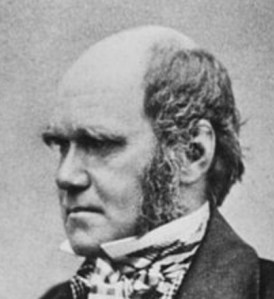 Charles Darwin
Charles Darwin published On the Origin of Species in 1859, long after he had formulated his theory. He was attacked immediately and, at the same time, lauded by a minority who understood science. At that time, as today, too many people misunderstood the role of science, what it’s really about.
Continue reading →
Filed under: Uncategorized | 4 Comments »
Posted on January 28, 2012 by JimS
 [Note: Snagged spotlights some of the latest and most stimulating articles on educational technology. This article by Anthony Cody was emailed to me by ETCJ associate editor Bonnie Bracey Sutton on Jan. 27. To share your catch of the day, email it to me, jamess@hawaii.edu, for possible snagging. -Editor]
Anthony Cody, in “How the War on Teachers Is Changing the Profession” (Valerie Strauss, The Answer Sheet, Washington Post, 1.27.12), calls it like it is. The national reaction against teachers (and their unions) is gaining momentum, and the blame for failure is being dumped on their shoulders. In Cody’s article, we find the following statements:
- “The teaching profession is being redefined. Teachers will now pay the price: They will be declared successes or failures, depending on the rise or fall of their students’ test scores.”
- “Under NCLB, it was schools that were declared failures. In states being granted waivers from the most onerous requirements of NCLB, it is teachers who will be subjected to this ignominy.”
- “The individual teacher’s accountability for student performance is absolute.”
To hold teachers 100% responsible when they can account for only “10 percent of the variability in student test scores” is insane, especially in light of the fact that other factors such as “family income and education levels” account for 90% of the variability.
Why is this happening? Or more importantly, why are we, educators, allowing this to happen? -js
Filed under: Uncategorized | 14 Comments »
Posted on January 28, 2012 by JimS
 By Michael Biocchi
[See Educational Games Part I: A Way to Make Even Math Fun and Educational Games Part II: Using New Technologies in the Classroom.]
A game is not “educational” just because it involves a few puzzles or steers away from violence. An educational game has to have certain characteristics beyond the obvious one of helping students learn. It can be argued that, in some way, all games help people learn. Even a violent fighting game can help with hand-eye coordination (Roach). Does this mean that all games are educational? Of course not, but it does help us develop characteristics that will make a game educational.
The best educational games in my opinion are those that are based on textbooks. The material and research is already developed. Should a grade two math game involve long division? Check a grade two textbook and see what is covered! The game does not have to be word for word of what is in the textbook (this would involve partnering with the publisher and going through many legal procedures), but it should be relevant to what the children are learning at that grade level.
So now that we know what material is going to be covered in the game, we still need to know what makes the game educational. Obviously content is a big part of it, but the look, feel and gameplay is also important. First, the game should offer some sort of social interaction. This does not mean that the game needs to be multiplayer, but it should somehow involve players talking to and interacting with each other. For example, together, they could be creating avatars, going through levels, or experiencing compelling stories. The students should care about what they are doing. Continue reading →
Filed under: Uncategorized | 3 Comments »
Posted on January 24, 2012 by JimS
 By Ilene Frank
[Note: This article is based on an email message sent to me by Ilene on 1.24.12. It’s in response to “Sloan-C’s Definition of ‘Online Course’ May Be Out of Sync with Reality,” published on 1.22.12. -Editor]
I’m wondering if some of those definitions of “distance/online courses” are just legalese. Here in Florida, we have definitions like these two below:
Each community college may assess a student who enrolls in a course listed in the Florida Higher Education Distance Learning Catalog established pursuant to s. 1004.09 a per-credit-hour distance learning course user fee. For purposes of assessing this fee, a distance learning course is defined to mean a course where a least eighty percent of the direct instruction of the course is delivered using some form of technology when the student and instructor are separated by time, space, or both. (From CS/SB 844 – Postsecondary Distance Learning [SPSC])
Then there is this:
Distance Learning Delivery Indicator denotes that the student and the instructor are separated in time and/or place during 50% or more of the instruction. (From Florida DOE)
The definition above is used for “Automated Student Information System — Automated Student Data Elements” (Florida DOE) and includes codes like these:
A Web-based or Internet-based courses.
B Video conferencing.
C Other distance learning delivery.
X Those combinations of Technology which do not meet the 50% requirement.
Z Not a Distance Learning class.
I’m pretty sure there are even more definitions floating around in the state laws. Not sure any of it is rational or has anything to do with pedagogy! It seems like it is just a way to do accounting! <grin>
Filed under: Uncategorized | Leave a comment »
Posted on January 23, 2012 by JimS
By Harry Keller
Editor, Science Education
Politically motivated program, “Race to the Top” (RTT), hits state politics head on. What did Arne Duncan expect? By putting political goals into an education program, the Department of Education has ensured problems would arise.
 (Valerie Strauss, “Hawaii Teachers Reject Contract in ‘Blow’ to Race to the Top,” Washington Post, 1.21.12.)
The Hawaii state teachers have rejected the RTT contract that required performance-dependent teacher evaluation and compensation for the simple reason that no teacher evaluation system shows an accuracy that would guarantee rewarding better teachers.
We can have national curriculum guidelines without harming education. RTT put some of Secretary Duncan’s personal preferences ahead of good education practice. Eliminating tenure would have much more benefit than these uncertain teacher evaluation programs. However, dropping tenure opens up the potential for schools firing the most experienced teachers to save money in times of stress. Instead, we might have a system where the teacher firing process has standards that increased over time so that teachers who have proven themselves for fifteen years would be more difficult to fire than those with only a five-year record.
It’s unclear exactly how best to fix things in the existing system, and I’d like to see comments from others. Moving forward, I would like to see higher pay for teachers tied to better qualifications and a way to eliminate tenure as it now stands. Getting a lifetime job after just three years makes no sense to me. Universities require seven years. Our K-12 schools are more important to our country.
[Updated 1.23.12, 3:30pm.]
Filed under: Uncategorized | 7 Comments »
Posted on January 22, 2012 by JimS
By Jim Shimabukuro
Editor
Hailed by U.S. News & World Report as the “industry standard definition of what constitutes an online course” (Brooks 1.9.12), The Sloan Consortium’s nearly decade old “at least 80 percent” rubric was the basis for selecting education programs for its 2012 rankings. Here’s the rule, which has remained unchanged since the inaugural Allen and Seaman report in 2003:
Online courses are those in which at least 80 percent of the course content is delivered online. Face-to-face instruction includes courses in which zero to 29 percent of the content is delivered online; this category includes both traditional and web facilitated courses. The remaining alternative, blended (sometimes called hybrid) instruction has between 30 and 80 percent of the course content delivered online. (2011 report)
I’m not sure if the results of the U.S. News rankings would have been any different if it had not been based on this rule. Regardless, though, it may be time to re-examine the 80-percent rule, which, from its inception, seemed arbitrary, irrelevant, and practically impossible to apply.
For example, how would anyone possibly determine, with any kind of accuracy, that a course was 79.4% online and 20.6% F2F (face to face)? Six-tenths of a percent shy of 80% and the course is blended rather than online? This distinction is ultimately irrelevant and serves no practical purpose. And when you come right down to it, who cares? Or more importantly, why should anyone care?
The simple fact is that colleges need a workable “online course” definition for program planning, development, and evaluation. Those responsible for these types of operational decisions are practical. They have to be. Otherwise, they can’t function. Thus, to be useful, the rule has to be simple, clear, and applicable. As seems to be the case for the ones that work, the best standards can be found in the programs themselves. And the one that appears to fit most naturally is the fully online versus partially online division.
Continue reading →
Filed under: Uncategorized | 21 Comments »
Posted on January 20, 2012 by JimS
 By Lynn Zimmerman
Editor, Teacher Education
As any resource that talks about it will tell you, plagiarism is a serious infringement whether intentional or not. As the saying goes, ignorance of the law is no excuse. However, despite the numerous books, articles, brochures, blogs, and websites dedicated to educating and warning about plagiarism and how to avoid it, it still happens and happens frequently. The Plagiarism Prevention Blog, for instance, highlights a case of an individual being stripped of his PhD in education at the University of Virginia when plagiarism was discovered in his dissertation. Unfortunately this is not the only case.
As an instructor I make it clear to my students that plagiarism is a violation of academic integrity and encourage them to use sites such as Indiana University’s How to Recognize Plagiarism tutorial and Purdue OWL’s Research and Citation Resources. If they are still not sure, they should ask me.
We also have at my university, Purdue University Calumet, a couple of proprietary resources that can check for plagiarism. I am reluctant to use these because they store the student’s work for future comparisons and I am not comfortable with that. However, I do often use the simple expedient of searching for the suspicious word or phrase in Google. By capturing the phrase in quotes, I can learn if this exact wording is used in any of the millions of documents linked through Google. Sometimes, a phrase may fall under “common knowledge.” However, that is usually a fairly easy call to make. There are two red flags that identify a phrase or sentence as suspicious. One is when it is referring to something that is not really common knowledge, such as specialized knowledge about a topic. The other is when the tone or voice of the paragraph changes. For instance, a student’s style in a paragraph is rather informal and, suddenly, a very formal phrase or sentence, very different in character from the surrounding text, appears.
Continue reading →
Filed under: Uncategorized | 4 Comments »
Posted on January 19, 2012 by JimS
 By Jessica Knott
Associate Editor
Editor, Twitter
If you’re a gamer like me, you fire up your Xbox 360 and await that glorious in-game moment when the flashing icon on your screen notifies you of an unlocked achievement, earning you a fancy graphical badge and additional points on your geek cred card. Even for non-gamers, small tokens of recognition can make the mundane feel special: that final punch on your coffee frequency card, the “good point” from a fellow book club member, the envelope notifying you that you, too, may already be a millionaire. Well, maybe not that last one. Students in today’s increasingly wired, competitive and rubricated classrooms frequently seek the same spark of achievement and, from what I’ve seen, ClassDojo can provide it.
According to Kalen Gallagher, “Grand Hustle” at ClassDojo, this award-winning application puts real-time classroom management in the hands of instructors. In-class behavior, learning habits and skills can be immediately assessed via Internet or smartphone.
Here’s How It Works
Instructors sign up for an account and are taken through an intuitive walkthrough tutorial showcasing the different functionalities available on the site including setting up a class.

While primarily aimed at K-12 classrooms, flexibility is provided for university and other settings.
Continue reading →
Filed under: Uncategorized | 1 Comment »
Posted on January 16, 2012 by JimS

From: ETCJ associate editor Bonnie Bracey Sutton
Link: http://cyberlearning.sri.com/w/index.php/Main_Page
January 18, 2012
National Geographic Society
Grosvenor Auditorium
1145 17th Street Northwest
Washington D.C.
 NSF has the potential to lead a new wave of STEM initiatives through its CyberLearning: Transforming Education program and its cross-cutting initiatives in cyberinfrastructure. To continue to lead in an increasingly crowded space of contributors from other agencies, corporations, and interest groups, however, the community NSF funding fosters will need to realize the “transformative potential” called for. Realizing this transformative potential requires vision, strategy, engagement, talent, and commitment to moving forward.
The Cyberlearning Research Summit is a high-profile gathering in Washington DC, featuring top quality research-based speakers who will share visions for the future of learning with emerging technologies. In the style of the TED conferences, speakers will:
- Discuss big ideas on at the intersection of emerging technology and research on learning;
- Articulate the “transformative potential” of a direction or approach;
- Communicate a sense of the broad research on this topic;
- Engage, inspire, and stimulate thinking in this new program area.
Filed under: Uncategorized | 1 Comment »
Posted on January 14, 2012 by JimS
By Jim Shimabukuro
Editor
This is the year 2020, and Bobby is a freshman at UC San Diego worming at the New York Einstein, a three-star hybrid. His holemate, Chiu Wai, is a sophomore at Beijing University. Bobby is from Hawaii, and Chiu Wai is from Singapore. They’re up early this morning to complete their online classwork. Their plan is to spend the rest of the day hanging out at Union Square with friends from other worms.
Today, “going away to college” means selecting a college and a worm, a shortened version of worldwide dorm. All worms serve students from anywhere on the planet. Three-star worms offer shared holes, or rooms. Hybrid worms serve students from different colleges around the world; pure worms are reserved for students from specific colleges. The vast majority of worms are hybrid. Students are accustomed to and prefer international social networking, both online and onground.
In the context of worms, wormhole also refers to the spacetime curvature that theoretically shortens the distance between two points. Similarly, via the internet, students are able to instantly interact with classmates and professors from anywhere in the world.
Worms developed naturally as a result of two seemingly opposed forces colliding during the first decade of the 21st century. One was the value students, parents, and educators placed on “going away to college,” a rite of passage that boiled down to living in a dorm and experiencing a rich and full social life away from parents. The other was the virtual learning environment, or VLE, which theoretically negated the need for college campuses. College students grew up in and were comfortable in the VLE. They expected to take most if not all of their classes online, and this held true even when they lived in dorms.
As the VLE grew exponentially in response to a generation that actually lived in it outside of school, colleges began to not only upgrade but rethink the idea of dorms (see Cliff Peale’s “These Aren’t Your Parents’ Dorms: Residence Halls Provide More Amenities,” Cincinnati.com, 8.15.11). They realized that campus life was shifting from classrooms to dorms, where students were beginning to spend more of their formal learning time. In fact, most of the students who lived in dorms were taking classes online, and this trend was growing, fueled by an influx of younger professors who were equally at home in the VLE. In many large universities, students were registering in courses on different campuses throughout the system, and because the courses were online, students could do it all from the comfort of their dorms.
Continue reading →
Filed under: Uncategorized | 4 Comments »
Posted on January 9, 2012 by JimS
By Thomas Ho
… Why not get them to tell us the story of their learning?
Since Facebook announced its Timeline feature last fall, some of us have been waiting anxiously for them to deploy it to its users. Now that the process has begun, we ought to be considering the implications of this development for teaching and learning!
Three years ago, I was already experimenting in a college information technology course with the concept of a course “lifestream,” which I subsequently renamed to LearnStream. I aggregated the social media identity of that course at a Netvibes site.
 I have continued to develop those original ideas into a framework for encouraging their adoption in the school district in which my daughter is currently enrolled. For that reason, I was especially excited when Facebook announced its Timeline feature because I recognized the opportunity for these ideas to enter the mainstream of social media.
I published my own Timeline shortly after the Facebook announcement. Subsequently, I began publishing my own lifestream to my Timeline using techniques which I’ll describe later. I had been hopeful of using my Timeline to suggest how students might craft their digital identity by publishing their LearnStreams to their Facebook Timeline, but it’s been pointed out to me that students would be likely to resent doing that on Facebook because of the “creepy treehouse” effect!
Therefore, I am merely suggesting that the acceptance of socially sharing one’s musical tastes via Spotify or one’s reading habits via the Washington Post Social Reader may motivate students to socially share their learning. If they’d be willing to do that on their Facebook Timeline, imagine the possibilities if a service such as Diigo social bookmarking would use Facebook’s Open Graph to enable us to publish our bookmarks to our Timeline? Or imagine the possibilities if we used Friendfeed to publish our lifestreams to Timeline? That’s how I did it, by publishing my Friendfeed RSS feed with RSS Graffiti. Remember, Facebook owns Friendfeed!
Is it time for social media to be taken seriously by those who don’t “get” its implications for learning?
Filed under: Uncategorized | 9 Comments »
Posted on January 7, 2012 by JimS
 By Chris Dede
Harvard Graduate School of Education
[Note: ETCJ associate editor Bonnie Bracey Sutton invited Chris Dede to submit this article. -Editor]
Educational transformation is coming not because of the increasing ineffectiveness of schools in meeting society’s needs – though that is certainly a good reason – but due to their growing unaffordability. We now see student-teacher ratios in some urban settings climbing to unworkable levels of 40 plus, even 60 pupils per class (Dolan, 2011; Dillon, 2011). This is not a temporary financial dislocation due to an economic downturn, but a permanent sea-change that has already happened in every other service sector of our economy.
Further, in K-12 schooling, our stellar illustrations of success are based on personal heroism, educators who make sacrifices in every other part of their lives in order to help their students. These are wonderful stories of saint-like dedication, but such a model for educational improvement is unscalable to typical teachers. We have not found a way to be effective and affordable at scale, and our resources are now dwindling rather than growing.
Events of the last few years and projections of our nation’s economic future paint a bleak picture of the financial viability of schools as we know them; we can no longer support an educational system based on inefficient use of expensive human labor. These inefficiencies are not simply within the walls of the school but reflect our lost opportunities to help students learn in all the hours and all the places they spend time outside of classrooms.
Continue reading →
Filed under: Uncategorized | 20 Comments »
Posted on January 6, 2012 by JimS
By Jim Shimabukuro
Editor
In “Internet Access Is Not a Human Right” (NY Times, 1.4.12), Vinton G. Cerf argues that internet access is neither a human nor a civil right. It is, simply put, a means to and end, “a tool for obtaining something else more important.” For Cerf, civil laws should focus on the rights themselves and not the means to achieve them. He views technology as a tool, “an enabler of rights, not a right itself.”
Cerf makes a lot of sense, but I’m not sure it’s a good fit for the internet. In most cases, the means and ends are clearly separate, e.g., the means to work (a horse, using Cerf’s example) and the right to earn a living. Everyone would agree that a right to own a horse is ridiculous. In other cases, however, such as schools and compulsory education, the means and ends aren’t so clearcut. In this case, the end would be unattainable without the means. Thus, the law specifies schooling. In the case of health and health care, too, the means and ends are, literally, one and the same.
 The Internet (Opte Project 2007)
I believe the same logic holds true for the internet and the means to access it. That is, without access service, the internet would be out of reach. Thus, legislation that guarantees a right to access information without provisions to act on that right would be meaningless. Continue reading →
Filed under: Uncategorized | 12 Comments »
Posted on January 5, 2012 by JimS
[Note: Snagged spotlights some of the latest and most stimulating articles on educational technology. This op-ed by Vinton G. Cerf was emailed to me by ETCJ associate editor Bonnie Bracey Sutton. Please send your catch of the day to me, jamess@hawaii.edu, for possible snagging. -Editor]
In her email to me this morning, Bonnie says, “Here is a good discussion starter. It is from Vint Cerf.” I agree.
Vinton G. Cerf, in “Internet Access Is Not a Human Right” (NY Times, 1.4.12), explains that “Civil rights … are different from human rights because they are conferred upon us by law, not intrinsic to us as human beings.” He doesn’t see internet access as a right. It “is always just a tool for obtaining something else more important.” As such, “technology is an enabler of rights, not a right itself.”
What do you think?
Please share your thoughts with us as a comment to this article or as a separate article submission. If you encounter problems posting your comment, email it to me and I’ll post it for you. -Jim (jamess@hawaii.edu)
Filed under: Uncategorized | 3 Comments »
Posted on January 3, 2012 by JimS
 [Note: Snagged spotlights some of the latest and most stimulating articles on educational technology. I learned about Michael Staton’s article from Thomas Ho‘s Diigo group notification this morning. Please send your catch of the day to me, jamess@hawaii.edu, for possible snagging. -Editor]
Michael Staton, in “Eleven Tech Factors That Changed Education in 2011” (Mashable Tech, 12.21.11), provides a wealth of links to explore. They are listed under 11 categories — see the list below. I clicked on some that were free, open, and geared for instructors: Flat World Knowledge, Piazza, CourseKit, and ClassDojo. Flat World Knowledge is like wiki books but retains the look and feel of more traditional publications. I was interested in college composition textbooks and found only one entry. It’s very good, but it didn’t fit my needs. Still, I can imagine referring students to certain chapters. (See update below.)
Piazza and CourseKit are simple CMSs (course management systems). With Piazza, I had difficulty setting up my college. It tried to force me into a different campus in our university system. (See update below.) Getting started in CourseKit was easier, but the calendar templates are limited and didn’t fit my needs. I really like the concept of ClassDojo. I immediately got the feeling that this is a tool developed by an imaginative teacher in the trenches. It’s a quick way to comment on student behavior in class, providing a means to shape positive actions via analytics. All the students are listed on a single page. Click on one. Select from the preconfigured list of behaviors, and click. The information is automatically processed and distributed. Fast. Simple. Effective.
Continue reading →
Filed under: Uncategorized | 3 Comments »
Posted on January 2, 2012 by JimS
[Note: Snagged spotlights some of the latest and most stimulating articles on educational technology. This article by Sam Dillon was emailed to me by ETCJ associate editor Bonnie Bracey Sutton. Please send your catch of the day to me, jamess@hawaii.edu, for possible snagging. -Editor]
In his article, “In Washington, Large Rewards in Teacher Pay“* (NY Times, 12.31.11), Sam Dillon quotes Eric A. Hanushek, a Stanford University professor of economics: “‘The most important role for incentives is in shaping who enters the teaching profession and who stays. Washington’s incentive system will attract talented teachers, and it’ll help keep the best ones.'”
It’s tough to argue against attracting and retaining the crème de la crème, but is there a downside to this apparent solution to teacher quality? Dillon quotes Nathan Saunders, president of the Washington Teachers Union: “‘This boutique program discourages teachers from working together.'”
Bonnie says, “I am not sure what to do with this. In my mind there are lots of teachers who have worked under trying conditions, but in sharing this article I got a lot of push back from teachers. Here’s the thing: most people pointed out to me that the large rewards are not normal and, of course, that there are outstanding teachers who are run out of the school by the others.”
Bonnie asks, “What do you think?”
Please share your thoughts with us as a comment to this article. If you encounter problems posting, email your comment to me and I’ll post it for you. -Jim (jamess@hawaii.edu)
__________
* Click here for the Webcite alternative.
Filed under: Uncategorized | 5 Comments »










 Educational Technology and Change Journal
