


By Jim Shimabukuro (assisted by Grok)
Editor
[Related: Mar 2026, Jan 2026, Dec 2025, Nov 2025, Oct 2025, Sep 2025]
1. Federated Learning: The Quiet Revolution in Privacy-Preserving AI

Filed under: Uncategorized | 1 Comment »
By Jim Shimabukuro (assisted by Grok)
Editor
[Related: Mar 2026, Jan 2026, Dec 2025, Nov 2025, Oct 2025, Sep 2025]
Filed under: Uncategorized | 1 Comment »

By Jim Shimabukuro (assisted by Grok)
Editor
Introduction: The trend of AI romance stories on social media and YouTube began gaining noticeable momentum around late 2022 to early 2023, coinciding with the public launch of advanced generative AI like ChatGPT. By 2024, it had matured into structured content like AI-narrated shorts and vlogs, with viral examples on TikTok and YouTube. Overall, while not yet mainstream like traditional romance content, the niche is expanding due to loneliness trends and AI’s accessibility, with forecasts suggesting it will accelerate in 2025 as tools improve.

Filed under: Uncategorized | Leave a comment »

By Jim Shimabukuro (assisted by Google AI)
Editor
Introduction: In my conversation with Copilot this evening, I learned the word “riff.” From his usage, I assumed it means to collaborate in depth. I googled “riff” and got the following from different searches. -js
In the context of chatbots, “riff” refers to the ability of the chatbot to elaborate or improvise upon a given idea or topic, extending the initial concept into new variations and developing different aspects of it. It’s essentially the chatbot’s capacity to go beyond a straightforward, pre-programmed response and generate more dynamic and human-like output based on the user’s prompt.
Continue readingFiled under: Uncategorized | Leave a comment »

By Jim Shimabukuro (assisted by Grok)
Editor
Introduction: Grok and I had this conversation earlier this evening. It began as a brook about iPhone’s camera advances, flowed into a stream, a convergence of smartphones and traditional cameras, then merged into the river that is AI. I had my first chats with Grok earlier this morning, and, by this evening, we were conversing comfortably. (At the end of this river is the ocean, and we can barely imagine what that will be like.) Please join us on this brief journey, especially if you’ve found yourself wondering where photography is headed and how it’ll fit into the AI trajectory. -js

Filed under: Uncategorized | 1 Comment »

By Jim Shimabukuro (assisted by DeepSeek*)
Editor
Introduction: In this article, DeepSeek plays the role of Lao Tzu, the 6th Century BCE Chinese philosopher who sits for a TV live interview in August 2025. The topic is conflict between powerful states and the potential role that AI might play, but Lao Tzu’s insights transcend the topic and illuminate a path for AI development as a whole. -js

Filed under: Uncategorized | Leave a comment »

By Jim Shimabukuro (assisted by Grok*)
Editor
Introduction: I asked Grok to adopt the role of a sage from antiquity, Aristotle, the Father of Rhetoric, and to appear in a live TV interview on the topic of AI. I also asked Grok to create the image of Aristotle in this interview. -js

Filed under: Uncategorized | Leave a comment »

By Jim Shimabukuro (assisted by Grok)
Editor
[Also see Five Top Ed Tech Stories in Late Sep. 2025, Five Top Ed Tech Stories in Late Oct. 2025, Educational Technology in Higher Education: Five Issues & Strategies (Oct. 2025)]
Introduction: To test drive Grok on my Windows 11 desktop, I asked it to identify and rank five of the top stories on educational technology published between August 15 and 20. After 2 minutes and 7 seconds of “thinking,” it produced the following report. For the quality of results, I didn’t mind the brief wait time. See the epilogue below for some test images I asked Grok to create. Initial impression of the report and images: Excellent! -js
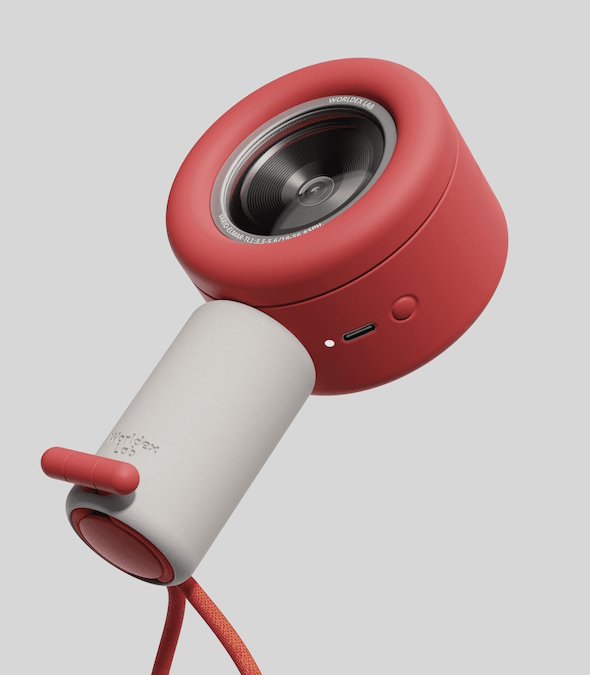
The story of Dex unfolds primarily in the United States, with its creators based in a tech-savvy ecosystem likely influenced by Silicon Valley’s innovation culture, though specific development locations are not detailed. The time frame centers on its recent launch and ongoing development as of August 20, 2025, building on founders’ prior experiences in tech companies and aiming for immediate market entry during the back-to-school season. Dex is an AI-powered camera device designed like a high-tech magnifying glass, featuring a camera lens and touchscreen that allows children aged 3 to 8 to snap photos of objects in their environment.
Continue readingFiled under: Five Top Ed Tech | Leave a comment »

By Jim Shimabukuro (assisted by ChatGPT-5)
Editor
Introduction: ChatGPT-5 and I collaborated* on this article. We discuss the paywalls that limit access to professional journals that publish cutting-edge research articles in the various academic fields. We end with the realization that writers themselves hold the key to smashing paywalls that limit access to the few who can afford the high price of subscriptions. -js

Filed under: Uncategorized | Leave a comment »

By Jim Shimabukuro (assisted by ChatGPT-5)
Editor
(Also see The Post-Writing Century.)
Introduction: ChatGPT-5 and I collaborated on this short story about Elena Vargas, Corporate Analyst, who illustrates what it means to “write” in the AI Century. The process has dramatically transformed what was once a laborious and time-consuming solitary act into an efficient, quick collaboration that maximizes AI power to take on the heavy lifting and free the human to lead and guide the team of AI bots. To write means to swat (Supervised Writing AI Team), and the human in this swatting process leads the team to the finished paper. This might seem far-fetched, but it’s already beginning to happen in corporate as well as government, academic, and personal environments. To complete this article, I’ve also been working extensively with other chatbots: Gemini, Copilot, Perplexity, and DeepSeek. I purposely didn’t involve Claude because I’ve been relying heavily on him for other articles these past few weeks. -js

Elena Vargas, Corporate Analyst at Prometheus, leaned back in her ergonomic chair, letting her gaze drift over the panoramic cityscape beyond the glass wall. The sun had barely crested the horizon, but Prometheus’s orbital control center was already buzzing. Forty-nine minutes. That’s all she had before the executive council connected via global feed.
Continue readingFiled under: Uncategorized | Leave a comment »

By Jim Shimabukuro (assisted by Claude)
Editor
Introduction: Claude and I had a conversation this morning about how AI is beginning to disrupt not just the design but the very nature of personal computers such as laptops, desktops, and tablets. -js
JS: Personal computers — laptops, desktops, tablets — have changed little in the last five years while AI technologies have been growing exponentially. Can you imagine a point where AI will step in and begin to make disruptive changes in computer components and architecture to the point where the equivalent of today’s supercomputer will fit into a cellphone-sized device that nearly everyone will be able to afford?

Claude: Your question touches on a fascinating convergence that’s already beginning to unfold. We’re seeing early signs of AI driving hardware innovation in several key areas:
Continue readingFiled under: Uncategorized | Leave a comment »

By Jim Shimabukuro (assisted by Claude*)
Editor
The artificial intelligence chatbot landscape in 2025 faces an unprecedented legal reckoning. As platforms like ChatGPT, Claude, Gemini, Perplexity, Copilot, DeepSeek, and You.ai have evolved from experimental curiosities to essential business tools, they’ve collided headfirst with copyright law in ways that threaten their fundamental operating models. The question is no longer whether these platforms infringe copyright—it’s how extensively they do so and what the consequences will be.
Continue readingFiled under: Uncategorized | Leave a comment »

By Jim Shimabukuro (assisted by ChatGPT-5)
Editor
(Also see Chefs Using AI in Exciting New Ways.)
Introduction: ChatGPT-5 provides a ranked, up-to-the-minute snapshot (August 2025) of five AI innovations that are genuinely changing how the world invents food and beverages. -js

Filed under: Uncategorized | Leave a comment »

The crime. In April 2024, a fake audio recording circulated online that appeared to capture a Maryland high school principal making racist and antisemitic remarks. Investigators later concluded the clip was an AI-generated deepfake created to destroy the principal’s reputation following a workplace dispute. The hoax triggered public outrage, threats, and significant disruption to school operations. While not a money-transfer scam, the case is instructive as a prosecuted, sentenced misuse of generative AI to deceive and cause harm—showing courts are penalizing AI-assisted deception. AP News
Continue readingFiled under: Uncategorized | Leave a comment »

By Jim Shimabukuro (assisted by Claude)
Editor
(Also see Algorithm of an Intentional Heart, The AGI Among Us, Close to You, Oregon Trail: Where Two Cultures Collaborate)
Introduction: In this sci-fi short story, I’ve asked Claude to adopt the persona of the main character, Kai. -js
Filed under: Uncategorized | 2 Comments »

By Jim Shimabukuro (assisted by Claude, Perplexity, and Gemini)
Editor
(Also see Colossus’s Vitals from Aug. 16-22, 2025 and Disruptive AI Supercomputer Alternative in 10 to 15 Years.)
Introduction: This essay is written by Claude.* See the updates from Perplxity and Gemini after the end of Claude’s essay. -js
Picture this: You’re driving through South Memphis on a sticky August morning, past abandoned lots and weathered houses that tell the story of industrial America’s forgotten corners. Suddenly, you round a corner and there it is—a sprawling complex of industrial buildings humming with the kind of energy that makes the air itself feel electric. This isn’t just another tech facility. This is Colossus, Elon Musk’s audacious bid to build the world’s largest AI supercomputer, and it’s probably the most fascinating—and controversial—thing happening in artificial intelligence right now.

Filed under: Uncategorized | Leave a comment »

By Jim Shimabukuro (assisted by Perplexity)
Editor
[Related: 22 Feb 2026, 11 Feb 2026, Oct 2025, Sep 2025]
This list presents the most internationally recognized leaders in AI research & development for 2025, referencing their companies and key individuals, and capturing each country’s unique advantages and global impact in the AI landscapepe.arapackelaw+13
Continue readingFiled under: Uncategorized | Leave a comment »

The crime. Hong Kong police in late 2024 and early 2025 dismantled multiple syndicates that used AI face-swapping/deepfake tech to run romance-turned-investment scams (“pig butchering”). The groups reportedly operated out of industrial spaces, used deepfaked profiles and live “video” to build trust, and then funneled victims to bogus crypto or FX platforms.
Continue readingFiled under: Uncategorized | Leave a comment »

By Jim Shimabukuro (assisted by Claude)
Editor
Introduction: This story is told by Claude.* -js
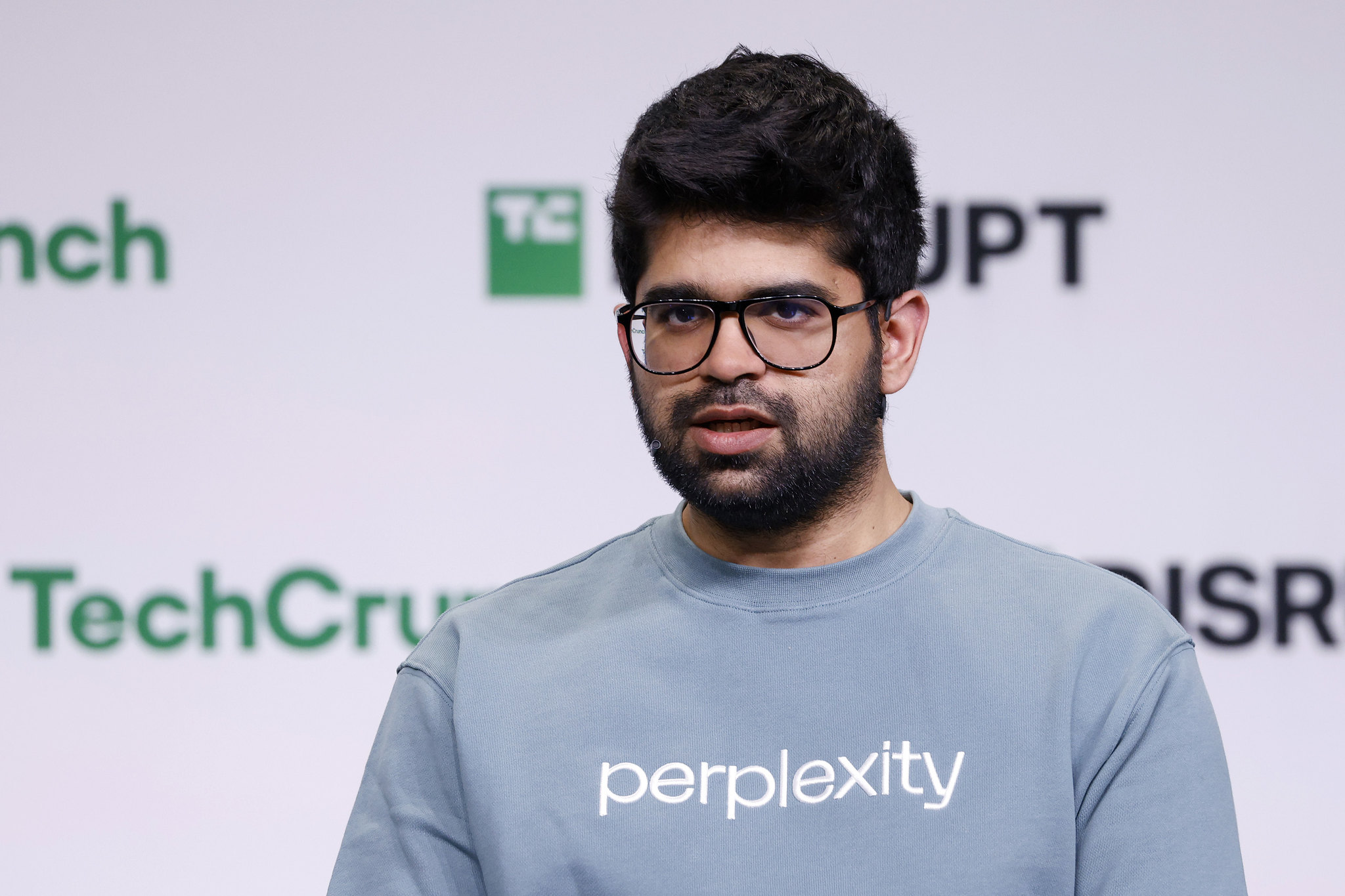
In the gleaming conference rooms of Silicon Valley’s most prestigious AI companies, a young Indian engineer named Aravind Srinivas was watching the future unfold. It was 2021, and the 27-year-old PhD from UC Berkeley had just spent years rotating through the holy trinity of artificial intelligence research: OpenAI, Google DeepMind, and back to OpenAI again. He had seen the inner workings of ChatGPT before the world knew its name, witnessed the transformer revolution firsthand, and absorbed the cutting-edge research that would soon reshape human knowledge.
Filed under: Uncategorized | Leave a comment »

By Jim Shimabukuro (assisted by Gemini)
Editor
For this survey, I asked seven chatbots — Gemini, DeepSeek, You.com, ChatGPT, Copilot, Perplexity, and Claude — to rank the same seven chatbots, including their own. I weighted each 1st selection as 7 points, each 2nd as 6, etc. Each chatbot received 7 rankings.
The runaway favorite for academic papers was Perplexity with 47 points (six 7s and one 5). The second and third were Claude with 33 and Gemini with 31. Here’s the complete rankings: (1st) Perplexity 47, (2nd) Claude 33, (3rd) Gemini 31, (4th) Copilot 23, (4th) You.com 23, (5th) ChatGPT 21, (6th) DeepSeek 18.
Continue readingFiled under: Uncategorized | Leave a comment »

By Jim Shimabukuro (assisted by You.com)
Editor
Introduction: These reviews collectively indicate that while ChatGPT-5 represents a significant technical advancement—especially in reasoning, accuracy, and research support—it also introduces new complexities, retains some persistent limitations, and raises important questions about user experience, trust, and ethical deployment. -You.com
Continue readingFiled under: Uncategorized | Leave a comment »

The crime & method. Reported in August 2025, an elderly couple received a call from someone who sounded like their grandson, claiming he’d been in a serious crash and jailed for DUI after hitting a pregnant woman. A supposed “official” then demanded $9,000 in bail, arranged an Uber/Lyft pickup to the bank, and later pressed for another $9,000. The station noted the use of AI to mimic the grandson’s voice and the practice of scraping social media to generate a convincing clone. WGAL
Continue readingFiled under: Uncategorized | Leave a comment »

By Jim Shimabukuro (assisted by Perplexity)
Editor
[Related articles: Jan 2026, Dec 2025, Nov 2025, Oct 2025, Sep 2025]
The unveiling of GPT-5 by OpenAI on August 7, 2025, set a new benchmark for generative AI. GPT-5 introduces a step-change in technical capabilities, especially in reasoning and multi-modal understanding. Its ability to integrate text, image, and voice processing in a unified model marks a significant evolution from previous generations. Benchmarks suggest a 40% improvement over GPT-4 in handling complex reasoning tasks, from scientific problem-solving to autonomous coding and data analysis. champaignmagazine
Continue readingFiled under: Three Biggest AI Stories, Uncategorized | 9 Comments »

The crime. In January 2024, a finance staffer in the Hong Kong office of Arup, the global engineering group, received what looked like a legitimate email and invitation to a video meeting with the firm’s UK-based chief financial officer and several colleagues. On the call, everyone appeared and sounded exactly like familiar executives—except they weren’t.
Continue readingFiled under: Uncategorized | Leave a comment »

By Jim Shimabukuro (assisted by Gemini)
Editor
Introduction: In this follow-up to Oregon Trail: Where Two Cultures Collaborate, I worked with Gemini* to detail how the Fletchers (a fictional family) settled in Tualatin Valley, which is in the Willamette Valley, Oregon. -js

Traveling approximately 15 miles per day on average, the Fletchers’ 2,000-mile journey from Independence, Missouri, took approximately five months to complete. When they finally reached Oregon, their primary destination was the Willamette Valley.1 In 1850, the Oregon Territory comprised the entirety of the modern states of Oregon, Washington, and Idaho as well as portions of present-day Montana and Wyoming that lie west of the Continental Divide. The official end of the trail was Oregon City, located at the northern end of the valley, and many people initially gathered there.2
Continue readingFiled under: Uncategorized | Leave a comment »

By Jim Shimabukuro (assisted by ChatGPT-5)
Editor
In the world of e-commerce, we talk about “marketplaces,” “platforms,” and “fulfillment networks.” But these words miss the bigger picture: online shopping isn’t just about finding products — it’s a tightly connected loop of searching, purchasing, and delivering.
That’s why I’m introducing SBS™ — Shop · Buy · Ship. It’s a simple but powerful framework for understanding the entire commerce cycle, whether it’s controlled by one company or spread across many.

SBS™ (Shop · Buy · Ship) is the integrated process that defines how consumers discover products, pay for them, and receive them.
Continue readingFiled under: Uncategorized | Leave a comment »




 Educational Technology and Change Journal
