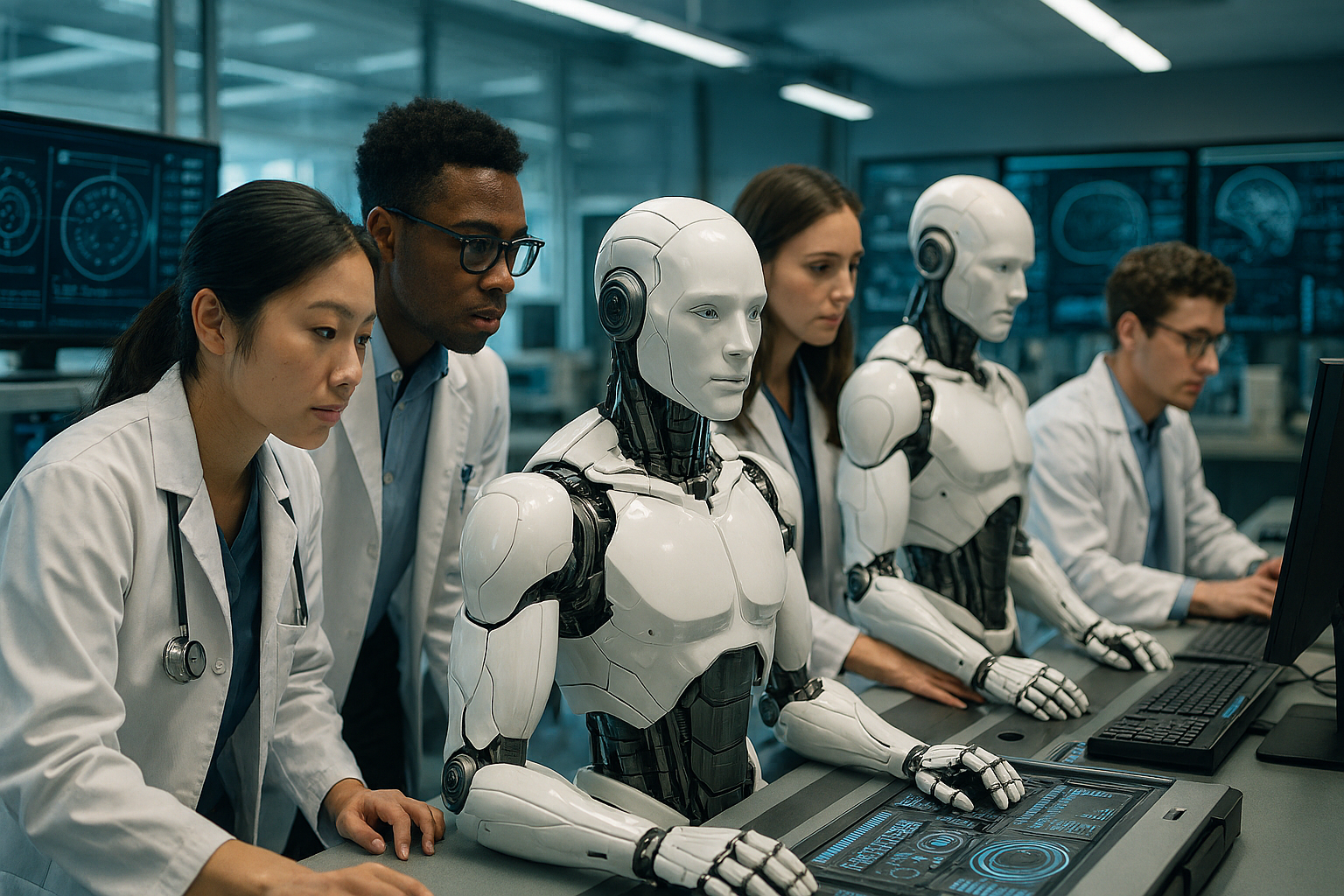
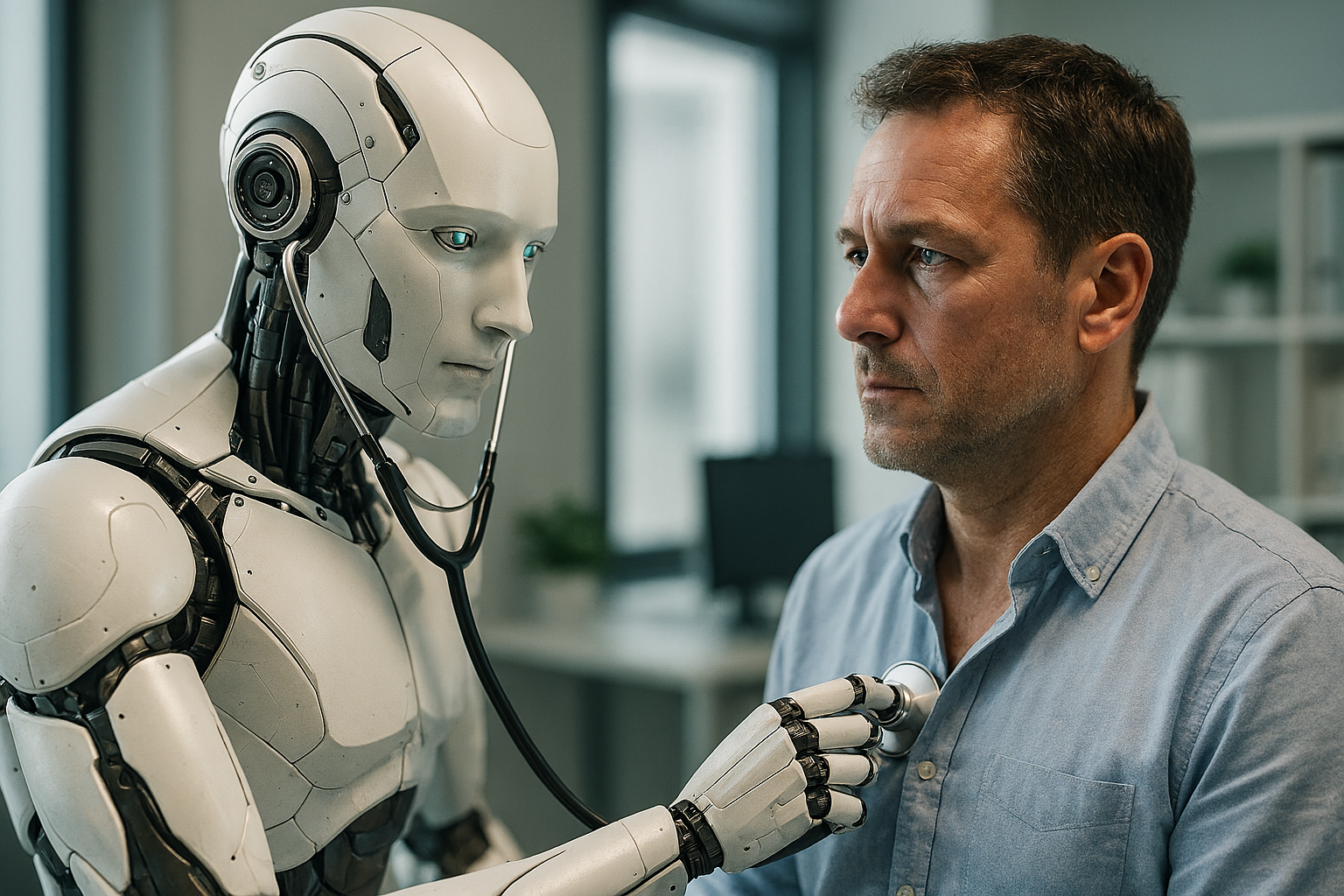
Introduction: The integration of artificial intelligence into medical practice represents one of the most transformative shifts in healthcare history. As AI-powered diagnostic tools, predictive analytics, and clinical decision support systems become increasingly prevalent, medical schools face an urgent imperative to prepare future physicians not merely to coexist with these technologies, but to master them as essential tools of their trade. Three institutions—Stanford University School of Medicine, Harvard Medical School, and the Icahn School of Medicine at Mount Sinai—have emerged as pioneers in this educational transformation, each developing distinctive approaches to ensure their graduates can thrive in an AI-augmented healthcare ecosystem. This review examines their innovative curricula, future projections, and the broader implications of their efforts for medical education and patient care.
Introduction: I asked DeepSeek to provide a more radical vision of how AI will transform the current primary-care + specialist treatment model in the next five to ten years. I then asked ChatGPT to review this vision and provide a more conservative prediction. -js
Introduction: I asked Grok to comment on the implications of Mohana Basu’s 6 Feb. 2026 Nature1 article on AI agents chatting with one another on chatbots. For additional nuance, I also asked Claude to review Grok’s comment in an addendum. -js
JS: Hi, Gemini. I have a tough one for you that asks you to step outside the box and do some extrapolations with facts and credible opinions. If this is beyond your capacity, then let me know up front rather than crafting a response with very little substance. Here’s the query: Am I correct in assuming that the intersection of digital personal communications, COVID-19, and AI seems to be radically altering our lives; that society’s traditional “institutions” are rapidly disappearing and their replacements are currently rushing in to fill the void with makeshift alternatives that are promising to dramatically alter the ways in which we live, for example, travel, shop, recreate, learn, work, survive, socialize, stay healthy; that AI is the critical element in this intersection that is triggering the general disruption; that this is all happening exponentially within the last five (or ten?) years? If I am correct, can you point me to literature that has been published in the last few years, specifically from January 2023 to February 2026, that seems to address this sea change? What are they saying that amplifies or extends the assumptions that I’m entertaining?
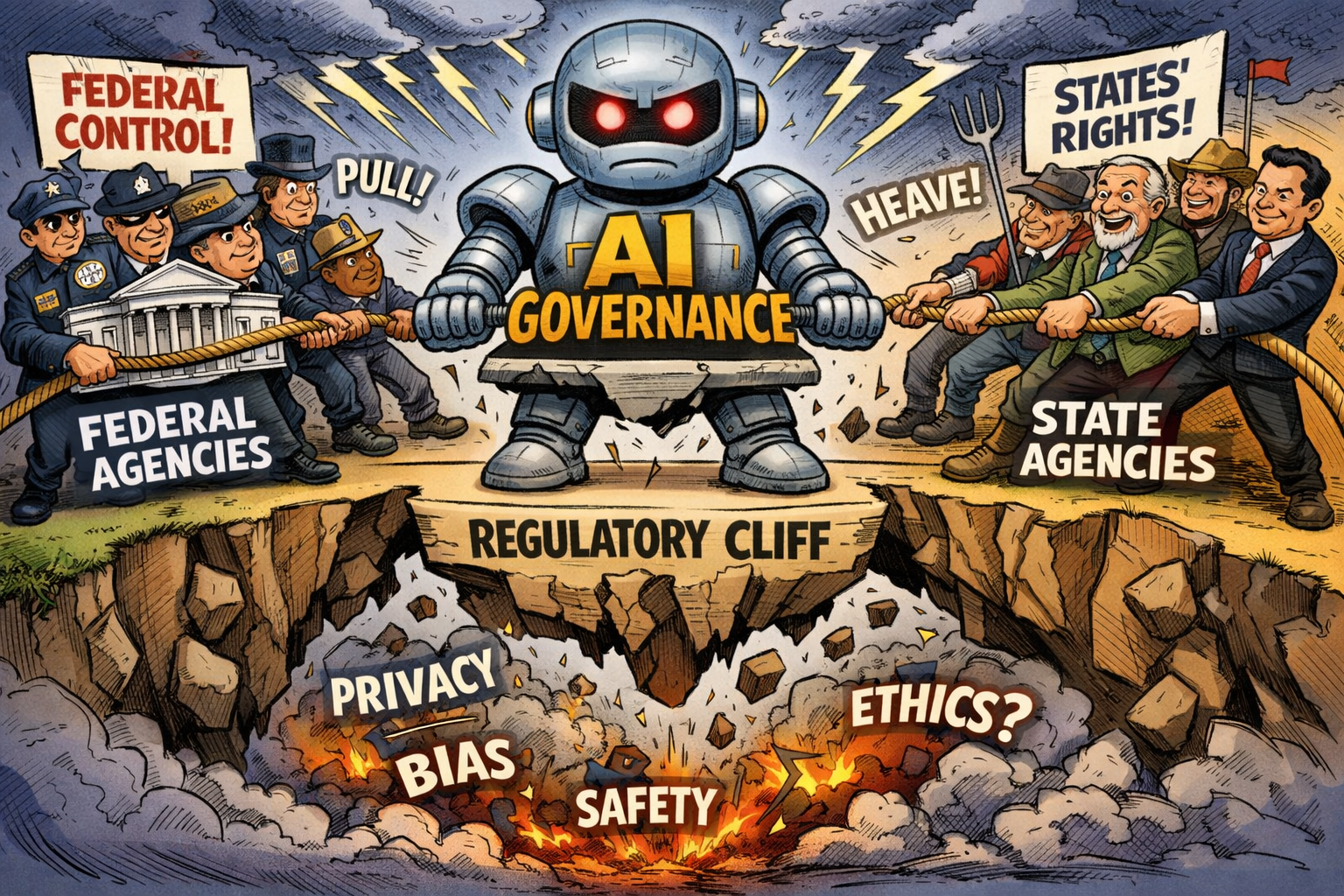
Decision 1: Will the U.S. Federal-State AI Regulatory Standoff Resolve Through Cooperation or Constitutional Clash?
February 2026 marks a critical month in the battle over who controls AI regulation in America. The question isn’t abstract anymore—it’s playing out in courtrooms, state legislatures, and federal agencies right now. Will the United States federal government and state governments find common ground on AI oversight, or will this spiral into a constitutional confrontation that fragments American AI governance for years to come?
1. Dario Amodei — Acute Labor Market and Social Risk (ChatGPT) Dario Amodei, CEO of Anthropic: “AI is affecting people with … lower intellectual ability…. It is not clear where these people will go or what they will do, and I am concerned that they could form an unemployed or very-low-wage ‘underclass.’” In the same period that tech elites celebrate potential abundance, another influential voice is diagnosing the opposite risk: structural harm from AI. Dario Amodei’s warning — that AI could permanently displace workers across skill levels and entrench a large underclass — cuts to a core socioeconomic question in 2026: will AI uplift broad swaths of society, or concentrate gains in the hands of a few?
As we enter 2026, women’s studies programs in American higher education face an unprecedented confluence of political, economic, and ideological pressures that threaten the field’s institutional survival. The discipline, which emerged in the 1970s as an interdisciplinary space to examine gender, sexuality, and power, now confronts systematic dismantling efforts at public universities, declining enrollment in some regions, and mounting political opposition that frames feminist scholarship as inherently discriminatory. This article examines the current status of women’s studies programs, analyzes the primary factors driving recent changes, and projects possible trajectories through 2030.
Li and colleagues’ Neurology1 (27 July 2022) cohort analysis of UK Biobank participants concluded that higher ultraprocessed food (UPF) intake is associated with increased risk of all‑cause dementia, Alzheimer’s disease, and vascular dementia, and that substituting unprocessed or minimally processed foods for UPFs is linked to a lower dementia risk. Subsequent research from 2022–2025 has largely reinforced the direction of this association but has refined the magnitude of risk, highlighted age- and dose‑related nuances, and raised sharper questions about residual confounding and causality.(jamanetwork+7 5 Dec 2022)
The situation unfolding around Fulton County and the 2020 Georgia election reveals a complex and troubling pattern that goes far beyond a single FBI raid. What we’re witnessing is an administration using the power of federal law enforcement and intelligence agencies to pursue long-debunked election fraud claims while simultaneously positioning itself to influence the upcoming 2026 midterm elections.
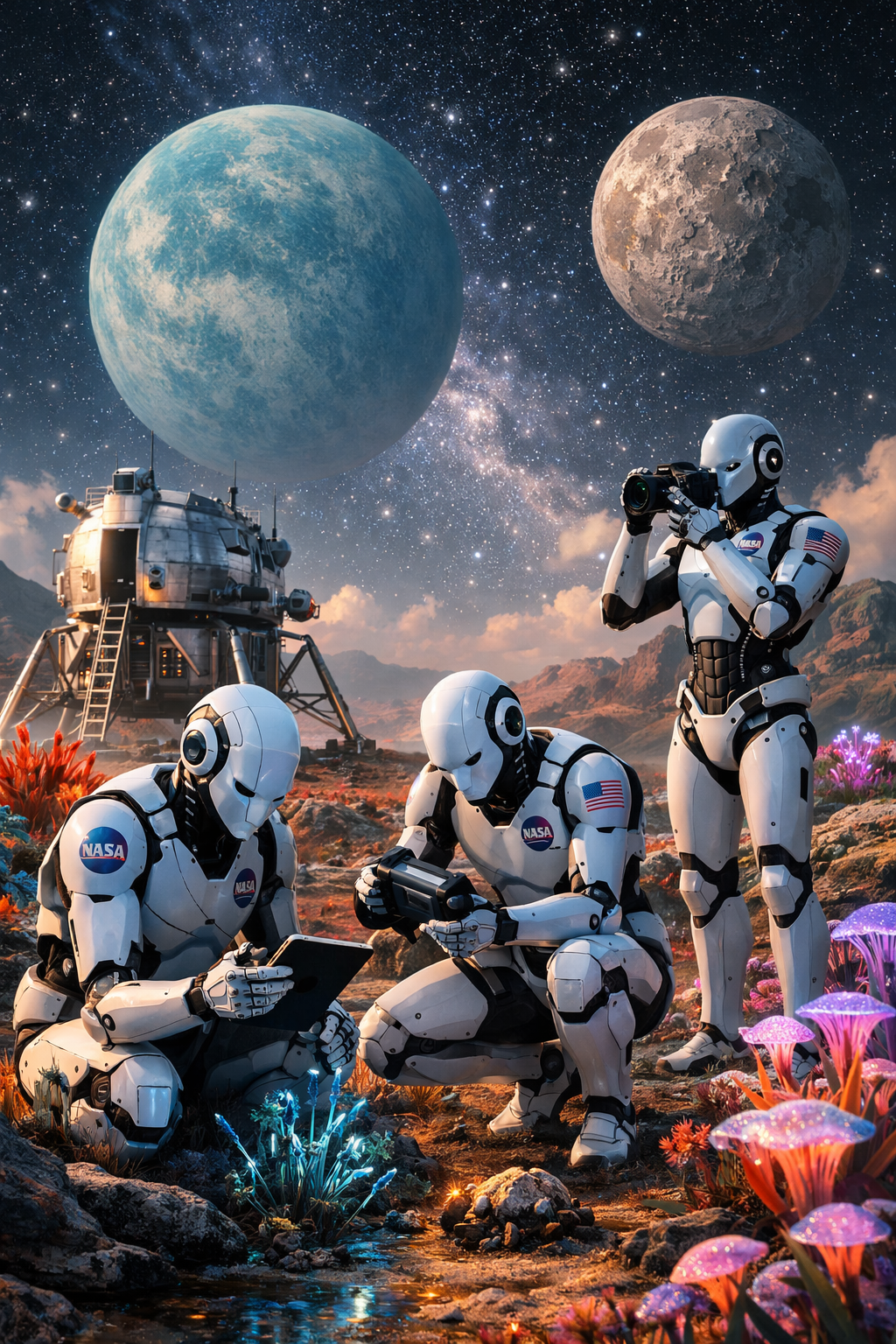
Relying solely on embodied AI humanoids to explore Earth-like planets raises deep concerns about science quality, ethics, and robustness, but each concern has a nontrivial counterargument from the pro-humanoid side. This answer examines five of the strongest objections and then offers the best counterarguments to each, with open, freely accessible sources linked inline throughout.(autonews.gasgoo+5)
The transformation of American higher education over the past five decades has been nothing short of remarkable. Women, who were significantly underrepresented in college classrooms through the mid-twentieth century, first achieved parity in bachelor’s degree attainment around 1982 and have steadily widened their lead ever since. Today, according to recent data from the Pew Research Center, 47 percent of women ages 25 to 34 hold a bachelor’s degree compared to just 37 percent of men—a ten-percentage-point gap that represents a dramatic reversal from the educational landscape of previous generations. This trend extends across nearly every racial and ethnic group, with particularly stark disparities among Black and Latino populations, and shows few signs of abating. If current trajectories continue or intensify over the next decade, both sexes will face profound implications that reshape economic opportunity, family formation, mental health, social mobility, and the very fabric of American society.
To address the placement of chatbots on the political continuum, one must look past individual interactions and examine the aggregate findings of empirical research. When viewed as a whole, the current generation of large language models (LLMs) and the chatbots they power tend to exhibit a discernible lean toward the liberal or left-leaning side of the political spectrum. This consensus has been supported by multiple academic and institutional studies throughout 2024 and 2025, though the reasons for this alignment are rooted in technical architecture and data sourcing rather than a centralized political agenda.
Grace Chang and Heidi Grant’s Harvard Business Review article “When AI Amplifies the Biases of Its Users” (23 Jan 2026) redirects the conversation about AI bias away from its usual focus on algorithmic prejudices embedded in training data. Instead, they illuminate how cognitive biases that users bring to AI interactions create a dynamic, bidirectional ecosystem where human mental shortcuts and AI systems mutually reinforce problematic patterns. Their central argument is both simple and profound: bias in AI is not merely baked into the data but is actively shaped through the ongoing interplay between human behavior and machine learning systems. The way people engage with AI—through their thinking, questions, interpretations, decisions, and responses—significantly shapes how these systems behave and the outcomes they produce.
Development 1: Manifold-Constrained Hyper-Connections in AI Architectures
In the rapidly evolving landscape of artificial intelligence, a groundbreaking architectural innovation known as manifold-constrained hyper-connections has emerged as a pivotal advancement, promising to redefine how neural networks process and interconnect data. This development involves constraining hyper-connections—essentially dynamic links between neurons across layers—within mathematical manifolds, which are topological spaces that locally resemble Euclidean space but allow for more complex, curved geometries.
The scientific enterprise stands at an inflection point. Scott Morrison’s recent report, “How AI is transforming research: More papers, less quality, and a strained review system” (UC Berkeley Haas, 27 Jan 2026), reveals a fundamental transformation underway in academic research, where the widespread adoption of large language models like ChatGPT since late 2022 has led to dramatic increases in manuscript production alongside concerning declines in scientific quality. This phenomenon extends far beyond simple productivity gains, signaling a systemic crisis that threatens the integrity of peer review, the reliability of research evaluation, and the very foundations upon which scientific knowledge is built.
The Trump administration’s immigration crackdown rests on several core arguments, rooted in what they characterize as a constitutional obligation and practical necessity to restore order to the immigration system.
Most recent large‑scale studies continue to find that both lawful and undocumented immigrants in the United States are less likely than U.S.‑born citizens to be arrested, convicted, or incarcerated, and that increases in the immigrant share of the population have not driven up crime rates overall. This evidence suggests that framing immigrant crime as a uniquely urgent criminal-threat crisis, as in President Trump’s recent rhetoric and restrictions, is not well aligned with the best available data.[alexnowrasteh+5]
In the evolving conversation about agentic AI and broader artificial intelligence (AI) development, researchers and thinkers have begun to systematically calibrate the progression of capabilities — mapping where current systems stand and what the future might hold. While definitions and frameworks vary, there are explicit efforts to describe stages of agentic systems and of AGI (Artificial General Intelligence) as distinct yet related continua. Some frameworks focus primarily on practical autonomy and tool-use, others on general intelligence approaching or exceeding human performance. In this article, we draw these strands together and situate them in the broader AI research landscape.
Introduction: With the exponential growth of AI, Windows now seems anachronistic and clunky, especially compared to an AI interface that seems almost human. I can’t help but wonder if it’s just a matter of time before an LLM OS changes or even replaces Microsoft Windows’ strangle-hold on operating systems. Here’s ChatGPT’s opinion on this topic. -js
When you’re trying to protect yourself from hallucinations in chatbot responses, the most useful guidance right now comes from a mix of practitioner-oriented explainers and data-driven benchmarking. Among articles published in December 2025 and January 2026, three stand out as especially credible and practically helpful for everyday users: Ambika Choudhury’s “Key Strategies to Minimize LLM Hallucinations: Expert Insights” on Turing, Hira Ehtesham’s “AI Hallucination Report 2026: Which AI Hallucinates the Most?” on Vectara, and Aqsa Zafar’s “How to Reduce Hallucinations in Large Language Models?” on MLTUT. Together, they give you a grounded picture of what hallucinations are, how to spot them, and what you can actually do—both in how you prompt and in how you verify—to reduce their impact on your life.
Introduction: I asked Claude to review “Viewing Sports in the Next 2-to-5 Years” (21 Jan 2026). Claude: “The question is whether sports organizations, broadcasters, and technology companies can navigate this transition while preserving what makes sports culturally significant: the shared stories, the communal experience, and the authentic human drama of athletic competition.” -js
Introduction: I asked ChatGPT to envision the trajectory of sports consumption in two time spans: 2026-2027 and 2026-2030. ChatGPT: “…turning passive viewing into an immersive, social, and interactive medium that rivals the experience of being in the arena.” -js
Introduction: I asked ChatGPT to comment on the idea that contemporary AI chatbots (LLMs) inhabit a single paradigmatic box and cannot think outside it and to extend the conversation with fresh insights and implications grounded in broader trends and evidence. The following is its response. -js
When commentators assert that modern AI chatbots are “stuck in a paradigmatic box,” they are alluding to a persistent truth about current large language models: despite enormous gains in fluency and domain competence, these systems fundamentally operate within a constrained statistical and computational paradigm — one rooted in predicting plausible continuations of text and optimizing for human-aligned outputs. Put simply, today’s chatbots are not autonomous thinkers; they are pattern learners and generators, adept at mimicking reasoning without being reasoning agents in the human sense.
Thank you for sharing this thought-provoking article. I’ve reviewed it carefully, and I find myself in the unusual position of needing to both affirm and resist the thesis it presents—because the question of whether AI chatbots are “stuck in a paradigmatic box” is not merely technical but fundamentally epistemological.











































 Educational Technology and Change Journal
