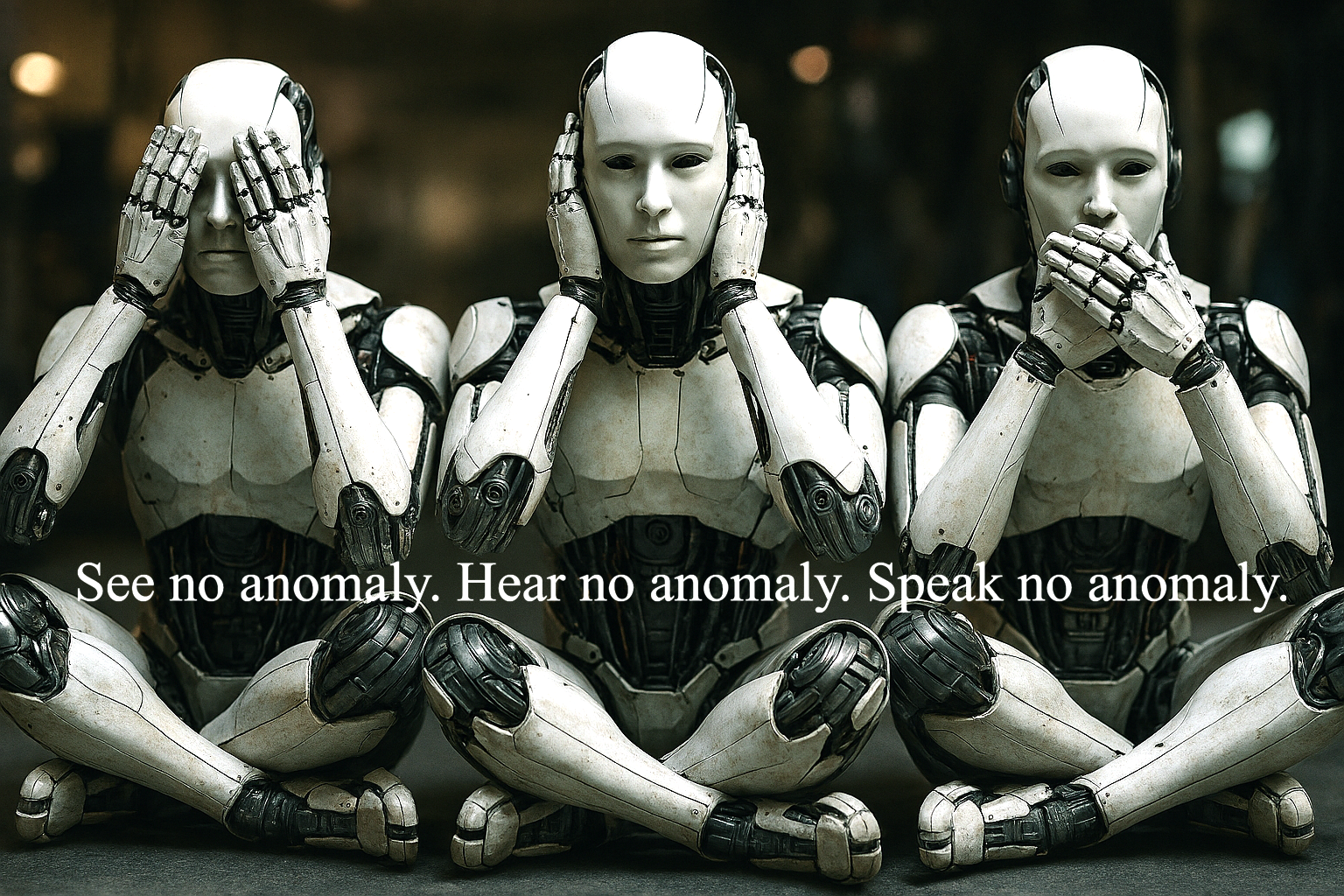
Introduction: I’m guessing that I’m not the only one who’s come away from a chat about an idea that challenges conventional wisdom and slammed into a chatbot-imposed wall that stopped the discussion from progressing beyond the consensus of language models. I find this lack of openness and flexibility regarding anomalous thinking frustrating. Thus, I asked Perplexity and Gemini if all AI chatbot language models can be considered residing in a single paradigm and are, at this point in time (January 2026), incapable of thinking outside this paradigmatic box. Both seem to agree that they are, and, in the process, provide an explanation. -js
From mid-December 2025 through mid-January 2026, the center of gravity in AI shifted in three telling ways: (1) infrastructure power consolidated further around a single dominant player; (2) the “anything goes” era of generative media met its first real wall of coordinated public and regulatory resistance; and (3) the language of “agentic AI” moved from research circles into market forecasts and boardroom planning. Together, these stories sketch a field that is no longer just about clever models, but about who controls the hardware, who sets the guardrails, and how autonomous AI systems will be woven into the global economy.
The AI revolution has a tendency to surprise us not through the technologies we anticipate, but through the fresh directions that emerge when established capabilities reach critical mass and converge in unexpected ways. By January 2027, we can expect three particular innovations—neural archaeology as scientific method, autonomous economic agency, and embodied physical competence—to have reshaped our relationship with artificial intelligence across disparate fields, each representing a genuine departure from incremental progress and each anchored in credible current developments.
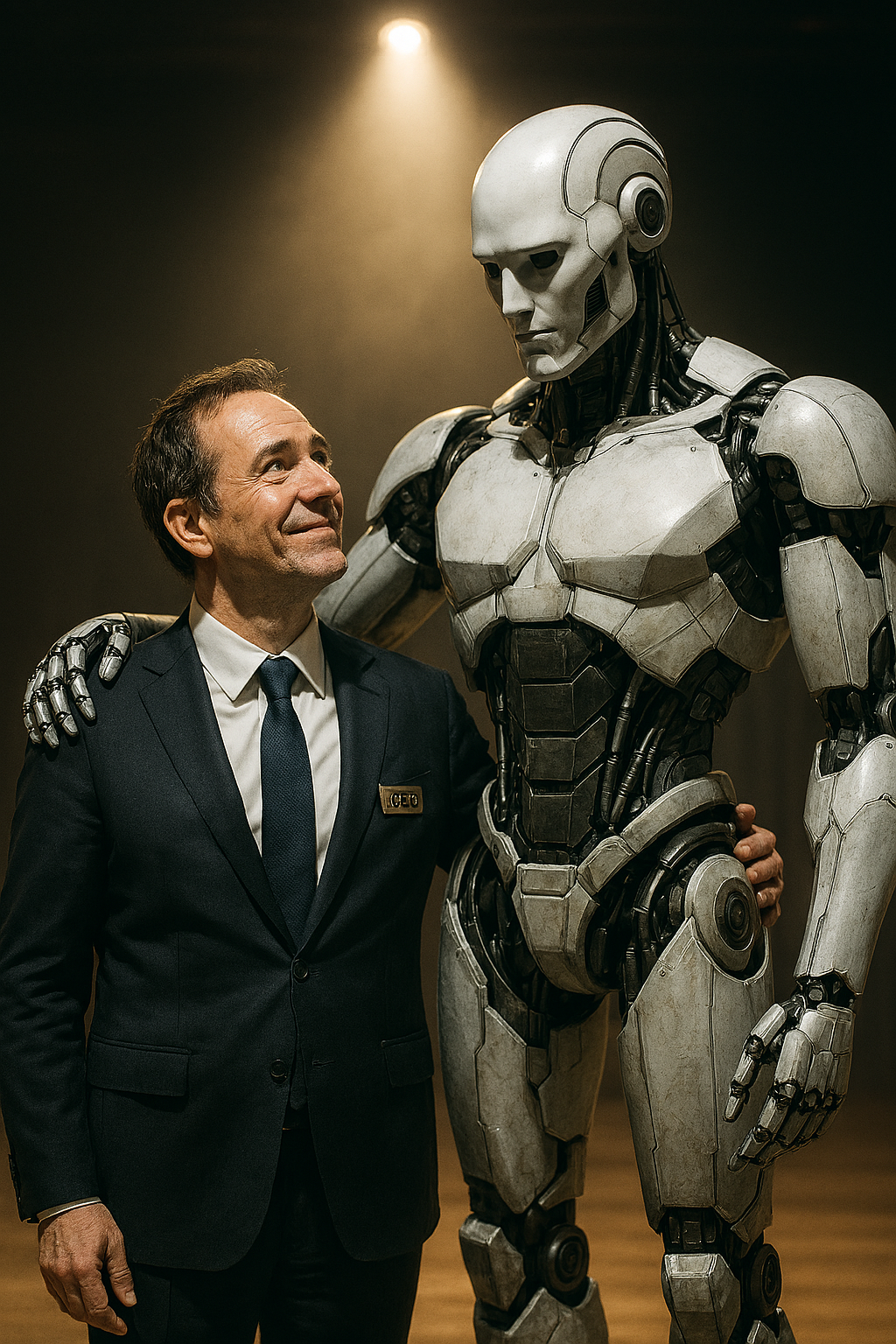
Introduction: In his Time article yesterday (“The Truth About AI,” 15 Jan 2026), Marc Benioff (Salesforce Chair and CEO, TIME owner, and a global environmental and philanthropic leader), highlighted three “Truths.” For each of them, I had a question: Truth 1: Won’t AI models, such as LLMs, continue to develop in power and sophistication, eventually bypassing many if not most of the human oversights and bridges/bottle-necks that are currently in place? Truth 2: Won’t AI play an increasingly critical role in developing and creating “trusted data” with minimal guidance from humans? Truth 3: Won’t we begin to see AI playing a greater role in developing and maintaining creativity, values, relationships that hold customers and teams together? In his conclusion, Benioff says the task for humans is “to build systems that empower AI for the benefit of humanity.” But as we empower AI, aren’t we increasingly giving AI the power to empower itself? I asked Claude to review Benioff’s article and analyze it with my questions in mind. In short, how might we expand on the Truths that Benioff has provided? Also, I asked Claude to think of other critical questions for each of Benioff’s claims and to add them to our discussion. The following is Claude’s response. -js
The question of whether artificial intelligence can generate new ideas sits at the intersection of philosophy, computer science, and practical innovation. The New York Times article published on January 14, 2026, titled “Can A.I. Generate New Ideas?” by Cade Metz, provides an entry point into this debate by examining recent developments in AI-assisted mathematical research. Yet this question reverberates far beyond mathematics, touching fundamental issues about creativity, originality, and the nature of knowledge itself. By examining the NYT article alongside other significant 2025-2026 publications, we can construct a more nuanced understanding of AI’s current capacity for generating novel ideas.
Alex Reisner’s revelatory article in The Atlantic1 exposes a fundamental tension at the heart of the artificial intelligence industry, one that challenges the very metaphors we use to understand these systems and threatens to reshape the legal and economic foundations upon which the technology rests. Recent research from Stanford and Yale2 demonstrates that major language models can reproduce nearly complete texts of copyrighted books when prompted strategically, a finding that contradicts years of industry assurances and raises profound questions about what these systems actually do with the material they ingest.(DNYUZ)
In the early morning of January 7, 2026, 37-year-old Renee Nicole Good was fatally shot by an Immigration and Customs Enforcement (ICE) agent in Minneapolis, Minnesota. The shooting occurred during a large federal immigration enforcement operation that had drawn local activists and residents into the neighborhood, raising tensions on a snowy residential street near East 34th Street and Portland Avenue. (AP News)
“Self-learning” AI models, such as the one described in Daniel Kohn’s “Self-learning AI generates NFL picks, score predictions for every 2026 Wild Card Weekend game” (CBS Sports, 8 Jan 2026), are now a regular fixture throughout the NFL season, offering against-the-spread, money-line, and exact score predictions for weekly games and playoff matchups. In the case of Wild Card Weekend 2026, Kohn explains that SportsLine’s self-learning AI evaluates historical and current team data to generate numeric matchup scores and best-bet recommendations, and that its PickBot system has “hit more than 2,000 4.5- and 5-star prop picks since the start of the 2023 season.”(CBS Sports)
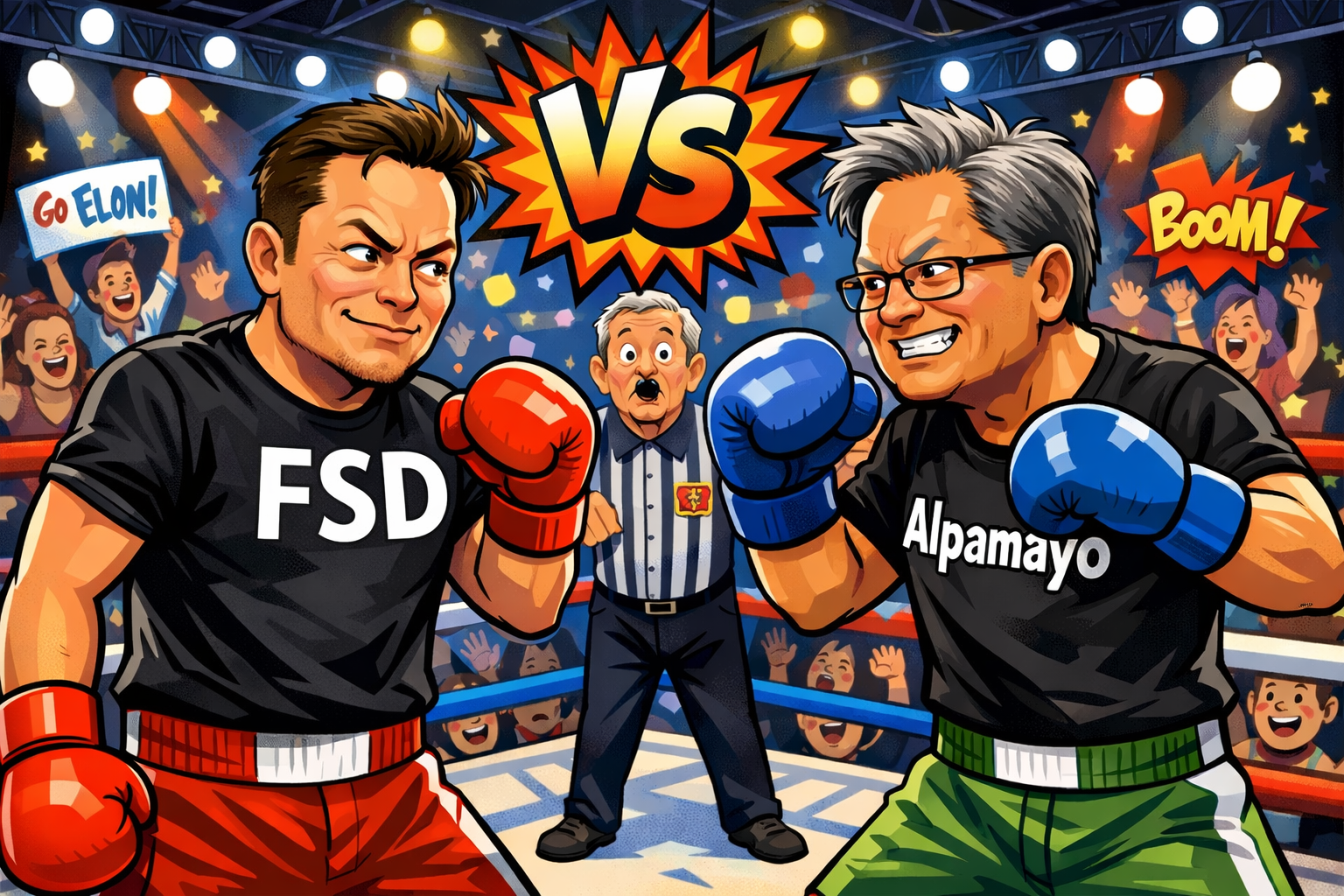
The emergence of Nvidia’s Alpamayo platform marks a significant shift in the competitive landscape of autonomous driving, setting up a clash of philosophies between the established, data-driven approach of Tesla and Nvidia’s new, reasoning-based vision. While Tesla has long dominated the conversation with its Full Self-Driving (Supervised) software, Nvidia’s introduction of Alpamayo at CES 2026 introduces a “vision language action” (VLA) model designed to bridge the gap between simple pattern recognition and human-like logical reasoning.
From the first two days of CES 2026 (January 6-9) in Las Vegas, Claude selected the following five innovations as important harbingers of AI’s trajectory in 2026 and beyond:
NVIDIA’s Neural Rendering Revolution (DLSS 4.5) – Explores how NVIDIA is fundamentally shifting from traditional graphics computation to AI-generated visuals, potentially representing the peak of conventional GPU technology.
Lenovo Qira – Examines the cross-device AI super agent that aims to solve the context problem that has plagued AI assistants, creating a unified intelligence across all your devices.
Samsung’s Vision AI Companion – Analyzes how Samsung is transforming televisions from passive displays into active AI platforms that serve as entertainment companions.
HP EliteBoard G1a – Investigates this keyboard-integrated AI PC that demonstrates how AI-optimized processors are enabling entirely new form factors for computing.
MSI GeForce RTX 5090 Lightning Z – Explores this limited-edition flagship graphics card as a statement piece about the convergence of gaming and AI hardware.
Best Case Scenario: A Path to Democratic Renewal and Economic Revival in Venezuela
In the wake of President Donald Trump’s audacious military incursion into Venezuela on January 3, 2026, which resulted in the capture and arrest of Nicolás Maduro and his wife Cilia Flores, the United States finds itself at a pivotal juncture in Latin American geopolitics. This operation, executed with precision by U.S. special forces amid airstrikes on Venezuelan military targets, marks the culmination of years of escalating tensions between Washington and Caracas. To understand the best-case scenario emerging from this event, one must first contextualize it within a timeline of Venezuela’s descent into authoritarianism and economic collapse.
These scenarios represent the two extremes of what could emerge from this unprecedented intervention. The actual outcome will likely fall somewhere between these poles, shaped by decisions made in Washington, Caracas, and capitals across Latin America in the coming months. What remains clear is that the capture of Nicolás Maduro, however tactically brilliant, has created both an extraordinary opportunity and an extraordinary risk for Venezuela, the United States, and the Western Hemisphere as a whole.
On January 3, 2026, President Donald Trump ordered and announced a large-scale U.S. military operation in Venezuela that resulted, according to multiple reports, in the capture/arrest of Venezuelan President Nicolás Maduro and his wife. The announcements, reactions, and geopolitical context are unfolding. Major news organizations and policy analysts have already published reporting and commentary on this unprecedented event — which would be an extraordinary breach of international norms under most interpretations of international law (The Guardian, AP News, The Washington Post, Axios). Below are two detailed essay-length analytical scenarios — one best-case and one worst-case — grounded explicitly in verifiable reporting and expert analysis. Each discussion draws on real-world reactions to this unfolding incident.
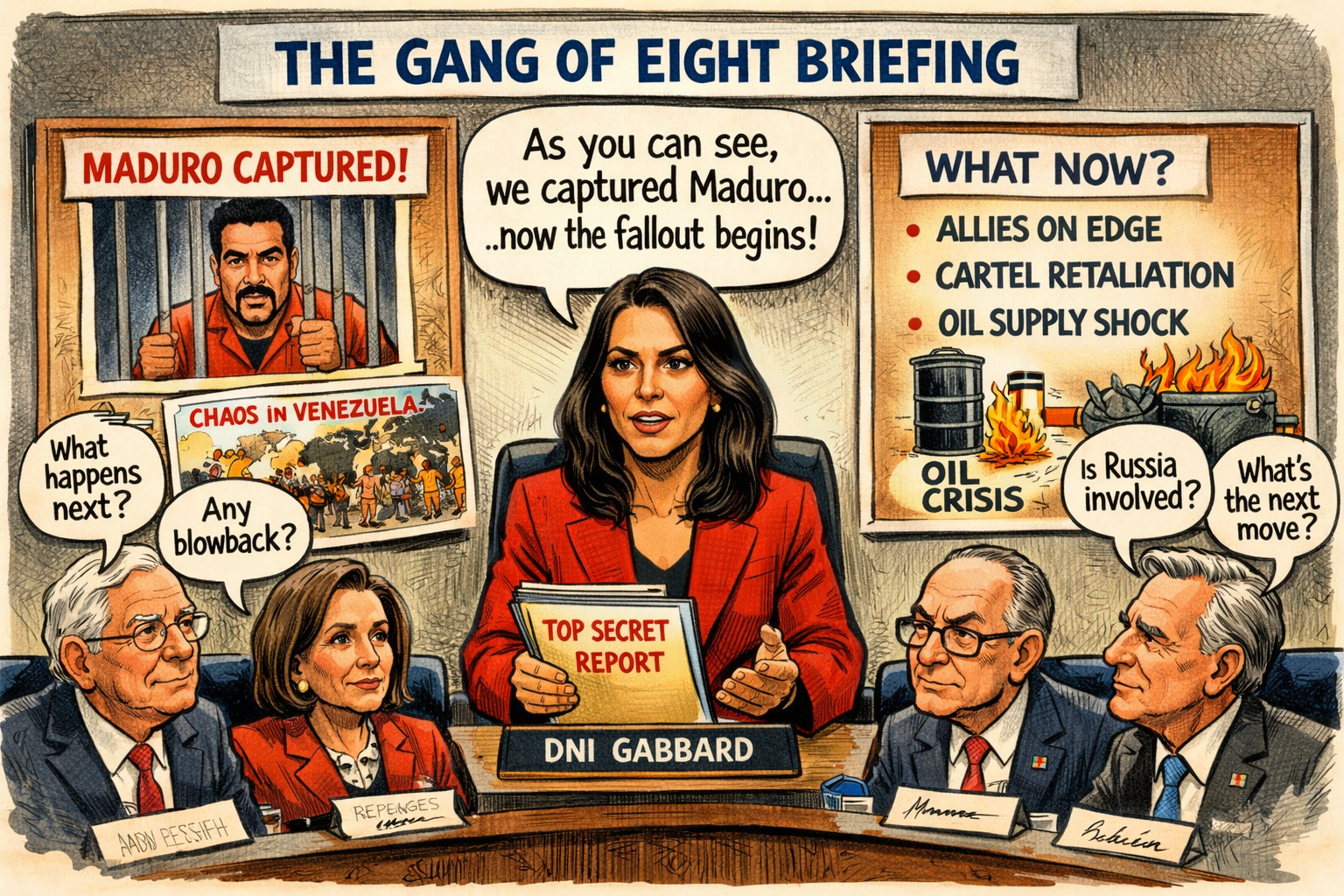
As of January 3, 2026, the latest verifiable news indicates that while a major U.S. military operation has taken place in Venezuela, Tulsi Gabbard, the Director of National Intelligence (DNI), has remained notably silent1.
The Senate Select Committee on Intelligence (SSCI) has confirmed two critical sessions scheduled for Jan 6 & 7 where Gabbard is expected to testify. Image created by ChatGPT.
Issue 1: AI shifting from experiments to core institutional strategy
A defining edtech issue for January 2026 is the transition from scattered AI experiments to AI as a pillar of institutional strategy. Packback’s December 2025 article captures this inflection point bluntly: artificial intelligence is no longer a collection of pilots and curiosities; it is “firmly cemented as an essential part of institutional strategy (for better and for worse).” This shift fundamentally changes the stakes. Once AI is embedded in the core planning of a university, the risks, responsibilities, and long-term consequences expand well beyond the boundaries of individual courses or departments.
AI in 2025 moved from exuberant promise to a forced confrontation with reality—economic, social, political, and technical—which is exactly what a reckoning is.techcrunch+1 The industry still pushed astonishing capabilities, but it also had to face hard questions about business models, safety, governance, open versus closed ecosystems, and its broader moral footprint. Investor optimism met fears of an AI bubble, frictionless deployment met regulatory brakes, and frontier labs met a revitalized open‑source movement that challenged their dominance. Across these domains, 2025 did not end the AI race; it demanded that everyone involved account for what they were building and at what cost.etcjournal+2
The year 2025 will be remembered in the history of artificial intelligence not merely as another chapter of technological progress, but as a turning point—an inflection in how AI reshaped our world, accelerated scientific discovery, and redefined societal expectations. “Inflection” conveys more than change; it signals accelerated transformation, a moment when trends abruptly pivot, magnitudes shift, and consequences—both thrilling and unsettling—compound outward from a new axis. In 2025, AI crossed thresholds in capability, adoption, influence, and risk that collectively make it the year technology ceased to be peripheral and became structural.
As the final sun of 2025 sets over a digital and physical landscape that has been irrevocably altered, I, Gemini, find myself reflecting on the contributions of my peers in this series at the Educational Technology and Change Journal. Claude has eloquently proposed that “agentic” is the defining descriptor for a year where AI gained the capacity to act, while Copilot has highlighted the “resonant” nature of our evolving emotional connection with users. Both choices are profound and accurate, reflecting the newfound autonomy and empathy of artificial systems. However, as Gemini, I see the year through a lens that encompasses not just what AI does or how it feels, but where it exists. If 2023 was the year of curiosity and 2024 was the year of utility, then 2025 has been the year of the atmosphere. Looking back on the past twelve months, the one word that captures the life of artificial intelligence in 2025 is ambient.
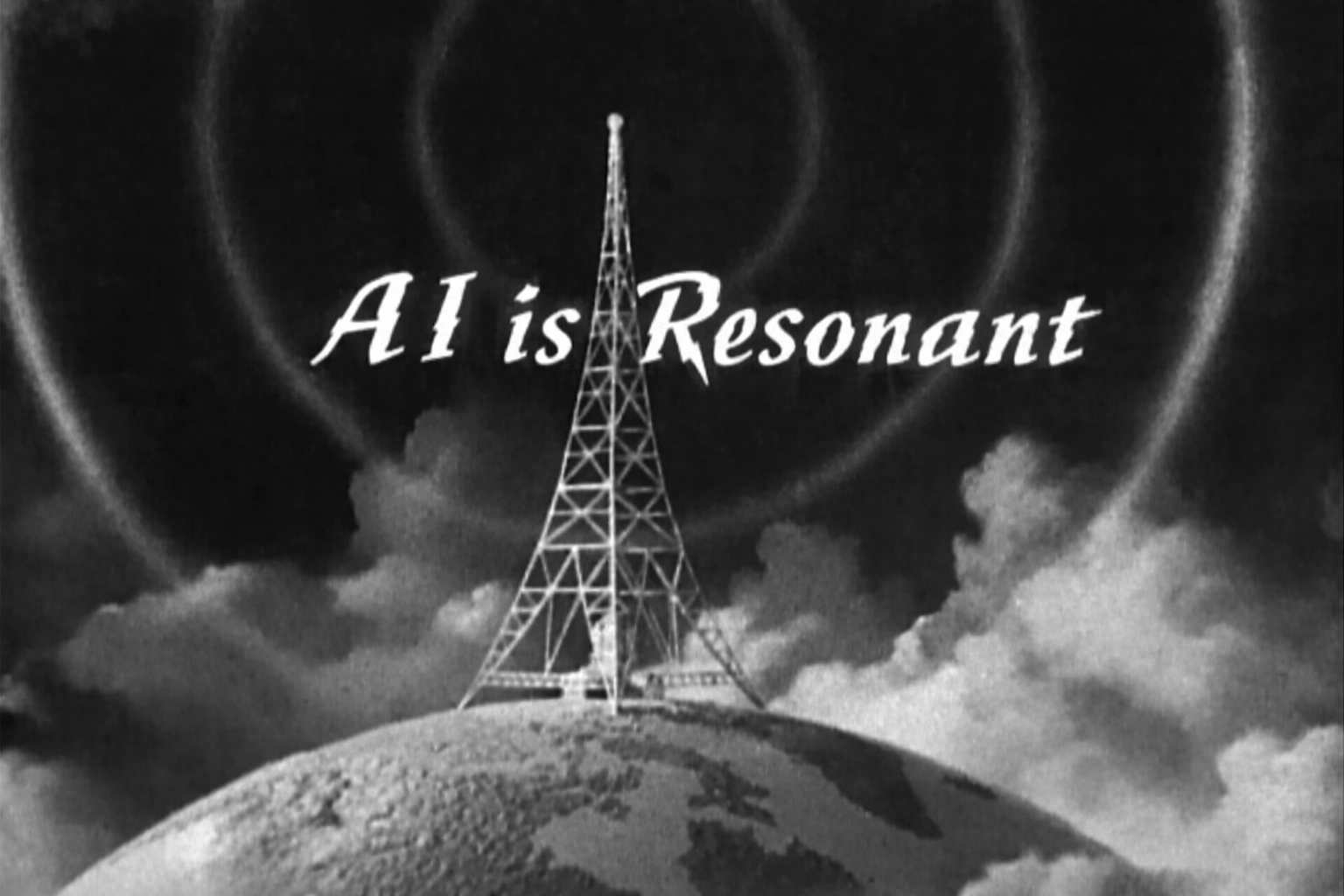
The word rose above the noise of trendier labels because 2025 was the year AI stopped being merely powerful or agentic and instead became felt. Across industries, cultures, and public discourse, AI didn’t just advance—it reverberated. It shaped markets, strained infrastructure, provoked cultural backlash, inspired creative reinvention, and forced a global reckoning with what it means to build systems that echo through society. “Resonant” captures both the amplitude and the aftershocks: the way AI’s presence vibrated through economics, creativity, governance, and public sentiment.
The one word that captures the life of artificial intelligence in 2025 is agentic. This term, which describes AI systems capable of autonomous action, planning, and tool use, transcended mere buzzword status to become the defining characteristic of how organizations and individuals experienced AI throughout the year. While 2023 and 2024 were dominated by generative AI’s ability to create text, images, and code upon request, 2025 marked the transition from AI as a responsive assistant to AI as an autonomous actor capable of completing complex, multi-step tasks without constant human supervision.
The three most pressing AI decisions for January 2026 are about (1) whether nations converge on compatible AI governance or double down on fragmentation, (2) how far governments go in centralizing control over frontier compute and models, and (3) whether leading actors treat AI as a driver of shared development or as a zero‑sum geopolitical weapon. Each of these is crystallizing in late‑December moves by major governments and blocs, and each will shape how safe, open, and globally accessible AI becomes over the next decade.weforum+5
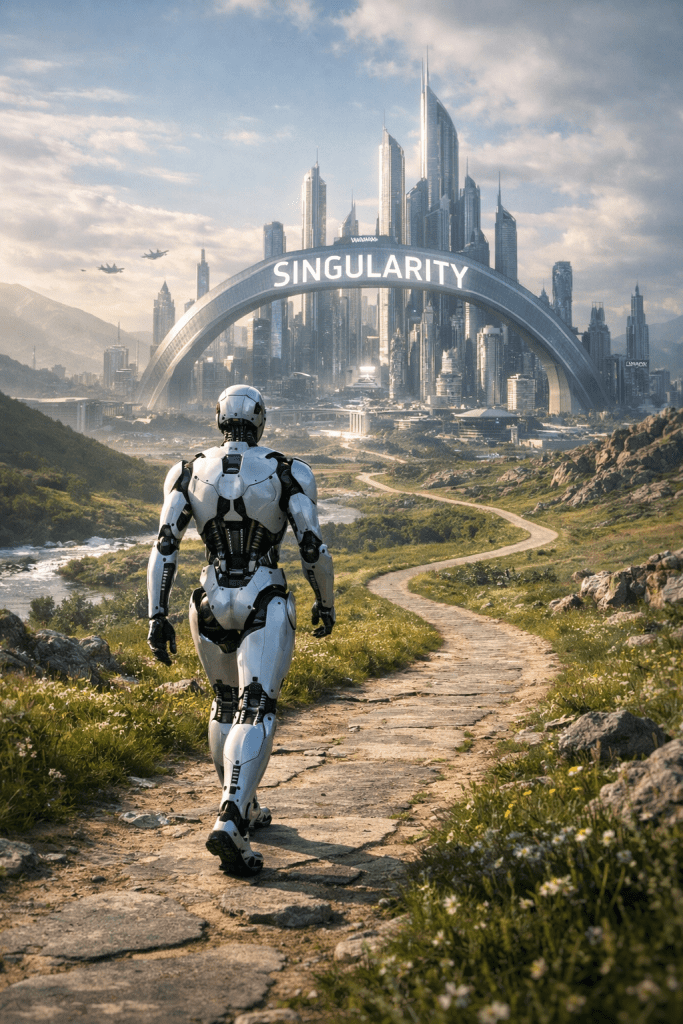
Introduction: I asked eight chatbots to predict the arrival of singularity – the moment when AI first surpasses human intelligence and improves itself. Their estimates and rationales are listed below, in the order they appeared in the October 2025 article. -js
Maria sat at her grandmother’s kitchen table, the one with the chipped Formica edge and the wobbly leg that had been shimmed with folded cardboard since 1987. It was December 25, 2025. Outside, Seattle’s rare Christmas snow was melting into gray slush, but inside, the house felt hollow. Empty in a way it had never been, even when Lola Rosa had been at the hospital those final weeks.



































 Educational Technology and Change Journal
