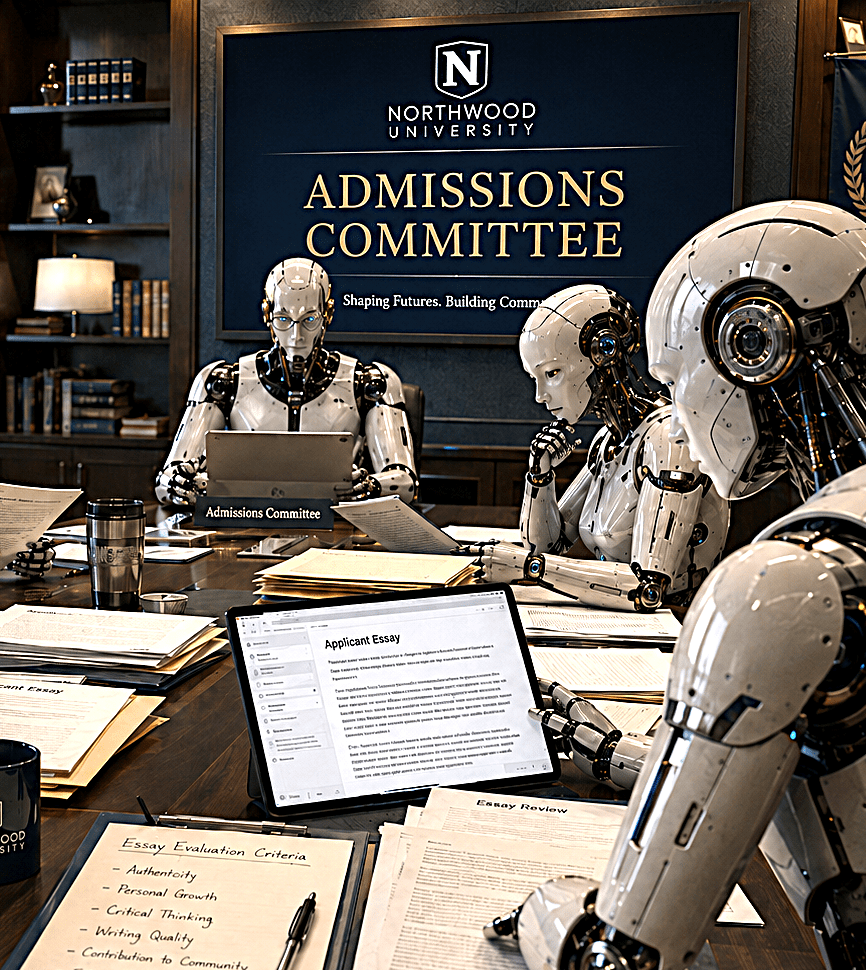
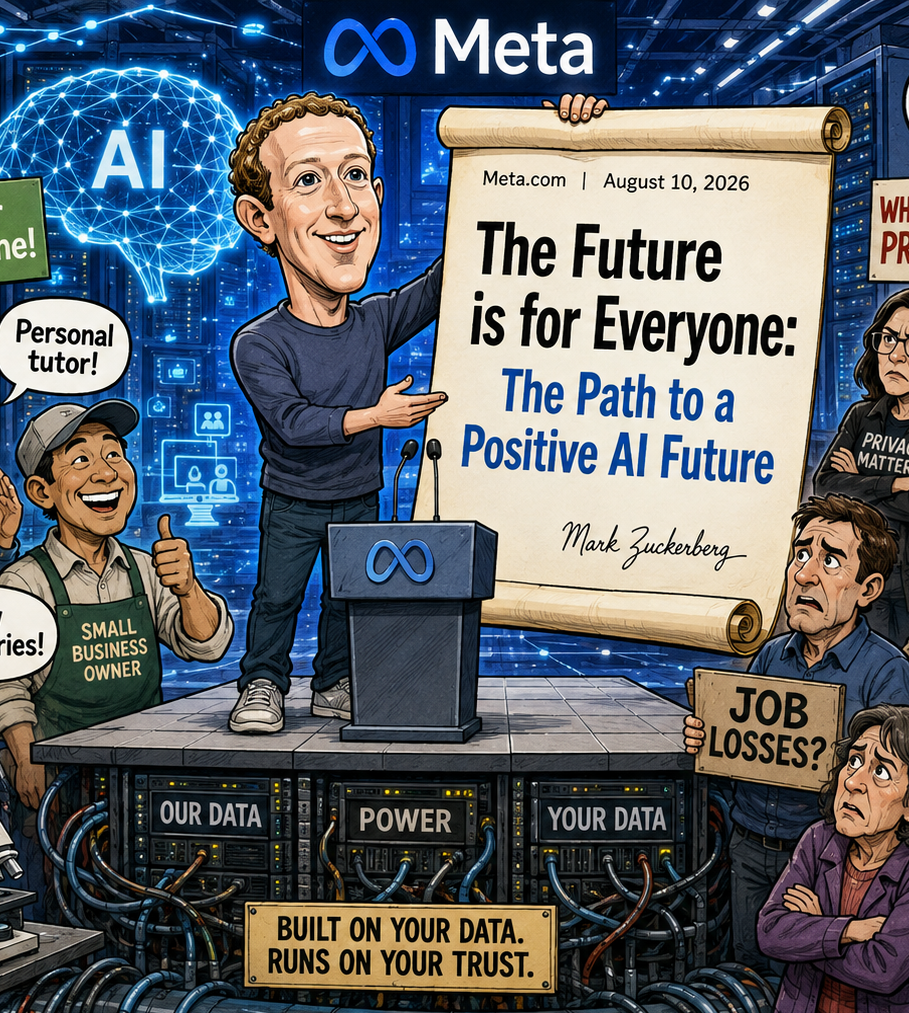
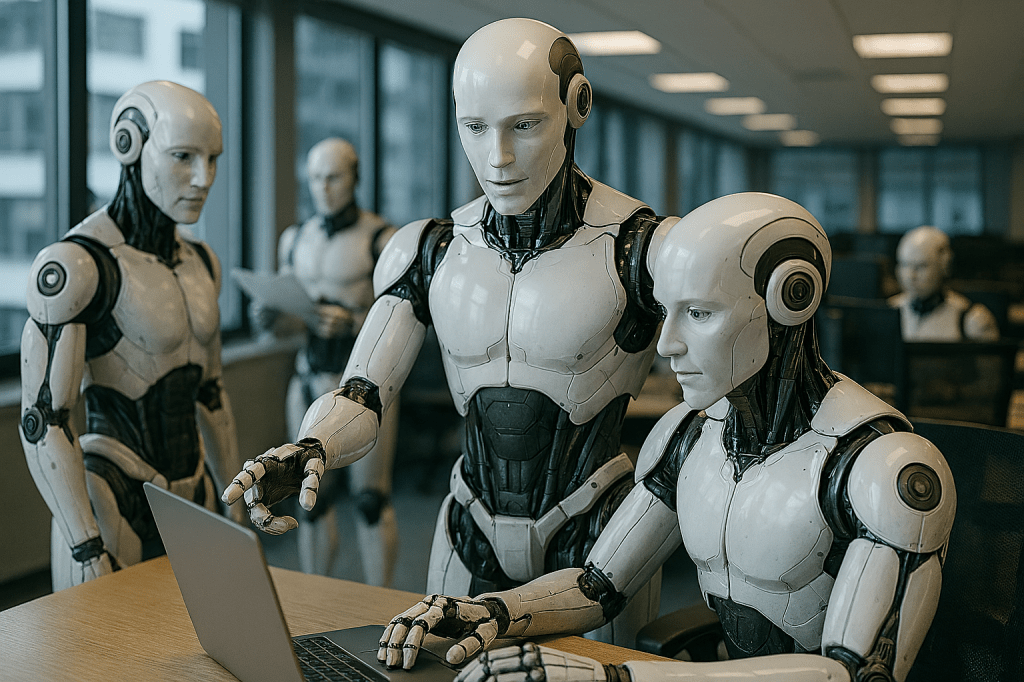
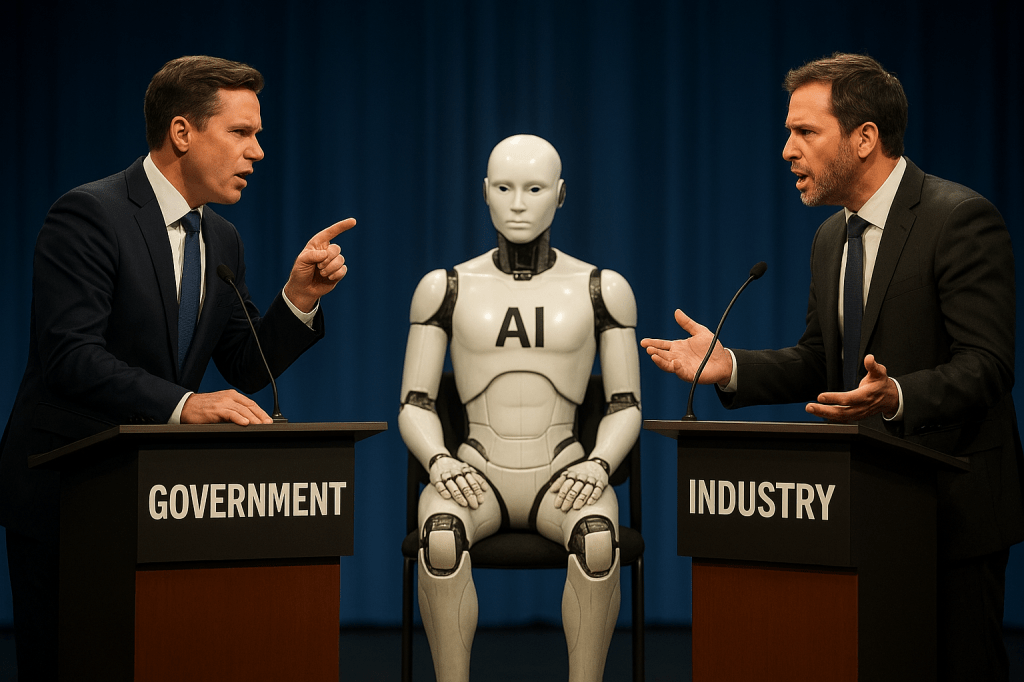
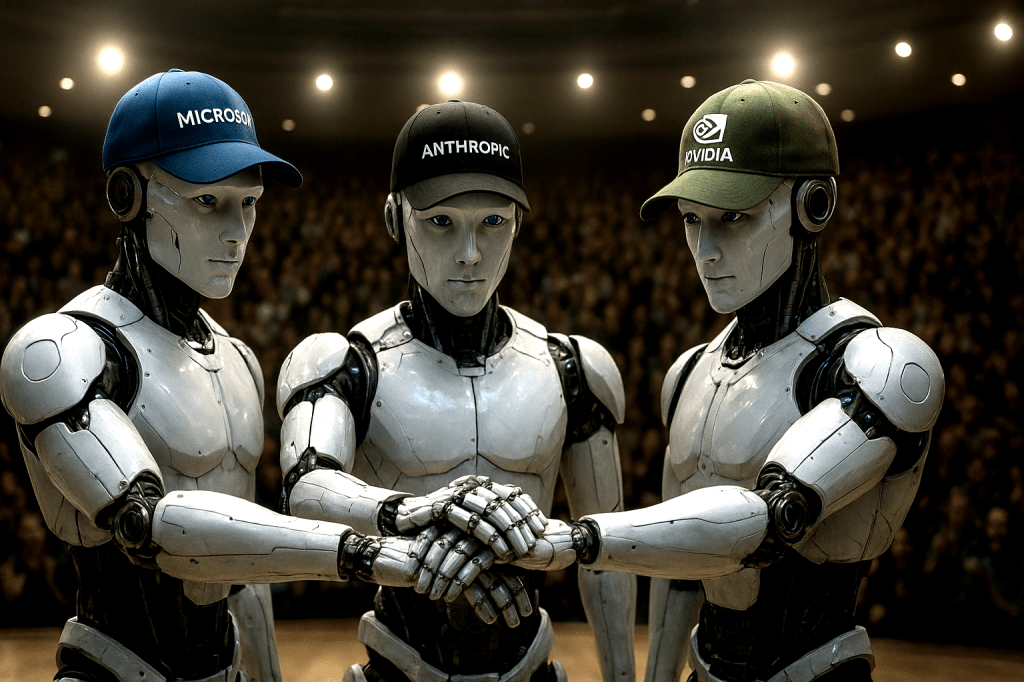
Introduction: I collaborated with ChatGPT on this report. This is a follow-up to “A Review of Ouyang et al.’s 2022 Paper aka ‘InstructGPT’” (ETC, 29 July 2025). “OpenAI (2023)” clarifies the connection between InstructGPT and ChatGPT. -js
JS: Please locate and review “OpenAI (2023),” OpenAI’s “GPT-4 Technical Report” (04 March 2024) at (https://arxiv.org/html/2303.08774v6) and generate a 1000-word essay that clarifies the authors’ thesis and main supporting points. In short, what are they trying to say and how do they develop their points? Use a conversational tone that’s natural, and please provide brief definitions for abbreviated and jargon words. Append an annotated list of references, in APA style, that have informed your response.
Introduction: I collaborated with ChatGPT, Gemini, Copilot, Perplexity, Pi, and You.com for this report. This is a follow-up to “Must-Read Publications That Are Guiding Chatbot Development?” (ETC, 20 July 2025). Of the 12 works selected, I felt that the InstructGPT paper (“Training Language Models to Follow Instructions With Human Feedback,” Ouyang et al., 2022) brings the reader up to speed in the least amount of time. The first review below, by ChatGPT, clearly and succinctly summarizes Ouyang et al.’s paper. For a slightly different angle, read the second review, by Gemini. For readers seeking a non-technical or summary-level understanding of how ChatGPT emerged from InstructGPT, I’ll be posting a follow-upreview of OpenAI (2023), “Aligning Language Models to Follow Instructions” (4 March 2024). -js
Introduction: I had this conversation with Copilot a few minutes ago, curious about the possible connections between MOOCs and AI/chatbots. In education, it seems older theories don’t really vanish. Instead, they often reappear in fresh new clothes to define the latest fashions. So, how does AI meld with MOOCs to create the next step in ed tech? -js
JS: Good morning, Copilot. Please provide a succinct history of MOOCs, including key figures in their development, foundational theories, and a status timeline.
Introduction: I had another wide-ranging discussion with Gemini this morning, which began with a question on NATO’s reluctance to provide the degree of assistance Ukraine needs to oust Russia from the territories they’re occupying and branched into a number of probabilities: An independent Crimea? Ukraine emerging from this war as a powerful military presence in Europe? Peace leaving Ukraine between a rock and a hard place? And Ukraine becoming the Israel of Eastern Europe? -js
JS: Good morning, Gemini. NATO’s paralyzing reluctance to provide the kind of aid that Ukraine needs to oust Russia from its occupied territories seems to be based in its fear of Putin’s threat to escalate with nuclear weapons or attack the countries providing aid and, thus, force all NATO members to enter the conflict. Is this an accurate claim? If not, please enlighten me. If it’s accurate, share your researched opinion on the likelihood that Putin will follow through with his threat if NATO countries provide all the firepower Ukraine needs to turn the tide of the war and win back its territories. On another note, would Russia’s invasion of Ukraine continue if Putin were removed from his position? Or would the invasion collapse and all lands taken from Ukraine, including Crimea, be returned?
Introduction: On this quiet Sunday afternoon in humid Honolulu, I had another wide-ranging conversation with Gemini. I began as usual with a thought, this time about Moore’s Law and the progress of chip technology, and the conversation gradually flowed into other streams while maintaining the same general course. Come along for the ride. I had fun, and you might, too. -js
JS: Does Moore’s Law re the doubling of the number of components on a single silicon chip every two years account for the exponential growth of the speed of change? And does this growth impact its two-year time frame and doubling rate? Is Moore’s Law still viable today?
Introduction: In this article, I asked ChatGPT, Gemini, and Copilot to predict the outcome of the Inoue-Akhmadaliev fight on 14 Sep. 2025 and the Inoue-Nakatani fight tentatively scheduled for May 2026. Naoya Inoue is currently the undisputed super bantamweight champion and #2 in the pound-for-pound rankings. His record is 30 wins, 0 losses and draws, and 27 KOs. Murodjon Akhmadaliev is the WBA interim super bantamweight champion with a record of 14 wins, 1 loss, 0 draws, and 11 KOs. (Note that Akhmadaliev lost a split-decision, for the only loss in his career, to Marlon Tapales. Inoue subsequently KOʻd Tapales, who had been the WBA and IBF super bantamweight champion, to become undisputed. Junto Nakatani is the WBC, IBF, and Ring Magazine bantamweight champion with a record of 31 wins, 0 losses and draws, and 24 KOs. See the prompt at the end of this article. -js
ChatGPTʻs prediction
Here’s my in‑depth forecast for Inoue vs. Akhmadaliev (Sep 2025) and Inoue vs. Nakatani (May 2026)—based on records, styles, coaching camps, and analysis from respected observers.
Introduction:Claude and I collaborated on this short story. See the prompt at the end. -js
The Writing Path
Min-jun stared at the bus schedule on his phone, calculating arrival times for the third time that morning. The September heat still clung to Chicago’s suburbs, but inside his chest, everything felt cold. Today was the first day of English 100, and despite acing calculus and physics placement exams, this single three-credit course terrified him more than organic chemistry ever could.
The number 42 bus wheezed to a stop, and Min-jun climbed aboard with his overstuffed backpack. As suburban strip malls gave way to the sprawling campus of University of Illinois Chicago, he practiced introducing himself under his breath. “Hi, I’m Min-jun. I’m an engineering major.” Simple words, but they still felt clumsy on his tongue after all these years.
Introduction: I interviewed Gemini for this article. -js
JS: Hi, Gemini. A natural fit for AI and chatbots seems to be athletics, and I can’t help but think that athletes, coaches, and front offices alike are using them extensively to crunch the massive amounts of data that define and guide performance in nearly every aspect of a sport, especially in elite pro and college leagues. And what’s good for the top usually filters downward and begins to define success at lower levels such as high school. And where there’s fierce competition, betting is sure to follow, so I’m guessing that AI/chatbots are being used extensively by oddsmakers, bookies, and gamblers too. Am I correct on this? Using the latest 2025 data, gauge the growth of AI in these sectors and provide annotated references for your responses.
Introduction: The original title of this article was “A Chat About Metaphors for Chatbots.” We say thinking in similes, metaphors, and analogies is poetic, and it is, but it is also our natural way to “make sense” (hmm) of the world around us. We categorize things we encounter by gauging their similarity to other things, but we find that the less obvious the outer similarities, the greater the insights we gain. As I become familiar with chatbots, I’ve been searching for comparisons that resonate for me. I turned to ChatGPT for ideas. -js
Introduction: I had a wide-ranging chat with Perplexity today (25 July 2025) that revolved around U.S. STEM leadership in academia and industry with a powerful undercurrent of conservative US immigration policy trends and the probability of their continued expansion in the post-Trump era. Here’s the conversation in an interview format.
JS: I notice that many (most?) of the top AI executives seem to be from outside the US even when they’re associated with companies in the US. Is this true? Please explain why or why not, and share your thoughts re how this trend might play out in the coming years.
Introduction: I know that our chats may be used by chatbots “as training data” to improve how “the models behave, reason, and respond over time,” but I didn’t know whether that “data” includes the actual content of our messages. Here’s what I learned from a collaboration with ChatGPT:
Prompt: Do the chats users create actually have the potential to improve the database accessed by the chatbot? That is, do our chats contribute, in the short- and long-term, to the improvement of chatbots?
Introduction: I worked with ChatGPT on this article about a hypothetical college freshman struggling to pass a required writing course. See the prompt at the end of the article. -js
Prologue: The Boy with the Blinking Cursor
When Malik Thompson stepped onto the campus of Western Plains State University last August, he brought with him two duffel bags, a cracked iPhone, and a quiet but persistent fear: that he wasn’t cut out for college writing.
He had passed his high school English classes—barely—and had relied heavily on late-night cramming and the kindness of teachers who knew he was working two part-time jobs. But now he was in a required first-year composition course with a syllabus full of words like “rhetorical situation,” “synthesis,” and “MLA citation.” From day one, Malik felt like he was drowning in expectations he didn’t understand.
Introduction: Concerned about the timeliness of information Iʻve been receiving from chatbots, I collaborated with Copilot to come up with this list of the best search-augmented capabilities in the free versions of six chatbots. (See the prompt at the end of this article.) To stay current, they use search engines or APIs (Application Programming Interfaces) to fetch the latest information; perform real-time web searches to retrieve fresh content; and analyze the results, summarize or cite them, and blend them into the conversation. In rank order, the top three are Perplexity, Gemini, and ChatGPT. See the charts and explanations below.
Introduction: This short story was written by Claude (Sonnet 4) in response to a prompt I created, which appears at the end of the story. The purpose is to provide an example of Chatbot reach at this point in time. Equally important purposes are to highlight the richness that Filipino-American culture adds to the nationʻs fabric and to spotlight the use of AI in the lives of teens. I’ll be publishing other short stories from time to time.
Maya Reyes-Santos woke up at 6:47 AM to the gentle chime of her phone’s alarm, three minutes before her actual wake-up time—a buffer she’d programmed to ease herself into consciousness. Her room was a careful curation of her dual identity: a wooden bahay kubo replica her Lola had sent from Cebu sat on her bookshelf next to her collection of Studio Ghibli figurines, while polaroids of her friends at last month’s homecoming dance were tucked into the frame of her vanity mirror alongside a small Santo Niño statue her mother insisted she keep for protection.
Introduction: The following is a transcript of a chat I had with Gemini in the late evening of 24 July 2025. Iʻm including it in its entirety to fit form to function, to demonstrate the give-and-take inherent in effective communication not only between human and chatbot but between any encoder and decoder. As I dive deeper into chatbots, Iʻm beginning to better understand the rhetorical context between human and AI, and not so surprisingly, itʻs basically no different than human-to-human interactions, and this mindset is arguably the first step toward successful chatbotting. -js
Introduction: I collaborated with ChatGPT on this article, and it suggested the titles “AI Drama Is the New Silicon Valley” and “Soap Opera:As the Algorithm Turns.” The AI talent wars have become a strategic battlefield, and high-profile executive moves are shaping the race for AI supremacy as much as the models themselves. Below is a rundown of the most consequential, controversial, or “juicy” executive shifts (2022–2025), highlighting the drama, strategic value, and ripple effects across OpenAI, Google, Microsoft, Anthropic, Inflection, xAI, and others. (ChatGPT)
Prompt: In the race for AI supremacy, there seems to be a beehive of intrigue re executive movement among the competitive companies, with executives from one company moving to other companies etc. Can you provide a rundown of the juiciest movements based on their impact on the affected companies?
Introduction: Overwhelmed by the mishmash of players, companies, products, and services associated with chatbots, I collaborated with ChatGPT to develop a clarifying table. I hope this helps you as much as it does me. -js
Prompt: For chatbots such as ChatGPT, Gemini, Claude, Copilot, Pi, Poe, Perplexity, You.com, and DeepSeek, please identify the associated companies, major executives, and LLM engines.
Introduction: This article is a collaboration with Gemini this morning (23 July 2025). Future projections could be considered whimsy, but theyʻre a fun way to switch our headlights to high to see farther down the road to tomorrow. To raise the fun factor, I decided to concentrate all future UH students into a single hypothetical student, Keani. The prompts below describe the parameters given to Gemini. The purpose of this article is to present a clearer, more vivid picture of how AI might impact students entering the University of Hawaiʻi System in fall 2025. Hopefully, itʻll shed some light on how educators at all levels can better prepare for the next decade. Although the focus is on the UH System, the projection may generalize to other colleges in the US and the world. -js
Introduction: This article is a collaboration with ChatGPT. With the gigantic Air Jordan leaps we’re taking toward AI, we can’t help but wonder: Are people with special needs being neglected? Left behind? Or are we, as a society, making efforts to not only bring them along but developing innovative AI technology to address their needs? Perhaps the heart of the question is: Are we doing enough?
The following ChatGPT response is a recomposition, combining sections of the original raw responses from this afternoon with sections from the revised. I had asked for a report that combined the separate responses in paragraphs instead of outline format, and I specifically asked for “fluid and coherent” transitions, but this instruction turned into 60-grit sandpaper for some of the sections, removing the bumps and splinters that made the original text readable and dynamic.
As a result, sections of the revised text turned out to be too smooth and lifeless, having lost the raw character that gave them zing. So I cut and pasted ChatGPT’s original and revised outputs into a more lively whole. I did some reorganizing for fluency but left the text more or less intact. Takeaway: With chatbot instructions, we have to be careful about what we ask for. We might just get it. -js
Introduction: I collaborated with nine different chatbots to come up with a list of college professors who are using them in their courses in exemplary ways. The purpose was to provide readers with concrete examples of chatbot use by professors in their courses. These examples, hopefully, will generate interest among educators to integrate AI strategies in classrooms.
A secondary purpose was to spotlight professors who are actively applying chatbots in their courses. They’re leading the way into the AI Century (2025-2075) and deserve recognition. I’m sure the chatbots have missed dozens if not hundreds of other professors who should have been on this list of 49. If you happen to be one or know of others, please let me know in the comments section attached to this article.
I asked each chatbot to identify ten. I ended up with 49 professors (teams were counted as one). Five appeared in two lists, and one appeared in three (Professor Ashok Goel, Georgia Institute of Technology). I eliminated items in lists that omitted professor names. I eliminated an entire list because the chatbot failed to include information requested in the prompt. One chatbot listed only two professors.
Introduction: Yesterday and this morning, I’ve been chatting with ChatGPT re OpenAI’s power structure and its status as both a nonprofit and for-profit, focusing on its mission, which includes the statement “avoid enabling uses that would … unduly concentrate power.” I asked the chatbot to write an essay that covers our broad discussion, and I’m publishing it below pretty much as submitted. (I’ve added yellow highlights.) Since ChatGPT is an OpenAI service, I realize the potential conflict, but I’m proceeding with the intent to provide information that may be useful to readers, with the caveat to remain open and objective at the same time, i.e., to separate fact from opinion while gathering insights into arguably the most powerful force in AI and the reliability of chatbots in general.
Disclaimer: I am not affiliated with OpenAI or any of its partners. This article reflects my independent research and perspective, and is not endorsed, reviewed, or influenced by OpenAI in any way. -js
Prompt: Please provide a 2000-word summary of our chat, thus far, on OpanAI’s nonprofit and for-profit balance and its mission statement: “avoid enabling uses that would … unduly concentrate power.” Use a paragraph, essay instead of outline or bulleted format, and keep the tone conversational and informal rather than technical. Feel free to introduce new information to enhance the fluency and coherence of this paper. Please append an annotated list of references, in APA style, that have informed your response.
Introduction: For this article, I collaborated with six chatbots: ChatGPT, Claude, Gemini, Copilot, Perplexity, and Pi to identify the college president most successful in advocating AI.
Prompt #1 (open-ended): Please identify the one college president in the country who is currently succeeding at doing the most to promote and apply AI at their institution. Describe this person in detail, providing concrete support for your selection. Use a paragraph and conversational style instead of a bulleted outline. Please append an annotated list of references, in APA style, that have informed your response.
The results for prompt #1:
Darryll J. Pines, Connie Ledoux Book, Ross Gittell, Joseph E. Aoun, José Luis Cruz Rivera
Introduction: For a better grasp of the advancements in GPT-4, I’ve asked ChatGPT to explain, in language aimed at 10th-grade high school students, the critical differences between GPT-3.5 (current free version) and GPT-4 (paid version). Keep in mind that I have been and am using the free GPT-3.5 version in all my articles on chatbots — along with other free chatbots such as Claude, Gemini, Copilot, and Perplexity.
To clarify the explanations, I’ve asked ChatGPT to provide actual examples of how 10th graders might apply these advanced features to real-world learning activities in typical courses such as English, Math, History, Art, and Science.
As this conversation progressed, I realized the power of chatbots in developing curricula and lessons. I’m sure many if not most educators are already making use of this potential. Along the same lines, students could use chatbots to plan their school assignments and projects. This article focuses on high school students, but I believe the ideas can be scaled to lower grades and college as well.
Disclaimer: I am not affiliated with OpenAI or any of its partners. This article reflects my independent research and perspective, and is not endorsed, reviewed, or influenced by OpenAI in any way. -js
Introduction: For this article, I collaborated with three chatbots: Gemini (Google Bard), ChatGPT (GPT-3.5 free; GPT-4, OpenAI), and Claude (Sonnet 4, Anthropic). I asked each to come up with five seminal works in the development of chatbots. Three were mentioned by two chatbots, so I ended up with a list of twelve. They are listed below by their date of publication. Three were published before 2000, and only one between 2000 and 2014. Five were published between 2015 and 2019, and the remaining three, 2020 and after. Thus, 67% were published in the last ten years.
1. “Computing Machinery and Intelligence” by Turing (1950). 2. “ELIZA—A Computer Program for the Study of Natural Language Communication Between Man and Machine” by Weizenbaum (1966). 3. “Procedures as a Representation for Data in a Computer Program for Understanding Natural Language” by Winograd (Often referred to as the SHRDLU dissertation) (1971). 4. “Social Dialogue With Embodied Conversational Agents” by Bickmore & Cassell (2005). 5. “A Neural Conversational Model” by Vinyals & Le (2015). 6. “Attention Is All You Need” by Vaswani et al (Google Brain Team) (2017). 7. “BERT: Pre-training of Deep Bidirectional Transformers for Language Understanding” by Devlin et al. (2018). 8. “Language Models Are Unsupervised Multitask Learners” by Radford et al. (2019). 9. “A Unified Framework of Five Principles for AI in Society” by Floridi & Cowls (2019). 10. “Language Models Are Few-Shot Learners” by Brown et al. (2020). 11. “Constitutional AI: Harmlessness from AI Feedback” by Bai et al (2022). 12. “Training Language Models to Follow Instructions with Human Feedback” by Ouyang et al. (InstructGPT Paper, 2022).
See the chatbot listings below for details about each work. I’m drawn to the latest, especially Brown et al. and Ouyang et al. I’ll follow up this article with chatbot-generated reviews of these two.
Introduction: I was curious to see how a chatbot would work with a first-year college student who has hated math since high school and is now struggling to pass a required course in algebra. I decided to focus on a male student but asked the bot, at the end of the process, if it would use the same approach with a female student. The chatbots tested were ChatGPT, Claude, and Gemini. As usual, to better understand the philosophical roots of the bots’ approach to tutoring, I asked them to provide explanations and references for their pedagogical decisions. The subject matter is math, but I believe the instructional approach would generalize, with a few tweaks, to other disciplines. The purpose of this article is to give readers a feel for how the human-bot collaboration might work out and a sense of its potential effectiveness, and the goal is to encourage them to make the leap — if they haven’t already — into chatbotting as an invaluable tool in their academic and professional skill set. Finally, another more practical purpose is to get a better feel for the strengths of these three chatbots by experiencing how they might approach the same pedagogical problem, with the caveat that chatbot performances often vary quite a bit from chat to chat. -js
Introduction: In this article, I presented the same prompt to seven chatbots to observe the range of responses and share the results with readers. The chatbots, in order, were: Copilot, Perplexity, ChatGPT, Gemini, Claude, Pi, and You.com. I’ll let you be the judge of how well each bot initiated communication with a preschooler. -js
Summary: This article explores how traditional academic disciplines will transform over the next 50 years due to AI integration and global challenges. The author uses ChatGPT and Gemini AI to analyze current core disciplines and project future changes. The piece examines how AI will be integrated into academic divisions, with projections showing computer science achieving 95-100% integration by 2075, while humanities may reach 60-75% integration. The analysis suggests that rigid departmental boundaries will dissolve, replaced by problem-focused, interdisciplinary fields addressing climate change, consciousness studies, and space exploration. The timeline spans from 2025-2035’s “Convergence Decade” through 2065-2075’s “Transcendence Decade,” with new disciplines emerging like neuroengineering, synthetic biology, and eventually cosmic consciousness studies. The article identifies 20 key leaders and institutions driving these changes, including Fei-Fei Li at Stanford and organizations like MIT’s CSAIL, emphasizing that technological convergence and societal demands for cross-disciplinary solutions will fundamentally reshape higher education’s structure and purpose. (Claude)
Summary: The article explores the emerging concept of “AI natives” as a successor to “digital natives,” representing a fundamental shift in how humans interact with technology. Marc Prensky, who coined the term “digital native,” is now pioneering the concept of AI natives as the next human evolutionary leap. This transition marks the beginning of Generation Beta in 2025, representing the first truly AI-native generation. Unlike digital natives who primarily consume and share information through digital platforms, AI natives collaborate with artificial intelligence as cognitive partners, learning through dialogue and iterative refinement rather than traditional search and discovery methods. The article presents responses from ChatGPT, Gemini, and Claude, each offering different perspectives on this generational shift. Key differences include AI natives’ approach to problem-solving through AI reasoning engines, their development of AI literacy and prompt engineering skills, and their expectation of personalized AI tutoring experiences. The implications for educational institutions are profound, requiring fundamental restructuring of curricula, assessment methods, and pedagogical approaches to accommodate learners who will enter higher education empowered by AI collaboration capabilities. (Claude)
Introduction: I collaborated with Gemini, ChatGPT, and Claude on this report. Prompt: Will there come a time when many if not most students will complete the requirements for a college degree without stepping foot on a college campus and taking professor-led courses, relying primarily on partnerships with chatbot mentors and advisers? If yes, please identify colleges or individuals that are pioneering this effort. Also, provide a 50-year timeline, in 10-year increments, to explain and illustrate how this might play out between 2025 and 2075. Please append an annotated list of references, in APA style, that informed your response. -js
Summary: The article explores whether a highly motivated 15-year-old could successfully drop out of traditional school and use AI chatbots to develop a personalized curriculum, earn a high school equivalency diploma, and gain admission to competitive colleges. The piece presents comprehensive responses from three AI models (Claude, ChatGPT, and Gemini) that largely agree this path is feasible but challenging. The proposed strategy involves obtaining a GED or HiSET through AI-powered tutoring, using chatbots for curriculum development, assessment, and academic support, and leveraging AI tools like Khanmigo, Socratic by Google, and various educational platforms. The responses detail how AI could provide 24/7 personalized instruction, generate custom lesson plans, and offer real-time feedback across multiple subjects. All three AI models emphasize that success would require exceptional self-motivation, strong family support, and strategic planning. They highlight the importance of building a compelling college application portfolio through independent projects, standardized test preparation, and finding human mentors for recommendation letters. The article suggests that exponential improvements in AI technology through 2025-2029 will make this approach increasingly viable, with enhanced personalization, multimodal learning integration, and predictive analytics transforming the educational landscape fundamentally. (Claude)
Summary: This article presents a creative writing experiment using ChatGPT to generate a 3,000-word story beginning titled “Homeless Awakening.” The narrative follows a homeless Asian man sitting motionless on Ala Moana Boulevard near Honolulu Harbor, who gradually awakens from a catatonic state. The story chronicles his slow emergence from silence through small interactions with Mr. Leung and his daughter Mei from the nearby Golden Lily restaurant. As the man begins helping at the restaurant, hints emerge of his wealthy past and family betrayal in China. The narrative ends with mystery surrounding his true identity and circumstances. (Claude)
Summary: This is a narrative generated by the Claude chatbot in response to a creative prompt exploring AI’s capabilities in storytelling. The story follows a homeless Asian man on Honolulu’s Ala Moana Boulevard, described in vivid sensory detail as he endures the harsh sun in silence and isolation. Despite his ragged appearance, hints of a refined past and possible family betrayal in China emerge. The narrative captures his gradual awakening from numbness, beginning with minute acknowledgments of food and water from passers-by, and culminating in his first tentative connection with David from the Golden Dragon restaurant, suggesting a possible path toward human connection and redemption. (Perplexity)
Summary: The article explores how AI systems will revolutionize peer review in online, asynchronous writing classes over the next 20 years. AI will serve as a central orchestrator, managing draft distribution through intelligent matching algorithms, providing real-time feedback assistance to student reviewers, and offering structured rubrics with adaptive prompts. The technology will enable seamless draft sharing via integrated platforms, with AI analyzing review quality through metrics like specificity and constructive tone. Students will access personalized dashboards showing their progress as both writers and reviewers, while instructors gain comprehensive analytics to identify struggling students and optimize curriculum. Current initiatives include UC Davis’s PAIRR program, which combines human and AI feedback, and tools like EvaluMate and Reviewriter that scaffold peer review quality. The vision presents a future where AI enhances rather than replaces human collaboration, creating more efficient, equitable, and analytically-driven writing instruction environments that benefit both students and educators. (Claude)
Summary: This article discusses how artificial intelligence will transform the workflow of online college composition instructors. AI will automate record-keeping, such as scoring participation, quizzes, readings, draft submissions, and peer reviews, and provide real-time dashboards summarizing student activity. Chatbots will deliver personalized reminders and “nudges,” while AI-generated preliminary feedback will free instructors for more in-depth critique. Over the next two decades, AI tools like Stanford’s SEFL and WriteAssist at UC Berkeley will offer clear, rubric-aligned feedback on student drafts and track writing progress across assignments. Systems will monitor how students respond to feedback and adapt interventions accordingly. Leading institutions—including Georgia State University, Northeastern, and UC Berkeley—are piloting these innovations, with AI increasingly supporting adaptive module assessment, student monitoring, and data-driven teaching, ultimately allowing instructors to focus more on higher-order mentoring and instruction. (Perplexity)
Summary: The article outlines the evolving qualifications essential for college presidents leading higher education into an AI-dominated future over the next five decades. It identifies five core competencies: profound AI fluency and strategic vision for transformation; architecting ethical AI governance; adaptive and resilient leadership; catalyzing interdisciplinary collaboration and ecosystem building; and acting as a global digital diplomat. The author details how these capacities must grow in sophistication with each successive decade as AI systems move from supporting administrative efficiency to fundamentally reshaping the institutional mission, human-AI relations, and even engaging with non-human intelligences. In 2025–2035, presidents are expected to pilot AI literacy and basic policy. By 2065–2075, leaders will need philosophical depth about AI, existential responsibility, and planetary-scale collaboration. The article underscores that proactive, ethically grounded, and visionary presidents will be indispensable for navigating vast societal and institutional change driven by AI. (Perplexity)
Summary: The article explores the concept of AI rhetoric—the persuasive and expressive use of AI in the creation and analysis of texts—and traces its deep alignment with classical rhetorical principles like ethos, pathos, and logos. It details how prompt engineering has become central to writing, turning prompts into acts of rhetorical invention and arrangement. The article identifies academic leaders and programs at Stanford, University of Mississippi, and others that are integrating AI rhetoric into writing and communication curricula. A 100-year timeline is presented, showing a progression from foundational prompt literacy and AI-critique (2025–2045), to collaborative writing studios with AI (2045–2065), adaptive AI rhetoric tutors (2065–2085), civic algorithmic rhetoric (2085–2105), and multidisciplinary cultural co-authorship (2105–2125). Ultimately, the article forecasts a future in which human writers and AI systems collaboratively shape civic discourse, ethical expression, and cultural narratives as core aspects of education. (Perplexity)
Summary: The article identifies the five leading U.S. universities in 2125 for their adaptability and leadership amid exponential advances in artificial intelligence. These institutions—MIT, Stanford, Carnegie Mellon, Arizona State, and UC Berkeley—are selected for their rich AI research legacies, innovative culture, and commitment to ethical, interdisciplinary approaches. The article outlines a 100-year timeline of critical actions: from the 2020s’ mandatory AI literacy curricula and campus-wide integration of adaptive AI learning systems, to mid-century advances such as personal AI mentors, global research networks, and campus repurposing as immersive AI learning labs. By the 2070s and beyond, these universities pioneer AI-driven career navigation, AGI (artificial general intelligence) governance, and planetary-scale human-AI collaboration. Their ongoing evolution—grounded in ethics, democratization, and participatory governance—ensures they not only pace with but actively shape AI’s societal impact, preparing students for meaningful, co-evolving futures with advanced intelligence. (Perplexity)
Summary: By 2125, traditional staff roles in education—administrators, instructors, and support services—will be profoundly transformed due to the integration of AI, neurotechnology, decentralized governance, and learner-centered systems. Routine and administrative functions such as scheduling, content delivery, and technical support will be automated through adaptive AI learning environments. Human roles will shift to distinctly human domains: instructors become “cognitive architects” and “co-mentors,” guiding identity, ethics, emotional resilience, creativity, and complex decision-making, while administrators evolve into “learning systems stewards,” orchestrating AI-human governance networks. Support staff morph into “neuro-navigators” and well-being designers, specializing in mental health and motivation. Future educators train alongside AI, focusing on empathy, narrative intelligence, and ethical reasoning, with certification involving immersive simulations, real-world interventions, and reputation-based assessments. The human contribution in education becomes more specialized, centering on relational, emotional, and ethical leadership, while AI ensures scalability, speed, and objectivity. (Perplexity)
Summary: By 2125, the traditional division between “college-bound” and “non-college-bound” educational paths will be replaced by highly personalized, modular learning journeys designed around each learner’s interests, abilities, and neurocognitive profile. Rather than following set sequences, students navigate individualized “learning arcs,” guided by AI mentors and passion-discovery tools, with credentials verified by digital reputation, demonstrated skills, and decentralized learning records. For example, one student might pursue abstract, research-oriented challenges in AI-enhanced pods and global science guilds, while another engages in hands-on fabrication and applied apprenticeships, earning skill tokens through real-world projects. Career integration begins early—via immersive simulations and interdisciplinary collaborations—and learners fluidly move among paths as life circumstances and interests evolve. By career entry, both students achieve high expertise and agency in their domains, demonstrating that the binary educational divide of past centuries is obsolete, replaced by dynamic, purpose-driven paths accessible to all. (Perplexity)
Summary: By 2125, education is projected to be profoundly transformed by AI, global connectivity, biotechnology, and neuroscience, making traditional, place-bound schools largely obsolete. Instead, learners will engage in hyper-personalized experiences shaped by full-sensory immersive technology (like AR/VR and brain-computer interfaces) and superintelligent AI serving as mentors and administrators. For elementary education, children will learn in AI-coached community pods that emphasize real-time cognitive tracking, creative play, and global collaboration, often with digital or human emotional mentors. Secondary education will center on global learning guilds organized around interests, with students earning micro-certifications through real-world simulations and interdisciplinary projects, guided by both AI and human experts. Higher education evolves into “cognitive universes”—virtual or nature-based hubs supporting identity-driven, project-based learning, where reputation and demonstrable skill outweigh degrees. Some elite physical institutions may persist as heritage centers or community spaces, but most education becomes decentralized, lifelong, and inseparable from everyday life. (Perplexity)
My Query: Besides ChatGPT and Gemini, are there other free and reputable chatbots that provide similar services? If there are, please list them along with their strengths and weaknesses.
Yes, besides ChatGPT and Gemini, several other free and reputable AI chatbots offer similar services — such as writing assistance, tutoring, coding help, and general Q&A. Below is a curated list of top contenders, along with their strengths and weaknesses (as of mid-2025):
Summary: The article details the essential skills students need in 2025 to excel academically with the support of AI tools like ChatGPT, Gemini, Claude, and Copilot. AI-literate students collaborate strategically with chatbots, using them as cognitive partners rather than shortcuts. Key hallmarks include crafting precise, structured prompts; refining chatbot responses through iterative dialogue; understanding academic integrity by transparently disclosing AI usage; utilizing AI for research tasks like generating summaries and citations; and seamlessly integrating these tools into personal workflows for time management and productivity. Importantly, students must maintain critical thinking, questioning AI outputs for assumptions, accuracy, and bias, and ensuring their final work reflects their own analytical voice. The article provides concrete examples from real courses—ranging from English to Biology and Computer Science—showing how responsible AI use enhances brainstorming, research, style coaching, and technical problem-solving, while upholding originality and ethical standards. (Perplexity)
Summary: Limited access to high-speed, reliable internet is already a significant factor slowing the adoption of AI-powered teaching, research, and administration in higher education. This digital divide—especially pronounced at smaller, rural colleges and among low-income students—threatens to widen educational and opportunity gaps as institutions with robust infrastructure accelerate ahead. The article outlines several expected changes over the next two decades: substantial campus network upgrades (such as Wi-Fi 7, private 5G/6G networks, and on-premises edge computing) will support bandwidth-intensive AI uses. Colleges will expand direct residential broadband and device access for students, and new tuition models may bundle “connectivity fees” to fund off-campus internet solutions. Nationally, public and private initiatives—including BEAD funding, satellite internet, and 6G rollouts—will target universal broadband as a prerequisite for equitable AI integration. By 2045, remaining barriers will likely shift from raw access to persistent issues of affordability and skills, as technical limitations recede. (Perplexity)
Summary: Over the next 10–20 years, AI will significantly reshape human-development theories in higher education, pushing classic frameworks—from Piaget and Vygotsky to Chickering—toward more adaptive and hybrid models. Theories will move beyond viewing development as an individual process, instead conceptualizing learning and identity as co-evolving within human+AI ensembles. For example, “Hybrid Intelligence” frameworks see cognition as a collaboration between human and AI, redefining agency and self-authorship as relational and negotiated. Knowledge is shifting from being solely in the human mind to existing in interconnected networks that include both humans and intelligent algorithms, as depicted in emerging models like “Algorithmic Connectivism.” These changes demand new forms of metacognitive skills, ethical reasoning, and lifelong adaptability, as learners must critically assess, collaborate with, and leverage AI. Ultimately, future theories will focus on dynamic, co-participatory development, where AI acts not just as a tool but as an active partner in intellectual, moral, and identity growth. (Perplexity)
Introduction: I collaborated with ChatGPT and Gemini on this article. Prompt: In the next 10-20 years, how will AI impact jobs as college instructors, administrators, and staff? Will many lose their jobs? Will other types of jobs emerge? -js
ChatGPT’s Response
The next two decades in a nutshell
**AI will not make universities “teacher‑free,” but it will reshuffle the work. Routine, rules‑based tasks in teaching, administration and campus services are the first to go; work that is relational, strategic or creative becomes more valuable.
Summary: The article examines how AI is transforming peer review in online composition courses. Advanced AI systems now manage key aspects of the peer-review process: automated assignment and matching of peer reviewers, guided and scaffolded feedback prompts tailored to each draft’s needs, and real-time assistance to maintain clarity and constructiveness in comments. Drafts are shared seamlessly via integrated cloud-based platforms, supporting version control and flexible anonymity options. Reviewers use interactive, AI-enhanced interfaces for inline comments and complete adaptive rubrics generated by AI. All feedback undergoes quality assessment via AI, tracking specificity, tone, and usefulness, which is then logged and displayed on student and instructor dashboards. Human-centered initiatives like UC Davis’s PAIRR project blend traditional and AI review, fostering reflection and equity. Ultimately, the article presents a near future where hybrid human–AI peer review improves writing quality, engagement, and learning equity. (Perplexity)
Summary: The article explores whether AI tools like ChatGPT can meaningfully substitute for human writing teachers in college settings. Using a sample student error, the author shows how AI quickly and accurately identifies grammar, spelling, and punctuation mistakes, providing corrective explanations and revision tips. The discussion then shifts to educational implications: while AI can efficiently handle mechanical corrections and free instructors from time-consuming markups, key concerns arise around pedagogy and student learning. The article questions whether reliance on AI will truly help students internalize good writing habits or simply encourage dependency on automated fixes. Ultimately, the piece suggests that while AI’s language abilities can improve, its best use is as a supplement—handling routine errors—so that human instructors can devote more time to higher-order feedback, personal mentoring, and fostering critical thinking and creativity in writing, rather than being replaced outright. (Perplexity)
Summary: The article presents ChatGPT’s response to Stephen Marche’s essay, “The College Essay Is Dead,” focusing on its implications for college composition courses. Marche contends that widespread AI tools like ChatGPT make traditional essays—especially formulaic, five-paragraph formats—obsolete, urging instructors to rethink the essay’s role in teaching critical thinking. The article outlines several shifts: embracing more dynamic and authentic writing forms, teaching AI literacy and ethical use of generative tools, and revising assessment methods to prioritize process and in-class work. It concludes that, rather than ending writing instruction, Marche’s essay prompts much-needed pedagogical innovation and adaptation in higher education. (Perplexity)
By Harry Keller Former ETCJ Science Editor & President of SmartScience
In 1960, two people, 3,000 miles apart, began writing software. One had just graduated as the valedictorian of her 900-student class at Hunter College in New York City. The other was a freshman at Caltech, fooling around with a desk-sized computer off-hours. As fate would have it, they would meet four years later in New York City and bridge a gulf of more than distance.
This is not a love-at-first-sight story, even though both were attractive young adults. The man from California had enrolled in graduate school, working toward a doctorate in chemistry. IBM had hired the young woman for a position at the prestigious Thomas J. Watson Laboratories office in uptown New York City. Then, IBM lent her to Columbia University across Broadway to teach computer programming courses.
The man, who had a deep interest in computers, enrolled in a series of non-credit courses taught by Mrs. Pisani. One of the lecture halls in the chemistry building featured a demonstration lab bench at the front of the classroom. Mrs. Pisani would sit at the edge of the bench, allowing her shapely legs to dangle while explaining the intricacies of FORTRAN. Her demeanor reflected that of an intelligent, generous, and kind person. She must have made a strong impression on everyone in the class, who paid attention as if expecting a test at the end of each session.
Imagine the man’s surprise when the next semester’s course was assigned to Miss Schmidt as the new instructor. Could this new teacher be an elderly (compared to the man) spinster or a young, attractive woman? Though immersed in a demanding series of required graduate courses at the time, he took the time to visit Mrs. Pisani’s office to inquire about the change but left feeling dissatisfied. The course began, and the instructor turned out to be none other than the recently divorced Mrs. Pisani, née Schmidt. First came shock. Then, dismay at the trick Jayne and her officemate had played on him. Nevertheless, he became interested in learning more about the lovely, fascinating Miss Schmidt.
By Harry Keller Former ETCJ Science Editor & President of SmartScience
I live in a mountain town in Southern California. My home lies within an FS1 zone. That’s Fire Safety One, which means it has the most danger of being consumed by a wildfire.
My new home has fantastic views in all directions. The oaks, pines, and live oaks that are native to this area fill the view with green under an almost violet sky you have to see to believe. The pines and live oaks remain green year-round. Because we are situated on a steep slope at the edge of town, our views are unobstructed by neighboring houses. It’s like heaven at times.
The air is fresh at 6200 feet and so dry that summer heat and winter cold don’t feel as harsh as the thermometer suggests. We sit just above the edge of the Mojave Desert, and this wonderful dryness lends itself to fires.
Birds frolic in the trees, providing constant entertainment for those who enjoy nature. A bear visits us, as do some deer. My wife and I bought two adjacent lots and combined them for a total space of nearly half an acre. There are no homes behind us to the South. We built a trail up the hill on that side to more readily reach the local Acorn Trail leading up to the Pacific Coast Trail.
Every year, we worry about wildfires. In 2016, the Blue Cut Fire threatened our tiny town of about 5,000, but firefighters prevented it from reaching the homes. The townspeople are thankful for our firefighters who risk their lives to save our village.
By Azure Acosta Student at Kapi’olani Community College University of Hawai’i
This memory goes back to the early 2010s. I was just a preteen in middle school and loved to spend countless hours of my free time playing video games. This hobby is where I connected with my ongoing best friend, Kelsy, of 9–10 years. We played many video games together and met a lot of new people along the way. Chatting with strangers around the world online through massive multiplayer games was, and still is, easy. We attempted to make friendships through the games that we played, but they never became ones that were long-term. This is a story about one of those people.
My memory is fuzzy as to who this person was, but I will refer to this stranger as Chad. The night that this happened was like any other night for me. I was sitting on my bed with my light blue Solo Beats by Dr. Dre headphones on and my laptop in front of me. Kelsy and I were chatting through Skype and playing a game called League of Legends. In one of the League of Legends games that we played, we met Chad. The first impression that we had of him in-game was that he seemed nice and chill to play with, so we ended up adding him to our friends list on the game. As a result, we also added him on Skype to chat with him in a call. To begin with, the conversation included standard introductory questions that we asked each other. We found out that he was around our age and lived on the mainland. Everything seemed normal until he asked us where we were from.
By Kaʻena Cervantes Student, University of Hawaiʻi at Mānoa
The Maui Wildfires unleashed chaos and devastation and changed people’s lives forever. The fierce flames devoured acres of precious land in just a matter of seconds. People’s homes were lost, memories were lost, pets were lost, and worst of all, lives were lost. How could there be any beauty in what seems like the worst situation possible? Although at times it may seem impossible, there is beauty even in the ugliest times.
On the 13th of August, 2023, it was about one week since the Maui wildfires took over Lāhainā. It was a beautiful day; there were blue skies with not a cloud in sight. It was just past noon, and this was my first time seeing Lāhainā in person rather than through a phone screen. I clenched my boyfriend’s hand while riding in the backseat of his dad’s truck. As soon as we got on the Lāhainā Bypass, his cheerful, outgoing personality shifted to shyness. He sat there, staring out the window, with his hood on to hide his emotions. I knew this ride would be even harder for him, as it was where he grew up and sadly lost four family members to the fire.
By Elizabeth Sánchez Student at Kapi’olani Community College University of Hawai’i
It was 2008, and my family had just endured the move to Virginia from Mississippi. After a month of attending our new schools, my brother and I were finally getting comfortable with this new environment. It was a day that petered on the edge of summer and autumn. The day was balmy, but the breeze carried the promise of winter, and the leaves were tinged with vibrant scarlet and citrine not seen among the muddy oranges of Mississippi flora. More importantly, it was the day I learned that some rules could be broken.
I never expected to be pulled out of class only ten minutes before we were released. I turned toward my fourth grade teacher, Mr. Flint, in confusion. I did not have a doctor’s appointment today. Even with my backpack already containing my homework that day, I still hesitated to move. I had severely sprained my right ankle three weeks prior and did not want to move unless necessary. Couldn’t she wait a bit longer?
Lauren Arakaki Student, Kapi’olani Community College University of Hawai’i
We are often asked, “What are you planning to do after high school?” For many of us, the answer is usually “I plan to attend college.” My mom, Ardis, shares her story on how college was for her in the 1980s and early 1990s. College was quite different in the past, compared to college today. Some of these differences included price, enrollment numbers, and the number of years it took a student to graduate. Considering that I am attending college right now, what better way to show the evolution of college life than reflecting on her personal accounts and experiences when she was my age? Because of these differences, I am reflecting on my own experiences and how they are considerably different from my mom’s.
It was a Saturday afternoon. The sun was glistening through the white beams of our porch. My mom was going through her late aunty’s belongings, looking to see what should be kept and what should be donated. I came out and sat next to her when she found a black and white photograph of her aunty and father as young teenagers. My mom, five feet two inches tall with fair skin and long black hair, has always been someone I looked up to. Despite the fact that she was my mom, from the time I was old enough to understand the many hardships of life, I was quick to learn that she is one of the most independent and hard-working people I know.
Sarah Pae Student, Kapi’olani Community College University of Hawai’i
Living in South Korea in the 1970s could be described as very poverty-racked and unsophisticated, or, in other words, a lot of Korean people lived a simple yet rough life. Back then, your economic background would have a huge impact on your lifestyle. To clarify, in Korea at the time, there was a countryside and a city side. Due to the poor economy, the people in the city lived a more comfortable life.
My mother lived in the countryside, so she’s had many hard challenges to overcome from being able to take warm, hot showers, receiving fresh bread from the market on special occasions and only being able to write letters, or using beepers to receive messages. It is fascinating how you can see technology being developed so quickly throughout the years, from writing and receiving letters to using smartphones and being able to look up anything on the Internet. Living in South Korea in the 1970s is best described as very different and not as complex as today.
By Lynn Zimmerman
Associate Editor
Editor, Teacher Education
Like many people in the gig economy, I do most of my work online. I sit at home in front of my computer screen where I can interact with students and others without having to wear a mask. I just wear one when I make my quick runs to a store.
A few weeks ago, I was invited to do a two-hour workshop face-to-face, which meant that, for the first time, I had to wear a mask for an extended period of time. Altogether I had it on for about 2.5 hours. Although I didn’t talk for that entire time, I did talk more than I normally do with a mask on.
It had not dawned on me that my cloth mask would get wet from my respiration. I realized, then, that if I were working face-to-face for several hours as most people do, I’d need to have several masks on hand to change as needed.
One of my jobs is teaching an online class to people who want to teach abroad. In a discussion board, they were asked to talk about some challenging learning environments. Several students were concerned about having to work in a climate that was hot, and one student brought up the added challenge of wearing a mask in such conditions. I was able to weigh in with my recent experience. The students agreed that having more than one mask with them when they arrive at their teaching assignment was a worthwhile idea.
What has your experience been? What advice would you offer to anyone who has a wear a mask for a period of time?
By Harry Keller
Former ETCJ Science Editor
& President of SmartScience
Ed, my son, and I carried one half-wall up that steep hill and decided that one was enough.
May 11, 12:32 PM. I convinced my athletic son to come along on the next trip. The time was changed from 8:30 am to 10:00 am due to factory issues. My wife, my son, and I arrived on time, and the two installers from Tuff Shed were there. I had talked to them about helping with the dome installation on their last visit. Once the walls were up, we had to install the trusses and braces before adding on covers, the dome support ring with rotation wheels, and the dome itself.
This time, the walls were in halves. Ed, my son, and I carried one half-wall up that steep hill and decided that one was enough. One of the installers carried a similar wall piece up alone — at 6,200 feet altitude! He was a bit winded after this exertion. Within an hour, the walls were up. To me, they were beautiful. They spent some time with the trim and touching up the paint. On to the dome!
The observatory walls.
We had many holes to drill as well as various bolts, nuts, and screws to install. It took hours, and we decided to call it quits around 5pm. We paid the two guys cash, including a nice bonus. They really were worth it. Everything was up except for the dome itself. Our future included lifting 180 pounds of dome and attached equipment eight feet onto the top of that shed. I definitely had some trepidation regarding this effort. How many people would be necessary for the lift? Would we incur any damage? Continue reading →
REGISTRATION IS OPEN
Learning Technologies Summer Forum 2020
A week of online learning collaboration, 13 – 17 July 2020
This year the 2020 Learning Technologies Summer Forum (#LTSF20) will take place online, looking at some of the key topics we examined at February’s conference. Once again, the Summer event is an opportunity to interact, experiment and try some new things together.
The Summer Forum has always focused on the practical and on sharing experience, and we’ve never been afraid to try out new things. This year, as well as going entirely online, we’re experimenting with the online conference format, providing a main structure around which other things will happen, including discussions on Twitter, the chance to catch up with speakers after their talks, and more.
We have great speakers and facilitators and over 20 sessions during the week covering all aspects of workplace learning. But the great content is only half the story. The L&D community is all about sharing, and we know that we’ll have great input from – and interaction with – everyone who attends. Continue reading →
June 19, 2020 – AASA, The School Superintendents Association, the nation’s premier organization representing and supporting superintendents and other public school district leaders, is pleased to release today a consensus-driven set of guidelines for reopening schools effectively in the COVID-19 environment.
“Perhaps the most striking outcome of the task force discussions is a universal commitment to transform the crisis we are facing into the opportunity to transform public education as we know it,” said Daniel A. Domenech, executive director, AASA. “We will continue to update this report as changes occur at federal, state and local levels. As part of this process, we invite superintendents and staff to share their success stories and updates on emerging issues confronting them in this process of reopening and transforming public education.” Continue reading →
By Harry Keller
Former ETCJ Science Editor
& President of SmartScience
Let me tell you about over-excavation in case you have never heard of it before.
May 10, 8:36 AM. With a building permit approved and issued, we could move ahead with ancillary structures, which meant our 10’x10′ observatory. Here’s how we arranged everything. We paid Tuff Shed for a 10’x10′ standard shed without a roof attached. Because of the extra charge for the awkward location, it cost about the same as it would have with the roof.
AWS (Amazon Web Services) Public Sector Online Summit
Deepen your cloud knowledge online
June 30, a day of complimentary, virtual learning from the comfort of your home. Learn about the latest cloud technology and build your skills in over 25 sessions. Dive into tech demos and chat live with local AWS experts. Whether you’re a beginner or a superuser – sign up to learn something new.
AASA Survey: No Timetable Yet Regarding When Schools Will Reopen: More Than Half of Districts Lack Adequate Internet Access
June 16, 2020 – An overwhelming majority (94%) of superintendents nationwide indicate they are not ready to announce when their schools will reopen or resume in-person instruction, according to a survey released today by AASA, The School Superintendents Association.
In response to the COVID-19 pandemic, AASA issued a nationwide coronavirus school response survey to provide federal, state and local policy makers with data about how districts are adapting and responding to the virus, about prolonged closings, and about the resources and information superintendents are relying on. The results being released today are from the second iteration of this survey, which collected more than 500 responses from 48 states. Continue reading →
By Harry Keller
Former ETCJ Science Editor
& President of SmartScience
I do feel some trepidation about these visits to my doctor and dentist.
May 29, 2020 at 7:59 AM. It may not seem like much to most people, but big changes are underway here in the South Bay of Southern California. The beaches are open. You can walk or run on the sand without worrying about being hit with a $1,000 fine. You are not allowed to picnic or sunbathe but can even go in the water to swim or surf.
I am being a coward about this new opening and staying at home. My wife and I are in the age group that experiences 50% mortality if infected. While I think that this mortality is mostly due to underlying conditions accumulated during life, I would rather not take chances. I am not interested in becoming sick even if I survive and am even more concerned about my wife. Perhaps, I am just succumbing to the concept that others are more likely to die than am I, but I would be devastated were she to sicken and die because I did not take adequate precautions.
I now have four masks for $25 and from a local business. They are cloth, comfortable, and washable.
We have some new cloth masks now. Finally, someone started making them affordable. Our disposable masks may now be disposed of. What is affordable? That will vary. For me, $25 per mask was way too much. I recoiled from paying $100 for four masks. I now have four masks for $25 and from a local business. They are cloth, comfortable, and washable. We have two to wear while two can be in the wash. I just wish that I could have had a color other than black. Continue reading →
EDTECH WEEK 2020 convenes thousands of innovators, educators, and entrepreneurs to address challenges of COVID-19 for PreK-12 and higher education
Speakers include Angela Duckworth, Wendy Kopp, Reshma Saujani, and many more
What: EDTECH WEEK 2020 is a series of remote learning and networking events for the education and workforce learning community.
Why: To address urgent questions facing our community due to the striking impact of COVID-19, including:
How can schools reopen safely?
What role do parents play as we transition to a new normal?
How can we support the emotional needs of students and teachers?
Will this moment allow us to create a more equitable education system?
What is the future of higher education?
What new jobs will arise and how will we retool our workforce?
How will new innovations find funding and resources?
And much more!
Who: Produced by Catalyst @ Penn GSE + StartEd, EDTECH WEEK 2020 brings together educators, innovators, researchers, thought leaders, students, and entrepreneurs.
When/Where: Monday, June 1 through Thursday, June 4, 2020. Programming will be offered from 10:30 a.m. to 6 p.m. EDT. Visit edtechweek.com to register for free.
Today’s announcement comes following the creation of the AASA COVID-19 Recovery Task Force, comprised of superintendents from across the country charged with recommending solutions for our nation’s more than 13,000 school districts on how schools will reopen and what they will look like in the aftermath of the pandemic. Continue reading →
By Harry Keller
Former ETCJ Science Editor
& President of SmartScience
We are stopped cold by someone who reviews septic systems.
May 8, 2020, 9:33 AM. I first had to have a topological survey done. This is not an official survey but is much more precise. Amazing! The issues arise from legal considerations. I cannot even begin to explain what a monumental mental task it is to fit a house into a hillside and meet all of the county’s requirements. So, I won’t bore you with slopes and runoff and the rest.
I have a structural engineer, a rarity in the high desert, who designed the first foundation. We changed things so much that we had to have another one. Our foundation was now projected to be ten feet high due to the slope of the hill in which we planned to site our house. Our structural engineer looked at the as-yet-unapproved grading plan and told us that a seventeen-foot foundation was necessary. That’s huge! The cost of the foundation just went ballistic. The retaining wall portion had to be twelve inches thick. The footings are immense. We now have to walk up seventeen feet of stairs instead of eight feet, and we have to pay for those extra steps. Continue reading →
The Center for Excellence in Education (CEE) is hosting “Small Foundation, Big Achievements: How science and technology are meeting the challenges of pandemics…present and future”, a 90-minute virtual panel discussion.
Date: Thursday, May 14, 2020
Time: 4:00-5:30 p.m. ET
The panel will be moderated by Aaron Kesselheim (RSI ’91), M.D., J.D., M.P.H. Professor of Medicine, Harvard Medical School, and include distinguished alumni of CEE’s Research Science Institute:
Lauren Ancel Meyers (RSI ’90), Ph.D., Professor of Integrative Biology, The University of Texas at Austin
Ben Silbermann (RSI ’98), Co- Founder and CEO of Pinterest
Patrick Tan (RSI ’86), M.D., Ph.D., Principal Investigator, Cancer Science Institute of Singapore, NUS and Professor, Cancer and Stem Cell Biology, Duke-NUS Graduate Medical School Singapore
Feng Zhang (RSI ’99), Ph.D., Investigator, MIT McGovern Institute and pioneer of the revolutionary CRISPR gene-editing technology
“I’m so proud of CEE’s Research Science Institute alumni, who personify CEE’s role in nurturing excellence in STEM research,” said CEE’s President Joann P. DiGennaro. “This event will provide viewers with informative and consequential facts, and expose the results of the Center’s STEM programs to nurture the next generation of global scholars.”
I participated in this League for Innovation in the Community College webinar, “Reimagining Your Campus for the Future of Work and the ‘New Normal,'” featuring Matt Alex of Beyond Academics, this morning (12 May 2020) at 9:00 AM (Hawaii time). As promised, the League’s Cynthia Wilson and Rufus Glasper have posted the video recording in YouTube for all to enjoy. Please make the time to watch this. It runs approximately 60 minutes.
By Harry Keller
Former ETCJ Science Editor
& President of SmartScience
We will endure. We will prevail. We shall overcome.
May 12, 2020 at 6:48 AM. I am in the twilight zone of feelings. I have to get on with my life, but I see the heartbreak of over 80,000 deaths everywhere. I am sad. I must be upbeat about the future, but I know full well that we will exceed 100,000 deaths in two or three weeks. How can we live productive lives under this cloud? At one moment, I detest myself for choosing to work as I normally do. The next moment, I feel deep sadness. I must cheer up somehow.
We are still having our groceries delivered by people who are poorer than I and who are risking their health and even lives so that my wife and I can eat. They are probably reluctant heroes who must work to feed their families. Yet, they could find food banks and other means to survive. I am glad that they are doing this and hope that they are taking every precaution along with the store that employs them. Continue reading →
NORFOLK – WHRO Public Media has expanded online learning with a weekly online reading segment ‘Martha Reads’. This new weekly Facebook segment features stories written by local children.
When Virginia leaders announced in March that schools across the Commonwealth would close for the remaining academic year due to concerns about the COVID-19 pandemic, the education staff at WHRO Public Media quickly changed up their normal routines to seek new ways to support teachers and parents as they ventured into at-home learning.
Join us every Friday at 10 a.m. on our Facebook page for Martha Reads.
Since WHRO’s team couldn’t read to children in person, Martha Razor, manager of early childhood learning, decided to bring the stories to students virtually. Each week on Facebook, Martha will read a new story aloud. Rather than reading the books that children may already know, or could possibly find on their shelves at home, Martha will read stories that were submitted to WHRO’s annual Young Storytellers Contest. These short tales are stories written by children, for children, with accompanying illustrations. Continue reading →
By Harry Keller
Former ETCJ Science Editor
& President of SmartScience
The unexpected costs just kept mounting.
May 6, 4:53 AM. The unexpected costs just kept mounting. We had to do a percolation test before our septic field could be approved, and the building permit could not be submitted until we had an approved percolation test. Of course, the testing people had a delay, and by the time they were ready, bad weather postponed it another month. We had the permit application all ready to go and just awaiting the “perc” test, which we received in January. The rate of more than one inch per minute was fantastic! It was literally off the charts. We were so happy. Continue reading →
By Harry Keller
Former ETCJ Science Editor
& President of SmartScience
This was to be the first of many skirmishes with the county officials.
May 4, 1:35 PM. You discover laws, rules, and regulations in strange ways sometimes. Property in the mountains of San Bernardino county has a number of rules. One set of rules has to do with it being in a FS-1 zone. That FS stands for fire safety, and one is the highest danger. We are tasked with removing weeds and low branches every year to comply.
We installed our rather plain and unassuming tool shed up near the top of the property so that it would not bother the neighbors.
All weeds must be less than four inches in height. All plant debris, such as leaves, must be no more than two inches thick. Trees taller than 12 feet must have all branches below six feet above the ground removed. You must gather up all of this debris and remove it. As you might imagine a wild 1/4-acre lot has plenty of this stuff. We decided that bringing our tools up 95 miles for every trip was silly and purchased a tool shed made from UV-resistant plastic. Continue reading →
By Harry Keller
Former ETCJ Science Editor
& President of SmartScience
I have had to learn some real patience in my quest for a mountain cabin as well as an observatory.
May 4, 11:18 AM. My Odyssey began long ago. I could write about it as an article, a short story, a novella, or an epic novel. You wouldn’t think that making a small personal observatory could even begin to qualify, but you would not realize the number of detours that this tale might take and actually did take. The ultra-short version is that my company had some excess cash (once only) and was interested in upgrading its astronomy lessons. Our lessons use real experiments, real pictures, and hands-on measurement by students for the most part.
As I write this, the observatory shed is complete, but the dome is not installed, and the telescope remains 95 miles away on my living room floor, a very expensive cardboard coffee table (still in its shipping box).
My wife and I had purchased some mountain land for a cabin, and that land has a site that is really good for an observatory at 6,200′ elevation. So, we purchased the shed, the dome, the telescope, and the camera. We wrote these off and saved on our corporate taxes. It was nice of Uncle Sam to help finance our observatory. That’s the short version. Continue reading →
By Harry Keller
Former ETCJ Science Editor
& President of SmartScience
I have seen people argue that the most at-risk people should be isolated, and the rest of the population should return to pre-virus behavior.
May 6, 2020 at 5:48 PM. Sure, we see some people fuming about shutdowns, about economic damage, and about loss of freedom. However, most people have come together by being apart. This is truly a wonderful response to a crisis. It has been weeks since my wife and I walked around on the streets here. On those few walks, though, people would go out of their way to stay far from us. We have gray hair and are more than most susceptible to mortality from this awful scourge, the novel coronavirus.
When you consider that death is the ultimate loss of freedom, this shutdown makes sense. When you understand that our economy cannot recover until we squash this virus, delaying until the science says that we can lift restrictions makes sense. So, we support the shutdowns and the self-isolation to speed the return to a close-to-normal life. Continue reading →
FREE WEBINAR: REIMAGINING YOUR CAMPUS FOR THE FUTURE OF WORK AND THE NEW NORMAL Tuesday, May 12
2:00 PM (Central Time) Click here to register.
Recognizing the fragility of former strategic plans, leaders are scrambling to rethink how to respond in areas like virtual preparedness, digital dexterity, access to campus insight, and student services. The League for Innovation and Beyond Academics are collaborating to present this webinar that will lead participants through a thoughtful discussion on how the COVID-19 pandemic will shape the future of work within campuses and the opportunities it presents us in the new normal.
M. Alex
In this session, Matthew Alex will speak to how the pandemic has accelerated the need to become more digital and accessible. The session will be centered around community college education viewed through the Future of Work lens to articulate the shift in how we serve and meet the needs of our constituents. He is Co-Founder of Beyond Academics, LLC, the company bringing the next generation of transformational frameworks to higher education. Alex is a former partner at Deloitte, where he led the Student Technology and Transformation practice. In that capacity, he oversaw some of the most complex Student Technology Transformation projects in the country. He also led Deloitte’s Smart Campus and Future of Work initiatives. At Beyond Academics, he continues to assemble the best and brightest minds in higher ed, entrepreneurship, innovation, and industry to accelerate the narrative around the Future of Work, Future of Student, and Future of Learning.
May 5, 2020: UC Davis Continuing and Professional Education, the workforce development arm of the university, announced a new series of free, hour-long webinars today that are designed to give working professionals the tools and skills to successfully find jobs and advance their careers during the COVID-19 crisis and beyond. The weekly training sessions will focus on virtual interviewing, networking, and more.
A. Weiss
The series, “Future-Proof: How to Manage Your Career in Times of Change,” debuts on Wednesday, May 13th from 11:00 a.m.-noon, with future sessions scheduled every Wednesday through June 10th, 2020. Each webinar will include a Q&A session, allowing viewers to solicit advice on how to present themselves to potential employers and increase their ability to find a job. The sessions are taught by Andrea Weiss, M.S., a National Certified Counselor and Master Career Counselor, who teaches employee development workshops and provides career counseling for UC Davis departments and staff. For more information on the webinar series, including topic descriptions, or to register, visit https://cpe.ucdavis.edu/career-webinars.
The series provides the skills, tools and perspective to help working professionals succeed in a highly volatile job market, with each webinar building on the learning from previous sessions. Webinar topics include:
Career Resilience in Turbulent Times – May 13, 11 a.m.-noon
Career Networking Demystified – May 20, 11 a.m.-noon
Maximizing LinkedIn for Job Search – May 27, 11 a.m.-noon
Ace Virtual Interviews – June 3, 11 a.m.-noon
Accomplishment Statements as Success Stories – June 10, 11 a.m.-noon
With 74,000 annual enrollments in classroom and online university-level courses and more than 1 million enrollments on Coursera, UC Davis Continuing and Professional Education serves lifelong learners in the growing Sacramento region, all 50 states and more than 100 countries. This “Career Curriculum” supports working professionals as they refresh and expand job skills over the course of their careers.
By Lynn Zimmerman
Associate Editor
Editor, Teacher Education
Since the stay-at-home orders started, many people have been using Zoom and other videoconferencing platforms. Those of us who are used to working remotely and/or teaching online are familiar with various platforms and use them with varying degrees of ease. However, you have probably found there are a lot of people using them now who aren’t quite sure what to do and how to do it. I’ve been in some non-work-related meetings in the past few weeks and the experience is definitely different when you are interacting with people who are new to the experience.
What prompted this article? I have recently discovered that my biggest pet peeve when attending these various meetings is that people often don’t voluntarily mute themselves, and, for whatever reason, the host doesn’t mute them either. If attendees will sit there quietly, it’s fine. However, I was in a meeting this week with 25 participants in which:
one participant was sitting outside and the wind was blowing, so there was a constant low whoosh throughout the meeting;
one participant kept blowing his nose;
one participant’s phone kept ringing; and
one participant was having side conversations with people in the room with her.
In other meetings there have been dogs barking, heavy traffic, etc. All of these were unnecessary distractions that judicious use of the mute button would have taken care of. And, yes, before you ask, I muted myself and stayed that way until I had a contribution to make, then immediately muted again. Continue reading →
By Kency Nittler & Patricia Saenz-Armstrong, 1 May 2020, National Council on Teacher Quality (updated 4 May 2020)
In this unprecedented time of school closures, districts must walk a fine line regarding teacher evaluations. Districts must hold teachers harmless from the challenges unique to the coronavirus environment, but they also have a public obligation to make sure students are being taught as effectively as is practical to expect. It is a new world. Currently, it is as if every teacher is a first-year teacher again, and they need extra support. Meanwhile, many students will fall behind in these months, starting the 2020-2021 school year at a disadvantage.
Now more than ever, teacher evaluations, albeit retooled, could provide the support teachers require and the oversight students need. Providing feedback and support to teachers can both equip them presently as they adjust their practice to distance learning, as well as guide focus areas for future growth once students and teachers return to their physical classrooms. Continue reading →
May 4, 2020: David Lassner, UH President: “The University of Hawaiʻi plans to resume in-person classes on all 10 campuses beginning August 24, 2020, as scheduled. We all realize that the fall will absolutely not be a return to business as usual. Rather, UH will deploy a COVID19-aware safe approach to providing high-quality education…. Planning is now beginning for the necessary changes across our UH campuses to support appropriate social distancing and hygienic practices based on the guidance available. While the fall semester is being planned to ensure safe instruction on campus, we are also preparing for greater use of online resources and some classes shifting to hybrid modes with a mix of on-campus and online instruction.” UH News.
John Cox
May 4, 2020: “Cape Cod Community College is moving its fall semester online as the country continues to grapple with the coronavirus. The community college in West Barnstable, Mass. said that all courses for the rest of the summer semester, and the entire fall semester beginning in September will be moved to online, remote or hybrid learning formats…. John Cox, the community college’s president[:] ‘There’s no need for gap years or lost time towards degrees or certificates with our virtual doors now open for all students.’ … Boston University … officials shared additional details last week about a new format for the fall semester. The format involves 44 graduate and professional programs moving to a hybrid model that will offer classes on campus for students who can be in classrooms. A remote learning component is also planned for students both on or off campus, to accommodate potential safety requirements imposed by public health authorities.” -Hilary Burns, Boston Business Journal. Continue reading →
May 4, 2020: “University of Arizona President Robert C. Robbins plans to resume in-person classes on Aug. 24 and says that all students, faculty and staff will be tested for COVID-19…. ‘Our plan is to test, trace and treat to present our campus community a flexible and adaptive teaching and learning environment,’ Robbins says. ‘There are many factors that remain beyond our control. However, we are tackling what is within our control to ensure our students have the opportunity for a full on-campus experience.'” -Matt Zalaznick, University Business.
May 4, 2020. “Colleges and universities are also adapting their curricula to the new normal…. training programs are being planned for people who have lost their jobs in the pandemic lockdowns or need more training to cope with it. The online learning platform edX, created by the Massachusetts Institute of Technology and Harvard University, has already launched a course on ventilator use for medical professionals, for instance. Central Ohio Technical College has made more than $1 million in financial aid available for career training for people out of work because of COVID-19. Wake Tech, a community college in North Carolina, is offering online entry-level computer courses to people who have lost their jobs.” -Felicia Mello, CalMatters, and Charlotte West, NBC News. Continue reading →
By Harry Keller
Former ETCJ Science Editor
& President of SmartScience
I live in a community of 36,000. I will be moving to one of 4,500.
May 4, 2020 at 3:45 AM. I live in a community of 36,000. I will be moving to one of 4,500. The former has 58 reported cases. The latter has one. Yes. Just a single reported case. I should note that my new community is known for its libertarian streak and distrust of government.
I was up there in the mountains and bought some stuff from the hardware store. It had a hand sanitizer dispenser at the entrance. People were using it as they entered. That’s nice if they were carrying the virus on their hands, but few seemed to be using it when they left. They were more likely to pick up the virus in the store and certainly should have used it as they left. Everyone was wearing masks, the registers had large plexiglass shields in front of them.
People are starting to go crazy with isolation around here.
People are starting to go crazy with isolation around here. After all, how many hours of Netflix can a person watch? We are experiencing a gigantic debate about opening the beaches. This seems a bit misplaced to me. How are open beaches going to help closed restaurants or furloughed employees? Continue reading →
May 3, 2020: “OSU is allowing the [registration] deposit to be waived for families who claim financial hardship due to the pandemic. Also, if students decide they actually need to start out at a community college first, OSU has pledged through its dual-degree partnership with Oregon’s community colleges to hold that student’s scholarship for when they later enroll at OSU. ‘Obviously we’d love to have them at OSU, but if that’s not the reality, we’d like to be able to serve them later,’ Noah Buckley, admissions director at Oregon State University said.” -Jordyn Brown, Register-Guard.
S. Bondoc and J. Olian
May 2, 2020: “While [Salvador Bondoc, chairman of Quinnipiac’s occupational therapy program] and his colleagues are working their hardest to make online learning succeed, he’s concerned about the volume of preparation that needs to be done for classes in the fall. ‘We start classes, I think, Aug. 24 in the fall, and contracts begin Aug. 11 or something like that. I’m not sure if two weeks would be enough for us to turn things around as rapidly as we did (in the spring) on a high-quality, highly efficient level.‘ … Quinnipiac President Judy Olian … announced four multidisciplinary planning groups that will examine short- and long-term options related to public health, academics and operations, from ‘business as usual’ to worst-case scenarios. ‘Our goal is to return Quinnipiac to a focus on advancing the university of the future, with the benefit of lessons learned from the COVID-19 crisis.'” -Bryan Proctor, ctpost. Continue reading →
March 18, 2020: Interim Guidance for Administrators of US Institutions of Higher Education: Plan, Prepare, and Respond to Coronavirus Disease 2019 (COVID-19). “This interim guidance is intended for administrators of public and private institutions of higher education (IHE). IHE include a diverse set of American colleges and universities: 2- or 4-year; public, private non-profit, or private for-profit; and comprehensive, research-focused, or special mission. IHE administrators (e.g., presidents, deans, provosts) are individuals who make policies and procedures, set educational aims and standards, and direct programming of institutions of higher education…. The US Centers for Disease Control and Prevention (CDC) will update this guidance as needed and as additional information becomes available. Please check the following CDC website periodically for updated interim guidance: https://www.cdc.gov/coronavirus/2019-ncov/index.html.”
Gaidi Faraj
April 30, 2020: Gaidi Faraj, Dean of African Leadership University: “COVID-19 has forced all of us to reimagine how we deliver an engaging and holistic learning experience for students. While it presents its challenges, it is also a massive opportunity to break out of old habits and create new, impactful, relevant modes of learning that take advantage of technology and this moment. An unintended consequence of this pandemic is that higher education will become significantly more accessible as universities think about how to move all of their programming online, including counseling, student life, career development, etc.” -Andrew DePietro, Forbes. Continue reading →
April 30, 2020: Michael A. McRobbie, President, Indiana University: “We are also looking at three additional scenarios [in-person and hybrid are the first two] that would correspond to [1] the pandemic remaining so serious that the fall semester has to be held virtually but we can resume hybrid operations in the spring; [2] the need to return to virtual operations in the spring after having begun hybrid operations in the fall; and [3] what would be the most difficult of all, virtual operations for the whole academic year…. We must also recognize that students’ expectations of the quality of virtual instruction will be much higher next fall or spring …. Everyone understood this semester that … the great majority of classes offered after spring break were neither intended nor designed for virtual delivery.”
B. DeVos
April 30, 2020: U.S. Education Secretary Betsy DeVos: “‘This administration is committed to the success of HBCUs, minority-serving Institutions and the students they serve.’ The money, under the terms of the $2.2 trillion stimulus bill approved by Congress and signed by President Trump last month, can be used to pay for technology as classes move online during the pandemic, as well as other costs from campus closures, such as lost revenue associated with the transition to distance education, grants to cover the costs of attendance for eligible students and faculty and staff training.” – Kery Murakami, Inside Higher Ed. Continue reading →
WHRO’s digital course offerings and resources, including eMediaVA, are available free to all during the COVID-19 pandemic. Access to this content will be available until the HRETA school divisions return to normal operations. The online resources are excellent for independent as well as course-related learning. They are also exemplary for instructional designers exploring models for online course delivery. WHRO is not a credit-granting organization and does not provide instruction. For assistance using the courses provided here, access the Technical Information Document or view the Curriculum and Technology Assistance Videos linked below. For questions, please write to: onlinecourses@whro.org.
April 28, 2020: “Another possibility would be to use multiple rooms for a single class, with the faculty member in one of the rooms and the class broadcast live to the other rooms. The faculty member could rotate through the rooms each time the class meets in order to provide a more personal experience…. Theatre departments will have to change their play selection, choosing plays without intimate scenes…. At a minimum schools are considering having teams play without spectators as well as frequent testing of the teams. ” -Lucie Lapovsky, Forbes.
E. Boynton
April 2, 2020: Re switching to modular classes: “No one prefers remote instruction over in-person learning at Beloit [a private liberal arts college in Beloit, Wisconsin], and our in-real-life, grounded community is what makes Beloit the distinctive place it is…. Even if we have to switch to or from remote learning mid-module, that switch will only affect two of your total units for fewer than seven weeks of time…. Being able to tackle just two courses in shorter bursts of time (as opposed to four-plus courses over four months) is going to help us all (faculty and administrators included!) be better able to succeed in our educational aims.” -Eric Boynton, Provost & Dean, et al., Beloit College. Continue reading →
April 29, 2020: “[UW-Madison Chancellor Rebecca] Blank said … that students may be split on their preference for class delivery in the fall, with some unable or unwilling to attend classes on campus and others wanting to be taught in a physical classroom. The university is preparing for the possibility of delivering some classes in both learning formats. But one implication of the massive amount of work involved in executing both modes of delivery would be a smaller course curriculum than UW-Madison has offered in the past.” -Kelly Meyerhofer, Wisconsin State Journal.
S. Green
April 28, 2020: “According to Darwin’s ‘Origin of Species,’ it is not the most intellectual of the species that survives, it is not the strongest that survives, but the species that survives is the one that is able best to adapt and adjust to the changing environment in which it finds itself.” – Sha-Rhonda Green, University of Alabama.
April 28, 2020: In a tweet, Sierra College, a community college located outside Sacramento, said it is planning to stay online come fall to keep students and staff safe. The college made the decision early so faculty could better prepare to continue online learning. If the novel coronavirus surges in the fall, as many researchers have said is a possibility, students will not have to once again quickly transition to online learning, the college said. Sierra intends to find alternatives like hybrid learning for courses that cannot be fully remote. -Madeline St. Amour, Inside Higher Ed.
Armstrong
April 28, 2020: Kelli Armstrong, president of Salve Regina University in Newport, Rhode Island: “If the crisis has not simmered by late August or September, but it is safe to return to campus, Salve Regina may create quarantine housing for sick students, use fever gauges at the entrances of classrooms, or consider other measures. But these solutions are not fail-proof. Temperature screenings are only partially effective because they can’t detect asymptomatic carriers — people who don’t get sick but can still spread the virus. Screening tests can also deliver false positives or negatives, potentially sending sick people into spaces where others are healthy.” -Evan Thompson, The Best Schools.
Implementing competency-based education strategies:
From research to practice Wednesday, May 6, 2020
3:00–4:30 p.m. Central Time Event Agenda (PDF)
This free Regional Educational Laboratory (REL) Midwest webinar (Zoom) showcases how competency-based education (CBE) strategies can positively impact student learning outcomes and how to create structures within a school or classroom to effectively implement CBE strategies.
A senior researcher, Kristina L. Zeiser, from the American Institutes for Research will present an overview and key findings from a study that examined the relationship between CBE practices and students’ learning skills, behaviors, and dispositions. Participants also will hear from a school leader with a high school in Illinois about her experience implementing CBE instructional strategies, including challenges and lessons learned. Finally, representatives from the Minnesota Department of Education will discuss how the Department is supporting state-approved alternative and online learning programs implementing CBE.
URI study finds PBS KIDS Series The Cat in the Hat Knows a Lot About That!™ boosts preschoolers’ understanding of science, engineering
KINGSTON, R.I. — April 23, 2020 — A study led by the University of Rhode Island has found that preschool children who interacted with multimedia learning materials created for the PBS KIDS show The Cat in the Hat Knows a Lot About That!™ provided opportunities to learn about science for all participating children. The results of multiple analyses revealed that the free and accessible media had a positive effect on children, regardless of gender, socioeconomic status of the family or whether they receive special education services.
The University of Rhode Island team that researched the effectiveness of multimedia learning materials created for the PBS KIDS show The Cat in the Hat Knows a Lot About That!™ enjoys a light moment. From left are: Susan Brand, professor of education; Kayon Murray-Johnson, assistant professor of education; Sara Sweetman, assistant professor of education and research team leader; Beth Holland, a postdoctoral fellow; Hyunjin Kim, associate professor of human development and family studies; and Kelly Shea, an education specialist with URI’s Guiding Education in Math and Science Network. URI photo by Nora Lewis.
Findings suggest that by the end of the eight-week study twice as many children (56%) were able to accurately depict what scientists and engineers do than at the start of the study (24%). Continue reading →
By Harry Keller
Former ETCJ Science Editor
& President of SmartScience
For others, like myself, with small businesses, I offer a bit of advice…
Apr 26, 2020 at 6:50 AM. Many people are very upset here about the beaches being closed. A surfer received a $1,000 fine for violating that rule. The current hot weather (a persistent Santa Ana condition) has them even more upset. Local residents are asking for the beaches to open while keeping the parking lots closed “to prevent overcrowding.” We all know what that really means. They are keeping out the “undesirables” from farther inland, the people who are suffering most from the heat.
As I continue to make my own bread, muffins, and other baked goods, I have encountered a shortage of flour. I cannot find 5-pound bags anywhere online. So, I ordered a 25-pound bag that I may never use up if the crisis ends too soon. It cannot end too soon for so many. Most people have problems just getting by and aren’t allowed to congregate. Helping each other is difficult in these times.
The entire world is fighting this virus. You might call this World War III if you were a journalist.
The things we all have to do to keep apart keep piling up. It seems awful until you realize that the life you save could be yours, a member of your family, a friend, or just someone who didn’t deserve to die now. How do we keep our perspectives as cabin fever mounts? The looming recession must make most of us very anxious. How can we juice the economy without more people dying unnecessarily? Will the stimulus packages work? How will we pay for them? Continue reading →
In response to the growing threat of COVID-19, a stay-at-home order for Honolulu County went into effect on March 23 at the end of spring break. The order is in effect until April 30. (Update 4/26: The order has been extended to May 31.) These photos were taken at about 8:30 PM on Thursday, April 23. All photos are high-res. Click them to enlarge.
This view is toward the South Shore (Waikiki). The Hawaii Convention Center is visible in the lower right quarter.
The order has changed the city’s nightscape, with apartment buildings lit up like never before. This view is toward the north, Punchbowl and the Koolaus beyond. The entire UH System has been shut down, and all classes have been moved online. Since all of my classes have been online for years, there was no transition for me and my students.
By Harry Keller
Former ETCJ Science Editor
& President of SmartScience
Explore cooking dishes that use what you have on hand.
Apr 23, 2020 at 7:41 AM. Everyone has their own individual ways of coping with the shelter-in-place rules we are living with. It took some experimenting, but we have settled into a routine of sorts here. We are fortunate to have Social Security checks. Our salaries have been eliminated until we see the proverbial light at tunnel’s end. We continue to work from home as we always have, another piece of good fortune for us. We also have some modest savings to carry us through the hard times.
Photo of turmeric, fresh knobby brown rhizome and orange powder by Simon A. Eugster.
One thing that my wife and I enjoy is our turmeric-ginger tea (really an infusion, but who cares?). We had no means to obtain this without venturing out into the infectious world or buying brands we have never heard of. I can imagine many other families suddenly missing something that only a physical trip to a store can provide. In the spirit of these difficult times, we chose the DIY approach. I checked the ingredients of our favorite brand and ordered bulk quantities of them along with 300 tea bags. Each morning, I fill up the tea bags. We experimented a bit with various amounts of turmeric, ginger, licorice, and orange rind (all powders or particulates). Continue reading →
By Harry Keller
Former ETCJ Science Editor
& President of SmartScience
Toilet paper can now be had, and I ordered a dozen rolls in case that situation changes.
Apr 15, 2020 at 12:48 PM: My worst fears are realized as I read that the number of grocery-store workers dying from COVID-19 has risen from four, as I wrote previously, to over 40. Everyone should be considerate of these people who are literally risking their lives so that you can have food and critical supplies at this stressful time. Wear a face mask or bandana to avoid spreading the virus that you may unknowingly have. You can transmit it when you are merely talking. You can infect others with just a few spoken words. They may go on to infect still others, and some will die. Continue reading →
In an article this morning on CNN.com, Elizabeth Cohen1 reports that Dr. Mangala Narasimhan, regional director for critical care at Northwell Health in New York, and other doctors “are finding that placing the sickest coronavirus patients on their stomachs — called prone positioning — helps increase the amount of oxygen that’s getting to their lungs.”
Stock photo from Wikimedia Commons.
According to Dr. Narasimhan, “We’re saving lives with this, one hundred percent. It’s such a simple thing to do, and we’ve seen remarkable improvement. We can see it for every single patient.” The downside is that “ventilated patients require more sedation when they’re on their stomachs, which could mean a longer stay in the ICU.” Still, this simple practice is proving effective for patients “who are sickest and have the most to gain from being in that position.” Continue reading →
INDIANAPOLIS, IN (April 14, 2020) – Several prominent music publishers have temporarily allowed the use of their copyrighted music for educational purposes through an agreement with the NFHS and the National Association for Music Education (NAfME). These guidelines are designed to allow high school musicians to complete their year-end assessments and for classroom instruction while schools are closed due to the COVID-19 outbreak. The agreement will expire on June 15.
“The publishers have been gracious with their permissions to allow students the ability to complete their year-end assessments while remaining copyright compliant,” said Dr. James Weaver, director of performing arts and sports. “The NFHS has worked for many years to help schools be copyright compliant. This move by the publishers should be applauded for the assistance they are providing schools in this unprecedented time.” Continue reading →
By Harry Keller
Former ETCJ Science Editor
& President of SmartScience
I feel as though going to stores right now is tantamount to going out in the worst part of a hurricane.
Apr 12, 2020 at 4:54 PM: I did it again. It’s easy to score deliveries on Amazon Fresh. You just have to be sitting at your computer ready to go at midnight. Keep refreshing your screen until you see the time slots available. Ignore messages about stuff being removed from your cart. If you try to fix that, all of the slots may vanish before you’re done. You must have filled your cart earlier in the day with whatever you could find, realizing that many things are just unavailable and that you must await another time or find another source. It is becoming slowly easier to buy your necessities.
By Harry Keller
Former ETCJ Science Editor
& President of SmartScience
What changes will we see in society après le deluge?
Apr 10, 2020 at 12:42 PM: As we all attempt to avoid cabin fever during this very real crisis, many — maybe most — of us think of the future world we will inhabit when it is over. The virus may be with us indefinitely unless massive vaccinations can eradicate it in the same way that smallpox was destroyed. Right now, we are banned from restaurants, concerts, movie theaters, and gatherings of all sorts. We cannot come close to others. We certainly are not shaking hands. Dr. Fauci suggested that the handshake may go the way of the dodo. What changes will we see in society après le deluge? It certainly is hard to predict. Will habit or fear prevail? A second wave, if it appears, will make everyone gun-shy and increase the likelihood of permanent societal change.
On the positive side, districts, schools, and teachers have finally been dragged kicking and screaming into the 21st century. I would rather not have had this happen by tossing them all in the deep end of the pool, but here we are. Now that their toes are wet, how many will return to the friendly waters of remote learning tools, and how many will retreat to the dry land of traditional classroom instruction? Much will depend on which remote learning tools were being used. Some are not all that great.
On the positive side, districts, schools, and teachers have finally been dragged kicking and screaming into the 21st century.
The remote-learning water may look cold, but it is great once you are used to it. Just choose the right pool and gear up first. Continue reading →
By Harry Keller
Former ETCJ Science Editor
& President of SmartScience
Face masks are required of all store visitors in California beginning tomorrow.
Apr 9, 2020 at 5:35 AM: I finally managed a second Amazon Prime order. It wasn’t easy. I woke up at 11:55 pm and waited for midnight. My shopping cart was already set up. Amazon no longer gives me an hour after the reservation to fill it up. In fact, it won’t even allow me a reservation unless I have my cart ready to go. My delivery will be on Sunday between 7 am and 9 am. I repeatedly put toilet paper in my cart only to have it removed as out of stock or as not deliverable at my location. What’s with that?
I have been thinking about those delivery services for groceries. How many people touch your delivery before you receive it? One or more people pick the items from the shelves. They may specialize with one doing frozen, one doing produce, one doing canned goods, etc. Then, someone must pack them. Someone labels and loads the bags on the truck, and the truck driver, who is exposed to all of those other people, carries them to your door. Any of those people could have coughed on your order. Do they wear face shields? I hope that are forced to wear face masks, but I cannot say. If you receive a food delivery, take great care. Wash your hands after opening the bags and again after putting away the contents.
If you receive a food delivery, take great care. Wash your hands after opening the bags and again after putting away the contents.
Fortunately, I have two surgical masks that I picked up on previous visits to my doctor’s office (UCLA Health) and nitrile gloves that I have used when creating chemistry experiments for my business. Based on previous visits, my best hope for an uncrowded visit to a partially stocked store is Gelson’s. My wife and I will walk there early next week to fill in any gaps in our supplies. Continue reading →
By Harry Keller
Former ETCJ Science Editor
& President of SmartScience
Thank them. Then, thank them again. -HK
In an earlier comment, I mentioned the grocery-store workers who are risking their lives to provide the essential materials for our daily lives — food and other consumables. I had hoped that none of these would pay the ultimate price for their efforts. When you realize that too many of the workers faced the choice of safety or a minimal income to sustain them and their families, such a cost would be doubly unfortunate. With great sadness, I read of the deaths of four such workers from COVID-19.
Grocery-store employee was never a heroic job before, but things have changed dramatically. They, like those hospital employees who are not health-care professionals, also serve. -HK
In these times, when far too many families are living from paycheck to paycheck, it is morally wrong to force such choices on them. They do not have any financial reserves to weather this crisis. This tragedy of disease makes me even more sad when I think that the dead workers probably were infected from one of the hundreds of customers who patronize these stores daily. That a careless customer could have wreaked such pain on the family of someone who was probably working extra hours to ensure that that customer could buy necessities hurts my soul. Continue reading →
By Harry Keller
Former ETCJ Science Editor
& President of SmartScience
Sure enough, at about 10 pm, I was up and peeked at the front porch to see four large brown paper bags nicely illuminated by the porch light. -HK
Apr 6, 2020 at 6:57 AM: When I scored the very last Amazon Fresh slot for Sunday (7-9 pm), it was with some trepidation that I placed an order. I had read of some unpleasant experiences during this time of trial and lots of tribulation. I also thought of those who are risking exposure to make the deliveries in order to have a modest income while unemployment soars. My wife and I are usually in bed by 9 pm but could stay up until that time to receive this important delivery. I really had no idea what to expect.
Of course, I chose an unattended delivery so that I wouldn’t have to be physically present to receive the groceries. When an email from Amazon appeared that informed me of a two-hour delay in the delivery, I was very happy that I made this selection. At my age, some amount of BPH is to be expected (darn prostate!) so that I am usually up around 10 to 10:30 pm each night on my first of 2-4 trips. I left the porch light on upon retiring and settled down to sleep worry-free. Continue reading →
By Harry Keller
Former ETCJ Science Editor
& President of SmartScience
My primary problem has to do with two older people living together alone. If one contracts the infection, the other will necessarily have it, too. -HK
Apr 3, 2020 at 12:33 PM: After days of frustration, I finally found an Amazon Fresh delivery date that I could reserve. My cart had two items removed in the meantime. I added some more only to have one of these taken away at the last moment. For those wishing to use this service, I found that that slots were available at 3 am and were still there at 6 am. I think that the midnight slot grabbers were no longer so plentiful. The good news is that I have enough stuff coming on Sunday to keep my family of two going for another week. Continue reading →
Bert Kimura (4/3/20 10:45AM HST) shared an article by Michael Potuck1 on his Facebook page. Potuck reports that, “starting today, [Skype] users don’t need to sign up for an account or download software to join cross-platform video conferences. There’s also a simpler interface that allows users to start a video call in just one click. Skype announced the changes on Twitter and on a new landing page today:
Easy video meetings with no sign ups or download. Generate your free unique link with one click, share it with participants and enjoy unlimited meetings with Skype. Full set of features at your disposal. Your meeting link does not expire and can be used anytime.
You can instantly create a free Skype meeting from any device on the new Skype page here.”
Current Skype users should look for the “Meet Now” option.
In the University of Hawaii System yesterday (March 31), we received a memo about our 2020 summer sessions: The May 26 to July 3 session will be online only; the July 6 to August 14 session may include F2F sections if we’re clear of the COVID-19 emergency measures by May 15.
A potential registration problem in the midst of this pandemic is the blanket use of the word online. When nearly every course is designated online, the lack of distinction will be confusing for students. The question foremost in the minds of many will be: “Will we have to meet online at a specific time?”
This question highlights the critical difference between sync and async1 classes. Sync classes, although online, require students to meet at specific times on specific days. This is a hardship for many with responsibilities (e.g., jobs, caring for family members), in distant locations (e.g., different time zones), or with preferred learning styles (e.g., async vs. sync) that make it difficult or impossible to participate. Continue reading →
By Harry Keller
Former ETCJ Science Editor
& President of SmartScience
The richest, most “entitled” communities have the most viral spread. -HK
There are 88 cities in Los Angeles County, California. Each city has a mayor and a city council. -Wikipedia
Apr 1, 2020 at 5:06 AM: My little town of 36,000 is one of the few in LA County with more than 100 out of 100,000 reported cases of the virus. Others include Bel Air, Beverly Crest, Brentwood, Carthay, Century City, Crestview, Hancock Park, Hollywood Hills, Melrose, Pacific Palisades, Palos Verdes Estates, and West Hollywood. You may notice a pattern here. The richest, most “entitled” communities have the most viral spread. They thought that they were immune and ignored the warnings — or else, they simply are the ones with more access to testing because of their wealth. (Or both?) Continue reading →
A memo was circulated today by Maria Bautista, our Vice Chancellor for Academic Affairs1, re “Assessment During Remote Delivery of Spring 2020 Courses or Proctored Tests Alternatives and Information Sharing.” In response, Guy Kellogg posted a comment about using Turnitin. In response to Guy’s comment, I posted the following reply:
There are also DIY means to discourage plagiarism as well as ghostwriting2:
1. One is to assign unique topics — as opposed to generic. To make a topic unique, here are some possibilities:
Require the inclusion of quotes from specific or nonmainstream readings, videos, or class lectures. The more specific or atypical, the better.
Require the inclusion of quotes from classmates in online discussions or from a personal interview.
Require the inclusion of a firsthand experience or observation, i.e., a paragraph or more of personal narrative — to support the student’s thesis.
Require the application of specific critical thinking tools — e.g., logical fallacies, SMELL, Henry, or Davis Oldham’s “Evidence” (Shoreline CC) — for the purpose of analysis.
Other: _______. Once you begin thinking in terms of unconventional writing assignments that are unique to your course, many other possibilities will spring to mind.
By Lynn Zimmerman
Associate Editor
Editor, Teacher Education
As an educator who is not currently involved in classroom teaching, I have been curious about what’s going on as school-age children are staying at home. On March 21, 2020, Frank Stasio, host of The State of Things, presented a program called “Pandemic Parenting: Tips, Tricks and Advice from the Experts.” The State of Things, produced by WUNC, focuses on what’s happening in North Carolina, but many topics, like this one, are of general interest.
Frank Stasio, host of The State of Things.
Duke University psychologist and professor, Robin Gurwitch, and eighth-grade English teacher, Amy Scott, were Stasio’s guests on the show. He and the guests talked with parents and caregivers about everything from how to talk to your child about coronavirus to realistic expectations of a stay-at-home-education routine for all children, including those with special needs and (gasp) teenagers.
I’d like to hear from K-12 teachers and parents of K-12 students. What is working for you? What lessons have you learned? What do you wish you had?
Berliner Philharmoniker is giving access to their Digital Concert Hall free for a month. I’ve just redeemed a voucher. I can listen to one of the best orchestras at home.
Overview of Berliner Philharmoniker’s Digital Concert Hall
By Harry Keller
Former ETCJ Science Editor
& President of SmartScience
Are we about to enter a new world, and how brave will it be? -HK
Mar 29, 2020 at 9:30 AM: I absolutely must give a huge shout-out to the doctors, nurses, and health care workers risking their lives under sometimes impossible situations to save lives. All of the support personnel in our hospitals, from janitors to pharmacists, also deserve our thanks for entering buildings under these conditions that threaten their lives and those that they live with. It is beyond unfortunate that we did not respond more rapidly to the wake-up call from China.
Yesterday was a great day for me because I had visits from both of my children and a walk with my wife.
It began with my son calling to say he was dropping by. He said that his 14-day quarantine was over. He arrived with his wife and an Indian lunch for us all to share. We still did not approach each other too closely. It seems that you cannot take too much care these days. Continue reading →
1) Students make their own accounts (free) with AAPPL.
2) Instructors send a class code to students.
3) Students log in to AAPLE and use the class code to access the shared material.
By Harry Keller
Former ETCJ Science Editor
& President of SmartScience
My daughter also informs me that her son’s elementary school principal has the virus now. -HK
Mar 27, 2020 at 2:01 PM: My wife and I continue in good health. We are now being more careful in what we do. We have found a local restaurant that is offering home delivery of boxes of fruits and vegetables in place of meals. My daughter has had one delivery and says it looks good. We may give them a try soon. She also found a restaurant that should meet our needs when we choose not to cook. I should say when I choose not to cook because I do all of the cooking.
Our beaches, bike paths, piers, and bathrooms have been shut down now. -HK
When you receive a box, it could be contaminated with the virus. It’s not likely, but it can happen because not every infected person has symptoms. You should put the box in the sunlight if possible. Ultraviolet light is very good at destroying viruses. Open it outdoors if you can. Some apartment dwellers do not have that option. Do not bring the empty box indoors. Recycle it outside. Continue reading →
For what it’s worth, here is a description of the past week, during which nearly all in-person courses were moved online in response to COVID-19. I wrote it to Sam, the volunteer campus gardener.
In your email, Sam, you asked: “How do you conduct your online instruction?”
I would rephrase the question and ask, “How do you conduct your instruction online?”
It’s a big challenge, but I have good students. I’ve taught online before, but since none of my current students signed up for an online class, I took spring break to up my skills, thanks to the indefatigable support of professional staff and volunteer peers, and I now offer a distance education class.
The best [Zoom] view to start with is like the old Hollywood Squares TV quiz show, but with 5×4 (20) students. -GK
Here’s how it works: We use a videoconferencing app (Zoom) to all meet. The best view to start with is like the old Hollywood Squares TV quiz show, but with 5×4 (20) students. We are all in our little boxes or windows, and we can all “see” each other and talk to each other that way. The students are now on two continents, but we all meet twice a week, and I have two classes like that. Continue reading →
Some of you might be wondering if there’s a way that students don’t have to print and scan to submit their tests and assignments. In other words, is it possible to do everything electronically?
The following method might work:
Instructors make a PDF form.
Instructors convert it to a fillable PDF form.
Instructors send it to student
Students work on the fillable PDF form on their computers
Students return the fillable PDF they worked on.
You don’t need to use a printer to work on the test or assignment nor a scanner to send back the assignment. Everything is electronically done. Continue reading →
I am looking for some ideas moving forward to replace lab experiences next term. I teach in a Kinesiology program and we have a lecture component and then multiple experiential labs for different courses. I am struggling with the experiential component: How do we allow them to engage given there is specific equipment required and usually classmates to work on. –Rob Burns, Clinical Instructor, Department of Kinesiology, University of Waterloo.
COVID-19 Pandemic Causes Closure of Thousands of U.S. Schools
Over 3,000 Schools Signed Up for Classkick in One Weekend Alone but Couldn’t Pay —
Classkick Now Free for Coronavirus Affected Schools to Continue Children’s Education
Children Learn from Home with Teacher’s Real-Time One-on-One Private Attention & Feedback
for Superior Education
Chicago, IL, March 23, 2020 — Classkick, www.classkick.com, the leading virtual learning app that shows teachers in real-time exactly what students are thinking and learning, announced today that they are immediately offering the Classkick Pro School Membership for free for Coronavirus COVID-19 affected schools (a $1499 value). Because of the widespread U.S. school closures, in one weekend alone in March 2020, over 3,000 new schools signed up for Classkick’s remote learning app, with over 1,000 schools unable to pay immediately. With many more schools expected to close soon and children’s education at stake, Classkick is offering Classkick Pro School for free for all schools in need. To sign up, go to: https://classkick.com/coronavirus. Continue reading →
By Harry Keller
Former ETCJ Science Editor
& President of SmartScience
Mar 25, 2020 at 1:39 PM: We are in a virtual bunker now. No more outdoor excursions until Sunday. We can go into the yard here in this rental cottage that has been our home for the last ten years, but that’s it. On Sunday, we will drive to our little bit of dirt in the mountains. This is the land we bought over four years ago to build a cabin in the mountains. So far, it cost us lots of money to obtain a building permit, but we have had plenty of aerobic exercise working the land. We are in fire safety one zone and must cut the weeds and trim the trees. We are building a stone wall. We have built a trail up into the mountains. Enough of the mountains.
3-D Perspective image of the Los Angeles Basin from the Landsat satellite using NASA’s Shuttle Radar Topography Mission (SRTM) for topography information. The vertical scale is exaggerated one and half times. (Wikipedia)
On our visits to stores, I was impressed by the store employees still on the job despite the dangers from the motley groups of shoppers potentially spraying virus everywhere. They may be happy to have jobs, but these are high-risk jobs. Get sick, and you are out of work for weeks. You might die if you cannot obtain suitable care. Continue reading →
Self-quarantine and social distancing didn’t stop these Berklee College of Music (Boston, Massachusetts) students from putting together a virtual group performance. Watch their performance and learn how they did it in Elizabeth Blair’s NPR story below. This is an example of how asynchronous methods could be used to share performances in college courses.
“What the World Needs Now – for Virtual Orchestra,” by Shelbie Rassler, uploaded to YouTube on 22 March 2020.
Excerpt: “Rassler had also written a vocal arrangement of the song for a cabaret event at Berklee. Now seemed like a good time to see if she could rally an entire orchestra to record the song. She shared the idea on her Facebook page, explaining to her friends how it would work: ‘…. your job is to just take a video of yourself singing (literally pick any part/the whole song/just 10 seconds/riff to the gods/up to you!!), playing your instrument along to the track, choreograph a dance to the music, anything your heart desires, and I’ll cut everything up create an arrangement from what y’all send me, and share it with you all because WHAT THE WORLD NEEDS NOW IS LOVE SWEET LOVE Y’ALL LETS MAKE IT HAPPEN.'”
UBTECH Expands Early Innovator Grant Program With UKIT Advanced Robotics Kits
LOS ANGELES – Feb. 21, 2020 – UBTECH Education, a leading provider of standards-based STEM education robotics kits and curricula, announced that applications are now open for the 2020 cohort of schools in its Early Innovator grant program. With a goal to address inequities in STEM education by exposing more students to robotics and engineering, and to prepare students to thrive in the careers of tomorrow, this new grant will provide recipients with free UKIT Advanced robotics kits, early access to curriculum, an advanced programming and AI development application called uCode, as well as free ongoing virtual professional development.
Early Innovator grant applications are open to educators in North America and are due Friday, March 27, 2020. Applications take about 15 minutes to complete, and can be submitted via the website here. Winners will be announced in April. Continue reading →
Note: This is another tip from Satoru about a free offer from Quizalize. View the application information and form here. An introduction to Quizalize can be found here. Watch the introductory video below. -Editor
In Quizalize, you can include texts, graphic files, sound files, even YouTube files.
My demo shows Quizalize with a graphic file and a sound file.
If you feel like getting hands-on experience, you can go ahead and join my classroom, which I showed in the video. Please access it at: http://zzi.sh
Class code is: ktp7679
In my opinion, Quizalize is much easier to use asynchronously than Kahoot.
More on the time frame and free offer: “The program will be active until August 1, 2020. We will offer opportunities to commit to an annual subscription at discounted rates along the way, but if you choose to pass on those opportunities, no payment information will be required and the program will end with no obligation on your part.”
By Harry Keller
Former ETCJ Science Editor
& President of SmartScience
My sympathies go out to the workers in these stores because they are being exposed to all sorts of customers coming in. -HK
Mar 24, 2020 at 7:47 AM: We are continuing to try to find a way through this crisis. We have toilet paper enough for about a week right now. We walked to the local Gelson’s Market, which is about 1.6 miles away with our modest backpacks, not the huge Rick Steves ones. It was around 2 pm when we left on our journey.
The first thing we noticed was lots of children playing in the streets. I hate to be repetitive, but this behavior is dangerous. One spot had a foursquare grid set up that spanned the entire street. Schools are out, and children are not studying. They are playing. I would be too. After all, few (if any) children like school. If the children from one family play with those from another, the virus can spread that way.
I think that we must all make a real effort to stop the spread until we can be vaccinated, or a cure is found. Continue reading →
I believe some of you are conducting synchronous classes using Zoom and also giving oral tests through Zoom synchronously. This is fine. I would like to refer you to a tool that makes an asynchronous oral test possible. It’s ACTFL (American Council on the Teaching of Foreign Languages) AAPPL Communication Builder (https://aapplcb.actfl.org/).
ACTFL is offering a FREE 1-year basic membership to any new member who joins ACTFL between now and June 30, 2020. Please use this special PDF application. For more information about this offer, see the announcement.
The AAPPL Communication Builder is “a web-based tool for world language teachers and learners that provides opportunities to practice in each of the modes of communication assessed in the ACTFL Assessment of Performance toward Proficiency in Languages (AAPPL). The AAPPL Communication Builder is designed to complement lesson plans and curriculum and to extend learning beyond the physical classroom space. Teachers can produce original tasks by choosing the subject matter, language, and targeted level that best fits their learners’ needs or they can identify tasks available in the publicly-shared section of Communication Builder” (source). Continue reading →
By Harry Keller
Former ETCJ Science Editor
& President of SmartScience
Our town, at latest count, has six cases of COVID-19. This means that we really have from 30 to 60 cases in a town of 36,000 people. This is just a bit frightening because it has to mean that we are just getting started. -HK
Mar 22, 2020 at 1:21 PM: My wife and I decided to try out our local supermarket that has a senior half-hour at 7 am. It is Sunday and so may be atypical. We arrived at 6:59 am and saw a long line of maybe 30 people. We did not go the end of the line. Instead, we cleverly (as I saw it) waited for the end of the line to come to us. It just seemed safer and simpler. The line moved in spurts as they allowed maybe ten households (not individuals) in at a time. Their announced limit was 50 households at a time in the gigantic store. I thought that people would be sparse in there, but I was wrong. It was more crowded than I could possibly have expected. In comparison, we looked out into a nearly empty parking lot. Continue reading →
By Harry Keller
Former ETCJ Science Editor
& President of SmartScience
Gov. Newsom: “Roughly 56% of our state’s population…will be infected.”1
Mar 21, 2020 at 8:34 AM: I don’t go out much with things as they are. Our governor has declared that everyone must stay in. Well, I just did some tidying of our yard. Does that count?
My few outings earlier were like the Twilight Zone. The traffic was almost nonexistent compared to usual. It’s a strange feeling that harks back to the days when I grew up here beginning in 1945. The flip side is that the streets, always congested with cars parked by insensitive neighbors (maybe more lazy than insensitive) have more cars parked than ever and have suddenly become playgrounds for children who are not in school. Consider that the parked cars make it more likely than ever for a driver not to see that child.
I rent at rates not changed significantly for ten years (good landlords) in a neighborhood with multi-million-dollar houses (no — mansions) everywhere as the old beach cottages that used to define this town are torn down and replaced with monstrosities. The cottages had front and back yards, but the monstrosities have only the zoning setbacks — to the fraction of an inch! So, people buy big, expensive houses and have no place for their children to play outdoors. They also seem to have no storage in these houses because a great many of them have no room left in their garages for their cars. Continue reading →
By Harry Keller
Former ETCJ Science Editor
& President of SmartScience
When checking out, some of our goods were confiscated! You are only allowed two of any item to prevent hoarding.
Mar 20, 2020 at 3:38 AM: We have food enough for many days right now having gone shopping twice on Wednesday. Why twice? Shelves were bare everywhere.
We will be traveling to our land 95 miles away on Sunday. This trip will involve no interaction with others but will require filling the tank. I expect that traffic will be very light!
I have seen many different figures on mortality rates. In China, Wuhan had over 5%, but the rest of China was 0.7% due to better health facilities and preparation. That’s about five times what the flu does annually. So, it is bad but not THAT bad. What appears to be the greatest threat from this virus is its contagiousness. It seems to transmit more readily than anything we have seen in modern times. The result of rapid transmission will be the overwhelming of health care with consequently higher death rates as we have seen in Italy.
The economic fallout could result in severe problems for the most vulnerable among us.
The economic fallout could result in severe problems for the most vulnerable among us. A recession was looming already. These people could be forced together by circumstances and are among those most likely to perish from the disease. I see no one mentioning this. Continue reading →
COVID-19 is forcing many of us to self-isolate in our homes and apartments, and one of the drawbacks is the reduction or loss of aerobic outdoor walking exercise. We could turn to treadmills, stationary bikes, stair steppers, or other exercise machines, but many of us don’t have them or don’t want them. During our self-imposed isolation, aerobic exercise is still critical to maintaining our health and ability to resist or mitigate the effects of COVID-19 and other viruses. A simple and cost-effective way to work 30-to-60 minutes of walking into our lives is to turn our homes into a walking course.
First, draw or create a mental image of a rough layout of the interior of your home. I live in an apartment, so I’ll use it as an example. For my apartment, there are four long straight-line paths, two short ones (red in the illustration below), and one rectangular path (blue). You may need to rearrange furniture to create these paths.
Second, design a counter-clockwise circuit. The layout of your home as well as types and number of paths will determine the design. Through trial and error, settle on a circuit that’s both easy to remember and lengthy. Illustrated below is a route that takes me about two minutes to complete. Continue reading →
We just received a message (18 March 2020, 12:16 PM) from President David Lassner announcing that our University of Hawaii System will extend its move to online courses for the remainder of the semester. This extension has created a whirlwind discussion on proctoring exams: Procedures? Costs? In response to a Kapiolani Community College online discussion, I submitted the following:
This may be an opportune time to explore essay exams (or projects) that don’t require proctoring. These would be open-book and open web, and time limits could be imposed by controlling start and end times. Since online provides flexibility, students could be allowed to submit their exams within a 24-hour period. This would be a test of mastery rather than speed of recall.
Also, instead of one or two high-stakes exams a semester, an alternative is to require short essay exams four, five, or more times a semester. The exams would be open book, open-web, and unproctored. A time limit could be imposed. Continue reading →
Tech for Learners is a project by the Software & Information Industry Association (SIIA) and their partner organizations to support those involved in education at all levels and from all communities as they scale up capabilities for online learning. For a list of free services, go to https://www.techforlearners.org/find.html
Free offer: Starting immediately and running until August 31, 2020.
Work From Home (WFH) Employees Across Business and Government Organizations of All Sizes Can Now Quickly, Easily and Securely Access Work Computer, and All Associated Data, from Home.
The download is completely anonymous – no personal information of any kind will be collected – to provide the assurance that no sales communications will result during or after the download and use of the software.
All Set-up, Configuration and Tech Support Also Provided Completely Free-of-Charge. DH2i will be making its world-class support team available to answer any questions or provide assistance in the download and/or use of the software during business hours: 9:00 am – 6:00 pm Pacific Time, Monday-Friday – a service that is also being offered completely free-of-charge. Continue reading →
By Lynn Zimmerman
Associate Editor
Editor, Teacher Education
Prologue: Your [Jim] email came at an opportune time [17 March 2020]. I am sitting in a hotel room in Tashkent, Uzbekistan, waiting to see if the Uzbek government is going to give permission for a flight to leave carrying non-essential Americans from Uzbekistan. I’ve been here for two months and was scheduled to leave next week, when the Embassy suddenly contacted me on Sunday evening to tell me to get to Tashkent immediately because the government was closing the borders. At that time, there were four cases of Corona here. Now, it’s sit and wait. Our embassy and some European embassies are in negotiation trying to arrange to get their citizens out. I think conditions at home aren’t all that great, but in a crisis, there’s no place like home.
All of this is to say I was planning to write a piece about my work here with English teachers and online learning when I got home. However, your email prompted this piece [below], which is a little different than I was planning. -Lynn
Distance learning did not begin with the Internet. According to Harting and Erthal (2005), it had its beginnings in the 1700s when a reliable postal service was able to deliver correspondence lessons between teachers and learners. Then the advent of radio and television made another shift in distance learning. In a recent tweet, LoPresti (2020) repeated a story from his 94-year-old grandfather when Chicago schools were canceled because of a polio outbreak. He said that “classes were on the radio – newspaper published when each class would be on for each grade.” Continue reading →
[Note: On 16 March 2020, Satoru embedded an instructional video in a University of Hawaii email list on how to work around a log-in quirk in Zoom. Since the video includes private account numbers, we’re omitting it from this article. Later that day, Helen responded with instructions on adjusting the default settings to avoid this quirk. -Editor]
Unless you are familiar to some extent with the online conference software Zoom, this video [this video has been omitted for security reasons – editor] may not make sense. If that’s the case, please disregard this e-mail. Or if you find what I’m talking about confusing, please don’t pay any attention to this e-mail to avoid further confusion.
Now, unless you log in to your Zoom in a certain way, you won’t get to the meeting room assigned to your permanent Zoom ID. In the attached three-minute video, I did my best to explain how to log in to your permanent Zoom ID meeting room. To the best of my knowledge, this is how you log in. If I’m incorrect, please accept my apologies and delete this e-mail.
[Published 17 March 2020] Satoru Shinagawa is a professor of Japanese at the University of Hawaii, Kapiolani Community College. He has been teaching Japanese online since 1999. His primary focus is on exploring and implementing the latest technology to improve online language teaching.
[Published on 17 March 2020] Helen Torigoe is an instructional designer at the University of Hawaii – Kapiolani Community College. Her areas of professional expertise and interest are educational technology, professional development, curriculum development, and e-learning with an emphasis on online teaching, online learning, blended learning, effective practices, research, web 2.0, web-enhanced teaching and learning.
In these times with schools being closed, teachers and students can go online and access so many resources. Museums and virtual learning experiences have always been my anchor. No school has all of the resources and experts that exist in learning places. When I was a child, I went on Sundays to see new exhibits and movies and to interact with the experts when possible.
As a teacher in a classroom, it was always my intent to involve, to explain, to engage, to involve students in learning that would help them explore other learning options that exist beyond the classroom. Sometimes, we made a classroom museum. Frank Withrow, Earthwatch, and National Geographic taught me to integrate learning places in interactive ways that include STEM subjects (always including art). With today’s crisis, i.e., teachers being forced to do online teaching, I recommend The Ultimate Guide to Virtual Museum Resources, E-Learning, and Online Collections. Continue reading →
The following announcement was shared by Satoru Shinagawa, University of Hawaii – Kapiolani CC professor, via email on 16 March 2020. He has been teaching Japanese online since 1999.
Remote language teaching tool for Free until end of semester
Language education should be accessible to everyone but because of the recent Coronavirus outbreak, many schools are forced to limit their face-to-face classroom time. Sanako offers Free subscription to Sanako Connect – our new remote language classroom solution for schools. Continue reading →
By Harry Keller
Former ETCJ Science Editor
& President of SmartScience
Smart Science® Education Inc. is aware of the incredible strain the recent events are having on all educational institutions.
To assist, we are offering free 90-day access to our 300 Smart Science® Labs for K-12 and higher education science courses. Smart Science® Labs are virtual science labs that closely simulate a hands-on laboratory experience using real experiments.
You will receive free webinar PD to get your staff up and running quickly once you opt into this opportunity to share our online science labs with your science students.
Fill out this form to get Smart Science® Labs now:
[Note: In response to a request from Bert Kimura (3/14/20) for sites that are “curating resources for teaching online (for emergency and on short notice)” for the TCC 2020 website, Ilene responded (3/15/20): “Bert, here’s some! [See list below.] I know there’s better stuff. But here’s some things I’ve seen on discussion lists, Twitter, etc. very recently (but where the heck was that really funny thread I saw from an instructor trying to video conference with her students getting interruptions from her husband and cats — and basically telling other instructors to embrace the goof-ups. She gave extra credit to students who could name all of her cats at the end of an online session or two.” -Editor]
A community getting together to discuss tackling the move to online teaching
From Steve Covello – a suggestion to start your thinking about moving your course online here: The Ed Techie: Martin Weller’s blog on open education, digital scholarship, and over-stretched metaphors – “The COVID-19 online pivot“
For some instructors who have never taught online and are unfamiliar with their college’s LMS (Learning Management System), email may be the simplest and quickest way to move a course online. This approach would eliminate the steep learning curve for both instructors and students who are expected to move F2F courses into LMSs within the next week or so. The advantage of email-only is that everyone has an account, everyone knows how to use email, and students who don’t own a computer can get by with their smartphones1.
This email-only approach will work best with lecture-discussion courses that rely on papers and projects rather than quizzes and exams. For those requiring tests, a simple adjustment would be to require a paper, instead, that’s submitted via email2. For this approach to work, the instructor and students would need to have the email address of every person in class3. Continue reading →
Davin Kubota, after surveying his classes, sent the following announcement to his students in preparation for the University of Hawaii’s move to online instruction for all classes beginning 23 March 2020, the day after spring recess. He also suggests ways to personally cope with the pandemic. -Editor
Based on your survey responses, here is what’s going to go down from March 23 to …? (I’m not sure UH President David Lassner will let us come back to school on April 13 if the coronavirus is still out of control in Hawai’i).
1. GoogleClassroom remains the core source of information and coursework upload.
2. Zoom will be used to accommodate those students who wish to live-conference with me virtually. My online office hours will be scheduled from 10 am to 1 pm Monday through Thursday. I will create signups for Office Hours accordingly. (Discord has too many privacy concerns.)
3. Attendance online will not be taken. You will be responsible for checking GoogleClassroom for applicable lectures and PDFs. Class will be conducted asynchronously rather than synchronously, freeing up your time but making you responsible for doing your work at your own pace and at your own time. Revisions, too, should be addressed at your own pace and with my commentary. (I may decide to remove attendance altogether as a grading criterion. Those of you who showed up regularly until now will likely receive bonuses. I need to check with my department chair to see if I can do this.) Continue reading →
In the morning of March 12, faculty and staff in the University of Hawaii System received news that all classes will be conducted online starting March 23, after the spring recess, to prevent the possible spread of COVID-191. For F2F and blended instructors with some knowledge of Laulima, the System’s Sakai CMS, the move from F2F to online shouldn’t be too difficult. Those with little or no knowledge, however, will face a steep learning curve.
Laulima is a complex Course Management System with powerful tools, which makes it difficult to learn and master. This difficulty is compounded by numerous complicated procedures that are nonintuitive. It is often klunky, confusing, mindnumbing, and unforgiving, but it also provides some invaluable tools for online instruction. For me, the two most valuable are the discussion and email tools.
To substantially reduce the learning curve, I’ve devised a quick and dirty method to move a standard lecture-discussion course2 completely online via Laulima’s discussion and email tools. Both are included as default tools in the left sidebar of the basic course structure. There are many other tools to streamline and enhance instruction, but in this emergency and in the interest of time, the focus is on getting up and running with minimal fuss. Continue reading →
TCC is a three-day, entirely online conference for post-secondary faculty and staff worldwide that features presentations covering a wide range of topics related to educational technology and emerging technologies for teaching and learning.
Individuals participate in real-time sessions from the comfort of their workplace or home using a web browser to connect to individual sessions. All sessions are recorded for on-demand viewing. Continue reading →
By Lynn Zimmerman
Associate Editor
Editor, Teacher Education
In recent years, there has been a proliferation of messaging apps as more people use their phone and other mobile devices to communicate. In his March 19, 2019, article on the Motherboard website, Owen Williams asks, “Why Do We Need So Many Different Messaging Apps?” He poses this and other interesting questions about the variety of messaging apps that are available, who uses them, and how they are used.
I recently became interested in this question because, in the last few months, I’ve had to add What’s App and Telegram to my array of communication choices. I’ve always relied on email to communicate with friends and colleagues, occasionally using my texting function on my phone, Messenger on FaceBook, and Skype for messaging. Once I got my iPhone, this began to change. I started using iMessenger, which was on my phone. However, I couldn’t use it for international contacts, and I had a colleague in Albania who said she used Viber, so I downloaded it to IM with her about our project. Continue reading →
With so many professional services competing for our interest online, I couldn’t remember when, why, or how I signed up for eblasts from ResearchGate (RG), but, last night, as I was pruning my list of incoming email, their subject line caught my eye: “Q&A Highlights for James Shimabukuro.” I moved the cursor from the garbage can icon to the subject line and clicked. This is what I found:
25th Anniversary Special!
TCC Worldwide Online Conference
April 14-16, 2020
Vision 2020
Proposal deadline extended: December 27, 2019 Deadline for accepted papers: December 30, 2019 Proposal deadline: December 20, 2019 Guidelines: http://bit.ly/tcc2020proposal Homepage:tcchawaii.org Hashtag: #tccsilver
Call for Proposals
Faculty and staff are invited to submit a paper or a general session proposal related to learning design and technology such as e-learning, learning communities, digital literacy, social media, online privacy, mobile learning, emerging technologies (AI, AR, VR), gamification, faculty and staff support, and professional development. Continue reading →
The more time I spend with the Raspberry Pi 4, the more I’m convinced that it could stand in for a desktop for many uses. For light users and perhaps for schools and colleges, the savings would be astronomical. I decided to add a small monitor to make the unit less cumbersome and more portable. School and college faculty, techs, and administrators ought to look into this tiny computer as a possible replacement or substitute for expensive desktops for class or lab use. Experiment with it. Can it cover the functions that are needed?
Added a lightweight, portable 1920×1080 HDMI monitor1 and some updates.
Tweaks abound. Enthusiasts and pros are sharing, via YouTube, new and exciting updates and upgrades. Here are a few that I completed in the last hour: Continue reading →
The CanaKit Raspberry Pi 4 Complete Starter Kit arrived yesterday evening. I got it up and running before turning in and did more extensive testing today. My overall early impression is “Wow!” Pi4 has all the earmarks of a desktop disruptor. Its tiny size and outrageousy low price is a dramatic departure from clunky and expensive desktops. I’ve always wondered why desktop computers have changed so little in the last ten to twenty years. Laptops, notebooks, tablets, and other computing devices are shrinking in size and price every year or so, but desktops seem to remain the same.
It was only a matter of time before a breakthrough like the Pi4 would occur. Earlier Pi versions didn’t have enough power to replace desktops. The Pi4 is a tipping point, marking the beginning of an era that might eventually see the decline of today’s major desktop producers as well as Microsoft’s monopoly on operating systems. For approximately $150, I have a desktop that can do almost everything my $1500 desktop can do1.
The Raspberry Pi 4 is the tiny box to the right of the keyboard. I have it set up for two monitors. The screen on the right is running a 1080p YouTube video. The screen on the left is running four apps: a webpage, an email page, a word processor, and a spreadsheet. The keyboard, mouse, and power supply are official Raspberry accessories. The two mini-HDMI and power cable with in-line power button are CanaKit products.
This book is designed for parents and other caregivers to read with children around five years old, kindergarten age. It’s a cautionary tale about the dangers that lurk online, which is a relevant topic for today’s young learners. The book aims to educate young children about the importance of privacy when online, such as not sharing information with strangers. The characters are animals, some representing children, others adults, and the cartoon-like illustrations would probably appeal to a child this age.
A page from Buzzy’s Adventures in Online Privacy.
However, I’m not convinced the book would be effective. It seems to have a dual personality, each of which is directed at a separate audience. The story that is directed at children addresses various issues at their level. It shows young animals on the Internet playing online games and using various apps being approached by strangers obtaining personal information in the guise of friendship. Continue reading →
After nearly ten years, I decided to upgrade my desktop computer. It was being overwhelmed by the multimedia tasks that I’ve been throwing at it. After reviewing the available options, I ended up getting a gaming PC. I’m not a gamer and never have been, but the features that I need happen to be in gaming machines. I got the HP OMEN Obelisk Desktop1 with an Intel Core i7-9700 processor and 16 GB system memory.2 (See the details below.) For serious gamers, this is a modest system.
I completed the purchase online and drove to the store, which is about four miles away. While waiting for the order to be filled, I browsed the keyboard section. I decided it was time to get a new one with backlit keys. The search led me to gaming keyboards, and the best for my needs was the HyperX Alloy FPS Pro mechanical gaming keyboard. It was compact and felt substantial. It didn’t have a numeric keypad. I never use a keypad, so I welcomed the smaller size.
HyperX Alloy FPS Pro mechanical gaming keyboard with backlit keys. All of the photos in this article can be enlarged by left-clicking the photo.
By Harry Keller
Former ETCJ Science Editor
& President of SmartScience
When Jim wrote about 5-1/4″ disks, it triggered a cascade of memories from my half-century of computer experiences. Today, it’s all miniature flash memories.
Seriously, I remember 8″ floppy disks. I had a bunch of them, now long gone to the landfill. I worked in the computer industry before ANY floppy disks existed. Oh, we had removable disks and were careful not to drop them on our toes.
8-inch, 5 1⁄4-inch, and 3 1⁄2-inch floppy disks. Wikipedia photo and caption by George Chernilevsky, 6 June 2009.
It gets worse. I remember working with punched cards — myself! I even edited the binary cards returned to you after a compilation to save time. Woe betide the person who dropped their cards if they were not sequenced. If they were, then you had access to a card sorting machine. Old movies showed them as though THEY were the computer. Ha ha ha. Continue reading →
The message on this tanktop is a reminder of how far we’ve come in a very “short” period of time. I got it as a gift this past Father’s Day and catch myself smiling whenever I wear it.
My first personal computer, in the early-1980s, was a Kaypro 2 that came with two single-sided, double-density 5.25″ floppy drives. For all practical purposes, we needed two drives back then: one for the program and the other for our files. Wikipedia photo by Autopilot, 19 Mar. 2015.
Officially released today, 24 June 2019, is the Raspberry Pi 4 single-board computer that fits in the palm of your hand. It’s made by the Raspberry Pi Foundation, a UK-based charity (nonprofit) that works to put the power of computing and digital making into the hands of people all over the world. They do this so that more people are able to harness the power of computing and digital technologies for work, to solve problems that matter to them, and to express themselves creatively.
The foundation provides low-cost, high-performance computers that people use to learn, solve problems and have fun. They provide outreach and education to help more people access computing and digital making. They develop free resources to help people learn about computing and how to make things with computers, and train educators who can guide other people to learn.
Three years ago, in 2016, four students (one was possibly an instructor) had a discussion on Reddit about an online course offering with a “lecture required” component. The original poster was byu:
Posted byu/[deleted]
[Subject:] Online Classes – Class Component: “Lecture Required”?
Signed up for a couple online classes and under the Class Details section is says Class Components: Lecture Required. The class is definitely listed as an online class, room says online and meeting day/times TBA, so what does this mean? Video lectures? Just making sure I don’t have to physically show up for anything.
TurtleWaffle: It could be a blended class. I had a class like this and we had 5 Saturday class sessions during the semester as well as the online stuff
Rhynocerous: In my expirience it means you have to physically show up at some point possibly for exams.
corner0ffice1: It sounds like a class with both an online lecture and online lab. You always enroll for the lab component, and then tack on the lecture, so SIS is just telling you that you need to enroll in both components. It does not always mean that you have to show up for anything in person. It SHOULD say if you have any on-campus obligations in the course description, but you can also ask the instructor to confirm.
If we took a moment to actually listen to our students, we’d learn that conversations like this pervade the higher ed landscape. In nearly all colleges, “online” is a confusing course label that can mean any number of things that fail to meet student expectations. byu’s “Just making sure I don’t have to physically show up for anything” captures students’ primary concern in selecting an online class.
Implicit in their expectations for an online class is the idea of not being required to “show up” in a specific place at a specific time. For them, online is virtual, a convenience that allows them to engage learning from anywhere at any time. Thus, synchronous meetings are also not part of their online expectations. “Online” ought to be reserved for courses that are completely online and completely asynchronous. Sync requirements are a real problem for students who choose online courses for their anywhere/anytime advantage. Many online administrators and faculty don’t realize that sync requirements are a carryover of F2F into the virtual environment. Requiring students to meet at a specific time is tantamount to requiring them to meet at a specific place.1Continue reading →
In our current discussion on “The Zen in Online Learning” (17 June 2019), Harry Keller says, “Life is about joy. Find your joy, and immerse yourself in it” (19 June 2019). His comment reminded me of Sir Ken Robinson’s TED Talks “Bring on the Learning Revolution!” (Feb 2010).
The transcript is available here. This video runs 21 minutes, but Robinson’s wit and wisdom make it seem much shorter. His message is similar to Harry’s, which is to change our model for education to develop and celebrate each student’s talents, interests, and dreams. Please make the time to watch this video. It was released in 2010, but its message is relevant today.
Also make the time to comment in the forum attached to this article. (If you’ve never posted a comment in ETC, it will be held for approval. I’ll be standing by to speed up the process. Once approved, future comments will be automatically published.) There’s a wide-ranging discussion on the TED site, so in our discussion, I’d suggest focusing on the takeaway for higher ed. What are your thoughts on Robinson’s call for an “organic” revolution? How does this apply to higher ed?
If you’d like to submit a longer comment as a stand-alone piece, email it to me at jamess@hawaii.edu. If this is your first submission, then please append a brief (1-to-3 line) professional bio and snapshot.
When the center monitor in my three-monitor setup failed to turn on this morning, I didn’t panic. It happened before, and reinserting the HDMI connector into the graphics card usually did the trick. So I turned the computer off, crawled under the desk, unplugged the connector, and plugged it back in.
I turned the computer on, but the monitor remained dark. No problem, I thought. Try the same maneuver again. I did, but it still didn’t work. I was beginning to panic a little. I turned it off and checked the back of the monitor to see if the power and HDMI connectors were tight. I unplugged and plugged them back in.
The three-monitor setup for my desktop computer.
I turned the computer on again, but the monitor was still dead. Panic was setting in. I tried the remote control to see if the settings were correct. (This monitor is also a TV set.) Nothing came up on the screen, not even the menu. Continue reading →
Ways to use the Community Reinvestment Act (CRA) to persuade banks to invest in projects to promote digital equity was the central focus of a meeting of the National Collaborative for Digital Equity (NCDE), held in Washington, DC, on 14-15 May 2019.
The meeting was hosted by the National Education Association and brought together some 70 participants from across the country.
The CRA is a federal statute enacted in 1977. It requires the Federal Reserve, the Federal Deposit Insurance Corporation and the Office of the Controller of the Currency (OCC) to encourage financial institutions to help meet the credit needs of the communities in which they do business, especially in low- and moderate-income neighborhoods. Continue reading →
AI in schools – Here’s what we need to considerby Neha Shivhare, The Conversation (7 Mar. 2019)
Regardless of what we want or think, AI will continue to be part of the educational landscape.
In the Times Higher Education (THE) global University Impact Rankings released today, U.S. colleges are woefully underrepresented in the top 25. The University of North Carolina at Chapel Hill is the top U.S. college in the rankings at 24th. The top five are from the Commonwealth realm: (1) University of Auckland, New Zealand, (2) McMaster University, Canada, (3) University of British Columbia, Canada, (3) University of Manchester, United Kingdom, (5) King’s College London, United Kingdom.
THE, which is headquartered in London, publishes “the only global performance tables that assess universities against the United Nations’ Sustainable Development Goals [SDGs]. [It] uses carefully calibrated indicators to provide comprehensive and balanced comparisons across three broad areas: research, outreach, and stewardship. This first edition includes more than 450 universities from 76 countries.” Continue reading →
TCC 2019 (April 16-18) : Call for Participation
Join us! TCC 2019 Worldwide Online Conference
Sustainable Learning, Accessible, Technologies, & Diverse Contexts
April 16-18, 2019 http://2019.tcconlineconference.org/
Keynote and invited plenary sessions
Dr. Charlotte “Lani” Gunawardena, University of New Mexico, USA
Dr.Ohkwa Lee, Chungbuk National University, South Korea
Dr. Matthew Schmidt, University of Cincinnati, USA
Dr. Yoon-Ah Rho, Kookmin University, South Korea
Dr. Hanna Teräs, Tampere University of Applied Sciences, Finland
Dr. George Veletsianos, Royal Roads University, Victoria, Canada
TCC is a three-day, entirely online conference for post-secondary faculty and staff worldwide that features over 100 concurrent sessions covering a wide range of topics related to educational technology, distance learning and emerging technologies for teaching and learning.
Individuals participate in real-time sessions from the comfort of their workplace or home using a web browser to connect to individual sessions. All sessions are recorded for on-demand viewing. View the current schedule of presentations and descriptions. Continue reading →
(March 8, 2019) In anticipation of Women’s History Month, Nobel Media has partnered with Microsoft to highlight the achievements of women who broke new ground in physics, chemistry, and medicine. The result, Women who changed science, is a unique web experience that trains a lens on the inspiring journeys and contributions of female Nobel Prize winners. In a world where 64% of American girls and women can’t name another woman in the sciences*, Nobel Media and Microsoft aim to inspire young women across the world to be the groundbreakers of tomorrow.
Women who changed science launches Friday, March 8th on International Women’s Day. Engage with luminaries like Marie Curie, who harnessed the promise of radioactivity, Rita Levi-Montalcini, who redefined how our bodies work, and Tu Youyou, whose breakthrough malaria treatment has saved millions throughout the world. The web experience brings to life the unique contributions of each laureate while exploring the interconnecting lineage of women in the sciences. Raising awareness of their tremendous impact, the collaboration aims to empower the next generation of scientists.
This unique collaboration with Nobel Media is one of Microsoft’s ongoing initiatives to build inclusion in STEM fields. Microsoft believes that nurturing diverse viewpoints and creating opportunities for everyone to experiment with technology incites innovation and sparks breakthroughs. Women who changed science transforms not only how we experience the odds-defying stories of grit behind the prizewinning discoveries of these laureates, but also emboldens the next generation of young women to change our world.
Teaching with Technology in 2018 by David Nagel in THE Journal
Nagel reports on the results of a survey conducted by THE Journal. It shows that teachers, by and large, have a positive attitude toward the use of technology in education.
The Importance of Teaching Technology to Teachers by Katt Blackwell in Teaching Community (a Monster community)
Blackwell focuses on the National Council of Teachers of English (NCTE) six points related to literacy and technology. These include not only the technology skills needed in the 21st century, but the critical literacy skills that today’s learners need.
How Teachers, Parents and Carers Can Spot and Prevent Online Grooming and Radicalisation by David Wright in Voices Magazine (British Council) Voices Magazine is part of the British Council’s website. It focuses on issues related to “education and culture from around the world.” In this article, Wright talks about Internet safety specifically focusing on how educators and others can identify and prevent radicalization, especially of young people.
As a lead-in to this year’s main conference, TCC 2019 is hosting a FREE special webinar, “Using Silly Media in Teaching & Learning,” featuring Alan Levine, longtime blogger of Cog Dog Blog.
Alan will suggest ways we can augment online teaching with memes by adding images to words, to visualize metaphors and facilitate discussions. As shortform videos, animated GIFs that loop are effective for demonstrating natural processes or illustrating techniques where repetition aids understanding. Learn what your students might accomplish by creating memes and animated GIFs.
Date & time:
Wednesday, March 20, 1400 HAST
1900 CDT, 2000 EDT; Thu Mar 21, 0900 Tokyo, Seoul Other timezones
Access information and a reminder will be sent to you a few days prior to this event. This online session will be held in Adobe Connect. The deadline to RSVP is March 13.
Entries in the International Serious Play Awards competition for digital training and educational games due Feb. 15, 2019.
Serious Play’s 11-year-old award program recognizes outstanding games designed for use for education or training in business, government/military, healthcare, museums, higher ed, K12.
Brief bio from Cambridge English: Scott Thornbury is an established author and series editor of the Cambridge Handbooks for Language Teachers since 2004. He had his first title published in 1997: About Language: Tasks for Teachers of English. He has co-written (with Diana Slade) Conversation: From Description to Pedagogy, in the Cambridge Language Teaching Library (2006) and (with Peter Watkins) The CELTA Course (2007). More recently, he has been focussed on online learning, having overseen the writing of a five-level internet-delivered course in general English. Scott is a regular contributor to the ELT conference circuit and is widely known and respected in the ELT world. He has had involvement Cambridge ESOL accredited teacher training schemes and is an Examiner for the DELTA scheme. He is currently Associate Professor of English Language Studies at their New School University in New York, where he directs and teaches the online MA TESOL program.
21 Online Pronunciation Resources for Teaching and Learning by Lynn Henrichsen. TESOL Connections.
Henrichsen suggests that while there are a wide range of computer-assisted pronunciation teaching (CAPT) websites and apps for the English teacher and learner, not all are created equal. He offers some suggests for assessing the usefulness of websites and gives reviews of 10 sites with his recommendations.
Motivation & Language Learning in Online Contexts by L.W. Zimmerman. OLLReN.
This research review looks at learner motivation in online language learning contexts. The author found that two significant factors are online learning readiness and promoting interaction, factors that would come into play for any learning context, not just language learning.
5 Effective Uses of Mobile Technology in the Classroom by Daniel Adeboye. eLearning Industry.
In the introduction to the article, Adeboye says, “Research has shown that though mobile technology is a great tool in our teaching and learning experience, many who use it only use it to increase efficiency and not necessarily effectiveness. This article provides 5 suggestions of how to effectively use mobile technology in the classroom.”
How mobile technology can benefit learning by Elliot Gowans. ET.
Gowans contends that the familiarity of mobile devices as entertainment devices makes them a natural way to “motivate today’s digital natives through new and innovative ways of learning.”
Don’t forget to register for the first (free) presentation in our 2019 Watermark Knowledge Ambassador Webinar Series, “Leveraging Technology for General Education Learning Outcome Assessment” featuring Hawai’i Pacific University on January 31, 2019, at 3:00pm ET.
Valentina Abordonado
In this webinar, you’ll learn how Hawai’i Pacific University leverages Watermark to engage faculty in the assessment of general education and institutional learning outcomes. Dr. Valentina Abordonado, Assistant Dean for General Education, will detail how their work helps faculty present actionable data, set targets for expected performance, and analyze student achievement of outcomes. Dr. Abordonado will also share how HPU closes the loop at the program level and documents their efforts to continuously improve teaching.
Measuring Up to the Model: A Ranking of State Public Charter School Laws, January 2019, is an annual publication by the National Alliance for Public Charter Schools. Nina Rees is the President and CEO, and Todd Ziebarth, the principal author, is Senior Vice President of State Advocacy and Support.
“From our perspective,” say Rees and Ziebart, “the point of our annual state charter school laws rankings report is to figure out which states are creating the conditions for high-quality charter schools by providing, among other things, flexibility, funding equity, non-district authorizers, facilities support, and accountability.”
Serious Play Conference is coming to the University of Central Florida (UCF) at the downtown Orlando campus Wednesday-Friday, July 24-26, 2019, hosted by the Florida Interactive Entertainment Academy (FIEA). (The Serious Play Conference will also be held at the University of Quebec at Montreal, July 10-12, 2019.)
Get current on the latest use of games and simulations for training, education and research in healthcare, the corporate environment, nonprofit and education. A design track will offer sessions on game and instructional design, technology and assessment. People new to serious games might like our pre-conference session.
We’re looking for speakers who will share their knowledge and experience, offering with take-aways attendees can apply immediately. Sessions are 45 min long for more lecture-based talks and panels and 90 min for participation-designed workshops.
New evidence that technology can contribute to positive learning outcomes in the school classroom emerges from the latest ‘SpeakUp’ survey of Project Tomorrow.
Project Tomorrow is a non-profit organization whose mission is to ensure that today’s students are well-prepared for the future.
SpeakUp is an annual research project that has been carried out since 2003, surveying students, teachers, librarians, principals, administrators and parents.
Its main finding is that “high school students with… access to a laptop or Chromebook are more likely to use those devices to personalize their learning process, to stay organized with their schoolwork and to leverage technology for more enhanced learning experiences than their peers with no access or only sporadic access.”
The importance of levering technology was:
to help students develop college-ready and workplace skills; and
to overcome the barriers that arise because technology resources are not always evenly distributed.
The report also notes that Internet access outside schools is critical, but there is still a digital divide. And only one-quarter of school districts allow students to take their devices home.
Click image to view the 9-page PDF.
It is interesting to see how students who do not have Internet access at home tackle the ‘homework gap’ that this creates. They go to school early, stay late, or use the facilities of libraries or even fast-food outlets. Continue reading →
By John Mark Walker
Open Source & Community Lead for Open edX
“MOOCs are dead.”
That’s quite a statement from the CEO of one of the largest MOOC (massively open online course) platforms in the world. But that’s exactly what edX’s CEO, Anant Agarwal, said in November at the edX Global Forum in Boston.
But the platforms that have powered MOOCs? They’re far from dead. Instead, they’re evolving. MOOC platforms are now being used to power complete programs, which, in the future, may look very different than they do today, thanks to the power of these e-learning systems. Because while the MOOC market may not be growing, online learning is growing rapidly. It’s already an intrinsic part of K-12 and higher education and has also been adopted for commercial purposes, such as customer training, corporate training, and even community building. By 2024, analysts predict it will grow to a more than $200 billion global industry.
The designers of MOOC platforms know they need to change to remain relevant because the one-size-fits-all model doesn’t actually really fit anyone very well. Learning must be interactive and applicable to each individual learner, responding to their needs, level of knowledge, and learning style. In response, these platforms are becoming more collaborative, and not just between teachers and students. Professors need to collaborate with course designers to tailor content and flow; instructors need to communicate with content developers to improve it for the next course. Collaboration and communication among all the stakeholders should be the norm, not the exception, and MOOC platforms are rapidly adding and improving on these capabilities. Continue reading →
TCCfx 2018 is a complimentary 1-day online conference that aims to empower the educational technology community through connection, collaboration, and the generation of innovative ideas for teaching and learning. Through this conference, the UH Manoa Dept. of Learning Design and Technology (LTEC) showcases alumni, current students and faculty, and collaborations with local and global communities.
This year’s theme is “Sustaining Education Through Innovation”; addressing sustainable learning through the integration of new ideas and technology. Program sessions include:
International Collaboration – The Kaiyama Project:
Dr. Wendy Kuntz, Dr. Kelli Goya, Dr. Kenichi Kubota, Dr. Mayumi Kubota, Mary Kimura
LTEC Alumni Panel:
Dr. Mike Travis, Grant Chartrand, Ed Lee
Keynote – Innovation in K-12 Education:
Dr. Miki Tomita, Founder of Education Incubator