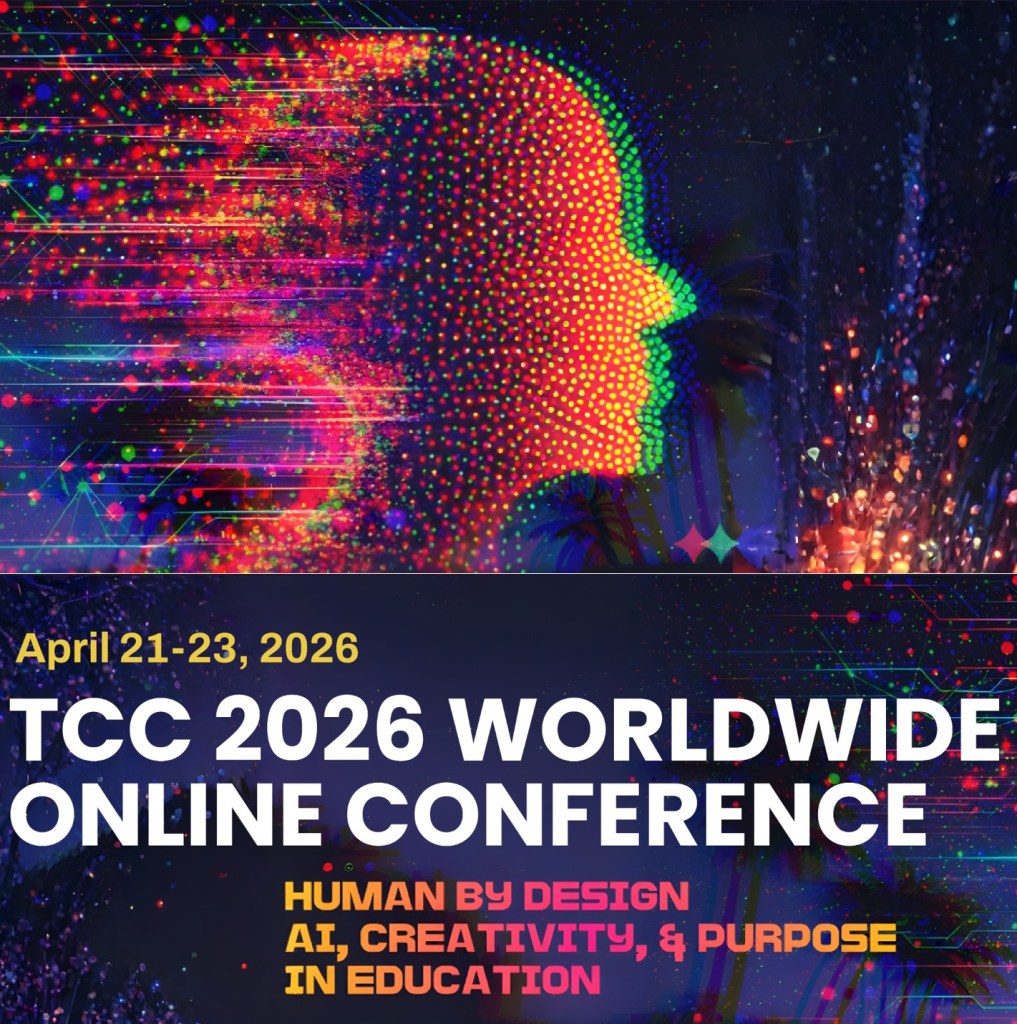
Please consider submitting a paper or a general session proposal related to learning, design, and technology such as e-learning, learning communities, digital literacy, social media, online privacy, mobile and emerging technologies, gamification, faculty and staff support, and professional development.
Venue: Participation in this event is entirely online. All sessions will be delivered online in real-time. Sessions will also be recorded for later viewing.
More Info: Bert Kimura <bert@hawaii.edu> or Curtis Ho <curtis@hawaii.edu>
TCC Hawaii, LearningTimes, & the Learning Design and Technology Department, College of Education, UH-Manoa collaborate to produce this event. Numerous volunteer faculty and staff worldwide provide additional support.
This article about UX (User Experience) suggests that user experience and usability are related but not the same. According to the author, UX is about emotional engagement.
This short video from CEOP (Children Exploitation and Online Protection Center, UK) is aimed at teens to help them understand what the lack of online privacy can mean. It also aims at showing this audience that they can and should report anything that makes them uncomfortable or unsafe.
This blog focuses on the buzzword, technology integration, and explains what it is and how you, the teacher, can do it. It explains some of the theory behind technology integration, then offers a number of tools that ESL teachers (and all teachers) can use to augment their instruction.
The major take-home from a Congressional Briefing on School Safety and Technology, a little surprisingly, was that technology does not play a major role in ensuring school safety.
The briefing was arranged by the National Coalition for Technology in Education and Training (NCTET), and was held at the Cannon House Office Building in Washington, DC, on 9 October.
Kathleen Minke
Introducing the meeting, Kathleen Minke — Executive Director of the National Association of School Psychologists — pointed out that schools are an ideal place to promote mental wellness. The main challenge that they face is a shortage of trained staff — school psychologists or counsellors.
The recommended ratio of such staff is 1 per 250 students. Nationwide, the actual level is 1 per 482 students, and in some states the ratio is much worse. Continue reading →
The real history of the Americas has been lost by trivialization and by being omitted from the textbooks. The continued misrepresentation of indigenous peoples in the media and popular culture contributes to continued settler colonization and racism toward indigenous peoples.
Yet the growing movement by the Standing Rock Sioux Nation and hundreds of other indigenous nations to protect their homelands and resources from destruction presents teachers an opportunity to introduce students to lessons based on the environment, government, history, economic, cultural studies and civics.
It is almost the month and day when people celebrate Columbus Day. The D.C. Area Educators for Social Justice, a project of Teaching for Change, offered a workshop on September 10 to provide resources for educators.
The workshop took place at the National Museum of the American Indian, in Washington, DC. It engaged with curriculum and strategies for teaching students about indigenous people’s history and life today.
Sarah Shear
The workshop started with a keynote by Dr. Sarah B. Shear, who is an assistant professor of social studies education at Penn State University, Altoona. She described her research into the way that race and settler colonialism issues are addressed in state standards and textbooks; teacher education; film; and qualitative research methodologies. Continue reading →
We gathered a panel of editors, writers, and professors to generate a comprehensive list of questions for Dr. Rory McCorkle. The panel members were: Stefanie Panke, Bert Kimura, Judith McDaniel, Leigh Dooley, and Harry Keller. Colleges around the world are developing online programs, and an invariable topic is remote test proctoring as an adjunct or alternative to on-campus testing. We hope that our questions and Dr. McCorkle’s responses will shed more light on the issues involved in reviewing and selecting a proctoring service.
Perhaps the most meaningful takeaway for us is the realization that the ultimate quality of the testing process is determined to a large extent by the participating institutions. In short, GIGO. Colleges should determine their needs prior to shopping for a proctoring service. The general services and features in the PSI Bridge™ platform tend to be standard among major providers, and it’s in the details that the critical differences begin to emerge.
Dr. Rory McCorkle
Dr. Rory McCorkle is the Senior Vice President of Certification and Education Services for PSI. He helps PSI clients meet their testing, educational and strategic goals through the suite of services offered by PSI, while leading a team of business development, account management, and consulting professionals. Dr. McCorkle has worked with over 750 testing organizations, including well-known universities and colleges, licensing bodies, and renowned certification programs.
The questions and answers below are roughly grouped into four areas: students, proctors, teachers, and PSI services.
I. STUDENTS
Bert Kimura: How do the services and data collected conform with FERPA and other privacy issues?
Rory McCorkle: PSI Services LLC (PSI) holds privacy and security as a highest priority. We require very limited personally identifiable information (PII) for students and limit access to PII to only those who require access for provision of the services. In practice, we take care to not only be secure, but non-invasive as well. Only a single login is required for users to take their tests, and PSI proctors do not require access of a user’s machine to verify test compliance. All security measures are integrated and automated to ensure proper compliance and client privacy, while simultaneously minimizing security risks and providing a smooth user experience. In addition, PSI offers a proprietary, customizable lock-down browser and self-serve check-in and authentication. PSI complies with major regulations such as FERPA and GDPR. We are also PCI compliant. Our remote proctors receive extensive training on how privacy and privacy regulations are central to their roles, which is coordinated by PSI’s Chief Compliance Officer. Continue reading →
By Gwen Sinclair
Librarian, University of Hawai‘i at Mānoa Library
If you had told me when I was 25 or 30 that I would run my first marathon at age 42, I would have rolled my eyes and asked, “Why would anyone want to do that?” I could not fathom running even 10 miles, much less 26.2. I had been a casual runner for many years, but I’d avoided distance events. Too hard!
I found many reasons to keep running in the watershed year of 2004. For starters, my sister was diagnosed with lymphoma and endured a whole year of grueling chemotherapy. Although I wasn’t close to her, I felt very helpless, and guilty, too, so I signed up to do the Honolulu Marathon as part of Team in Training, the Leukemia & Lymphoma Society’s fundraising program. All you have to do is run a marathon — and raise thousands of dollars for research. It turned out to be harder for me to ask people for money than it was to get up early every weekend for the 16-mile training runs. To my surprise, the donations poured in, which of course put me in the position of absolutely, positively having to finish the marathon in December 2004.
My free time revolved around marathon training, so on Saturday, October 30, 2004, after my husband Steve and I had seen a mediocre movie at the Varsity Theatre, “What the Bleep Do We Know?” I’d gone to bed, planning to get up early the next morning for the usual Sunday training run. Continue reading →
The graduation of the latest cohort of students in the ‘Computers for Kids’ initiative, in Southwest Washington, DC, brings the total number of youngsters who have benefited from the program to 130.
‘Computers for Kids’ started in 2007 as an initiative of the Youth Activities Task Force of the Southwest Neighborhood Assembly (SWNA).
Thelma Jones, who chairs the Task Force, introduced a graduation ceremony at the James Creek Community Center on 4 August 2018.
She reminded the parents, guardians, friends and relatives who attended the event that two sessions of the program were held each year, a winter program of eight one-hour, after-school classes and a summer program of six classes lasting ninety minutes.
The students use the computer lab at the James Creek Community Center to learn the basics of computers and how to use them, and tackle studies in Microsoft Word, Powerpoint, and accessing the Internet to search for visual resources. This group of students also started to study cryptology, using the resources of the Chicago-based ‘CryptoClub’ project. Continue reading →
By Lynn Zimmerman
Associate Editor
Editor, Teacher Education
All across the U.S., school districts invest in a variety of types of technology, and they want to see results from their investment. To integrate technology effectively, educators need a framework to determine if and how technology meets their students’ learning needs and what they may need in the future. Several frameworks for technology use and integration have been developed and are used to promote technology in the classroom. Two common frameworks are SAMR and TPACK.
SAMR
In the SAMR (Substitution, Augmentation, Modification, and Redefinition) framework, substitution and augmentation are defined as ways to replace and enhance existing tools that the teacher might use in a learning task. Modification and redefinition transform a task in a way that would not be possible without technology. Continue reading →
The entrance to the Tham Luang cave did indeed have a prominent warning sign, and the soccer team went past it when they entered. Most of the explored underwater caves in the world have strongly worded signs telling untrained divers to turn around. My guess is that 98% of the divers passing those signs do indeed have the proper qualifications, but a small percentage do not. That small percentage accounts for roughly half of the total cave diving fatalities worldwide in the last couple decades. For that small percentage, the posted danger appears to be more of a lure than a deterrent.
Photo from Marisa Chimprabha’s “Many Worry That Coach May Blame Himself for Ordeal” (The Nation, 5 July 2018).
Eagles Nest sink in Florida provides a couple good examples. The upper basin has 70 feet of (usually) murky water, with a tiny chimney only wide enough for a couple of people to pass at the bottom. That chimney takes you about 30 feet farther down to the huge cave complex below. Eagles Nest is often called the Mount Everest of cave diving, and you are not supposed to enter it without qualifications even beyond cave diving certification. Two days ago, a 20-year old man (boy?) died there freediving (no tanks–just mask and fins) deep into the bottom chamber. He told his companions he was going to set a personal record on that dive. As I write, diving social media are ablaze with comments on the sheer stupidity of that act. Continue reading →
There is growing evidence that immersion in virtual reality can improve learning outcomes for students.
This was the main conclusion from many of the papers presented at the fourth annual conference of the Immersive Learning Research Network (iLRN), which was held at the University of Montana from 25-29 June 2018.
Jonathon Richter, Executive Director of iLRN, introduced the conference as an opportunity to explore “what works” in immersive learning, drawing on high-quality research.
He proposed that the three main components of immersive learning are:
computer science,
gaming studies, and
effective learning outcomes.
The potential impact of successful immersive learning initiatives, he suggested, were good measures, good goals, and good outcomes across disciplines, cultures, and contexts. Continue reading →
By Lynn Zimmerman
Associate Editor
Editor, Teacher Education
The plight and rescue of the 12 boys and their coach from the cave in Thailand shows us once again that being an educator requires more than the enjoyment of working with children and loving the subject you teach. When you look at what an educator might face when working with students, inside and outside the classroom, it becomes evident that teachers, coaches, and school administrators do much more than teach and are expected to play many roles that they may not anticipate and may not be prepared for.
Coach Ekkapol Chantawong with some of his young players.
They may have to comfort a child whose pet died. They have to report signs of child abuse. They have to keep track of their charges when on field trips. They may even have to protect their students from an active shooter on campus. Not every educator wants to fill all these roles. Not every educator can fill these roles. However, when you are the “adult in the room,” what choice do you have? Children’s parents expect and trust that their children will be safe with an educator. The soccer coach, Ekkapol Chantawong, was trusted by the parents of the children in his charge to do the right thing, to protect them until they could be rescued.
There will be many opinions expressed and many questions asked in the coming days about this incident. However, let’s focus on teacher training. How does a teacher training program prepare teachers to handle a variety of situations, including life-threatening ones? Or should they? How do you know the teacher candidates you are preparing could step up if called upon to do so? Should they be expected to? What other resources do teachers need to handle crises, large and small? Let us know what you think.
By Harry Keller
Former ETCJ Science Editor
& President of SmartScience
The first lesson is that you don’t have to be clever or high-tech to solve this sort of problem. The final solution was straightforward, although extremely difficult to implement. It involved existing diving technology. These days, everyone seeks the high-tech or innovative solution first.
You might consider the solution used as being the “brute force” solution. A large number of air tanks had to be assembled along with a large number, around 90 as I’ve read, of highly experienced and capable divers. Divers deployed the air hose essential to survival and ferried food to the trapped soccer team. They set up a line for navigating the more difficult portions of the submerged cave. Some even stayed with the remaining few team members until the last one disappeared into the gloomy waters with his two accompanying divers.
The second lesson is that every cave of any difficulty should have prominent warning signs posted to keep out inexperienced people. What were those team members doing so deep in the cave? I have yet to see an answer to that question. Their foolishness cost one diver his life. It might have cost all 13 their lives, too. I sincerely hope that the publicity accompanying this incident keeps others from running these risks. The coach should have known better.
The third lesson is the importance of organization. I think that those in charge did essentially everything right, although they might have been able to move more rapidly had there not been so much “noise” to filter out. The noise came from the media and a great many well-meaning individuals and organizations. The volunteer divers were the good part. Continue reading →
The whole world watched in fascination as a massive international rescue team worked to pull off an unprecedented rescue of a soccer team trapped in a cave in Thailand. I watched from the perspective of a cave diver, a former journalism instructor, and a diving instructor. One of the talks I have had on and off for the last few years has been to help investigate and write reports on cave diving fatalities for the National Speleological Society, and from that perspective it was refreshing to watch a scenario that ended so happily, for that is not the norm for cave diving incidents.
The result of the rescue was, of course, wonderful, but in reflecting on some of the elements I observed from afar, I believe there was a whole lot that went very well in that situation in addition to the happy ending. I saw a lot of appropriate and professional behavior on the part of a number of parties, and because of it the few bad moments stand out in stark contrast.
In the social media I followed, one of the questions that was raised on several occasions was why there was not more commentary from the true experts on cave rescues around the world. To me, that lack of commentary was a positive highlight. After my ETC article (7/4/18), I was contacted by the BBC and asked to sit for an interview. I declined. I explained that I lacked the expertise to speak on an issue of that complexity—my article about the education aspects was the limit to which I could speak with authority. Continue reading →
By Harry Keller
Former ETCJ Science Editor
& President of SmartScience
Spending two weeks in a cave that has been sealed off by water is no one’s idea of fun. There’s no food but plenty of water. This cave portion appears to be fairly large, large enough to have plenty of air for a long stay, but that air is running out.
Thirteen people, twelve of them children, are stuck and isolated under very dangerous circumstances. They face several perils: oxygen, carbon dioxide, food, and even waste treatment.
Detailed map of the Tham Luang cave system provided by BBC News.
What happens when someone seals you into a box? You use up the oxygen there, turning it one-to-one into carbon dioxide. That’s what all animals do. Even plants do it when there’s no sunlight. It’s called respiration. In that box, you will rapidly drop the oxygen level to below the 16% that we must have to function normally, and that’s 5% below the usual 21% we are used to. Continue reading →
By Lynn Zimmerman
Associate Editor
Editor, Teacher Education
Globally there is a call for learners and workers to develop 21st-century skills. Two common frameworks are from the Organisation for Economic Co-operation and Development (OECD), a group which has members from 35 countries worldwide, and DigComp developed by the European Union (EU).
The OECD states that “[o]ne approach to organizing 21st-century skills focuses on cognitive skills, intrapersonal skills, interpersonal skills, and technical skills (Ananiadou & Claro, 2009 in Geisinger, 2016).” These skills are geared toward the educational context, the work environment, and commerce. Skills such as collaboration, teamwork, and cross-cultural sensitivity are seen as key to participation and problem-solving in the global economy. Underlying all of these skills is a need for digital knowledge and proficiency.
The DigComp frameworks, now presented as DigComp 2.1, focuses on competencies related specifically to technology knowledge and skills for citizens, specifically in the workplace while DigCompEdu (Redecker, 2017) outlines educator-specific digital competences. DigComp 2.1’s eight (8) levels of competence are fitted to Bloom’s taxonomy. These range from remembering, e.g., being able to perform simple digital tasks with guidance, to creating, e.g., resolving complex problems and guiding others in high-level problem solving.
DigCompEdu presents educator-specific digital competences that are organized in six areas. These areas include educators engaging in their own growth by professional development to creating appropriate digital integration activities for their students. Continue reading →
As a certified cave diver, I have followed the ordeal of the Thai soccer club with great interest. As I type, the rescuers are trying to determine the best way to bring them to the surface. No one has an answer at this time, but I have been asked to write about the options from the perspective of a cave diver, an educator in general, and a diving instructor in particular. What I hope to convey to an audience unfamiliar with cave diving is how truly daunting it will be if the decision is made to have the team escape by diving. If the team is going to make an exit by diving, they will need to undergo immediate and intensive training.
Personnel and equipment in the entrance chamber of Tham Luang cave during rescue operations during 26–27 June 2018. Screen capture from NBT news report.
When I teach new divers, I ask about their swimming and snorkeling experiences. What I am looking for is the degree to which they feel comfortable in the water. The greatest enemy to a diver is panic. Students who are accustomed to the normal mishaps of swimming, like accidentally getting water in the mouth or eyes, will usually have no trouble, but for people with little swimming experience, such a minor event can lead to irrational panic. Most of the Thai team members are non-swimmers, and the culture there has a common belief that swimming is extremely dangerous. That starts any training in a serious deficit. Continue reading →
By Gwen Sinclair
Librarian, University of Hawai‘i at Mānoa Library
Because I am a librarian, people often ask me, “Do we still need libraries now that everything is online?” My stock answer goes something like this: “‘Everything’ is not and will not be available online in my lifetime, and even if it were, we would still need libraries.”
The belief that practically everything, from every book ever written to all of the films ever made, has been digitized and is available online for free has taken root in the collective minds of nearly everyone. However, if you dig a little deeper, you will realize that a lot of miracles would have to happen before “everything” could be digitized and posted online.
There are several roadblocks to scanning all of the books, periodicals, archival records, films, videos, audio cassettes, photographs, and ephemera available in libraries and putting them online. First and foremost is funding. A digitization project involves more than simply scanning a set of books and uploading the content. Even with high-speed automated book scanners, humans are still needed to select the books, prepare them for scanning, position them on the scanner, and so forth. Items that have folds or tears must be flattened or mended before they are scanned. Care must be taken not to damage fragile film or magnetic tapes during the digitization process. Photographic prints, negatives, or slides must be positioned precisely, and some post-processing may be necessary to straighten, crop, or clean up images. Continue reading →
By Lynn Zimmerman
Associate Editor
Editor, Teacher Education
What do you tell your online learners?
Most universities and many high schools in the US use online and hybrid courses to teach anything from foreign languages to Physics. People around the world take part in MOOCs, free online courses with hundreds, perhaps thousands of participants. Informal courses are offered online so you can learn to knit or repair a car in the comfort of your own home. Online coursework is everywhere, and there may be the assumption that everyone knows how to “do” it.
However, instructors often find that, just like face-to-face courses, learners’ abilities, needs and motivations vary. The novelty of using technology for learning can soon wear off, so like any coursework, the online offering needs effective pedagogical strategies to provide intrinsic motivation to learn.
Online learning readiness
Let’s consider one factor that some research from the field of online learning has explored, online learning readiness (Cigdem & Ozturk, 2016; Horzuma, Kaymak, & Gungorenc, 2015). I’d like to hear about your experience. How do you prepare your students to learn in the online environment? What have you done that you find effective?
Assumption: because computers and technology are so pervasive, learners know how to use technology for learning.
Research findings: Many people know how to use social media, email, and their smartphones, but may be less sure how to use technology for educational purposes. Some studies have shown a direct correlation between a learner’s familiarity with the learning platform and their ability to use it and their motivation to participate and learn (Cigdem & Ozturk, 2016; Horzuma, Kaymak, & Gungorenc, 2015). Therefore, these researchers propose that the instructor should not assume that learners know how to use the platform and that they understand how to successfully complete assignments. Provide clear instructions on how to use the platform, give clear and direct instructions for assignments, and clear expectations.
By Gina Ribuca
Student, Kapi’olani Community College
University of Hawai’i
There was a lot of controversy surrounding Colin Kaepernick and the NFL last year. Many of us have seen or heard about him silently taking a knee during the national anthem. We have our own views on the issue. Some are not sure what it was about, while others think they know every detail. What did happen after, however, will never be forgotten. Some people called him a traitor while others, a hero. I think he is closer to a hero than a traitor. Sacrificing oneself to make the world a better place is the soul and characteristic of a hero.
Photo by Gina Ribuca, Kaneohe, HI, 4 July 2017.
The first time I saw him kneel, a lot ran through my mind. Social media was sent into a firestorm, and some of the comments were pure evil. “It’s just so easy to hate,” said Arian Foster, a Miami Dolphins player who also knelt before his game (Walker). Social media played a huge role in the truths and falsifications of this story. So many were clicking “share” on anything connected to Kaepernick before knowing the facts. However, not everyone realized that his silent, solitary protest contributed to the beginning of a worldwide movement among professional athletes and actors. Kaepernick decided to use his media platform to take a stand and to be a voice for those who had none. When a country or its people are ill-served by its government, then the people have the right and obligation to protest. Protesting against the government does not make a person a traitor. No, it means s/he has taken a stand for what she believes is right. Continue reading →
By Lynn Zimmerman
Associate Editor
Editor, Teacher Education
Whether you are a K-12 teacher or in higher education, you may want to give TeacherTube a look. Started in 2007 by three veteran educators, TeacherTube aims “to provide an online community for sharing instructional videos.” If you have ever looked for professional development videos or videos for your students on YouTube, you know that you have to look carefully to be sure you’re getting appropriate content.
TeacherTube, which was recently acquired by Salem Web Network, is designed to provide an “educationally focused, safe venue for teachers, schools, and home learners.” Users can upload materials and can comment on them, even flag materials that do not seem appropriate for this venue. TeacherTube staff reviews any flagged materials and makes the decision whether to leave it or delete it.
How does it work? You can find pictures, documents, audios and videos by topic or by collection. Perhaps you need a map of Pensacola, FL, to show your student Spanish street names. Do you need a video that shows the structure of the human ear? Some of the material is self-produced while others link to professionally-produced materials. Although designed mostly for K-12 teachers, educators who do professional development for teachers or teach education courses may find this a useful tool.
For more background information, see their “About Us” page.
English teacher challenges students to plug in to the world by Magdalena Osumi in Japan Times, 28 Jan. 2018:
To help her students step outside of the box of rote language learning, Mio Horio, an English teacher from Japan, is encouraging her students to take a more global approach to learning English. Among other strategies, her students have the opportunity to engage in discussion with other English language students and native English speakers around the world.
Reading and Writing in STEM by Emily A. Thrush, Teresa Dalle, and Angela Thevenot in TESOL Connections, March 2018:
The integration of literacy skills across the curriculum has been a focus in American education in recent years. The authors focus on specific strategies and activities for teaching reading and writing in STEM classes. Continue reading →
Dr. Margaret Nosek, Baylor College of Medicine, Texas, USA
Dr. Weiquan Lu, National University, Singapore
Dr. Jason Lee, Daegu National University of Education, Korea
Dr. Cynthia Calongne, Colorado Technical University, USA
Dr. Susan Manning, Credly, USA
TCC is a three-day, entirely online conference for post-secondary faculty and staff worldwide that features over 100 concurrent sessions covering a wide-range of topics related to educational technology, distance learning and emerging technologies for teaching and learning. Continue reading →
Hawaii high school students again turn to web social media (Facebook, Instagram, email, webpages) to organize state-wide protests against gun violence.
Join us!
TCC 2018 Worldwide Online Conference ~Navigating the Digital Landscape~
April 17-19. http://tcconlineconference.org/
Enjoy keynote and special regional sessions by:
Dr. Margaret Nosek, Baylor College of Medicine, Texas, USA
Dr. Weriquan Lu, National University , Singapore
Dr. Jason Lee, Daegu National University of Education, Korea
Mark Curcher, Tampere University of Applied Sciences, Finland
Dr. Susan Manning, Credly, USA
TCC is a three-day, entirely online conference for post-secondary faculty and staff worldwide with over 100 sessions that cover a wide-range of topics related to distance learning and emerging technologies for teaching and learning. Continue reading →
In conjunction with the national 17-minute school walkout on 14 March 2018 in honor of the 17 shooting victims at Florida’s Marjory Stoneman Douglas High, students in Hawaii planned and executed a state-wide protest for greater gun control. Their media of choice were Twitter — #neveragainhi, #EnoughIsEnoughHI, #MarchforOurLivesHI — and Instagram.
Daniel K. Inouye Elementary School, Schofield Barracks, Hawaii.
Joshua Wong
Socal media in the hands of students is a powerful tool for reform. Joshua Wong Chi-fung (黃之鋒), a Hong Kong high school student in 2011, organized and led protests against government interference in determining school curricula. He and his fellow protesters relied on social media to coordinate and monitor protests in other locations.
The implication for educators is enormous. Publishing is no longer the sole possession of powerful media organizations in the private and public sector. It is in the hands of the people, and the most active users of social media are the young, for whom backchannel communications are increasingly defining what’s real and fake. The question for educators is: How will we integrate social media into our curricula to align instruction with a world that no longer turns solely on traditional media? Continue reading →
As a prelude to this year’s main conference, TCC 2018 is hosting a FREE special webinar featuring Brenda Perea, Director of Educational and Workforce Solutions (Credly).
Brenda Perea will explain best practices from Colorado Community Colleges System’s initial launch of digital credentials in a free Technical Math for Industry. Attendees will learn how 2-year and 4-year institutions can partner with employers to integrate digital credentials into existing curricula and build digital credentials into new courses and programs.
Date & time
Wednesday, March 21, 1400 HAST
1900 CDT, 2000 EDT; Thu Mar 22, 0900 Tokyo, Seoul (Other timezones)
RSVP now for this FREE session! Access information and a reminder will be sent to you a few days prior to this event. This online session will be held in Adobe Connect. The deadline to register is March 18. More info for this event.
REGISTER alsofor the main conference: TCC 2018 Online Conference, 23rd edition, April 17-19, 2018.
This article is noteworthy for a number of reasons, not least of which is the publication medium, IRRODL. It’s online and open access. Perhaps the most significant aspect of this article is its data source: a 2011 course, Change 11 MOOC. Permission was granted by one of the facilitators, George Siemens. According to the authors, Wang et al., “When participants registered into the Change 11 MOOC, they signed an agreement that permitted the use of their data for research purposes…. All of data can be accessed without passwords in the internet.” Siemens and colleagues were modeling a precedent that facilitates research in online learning.
Wang et al. begin with a definition of cMOOC. This is a critical distinction because, theoretically, xMOOCs aren’t MOOCs. MOOC, as originally conceptualized by Siemens and Stephen Downes, is connectivist, i.e., “learning is a connection-building and network-forming process” (Wang et al.). Downes created the cMOOC-xMOOC dichotomy to highlight the cMOOC emphasis on connectivism, which places the bulk of responsibility for learning in the hands of the learners. Continue reading →
In Do Our Kids Really Need to Learn How to Code? (Forbes, 7/6/14), Greg Satell disagrees with tech columnist Kevin Maney’s assertion that in just a few years, young people “will find that coding skills are about as valuable as cursive handwriting.” Satell argues that even if coding as we know it today doesn’t exist, the skills needed to do it will still be there. “There is an underlying logic to the digital world and we must be capable of operating within that logic in order to function in it.”
In Do Your Kids Need to Learn to Code? Yes! But Not for the Reasons You Think (The Huffington Post, 5/29/2015), Grant Hosford discusses several points about coding that illustrate a parent’s concern about what children need to learn to have successful futures. First, he points out that many parents and teachers worry that coding is “an overhyped fad.” He doesn’t believe it is. However, he points out that computer science pedagogy has not really evolved much in 40 years. He then refers to research at MIT and Tufts supporting the idea that “kids as young as 4 years old can learn very sophisticated computer science concepts.” Hosford sees coding as a way for young people to develop critical thinking skills, creative problem solving, and “how to be lifelong learners.”
In Please Don’t Learn to Code (TechCrunch, 5/10/16), Basel Farag claims that treating coding as “a ticket to economic salvation for the masses is dishonest.” He supports his position with three arguments. (1) Focusing on coding can cause the focus to be on finding a ‘right’ answer and away from “the importance of understanding the problem” itself. (2) Because technology changes so quickly, developing can be frustrating and stressful. Developers can’t expect to spend the rest of their careers working with one type of code. They often have to learn new versions or, even, new coding systems entirely, quickly, often “with little guidance.” (3) Getting a really well-paying job as a developer isn’t that easy.
Education is the foundation of democracy. As a society, we Americans knew that once. A unanimous Supreme Court decision in the 1953 Brown v Board of Education said: “Today, education is perhaps the most important function of state and local governments. Compulsory school attendance laws and the great expenditures for education both demonstrate our recognition of the importance of education to our democratic society. It is required in the performance of our most basic public responsibilities…. It is the very foundation of good citizenship.”
Today, we have lost that recognition, lost our certainty that education is a common good that we can all support. A 2017 Gallup poll found that only 36% of Americans have confidence in our public schools. And that is an increase of 10% since 2014. “Government schools” is what some conservatives, like Education Secretary Betsy DeVos’s husband and President Trump, call public schools now.
Where has our common understanding of public education as the foundation of democracy gone? Why have we lost it?
Undermining public education has been a deliberate campaign, not an accident. It’s not as though we just didn’t have enough money to educate all of our children for the common good. When money was short, whether because of recession or other economic events, we chose to lower funds for education. And when there was money available again, we did not raise support for education.
It would be one thing if there were a public discussion about curricula for our schools and universities, if choices about educational directions were being openly advertised and discussed and chosen. This is not what is happening. Continue reading →
Waves are flat today on the East Coast. According to Jeffrey R. Young, edX, founded by MIT and Harvard, is planning to offer a MicroBachelors program as a logical complement to their MicroMasters.1Anant Agarwal, CEO of edX, got it almost right when he said, “Education in five to ten years will become modular, will become omnichannel, and will become lifelong…. Modular is good because it can create new efficiencies and new scaling.”
Where he falls short is in the “omnichannel,” which boils down to required on-campus, F2F attendance. In this bait ‘n’ switch business model, the fully online options are teasers, the wide open end of a funnel that narrows to a tiny trickle at the campus end. Agarwal says, “The idea behind both MicroMasters and MicroBachelors is that they are ‘about putting stuff that can be done online, online.’” The assumption is that online is still a second-rate channel, incapable of delivering the right stuff.
Anant Agarwal, George Siemens, and Stephen Downes.
Young compares this “‘stackable’ credential” program to Arizona State University’s Global Freshman Academy, a joint venture with edX. He describes it as an “attempt to rebrand a concept that was once known as MOOCs, or massive open online courses.” By their own admission, GFA hasn’t been very successful. From the standpoint of these stackable programs, MOOCs are dead. Continue reading →
On the table at the University of Colorado Boulder is a proposal for an online engineering master’s degree program.1 It’s a breakthrough for all the right reasons: It’s being offered as a MOOC, it’s completely online, it’s asynchronous, and it’s unbundling the 3-credit courses and offering them in modules. All four are gold standards for online education, and it’s tough to decide which is the most important. For now, I’d say the unbundling. Breaking traditional semester-length courses into shorter modules is a brilliant move to make the courses doable within the framework of MOOCs. It’s a smaller hill to climb for working nontraditionals, and dropping out means making up only one module instead of an entire semester.
The best wave of the day goes to Richard Koubek, provost of LSU Baton Rouge, who says, “Our vision is LSU, anywhere, anytime, and that physical boundaries would not define the boundaries of this campus.”2 To put some teeth into their vision, LSU recently lured Sasha Thackaberry away from Southern New Hampshire University, where she was assistant vice president for academic technology. SNHU has a hugely successful online program. At LSU, she is associate vice provost for online and distance education. The goal is to grow the online student body from 800 to 30,000 in less than ten years, and Koubek has a radical gameplan. He says, “You’re not going to get there incrementally.” What we’re seeing now in online programs on most college campuses is the stagnation that comes from reliance on the old paradigm of traditional practices that reward blended approaches as the safe bridge to online growth. Koubek understands that continued reliance on F2F practices isn’t going to produce change. He says, “You have to change the paradigm.” Continue reading →
Zaid Shoorbaje asserts that adaptive learning tools can be effective for ELLs (English Language Leaners) as well as for students with disabilities. In Adaptive learning can help students learn English, but few schools are using it (6 Dec. 2017), he cites a study by McGraw-Hill that shows that while teachers understand this, many schools are not implementing it.
In Making Digital Communications Accessible (11 Dec. 2017), published on Edutopia, Anne Obrien offers support for Shoobaje’s assertion of the effectiveness of accessible and adaptive learning tools and provides practical tips for using digital tools creatively in the classroom. While useful for all learners, they are particularly useful for ELLs and students with disabilities.
Brian Fleming makes a case for using adaptive technology in higher education in his article, Adaptive Learning Technology: What It Is, Why It Matters (1 Apr. 2014). He asserts that this type of technology can be useful for all students, but especially in remedial classes.
Zach Posner, in What is adaptive learning anyway? (5 Jan. 2017), explains it as giving “every learner their own personalized course, made specifically for their strengths, weaknesses, goals, and engagement patterns…. a course that [adapts] in real-time to their activity and [adjusts] moment by moment to their performance and interest level.”
Whether creating lessons for social studies or science, designing activities for developing library skills or planning lessons with ELLs (English Language Learners) in mind, authenticity and relevance are key to effective learning. The purpose of authenticity and relevance in learning is that learners are engaging in “real world activities which apply directly to a student’s experience” (Finch & Jefferson. 2013).
According to Ozverir, Vanci and Herrington (2017), “[a]uthentic learning is an instructional approach that provides learners with opportunities to develop knowledge ‘embedded in the social and physical context within which it will be used’ (Herrington et al., 2010, p. 15)” (p. 262).
With this in mind, Stansbury presents her case for using digital storytelling to provide authentic opportunities for ELLs to use English in relevant and meaningful communication in Video of the Week: Amplify Your ELLs’ Voices with Digital Storytelling. Although aimed at teachers working with ELLs, the idea of building on learners’ strengths through digital tools is relevant to any subject area. Be sure to click on the resources link.
Papers play a huge part in my online writing and literature courses. As part of our writing process, I require preliminary and final drafts. Of the two, preliminary drafts are the most important from the standpoint of pedagogy and learning. They must be submitted on time for writers to fully engage in the peer review activity, which is the heart of the writing process.
Thus, meeting the deadline is critical. Early this morning, I received an email from one of my better students, warning me that she may be late in submitting her preliminary draft because she’s hit the wall — writer’s block. The deadline is midnight today. I ended up writing a message to her about overcoming this affliction that most writers experience. After sending it, I decided to refine and distribute it to all my classes. After further thought, I decided that this may be useful to some of my colleagues who assign papers and struggle with students who can’t seem to meet deadlines.
If you find this useful, please feel free to use it, in part or in whole. No permission necessary. Some of the details may not work for you, so be sure to revise or delete them. -Jim
******
Our first review draft is due at midnight today. I know, you’re aware of that and don’t need to be reminded. If you’re like many writers, your draft is not done. In fact, for some of you, it’s barely off the ground. You’ve been grappling against that age-old nemesis, writer’s block.
As a writer, I understand exactly where you’re coming from. Believe me, you’re not alone. Writer’s block is a problem for 99% of all writers. Thus, I know that procrastination is not the cause for a late paper. In fact, it is a symptom of writer’s block. Continue reading →
By Lynn Zimmerman
Associate Editor
Editor, Teacher Education
I met Gavin Dudeney at a conference for English teachers in Balti, Moldova, in March 2016. He was keynote speaker and gave two workshops focusing on technology and English teaching. His presentations were engaging and informative, so I thought you’d like to hear from him, too. His ideas are relevant to all classroom teaching, not just English teaching.
LZ: Gavin, please tell us a little about who you are professionally.
Gavin: I’m Director of Technology for a company specializing in the use of technologies in education. I train teachers to use technologies and write books in the same area. I also work in online materials and course design and have a long history and background in language teaching and teacher training.
LZ: What do you think is the most exciting connection between technology and English teaching? Why?
Gavin: I think technology is a natural link between what we do in class and what happens outside of class — and this is particularly true of mobile devices, which give students the chance to bring things in from their “real” lives and use them in class, and take things they have learned in class and use them outside in the real world. Technology should engage, enable and enhance. If it gets in the way then it’s worse than useless.
LZ: I was especially intrigued by some of your ideas about using mobile (cell) phones in the classroom. As I told you at the conference, I feel like I am fighting the wrong battle trying to keep my students’ hands off their phones during class. What suggestions do you have?
Gavin: I think it IS a losing battle, so the secret is to own it instead of ignoring it. By owning it I mean working out how to incorporate mobiles into your teaching in a practical, useful and authentic way and making sure phones are only used under those conditions and are not relied upon for the whole class. In my workshop in Moldova, I gave some practical examples of how to achieve this balance, and some of them can be found here (click on the mLearning tab).
LZ: Thank you for taking the time to answer these questions.
* * *
I recommend looking at the link he provides. I especially like his ideas about using the phone to take and share photos.
Enjoy keynote and special regional sessions by:
Dr. Jon Dron, Author, Athabasca University, Canada
Drs. Malcolm Brown & Veronica Diaz, Educause Learning Initiative, USA
Dr. Katsuaki Suzuki, Kumamoto University, Japan
Dr. Danilo Baylen, University of West Georgia, USA
Ana Cristina Pratas, United Arab Emirates
TCC is a three-day, entirely online conference for post-secondary faculty and staff worldwide with over 100 sessions that cover a wide-range of topics related to distance learning and emerging technologies for teaching and learning. Individuals participate in real-time sessions from the comfort of their workplace or home using a web browser to connect to individual sessions. All sessions are recorded for on-demand viewing.
Site licenses for unlimited participation from a campus or system are available. Special reduced rates apply to University of Hawai’i faculty and staff. For more info, contact Sharon Fowler .
We look forward to seeing you at TCC 2016.
Warm regards,
– Bert Kimura
For the TCC Conference Team
The author reports on the result of a study done in Sweden that shows the value of tablets as teaching tools for preschoolers whose first language is not Swedish.
Spain’s Popular Party wants to eliminate dubbing of TV shows and movies and retain original sound-tracks with subtitles in an effort to boost English language learning.
I was drawn to some of the articles in this special issue1 and found insights that I feel are worth mentioning. One that stands out is in Schuwer et al.’s article,2 in a summary attributed to Fairclough3: “MOOCs are perhaps best understood as ‘imaginary’… a prefiguring of possible and desired realities rather than a unified and coherent domain around which clear boundaries exist.”
Fairclough’s observation takes us a step closer to unravelling the MOOC conundrum. The expanding list of acronyms for different MOOC constructs should tip us to the fact that MOOCs are reifications, figments of our imagination or, more accurately, a specific set of ideas bundled in different ways. In short, MOOCs don’t exist.
By “don’t exist,” I mean they’re not a separate or unique specie. They’re simply a class in the genus online course. Add openness to a traditional online course, and you end up with a MOOC. By “openness,” I mean removing most of the formal trappings that we associate with college courses: capacity limits, traditional registration and pre-requisite requirements, tuition and fees, semester or quarter time frames, required textbooks, and grades and credits.
In other words, MOOCs are projected variations of standard online courses. As such, they represent the outer limits of what online courses could be. The point is that the issue isn’t MOOCs themselves but the innovative features that they present for possible incorporation in online courses.
In this context, Schuwer et al.’s warning that, “in the long run, a threat to MOOCs may manifest, if they are not well-integrated in broader university strategies and do not establish their own role within the university offerings” is only half correct. That is, for the open features of MOOCs to evolve, they must be integrated into existing online course policies and procedures. However, establishing “their own role within the university offerings” may not only be redundant but a costly failure in terms of the growth of 21st century practices. Continue reading →
We are pleased to bring you this special issue of IRRODL, edited by guest editors Markus Deimann and Sebastian Vogt. Deimann and Vogt have chosen a timely topic for scrutiny, that of a European perspective of the past, present, and future state of MOOCs. (Dianne Conrad, IRRODL co-editor)
IRRODL was started by Terry Anderson at Athabasca University (“Canada’s Open University”) and, in my opinion, is one of the better (or best) academic OER publications. Dr. Anderson is a leading researcher in distance learning and has been at it for about 30 years.
You’ve been using a course management system (CMS) for your courses, and it doesn’t matter whether they’re completely online, completely onground, or somewhere in between. The CMS has some advantages, and you’re making use of them. If you’re like me, then you’ve also toyed with the idea of putting quizzes online.
It makes sense. It frees you from the drudgery and loss of class time associated with paper ‘n’ pencil tests. Students can take the quizzes on their own time, 24/7, as long as they complete them by a specified date. You can set it up for mastery learning so they can take it as many times as they need to before the deadline, with only the highest score being recorded.
Scoring is done automatically, instantly, and the scores are recorded in the gradebook automatically, too. Students can log in to check their scores. You can log in, too, to look at their scores. Sounds great – until you actually tried to set up a simple quiz and found the klutziest interface in the world. So you remained with paper ‘n’ pencil or did away with quizzes altogether and replaced them with discussion forums geared to readings.
But the problem of students refusing to complete required readings unless there’s a quiz attached to them persists. The top third of the class will do the readings, but the rest will wing it. It hurts their performance, but they can’t or won’t make the connection. For these students, reading is a means to avoid the pain of flunked tests, not a means to learn, to improve performance.
So I returned to the testing function built into our Sakai CMS. It’d been a few years since I last tried it. Maybe it’d gotten better. But after a few minutes of poking around in it, I found it was just as klunky as ever. After rooting around for a bit in our university’s IT help files looking for a miracle, I found something called Respondus.
Respondus is an app. Our university system provides it free to all faculty. Yours probably does, too. The IT help page provides a click-here trail that leads to the site, followed by a download and set up on your computer’s desktop. Click the new icon, and, voilà, your test and quiz creation woes are over.
Respondus is a relatively simple to use test development app. It allowed me to create a ten-question multiple-choice quiz quickly and, dare I say it, naturally. This is done outside the CMS — which at once explains the ease of use and highlights the shortcomings of CMS environments.
After you’re done, the next step is to get the test into the CMS so your students can take it. The process is logical. You need to convert the quiz into a format (QTI) that Sakai can understand. Respondus does this for you when you click on the button to “Preview & Publish.” It walks you through a few steps and creates a folder where you want it. I chose the desktop. In the folder is the quiz file in the required QTI format. Continue reading →
Michael Akuchie English Composition Instructor Southern Illinois University Carbondale
Michael Akuchie is studying for an MFA in Creative Writing at Southern Illinois University Carbondale where he also teaches English Composition. He’s a huge fan of video games and won’t stop talking about them.
According to a study released on 27 Oct. 2015, online charter schools are failing in comparisons with traditional and blended schools. The findings are reported in three separate volumes, which are available online as PDF files. The following are links to the introduction, with a brief summary, and the three volumes.
Volume I – Inside Online Charter Schools by Mathematica Policy Research [“Describes the universe of online charter schools, the students they serve, and their operations.”]
Brian Gill, Lucas Walsh, Claire Smither Wulsin, Holly Matulewicz, Veronica Severn, Eric Grau, Amanda Lee, Tess Kerwin
October 2015
Volume II- The Policy Framework for Online Charter Schools by the Center on Reinventing Public Education (CRPE) [“Describes the policy environments of online charter schools and provides recommendations to state policymakers.”]
Rosa Pazhouh, Robin Lake, and Larry Miller
October 2015
Volume III- Online Charter School Study by CREDO (Center for Research on Education Outcomes) at Stanford University [“Describes the achievement effects of online charter schools.”]
James L. Woodworth, Margaret E. Raymond, Kurt Chirbas, Maribel Gonzalez, Yohannes Negassi, Will Snow, Christine Van Donge
2015
CALL FOR PROPOSALS
Please consider submitting a proposal for a paper or general session relating to all aspects of online learning, networking & collaboration, including but not limited to e-learning, open education, ICT, virtual communities, social media, augmented reality, educational gaming, faculty & student support, Web 2.0 tools, international education, mobile learning and professional development.
VENUE
Participation in this conference is entirely online. All sessions will be delivered online in real-time. Sessions will also be recorded for later viewing.
TCC Hawaii, LearningTimes, and the Learning Design and Technology Department, College of Education, UH-Manoa, collaborate to produce this event. Numerous volunteer faculty and staff worldwide provide additional support.
By Lynn Zimmerman
Associate Editor
Editor, Teacher Education
With school starting back in many places, teachers are thinking about what they are going to do in the coming year and who their students will be. It is also a good time to think about how you and your students are going to use technology effectively in the classroom.
One question to consider is how you will identify the the “tech-sperts” in your classes. In many classes the real tech-sperts are the students. I don’t know if Kriscia Cabral (Digital Organization Tips and Tricks) coined this phrase, but it certainly fits, and these tech-sperts are a resource that teachers shouldn’t ignore. In Jim’s article, Zen and the Art of IT, he looks at some of the IT knowledge and skills that teachers need. However, Cabral thinks teachers should give over some of the responsibility to students.
First, recognizing that everyone has something to offer removes the burden from the teacher of having to know everything about technology, a field which can change from one day to the next. In her classes Cabral’s students help one another with devices, apps, websites, or whatever other types of technology they need assistance with. Utilizing students’ expertise has several advantages for the teacher and the students, and she asserts that the greater benefits are for the students.
Because different students are knowledgeable about different aspects of technology, everyone has a chance to be the tech-spert about something. This ability to help and support one another builds confidence in individual students as well as a collaborative environment among all students in the class.
What experiences have you had with using your students’ knowledge and expertise about technology as a classroom resource?
By Lynn Zimmerman
Associate Editor
Editor, Teacher Education
A couple days ago, I heard a report on BBC News at WUNC about the connection between higher education and the job market in the UK. A recent report showed that almost 60% of college graduates were not able to find jobs in their field or even at their level of education. Some analysts are saying a university education is worthless and a waste of money, so they are advocating a return to apprenticeships.
However, the speaker said that he thinks that university education needs to be better aligned with what’s going on in the workforce. He also asserted that the workforce needs to be more open-minded about the skills they are looking for. He used the example that if you are going to be a biochemist, you need to learn certain knowledge and skills. However, for other bio-tech jobs, many of the skills one learns in any STEM program can give the employee the necessary basic skill set, which they can then refine on the job.
When I worked at a high school here in the US, I was part of a workforce readiness initiative for high school students. A representative from the local phone company told us to send them applicants who can read and write and be on time and they can do the rest with their in-house training. At the time, I thought that was a little simplistic, and I still do, but there is some truth in what he says.
This story also made me think about technology and education as well as MOOCs, other educational delivery systems, and the cost of education. First, I want to make it clear that I think there is more to university education than “skills training.” I think the university is a place to expand our awareness, have the opportunity to explore issues, and learn to think, really think. However, I also believe that higher education needs to take a step back and re-think how it is educating.
One area that should be addressed is the current model of students taking two years of basic courses, English, math, science, etc., before they can start their major courses. If high schools are doing their job, students should have this basic knowledge before entering the university. If they don’t then, perhaps, these deficits can be addressed with online competency-based courses that students take along with their major courses.
There are several advantages to this idea. First, students learn the skills they need, but save time and money. Second, these courses can help teach mastery skills as they are developing or refining competencies, such as writing skills and critical thinking. Then in major courses, students can integrate these skills into their acquisition of abstract theory and concrete knowledge needed to develop what they need to find jobs and be successful in their chosen careers.
What are your thoughts about this issue? Have you experienced this type of model (blend of online competency-based basic courses and major courses) or another model that helps better prepare students for the 21st century workforce while assuring them a quality education?
By Lynn Zimmerman
Associate Editor
Editor, Teacher Education
With school getting ready to start back in many places, it seems like a good time to review how and why you use technology in the classroom. Educators in the 21st century work with technology in one form or another every day. Most are comfortable with some but not all types of technology.
Dian Schaffhauser, in THE Journal, reported on a national survey given to “teachers, administrators and tech leaders to tell us how technology energizes their classrooms.” Her article, “5 Essential Multimedia Skills Every Educator Must Master,” addresses the top five skills that were identified by educators. Besides “Troubleshooting Your Own Tech” and “Embracing Curiosity,” using videos and podcasts for the flipped classroom was one of the “instructional tools [that] could increase student interest and participation in class.”
Another skill that she focused on was knowing how to use the equipment in your classroom. She quotes Cameron Mount, an English instructor at Brookdale Community College (NJ): “Just about everything available in the room to use should be used. Variation in modes of instruction is not just a good idea; it’s practically compulsory in the day of the [individualized education program] and multimodal learning.”
The final skill addressed was how to use presentation software effectively. Although tools such as PowerPoint have been around a long time, many presenters still do not use them effectively. You have probably been victim to “death by PowerPoint” on various occasions. However, just transferring bad slides over to Prezi isn’t going to help.
Presentations need to be planned carefully, just as one would any other teaching tool and strategy. I confess, I was dismayed that effective presentations is still such an issue that this one made the top five. However, having sat through a presentation recently in which the presenter mumbled his way through the copious text on his slides, I shouldn’t have been surprised.
What about you? How do you use technology effectively? Where do you need to make some improvements?
Marie Mérouze is the founder and CEO of Marbotic, an IoT startup focusing on the creating of connected devices for children. Marbotic has two flagship products: Smart Letters and Smart Numbers.
Marie has her Masters in Engineering from Ecole Centrale Paris, an engineering graduate institution. She worked at an E-Learning company for children for ten years before founding her own company.
Young points out that when the Internet first began, 80% of the content was in English. That figure has now dropped to 30%, and out of the 6,000 or so languages in existence, 10 of them make up 82% of all Internet content. These figures prompted her to ask some questions: Does the language you speak online matter? How is your Internet experience different if your first language is not one of those 10? How does language shape your access to information and your ability to communicate globally?
Young asserts that it definitely does make a difference. Just as language in day-to-day life can shape your connections with others and your common interests, the Internet does the same. People often communicate with those who speak the same language, sharing ideas and information that is common for their language group. Research has even shown that bilingual users behave differently on different platforms in their two different languages.
The author makes many other points about the inequality of information, who is represented, and how some groups are represented by others. She also looks at ways to bridge the divide and explores which languages will survive online.
Why should this issue be of interest to us as educators? Young tells us that “[i]n 2011 the UN declared access to the internet as a basic human right.” However, not everyone has equal access, whether due to inadequate infrastructure or the lack of linguistic diversity on the web. We should think about what we and our students are missing if our access is limited by language.
(Published 12 June 2018) Gwen Sinclair
Librarian
Government Documents & Maps Department
University of Hawai‘i at Mānoa Library
She holds master’s degrees in Library Science and Geography from UHM and is an adjunct faculty member in the UHM Library and Information Science Program. Her publications reflect her interest in government documents and federal property in Hawai‘i.
Updated 6/14/15
When was the last time you stepped into a college library? If you’re like most, that time is somewhere in the distant past, and this is true even if your work takes you or keeps you on campus. Just as the textbook was the portal to knowledge for a course, the library was once the portal to primary sources of information for all courses. That is, before the advent of smartphones, tablets, notebooks, and the internet.
The first thing you notice when you enter is the absence of rows and rows of bookshelves. Instead, the space is filled with computer workstations (above), study tables and carrels (see photos below).
Today, all the limitations that we attribute to a hardcopy textbook are reflected in the library. In a world of mobile anytime-anywhere communications and access to information, the library is looking more like a phone booth, a movie theater, a Blockbuster, or, more tellingly, a Borders. Just as the tiny businesses that sprouted along highways faded away when freeways bypassed them, the library is fast becoming a victim of the cyberway, the electronic equivalent of an extreme autobahn.
The library is a study center.
In essence, the smartphone that students carry in their pockets and bags has become the interactive portal to not just library information but to nearly all information. This fact alone probably says more about the future of libraries and, by extension, college campuses than all the articles and books ever written about the impact of technology on higher education. Continue reading →
By Lynn Zimmerman
Associate Editor
Editor, Teacher Education
Recently, I was at an education conference in Croatia, and one of the presentations was about using geographic information systems (GIS) and global positioning systems (GPS) technology as teaching tools. The presenters proposed that this technology can be integrated in a variety of ways to create interdisciplinary lessons and projects that are technology-based. Students can learn with the GIS and GPS rather than just learn about it so that they can become producers of knowledge about the physical world around them and not just consumers of information.
One of the connections the presenters made was to the sport of orienteering to promote the development of map-reading skills and navigation. Even though orienteering is usually done low-tech with a compass and a map, higher levels of technology can create a different experience for participants.
“Field-Map birdie” by Claudiusmm – Own work. Licensed under Public Domain via Wikimedia Commons.
Of particular interest for me as a teacher of English as Foreign Language are the ways this type of technology can be used to create authentic (real-life) reading, writing, speaking and listening activities for students. The presenters made a specific point that students’ real life knowledge about nature gained with this technology can easily be represented through the medium of digital story telling, which itself integrates reading, writing, and speaking and uses critical thinking skills as students plan and develop their project.
If anyone has had experience with these types of projects, I’d like to hear about them. Post a comment to this article or email me at zimmerma@purduecal.edu
Yet another “robot” movie has appeared, and another Terminator movie is scheduled for release. It’s the robots who should be saying, “I’ll be back.”
Having already written on robots and artificial intelligence, writing about the latest opus, Ex Machina, may seem anticlimactic. This movie certainly has some excellent optics. Just four characters make up the speaking parts. One more is important to the plot, and only ten are listed in the credits. This is a small movie when measured by personalities on screen. The special effects that make Ava look mechanical are almost astounding and, along with the scenery and sets, make this a large movie.
The premise that a lone genius can create an artificial intelligence that passes muster as capable of human thought is an enoromus stretch. That he also can fit it all into a human framework that can walk bipedally and can perform other human-like actions is beyond imagining. You really must suspend disbelief to watch this movie and seek its philosophical underpinnings.
In the end, it’s the same old story that we’ve seen since Mary Shelly wrote Frankenstein. Man should not play god, and creating new life is extremely dangerous. The movie plays on the morality of choosing to be god and on people’s fears of the unknown, especially when created by a “mad scientist.” Continue reading →
By Scott Miyahira
Student at Kapi’olani Community College
University of Hawai’i
“You’re bringing those?”
My sister questioned me with some genuine curiosity and just a hint of nag, as I stuffed my iPad and my portable Nintendo gaming system into my carry-on luggage. Despite the fact that she was the younger sibling by four years, she had a way of occasionally borrowing the maternal tone of our mother.
“Yea, why?” I replied with just a tinge of annoyance.
“When are you going to use it?”
“I don’t know. We might have some down time. You’re not bringing yours?”
“No…,” she answered, this time adopting that same annoyance.
I guess I could see her point; we were only going to be in Hilo for two days. But this was my vacation. I came back home to Maui for a temporary get away from my life on Oahu, a life of two full-time jobs and only just enough free time to eat and sleep, sometimes not even that. I spent so much of my normal day-to-day always doing something that, for my vacation, all I wanted to do was nothing — nothing except lie around, watch Netflix, and play video games, which was usually most of what I did on my vacations at home. So if my Maui vacation was to be interrupted by a short family trip to the Big Island, I was bringing my entertainment with me. Much to my surprise, this “short family trip” would reveal to me my own dependence on technology and give me a new-found appreciation for a life unplugged.
A simple cottage smaller than I was expecting, painted in a classic white with stone walls around the base, long glass windows across the front, and an unassuming but prominent tower poking out from the back.
My mom had been bugging me about this trip for a while. “Aunty Terry hasn’t seen you since you were little. You just absolutely have to see their place, and they’re getting old so you won’t have many more opportunities to do so,” she would say. Continue reading →
By Cami Lyn Nagata
Student at Kapi’olani Community College
University of Hawai’i
I wondered why I was the only one that wanted to go to the farm with grandpa. All of my older cousins came up with reasons why they couldn’t go with us. Even Mom didn’t want to come. I should have caught the hint when I had the chance, but I was only eight, too young to realize that going to the macadamia nut farm was not going to be carefree fun. I didn’t know it then, but I was about to learn that hard work pays off.
The road was bumpy. I bounced in the seat, the belt digging into my neck each time. The smell of the sweat stained seats stung my nose as the wind whipped around the cabin of the truck. The engine moaned as we slowly climbed the twisting dirt road. Grandpa drove, eyes focused on the road, a mischievous smirk planted on his face. I could see the trees. We were getting close.
We pulled off the road and stopped at the metal gate. Grandpa put the truck in park, then quickly climbed out and unlocked the gate. With a strong push, the gate swung open to let us through. He got back in, and we drove up the path, passing a number of trees. Continue reading →
Calling All Innovators: Apply to Serve the Nation as a Presidential Innovation Fellow
by Ryan Panchadsaram, Garren Givens on February 12, 2015 at 11:00 AM EST
Today, we are very excited to announce that we are on the lookout for more innovators and technologists to serve the nation as Presidential Innovation Fellows.
The Fellowship brings talented, diverse individuals from outside government to team up with top federal innovators to tackle some of our country’s most pressing challenges. Acting as a small team alongside federal agency “co-founders,” Fellows will work quickly and iteratively to turn promising ideas into game-changing solutions.
As always, the Fellows will focus on national priorities, leveraging the best principles and practices of the innovation economy to help create positive impact in the span of months, not years. This is an opportunity to truly transform how government works for the people it serves.
Projects will focus on topics such as:
Education: Fellows will work with myriad agencies to help make education more accessible to more Americans.
Jobs and the economy: Fellows will work on fueling the economy and stimulating job growth through innovation and improved opportunities for entrepreneurs and businesses of all sizes.
Climate change: Fellows will help our country and its communities prepare for the impacts of climate change.
Health and patient care: Fellows will leverage innovation to save lives, provide better access to benefits and programs promoting quality of life.
Fellows selected for this highly competitive program will serve for 12 months as entrepreneurs-in-residence to our federal agencies. Over the course of the Fellowship, individuals work as part of a small team of three to four. These teams of designers, developers, and product managers will participate in two to three “deep dives,” with the goal of “accelerating” initiatives chosen by the Program for their potential impact.
The first step is to apply online. Candidates can apply anytime, throughout the year, and applications will be evaluated on a rolling basis.
We look forward to kicking off another exciting year of projects.
Ryan Panchadsaram is the U.S. Deputy Chief Technology Officer. Garren Givens is Director of the Presidential Innovation Fellows and Deputy Executive Director of 18F.
With The Imitation Game having academy award nominations, it’s a good movie to consider for science learning. Benedict Cumberbatch and Keira Knightly star in this story of Alan Turing. Turing is famous in computer science for the Turing Machine and the Turing Test. The latter was named by him as “the imitation game.”
A Turing Machine is a concept created by Turing that says that anything computable can be computed by a ridiculously simple machine consisting of a tape of indefinite length that contains only ones and zeroes and a reader that decides what to do upon reading the tape — to move forward or backward and how much. This decision depends on the state of the machine and the number read on the tape. Turing’s machine can, in theory, perform any computation being done today by any computer. You can say that Turing invented the modern computer — in theory anyway.
Alan Mathison Turing at the time of his election to a Fellowship of the Royal Society. Photograph was taken at the Elliott & Fry studio on 29 March 1951.
As Alan Turing sat and thought about computers, he asked himself what is the potential of computing machines in the indefinite future. He decided that it’s possible for a machine, in theory, to mimic human behavior. He then asked how can you tell if the machine truly is behaving as a human. In those days, all communication with machines was by writing or, worse, by looking at lights or blips on a CRT. His test involved writing to a machine and receiving written replies. If, no matter how much you wrote and read, you could not tell whether the replies were coming from a human or a machine, then the machine passed the test, “the imitation game,” and should be considered for all intents and purposes as human. Continue reading →
The film that inspired the empowering real-life movement supported by celebrities such as Miley Cyrus, Lena Dunham, Russell Simmons, Rihanna, Cara Delevingne and many more!
#FREETHENIPPLE
Starring Lina Esco (LOL), Lola Kirke (Gone Girl),
Monique Coleman (High School Musical) and Zach Grenier (“The Good Wife”)
Directed by Lina Esco
SUNDANCE SELECTS WILL RELEASE FREE THE NIPPLE ON
DECEMBER 12, 2014, THEATRICALLY AND ON VOD.
WHAT IS FREE THE NIPPLE: Today, in the USA it is ILLEGAL for a woman to be topless in 37 of the United States of America in some states that includes breastfeeding. In less tolerant places like Louisiana, a woman exposing her nipples can carry a sentence of up to three years in jail and a $2,500 fine. In New York City, in 1992 it became LEGAL for women to be topless in public, but the NYPD continued to arrest women, so we took to the streets with cameras and our cast to fight these Puritanical injustices first hand. By the end the production, Free The Nipple morphed into a “real life” revolution that transcended the bounds of mere entertainment. Famous graffiti artists, mobs of dedicated women, and celebrities from Miley Cyrus to Liv Tyler and Lena Dunham jumped on board and ignited a national media blitz that has transformed into a powerful movement to Free The Nipple in America. Other celebrity supporters include Cara Delevingne, Shepard Fairey, Kendall Jenner, Adrian Grenier, Rihanna, Elizabeth Jagger, Scout Willis, Rumer Willis, Soko, Suki Waterhouse, Kellan Lutz, Dree Hemingway, Russell Simmons.
ABOUT THE FILM: A group of fearless women fight for their right to go topless in public, as they smash societal taboos one bare breast at a time. Based on a true story, this spirited satire follows New York City activists Liv and With, who take their crusade for gender equality from the streets of the urban jungle to the courts. More than just a movie,Free the Nipple has launched an empowering real-life movement, inspiring women across the globe to take back their bodies.
Director: Lina Esco
Writer: Hunter Richards
Producers: Lina Esco, Hunter Richards, Lisa Azuelos, Julien Madon
Co-Producer: Gigi Graff
For more information please visit http://www.freethenipple.com
By Lynn Zimmerman
Associate Editor
Editor, Teacher Education
A few years ago I went to the Rutherford B. Hayes House in Fremont, OH. (In case you are wondering why, I had a friend who worked there at the time.) One of the things that struck me was his standing desk. When I first saw it, I assumed it was a podium for lecturing, but my friend informed me that, no, it was the desk where he often worked. Other than Thomas Wolfe (of Look Homeward Angel fame), who apparently wrote standing at his refrigerator, I had never heard of anyone standing and writing or doing other paperwork. I decided it must just be easier for tall people somehow and did not give it another thought.
Then, a couple of years ago I started having back and neck problems. I spend many hours, like many modern people, sitting in front of a computer for hours on end. After several doctor visits, I started changing the way I worked. The doctor gave me a website that would show me how to properly (ergonomically1) adjust my workspace. She also recommended a timer for my computer that covers your screen for a few minutes every so often. I did not do that, but I did start taking more frequent breaks. I mentally break my work into segments depending on what I am doing. When I reach the bottom of a page, I take a break. When I have completed five PowerPoint slides, I take a break. After I have graded so many pages, I take a break. Sometimes, I’ll just stand up and sit down, but I try to get up and at least walk into another room.
The doctor also showed me some folding shelves that you can mount on the wall at the appropriate height for standing and working on your computer. I didn’t buy one, but I did set up my iPad on a chest high bookshelf. Then, rather than checking my email while I was sitting and working on my laptop, I started checking my email on the iPad so that I would have to stand up and walk over to it and stand as I read and responded to emails.
I still have problems with my neck and hips, but there is a definite improvement. When I am in a situation, such as a hotel room, where I cannot set up my equipment as ergonomically, I can definitely feel a difference. Then I have to be conscious of taking those stand up breaks.
I learned that many famous people, including Ernest Hemingway, Thomas Jefferson, and Charles Dickens, used standing desks. Korbey focuses on a study done by Mark Benden, Associate Professor of Environmental and Occupational Health at Texas A&M Health Science Center. He and his team believe that too much sitting contributes to a variety of problems that children have in school, as well as to obesity. They found that elementary students who stand up more to work burned more calories and were more engaged in learning when they could stand and move around. As an educator, this makes sense to me. Children need to move and twitch and fidget. And, maybe, adults do, too.
By Scott Miyahira
Student at Kapi’olani Community College
University of Hawai’i
We’ve all been there. You’re shopping in the grocery store, sitting in your car, or watching television at home, and a catchy tune floats into your ear. You listen intently and maybe even bob your head to the beat. You’re really getting into this song you’re hearing for the first time, but before you know it, it’s over, and you have no idea what you just heard. Like a sappy romance film cliché, you’ve fallen in love and don’t know if you’ll ever meet again. You ask your friends, but no one seems to know either. You didn’t even get a name…
All melodrama aside, those days are over thanks to SoundHound. For any music lover on the go, it is the best mobile music identification software available.
SoundHound is a free mobile application, universally compatible with iOS, Android, Blackberry, and Windows devices. When you want to know the title, artist, or lyrics of a song, all it takes is a tap on the screen of the SoundHound app and it will identify it for you in as little as three to ten seconds. I am an avid music listener and collector with nearly four thousand tracks on my iPhone alone, and I am constantly looking to add to my collection. However, keeping up with ever-changing music trends and artists can be extremely difficult. SoundHound allows me to quickly identify new songs I hear and like or songs I recognize but can’t identify, thus enabling me to look them up and potentially add them to my ever-expanding library. I must shamefully admit that, for these reasons, SoundHound has become one of the most frequently used apps on my phone, beating out productivity and informational apps. Continue reading →
By John Palmer
Student at Kapi’olani Community College
University of Hawai’i
Living in today’s high-tech world, it’s almost a silly question. Have you ever forgotten the password to your FaceBook login, eBay log-in, WordPress page or your “other” email account? Of course you have. Everyone has, myself included! But what if there was an app, and all you needed to do was remember one password, and it, in turn, would be the key to getting into every other app, website or even bank account you use? Keeper is an app for saving passwords that is a time-saver and highly useful.
Rarely do I download an app or software that I cannot live without, but Keeper is such an application. Why? Keeper remembers everything so I don’t have to. I have used it for many years to remember (and protect) passwords to my bank account, log-ins to websites, even to pay my electric and phone bills. You can completely eliminate the risk of your cookie data being robbed when using it on your PC or MAC since it stores data like a database, as opposed to a web page, which leaves your information open to bots that comb and steal cookie data, making you, that’s right, say it with me people — vulnerable. In fact, the cross-platform compatibility is so great that it works on iPhone, iPod Touch, iPad, even your Kindle or Nook.
The browser version works on Safari, Internet Explorer, Chrome, and Firefox. It also uses world-class encryption technology so you never have to worry about all of your private information being hacked. I’m going to go out on a limb here and predict that if you aren’t already using this great app, next to your social media, email, and phone (and notwithstanding Flappy Bird, but that’s another story), you will without a doubt find yourself using this app often. Continue reading →
At a time when relations between the United States and Russia are cooling – if not cold – an innovative programme of the Eurasia Foundation continues to promote exchanges of professionals from both countries.
The ‘U.S.-Russia Social Expertise Exchange’ (SEE for short) was set up to promote co-operation between civil society leaders from the two countries.
Twelve working groups bring together experts in programme areas that include, for example, child protection, collaborative journalism, gender equity, and ‘rule of law and the community’.
Bonnie Bracey Sutton
My wife, Bonnie Bracey Sutton, is a member of the SEE working group on ‘Education and Youth’, and I had the chance to accompany her to its last meeting, held on 10-11 October in Washington, DC.
The working group hopes to hold a research seminar in March 2015, to appoint two senior and two junior fellows from each country who will take part in exchanges through February and March 2015, and to organize a ‘Cyberfair’ to showcase its projects, perhaps in November next year.
Bonnie had a fellowship from the Eurasia Foundation, which took her to Saint Petersburg and Samara last February, and I paid my own way to travel with her.
Our greatest surprise was to discover that Russia, despite its leadership in areas like space technology, is a poor country. People take home USD 250-300 a month. Of course, prices are lower than in the U.S, so that is not so terrible in terms of purchasing power.
But we never before visited a country where just about everyone with whom we had a serious conversation wanted to know our home address (if you want to get a visa to visit the U.S. you have to supply a U.S. address).
The U.S. Government has said that despite poor political relationships, social and cultural exchanges between the two countries will continue to be funded. We hope so, and we will see what modest support we can provide to contribute to them.
I stayed up past 1:30 this morning to get this shot of the blood red moon over Honolulu. The light from the moon, once eclipsed, was very poor. Most of my earlier shots were turning out completely black with no images. I started at 1/200 sec. and worked all the way down the click stops to 1/3 sec. before I was finally able to get a halfway decent image. I had the aperture open all the way to f5.6 the whole time as I walked the shutter speed down.
Blood red moon over Honolulu on 10/8/14 at 1:28am. Nikon D5100, f5.6, 1/3 sec., ISO 250, 300mm.
I was using a 300mm zoom, too, so the slow shutter was a problem. I tried to steady the camera by lying back in a beach chair on the south balcony and shooting almost straight up, in the narrow bit of sky between the overhang from the apartment above and the railing. The lens has built-in IS (image stabilization), but most of the photos still ended up with visible blurring around the edges. Anyway, I didn’t futz with the colors in Photoshop. This is the actual red of the moon. However, I did brighten the image a bit to bring out more detail.
While this is an unabashed promotion of the upcoming Disney animated feature Big Hero 6, it also is a real XPRIZE for young people. The prize is not millions of dollars but is still really cool.
Six winning students will travel to Los Angeles, walk the red carpet at the film’s premier, go behind the scenes to meet the creative minds at Walt Disney Animation Studios and Walt Disney Imagineering, and join a special “Visioneering” session at XPRIZE headquarters.
Students will enter in either the Junior Division (8-12 years of age) or the Senior Division (13-17 years). They will present their solutions to the world’s biggest challenges. The precise statement is “What one problem would you tackle to change the world? How would you do it? Tell us in a video!” XPRIZE judges will review the submissions and choose twenty finalists. Then, the public and a panel of expert judges will vote to determine the six winners.
Registration opens on Friday, September 19. Have your students put on their thinking caps. You do not have to go to the movie (unless you win). Entry is free. Just create a one-to-three minute video showing how you will use any combination of STEAM (science, technology, engineering, arts, and math) to solve one of the world’s problems. Be creative in defining the problem, in finding a potential solution to the problem, and in presenting your proposed solution.
Clearly, Disney does not require introduction. The XPRIZE Foundation is a matchmaker of sorts. It identifies highly leveraged situations that innovation can solve and that can change the world for the better. It finds sponsors for the challenges it creates around these problems that are not being addressed otherwise for a variety of reasons. Anyone, anywhere can enter. But beware! These are never easy challenges.
I hope that this challenge introduces thousands of young people to the joys of discovery (science) and creation (engineering) while using technology and arts to show that they have great ideas.
I also hope to follow up with an in-depth discussion with the Walt Disney Animation Studios Chief Technology Officer, Andy Hendrickson in the next few weeks.
ETC Mailing List
To receive periodic email announcements about the latest articles and discussions on ETC, send your name and email address to jamess@hawaii.edu
The conclusion of Pew’s Digital Life in 2025 (3/11/14) report1 is a simple one. In the next eleven years, the internet will become ubiquitous. A few tiny voices disagree, claiming governments will shut it down or balkanize it, turning it into a virtual reflection of the planet’s jigsaw geography. But the overwhelming prediction is the internet will be more of everything2 that we currently associate with it. The 61-page document is devoted to explaining the how and the implications, split between mostly optimism and some pessimism.
Click image to view the full 61-page report.
The ubiquity of the internet is already a reality so projecting more of the same is not surprising. Echoing words and phrases abound throughout the report: pervasive, connected, global connectivity, ubernet, and “world-spanning information fabric known as the Internet of Things.” The phrase “like electricity” is incorporated into the subtitle, and it serves as the starting point for the rest of the discussion: “Information sharing over the Internet will be so effortlessly interwoven into daily life that it will become invisible, flowing like electricity [through our lives].”
This simile lends itself to a vision of humans as altered or transformed3, as wired to participate in an “augmented reality,”4 a reality that is no longer defined by time and geographical boundaries. Perhaps the most profound implication is the irrelevance of national borders in the ubernet. This is how David Hughes puts it:
All 7-plus billion humans on this planet will sooner or later be ‘connected’ to each other and fixed destinations, via the Uber(not inter)Net. That can lead to the diminished power over people’s lives within nation-states. When every person on this planet can reach, and communicate two-way, with every other person on this planet, the power of nation-states to control every human inside its geographic boundaries may start to diminish. Being replaced — over another 50 or more years — by self-organizing, trans-border people-groups. Nations will still have military and police forces, but increasingly these will become less capable of controlling populations.
Again, this trend is already in motion. Today, the fact that websites are hit daily by people from around the world, attracted by mutual interest rather than shared nationality, is a given. No one gives it a second thought. Continue reading →
Online Universities 2.0: Taking Education to the Next Level — Worldwide by Dominik Knoll in Huff Post Impact 3/12/14
The author expresses his opinion that free and accessible university education is just around the corner for anyone who wants it via the Internet. A commenter to the article says that most MOOCs are merely replicating the face-to-face classroom and not using the technology to its fullest extent.
Five Ways that 21st and 20th Century Learning Will Differ by Steven Mintz from Inside Higher Ed 3/5/14
Mintz proposes 5 ways that education is changing. He suggests it will move more toward 100% proficiency and mastery of skills and competencies; based in the science of learning; be data-driven; be personalized; and take advantage of technology in ways that truly enhance the learning experience.
Will classroom technology help English Language Learners? From Reflejos 3/16/14
With advent of Common Core and computer-based testing, schools are increasing online connectivity. Pilar Carmina Gonzalez, a researcher for the Education Development Center, a leading expert on children and technology and a former ESL teacher, says technology will open new avenues of learning for English language Learners (ELL students).
11 key questions on standardized testing for Congress to answer by Valerie Strauss from The Washington Post 3/9/14
The Network for Public Education, which includes among its member education historian Diane Ravitch, has asked congress to look into the what they see as the overuse of standardized tests.
Geographic Information System (GIS) technology has the potential to transform learning, argued long-experienced teacher Bonnie Bracey Sutton at a workshop at the conference of the Society for Information Technology and Teacher Education (SITE), Jacksonville (FL), March 17-21, 2014.
Bonnie Bracey Sutton
Geography is presently a low priority in U.S. school curricula, partly because of the emphasis that the ‘No Child Left Behind’ law places on reading and math. The result is that American children’s awareness of where they live, and where their country is in the world, is at an all-time low.
Yet the ability to know where you are, and where you are going, is crucial in life. And mapping is the way that we record what we know about where we are, and where we are going.
Workshop participant Ray Rose recalled that the earliest maps in America were made by people standing on tall hills and drawing what they saw below them.
There was also discussion about map projections. Most of us know the world from Mercator’s projection, which – as one participant argued – is ‘culturally biased’. Just look, for example, at the size of the African continent on a traditional map, and then compare the size of Africa to other countries or regions.
Other map projections correct this, and provide other perspectives. But as another person commented, “the Mercator projections are what we carry around in our head.”
Bracey Sutton presented a wealth of resources that educators can use, in the classroom or in informal education, to provide children with tools to map their immediate environment, or to explore wider environments, from their community to their state, country or region.
Nowadays we tend to take GIS for granted, for example when using a GPS to guide us to a destination. But for students to understand it they still have to tackle the basics of latitude and longitude.
And there are any number of alternative map projections. See for example the Gall stereographic projection, which long predated the better-known Peters projection.
But the conclusion is that depicting the earth on a flat surface almost inevitably leads to distortions. GIS can help students to understand how they arise, and – sometimes — how to compensate for them.
ESRI ~ A geographic information system (GIS) is a computer-based tool for mapping and analyzing things that exist and events that happen on earth. GIS technology integrates common database operations such as query and statistical analysis with the unique visualization and geographic analysis benefits offered by maps.”
MOOCs for Penn State Credits — A Shift with Radical Implications
Good ideas don’t fade away. They have a habit of sticking around, and in time, they become great ideas. MOOCs are like that. The stumbling block was bucks: “Is there money in this thing?” It took a while, but name brand universities are beginning to see the green. You have to wonder why it took so long since the idea has been around from day one. Regardless, the business model that’s been hiding in plain sight is the multi-track option, and it will soon be featured in Penn State’s MOOC on Coursera, “Presumed Innocent? Social Science and Wrongful Conviction.”1 It will offer two options: free and for credit. Here’s a description: “The course…will be open to University students and the public with two track options. The free track will function much like Penn State’s previous MOOCs, while the for-credit portion will require a heavier workload and offer instructor and TA feedback and assessment on completed work in exchange for a fee less than that for an average college course.”
The fascinating part of this is what appears to be a waiving of standard admission procedures. I haven’t read the details on how this will all work out, but it seems anyone anywhere can register for the credit version, and if successful, earn Penn State credits. The only requirement is a fee that’s described as lower than average for a college course. If this is indeed what’s planned, then they’re setting a precedent that could ultimately change the higher ed landscape. Students will soon be able to earn college credits from top universities around the world from the comfort of their home and for a price that many if not most will be able to afford.
The impact on higher ed will be immense. Colleges and universities will need to open up their policies for granting degrees, and their emphasis will probably shift from primarily instruction to include large scale certification options, and this may mean a realignment of staff, with many leaving the classroom for duty as advisors.
Multimedia Web Skills — A Coming Crisis for Teachers
Paul Beaudoin, in “Six Ways to Be a Better Online Teacher,”2 explains how Shoba Bandi-Rao, an assistant professor at Borough of Manhattan Community College/CUNY, has “her students combine e-text, audio, images and video to create their digital stories.” They use “free software such as Wevideo and Window’s Movie Maker.” According to Bandi-Rao, “They shared their projects in class and had the opportunity to comment and receive feedback from their peers.”
This ability to create video presentations and share them online is the 21st century equivalent of posters and term papers. The question is, are our teachers prepared to demonstrate and teach these skills? If not, how do we get them there?
I believe this trend toward multimedia is a matter of when and not if. In preparation, colleges have two basic options: (1) Build up their IT service departments or (2) encourage and insist on teacher competency. The first is probably where most colleges will end up by default since it’s the path of least decisiveness. But the problem is cost, which will mushroom and quickly become prohibitive. The second, teacher competency, is the most sustainable in the long run. The key is to design and fund plans that will not only reward teachers who become skilled in the use of technology but to actively recruit new faculty who are technically adept.
Anant Agarwal: A Massive Contradiction?
Anant Agarwal, founder and president of edX, continues to push the value of on-campus learning as he touts the power of MOOCs3. For Agarwal, MOOCs are part of a blend, an enhancement for F2F courses. But he also sees MOOCs as vital beyond the campus experience. He says, “We also envision the world shifting toward a continuous education system — one that doesn’t stop after four years of college.” When pressed for examples of invaluable on-campus experiences, he offered two: “Universities provide…a space for students to learn how to work collaboratively with each other and gain those critical soft skills, and close interaction with faculty and senior students on research.”
Agarwal is probably representative of most leaders in higher ed when it comes to MOOCs. They want to have their cake and eat it, too. The fundamental contradiction is between the concept of open and closed. Unfortunately, they don’t blend very well. A closed course with an open module (MOOC) is still a closed course. Similarly, an open course with a closed module is also still closed. In the MOOC game, the only ultimate winner is an open course with no closed modules.
(Note: Earlier this month, we published an announcement of Lynn Zimmerman‘s Jewish Studies and Holocaust Education in Poland [McFarland, 2014]. As a follow-up, I planned to publish an interview with Lynn. However, after reading excerpts, I realized that she had answered all my questions in the introduction of her book. I asked for permission to publish the introduction, and she gracefully consented. Lynn’s focus “is the educational function and value of a Jewish studies program, of teaching young people about the Holocaust, of going to a cultural festival. How effective is each as an educational tool?…Are they perpetuating stereotypes or breaking them down?…How does each reflect current trends in identity politics?…Can these issues be the foundation for teaching about human rights in general?” Lynn’s probing style takes the issues beyond the covers of her book. -Editor)
Introduction by Lynn Zimmerman
Lynn Zimmerman
One evening in 2002 I was listening to This American Life, a public radio program in the United States. A young American woman who was Jewish was talking to Ira Glass, the host, about living in Krakow, Poland. She talked about Polish interest in Jewish culture and the Jewish cultural festival, which has been hosted in Krakow since the early 1990s. This young woman said that she had mixed feelings about the interest in Jewish life and about this festival. She told him that on one hand she was happy that people in Poland were recognizing the contributions of Jews to their culture, history, and society. However, she was also slightly disturbed and even offended by it. She said she felt uncomfortable because at times she felt like she was watching outsiders reenact a romanticized version of culture that no longer existed (Glass, 2002).
Her story piqued my interest. Even though I had been to Krakow several times, I had never been to the festival, partly for the reasons she had mentioned. I thought that it would feel odd going to see other people celebrating a culture that was not theirs and that no longer existed in their country. I have never been to one of the popular American Indian festivals in the United States for the same reason. I had been to Kazimierz, the former Jewish quarter in Krakow, on several occasions, and I felt that I was in a museum or in a place whose past and present did not match. Like this young woman, I felt some discomfort. I knew from reading and talking to others that most of the residents and shop and restaurant owners were not Jewish. However, Judaica and Jewish souvenirs were being sold, and there were several restaurants featuring “Jewish” food.
I did finally attend the festival in 2005. I had similar mixed feelings as the young woman whose story I had heard. The unease started with the Friday Shabbat service at the Tempel Synagogue. This formerly “progressive” synagogue has a women’s balcony so that men and women could sit separately during services, women upstairs and men below in the main sanctuary. This arrangement is more in line today with traditional and Orthodox branches of Judaism, so I assume that the Friday evening service I attended was organized with the requirements of the more orthodox Jews in mind. As a modern Conservative Jewish woman, it was strange to have to sit in the women’s balcony since I am accustomed to egalitarian services in which men and women sit together and participate equally in the services. Not only was being segregated in this way strange for me, the set-up of the balcony was not comfortable. The panel on the front of the women’s balcony in Tempel Synagogue is over a meter high, so although you can hear quite well while sitting, you can see nothing of what is going on down below. To see what is happening in the main sanctuary below, one must stand and look over the rail. Therefore, during the service — and it was a religious service, not a show — there were quite a number of women in the balcony, some sitting, but most standing looking over the rail. Although I was sitting with some Jewish women from the United States, most of the people were Poles who came to see what the service was like. Think about how you would feel if you were attending mass in your church or services in your mosque and there was a group of people there as curiosity-seekers — not just to see the building, but to see what you were doing. It is a disquieting feeling. The other American women I spoke to expressed that same feeling. Not only was I participating in a service in a way that was strange to me, but I also felt as if I was part of a spectacle.
Warsaw Festival of Jewish Culture, “Singer’s Warsaw“; photo by Radeksz, 9/2/09. Click image to enlarge.
Every once in a while, a book comes along that puts a grin on your face, and the more you think about it, the wider your grin becomes. Invasion of the MOOCs: The Promises and Perils of Massive Open Online Courses (Parlor Press, 2014), by Steven D. Krause and Charles Lowe, is such a book. And for all the right reasons.
The sources are right: “Unlike accounts in the mainstream media and educational press, Invasion of the MOOCs is not written from the perspective of removed administrators, would-be education entrepreneurs/venture capitalists, or political pundits. Rather, this collection of essays comes from faculty who developed and taught MOOCs in 2012 and 2013, students who participated in those MOOCs, and academics and observers who have first hand experience with MOOCs and higher education.”
And the price is right. Free. Or you can choose to pay $30.00.
Contents
“Introduction: Building on the Tradition of CCK08” by Charles Lowe
“MOOCology 1.0” by Glenna L. Decker
“Framing Questions about MOOCs and Writing Courses” by James E. Porter
“A MOOC or Not a MOOC: ds106 Questions the Form” by Alan Levine
“Why We Are Thinking About MOOC” by Jeffrey T. Grabill
“The Hidden Costs of MOOCs” by Karen Head
“Coursera: Fifty Ways to Fix the Software (with apologies to Paul Simon)” by Laura Gibbs
“Being Present in a University Writing Course: A Case Against MOOCs” by Bob Samuels
“Another Colonialist Tool?” by Aaron Barlow
“MOOCversations: Commonplaces as Argument” by Jeff Rice
“MOOC Feedback: Pleasing All the People?” by Jeremy Knox, Jen Ross, Christine Sinclair, Hamish Macleod, and Siân Bayne
“More Questions than Answers: Scratching at the Surface of MOOCs in Higher Educatio” by Jacqueline Kauza
“Those Moot MOOCs: My MOOC Experience” by Melissa Syapin
“MOOC Assigned” by Steven D. Krause
“Learning How to Teach … Differently: Extracts from a MOOC Instructor’s Journal” by Denise K. Comer
“MOOC as Threat and Promise” by Edward M. White
“A MOOC With a View: How MOOCs Encourage Us to Reexamine Pedagogical Doxa” by Kay Halasek, Ben McCorkle, Cynthia L. Selfe, Scott Lloyd DeWitt, Susan Delagrange, Jennifer Michaels, and Kaitlin Clinnin
“Putting the U in MOOCs: The Importance of Usability in Course Design” by Heather Noel Young
“’I open at the close’: A Post-MOOC Meta-Happening Reflection and What I’m Going to Do About That” by Elizabeth D. Woodworth
“Here a MOOC, There a MOOC” by Nick Carbone
“Writing and Learning with Feedback Machines” by Alexander Reid
“Learning Many-to-Many: The Best Case for Writing in Digital Environments” by Bill Hart-Davidson
“After the Invasion: What’s Next for MOOCs?” by Steven D. Krause
“What the best and wisest parent wants for his own child, that must the community want for all its children. Any other ideal for our schools is narrow and unlovely; acted upon, it destroys our democracy.” (John Dewey)
Every child deserves an excellent education. This statement is supported by an impressive collection of studies, reports, articles, and comments by national leaders. If you believe that a person’s intellectual capacity is racially, ethnically, or culturally predetermined, you may as well stop reading at this point. If you don’t believe it, then you can’t be in favor of a program that tacitly accepts some schools will be better than others and seeks equity by balancing access instead of raising quality.
If you believe that everyone has the potential for greatness, then you must also want to ensure that every child is nurtured to achieve that greatness. And you should not only want it on moral or ethical grounds; you should also want it on economic grounds. There are many reports on the economic and social benefits of providing equitable access to quality K-12 education. America has some excellent public schools, but that is not enough. America’s future is at risk as long as we continue to allow poor schools to exist.
The news programs and business publications constantly remind us that we are increasingly competing in a global economy. Our ability to compete is directly related to how well we prepare each individual citizen to participate. America’s K-12 public education system is the most important single factor in preparing citizens to compete. The personal costs of a poor education are the first manifestations of the problem of educational inequity. But, as the McKinsey report demonstrates, the issue is much more than a collection of individual, personal costs. The lack of quality education for large numbers of our population has a previously hidden cumulative national cost that is staggering. Continue reading →
Dorothy M. Chun and Mark Warschauer, editors, Language Learning & Technology.
“Using Peer Computer-Mediated Corrective Feedback to Support EFL Learners’ Writing,” by Ali AbuSeileek and Awatif Abualsha’r, is available in Volume 18, Number 1 of Language Learning & Technology. LLT, edited by Dorothy Chun and Mark Warschauer, is a refereed ejournal that disseminates research to foreign and second language educators worldwide on issues related to technology and language education. It is available online, free.
Sign up here to receive your free subscription if you have not already done so. LLT welcomes contributions for future issues. Submission guidelines can be found here.
FEATURE ARTICLES
Fostering Foreign Language Learning Through Technology-Enhanced Intercultural Projects
by Jen Jun Chen & Shu Ching Yang
Using Peer Computer-Mediated Corrective Feedback to Support EFL Learners’ Writing
by Ali AbuSeileek and Awatif Abualsha’r
Direct and Indirect Access to Corpora: An Exploratory Case Study Comparing Students’ Error Correction and Learning Strategy Use in L2 Writing
by Hyunsook Yoon and JungWon Jo
Effects of Captioning on Video Comprehension and Incidental Vocabulary Learning
by Maribel Montero Perez, Elke Peters, Geraldine Clarebout, and Piet Desmet
Ecological Affordance and Anxiety in an Oral Asynchronous Computer-Mediated Environment
by Levi McNeil
Use of Wikis to Promote Collaborative Writing in EF
by Zelilha Aydin and Senem Yildiz
I was trained by NASA. Let me be clear that I personally don’t want to colonize space, but I thought that thinking futuristically was a great idea for children, and science fiction is an interesting topic. We started with Space Science Education.
First, we did the NASA thing, that is, learning and creating mock colonies on the moon, on Mars, and fussing about which would be the better place. The Challenger Center created programs that let us think really hard about landing on the moon. Here is a song we used to sing:
Mission Control, can you hear me? Think of this with kids’ lovely voices, not this one single voice.
Then, NASA had a series of projects: Marsville, then Mars, City Alpha.
I live in Washington, DC, so there is of course the National Air and Space Museum, and we have had programs there, small programs and overnight programs. I love the study of space, astronomy, astrophysics. Now we have Cosmos. I welcome it. In case you missed it, click here for a link to the discussion following the presentation. We have those who debate the issue of how, where, when and why. Continue reading →
General information about the conference is also available at this web site.
The conference fee is $99 USD for individuals prior to April 1. There are also special registration rates for graduate students and a group rate for unlimited participation by an entire campus.
For your information, we will hold a special pre-conference event (Pre-Con) on March 26 from 2:00-3:15 PM Hawaii time. For other time zones see:
This FREE event (RSVP required) will feature presentations about social media in education and an orientation to the conference schedule and activities.
I am still waking up at 4 in the morning. I have not been out of the house. There has been a big snowstorm. I did go to the grocery store, but I have been lazing around. In Samara, we had about four to five meetings a day. We flew back on a 23 hour trip, three hours in Frankfurt, and came home.
Vic treated me to caviar and champagne. For a couple of days after, I cooked. (Hint. You don’t have to cook it.) We had that for two days, but the first day I did cook. Did lamb rib chops, stuffed potatoes and sliced tomatoes, and crashed. I have a terrible cold and have been in bed most days.
Bonnie and Vic, 2nd and 3rd from the right, at Peterhof Palace.
We had a mountain of mail, email and mail to go through, and my bags are still not unpacked. Well, the technology has been unpacked, and I have done a few online meetings. There was a bit of stress in working with 20 somethings, gifted and talented ones who spoke fluent Russian but who did not want to spend any money. They often ate ramen noodles in the hotel. Breakfast was free and huge, so they could survive on little or nothing for dinner.
Russia was not as scary as I was told. The hardest part is the language. I learned some of it, but I was with fluent speakers. Sadly, cab drivers don’t care how well you speak. They are out to get you, so we spent a lot of time in the Metro. Continue reading →
Updated 3/26/14
The Dell Latitude 13 Education Series is scheduled for launch tomorrow, 6 March 2014, at 9am EST. It starts at $539 USD. Non-touch models are available in red and blue. Touch and non-touch models are available in black.
The Dell Latitude 13 Education Series opens 180 degrees, offers an optional touchscreen, and is durable enough to withstand bumps, drops and spills.
The Latitude 13:
has a large 13.3-inch display, powerful processors, and a full-size keyboard
is durable enough to withstand bumps, drops and spills
is subject to military-standard testing
boasts an exclusive fully-sealed keyboard and touchpad for the industry’s best spill protection
has superb scratch resistance with Corning® Gorilla® Glass NBT™ on touchscreens
opens 180 degrees to reduce hinge stress when carried by students in unconventional ways
This is a partial but impressive list of features. Its toughness stands out, but the feature that catches my eye and imagination is the last, the 180-degree screen hinge, which allows you to open and carry it flat, almost like a tablet.
The possibilities for flat laptops (flaptops?) are intriguing. A tablet with a light keyboard that swings down and allows for input with one hand while being held with the other would bridge the laptop-tablet gap. Weight would be a factor, but the Surface Pro 2 proves that a full-blown Windows computer can be squeezed into a tablet, and its optional magnetic keyboard covers demonstrate that keyboards can be very light. The Latitude 13 is an open invitation to designers to explore the potential for flaptops.
Updated 3/26/14
We look at clouds and see data and apps, and we forget that they’re a medium and not just an archive or platform. In the same way, we look at online courses and MOOCs and see courses, forgetting that they’re also a medium. This is an oversight that higher ed can ill afford since the message in this medium is that learning is rising, inexorably and rapidly, from the ground to the clouds.
This is not only a switch in medium from campus to online but a quantum shift in approaches to meeting employer needs in the 21st century. Add Microsoft, EMC Corporation, Adobe, and Amazon to this path less traveled and we suddenly have a freeway.
This is what Apollo Lightspeed’s Balloon is all about. In their November 2013 survey “of approximately 300 IT and technology hiring managers,” they learned that “73 percent have a hard time finding qualified applicants in IT/technology.”1 Reading between the lines, the implication is that colleges aren’t delivering. No one should be surprised. The increasingly rapid pace of change coupled with a titanic academic tradition has left the gates wide open for Balloon and similar services that are sure to follow.
Balloon, launched today, is “an online career skills and learning marketplace featuring many of the world’s leading technology companies and education providers. Balloon addresses the growing gap between career-seekers’ skills and employers’ talent needs by helping users identify customized career paths, understand the knowledge and skills required by employers along that path, and, then learn from the right courses to improve their chances in a competitive labor market.”
Suddenly, with a single stroke, we’re looking past our vaunted colleges and universities toward a swifter, simpler path to jobs and security. In this cloud scenario, higher ed, as is, will continue to play a part, but the outlook for their dominance is deflating.
In the coming months, it will be interesting to see how education leaders respond to this new trend in which employers, employees, job seekers, and students look to balloons for qualified workers, professional development, jobs, and certification.
Jewish Studies and Holocaust Education in Poland (McFarland, 2014), examines how people in Poland learn about Jewish life, culture and history, including the Holocaust. The main text provides background on concepts such as culture, identity and stereotypes, as well as on specific topics such as Holocaust education as curriculum, various educational institutions, and the connection of arts and cultural festivals to identity and culture. It also gives a brief overview of Polish history and Jewish history in Poland, as well as providing insight into how the Holocaust and Jewish life and culture are viewed and taught in present-day Poland. This background material is supported by essays by Poles who have been active in the changes that have taken place in Poland since 1989. A young Jewish-Polish man gives insight into what it is like to grow up in contemporary Poland, and a Jewish-Polish woman who was musical director and conductor of the Jewish choir, Tslil, gives her view of learning through the arts. Essays by Polish scholars active in Holocaust education and curriculum design give past, present and future perspectives of learning about Jewish history and culture.
The author and editor, Lynn W. Zimmerman, is a professor of Education at Purdue University Calumet, Hammond, Indiana, and of Applied Linguistics at Tischner European University, Krakow, Poland. She served as a Peace Corps volunteer in Poland, 1992-1994, and as a Fulbright Scholar, University Wroclaw, Poland, in 2009. She also serves as associate editor on Educational Technology & Change Journal, specializing in teacher education. Click here for a preview of her book.
Animate Your Course Book with Engaging Activities
Submitted by Shelly Terrell on 19 Feb. 2014, British Council
Thirteen out of the 20 ideas for activities for English language learners in this article are dependent on technology. Most of the remaining ideas also have a technology component. Some definitely look worth checking out.
Multilingual MOOCs Expand Reach of U.S. Idea: U.S. Phenomenon Becomes International
By Nick Clunn, Tech Page One, 24 Feb. 2014
Coursera and the Carlos Slim Foundation have joined forces “to deliver more courses in Spanish to Mexico and” throughout Latin American. edX is planning “to use its platform to host a MOOC portal for the Arabic-speaking world” through a partnership with a group in Jordan. This group will offer courses in several languages besides Arabic.
Top 10 Tools for Creating Teaching Materials
From Talk2me English
This English Language Teaching blog for students and teachers was awarded the “Blog Award for Innovative Teaching Ideas” by Teaching English British Council in February 2014. The blog offers a wide variety of tools and tips for the English language learner and teacher. Continue reading →
As if Bas Lansdorp didn’t have enough problems, a group of Muslim imams have issued a fatwa declaring that Muslims cannot volunteer for the one-way trip to Mars. The General Authority of Islamic Affairs and Endowment in the UAE issued the statement, one of many they issue. According to the site, www.awqaf.ae, over 337,000 fatwas were issued last year alone.
With over 1,000 candidates remaining after the initial cut, you can be rather certain that some are Muslim. Will they withdraw in the face of the fatwa? The Kaleej Times tells us that the rationale for the fatwa has to do with risk. After all, the Holy Quran tells us, “Do not kill yourselves or one another.”
It’s extremely unlikely that more than one of the initial crew of four will be Muslim. We cannot read the minds of those issuing the fatwa. Their reasons could be preservation of life or preservation of faith or something else entirely.
Let’s face it, however. Any ancient ritual or observance can run into problems in an expanding universe. These concepts were established when people were ignorant of the full extent of the world and even that there were other worlds out there in space. They had not flown high or delved deep. They were unaware of some continents on Earth and of microscopic life and much more. Continue reading →
Updated 3/26/14
Jennifer Wing1 describes University of Washington professor Matt McGarrity’s public speaking MOOC as “wildly-popular.” Students “post their speeches on Facebook and YouTube, often talking to a camera, alone in a room.” This simple video approach has implications for courses in other fields that require observable performance. In the not too distant future, I’m certain teachers and students will be posting videos of their comments in online discussion forums, adding a dimension that’s missing in text-only forums. Taken a step further, I can imagine how students will routinely submit video versions of their essays and research papers.
Just how important is ICT2 skills? “Technology is now so central to education,” says Michele Koh Morollo3, “that students who are denied it are being actively disadvantaged. Not only will their ICT skills be lower, their language skills and academic performance will suffer relative to their counterparts who do have access to technology.” Morollo’s second point is a warning: “Once a student has left university, no employer is going to look at them unless they have basic ICT skills.”
Interested in creating simple, interactive e-learning content? Meet Oppia, Google’s new open source tool that allows anyone to create basic, free, interactive learning experiences in an easy to use web-based environment.
Google’s approach sounds exciting and is likely to foster open learning and collaborative authoring: “No trial periods, no freemium plans, no advertisements. Writing, editing, or learning from explorations on oppia.org is 100% free of charge! Additionally, all lessons on oppia.org are licensed CC-BY-SA, which means that you are allowed to copy, modify, and reuse lesson content. Want to host an Oppia instance yourself, or make modifications to it? The code behind oppia.org is licensed under the Apache License 2.0.”
The web environment features a gallery with — at this point — a fairly limited number of brief interactive lessons. The content comprises quizzes, images, text and videos. What I like about the lessons that I have seen so far is that they follow an exploratory “storytelling approach.” Starting with a simple scenario, they encourage learners to try and guess, rather than drill and practice, the correct solution.
Here is an example that introduces the concept of declination in latin.
Figuring out the authoring part of Oppia was a lot more challenging. As far as I can tell at this point, one can create new lessons by copying and editing existing content. Lessons, which are called “explorations,” are initially private, that is, they can only be viewed by the author and invited users. Once an author decides to publish, the exploration achieves “beta status” and is retrievable by anyone. To be featured in the lesson gallery, the learning unit has to be approved by moderators.
Unfortunately, the only interactive experience I gained was watching the “Loading” message on the otherwise blank screen for several minutes. On a sunny note, this probably signals a large interest from the educational technology community :-)
Updated 3/3/14, 3/26/14 StarAfrica predicts that “by 2015, Africa will be the land of the MOOCs” (2/28/14). This prediction is interesting, but what caught my attention is the awareness that MOOCs are not only related to but an extension of online learning in general: “Universities around the continent are taking hard deep looks at the way to use online courses for the betterment of their students, of their fellow citizens and of the rest of the world” (emphasis added). Perception is critical. As long as we’re blinded by the Coursera/edX glare, we can’t see the full potential of MOOCs. View them as extensions of online learning less some of the restrictions that have carried over from traditional onground courses and possibilities suddenly loom limitless.
This prediction also confirms disruption theory — that it’s an external force that acts on a different population. Disruption is relative. MOOCs are not disruptive within traditional campus-defined cultures. They’re disruptive when viewed on the outside. Thus, to understand the potential of MOOCs, we ought to be looking outward at how they’re changing the lives of non-traditional students.
“Over the past decade, social media has evolved from being an esoteric jumble of technologies to a set of sites and services that are at the heart of contemporary culture.” In her new book, It’s Complicated, danah boyd, a researcher at Microsoft Research, assistant professor at New York University, and a fellow at Harvard’s Berkman Center, presents the results of her long-term, ethnographic research on how teenagers communicate, engage, immerse and interact in online communities and social networks.
danah boyd
Reading It’s Complicated is remarkably simple. First, access is easy, and if you prefer, instant and free: The publication is available open access online in PDF format or for purchase in various bookstores as print and e-book. Second, the book’s language and structure are both clear and compelling. boyd is an avowed activist and explicitly aims at wide distribution. She seeks to engage a large and diverse audience of scholars, educators, parents and policy makers.
Even if you are not interested in the online life of the American teen, I recommend taking a look at the introductory chapter. It offers a thorough overview of the historical evolution of social media and contemplates cultural and technical aspects of technology. Focusing on four affordances, boyd discusses how social media channels foster — not determine — characteristic use patterns. These affordances are:
persistence: the durability of online expressions and content;
visibility: the potential audience who can bear witness;
spreadability: the ease with which content can be shared; and
searchability: the ability to find content.
“Networked publics are here to stay,”boyd explains. Rather than resisting technology, she urges her readers to allow children to develop the skills and perspective to productively navigate the complicated social media landscape. Given that 73% of adults in the US use online social networking sites (Pew Internet, 2013), boyd has a strong point when she advocates fostering media literacy rather than condemning media use.
The book’s theme — understanding how social media are intricately interwoven into our day-to-day communication behavior and what this means for our cognitive, emotional and social well-being — reminded me of Sherry Turkle‘s Alone Together (2012). Whereas Turkle paints a bleak picture of technology getting in the way of closeness, boyd states that teens use digital channels primarily to connect with friends. As teenagers’ physical meeting spaces are more and more constricted, online networking sites offer the freedom to chat and hang out.
Both authors deploy similar research methods — qualitative, ethnographic field work — and have a thorough background in computer and web technologies. What is intriguing to me is that I find both perspectives interesting, convincing and valuable.
By Lynn Zimmerman
Associate Editor
Editor, Teacher Education
Providence Talks is an early childhood intervention program aimed at increasing early childhood literacy development in Providence, Rhode Island, a city whose school-age population includes 87% of the students on free and reduced-lunch. The purpose of the program is to combine technology and parental coaching to help students from low-income households arrive in kindergarten better prepared for academic success. The objective is to increase the amount of language these children are exposed to. The program is based on “word count” – the number of words a child hears and utters in a day. The children will be equipped with a recording device, and the data obtained will be used to create specific vocabulary building exercises for the parent and child.
The project is using LENA (Language ENvironmental Analysis) technology that will be used to record and analyze children’s word exposure twice a month for 12-16 hours each time. The software, which will analyze the input, is able to distinguish between actual human interactions and background noise such as television. A pilot study conducted by the developers of LENA found that the project can increase children’s word exposure by as much as 55%.
The program proposal was awarded the $5 million grand prize in the 2012-2013 Bloomberg Philanthropies’ Mayors Challenge. This national competition promotes innovative ideas to solve major challenges and improve city life. The pilot program will start with 75 families and increase to 500 families by the end of 2014 and will be conducted in conjunction with Brown University. The goal is to reach 2,000 families.
Although there are some skeptics about the program, including some linguists, the city of Providence is hopeful of its success. Other large cities around the country will be watching this project with interest to see if it is something they can tap into in order to boost literacy among the urban poor nationwide.
To read more about this project, which begins this spring, google “Providence Talks.”
By Jessica Knott
Associate Editor
Editor, Twitter/Facebook
On Friday, February 28, from 1 PM to 5:30 PM EST, TEDxLansingED will be livestreaming not just innovative ideas in education, but innovative ideas in living. While this is a local TED event, the thoughts that will be shared are anything but.
As speaker coordinator, I’ve had the incredible opportunity to get to know our speakers this year, and they have made me think so many times throughout the planning process about what education is and what it can be. I frequently asked them questions expecting an answer, and instead ended up questioning myself. Our speakers question themselves, too, as you’ll hear in this interview with Dr. Jeff Grabill, speaking about the event and his participation.
With this event, we hope to start a conversation, and we hope that conversation extends beyond the black screen of the livestream’s end. We hope that people will look around and see that learning happens all the time — and everywhere. We want people to wonder if the things we “know” are only the things we’ve experienced. We want people to question whether what is “right” is, in fact, wrong, and vice-versa. We want people to take that trip, try that new teaching style, challenge that argument, stick with that problem, ask what’s broken, and wonder about how we come to know what we know.
If you’d like to join us, tune in on Friday. You can also follow along on Twitter by following @TEDxLansing, and by following the hash tag #TEDxLansing. If you’d like to plan your own event, I’d (jlknott@gmail.com) be happy to point you in the right direction. In the meantime, join the conversation. I leave you with a video from our event in 2012, in which Dr. Stephen Thomas discusses the power of using comics to facilitate the learning process.
“Our progress as a nation can be no swifter than our progress in education. The human mind is our fundamental resource.” —John F. Kennedy
No truer words have ever been spoken. A young mind that is stimulated can look with fresh eyes at our problems and find new and creative solutions. Our most critical asset is the mind of our young people. Public schools are the foundation of our nation. That all men are created equal means that all men can be part of the solutions of any problem raised in our society. Yes, some of us have greater talents than others, but as we work together, we all work to better our nation. We must always help the ones who have stumbled and lift them up so that we all go forward together.
Each of us can open closed doors that we hardly knew were closed. The doorway to unlimited potentials must always be the public school doorway. We must be diligent in ensuring that the schoolhouse resources and personnel are the best we can provide. Teachers are our most precious resource needed to develop a prosperous and caring nation.
If we fail our children by under funding our public schools, we are eroding the foundations of our future. A modern technologically well-equipped public school will open the minds of all our children. Well-trained and respected public school teachers are the day-to-day protectors of our future. A dedicated and good teacher can open new horizons for all. Teachers open doors for individuals, communities, states, and the entire nation.
There is no greater joy than to kindle in a searching mind the spirit of truth and knowledge. The greatest gift a teacher can give learners is to open their minds to the truth that one person, working with committed others, can change the world for good.
If you are a teacher and you have done your best, you may not know the greatness that you have sparked in a single learner. A learner you have touched may change the world. Day in and day out you inspire learners to do their very best. To be a teacher is the highest profession in the world today.
Thank you, one and all, for what you do for all of us.
As a former Marine from World War II and Korea, I entered my first year of teaching in 1952. The principal told me that I had been given a challenging class, but as a former Marine, she knew I could handle them. Translated, that meant a class of the more difficult and challenging learners in the school. I was a teacher in a very special private school.
Sixty-five years since I first stepped into a classroom to teach, I have found it a most rewarding career. But more importantly I have come to understand that schools and especially public schools are the very foundation of our American society. I have worked in private schools, public schools, state schools and been a federal education manager.
The foundation of our society is built in our public schools, colleges and universities. Until recently the United States of America dominated the public school programs in the world at elementary, middle, high school and public college levels. Other nations are now beating us in this important aspect of society. For example, college is free in Norway whereas we have created a crushing debt imposed upon many of our graduating college students.
Today there are states and GOP elected officers that have said we should not have public schools paid for by tax dollars. There are many unknowledgeable critics who have said our schools are failing and therefore have cut tax dollars for schools and made it difficult for teachers to earn a living wage.
The United States has struggled to bring everyone into the schoolroom and offer a publicly funded quality education. In 1954, thanks to the Supreme Court ruling, we basically brought all children including blacks into the front door of our schools. In the 1970s, we passed Federal laws that ensured disabled students a desk in public schools.
The GI Bill of Rights after World War II created a nation of highly prepared college educated scientists and professionals that enabled us to create a high standard of living. While the GI Bill benefited many returning veterans, it was more significant in that it was a great benefit to society. It enabled the USA to compete with and excel over other nations. Public education paid for by the government increases potential in individual lives, but most importantly it raises the quality of life for the entire nation. An educated citizenry ensures a high standard of living for all.
Nations that value education are more competitive, are better places to live and are more likely to have long life expectancies for their citizens.
Christa McAuliffe
Teachers are the essential element of all schools. In many ways they are the most important profession in a society. Christa McAuliffe had it right when she said, “I have seen the future . . . I teach.” When a teacher looks in the eyes of a ten year old and sees an accomplished adult and works to bring out the best in that child, we are a stronger nation. When a teacher inspires a learner to dream of going to the stars or discovering a new miracle medicine, then we are a stronger nation.
If we are failing our children in their public schools, we are endangering the American dream. Protect our publicly funded schools so that they are the ladder of class mobility that fulfills the American dream for every child who enters our classrooms.
If you are a teacher hold your head high. You are the dream maker that will mold the foundations of our future society.
[Note: This article is a response to a discussion last week on the ETCJ staff listserv re Providence Talks. -Editor]
Vocabulary can indicate success in schools. English is the most used language in the world and has an estimated one million words. From age two, growing children add 800 to 1000 words a year to their vocabulary. The average kindergartener has a 4000-word vocabulary. However, kindergarteners will range from 2000- to 6000-word vocabularies. In preschool classes, the kids do not appear to be different, but when reading skills are developed, the 6000-word vocabulary learners excel and the 2000-word vocabulary kids are likely to fall behind.
Basic English has 2000 words. If Tom Sawyer were to be printed in Basic English, it would have to be ten times as long. To illustrate this, Basic English has no word for disciple; therefore “Jesus’ disciples” become “twelve fishermen who were good friends and followers at the time Jesus was alive.”
The child who starts school with a limited vocabulary is behind the eight ball to start with.
How can you ensure that your child is going to succeed in school subjects like reading? Research has shown that children whose parents talk with them are more likely to have large vocabularies.
From an early age, parents should read books to and with their children. Parents need to ask questions and to encourage the child to ask questions. Children are fascinated with animation on television. Parents should watch such shows with their children and ask such questions as, “Can an Elephant Fly? Can the roadrunner fall off the cliff and live?” Watching television together and discussing what the child understands and thinks is important.
Children are able to develop sophisticated ideas and to detect truth from fiction if encouraged to think.
Why can’t an elephant fly? She is too big. She has no wings.
Even very young children can play word games like Stinky Pinky. A STINKY PINKY is a smelly little finger. What is an overweight feline? An overweight feline is a FAT CAT. What is a heavenly automobile? A STAR CAR is a heavenly automobile. Little children love these word games. They will take words they have learned in a word game and use it.
Children whose parents take them to the beach, a circus, a museum or zoo and talk about things they see and do have larger vocabularies.
Studies have shown that children with low vocabularies continue to under perform well into middle school years if something is not done to increase their vocabularies.
Again research has shown that parents from any socioeconomic level that talk with their young children are likely to have children with large vocabularies. It is simply the greatest gift you may give your child. It expands their interests and increases their vocabularies.
It was billed as the great evolution versus creationism debate, but it didn’t turn out that way. How could it?
The official topic of the debate was “Is creation a viable model of origins in today’s modern scientific era?” However, the debate seemed to go nowhere near that question.
I must add here that I am a scientist who accepts all of the evidence supporting the age of the Earth and of the universe. Ken Ham is a “young-earth” creationist who believes both have existed for roughly 6,000 years. These creationists have a counterpart in another sort who are willing to put aside the literal idea of a “day” in creation. This debate would have better been served by one of those instead of Mr. Ham.
The debate was filled with slides and loads of data. So it is that the debaters had to rely on certain repetitive themes to avoid putting the audience to sleep. Mr. Ham often referred to the Bible as the word of God, an entity who was there in the beginning and so would know. This theme appealed to the true believers in the audience, which was well over 500,000 including those watching and listening over the Internet feeds.
Bill Nye (the science guy who really is an engineer) hit back with many facts to show that the Earth is lots more than 6,000 years old. His facts mostly showed that it may have been even a million years old, while science has put together, over and over again, evidence of a history of more than four billion years. The “young earth” people made his job too easy.
Ken Ham countered with the argument that figuring out the ages of rocks and fossils is not very exact and even can be very far off. His approach was, in essence, to sow “reasonable doubt” in the evolutionists case about the age of the Earth. But, evolutionists regard the age of the Earth as just another bit of evidence. The real issue for them is the creation of new species through the agency of natural selection.
Even creationists of all stripes accept natural selection just as they do artificial selection, as in breeding plants, dogs, sheep, and so on. Sure, species can change their characteristics, as with the finches in the Galapagos Islands, but they insist that new species cannot arise in this manner. If you agree with the age of the Earth being but 6,000 years, then they have a point. New species are not likely to be seen on such a short time scale, especially if you restrict your analysis to species visible to the naked eye.
Bill Nye had his lines set for his true believers also. He trotted out patriotism. If we don’t teach evolution in schools, then our country will fall behind in global competition. He could be correct here, but evidence supporting his thesis is mainly circumstantial.
All of the above misses the true target of this bit of theater, our schools. Well, except for the last patriotic bit, in passing.
No one, except for a few zealots, really cares what you believe. Nearly everyone cares about our children. Most care about ALL of our children. The debate should have been about what goes on in the science classes of our schools.
You can have different views about this but should at least agree that science classes should teach science, not philosophy or religion. Various brands of creationism, such as “creation science” and “intelligent design,” have sought to sidestep this problem by casting themselves as some sort of science. They’ve also tried to hijack the scientific concept of skepticism.
However, science is about disprovable hypotheses. If you make a statement that cannot be disproved, then you are not discussing science. While some statements involving supernatural forces can be disproved, it’s quite easy to make ones that are not and even to transform the disprovable ones into ones that cannot be disproved.
Any attempt to disprove action by an omnipotent being runs straight into the counter that omnipotent means “can do anything.” How did all of those fossils get buried so deeply? How did those isotopes decay so much? God made them that way to confound us and test our faith. I hope you see the problem here. It doesn’t matter whether this reasoning is correct or wrong. Either way, it’s not science.
So it is that this debate answered nothing. It gave Bill Nye a nice paycheck and Ken Ham a platform upon which to market his creation museum and garner many more visitors and thus make more money. If you follow the money, both won. If you’re a creationist, then you’ll say that Ham won. If not, you will think that Nye won. In that sense, both lost because neither will have gained many new recruits to their side of the debate.
The details don’t matter. Unless the debate cleared up in lots of minds what science is and what science is not, then we all lost.
Evolution, Darwinian evolution (as amended over the decade), is now the central defining tenet of biology, of all biological science. Scientists cannot proceed to design new medicines and find the causes of disease without this central tenet. You can choose to call it a handy model or accept it as true reality. However, denying it is like denying that the Earth circles the Sun. Your models of how the world works will eventually fail.
We must teach our children science in our science classes. We can teach all sorts of philosophical concepts in other places. Evolution is science. Creationism is not.
By Jessica Knott
Associate Editor
Editor, Twitter/Facebook
For a while now, I have had the opportunity to engage with the Sloan Consortium, volunteering at conferences, serving on steering committees, and networking via social media sites with other members and attendees. I have formed valuable relationships and had the opportunity to work on some interesting collaborations. More importantly, I’ve made some really cool friends.
For those looking for learning and engagement opportunities in online learning, the Sloan Consortium has just announced an Advanced Online Teaching Certificate program aimed at helping instructors work with their current online courses and integrate new technologies and teaching practices with an eye toward increased learning effectiveness and satisfaction.
A cohort-based program, this certificate will be offered three times per year, in April, July, and October, with each cohort kicking off at a pre-conference workshop at either the International Symposium on Emerging Technologies for Online Learning in Dallas (April), the Sloan Blended Learning Conference and Workshop in Denver (July), or the Annual Sloan Consortium International Conference on Online Learning in Orlando (October). Attendees will participate in a three-week course in which they develop a course revision plan and create a peer support group followed by three synchronous distance sessions that conclude with peer reviewed final presentations.
Also for April (9-11), take a look at the International Symposium on Emerging Technologies for Online Learning in Dallas (see above). Keynote speaker Jim Groom (@jimgroom) will be on hand discussing his work in a decade of innovative teaching, including ds106 and Reclaim Hosting, and the importance of the open environment in online teaching and learning. Other key speakers include Amy Collier (Stanford) and Jen Ross (University of Edinburgh), who will discuss the current state of online education and what it should be, and Michelle Pacansky-Brock, who will lead a discussion of how we can change students’ minds about using voice comments to increase engagement.
Throughout the conference, as well as at the conclusion, there will be an Unconference experience in which attendees can participate in free-flowing sessions, continuing discussions on themes that interest them. Early bird registration for this conference ends February 10.
What experiences surrounding online learning have you found particularly useful? Learning is everywhere, yet we often focus to a large extent on workshops and conferences. What has really worked for you?
We might disagree with Sugata Mitra’s SOLE, or Self-Organized Learning Environment, on specific points, and we might say that his arguments may be oversimplified, but it’s tough to disagree with the idea that teaching could be boiled down to an intriguing question, a computer with internet access, and an encouraging adult. In this scenario, schools and teachers are absent. Students, naturally motivated to discover the answers for themselves online, are intermittently cheered on by adults, who don’t teach but simply encourage, and this intervention, if you can call it that, could easily be from a distance via untrained but caring adults.
“Sugata Mitra: Build a School in the Cloud” was uploaded to YouTube by TED on 27 Feb. 2013.
More important, though, are the implications, and for me, the one that surfaces at the top is, Can we, educators, imagine a future without traditional schools and teachers? The same can be asked of higher ed, Can we imagine a future without traditional colleges and professors?
And the answer?
Actually, we’ve already begun the imagining, and the early prototypes are completely online courses and, more recently, MOOCs.
The unavoidable realization is that the architecture of knowledge has changed and the media for knowing has leapfrogged schools and teachers into the hands of students of all ages. Students can pursue knowledge on their own or with peers, 24/7, from anywhere. They don’t need to sit obediently in a classroom to be rationed knowledge by a trained adult. They can get all they want by themselves, anywhere — instantly.
Can, though, and will are the issue. I think most will agree that, yes, students “can” learn on their own or with peers, but the problem is “will” they? In fact, the argument repeated most often by educators to justify traditional schooling is that students lack the “will” to learn on their own and, therefore, need teachers as task masters. Left alone, they would play games, socialize, daydream — but they wouldn’t learn. Even if they wanted to learn, they wouldn’t know how. Therefore, classrooms and teachers are vital.
If this is true, then I can’t help but feel that this is an indictment of traditional schooling. Years of regimented schooling has succeeded in creating regimented students who are unable and unwilling to learn on their own. Needless to say, this is contrary to all the stated goals of education.
The ultimate goal of education is independent learners, and Mitra’s gift to educators is the realization that students are intrinsically wired to be independent learners and schools can either nurture and encourage this natural tendency or squelch it in the name of teaching.
The challenge for educators in 2014 is to see if we can’t create learning environments that can facilitate the way students naturally learn in a world where knowledge and knowing are no longer limited to teachers and classrooms.
MOOCs are the first big step away from the spatial limitations of classrooms, and educators the world over are gaga over the experience. I haven’t seen this much excitement about teaching — ever. And the irony is that it’s more about learning than teaching, more about students than teachers. Aware of this unintended consequence, some prominent MOOCers are desperately scrabbling backward to reestablish the importance of teachers and F2F classroom interactions by advocating blended approaches, but the landslide has begun and going back is not an option.
At the end of the first month of 2014, we’re standing on the edge of a vista that staggers the imagination. We can either be paralyzed by fear or awed by the possibilities. Either way, there’s no turning back. The future is now.
By Samuel Lee
Student at Kapi’olani Community College
University of Hawai’i
[Note: This article was written in response to a self-introduction activity in an online Creative Nonfiction college writing class. –Editor]
There is one aspect of expressive writing that I really like the most and that would be the fact that it revolves around you, the writer. I had been attending the University of Hawaii at Manoa for a semester before I transferred to Kapiolani Community College, where I have been for a year thanks to my reconsideration of money, money, money. Although our first assignment seems to be an informal one, I decided to write it as if it were a formal paper because it just didn’t feel right to do an introduction without actually being there in person to explain my favorite pastime.
If I wanted to put a test on brownie points, I would’ve said my favorite pastime is writing. Unfortunately, although I like writing, I don’t prioritize it over my favorite pastime — gaming. Gamer culture over the years has become extremely ambiguous, and the stereotypes that revolve around it these days are extremely confused and sometimes unfocused. This is why I love gaming: it is the one thing in life that I will have the most certainty about, even if the world crumbles before me. Admittedly there are probably even times where I gave up sex for video games. That’s how much I love them.
I play some particular genres more than others and have a strong affiliation with those communities. The first would be fighting games, which I have been a part of since Street Fighter 2 Championship Edition (1992), which was around about two years before I was even born. You might not think it’s possible, except the internet became an entity of my time. When I was around seven years old, I played my first fighting game on a King of Fighters 1994 arcade cabinet in Seoul, Korea, and was immediately hooked by the amount of skill and execution involved. I didn’t know at the time but, for my age, understanding hit boxes and frame advantages and disadvantages was not really normal, and I had a lot of kids older than me crowd around me when I played the game. Twelve years later, I became adept at most relevant fighting games and played at a semi-professional level for retro fighting games.
More recently, I’ve been hooked into a game called DOTA 2, which started off as DOTA, a modification to an already existing real-time strategy game Warcraft 3. When it first came out, it gained a large amount of popularity in a short amount of time along with another game similar to DOTA, League of Legends. LoL took the gaming world by storm, creating an all-new genre. When DOTA 2 came out, a significantly smaller number of people made the transition from LoL to DOTA 2, and I was one of them. That was about six years ago, and I had a blast with it. I had no problem falling in love with the game all over again. Many of my friends, who happen to prefer League of Legends over DOTA 2, are now questioning how much they want to be my friend anymore.
If you ever meet me in person, a good way to identify me without even knowing what I look like is someone who happens to be arguing with his friends about how much we hate each other for liking two different games of the same genre or happens to be the only person playing video games on a nice day outside in a park. Nice meeting you all, and I hope my extensive background on my obsession doesn’t scare everyone into thinking I’m someone not to be associated with. In conclusion, I’d like to add that I think I have a terrible lack of proper writing skills.
It’s funny how things happen. This essay resulted from a pingback. If you, like me, had not heard this term before, then welcome to our new age of Internet media. “Ping” is an old word based on resemblance to a sound. It was certainly used extensively during World War II to designate a sound emitted by sonar that would be bounced back by objects. The time required for the ping to make the round trip gave the distance. The high frequency of the ping meant that the signal was more directional because low frequencies tend to spread more.
More recently, I encountered ping in Internet activities. A Unix utility is called ping, and it sends a signal out to an Internet protocol (IP) address. If the address is active and responsive, you get a signal back. Hackers troll the Internet by sending pings to all possible Internet addresses to find out which are in use. They then may attempt to hack into the servers they find. If you have a server and Internet router, as I do, you may tell the router not to respond to pings and thus make it invisible to such searches.
The word “ping” has expanded and morphed into pingback meaning that you receive notice when someone puts up a link to your site. You then put a link to theirs in your comments section — or not.
My first response was laughter. In 1962, there were a few satellites in orbit and the Apollo program has just begun in response to President Kennedy’s challenge to put men on the Moon by the end of the decade. On the Moon, not Mars!
As I read the article, I found that it was entirely about an April Fools’ Day joke movie produced in the U.K. but released late due to scheduling difficulties, in 1977. So, we have a 1977 movie made as a joke citing people on Mars in 1962. Yet, I found a rather long article about this entire episode on this UFO-oriented site. What could they be thinking? Continue reading →
By Leilani Cohen Math Teacher Frederick Douglass High School Atlanta, GA
This year, to keep things realistic, I chose one New Year’s resolution: to use more technology in my classroom. Luckily, a colleague turned me on to Glean a few days after the start of the year. It’s a new website that hosts educational video lessons from thousands of teachers on YouTube, and I’ve had a blast using it. I’m encouraging my students to use it to become more self-directed learners.
Glean screenshot of video and alternate videos on Pythagorean Theorem.
Here’s a brief description of Glean from their about page:
Hundreds of amazing teachers post educational videos online every day. At Glean, we’ve structured and organized these videos, tagged them by educational standard, and wrapped them in interactive tools (like Q&A and practice exercises). We’ve even built technology to pick the ideal teacher for the student based on his/her learning style and ability.
I have seven tablets in my high school math classroom so we’re not quite a 1:1 yet, but I make sure each student uses a tablet at least once each day. I’ve started adding Glean to the rotation of educational software I have them use.
So far our usage is simple. I choose the most appropriate video given the class topic for the day (say, Pythagorean Theorem) and assign this to each student. After watching the video, if the students are confident in their understanding of the concepts, they can move on to my exercises. If not, they can choose from a dozen or so alternate videos covering the same topic on Glean. Of course, hearing things more than once helps students learn a concept well, but hearing things more than once from a different teacher at a different pace using different visual media, I feel, helps even more.
This is why I’m excited about Glean, which could eventually take the place of Khan Academy in my class. So far feedback has been overwhelmingly positive from my high school students, and I’m excited to see how their usage changes with the product over time!
Bas Lansdorp has announced the selection of the first Mars One candidate pool, selected from over 200,000 applicants. The final four will come from a pool of 1,058 people chosen through a process involving “rigorous simulations, many in team settings, with focus on testing the physical and emotional capabilities of our remaining candidates.”
While the announcement says that over 200,000 applied, it’s unclear that all of those paid the fee and submitted the video. The criteria for selection are given at the site, but few can readily be applied to applicants, many of whom may have lied on their applications.
Only three criteria are quantitatively measurable: 100% visual acuity (correction with lenses allowed), blood pressure below 140/90, and standing height between 157 and 190 cm. (Note: I’m ineligible with a height of 190.5 cm even though I meet the other two criteria here.) Some others are qualitatively measurable: free from drug, alcohol, or tobacco dependency, normal range of motion in all joints, and disease free.
There are some interesting statistics in their announcement. The pool has 44.6% women. The oldest person is age 81 and will be 92 at the estimated time of manned launch. The largest age group is 26-35 at 39% with 18-25 having 34%. The United States has by far the largest number in the pool at 28% with Canada coming in second at 7%. These are followed, in order, by India, Russia, Australia, China, Great Britain, Spain, South Africa, Brazil, Germany, France, and Mexico. In all, 107 countries are represented, 30 with a single person being accepted for round two and 24 with two. This list may be heavily biased by the requirement of English fluency, by the population size, and by the relative wealth of the countries. Continue reading →
By Renee Imes
Student at Kapi’olani Community College
University of Hawai’i
In modern Western civilization, I would venture to say, most of us own a smartphone. They are in essence another appendage, and being without that tether or lifeline could be cause for despair. I wonder though if this device is turning us into a zombie-like society that uses technology to think, instead of our minds.
During the summer of 2005 when I went on my healing cross-country driving, hiking and camping sabbatical, I used a road map. I really loved my maps. The pages were well-worn, dog-eared, and had many coffee stains. I had two maps: one was a Thomas Guide and the other, Rand McNally. My maps had details such as highways, urban roadways, gas stations, landmarks, and major hotels as well as campgrounds and more. I have doubts anyone under the age of 40 has ever used a map such as this. My maps and a couple of tour books were the only tools I had. I did have a cell phone, but this was when the phone was just a phone for calling, not equipped with all the bells and whistles of today’s smartphones. I had it only for emergencies and as a means for family to reach me.
Using the maps made me an interactive participant in my travels. I had to know how to chart out the best routes to get from one city to the next, and from state to state. I had to know my fuel tank and how far a tank of gas would get me, so that meant I had to know how far in miles each gas station was as well as rest areas. Many times I had to quickly create detour routes to avoid construction or weather issues.
Maps also became a social tool. When I was in campsites, gas stations and rest areas, my fellow travelers and I talked at length over our maps. We pointed out routes to take, what to avoid, the best eating establishments for a budget and more. We felt like kindred spirits. Continue reading →
Dewing reports on a study she did with students in an online ESL for Educators course. She was interested in whether the students experienced transformational learning, a change not only in what a person knows but how they know it. She found that, although learning occurred, the course fell short of this goal. She asserts that because convenience and flexibility are the primary reason many students take online courses, attention must be paid to course design so that it meets the needs of students while creating an environment for transformational learning.
Stansbury cautions that flipped classrooms can quickly become run-of-the mill if teachers don’t think outside the box in their planning. She gives several concrete examples of ways that flipped classrooms can live up to their potential.
Mango Languages, a Michigan-based language teaching company, offers programs that are based on popular media, especially movies. Subtitles and interactive learning materials engage the learners in grammar and vocabulary use, as well as commentary and cultural explanations about what they are seeing.
Today’s world holds many distractions for young people, particularly in the digital world. Daniel Goleman, a psychologist and author of Focus: The Hidden Driver of Excellence, is concerned that young people are not developing appropriate neural connections in order to help them develop good focusing skills. He contends that everyone needs to learn to use digital devices smartly, and children, especially, need to develop the capacity to concentrate to use them well.
You’ve probably heard that you learn by making mistakes. The bigger the consequences of your mistake, the more likely you won’t forget.
I used to live in Massachusetts where I built a house with a 400-foot driveway. Where I lived, about 35 miles west of Boston, there was plenty of snow in the winter. At first, I just shoveled the driveway. I was young, foolish, and into doing it yourself. After a particularly snowy year, I gave in and purchased a nice big snowblower.
If you’ve ever used one of these, you know that springtime provides the real challenge. The snow is wet and tends to stick in the chute. You have to dig it out fairly frequently. Just below the chute is the high-speed impeller, a very dangerous bit of the equipment. Snowblowers have a safety device that prevents you from sticking your hand into the chute, but my arms are long enough to defeat that device. I can put my hand into the chute without stopping the impeller and did so many times before the fateful day on which I put my hand in too far.
I had on thick leather mittens, but they didn’t help a bit. Although they were not damaged in the slightest, my middle finger’s last segment was decimated, essentially destroyed. The pain was extreme. My wife drove me to our nearest emergency clinic, about a half-hour away. All the while the pain was escalating. I nearly fainted on the way in and did collapse for a moment on the floor of the elevator. Continue reading →
[Note: This is the last in a three-part series, “PISA Days Are Here Again.” See parts 1 and 2.]
Given that education has become such a critical element of national success, well-being, and identity, you’d think that the discussion about US students’ performance on the latest round of PISA international test scores would be a rational one. Instead, it is something very different, which at times resembles a collective spell that has been cast on the American public. What’s really going on here?
Daniel Goleman, author of Emotional Intelligence (1995).
Daniel Goleman’s book Emotional Intelligence (1995) offers some clues, in particular an appendix that describes the hallmarks of the emotional mind. It’s an interesting exercise to explore how well these hallmarks map with common elements found in articles about PISA gloom-and-doom, especially US Secretary of Education Arne Duncan’s “threat of educational stagnation and complacency” speech.1
1. Quick to the draw: Goleman states that “the emotional mind is far quicker than the rational mind” whose quickness “precludes the deliberate, analytic reflection that is the hallmark of the thinking mind” (p.291). At first glance, that seems to fit the pattern quite well; deliberate, analytic reflection is noticeably absent in the mainstream media articles about the topic. In another sense, though, this characteristic may not fit as well as it seems — more on that a little later. Continue reading →
With all of the misinformation regarding global warming or climate change, it’s hard to deliver convincing information to students. The subject has many aspects. One that receives lots of negative press is the so-called “greenhouse effect.”
The term in a misnomer because the effect of carbon dioxide, methane, and other warming gases is very different than the effect that keeps a greenhouse warm. In the latter case, it’s merely the isolation from the cold air outside of the greenhouse that creates the effect. Glass is a sufficiently good insulator to stop conductive loss of heat and certainly eliminates convective losses. However, it does not block infrared (IR) radiation and keep it from escaping.
To demonstrate this fact, you only have to paint the inside of a small foam cooler black, put a piece of glass over the top, and illuminate it with a heat lamp. A thermometer punched through the side and shielded from the heat lamp with a small piece of cardboard completes this simple experiment. I have done this experiment, and the temperature will not rise.
The atmospheric greenhouse effect is more subtle. John Tyndall discovered the effect and published his findings in 1861, the year the United States Civil War began. His paper makes very interesting reading because it describes how he had to make his own apparatus and the nature of his measurements. Its general availability is only through our technology today. Continue reading →
[Note: This is the second in a three-part series, “PISA Days Are Here Again.” See part 1 and 3.]
The latest round of national self-flagellation generated by the recent announcement of the latest round of PISA international test scores (and neatly packaged by the US Department of Education as “PISA Day”1) has subsided for the most part. Unfortunately, the accompanying memes and their destructive power continue to reverberate through the American psyche, humming a depressingly familiar tune. Let’s listen more closely to what the song sounds like:
PISA Days are here again Time to moan and gnash our teeth again? Do our kids just stink at math again? PISA days are here again…
Upon closer examination, the notion that we can determine much of anything useful about the state of American education or its economic impact through PISA or any other standardized test scores quickly falls apart like a wet answer sheet. As one critique has noted,2 standardized tests are less objective than is commonly believed: they don’t measure actual student achievement; their results are routinely distorted or misapplied for assessment purposes; they encourage students to become “superficial thinkers.” Instead, consider this list of traits from educational critic Gerald Bracey that we presumably want our learners to have: creativity, critical thinking, resilience, motivation, persistence, curiosity, endurance, reliability, enthusiasm, empathy, self-awareness, self-discipline, civic-mindedness, courage, compassion, resourcefulness, sense of beauty, sense of wonder.3 What do they have in common? Standardized tests measure NONE of them.
Still, as a recent New York Times editorial4 bemoaned, don’t PISA results demonstrate that US kids stink — er, “lag behind” in math, and that “even [US] gifted students can’t keep up” with the rest of the world in math and science? There are several answers to this question, including: “No,” “So what?” and “That’s actually a good thing.” One reason is that PISA results purport to represent the achievement of all American 15-year-old students (on a low-stakes, largely meaningless snapshot of an event, but that’s another line of critique). In reality, analyses of math test results that take socioeconomic factors into account have found that US students are doing just fine5 or even scoring near the top.6 Not that the results really matter; as another report noted, the US (or any large country for that matter) doesn’t need all of its students doing math and science at a high level, but rather only a “sufficient number of highly educated workers.”7 So in fact, any STEM workforce shortage could be met (at least in theory) by adopting one of the NYT editorial’s proposed solutions: more focus on boosting achievement of gifted students in math and science (which could, among other things, drag down the US’s overall PISA scores). Indeed, this may be a good thing, for as University of Oregon researcher Yong Zhao has found, countries with high PISA math scores actually score lower on measures of “perceived entrepreneurial capabilities.”8 As Zhao argues in his book World Class Learners: Educating Creative and Entrepreneurial Students,9 teaching students to think like entrepreneurs (resourceful, flexible, creative, and global) is different from preparing students to be homogenous, compliant, and standardized workers for mass employment (and guess what’s excellent preparation for that outcome?). Nevertheless, the chorus bemoaning US PISA test results remains loud:
Altogether shout it now There is no one Who can doubt it now Chinese, Poles & Finns will rout us now PISA days are here again
By Jeremy Scott Burg
Student at Kapi’olani Community College
University of Hawai’i
I’m packing my backpack with pajamas and a change of clothes. It’s a rare sunny Saturday in Scappoose, Oregon. I’m going to a sleepover at my best friend’s house. His name is Jorge. I say “bye” to Mom and hop on my bicycle. There are several miles to Jorge’s house, but I’m used to riding far on my dirt bike. I ride on two-lane country roads until I get to the paved logging road that will take me most of the way to his house. Cars aren’t allowed to use the logging road, and the log trucks are rarely on it, so it’s a nice safe ride for me. After that ends, I’m back on country roads for a short while when I finally arrive at the long gravel road Jorge lives on. Jorge is my Mexican friend I met while we were both attending sixth grade at Peterson Elementary School. During this sleepover, I catch a glimpse of what it is like being the first-born son in an immigrant family.
Scappoose, Oregon
I ride up to Jorge’s driveway. Further down the gravel road is the big dairy farm where Jorge’s dad works. I turn into the driveway when Jorge and his younger brother, Crispin, are coming out of the house. Jorge is a little taller than me with a lean body. His thick jet black hair is cut short on the sides and left longer on top. He says I’m just in time because his mom has asked him to go to the minimart to get some supplies. The cool part is we get to take the car. Jorge is twelve years old and has learned to drive by going back and forth to the dairy farm with his dad, about a mile round-trip. He’s also previously driven to the minimart with his mom and alone. The distance is about seven miles. There isn’t much traffic or police out in the country. Jorge tells Crispin he can’t go with us. We get into his mom’s new Ford Taurus and drive away. When we are far enough away, Jorge pulls a tape of N.W.A. out of his back pocket and puts it in the tape player. We have just morphed into the two coolest twelve year olds, blasting gangsta rap with the windows rolled down. I haven’t even tried driving yet, and here’s Jorge running an errand for his mom with the family car. I feel free. Continue reading →
By Jessica Knott
Associate Editor
Editor, Twitter/Facebook
[Note: This article was first posted in ETCJ’s staff listserv this morning, in response to a discussion on Tamar Lewin’s “After Setbacks, Online Courses Are Rethought” (NY Times, 12/10/13). Lewin’s article was shared in a post by Harry Keller on 12/11/13. -Editor]
I have such a different view of MOOCs. Maybe it’s because I work on them from time to time.1 This e-mail won’t be nearly long enough to get my thoughts out because I’m super short on time. (I know, we all are, so that’s such a lame excuse.) But the analytics on MOOCs and the things that point to problems, such as 4% completion, 80% having degrees — in a way, I kind of see those as opportunities.
We talk about MOOCs as though they’re all one beast. I know it’s unintentional — but we do. Each MOOC is so different. Believe me, I’ve taken 23 of them. I have completed three. Some were so terribly constructed that I could get all of the correct answers to the content and still fail the quizzes. Some were so amazing that I couldn’t stop exploring and lost track of deadlines. Others? Well, others were just there. I’m sure they served their purpose, but they left no impression.
I see MOOCs like museums. You sign up, you go in and see what’s there. What do you want to get out of it? Some people are striving for that certificate. Others, like me, just want to pick up some new skills, or maybe learn some statistical tricks, or learn about scientific theories they’d never have a chance to interact with otherwise — if they had to pay.
More importantly, what *is* success in a MOOC? Is success completion? Or is success learning? Because, according to this conversation, the MOOCs have failed me. But I can tell you, while that’s true for a few of them, they’ve *far* from failed me. The conversation is shifting a little, from completion to potential. MOOCs are this really amazing thing. They can be a whole course experience, or they can be used as course content. They can stand alone, or be integrated.
I just think there is so much to the conversation and potential that can be lost if we look at MOOCs simply as courses or as statistics. Let me be clear. That’s not what I’m saying you’re doing here. I do feel that, sometimes, that’s what researchers tend to do. There is a real shift happening out there, though. It’s very exciting, that is, unless I’m a conference reviewer and reviewing your submission on MOOCs that looks like every other submission on MOOCs. Then you might not find it as exciting.
Ohio State is doing some things really right. Jesse Stommel has some great ideas. And, the standards, which I’m sure you’ve seen: Jim Groom, Alec Couros, Tanya Joosten, George Veletsianos, Amy Collier, etc. I have some blog posts, thought pieces, articles and resources if you’re interested. Let me know (jlknott@gmail.com). If I start sending them, there’s a good chance I’ll never stop.
__________ 1 See MOOC MOOC! The interview (9/11/13) and MOOCulus for Calculus Fun: An Interview with Tom Evans (7/11/13).
All eyes are not on Mars these days even though the recent news will buoy those interested in the red planet. Some significant events have taken place in space flight in the last two months.
Perhaps, one of the biggest is the entry into the commercial space race of Amazon’s Jeff Bezos. His Blue Origin rocket engine has been successfully tested for the first time (NBC article). The November 20 test was a full simulation of blast off and entry into Earth orbit using his hydrogen-fueled rocket engine with 110,000 pounds of thrust. Elon Musk’s SpaceX has a competitor.
Elon Musk, Jeff Bezos, Alan Bond, Bas Lansdorp.
Speaking of SpaceX, they have launched a big commercial satellite into a geostationary orbit, 22,000 miles (36,000 km) into space. The satellite is nearly 7,000 pounds (2,138 kg) and launched on December 3 at a cost that is tens of millions of dollars less than previous similar launches. The Falcon 9 rocket performed flawlessly and is the precursor for the soon-to-come Falcon Heavy rocket that will lift 116,850 pounds (53,000 kg) into Earth orbit and is likely to be the rocket used for the first manned Mars ventures.
NASA has announced the test date for its Orion manned space capsule, September 2014. Ultimately, this capsule is slated to carry humans back to the Moon. This is a larger capsule and with much more computer capability than previous manned capsules.
Another NASA announcement opens up a competition for the commercial International Space Station spaceships. These ships are due to begin transporting crews and supplies in 2017.
These sorts of competitions will lead to faster development of technologies that can make manned missions to Mars feasible. Mars One remains a long shot because of its desire to have people live out a “normal” life there. Despite Bas Lansdorp’s remark that returning people to Mars is more difficult that having them live there, the hurdles to long stays on Mars exceed those to landing and returning. Neither has been done, but the former has more unknowns; the latter mostly requires scaling some technologies and providing fuel for the return journey. While a few ideas for on-Mars fuel production have been made none have been tested outside of a laboratory.
For example, the Alan Bond concept of turning CO2 from the Mars air into CO and O2 has not been attempted with Mars air, which has 1/100th of the pressure of Earth air and some contaminants, such as omnipresent dust, that could cause problems in the real (Mars) world. The Mars Direct idea combining on-board hydrogen with atmospheric CO2 to make methane (CH4) and oxygen has the same issues. Finally, breaking water into hydrogen and oxygen means extracting water from the Mars regolith (dirt). We don’t know exactly where to find water on Mars or how to deal with the many corrosive contaminants in the ground. Until someone tests these ideas on Mars or in a very well simulated Martian environment, we won’t be sure that any will work.
See the Mars One article and spirited discussion for more on the problems of living on Mars for more than a year or so. Even a year will be tough, but should be manageable.
At a news conference today, the Mars One team announced contracts with two vendors for studies and a two-year delay in their schedule. The first launch now is scheduled for 2018 with the launch of the first manned mission in 2025. This puts Mars One closer to the schedules of other announced Mars landings in 2030 or later. This sort of very ambitious project almost always suffers delays, and this may not be the last. Given that much of the technology, although existing in some form, has not been created in the form necessary for the trip to Mars.
Bas Lansdorp on 19 April 2013. Image from video added to YouTube by Raitis Misa on 23 April 2013.
No one has ever landed as large a mass as planned for Mars One on Mars. Even lifting the materials into space may extend into areas not ever reached previously. Planned rockets may be capable, but without detailed plans, it’s hard to evaluate the likelihood of success.
The funding will come from sponsorships, partnerships, and crowdfunding through Indiegogo. The crowdfunding site is already up and has raised over $8,000 of its $400,000 goal in the first hour since the news conference. The crowdfunding will finance the initial studies by Lockheed-Martin and SSTL, who will produce the 2018 lander and communication satellite respectively. Continue reading →
Here’s a statistic and thought from Hope Yen that ought to interest anyone who’s made the connection between poverty and educational achievement: “Fully 20 percent of U.S. adults become rich for parts of their lives, wielding outsize influence on America’s economy and politics. This little-known group may pose the biggest barrier to reducing the nation’s income inequality” (“Rising Riches: 1 in 5 in U.S. Reaches Affluence,” AP/USA Today, 12/6/13).
This massive wall of nouveau riche are, according to Yen, “much more fiscally conservative than other Americans, polling suggests, and less likely to support public programs, such as food stamps or early public education, to help the disadvantaged.”
For the 20%, success may breed contempt — contempt for those who can’t work their way out of poverty. An intriguing question involves the relationship between this hardscrabble group and the nation’s growing affinity for standardized tests. Are the new rich more inclined to support national and international testing? And, more importantly, why?
One of the new rich interviewed by Yen says that much of her income goes toward putting her children through college. She is probably representative of a 20% mindset that views testing and high test scores as the entry pass to degrees and economic success. The tests are a means to an end, and the end is separation, separation from the have-nots.
In this scenario, education begins to mirror the gated communities that attract the new rich, and high scores are passes into our nation’s gated schools and colleges. You want entry? Fine. Score well on standardized tests.
But the real victims are the children and youth who are born into poverty. Theoretically, they can study their way out of their circumstances, but the deck is stacked against them from day one. Ironically, the few who do make it out often become the new gatekeepers of privilege, chanting the mantra, “If I can do it, so can you.”
If the new rich are the force behind the testing movement and if the reason is to maintain and even exaggerate the income divide, then the question is what can be done to reverse this trend or somehow close the gap.
I don’t think there are any easy answers. In fact, as a nation, we may find the premise behind this question embarrassing, exposing an instinct that is more self-serving than charitable.
We have always had examples of schools and teachers that, regardless of their support, were able to inspire and bring out the best in students. My anatomy teacher, Dr. Davis, was a teacher who intuitively inspired students to think and to excel. He was a Presidential Scientist and world renowned authority, but he spent as much time working with an undergraduate student as he did in his post graduate classes.
We have always had these inspiring teachers. The question is, Can technology expand their reach? The question is whether we, as a nation, wish to honor teachers and schools and foster a true love of learning. I am less concerned about a grade for our schools and learners than I am about developing a society that honors learning whether it is through technology or inspired teachers.
If we desire good schools we will have them. Technology can expand the number of children now denied schools worldwide. For the first time, technology has allowed us to dream of schools for every child in the world. Some countries will do well with this dream; others will stumble.
Right now it is difficult to pick the winners and losers.
[Note: This is the first in a three-part series, “PISA Days Are Here Again.” See part 2 and 3.]
I’ve already written about comparative achievement tests.1 Now that “PISA Days” are here again, thus begins another round of national self-flagellation about the supposedly sorry state of American education based on dubious interpretations of international test scores of questionable credibility and limited value.2 I’m in the midst of a lot of work-related catching up, but I suspect I’ll be pulling together my thoughts about this latest round of PISA-induced moaning and gnashing of teeth over the next week or so.
I don’t think that the NBCNEWS article3 is strong at all — it’s as formulaic as all the others that are sprouting up as predictably as flowers after a desert rain. It quotes sources (e.g., Eric Hanushek) with well-known biases on which they base their living and professional careers. It has the predictable counterargument buried in the middle and ultimately dismissed without much substance, and it concludes that Things Are Bad and Slowly Getting Worse. I’ve already read several of these articles, and I will be surprised to find one for which I don’t already know how the plot ends.
BTW, here’s an angle on such articles that just popped up for me: last night, for unrelated reasons I was re-reading parts of Daniel Goleman’s book Emotional Intelligence (1995), in particular the chapter about “The Hallmark of the Emotional Mind.” Goleman apparently posits that we have an emotional mind as distinct from our analytical one. I haven’t done the mapping yet, but I have a strong suspicion that the current spate of PISA doom articles are based almost entirely on emotional arguments. No one writing these articles is doing any actual analysis of the facts, and if they did, the arguments would fall apart like a house of cards.
Part of me wants to bemoan the fact that so many professionals, including some educators, want to embrace the PISA results so uncritically. But I think the more interesting angle is the fact that we seem to respond, collectively and individually, to emotional arguments. Winning the analytical argument is not enough; one has to win the emotional argument somehow. I’m still figuring out how that happens…
Or, here is one antidote to this madness: Diane Ravitch’s article, which includes an analysis of Keith Baker’s work (which unfortunately costs $$ to access) through which he concludes that “standings in the league tables of international tests are worthless.” I’m in the process of collecting other more rational responses to this latest release of PISA results, from which I hope will emerge a reasoned, analytical summary of what the PISA results mean (or don’t mean). But I remain more intrigued by the question lurking in the background: why do people respond so emotionally and not rationally when it comes to international test score results? More on that in a later post…
[Note: Harry, who holds a BS in chemistry from the California Institute of Techology and a PhD in analytical chemistry from Columbia University, is sharing his first MOOC experience in this series. See part 1, 2, 3 and 4. -Editor]
The End of My First MOOC Journey
As an audit student, my motivation to finish is not great. I have to ask if drop-out rates mean not taking the final exam because I never intended to punish myself that way when I began. I already have a very good doctorate in science and have no incentive to acquire more initials after my name today.
The last two lectures of the course were both quite technical and, once you penetrate the jargon, quite illuminating. They brought me to the state of the art in machine learning: SVM and RBF.
I was introduced to machine learning decades ago and was interested enough to obtain a book on it, the only book available at the time. This book was heavy on theory and not very useful to a practitioner. Machine learning in those days consisted of just one approach, known today as PLA or Perceptron Learning Algorithm. It was adequate for simpler learning situations and was adjusted to work in others but was not really sufficient.
The machine learning universe expanded with the advent of neural networks, a learning concept that sprang from biological work at the time. Neural networks are still used but not very often.
Today, support vector machines (SVM) and radial basis functions (RBF) represent where machine learning lies. The former requires an advanced mathematics known as quadratic regression (QR). The latter only requires matrix manipulation and iterative processing, both readily available with software. Continue reading →
Mount Washington College, accredited by the New England Association of Colleges and Schools, is offering Bachelor’s Degrees in Accounting, Business Administration, Business Administration: Management, Business Administration: Marketing, Information Technology. It’s also offering Associate’s Degrees in Accounting, Business Administration, and Information Technology. The following are excerpts from the press release, 11/18/13:
With a tuition structure starting as low as $4,800 per academic year ($2,400 per term), students can complete an IT bachelor’s degree for less than $20,000, making it among the most affordable regionally accredited programs in the United States. Mount Washington College also offers business degree programs within the same highly affordable tuition structure.
Mount Washington College, 3 Sundial Ave, Manchester, NH
Consistent with Mount Washington College’s instructional philosophy, the IT degree program allows students to pace themselves, managing the intensity of work and completion of their degree based on their individual timetable. The curriculum is designed to meet the needs of adult learners who are often balancing a full-time job and raising a family with other scheduling demands and life commitments. Student Mentors are there to help right from the start, serving as a resource to students from the time of admission through graduation. Continue reading →
The Association for the Advancement of Computing in Education (AACE) has launched a Special Interest Group, “Assessing, Designing and Developing E-Learning” (ADD). You do not have to be an AACE member or an attendee of previous AACE conferences to join — though some activities will be tied to the E-Learn 2014 conference to be held in New Orleans from October 27-30, 2014.
Based on the discussion during the SIG meeting on Oct. 23, we have initiated first community activities:
To facilitate SIG projects, discussions, meetings and publications we want to learn more about your background and interests. Please take 10 minutes (or less) and fill out the survey.
We created a LinkedIn group for our SIG members to communicate with each other. Here’s the link to the LinkedIn group – join us there.
Are you a member of the AACE network Academic Experts? Learn more about the SIG.
Our next step is to see what information the survey brings in and share this with our SIG. We are excited about the many possibilities for collaboration and look forward to meeting again at E-Learn 2014 in New Orleans. In the meantime, stay connected through ADD SIG events and activities.
Please feel free to share this information with interested peers.
Curtis Ho and Stefanie Panke
Chairs, ADD (Assessing, Designing & Developing E-Learning)
Improving education and instruction, whether it’s online or F2F, is all about the quality of the teacher. It goes without saying that a bad instructor will create a bad environment, in either setting. A great instructor will have a positive impact on students, no matter the environment. So the questions I would add are: What are the characteristics of a strong educator? Are there different characteristics for the online instructor compared to the F2F instructor?
What are the characteristics of a strong educator? Are there different characteristics for the online instructor compared to the F2F instructor?
A good online instructor must be well-organized, must create a solid structure within the CMS, and must be active and involved with the students. A good F2F instructor? Well, it’s similar, right? So what are the differences?
I think it helps to have a strong personality in the F2F environment, and for me, it’s that social interaction that I enjoy the most about teaching. I build rapport with my students, and I think that makes them enjoy class more and, thus, learn more. It sure makes me enjoy my career more.
Can we do that online? Many try, but it’s not quite the same. Then I wonder: So am I selfish? Do I just want to enjoy my work more? Maybe.
I do know without a doubt that teaching online has enhanced my F2F classes. It has improved my organization, my rubrics, my instructions, and much more in the F2F classroom. It’s easy to sit down and talk to someone about a topic or assignment. It’s significantly more challenging to clearly articulate strong discussion topics and assignments when teaching online.
I really enjoy thinking about these questions. I want to be the best educator I can be, no matter where I’m teaching. And I think it’s important for people to know that we can all learn from one another — that there is value in reflecting what we lose or gain in either medium of teaching. I want to keep asking questions like these and those in the article, and I want to get better at what I do without insulting anyone’s teaching or teaching preferences. Let’s simply strive to improve.
I’m one of the 15 million who bought the first generation iPad in 2010-11, and I’m still using it today as a flexible extension of my desktop. I can take it anywhere within my WiFi zone and have instant connection to the web. Press, sweep, and tap, and I have my email. Tap and tap, my favorite websites. Tap and press, I’m done. No desk, no mouse, no keyboard, no waiting around.
Microsoft Surface Pro 2
But it’s not a desktop PC, and it still can’t do some of the basics. It can handle email, both reading and writing, but it can’t multitask very easily. This means that any task that requires grabbing info from one app and using it in another is iffy and requires so many steps that it’s almost not worth doing unless you’re desperate.
My iPad also can’t do standard PC apps such as MS Word and Excel and the gazillion little utilities that I can’t live without, and its ability to handle the vast range of webpage styles is poor, which makes web browsing and research a more miss than hit exercise. There are countless workarounds for mainstream desktop programs and app alternatives for mobile devices that are supposed to render standard websites readable, but these are clunky and offer poor alternatives to the real deals.
My iPad can’t handle images and videos very well, and it balks at most online video formats outside of YouTube. Thus, it’s a great tool for what it can do, but it leaves me on a short tether to my desktop.
I’ve been closely following the 2nd-to-4th generation iPad releases, but I haven’t seen the breakthroughs that I need. I also have an android tablet to keep an eye on what’s happening in that sector, but the issues are similar. Continue reading →
The conference organizers Peter Felten, Jessie Moore and Heidi Ihrig did a remarkable job in bringing together the traditions and values of the SoTL community with innovative ideas and emerging technologies. The conference was preceded by a free online series that featured videos, chats and discussion forums. During the event, participants were able to follow their personalized schedules on their mobile devices using the guidebook conference app. At the same time, plenary presentations did not rely on Twitter-walls for interaction, but used buzz groups and other small group discussion formats to foster in-depth dialogue and deep processing.
Schedule, planner and collective photo album: ISSOTL Guidebook App. Click image to enlarge.
Wednesday, October 2: ‘The 8-track-tape Player of Opening Plenaries’
For me, who like most participants did not book an additional pre-conference workshop or symposium, the conference started at 6:30 pm on Wednesday with the initial plenary session. The purpose of the plenary was to bridge from the online pre-conference to the live event, as the moderator Randy Bass (Georgetown University) jokingly explained: “This is not a task that anybody had to do a few years ago, and this is probably not a task that anyone will have to do a few years from now. We are the 8-track-tape player of opening plenaries.” Continue reading →
Students across the country have already started working on their IWitness Challenge project sponsored by the USC Shoah Foundation – The Institute for Visual History and Education, but there’s still time for youngsters in your community to enter this free online program geared to all secondary-school students.
The deadline to enter the Challenge is Dec. 2, 2013. The winning student, along with their teacher and a family member will be brought to Los Angeles to showcase their work as part of the 20th anniversary activities for the Shoah Foundation, which was founded by director Steven Spielberg in 1994 after making “Schindler’s List.”
The IWitness Challenge (iwitness.usc.edu) connects students with the past in a very personal way that spurs them to take action to improve the future.
With access to many of the Shoah Foundation’s 52,000 testimonies of survivors, liberators and rescuers, students experience history in a way that hits home. Instead of reading facts from textbooks, students feel the emotions and build relationships with those who lived through seemingly impossible situations.
But students do more than watch the testimony. The IWitness Challenge compels them to think, to make smart choices and to create their own project and video from what they’ve learned. By encouraging teachers and students to create their own lesson plans, IWitness allows them to expand on practically any subject they wish to pursue. From civics, government and history to poetry, art and ethics, educators can tailor lessons appropriate for their classrooms. Continue reading →
The first time I bought a laptop I used the default media player program, which is Windows Media Player. Unfortunately, there are some file types that do not work unless you download extra codecs for them. I didn’t want to download extra codecs, so I asked my friends what media player they use. That is when VLC media player was introduced to me. I have been using this program for the past five years, and in my opinion it is one of the best media players around.
VLC Media Player
First, the program is 100 percent free plus the download and install is quick and easy. When you install VLC, you don’t need to download extra codecs. Almost all video and music files such as mp4, mkv, avi, mp3, and ogg are playable as soon as VLC is installed. One classmate, Kai, commented on my post and said that he uses VLC media player to play flash video and matroska video files (Gilding). Another, Leleiohoku, said that she only found one movie that they couldn’t play (Stafford). My point is that VLC plays almost everything.
When you start up the media player, one of the first things you will notice is the interface. Reviews about how simple and attractive it looks are mixed. However, I think it is simple and has the basic functions covered such as a loop and a playlist. What you might not know is that there are some other “hidden” buttons that allow you to record, take a snapshot from a video, and a frame by frame button. I don’t see much use for frame by frame because all it does is stop the video and play it forward one frame at a time. Continue reading →
Human infants come into this world seeing, hearing, smelling, tasting and feeling the sensory world around them. The human culture developed the spoken word so that they could share private sensory experiences publicly. That enabled them to develop communities that built civilizations. About five thousand years ago mankind discovered that they could transform the spoken word into the written word. That enables mankind to transfer experience and knowledge over time and space.
“Albert Einstein . . . felt the development of speech and language was one of mankind’s greatest accomplishments.”
I have been enjoying the thoughts and ideas about a peaceful world by a German Jew. They were written some eighty years ago as he worked at the League of Nations trying to avert World War II. He did not write in English so his original thoughts were in German and subsequently translated into English. He was very thoughtful in his deliberations. Among other things he felt technology would make us so efficient that there would not be enough work to employ everyone. He also felt the development of speech and language was one of mankind’s greatest accomplishments. I have been reading Albert Einstein’s papers of the 1930s.
We know our world through our sensory perceptions. They are the beginnings that are followed by words. There is an inherent desire by humans to communicate one with another. If our sensory perception are disabled we find a way around them to meet our needs to share. If we are deaf we use American Sign Language or lip-read. If we are deaf blind we learn touch signs. Even mentally slow children learn speech and language. Continue reading →
Dr. Curtis P. Ho is professor and former chair of the Educational Technology department at the University of Hawai’i at Manoa. His research interests comprise collaborative learning through distance education, instructional design strategies for teaching online, instructional technology standards in teacher education and the integration of technology into the curriculum. Dr. Ho serves on the executive committee for the AACE E-Learn conference (forthcoming in October 2013), where we co-chair a new Special Interest Group on Designing, Developing and Assessing E-Learning. Since we have never met in person (yet), I asked Curtis to comment on six statements related to assessment.
Curtis P. Ho
Statement 1: Authentic assessment is the “silver bullet” for deep, transfer-oriented learning – if only we knew how to do it right.
Curtis: Yes, I like the term “transfer-oriented learning” to define how we need to shape assessment. This is the gold standard for learning outcomes. After all, this is Robert Gagne’s 9th event of his Nine Events of Instruction. The challenge will be to create and implement authentic learning in an online course. How authentic can learning be if we are confining it to a 15-week semester at a distance?
Stefanie: I find David Jonassen’s work on problem solving (i.e., Jonassen 2011) a great starting point to think about the instructional design of assessment.
I am particularly interested in the design of assessment that fosters mastery orientation and offers gratification to performance-oriented learners. How can we make students want to improve and push themselves, and give them opportunities to shine and prove what they can do?
Statement 2: Assessment in online learning needs to move beyond multiple-choice quizzes in PowerPoint modules.
Curtis: I would generally agree. The ideal is to have authentic assessment at all times. However, multiple-choice quizzes may be useful in reinforcing short-term learning, and I see using this for self-check or practice. It may be used to scaffold lower level learning.
By Lynn Zimmerman
Associate Editor
Editor, Teacher Education
In 1994, Steven Spielberg established the Survivors of the Shoah Visual History Foundation, a nonprofit organization whose original mission was to videotape “the testimonies of 50,000 survivors and other witnesses of the Holocaust from around the world for educational purposes before it was too late.” In the years since then the foundation’s mission has changed from just archiving to establishing educational uses for the materials that are archived. The education department has developed “educational programs and products for classroom use by students of all ages.”
This year (2013) is the 20th anniversary of Spielberg’s movie, Schindler’s List, which provided the impetus for the establishment of this foundation. To commemorate this anniversary, an online learning initiative has been set up to engage high school students in a competition that uses IWitness, a website set up for secondary educators and their students. Students participating in IWitness Video Challenge will have access to the 1,300 testimonies available on IWitness and will create their own video-essay.
This project seems to offer opportunities for students and teachers to engage in an assignment that would not be as accessible without modern technology. They can view, copy, and create using multimedia tools to develop a video essay that connects the students with the past and the present. To find out more about IWitness Challenge, I contacted Josh Grossberg of the USC Shoah Foundation – The Institute for Visual History and Education.
LZ: Who do you think will participate?
JG: We certainly hope that all students participate; it is our core belief that one person can make the world a better place and we want to reach as many of them as possible. Although IWitness is still in beta, it has already been accessed by more than 10,000 high-school students and 3,200 educators in 39 countries and all 50 U.S. states.
The 10th Annual Teaching and Learning Conference held on August 15 at Elon University (NC) is a regional event that attracts teachers, instructional designers, curriculum specialists, researchers, and students interested in the Scholarship of Teaching and Learning (SoTL). The UNC School of Government instructional support team spent a day of professional development there that proved to be a cornucopia of fresh ideas, concepts and insights.
Morning Plenary Session
R. Michael Paige
The opening keynote featured an inspiringly passionate talk by Michael Paige, Professor Emeritus of International and Intercultural Education at the University of Minnesota. Paige’s keynote raised awareness of the multifaceted and multilayered nature of the concept of intercultural sensitivity. In a nutshell: Every classroom is an intercultural experiment. Learners’ cultural backgrounds, values, and life experiences differ. What does it mean to become intercultural? Diversity and intercultural encounters go beyond different nationalities and include sexual orientations, localities, ethnicities, as well as learning and communication styles. “Who is the role model for us?” asked Paige. “In most societies, this is still really a challenge.” Getting students to transcend ethnocentrism and explore intercultural relations is a demanding pedagogical task. Intercultural sensitivity is not innate but needs to be learned and taught. It is normal for students to be in denial of cultural patterns and to feel more comfortable in monocultural environments. Paige introduced the Intercultural Development Continuum (IDC) as a useful model to help students navigate intercultural experiences.
Concurrent Sessions
After the morning plenary, we split up to attend different sessions: Each of us had a few personal highlights.
Stefanie’s Favorites: Authentic Learning , Motivation, and Big Data
Deandra Little and Paul Anderson
Deandra Little and Paul Anderson from Elon University delivered the next talk I attended. The speakers connected their introduction to the keynote and revealed they both recently moved to North Carolina. They asked the audience, “Well, who else is new?” which led to interesting intercultural discoveries. It turned out that Anderson, academic literacy specialist, had worked as a consultant with the University of Bielefeld (Germany) where I completed my PhD.
Anderson and Little defined authentic assignment as asking students to produce intellectual work (at an appropriate level) that mirrors a typical task that practitioners or scholars in the respective discipline perform. Thus, students are placed in a realistic situation where they use the knowledge and skills they are learning in the course to help someone else outside the classroom – not the instructor. “Think about it from the student’s perspective – you need to write something for someone who already knows more about the subject than you do,” Anderson said, describing the problem of traditional writing assignments. Little explained in more detail their narrative approach towards authentic assignments. The instructors immerse the students in a story in which they use the subject knowledge to help another person or group. This approach comprises seven components: (1) The learning goal of the assignment, (2) the role the student will play, (3) the person (audience) who asks for the student’s assistance, (4) the problem or question, (5) the reason why the audience seeks the student’s help, (6) what the audience will do with the student’s work, and (7) the type of communication (genre) the student will produce to solve the problem. Continue reading →
A school facility is too expensive to operate only part of the year; therefore the 21st century school is designed to operate year round. The school day or time the school is open is at least twelve hours per day. Staff work on different shifts in order to efficiently use resources. Students attend at times scheduled in conjunction with their parents. Students can also access some instruction from their homes.
Obviously individual students do not attend all the hours the school is available. Students, in fact, attend at different times and different lengths of time in order to have the maximum learning take place.
Students, with the help of the school, schedule family vacations when all the members of the family have common vacation windows. Such vacations can happen at any time of the year. In fact, if a family is vacationing at a historical site such as the Grand Canyon, Washington, DC, Europe or Asia, the school can work with the student and family to document the vacation and share such results in the school library of vacation experiences. If the family is attending the Olympics, the student might even report back to the school events from their viewpoint. For example, my ten-year-old granddaughter attended my wife’s burial in Arlington Cemetery. She produced a slide show on the history of Arlington Cemetery and discussed who could be buried there. Her grandmother had been a Navy Corpsman in World War II. The service included a 21-gun salute and a formal Navy internment. She shared this with her class in Pennsylvania when she returned home. Obviously, family vacations can be extended learning experiences.
The 21st century school contains a range of learning environments that includes classrooms, small team rooms, laboratories, technology centers and digital libraries as well as gyms and sports fields. In addition, schools have camping facilities that can be used year round. Schools have shops where students can create various projects they have designed. School auditoriums are used for community meetings so that the school becomes a center of community activities. Continue reading →
By Jessica Knott
Associate Editor
Editor, Twitter/Facebook
A couple of weeks ago I had the opportunity to attend the Sloan Consortium’s Blended Learning Conference (July 8-9) in beautiful Milwaukee, Wisconsin. I had attended earlier iterations of this event with mixed satisfaction. But when it comes to their face-to-face events, the planning committees and conference chairs seemingly step up their game every year. This conference, chaired by Tanya Joosten (@tjoosten), was one of the best I have ever attended, in person or virtually.
Tanya Joosten, conference chair.
While there, I had the opportunity to give a workshop entitled Visualizing Your Blended Course Design. Those who know me might be giggling a bit as it is common knowledge that my art skills are somewhat mediocre. One might say that my stick figures belong in the wood chipper. But the point of this workshop is to show people that the art isn’t the important part of the process. It doesn’t matter if you produce the most beautiful picture that ever was. What I want is for you to think a little differently about the design of the experience you provide your students.
Too often, we see the word “design” and zero right in on the elements of graphic design. Indeed, in my past, I’ve had people tell me that I’m not an instructional designer because I’m just not that good at the visual aspects. I vigorously disagree. A well-orchestrated teaching activity, executed in an environment spanning face-to-face environments and the virtual world where everything tangible is only tangible because we make it so, requires careful design and planning. We are all designers, even if our artistic skills more closely resemble third grade art class projects than they do the Mona Lisa. I’m proud of every third grade-level piece I produce because of the thought that goes into it.
Conan Heiselt
Drawing lets us think differently. It gets us away from what we know and allows us to use different parts of our brain. It makes us see our content in new ways. It lets us explore frameworks without the pressure of choosing “the right one.” A former colleague, Conan Heiselt, taught me that when you’re looking at a big, white, blank piece of paper, the first thing you should do is mess it up. This removes even more of the pressure to be perfect. I have incorporated this idea and found that he is absolutely right. Participants laugh and look at me like I’m crazy, but it’s often the point in the workshop where they begin to let go and have fun. This was no different at the blended conference. Workshop participant Brandi Leming (@BMPLearning) documented some of her thinking on Twitter. For me, the coolest part of the whole thing is looking around and seeing inside the brains of 20 – 60 different workshop participants; everyone visualizing differently, different pictures, motion, thoughts and structure.
Of course, for some, this workshop just simply doesn’t connect. Maybe the drawing is too stressful, or I am just unable to make the connections for them. Heck, I’ve been flat out told that drawing your ideas was “stupid and a waste of my time.” That’s okay too. I think this workshop went well, and several people told me so. I’m always curious about what the others thought. Wouldn’t it be awesome to know what the people you’re teaching are thinking as you’re teaching them? The best thing about working in the field of education is that right to explore, question, challenge, and finally settle on what’s best for you and your students. This is one of the things that the Sloan blended conference did really well this year. Continue reading →
The absolute best conference that I have attended this year is the Esri Educators Conference, San Diego, July 6–9, 2013. Note that the educators also participated in the main conference, Esri International User Conference, also in San Diego, July 8–12, 2013. The big conference is also online.
This photo captures the essence of the Esri Education GIS (geographic information system) Conference.
In the days before the main conference, the educators’ conference is one of many mini-sessions. These groups quietly gather in separate meeting places. They are long enough to be meaningful.
The educator’s conference is different from any other conference I have attended. It is small and intimate. The icing on the cake for this conference was that six educators were picked from their videos to tell their GIS stories. They shared them and freely interacted with the audience. The stories were moving, diverse and informative.
There was plenty of time after the sessions ended for meetings and networking. This conference allows one to meet professors, to network with other teachers, national and international, and to gain practice in GIS skills with hands-on sessions and guidance. We had an un-conference section. There were also educator blogs and skill workshop sessions. Continue reading →
Despite plenty of nay-sayers, the textbook is dead. It just doesn’t know it yet and continues on walking about as though alive. Textbooks have evolved considerably over the last fifty years and even somewhat in the previous fifty years. I even have one, A Text-Book of Physics, on my bookshelf beside me that was printed in 1891. It has some line drawings and no color. Its size is about 5”x8”. Today, textbooks have lots of colorful images, plenty of side bars, and lots of engaging questions sprinkled about on their heavy-weight glossy paper stock. They also have tons of advice to teachers on how to use them effectively. They’ve gone about as far as they can go with paper as the medium.
The word “textbook” originated in the 1720s, almost 300 years ago. It’s had a good run and is ready to retire. Those who argue that you cannot learn well without a textbook ignore the centuries prior to 1720 when lots of people, not everyone of course, learned and learned well with no textbooks anywhere.
Some will say that books were around even if they weren’t textbooks. The movable-type printing press was invented around 1439, only 180 years before the word “textbook” was coined. Before that all writing was done by hand or by engraving an entire plate for each page making books very expensive. Yet, people were learning long before 1439 or 1720. Even stone-age tribes passed on learning from generation to generation. Some argue that having a repository of knowledge is one reason that our species evolved longer life spans than chimpanzees and Neanderthals.
Johannes Gutenberg invented the printing press and independently developed a movable type system ca. 1439.
You can learn without textbooks. That’s certain. And you can learn well. But why should we bother to change something that’s worked for 300 years? Many deliver the verdict in a single word: technology. That’s way too simplistic.
Muvaffak Gozaydin, Istanbul, Turkey, Tuvalu; President, ONLINE Education Co Non-profit
Here are my forecastings for U.S. higher ed (HE) in the next 10 years:
1. Only 100 or so research universities will survive.
2. They will develop very good online courses for their digital divisions.
3. Digital divisions will provide credits and degrees as MITx, HarvardX, StanfordX, etc.
4. Fees will be $ 1-10 per course so everybody can go to any school they want.
5. More than 60% of the people, 25-65 years old, will have degrees as Obama asks.
6. Graduates will find jobs easily since they graduated from good schools.
7. States will sell the land and buildings of the state schools and will generate funds to retrain the 2 million jobless teachers.
8. There will be no subsidy for higher ed (HE), therefore citizens will pay less State taxes.
9. There will be no subsidy from the Federal Government, therefore there won’t be $1 trillion loans and Federal tax will be less, too.
10. Money will flow into the U.S. from foreign students.
11. The Pentagon will be happy since there will be sufficient students for STEM.
12. Eighty percent of the students in digital divisions will be foreigners.
13. Most nations will be thankful to the U.S. for solving their HE problem.
14. Yes, even good MOOCs will be disrupting the education world but, to me, in a good way. Sure, politicians should advance with very careful steps like edX is doing. I say Coursera is moving too fast.
I do not desire to rain on anyone’s parade. Every technology has potential usefulness. Tablets with gesture-based interfaces have captured the imagination of very many people, some of them educators. My grandchildren both have iPads and do so much with them that it staggers the imagination. They’re just four and six years of age. Yet, the iPad is not an educational panacea, and neither is any other technology.
ISTE 2013 (San Antonio, June 23-26, 2013) defeated me. It was hot, too hot; it was big, too big — except that I am sure it generated a lot of money. The attendance was huge, national and international and local. The venue was so large that it made for sore feet.
There were busses to take you to the center, but the weather was so hot that you would rather walk to the site than wait 20 minutes for the next bus. Some meetings were so distant from each other that it was time impossible to get to the sessions.
Many people had just a few participants in their sessions. I felt like I do when in the airline lanes. These lanes would be: Vendors, Corporate Sponsors, Officers of ISTE, SIGS, Youth, SETDA. State Affiliates, Distinguished Apple Educators, and so on. Separation by funding, importance. And lost in the mix were new teachers who come to learn, make associations, and to benefit from ISTE membership.
A strand of kids were involved. There are people who think all kids are digital immigrants. I don’t fight them. I tolerate them because they have the microphone and most of the funding. Perhaps ISTE is growing a new audience. The kids were everywhere, too. They did poster sessions and workshops, too.
A number of SIGs were involved. (See photos below.) We are at this time volunteers. We had a SIG open house. That’s a good thing because the meetings all overlap. Significant interest groups work throughout the year and do professional development for ISTE. It was a good thing to see the people you talk to, if only briefly, in the course of the meetings. We networked at an Open House.
There were SETDA meetings, state affinity meetings. There were SIG-sponsored workshops and keynotes and bloggers’ cafes. There were international gatherings… Does it sound like all too much? It was!
There were tourist distractions, but they were crowded too. Very crowded. I walked less steps in Rome. People in San Antonio walk all over the place, not just left or right. I fully expected someone to fall into the San Antonio River.
I think this is the very first time I gave up on the exhibit hall. It was too big, too many exhibitors, and crowded. I tried.
I have a black belt in exhibit halls, but this time I lost.
A disappointment. The first keynote was “entertainment” on gamification
I did not go to Richard Culleta’s keynote. I saw him at SETDA (San Antonio, June 21-24, 2013) and got his message about data. Boring. He did reference that the groups he profiled were funded from Race to the Top.
Twenty thousand people were at ISTE. I guess it was a marketing success.
People in line for Surface tablets. Microsoft gave away 10,000 tablets. I wrote about that event here. There were tears of joy here in the room where they were giving them away.
On May 15, 2013, I had the opportunity to attend the Stone Soup Conference, a professional development event at Meredith College in Raleigh. The day featured three talks by Dr. Curt Bonk, Professor of Instructional Systems Technology at Indiana University. The day was centered on major themes of Curt’s work: open learning, networking, creative instructional techniques and motivational strategies: “Quality, plagiarism, copyright and assessment are the four topics everyone wants to know about before considering online learning. I am not going to talk about any of these. I am going to talk about pedagogy,” he clarified in the beginning.
Fig.1: Curt Bonk at the Meredith Stone Soup Conference, May 15, 2013.
Curt explored the development of educational technologies over the past decades – which he depicted as a journey toward openness. Central to his credo, “Today, anyone can learn anything from anyone at any time,” is the vast amount of high-quality material available on the web. Ten years ago, the use of open learning, sharing and educational technologies was met with great resistance. Today, educators have access to sites like Merlot, Connexions, World Digital Library and Smithsonian education resources. This allows teachers to explore new roles as curators of learning: “It is our job to mine and mind high quality material – and ignore the rest.” Obviously, this does not mean that teachers merely point students toward online resources. On the contrary, Curt introduced an 80/20 rule of thumb: “Approximately 20% of students are self-directed learners; the others need our guidance.”
Throughout the day, Curt connected current technology trends with the history of education. As one of his role models, he named Charles Wedemeyer, founder of the Open University UK and author of the book “Learning at the Back Door” (1981) that predicts the impact of e-learning on education. Another example of trends prevalent today that were predicted in the 1980s is the video “Apple Knowledge Navigator” (1987).
Like Jim and Stefanie, I attended TCC and SLOAN-C. Both conferences left me with big ideas and a lot to take with me into my professional practice (not to mention posts for ETC Journal, which will be rolling out in the coming weeks). But before I dive in, let me take a brief detour to direct your attention to my colleague Stefanie Panke’s write-up of her TCC experiences and state that I agree wholeheartedly with her assertion about badging. As of this year, I am sold on it. Additionally, I encourage you to read Jim’s words on session selection and his call for the flipped conference as a solution to virtual conference overload. Their reviews were amazingly well done, inspiring me to take a trip back to the drawing board for some deeper pondering on themes and my experiences.
Stefanie Panke
Last year, I found the badging experience to be somewhat superficial, but I believe now that I was approaching the whole thing somewhat incorrectly. Watching TCC 2013 unfold and seeing the interactions between attendees, I have a better understanding of the values badging provides. I saw people make personal connections based on the badges they had earned, and I saw their virtual experiences become personal ones. This is not a feeling I had at SLOAN Emerging Technologies, despite a more active Twitter back channel.
Now, as the true focus of this post, I’d like to discuss the pros and cons of the two conference experiences. I am a virtual conference veteran, but found that the close proximity of these two events provides an interesting comparative look at how little touches make attendees feel at home and connected.
Laura Pasquini
The biggest pro of both conferences was by far the people. While I felt lost most of the time in the Emerging Tech experience, with a large, hard to wield PDF of offerings and e-mails from vendors asking me to come visit their booths and thanking me for rich conversations that were never had, the Twitter back channel provided an excellent mechanism for grounding myself and allowing my brain to focus on what I was learning. Laura Pasquini (@laurapasquini) wrote an excellent blog post of her experiences at the conference. Though she attended in person, her perspectives are pertinent for those present and virtual.
ET4 Online — Sloan-C’s 6th Annual International Symposium for Emerging Technologies for Online Learning, April 9-11, 2013 — was everything you could ask for in a conference. The number of presentations was mind-boggling. I was able to take in just a few. One was by Robbie K. Melton, associate vice chancellor of eLearning and a full tenured professor at Tennessee State University. She talks about “Impact and Transformation of Mobilization in Education: Emerging Smart Phones & Tablets Innovations” (10 Apr. 2013), but I have no doubt that she could probably talk about anything and get her audience to buy in. She strides the floor, mingling with her audience.
Robbie K. Melton
Her voice is vibrant, her presence is compelling. She has you hanging on every word. You know that she probably has outstanding teacher awards covering all four walls of her office. In a debate, you’re sure her opponents would probably end up cheering for her. One of the innovations she mentions allows professors to override the mobile devices that students bring to classrooms. With this gadget, professors can maintain control in their classrooms even in this BYOD era. However, you know she doesn’t need it in her classrooms. She’s that good.
Kim Coon
Another standout speaker was Kim Coon, executive vice-president for strategic partnerships at Comcourse, Inc. While Melton was hot, Coon was, well, cool. His talk was on “Making the Next Big Thing Happen, When Nobody Believes You Can: Moving from Idea, to Consensus, to Implementation” (9 Apr. 2013). He, too, mingles with the audience, carrying an extra mike for audience members to use. He’s a master at engagement. He gets the audience involved. He remembers the names and comments of those who have picked up the mike, and he integrates them into his talk, almost seamlessly, like a magician. Continue reading →
Last week 1000 attendees enjoyed three days packed with information and discussion at the 18th Annual TCC Worldwide Online Conference, held from April 16-18, 2013. The acronym TCC stands for Technology, Colleges and Community. Organized by the University of Hawaii, TCC is the oldest running worldwide online conference designed for university and college practitioners. Addressees include faculty, academic support staff, counselors, student services personnel, students, and administrators.
As usual, my review is by no means an authoritative summary but comprises an eclectic collection of talks and topics I found particularly interesting as well as general observations of the conference’s atmosphere and features.
Day 1 (April 16): Technical Hiccups, Engaging Presenters
TCC 2013 started with the GAU* for an online event: The conference site was down. Surprisingly, the impact was not as devastating as one would think. The social media team quickly rose to the occasion and posted the link to an alternative entry page on Facebook and Twitter. Social Media saved the day!
The first session I attended dealt with the question of how to approach the challenge of training faculty in using instructional technologies. Sher Downing, Executive Director for Online Academic Services (OAS) in the School of Business at Arizona State University, presented her strategies in the well-received talk “Ways to Train Faculty.” To facilitate online learning, the OAS team developed a comprehensive faculty training package that comprises innovative formats such as “hit the road” one-on-one training in faculty offices, online and interactive training and certification, faculty blogs, faculty roundtables and informal chats “on the dean’s patio.” Especially the latter seem to be an ideal space for discussing ideas, visions and problems among faculty and instructional designers.
I recently had the opportunity to attend the Educause Midwest Regional Conference in Chicago, Illinois. While there, I attended a session by Brian Paige, IT Director of Calvin College, Bo Wandschneider, CIO (Chief Information Officer) of Queen’s University, and Melissa Woo, Vice Provost for Information Services and CIO at the University of Oregon entitled “Creating Peer Mentoring Networks for Leadership Development.” Calling themselves a “cohort,” these three, and others they have picked up since their initial meeting, have become a support group of sorts for each other as they navigate careers in leadership positions in the higher education field.
Bo Wandschneider, Melissa Woo, Pete Hoffswell, and Dan Ewart.
I asked them some questions about their experience, and, in true cohort fashion, they collaborated together in a Google document to answer. The following responses are the collaborative effort of Paige, Wandschneider, and Woo, as well as Pete Hoffswell of Davenport University and Dan Ewart of the University of Idaho.
What drew you to the people you ultimately grouped with?
What drew us to each other were our commonalities. We’re all in a more-or-less similar stage in our career progressions. As such, we face similar challenges and had a lot in common that we wanted to discuss. Currently four of the five of us are CIOs (and the rest of us are encouraging the fifth!). Interestingly only one of us was a CIO at the time of joining the group. Three of us became CIOs during the time we’ve been in the group. An additional motivating factor for one of the group’s members is that he’d seen presentations given by some of the members of the group and was excited about the chance to explore their ideas further. However, what’s probably most important and the one thing that really drew the people in the group to each other was the willingness to share and trust. Continue reading →
By Mike Curcio
Student at Kapi’olani Community College
University of Hawai’i
Google Voice (Voice) is a telephony management service offered by Google. Like their other services, Voice is free-of-charge, with the exception of international calls. If you already have a personal Google account, and, with 425 million active Gmail users worldwide, chances are that you do, getting started with Voice can be very easy.
One of the initial steps in the setup process is selecting a phone number. Voice can assign users a phone number from most U.S. area codes (Alaska and Hawaiʻi users cannot currently obtain local phone numbers through Voice). Alternatively, users can choose their own phone number in many area codes. Let’s say you own a pet grooming company. You could check the availability of the number “DOG-WASH” or “364-9274.”
Voice is officially available to users in the U.S. only, but I have successfully used it in Japan with no problems, making and receiving free calls and text messages to and from the U.S. via Voice’s web interface. With the help of a WiFi connection and another free Android App, GrooveIP, I was also able to use my phone to send and receive calls and text messages, just as I would at home, without being charged for data or minutes. U.S.-based international students may want to set up Voice accounts for their families back home. Continue reading →
By Lynn Zimmerman
Associate Editor
Editor, Teacher Education
As part of their programming on April 8, 2013, which was Holocaust Remembrance Day, WBUR Here & Now broadcast a story that illustrated a unique approach using technology to preserve the stories of Holocaust survivors. World War II and the Holocaust ended in 1945. Therefore, those who survived those years are aging and dying. Over the past 20 years there have been numerous attempts to preserve the stories of those who survived, from films to audio recordings, documentaries to webcasts.
Simulated Holographic Video of Holocaust survivor Pinchas Gutter speaking to a class of students. Published on YouTube, 8 Feb. 2013.
The University of Southern California’s Shoah Foundation and Institute for Creative Technologies have come up with the most unusual to date — they are creating holographic images of survivors that not only tell the person’s story but can also interact with the audience, answering their questions. When asked how they were able to do this, Paul Debevec, Associate Director of USC’s Institute for Creative Technologies, answered that they spent about 12 hours with each participating survivor, asking them every conceivable question one might ask a Holocaust survivor to generate a database of answers using artificial intelligence technology. Stephen Smith, executive director of the Shoah Foundation, remarked that the Foundation has 52,000 testimonies and they have a lot of experience in what survivors want to talk about and what questions students ask.
The idea is that this technology is a way to give children of the future a chance to see, hear and interact with a Holocaust survivor long after the last one has gone. The interviewer was concerned that the idea was rather ghoulish. However, Smith, assured her that this was not the case. He explained that is like watching very good quality 3-D TV.
It is expected that the technology will be available for museums within the next year or two. Debevec predicts that this technology will be economically feasible for everyone in the future.
This week, I had the chance to talk with Dr. Daniel McGee (CV), former middle and high school teacher in Francistown, Botswana, Peace Corps volunteer, and researcher/biostatistician for the Centers for Disease Control in Atlanta, Georgia. Dr. McGee’s work in creating a free, public access online learning system for primary and secondary students in Puerto Rico has gained traction in recent years, becoming the basis for online pre-calculus materials that will now be used in schools throughout Puerto Rico.
As his projects began generating larger and larger data sets, he became interested in exploring the insights they might provide on learning styles, learning types, and learning in general. This interview provides an overview of the motivations behind the study as well as a brief discussion of some of his key findings.
Daniel Lee McGee, Professor, Mathematics, University of Puerto Rico
JK:What did this study find, exactly? Why is this important?
DM: There were two important results of this study.
Result 1: In general, most efforts to define the categories for learning types have been a priori in nature. Researchers will start with a set of learning types and then will categorize students. This study takes an a posteriori approach to student learning types. We gather a great deal of data on a lot of students. The data comes from questionnaires and results on quizzes and exams from an online learning system. Rather than starting with predefined categories for students, we look for natural groups of students based on similar responses to questionnaires and similar results on quizzes and exams. These natural groupings lend insight into the natural learning styles of the students taking the course. The first result of the study was that students were not scattered randomly, they did form natural groupings. So the vast amount of information available with online learning systems does allow us, at least in Puerto Rico, to identify student learning types in an a posteriori manner.
The vast amount of information available with online learning systems does allow us, at least in Puerto Rico, to identify student learning types in an a posteriori manner.
Importance of result 1: Our results indicate that large groups of students seem to organize themselves into distinct clusters. The ability to identify these clusters and their associated strengths and weaknesses will allow professors with large groups of students using online systems to better address the particular needs of the distinct learning types that are in their class at a particular time. Continue reading →
As every teacher knows, there is an overloading number of websites and tools available to educators, some free and others with registration costs. Most of these tools are geared toward specific content, and the trick can often be trying to sift through all of the different types to find the ones that suit your needs, skills, and even your personality. Triptico offers a wide variety of creative, interactive, and visually engaging apps. The best part is that you have access to numerous apps for free. Not to mention that the developer of this program is constantly creating new apps to use for free.
Figure 1 – Triptico App Launch Screen
About Triptico
Triptico.co.uk is a web tool that allows you to create and use various types of activities, tools, and quiz makers to help improve the classroom and engage students. Triptico is a free app available for download with an option to upgrade for a small fee. There are four different categories of programs: tools, timers, selectors, and quizzes. Each has interactive apps that you can use and adapt to your class. The different interactive modes allow you to bring creativity and uniqueness into the classroom, diversifying the ways in which students learn, review, and practice various skills. Triptico is simple to use yet sophisticated in content with apps color coded to denote type and categories.
The Total Learning Research Institute’s Space Explorers model of team learning emphasizes full participation of all of the members whatever their individual skills or knowledge may be. The five foundation principles of team learning are:
Treat others as you wish to be treated.
Walk the talk.
Respect and value other team members’ ideas and contributions.
Be part of the solution and not a part of the problem.
Hang together, not separately.
Team Learning can be applied to any educational level from preschool to graduate school and can be used to model principles that are used in many professions and businesses. It is famous for its use in NASA missions. Everyone on the team contributes to the overall objective. Teams often first define the objective or problem to be solved.
“Taking education to new heights…”
Team learning happens when a group of students work together to coordinate their efforts toward meeting a specific goal. The team uses the skills and talents of all its members to reach a specific goal. It not only meets the team goal, but it also meets the personal goals of its members. Continue reading →
The English language is the most used language in the world. Many of its 1,000,000 words are adapted from other languages. English has 44 sounds that are represented by the 26 letters of the Roman alphabet. The 26 letters are combined 196 ways to represent the 44 sounds of English. Therefore, English is only a semi-phonetic language in its written form. English adapts many words from other languages but often retains the spelling of the original language while anglicizing the pronunciation of the word. For example, “bouquet” from the French language is pronounced as “bokay” in English while retaining the French spelling. Spelling bees are thought to have originated in the USA, and the reason is probably because English spelling must often rely on memorization.
Vocal sounds and hearing are used as the warning system for humans and animals. A dog will bark to express its awareness of danger in its environment to alert other dogs. Many animals have vocalizations that are used to warn others of impending dangers. Vocalization superimposed on the eating and breathing systems is the expressive mechanisms used to warn and alert others. Hearing is the receptive sense that alerts individuals to danger. Continue reading →
[Note: ETCJ editors and writers live full lives, and from time to time, we’ll be publishing some of their extracurricular pursuits. See John Adsit’s “The Great Technology Controversy Follows Me into the Caves,” the first in this series. -Editor]
A few weeks ago, Jim asked me why I never wrote about roller derby. My answer to him was that I’d honestly never thought about it. What’s to say? Every day, I wake up, roll over and groan. Sometimes instead of getting out of bed, I roll out of it and onto the floor, somehow miraculously proceeding to my feet from there. Something on my body always hurts. I am 35 years old, but my laugh lines are thankfully all in the right place. I weigh 180 pounds, but I’m happy with my body and what I can do with it.
Addie Mortem (Jess Knott), blocker for the Lansing Derby Vixens. Photo by Jena McShane of McShane Photography.
Last year, I ran a half marathon with very little training due to a bruised kidney. But I did it. (Wait, you bruised your what?) I spend two hours, three days a week smelling seriously terrible (excuse me?), and the rest of them studying hypermedia and online learning. I teach faculty development workshops and laugh so much I should have an abdominal six-pack (a what?). I am a smackademic (smackaHUH?).
I am Addie Mortem, a blocker for the Lansing Derby Vixens roller derby league of Lansing, Michigan. I am also Jessica Knott, instructional designer at Michigan State University and PhD student in MSU’s nationally-ranked PhD program in Higher, Adult and Lifelong Education. Hence, I am a “smackademic,” as coined in a Chronicle of Higher Educationarticle circa 2010 (http://chronicle.com/article/Smackademics-Join-the-Ranks/123670/). And I am not alone in my league as I am joined by criminal justice PhD student in criminal justice Ludacrush, PhD student in English Rue McSlamahan, PhD in music theory PhDemon, PhD in forestry House of Bruise, PhD student in educational administration Krizzy Azzbee, and Juris Doctor Little Hitaly. Continue reading →
U.S. Education Dept. Offers Tools for Evaluating Ed. Tech by Sean Cavanagh from Education Week (12.28.12)
The US Dept. of Education has released a draft (Expanding Evidence Approaches) of a proposed framework for administrators and teachers to use in evaluating educational technology. This research-based framework aims at helping educators make economically wise as well as educationally sound choices.
Language-teaching firms: Linguists online: Technology is starting to change language-learning from The Economist (1.5.13)
This article focuses on two language firms and how they are using technology to teach languages. Berlitz, one of the oldest language teaching companies, has sold off its publishing business. Bought out by a Japanese firm a few years ago, it has been a little slow getting into the language teaching technology market. Rosetta Stone, which recently went public, is moving away from the boxed sets of CDs to an online platform which is more expensive to operate but more flexible for learners.
How to Get Parent Support for Tech Use in Class by Jennifer Carey from MindShift (12.31.12) at KQED (original 12.14.12).
Sometimes parents do not understand the role that technology can play in learning. Carey suggests some practical tips on how to engage students and parents in technology-assisted education. Communication is key to this process.
[Note: This article was prompted by an email exchange initiated by Lynn Zimmerman on 1.13.13. -Editor]
This sort of question seems to be on my desk daily in many different guises. I began writing software in 1960 and never really stopped.
There’s no simple answer. Also, the “philosopher’s stone” of software, a way to create software without programming, has been sought after for decades without result. There are some teaching languages for elementary school that are like that but are too limited to be of much use in the real world. Do not expect to be able to drag-and-drop an “app” soon even though Eclipse for Java, and other GUIs (graphic user interfaces) for other languages, do something like that for the UI part of an application. It takes more to make the software really do useful work for you.
For the novice who’d like to have an application, you can use HTML5 and Javascript as long as your program is relatively short, maybe under 100 lines. For comparison, Smart Science® explorations uses a 20,000-line client-side Java program with around 20,000 lines of Java on the server and a substantial SQL database. Once you exceed 1,000 lines, Javascript begins to break down, and you must use something more robust. (Actually, I’d stay away from Javascript programs longer than two pages, about 150 lines.) The advantage of this approach is that your program will run essentially anywhere, including those tablets. Continue reading →
I don’t have any answers and I have not had time to read your draft. I have been consumed with family responsibilities and some of my emails have gotten lost while running two households. Sorry about that.
I was always punished for teaching thinking, until I was picked by President Clinton to be on the NIIAC. OK, and with the Lucas Foundation, which was also a boost. But my heart is sad. I see the same things going on in schools now, and worse practices. Not sure about Common Core and how it will be enacted.
The tests you hear about are the tip of the iceberg. There are internal, school-level, grade-level, county and practice tests.
I was a gifted and talented teacher. It was because I was determined to make school better, interesting and a compelling place to go. So I learned not to gate kids. I thought I knew math but found that I was very poorly prepared, that most people taught with their hand in the back of the book (for the answers), and that most schools allowed only one way to do math — the approach used in the book. A student, who was brilliant, took me to task when he understood number systems and then invented his own. It is really not that hard, but you have to get it. I took lots of courses that required thinking, creating, inventing — and understanding math. I understood cuisenaire rods and visual math. My 4th graders tested at the top in standardized math tests. All of them. Continue reading →
I’m visual when it comes to verbal. With topics that are complex and new, I automatically doodle before actually sitting down at my computer to write sentences and paragraphs. With paper and pencil, I map out the relationships between and among ideas or units of thought. I usually begin with a word that rises to the surface of my mind. I write it down on whatever’s handy. Backs of envelopes or scraps of paper are the usual. I add another word that I associate with the first and position it in a way that reveals their logical relationship.
I add small rectangles around the words and connect them with lines and arrows to suggest causal links, or I use circles that overlap or contain smaller circles to show various set relationships. I continue to construct the picture by dropping in idea words and sketching in their logical connection to the parts and the whole. Some words surface but don’t seem to fit anywhere at the moment so I plop them on the side. Later, I work them into the evolving picture or erase them if they don’t seem to fit in anywhere. As you can imagine, with paper and pencil this means a lot of erasing and redrawing.
My 32-inch desktop screen with Stickies.
In grad school, I found a huge blackboard at a thrift shop a couple blocks away from my apartment. I lugged it back to my small room and screwed it into one of the walls. It filled nearly the entire wall. I was in doodle heaven. This became my thinking pad. I could quickly sketch idea maps with chalk and revise with an eraser as I went along. I could step back at any time to see the whole picture, and step in to futz with the parts. When it was complete, I sat down with my typewriter (no personal computers back then) and wrote the paper. Continue reading →
Through 12/21, Google is providing an exclusive opportunity through DonorsChoose.org for public school teachers to request the Samsung Series 5 Chromebook for the heavily discounted price of $99 each, including hardware, management and support. The Chromebook is a new type of web-based computer designed to make learning with technology easier, and will be available in Lakeshore’s eSchoolMall catalog.
Chromebooks for Education are fast, intuitive, and easy-to-manage computers that connect students and teachers with the power of the web. Chromebooks provide fast access to the web’s vast education and collaboration resources, while offering easy centralized management at a low cost. Click here to read more.
UPDATE: As of December 10th, 11pm eastern time, we’ve received a tremendous response to this offer. With a limited quantity of discounted Chromebooks available, we cannot accept additional submissions at this time. If you’d like to be notified if additional Chromebooks become available, read on for instructions. Click here* to read more.
We’ve seen much hue and cry about our schools being unable to meet the demand for “computer scientists.” What industry really misses is software engineers. The term “computer scientist” is misleading because the skill set of those who write computer programs is one of engineering. Science expands the boundaries of knowledge about the natural universe. That’s why just about every computer scientist worthy of the name is in academia.
Software engineers design computer software, and software coders are the technicians of computer software who implement those designs. Software architects work at a level above the engineers and consider much broader aspects of software creation. It turns out that really good software engineers can do architecture, design, and coding.
Should our high schools be preparing our young people for these careers specifically? Are our math classes geared to producing mathematicians? Are our English classes designed to produce novelists, playwrights, and journalists? Do our history classes create the next generation of historians? These rhetorical questions all have the same answer: no.
What is the most important skill that a software engineer can possess? It’s a strong analytical mind capable of advanced abstraction. No amount of practice with toy programming languages or simple subsets of industrial-strength programming languages will provide students with those thinking skills. However, good math, science, and even history classes just may do the trick if the talent is already there. Other courses can buttress this learning if they stop being memory courses. Continue reading →
In the earliest days of technology use in schools, particularly computing, it was understood that the school would provide and maintain the equipment. Today that is changing, and some schools are expecting students to come equipped with their own computing ability, maintaining equipment for only students with a proven financial need. Obtaining the equipment is less of a challenge than many might think; the real issue may turn out to be maintenance. With students having to provide their own tech support, reliability of service may become an important issue.
This problem was brought home to me with all too much clarity over the past few months. As I write a highly shortened version of what happened, imagine that I am a student trying to deal with assignments under my school’s technology requirements. I take a lot of trips in which total luggage weight and space is a real concern, and I decided my best option would be a tablet. I researched the reviews and settled on a top rated model, an ASUS Transformer, a tablet with the ability to be used like a laptop with a keyboard. Since I did not see it as a critical part of my life, I foolishly spurned the store’s additional full replacement warranty and stayed with the basic ASUS warranty.
When the tablet would not turn on one day, I used the ASUS email tech support. A couple of days later I got a reply telling me to go into the settings and make a number of changes. I replied that the solution they offered required me to turn on the tablet first, which I could not do. After a couple of days I got a new set of instructions for doing something completely different in the settings. I again tried to make them see that changing the settings was not possible unless the computer was turned on. Eventually I talked to a human being on the phone, and after a bit of an exchange he was able to see that point. Continue reading →
[Note: This bio was first published on 10/22/13. -Editor]
Joe Chianakas
Professor of Communication
Illinois Central College
Joseph.Chianakas@ICC.edu
He previously taught high school English and communication for over a decade. Besides teaching, he loves fitness, martial arts, travel, and pop culture.
[Update 11.24.12: I just had my first hands-on trial with the iPad Mini a few minutes ago. I was wrong! It is narrow enough to grasp in one hand with thumb hooked over one edge and fingertips over the other. Also, despite its much smaller size, the screen is surprisingly readable and viewable. My apologies to Apple and congrats on a beautiful design! -Jim]
The release date is just a couple of days away, and the rumors seem to be converging on an iPad mini that will be 8.4x 5.7 inches in size, smaller than the iPad’s 9.5×7.3. But not by much. To get a feel for the mini’s size, I created a rough model out of a flyer that I received in the U.S. Mail. It was thick enough to hold the shape that I cut, roughly the height and width of the mini.
At 5.7 wide, I couldn’t wrap my fingers around it, as I do the iPhone, which is only 2.3 wide. I systematically reduced the width until I could comfortably get my fingers around it – the thumb at one end, the fingertips at the other. The grippable width that I arrived at was 4.0. At this width, the 8.4 height became awkward. I sliced away at it until the whole seemed right. The finished height was 6.0. It’s roughly the size of a postcard and slightly smaller than a paperback.
I then drew a rectangle on one side to get an idea of the screen size. Using the iPhone as a model, I decided to leave a bezel at the top and bottom, with the bottom slightly larger than the top. I left a slim margin for the sides. The diagonal screen size turned out to be 6.0, roughly midway between the iPhone’s 4.0 and the mini’s 7.9.
My aim wasn’t to build a large iPhone. I think the iPhone has maxed out in terms of size. Any larger than its 4.9×2.3 and it would be too big. My target was a new iPad that met two criteria:
It is grippable by the human hand when held in portrait or landscape.
It has a screen that’s at least twice that of the iPhone.
Today, we hear a lot on education blogs and in conference presentations about gamification and badging, especially in regard to how they challenge the current LMS structure and effectiveness. Purdue University has developed Passport, an app that blurs the line between LMSs, game environments, and e-portfolios.
Passport offers learning activities to students as a series of challenges rather than your typical pedagogical narrative.
“Digital badges create a new common currency for learning that enables us to identify smaller units of learning,” says Kyle Bowen, director of informatics for Information Technology. “Passport connects badges with an LMS-like interaction. In a ‘choose your own adventure’ style, students can self-select how to complete each challenge. Once complete, students are awarded digital badges that they can share as part of an online and mobile portfolio.”
Development on Passport began in May of 2012, and it was released in August of the same year. According to Bowen, developers are partnering with faculty members using the product to “assess the impact related to their use in an effort to find effective practices to teaching with digital badges.”
Purdue’s Studio projects have served as a mechanism for their initial immersion in the mobile market, and they are currently experimenting with the Passport Profile iPad app as a portfolio that can be used to demonstrate student work in interviews, meetings, and job fairs. Bowen notes that Passport is primarily a Web platform, and the Passport Profile portfolio app is currently the only component that is unique to mobile devices. The same functionality is also available online.
Passport is currently in a limited beta, and interested parties are invited to throw their hat into the ring. Bowen also invites those with passing interest to log in and try Passport for themselves. Two challenges have been provided to get you started in understanding how Passport works.
The FETC conference in Florida, one of the largest conferences in the world, is fast approaching, and that spurred some memories of when I went last year. I thought then about how different the exhibits and presentations were from what such a conference would have featured a decade before, and I wondered what it will look like a decade in the future. I thought then that much of what I was seeing was already becoming obsolete (or should be), and it makes me wonder what direction educational technology will (or should) take in the future.
The huge exhibit hall was filled with flashy demonstrations of the latest miracle products, few of which drew my interest. The vast majority of the big ticket items were all designed to improve the quality of a lecture. There were new and improved ways to put information on a screen as the lecturer explained it, and there was especially better ways for the audience to indicate their understanding electronically. I am all for the use of such response mechanisms for lectures, but since I don’t do a lot of that it would not do me a whole lot of good.
I went to two presentations with almost identical titles and almost identical announced purposes — to show cool web sites that could be made a part of instruction. Despite those similarities, there was a stark difference in the content, a difference that illustrates the fundamental problem with anticipating the future of educational technology and change. If we all agree that the purpose of technology is to enhance good instructional technique, then the difference lies not so much in technology but upon the vision of the instructional technique it is supposed to enhance. Continue reading →
“The Future of Education Is Wireless” — according to the Wireless EdTech Conference 2012, which was held in Washington, D.C., October 10-12. Why? “Mobile is innovative, affordable and provides 24/7 access to a seemingly endless amount of resources. That’s why there are more mobile subscriptions than toothbrushes. From low-income urbanites, to the suburban upper-class, to the poorest of poor in rural areas of the world, mobile connectivity has the power to transform learning in a 21st century environment” (conference site).
Then they go about showing, sharing and introducing policy, educational performance and international examples. There are powerful examples, and you really get up close and personal to the people who present and share their ideas.
I attended the conference. It’s the one conference that makes me want to attend all of the sessions. I usually go for the education section and the policy sessions. The conference is star-studded with people who know education and who are in touch with the pulse of the nation — educators, pupils, school board leaders, and policy makers. It’s a great conference to do powerful networking with, to name a few, the new president of ISTE, influential people from the Smithsonian and the wireless industry, and tried and true leaders like Dr. Chris Dede.
If international is your interest, here are a couple of videos for you:
[Note: Bert Kimura is a professor at Kansai University and the University of Hawaii at Manoa. He’s fully online at Manoa. As coordinator of an annual, completely online international conference, he’s also in the process of releasing a call for presentation proposals. See preliminary details for TCC 2013 in the right sidebar of this page. I emailed these questions to him earlier this week. -Editor]
ETCJ: Would a typical college or school district be able to set up a video capture system such as Tegrity?
BK: I would contract Tegrity if interested rather than setting up my own system. Support costs, especially personnel, need to be included to determine if it is worthwhile to do your own. I would assume that Tegrity hosts an application and database on their servers to perform this service. I think that this is one of the services that becomes economical with a large number of users.
It is not clear to me whether a person has to be monitoring the video in real-time as well; or if it is monitored in real-time, whether the monitor views several video streams at once. In the end, I would think that someone has to review each recording to make sure there wasn’t any suspicious behavior. Therein lies added costs.
ETCJ: How and what would it require to set up a video capture system such as this?
BK: A server, databases, applications and a web based application for starters. Probably some form of added security to prevent hacking or tampering with the system.
ETCJ: Can you think of ways students intent on cheating might still beat this system?
BK: Not offhand. However, if you ask your students, I’m sure that they can think of ways to beat the system. Oh, here’s one possibility — someone could sign the answers from off camera or hold up a card with answers based on body language signals given by the test taker.
ETCJ: Any further thoughts?
BK: I must say that the concept is novel and worth testing. It would be great if Tegrity would publish some basic research data on it. That will ease the minds of faculty who would be the people that, I think, need convincing the most.
On the other hand, the issue may need review by people involved with student privacy concerns. I presume Tegrity has looked at this, but, clearly, students would need to be fully informed of their rights and privileges, if any, in using this system. For example, what if a student swears or bangs on the camera? Would it affect the student’s reputation or credibility?
My last thought is this: If paper and pencil testing is absolutely required in a class, it probably shouldn’t be offered as a DE class. Not today anyway.
I believe that student learning can be assessed through writing assignments, presentations, projects, and other creative methods of expression in virtually any class. Faculty would need to make the adjustments to do so.
Tegrity has announced its Remote Proctoring System. The purpose of the system is to allow online programs to assess students with the same level of security as would be found in the physical classroom. Before giving my response, I would like to look at the issue of academic cheating in general.
On the first day of school one year, I happened to be in the high school hallway when our calculus teacher walked by, a grim look on his face as he led one of the school’s most well known students, a highly regarded member of the honor society, to the office. Something had aroused his suspicions, and he had tested her, learning that her mathematical abilities were at the early algebra stage, roughly 8th grade. Throughout high school she had copied every math homework assignment and every test from friends. She had never been caught until then.
That girl was by no means unusual. The Educational Testing Service’s campaign to stop cheating cites statistics indicating that academic cheating has risen dramatically over the last few decades at both the high school and college level. Recent studies indicate that 75-98% of college students admit to having cheated. Another study said that 95% of students who admitted cheating said they had never been caught. It used to be that cheaters were the people just trying to get by, but today’s cheaters are just as likely to be the top performers in the school.
Those statistics all come from traditional, physical classrooms. If the goal of the new Tegrity Remote Proctoring System is to provide the same level of security found in those classrooms, then it has set a pretty low bar for its standard. A better approach lies in changing the nature of assessment itself, thus making the concept of proctoring unnecessary. Continue reading →
By Sharaf Rehman, M.Ed., Ed.S., Ph.D.
Professor of Communication
The University of Texas-Brownsville
College faculty is powerless in deciding what happens in their area high schools or in setting the mission and goals of their college. Still, it has a dual obligation to students: to help students master discipline specific knowledge and acquire life-skills. To fulfill this responsibility, the aquthor developed and implemented an all-encompassing model for advising in an academic unit in a state-supported, regional university. This “Umbrella Model” involves some participation from the administration but is mainly carried out by faculty members.
The model evolved purely out of necessity, on a campus that had abandoned a model in which faculty advised students. In the previous model, all advising was carried out by a team of advisors that reported to a Director of Advising. Every semester, prior to registration, all students were required to visit one of the advisors for help in building their class schedules. This was mandatory. However, students were not required to consult with faculty from their respective areas of study in making selections. The dropout rate for this approach was close to 50 percent. Worth noting is a figure from the placement tests, which revealed that 48 percent of the entering freshmen in 2011 were not college ready.
To implement the Umbrella Model, the author, who was careful to avoid stepping on anyone’s toes, offered to advise a group of 20 students in his major area. The effort would focus on planning course schedules for the coming semester. This was done after a meeting with the Director of Advising, who agreed that the author, as a faculty program advisor, would help the students develop their schedules. The students would then take the schedules to the official university advisors who would, in turn, register them in the courses. Hence, both the program-level as well as mandatory advising conditions were met. Continue reading →
By Kae Novak*
Online Learning
Front Range Community College
[Note: On 28 Sep. 2012, Russell Poulin, Deputy Director, Research and Analysis, for WCET – WICHE Cooperative for Educational Technologies, posted a question in WCET Discussions: “What is your experience in taking or teaching a MOOC? What are the ‘lessons learned’ that you have to share?” This article is based on Kae’s response to the forum a few hours later. -Editor]
I just finished facilitating a Games Based Learning MOOC. We may be considered more “modest” as our total student count was 301. This MOOC was specifically for educators to learn about games based learning and is part of a Colorado Community College System Immersive and Games Based Learning Initiative Grant. The MOOC ran for six weeks.
I have taught (facilitated) courses at P2PU so the concept of open online was not new to me. I have also taken two of Stephen Downes and George Siemens’ Connectivist MOOCs. I lurked in Stanford’s AI MOOC last year and am currently participating in a Coursera MOOC.
So what are the lessons learned?
Participants in your course will have more than one style of learning online.
We had learners for whom this was the first online class ever. We also had veteran online instructors who were involved in emerging technology. Because of the topic we also had educators who are gamers and very involved online in rich interactive gaming communities. The Games Based Learning MOOC was designed as a connectivist course. It was setup up to build a community of educators who are learning online about games. The participants in the course seemed to be evenly split when it came to their online learning styles. Continue reading →
Although this study was conducted by Dell, a purveyor of technology, this brief overview of the results is worth reading. The majority of teachers in the study said that “technology allows them to create a more personalized learning experience” (para. 3), but many still feel that they do not have the necessary expertise to implement it effectively.
Even elementary students seem to able to unlock the power of iPads intuitively. In a pilot study of students in a mixed 7th/8th grade class, students who were given iPads performed higher on standardized test than those who were taught in the traditional manner. One of the results of this experiment was that the teacher realized that they had to give students with iPads more freedom to choose the way in which they would use the iPads. For example, students were told which skills they needed to practice and they had the freedom to choose the app they preferred to work on that skill.
Even though this article/website is a bit dated (Feb. 24, 2010) it is still is a good resource for finding videos online. It is divided into categories such as Educational Videos, which contains resources such as Teacher Tube and Cosmo Learning and General Videos, which contains resources such as Hulu and TED. The other categories are Teacher Education, Lesson Planning, Science, Math and Technology, History, Arts and Social Sciences, Video Tools, Network and Program Videos, Free Movies and Clips, How-Tos, and Government and Organizations.
Tutoring has long been recognized as the most effective form of teaching. Neil Heffernan wanted to make the advantages of this one-on-one interaction between student and teacher available to all students through computer technology simulating the immediate feedback and “nudging” that a human tutor provides.
WRT laptops [going the way of the dinosaur], it’s not so clear. With many tablets costing more than laptops, the cost is not the issue. Tablets do not perform well as writing implements while laptops do. Tablets still do not support much of the more advanced (e.g., grades 10-12) learning software.
The ideal computer-based learning platform is still evolving. Tablets were not intended for this use. Phones certainly were not. It’s nice that they can be adapted somewhat to use for learning and will help to point the way to better devices for learning.
What should such a device have? Until really good speech recognition software comes along, it should have a tactile keyboard. It should also have a pointing device capable of pixel precision, not just a fingertip. Laptops have these. It should also be rugged, light, and inexpensive to acquire and to operate. It also should run the enormous libraries of educational software currently available. Why expect vendors to invest millions in converting software to today’s latest fad in hardware?
There is no real barrier to having tablets run Flash or Java. It’s just the prejudices of the manufacturers and their desire to force software vendors to make platform-specific applications. WORA will come back, and, when it does, developers of serious applications will be happy if they resisted the trend. Continue reading →
From Link Trainers in World War II to complex simulations for pilot and space shuttle training programs, we have seen technology used for more and more learning experiences. Don Bitzer, in designing PLATO, envisioned a defined set of skills and knowledge to be learned. Entry-level learners could be tested to determine their current abilities and then learning materials could be assigned to have them reach the desired level of achievement. Constant feedback monitoring the learners’ achievements until they reach the desired skill and knowledge level is a major element of his system.
For more than forty years “Sesame Street” has shown that television can teach millions of children around the world basic skills. “The Voyages of the Mimi” demonstrated the power of multiple media in teaching science. This program used television coordinated with computers and books to teach basic elementary science. Bioblast is an example of a compelling learning experience based technology program. The New Frontier program demonstrated the power of social media.
Bits and pieces of many programs have demonstrated, time and again, the effectiveness of technology-based learning programs. Some large programs have been demonstrated in various school systems. Critical today is a learning management system that tracks students as they progress through their individualized learning programs and gives both the students and the teacher feedback with respect to their progress.
Feedback, in these cases, must be almost immediate and relevant.
The teacher in such a system is less a “sage on a stage” and more of a tutor, mentor and coach that guides the learner through his or her learning experiences. School facilities provide laboratories where teams of students can produce relevant products in their learning experiences. Continue reading →
MOOCs Are Growing Up Quickly
A sign that MOOCs are evolving into viable credit courses is today’s edX announcement that students will soon be able to take “a course final exam at one of over 450 Pearson VUE test centers in more than 110 countries.” Students will be charged “a modest fee for the proctoring service.”[1] Perhaps a natural consequence of the need for onground proctoring for open online courses will be the emergence of public and school libraries as well as schools and colleges around the world as providers of walk-in proctoring services. Proctors and sites could be certified and monitored by a nonprofit international board for a small fee. For most everyone, a library, school, or college is within easy commute. For some, proctoring could provide a small profit. However, in-person proctoring services may be a transitional solution for an issue that will probably disappear as online testing technology advances.
Dropping Enrollment at Kapi’olani CC — Implications?
This may just be a fluke, but for the second consecutive term, enrollment has dropped at KCC while it has gone up on other campuses[2]. The numbers are small so this may not be indicative of a significant trend. Still, after years of recording among the highest enrollments in the University of Hawaii system, this drop is worrisome. The emphasis at KCC in the past few years has been on campus-based strategies to raise retention and program completion rates. Perhaps it’s time to focus on infrastructure, instruction, and service improvements that rely on the latest personal communication technologies such as smartphones and pads. Already in the hands of students and potential students, these devices downplay location and spotlight anytime-anywhere access to services and instruction. With online technology increasingly dominating the college experience, KCC may be seeing the beginnings of a beautiful campus with expensive concrete ‘n’ glass facilities evolving into a dead zone, i.e., classrooms, labs, library, and campus standing open but empty.
Hello?
In a comprehensive study, by a team from the University of Manchester (UK), of “more than 13,000 11- to 16-year-olds at 40 secondaries across the country,” researchers found that the traditional high transmission approach to teaching math, characterized by a “tendency towards a more conventional, teacher-centred mode of teaching, with knowledge meant to be transmitted from teacher to pupil,” is less effective than student-centered, interactive approaches. In short, lecturing “can turn pupils off maths.”[3] Midway through 2012, I have to wonder why money is being spent to reiterate the obvious.
Millions on New Buildings and Outdated Technology?
Lake Park-Audubon High School (Minnesota) is celebrating the spending of millions of dollars on the construction of a new campus and new technology defined, in part, as “four computer labs with 25 to 30 computers each,” a “media center,” and “laptop computers and carrying bags … issued to the 180 students in grades 10 through 12.”[4] With the trend toward personal pads and smartphones as well as online instruction and services, one has to wonder if the district has made the best decisions. The “campus-wide Wi-Fi” with double the bandwidth, flipped classrooms, and movement toward ebooks are wonderful. However, these as well as the physical education and athletics facilities notwithstanding, the question remains: Is this the wisest use of education dollars? Laptops are going the way of the dinosaur, but when placed in the hands of all students, the need for computer-equipped labs or even labs seems redundant. iPhones and iPads can easily turn any room or environment into a “lab.” Furthermore, the construction of classroom buildings at a time when the trend is toward anytime-anywhere access seems, at least to me, counter-intuitive.
__________
iPods in Classroom Can Boost Academic Time and Resources for English Language Learners from The University of Texas at Austin News:
A study from The University of Texas at Austin’s College of Education by Min Liu, a professor in the Department of Curriculum and Instruction, has found that the iPod can serve as a social and academic equalizer for students whose first language is not English. The study with K-12 students in Texas showed that students did use the devices for school-related work and benefited from their use.
Text Speak Does Not Affect Children’s Use of Grammar: Study by Rebecca Smith from The Telegraph online:
According to a study conducted in the UK, “There was no evidence of any significant relationships between poor grammar in text messages and their understanding of written or spoken grammar.”
Best Practices for Deploying iPads in Schools by Matt Levinson from MindShift:
Levinson presents some ideas on how to effectively use iPads in the classroom. Be sure to read the comments, where he elaborates on some of his ideas when answering questions from readers.
Last week, I stumbled upon an article in Inside Higher Ed (Alexandra Tilsley, “Grading Clout?“, 30 Aug. 2012) highlighting Todd Bacile, a Florida State University instructor, who uses Klout to assess his digital communication students. On the surface, this technique seems to open doors to creative assessment. However, dig a little deeper and some big questions begin to emerge about what students are actually learning.
I am a Klout user. I have a high-ish score (68), and receive frequent inquiries based on my number. Here’s the secret: in a lot of ways, that score is completely bogus.
As you can see, my Klout score remains relatively steady, and my number is high. At a glance, it would appear that I am social media-savvy, with frequent re-tweets and conversations started.
This is not completely incorrect. I am relatively social media savvy, and I start a lot of conversations about education, social media, and the career cycle. These are my interests, and at the risk of sounding boastful, I am experienced and knowledgeable in them. So, given this data, I would probably do relatively well in a high-level assessment. Now, let’s dig a little deeper and I’ll reveal my true social media identity.
The Common Core’s Digital-Literacy Gap by Paul Barnwell from Education Week Teacher online:
Barnwell asserts that the Common Core is too vague in how it addresses digital literacy, and he is concerned that it will be overlooked. He contends instead that traditional skills should be combined and integrated with new-literacy skills.
In 22 States, GED Exam Now Computerized by Ian Quillen from Education Week online:
The GED (General Educational Development) exam will be offered in a computerized version only after 2014. The rationale offered is that it is one way for test takers to demonstrate their technology skills, which the author says is debatable. He says that the more valid reasons are that it offers more flexibility for scheduling, registration, and obtaining scores and feedback.
50 Apps for Lifelong Learners by Caity Doyle from Technapex: Edudemic and their content partner Online College Courses have published a list of what they consider the 50 best educational apps for lifelong learners. The list seem to contain something for everybody, from National Geographic Today to Goodreads to Star Walk.
The Tech-Driven Classroom Is Here, But Grades Are Mixed by James Crotty from Forbes:
Crotty asserts that while newer educational technology is more interactive and has possibilities for creating more personalized learning for students, studies do not completely support the anecdotal evidence of proponents of laptop programs and other such initiatives.
Jim, you wrote: “The traditional campus-based college won’t disappear….The second wave is building just beyond the horizon, and when it strikes it will further undermine land-locked institutions. The select few on high ground will survive, but the vast majority on lower ground will be forced to migrate to the virtual world.” Bill Sam’s video “EPIC 2020” and its prophesies of degrees replaced by credentials and badges is an interesting look into the future and will obviously incite some and provide some interesting dialogues among others.
David Moursund (Editor in Chief of ISTE publication Learning and Leading with Technology 1974-2001) predicted a number of years ago that students would be engaging with their professor and classmates from a distance, engaging in “flipped” classrooms (not called that, of course), and that students would be wearing their computer on their wrists using anytime/anyplace access to information as they learned as much out of the classroom as they did within. At the time, his predictions were seen as outlandish and very sci-fi like. Did he get it most righty? Hmm…Sam’s predictions of total replacement of traditional classrooms and campuses may cause a ripple across higher education, but my prediction is that it will take a different kind of leader in our nation’s IHE’s for this to become a tsunami.
Using Clayton Christensen’s “disruptive innovation” idea (Larissa MacFarquhar, “When Giants Fail: What Business Has Learned from Clayton Christensen,” New Yorker, 14 May 2012), change in current traditions of higher education for many institutions will most likely require disruptive innovations outside of the academy first and we can see the evidence of the first seeds of that through the open course movement. I’m in a mostly land-locked institution on lower ground, and I’m curious about how other traditional institutions, led by traditional leaders, will fare. And what is my place in this movement? Traditional methods for effecting change at my institution aren’t getting us even to a trickle yet, let alone to thinking about or planning for a wave!
By Stefanie Panke
Editor, Social Software in Education
Instructional Analyst, School of Government, University of North Carolina Rob Moore
Instructional Designer, SOG, UNC Greg Whisenhunt
Multimedia Developer, SOG, UNC
[updated 8.27.12]
The annual Teaching and Learning Conference at Elon is a regional event that attracts professors, instructional designers, postdocs and other academic personnel from North Carolina colleges and universities The 9th edition of this free, one-day conference took place on August 16. As instructional designers at UNC School of Government, we seized the opportunity to spend a day of professional development and took home new ideas, concepts and insights.
Morning Plenary
The keynote address by Ashley Finley, Director of Assessment and Research from the Association of American Colleges and Universities (AAC&U), set the pace for a stimulating day. Her talk, “How to Hit a Moving Target: Assessing Engaging Learning in Changing Environments,” emphasized the application of student-centered rubrics. She presented the “Integrative Learning Value Rubric,” a set of rubrics developed in the context of the VALUE (Valid Assessment of Learning in Undergraduate Education) project.
In this project, expert teams developed rubrics for fifteen learning outcomes. Finley paired the use of carefully designed rubrics with examples of creative assessment using web 2.0 tools. “I am not at all tech savvy,” Ashley Finley admitted, “but I am thrilled by the possibilities for reflective practice.” She added, “Obviously, without creative assignments, the technology is just that, a technology.” Finley illustrated her point by showing several examples of e-portfolios and other student-centered activities. A particularly interesting example came from Georgetown University’s collaboration space.
Students in the course “Bioethics and the Moral Imagination” at Georgetown used Youtube Analytics to annotate Obama’s speech on the contraception mandate. After Rush Limbaugh’s derogatory comments about a Georgetown student, this topic was going to dominate the class anyway – the instructor used innovative tools to steer the debate towards an analytical approach.
Today we face dragons. Some were here when we arrived, others we ourselves unleashed, inattentively, perhaps even mindfully. But they are here, growing in strength, in spread, in number. Tomorrow, we must rely on our children to protect us. For that, they must understand the world, its countless patterns and fractal details, and be able to focus on the key elements of a given puzzle, yet grasp how it fits in the larger whole.
Geography is the study of the world and all that is in it, or was, or could be, at infinitely varied scale. These infinite details link together to make patterns in interlocking systems. If we can tease out the patterns – assemble the vast galaxies of data and classify, symbolize, query, analyze, and model – we can find the keys that help us answer questions, solve problems, design solutions.
Geographic information system (GIS) technology allows us to find, generate, integrate, analyze, manage, and display data, illuminating the patterns and relationships large and small. The tools come in all sizes, shapes, and powers. As children explore and analyze their world, they build the capacity and disposition to see patterns, integrate information, discover relationships, make decisions, solve problems. Like a fire, it grows, slowly at first, needing consumable tinder before sticks, logs, and trunks. But kids devour content like web-based maps, use the tools to leap from the near and familiar to farther afield, bringing along their skills and knowledge, testing those against new situations. They poke into interesting worlds, find crevices, explore ideas, inhale new details. Restlessly, they seek the next challenge, take the larger step, find the next hill to climb and peer over, discovering new concepts and perspectives with which to build capacity.
Around the world, GIS is used in countless jobs, in hundreds of careers, because people need to solve problems and have to understand the nature of things to do that. Esri makes GIS software, and every year we have a conference at which people from around the world meet to celebrate their victories and learn from each other how to do a little more. This year, 14,000 practitioners assembled, including over 800 educators. The International Conference grows every year, and the Education Conference this year grew like wildfire. People are finding hope in problem-based learning, in helping youth from elementary school to graduate school think critically, work collaboratively, dig for answers, extract patterns, and see how to make a difference in their lives, their community, and the planet. They build background in tackling unfamiliar problems, bulking up in STEM fields and social studies content, in communication skills, opening doors to more and more future jobs as they grow.
We will never run out of problems. But, through the power of maps – our common language – we can explore, analyze, and understand our world, and diminish those dragons around us.
By Lynn Zimmerman
Associate Editor
Editor, Teacher Education
After reading an article about it, I decided to sign up for a Pinterest (http://pinterest.com/) account. It is touted as a virtual bulletin board, and the article I read especially recommended it for teachers. I have been looking for a simple way to create a “swipe” file for online materials related to TESOL (Teaching English to Speakers of Other Languages), and it looks like Pinterest may be what I was looking for.
Setting up a free account on this social networking site is quick and easy. Then you can create boards to organize items you “pin.” These items are web pages that must have graphics on them. I created a board called “TESOL” on which I am pinning related links. I have pinned some websites that I found by searching the Pinterest site using the search terms “esl” and “tesol.”
Since you can also add a “Pin It” button to your favorites bar in Internet Explorer, you can pin sites that you run across yourself. In turn, these can also be re-pinned by others who see them on your board. Editing the board and editing your pins, deleting, renaming, etc. are simple and easy to do. Time will tell if this site continues to serve my needs, but for now, I am satisfied that it is easier to manage than my desktop folder where I stored articles and information from websites.
I intend to share Pinterest with my students so they can add it to their teaching toolbox along with some other free sites that I think teachers would find useful. For example, I have found electronic post-its that can be downloaded to your desktop. Another useful tool for teachers is Penzu (http://penzu.com/), a free online journal/diary application that is fairly easy to use.
Has anyone else found quick and easy sites that meet a specific need and/or that teachers and students could use?
Deep Conceptual Learning: Creating Connections That Last – Tim Ham says that DCL is critical to students’ success in and out of the classroom. He highlights how Common Core State Standards (CCSS) can connect students, teachers, and content, transform not just assessment but “requires a shift in the way teachers teach and students learn.” Technology has an important role to play as one of the tools for student success.
Affording the Classroom of the Future – Bridget McCrea looks at the logistics and costs of setting up and maintaining technology-intensive classrooms. “As the nation’s K-12 schools consider the equipment and space requirements of tomorrow’s classrooms, many of these institutions are also looking at how to pay for the new learning spaces.”
Blake Binkley may very well be the emerging face of learning. “He has taken classes through Truckee Meadows Community College, the University of Nevada, Reno, through the Washoe County School District’s online learning program, the Stanford University Online High School and even the high school he is zoned to attend, Galena [in Reno].”[1] Binkley is 18 and a home-school student, but, he says, “‘It isn’t the traditional view of … being taught at home by my mommy.'” He says, “‘It’s basically given me the opportunity to choose what I want to do.'”
Binkley should have educators, with an eye on the big e-picture, connecting the dots and realizing that the trend toward home schooling, on the one hand, and MOOCs, on the other, may be merging. Against the backdrop of MOOCs that are sprouting all over the virtual landscape, Binkley’s technologically enabled “opportunity to choose” courses to construct a learning program geared to his personal interests and needs may be an indication that land-based, lock-step, one-size-fits-all schools are becoming less relevant by the day.
Obviously, the gap between schools as they are and home schooling as the dominant model is enormous and the dots joining them are spaced far apart, but, a constructivist point of view notwithstanding, the trend seems both natural and inevitable. The major obstacle is the land-based district boundaries that are used to define and finance schools. As Michael Van Beek observes, “Even though the Internet is without boundaries, under current law a student’s ability to enroll in online programs is still limited by local and intermediate school district boundaries.” His conclusion is compelling: “These ‘schools-of-choice’ boundaries just don’t make sense when any school in the state can easily provide instruction to any student with the help of technology.”[2]
This problem of boundaries is not insurmountable. Creative decision makers will be able to come up with solutions, and one is to simply have the funds follow the students’ choices. For example, students are allocated a certain amount, and they are free to choose courses within that budget. If they exceed it, then the the remainder is paid out of pocket. In this scenario, there are no district or state boundaries. The courses can originate from anywhere on the planet. A method for approving courses and credits will also need to be factored in. Continue reading →
In the wake of the recent onslaught of MOOCs in higher ed, the word “tsunami”* is often used to describe their potential impact. It evokes images of the 2004 Indian Ocean and 2011 Tohoku disasters, and fear and panic are widespread among faculty and administrators who cannot begin to fathom the threat to their ivory towers. To fully appreciate the analogy, however, we need to consider the speed of a tsunami. At 500 miles per hour, it can travel thousands of miles over open ocean in a matter of hours. But what’s truly sinister about this movement is that we usually don’t notice it until it hits our shores. By then, it’s too late. It’s difficult to detect. To our naked eye, the surface of the ocean may appear to be a bit darker and rougher, but it’s still relatively calm compared to the huge waves that we associate with tsunamis. Thus, we don’t see it coming unless we know what to look for.
As far as tsunamis go, the MOOCs that are lapping at our campus borders today are minuscule, perhaps a few inches high at most. But many are taking the threat seriously and believe the worst is yet to come. Is it? To answer this question, we need to look for signs. Not surprisingly, we turn to the most visible figures on our college campuses — administrators. As leaders, they should know. Right?
Well, no. That is, unless they’re in very close touch with teachers in the classroom and students. And this is especially true at the junctures where students, who are comfortable with the latest communications technology, and teachers, who are independently exploring and implementing strategies that are in sync with the open online learning environment, intersect.
The signs are easy to miss, like the subtle surface changes in the open ocean that indicate a massive tsunami is racing toward land, just below the surface, at the speed of a jet plane. For the full impact of MOOCs, what are the signs that we need to look out for?
We get a hint from an article by Laura Pasquini, “Online Learning: More Than Just a MOOC” (TechKNOW Tools, 28 July 2012). Pasquini is an education professional and a doctoral student in learning technologies at the University of North Texas. She turned to MOOCs to connect with “new concepts, research ideas, learning networks.” She says, “My intention when signing up for this type of free, online learning was to support my own professional development and expose myself to new learning concepts.”
Student interest in MOOCs is definitely an indicator, but what really caught my attention was this comment: “I reflected my MOOC experiences to my faculty advisor and he believed that participation in any one of these classes could be an added elective for my doctoral degree plan since this informal learning environment was contributing to my research design.”
[Note: In his series, Constructing a Sustainable Model for Higher Education, Brian will explore and propose a process and apply it to generate a viable model. In this first part, he begins with an analysis of the major elements or factors that define teaching and asks readers to participate in the discussion that’s attached to this article. In part 2, he plans to discuss criteria for disaggregating teaching functions into different institutions; in part 3, a green-field design of disaggregated higher education; and in part 4, the inhibitors, or economic and sociological barriers, to moving from here to there. – Editor]
You can learn virtually anything online. So why go to college? It does seem that more and more people are asking that question, the most famous (or infamous) recently being Peter Thiel in his description of a higher education bubble. There are, of course, plenty who disagree, particularly those with “skin in the game.” So who is right? Is higher education too expensive? Does it represent a good Return On Investment for students and the country? Is it sustainable in the long run?
To paraphrase Yogi Berra, making predictions is difficult, especially about the future. That has not stopped the many, including myself, who are making predictions on the future of higher education. A particularly dramatic example of such predictions is on the epic2020.org site. Amara’s Law states “We tend to overestimate the effect of a technology in the short run and underestimate the effect in the long run.” So it may be some time before we see these predictions coming true, but when they do, they may well be as dramatic as some have predicted.
So, is higher education, as it currently exists, sustainable in the long run? How would we go about answering that question? Those of us of an analytical bent would probably look at this as a design problem. We might define what we are trying to achieve, list all the tools and techniques available to us, and then try to come up with the best solution. To be honest, we’d probably start again from scratch. In a truly competitive world, anyone who did this would win “customers” from the less efficient and this model would win out very quickly. But higher education is much messier than this. The objectives we are trying to achieve are not fully clear and seem to be the subject of much debate. Competition is hindered by bureaucracy, regulations, and cartels. The “product” is complex, and even if you offer the best value, you can’t be sure the customer will recognise it. It may even be unclear who your customer is. The student? The employer? Or even the government, who in most countries picks up the tab for a very significant part of the cost?
Along learning technologies, one of my passions is sports. The Olympics have come to my hometown and I’m loving it. The feel good factor around the city is palpable. This is partly because of the consensus that the games are going pretty well (apart from the odd transport issue) and partly because the GB is doing way better than expected.
The technology really helps as well. Never before has it been so easy to follow any sport at any time. Of course, our BBC coverage is extensive but what makes this games special is the live feed of all sports at all times. This means I could watch a whole sailing race or an entire heptathlon or day of judo without boring interviews and punditry jibber. This was on my PC or on the TV. Also, most GB sports websites have taken to supplying a rolling commentary of events in a conversational, jokey manner. This means I can be primed for events before they happen and be ready to open a new tab containing that live feed. Even four years ago this would not have been possible.
It makes sports watching a democracy. Rather than suffering under the totalitarian BBC 1 coverage where they are interviewing yesterday’s GB bronze medal winner with montages of them crossing the line, I am free to watch BMX qualifiers with all the crashes and blood on the floor I could handle.
I confess I don’t know what’s going on with some of these sports. Judo seems to be mostly about bear-hugging and the horse ballet is a total mystery. However, the sailing is fascinating, the volleyball is compelling (especially the beach variety) and two-hour swimming just incredible. The whole thing is over on Sunday and I don’t know what I’ll do. We’ve had it on the big screen in the office instead of the normal rolling Powerpoint promoting ourselves. Visitors are lingering to watch, which never happens normally. Go figure.









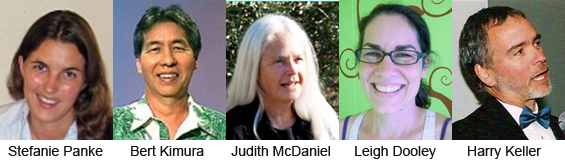


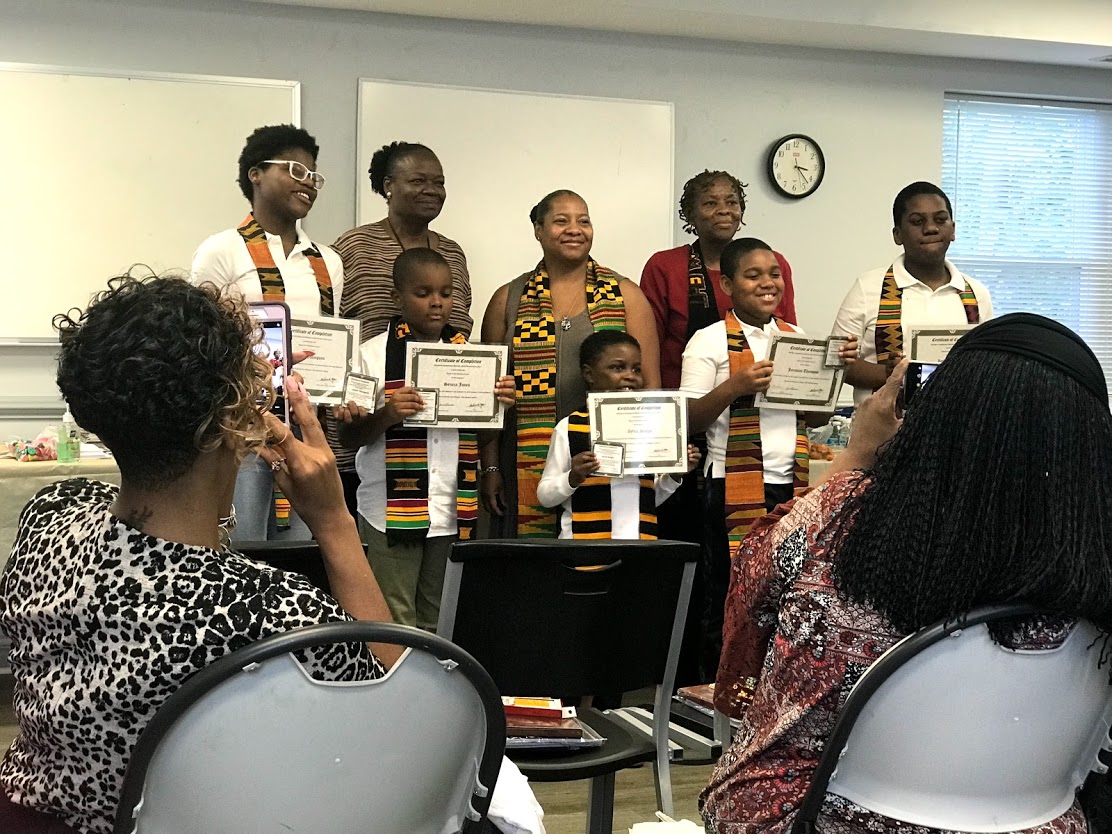





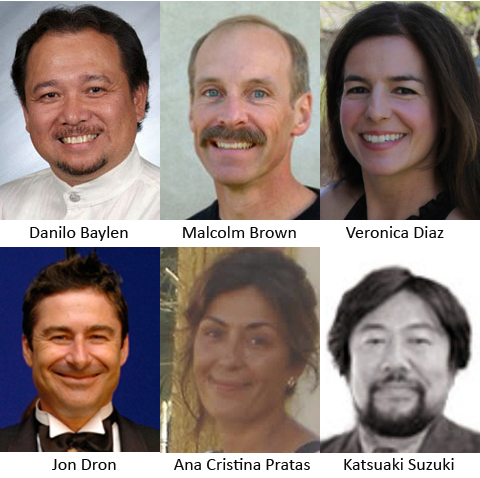










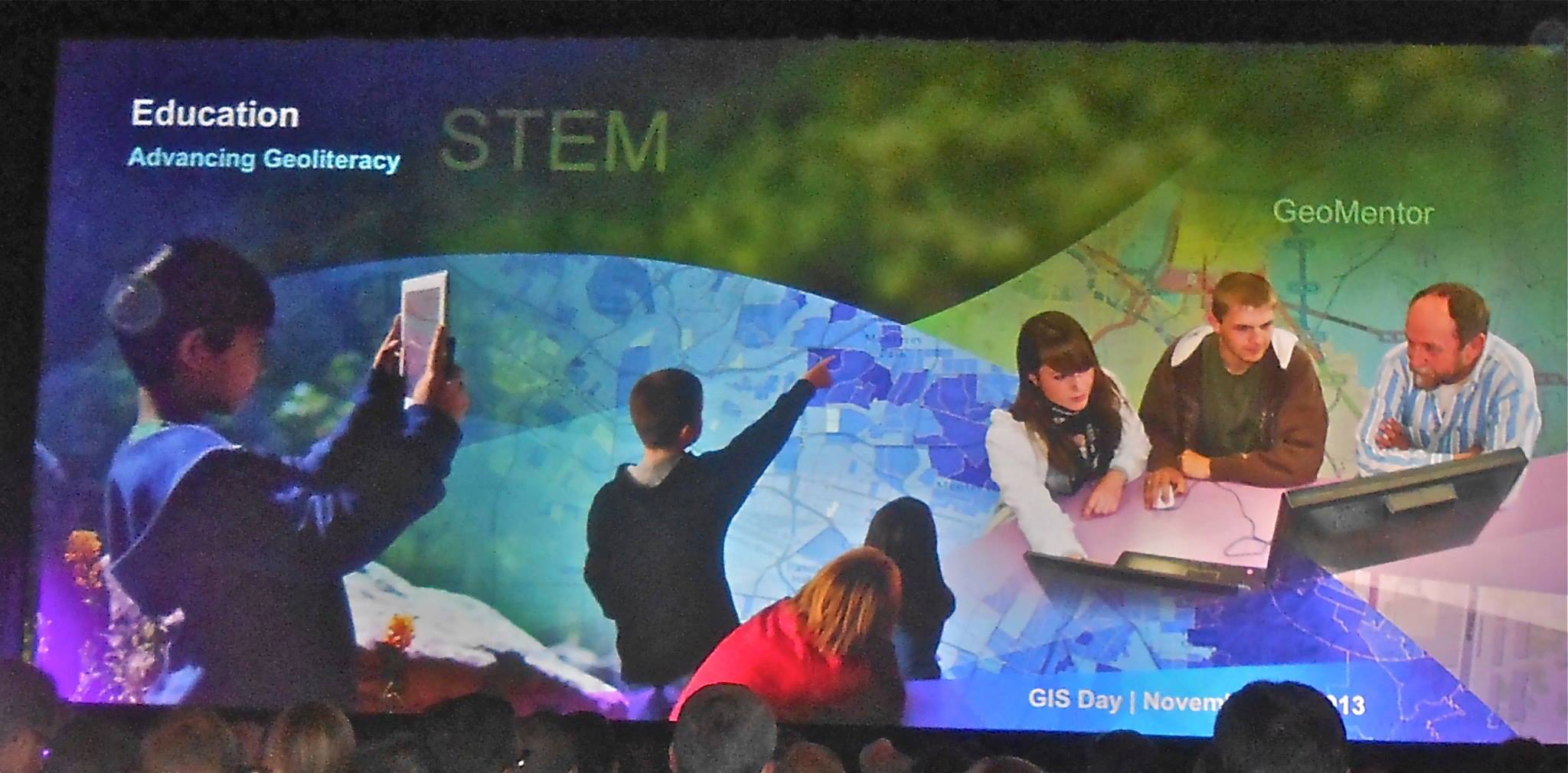











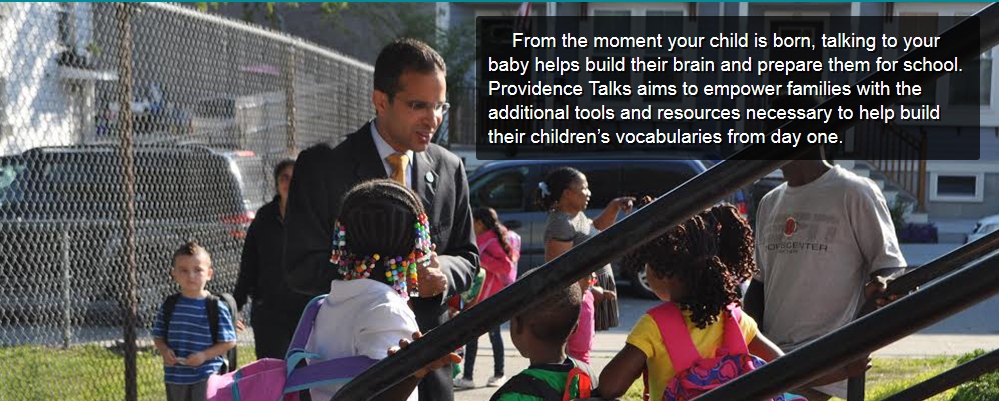




 By Leilani Cohen