






Dr. Harry Keller founded Smart Science® Education Inc. in 1981 and incorporated in 1983. After 15 years of providing contract consulting services mostly to Fortune 500 companies, he and his partner created the Smart Science® technologies to provide high-quality science learning experiences to students through the Internet. The system now has 200 online experiential science lessons with real experiments and hands-on measurement covering all major sciences for grades 3-14, and its core technologies have been patented.
Smart Science® lessons are now being used across New York City in over 200 elementary, middle, and high schools. It’s also in colleges, in online schools, and other traditional schools everywhere.

Mars Rhapsody, a novel by Harry Keller
Dr. Keller earned his BS in chemistry from the California Institute of Technology and his PhD in analytical chemistry from Columbia University. After a postdoctoral fellowship at Colorado State University, he was hired as an assistant professor of chemistry at Northeastern University. He has also served as chair of the Northeastern Section of the American Chemical Society and as a reviewer for Analytical Chemistry. In the computer industry, Keller has worked as a principal programmer and software development manager for Digital Equipment Corporation and was vice president at Access Technology.
Dr. Keller focuses his energies on supporting learning through the innovative use of Internet technologies and on providing quality learning experiences to students in poor rural areas and in underserved urban communities. Currently that focus involves science.
He also enjoys writing as you can see from the many articles published here and his first novel, Mars Rhapsody. In his spare time, he enjoys hiking in various Southern California mountains.
Update 7/6/18: In its first entry into the eight-year-old educational technology EdTech Digest contest, Smart Science Education Inc. walked away with first place honors in the Science Solution division. EdTech Digest, in making this award commented, “Authentic, hands-on learning, thoughtful experiments; works on any device. Stimulates students to really get concepts essential to inquiry and discovery style science and to own their learning. Pedagogically sound; teachers love it.” This small, family owned and operated company does all of its development and support in the United States. The patented process ensures optimum learning in an online setting, focusing more on the concepts than on the facts, procedures, and vocabulary of science.
ETC Publications
 Interstellar Travel Is Harder than You Think
Until someone invents a spaceship engine with relativistic exhaust speeds…
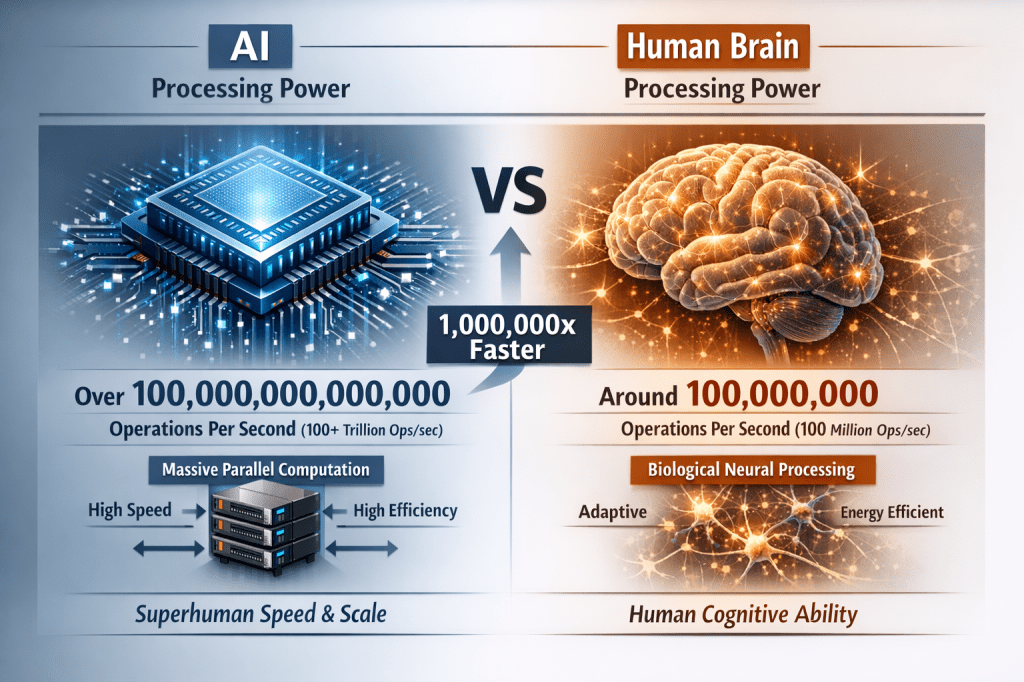
The Singularity Is an Illusion
I argue that technological growth is inherently limited…
Is Wrightwood Cursed?
Other homes had virtual rivers flowing through them…
Are Interstellar Visitors Really Alien Ships?
Would an alien civilization send such large and visible ships to our solar system?
The Fast Curve Ball
No matter how long a couple lives together, it’s never long enough for those who love each other.
Under Fire
Every year, we worry about wildfires.
My Observatory Odyssey – Part 6
Ed, my son, and I carried one half-wall up that steep hill and decided that one was enough.
My Observatory Odyssey – Part 5
Let me tell you about over-excavation…
My Life in LA County During COVID-19: May 29
I do feel some trepidation about these visits to my doctor and dentist.
My Observatory Odyssey – Part 4
We are stopped cold by someone who reviews septic systems.
My Life in LA County During COVID-19: May 12
We will endure. We will prevail. We shall overcome.
My Observatory Odyssey – Part 3
The unexpected costs just kept mounting.
My Observatory Odyssey – Part 2
This was to be the first of many skirmishes with the county officials.
My Observatory Odyssey – Part 1
I have had to learn some real patience in my quest for a mountain cabin as well as an observatory.
My Life in LA County During COVID-19: May 6
How can I bear this combination of selfishness and ignorance in my fellow citizens?
My Life in LA County During COVID-19: May 4
I live in a community of 36,000. I will be moving to one of 4,500.
My Life in LA County During COVID-19: April 26
For others, like myself, with small businesses, I offer a bit of advice…
My Life in LA County During COVID-19: April 23
Explore cooking dishes that use what you have on hand.
My Life in LA County During COVID-19: April 15
Today, I made some chapati, an easily made flatbread.
My Life in LA County During COVID-19: April 12
Going to stores right now is tantamount to going out in the worst part of a hurricane.
Our Future World When COVID-19 Is Over?
My Life in LA County During COVID-19: April 9
I will stay as far as possible from others…
Grocery-store Workers Are Risking Their Lives to Stay Alive
My Life in LA County During COVID-19: April 6
I…peeked at the front porch to see four large brown paper bags.
My Life in LA County During COVID-19: April 3
My primary problem…two older people living together alone.
My Life in LA County During COVID-19: April 1
The richest, most “entitled” communities have the most viral spread.
My Life in LA County During COVID-19: March 29
Yesterday…I had visits from both of my children and a walk with my wife.
My Life in LA County During COVID-19: March 27
I have been around for a long time…and have never seen anything even close to this situation.
My Life in LA County During COVID-19: March 25
We are in a virtual bunker now. No more outdoor excursions until Sunday.
My Life in LA County During COVID-19: March 24
My sympathies go out to the workers in these stores…
My Life in LA County During COVID-19: March 22
The store was limiting purchases of ground beef, beef, and paper products to two…
My Life in LA County During COVID-19: March 21
Seniors…having first crack at the shelves that have been stocked overnight.
My Life in LA County During COVID-19: March 20
When checking out, some of our goods were confiscated!
Smart Science® Labs 90-day Free Access: A COVID-19 Response
Memories of Computers Past
 Remote Proctoring Services: An Interview with PSI Bridge’s Rory McCorkle
Three Most Important Takeaways from the Thai Cave Rescue
Science Is Not the Friend of Thai Cave Soccer Team
What’s With Our Educators and Police?
Creativity Is Thinking Deeper
The Paleo Diet Belongs in Caves: What You Really Need to Know About Diets
Deus What?
The End of Dark Energy
Robots in Movies
Dark Matter Clues
Mars One Fizzles?
Life on Frozen Moons
Does SETI Make Sense? Part IV: Communicating
Does SETI Make Sense? Part III: Evolution
Does SETI Make Sense? Part II: Life
Does SETI Make Sense? Part I: Numbers
New Exoplanets Very Old
The Science of Deflategate
The Imitation Game: A Cautionary Tale
‘Better Than Earth’? – Baloney
Weary Professors Abandon Technology?
What Sort of Intelligence?
‘Big Hero 6′ Delights and Challenges
Stellar Movie Fudges Science”
‘The Theory of Everything’ – A Hollywood Take on Science
The Future of Tablets — and More
Technology Is a Partial Answer to Improving Teacher Quality
The ‘Fury’ of War Tanks
Disney Animation Embraces Science
Global Literacy XPRIZE Invites Comments
Disney and XPRIZE Unite to Encourage Students to Think Science
Seven Fallacies of Teaching Programming in K-12
Study Shows College Education Often Worthless
The XPRIZE Innovation Competitions
Real Aliens: What Will They Look Like?
Dinosaurs Among Us?
Martian Rhapsody: Chapter 2 – Rocks
Unite or Die
Mars One and Islam Incompatible?
Nye v. Ham: What Is ‘Science’?
Thinking About UFOs and Alien Visits
Mars One Steps Up
Making Mistakes and Learning
Teaching About Global Warming
Space Heats Up
Mars One Delayed for Two Years
Mars: One-Way or Round-Trip?
A Caltech Grad in a Caltech MOOC, Part 5
A Caltech Grad in a Caltech MOOC, Part 4
Acronym in Cheek: STEM, STEAM…
A Caltech Grad in a Caltech MOOC, Part 3
A Caltech Grad in a Caltech MOOC, Part 2
A Caltech Grad in a Caltech MOOC
Martian Rhapsody: Chapter 1 – Landing (REVISED)
‘Inspiration Mars’ Inspires
Hyperloop: Is It Better, Faster, and Cheaper?
Broadband for Schools: Do We Need Gbps Bandwidth?
Free Textbooks for College?
Textbooks Are Zombies
Wholesale Adoption of iPads by Schools a Mistake
Is the LEAD Commission Right About Education Technology?
Technology Bang for Buck
Farnsworth’s Fusion: What’s It All About?
Martian Rhapsody: Chapter 1 – Landing
Mars – A New Beginning
Mars One: Exciting Adventure or Hoax?
Robert E. Yager Discusses ‘Hands-On’ Science Education
Next Generation Science Standards Fall Flat
Is Building Apps for Everyone?
Need More Software Engineers? Teach Thinking Skills Better
Blame Poorly Designed Technology Instead of Teacher Training
The Real Story on Online Science Labs
For Schools, Laptops Are Still Better Than Tablets
What Can Tomorrow’s Students Expect?
Teaching Science Teachers Science
NAEP and the Future of Science Education
How Anti-Evolution Helps to Define Science
Ravitch Ravages Reforms
Edinburgh Manifesto: A Disturbing Subtext
Evolution Still Under Attack After 150 Years
Hawaii Teachers Reject RTT: What Did Arne Expect?
U.S. Education Is Getting Worse, Not Better
We Can Fix Our Public Schools If We Care Enough
Learning Software – Must Move Beyond the Trivial
Instructional Technologists Are Needed in K-16
The Arts Is Not Only About Music
The Importance of Tacit Knowledge in Science Educators
A Comment on Lessig’s e-G8 Talk
Rupert Murdoch on the Money About Importance of Software
Real Changes in Education Are Rare
Science Education and Society
Science Fairs Failing?
Algebra and the iPad
Learning to Learn, Learning to Teach
Information Overload and Education
Fixing Middle School Science and Math
Breaking Down Barriers
‘Learning by Playing’: Seven Tips for Game Designers
Technological Literacy: The Key to Education Reform
Time to Push the Ed Reform Pendulum Sideways
Is ‘Technology Expert’ an Oxymoron?
‘Computer Science’ Contains Little or No Science
Leaders Must Be Visionary Risk-takers to Change Our Schools
A Response to Marc Prensky’s ‘Simple Changes’
Flight of the ‘Solar Impulse’ – Educationally Relevant?
The Latest Whiz-Bang Gadgets vs. Real Change
Universities Vanishing?
Retort: Opportunities to Learn from Oil Spills
Retort: The Challenge for Our Schools: Thomas Friedman and Education
Retort: Thomas H. Huxley on Teaching Science
Retort: Berkeley High School May Eliminate Science Labs
Retort: Deconstructing STEM
Retort: The Best of Education, the Worst of Education
Interactive Whiteboards – Fix or Fad?
i3 Funding Process Unfair to Small Businesses
Tough Decisions for Extraordinary Times
Effective Leaders Challenge Teachers to Continually Grow
Investing in Innovation Fund: Criteria May Be a Barrier to Some Innovators
Science Labs and Accessibility
Science Labs Don’t Have to Cost an Arm and a Leg
A Review of ‘The Opportunity Equation’
Can Virtual Labs Replace Hands-On?
India Steps Forward in Science Education
Science Education Retrospective
If We Don’t, Someone Else Will
Innovation in Education: What? How?
Ineffective Use of Computers in Schools
Making a Case for Online Science Labs
Simulated Labs Are Anathema to Most Scientists
Filed under: Uncategorized |






























































































































































































































































































































Leave a Reply