Posted on March 24, 2020 by JimS
 By Harry Keller
Former ETCJ Science Editor
& President of SmartScience
My sympathies go out to the workers in these stores because they are being exposed to all sorts of customers coming in. -HK
Mar 24, 2020 at 7:47 AM: We are continuing to try to find a way through this crisis. We have toilet paper enough for about a week right now. We walked to the local Gelson’s Market, which is about 1.6 miles away with our modest backpacks, not the huge Rick Steves ones. It was around 2 pm when we left on our journey.
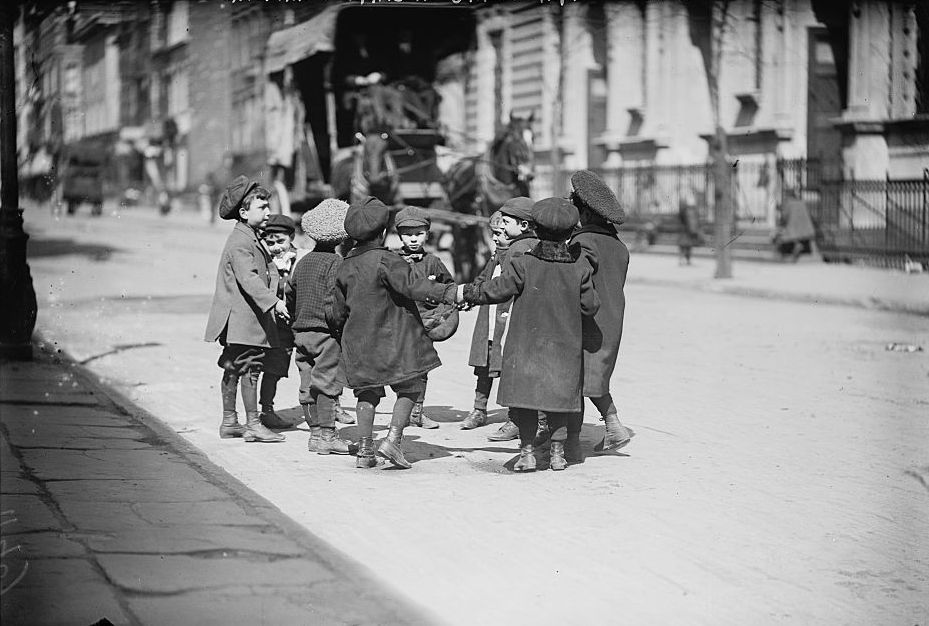
The first thing we noticed was lots of children playing in the streets. I hate to be repetitive, but this behavior is dangerous. One spot had a foursquare grid set up that spanned the entire street. Schools are out, and children are not studying. They are playing. I would be too. After all, few (if any) children like school. If the children from one family play with those from another, the virus can spread that way.

I think that we must all make a real effort to stop the spread until we can be vaccinated, or a cure is found. Continue reading →
Filed under: Uncategorized | 1 Comment »
Posted on March 22, 2020 by JimS
 By Satoru Shinagawa
This is mainly for language faculty.
I believe some of you are conducting synchronous classes using Zoom and also giving oral tests through Zoom synchronously. This is fine. I would like to refer you to a tool that makes an asynchronous oral test possible. It’s ACTFL (American Council on the Teaching of Foreign Languages) AAPPL Communication Builder (https://aapplcb.actfl.org/).
ACTFL is offering a FREE 1-year basic membership to any new member who joins ACTFL between now and June 30, 2020. Please use this special PDF application. For more information about this offer, see the announcement.
The AAPPL Communication Builder is “a web-based tool for world language teachers and learners that provides opportunities to practice in each of the modes of communication assessed in the ACTFL Assessment of Performance toward Proficiency in Languages (AAPPL). The AAPPL Communication Builder is designed to complement lesson plans and curriculum and to extend learning beyond the physical classroom space. Teachers can produce original tasks by choosing the subject matter, language, and targeted level that best fits their learners’ needs or they can identify tasks available in the publicly-shared section of Communication Builder” (source). Continue reading →
Filed under: Uncategorized | Leave a comment »
Posted on March 22, 2020 by JimS
By Harry Keller
Former ETCJ Science Editor
& President of SmartScience
Our town, at latest count, has six cases of COVID-19. This means that we really have from 30 to 60 cases in a town of 36,000 people. This is just a bit frightening because it has to mean that we are just getting started. -HK
Mar 22, 2020 at 1:21 PM: My wife and I decided to try out our local supermarket that has a senior half-hour at 7 am. It is Sunday and so may be atypical. We arrived at 6:59 am and saw a long line of maybe 30 people. We did not go the end of the line. Instead, we cleverly (as I saw it) waited for the end of the line to come to us. It just seemed safer and simpler. The line moved in spurts as they allowed maybe ten households (not individuals) in at a time. Their announced limit was 50 households at a time in the gigantic store. I thought that people would be sparse in there, but I was wrong. It was more crowded than I could possibly have expected. In comparison, we looked out into a nearly empty parking lot. Continue reading →
Filed under: Uncategorized | Leave a comment »
Posted on March 21, 2020 by JimS
By Harry Keller
Former ETCJ Science Editor
& President of SmartScience
Gov. Newsom: “Roughly 56% of our state’s population…will be infected.”1
Mar 21, 2020 at 8:34 AM: I don’t go out much with things as they are. Our governor has declared that everyone must stay in. Well, I just did some tidying of our yard. Does that count?
 My few outings earlier were like the Twilight Zone. The traffic was almost nonexistent compared to usual. It’s a strange feeling that harks back to the days when I grew up here beginning in 1945. The flip side is that the streets, always congested with cars parked by insensitive neighbors (maybe more lazy than insensitive) have more cars parked than ever and have suddenly become playgrounds for children who are not in school. Consider that the parked cars make it more likely than ever for a driver not to see that child.
I rent at rates not changed significantly for ten years (good landlords) in a neighborhood with multi-million-dollar houses (no — mansions) everywhere as the old beach cottages that used to define this town are torn down and replaced with monstrosities. The cottages had front and back yards, but the monstrosities have only the zoning setbacks — to the fraction of an inch! So, people buy big, expensive houses and have no place for their children to play outdoors. They also seem to have no storage in these houses because a great many of them have no room left in their garages for their cars. Continue reading →
Filed under: Uncategorized | 1 Comment »
Posted on March 20, 2020 by JimS
By Harry Keller
Former ETCJ Science Editor
& President of SmartScience
When checking out, some of our goods were confiscated! You are only allowed two of any item to prevent hoarding.
Mar 20, 2020 at 3:38 AM: We have food enough for many days right now having gone shopping twice on Wednesday. Why twice? Shelves were bare everywhere.
We will be traveling to our land 95 miles away on Sunday. This trip will involve no interaction with others but will require filling the tank. I expect that traffic will be very light!
I have seen many different figures on mortality rates. In China, Wuhan had over 5%, but the rest of China was 0.7% due to better health facilities and preparation. That’s about five times what the flu does annually. So, it is bad but not THAT bad. What appears to be the greatest threat from this virus is its contagiousness. It seems to transmit more readily than anything we have seen in modern times. The result of rapid transmission will be the overwhelming of health care with consequently higher death rates as we have seen in Italy.
The economic fallout could result in severe problems for the most vulnerable among us.
The economic fallout could result in severe problems for the most vulnerable among us. A recession was looming already. These people could be forced together by circumstances and are among those most likely to perish from the disease. I see no one mentioning this. Continue reading →
Filed under: Uncategorized | Leave a comment »
Posted on March 19, 2020 by JimS
 By Jim Shimabukuro
Editor
COVID-19 is forcing many of us to self-isolate in our homes and apartments, and one of the drawbacks is the reduction or loss of aerobic outdoor walking exercise. We could turn to treadmills, stationary bikes, stair steppers, or other exercise machines, but many of us don’t have them or don’t want them. During our self-imposed isolation, aerobic exercise is still critical to maintaining our health and ability to resist or mitigate the effects of COVID-19 and other viruses. A simple and cost-effective way to work 30-to-60 minutes of walking into our lives is to turn our homes into a walking course.
First, draw or create a mental image of a rough layout of the interior of your home. I live in an apartment, so I’ll use it as an example. For my apartment, there are four long straight-line paths, two short ones (red in the illustration below), and one rectangular path (blue). You may need to rearrange furniture to create these paths.
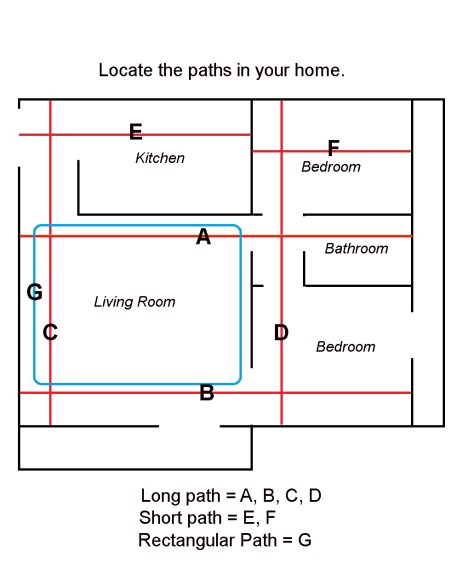
Second, design a counter-clockwise circuit. The layout of your home as well as types and number of paths will determine the design. Through trial and error, settle on a circuit that’s both easy to remember and lengthy. Illustrated below is a route that takes me about two minutes to complete. Continue reading →
Filed under: Uncategorized | Leave a comment »
Posted on March 18, 2020 by JimS
By Jim Shimabukuro
Editor
We just received a message (18 March 2020, 12:16 PM) from President David Lassner announcing that our University of Hawaii System will extend its move to online courses for the remainder of the semester. This extension has created a whirlwind discussion on proctoring exams: Procedures? Costs? In response to a Kapiolani Community College online discussion, I submitted the following:
This may be an opportune time to explore essay exams (or projects) that don’t require proctoring. These would be open-book and open web, and time limits could be imposed by controlling start and end times. Since online provides flexibility, students could be allowed to submit their exams within a 24-hour period. This would be a test of mastery rather than speed of recall.
Also, instead of one or two high-stakes exams a semester, an alternative is to require short essay exams four, five, or more times a semester. The exams would be open book, open-web, and unproctored. A time limit could be imposed. Continue reading →
Filed under: Uncategorized | 3 Comments »
Posted on March 18, 2020 by JimS
By Jim Shimabukuro
Editor
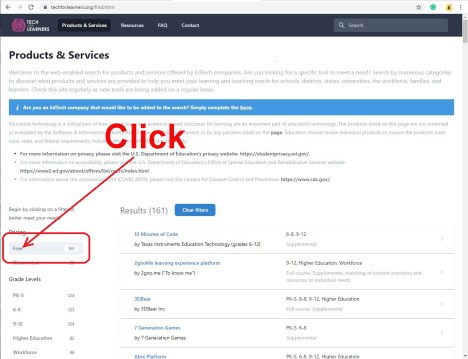
Tech for Learners is a project by the Software & Information Industry Association (SIIA) and their partner organizations to support those involved in education at all levels and from all communities as they scale up capabilities for online learning. For a list of free services, go to https://www.techforlearners.org/find.html
Filed under: Uncategorized | Leave a comment »
Posted on March 18, 2020 by JimS
By Jim Shimabukuro
Editor
Free offer: Starting immediately and running until August 31, 2020.
Work From Home (WFH) Employees Across Business and Government Organizations of All Sizes Can Now Quickly, Easily and Securely Access Work Computer, and All Associated Data, from Home.
Work From Home (WFH) employees can visit the DH2i Work From Home Client Portal (https://wfh.dh2i.com/) to download their free copy of DxOdyssey.
The download is completely anonymous – no personal information of any kind will be collected – to provide the assurance that no sales communications will result during or after the download and use of the software.
All Set-up, Configuration and Tech Support Also Provided Completely Free-of-Charge. DH2i will be making its world-class support team available to answer any questions or provide assistance in the download and/or use of the software during business hours: 9:00 am – 6:00 pm Pacific Time, Monday-Friday – a service that is also being offered completely free-of-charge. Continue reading →
Filed under: Uncategorized | Leave a comment »
Posted on March 17, 2020 by JimS
 By Lynn Zimmerman
Associate Editor
Editor, Teacher Education
Prologue: Your [Jim] email came at an opportune time [17 March 2020]. I am sitting in a hotel room in Tashkent, Uzbekistan, waiting to see if the Uzbek government is going to give permission for a flight to leave carrying non-essential Americans from Uzbekistan. I’ve been here for two months and was scheduled to leave next week, when the Embassy suddenly contacted me on Sunday evening to tell me to get to Tashkent immediately because the government was closing the borders. At that time, there were four cases of Corona here. Now, it’s sit and wait. Our embassy and some European embassies are in negotiation trying to arrange to get their citizens out. I think conditions at home aren’t all that great, but in a crisis, there’s no place like home.
All of this is to say I was planning to write a piece about my work here with English teachers and online learning when I got home. However, your email prompted this piece [below], which is a little different than I was planning. -Lynn

Distance learning did not begin with the Internet. According to Harting and Erthal (2005), it had its beginnings in the 1700s when a reliable postal service was able to deliver correspondence lessons between teachers and learners. Then the advent of radio and television made another shift in distance learning. In a recent tweet, LoPresti (2020) repeated a story from his 94-year-old grandfather when Chicago schools were canceled because of a polio outbreak. He said that “classes were on the radio – newspaper published when each class would be on for each grade.” Continue reading →
Filed under: Uncategorized | 1 Comment »
Posted on March 17, 2020 by JimS
By Satoru Shinagawa
[Note: On 16 March 2020, Satoru embedded an instructional video in a University of Hawaii email list on how to work around a log-in quirk in Zoom. Since the video includes private account numbers, we’re omitting it from this article. Later that day, Helen responded with instructions on adjusting the default settings to avoid this quirk. -Editor]
Unless you are familiar to some extent with the online conference software Zoom, this video [this video has been omitted for security reasons – editor] may not make sense. If that’s the case, please disregard this e-mail. Or if you find what I’m talking about confusing, please don’t pay any attention to this e-mail to avoid further confusion.
Now, unless you log in to your Zoom in a certain way, you won’t get to the meeting room assigned to your permanent Zoom ID. In the attached three-minute video, I did my best to explain how to log in to your permanent Zoom ID meeting room. To the best of my knowledge, this is how you log in. If I’m incorrect, please accept my apologies and delete this e-mail.


By Helen Torigoe
Hi, Satoru.
Thank you so much for sharing your solution to the annoying “default feature” of Zoom! That is a good workaround. Continue reading →
Filed under: Uncategorized | Leave a comment »
Posted on March 17, 2020 by JimS
Posted on March 17, 2020 by JimS
[Published on 17 March 2020]
 Helen Torigoe is an instructional designer at the University of Hawaii – Kapiolani Community College. Her areas of professional expertise and interest are educational technology, professional development, curriculum development, and e-learning with an emphasis on online teaching, online learning, blended learning, effective practices, research, web 2.0, web-enhanced teaching and learning.
List of ETCJ Publications:
 Solution to Zoom’s Login Quirk: A COVID-19 Response
Filed under: Uncategorized | Leave a comment »
Posted on March 17, 2020 by JimS
 By Bonnie Bracey Sutton
In these times with schools being closed, teachers and students can go online and access so many resources. Museums and virtual learning experiences have always been my anchor. No school has all of the resources and experts that exist in learning places. When I was a child, I went on Sundays to see new exhibits and movies and to interact with the experts when possible.
As a teacher in a classroom, it was always my intent to involve, to explain, to engage, to involve students in learning that would help them explore other learning options that exist beyond the classroom. Sometimes, we made a classroom museum. Frank Withrow, Earthwatch, and National Geographic taught me to integrate learning places in interactive ways that include STEM subjects (always including art). With today’s crisis, i.e., teachers being forced to do online teaching, I recommend The Ultimate Guide to Virtual Museum Resources, E-Learning, and Online Collections. Continue reading →
Filed under: Uncategorized | Leave a comment »
Posted on March 17, 2020 by JimS
By Jim Shimabukuro
Editor
The following announcement was shared by Satoru Shinagawa, University of Hawaii – Kapiolani CC professor, via email on 16 March 2020. He has been teaching Japanese online since 1999.
Remote language teaching tool for Free until end of semester
Language education should be accessible to everyone but because of the recent Coronavirus outbreak, many schools are forced to limit their face-to-face classroom time. Sanako offers Free subscription to Sanako Connect – our new remote language classroom solution for schools. Continue reading →
Filed under: Uncategorized | Leave a comment »
Posted on March 17, 2020 by JimS
By Harry Keller
Former ETCJ Science Editor
& President of SmartScience
Smart Science® Education Inc. is aware of the incredible strain the recent events are having on all educational institutions.
To assist, we are offering free 90-day access to our 300 Smart Science® Labs for K-12 and higher education science courses. Smart Science® Labs are virtual science labs that closely simulate a hands-on laboratory experience using real experiments.

You will receive free webinar PD to get your staff up and running quickly once you opt into this opportunity to share our online science labs with your science students.
Fill out this form to get Smart Science® Labs now:
https://www.smartscience.online/contact-us
Watch a tour video of the program here:
https://youtu.be/ID9zoPDlkfw
We are open to your feedback regarding how we can help in this difficult time.
Filed under: Uncategorized | Leave a comment »
Posted on March 16, 2020 by JimS
 By Ilene Frank
[Note: In response to a request from Bert Kimura (3/14/20) for sites that are “curating resources for teaching online (for emergency and on short notice)” for the TCC 2020 website, Ilene responded (3/15/20): “Bert, here’s some! [See list below.] I know there’s better stuff. But here’s some things I’ve seen on discussion lists, Twitter, etc. very recently (but where the heck was that really funny thread I saw from an instructor trying to video conference with her students getting interruptions from her husband and cats — and basically telling other instructors to embrace the goof-ups. She gave extra credit to students who could name all of her cats at the end of an online session or two.” -Editor]
A community getting together to discuss tackling the move to online teaching
Keep Teaching; Resources for Higher Ed
https://keep-teaching-resources-for-higher-ed.mn.co/feed
From Steve Covello – a suggestion to start your thinking about moving your course online here: The Ed Techie: Martin Weller’s blog on open education, digital scholarship, and over-stretched metaphors – “The COVID-19 online pivot“
Continue reading →
Filed under: Uncategorized | Leave a comment »
Posted on March 16, 2020 by JimS
By Jim Shimabukuro
Editor
For some instructors who have never taught online and are unfamiliar with their college’s LMS (Learning Management System), email may be the simplest and quickest way to move a course online. This approach would eliminate the steep learning curve for both instructors and students who are expected to move F2F courses into LMSs within the next week or so. The advantage of email-only is that everyone has an account, everyone knows how to use email, and students who don’t own a computer can get by with their smartphones1.
This email-only approach will work best with lecture-discussion courses that rely on papers and projects rather than quizzes and exams. For those requiring tests, a simple adjustment would be to require a paper, instead, that’s submitted via email2. For this approach to work, the instructor and students would need to have the email address of every person in class3. Continue reading →
Filed under: Uncategorized | 6 Comments »
Posted on March 15, 2020 by JimS
 By Davin K. Kubota
Davin Kubota, after surveying his classes, sent the following announcement to his students in preparation for the University of Hawaii’s move to online instruction for all classes beginning 23 March 2020, the day after spring recess. He also suggests ways to personally cope with the pandemic. -Editor
Based on your survey responses, here is what’s going to go down from March 23 to …? (I’m not sure UH President David Lassner will let us come back to school on April 13 if the coronavirus is still out of control in Hawai’i).
1. GoogleClassroom remains the core source of information and coursework upload.
2. Zoom will be used to accommodate those students who wish to live-conference with me virtually. My online office hours will be scheduled from 10 am to 1 pm Monday through Thursday. I will create signups for Office Hours accordingly. (Discord has too many privacy concerns.)
3. Attendance online will not be taken. You will be responsible for checking GoogleClassroom for applicable lectures and PDFs. Class will be conducted asynchronously rather than synchronously, freeing up your time but making you responsible for doing your work at your own pace and at your own time. Revisions, too, should be addressed at your own pace and with my commentary. (I may decide to remove attendance altogether as a grading criterion. Those of you who showed up regularly until now will likely receive bonuses. I need to check with my department chair to see if I can do this.) Continue reading →
Filed under: Uncategorized | Leave a comment »
Posted on March 12, 2020 by JimS
By Jim Shimabukuro
Editor
In the morning of March 12, faculty and staff in the University of Hawaii System received news that all classes will be conducted online starting March 23, after the spring recess, to prevent the possible spread of COVID-191. For F2F and blended instructors with some knowledge of Laulima, the System’s Sakai CMS, the move from F2F to online shouldn’t be too difficult. Those with little or no knowledge, however, will face a steep learning curve.
Laulima is a complex Course Management System with powerful tools, which makes it difficult to learn and master. This difficulty is compounded by numerous complicated procedures that are nonintuitive. It is often klunky, confusing, mindnumbing, and unforgiving, but it also provides some invaluable tools for online instruction. For me, the two most valuable are the discussion and email tools.
To substantially reduce the learning curve, I’ve devised a quick and dirty method to move a standard lecture-discussion course2 completely online via Laulima’s discussion and email tools. Both are included as default tools in the left sidebar of the basic course structure. There are many other tools to streamline and enhance instruction, but in this emergency and in the interest of time, the focus is on getting up and running with minimal fuss. Continue reading →
Filed under: Uncategorized | Leave a comment »
Posted on February 28, 2020 by JimS

Aloha!
25th Anniversary Webinar
4E Principles of Professional Development
for Online Faculty
Empathize, Engage, Emulate and Empower:
A trio of instructional developers will describe
an award-winning course for online faculty.
Full Information
http://bit.ly/tcc2020preconf
Date & Time
Tuesday, March 17
1:30 p.m. HST
4:30 p.m. CDT, 7:30 p.m. EDT;
Wed Mar 18, 0830 Tokyo, Seoul
Other timezones
Continue reading →
Filed under: Uncategorized | Leave a comment »
Posted on February 21, 2020 by JimS
Join us!
TCC 2020@25 Worldwide Online Conference
VISION 2020
April 14-16, 2020
http://2020.tcconlineconference.org/
TCC is a three-day, entirely online conference for post-secondary faculty and staff worldwide that features presentations covering a wide range of topics related to educational technology and emerging technologies for teaching and learning.
Register now for early bird rates:
https://2020.tcconlineconference.org/registration/
Individuals participate in real-time sessions from the comfort of their workplace or home using a web browser to connect to individual sessions. All sessions are recorded for on-demand viewing. Continue reading →
Filed under: Uncategorized | Leave a comment »
Posted on January 14, 2020 by JimS
By Lynn Zimmerman
Associate Editor
Editor, Teacher Education
In recent years, there has been a proliferation of messaging apps as more people use their phone and other mobile devices to communicate. In his March 19, 2019, article on the Motherboard website, Owen Williams asks, “Why Do We Need So Many Different Messaging Apps?” He poses this and other interesting questions about the variety of messaging apps that are available, who uses them, and how they are used.
 I recently became interested in this question because, in the last few months, I’ve had to add What’s App and Telegram to my array of communication choices. I’ve always relied on email to communicate with friends and colleagues, occasionally using my texting function on my phone, Messenger on FaceBook, and Skype for messaging. Once I got my iPhone, this began to change. I started using iMessenger, which was on my phone. However, I couldn’t use it for international contacts, and I had a colleague in Albania who said she used Viber, so I downloaded it to IM with her about our project. Continue reading →
Filed under: Uncategorized | 1 Comment »
Posted on October 24, 2019 by JimS
By Jim Shimabukuro
Editor
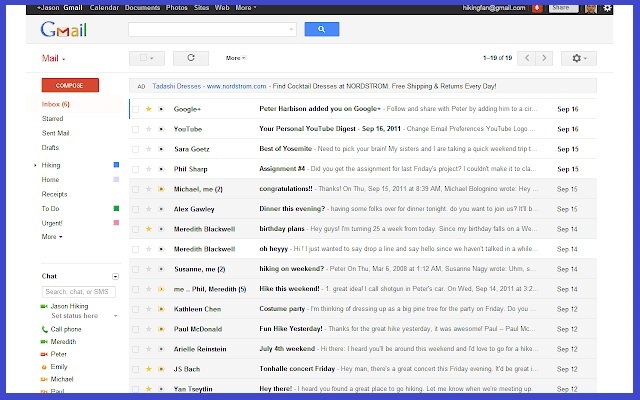
With so many professional services competing for our interest online, I couldn’t remember when, why, or how I signed up for eblasts from ResearchGate (RG), but, last night, as I was pruning my list of incoming email, their subject line caught my eye: “Q&A Highlights for James Shimabukuro.” I moved the cursor from the garbage can icon to the subject line and clicked. This is what I found:

Continue reading →
Filed under: Uncategorized | Leave a comment »
Posted on October 23, 2019 by JimS
Last updated 12/16/19 7:30 AM

25th Anniversary Special!
TCC Worldwide Online Conference
April 14-16, 2020
Vision 2020
Proposal deadline extended: December 27, 2019
Deadline for accepted papers: December 30, 2019
Proposal deadline: December 20, 2019
Guidelines: http://bit.ly/tcc2020proposal
Homepage: tcchawaii.org
Hashtag: #tccsilver
Call for Proposals
Faculty and staff are invited to submit a paper or a general session proposal related to learning design and technology such as e-learning, learning communities, digital literacy, social media, online privacy, mobile learning, emerging technologies (AI, AR, VR), gamification, faculty and staff support, and professional development. Continue reading →
Filed under: Uncategorized | Leave a comment »











 Educational Technology and Change Journal
