How to Turn Your Online Program into a Net Revenue Generator

John SenerBy John Sener

A recent listserv discussion elsewhere prompted me to ask participants to share their opinions/knowledge on what factors enable online programs to become net revenue generators (while avoiding becoming “cash cows”). I’ve been asking this question in various venues (Facebook, Twitter, et. al), and now I’ll ask it here. Responses I’ve received to date on this question focus on several areas.

Since they are net revenue producers by definition, a relatively easier path is to do what the for-profits do: cherry-pick program offerings (no physics or Greek literature here); reduce costs by outsourcing services, sener27apr09futilizing physical space efficiently, etc.; cut out additional functions (e.g., research) and amenities (e.g., sports and entertainment complexes); use adjuncts extensively, etc.

However, administrators of successful, revenue-producing online programs cite several other factors as well, such as using online learning to extend established programs; reach out to find new audiences; offer programs that are different from other available ones; use economies of scale, and plan for the long term (see this posting for a more complete list ).

Although no doubt there are some “secrets” for generating net revenue from online learning which are being held proprietarily, I believe that there are many people who would be interested in a more public description of this information. So, care to share your ideas? If you were to write a document that describes strategies for turning online programs into net revenue generators, what else would you include?

India Steps Forward in Science Education

Harry KellerBy Harry Keller
Editor, Science Education

A recent press release in The Hindu newspaper, titled “Virtual lab for exploring science in top 10 institutes,” explained a new initiative by the government of India.

The release states, “Students pursuing higher studies at the country’s top technical institutes will now be able to do any experiment without going to a laboratory but through virtual labs.” It goes on to note that the government will be spending $40 million (Rs 2 billion) to complete this project within a year.

Coming on the heels of new virtual science lab commercial products from Romania, Turkey, and Scotland, this announcement should have our attention for two reasons.

It shows that India has made a huge commitment to gaining ground in science and engineering. They have decided to increase their ability to graduate qualified students in these fields from their premier education organization, the India Institutes of Technology.

The announcement also highlights our own problems. Rather than engaging in our own initiatives, we are spending our education tax dollars to import simulation software from foreign countries. We’re sending our stimulus dollars to the Middle East! As I have noted previously, the end of this process could be outsourcing not just of software services, but of entire courses including the teachers to foreign countries.

keller_21apr2009aFor a relatively paltry fraction of the money that India is spending, we could be promoting great science education technology initiatives right here at home. A few million dollars to make us more competitive in science education seems like nothing compared with trillions in spending and even with $40 million being spent on a single project by India.

I contacted our Department of Education about this topic and received a polite letter informing me that the Department does not do this sort of thing. I should contact the states, all 50 of them, one at a time! I have contacted many of the states too. They say that I should contact the individual districts, most of which say to contact the schools. Talk about buck passing!

I have a vested interest in all of this. My modest company produces a solution for online science labs that uses prerecorded real experiments. I do my best to avoid bias and like to think that my involvement just allows me to focus better on what’s going on. I see little support for innovation and entrepreneurship in education. As a scientist, I have great concern about this entire issue, which is why I entered the virtual lab business in the first place.

This journal is the perfect place to discuss these matters. It’s all about technology and change, after all.  While these two can be discussed separately, I prefer to discuss the use of technology to effect change in education. In fact, I see technology as our only hope for bringing about real and useful change, at least in science education.

The well-known challenges in science education today include:

  • increasing class sizes, sometimes over forty students
  • decreasing budgets made even worse by the recession
  • loss of lab time to high-stakes testing
  • complete removal of some labs due to new safety regulations
  • increasing costs for hazardous waste disposal
  • greater insurance costs for science labs where overcrowding causes more accidents
  • reluctance of overworked and underpaid teachers to change their methods
  • high teacher turnover due to the stresses of some current school environments
  • lack of new teachers trained in science, especially physical sciences

Great efforts have been made over the last quarter century to improve science education. The National Science Education Standards (NSES) were published to great fanfare, and have not fixed the problems. New professional development efforts also leave the science classrooms unimproved. Billions of dollars have been spent.

The Obama administration has proposed new curriculum standards, new science labs, and more professional development. These solutions require an abundance of two things we have little of: time and money. The sort of technology that involves physical materials, for example, smart boards, also requires lots of money and professional development to utilize them well.

Internet technology, on the other hand, requires only Internet access, which now is available nearly everywhere, and Internet-literate teachers. This evolving technology, if applied well, can overcome all of the above list of challenges except for the reluctance of many teachers to change methods to employ the new ideas. Given the potential benefits, we should certainly be investigating this approach in as many way as possible.

Why should our government talk about bold steps and yet be so timid compared with India?

Science Education Retrospective

Harry KellerBy Harry Keller
Editor, Science Education

In 1929, Science Teaching was published. This book, by Frederick W. Westaway, went through a number of printings and was the book on teaching science of that era. Westaway wrote many books, including one on scientific method. His knowledge was encyclopedic, and he understood what the goals and objectives of science teaching should be. Reading his thoughts remains valuable to this day.

science_teaching2In science education, you can truly see that those who do not read about history are doomed to repeat it. So much of what you read today was known 80 or 100 or even 140 years ago. Science teachers still repeat the same old mistakes that Westaway wrote about. To be fair, he makes quite clear that beginning science teachers have a very difficult task and takes great pains to explain how they can learning their trade more rapidly.

I believe that to understand change in education, we should know about the past, especially the best of past method and process. In that spirit, I’m going to provide some of the wisdom of Westaway to those among you who have a serious interest in teaching science and in improving it. He did not perform extensive studies of science teaching, but he was an inspector of secondary schools and understood what separated good teaching from bad from long experience.

I’ll begin with his separation of the old science teaching from the new. He points out that prior to the middle of the nineteenth century, science education was anything but a core subject. He writes, “Science teachers were few, and those few were engaged in fighting down opposition all round.”  He credits Canon Wilson with planting the seeds of change, writing that in 1867 he “rang up the curtain on modern science teaching.”

Here is one of the quotes from Wilson’s book as reported by Westaway:

Science is the best teacher of accurate, acute, and exhaustive observation of what is; it encourages the habit of mind which will rest on nothing but what is true; truth is the ultimate and only object, and there is the ever-recurring appeal to facts as the test of truth.

Here, he is presaging Carl Sagan’s The Demon-Haunted World, in which Prof. Sagan speaks of scientists obtaining a “baloney detection kit” as a matter of course just by the nature of their studies and work. Wilson is making a strong case for the value of science education as a part of any liberal education.

Westaway’s quotes of Wilson continue:

It is important to distinguish between scientific information and training in science. Both of these are valuable, but the scientific habit of mind, which is the principal benefit resulting from scientific training, can better be attained by a thorough knowledge of the facts and principles of one science than by a general acquaintance with many.

We have been seeing an increasing call for more depth of science education and less breadth lately. Here, in a few words and 142 years ago, is this very point made and explained. Wilson distinguishes between the stuff of science and science itself. Science teachers generally place too much emphasis on words, laws, equations, and procedures and too little on what science truly is. Of course, it’s much easier to test for the former than the latter. The difference is crucial and insufficient comprehension of it has created many problems today in science education.

The next quote from Wilson is longer and brings science education forward to the modern era:

The lecture may be very clear and good; and this will be an attractive and not difficult method of teaching, and will meet most of the requirements. It fails, however, in one. The boy is helped over all the difficulties; he is never brought face to face with nature and her problems; what cost the world centuries of thought is told him in a minute; his attention, understanding, and memory are all exercised; but the one power which the study of physical science ought preeminently to exercise, the power of bringing the mind into contact with facts, of seizing their relations, of eliminating the irrelevant by experiment and comparison, of groping after ideas and testing them by their adequacy in a word, of exercising all the active faculties which are required for an investigation in any matter these may lie dormant in the class while the most learned lecturer experiments with facility and with clearness.

You can argue very accurately that the last 140 years in science education have been a continuing search for the means to fulfill this vision. (You’ll have to forgive the sexist nature of the references from 1867.)  The purpose of a science class is not the exercise of attention, understanding, and memory. The purpose must be to develop a mind that does not take evidence on face value, that can experiment and compare, that, in a phrase, can use scientific reasoning and will do so in daily life.

demon_haunted_worldWestaway’s final quote from Wilson speaks directly to the science teacher:

A master who is teaching a class quite unfamiliar with scientific method, ought to make his class teach themselves, by thinking out the subject of the lecture with them, taking up their suggestions and illustrations and criticizing them, hunting them down, and proving a suggestion barren or an illustration inept.

We should all ask what sort of teacher would be able readily to perform this service. What training would be required?  How many of our science teachers today are ready for teaching in this manner?

Given this perspective, what does change in science education mean?  Perhaps, it means going backward 140 years. Even Westaway writes, “All this reads as if written in 1928 instead of more than sixty years ago.”  So it might have been written today, except for some of the language details. Change must take place, but not from the old to the new. Rather it must take place from the ordinary to the extraordinary. The gauntlet was thrown down nearly a century and a half ago. We must not fear to pick it up.

How about technology in science education? How can someone in 1867 or 1929 even begin to imagine cell phones and smart boards? What should the purpose of technology be? One thing is clear. Technology must be the servant of good education rather than the reverse. Too often, we see educators attempting to fit a new technology with which they are enamored into their teaching methods without considering its real value.

Westaway understood very well that the teacher and not the method produces the best results. In using technology to produce positive change, we must seek to support the average teacher, the beginning teacher, the out-of-discipline teacher, and all who can improve their teaching results. We must provide the means to raise up the teachers and students and aspire to the best possible learning. Wilson set a standard that Westaway elaborates at length.

Interview with Bert Kimura: TCC 2009 April 14-16

Jim ShimabukuroBy Jim Shimabukuro
Editor

The following ETC interview with Bert Kimura, coordinator of the annual TCC (Technology, Colleges and Community) Worldwide Online Conference, the longest running virtual conference, was conducted via email on April 7-8, 2009. Dr. Kimura, a professor at Osaka Gakuin University, orchestrates the completely online event from Japan. The theme of the 14th annual conference is “The New Internet: Collaborative Learning, Social Networking, Technology Tools, and Best Practices.” It will be held on April 14-16, 2009. TCC is a conference designed for university and college practitioners including faculty, academic support staff, counselors, student services personnel, students, and administrators.

Question: What’s the theme of this year’s conference and, more specifically, why did you choose it?

The Internet world is abuzz with social networking and Web 2.0 technologies and, recently, its impact on teaching and learning. We thought that this focus would be appropriate for faculty along with what their colleagues have been doing with these technologies in their (i.e., the early adopters’) classrooms.

TCC coordinators pay attention to the Horizon Report published annually by the New Media Consortium and EduCause. Two years ago, the report cited social media as a technology to have short term impact on teaching and learning.
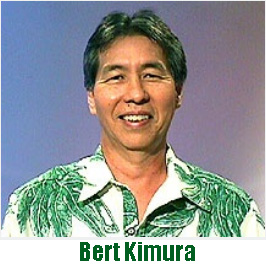
bert_kimura2Question: What are the primary advantages of online vs. F2F conferences?

1. Ability to “attend” all conference sessions, including the ability to review sessions and content material.
2. No travel expenses or time lost from the workplace.
3. No need to obtain travel approval and submit complex documents to meet administration and/or business office requirements.

Question: What are some innovative or new features that you’ve added to TCC?

1. Live sessions have made the conference alive, i.e., people seem to like knowing that others are doing the same thing at the same time. Through these sessions they can interact with each other through the “back door,” a background chat that is going on simultaneously; this is the same as speaking to your neighbor when sitting in a large plenary session at a conference. Additionally all sessions are recorded and made exclusively available for review to registered participants for six months.
2. Collaboration with LearningTimes. The LearningTimes CEO and president are very savvy technically and hands-on, and they understand how educators work, how tech support should be provided, and they provide an excellent online help desk to conference participants, especially presenters. Their staff support responds quickly and accurately to participant queries. They also respond graciously and encouragingly to those with much less technical savvy.
3. Paper proceedings (peer reviewed papers). We believe that this is one way to raise the credibility of this event and make it accessible to a broader higher education audience. Research institutions still require traditional (and peer reviewed) publications for tenure and promotion. However, by publishing entirely online, we also promote a newer genre. Proceedings can be found at: http://etec.hawaii.edu/proceedings/
4. Inclusion of graduate student presentations. We feel that we need to invest in the future and that TCC can also become a learning laboratory for graduate students. Grad students, especially if they are at the University of Hawai`i, may have much greater difficulty in getting to F2F conferences than faculty.

Question: What’s the secret to TCC’s success?

1. Great collaboration among faculty, worldwide, to bring this event together. We have over 50 individuals that assist in one way or another — advisory panel, proposal reviews (general presentations, e.g., poster sessions), paper proceedings editorial board, editors (writing faculty that review and edit descriptions), session facilitators, and a few others.
2. Quality of presentations — they are interesting, timely, and presented by peers, for and about peers.
3. Continuity and satisfaction among participants. Our surveys (see Additional Sources below) consistently show very high rates of satisfaction. We have managed to persist, and TCC is recognized as the longest running online (virtual) conference.
4. Group rates for participation — i.e., a single charge for an entire campus or system.
5. TCC provides a viable professional development venue for those that encounter difficulty with travel funding.

Question: What are the highlight keynotes, presentations, workshops, etc. for this year’s conference?

See tcc2009.wikispaces.com for the current conference program, presentation descriptions, etc. For keynote sessions, see http://tcc2009.wikispaces.com/Keynote+sessions

tsurukabuto_kobe
“Sakura in early morning. Taking out the trash was pleasant this morning.”
iPhone2 photo (8 April 2009) and caption by Bert Kimura. A view of cherry
blossoms from his apartment in Tsurukabuto, Nada-ku, Kobe, Japan.
See his Kimubert photo gallery.

Question: What’s the outlook for online conferences in general? Are they growing in popularity? Will they eventually surpass F2F conferences? If they’re not growing or are developing slowly, what are some of the obstacles?

At the moment, I’m not sure about the outlook — there are more virtual individual events or hybrid conferences, but not many more, if any, that are entirely online. One thing that is clear is many established F2F conferences are adding or considering streaming live sessions. Some openly indicate that a virtual presentation is an option.

The biggest challenge is the view that online events should be “free,” i.e., they should use funding models that do not charge participants directly. For an event that is associated with a public institution such as the University of Hawai`i (Kapi`olani Community College), it is impossible to use “micro revenue” funding models because institutional business procedures do not accommodate them easily.

Likewise, there is no rush among potential vendors to sponsor single online events. I have been talking with LearningTimes, our partners, to see if a sponsor “package” might be possible, where, for a single fee, a vendor might be able to sponsor multiple online conferences.

Even with 50+ volunteers, a revenue stream is vital to assure continuity. We operate on a budget that is one-twentieth or less of that for a traditional three-day F2F conference. Without volunteers, we could not do this.

Question: What are the prospects for presentations in different languages in future TCC conferences? If this is already a feature, has it been successful? Do you see it growing?

At the moment and with our current audience, there has not been an expressed need for this. However, if we were to target an event for a particular audience (e.g., Japan or China), then we would need to provide a support infrastructure, i.e., captioning and/or simultaneous interpretation.

On the other hand, the Elluminate Live interface that we use for live sessions does allow the user to view the interface and menus in his native language. Elluminate is gradually widening its support of other languages. Having experienced the use of another language interface, Japanese, I find that it makes a big difference to see menu items and dialogue boxes in your native language.

Question: Tell us about your international participants. Has language been a barrier for their participation?

– So far language has not been a challenge. It might be that those who suspect that it will be don’t register. Some, I think, see this as an opportunity to practice their English skills.
– International participants are much fewer in number (less than 10 percent). We’ve had presenters from Saudi Arabia, UK, Scandinavia, Brasil (this year’s keynoter), Australia, Japan, Sri Lanka, Canada, Israel, Abu Dabi,  Greece, India, as well as other countries.
– In some regions such as Asia (Japan is the example that I’m most knowledgeable about) personal relationships make the difference in terms of participation. On the other hand, it is difficulty for a foreigner, even if s/he lives in the target country, to establish personal networks. I have been able to do this gradually over the past seven years — but it is still, by far, not enough to draw a significant number (even with complimentary passes) to the event. In Japan, it also coincides with the start of the first semester (second week of classes) and, consequently, faculty are busy with regular duties. If we were to hold this event in the first week of September, the effect would be the same for the US. We would have difficulty attracting good quality presentations and papers that, in turn, will draw audiences to the event.

Question: What’s in the works in terms of new features for future conferences?

– Greater involvement with graduate students as presenters and conference staff. It provides TCC with manpower and, at the same time, TCC serves as a valuable learning laboratory for students.
– Events, either regional or global, on occasion, to keep the community interacting with one another throughout the year.
– Some sort of ongoing social communications medium to keep the community informed or to share expertise among members on a regular basis (e.g., a blog, twitter, etc.)

[End of interview.]
_________________________
The official registration period for TCC 2009 is closed, but you can still register online at https://skellig.kcc.hawaii.edu/tccreg
The homepage for the event can be found at http://tcc.kcc.hawaii.edu

Additional Sources: For additional information about the annual TCC conference, see the following papers presented at the 2006 and 2008 Association of Pacific Rim Universities (APRU) Distance Learning and the Internet (DLI) conferences at Toudai and Waseda: Online Conferences and Workshops: Affordable & Ubiquitous Learning Opportunities for Faculty Development, by Bert Y. Kimura and Curtis P. Ho; Evolution of a Virtual Worldwide Conference on Online Teaching, by Curtis P. Ho, Bert Kimura, and Shigeru Narita.

Collaborative Text Translation with DotSUB

Claude AlmansiBy Claude Almansi
Editor, Accessibility Issues

In a discussion about Uwe Müller’s dissertation regarding open access journals (see abstract with download link) on the A2k (access to knowledge) mailing-list, Arif Jinha wrote that it would be great to translate it collaboratively into English. Great idea, especially for a  269-page long  dissertation.

The way Arif Jinha intends to  collaboratively translate scholarly texts is based on the hypothesis that if two specialists thoroughly know each other’s subject, specialist B, even if he does not know specialist A’s language, is able to better understand – and render in own his language – specialist A’s work on the basis of even a dubious computer translation than would a generic translator who masters both languages. However, generic bilingual translators could be of use for checking possible mistakes in details.

This is very true. For instance, the best translation of a poem by Seferis into French was done by the French poet Yves Bonnefoy – who didn’t know Greek – on the basis of several English translations, in collaboration with Seferis who told him what he liked and disliked in these translations. And the same possibly extends to other fields of specialisation.

Collaborative Text Translation Tools

However, being just a generic translator, I have to  translate the other way round, from the small end as it were. So Arif Jinha’s suggestion got me thinking about collaborative translation tools. There are such tools for software, like Pootle, for instance, which split the interface into short strings presented in a table: a volunteer starts translating some, then another volunteer goes on. You can navigate by untranslated and “fuzzy” strings.

  • Problem 1: the strings are presented by alphabetical order, with only some coded indications of where the strings come from, and it takes some time to start understanding them. And one-word strings can be tricky: is “post” a noun or a verb, and if a verb, should we use the infinitive or the imperative, and if the imperative, the polite or the familiar form (in languages where both exist)?
  • Problem 2, you need a server on which to install this kind of tool.

Collaborative Text Translation with DotSUB

And then I remembered DotSUB. It is normally used for collaboratively captioning videos, but its  interface is very similar to one of the software translation tools that I covered in Three Video Captioning Tools. And you can have longer strings, in the order you decide – in the order of a text too…

But I needed a video pre-text first. So I made one, inserting a 4k black JPEG file in a video editor:

Black JPEG file

I timed it for 10 minutes and exported the video in the lowest possible resolution. Then I uploaded it into DotSUB and inserted some text from my blog post Making Web Multimedia Accessible Needn’t Be Boring, sentence by sentence:

Dotsub Transcription Tool:

video player left; things already transcribed top right; box for transcribing bottom left

I left the default 3-second timing for each string in the “Add a transcription line” box and paid no attention to the pre-text black video. Each transcribed string moves to the top-right table when you hit return and is automatically saved. When that was done, I clicked on “Mark this transcription complete” (bottom left) and moved to the DotSUB Translation Tool.

DotSUB Translation Tool

The transcription is in a tabled list, with each item followed by a link you can click to translate it

I clicked on the links to translate each string (actually,  I only translated the text into French, but I forgot to make a screenshot, first, so I made one of the interface for translating into Italian instead).

When you choose a language for the captions in the video player of the resulting Collaborative translation DotSUB page, you get the translation in the corresponding language as a drop-down list under Video Transcription. To get rid of the list markings, just copy-paste it into the “source” or “html view” of a web editor. Here is the almost unedited result (I just redid a separate paragraph for the subtitle and bolded it, and I put the rest in italics) :

Certains pensent que l’obligation légale de se conformer aux règles d’accessibilité des contenus Web – celles du W3C ou, aux USA, la “section 508” mène forcément à des pages ennuyeuses, rien qu’en texte En fait, ces règles n’excluent pas l’utilisation du multimédia sur le web, mais imposent de le rendre accessible en “offrant des alternatives équivalentes pour des contenus auditifs ou visuels et en particulier: “Pour toute présentation multimédia à base temporelle (p. ex. film ou animation), il faut offrir des alternatives équivalentes (p.ex. sous-titres ou descriptions audios de la piste visuelle) avec la présentation [Priorité 1]” [1] Ce n’est pas une corvée aussi terrible qu’il ne semble, et elle peut être partagée entre plusieurs personnes, même si elles ne sont pas expertes en technologie et n’ont pas d’instruments perfectionnés.

Sous-titrage avec DotSUB.com

Exemple: Phishing Scams in Plain English de Lee LeFever, en http://dotsub.com/view/41ffcc22-6609-4780-bf9d-5bcf88d3197d  [2] Ici, la vidéo a été téléchargée dans DotSUB.com, et plusieurs volontaires l’ont sous-titrée en diverses langues. Le résultat peut être insérer dans un blog, un wiki ou une page web. Les sous-titres apparaissent aussi comme texte copiable sous “Video Transcription”: commode si des gens veulent citer des passages dans une discussion de la vidéo. En outre, une transcription d’une vidéo tend aussi à améliorer sa position dans les moteurs de recherche, qui indexent principalement les textes. Le seul problème est que les sous-titres couvrent une partie substantielle de la vidéo

Summing up so far:

Of course, I attempted this alone. But it would also work with several people collaborating in the translation. In theory, even the transcription, sentence by sentence, of the original text could be shared, but I haven’t checked yet if a collaborator could decree that a transcription is finished when it isn’t, thus blocking the transcription.

In case of a longish text that must be translated into several languages (hopefully in collaboration with many people), this way of using DotSUB might prove useful due to the ease of toggling between the different versions from the main page.

A Digital Educator in Poland

lynnz80By Lynn Zimmerman
Editor, Teacher Education

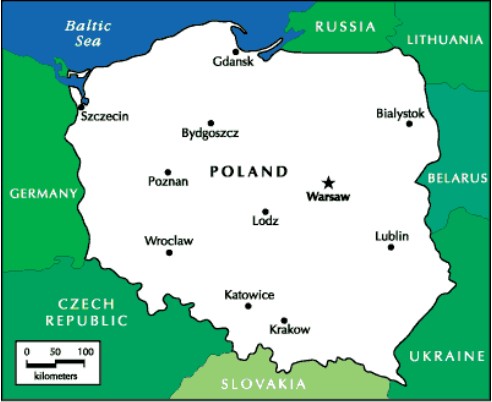
During this Spring 2009 semester, I am teaching at a major university in a large city in Poland. My students are 3rd, 4th , and 5th year students , most of whom plan to be English teachers. Technology is playing a role in this experience in some expected and unexpected ways.

First of all, I have easy access to the folks back home. I served as a Peace Corps volunteer in Poland from 1992-1994 and, during that time, the communications infrastructure was rudimentary.  Many people did not have telephones, myself included. The couple of times I called my mother in the U.S. I had to go to the post office and order the call. Then I had to wait until the overseas operator was able to connect to me. When I returned to Poland in 2000 the cell phone boom had occurred, and Internet service was on its heels. Now with Skype and IM and all the other communication devices at our fingertips, it is almost as though I never left home. This easy accessibility is actually a mixed blessing. The chair of my department has been able to give me tasks to do, even though I am several thousands of miles away.

Although I travel quite a bit and try to journal, I am rarely successful keeping up the journaling process. This time, I decided to set up a “private” social network on Ning (www.ning.com) for my friends. I recorded a video about my impending trip. I put up links to my Polish university and other interesting places. I have been posting pictures of my adventures and have written blogs to keep my friends informed. I think that having an audience other than myself is helping me keep up the process.

On the downside has been the lack of technology available to my students here. The building where I teach has one lecture room, reserved only for large lecture classes, that has a computer and projector, but no Internet access. The technology guy here did show me how to download some clips that I was planning to use from YouTube (using mediaconverter.org), so I was able to work polandaround the no Internet access issue. I have one class of about 40 students and that is the only one allowed to use that room. Unfortunately this week when I was planning to show a DVD and a YouTube clip, the system was not functioning. For my other classes, I have had to re-think how I teach them, taking into account that I would not be able to use the videos and PowerPoints that I usually use with my classes.

Another issue that arose is that none of my students have ever done an online discussion. I use online discussions once or twice a semester when I have to go to a conference. The university here does not have a built-in classroom management system like WebCT or Blackboard, so I set up a discussion on Ning. Because I did not have Internet access in the classroom, I had to take “snapshots” of the screens to show the students what to do. (The computer system was functioning that day.) Then I had to deal with the students’ anxiety about doing this activity. Most of the students participated, and I must say that the ones who did participate did a really good job, better than many of my students in the US. However, another professor has referred several times to the week I “missed” class. She obviously has no idea of how time-intensive setting up and conducting an online discussion is for the teacher or the students.

On the other hand, I was recently at a symposium in another part of Poland and technology, including Internet access, was available in many classrooms. This particular university also specializes in providing services for students with vision and hearing disabilities. They have special adaptive equipment in several classrooms to aid these students’ learning.

So far I have experienced the advantages of technology for staying in touch as well as the challenges it poses when there is little or no access in the classroom. I feel a little bit like I have fallen into Dean McLaughlin’s short novel, Hawk Among the Sparrows (http://www.fantasticfiction.co.uk/m/dean-mclaughlin/hawk-among-sparrows.htm), which is about a pilot in a modern fighter jet with nuclear missiles and technological guidance systems who goes through a time warp to World War I. None of his highly sophisticated weaponry will work in this low-tech time period so that, in the end, the only way he can be effective is to use his jet as a projectile and crash into the enemy’s installation. I certainly hope that is not my fate!

All Learning Is Hybrid Learning: The Idea of ‘The Organizing Technology’

By Steve Eskow
Editor, Hybrid vs. Virtual Issues

Our vocabularies conceal as well as reveal, our conceptual tools often build walls where we need windows.

Consider the instruction on college campuses prior to the arrival of the Internet: a hybrid made up of various forms of reading, writing, listening, making — learning technologies all. And the forms of those learning technologies were, and are, varied and blended: “listening” and “speaking” include forms as diverse as the mass lecture, the small group discussion, the individual tutorial.  “Reading”: in the library, that old great technology, or on the lawn, or in one’s dorm room. And the hands-on lab. And bulletin boards. And of course, more recently, the media technologies that could bring in distant lecturers or music or drama via radio, television, film, 35mm slides . . .

uh_manoaThe campus has always been the scene of blended learning.

However, the master technology — what I’ll call “the organizing technology” — is the one that is usually unremarked and unnoticed, yet it sets the terms and conditions for all the others. And that technology is, of course, the “campus” itself: a piece of real estate in a particular geography; and a set of buildings whose shape and environment allowed or disallowed what sorts of instructional activities could go on within them.

And, of course, the master limitation of the campus was its setting in a particular space: only those who were invited to that space, and whose life conditions allowed them to accept the offer, could study at the college, could benefit from all the other technologies of instruction and learning that it housed.

International education and service-learning  support the case, not refute it. If you wanted to learn in a workplace, or a community agency, or another country, you had to leave the campus for that kind of “blended” learning. Such forms of experiential learning do not “blend” with the campus, but require leaving it. And, of course, such episodes away from “campus” had to “blend” with the rhythms and routines set by the master technology, the campus: fitted into a “semester,” or a spring or summer break.

acer_manoaThe search for ways to avoid the restraints and limitations of the “campus” are almost as old as the campus itself: the search for a university without walls includes university extension and its various forms: circuit-riding teachers; correspondence study; instruction by radio and television.

Distance learning is the negation of place-bound learning.

So what is being called “hybrid” or “blended” learning is the addition of Internet-based learning to the other learning technologies available to the campus-based student. The organizing technology, the master technology, of such hybrids is the campus, and students must live with the limitations as well as the benefits imposed by a particular piece of geography and the buildings erected upon it.

The discussion, then — the argument — is not between the champions of “blended” learning and those who propose all-online learning.

The struggle is between learning defined and organized by one technology — the “campus” — and another — call it “cyberspace” or “Internet” for now — that wants to exploit the possibilities of a technology that frees instruction and learning from the traditional constraints of space, place, and time.

And “blended” learning continues the hegemony of the campus: it does not end it.

Three Online Libraries: Hawai`i, Taiwan, China

vincent-k-pollard_80By Vincent K. Pollard

I have been teaching politics, Asian studies, and research design on three campuses of the University of Hawai’i System since the 1990s. My first book is Globalization, Democratization and Asian Leadership (Ashgate Publishing Ltd., 2004). In revised form, two chapters of that book have been reprinted as journal articles. And one is being translated into Chinese for publication by East China Normal University’s Center for Cold War International History Studies.

My teaching and research have also generated three annotation-intensive online libraries, each of which is part of a larger Internet library. In chronological order, these ongoing online projects and their respective superordinate online libraries are as follows:

“Taiwan Cross-Strait Directory”
http://apdl.kcc.hawaii.edu/~taiwan/
Asia Pacific Digital Library
2001- present

“Chinese Cultures Abroad WWW Virtual Library”
http://www2.hawaii.edu/~pollard/chculture.html
China WWW Virtual Library & Asian Studies WWW Virtual Library
2003 – present

“Hawai’i Politics WWW Virtual Library”
http://www2.hawaii.edu/~pollard/Hawaii.html
Polynesia WWW Virtual Library & Pacific Studies WWW Virtual Library
2005 – present

The number of hits that the “Chinese Cultures WWW Virtual Library” and the “Hawai’i Politics WWW Virtual Library” get is substantial since of those two each is part of a larger unit in the WWW Virtual Library.

__________

Email comment by Claude Almansi on 31 March 2009:

claude80Your online libraries are really awesome, Vincent – both in their rich
content and in the userfriendliness of their organization.

I had suggested something far more primitive and in “perpetual beta”
to collect resources mentioned by people in the Innovate-Ideagora
network to Denise Easton, off the
<http://innovate-ideagora.ning.com/forum/topics/really-cool-tools-sites>
discussion: a social bookmarking group at Diigo: like
<http://groups.diigo.com/groups/images4education> whose feed is
integrated on the right – under  the “about” rubric – of
<http://images4education.ning.com/> .  Denise was interested but she
thought asking people to sign up for one more social tool would be a
bit too much.

She has a point there, of course. Yet the “images4education” Diigo
group grew without any formal announcement: members of the Ning
network saw the feed on the right, thought it was a good idea, and
joined to add their bookmarks to it.

Do you think we could consider something similarly informal for ETC?
Then if it doesn’t work, we could just scrap the diigo group.

Best
Claude

The President’s Town Hall Meeting Could Have Been Entitled ‘No Teacher Left Behind’

bbracey80By Bonnie Bracey Sutton
Editor, Policy Issues

[Note: The following article was originally posted by Bonnie Bracey Sutton in a WWWEDU (The Web and Education Discussion Group) discussion thread on “The State of Education in the Nation. Uneven But the President is on task,” on 26 March 2009. It has been revised for ETC. -js]

One of the advantages or disadvantages that I have is that I live in Washington, DC. That means I get to go to the hill and hear what President Obama actually says as well as reports from the different groups and sources on the latest in education.

I just attended an online Town Hall Meeting at White House.gov. You may want to review this presentation and or listen to the President, in his own words, share his perspective on education in the nation. I have heard the pleas from Compete.org, The Convocation on the Gathering Storm, the Innovation Proclamation, and the MIT PiTAC groups. It was like going to the hill with the cheerleaders for change in education. But today, the President talked directly about teachers, early childhood education, charter schools and evaluation, and innovation.

What was so interesting to me was that he talked about the support that is needed for teachers. Unlike Michelle Rhee, he did not play the blame game. He acknowledged that he had the best of education but that education is delivered unevenly in the US. He said that teachers need professional development, first, and then we can talk about measurement and merit pay. He must have been reading the local DC papers. How refreshing to see that he gets it..

Here in Washington there is a school where students are throwing books at teachers when they turn their backs. It’s not about technology. It’s about classroom management and attitudes. The President said that not only do teachers need to know curriculum, but they also need to know how to manage the classroom.

STEM

I attended a STEM initiative yesterday that was presented by the National Center for Technological Literacy, NSTA, and NCTM. It was a briefing of the House STEM Education Caucus. I also attended two STEM workshops yesterday. One was excellent. The various groups talked about science, math, technology, and engineering, and gave references, links to websites, and resources. The participants at the STEM advocacy meeting were encouraged to network. There were plentiful materials for all, and even a handout of all of the powerpoints. This was organized by Sharon Robinson and the STEM Alliance, The House STEM Education Caucus, and Innovative STEM Teacher Preparation Programs. It was worth getting up to go to.

At the Education of Science Teachers in Pre-Service for college teachers, in a powerpoint on Science Teacher Education, the focus was on content knowledge and content courses in programs. There was mention of the pressures from NCLB and other mandates. They actually said that in many states science in elementary schools had become a nonentity because it has not been tested and relegated to 20 minutes a week, if taught at all. There was discussion of the disconnect between “Digital Natives” and “Digital Immigrants,” but the group acknowledged that there were some who were digitally disconnected and barack-obamatherefore not in either category. Discussion revolved around a holistic approach to educating pre-service teachers. This was the point made by Jon Pederson from the Association for Science Teacher Education.

Often people teach teachers how to use technology without explaining how that technology changes the classroom and the ways in which we must work.

In Mathematics Teacher Preparation, Dr. Francis Fennell discussed teacher education programs, emphasizing mathematical and pedagogical content knowledge needed for teaching math. Based on evidence from the 2009 National Mathematics Advisory Panel, he said that a substantial part of the variability in student achievement gains is due to the teacher’s ability and knowledge of math.

He discussed the critical shortage in most states of high school and middle school teachers. He talked about the various pathways into teaching and said that we must improve teacher mentoring, professional development, and retention. He was clear that the National Math Panel supported the idea of elementary math specialists. He predicted that there might be mathematics specialists at every level.

The only disconcerting thing for me was that he did not seem to know what computational math is and why it should be included in his road map to math excellence. See http://www.shodor.org

There was handout from the National Council of Teachers of Mathematics. It stated that every student has the right to be taught mathematics by a highly qualified teacher — a teacher who knows mathematics well and who can guide students toward understanding and learning. A highly qualified teacher understands how students learn mathematics, employs a wide range of teaching strategies, and is committed to lifelong professional development.

An interesting variation and new discussion centered on the Atlas Program, Advancing the Technological Literacy and Skills of Elementary Educators, sponsored by the Museum of Science, Boston (http://www.mos.org/eie/atlas). They shared a rationale for engineering technology in elementary grades and discussed the needs, goals and outcomes, and a plan for distribution of this program to community colleges and four years institutions. This program and its highlights are available on the web.

Then I went to the NEA building to the 21st Century STEM initiatives presentation. Chris Dede began the talk in maybe ’92, and we discussed the 21st Century Initiatives. I actually worked for the first initiative, doing outreach to teachers after I finished my work on the NIIAC, and shared resources, ideas, and philosophy on the use of technology in the US. There were many players who had ideas at that time who were collaborating with the 21st Century Initiative. Sadly, I learned yesterday that the group is stll wedded to Margaret Spellings and the original NCLB talk.

There was no mention at all of science, geography, and the innovative part of STEM that we have come to know about from Compete.org. The innovation seemed to come from INTEL, and there was little mention of UDL, but Ken Kay never mentioned science, engineering, and/or technology as a complete subject. Maybe they need to retool and re-educate themselves on the new direction in which the President is going. Instead they wanted states to sign up for more standards. Maybe Ken Kay has not heard the Secretary of Education’s speech at the NSTA conference.

Arnie Duncan and the President mentioned SCIENCE and Technology. The difference between what the President actually says and what others SAY he says is huge. It is significant that the President and the Secretary of Education pay particular attention to the STEM work. Governors are also on board. There are special STEM academies and Project Lead the Way. Robotics First and other initiatives are being shared, as well as the results of ITEST NSF grants as ways of working. The vocational science issues that are addressing workforce readiness and the Perkins initiative were also important additions to the discussion by the President and Duncan.

The 21st Century Initiative seems to be more a membership initiative that is looking for state buy in. If they are not really going to include real science, real math, computational math, and science and engineering, they should not call their work STEM initiatives.

Geography (http://mywonderfulworld.org)? No one mentioned it.