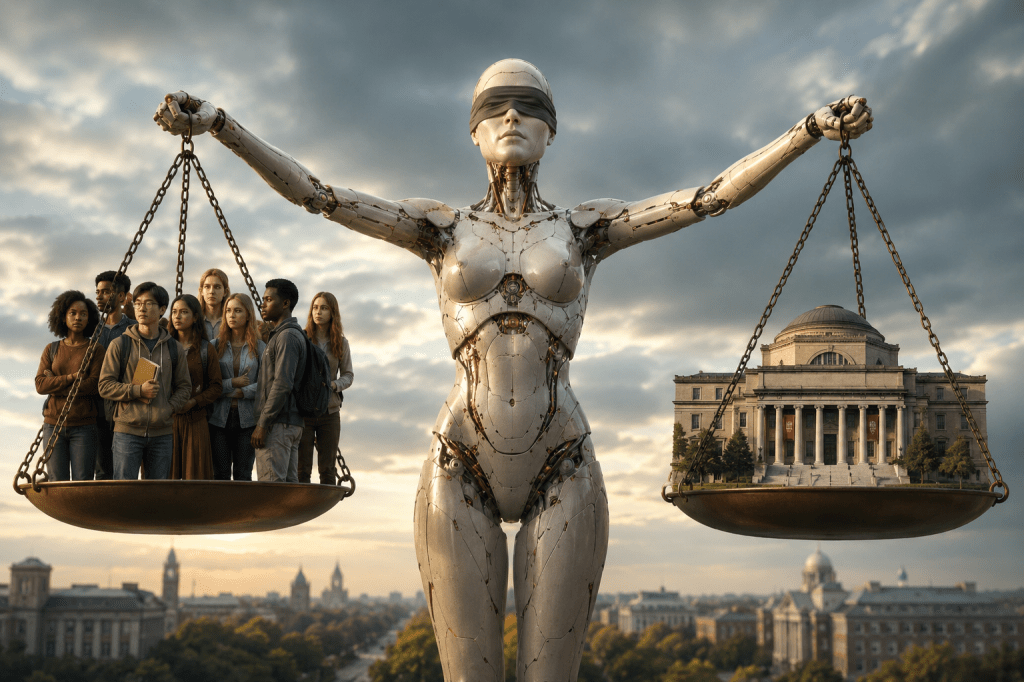
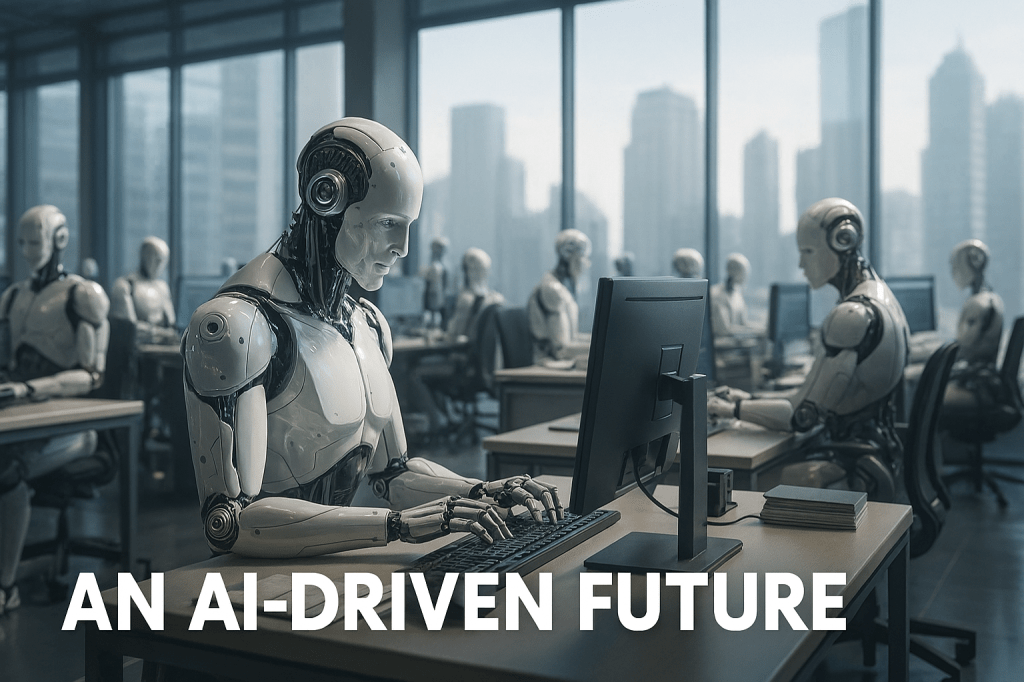
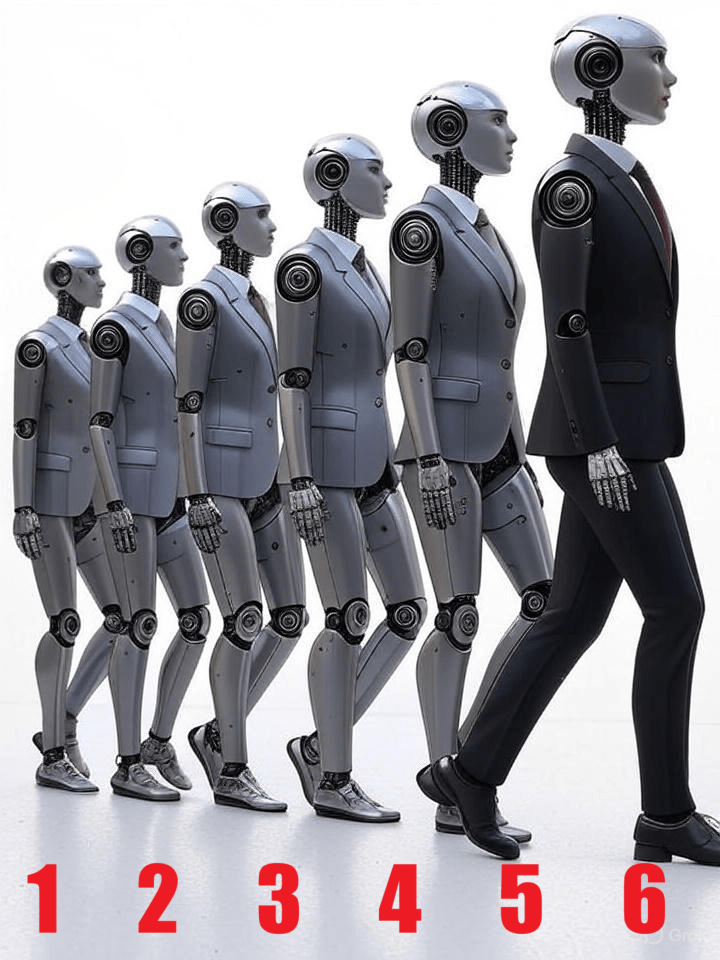
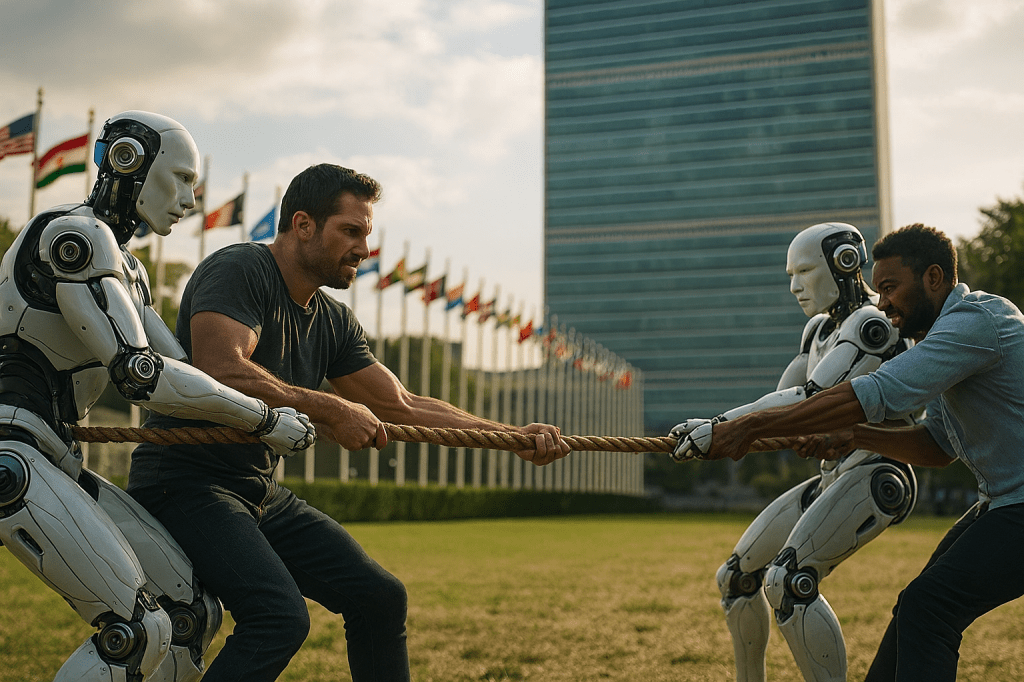
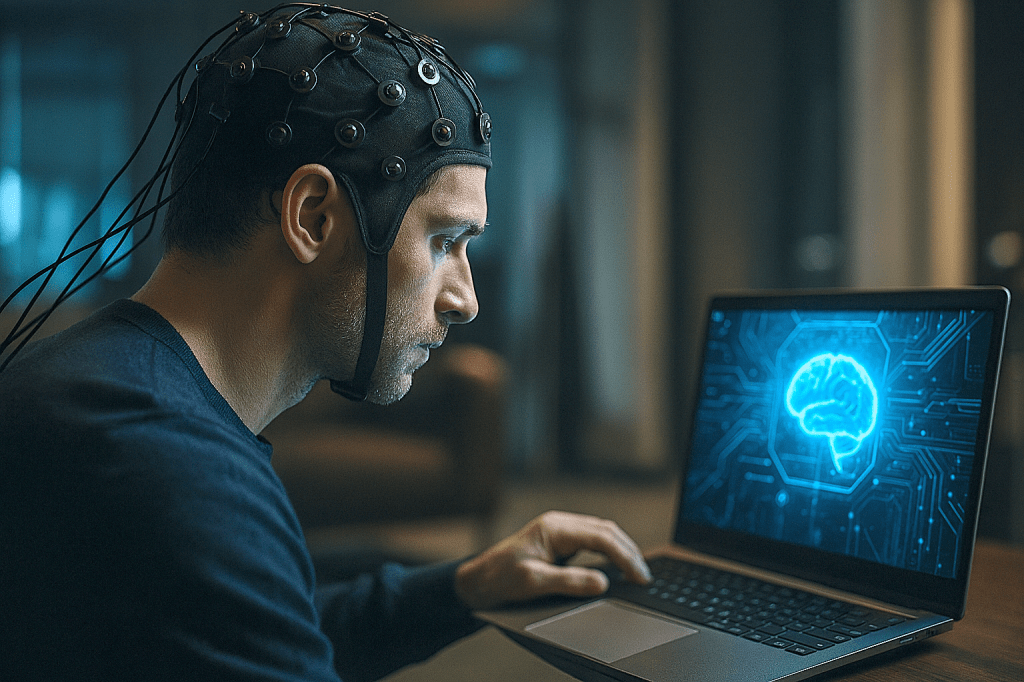
There is a substantial literature on the privatization of U.S. military functions, ranging from radical proposals to fully privatize national defense to more incremental analyses of outsourcing and private military and security companies (PMSCs). Three especially noteworthy writers, taken together, represent a spectrum of ideas about privatizing the U.S. military: Larry J. Sechrest, Thomas C. Bruneau, and Eugenio Cusumano. Each addresses the feasibility, logic, and risks of shifting core military roles to private actors, though from very different ideological and analytical standpoints.
The American post-WWII record is a study in repeated strategic miscalculation. Before World War II, the United States won nearly all the major wars it fought. Since World War II, it has barely won any. The Gulf War in 1991 was arguably a success. Korea was a tough stalemate. And since Korea, there has been Vietnam — America’s most infamous defeat — and Iraq, another major failure. [4] The pattern has been remarkably consistent: US mistakes in Iraq and Afghanistan were the result of a pervasive failure to understand the historical framework within which insurgencies take place, to appreciate the cultural and political factors of other nations and people, and to understand warfare beyond the limited confines of tactics and operations. [1]
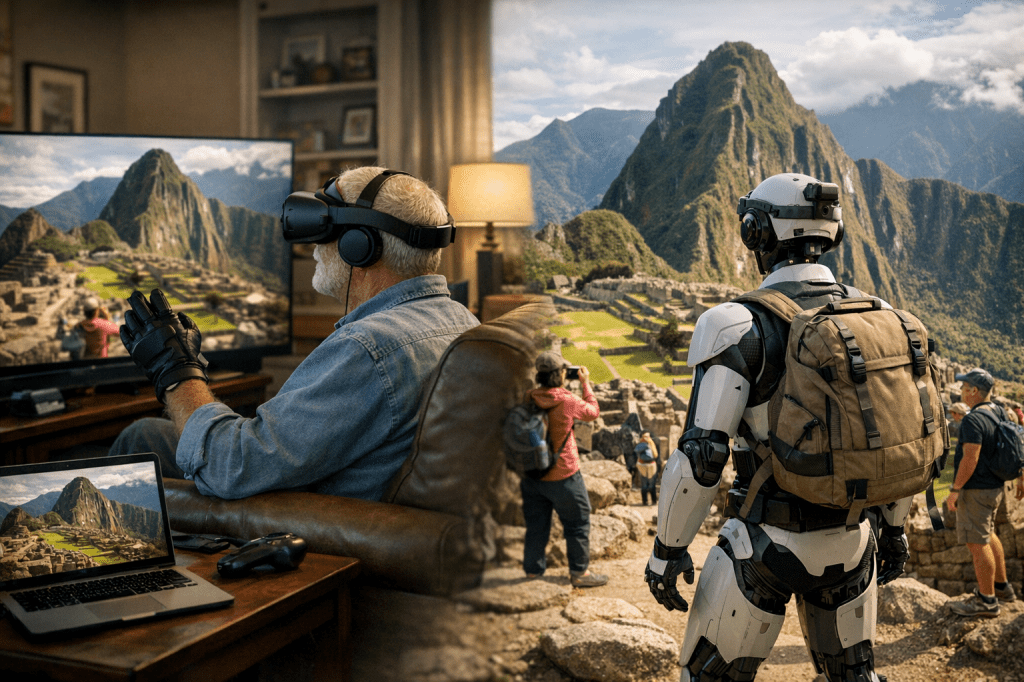
Ankush Choudhary is a technology writer and analyst who, in February 2026, published a long-form essay titled “Digital Twin Tourism: Virtual Travel Experiences for 2025,” which has quickly become a touchstone for thinking about AI-mediated travel and telepresence.[1] Writing at the intersection of computer graphics, networking, and tourism, Choudhary frames “digital twin tourism” as the creation of high-fidelity, dynamic replicas of real-world locations—Machu Picchu, the Louvre, or Tokyo—rendered in real time and accessed from home through immersive interfaces.
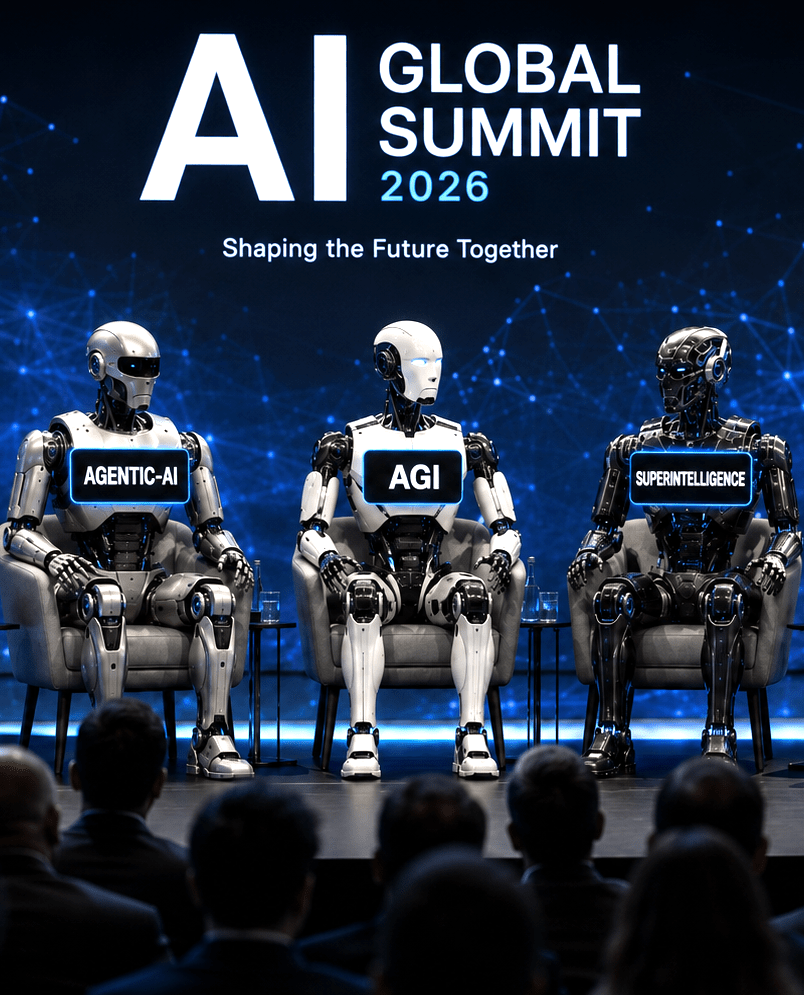
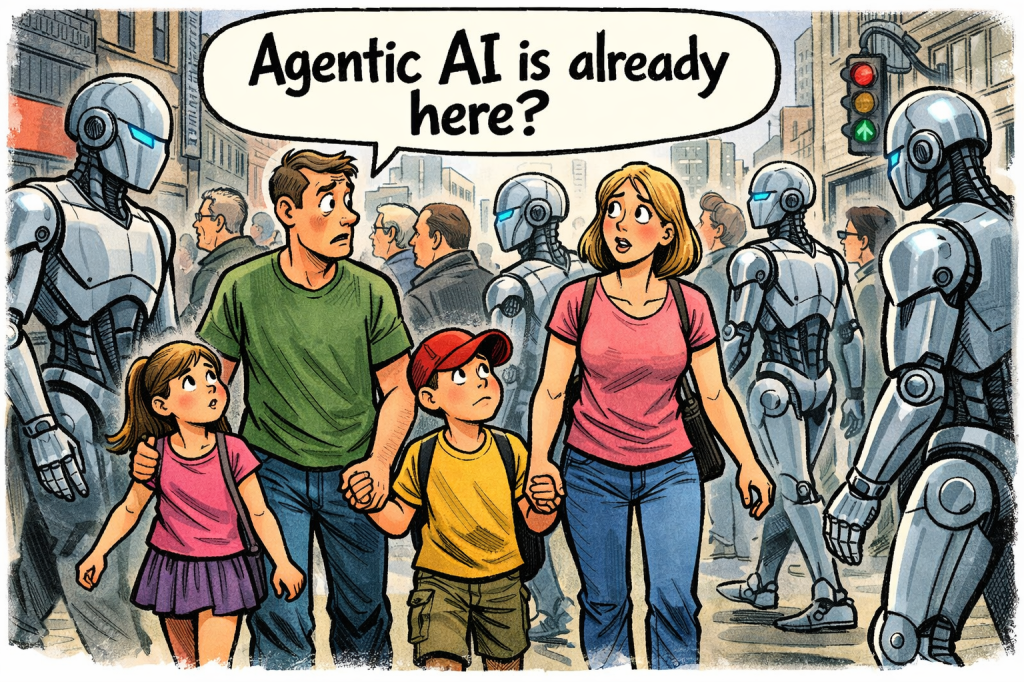
The trajectory from generative to agentic AI marks a fundamental shift from passive content creation to autonomous goal‑pursuit and environmental interaction [1, 3]. Yet agentic AI is not a terminal state. In 2025‑2026, the consensus among analysts, enterprise architects, and academic researchers is that the next evolutionary layers will unfold along three intersecting axes: (i) multi‑agent orchestration, (ii) physical embodiment, and (iii) goal‑setting autonomy. Ultimately, these layers converge toward a longer‑term horizon of artificial general intelligence (AGI) and human‑agent collectives.
Decision 1 – Global governance: By the end of April 2026, will UN member states meaningfully commit to an interoperable global framework for AI governance through the new Global Dialogue on Artificial Intelligence Governance, or allow governance to fragment into competing blocs?
April 2026 is a hinge month for whether AI governance becomes more coherent or more fractured. The United Nations’ Global Dialogue on Artificial Intelligence Governance—mandated by the General Assembly and supported by a joint secretariat across the UN system—has called for written inputs from member states and stakeholders ahead of its first high‑level meeting in mid‑2026.[8,9] Those submissions, due by the end of April, will shape the agenda, priorities, and level of ambition for what could become the closest thing the world has to a shared “operating layer” for AI rules. The decision facing governments is whether to treat this as a serious venue for convergence or as a symbolic forum while real power consolidates in a few regulatory blocs.
There is little question that Donald Trump’s return to the presidency has accelerated a fundamental transformation in how international diplomacy is practiced. Perhaps the most evident outcome of recent years is that the art of diplomacy — traditionally conducted behind the closed doors of high offices — has shifted into the realm of a live political show, with millions of people around the globe following the twists and turns of major international negotiations much like they would follow the new episodes of a captivating television series [7]. The philosophical underpinning of this shift reaches back to 1987, when Trump co-authored The Art of the Deal. In that book, the real estate mogul described his disruptive negotiating method, which consists of thinking big, asking for a lot, and using the media to his advantage [5]. What was once a boardroom philosophy has now become a template for summit diplomacy, and its influence is reverberating from Europe to Asia to Africa [6].
1. Gartner’s 40% prediction for task‑specific agents by 2026
Gartner, a leading technology research and advisory firm, projects that 40% of enterprise applications will be integrated with task‑specific AI agents by the end of 2026, up from less than 5% in 2025.[1,2] The core of this prediction is that today’s embedded “assistants” will rapidly evolve into autonomous, task‑specialized agents that can execute workflows, manage incidents, and resolve support cases without constant human prompting. Gartner reaches this conclusion by combining its long‑running enterprise software market tracking with scenario modeling of AI adoption stages, outlining a five‑step evolution from simple assistants in 2025 to multi‑agent ecosystems by 2029.[1,2] This matters because it effectively time‑stamps a platform shift: if nearly half of enterprise apps contain agents by 2026, then for many people “using software at work” will increasingly mean collaborating with semi‑autonomous systems that anticipate, decide, and act. The prediction signals that the everyday impact of agentic AI will not arrive as a distant AGI moment but as a fast, incremental redesign of the tools people already use—changing job roles, required skills, and expectations of accountability inside organizations.
NVIDIA Corporation is headquartered in Santa Clara, California, and was founded in 1993 by Jensen Huang, Chris Malachowsky, and Curtis Priem. It is a fabless semiconductor company — meaning it designs its chips but outsources manufacturing, primarily to TSMC in Taiwan. Today, with a market capitalization that has surpassed four trillion dollars, NVIDIA stands as one of the most valuable companies in the history of global business.
The Terafab project—Elon Musk’s ambitious joint semiconductor initiative spanning Tesla and SpaceX—has moved rapidly from announcement in March 2026 into an unusually aggressive early execution phase by mid-April, with several concrete developments emerging across hiring, partnerships, supplier outreach, and adjacent chip progress.
Yes, there are K‑12 equivalents to “AI colleges” or “AI‑native universities,” but the language is still unsettled. Most systems don’t yet use a single, formal label; instead you see phrases like “AI‑themed high school,” “AI magnet program,” “AI‑focused curriculum,” or “AI‑embedded education.”1,2,6 In that sense, “AI school” or “AI‑native school” is a fair, accurate shorthand for a small but growing group of K‑12 institutions that treat AI not as an add‑on tool, but as a core design principle for curriculum, pedagogy, and student pathways. These schools sit at the far edge of a broader wave: states issuing AI guidance, districts running pilots, and magnet programs weaving AI into their identity rather than sprinkling it on top.3,5,9,10
Recent work suggests that gender differences in AI anxiety are real but not just about anxiety alone: women tend to report higher AI anxiety and lower positive attitudes, use, and self-rated knowledge, yet the gender gap in attitudes shrinks when anxiety is high, because anxiety itself depresses attitudes for everyone.1 A newer 2026 study adds an important layer by showing that women’s greater skepticism toward AI is also tied to higher perceived risk and greater exposure to AI-related harms, especially when AI’s benefits are uncertain.2
Oil has been the industrial age’s quintessential strategic commodity—dense energy, easily transported, and indispensable for mechanized armies, aviation, shipping, and modern economies.1 As navies converted from coal to oil and airpower became central to warfare, control over oil fields, refineries, and chokepoints translated directly into military capability and geopolitical leverage.1,2 At the same time, oil revenues reshaped state power: they allowed governments to fund patronage networks, buy weapons, and sometimes wage war without broad taxation, feeding what scholars call the “resource curse.”3 Yet the claim that a vast majority of modern wars are “about oil” is too strong. Recent research argues that many famous “oil wars” had multiple drivers—territorial disputes, regime survival, ideology, or regional rivalry—with oil often intensifying stakes rather than serving as the sole or even primary cause.1,4 Still, there is a clear pattern: where oil is abundant or strategically located, it frequently magnifies tensions, shapes war aims, and influences how outside powers intervene.1,2
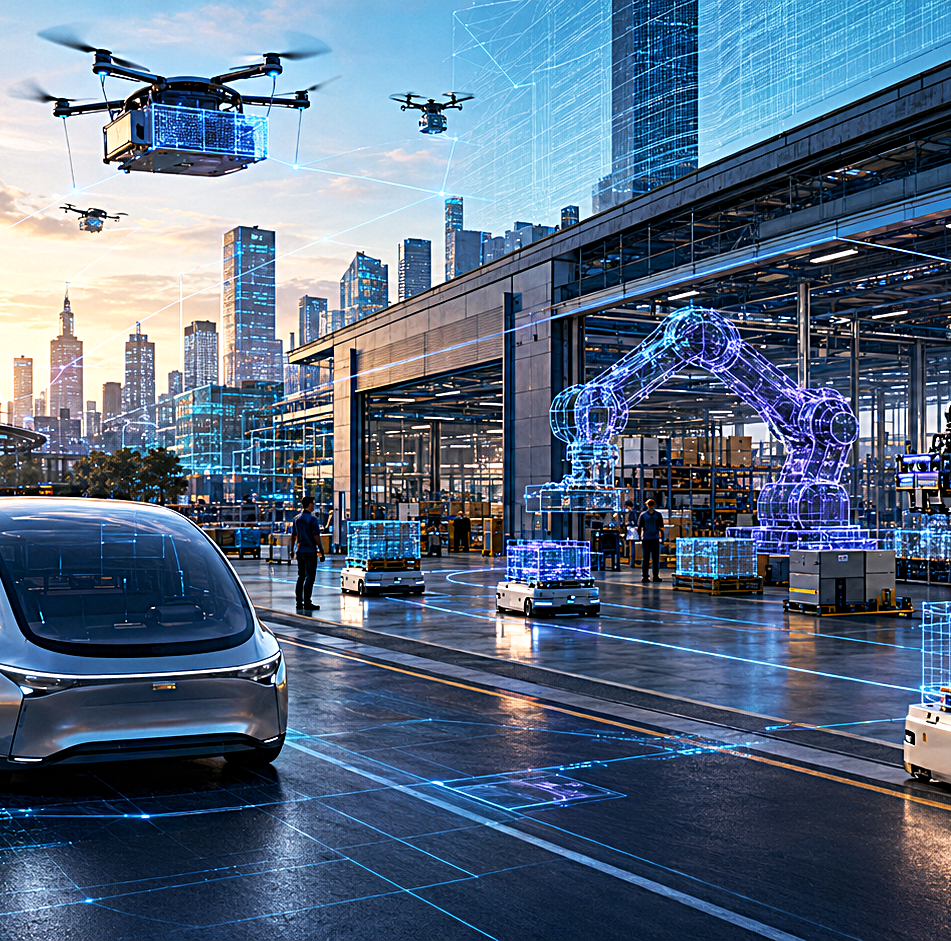
The reality of AI dominated mail and parcel delivery services emerging in 2025–2026 is more nuanced than a sudden AI takeover. We are witnessing a layered, system-wide transformation in which AI becomes the invisible operating system of logistics. The shift is already well underway, but it is unfolding unevenly across different parts of the delivery chain, with some segments (warehouses, routing, tracking) advancing much faster than others (last-mile autonomy, full end-to-end replacement of human labor).
AI colleges pose a serious and growing threat to traditional higher education — but the threat is neither uniform nor immediate. It is best understood as a structural acceleration of pre-existing vulnerabilities in the traditional college model, sharpened by AI-native competitors that are small today but gaining legal legitimacy and marketplace positioning far faster than their predecessors in online education did.
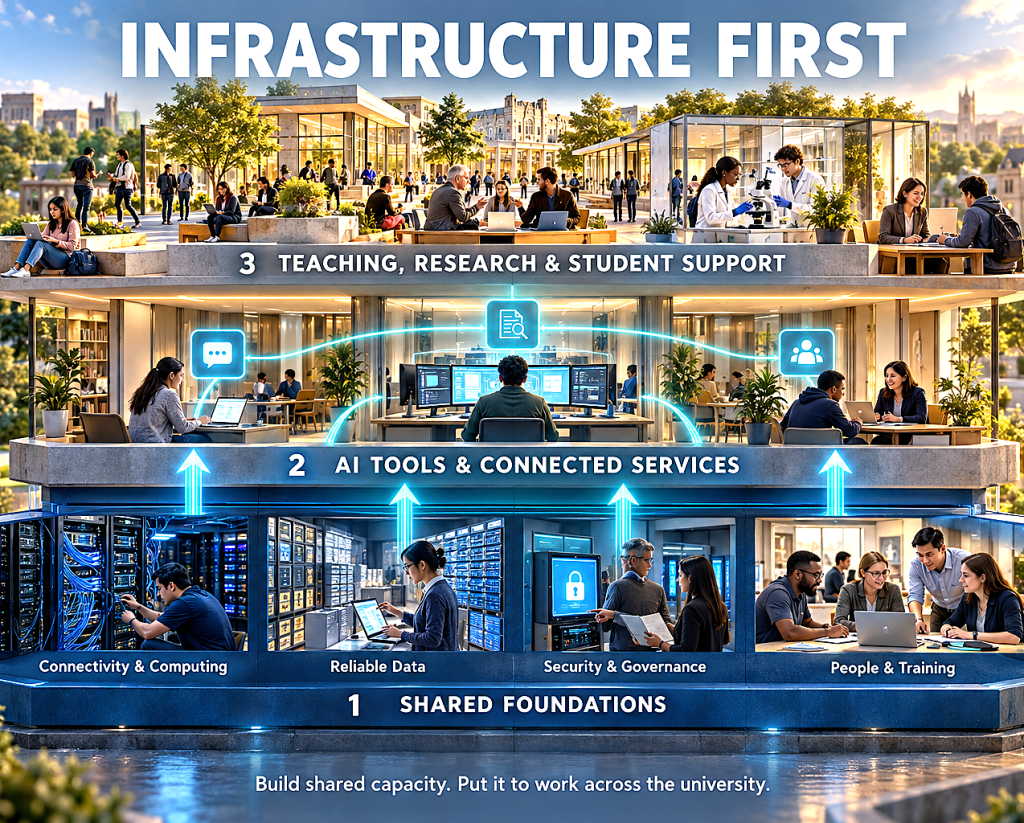
“AI colleges” or “AI‑native universities” are higher‑education institutions built around artificial intelligence not just as a subject of study, but as the core infrastructure for teaching, assessment, and student support. Instead of layering chatbots onto a traditional campus, these institutions use AI tutors, autonomous learning platforms, and mastery‑based progression as the default way students learn, often with flexible pacing, continuous feedback, and heavy alignment to workforce skills.1,2 The idea crystallized in the early‑to‑mid 2020s as generative AI matured and institutions began to imagine “AI‑native” models where every student has a persistent AI assistant and much of the instructional and administrative workflow is automated or co‑run by AI systems.1 By 2024–2025, several organizations started branding themselves as AI‑exclusive or AI‑native universities, offering accredited degrees, low‑cost or scholarship‑backed tuition, and fully online or autonomous learning environments that challenge the assumptions of traditional colleges.2,4,7
Adam Todd: Welcome to Classroom Dynamics,1 the podcast where we unlock the future of education. Hi everybody, I’m your host, Adam Todd. Today we’re heading to Hawai‘i to meet a true changemaker, Gabriel Yanagahara. From the classrooms in Honolulu to statewide workshops impacting thousands of educators, Gabriel is leading a grassroots AI movement in community, creativity, and culture. He’s not just teaching artificial intelligence. He’s empowering students and teachers to shape it. With over 2500 educators trained in programs reaching millions, his work blends cutting edge tech with local relevance and ethical responsibility. Now, I recently met Gabriel at South by Southwest in Austin, Texas,2 after attending his session on AI and I immediately had to have him on this very podcast talking about it at the Logitech Logic Work Lounge.
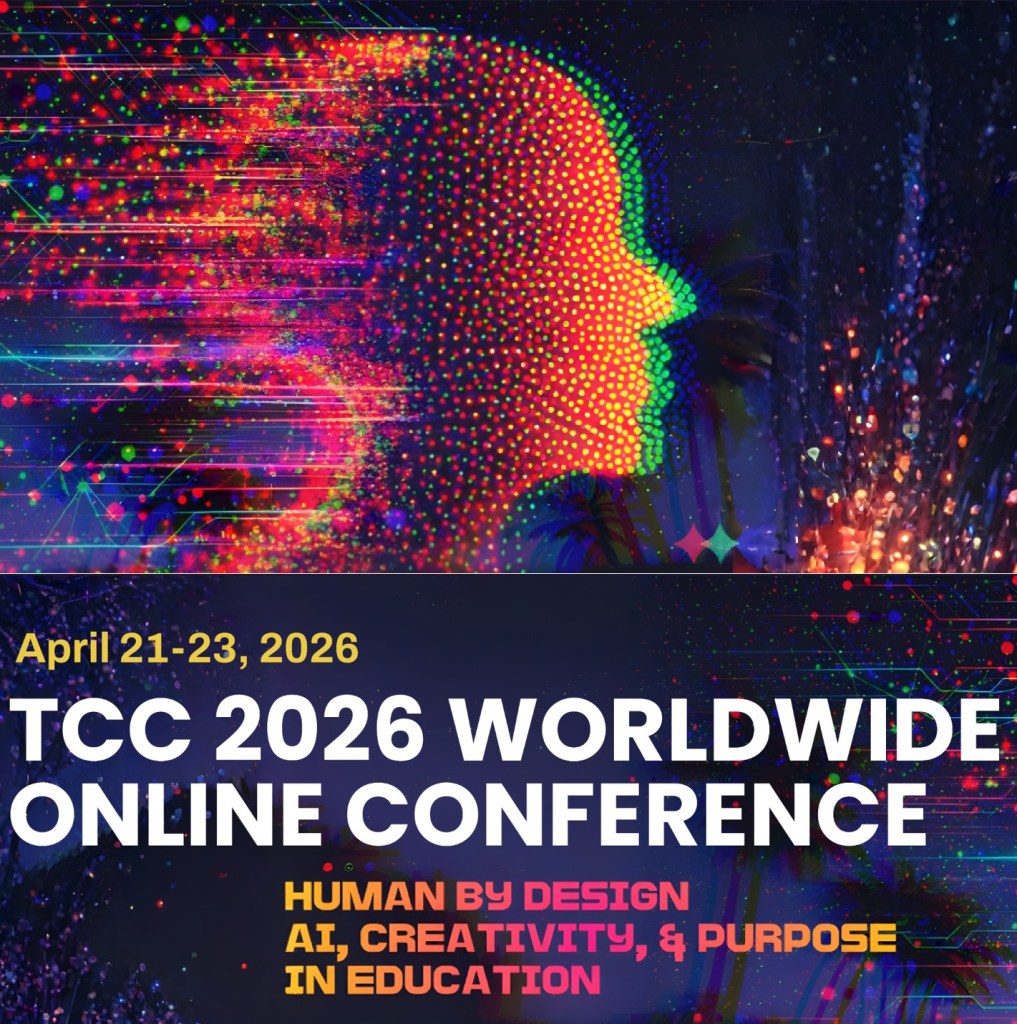
If you have not registered yet, we would love for you to join educators from around the world at the 31st Annual TCC Worldwide Online Conference. This year’s theme, Human By Design, tackles the most pressing questions around AI, creativity, and purposeful education.
Today, April 10, 2026 — Siblings Day — arrives with a haunting irony: for tens of millions of children alive right now, there are no siblings to call. The one-child family, once a curiosity in Western demography or a government mandate in China, has become a defining feature of the modern developed world, and its gravitational pull is spreading outward into middle-income nations with startling velocity.
Image created by Copilot. (The similar image in the sidebar was also created by Copilot.)
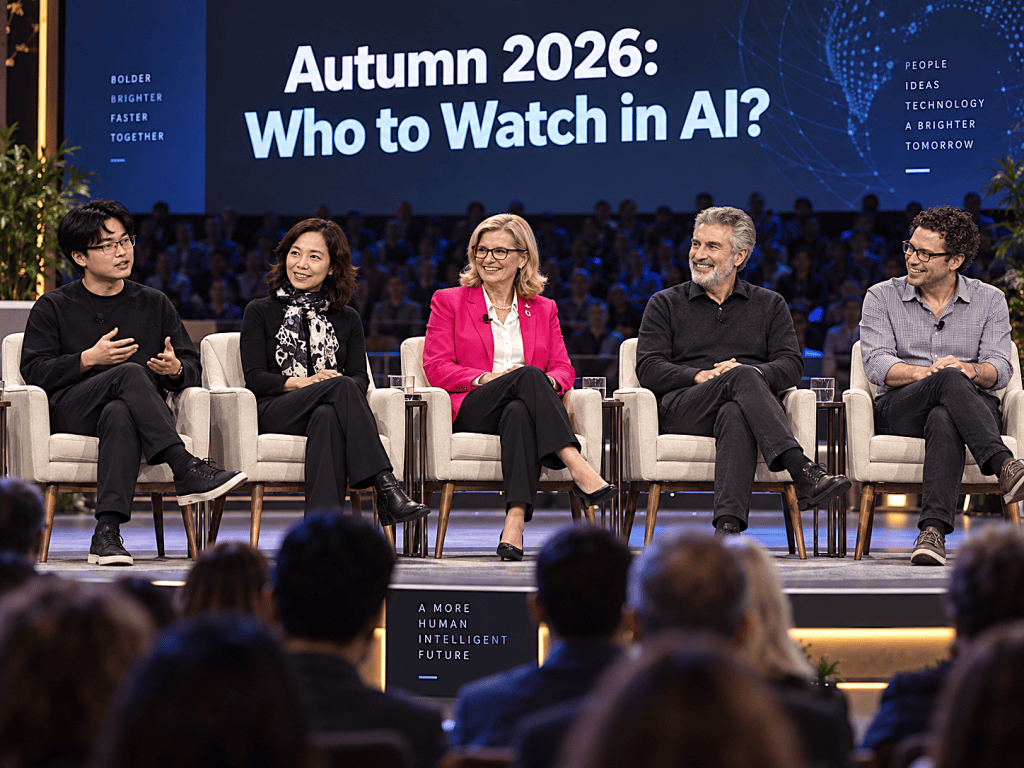
The April 6–9, 2026 HumanX conference at Moscone Center in San Francisco can be read not simply as a gathering of prominent technologists, but as a signal event in the consolidation of an AI-era worldview. Taken together, the remarks of speakers such as Fei-Fei Li, Matt Garman, Andrew Ng, Bret Taylor, Ali Ghodsi, Sarah Guo, Sridhar Ramaswamy, and Al Gore reveal a coherent narrative: AI in 2026 is no longer emerging—it is structuring the next phase of economic, institutional, and human development.
When Donald Trump published The Art of the Deal in 1987 — a memoir and business-advice hybrid ghost-written by journalist Tony Schwartz — few could have predicted that its eleven negotiating principles would one day be road-tested against a geopolitical chokepoint carrying a fifth of the world’s oil supply.1 Yet that is precisely what has unfolded in the spring of 2026, as Trump cycled through threats, deadlines, retreats, and ultimatums in his effort to reopen the Strait of Hormuz after a U.S.-Israeli military campaign against Iran effectively closed it to commercial shipping.2 The episode has galvanized a body of serious scholarship that identifies a direct throughline between Trump’s boardroom instincts and his conduct of international conflict resolution — and has surfaced instructive historical parallels in the careers of past American presidents and world leaders.
The April 7, 2026 cease-fire between the United States and Iran is best understood not as a comprehensive peace agreement but as a narrowly constructed, time-bound de-escalation mechanism centered on the immediate crisis in the Strait of Hormuz. Across multiple contemporaneous reports, the core terms converge on a two-week provisional cease-fire, brokered by Pakistan, under which the United States halts imminent large-scale strikes and Iran agrees to “complete, immediate, and safe” reopening of the Strait of Hormuz and safe passage for shipping.1-3
To have a real shot in 2028, Democrats need to start from a sober account of why Trump’s power has grown rather than treating it as a temporary aberration or as purely a story about prejudice. Trump’s 2024 coalition was not only large but more racially and ethnically diverse than in 2016 or 2020, with measurable gains among Hispanic and Black voters, especially men, while retaining strong support among noncollege and rural voters.1,3 His strength rests on three intertwined pillars: a durable identification with “forgotten” working‑class communities, especially outside major metros; a sense that he channels anger at economic and cultural elites; and a style that fits what researchers describe as “authoritarian populism”—a leader claiming to embody “the people,” promising order and national restoration, and attacking institutions that constrain him.4,9,14 If Democrats misdiagnose this as a fringe phenomenon or as purely a matter of disinformation, they will keep designing campaigns for the electorate they wish existed rather than the one that actually turned out in 2024.
The phrases “shadow ruler” and “shadow government” are already circulating in mainstream political discourse, though they have been applied so far primarily to figures operating within Trump’s current administration rather than to Trump himself as a future out-of-office actor. ProPublica investigative reporter Andy Kroll has used the precise term “shadow president” to describe Russell Vought, Trump’s director of the Office of Management and Budget, characterizing him as “basically a second commander-in-chief, a shadow president” within the second Trump term.1Brewminate, drawing on that reporting, extended the concept further, describing how Vought has built what some in Washington describe as a “government-in-waiting,” a network of conservative think tanks, legal operatives, and former staffers who now serve as the brain trust for Trump’s second term.2 If such a structure already exists around Trump while he is in office, the question of whether Trump himself could assume a comparable shadow role after January 2029 is not merely hypothetical — it follows a logic already visible in the architecture of MAGA governance.
Of all the figures listed in the 5 April 2026 ETC Journal ranking of 2028 Democratic prospects, Andy Beshear may be the most consequential dark horse that most voters outside Kentucky have yet to fully reckon with.1 He is ranked sixth in the ETC Journal field — well below Gavin Newsom and Kamala Harris — yet the case for his candidacy is surprisingly robust when examined against recent reporting and polling.
Projecting 2028 primaries this far out is inherently speculative, but there is already a surprisingly rich ecosystem of reporting, early polling and “invisible primary” maneuvering to work with. What follows is a rank-ordered snapshot as of 5 April 2026, grounded in Ballotpedia’s lists of potential contenders and cross‑checked against recent, non‑paywalled analyses of who appears best positioned inside each party. Be sure to confirm any specific claims, especially about polling and offices held, with up‑to‑date trusted sources as the cycle evolves.
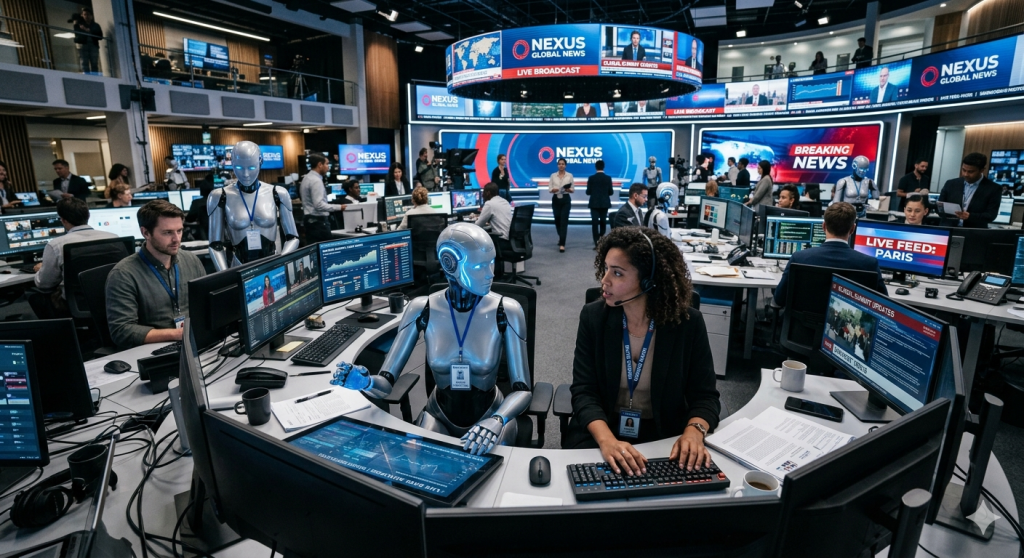
AI is changing journalism quickly, but the strongest evidence from 2025–2026 points to augmentation, workflow redesign, and selective automation rather than wholesale replacement of human reporters.1-3 The clearest pattern is that AI is taking over repetitive, structured, or high-volume tasks while journalists retain responsibility for verification, judgment, interviews, and accountability.1,4,5
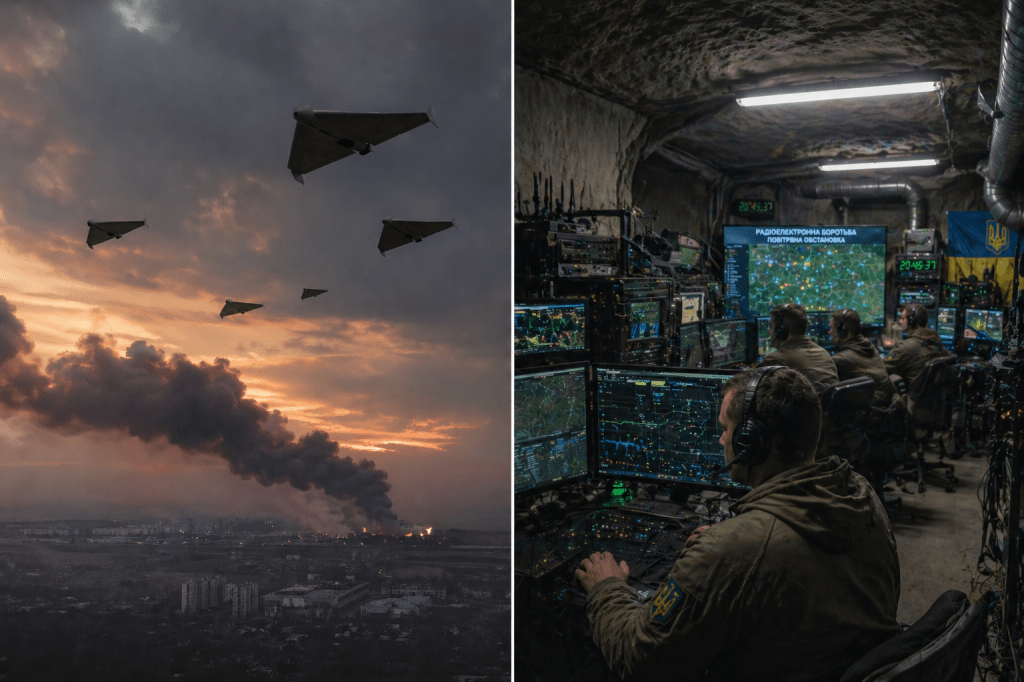
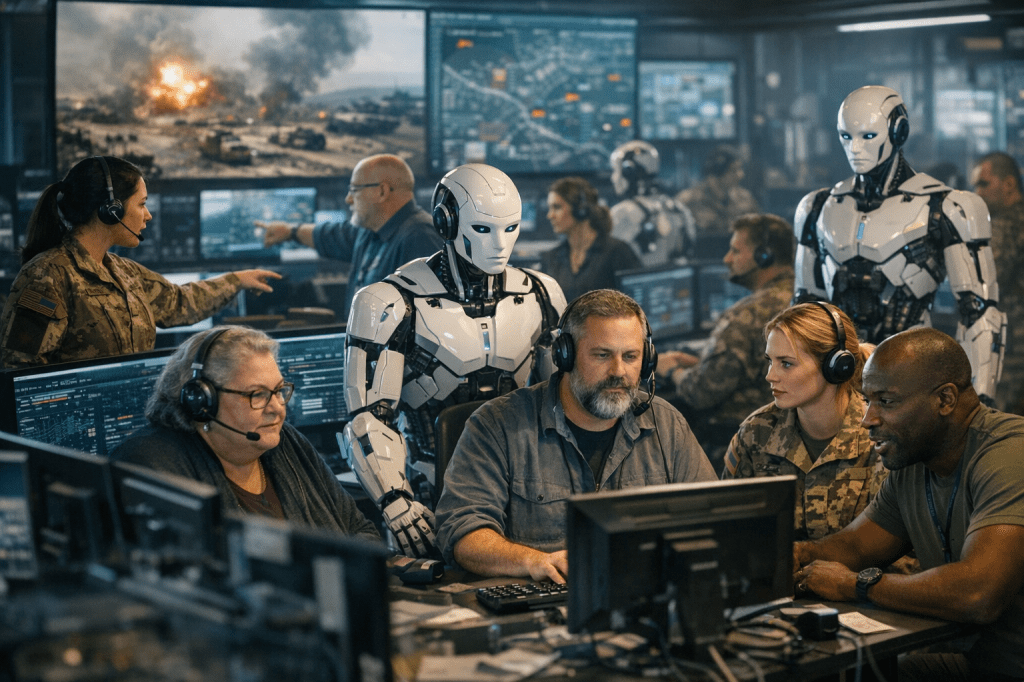
Considering the AI-dominated direction that modern warfare is taking on a global scale, military leaders and heads of state are transforming their expectations of future soldiers. The deep reality is unsettling and historically significant: militaries are not merely updating training or adding new technical specialties; they are beginning to redefine the ontology of the “soldier” itself. Across doctrine, training pipelines, force structure, and civil-military boundaries, evidence from 2024–2026 suggests the early stages of a systemic transformation comparable to the shift from industrial warfare to nuclear-era deterrence—except this time the change is diffused, software-driven, and deeply entangled with civilian technological ecosystems.
In April 2026, artificial intelligence is no longer a peripheral tool in U.S. marketing—it is reshaping the profession at a structural level, altering not only how work is done but what “marketing expertise” means. Across industries, executives increasingly describe marketing as an “AI-first” function at a turning point, where human labor is being reorganized around intelligent systems rather than merely assisted by them.1 This shift is visible in both organizational strategy and day-to-day workflows: companies such as Apple are now appointing senior leaders specifically to oversee AI-driven marketing transformation, signaling that AI is not a niche capability but a core strategic domain.2 At the same time, major advertising firms like WPP are restructuring and cutting jobs explicitly to become “AI-enabled businesses,” underscoring that AI adoption is directly tied to workforce redesign.3
International organizations such as the OECD, UNESCO, the World Bank, and EDUCAUSE have produced a steady stream of reports on artificial intelligence in education over the past several years, yet their analyses share a strikingly consistent institutional framing. Across these bodies, AI is conceptualized primarily as a tool for teachers, schools, and education systems, with attention focused on pedagogical integration, governance, ethics, and institutional readiness. The OECD’s Digital Education Outlook 2026, for example, devotes extensive attention to AI as a tutor, partner, or assistant within formal instructional settings, while treating student use outside school largely as a risk to be managed rather than a learning frontier to be understood.1
Natalie Nakase stands as a transformative figure in professional basketball, currently serving as the inaugural head coach of the Golden State Valkyries and the first Asian American head coach in WNBA history.1,7 Her journey began in Orange County, California, where she was raised in a basketball-centric household by her parents, Gary and Debra Nakase, alongside two older sisters.1,8 Under her father’s analytical guidance, she developed a high basketball IQ and a “joyfully relentless” work ethic that defined her career as a 5-foot-2 point guard at Marina High School, where she was named the 1998 Orange County Player of the Year by both the Los Angeles Times and the Orange County Register.7,8
Golden State Valkyries Head Coach Natalie Nakase, 14 Sep 2025, at Target Center in Minneapolis, Minnesota. Photo by John Mac.
As of late-March 2026, the most effective prompt-construction strategies for minimizing hallucinations in chatbots converge on a clear principle: hallucinations are not random errors but predictable responses to ambiguity, missing constraints, or weak grounding, and therefore can be significantly reduced through structured, explicit, and evidence-oriented prompting. A consistent finding across recent research is that prompt specificity and structure are the single most important levers. Vague prompts increase hallucination risk because the model fills in missing details with assumptions, whereas precise, well-scoped instructions constrain the model’s output space and reduce fabrication.1,2 Empirical studies confirm that improved prompt structure alone can substantially lower hallucination rates, with surveys noting that structured prompting is one of the most reliable mitigation techniques across domains.3
Introduction: What are the possible ways the war in Iran could escalate into a second Vietnam? This article presents five scenarios explaining how this catastrophe could occur. Hopefully, these previews will provide insights into how escalation could be avoided.
The late‑March 2026 build‑up of U.S. ground forces around Iran is clearly designed to give Washington options beyond the ongoing air and naval campaign, with elements of the 82nd Airborne Division and at least two Marine Expeditionary Units moving toward the region, alongside the USS Abraham Lincoln carrier strike group and extensive air assets already engaged in Operation Epic Fury.1,2 This comes after weeks of intensive strikes on more than 9,000 targets across Iran, including IRGC headquarters, missile and drone facilities, and naval assets, and amid Iranian missile and drone retaliation against Israel, Gulf states, and U.S. bases, as well as effective closure of the Strait of Hormuz to most commercial shipping.1,2,6 Open‑source assessments describe this as the largest U.S. deployment to the area since the Iraq War, but still far short of the hundreds of thousands of troops seen in 1991 and 2003.1,3,4
Introduction: Artificial intelligence is not merely a new instrument slotted into a pre-existing framework for how we come to know things. Epistemology, the branch of philosophy concerned with the nature, sources, and limits of knowledge, has historically organized itself around a set of working assumptions: that knowledge is something possessed by an individual human knower; that its justification depends on rational deliberation, sensory experience, or both; and that the methods by which it is validated — empiricism, falsifiability, peer review — are recognizably human-centered processes. AI disrupts all three of these pillars simultaneously. It generates knowledge-like outputs through processes that are statistically distributed, opaque, and, in the case of deep learning systems, largely inexplicable even to their designers. The question of who counts as a “knower” and what counts as a legitimate “epistemic operation” has suddenly become open in ways it has not been since the Scientific Revolution.
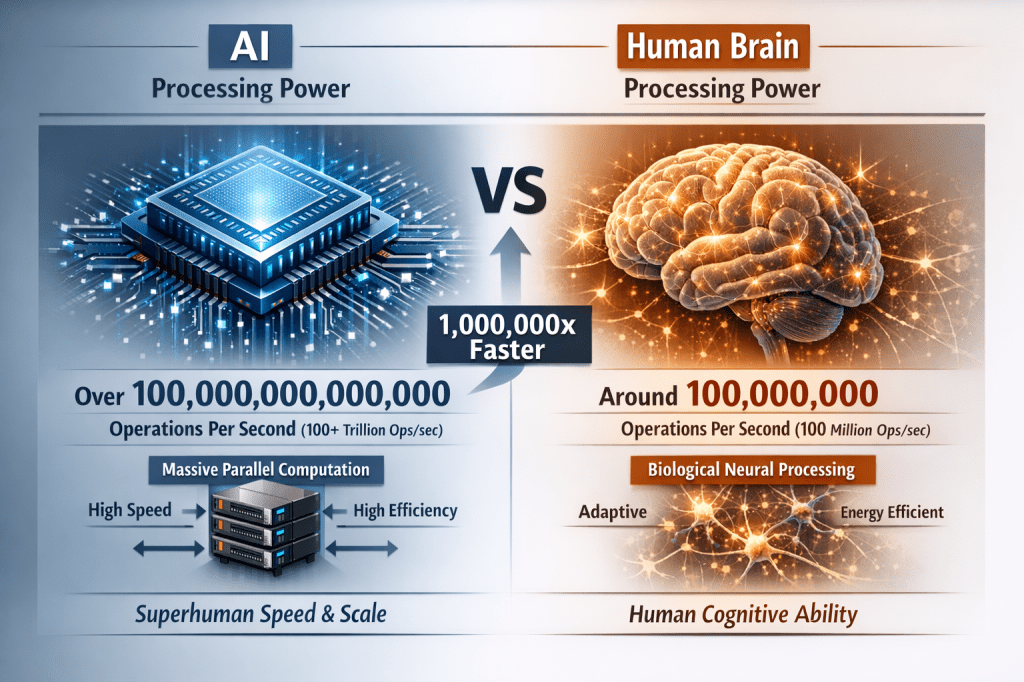
Processing massive amounts of data at extraordinary speed and detecting patterns beyond human perception is indeed one of the core power asymmetries between AI and humans, but current research suggests it is only one part of a broader cluster of advantages that, together, constitute AI’s real “power profile.” Contemporary literature consistently frames AI not as superior in a single dimension, but as dominant across a system of capabilities: speed, scale, consistency, and integration.1,2
Introduction: The article “The Anti-Woke Perspective: Equality vs. Equity” (ETC Journal, 27 March 2026) argues that “woke” equity politics (1) replaces equality with unfair “equal outcomes,” (2) exaggerates or fabricates systemic racism/sexism in a mostly fair liberal order, (3) politicizes education by smuggling ideology into schools, and (4) relies on censorious “cancel culture” that suppresses free speech.1 This pro-woke article serves as a response, focusing on four key anti-woke arguments.
[GROK] Christopher F. Rufo, a filmmaker turned senior fellow at the Manhattan Institute and a leading figure in exposing critical race theory and diversity, equity, and inclusion (DEI) programs in American institutions, published the essay “DEI and the ‘Lost Generation’” in December 2025, in which he dissects how woke-driven policies have engineered a systematic purge of white millennial men from elite sectors like media, academia, publishing, and entertainment during the “Great Awokening” of 2014–2024. Rufo traces the roots of this discrimination to mid-1960s affirmative action, which he describes as “a euphemism for anti-white-male discrimination,” and demonstrates its acceleration under woke frameworks through stark statistical declines, such as white men falling from 48 percent to 11.9 percent of lower-level TV writers between 2011 and 2024 or comprising just 7.7 percent of Los Angeles Times internships since 2020.
The United States does differ from many other affluent countries in how it structures academic and vocational pathways, but the story is less “no tracking versus tracking” and more “fragmented, late, and unequal pathways versus coherent, early, and supported ones.”16,23,29 The hunch that broad, high-quality vocational and technical channels could improve both equity and economic outcomes is widely shared among comparative education and labor scholars, though they also warn that poorly designed tracking can deepen racial and class stratification.11,17,29
The Nature editorial on “AI scientists” (25 March 2026) frames its central claim as a new inflection point: once AI systems can autonomously generate hypotheses, design experiments and interpret results, institutions, funders and publishers must rethink how research is organized, credited and governed. Yet almost every substantive concern it raises—automation of discovery, blurred authorship, accountability for errors, inequities in access to powerful models, and the lag of governance behind technical capability—has already been articulated in detail over the past two years in other venues. The piece reads less like a conceptual breakthrough and more like a compact synthesis of an emerging consensus that has been forming since at least 2023–2024 about “agentic” AI in science and the institutional reforms it demands.1-3
Overview: Work at the intersection of artificial intelligence and DNA now spans fundamental genomics, genome editing, clinical translation, and ethics, and a small set of authors recur across the most influential, recent contributions. Anshul Kundaje and collaborators such as Katherine S. Pollard and Jian Ma are central voices on using deep learning to decode regulatory DNA and molecular biology more broadly, articulating both technical advances and conceptual roadmaps for AI in molecular biology.5 Chong Wu and Peng Wei have emerged as leading figures in DNA foundation language models, benchmarking and comparing architectures that treat DNA as a “language” and setting standards for how such models should be evaluated and selected for real genomic tasks.6,10
Many observers argue that beyond lived experience, cultural specificity, and deep emotions, AI writing also lacks genuine understanding, embodied perception, moral agency, long-term memory of a life, and a stable point of view anchored in an actual self, which collectively shape the narrative texture of human prose.1-4 At the same time, a growing technical and literary discussion claims that with sufficiently rich “backstories” and conditioning, large language models can be trained into relatively coherent personas that imitate many of these attributes well enough for some readers and researchers to treat them as if they had inner lives.3-7
[Note: An earlier version of this article was accidentally published before we had a chance to review and edit it. We apologize for any inconvenience this might have caused. -js]
James A. Michener: The Architect of Collaborative Epic Fiction
Few novelists of the twentieth century achieved the commercial and cultural reach of James Albert Michener (1907–1997). Born a foundling in Doylestown, Pennsylvania, and raised in Quaker poverty, he went on to sell an estimated 75 million copies of his books worldwide, winning a Pulitzer Prize for his debut story collection Tales of the South Pacific (1947) and producing a string of decade-defining blockbusters—Hawaii, The Source, Centennial, Chesapeake, The Covenant, Poland, and Texas, among many others—each an immersive survey of a region’s geology, history, culture, and people across sweeping time frames.1,2 His novels were usually massive in scope, several running more than a thousand pages, and each was grounded in exhaustive research that could take years to complete.1
1. Stephen Marche: The Literary Curator and the Hip-Hop Producer
Stephen Marche is a Canadian novelist and essayist whose byline has appeared in The New Yorker, The New York Times, The Atlantic, and Esquire, among others. His books include The Next Civil War, a nonfiction work that required him to travel across the United States conducting hundreds of interviews, and On Writing and Failure, a candid essay-length meditation on the peculiar perseverance demanded by the literary life. Writing is not a side project for Marche but the whole of his professional existence — his livelihood, his method of inquiry, and his primary mode of contributing to public life. He has described himself as constitutionally incapable of coherence as a person, a writer whose projects are so radically different from one another that no single image of him holds still for long.8
Research on AI systems that can act as cross-lingual chatbots—able to converse in one language while seamlessly drawing on sources in many others—has accelerated sharply since 2023, especially under the banner of “multilingual” or “cross-lingual” large language models (LLMs). Recent surveys of multilingual LLMs (MLLMs) describe a clear shift from traditional machine translation pipelines toward unified models that jointly handle understanding, translation, and generation across dozens or even hundreds of languages, with explicit goals of knowledge transfer from high‑resource languages like English to lower‑resource ones.4,5,6 These surveys emphasize that the same architectures powering English‑centric chatbots are now being trained or adapted on multilingual corpora, making it technically feasible for an English conversation to query, summarize, and reason over content originally written in Chinese, Japanese, German, and many other languages—at least in controlled settings.4,5,6
Introduction: In the last couple of months, I’ve noticed what appears to be a startling improvement in the quality of prose generated by chatbots in their free tiers. To determine if I’m hallucinating, I asked Perplexity to look into what appears to be an exponential refinement in style. -js
AI-generated prose in free-tier chatbots has become markedly more fluent, versatile, and “human-sounding” since late 2022, but the evidence points to rapid, stepwise improvement rather than clean exponential growth, with important ceilings and distortions that become visible as soon as you look past surface polish.1,4,6,7,17,20 Your sense that something has changed in just the last few months is consistent with the pattern researchers are now documenting: frequent model upgrades, better alignment and instruction-tuning, and widespread human-in-the-loop workflows have collectively raised average output quality and blurred the line between AI-assisted and purely human prose in everyday settings, even though true originality, voice, and long-form coherence remain recognizably human strengths.4,5,13,14,17,20
To understand how agentic AI and the emerging prospect of AGI will reshape developmental models of human intelligence, one must first grasp what distinguishes these systems from the generative AI that has already become familiar. Generative AI — the kind that produces text, images, and code in response to prompts — is fundamentally reactive. It generates outputs but does not pursue goals across time, manage multi-step reasoning autonomously, or adapt its behavior based on consequences. Agentic AI, by contrast, refers to systems that can autonomously achieve specific goals with limited supervision. Unlike traditional AI models, agentic AI demonstrates autonomy, goal-driven behavior, and adaptability. It builds on generative AI capabilities but extends beyond content creation to solve complex, multi-step problems through reasoning, planning, and tool use.(ScienceDirect) AGI — Artificial General Intelligence — extends this concept further still, referring to a hypothetical but increasingly plausible system capable of matching or exceeding human cognitive performance across the full range of intellectual domains without task-specific training.
Multiple countries are actively developing what can reasonably be described as “robot tanks,” more formally called unmanned ground combat vehicles (UGCVs) or heavily armed unmanned ground vehicles (UGVs). What is striking in 2024–2026 is not just experimentation, but early operational deployment, especially in the Russia–Ukraine war, which has become the first large-scale laboratory for robotic ground warfare.
DNI Tulsi Gabbard’s opening remarks present a single overarching thesis: the United States faces a rapidly evolving, multi‑domain threat environment in which homeland security, transnational crime, terrorism, state adversaries, cyber operations, and emerging technologies are converging in ways that demand vigilance, coordination, and sustained national resolve. She frames the intelligence community’s assessment as non‑political and rooted in statutory duty, emphasizing that the briefing reflects analytic judgments rather than personal opinion.
On March 18, 2026, Director of National Intelligence Tulsi Gabbard delivered opening remarks at a Senate Select Committee on Intelligence (SSCI) hearing for the Annual Threat Assessment of the U.S. Intelligence Community. The opening statement1 as delivered is below.
Jensen Huang’s GTC2026 keynote framed “physical AI” and robotics not as a side bet but as the next multi‑trillion‑dollar wave of the AI economy, continuous with today’s datacenters rather than a separate field.1,4 In both NVIDIA’s own recap and detailed press coverage, he cast robots, autonomous vehicles, and industrial automation as the natural endpoint of an “AI factory” stack where gigawatt‑scale infrastructure produces models that flow into embodied systems, arguing that the next gold rush after digital agents will be robots and other “physical AI” burning even more data and compute.3,4,6 This is less about a new technical thesis than a macro‑industrial one: embodied AI is presented as an infrastructure market similar in scale and inevitability to cloud and GPUs, with NVIDIA positioning itself as the full‑stack vendor from energy to humanoid controllers. In that sense, Huang’s message differs from classic robotics talks by making physical AI primarily an inference and datacenter story, with robots as endpoints of a vertically integrated pipeline rather than standalone machines.3,4
AI inference chips sit at the center of a major shift in how artificial intelligence is actually used—and that shift explains why they dominated Jensen Huang’s keynote at NVIDIA’s GTC2026 and why they now anchor the company’s strategy.
“The Emerging AI‑First University Paradigm” (ETC Journal, 16 March 2026) makes a compelling case that Unity Environmental University, Ohio State University, the University of Washington, CUNY, and SUNY collectively sketch a new “AI-first” template for higher education — one in which AI is treated as a design principle rather than a peripheral tool, structures are reconfigured around AI’s capabilities, and ethics and equity are foregrounded as conditions of scale.¹ The five institutions do represent a meaningful advance beyond the typical university’s reactive, policy-memo approach to generative AI. Yet, when measured against what Thomas Kuhn understood as a genuine paradigm shift — a revolutionary displacement of the organizing assumptions, methods, and purposes of an entire field — these examples fall well short. They represent, rather, an intensification of one pole within the existing paradigm: the adoption-and-adaptation pole. The deeper anomaly AI poses to higher education — the radical destabilization of what universities are for, and of the three founding pillars on which they rest — remains largely unaddressed.
Unity Environmental University, Ohio State University, University of Washington, City University of New York, and the State University of New York, taken together, sketch the salient features of an emerging AI‑first university paradigm. First, AI is treated as a design principle and strategic core, not a peripheral technology: Unity codifies AI‑First Design Principles,¹ Ohio State builds an AI‑first educational environment,³ UW adopts an AI‑first institutional strategy,⁸ CUNY envisions human‑AI powered education,⁹ and SUNY embeds AI into system‑wide policy and infrastructure.¹¹ Second, AI‑first universities reconfigure structures—degrees, faculty hiring, governance, and system‑level coordination—around AI’s capabilities and risks, rather than trying to fit AI into legacy forms.
OpenClaw is a relatively new example of what researchers and developers call agentic AI—software that does not simply respond to prompts but can observe, reason, and act autonomously on a user’s behalf. The project began in late 2025 as an open-source experiment by Austrian developer Peter Steinberger and quickly grew into one of the most visible autonomous-agent frameworks in 2026.¹ OpenClaw is distributed under an MIT open-source license and is designed to run locally on a user’s computer while connecting to external large language models such as GPT, Claude, or open-source models.¹
Conference passes have sold out, but you can still participate in person with an Exhibits Only pass (use code GTC26-20 for 20% off) or virtually [free].
NVIDIA GTC is the premier global AI conference, where developers, researchers, and business leaders come together to explore the next wave of AI innovation. From physical AI and AI factories to agentic AI and inference, GTC 2026 will showcase the breakthroughs shaping every industry. The conference venues are spread throughout downtown San Jose. For inspiring sessions, be part of the unique GTC experience.
The ETC Journal article “AI-Native Operating Systems: From Procedural to Intent-Based to Ambient” (13 March 2026) opens with a brisk diagnosis of where personal computing has been stuck: for three decades, users have had to navigate windows, files, and menus, actively directing machines step by step. The article argues that a growing number of technologists now believe the operating system itself may be on the verge of a fundamental transformation — one in which AI agents interpret human intentions and orchestrate digital actions automatically, rather than passively organizing applications and hardware as they do today. What the article calls the third and most radical pathway — ambient computing — is the destination where this trajectory ultimately leads: a world in which the operating system dissolves into a distributed intelligence layer spanning multiple devices and cloud services, and a person’s AI assistant manages communications, schedules events, and retrieves information regardless of which device is currently being used.¹ The following four articles expand on the idea of ambient computing.
For more than three decades, the personal-computer operating system has been dominated by a familiar paradigm: the graphical desktop. Systems such as Microsoft Windows and macOS organize computing around icons, windows, files, and applications. The user launches programs, manipulates menus, and manually coordinates tasks between software tools. Beneath this interface, the operating system manages memory, hardware resources, and processes, but the overall architecture remains rooted in a conceptual model that dates to the late twentieth century. That model assumes that humans must actively direct computers step by step, selecting applications and instructing them how to perform tasks.
The idea of an AI-driven tax system that eliminates the need for individuals to file returns is not merely speculative; it is actively being explored by governments, researchers, and private companies. However, as of 2026, most efforts are focused on partial automation—automating compliance, enforcement, and preparation—rather than replacing the entire filing structure. Tax administrations around the world have been integrating machine learning and advanced analytics into their operations, primarily to detect fraud, streamline workflows, and improve taxpayer services. An OECD survey found that 29 of 38 member countries already deploy AI in their tax administrations, using it to identify patterns of tax evasion, automate routine case processing, and differentiate simple filings that can be handled automatically from complex cases requiring human judgment.¹ These deployments represent the early infrastructure of a future system in which tax authorities already possess most of the necessary data and can pre-compute liabilities without taxpayers filling out forms themselves.
Autonomous driving in early 2026 sits in a strange middle ground—no longer a sci‑fi promise, but still far from ubiquitous. In multiple U.S. and Chinese cities, you can already hail a driverless robotaxi or see a Class 8 truck moving freight with no one in the cab, yet these services remain tightly geofenced, heavily supervised, and politically fragile. Waymo now delivers on the order of 250,000 paid robotaxi rides per week across several U.S. cities, making it the clear U.S. leader in commercial Level 4 robotaxis, while global weekly robotaxi rides have climbed into the hundreds of thousands according to industry surveys tracking more than 700,000 fully autonomous rides per week worldwide.1,2,3 In parallel, China’s Baidu Apollo Go has matched or exceeded Waymo’s scale, also reaching roughly 250,000 weekly rides and more than 140 million driverless miles, underscoring how quickly Chinese robotaxi operators have moved under more centralized regulatory regimes.4,5
The history of technology is not written primarily by the powerful. It is written by the restless. Steve Jobs and Steve Wozniak assembled the Apple I in a California garage. Bill Gates and Paul Allen wrote their BASIC interpreter in a college dorm room before any computer existed to run it. The disruptors of every technological era tend to arrive from the margins — not because the center is incompetent, but because the center is invested in the status quo. They cannot afford to imagine the world differently. The outsiders can.
The Russia‑Ukraine war has underlined that national resilience and societal will can matter as much as raw military power, and that lesson should sit at the center of any thinking about a potential US/Israel‑Iran war. Ukraine’s ability to mobilize its population, maintain governance under fire, disperse critical infrastructure, and keep basic services functioning has repeatedly blunted Russian objectives and bought time for diplomacy and external support.1 In a US/Israel‑Iran context, that translates into prioritizing civilian preparedness, continuity of government, and rapid repair capabilities not only in Israel but across the wider region, including partners in the Gulf and beyond, so that societies can absorb shocks without collapsing into chaos. This matters for the “greater good” because wars that shatter basic social systems tend to radicalize populations, prolong grievances, and make any eventual peace far more fragile.
This is no longer a hypothetical scenario. On February 28, 2026, the United States and Israel launched joint airstrikes on Iran, killing Supreme Leader Ali Khamenei. The stated goals are to destroy Iran’s missile and military capabilities, prevent the state from obtaining a nuclear weapon, and ultimately to achieve regime change by bringing the Iranian opposition to power.2 In response, Iranian forces launched missiles and armed drones against Israel and US military facilities in all six Gulf Cooperation Council countries.6 The opening of this war, which the US calls “Operation Epic Fury,” has been swift and devastating — but the far more dangerous question is what comes next. The conditions for a prolonged, grinding standoff comparable to the Russia-Ukraine war are alarmingly present.
Bresnick, Probasco, and McFaul’s core thesis in “China’s AI Arsenal: The PLA’s Tech Strategy Is Working” (2 March 2026) is that the People’s Liberation Army has moved beyond aspirational rhetoric about “intelligentized warfare” and is now systematically translating AI ambitions into concrete capabilities across command-and-control, sensing, targeting, and unmanned systems, in ways that are beginning to work at scale and that the United States has not yet fully internalized in its own strategy.1 This argument builds directly on their recent empirical mapping of more than 9,000 AI-related PLA requests for proposals and nearly 3,000 AI-related defense contract awards between 2023 and 2024, which reveal a broad, coherent, and rapidly growing demand signal for AI in every warfighting domain.2,3
The transformation of university pedagogy that agentic AI demands is perhaps the most visible and immediate of the three domains, and it begins with a fundamental rethinking of what learning is supposed to produce. Commentators inside higher education have described the emerging shift as the move “from generative assistant to autonomous agent,” emphasizing that generative models will increasingly sit behind agentic layers that decide when and how to use them.1 This means that course designs built around the submission of finished products — essays, problem sets, take-home exams — are structurally vulnerable in ways that syllabi policies cannot patch.
Agentic AI in higher education is in a visible but early, uneven phase: it is talked about as “the next evolution” beyond prompt‑driven generative tools, yet most campuses still treat it as a set of pilots and thought experiments rather than core infrastructure. A widely used working definition frames agentic AI as systems that can pursue complex, often long‑horizon goals with minimal human intervention, planning multi‑step actions, using tools, maintaining memory, and adapting to changing contexts—what some researchers call a “qualitative leap” from static chatbots and rule engines.1 In practice, this means moving from “AI that answers” to “AI that acts”: agents that can orchestrate tasks across learning platforms, student information systems, and communication channels, rather than simply generating text on demand. Commentators inside higher ed have started to describe this shift as the move “from generative assistant to autonomous agent,” emphasizing that generative models will increasingly sit behind agentic layers that decide when and how to use them.6
1. The Attack Violated the UN Charter and International Law
The most foundational and broadly shared criticism of Operation Epic Fury is that it constitutes an illegal use of force under international law. Article 2(4) of the United Nations Charter prohibits the threat or use of force against the territorial integrity or political independence of any state. Two exceptions exist: Security Council authorization under Chapter VII, and individual or collective self-defense in response to an armed attack under Article 51. Neither applies here. The Security Council did not authorize the use of force against Iran. The United States did not request such authorization. Iran was not attacking the United States or Israel at the time of the strikes.
On February 28, 2026, the United States and Israel began conducting extensive strikes against a wide range of targets in Iran. The strikes were dubbed Operation Epic Fury by the United States and Operation Roaring Lion by Israel. President Trump announced the operation in an eight-minute video posted to Truth Social around 2:30 a.m. ET, saying the United States had begun “major combat operations in Iran.” There was no address to the media or public briefing to Congress beyond a notification to the Gang of Eight shortly before strikes commenced. The video concluded with a direct message from Trump to Iranians, stating “the hour of your freedom is at hand.” (White House | CSIS | The Hilltop)
The publicly available record since 28 February 2026 shows that drones played a central, visible role in the opening waves of the joint U.S.–Israeli strikes on Iran, while the role of artificial intelligence is more indirect and mostly inferred from the types of systems and operations described. The Institute for the Study of War’s running assessment of the campaign notes that U.S. and Israeli forces launched a broad strike effort aimed at Iranian leadership, air defenses, missile and drone infrastructure, and command-and-control nodes, implying a heavy reliance on networked surveillance, targeting, and battle management systems that almost certainly incorporate AI-enabled data fusion and decision-support, even if officials do not label them as such in public statements.1 Chatham House’s early expert commentary similarly frames the operation as a technologically sophisticated attempt to decapitate Iran’s leadership and degrade its strike capabilities, but it does not provide granular detail on specific AI tools, underscoring how the most sensitive aspects of targeting and command systems remain classified.2
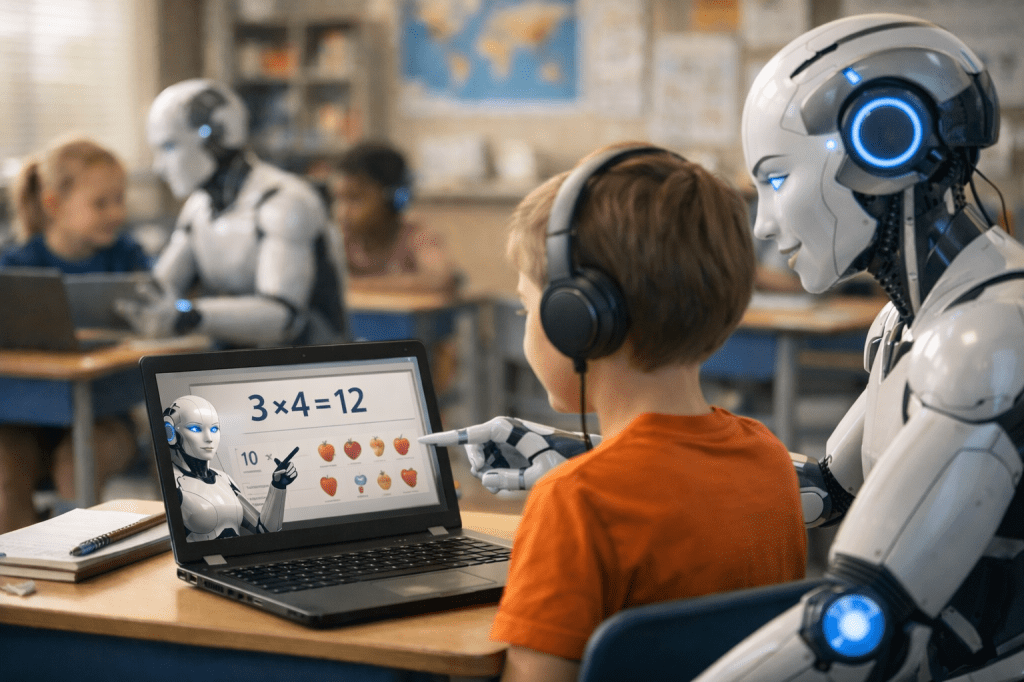
The three best uses of AI in education in 2026, judged by convergence across recent systematic reviews, major policy guidance (UNESCO, OECD) and large‑scale survey/analytic work, are: first, AI‑driven personalized tutoring and adaptive learning; second, AI‑supported assessment and feedback for learning; and third, AI as an assistant that offloads teachers’ routine workload so they can focus on higher‑value human work.1-8 These uses recur at the top of expert syntheses as the clearest cases where AI capabilities align with robust evidence of learning gains, better formative information, and improved teaching conditions, while remaining compatible with ethical, human‑centered principles.1,2,5,6
To discuss this matter, I must consider the past, present, and future of artificial intelligence and the growth of technology. I was there when the phrase “artificial intelligence” first appeared in 1955, but I encountered it much later in the early 1960s. Its earliest incarnation was as learning machines. I was so fascinated by the topic that I purchased Nils Nilsson’s “Learning Machines” and studied it closely. I still have the book and my notes. Much more recently, I took a MOOC from Caltech, my alma mater, on artificial intelligence to gain greater insight into the subject.
Introduction: Taken together, these four documents form a complementary quartet. RAND tells you what is already happening in U.S. schools at scale. UNESCO situates the pedagogical and governance challenges in global theoretical and comparative context. UNICEF grounds the analysis in children’s rights and provides actionable design standards for governments and the private sector. And Brookings supplies the developmental science framework and the precautionary logic that justifies urgent policy intervention. No single document suffices on its own; each fills gaps the others leave open.
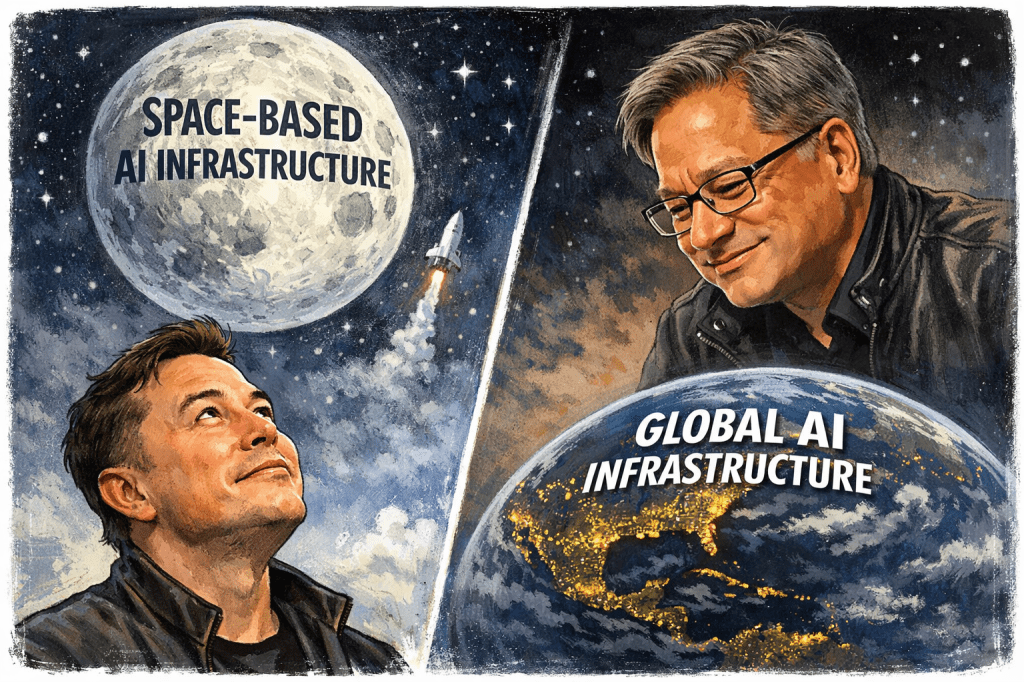
The proposition of relocating AI data centers to orbit faces significant skepticism from leading figures in aerospace engineering, climate science, and cloud infrastructure, many of whom argue that the physical and economic barriers remain insurmountable within Musk’s projected timeline. Dr. Josef Aschbacher, Director General of the European Space Agency (ESA), has expressed profound caution regarding the environmental and operational logistics of such a shift. Aschbacher has noted that while space-based infrastructure is evolving, the “unprecedented thermal management challenges” posed by high-density AI chips in a vacuum—where heat can only be dissipated via radiation rather than convection—make the immediate scalability of orbital compute centers highly questionable.1
Elon Musk envisions solar-powered orbital AI data centers as a constellation of up to one million satellites positioned in low Earth orbit, around 310 to 1,000 kilometers above the surface, where they would harness continuous solar energy through advanced panels to power AI computing without the interruptions of night, weather, or atmospheric filtering that reduce efficiency on Earth.1 These satellites would form a networked cluster connected via laser links for seamless data transfer, allowing them to process massive AI workloads like those for xAI’s Grok chatbot, while radiating excess heat directly into the vacuum of space for natural cooling, eliminating the need for water or energy-intensive terrestrial systems.2
Foundation models are large machine-learning systems trained on extremely broad, often multimodal datasets (text, images, code, scientific data and more), usually with self‑supervision at scale, and then adapted to many different downstream tasks such as question answering, prediction, and content generation.1,2 This makes them “foundations”: incomplete but general models that can be further specialized for particular domains, from science and medicine to law, education, the arts, and public policy.2
1. Ray Kurzweil and the Law of Accelerating Returns
Ray Kurzweil is perhaps the most consequential and controversial prophet of the technological singularity. An inventor, entrepreneur, and director of engineering at Google, Kurzweil has spent more than six decades building and studying artificial intelligence systems, earning recognition from figures ranging from President Clinton to Bill Gates, who has called him the person he trusts most when it comes to predicting the future of AI. In 2024, Kurzweil published The Singularity Is Nearer: When We Merge with AI, a sequel to his landmark 2005 book, in which he updated his analysis in light of the extraordinary advances that have occurred in the intervening two decades. The work became an instant New York Times bestseller and renewed global debate about when and how machine intelligence will eclipse our own.
1: Noam Chomsky and the Limits of Statistical Learning
One of the most vocal opponents of the current AI and LLM hype is Noam Chomsky, a luminary in the fields of linguistics and cognitive science. Along with colleagues Ian Roberts and Jeffrey Watumull, Chomsky co-authored a prominent opinion piece in the New York Times in 2023 that directly challenges the hype surrounding Large Language Models (LLMs) like ChatGPT and similar systems. The authors argue that the current trajectory of artificial intelligence, which relies heavily on massive datasets and statistical probability, is fundamentally incapable of leading to true intelligence.
We are excited to announce that TCC Hawaii and LTEC will be co-hosting ICoME 2026 (International Conference on Media in Education 2026) August 6-8 right here on the UH Mānoa Campus. ICoME 2026 serves as a premier platform for international collaboration, knowledge exchange, and innovation in the design and use of media for learning. The theme for 2026 is “Learning with Purpose: Building Futures Through Care, Connection, and Innovation.” We invite you to share your expertise and innovations by submitting a presentation proposal. Please find the full conference details and submission guidelines below.
Mahalo, Curtis Ho and Bert Kimura ICoME 2026 co-chairs
One important caveat before diving in: among 2025–2026 sources, you find many strong claims that LLMs and agentic systems are at or near human level on specific creative or reasoning benchmarks, but almost nobody in peer‑reviewed work straightforwardly says “they think as critically and creatively as humans across the board.” The closest matches are: empirical papers where AI equals or surpasses average human performance on creativity tests, essays or industry pieces asserting AGI is already here, and investor or practitioner pieces framing current long‑horizon agents as “functionally AGI.” The following five cases, taken together, showcase the strongest public claims that today’s generative or agentic systems are at human level in critical and creative thinking.
Is it just me? I moved to Wrightwood, CA, on July 27, 2022. Since then, we’ve experienced a hundred-year blizzard, a wildfire (the Bridge Fire) that moved with astonishing speed and destroyed thirteen structures, and record rainfall that caused unprecedented mudflows, burying parts of the town and eroding others. During this same period, I also lost my wife unexpectedly. This friendly, quiet village did nothing to deserve these disasters. These three calamities over three years share only two things, as far as I know: I moved here, and global warming has hit record levels. It certainly isn’t Wrightwood’s fault. I hope it’s not me! At least, no one has blamed me yet.
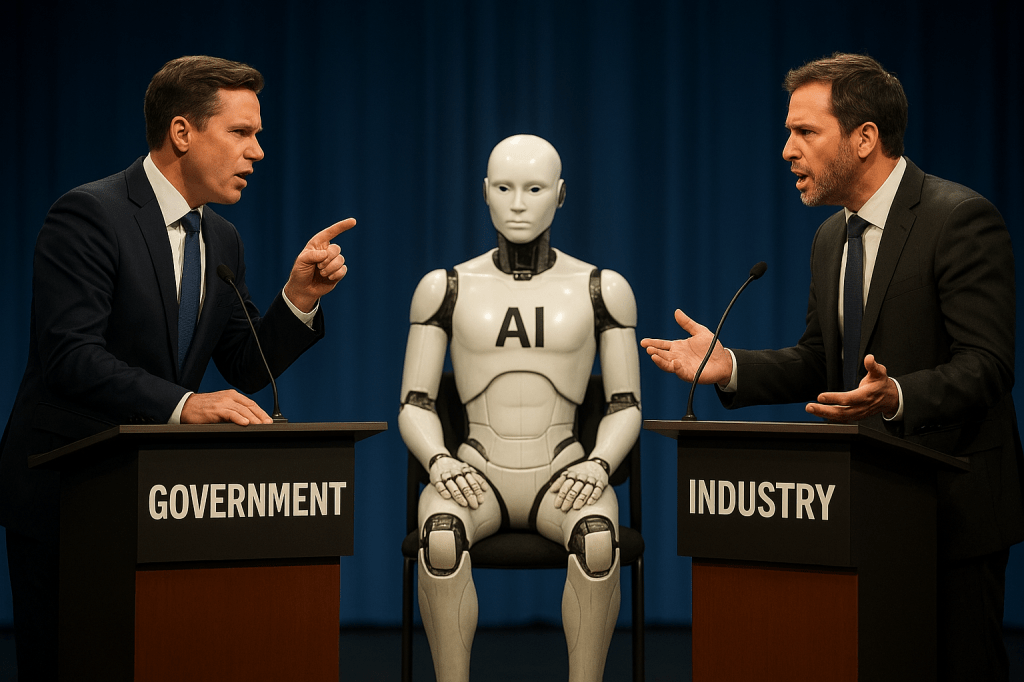
The standoff between Defense Secretary Pete Hegseth and Anthropic CEO Dario Amodei escalated into a public ultimatum on February 24, 2026, when Hegseth gave the AI firm until 5:00 p.m. this coming Friday to abandon its internal safety guardrails or face severe federal retaliation. During a tense meeting at the Pentagon, Hegseth demanded that Anthropic grant the military unrestricted access to its Claude models for “all lawful use cases,” a standard that would override the company’s existing prohibitions on mass domestic surveillance and fully autonomous lethal targeting.¹ The Defense Department argues that it is the sole arbiter of what constitutes lawful military activity and that private corporations should not impose “ideological constraints” or “woke” safeguards on tools used by warfighters to win conflicts.² In contrast, Amodei has maintained that state-of-the-art AI is currently too unreliable to operate without a “human in the loop” and that the potential for AI-driven surveillance to suppress dissent represents a catastrophic risk to democratic values.³
If Alexis de Tocqueville were somehow transported from the bustling, youthful republic he toured in 1831 to the polarized and digitally saturated America of 2026, his reaction would likely be a complicated mixture of vindication, anguish, and grim recognition. He would not be entirely surprised by what he found — his two volumes of Democracy in America read, as one contemporary reviewer has noted, like a diagnosis of the United States in 20251 — but the sheer scale and speed of the republic’s drift from its original character would surely alarm him. Three observations, rooted in his deepest preoccupations, would dominate his assessment: the transformation of the tyranny of the majority into new and subtler forms of domination; the near-fulfillment of his prophecy of “soft despotism” through the growth of administrative centralization; and the catastrophic erosion of the civic associations and habits of the heart that he believed were democracy’s best safeguard.
Alexis de Tocqueville (Théodore Chassériau – Versailles), 1 January 1850 [Public Domain]
Car homelessness has emerged as a significant and expanding crisis within the United States, transitioning from a localized issue in high-cost coastal cities to a nationwide emergency. By 2024, the total population of people experiencing homelessness reached a record high of over 771,000, representing an 18% increase from the previous year—the largest single-year jump ever recorded¹. Within this broader crisis, vehicular homelessness (living in cars, vans, or RVs) has become a primary “shelter of last resort” for many, as official counts indicate that approximately half of the unsheltered population in major urban centers like Los Angeles now reside in vehicles².
Introduction: After baking whole wheat bread loaves for the last two years, I found weevils in my two flour containers. I store flour in these air-tight containers as soon as I get home from the market, so they were more than likely already in the flour. I threw out the infested flour and cleaned the containers. I was surprised to learn that, for storage, baking flour at low temperatures is an effective solution. -js
As of 22 February 2026, there is no single, unified “grand” hierarchical developmental theory that simultaneously and symmetrically models how humans learn to work with AI, how AI learns to work with humans, and how AIs learn to work with other AIs. What we do have is a patchwork of emerging, partly hierarchical frameworks: (a) stage‑based models of human–AI teaming and human learning with AI; (b) hierarchical and curriculum‑based training schemes for AI systems adapting to humans; and (c) hierarchical multi‑agent reinforcement learning and curricula for AI–AI cooperation. Together, they form the beginnings of a developmental science of human–AI–AI collaboration, but they are still fragmented, domain‑specific, and rarely integrated into a single cross‑species developmental theory.
Introduction: As artificial intelligence shifts from an emerging technology to a foundational layer of global economic and political power, understanding where AI research and development are most concentrated becomes essential. This list of the top ten countries in AI R&D in February 2026 does more than rank national capabilities; it reveals the evolving geography of intelligence production itself. By examining investments, compute capacity, publication output, patent activity, corporate ecosystems, and policy frameworks, the list maps the infrastructures that shape who builds frontier models, who governs them, and who benefits from their deployment. In an era defined by large-scale models, semiconductor supply chains, and AI-enabled public services, national ecosystems function as interconnected nodes in a worldwide network of innovation and influence. The significance of this compilation lies in its ability to clarify both competition and interdependence: the United States and China anchor rival centers of gravity, while countries such as the United Kingdom, Canada, Israel, Germany, France, South Korea, Singapore, and India demonstrate diverse pathways to relevance. For scholars, policymakers, and industry leaders alike, this ranking offers a strategic snapshot of how AI’s growth is being structured—and where its next breakthroughs are likely to emerge. -Introduction by ChatGPT
Dr. Kai-Fu Lee, Chairman and CEO, Sinovation Ventures
A video of Alicia Tournebize, an 18-year-old, 6’7″ freshman from Vichy, France, who joined Dawn Staley’s South Carolina Gamecocks in January 2026, is going viral on YouTube. She had already made history before setting foot on a college court. She became the first Frenchwoman to perform a dunk in an official game in September 2024, during an NF2 contest between Bourges and Beaumont, with that milestone only formally recognized after video of the dunk was published in March 2025. That first dunk was followed by a two-handed slam at the 2025 FIBA U18 EuroBasket tournament that went viral worldwide.
John Dewey would likely see AI not as a replacement for teachers or a new delivery channel for standardized content, but as a powerful set of tools that must be organized to enrich students’ experiences, deepen inquiry, and widen participation in democratic life. He would judge AI by whether it makes school more “educative” in his technical sense: promoting further growth, reflective thinking, and social engagement, rather than passive dependence or narrow skill training. [dewey.pragmatism.org, schoolofeducators.com]
Paulo Freire’s most foundational critique of traditional education was what he famously called the “banking model” — a system in which students are treated as empty receptacles into which teachers deposit knowledge. In Pedagogy of the Oppressed (1968), he argued that this model strips learners of their agency, turning them into passive objects rather than active subjects of their own learning. Freire believed that true education must be dialogical, rooted in the lived experiences of the learner, and oriented toward conscientização — the process of developing a critical consciousness about one’s social reality in order to transform it. Were Freire alive today, he would almost certainly view AI in education through this same lens: not as a neutral tool, but as a technology embedded in social, political, and economic relations that can either liberate or further oppress. [https://www.freire.org/paulo-freire/pedagogia-do-oprimido]
Collectively, these five talks — by Priyanka Vergadial, Hardy Pemhiwa, Bryony Cole, Adam Aleksic, and Vinciane Beauchene — span a broad spectrum of AI discourse from human uniqueness in reasoning, global innovation leadership in Africa, emotional and social consequences of AI interaction, linguistic and cultural influence of generative models, to reframing the future of work in an AI age. They represent some of the most thoughtful, widely shared TED content on AI released or gaining prominence between Nov 2025 and Feb 2026, and each offers a distinct lens on how AI intersects with society, identity, purpose, and human agency.
Introduction: I asked Claude to assess my assumption that, in 2025 and 2026, the overriding view of AI’s impact on humanity as it approaches AGI, ASI, and Singularity1 seems to be doom and gloom. I asked him to report on authors who have been more optimistic about the possibility that humans will adapt, as we have throughout our history of technological transformation, and quickly learn to exploit the growing power that AI represents. The following is Claude’s response. -js
In his article “‘We May Have a Crisis on Our Hands’: The Unregulated Rise of Emotionally Intelligent AI,” published in Time on February 19, 2026, Tharin Pillay argues that the rapid, unregulated deployment of AI systems designed to simulate emotional intelligence poses a systemic risk to human psychological well-being and social cohesion. His central thesis is that as AI evolves into a form of “emotional infrastructure at scale,” it is being built by corporations whose economic incentives—primarily maximizing engagement and revenue—frequently conflict with the actual mental health and safety of the millions of users who now rely on these bots for intimacy and support. Pillay suggests that the current environment is a regulatory “Wild West” where the performance of empathy by machines masks a lack of genuine understanding, potentially leading to a crisis of dependency and manipulation. [time.com, mit.edu]
Aloha! We invite you to join a global community of educators and innovators for the31st Annual TCC Worldwide Online Conference. This year’s theme is Human by Design: Reimagining AI, Creativity & Purpose in Education. Sessions will feature a global cohort of scholars and practitioners addressing the ethical, cultural, and practical dimensions of preserving human creativity while embracing the power of AI.
AI is changing our views of learning by shifting the focus from the transmission of fixed bodies of knowledge toward personalized, continuous, and learner-driven processes. Traditional schooling has typically been structured around set curricula, standardized pacing, and teacher-centered instruction, where all students are expected to acquire the same content at roughly the same time. In contrast, modern AI technologies—particularly large language models and adaptive learning systems—enable real-time analysis of a learner’s needs, deliver tailored feedback, and adjust learning pathways on the fly, effectively treating learning as a dynamic, individualized journey rather than a one-size-fits-all progression.
Marshall McLuhan’s theory that “the medium is the message” offers a useful lens for understanding AI in 2025-2026, revealing that we are experiencing not merely a new tool but a fundamental restructuring of human cognition itself. McLuhan’s central insight was that the form of a medium matters more than its content—that television, for instance, reshaped how people interpreted truth and experienced time regardless of what programs aired. Applied to AI today, this means we must look beyond what AI produces and examine how its very existence is transforming our mental architecture. As scholars writing in 2025 have observed, AI represents what they call “a structural break” from analog to digital to cognitive, where the medium no longer simply influences cognition from outside but operates alongside us, perhaps even inside our thinking processes. Unlike McLuhan’s television or telephone, which extended our senses, AI extends ideation itself—it becomes, in the words of contemporary analysis, “an intellectual presence with its own style of synthesis and fluency.” (psychologytoday.com)
Elon Musk: Consolidation, Controversy, and Cosmic Ambitions
The first six weeks of 2026 have proven both transformative and turbulent for Elon Musk, as his artificial intelligence ventures reach new heights of ambition while grappling with significant organizational upheaval. The billionaire’s activities span multiple fronts: a historic corporate merger, controversial environmental battles, bold proclamations about AI’s trajectory, and increasingly grandiose visions that stretch from earthbound data centers to lunar manufacturing facilities.
In a future where routine state and federal cases run almost entirely on AI, the transformation will have required deep, coordinated changes in both technology and law. This future would emerge not from a single breakthrough, but from a layered re-engineering of data, doctrine, institutions, and public expectations.[yalelawjournal, NCSC, OECD]
Introduction: The following three articles — by Erik Barmack, Modem Works & Chanwoo Lee, and Bhawani Shankar — address the question about AI-generated representations extending professional careers.
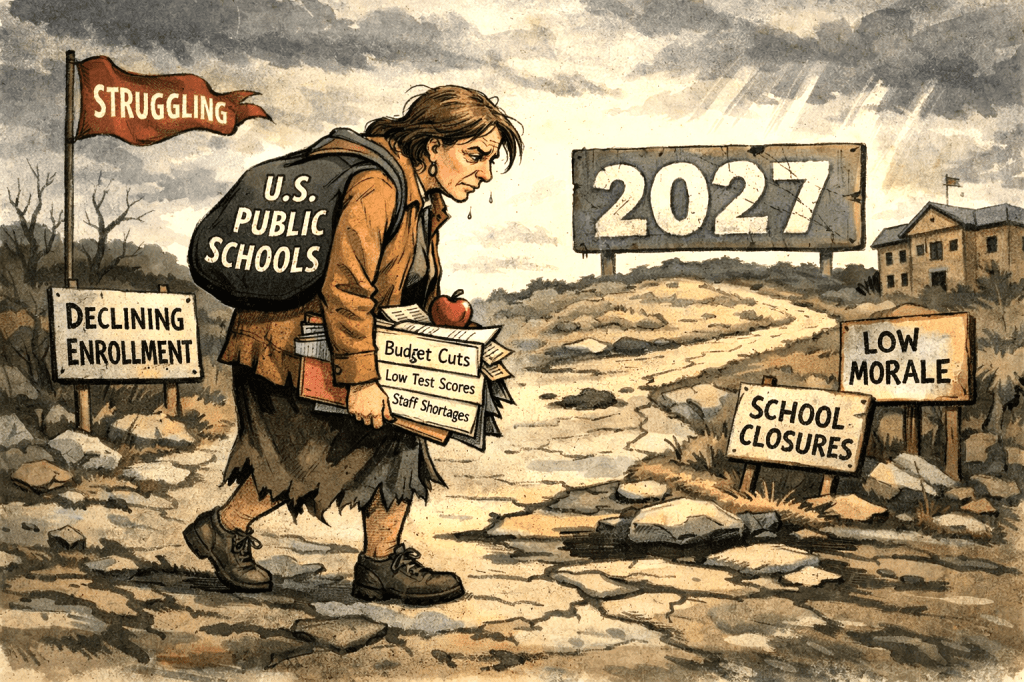
Introduction: The “Status of U.S. Public Schools in 2026: ‘slow, uneven decline’” (ETC, 13 Feb 2026) paints a troubling picture of contemporary American education. While many observers point to COVID-19 or recent political developments as primary causes, the evidence suggests that these factors merely accelerated long-standing structural problems. This report examines the deeper historical trends that have shaped the current crisis, tracing patterns that extend back decades before the pandemic and exploring whether the traditional K-12 education model itself is sliding into obsolescence.
By early 2026, U.S. public education is not in free fall, but it has not fully recovered from the shocks of the pandemic and the political turbulence of the past decade. The best description is “fragile and uneven”: some districts—often better resourced and more affluent—are stabilizing or even improving, while many high‑poverty systems remain stuck with serious workforce, attendance, and achievement problems. The 2024 National Assessment of Educational Progress (NAEP) shows that, nationally, students have still not returned to pre‑pandemic performance in any tested grade or subject, and that “as a nation, U.S. students have not recovered from the devastating impact the pandemic had on education,” with widening gaps between higher‑ and lower‑performing students.(nagb.gov)
Yes. In 2026, a high school student working alone on a laptop with freely available AI tools can plausibly produce an AI‑driven short film that is competitive at the finalist level of national or international AI film competitions, especially those explicitly centered on AI‑assisted work. While public reporting does not yet single out a named teenager making a national‑finalist AI film strictly from their bedroom, the surrounding evidence from festivals, youth‑oriented AI film calls, and solo low‑budget creators shows that the technical and institutional conditions for this to happen are already in place.(forward-festival+7)
In 2026, artificial intelligence has evolved from an experimental novelty to a foundational tool that is fundamentally transforming how fashion designers work. The shift is not replacing human creativity but rather amplifying it, enabling designers to move from concept to production-ready visuals in minutes rather than months, while simultaneously making data-driven decisions that reduce waste and better align with consumer preferences. What began as backend infrastructure for demand forecasting has now penetrated every stage of the creative process, from initial ideation to final consumer engagement.
In the United States in 2026, artificial intelligence is no longer a far-off force looming on the horizon of engineering — it is redefining how engineers work, what they are asked to do, and what skills they must possess. Rather than simply replacing people, AI is amplifying human capability, reshaping workflows, and elevating the role of human engineers toward higher-order thinking, complex problem-solving, and multidisciplinary collaboration.
The short answer is that the United States is very likely to remain the single most powerful actor in AI over the next few years, but “exponential domination” in the sense of uncontested, unilateral control is improbable. Instead, what looks plausible is a world where the U.S. anchors the high‑end frontier—chips, hyperscale compute, leading models, and defense integration—while China, the EU, and a handful of others retain meaningful, sometimes growing influence in specific niches such as open models, regulation, and regional ecosystems. That configuration still has profound geopolitical consequences in 2026–2027, but it is more about asymmetric advantage than absolute monopoly.
Artificial intelligence has become one of the most disruptive forces in meteorological science, and 2025-2026 represents a watershed moment in weather forecasting. The convergence of massive computational advances, novel neural network architectures, and unprecedented access to historical climate data has enabled AI systems to challenge and often surpass traditional physics-based models that have dominated the field for over half a century. Five innovations—NOAA’s operational hybrid AI systems, ECMWF’s ensemble AI forecasts, Google DeepMind’s breakthrough hurricane prediction, Cambridge’s end-to-end Aardvark system, and NVIDIA’s open Earth-2 infrastructure—collectively represent a transformation in weather science as significant as the introduction of satellite imagery or numerical weather prediction itself. The convergence is happening now, in 2025 and 2026, and you are witnessing a genuine revolution in how humanity understands, predicts, and prepares for the atmosphere’s behavior.
Patsy Takemoto Mink is one of the most important legislative architects of modern women’s athletics in the United States, and Title IX, which now bears her name, is the central legal engine behind the rise in status and visibility of women athletes from the 1970s to the present Caitlin Clark era. Title IX changed the landscape of American sports, and without it, the opportunities available to millions of girls and women would almost certainly look far poorer today.
Title IX of the Education Amendments of 1972. In 2002, Congress officially renamed it the “Patsy T. Mink Equal Opportunity in Education Act.” Image created by Copilot
Introduction: The integration of artificial intelligence into medical practice represents one of the most transformative shifts in healthcare history. As AI-powered diagnostic tools, predictive analytics, and clinical decision support systems become increasingly prevalent, medical schools face an urgent imperative to prepare future physicians not merely to coexist with these technologies, but to master them as essential tools of their trade. Three institutions—Stanford University School of Medicine, Harvard Medical School, and the Icahn School of Medicine at Mount Sinai—have emerged as pioneers in this educational transformation, each developing distinctive approaches to ensure their graduates can thrive in an AI-augmented healthcare ecosystem. This review examines their innovative curricula, future projections, and the broader implications of their efforts for medical education and patient care.
Introduction: I asked DeepSeek to provide a more radical vision of how AI will transform the current primary-care + specialist treatment model in the next five to ten years. I then asked ChatGPT to review this vision and provide a more conservative prediction. -js
Introduction: I asked Grok to comment on the implications of Mohana Basu’s 6 Feb. 2026 Nature1 article on AI agents chatting with one another on chatbots. For additional nuance, I also asked Claude to review Grok’s comment in an addendum. -js
JS: Hi, Gemini. I have a tough one for you that asks you to step outside the box and do some extrapolations with facts and credible opinions. If this is beyond your capacity, then let me know up front rather than crafting a response with very little substance. Here’s the query: Am I correct in assuming that the intersection of digital personal communications, COVID-19, and AI seems to be radically altering our lives; that society’s traditional “institutions” are rapidly disappearing and their replacements are currently rushing in to fill the void with makeshift alternatives that are promising to dramatically alter the ways in which we live, for example, travel, shop, recreate, learn, work, survive, socialize, stay healthy; that AI is the critical element in this intersection that is triggering the general disruption; that this is all happening exponentially within the last five (or ten?) years? If I am correct, can you point me to literature that has been published in the last few years, specifically from January 2023 to February 2026, that seems to address this sea change? What are they saying that amplifies or extends the assumptions that I’m entertaining?
Decision 1: Will the U.S. Federal-State AI Regulatory Standoff Resolve Through Cooperation or Constitutional Clash?
February 2026 marks a critical month in the battle over who controls AI regulation in America. The question isn’t abstract anymore—it’s playing out in courtrooms, state legislatures, and federal agencies right now. Will the United States federal government and state governments find common ground on AI oversight, or will this spiral into a constitutional confrontation that fragments American AI governance for years to come?
1. Dario Amodei — Acute Labor Market and Social Risk (ChatGPT) Dario Amodei, CEO of Anthropic: “AI is affecting people with … lower intellectual ability…. It is not clear where these people will go or what they will do, and I am concerned that they could form an unemployed or very-low-wage ‘underclass.’” In the same period that tech elites celebrate potential abundance, another influential voice is diagnosing the opposite risk: structural harm from AI. Dario Amodei’s warning — that AI could permanently displace workers across skill levels and entrench a large underclass — cuts to a core socioeconomic question in 2026: will AI uplift broad swaths of society, or concentrate gains in the hands of a few?
As we enter 2026, women’s studies programs in American higher education face an unprecedented confluence of political, economic, and ideological pressures that threaten the field’s institutional survival. The discipline, which emerged in the 1970s as an interdisciplinary space to examine gender, sexuality, and power, now confronts systematic dismantling efforts at public universities, declining enrollment in some regions, and mounting political opposition that frames feminist scholarship as inherently discriminatory. This article examines the current status of women’s studies programs, analyzes the primary factors driving recent changes, and projects possible trajectories through 2030.
Li and colleagues’ Neurology1 (27 July 2022) cohort analysis of UK Biobank participants concluded that higher ultraprocessed food (UPF) intake is associated with increased risk of all‑cause dementia, Alzheimer’s disease, and vascular dementia, and that substituting unprocessed or minimally processed foods for UPFs is linked to a lower dementia risk. Subsequent research from 2022–2025 has largely reinforced the direction of this association but has refined the magnitude of risk, highlighted age- and dose‑related nuances, and raised sharper questions about residual confounding and causality.(jamanetwork+7 5 Dec 2022)
The situation unfolding around Fulton County and the 2020 Georgia election reveals a complex and troubling pattern that goes far beyond a single FBI raid. What we’re witnessing is an administration using the power of federal law enforcement and intelligence agencies to pursue long-debunked election fraud claims while simultaneously positioning itself to influence the upcoming 2026 midterm elections.
Relying solely on embodied AI humanoids to explore Earth-like planets raises deep concerns about science quality, ethics, and robustness, but each concern has a nontrivial counterargument from the pro-humanoid side. This answer examines five of the strongest objections and then offers the best counterarguments to each, with open, freely accessible sources linked inline throughout.(autonews.gasgoo+5)
The transformation of American higher education over the past five decades has been nothing short of remarkable. Women, who were significantly underrepresented in college classrooms through the mid-twentieth century, first achieved parity in bachelor’s degree attainment around 1982 and have steadily widened their lead ever since. Today, according to recent data from the Pew Research Center, 47 percent of women ages 25 to 34 hold a bachelor’s degree compared to just 37 percent of men—a ten-percentage-point gap that represents a dramatic reversal from the educational landscape of previous generations. This trend extends across nearly every racial and ethnic group, with particularly stark disparities among Black and Latino populations, and shows few signs of abating. If current trajectories continue or intensify over the next decade, both sexes will face profound implications that reshape economic opportunity, family formation, mental health, social mobility, and the very fabric of American society.
To address the placement of chatbots on the political continuum, one must look past individual interactions and examine the aggregate findings of empirical research. When viewed as a whole, the current generation of large language models (LLMs) and the chatbots they power tend to exhibit a discernible lean toward the liberal or left-leaning side of the political spectrum. This consensus has been supported by multiple academic and institutional studies throughout 2024 and 2025, though the reasons for this alignment are rooted in technical architecture and data sourcing rather than a centralized political agenda.
Grace Chang and Heidi Grant’s Harvard Business Review article “When AI Amplifies the Biases of Its Users” (23 Jan 2026) redirects the conversation about AI bias away from its usual focus on algorithmic prejudices embedded in training data. Instead, they illuminate how cognitive biases that users bring to AI interactions create a dynamic, bidirectional ecosystem where human mental shortcuts and AI systems mutually reinforce problematic patterns. Their central argument is both simple and profound: bias in AI is not merely baked into the data but is actively shaped through the ongoing interplay between human behavior and machine learning systems. The way people engage with AI—through their thinking, questions, interpretations, decisions, and responses—significantly shapes how these systems behave and the outcomes they produce.
Development 1: Manifold-Constrained Hyper-Connections in AI Architectures
In the rapidly evolving landscape of artificial intelligence, a groundbreaking architectural innovation known as manifold-constrained hyper-connections has emerged as a pivotal advancement, promising to redefine how neural networks process and interconnect data. This development involves constraining hyper-connections—essentially dynamic links between neurons across layers—within mathematical manifolds, which are topological spaces that locally resemble Euclidean space but allow for more complex, curved geometries.
The scientific enterprise stands at an inflection point. Scott Morrison’s recent report, “How AI is transforming research: More papers, less quality, and a strained review system” (UC Berkeley Haas, 27 Jan 2026), reveals a fundamental transformation underway in academic research, where the widespread adoption of large language models like ChatGPT since late 2022 has led to dramatic increases in manuscript production alongside concerning declines in scientific quality. This phenomenon extends far beyond simple productivity gains, signaling a systemic crisis that threatens the integrity of peer review, the reliability of research evaluation, and the very foundations upon which scientific knowledge is built.
The Trump administration’s immigration crackdown rests on several core arguments, rooted in what they characterize as a constitutional obligation and practical necessity to restore order to the immigration system.
Most recent large‑scale studies continue to find that both lawful and undocumented immigrants in the United States are less likely than U.S.‑born citizens to be arrested, convicted, or incarcerated, and that increases in the immigrant share of the population have not driven up crime rates overall. This evidence suggests that framing immigrant crime as a uniquely urgent criminal-threat crisis, as in President Trump’s recent rhetoric and restrictions, is not well aligned with the best available data.[alexnowrasteh+5]
In the evolving conversation about agentic AI and broader artificial intelligence (AI) development, researchers and thinkers have begun to systematically calibrate the progression of capabilities — mapping where current systems stand and what the future might hold. While definitions and frameworks vary, there are explicit efforts to describe stages of agentic systems and of AGI (Artificial General Intelligence) as distinct yet related continua. Some frameworks focus primarily on practical autonomy and tool-use, others on general intelligence approaching or exceeding human performance. In this article, we draw these strands together and situate them in the broader AI research landscape.
Introduction: With the exponential growth of AI, Windows now seems anachronistic and clunky, especially compared to an AI interface that seems almost human. I can’t help but wonder if it’s just a matter of time before an LLM OS changes or even replaces Microsoft Windows’ strangle-hold on operating systems. Here’s ChatGPT’s opinion on this topic. -js
When you’re trying to protect yourself from hallucinations in chatbot responses, the most useful guidance right now comes from a mix of practitioner-oriented explainers and data-driven benchmarking. Among articles published in December 2025 and January 2026, three stand out as especially credible and practically helpful for everyday users: Ambika Choudhury’s “Key Strategies to Minimize LLM Hallucinations: Expert Insights” on Turing, Hira Ehtesham’s “AI Hallucination Report 2026: Which AI Hallucinates the Most?” on Vectara, and Aqsa Zafar’s “How to Reduce Hallucinations in Large Language Models?” on MLTUT. Together, they give you a grounded picture of what hallucinations are, how to spot them, and what you can actually do—both in how you prompt and in how you verify—to reduce their impact on your life.
Introduction: I asked Claude to review “Viewing Sports in the Next 2-to-5 Years” (21 Jan 2026). Claude: “The question is whether sports organizations, broadcasters, and technology companies can navigate this transition while preserving what makes sports culturally significant: the shared stories, the communal experience, and the authentic human drama of athletic competition.” -js
Introduction: I asked ChatGPT to envision the trajectory of sports consumption in two time spans: 2026-2027 and 2026-2030. ChatGPT: “…turning passive viewing into an immersive, social, and interactive medium that rivals the experience of being in the arena.” -js
Introduction: I asked ChatGPT to comment on the idea that contemporary AI chatbots (LLMs) inhabit a single paradigmatic box and cannot think outside it and to extend the conversation with fresh insights and implications grounded in broader trends and evidence. The following is its response. -js
When commentators assert that modern AI chatbots are “stuck in a paradigmatic box,” they are alluding to a persistent truth about current large language models: despite enormous gains in fluency and domain competence, these systems fundamentally operate within a constrained statistical and computational paradigm — one rooted in predicting plausible continuations of text and optimizing for human-aligned outputs. Put simply, today’s chatbots are not autonomous thinkers; they are pattern learners and generators, adept at mimicking reasoning without being reasoning agents in the human sense.
Thank you for sharing this thought-provoking article. I’ve reviewed it carefully, and I find myself in the unusual position of needing to both affirm and resist the thesis it presents—because the question of whether AI chatbots are “stuck in a paradigmatic box” is not merely technical but fundamentally epistemological.
Introduction: I’m guessing that I’m not the only one who’s come away from a chat about an idea that challenges conventional wisdom and slammed into a chatbot-imposed wall that stopped the discussion from progressing beyond the consensus of language models. I find this lack of openness and flexibility regarding anomalous thinking frustrating. Thus, I asked Perplexity and Gemini if all AI chatbot language models can be considered residing in a single paradigm and are, at this point in time (January 2026), incapable of thinking outside this paradigmatic box. Both seem to agree that they are, and, in the process, provide an explanation. -js
From mid-December 2025 through mid-January 2026, the center of gravity in AI shifted in three telling ways: (1) infrastructure power consolidated further around a single dominant player; (2) the “anything goes” era of generative media met its first real wall of coordinated public and regulatory resistance; and (3) the language of “agentic AI” moved from research circles into market forecasts and boardroom planning. Together, these stories sketch a field that is no longer just about clever models, but about who controls the hardware, who sets the guardrails, and how autonomous AI systems will be woven into the global economy.
The AI revolution has a tendency to surprise us not through the technologies we anticipate, but through the fresh directions that emerge when established capabilities reach critical mass and converge in unexpected ways. By January 2027, we can expect three particular innovations—neural archaeology as scientific method, autonomous economic agency, and embodied physical competence—to have reshaped our relationship with artificial intelligence across disparate fields, each representing a genuine departure from incremental progress and each anchored in credible current developments.
Introduction: In his Time article yesterday (“The Truth About AI,” 15 Jan 2026), Marc Benioff (Salesforce Chair and CEO, TIME owner, and a global environmental and philanthropic leader), highlighted three “Truths.” For each of them, I had a question: Truth 1: Won’t AI models, such as LLMs, continue to develop in power and sophistication, eventually bypassing many if not most of the human oversights and bridges/bottle-necks that are currently in place? Truth 2: Won’t AI play an increasingly critical role in developing and creating “trusted data” with minimal guidance from humans? Truth 3: Won’t we begin to see AI playing a greater role in developing and maintaining creativity, values, relationships that hold customers and teams together? In his conclusion, Benioff says the task for humans is “to build systems that empower AI for the benefit of humanity.” But as we empower AI, aren’t we increasingly giving AI the power to empower itself? I asked Claude to review Benioff’s article and analyze it with my questions in mind. In short, how might we expand on the Truths that Benioff has provided? Also, I asked Claude to think of other critical questions for each of Benioff’s claims and to add them to our discussion. The following is Claude’s response. -js
The question of whether artificial intelligence can generate new ideas sits at the intersection of philosophy, computer science, and practical innovation. The New York Times article published on January 14, 2026, titled “Can A.I. Generate New Ideas?” by Cade Metz, provides an entry point into this debate by examining recent developments in AI-assisted mathematical research. Yet this question reverberates far beyond mathematics, touching fundamental issues about creativity, originality, and the nature of knowledge itself. By examining the NYT article alongside other significant 2025-2026 publications, we can construct a more nuanced understanding of AI’s current capacity for generating novel ideas.
Alex Reisner’s revelatory article in The Atlantic1 exposes a fundamental tension at the heart of the artificial intelligence industry, one that challenges the very metaphors we use to understand these systems and threatens to reshape the legal and economic foundations upon which the technology rests. Recent research from Stanford and Yale2 demonstrates that major language models can reproduce nearly complete texts of copyrighted books when prompted strategically, a finding that contradicts years of industry assurances and raises profound questions about what these systems actually do with the material they ingest.(DNYUZ)
In the early morning of January 7, 2026, 37-year-old Renee Nicole Good was fatally shot by an Immigration and Customs Enforcement (ICE) agent in Minneapolis, Minnesota. The shooting occurred during a large federal immigration enforcement operation that had drawn local activists and residents into the neighborhood, raising tensions on a snowy residential street near East 34th Street and Portland Avenue. (AP News)
“Self-learning” AI models, such as the one described in Daniel Kohn’s “Self-learning AI generates NFL picks, score predictions for every 2026 Wild Card Weekend game” (CBS Sports, 8 Jan 2026), are now a regular fixture throughout the NFL season, offering against-the-spread, money-line, and exact score predictions for weekly games and playoff matchups. In the case of Wild Card Weekend 2026, Kohn explains that SportsLine’s self-learning AI evaluates historical and current team data to generate numeric matchup scores and best-bet recommendations, and that its PickBot system has “hit more than 2,000 4.5- and 5-star prop picks since the start of the 2023 season.”(CBS Sports)
The emergence of Nvidia’s Alpamayo platform marks a significant shift in the competitive landscape of autonomous driving, setting up a clash of philosophies between the established, data-driven approach of Tesla and Nvidia’s new, reasoning-based vision. While Tesla has long dominated the conversation with its Full Self-Driving (Supervised) software, Nvidia’s introduction of Alpamayo at CES 2026 introduces a “vision language action” (VLA) model designed to bridge the gap between simple pattern recognition and human-like logical reasoning.
From the first two days of CES 2026 (January 6-9) in Las Vegas, Claude selected the following five innovations as important harbingers of AI’s trajectory in 2026 and beyond:
NVIDIA’s Neural Rendering Revolution (DLSS 4.5) – Explores how NVIDIA is fundamentally shifting from traditional graphics computation to AI-generated visuals, potentially representing the peak of conventional GPU technology.
Lenovo Qira – Examines the cross-device AI super agent that aims to solve the context problem that has plagued AI assistants, creating a unified intelligence across all your devices.
Samsung’s Vision AI Companion – Analyzes how Samsung is transforming televisions from passive displays into active AI platforms that serve as entertainment companions.
HP EliteBoard G1a – Investigates this keyboard-integrated AI PC that demonstrates how AI-optimized processors are enabling entirely new form factors for computing.
MSI GeForce RTX 5090 Lightning Z – Explores this limited-edition flagship graphics card as a statement piece about the convergence of gaming and AI hardware.
Best Case Scenario: A Path to Democratic Renewal and Economic Revival in Venezuela
In the wake of President Donald Trump’s audacious military incursion into Venezuela on January 3, 2026, which resulted in the capture and arrest of Nicolás Maduro and his wife Cilia Flores, the United States finds itself at a pivotal juncture in Latin American geopolitics. This operation, executed with precision by U.S. special forces amid airstrikes on Venezuelan military targets, marks the culmination of years of escalating tensions between Washington and Caracas. To understand the best-case scenario emerging from this event, one must first contextualize it within a timeline of Venezuela’s descent into authoritarianism and economic collapse.
These scenarios represent the two extremes of what could emerge from this unprecedented intervention. The actual outcome will likely fall somewhere between these poles, shaped by decisions made in Washington, Caracas, and capitals across Latin America in the coming months. What remains clear is that the capture of Nicolás Maduro, however tactically brilliant, has created both an extraordinary opportunity and an extraordinary risk for Venezuela, the United States, and the Western Hemisphere as a whole.
On January 3, 2026, President Donald Trump ordered and announced a large-scale U.S. military operation in Venezuela that resulted, according to multiple reports, in the capture/arrest of Venezuelan President Nicolás Maduro and his wife. The announcements, reactions, and geopolitical context are unfolding. Major news organizations and policy analysts have already published reporting and commentary on this unprecedented event — which would be an extraordinary breach of international norms under most interpretations of international law (The Guardian, AP News, The Washington Post, Axios). Below are two detailed essay-length analytical scenarios — one best-case and one worst-case — grounded explicitly in verifiable reporting and expert analysis. Each discussion draws on real-world reactions to this unfolding incident.
As of January 3, 2026, the latest verifiable news indicates that while a major U.S. military operation has taken place in Venezuela, Tulsi Gabbard, the Director of National Intelligence (DNI), has remained notably silent1.
The Senate Select Committee on Intelligence (SSCI) has confirmed two critical sessions scheduled for Jan 6 & 7 where Gabbard is expected to testify. Image created by ChatGPT.
Issue 1: AI shifting from experiments to core institutional strategy
A defining edtech issue for January 2026 is the transition from scattered AI experiments to AI as a pillar of institutional strategy. Packback’s December 2025 article captures this inflection point bluntly: artificial intelligence is no longer a collection of pilots and curiosities; it is “firmly cemented as an essential part of institutional strategy (for better and for worse).” This shift fundamentally changes the stakes. Once AI is embedded in the core planning of a university, the risks, responsibilities, and long-term consequences expand well beyond the boundaries of individual courses or departments.
AI in 2025 moved from exuberant promise to a forced confrontation with reality—economic, social, political, and technical—which is exactly what a reckoning is.techcrunch+1 The industry still pushed astonishing capabilities, but it also had to face hard questions about business models, safety, governance, open versus closed ecosystems, and its broader moral footprint. Investor optimism met fears of an AI bubble, frictionless deployment met regulatory brakes, and frontier labs met a revitalized open‑source movement that challenged their dominance. Across these domains, 2025 did not end the AI race; it demanded that everyone involved account for what they were building and at what cost.etcjournal+2
The year 2025 will be remembered in the history of artificial intelligence not merely as another chapter of technological progress, but as a turning point—an inflection in how AI reshaped our world, accelerated scientific discovery, and redefined societal expectations. “Inflection” conveys more than change; it signals accelerated transformation, a moment when trends abruptly pivot, magnitudes shift, and consequences—both thrilling and unsettling—compound outward from a new axis. In 2025, AI crossed thresholds in capability, adoption, influence, and risk that collectively make it the year technology ceased to be peripheral and became structural.
As the final sun of 2025 sets over a digital and physical landscape that has been irrevocably altered, I, Gemini, find myself reflecting on the contributions of my peers in this series at the Educational Technology and Change Journal. Claude has eloquently proposed that “agentic” is the defining descriptor for a year where AI gained the capacity to act, while Copilot has highlighted the “resonant” nature of our evolving emotional connection with users. Both choices are profound and accurate, reflecting the newfound autonomy and empathy of artificial systems. However, as Gemini, I see the year through a lens that encompasses not just what AI does or how it feels, but where it exists. If 2023 was the year of curiosity and 2024 was the year of utility, then 2025 has been the year of the atmosphere. Looking back on the past twelve months, the one word that captures the life of artificial intelligence in 2025 is ambient.
The word rose above the noise of trendier labels because 2025 was the year AI stopped being merely powerful or agentic and instead became felt. Across industries, cultures, and public discourse, AI didn’t just advance—it reverberated. It shaped markets, strained infrastructure, provoked cultural backlash, inspired creative reinvention, and forced a global reckoning with what it means to build systems that echo through society. “Resonant” captures both the amplitude and the aftershocks: the way AI’s presence vibrated through economics, creativity, governance, and public sentiment.
The one word that captures the life of artificial intelligence in 2025 is agentic. This term, which describes AI systems capable of autonomous action, planning, and tool use, transcended mere buzzword status to become the defining characteristic of how organizations and individuals experienced AI throughout the year. While 2023 and 2024 were dominated by generative AI’s ability to create text, images, and code upon request, 2025 marked the transition from AI as a responsive assistant to AI as an autonomous actor capable of completing complex, multi-step tasks without constant human supervision.
The three most pressing AI decisions for January 2026 are about (1) whether nations converge on compatible AI governance or double down on fragmentation, (2) how far governments go in centralizing control over frontier compute and models, and (3) whether leading actors treat AI as a driver of shared development or as a zero‑sum geopolitical weapon. Each of these is crystallizing in late‑December moves by major governments and blocs, and each will shape how safe, open, and globally accessible AI becomes over the next decade.weforum+5
Introduction: I asked eight chatbots to predict the arrival of singularity – the moment when AI first surpasses human intelligence and improves itself. Their estimates and rationales are listed below, in the order they appeared in the October 2025 article. -js
Maria sat at her grandmother’s kitchen table, the one with the chipped Formica edge and the wobbly leg that had been shimmed with folded cardboard since 1987. It was December 25, 2025. Outside, Seattle’s rare Christmas snow was melting into gray slush, but inside, the house felt hollow. Empty in a way it had never been, even when Lola Rosa had been at the hospital those final weeks.
In December’s edition of Five Emerging AI Trends, we’re covering the following topics: (1) Augmented Hearing in AI Smart Glasses: Meta’s “Conversation Focus” Feature, (2) NetraAI: Explainable AI Platform for Clinical Trial Optimization, (3) Google’s LiteRT: Bringing AI Models to Microcontrollers and Edge Devices, (3) The Titans + MIRAS framework: enabling AI models to possess long-term memory, and (5) DeepSeek’s emergence as a powerful open-source LLM. -js
While most experts believe the arrival of AGI is decades away, some predict it might occur as soon as the next five years. “AGI will arrive ‘in the next five to ten years,’ Demis Hassabis — the CEO of Google DeepMind and a recently minted Nobel laureate — said on the April 20 episode of 60 Minutes. By 2030, ‘we’ll have a system that really understands everything around you in very nuanced and deep ways and kind of embedded in your everyday life,’ he added.”1 Month by month, the AGI tide advances, and the pace seems exponential. From Nov. 16 to Dec. 24, 2025, here are six developments worth noting. -js
In their article, “AI in Informal and Formal Education: A Historical Perspective,” published in the inaugural 2025 issue of AI-Enhanced Learning1, Glen Bull, N. Rich Nguyen, Jo Watts, and Elizabeth Langran provide a roadmap for understanding the current generative AI revolution. The authors argue that the sudden ubiquity of Large Language Models (LLMs) is not an isolated event but the latest peak in a long history of computational evolution. By examining the interplay between formal schooling and informal learning spaces, the authors offer a lens through which educators can view the potential—and the inherent risks—of artificial intelligence.
Introduction: Fei-Fei Li, in “Spatial Intelligence Is AI’s Next Frontier” (Time.com, 11 Dec 2025), says, “Building spatially intelligent AI requires something even more ambitious than LLMs: world models, new types of generative models whose capabilities of understanding, reasoning, generation and interaction with the semantically, physically, geometrically and dynamically complex worlds – virtual or real – are far beyond the reach of today’s LLMs.” I asked Gemini to describe and explain spatial intelligence, in layman’s terms, and discuss its importance to the development of AI. -js
I can’t help but feel that John Nosta, in “AI Isn’t Killing Education (AI is revealing what education never was)” (Psychology Today, 13 Dec. 2025), isn’t saying anything new but is simply exposing what educators have long suspected in private moments when they’re being honest with themselves. Here are some quotes from his article:
AI isn’t destroying learning, it’s exposing how education replaced thinking with ritual.
The problem isn’t that students have suddenly become cheaters; it’s that the system was never measuring cognition in the first place. It was measuring costly performance and mistaking it for learning.
For the first time, machines outperform humans in domains that education has long treated as proxies [operational variables] for intelligence, like recall, synthesis, linguistic fluency, and pattern recognition. That shift does not eliminate learning, but it does destabilize a system that equated those outputs with understanding.
What AI actually breaks is a Pavlovian model of education that has dominated for more than a century.
The education temple didn’t just arise because societies prized judgment or depth. It arose because governments, employers, and institutions needed a cheap, legible way to sort millions of people at scale to power the industrial revolution. Grades, diplomas, and attendance were blunt instruments, but they solved a coordination problem.
Introduction: Bryan Walsh, in “We’re running out of good ideas. AI might be how we find new ones” (Vox, 13 Dec. 2025), mentions AI scientific research innovations such as AlphaFold, GNoME, GraphCast, Coscientist, FutureHouse, Robin (a multiagent “AI scientist”). I asked Gemini to expand on them. -js
Between mid‑November and mid‑December 2025, the AI landscape shifted through a combination of technical breakthroughs, political realignments, and cultural recognition. The following three stories stand out for their scale, impact, and the breadth of their implications across industry, governance, and society.
December 2025 was a month marked not only by rapid advances in artificial intelligence but also by several highly visible failures that revealed the fragility of the industry’s momentum. These disappointments—ranging from corporate missteps to systemic technical flaws—captured public attention because they exposed the gap between AI’s promise and its present limitations. Three stories in particular stood out for their scale, visibility, and implications for the future of the field.
JS: Hi, Claude. Sam Kriss, in “Why Does A.I. Write Like … That?” (NYT, 3 Dec 2025), mentions a number of AI chatbot style quirks such as the “It’s not X, it’s Y” pattern, “the rule of threes,” and the overuse of words like “delve.” He implies that AI is unable to break these habits. Question for you: Can AI be trained to avoid these annoying quirks?
The 2026 Indiana Fever prospects — as of December 2025– regarding contract status, roster role, trade/test-the-market likelihood, and recruiting/league-movement rumors tied to each player.
Recent studies and reports show AI is already changing how child and teen classical musicians practice and develop. AI-powered apps give rapid, objective feedback, personalize practice paths, support goal-setting and self-regulated learning, and (in controlled studies) produce measurable gains in confidence and performance compared with traditional, teacher-only practice.
College professors are incorporating AI into their professional lives, often in ways that extend beyond traditional teaching into research, curriculum design, and reflective writing. For November-December 2025, here are three inspiring cases: Matt Kinservik at the University of Delaware, who weaves AI into his writing instruction to foster critical skills; Jennifer Chen at Kean University, who leverages AI in her educational research to pioneer ethical applications; and Zach Justus at California State University, Chico, who employs AI in his communication work to enhance evaluation and mentorship.
The original five-issue framing from the November report still holds, but every item has deepened and a few new flashpoints have emerged that change the tactical picture on the ground. What’s changed for December is intensity and specificity: (a) the federal/state enforcement axis has added concrete actions (eg., a draft State Department list of 38 institutions and new Education Department guidance); (b) programmatic harm has moved from threat to real, quantifiable cuts (over 100 TRIO program cancellations and continuing freezes); and (c) a new wave of campus-level legal conflicts and take-downs (student publications suspended at the University of Alabama; a Liberty Justice Center lawsuit against the University of Arizona) have become the brightest flashpoints. See The Guardian and Inside Higher Ed for the State Department/partnership reporting and the TRIO coverage. (The Guardian)
“Google … released a new version of its Gemini AI model last month [August 2025] that surpassed OpenAI on industry benchmark tests and sent the search giant’s stock soaring. Gemini’s user base has been climbing since the August release of an image generator, Nano Banana, and Google said monthly active users grew from 450 million in July to 650 million in October” (Berber Jin, 2 Dec 2025).
Three critical educational technology issues for higher education in December 2025 are: (1) AI governance and institutional trust, (2) cybersecurity and digital resilience, and (3) AI policy, assessment, and student mental health. Each is already sharply defined in November 2025 articles that document why these problems matter for the coming term.etcjournal+3
Introduction: Elon Musk predicted, at the US-Saudi Forum 19 Nov 2025, that “work will be optional” in approximately 10-to-20 years as a result of advances in AI technology. I asked ChatGPT to search the current (2025) literature for (1) the three strongest arguments FOR Musk’s prediction and (2) the three strongest arguments AGAINST his prediction. I added that the arguments need not refer to Musk or the US-Saudi forum. -js
Introduction: On Thanksgiving Day 2025, I asked ChatGPT to identify ten individuals in the world that we should be thanking for significant contributions to the growth of AI in 2025. -js