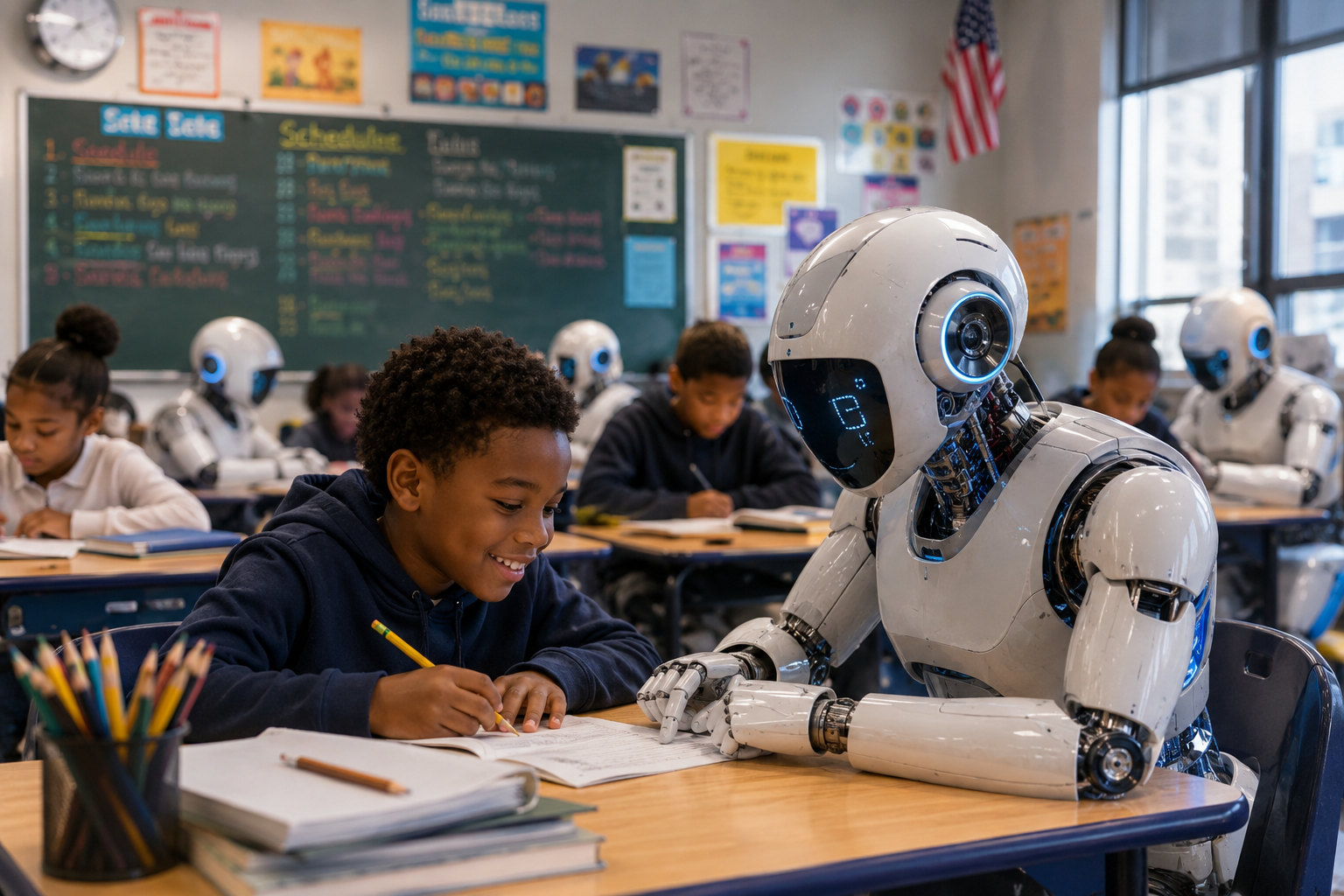
America’s public schools have never fully resolved the contradiction at their center: founded on the democratic premise that education is the great equalizer, they have persistently reproduced the inequalities of the society that sustains them. The gap in academic achievement between children from high-income and low-income families — and between white students and Black, Latino, and Indigenous students — has been documented for decades, survived multiple waves of school reform, and narrowed only modestly. The children most affected are concentrated in identifiable places: high-poverty urban neighborhoods, rural communities stripped of industry, and tribal lands long neglected by federal investment. These are the communities this report calls historically underserved.
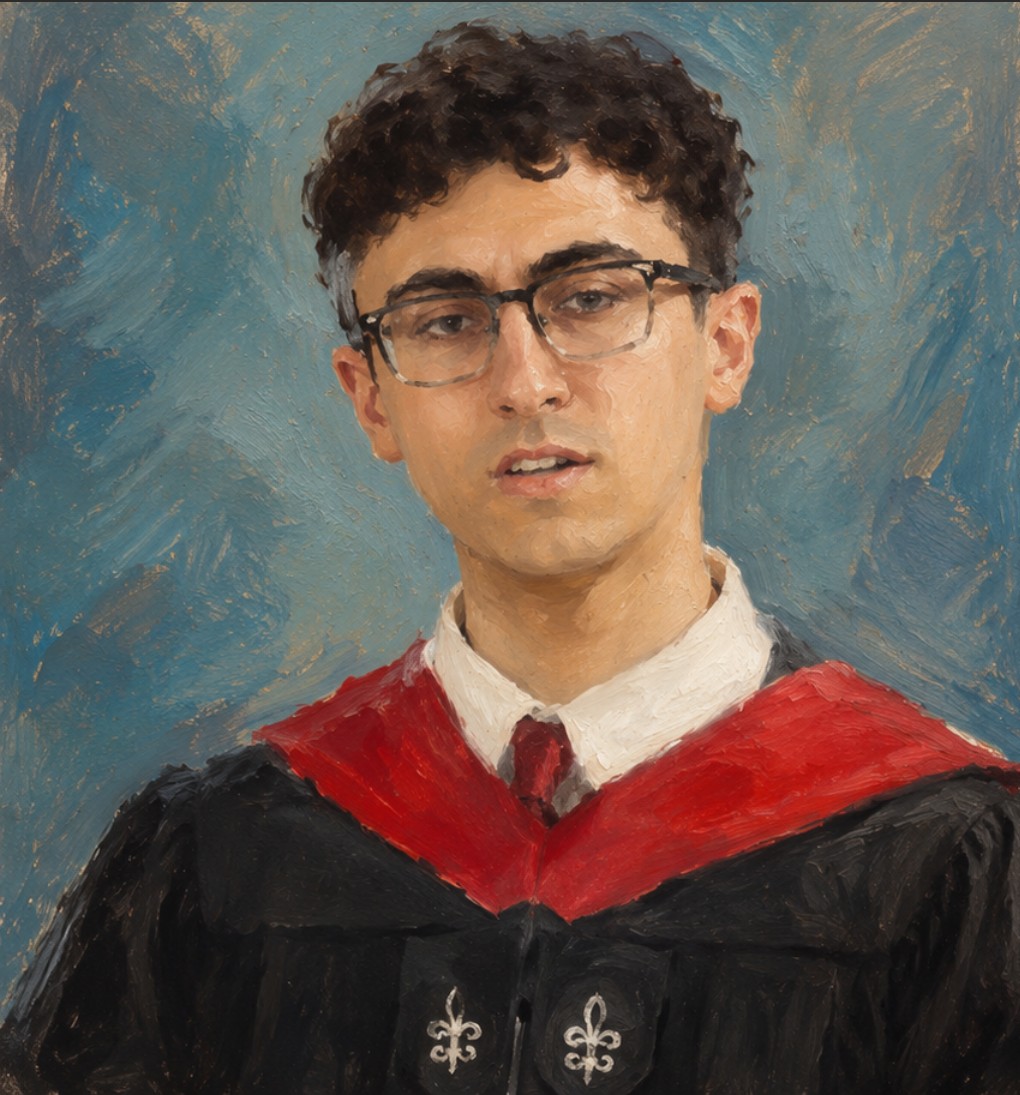
Introduction: The following is a transcript of a Harvard Commencement address at Harvard Yard on 28 May 2026 by Noah Eckstein.
I am a proud Jew. I’m also the proud grandson of a Christian and the proud grandson of a Muslim. But that isn’t a contradiction in any sense of the word. It’s proof of a concept. And that concept is what I want to talk to you all about today because my family taught me something I think this world could really use right now, which is that the counter to division isn’t necessarily agreement, it’s understanding.
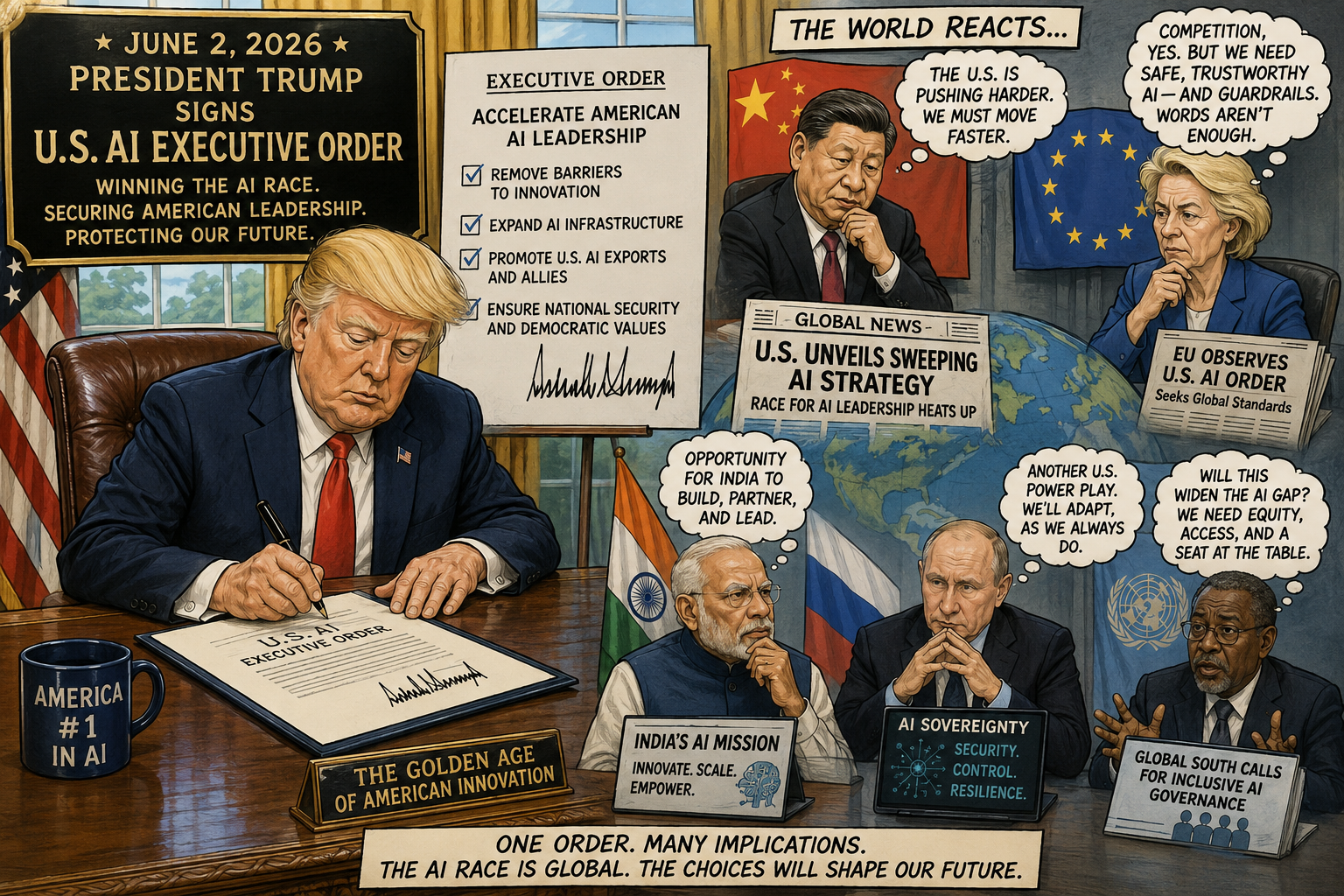
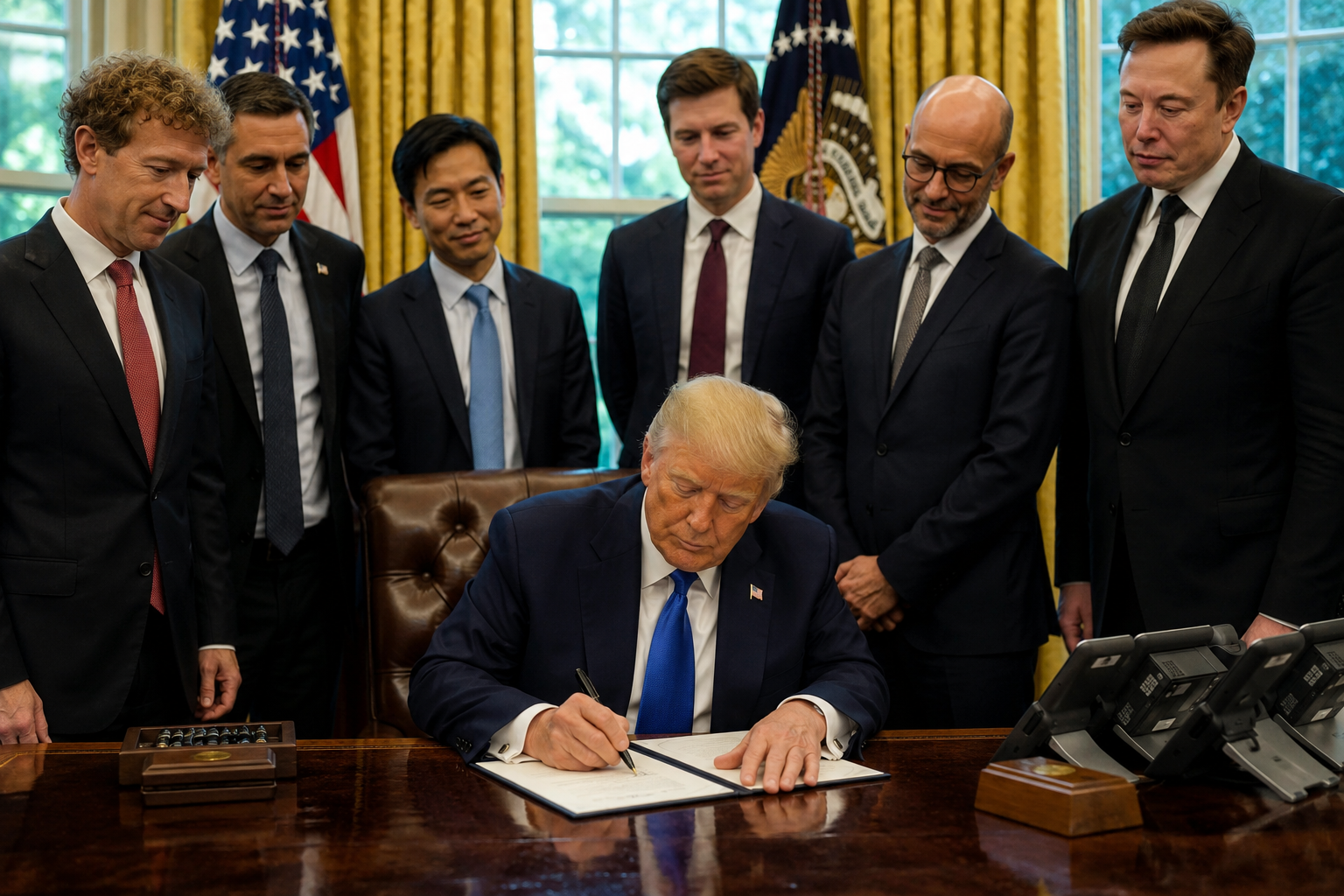
On 2 June 2026, President Donald Trump signed the executive order “Promoting Advanced Artificial Intelligence Innovation and Security,” establishing a voluntary framework through which leading AI developers may provide the U.S. government with access to frontier AI models up to 30 days before public release for cybersecurity and national-security evaluation (1,2,3). The order represented a compromise between advocates of stronger oversight and industry leaders who argued that lengthy review periods could weaken American competitiveness against China (2,4,5).
On June 2, 2026, President Donald Trump signed an executive order titled “Promoting Advanced Artificial Intelligence Innovation and Security,” establishing a voluntary framework under which major AI companies would share their most powerful frontier models with the federal government for review up to 30 days before public release (1,3). The order marks a significant departure from the administration’s previous hands-off posture toward AI regulation—one framed as essential to preserving American companies’ lead over China—and signals that national security concerns have begun to override, at least partially, the administration’s strong deregulatory instincts (5).
Writing instruction in schools and colleges has long been guided by what researchers call the writing process—the recursive psychological steps competent writers take as they plan, draft, revise, and edit a text. Since the early 1970s, process-oriented pedagogy has placed peer and instructor feedback at the center of composition classrooms, treating writing not as a solitary product to be delivered and graded but as an evolving, socially constructed activity. For decades, however, a fundamental constraint limited the reach of that vision: before the internet, peer response groups were small, face-to-face, and essentially invisible to researchers and program administrators. No systematic record of how students gave feedback—or how writers used it—was ever made.









 Educational Technology and Change Journal
