The Surface Pro 2 Will Be the Death of Notebooks

Jim ShimabukuroBy Jim Shimabukuro
Editor

Updated 11/19/13, 9/6/14

(Related articles: “Thoughts on the Surface Pro 2 After 8 Months” and “Why the Surface Pro 2 Will Be a Game Changer in the Tablet World Series.”)

About three weeks ago, when all I had to go on was reviews, I predicted that the Microsoft Surface Pro 2 (SP2) would be a game changer. I had just put in my order then and was told that shipment would be in mid- or late-December. Thus, I was surprised and happy to learn, in late-October, that it had been shipped for next-day delivery. It arrived on schedule, and in the time it took to remove it from the packaging, plug it in, and turn it on, I knew that the notebook was dead.
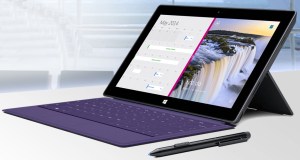
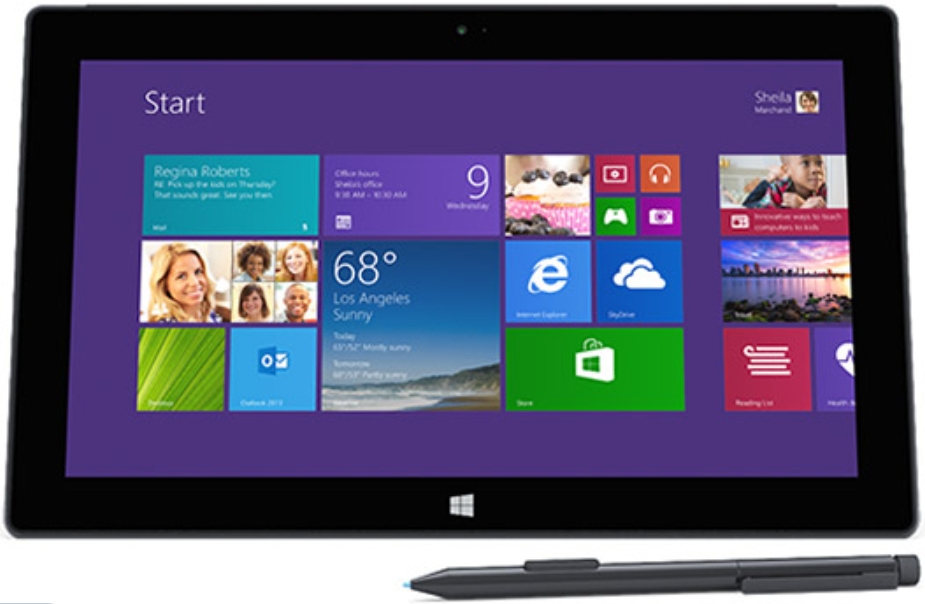
Surface Pro 2 with type cover and digital pen.

Surface Pro 2 with detachable type cover and digital pen.

I’ve had it for about a week and haven’t had time to do more than a few things, but what I’ve seen is impressive. The look and feel reminds me of the original iPad and iPhone4 — which I’m still using. Rock solid and sleek, beautifully engineered. In contrast, the clamshell notebook with its hinged keyboard suddenly seems odd, anachronistic, looking more like yesterday’s typewriter than tomorrow’s computer.

Don’t get me wrong. The SP2, like the original iPad, is far from perfect, and better and less expensive models from Microsoft and competitors will soon be flooding the market. However, it’s more than done its job as a groundbreaker. In short, it’s the first viable full-blown Windows PC in a tablet chassis.

Form factor alone, however, wouldn’t be worth much if the tablet couldn’t perform. The big question for me was — and still is, to some extent — will it perform?

In size, it’s slightly larger than the original iPad and only a half pound heavier. But the difference in terms of sheer power is huge. The SP2 runs the 64-bit version of Windows 8.1, MS Office 2013, and everything else you can run on a notebook or desktop. It has a high-resolution 1080p display and an HDMI port. Plug in a 26″ 1920 x 1080 monitor and you have all the size you’ll need. It has a standard USB 3.0 port and a micro-SD card slot. Plug in an external two-terabyte drive, a CD/DVD player-recorder, a thumb drive, or an SD card for more onground storage.  Continue reading

An Interview with Tom Preskett: The Evolving Role of a Learning Technologist

Jim ShimabukuroBy Jim Shimabukuro
Editor

Updated 11/6/13, 5:40am HST.

Introduction: Tom Preskett was a staff writer with ETCJ from 2008-2011, and we make it a point to touch bases with him from time to time. For example, in 2012, he wrote A Londoner’s View of the 2012 Olympics: Live Feed of All Sports at Any Time!. He brings a reflective insider’s view of what it means to be a learning technologist in the most exciting period in the history of the field. The following interview, conducted via email over the last few days, is prompted by his recent move from the London Centre for Leadership in Learning, Institute of Education, to Nord Anglia Education, Oxford.

JS: Tell us about Nord Anglia Education.

TP: Nord Anglia Education is a premium schools organisation. We own 27 schools located in South East Asia, China, Europe, North America and the Middle East. Most of our schools follow a curriculum based on the National Curriculum of England, adapted country by country to meet local culture and conditions.

Tom Preskett

Tom Preskett, Learning Technologist, Nord Anglia Education.

To support these schools are two online environments. One aimed at the students, the Global Classroom, and one aimed at the teachers, Nord Anglia University. Both are moodle environments although they don’t act like traditional virtual learning environments. Our online environments tie together as each school has a moodle, and authentication carries across the Global Classroom and Nord Anglia University. The ethos is one of High Performance Learning as created by our educational director, Professor Deborah Eyre. You can read all about this in her paper “Room at the Top.”

Continue reading

A Caltech Grad in a Caltech MOOC, Part 3

picture of Harry KellerBy Harry Keller
Editor, Science Education

[Note: Harry, who holds a BS in chemistry from the California Institute of Techology and a PhD in analytical chemistry from Columbia University, is sharing his first MOOC experience in this series. See part 1, 2, 4 and 5. -Editor]

November 2, 2013

The discussions should play a larger role, but I have found them to be unsatisfying. Either they’re about esoterica or trivia. Perhaps, I’m too pragmatic for this course. It’s not just about the course; it’s also about the students. It’s clear that not all students and courses go together.

I think that I’ve already gained the most important insights into machine learning from this course, how to know whether a given situation lends itself to this valuable tool. Completing the course will expand the machine learning options and my depth of understanding of how to use them.

Last week, I didn’t have the time to visit the discussion groups. This week, I don’t feel the necessity but may do so just to see what’s going on.

November 4, 2013

As I work on the fifth homework assignment, I’m not sure whether I’ve become smarter or the homework has become easier. Last week was very hurried, and I stumbled badly. This week went along nicely. There’s still plenty of mathematics, more than you might imagine, but the concepts seem more manageable.

When I began, I only knew a bit about this field from my days as a university professor when a colleague published papers about machine learning used to identify compounds in gas chromatograph tracings and spectroscopy. It was a promising area then.

Continue reading

New AACE Special Interest Group on ‘Assessing, Designing and Developing E-Learning (ADD)’

By Stefanie Panke
Editor, Social Software in Education

The Association for the Advancement of Computing in Education (AACE) has launched a Special Interest Group, “Assessing, Designing and  Developing E-Learning” (ADD). You do not have to be an AACE member or an attendee of previous AACE conferences to  join — though some activities will be tied to the E-Learn 2014 conference to be held in New Orleans from October 27-30, 2014.

The SIG had its inaugural meeting during the AACE E-Learn 2013 conference. If you missed it, review our presentation for collaboration ideas.

ADD3

Based on the discussion during the SIG meeting on Oct. 23, we have initiated first community activities:

  • To facilitate SIG projects, discussions, meetings and publications we want to learn more about your background and interests. Please take 10 minutes (or less) and fill out the survey.
  • We created a LinkedIn group for our SIG members to communicate with each other. Here’s the link to the LinkedIn group – join us there.
  • Are you a member of the AACE network Academic Experts? Learn more about the SIG.

Our next step is to see what information the survey brings in and share this with our SIG. We are excited about the many possibilities for collaboration and look forward to meeting again at E-Learn 2014 in New Orleans. In the meantime, stay connected through ADD SIG events and activities.

Please feel free to share this information with interested peers.

Curtis Ho and Stefanie Panke
Chairs, ADD (Assessing, Designing & Developing E-Learning)

A Caltech Grad in a Caltech MOOC, Part 2

picture of Harry KellerBy Harry Keller
Editor, Science Education

[Note: Harry, who holds a BS in chemistry from the California Institute of Techology and a PhD in analytical chemistry from Columbia University, is sharing his first MOOC experience in this series. See part 1, 3, 4 and 5. -Editor]

October 19, 2013

The third week of this MOOC unveiled to me a problem with MOOCs. Not every student is a “student.” I am not really a student. I have conflicting priorities that few students have. Sure, some have jobs and family responsibilities. Generally speaking, they can leave their jobs behind when they leave their jobs.

As an entrepreneur, I am “on call” 24/7. I have to “steal” a few hours a week for this MOOC. I have a goal that may help my business — or may not. The MOOC has to be a low priority. I have no way of knowing when I can watch the lectures or do the homework beforehand.

If you cannot set aside a definite and adequate number of hours every week, you may not be able to achieve all you wish with your MOOC.

This has been a very busy week. I already have two full days committed next week. By full, I mean from arising to falling asleep, not a mere 8 or 9 or 10 hours. There will be not a minute for MOOCs.

Last week, I managed 8/10 on my homework due to not paying attention when I encoded my answers as (a) through (e). This week I paid attention to that but did not have time to analyze my answers as fully as I would have liked. Instead of the recommended ten hours spent on homework, I spent about one. My 7/10 on the homework reflected this less deep thinking.

One problem I missed had me determine the largest number of points that can be shattered by a planar triangle learning model. I really thought that I understood this problem but clearly did not. I don’t really have the time to figure out why.

The last problem in the set required finding the growth function for a planar annulus training model. I was able to find the answer quite nicely and got it right.

The good part about this homework is that I did not have to write any software. The two previous homework sets required considerable amounts of programming. You could make a mistake in understanding or in coding. Having two modes of error made the exercises more stressful than usual.  Continue reading

Qualities for a Strong Online vs. F2F Teacher: Are They Different?

Joseph Chianakas80By Joe Chianakas

[Note: This article first appeared in ETCJ as a comment on “Online Learning 2012: Six Issues That Refuse to Die” (12/29/11) on 10/22/13. -Editor]

Improving education and instruction, whether it’s online or F2F, is all about the quality of the teacher. It goes without saying that a bad instructor will create a bad environment, in either setting. A great instructor will have a positive impact on students, no matter the environment. So the questions I would add are: What are the characteristics of a strong educator? Are there different characteristics for the online instructor compared to the F2F instructor?

What are the characteristics of a strong educator? Are there different characteristics for the online instructor compared to the F2F instructor?

A good online instructor must be well-organized, must create a solid structure within the CMS, and must be active and involved with the students. A good F2F instructor? Well, it’s similar, right? So what are the differences?

I think it helps to have a strong personality in the F2F environment, and for me, it’s that social interaction that I enjoy the most about teaching. I build rapport with my students, and I think that makes them enjoy class more and, thus, learn more. It sure makes me enjoy my career more.

Can we do that online? Many try, but it’s not quite the same. Then I wonder: So am I selfish? Do I just want to enjoy my work more? Maybe.

I do know without a doubt that teaching online has enhanced my F2F classes. It has improved my organization, my rubrics, my instructions, and much more in the F2F classroom. It’s easy to sit down and talk to someone about a topic or assignment. It’s significantly more challenging to clearly articulate strong discussion topics and assignments when teaching online.

I really enjoy thinking about these questions. I want to be the best educator I can be, no matter where I’m teaching. And I think it’s important for people to know that we can all learn from one another — that there is value in reflecting what we lose or gain in either medium of teaching. I want to keep asking questions like these and those in the article, and I want to get better at what I do without insulting anyone’s teaching or teaching preferences. Let’s simply strive to improve.

Why the Surface Pro 2 Will Be a Game Changer in the Tablet World Series

Jim ShimabukuroBy Jim Shimabukuro
Editor

Last updated 9/6/14

(Related articles: “Thoughts on the Surface Pro 2 After 8 Months” and “The Surface Pro 2 Will Be the Death of Notebooks.”)

I’m one of the 15 million who bought the first generation iPad in 2010-11, and I’m still using it today as a flexible extension of my desktop. I can take it anywhere within my WiFi zone and have instant connection to the web. Press, sweep, and tap, and I have my email. Tap and tap, my favorite websites. Tap and press, I’m done. No desk, no mouse, no keyboard, no waiting around.

Microsoft Surface Pro 2

Microsoft Surface Pro 2

But it’s not a desktop PC, and it still can’t do some of the basics. It can handle email, both reading and writing, but it can’t multitask very easily. This means that any task that requires grabbing info from one app and using it in another is iffy and requires so many steps that it’s almost not worth doing unless you’re desperate.

My iPad also can’t do standard PC apps such as MS Word and Excel and the gazillion little utilities that I can’t live without, and its ability to handle the vast range of webpage styles is poor, which makes web browsing and research a more miss than hit exercise. There are countless workarounds for mainstream desktop programs and app alternatives for mobile devices that are supposed to render standard websites readable, but these are clunky and offer poor alternatives to the real deals.

My iPad can’t handle images and videos very well, and it balks at most online video formats outside of YouTube. Thus, it’s a great tool for what it can do, but it leaves me on a short tether to my desktop.

I’ve been closely following the 2nd-to-4th generation iPad releases, but I haven’t seen the breakthroughs that I need. I also have an android tablet to keep an eye on what’s happening in that sector, but the issues are similar.  Continue reading

ISSOTL 2013: ‘Doing SoTL Means You Never Have to Say You’re Sorry!’

By Stefanie Panke
Editor, Social Software in Education

The 10th annual conference of the International Society for the Scholarship of Teaching and Learning was held in Raleigh, North Carolina, on October 2–5, 2013, hosted by Elon University’s Center for Engaged Learning (CEL). ISSOTL 2013 attracted approximately 600 participants. Most of the attendees came from universities across the US. Visitors from Canada, Europe, Australia, and other countries added an international flair to the event.

The conference organizers Peter Felten, Jessie Moore and Heidi Ihrig did a remarkable job in bringing together the traditions and values of the SoTL community with innovative ideas and emerging technologies. The conference was preceded by a free online series that featured videos, chats and discussion forums. During the event, participants were able to follow their personalized schedules on their mobile devices using the guidebook conference app.  At the same time, plenary presentations did not rely on Twitter-walls for interaction, but used buzz groups and other small group discussion formats to foster in-depth dialogue and deep processing.

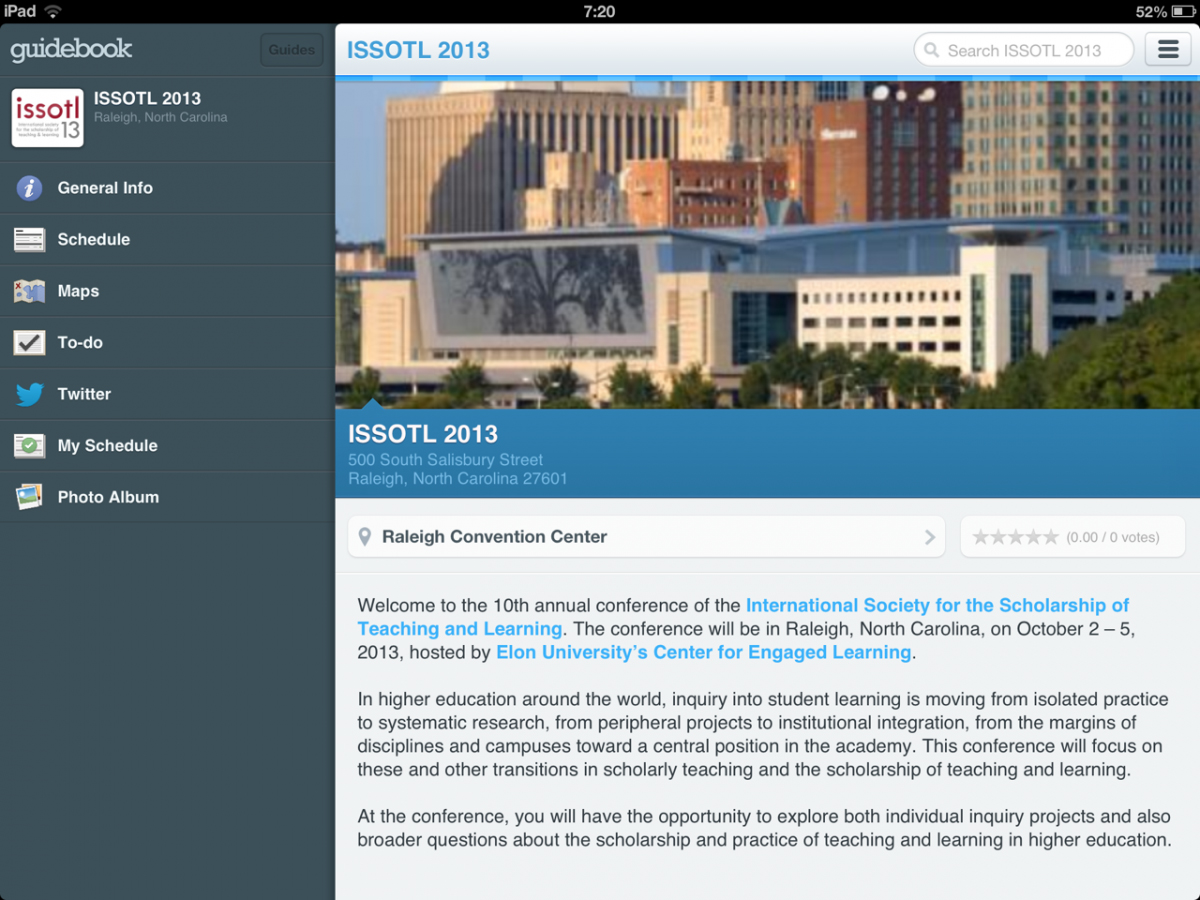
 Schedule, planner and collective photo album: ISSOTL Guidebook App. Click image to enlarge.

Schedule, planner and collective photo album: ISSOTL Guidebook App. Click image to enlarge.

Wednesday, October 2: ‘The 8-track-tape Player of Opening Plenaries’

issotl 02For me, who like most participants did not book an additional pre-conference workshop or symposium, the conference started at 6:30 pm on Wednesday with the initial plenary session. The purpose of the plenary was to bridge from the online pre-conference to the live event, as the moderator Randy Bass (Georgetown University) jokingly explained: “This is not a task that anybody had to do a few years ago, and this is probably not a task that anyone will have to do a few years from now. We are the 8-track-tape player of opening plenaries.”  Continue reading

Students: Win a Trip to L.A. – Enter the IWitness Challenge – Deadline 12/2/13

i witness
Students across the country have already started working on their IWitness Challenge project sponsored by the USC Shoah Foundation – The Institute for Visual History and Education, but there’s still time for youngsters in your community to enter this free online program geared to all secondary-school students.

The deadline to enter the Challenge is Dec. 2, 2013. The winning student, along with their teacher and a family member will be brought to Los Angeles to showcase their work as part of the 20th anniversary activities for the Shoah Foundation, which was founded by director Steven Spielberg in 1994 after making “Schindler’s List.”

The IWitness Challenge (iwitness.usc.edu) connects students with the past in a very personal way that spurs them to take action to improve the future.

With access to many of the Shoah Foundation’s 52,000 testimonies of survivors, liberators and rescuers, students experience history in a way that hits home. Instead of reading facts from textbooks, students feel the emotions and build relationships with those who lived through seemingly impossible situations.

But students do more than watch the testimony. The IWitness Challenge compels them to think, to make smart choices and to create their own project and video from what they’ve learned. By encouraging teachers and students to create their own lesson plans, IWitness allows them to expand on practically any subject they wish to pursue. From civics, government and history to poetry, art and ethics, educators can tailor lessons appropriate for their classrooms.  Continue reading

VLC Media Player: Many Hidden Features

Chaz Baruela80By Chaz Baruela
Student, University of Hawai’i at Hilo

The first time I bought a laptop I used the default media player program, which is Windows Media Player. Unfortunately, there are some file types that do not work unless you download extra codecs for them. I didn’t want to download extra codecs, so I asked my friends what media player they use. That is when VLC media player was introduced to me. I have been using this program for the past five years, and in my opinion it is one of the best media players around.

VLC Media Player

VLC Media Player

First, the program is 100 percent free plus the download and install is quick and easy. When you install VLC, you don’t need to download extra codecs. Almost all video and music files such as mp4, mkv, avi, mp3, and ogg are playable as soon as VLC is installed. One classmate, Kai, commented on my post and said that he uses VLC media player to play flash video and matroska video files (Gilding). Another, Leleiohoku, said that she only found one movie that they couldn’t play (Stafford). My point is that VLC plays almost everything.

When you start up the media player, one of the first things you will notice is the interface. Reviews about how simple and attractive it looks are mixed. However, I think it is simple and has the basic functions covered such as a loop and a playlist. What you might not know is that there are some other “hidden” buttons that allow you to record, take a snapshot from a video, and a frame by frame button. I don’t see much use for frame by frame because all it does is stop the video and play it forward one frame at a time.  Continue reading

A Caltech Grad in a Caltech MOOC

picture of Harry KellerBy Harry Keller
Editor, Science Education

[Note: Harry, who holds a BS in chemistry from the California Institute of Techology and a PhD in analytical chemistry from Columbia University, has been sharing his first MOOC experience as comments to Jim’s “Technology in Higher Ed: We Ain’t Seen Nothin’ Yet” (10/3/13), but they’ve quickly grown into a series that we’ll be publishing on a loose schedule. See part 2, 3, 4 and 5. -Editor]

October 3, 2013

Future MOOCs may or may not be termed “MOOCs.” Things are reaching the point where small operations may change the world. Just look at the impact that Salman Khan had on education.

The Kepler project in Rwanda is an example of being a bit more creative by taking MOOCs and combining them with in-person teachers to deliver high-quality education. After all, they’re free!

How this resource comes to be used will affect how it evolves.

Another factor will be adaptive learning options and more interactivity.

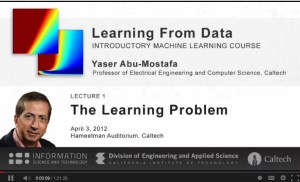
Opening screen for "Lecture 1: The Learning Problem Free," from Caltech Professor Yaser Abu-Mostaf's free introductory Machine Learning online course (MOOC).

Opening screen for “Lecture 1: The Learning Problem,” from Caltech Professor Yaser Abu-Mostaf’s free introductory Machine Learning online course (MOOC).

I’m currently taking my first MOOC, given by my alma mater, just to learn something new (machine learning — haha) and learn about MOOCs first-hand. So far, it’s nothing very exciting, but I haven’t bothered with any of the discussion group stuff because I just don’t have time for it. I may not have time to complete the course, but at least I’ll have learned SOMETHING and experienced it.

October 6, 2013

Follow up on my MOOC — I handed in the first homework assignment. I tried to do the last problem (requiring writing software) the hard way (by quantitative analysis) and decided that it would just take too long and settled for an alternative approach (Monte Carlo method), which only took a few minutes to program and run.

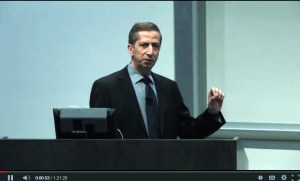
Professor Yaser Abu-Mostafa

Professor Yaser Abu-Mostafa

My first homework grade = 10/10. I took a look at the discussion group after I finished my homework to see what sort of questions and answers were being posted. I guess I’m rather biased from having been a Caltech student and having done essentially all homework solo. I think figuring out how to do it is as important (maybe more so) than doing it.  Continue reading

Language Is the Key to Community

Frank B. WithrowBy Frank B. Withrow

Human infants come into this world seeing, hearing, smelling, tasting and feeling the sensory world around them. The human culture developed the spoken word so that they could share private sensory experiences publicly. That enabled them to develop communities that built civilizations. About five thousand years ago mankind discovered that they could transform the spoken word into the written word. That enables mankind to transfer experience and knowledge over time and space.

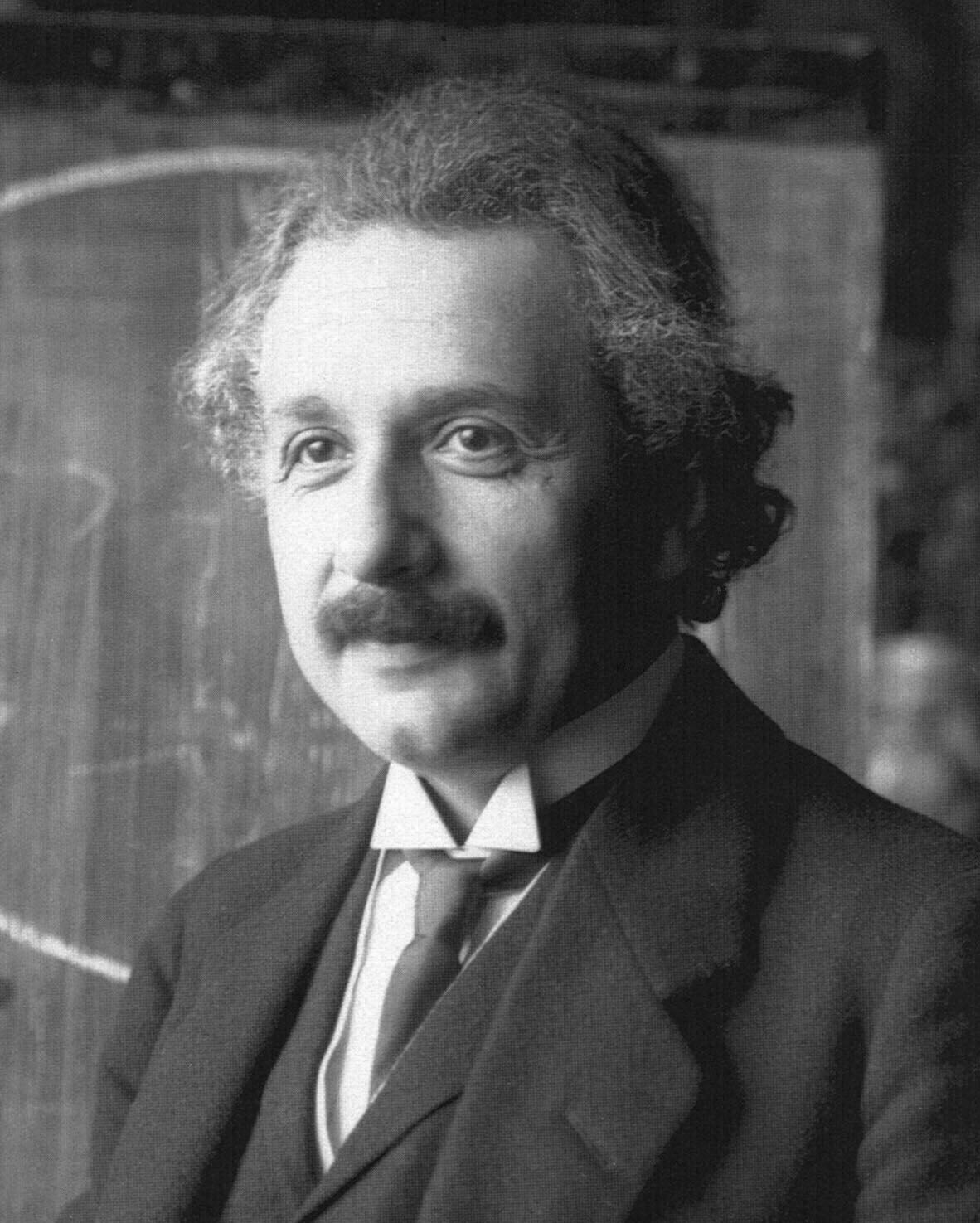
Albert Einstein

“Albert Einstein . . . felt the development of speech and language was one of mankind’s greatest accomplishments.”

I have been enjoying the thoughts and ideas about a peaceful world by a German Jew. They were written some eighty years ago as he worked at the League of Nations trying to avert World War II. He did not write in English so his original thoughts were in German and subsequently translated into English. He was very thoughtful in his deliberations. Among other things he felt technology would make us so efficient that there would not be enough work to employ everyone. He also felt the development of speech and language was one of mankind’s greatest accomplishments. I have been reading Albert Einstein’s papers of the 1930s.

We know our world through our sensory perceptions. They are the beginnings that are followed by words. There is an inherent desire by humans to communicate one with another. If our sensory perception are disabled we find a way around them to meet our needs to share. If we are deaf we use American Sign Language or lip-read. If we are deaf blind we learn touch signs. Even mentally slow children learn speech and language.  Continue reading

Technology in Higher Ed: We Ain’t Seen Nothin’ Yet

Jim ShimabukuroBy Jim Shimabukuro
Editor

Technology is increasingly dividing the academy, but this is a natural pattern in change. Most HE institutions fail to grasp that disruption is an outside force that creates a whole new population of students. This oversight or denial leaves colleges and universities fighting to defend its traditional practices — but they’re battling a strawman.

The real “enemy,” if you will, is a whole new way (MOOCs) to reach the world’s nontraditional student population. MOOCs aren’t aimed at traditional college students, but many traditional students are exploring the benefits of MOOCs and some institutions are exploring MOOC-like courses for their students.

The leadership in MOOC development and deployment is increasingly shifting to other parts of the world where HE has been a pipe dream for the masses. In the US, it is also shifting, on little cat feet, to small groups or departments in lesser-known colleges and universities with staff who understand and are exploring the potential of MOOCs. These garage and bootstrap operations are where change is being forged, and it will be interesting to see, in the coming months (not years), where this will take us.

We’re only seeing the tip of the iceberg in terms of technology-driven changes to come in HE. On our campuses, we need to take our eyes off the little islands that we call home and look beyond our shores to the vast ocean of possibilities. If we think we’ve witnessed change, we have another think coming. We ain’t seen nothin’ yet!

__________
MOOCs Outside of Mainstream U.S. Higher Ed (updated 10/20/13):

China MOOC: xuetangX, accessed 10/20/13.

Tim Johnson, “Online education inspires eager students in Latin America,” CSM, 10/4/13.

MOOCs take off in Rwanda: Accreditation, sustainability and quality issues,” Institute of Learning Innovation, 10/1/13.

Carolyn Fox, “Higher, open education for India,” Open Source, 8/29/13. \

Hiep Pham, “Research chemist launches Vietnam’s first MOOCs site,” University World News, 9/21/13.

MOOCs.co, 2013: “Higher Education MOOCs“; “K – 12 MOOCs“; “MOOCsNews© on Credits, Certificates, Degrees, Career Services, Job Placement and other related subjects.”

Technological Advances for the Disabled Benefit Everyone

Frank B. WithrowBy Frank B. Withrow

Captioned Films for the Deaf became a Federal law in 1958. Television was a more difficult problem. Open captions on television were opposed by a percentage of the hearing population. Therefore, we had to develop a system that, on the same broadcast, could have captions and a broadcast that was free of the captions. We experimented with the broadcast technology and discovered that we could in fact encode the caption in the broadcast signal and with the proper decoding system have a clear non-captioned broadcast and with the decoder have a captioned program. The FCC approved the system and it works today.

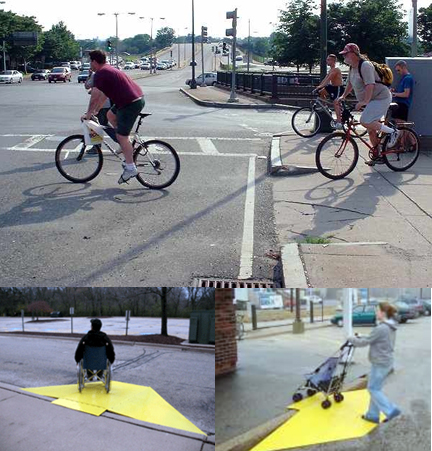
Curb cuts benefit everyone.

Curb cuts benefit everyone.

Ironically the side effects of captions have made caption television an interesting product. Bars have used it in crowded environments. Doctors and dentists have used it and captions are widely used in hospital rooms. Like so many devices the captioned TV has been used beyond its original purpose. We see many applications of systems devised for the disabled being used by the wider community. The IQ test was originally developed to identify mentally limited children. The typewriter was developed for cerebral palsied individuals. In fact, Alexander Graham Bell was a teacher of deaf children when he developed the telephone. While he was not specifically developing the telephone to aid deaf people, his concern for deaf education provided the background for the telephone.

Many advances in our society have come from work among the disabled that was designed to enable them to more effectively compete in the world.

Today’s advancements with high technology lead us to believe that cochlear implants and optical implants will lessen the limitation of hearing and sight loses.

We know that the human brain can overcome many obstacles. Digital technologies will open many doors in the future. For example, we have the technology today to translate a severe speech problem into understandable speech. If the speaker has consistent speech even if it is not understandable we can use digital technologies to make it understandable.

Wheelchair curb cuts benefit parents with babies in strollers. I had a DC bicycle delivery boy tell me they were for them.

The larger community also uses things that benefit the disabled. Education for the disabled makes them taxpayers rather than tax users. Good programs for the disabled are wise investments for society.

Retirement of Your Elementary School Students: Keeping in Touch with Facebook

Frank B. WithrowBy Frank B. Withrow

As a teacher there always is one learner you cannot reach. You wonder why since your lesson plans seem in order, the other kids are learning but Suzy is stagnating. I had a girl who should have done well, but she had a hearing loss and was also mildly cerebral palsied. She was not a bad learner but also not really a good learner. I was never satisfied with her progress but also could not point out exactly where she fell short.

Central Institute for the Deaf, St. Louis MO

Central Institute for the Deaf, St. Louis MO

Forty years afterwards, she wrote me and asked why she failed. She never married, never worked and really never fully participated in the world. I could not answer her question, but it did not surprise me that she never became integrated into society. Almost intuitively I knew she would not make it.

I recently heard from a classmate of hers who had retired from being a school janitor. He was beloved by the teachers and students in his school. Being a janitor does not sound like a wonderful success story, but it does not surprise me that he did his work well and was socially liked by all who came in contact with him. As a kid he was hyperactive and into everything. In fact, he was so into everything people thought of him as a pest. Yet he has contributed to society and been a taxpayer rather than a tax consumer. He is a success story.

I taught multiply disabled students fifty-five years ago. It is interesting to find some of those students on Facebook. Some are very successful with good jobs and families of their own. My former students live all over the nation — even the world. It is nice to be able to find and follow them on Facebook. They are in their seventies so I must be getting a bit older myself.

I was a Scoutmaster as well as a teacher. My first Eagle Scout was a great kid. He was not the smartest, but he was the most compassionate and born leader I ever had. He worked hard to achieve but also wanted everyone else to experience what he was doing. He is close to 80 now and still a leader. He has worked in charities and still wants to help others. He has had a long and happy marriage. He says he has no intention of retiring and still believes he can help others.

Some of my students have children who have gone on to accomplish outstanding things. Central Institute for the Deaf in St. Louis where I taught will be 100 years old in 2014. I look forward to its reunion. In the meantime Facebook brings back memories.

My large family is spread from New Hampshire to Texas and the West Coast. I have been impressed that Facebook helps us follow one another. It would be an interesting study to examine how Facebook engages families and reconnects teachers with students.

SPOCs Are MOOC Game Changers

Jim ShimabukuroBy Jim Shimabukuro
Editor

They’re billed as SPOCs, or small private online courses, and they’re being led by Harvard and UC-Berkeley. According to Rob Lue1, Harvard’s edX director, “We’re already in a post-Mooc era,”2 and SPOCs are the next generation. Considering the specs on SPOCs, however, SOOC3 — for selective open online course — may be a better fit for what appears to be a strong candidate for nextgen status. The problem with the moniker is that SPOCs aren’t always private.

Rob Lue, director of HarvardX.

Rob Lue, Harvard’s edX director.

For example, on the one hand, one of the two new HarvardX SPOCs this fall is GSD1.1x: The Architectural Imaginary. It is closed and private, and available “only to incoming Design School students.” However, it “may be opened up to the broader public at a later date.” On the other hand, HarvardX’s first SPOC, HLS1x: Copyright, in spring 2013, was open and selective: “Law School professor William W. Fisher, III, and his teaching staff chose from 4,100 applicants worldwide to form the 500-student online class.”4

SPOCs are MOOCs with fixed enrollments.5 However, beyond this general characteristic, there are two distinct types: private and selective. The former are, for all practical purposes, indistinguishable from traditional online courses. The real innovation is in the latter — selective. Anyone can apply, but acceptance is selective to limit enrollment. Thus, SOOC is probably a better fit for the Harvard-Berkeley nextgen MOOC.

SOOC numbers are smaller, but they’re still potentially massive in comparison to traditional onground courses. Coughlan describes them as “still free and delivered through the internet, but access is restricted to much smaller numbers, tens or hundreds, rather than tens of thousands.”

The selection factor in SOOCs is a game changer. Selectivity addresses three critical problems that have plagued MOOCs from day one: low levels of active participation, low retention rates, and variable student backgrounds. By limiting enrollment to selected students, SOOCs have the potential to become serious and effective online learning platforms that retain the MOOC’s magic of massive, open, and online.

As the ratio between staff and student numbers diverge, interaction remains an issue and reliance shifts to peer-to-peer support for feedback and guidance. However, when those with insufficient background knowledge, skills, and motivation are factored out, peer support systems may have a strong potential for success. Thus, selectivity may be the second generation answer to the MOOC’s current woes.

SOOCs open up a whole new dimension of possibilities for MOOCs. For example, a variation on selecting students up front may be to allow students to self-select in via performance in the first few weeks of a course. In other words, all students are accepted in the beginning, but only those who participate actively and at a given level — determined by staff or peers using rubrics — will be retained. This would amount to a two-stage enrollment process that’s initially open but becomes progressively selective in the first phase of the course.

Regardless of what they’re called — SPOCs, SOOCs, or something else — incorporating selectivity into the MOOC design is brilliant.
__________
1 “Robert Lue . . . Director Life Sciences Education and Professor of the Practice in the Molecular and Cellular Biology (MCB) department, directs Harvard’s edX – dubbed HarvardX” (Cathryn Delude, “edX, Transforming the Future of Education,” MCB, 11/29/12).

2 Sean Coughlan, “Harvard Plans to Boldly Go with ‘Spocs’,” BBC News, 9/24/13.

3 The acronym SOOC has been used by others, e.g., Heather M. Ross in “Instead of a MOOC, How About a SOOC?” (Educatus, 10/29/12) and Michael K. Clifford in “SOOC Challenges MOOC Muddle” (DreamDegree, 7/2/13). For Ross, it stood for small open online course; for Clifford, strategic open online courses.

4 Madeline R. Conway, “HarvardX’s New Fall Offerings to Include Two SPOCs,” Harvard Crimson, 6/21/13.

5 Dev A. Patel, “Law School Debuts First Online Course,” Harvard Crimson, 1/31/13.

Martian Rhapsody: Chapter 1 – Landing (REVISED)

martian_rhap017

[Note 7/6/14: See Chapter 2 – Rocks. -Editor]

Harry Keller

Harry Keller

To the reader: I’ve decided to redo chapter one to incorporate story ideas that wouldn’t have been possible with the original chapter. Please bear with me, and I apologize for the false start. I hope you’ll enjoy this adventure as much as I’m enjoying sharing it with you. Best, Harry.

mars-As the Google Mars shuttle continues its weeks-long deceleration toward its unbelievable destination, the crew of four busily checks the instruments on the attached Citigroup crew module where they have lived and worked for four months. They are so involved in monitoring not only their own module but also the Royal Dutch Shell supply module that they momentarily forget that they’re about to become the first humans ever to set foot on another planet. The shuttle holds the two attached modules like a parent carrying twins in both arms. It may look awkward to those used to air-based flight but creates no impediment to travel in the vacuum of space.

“Final pre-separation check,” snaps Aleka as the about-to-be Martians go through procedures necessary to ensure a clean separation from the shuttle. She glances out of the small thick window and sees the edge of the red planet against the black of space with its countless bright point lights of stars strewn haphazardly across its seemingly infinite reaches as though a child had thrown diamonds and diamond dust on a vast expanse of black velvet.

A few weeks earlier, the entire crew of four was excited to see the small red dot of Mars expand and grow into a shiny red penny in the black, deep expanse of space  – nearly 14 billion light-years deep, far beyond human imagination. Now, it fills most of one side of their view. Earth has receded to a pale blue dot, left forever to the billions living there. A new world awaits. Humans will triumph over Mars someday. Aleka has promised herself that this will be that day.

“Check,” says co-pilot Chun. Her engineer’s mind racing with the excitement and the checks she’s performing to ensure a safe entry and landing.

Four years of training guarantee that the anxious crew all know their roles in this landing precisely. The captain, Aleka (Allie), is the only flight-trained pilot on the mission, but all of them have spent countless hours in the landing simulator and can take over if necessary. Redundancy has been the watchword of the Mars mission from the very beginning. For the landing at Amazon base, however, there could be only one crew module. Everything depends on its successful entry into the absurdly thin Mars air, about 1% of the density of that on Earth, followed by the powered descent to the surface.  Continue reading

MOOC MOOC! The interview

By Jessica Knott
Associate Editor
Editor, Twitter/Facebook

nowthats160Rarely does a MOOC strike fear into the heart of its participants. Interestingly, in this case I mean the MOOC itself, not the content. MOOC MOOC, a MOOC about MOOCs (MOOC! Sorry, I just wanted to say it once more, as I didn’t feel I had worked enough instances of the word MOOC into the sentence) offered challenges and learning, exploring the MOOC phenomenon in an interesting, creative way.

MOOC MOOC has been offered three times by Jesse Stommel, Founder and director of Hybrid Pedagogy, and Sean Michael Morris, managing editor and coordinator of Educational Outreach for Hybrid Pedagogy. Jesse is also an assistant professor at University of Wisconsin-Madison and an advocate for lifelong learning and the public digital humanities. Sean calls himself a digital agnostic and a contemplative pedagogue. He is also a creative writer and a former community college English department chair. MOOC MOOC has been offered three times: in August 2012, January 2013, and June 2013.

Please cross your fingers as I conduct this interview, and hope the MOOC MOOC does not eat me alive. Here we go…

MOOCSleeps

1. What is a MOOC MOOC?

JESSE: A MOOC MOOC is a mostly amiable beast. He looks a lot like a cave troll but with altogether more charm and less menace. He’s misunderstood, only mean from a certain angle, but also clever. He eats MOOCs, disruptive innovation, and venture capitalists for breakfast. He has been known to cuddle a Twitter pal on occasion, which usually involves copious amounts of slobber.

Jesse Stommel

Jesse Stommel

MOOC MOOC: [eyes his dad suspiciously]

JESSE: MOOC MOOC is also a massive open online course about massive open online courses, a mini-micro-meta-MOOC that refuses to take the MOOC at face value, choosing instead to approach it as a sandbox for exploring nodal learning, participant pedagogy, and the course as container.  Continue reading

A Conversation with Curtis Ho: AACE E-Learn SIG on Designing, Developing and Assessing E-Learning

By Stefanie Panke
Editor, Social Software in Education

Dr. Curtis P. Ho is professor and former chair of the Educational Technology department at the University of Hawai’i at Manoa. His research interests comprise collaborative learning through distance education, instructional design strategies for teaching online, instructional technology standards in teacher education and the integration of technology into the curriculum. Dr. Ho serves on the executive committee for the AACE E-Learn conference (forthcoming in October 2013), where we co-chair a new Special Interest Group on Designing, Developing and Assessing E-Learning. Since we have never met in person (yet), I asked Curtis to comment on six statements related to assessment.

Curtis P. Ho

Curtis P. Ho

Statement 1: Authentic assessment is the “silver bullet” for deep, transfer-oriented learning – if only we knew how to do it right.

Curtis: Yes, I like the term “transfer-oriented learning” to define how we need to shape assessment. This is the gold standard for learning outcomes. After all, this is Robert Gagne’s 9th event of his Nine Events of Instruction. The challenge will be to create and implement authentic learning in an online course. How authentic can learning be if we are confining it to a 15-week semester at a distance?

Stefanie: I find David Jonassen’s work on problem solving (i.e., Jonassen 2011) a great starting point to think about the instructional design of assessment.

I am particularly interested in the design of assessment that fosters mastery orientation and offers gratification to performance-oriented learners. How can we make students want to improve and push themselves, and give them opportunities to shine and prove what they can do?

Statement 2: Assessment in online learning needs to move beyond multiple-choice quizzes in PowerPoint modules.

Curtis: I would generally agree. The ideal is to have authentic assessment at all times. However, multiple-choice quizzes may be useful in reinforcing short-term learning, and I see using this for self-check or practice. It may be used to scaffold lower level learning.

Continue reading

MOOC Looks: Zombies and Sober Reality

Articles Cited:

Carmel DeAmicis,  “The Walking Dead Online Class: Are Zombies the MOOC Future?“, PandoDaily, 4 Sep. 2013.

Keith Devlin, “MOOC Mania Meets the Sober Reality of Education,” Huff Post: The Blog, 19 Aug. 2013.

USC Shoah Foundation: Video Challenge for Grades 6-12

Lynn ZimmermannBy Lynn Zimmerman
Associate Editor
Editor, Teacher Education

In 1994, Steven Spielberg established the Survivors of the Shoah Visual History Foundation, a nonprofit organization whose original mission was to videotape “the testimonies of 50,000 survivors and other witnesses of the Holocaust from around the world for educational purposes before it was too late.” In the years since then the foundation’s mission has changed from just archiving to establishing educational uses for the materials that are archived. The education department has developed “educational programs and products for classroom use by students of all ages.”

iwitness02

This year (2013) is the 20th anniversary of Spielberg’s movie, Schindler’s List, which provided the impetus for the establishment of this foundation. To commemorate this anniversary, an online learning initiative has been set up to engage high school students in a competition that uses IWitness, a website set up for secondary educators and their students. Students participating in IWitness Video Challenge will have access to the 1,300 testimonies available on IWitness and will create their own video-essay.

This project seems to offer opportunities for students and teachers to engage in an assignment that would not be as accessible without modern technology. They can view, copy, and create using multimedia tools to develop a video essay that connects the students with the past and the present. To find out more about IWitness Challenge, I contacted Josh Grossberg of the USC Shoah Foundation – The Institute for Visual History and Education.

LZ: Who do you think will participate?

JG: We certainly hope that all students participate; it is our core belief that one person can make the world a better place and we want to reach as many of them as possible. Although IWitness is still in beta, it has already been accessed by more than 10,000 high-school students and 3,200 educators in 39 countries and all 50 U.S. states.

Continue reading

‘Teaching Digital Natives’: Difference Between ‘Relevant’ and ‘Real’

Lynn ZimmermannBy Lynn Zimmerman
Associate Editor
Editor, Teacher Education

Review of Marc Prensky’s Teaching Digital Natives: Partnering for Real Learning, Corwin Press, 2010. ISBN: 978-1-4129-7541-4.

I picked this book up because, as I have mentioned before, I worry that as a teacher educator I am educating today’s teachers for yesterday’s students. Although Prensky has some interesting insights into today’s and tomorrow’s learners, the concept he is presenting is not new and he admits this. What the book does offer, however, is specific ways in which today’s learner is different and some specific ways in which teachers can address these differences.

TDN

Throughout the book, Prensky encourages the teacher to see their students differently, as partners in learning. This concept is very similar to what is known as student-centered learning, problem-based learning, constructivism and many other progressive models that were developed in the 20th century. Prensky asserts that today’s students are not less able than previous generations but that their tolerance and needs have changed, and what and how they learn is different from students in the past. In the introduction, he makes his view very clear: “They want ways of learning that are meaningful to them, ways that make them see — immediately — that the time they are spending in their formal education is valuable, and ways that make good use of the technology they know is their birthright” (p. 3).

For Prensky, this immediacy is one of the keys to understanding today’s students. Technology allows them to participate in real ways in life across the globe, whether in something as serious as the events during the “Arab Spring” of 20111 or as trivial as voting on “American Idol.” He goes on to assert that teachers do not necessarily have to become experts in technology but that they need to re-imagine their pedagogy so that the student themselves take responsibility for their own learning using the technology they are so familiar with and so fond of.

By “real” he means immediately applicable to their lives. This is where technology can come in and make a difference.

As a teacher educator, I know that the notions he presents are not new. However, one of the points Prensky stresses is the difference between “relevant” and “real” — and that caught my eye. I have always been concerned with ensuring my students’ learning is relevant for them and the students they will be teaching. Prensky says that relevance is not enough. By “real” he means immediately applicable to their lives. This is where technology can come in and make a difference. Rather than only reading about historical events and watching videos about them, they can take virtual tours of many places, participating in or even creating simulations.

If a space launch is coming up, they can compute everything from budgets to payloads. They can use Skype to talk to real scientists about real-world problems. They can participate in urban planning projects for the future to help them think about and plan for the future they are going into. While these ideas are not really new to any progressive/constructivist educator, the reminder that students may have ways and means to accomplish tasks that the teacher may not have imagined is worth keeping in mind.

__________
1 Jean-Marie Guehenno, “The Arab Spring Is 2011, Not 1989,” NY Times, 21 Apr. 2011.

10th Annual Teaching and Learning Conference at Elon University: Cutting Edge Without Being Trendy

Stefanie Panke, Rob Moore, and Jamar Jones

Stefanie Panke, Rob Moore, and Jamar Jones

By Stefanie Panke, Rob Moore, and Jamar Jones

The 10th Annual Teaching and Learning Conference held on August 15 at Elon University (NC) is a regional event that attracts teachers, instructional designers, curriculum specialists, researchers, and students interested in the Scholarship of Teaching and Learning (SoTL). The UNC School of Government instructional support team spent a day of professional development there that proved to be a cornucopia of fresh ideas, concepts and insights.

Morning Plenary Session

R. Michael Paige

R. Michael Paige

The opening keynote featured an inspiringly passionate talk by Michael Paige, Professor Emeritus of International and Intercultural Education at the University of Minnesota. Paige’s keynote raised awareness of the multifaceted and multilayered nature of the concept of intercultural sensitivity. In a nutshell: Every classroom is an intercultural experiment. Learners’ cultural backgrounds, values, and life experiences differ. What does it mean to become intercultural? Diversity and intercultural encounters go beyond different nationalities and include sexual orientations, localities, ethnicities, as well as learning and communication styles. “Who is the role model for us?” asked Paige. “In most societies, this is still really a challenge.” Getting students to transcend ethnocentrism and explore intercultural relations is a demanding pedagogical task. Intercultural sensitivity is not innate but needs to be learned and taught.  It is normal for students to be in denial of cultural patterns and to feel more comfortable in monocultural environments. Paige introduced the Intercultural Development Continuum (IDC) as a useful model to help students navigate intercultural experiences.

fig01

Concurrent Sessions

After the morning plenary, we split up to attend different sessions: Each of us had a few personal highlights.

Stefanie’s Favorites: Authentic Learning , Motivation, and Big Data

Deandra Little and Paul Anderson

Deandra Little and Paul Anderson

Deandra Little and Paul Anderson from Elon University delivered the next talk I attended. The speakers connected their introduction to the keynote and revealed they both recently moved to North Carolina. They asked the audience, “Well, who else is new?” which led to interesting intercultural discoveries. It turned out that Anderson, academic literacy specialist, had worked as a consultant with the University of Bielefeld (Germany) where I completed my PhD.

Anderson and Little defined authentic assignment as asking students to produce intellectual work (at an appropriate level) that mirrors a typical task that practitioners or scholars in the respective discipline perform. Thus, students are placed in a realistic situation where they use the knowledge and skills they are learning in the course to help someone else outside the classroom – not the instructor.  “Think about it from the student’s perspective – you need to write something for someone who already knows more about the subject than you do,” Anderson said, describing the problem of traditional writing assignments. Little explained in more detail their narrative approach towards authentic assignments. The instructors immerse the students in a story in which they use the subject knowledge to help another person or group. This approach comprises seven components: (1) The learning goal of the assignment, (2) the role the student will play, (3) the person (audience) who asks for the student’s assistance, (4) the problem or question, (5) the reason why the audience seeks the student’s help, (6) what the audience will do with the student’s work, and (7) the type of communication (genre) the student will produce to solve the problem.  Continue reading

‘Inspiration Mars’ Inspires

picture of Harry KellerBy Harry Keller
Editor, Science Education

Mars seems to be everywhere these days. Who will go? How will we go? When will we go?

These questions have yet to be answered. Dennis Tito, a millionaire with Mars instead of stars in his eyes is focusing on a project he terms “Inspiration Mars.” This is not a landing but just a flyby. It’s not a four-person flight but rather a two-person flight by a man and a woman, both past child-bearing age for the reasons of radiation during the 501-day trip.

There’s one very conspicuous hitch in this program, readily admitted by all involved: the date. In order to be efficient, space missions to Mars must take place roughly once every two years, when Earth and Mars are aligned in their orbits. In 2018, there will be a special alignment that occurs infrequently and provides what the Inspiration Mars people call a “exceptionally quick, free-return orbit” that’s available just twice in every fifteen years. The next such launch window is in 2031, according to the Inspiration Mars site. This project has a very tight schedule.

 Inspiration Mars

By orbiting Mars at about 100 miles above the surface, the mission will avoid encountering the thin Martian atmosphere and will also use the so-called slingshot effect that takes some momentum from the planet itself to accelerate the spacecraft back to Earth and shorten the return trip considerably. It also reduces the amount of fuel that the craft must carry considerably.  Continue reading

Hyperloop: Is It Better, Faster, and Cheaper?

picture of Harry KellerBy Harry Keller
Editor, Science Education

Now that Elon Musk has revealed details of his Hyperloop concept for traveling between cities faster than double the speed of an airplane, it’s time to put his ideas to the test. Will they work? Should we build it?

Such a complex system has no trivial answer. We can consider two important factors, however. Will it work? Does it satisfy the demands of a new technology?

Hyperloop, by Elon Musk, Chairman, Product Architect and CEO, 12 Aug. 2013.

Hyperloop, by Elon Musk, Chairman, Product Architect and CEO, 12 Aug. 2013.

For the second question, the answer comes from considering how technology is supposed to work. When you inject technology into an existing space such as travel (or education for that matter), it should work better, result in faster results, and cost less than what it’s replacing or supplementing. Dan Goldin of NASA put it into really simple terms long ago:  Better, Faster, Cheaper.

Hyperloop pod.

Hyperloop pod.

How does Elon Musk’s plan stack up? From his own blog, here are his goals for intermediate distance transportation of from a few hundred miles up to around 900 miles when compared to existing system.

  • Safer
  • Faster
  • Lower cost
  • More convenient
  • Immune to weather
  • Sustainably self-powering
  • Resistant to Earthquakes (he’s in California)
  • Not disruptive to those along the route

The second two items match nicely. Musk claims that a ticket on the Hyperloop from Los Angeles to San Francisco should cost about $20 one-way. The speed of 700 to 800 mph certainly counts as faster. Is it better too? That depends much on what you consider to be better. The travel pods will hold about 28 people if his design is chosen. They will not be spacious. His drawings suggest a rather cramped environment that could bother claustrophobic passengers, except that this system will be above ground and could have a view. However, the drawings don’t show windows.

Elon Musk in Mission Control at SpaceX. He is a South African-American inventor and entrepreneur, best known for founding SpaceX and for co-founding Tesla Motors and PayPal.

Elon Musk in Mission Control at SpaceX. He is a South African-American inventor and entrepreneur, best known for founding SpaceX and for co-founding Tesla Motors and PayPal.

A 350-mile trip might take around a half-hour, long enough to become upset with being in a small closed space with others. The potentially longest trip of 900 miles would require over an hour. All current modes of transportation, planes, trains, automobiles, and boats, have windows that passengers tend to like very much despite the view. Looking out of a window at 30,000 feet or traveling at 70 mph can be disconcerting. However, the power of the desire to see overcomes this problem for most.

Continue reading