As we often discuss in these articles, technology can offer innovative uses as a tool for education. Many of the activities of the NN Theatre (click on the Union Jack for English) at the Grodzka Gate demonstrate how technology can be used in creative ways for formal and informal education.
Grodzka Gate: Old and New
Recently I was in Lublin, Poland, where I visited the Grodzka Gate (Brama Grodzka). The gate, overlooking the castle, was one of the main entries into the old city of Lublin. In the period before World War II, Lublin’s population was about a third Jewish. Most of their houses, businesses, and places of worship and study were located in the area around the castle and the Brama Grodzka.
The gate served as the main passage between the Christian and Jewish parts of the city. After the destruction of World War II, the gate fell into disrepair. In 1992, a theatre group took possession of it and in doing so discovered a cultural link with symbolism that they could not ignore. The NN Theatre enlarged its activities from traditional theatre productions to becoming a vehicle for uncovering, preserving, and sharing the past.
Today, I had the opportunity to interview Susan Murphy, an instructor at Algonquin College and co-owner of Jester Creative, Inc. of Ottawa, Canada. This morning, while getting my Twitter fix and blearily sipping my first cup of coffee, I stumbled upon a blog post she wrote entitled “Credit Where Credit Is Due” in which she discusses the importance of remembering and considering the people behind the Twitter feed.
Susan Murphy
To me, this personal connection and the appreciation of the skills and ideas of those around us are the most powerful assets Twitter offers its users, and her post really gets to the heart of how important it is to remember that Twitter is more than just tweets. It is a massive network of people. I find that people who don’t follow back, only regurgitating the ideas of others, or never communicate outside of their small inner circle don’t last long on my list of followers. They seem to miss the humanity that lurks at once beneath the surface and in front of our faces. I contacted Susan (@suzemuse), and she was gracious enough to tell me a bit about what inspired her post and her thoughts on Twitter as it fits in the broader knowledge marketplace. Continue reading →
It may be that great learning is not a result of great teaching, but that great teachers are simply justified in taking some credit for it. I have heard so much about how good teachers inspire or engage students. And so much money is being spent on trying to define effective teaching attributes and somehow transfer them to teachers who are missing them. But the concept of teaching is actually a bit elusive. In his 1966 book The Tacit Dimension, the Hungarian philosopher-chemist Michael Polanyi introduced the idea of informal knowledge, or knowledge that could not be formally taught. He called it “tacit knowledge.”
Formal knowledge is basically the same for everyone, whereas informal knowledge is unique for each of us. Most experts today seem to think that this informal knowledge is the larger part of a person’s knowledge base, typically built from years of collecting experience, insight, and intuition. It may be that this informal knowledge is now becoming the primary focus of the learning process over the more traditional formal knowledge. Continue reading →
We often think of the early development of the computer as coming from the world of science and mathematics. However, much early exciting pioneer work was done in the areas of music and art. Raymond Kurzweil‘s early work with music synthesizers were historic. His were the only digital instruments allowed to be used in Carnegie Hall. He was able to make instruments that had the true tones of the better instruments. His father was an orchestra conductor, and he grew up with fine music.
In the fine arts world, Charles Csuri of Ohio State University has created some of the world’s finest computer art. Charles is a World War II veteran with a Bronze Star, an All American University of Ohio football player and a world-renowned computer artist.
Csuri’s images of the world give us a new perspective in a number of fields such as art, architecture, engineering, and basic science. He has been recognized as one of the world’s new artistic masters. As an octogenarian, he continues to explore and create new and exciting works. He has influenced computer art worldwide.
Charles Csuri is a new and true creative artist of the digital age. His works will most likely live on through the ages, and he will be considered a unique master of our time. Not only his original work but his students’ works, too, will be recognized as masterpieces.
Csuri and my late wife, Margaret, worked together in the 1980s to develop some animated language development tapes. I have known him for some time.
Mathematics is an essential part of the computer science and digital games curriculum. In order to gain employment in the gaming industry, the applicant must have a strong background in physics, calculus, algebra, and other math courses. In Ontario, Canada, where the gaming industry is currently booming, there are not enough students graduating with the appropriate skills and technical background. Canada currently employs over 15,000 people in the billion-dollar industry with over 300 gaming studios nationwide [1]. There are many jobs to be filled but not enough qualified people. This all relates to the “math problem” that plagues much of North America.
The problem can be traced all the way back to early childhood education. University students avoid math courses because they did not take enough math credits in high school. High school students don’t take math courses beyond the minimum requirements because they are either too difficult or not interesting. Elementary school students avoid math because it is simply not fun. Mathematics is not the only subject that students avoid. However, mathematics is very important in many aspects of life, and it is critical in the computer science field and in the gaming industry. Continue reading →
[Note: Frank was the program manager for the U.S. Department of Education’s television series, including Sesame Street, Footsteps, a series on child growth and development for parents, and The Voyage of the Mimi, a multimedia elementary science and mathematics series. He also directed bilingual television programming that included Hispanic, French, Native American, Asian, and Afro-American themes. All programs included captions. -Editor]
During the Carter administration the U.S. Department of Education issued a request for proposals for an upper elementary school multiple-media television series that featured science and mathematics. In addition to the television component, the product was to include books and computer programs in a comprehensive multiple-media package.
Bankstreet College received the award with veteran Samuel Y. Gibbon, Jr. as the executive producer. Two seasons of the series were produced with 26 programs altogether. Each series included a disabled character chosen not for their disability but for their expertise. The first season had a deaf woman that was a communication expert, and the second had a one-legged female scuba diver. The series began to air on PBS in the 1980s. Each program had a dramatic story section and a scientific documentary section that reinforced the storyline. We estimated that more than 60% of the elementary schools in the US used these materials. Continue reading →
In his e-G8 presentation, “Fostering Innovation: How to Build the Future,” Lawrence Lessig asks, “What unites all of these [Netscape, Hotmail, Google, Napster, Youtube, Skype, Facebook, Twitter] innovations?” His answer: “They were all done by kids, dropouts, and non-Americans. Outsiders.”
Well, Lessig pushes the facts just a bit. Facebook was done by a student who ended up dropping out. Microsoft was, too, and is not an Internet business.
Nevertheless, he has a point. The mentality of those who do innovations tends to be the “outsider” mentality, the person who distrusts authority and resists regimentation.
The Internet has opened up the opportunity for such people on a more worldwide basis so we see more non-Americans. Kids, at least those in reasonably well-off households, have more time to experiment with ideas and don’t have the demands of making a living or raising a family. Younger people are more likely to challenge our preconceptions as well. Continue reading →
“Any sufficiently advanced technology is indistinguishable from magic.” -Arthur C. Clarke, British science fiction author, 1917–2008.
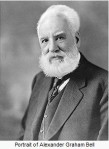
What our children and we think of as common parts of our daily lives were once developed for other purposes. The good part of the human race has always sought ways to help the disabled among us lead more productive lives. The concept of IQs was developed as a way to better understand the mentally challenged among us. The typewriter was originally developed to assist Cerebral Palsied people write. Alexander Graham Bell was a teacher of deaf children when he developed the telephone. His wife, Mabel Hubbard Bell, a deaf woman, was a major funder of early aviation. She funded almost everyone that wanted to fly across the Atlantic Ocean with the exception of Charles Lindbergh.
In modern times Raymond Kurzweil developed OCRs in creating a reading machine for blind people. OCRs have opened up a wide range of new technological devices as well as given blind people unlimited access to the printed world. Ray Charles, an early user of his reading machine, said he could read his own mail and bills and not have to have another person read his most private correspondence. Continue reading →
Lawrence Lessig, a professor at Harvard Law School, was the featured speaker at “Plenary V: Fostering Innovation: How to Build the Future.” The video below was uploaded to YouTube by eg8 on May 25, 2011. The focus of this panel was entrepreneurship, but Lessig’s talk has tremendous implications for educators if we substitute “schools” for “modern democratic government.” In this altered scenario, the counterparts for “incumbents,” or “special interests,” the movers and shakers in the private sector, are the tradition-bound schools. In both cases, the environment is unfriendly to “outsider innovation.”
Lessig’s presentation begins at the 2:05 mark and ends at 12:30.
Lessig points to Netscape, Hotmail, ICQ, Google, Napster, Youtube, Skype, Facebook, and Twitter and asks, “What unites all of these innovations?” His answer is a wake-up call: “They were all done by kids, dropouts, and non-Americans. Outsiders.” Lessig explains that “the internet is … a platform… an architecture with consequences.” One of the consequences is that it invites outsider innovations. The problem is that outsider innovations threaten the incumbent, e.g., “Skype threatens telephone companies. Youtube threatens television companies.” Continue reading →
Humans developed oral aural speech and language to share publicly their private sensory experiences. In the beginning of civilization there was the WORD. About 5000 years ago humans developed a stable form of speech and language. The written form of language was made possible by the creation of a phonetic alphabet. They stored experiences and knowledge in libraries and could transport this information over space and time, handing it down from one generation to the next in scrolls and books. Then they developed the printing press, which made books more accessible.
Perhaps two of the most significant changes came with the development of wearable glasses and the electric light that vastly expanded the time a person could devote to reading. These factors remain critical even in today’s digital world. Wearable glasses on the personal level allow people to read their entire lives. The printing press and inexpensive books and the electric light enable modern schools to be developed. Teachers working with students with textbooks can impart the knowledge of all mankind from generations past to new generations. Continue reading →
Rupert Murdoch has taken on education for the benefit of the world and also for profit — as his recent hires and acquisitions attest. What he says in his speech is not at all diluted, in my mind, by this profit motive, which he left out entirely.
He said, “If we had a gold mine on our property, we’d do whatever it takes to get that gold out of the ground.” This metaphor is obvious, and we ignore it at our peril.
To me, the most telling thing he said was, “The key is the software that will engage students and help teach them concepts and learn to think for themselves.” The “think for themselves” is especially important to the future.
As we might have said 50 years ago, a computer is just a doorstop without decent software. Education has suffered from the software that was provided for it, by and large. Too many schools turned computers into instruments for learning “keyboarding.” Too many classes used computers as substitutes for other simpler technologies and adopted office software for the classroom. That software is not targeted to education by any stretch of the imagination, and it took considerable imagination of some teachers to make it do good things for their classes. But not every teacher was so talented.
Rupert Murdoch, chairman and CEO of News Corporation, presented “Digital’s Next Frontier: Education” at the e-G8 Forum, “The Internet: Accelerating Growth,” which was held in Paris, May 24-25, 2011.
The actual talk begins at the 2:28 mark, and the entire video runs for 23 minutes. From Murdoch’s perspective, the world’s children are human capital. However, our educational systems are broken and wasting our children’s potential. Schools represent “a colossal failure of imagination,” and one of the reasons is their inability to keep pace with change.
The greatest change of all is the digital revolution, which frees people from the “tyranny of time and distance,” and it’s occurring in every field except one — education. He says that a time traveler from the mid-19th century would find that schools today haven’t changed much. The classroom is still defined by a teacher with a book and a blackboard.
I continue to be fascinated with the education of disabled children and the impact of technology. A simple example of technology and the employment of disabled learners is the fast food market’s cash register. A mentally limited individual can be accurate by simply entering the cash register through pictures of items on the menu. Such registers calculate the cost, enter the money, and spit out the correct change. The only skill is the ability to use the pictographic keyboard of the cash register.
All infants join the collective society by learning the coding systems of communications. That is, through speech and language. By the time the average child enters first grade, he or she will have a 4000-word vocabulary. However, the range will be between 2000 and 6000 words. The range is partially determined by how much the parent talks with the child. The child with a 6000-word vocabulary will do well in our modern schools.
There are many acceptable producers and creators of learning materials. There are a few rare geniuses that can conceive of and develop extraordinary learning products. Samuel Y. Gibbon, Jr. is among the top creators of high quality digital resources. He pioneered in work on Captain Kangaroo, Sesame Street, The Electric Company, 3-2-1 Contact and The Voyage of the Mimi. In the 1980s we envisioned that multiple media programs would include television, books, and computer programs. In fact, we believed and still believe that coordinated computer programs can be embedded in the television signal.
Peter G. Marston as Captain Clement Tyler Granville in The Voyage of the Mimi
Sam, as the executive director of The Voyage of the Mimi, designed, developed and produced the series featuring twelve-year-old Ben Affleck as C. T. Granville. The program featured fifteen minutes of drama and fifteen minutes of documentary science that supported the dramatic actions. A book accompanied the television series, and computer programs supported the science and mathematics. Continue reading →
I just spent an hour viewing a YouTube video, “Plenary III – Future Net: What’s Next?” It’s part of the e-G8 Forum, “The Internet: Accelerating Growth,” which was held in Paris May 24-25, 2011.
The video was uploaded by e-G8 on May 24, 2011. The moderator is David Rowan, editor of Wired UK. Panelists are Peter Chou, CEO, HTC; Paul Hermelin, CEO, Capgemini; Danny Hillis, Co-Chairman and CTO, Applied Minds; Paul Jacobs, Chairman and CEO, Qualcomm; Craig Mundie, Chief Research and Strategy Officer, Microsoft; and Michel de Rosen, CEO, Eutelsat.
The session is divided into two parts. In the first, each member is asked to briefly talk about a technology trend that will impact our lives in the next five years. The second is devoted to questions and answers between the host and the panelists. Following is a brief summary of each person’s focus in the first part. Continue reading →
Since the late 1980s, distance learning programs have demonstrated that technology delivered education can be effective and bring learning to students in isolated and remote areas. Programs such as the old federal Star Schools Program brought highly qualified teachers to areas that cannot afford experts in subjects such as mathematics, science, and foreign languages.
From television to satellites to computers and Internet, distance learning offers high quality learning experiences. In the best of all worlds, a highly qualified personal tutor might offer the learner the best possible learning opportunity. Unfortunately, this is not an option nor is even the construction of classrooms and the training of a reasonably qualified cadre of teachers an option in many parts of the world.
Technology can and must bridge this gap for many of the worlds 120,000,000 children without a teacher or a classroom. Distance learning is affordable and available. We cannot allow the world’s children to grow up in ignorance. We cannot allow children to learn more about AK-47s than they know about reading and mathematics. We cannot allow children to know more about war than they know about peace. Children will learn whatever we do. The question is, will we provide them a healthy environment of learning that is scientifically accurate and socially healthy? Continue reading →
(Author’s note: this article is an adaptation of a recent blog piece on my web site.)
Is “UnCollege” a bold new approach to one’s education? A colleague recently told me about the UnCollege web site and the related manifesto. I’ll take a closer look later, but my first reaction is: been there, done that; still have the T-shirt in my rag pile though….
Reading this manifesto was a stroll down memory lane, recalling the similar movement in the 1970s and the critics who proliferated then. I did not see anything in this manifesto that I have not seen before, although maybe I’ll find a new nugget or two upon closer examination. (Nice collection of past critical quotes though, although where’s the Vonnegut quote about how my teachers could have ridden with Jesse James for all the time they stole from me?). Coyne and Hebert’s book, This Way Out, covered this ground for its time back in the mid-1970s, as did Ronald Gross’s The Lifelong Learner.
Despite the wonders of the Internet and digital technologies, the shortcomings of this approach are essentially the same now as they were then:
The “academic deviance” approach, like Anya Kamenetz’s, is a DIY (Do-It-Yourself) approach; the problem is that most people don’t want to be DIY with their education any more than they want to be DIY with their car repair, home building, etc. Everyone’s an autodidact to some extent — that is, they can teach themselves things on their own — but academic autodidacts who can do their entire education on their own are a far rarer species. The manifesto may move a few to action, but it lacks a driver to move masses of learners to action. Continue reading →
[Note: This article is from a private email sent by Bonnie on May 28. -Editor]
I am going to play this weekend. Rolling Thunder means that we have an invasion of motorcycles and terrible traffic.
I have opened a Diigo account, Ray [Rose] sent me a thing for some other account, and I have the game piece to work on.
I spent a Memorial Day in Hawaii. My mother wanted to see Pearl Harbor. She cried, along with some older servicemen, almost the whole time, holding my hand as if she were the little girl and I, the mother. I never knew it, but during WWII, her job was to send the missing in action and death certificates from the Naval Annex.
Memorial Day was started by Confederate Army relatives in the area of Petersburg. Recently I went to the Confederate Army Cemetery. My friend, Mano, from India, took me there. It was an interesting trip. It is the cemetery on a hill overlooking Richmond, Virginia.
Some people were startled to see a group of “colored” people touring the cemetery. It was like slipping into a time warp.
Also I had never seen Monument Row. Things have changed for the better I think.
Research now shows that people who remain active are less likely to have Alzheimer diseases. One interesting report indicates that people who Google every day are warding off the disease. However, there is another compelling question, and that is, What constitutes creativity at any age? The digital world offers us new mindsets, new ways to examine and know our world on Earth and to explore the universe.
The mysteries of the universe are open to us to explore as the Hubble telescope brings us visions from the distant past. Ironically, in our classrooms or homes, the pictures of NASA probes come to us in living color. We take these pictures and decode their meanings. We now can detect planets around distant stars, and we must ask, Is there life outside Earth? If so, what is the nature of that life?
As we explore space and dream of a habitat on Mars, we still have unsolved problems on Earth. We have the knowledge to feed the hungry of the world, but 1.02 billion people go to bed hungry each night. There are 125 million children without a teacher or a classroom. Technology can and must open the doors of learning and knowledge for those children. Who will create the systems that reach into the minds of these millions of children and free them with access to the world’s knowledge? Children are our future.
By Claude Almansi
Editor, Accessibility Issues
ETCJ Associate Administrator
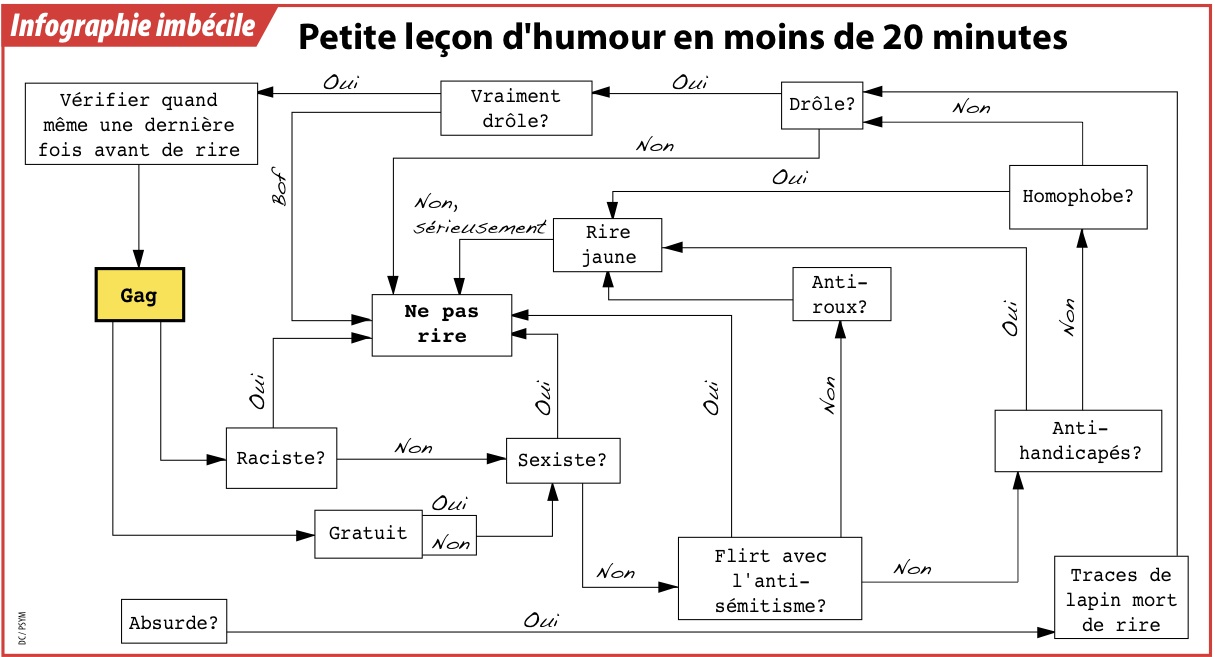
There seems to be a new infographic craze, particularly about education and social media. I had been vaguely aware of the term as an annoying pseudo-nerdy buzz word for a while, when the Swiss satirical weekly Vigousse started running an “Infographie imbécile” (Dumb Infographic) on the last page of each issue in January 2010. For instance:
Shortly after that January 2011 issue, the “Infographies imbéciles” stopped: possibly because the targeted newspapers got the message and soft-pedaled on infographics. Or maybe the editorial team of Vigousse got bored with doing them. Continue reading →
I have always considered Judah L. Schwartz a true pioneer in the field of learning technologies. He had the ability to look at the world through the new and different lens of the computer. He looked at the ethical and philosophical issues arising from the use of technology in education. His research interests include the use of the digital world to improve the teaching and learning of math and science. He designed the Geometric Supposer series of software and What Do You Do with a Broken Calculator? and other alternative software programs.
He is currently Professor of the Practice and Research Professor of Physics and Astronomy at Tufts University; he is also Emeritus Professor of Engineering Science and Education at MIT and Emeritus Professor of Education at the Harvard Graduate School of Education.
Judah L. Schwartz
He is a remarkable pioneer in our field because he saw technology as a way of looking at mathematics in very new and alternative ways. His software asks the learner to think over and over again, “What if?” What if I change this value. What happens? The computer allows for infinite changes and explorations of these alternative operations. He likes to say the Ptolemy observations of the solar system were accurate. There was just one thing wrong with them and that was they were basically incorrect. Continue reading →
There’s only one major trend in education, and that’s digital. The digital meter is all that really matters, and it’s running faster every second. The increments are in degrees of digitization. This process is transforming not only the classroom but the business of schooling. Paper and file cabinets are disappearing, just as books, bookshelves, and printers are. Increasingly, information is created, stored, and shared digitally. Landlines and faxes are being replaced by digital communications via computers and the internet.
Increasingly, offices are becoming dead zones. Educators are communicating more than ever before, but they’re no longer doing it from their offices. For example, students and colleagues are communicating with them via email and social media, and the interactions are no longer limited to weekdays, 8-to-4, in offices. The office is simply no match for 24-7, anytime, anywhere communications.
This digital sea change is not an isolated trend. It’s pervasive, happening everywhere on this planet, all at once. There’s no denying that there are and will be pockets that remain analog, like the payphone booth you sometimes see in an old neighborhood or out of the way location or an IBM selectric typewriter in a forgotten workroom or, even more rare, a desktop computer with disc drives and CRT monitor, connected to a printer with fanfold paper. Newspapers and TV news are going digital, too, just as books, movies, music, and sports are. Continue reading →
“If my mind can conceive it, and my heart can believe it, I know I can achieve it.” -Jesse Jackson
In the late 1980s when I worked for the US Department of Education, I dreamed of an interactive, participatory multimedia television series. It would be a weekly series that established a problem the first four days of the week and then viewers would submit solutions on Friday. This was before YouTube or Facebook. If I were writing the proposal today, I would have many more exciting technology-based possibilities.
A segment of the series might focus on establishing a Mars habitat. Major problems to be solved are (1) developing protection against radiation, (2) creating an adequate water supply, (3) growing food, (4) disposing waste, (5) learning to live together for long periods in a confined space, and (6) supplying ample energy for the habitat.
The first four days, the program would provide a storyline that gives the learners background information about the possible solutions. Students using a package of visuals, including avatars, would develop a video for their solution. Each class can then place it on YouTube for others to view. Other learners can provide comments and advice on Facebook. Continue reading →
Andrew was a loner who lived in his own world with very little interactions with other children in either the dormitory or the classroom. He was a tall, skinny, awkward kid. He had a talent for drawing. He created a whole world of his own in his drawings. In fact, his most expressive communication came through his drawings.
When he was about twelve or thirteen he began drawing elaborate cartoons including his own language. His most elaborate efforts were of a semi-Roman type of society. He spent hours drawing these detailed cartoons of his imaginary world. He had observed the mechanical aspect of the buildings that made up the school campus, and in some of his drawings he had elaborate electrical and plumbing systems.
Andrew was not a good student, but he did like words. He was not an athletic or outdoors fellow. He did not like to go to the Boy Scout camp. One camping trip I heard him conjugating verbs. I am not going to camp, I will not got to camp, I shall not go to camp, etc. in the back of the bus on the way to camp. We were a little late getting to the campsite and pitching our tents. Consequently, it was dark by the time the boys started their fires and began cooking their meals. I was excited because Andrew was one of the first to sit down and start eating. However, when I approached him I realized he had not been able to start his campfire and was eating his food raw. Continue reading →
By Claude Almansi
Editor, Accessibility Issues
ETCJ Associate Administrator
Vernier is providing 30 grants to ten elementary or middle schools, ten high schools, and ten college or university departments to honor the important work science educators do every day. Each grant awardee will receive $10,000 worth of Vernier technology equipment of their choosing. (…)
The contest opens March 9, 2011, and applications are due by June 1, 2011, with winners announced by September 15, 2011 (…)



 By Lynn Zimmerman
 Grodzka Gate: Old and New













 Educational Technology and Change Journal
