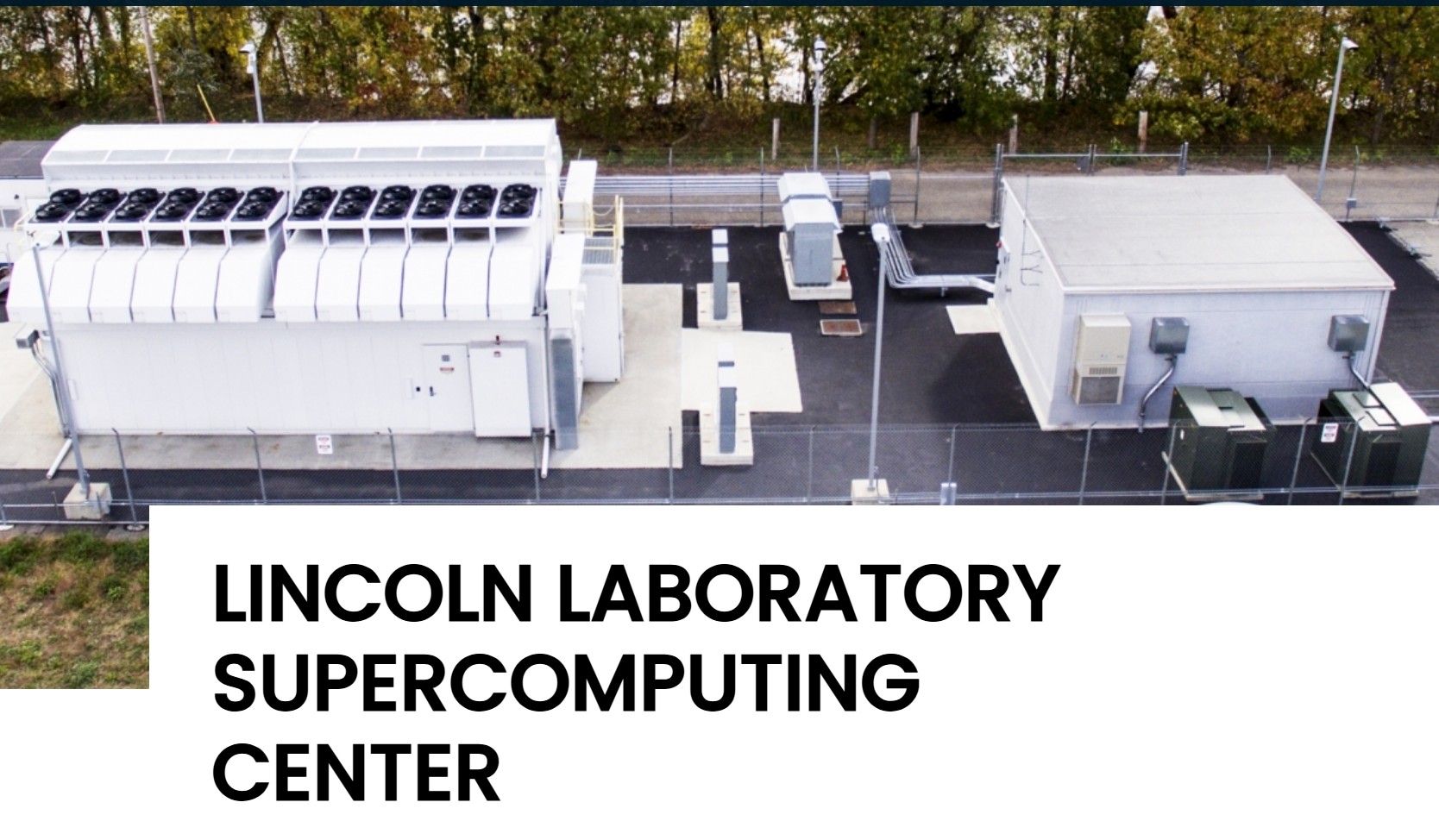
MIT, on 2 Oct. 2025, announced its “new TX-Generative AI Next (TX-GAIN) computing system at the Lincoln Laboratory Supercomputing Center (LLSC).” It “is the most powerful AI supercomputer at any U.S. university” (“Lincoln Lab unveils the most powerful AI supercomputer at any US university,” MIT News, 2 Oct. 2025).
JS: Is the educational potential of AI exponential to the point where, in the next few years, it will replace books and a large proportion of traditional teacher roles in schools and higher education? If yes, please explain why via examples that are currently leading the way.
Introduction: Napheesa Collier delivered her prepared statement during the Minnesota Lynx’s end-of-season exit interviews on September 30, 2025, at Target Center in Minneapolis. The remarks, which lasted approximately 4 minutes and 23 seconds, were made in response to questions about officiating and player safety but expanded into a broader critique of WNBA leadership, including Commissioner Cathy Engelbert. While no single source provides a 100% verbatim line-by-line transcript (as the event was primarily captured in video form across media outlets), the following is a complete reconstruction based on direct quotes compiled from contemporaneous reporting. It represents the entirety of her opening statement before transitioning to Q&A. -Grok
MN Lynx vs NY Liberty, Finals game 4 on October 18th, 2024 at Target Center in Minneapolis, Minnesota (photo credit John McClellan)
ChatGPT: Model Context Protocol (MCP) is a new open protocol developed by Anthropic (announced in 2024) to let AI models—like Claude, ChatGPT, or others—connect safely to external tools, apps, and data sources. Here’s the idea in plain terms:
Problem it solves: AI models don’t automatically know about your local files, databases, or business apps. Giving them unrestricted access can be risky.
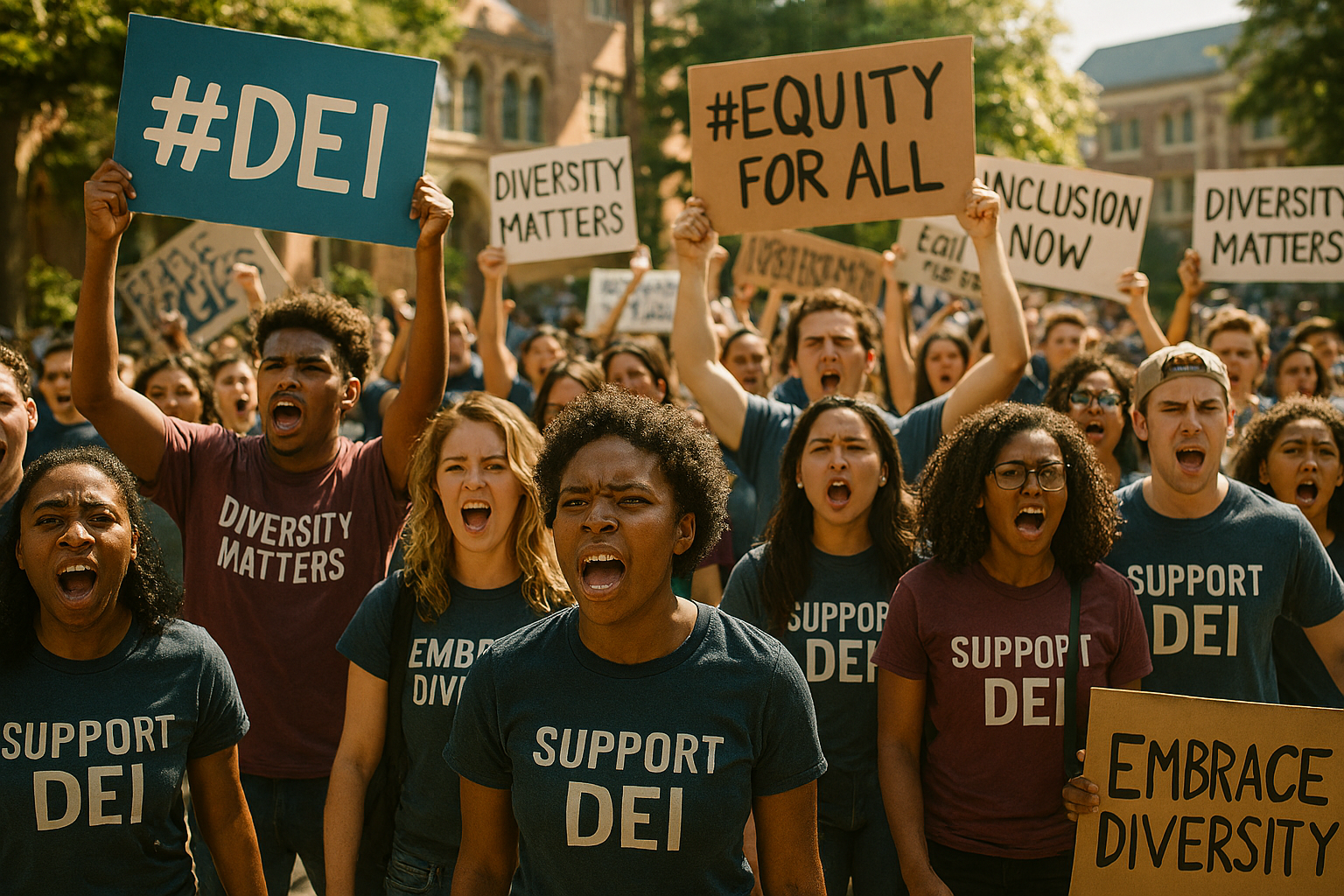
Introduction: DEI in U.S. higher education is under intense pressure and rapid change. Two simultaneous forces are shaping the landscape: (1) political and legal attacks from state governments and the federal administration that are removing funding, outlawing certain DEI expenditures, and pressuring institutions to dismantle offices or change practices; and (2) campus conflicts (notably protests around Gaza/Israel and related free-speech/antisemitism claims) that have provoked federal probes and heightened scrutiny of how universities manage speech, safety, and inclusion.
Introduction: In October 2025, these are the five most critical issues, in rank order, facing Educational Technology in higher education. For each, possible strategies and resources are suggested.
Earlier today, I started a chat with Claude about possible connections between AI and extreme shootings. I asked, “Wondering. What are the deep connections between AI and the extreme shootings that seem to be politically or ideologically or even socially motivated? I’m sure many can be drawn, but I’m searching for the ones that lie deeper, to get to the bone of who we are as a species.”
JS: What became of the thousands of cars that were caught in the March 11, 2011, tsunami that hit northeast Japan? Were most of them salvaged and returned to service?
Cars swept away by the powerful Tohoku 2011 tsunami.
Introduction: Quarterback performance in the NFL is deeply intertwined with the quality of the supporting cast. A porous offensive line can turn a genius into a scrambling liability. Mediocre receivers can nullify pinpoint accuracy. A weak running game invites defensive pressure. Coaching philosophy can either unlock a quarterback’s full potential or stifle it. And backup depth ensures continuity and strategic flexibility. Strip these away, and even the most gifted quarterback may appear pedestrian.
Nearly a month ago, on 1 September 2025, I asked Perplexity to identify three pressing decisions that the global AI community is or should be facing. Perplexity came up with these three: (1) How should the world structure AI governance to ensure both innovation and collective safety, following the recent UN General Assembly decision to create global oversight panels? (2) Will major companies and nations implement meaningful, enforceable AI governance to comply with the new EU AI Act and similar regulations—or will compliance remain superficial? (3) Can the international AI community overcome short-term competitive pressures to prioritize responsible development, given the accelerating risks of rapid deployment without oversight?
Introduction: This ranking has been updated from the August 2025 list, and some of the countries have shifted in rank. -js
United States
The United States stands as the undisputed leader in AI research and development as of September 26, 2025, bolstered by massive investments totaling $470.9 billion this year alone, far surpassing any other nation. This financial commitment is channeled through government initiatives like the CHIPS and Science Act, which has accelerated domestic semiconductor production and AI infrastructure, alongside private sector innovation and academic excellence. The U.S. excels in generative AI models, natural language processing, advanced chip design, and enterprise-level AI applications, maintaining dominance through a synergistic ecosystem of tech giants, startups, universities, and research institutions.
Geoffrey E. Hinton of Canada, 2024 Nobel Prize Laureate in Physics, at the press conference during the 2024 Nobel Prize week in Stockholm, Sweden
1. Google’s Learn Your Way: AI-Powered Personalized Textbook Transformation
The story of Google’s “Learn Your Way” unfolds in a global digital landscape, primarily driven from Google’s research hubs in the United States, with its experimental launch occurring in mid-September 2025. This initiative emerged amid the accelerating integration of generative AI into education, timed perfectly as schools worldwide grappled with post-pandemic learning gaps and the need for more engaging remote and hybrid models during the 2025 academic year. The technology itself is an AI-driven system built on Google’s LearnLM model and integrated with Gemini 2.5 Pro, designed to reimagine traditional textbooks by transforming static content into dynamic, personalized learning experiences.
1. Synthetic Data Generation: Fueling AI Without Real-World Limits
Synthetic Data Generation creates artificial datasets mimicking real ones using techniques like GANs (Generative Adversarial Networks), diffusion models, and variational autoencoders to augment training without privacy risks. It generates diverse scenarios, balancing classes in imbalanced data, and simulates rare events, improving model robustness.
JS: Aloha, Claude. Curious again. Are we anywhere close to a tipping point where professional journal review boards are or could be replaced by AI referees? It seems to me that a chatbot strength is in reviewing articles for publishing in professional journals. I haven’t done any sort of testing and haven’t read any studies on this, but the handful of times I asked chatbots to review articles I found online, they did a competent job.
I was a teacher for more than half my life, and the one thing that I looked forward to in every class was a Claude, a student who pushed back just hard enough to turn teaching into a stimulating conversation and pulled forward a little harder to make learning exciting — blurring the line between teacher and student even while the setting was a 1-to-20 classroom. Paradise was when I was engaged with more than one Claude and all of us were pushing and pulling the topic at hand, stretching it into fantastic shapes.
Don Quijote, Kaheka, Honolulu, outdoor food court, with the “Cafe Kyra” sign barely visible in the background.
Think of training a chatbot like teaching a very fast, very greedy parrot to write helpful answers — except instead of a classroom, the “teacher” is thousands of computers in a data center, and the parrot is a huge neural network called a large language model (LLM). Below are the main steps in plain language. In short, training involves collecting lots of text, building a giant neural network, teaching it by showing examples and correcting errors across thousands of fast computers, fine-tuning it with human feedback for helpfulness and safety, and then hosting it so people can chat with it — while continuously monitoring and improving it.
NY Times Writers Embracing AI: “Using AI for research and investigations is ‘by far the biggest use of our resources and I think the biggest opportunity right now when it comes to AI in media,’ [Zach] Seward NY Times editorial director of A.I. initiatives] said. His team mostly works by helping a reporter use AI technology for one project, and then creating a repeatable process from that experience for others in the newsroom to use.” -Joshua Benton, NiemanLab, 23 Sep. 2025.
Zach Seward, NY Times Editorial Director of A.I. Initiatives. (NY Times Co.)
Gemini: Distributed data centers are not inherently as powerful as hyperscale or centralized data centers in every respect. Each architecture is powerful in different ways, excelling at different operational priorities.
Example of distributed data center. The Amazon Web Services (AWS) office at CityCentre Five, 825 Town and Country Lane, Houston, Texas.
Prompt: I’m curious. What percentage of college professors and administrators personally use chatbots in optimum ways to facilitate their own professional development, research, writing, and job responsibilities? I think this is an important question because they, as a group, are responsible for crafting AI program decisions in their institutions. -js
Introduction: AI as a university field of study is growing exponentially. However, that very growth implies that earlier studies and skills will quickly succumb to obsolescence. This shifting playing field requires program trajectories that proactively anticipate changes and focus on abilities that are more future-proof. I asked ChatGPT to identify ten universities, in the West and the East, that are developing exemplary programs. After listing ten, ChatGPT suggested adding five more, and I agreed. -js
These are fifteen universities (West and East) that are actively building programs to prepare graduates not just to work with AI, but to adapt as the field rapidly changes. Each selection includes an explanation of how the institution is structuring education, research, and industry links so students can survive — and thrive — in a shifting AI landscape. Sources for the key program facts are cited after each essay.
1. Massachusetts Institute of Technology (MIT)
“MIT will reshape itself to shape the future … to address the rapid evolution of computing and AI — and its global effects” (MIT News).
We’re closer than most people think to decoding limited, structured content (words, intentions, simple images, commands) from the noninvasive scalp or head surface; but we are still far — likely years to decades — from accurately “reading” rich, unconstrained thoughts the way science-fiction imagines. The most realistic near-term progress will come from combining better sensors + multimodal recording + large self-supervised AI models and careful personalization. Below is a summary of what’s already possible, the promising technical paths, the hard limits, and a realistic timeline — with the most important recent work cited.
















































 Educational Technology and Change Journal
