Two Frameworks for 21st-Century Skills

Lynn ZimmermannBy Lynn Zimmerman
Associate Editor
Editor, Teacher Education

Globally there is a call for learners and workers to develop 21st-century skills. Two common frameworks are from the Organisation for Economic Co-operation and Development (OECD), a group which has members from 35 countries worldwide, and DigComp developed by the European Union (EU).

The OECD states that “[o]ne approach to organizing 21st-century skills focuses on cognitive skills, intrapersonal skills, interpersonal skills, and technical skills (Ananiadou & Claro, 2009 in Geisinger, 2016).” These skills are geared toward the educational context, the work environment, and commerce. Skills such as collaboration, teamwork, and cross-cultural sensitivity are seen as key to participation and problem-solving in the global economy. Underlying all of these skills is a need for digital knowledge and proficiency.
The DigComp frameworks, now presented as DigComp 2.1, focuses on competencies related specifically to technology knowledge and skills for citizens, specifically in the workplace while DigCompEdu (Redecker, 2017) outlines educator-specific digital competences. DigComp 2.1’s eight (8) levels of competence are fitted to Bloom’s taxonomy. These range from remembering, e.g., being able to perform simple digital tasks with guidance, to creating, e.g., resolving complex problems and guiding others in high-level problem solving.

DigCompEdu presents educator-specific digital competences that are organized in six areas. These areas include educators engaging in their own growth by professional development to creating appropriate digital integration activities for their students.   Continue reading

Thailand Cave Rescue via Diving Is a Daunting Challenge

adsit80By John Adsit
Educational Consultant

As a certified cave diver, I have followed the ordeal of the Thai soccer club with great interest. As I type, the rescuers are trying to determine the best way to bring them to the surface. No one has an answer at this time, but I have been asked to write about the options from the perspective of a cave diver, an educator in general, and a diving instructor in particular. What I hope to convey to an audience unfamiliar with cave diving is how truly daunting it will be if the decision is made to have the team escape by diving. If the team is going to make an exit by diving, they will need to undergo immediate and intensive training.

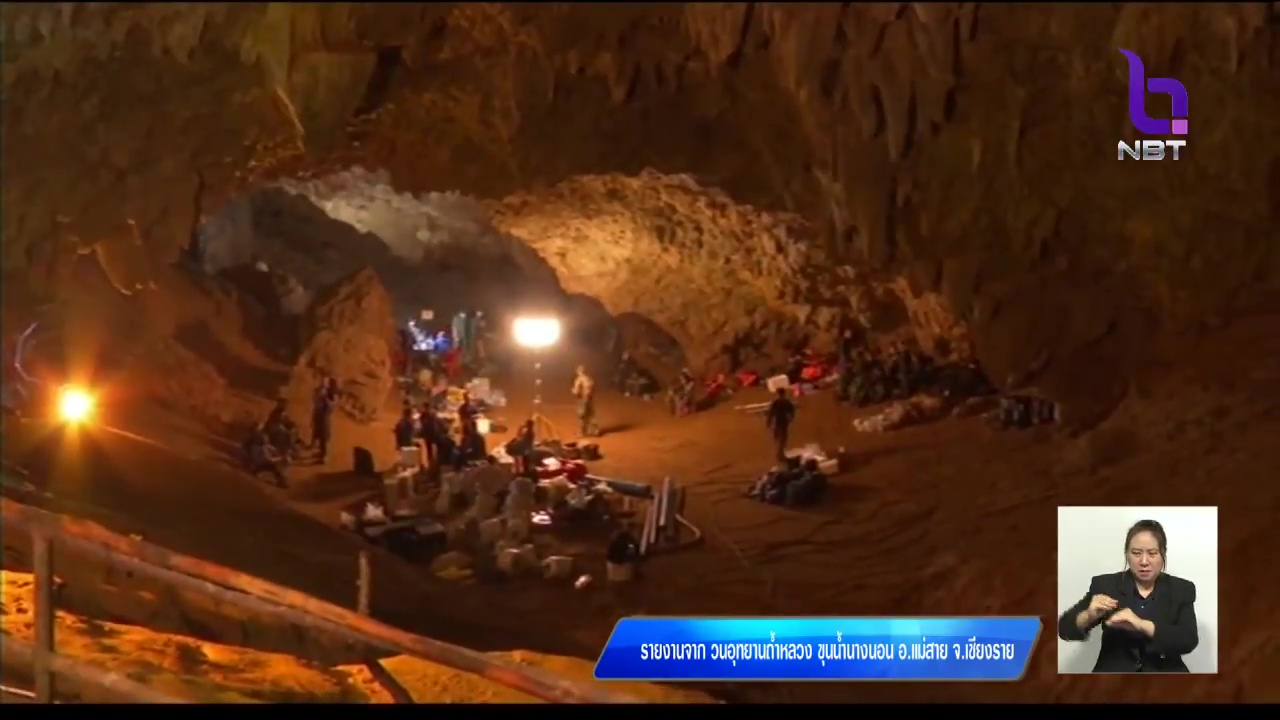
Personnel and equipment in the entrance chamber of Tham Luang cave during rescue operations during 26–27 June 2018. Screen capture from NBT news report.

When I teach new divers, I ask about their swimming and snorkeling experiences. What I am looking for is the degree to which they feel comfortable in the water. The greatest enemy to a diver is panic. Students who are accustomed to the normal mishaps of swimming, like accidentally getting water in the mouth or eyes, will usually have no trouble, but for people with little swimming experience, such a minor event can lead to irrational panic. Most of the Thai team members are non-swimmers, and the culture there has a common belief that swimming is extremely dangerous. That starts any training in a serious deficit.   Continue reading

Not in Our Lifetime: Are Libraries Dead?

By Gwen Sinclair
Librarian, University of Hawai‘i at Mānoa Library

Because I am a librarian, people often ask me, “Do we still need libraries now that everything is online?” My stock answer goes something like this: “‘Everything’ is not and will not be available online in my lifetime, and even if it were, we would still need  libraries.”

The belief that practically everything, from every book ever written to all of the films ever made, has been digitized and is available online for free has taken root in the collective minds of nearly everyone. However, if you dig a little deeper, you will realize that a lot of miracles would have to happen before “everything” could be digitized and posted online.

There are several roadblocks to scanning all of the books, periodicals, archival records, films, videos, audio cassettes, photographs, and ephemera available in libraries and putting them online. First and foremost is funding. A digitization project involves more than simply scanning a set of books and uploading the content. Even with high-speed automated book scanners, humans are still needed to select the books, prepare them for scanning, position them on the scanner, and so forth. Items that have folds or tears must be flattened or mended before they are scanned. Care must be taken not to damage fragile film or magnetic tapes during the digitization process. Photographic prints, negatives, or slides must be positioned precisely, and some post-processing may be necessary to straighten, crop, or clean up images.   Continue reading

How Do You Prepare Students to Learn Online?

Lynn ZimmermannBy Lynn Zimmerman
Associate Editor
Editor, Teacher Education

What do you tell your online learners?

Most universities and many high schools in the US use online and hybrid courses to teach anything from foreign languages to Physics. People around the world take part in MOOCs, free online courses with hundreds, perhaps thousands of participants. Informal courses are offered online so you can learn to knit or repair a car in the comfort of your own home. Online coursework is everywhere, and there may be the assumption that everyone knows how to “do” it.

However, instructors often find that, just like face-to-face courses, learners’ abilities, needs and motivations vary. The novelty of using technology for learning can soon wear off, so like any coursework, the online offering needs effective pedagogical strategies to provide intrinsic motivation to learn.

Online learning readiness

Let’s consider one factor that some research from the field of online learning has explored, online learning readiness (Cigdem & Ozturk, 2016; Horzuma, Kaymak, & Gungorenc, 2015). I’d like to hear about your experience. How do you prepare your students to learn in the online environment? What have you done that you find effective?

Assumption: because computers and technology are so pervasive, learners know how to use technology for learning.

Research findings: Many people know how to use social media, email, and their smartphones, but may be less sure how to use technology for educational purposes. Some studies have shown a direct correlation between a learner’s familiarity with the learning platform and their ability to use it and their motivation to participate and learn (Cigdem & Ozturk, 2016; Horzuma, Kaymak, & Gungorenc, 2015). Therefore, these researchers propose that the instructor should not assume that learners know how to use the platform and that they understand how to successfully complete assignments. Provide clear instructions on how to use the platform, give clear and direct instructions for assignments, and clear expectations.

References

Cigdem, H. & Ozturk, M. (2016). Critical components of online learning readiness and their relationships with learner achievement. Turkish Online Journal of Distance Education-TOJDE 17 (2), 98-109.

Horzuma, M.B., Kaymak. Z.D., & Gungorenc, O.C. (2015). Structural equation modeling towards online learning readiness, academic motivations, and perceived learning. Educational Sciences: Theory & Practice, 15 (3) pp. 759-770. DOI

The Making of a Silent Hero: Kaepernick and Social Media

By Gina Ribuca
Student, Kapi’olani Community College
University of Hawai’i

There was a lot of controversy surrounding Colin Kaepernick and the NFL last year. Many of us have seen or heard about him silently taking a knee during the national anthem. We have our own views on the issue. Some are not sure what it was about, while others think they know every detail. What did happen after, however, will never be forgotten. Some people called him a traitor while others, a hero. I think he is closer to a hero than a traitor. Sacrificing oneself to make the world a better place is the soul and characteristic of a hero.

Photo by Gina Ribuca, Kaneohe, HI, 4 July 2017.

The first time I saw him kneel, a lot ran through my mind. Social media was sent into a firestorm, and some of the comments were pure evil. “It’s just so easy to hate,” said Arian Foster, a Miami Dolphins player who also knelt before his game (Walker). Social media played a huge role in the truths and falsifications of this story. So many were clicking “share” on anything connected to Kaepernick before knowing the facts. However, not everyone realized that his silent, solitary protest contributed to the beginning of a worldwide movement among professional athletes and actors. Kaepernick decided to use his media platform to take a stand and to be a voice for those who had none. When a country or its people are ill-served by its government, then the people have the right and obligation to protest. Protesting against the government does not make a person a traitor. No, it means s/he has taken a stand for what she believes is right.  Continue reading

A Look at TeacherTube: A YouTube Alternative

Lynn ZimmermannBy Lynn Zimmerman
Associate Editor
Editor, Teacher Education

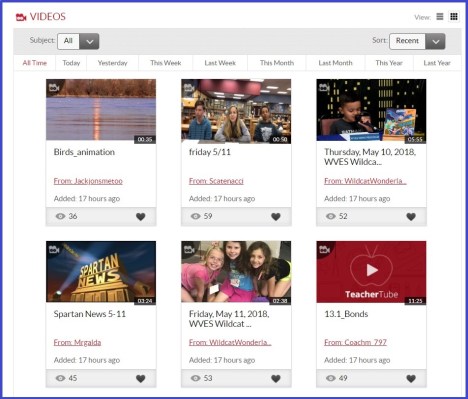
Whether you are a K-12 teacher or in higher education, you may want to give TeacherTube a look. Started in 2007 by three veteran educators, TeacherTube aims “to provide an online community for sharing instructional videos.” If you have ever looked for professional development videos or videos for your students on YouTube, you know that you have to look carefully to be sure you’re getting appropriate content.

TeacherTube, which was recently acquired by Salem Web Network, is designed to provide an “educationally focused, safe venue for teachers, schools, and home learners.” Users can upload materials and can comment on them, even flag materials that do not seem appropriate for this venue. TeacherTube staff reviews any flagged materials and makes the decision whether to leave it or delete it.

How does it work? You can find pictures, documents, audios and videos by topic or by collection. Perhaps you need a map of Pensacola, FL, to show your student Spanish street names. Do you need a video that shows the structure of the human ear? Some of the material is self-produced while others link to professionally-produced materials. Although designed mostly for K-12 teachers, educators who do professional development for teachers or teach education courses may find this a useful tool.

For more background information, see their “About Us” page.

Teaching Reading and Writing in STEM Classes

lynnz_col2

English teacher challenges students to plug in to the world by Magdalena Osumi in Japan Times, 28 Jan. 2018:
To help her students step outside of the box of rote language learning, Mio Horio, an English teacher from Japan, is encouraging her students to take a more global approach to learning English. Among other strategies, her students have the opportunity to engage in discussion with other English language students and native English speakers around the world.

Reading and Writing in STEM by Emily A. Thrush, Teresa Dalle, and Angela Thevenot in TESOL Connections, March 2018:
The integration of literacy skills across the curriculum has been a focus in American education in recent years. The authors focus on specific strategies and activities for teaching reading and writing in STEM classes.   Continue reading

TCC 2018 (April 17-19) : Final Call for Participation

Join us next week!

TCC 2018 Worldwide Online Conference

Changing to Learn, Learning to Change
April 17-19, 2018

https://2018.tcconlineconference.org/

Keynote and special regional presentations:

Dr. Margaret Nosek, Baylor College of Medicine, Texas, USA
Dr. Weiquan Lu, National University, Singapore
Dr. Jason Lee, Daegu National University of Education, Korea
Dr. Cynthia Calongne, Colorado Technical University, USA
Dr. Susan Manning, Credly, USA

TCC is a three-day, entirely online conference for post-secondary faculty and staff worldwide that features over 100 concurrent sessions covering a wide-range of topics related to educational technology, distance learning and emerging technologies for teaching and learning.   Continue reading

Hawaii High School Students: ‘March for Our Lives’

By Jim Shimabukuro
Editor

Hawaii high school students again turn to web social media (Facebook, Instagram, email, webpages) to organize state-wide protests against gun violence.

Continue reading

TCC 2018: Call for Participation

Join us!
TCC 2018 Worldwide Online Conference
~Navigating the Digital Landscape~
April 17-19.
http://tcconlineconference.org/

Enjoy keynote and special regional sessions by:

  • Dr. Margaret Nosek, Baylor College of Medicine, Texas, USA
  • Dr. Weriquan Lu, National University , Singapore
  • Dr. Jason Lee, Daegu National University of Education, Korea
  • Mark Curcher, Tampere University of Applied Sciences, Finland
  • Dr. Susan Manning, Credly, USA

TCC is a three-day, entirely online conference for post-secondary faculty and staff worldwide with over 100 sessions that cover a wide-range of topics related to distance learning and emerging technologies for teaching and learning.   Continue reading

Social Media Fuels Hawaii Student Walkout: March 14

By Jim Shimabukuro
Editor

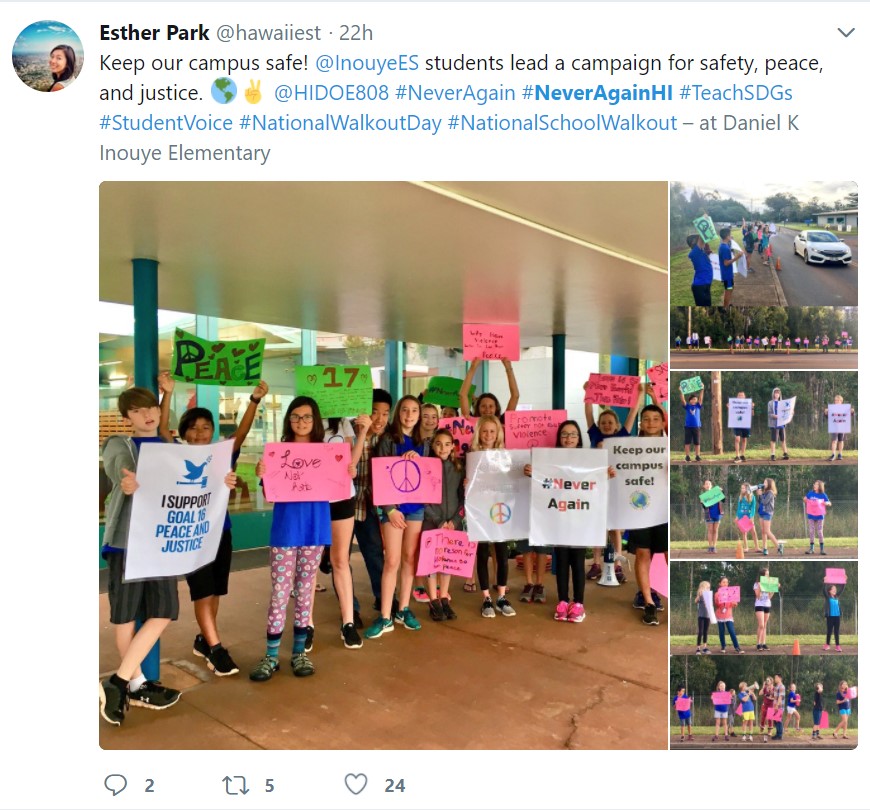
In conjunction with the national 17-minute school walkout on 14 March 2018 in honor of the 17 shooting victims at Florida’s Marjory Stoneman Douglas High, students in Hawaii planned and executed a state-wide protest for greater gun control. Their media of choice were Twitter — #neveragainhi, #EnoughIsEnoughHI, #MarchforOurLivesHI — and Instagram.

Daniel K. Inouye Elementary School, Schofield Barracks, Hawaii.

Joshua Wong

Socal media in the hands of students is a powerful tool for reform. Joshua Wong Chi-fung (黃之鋒), a Hong Kong high school student in 2011, organized and led protests against government interference in determining school curricula. He and his fellow protesters relied on social media to coordinate and monitor protests in other locations.

The implication for educators is enormous. Publishing is no longer the sole possession of powerful media organizations in the private and public sector. It is in the hands of the people, and the most active users of social media are the young, for whom backchannel communications are increasingly defining what’s real and fake. The question for educators is: How will we integrate social media into our curricula to align instruction with a world that no longer turns solely on traditional media?   Continue reading

Institutional Initiatives in Digital Credentials

Bert TCC2018D

As a prelude to this year’s main conference, TCC 2018 is hosting a FREE special webinar featuring Brenda Perea, Director of Educational and Workforce Solutions (Credly).

Brenda Perea will explain best practices from Colorado Community Colleges System’s initial launch of digital credentials in a free Technical Math for Industry.  Attendees will learn how 2-year and 4-year institutions can partner with employers to integrate digital credentials into existing curricula and build digital credentials into new courses and programs.

Date & time
Wednesday, March 21, 1400 HAST
1900 CDT, 2000 EDT; Thu Mar 22, 0900 Tokyo, Seoul
(Other timezones)

RSVP now for this FREE session! Access information and a reminder will be sent to you a few days prior to this event. This online session will be held in Adobe Connect. The deadline to register is March 18More info for this event.

REGISTER also for the main conference: TCC 2018 Online Conference, 23rd edition, April 17-19, 2018.

Impact of Different Social Media on cMOOCs

By Jim Shimabukuro
Editor

A couple days ago, I received an email from Bert Kimura about the latest issue of International Review of Research in Open and Distributed Learning, Feb. 2018 (19:1). He knows that I’d find the articles on MOOCs interesting. In this post, I’ll be focusing on the first, by Zhijun Wang, Terry Anderson, and Li Chen, “How Learners Participate in Connectivist Learning: An Analysis of the Interaction Traces From a cMOOC.”

This article is noteworthy for a number of reasons, not least of which is the publication medium, IRRODL. It’s online and open access. Perhaps the most significant aspect of this article is its data source: a 2011 course, Change 11 MOOC. Permission was granted by one of the facilitators, George Siemens. According to the authors, Wang et al., “When participants registered into the Change 11 MOOC, they signed an agreement that permitted the use of their data for research purposes…. All of data can be accessed without passwords in the internet.” Siemens and colleagues were modeling a precedent that facilitates research in online learning.

Wang et al. begin with a definition of cMOOC. This is a critical distinction because, theoretically, xMOOCs aren’t MOOCs. MOOC, as originally conceptualized by Siemens and Stephen Downes, is connectivist, i.e., “learning is a connection-building and network-forming process” (Wang et al.). Downes created the cMOOC-xMOOC dichotomy to highlight the cMOOC emphasis on connectivism, which places the bulk of responsibility for learning in the hands of the learners.   Continue reading

To Code or Not to Code

lynnz_col2

In Do Our Kids Really Need to Learn How to Code? (Forbes, 7/6/14), Greg Satell disagrees with tech columnist Kevin Maney’s assertion that in just a few years, young people “will find that coding skills are about as valuable as cursive handwriting.” Satell argues that even if coding as we know it today doesn’t exist, the skills needed to do it will still be there. “There is an underlying logic to the digital world and we must be capable of operating within that logic in order to function in it.”

In Do Your Kids Need to Learn to Code? Yes! But Not for the Reasons You Think (The Huffington Post, 5/29/2015), Grant Hosford discusses several points about coding that illustrate a parent’s concern about what children need to learn to have successful futures. First, he points out that many parents and teachers worry that coding is “an overhyped fad.” He doesn’t believe it is. However, he points out that computer science pedagogy has not really evolved much in 40 years. He then refers to research at MIT and Tufts supporting the idea that “kids as young as 4 years old can learn very sophisticated computer science concepts.” Hosford sees coding as a way for young people to develop critical thinking skills, creative problem solving, and “how to be lifelong learners.”

In Please Don’t Learn to Code (TechCrunch, 5/10/16), Basel Farag claims that treating coding as “a ticket to economic salvation for the masses is dishonest.” He supports his position with three arguments. (1) Focusing on coding can cause the focus to be on finding a ‘right’ answer and away from “the importance of understanding the problem” itself. (2) Because technology changes so quickly, developing can be frustrating and stressful. Developers can’t expect to spend the rest of their careers working with one type of code. They often have to learn new versions or, even, new coding systems entirely, quickly, often “with little guidance.” (3) Getting a really well-paying job as a developer isn’t that easy.

Education Today — The Most Important Function of Governments, Part 1 of 2

Judith McDanielBy Judith McDaniel

Education is the foundation of democracy. As a society, we Americans knew that once. A unanimous Supreme Court decision in the 1953 Brown v Board of Education said: “Today, education is perhaps the most important function of state and local governments. Compulsory school attendance laws and the great expenditures for education both demonstrate our recognition of the importance of education to our democratic society. It is required in the performance of our most basic public responsibilities…. It is the very foundation of good citizenship.”

Today, we have lost that recognition, lost our certainty that education is a common good that we can all support. A 2017 Gallup poll found that only 36% of Americans have confidence in our public schools. And that is an increase of 10% since 2014. “Government schools” is what some conservatives, like Education Secretary Betsy DeVos’s husband and President Trump, call public schools now.

Where has our common understanding of public education as the foundation of democracy gone? Why have we lost it?

Undermining public education has been a deliberate campaign, not an accident. It’s not as though we just didn’t have enough money to educate all of our children for the common good. When money was short, whether because of recession or other economic events, we chose to lower funds for education. And when there was money available again, we did not raise support for education.

It would be one thing if there were a public discussion about curricula for our schools and universities, if choices about educational directions were being openly advertised and discussed and chosen. This is not what is happening.  Continue reading

Stackable Credential Courses Are Not MOOCed

Waves are flat today on the East Coast. According to Jeffrey R. Young, edX, founded by MIT and Harvard, is planning to offer a MicroBachelors program as a logical complement to their MicroMasters.1 Anant Agarwal, CEO of edX, got it almost right when he said, “Education in five to ten years will become modular, will become omnichannel, and will become lifelong…. Modular is good because it can create new efficiencies and new scaling.”

Where he falls short is in the “omnichannel,” which boils down to required on-campus, F2F attendance. In this bait ‘n’ switch business model, the fully online options are teasers, the wide open end of a funnel that narrows to a tiny trickle at the campus end. Agarwal says, “The idea behind both MicroMasters and MicroBachelors is that they are ‘about putting stuff that can be done online, online.’” The assumption is that online is still a second-rate channel, incapable of delivering the right stuff.

Anant Agarwal, George Siemens, and Stephen Downes.

Young compares this “‘stackable’ credential” program to Arizona State University’s Global Freshman Academy, a joint venture with edX. He describes it as an “attempt to rebrand a concept that was once known as MOOCs, or massive open online courses.” By their own admission, GFA hasn’t been very successful. From the standpoint of these stackable programs, MOOCs are dead.  Continue reading

Successful Online Programs Require a Paradigm Shift

On the table at the University of Colorado Boulder is a proposal for an online engineering master’s degree program.1 It’s a breakthrough for all the right reasons: It’s being offered as a MOOC, it’s completely online, it’s asynchronous, and it’s unbundling the 3-credit courses and offering them in modules. All four are gold standards for online education, and it’s tough to decide which is the most important. For now, I’d say the unbundling. Breaking traditional semester-length courses into shorter modules is a brilliant move to make the courses doable within the framework of MOOCs. It’s a smaller hill to climb for working nontraditionals, and dropping out means making up only one module instead of an entire semester.

The best wave of the day goes to Richard Koubek, provost of LSU Baton Rouge, who says, “Our vision is LSU, anywhere, anytime, and that physical boundaries would not define the boundaries of this campus.”2 To put some teeth into their vision, LSU recently lured Sasha Thackaberry away from Southern New Hampshire University, where she was assistant vice president for academic technology. SNHU has a hugely successful online program. At LSU, she is associate vice provost for online and distance education. The goal is to grow the online student body from 800 to 30,000 in less than ten years, and Koubek has a radical gameplan. He says, “You’re not going to get there incrementally.” What we’re seeing now in online programs on most college campuses is the stagnation that comes from reliance on the old paradigm of traditional practices that reward blended approaches as the safe bridge to online growth. Koubek understands that continued reliance on F2F practices isn’t going to produce change. He says, “You have to change the paradigm.”  Continue reading

Digital Tools and Adaptive Technology

lynnz_col2

Zaid Shoorbaje asserts that adaptive learning tools can be effective for ELLs (English Language Leaners) as well as for students with disabilities. In Adaptive learning can help students learn English, but few schools are using it (6 Dec. 2017), he cites a study by McGraw-Hill that shows that while teachers understand this, many schools are not implementing it.

In Making Digital Communications Accessible (11 Dec. 2017), published on Edutopia, Anne Obrien offers support for Shoobaje’s assertion of the effectiveness of accessible and adaptive learning tools and provides practical tips for using digital tools creatively in the classroom. While useful for all learners, they are particularly useful for ELLs and students with disabilities.

Brian Fleming makes a case for using adaptive technology in higher education in his article, Adaptive Learning Technology: What It Is, Why It Matters (1 Apr. 2014). He asserts that this type of technology can be useful for all students, but especially in remedial classes.

Zach Posner, in What is adaptive learning anyway? (5 Jan. 2017), explains it as giving “every learner their own personalized course, made specifically for their strengths, weaknesses, goals, and engagement patterns…. a course that [adapts] in real-time to their activity and [adjusts] moment by moment to their performance and interest level.”

Digital Storytelling and Authenticity

lynnz_col2
Whether creating lessons for social studies or science, designing activities for developing library skills or planning lessons with ELLs (English Language Learners) in mind, authenticity and relevance are key to effective learning. The purpose of authenticity and relevance in learning is that learners are engaging in “real world activities which apply directly to a student’s experience” (Finch & Jefferson. 2013).

According to Ozverir, Vanci and Herrington (2017), “[a]uthentic learning is an instructional approach that provides learners with opportunities to develop knowledge ‘embedded in the social and physical context within which it will be used’ (Herrington et al., 2010, p. 15)” (p. 262).

With this in mind, Stansbury presents her case for using digital storytelling to provide authentic opportunities for ELLs to use English in relevant and meaningful communication in Video of the Week: Amplify Your ELLs’ Voices with Digital Storytelling. Although aimed at teachers working with ELLs, the idea of building on learners’ strengths through digital tools is relevant to any subject area. Be sure to click on the resources link.

Sources

Finch. J. & Jefferson, R. (2013). Designing authentic learning tasks for online library instructionThe Journal of Academic Librarianship, 39 (2), 181-188.

Ozverir, I., Osam, U. V., & Herrington, J. (2017). Investigating the effects of authentic activities on foreign language learning: A design-based research approach. Educational Technology & Society, 20 (4), 261–274.

Stansbury, M. (2018). Video of the Week: Amplify your ELLs’ voices with digital storytellingeSchool News.

A Cure for Writer’s Block: A Letter to My Students

Jim ShimabukuroBy Jim Shimabukuro
Editor

Papers play a huge part in my online writing and literature courses. As part of our writing process, I require preliminary and final drafts. Of the two, preliminary drafts are the most important from the standpoint of pedagogy and learning. They must be submitted on time for writers to fully engage in the peer review activity, which is the heart of the writing process.

Thus, meeting the deadline is critical. Early this morning, I received an email from one of my better students, warning me that she may be late in submitting her preliminary draft because she’s hit the wall — writer’s block. The deadline is midnight today. I ended up writing a message to her about overcoming this affliction that most writers experience. After sending it, I decided to refine and distribute it to all my classes. After further thought, I decided that this may be useful to some of my colleagues who assign papers and struggle with students who can’t seem to meet deadlines.

If you find this useful, please feel free to use it, in part or in whole. No permission necessary. Some of the details may not work for you, so be sure to revise or delete them. -Jim

******

Our first review draft is due at midnight today. I know, you’re aware of that and don’t need to be reminded. If you’re like many writers, your draft is not done. In fact, for some of you, it’s barely off the ground. You’ve been grappling against that age-old nemesis, writer’s block.

As a writer, I understand exactly where you’re coming from. Believe me, you’re not alone. Writer’s block is a problem for 99% of all writers. Thus, I know that procrastination is not the cause for a late paper. In fact, it is a symptom of writer’s block.  Continue reading

Gavin Dudeney on Technology and Teaching English

Lynn ZimmermannBy Lynn Zimmerman
Associate Editor
Editor, Teacher Education

I met Gavin Dudeney at a conference for English teachers in Balti, Moldova, in March 2016. He was keynote speaker and gave two workshops focusing on technology and English teaching. His presentations were engaging and informative, so I thought you’d like to hear from him, too. His ideas are relevant to all classroom teaching, not just English teaching.

LZ: Gavin, please tell us a little about who you are professionally.

Gavin: I’m Director of Technology for a company specializing in the use of technologies in education. I train teachers to use technologies and write books in the same area. I also work in online materials and course design and have a long history and background in language teaching and teacher training.

LZ: What do you think is the most exciting connection between technology and English teaching? Why?

Gavin: I think technology is a natural link between what we do in class and what happens outside of class — and this is particularly true of mobile devices, which give students the chance to bring things in from their “real” lives and use them in class, and take things they have learned in class and use them outside in the real world. Technology should engage, enable and enhance. If it gets in the way then it’s worse than useless.

LZ: I was especially intrigued by some of your ideas about using mobile (cell) phones in the classroom. As I told you at the conference, I feel like I am fighting the wrong battle trying to keep my students’ hands off their phones during class. What suggestions do you have?

Gavin: I think it IS a losing battle, so the secret is to own it instead of ignoring it. By owning it I mean working out how to incorporate mobiles into your teaching in a practical, useful and authentic way and making sure phones are only used under those conditions and are not relied upon for the whole class. In my workshop in Moldova, I gave some practical examples of how to achieve this balance, and some of them can be found here (click on the mLearning tab).

LZ: Thank you for taking the time to answer these questions.

* * *

I recommend looking at the link he provides. I especially like his ideas about using the phone to take and share photos.


Join us for the TCC 2016 Worldwide Online Conference

Bert Kimura

Bert Kimura

Aloha,

Join us for the TCC 2016 Worldwide Online Conference, “The More We Get Together”  http://tcconlineconference.org/

TCC2016-KEY 6

Enjoy keynote and special regional sessions by:
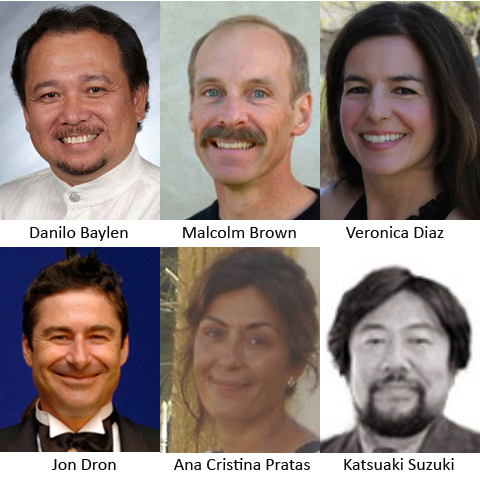
Dr. Jon Dron, Author, Athabasca University, Canada
Drs. Malcolm Brown & Veronica Diaz, Educause Learning Initiative, USA
Dr. Katsuaki Suzuki, Kumamoto University, Japan
Dr. Danilo Baylen, University of West Georgia, USA
Ana Cristina Pratas, United Arab Emirates

TCC is a three-day, entirely online conference for post-secondary faculty and staff worldwide with over 100 sessions that cover a wide-range of topics related to distance learning and emerging technologies for teaching and learning. Individuals participate in real-time sessions from the comfort of their workplace or home using a web browser to connect to individual sessions. All sessions are recorded for on-demand viewing.

Site licenses for unlimited participation from a campus or system are available. Special reduced rates apply to University of Hawai’i faculty and staff. For more info, contact Sharon Fowler .

We look forward to seeing you at TCC 2016.

Warm regards,
– Bert Kimura
For the TCC Conference Team

Smartphones, Tablets & Subtitles for Language Learning

lynnz_col2

NY program uses phone calls, text messages to teach English by Deepti Hajela, Associated Press, 30 Nov. 2015.

Using basic phone technology, New York state has created lessons for English language learners that are flexible and free.

Tablet use can benefit bilingual preschoolers by Elin Bäckström at Phys.org, 10 Nov. 2015.

The author reports on the result of a study done in Sweden that shows the value of tablets as teaching tools for preschoolers whose first language is not Swedish.

Spain considers ban on dubbing in bid to boost English language skills in The Local, 4 Dec. 2015.

Spain’s Popular Party wants to eliminate dubbing of TV shows and movies and retain original sound-tracks with subtitles in an effort to boost English language learning.

TCC 2016: Extended Deadline for Proposals (23 Dec)

Bert Kimura

Bert Kimura

Season’s Greetings.

We continue to accept your proposals for presentations at TCC 2016 (April 1921, 2016) and have extended the deadline until 23 December 2015.

Registration details to be announced in January. Stay tuned!

Full details are posted here.
Submit your proposal here.
Keep informed about TCC 2016 here or join our mailing list.

Happy holidays from the TCC conference team!

Review of ‘Towards a European Perspective on Massive Open Online Courses’

Jim ShimabukuroBy Jim Shimabukuro
Editor

I was drawn to some of the articles in this special issue1 and found insights that I feel are worth mentioning. One that stands out is in Schuwer et al.’s article,2 in a summary attributed to Fairclough3: “MOOCs are perhaps best understood as ‘imaginary’… a prefiguring of possible and desired realities rather than a unified and coherent domain around which clear boundaries exist.”

Fairclough’s observation takes us a step closer to unravelling the MOOC conundrum. The expanding list of acronyms for different MOOC constructs should tip us to the fact that MOOCs are reifications, figments of our imagination or, more accurately, a specific set of ideas bundled in different ways. In short, MOOCs don’t exist.

By “don’t exist,” I mean they’re not a separate or unique specie. They’re simply a class in the genus online course. Add openness to a traditional online course, and you end up with a MOOC. By “openness,” I mean removing most of the formal trappings that we associate with college courses: capacity limits, traditional registration and pre-requisite requirements, tuition and fees, semester or quarter time frames, required textbooks, and grades and credits.

In other words, MOOCs are projected variations of standard online courses. As such, they represent the outer limits of what online courses could be. The point is that the issue isn’t MOOCs themselves but the innovative features that they present for possible incorporation in online courses.

In this context, Schuwer et al.’s warning that, “in the long run, a threat to MOOCs may manifest, if they are not well-integrated in broader university strategies and do not establish their own role within the university offerings” is only half correct. That is, for the open features of MOOCs to evolve, they must be integrated into existing online course policies and procedures. However, establishing “their own role within the university offerings” may not only be redundant but a costly failure in terms of the growth of 21st century practices.  Continue reading