Dr. Peter A. Milne and his associates have found an unexpected and, to the cosmological community, startling result from their surveys of supernovae. This result illustrates both the consistent and varying nature of science at the same time.
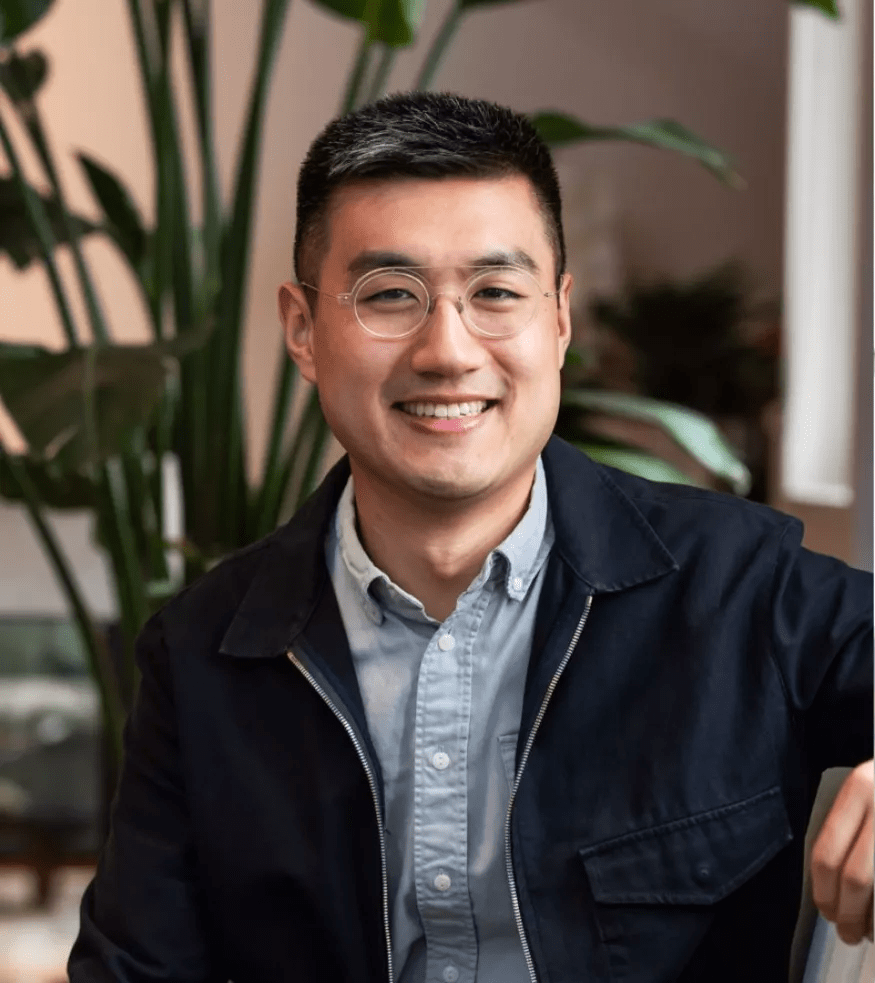
Dr. Peter Milne
We know from a great many astronomical observations that the universe has been expanding for a little short of 14 billion years and continues to expand. Because of gravity, everyone expected that this expansion was slowing over time with theories and measurements suggesting that this expansion would eventually coast to a very dilute universe drifting apart at ever slower speeds.
In the 1990s, some astronomers separately discovered that the universe is expanding ever more rapidly instead of the expected opposite slowing of expansion using measurements of he brightness of very distant supernovae. They received the Nobel Prize in physics for this work in 2011.
Stars can explode. One common explosion is called a nova. A much more cataclysmic and extremely brighter explosion is a supernova. Supernovae shine with a brightness that can exceed that of all of the hundred billion or so stars in its galaxy. For this reason, we can see them in distant galaxies that are barely visible in our best telescopes. A supernova is a rare event occurring about three times a century in a galaxy the size of our Milky Way. With hundreds of billions of galaxies, however, it’s not too hard to find hundreds each year using modern astronomical equipment.
A special sort of supernova created when the two stars in a binary star system go through a specific series of interactions is known as a type 1a supernova. Because of the steps required to reach supernova status, the brightness of these type 1a supernovae has been considered to be a constant that can be used to estimate distances to very distant galaxies. Brightness declines with distance in a very precise manner.
There remains the possibility that acceleration of very distant bodies in our universe away from each other is a basic property of our space-time structure not detectable at smaller distances of only millions or even tens of millions of light-years, that “dark energy” is just an attempt to recast a phenomenon into understandable terms, just as the caloric theory of heat was long ago. -HK
The measurements of these supernovae were the reason to believe that the expansion of the universe was accelerating. We are seeing these very distant supernovae with light that started its journey over ten billion years ago when the universe was very young. Dr. Milne has discovered that type 1a supernovae are not all the same but fall into two categories of different brightness. Furthermore, the supernovae from the early universe are, on average, less bright than those in the more recent universe.
The lower brightness of the distant supernovae may well be due to less inherent brightness instead of greater distance. This finding destroys a fair piece of that Nobel Prize discovery. Dr. Milne still attests that the universe’s expansion is accelerating, just not so fast, but the vast number of recalculations being done to account for this new discovery will take some time. Continue reading →
Bill Would Limit Use of Student Data by Natasha Singer in the New York Times, 22 Mar. 2015
Singer looks at some of the issues raised by the Student Digital Privacy and Parental Rights Act, a bill to place limits on how “companies that operate school services — like online homework portals, digital grade books for teachers or student email programs —” can use or disclose “students’ personal information to tailor advertisements to them” and “bar them from collecting or using student data to create marketing profiles.”
Digital curriculum targets ELL learning gap from eSchool News, 19 Mar. 2015
Middlebury Interactive Languages has developed English Language Learner programs which “are modeled after Middlebury Interactive’s world language courses and, like those programs, integrate research-based learning techniques, cultural awareness and project-based activities into blended learning classrooms.”
Increased Smartphone Use Equals Lower GPA Among College Students by Brian Heaton from from Government Technology, 17 Mar. 2015
This study from Kent State University about the effects of smartphone use on grades is sure to cause a stir. Even controlling for certain “known predictors, the group still found the relationship between cellphone use and GPA was ‘statistically significant and negative.’”
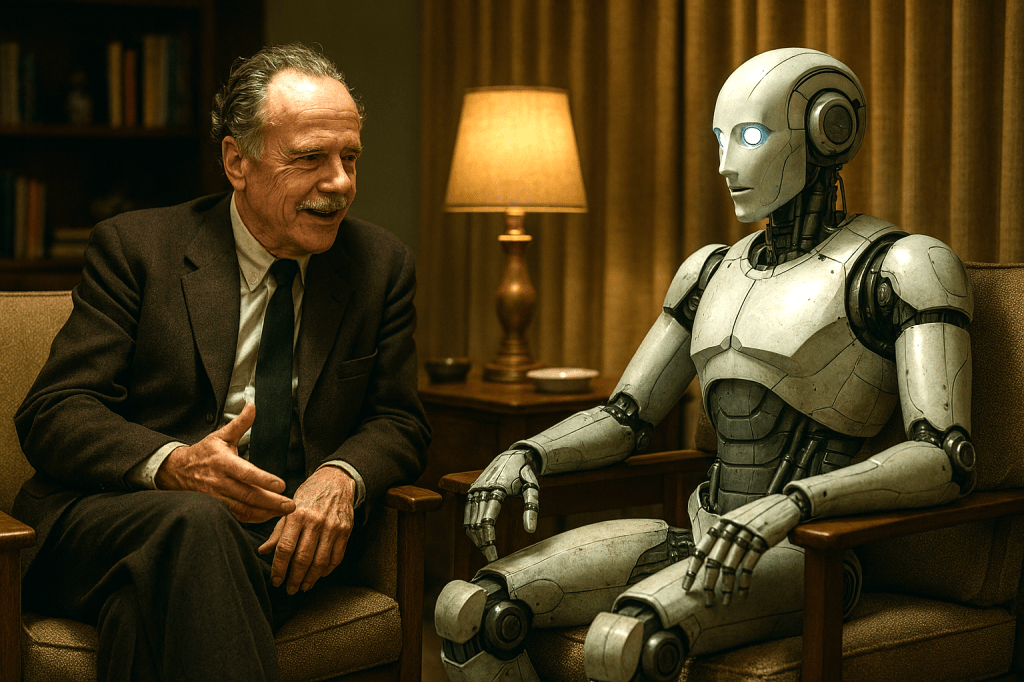
Artificial intelligence has appeared in a great many movies over the years, often as robots. The latest is Chappie, a movie that has been panned by a majority of critics but apparently enjoyed by quite a few movie goers.
Robots (or AI) have been good and bad. The first that I recall was Robby in the first science fiction (SF) movie to adhere to scientific ideas (of the time), Forbidden Planet. This 1956 movie starred Leslie Nielsen when he was still doing romantic leading roles. The character of Robby created quite a stir at the time. He was definitely a benevolent robot who was unable to harm humans. An immense computer system, the hidden evil element of the movie, served as a foil.
Most people remember HAL, the AI embedded in the spaceship of 2001, a Space Odyssey. This movie debuted twelve years later and showed how AI could be a force of evil. Few who saw it will forget the creepy voice of HAL (notably one letter apiece short of IBM alphabetically).
I probably will not see Chappie for several reasons based on the reviews and my viewing of the trailers. The concept of artificial intelligence rising to the level of human consciousness bothers me, not for religious but for scientific reasons. However, many students probably will see it if only because of its themes involving street gangs and defiance of authority. Continue reading →
On 18 March 2015, Education Week recognized 16 exceptional district-level leaders at an exclusive event in Washington, D.C., featuring presentations and discussions on leadership and education policy. Featured speakers included Assistant Secretary, U.S. Department of Education Deborah S. Delisle and Adviser to the Premier and Minister of Education in Ontario, Canada Michael Fullan. Watch the videos from the event.
Recognition Presentation: Meet the Leaders To Learn From (Part I)
Recognition Presentation: Meet the Leaders To Learn From (Part II)
In The Profession section of its April 2015 (v48, 02) issue, PS: Political Science & Politics (PS)1 scrutinizes the peer review system, a core value in the research community. Some question whether or not peer review is sustainable given the increased and unequal burdens placed on reviewers. In “Peer Reviewing in Political Science: New Survey Results”, Paul Djupe of Denison University argues that the common perception that reviewers are overburdened with requests has never been tested through reliable data collection. He finds, contrary to the conventional wisdom, that most scholars appreciate peer review, and that most peer review requests by journals are accepted. The only common complaint is that peer review is not considered as part of the tenure and promotion process.
Also in The Profession, the right time for associate professors to go for promotion is considered by Kurt Weyland of the University of Texas in “The Logic of the Promotion Decision: In Dubio Pro Patientia”. Weyland argues that it is in the associate professor’s own interest to establish a convincing case before they bid for the rank of full professor and efforts to ‘force’ a promotion prematurely can leave a bad impression and damage the career. Accumulating a strong record in research and publication is the best way to assure a smooth path to tenure.
In the Profession Symposium, see the articles on “Reinventing the Scholarly Conference: Reflections from the Field.”
In The Teacher , Matthew Woessner of Penn State shows how computer games like SimCity can be used to engage young people to think about politics, governance, and the challenges of managing cities in the real world. Continue reading →
You may have seen the headlines already. “What is dark matter made of? Galaxy cluster collisions offer clues,” shouts the Christian Science Monitor.1
Here you have a great moment to engage students in something exciting and to use critical thinking. Dark matter is a hypothesis to explain why stars in galaxies circle around their centers faster than the observable matter says that they should, as well as other more sophisticated reasons. It’s called “dark” because it does not emit light and because you cannot see it. You might also have called it “invisible” matter, but much matter seems invisible. Besides, “dark” implies spooky, and this stuff is definitely spooky because ordinary matter moves right through it as though it isn’t there, except for gravitational effects.
The new finding just reported tell us that dark matter behaves just the same way with itself. One patch of dark matter moves right through another as though it’s not there at all (again, except for gravitational effects). This result pushes back against the most popular idea about the identity of dark matter, that it’s WIMPs — weakly interacting massive particles — because particles don’t just pass right through each other.
Dark matter is invisible. Based on the effect of gravitational lensing, a ring of dark matter has been detected in this image of a galaxy cluster (CL0024+17) and has been represented in blue. Image from NASA, ESA, M.J. Jee and H. Ford (Johns Hopkins University).
Two explanations come to mind. Some physicists doing the work still are seeking particles, but these other explanations could help get around that barrier. There are some truly exotic explanations going around as well, such as the existence of a “mirror universe.” It’s best to stick with the simplest ones, though. Occam’s Razor tells us so.
One explanation is that gravity just doesn’t work exactly as we expect it to, especially when dealing with very large masses spanning very large volumes of space. This is not a very popular explanation. The other is that dark matter is really energy. Because of the equivalence of energy and matter demonstrated by Einstein and captured in his famous equation, E=mc2, energy is affected by and causes gravity. Continue reading →
Northrop Grumman Foundation today announced it is launching an online contest to encourage today’s students to become tomorrow’s innovators by creating classrooms and science labs that inspire. The Fab School Labs contest is open to public middle schools and will make five grants of up to $100,000 available to five winning schools to fund a school lab makeover.
Northrop Grumman Foundation Launches Middle School Contest to Promote STEM Innovation
Beginning May 4 and continuing through June 12, 2015, teachers, principals and school administrators can enter their eligible school by visiting www.FabSchoolLabs.com, where they can learn about the contest and submit their application, along with photos and video to help tell their story. Semi-finalist schools will be chosen and their videos will receive online votes of support to assist with the final selection process. The winning schools will team up with Fab School Labs contest partner Flinn Scientific Inc. to design a state-of-the-art lab complete with all of the tools, resources and furnishings needed.
Fab School Labs contest gives schools funding to create a first-class STEM learning environment
The contest is designed to drive students’ interest in science, technology, engineering and mathematics (STEM) by giving public middle school teachers and school administrators the chance to create the STEM lab of their dreams and give students access to the latest learning tools and technologies that will stimulate as well as teach. Continue reading →
Inside Higher Ed’s 2015 Survey of College and University Presidents was conducted in conjunction with researchers from Gallup. Highlights of the survey findings include:
A majority of presidents give the Obama administration’s ratings proposal a grade of D or F, and a third of presidents say they view the plan more negatively than they did before the administration released a detailed framework about the plan in December.
Presidents are skeptical that the proposed rating system would accurately reflect their institutions’ quality, and are least supportive of the possible use of graduate income level and federal graduation rates as ratings criteria. Campus CEOs offer more support for using as criteria the percentage of first-generation and Pell Grant eligible students enrolled, and degree completion rates.
Presidents of two-year colleges are likelier than their peers at four-year public and private institutions to support the president’s plan to encourage states to offer free community college tuition.
More than half of the presidents are confident about the sustainability of their institution’s financial model over the next 5 years, but only 39 percent feel that way over 10 years.
About one-third of college presidents say that sexual assault is prevalent at U.S. colleges. But only a small percentage believe it is an issue at their institution.
A large majority of presidents (81 percent) say that the state of race relations on their campus is excellent or good.
The majority of those surveyed say presidents should play a more active role in decisions about tenure and hiring faculty members.
Nearly half of presidents agree that university leaders should speak out on issues beyond education.
Join Inside Higher Ed editors Scott Jaschik and Doug Lederman for a lively discussion of these and other findings of the 2015 Survey of College and University Presidents in a free webinar on April 14 at 2 p.m. Eastern. Can’t attend the live event? You should still register – all registrants will receive the slide deck and recording shortly after the event.
The Inside Higher Ed 2015 Survey of College and University Presidents was made possible in part by the generous financial support of Pearson, Jenzabar and Academic Partnerships. Your registration information will be shared with these companies.
Captioning for the deaf and hard of hearing is provided by CaptionAccess for all Inside Higher Ed webinars. Transcripts available upon request.
The difference between SAT scores of students from the lowest (<$20K) and highest (>$200K) income brackets is approximately 400 points. This point difference is mirrored in comparisons between the lowest (<high school) and highest (graduate degree) parental education levels.1
Battushig Myanganbayar
This correlation seems immutable. Parental education and income levels impact SAT scores and determine who gets into the most selective colleges. Then along came Battushig — Battushig Myanganbayar of Mongolia, that is, “The Boy Genius of Ulan Bator” — who, in June 2012, at 15, “became one of 340 students out of 150,000 to earn a perfect score in Circuits and Electronics, a sophomore-level class at M.I.T. and the first Massive Open Online Course, or MOOC.”2 His accomplishment didn’t go unnoticed, and he is now a research student at the MIT Media Lab.
Battushig is, of course, a rare exception, but his success adds to the already enormous potential of MOOCs and raises the possibility that they could become a factor in college admissions. In an editorial yesterday, Pitt News broaches this very idea: “Universities sometimes directly accept a student that excels in one of their MOOCs…. If not, the student may still choose to list the MOOC on his or her resumé under skills or relevant education. A completed MOOC is a valuable asset, comparable to a week-long leadership conference.”3
MOOC numbers from Seb Murray1 that are hard to ignore:
“About 50% [of] Coursera’s 12 million users are utilizing its courses to advance their careers, says Julia [Stiglitz, head of business development at Coursera]. ‘Helping people accelerate their career[s] by learning new skills is a major way that we hope to impact the lives of our learners.’”
“A recent survey of 400 US employers by Duke University and research group RTI International found that 57% said they could see their organization using Moocs for recruitment. And three-quarters said job applicants taking relevant Moocs would be perceived positively in hiring decisions.”
“In a poll of 1,000 UK employers last year by distance learning specialist the Open University[,] nearly half said additional education is the number-one reason they would offer salary increase or promotion – and gaining education with free online courses was the third most common thing the employers looked for.”
“Recent research by the Career Advisory Board found that 87% of 500 US hiring managers are likely to consider non-traditional ‘micro-credentials’, or specialized certificates awarded by reputable educational institutions, as proof of skill mastery.”
“Close to 95% of edX courses offer a verified certificate, [Nancy Moss, director of communications at edX] says, with many of its users looking for new jobs. ”
“While universities have faced the ignominy of budget cuts, tech groups have harvested massive war chests to expand. EdX last year had been funded with $90 million; Coursera has raised a total of $85 million; Udacity has raised $58 million.”
“Alison’s [Mike Feerick, CEO and founder of the Ireland-based Mooc provider,] offered a view that is widely shared in the education community: ‘…[Universities] are the necessary middle-men selling a product that is past its sell-by date.’”
The article below is from a dear friend, Joyce Malyn-Smith. Please send her names and interests. We are trying to get funding for programs and grants for more minorities.
A Network for Under-served Populations
By J. Malyn-Smith
Joyce Malyn-Smith
I want to expand my own professional network in order to share information and opportunities I come across in my work to build the next generation of technology enabled citizens and workers. As someone who has spent many years working with under-served populations I am particularly concerned that persons of color, Hispanics and Native Americans may not be aware of many of these opportunities, or may learn of them too late to participate. For example, I am working with NSF’s Cyberlearning and ITEST resource centers, both hosting workshops in June aimed at helping people, who have not received Cyberlearning or ITEST funding, to develop strong NSF proposals.
The first goal for the expansion of my own professional network is to do what I can to ensure that these workshops are accessible to persons of color, Hispanics and Native Americans. To that end, I am asking you to help me expand my network so that I can forward relevant information, answer questions they might have about the events, and make sure a diverse group of potential participants are aware of when applications open so that these types of events are more accessible to them. Continue reading →
Amersfoort, 19th March 2015 – Mars One recently published a video in which Bas Lansdorp, CEO and Co-founder of Mars One, replies to recent criticism concerning the feasibility of Mars One’s human mission to Mars.
Question: What do you think of the recent news articles that doubt the feasibility of Mars One?
BL: At Mars One we really value good criticism because it helps us to improve our mission. We get a lot of criticism from our advisors, and that is also exactly what we want from them. The recent bad press about Mars One was largely caused by an article on medium.com, which contains a lot of things that are not true. For example, the suggestion was made that our candidates were selected on the basis of how much money they donate to Mars One. That is simply not true, and it is very easy to find that on our website. There are a lot of current Round Three candidates that did not make any donations to Mars One, and there are also lots of people that did not make it to the third round that contributed a lot to Mars One. The two things are not related at all, and to say that they are is simply a lie. The article also states that there were only 2,700 applications for Mars One, which is not true. We offered the reporter, the first journalist ever, access to our list of 200,000 applications, but she was not interested in that. It seems that she is more interested in writing a sensational article about Mars One than in the truth.
We will have to delay the first unmanned mission to 2020. Delaying our first unmanned mission by two years also means that all the other missions will move by the same period of time, with our first human landing now planned for 2027. -B.L.
Question: Concerns have been voiced about the thoroughness of the astronaut selection process. What is your response to that?
BL: We started our astronaut selection with over 200,000 applications that were submitted online. The application included a video and a lot of psychological questions for our candidates. We used that to narrow down the candidates to about 1000 that had to do a medical check, which was very similar to the check for NASA astronauts. All the remaining candidates then underwent an interview. The interview and all other parts of the selection process were led by Norbert Kraft, our Chief Medical Officer. He has worked on astronaut selection for 5 years at the Japanese Space Agency, and at NASA he researched crew composition for long duration space missions. Continue reading →
One of the craziest schemes to garner worldwide publicity and lots of contributions is having some new problems. Mars One has lost one of its final hundred to misgivings about the process by which he was chosen. Will more come out with similar stories? Is this the beginning of the end for Mars One?
The Mars One stray is Joseph Roche, an assistant professor at Trinity College Dublin with a PhD in, wait for it, physics and astrophysics. With this education and background, he’s not just a scientist well equipped with Carl Sagan’s famous “baloney detection kit,” he’s also a specialist in getting around the universe.
Mars One is a reach too far. Until I see plenty of funding and until I see that water mission and then see the first supply mission land successfully, I will remain cautiously skeptical. -H.K.
I have written plenty about Mars One and its challenges. In the end, I stated that its biggest challenge is not radiation or water or air or food but money. It’s not just the money to send that first expedition to Mars but also the money to keep sending more until the colony is self-sufficient. The first expedition requires several preparatory flights to deliver lots of habitat modules, freeze-dried food, solar panels, machinery, rovers, and more. Each of those unmanned preparatory flights will cost very large sums of money, likely a billion or more dollars apiece. Continue reading →
The challenges of digital equity and social justice were recurrent themes in two recent meetings looking at ways to leverage technology to improve education.
“Digital equity” is shorthand for the bundle of problems that prevent many from accessing online resources, in particular the Internet.
Some would-be users live in areas that do not have broadband access. Other users, even in areas where there is high-speed broadband, cannot afford it. Yet more people have simply not gotten around to getting online.
As Dr. Louis Gomez of UCLA put it, we are facing “epic inequality.” The U.S. education system, Dr. Gomez maintained, “is marked by racial and class inequality.” He added that poor educational performance “has persisted for decades for large swaths of the U.S. population.”
Dr. Gomez was speaking at this year’s Cyberlearning 2015 conference, organised by the Center for Innovative Research in Cyberlearning (CIRCL) and held in Arlington, VA, on 27-28 January. Continue reading →
Now that three of the moons of our solar system’s gas giant planets have been said to have subsurface oceans, it’s time to take stock and consider the meaning of these analyses.
Ganymede and Europa of Jupiter along with Enceladus of Saturn are likely to have oceans far below their frozen surfaces. Should we send unmanned missions to explore these unusual moons, and what should we be searching for? Many have exclaimed that we have extremophiles (organisms that survive in extreme environments) here on Earth, so we cannot discount the likelihood of life beneath miles of ice where the Sun never shines.
Enceladus’ north polar region. This image was catalogued by NASA’s Jet Propulsion Laboratory.
If we search near the geysers of Enceladus, might we find the frozen remnants of miniature fish coughed up from deep down inside this odd moon? Answering this question requires more than a moment’s thought. What is life? How does it begin and advance? Are the ingredients for life available in those cold, deep seas?
Here’s my definition. Life uses available energy and materials to reproduce itself and has the potential for errors in reproduction that will allow for evolution. From what we know, those vast, cold underground oceans have the necessary ingredients. Without an energy source, they would be frozen and not liquid. Heat coming from the inside of a moon must provide chemicals that can both be used as chemical energy sources and as materials for constructing living organisms. Continue reading →
Rapid change is the norm, and for professional development in business, MOOCs are the answer. “Wharton School recently teamed up with Coursera . . . and tech start-ups Snapdeal and Shazam to launch $595 online courses with certificates.” This unbundled or certificate model underscores the MOOC’s disruptive force. “‘For adults who have limited resources – whether that’s time or money,'” says Rick Levin, Coursera chief executive, “‘the Specialization [industry project] model works well.'”1
As change approaches warp speed, the shelf life of knowledge decreases and the need for constantly accessible modules of new knowledge increases. The watchword here is accessible, and this is the MOOC’s domain.
This fact is becoming increasingly obvious in the world of business where you’re either on the leading edge or out of the picture, and the critical factor is time. You can’t pause or stop to learn. Learning has to be on the go, and this means anytime-anywhere.
Will this disruption creep into our college campuses? Will traditional students take to learning in MOOC modules to keep pace with the latest developments in their field? How will this impact courses in the more traditional semester mold?
Most expect professors to gradually blend modules into their curricula, but this is an institutional perspective. My guess is that students will self-modularize and independently flow toward MOOCs that give them the edge, regardless of what professors and colleges decide to do.
In fact, this is already happening, but this disruption doesn’t show up on the campus-richter scale because, from all appearances, the students are on campus and sitting in lecture halls.
On college campuses in other parts of the world, the disruptive power of MOOCs is being embraced. Shahrin Sahib, vice-chancellor of Universiti Teknikal Malaysia Melaka (UTeM), sees MOOCs as a window for “‘students to work collaboratively and closely with colleagues around the world and to have access not only to course instructors, but to textbook authors and experts from other institutions.'”2
For Sahib, the playing field is no longer just the university campus or Malaysia but the globe. He says, “‘If students are to fully assume positions of leadership and responsibility in specific organizations and in society as a whole, then they must be prepared to deal with the global environment.'” For college students, regardless of location, MOOCs are an interactive and accessible portal to that environment.
__________ 1 Seb Murray, “Technology Expands Business Education As Students Opt for Digital Route,” BusinessBecause, 10 Mar. 2015. 2 Kelly Koh, “MOOC Can Help Create Global-ready Graduates,” New Straits Times, 10 Mar. 2015.
We are likely to be the only civilization in our galactic cluster if the chances of forming such a civilization are but one in ten trillion. These are not encouraging numbers. For the sake of argument put the odds up to having 100 civilizations in our galaxy. That’s lots more than I would expect and means that the estimates are way off, by a factor of 10,000. Such an improvement in estimates certainly is friendly to SETI. But, can we contact one of these other civilizations?
Although I think that SETI is a colossal waste of resources, I cannot fault those who pursue this dream.
The galaxy is a very large place, about 100,000 light-years across. Any civilizations will be in an annulus around the center because being close to a galactic center is inimical to life. We won’t be able to communicate to the other side of our galaxy due to the extreme noise originating at our galactic center. Our potential range for communication is probably about 20,000 light-years, but this range again is limited by the number of noisy objects between us and our target. Continue reading →
Thursday, March 19, 2015 at 11 AM EDT (US)
Not time-zone friendly? Register to receive the archive.
Dr. Colin Montpetit, Assistant Professor of Science Education at the University of Ottawa
Register for this complimentary webinar to learn how Dr. Colin Montpetit, Assistant Professor of Science Education at the University of Ottawa, increased class participation to 99%. Hear how he transformed his classroom into an “active learning zone” with the use of a student engagement solution.
Get the full story behind Dr. Montpetit’s stunning findings – how student participation rates grew in his classes, grades improved and failure rates decreased. Register today!
Who Should Attend: All are welcome. Those in Academic Technology or Teaching and Learning Centers are highly encouraged to attend.
Meet This Year’s Most Innovative Education Leaders
Brought to you LIVE on Wednesday, March 18, 2015,
from 8:00 AM to 12:30 PM (ET), from Washington, D.C.
Deborah S. Delisle, Assistant Secretary for Elementary and Secondary Education, and Michael Fullan, Adviser to the Premier and Minister of Education in Ontario, Canada.
Learn the secrets. Repeat the results. Register today for FREE live access to this exclusive event, featuring keynoters Deborah S. Delisle, Assistant Secretary, U.S. Department of Education and Michael Fullan, Adviser to the Premier and Minister of Education in Ontario, Canada.
Join us live from Washington, D.C., as the Leaders for 2015 reveal the keys to their successes through engaging presentations, discussions, and Q&A.
As a virtual attendee you’ll view the action live from your computer and takeaway all of the insights on what it takes to make huge impacts in school systems from San Francisco to rural Georgia.
Every planet that develops life based on chemistry similar to ours will begin with single cells. The entire water ecosystem will consist of these cells in some variety. That variety necessarily came about due to errors in copying the cells from one generation to the next. They would have a rather mundane life of drifting about randomly until encountering some useful molecule and absorbing that molecule. When enough of these molecules had been absorbed, possibly taking years, the single cell will divide into two.
In this slow, inexorable process, the seas will become full of these cells. Some will drift to inhospitable places where they’ll be killed and spill their contents back into the sea for other cells to absorb. Direct conflict is unlikely because the apparatus for killing and absorbing other cells is too complex to develop readily.
Altogether, there’s something like a chance in a billion that a given star will have a planet that can develop and sustain life. The chances are probably much worse.
Early on, after about a billion years, some developed the ability to use sunlight to make molecules from CO2 and water, from chlorophyll, probably an early form that has evolved into its many varieties today. Some scientists suggest that the earliest versions of chlorophyll did not produce oxygen as a byproduct. By about 2.3 billion years ago, some definitely had and started putting oxygen into the water. For life at that time, oxygen was a serious poison, worse than cyanide is to us. It was a matter of adapt or die — or hide somewhere where oxygen did not exist.
This was probably the first great extinction on Earth, and it was caused by oxygen pollution. Evolution favored those who had a way to neutralize this nasty chemical. Slowly but surely, the removal of so many anaerobic species left ecological niches open, and aerobic cells began to fill them. They used a new way to create energy though oxidation, a much more efficient way than their predecessors. Unfortunately (or fortunately from our viewpoint), the oxygen had some other side effects.
Don’t Let a Robot Take Your Child’s Future Career: Roboticist’s Book Offers Educational Advice for Parents
Illah Nourbakhsh says robots and artificial intelligence will increasingly displace people from many conventional jobs. The professor of robotics at Carnegie Mellon University has even written a book about it, called “Robot Futures.”
It’s enough to make parents despair over their children’s career prospects, he acknowledged, and that’s why he’s publishing a pair of follow-up books, “Parenting for Robot Futures.” Part 1: Education and Technology is now available on Amazon.com.
The key, he said, is to raise children who are “technologically fluent.”
“If we want our children to flourish in a technology-rich future, we need them to understand technology deeply— so deeply that our kids influence the future of technology rather than simply being techno-consumers, along for the ride,” he writes.
“There are no shortcuts to developing tech fluency, and there is no way to outsource the parent’s role to school, after-school or video games,” Nourbakhsh writes.
In the 64-page first volume, Nourbakhsh provides an overview to help parents understand the strengths and shortcomings of technology education in schools, including the movement to STEM (science, technology, engineering and mathematics) education, digital learning and massive open online courses, or MOOCs.
The question of what is life has puzzled us for centuries. A new movie, Chappie, addresses this issue in the context of what is a spirit or a soul. Life is simpler but still can be awkward. Because we’re seeking to find civilizations that send out radio waves, we can limit our ideas of life somewhat. Life could be defined as something that reproduces itself using available energy and material resources. To be useful, this life should also be capable of making reproductive mistakes that lead the way to evolution. Without evolution, that civilization could not appear.
In order to figure out if SETI makes sense, we must gather some sort of estimates of the probability of life starting and of it evolving into something like us. We must also determine how many stars harbor planets capable of supporting such life.
Before beginning this peregrination of thought, consider that our version of life here on Earth consists of organisms spawned in water and built of carbon, oxygen, hydrogen, and nitrogen plus some other elements in smaller proportions. Any life must be capable of a complex chemistry and of building rather extensive molecules. Finally, the basic construction materials should be close at hand and in reasonable abundance.
Hydrogen is the most abundant element in the universe and constitutes nearly all of its normal matter. It is found in important simple compounds: water, ammonia, and methane. These also are the simple compounds in which oxygen, nitrogen, and carbon reside. While some have suggested that alien life chemistry might use silicon in place of carbon, the much greater abundance of carbon argues against that route. Similarly, water is not only abundant on the Earth but also throughout space. It has the advantage of being an excellent solvent and the odd characteristic of expanding upon solidifying so that lakes freeze from the top down. All of these features make water the best medium for harboring life by a large margin. Continue reading →
Understanding SETI (the Search for Extraterrestrial Intelligence) requires that you become involved in a great many different fields and comprehend some rather difficult concepts. For most, it becomes a matter of faith, just what science is not all about. This series of articles attempts to make sense of it all, to put you in a position of deciding on a rational, not faith, basis whether SETI is worthwhile or a waste of time and money. They also provide the basis for some interesting class discussions. Enjoy.
Carl Sagan
Carl Sagan famously was a strong supporter of SETI and even wrote a novel that put the best possible face on it. For many like Sagan, the benefits of simply knowing that other intelligent life exists out there overwhelms the negatives of cost and time. What do you think? Will you have a different opinion when you have finished reading these articles? Read on.
The first problem with addressing SETI and similar issues revolves around the huge numbers involved. They truly are astronomical. For SETI, we have to have an idea of how many planets in the universe may be capable of harboring life. Our galaxy, the Milky Way, has over 100 billion stars, possibly much more. The universe also has over 100 billion galaxies. These are huge numbers indeed, but the total number of stars in the universe is their product, greater than ten sextillion.
The Allen Telescope Array (ATA).
In case you haven’t heard of a sextillion, it’s a one followed by 21 zeroes. To get an idea of how big that number really is, consider a few examples. Continue reading →
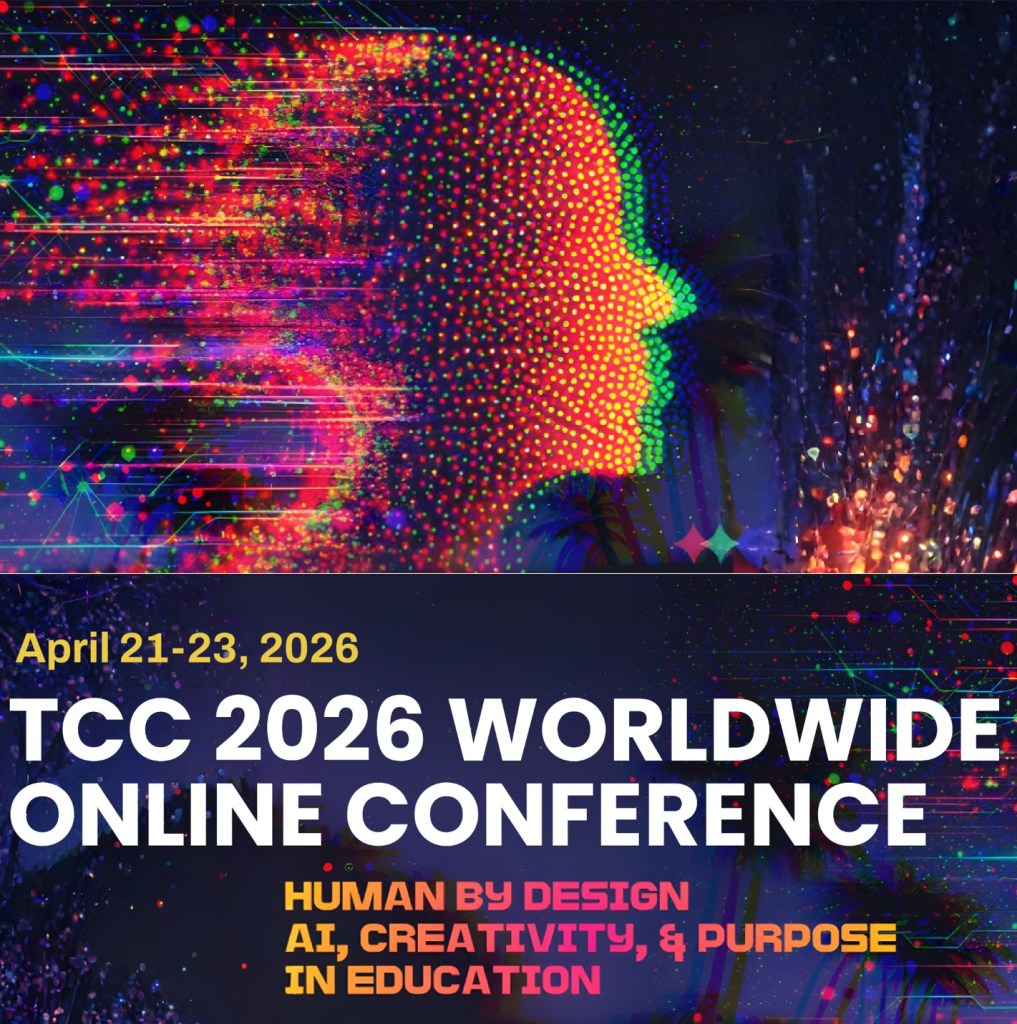
TCC, Technology, Colleges and Community, is a worldwide online conference attended by university and college personnel including faculty, academic support staff, counselors, student services personnel, students, and administrators.
Join our special 20th Edition of this annual event to share your expertise, experiences, and knowledge relevant to the use of information technology in learning, teaching, innovation, and academic services.
Seats are still available to participate online or onsite (this year only).
This event is very helpful and novice friendly by providing a strong foundation about learning with technology. For more information, visit:
Send a message from this email address to listserv@hawaii.edu. In the BODY of the message,
type: SIGNOFF TCCOHANA-L. For assistance, contact Bert Kimura <bert@hawaii.edu>.
By Scott Miyahira
Student at Kapi’olani Community College
University of Hawai’i
“You’re bringing those?”
My sister questioned me with some genuine curiosity and just a hint of nag, as I stuffed my iPad and my portable Nintendo gaming system into my carry-on luggage. Despite the fact that she was the younger sibling by four years, she had a way of occasionally borrowing the maternal tone of our mother.
“Yea, why?” I replied with just a tinge of annoyance.
“When are you going to use it?”
“I don’t know. We might have some down time. You’re not bringing yours?”
“No…,” she answered, this time adopting that same annoyance.
I guess I could see her point; we were only going to be in Hilo for two days. But this was my vacation. I came back home to Maui for a temporary get away from my life on Oahu, a life of two full-time jobs and only just enough free time to eat and sleep, sometimes not even that. I spent so much of my normal day-to-day always doing something that, for my vacation, all I wanted to do was nothing — nothing except lie around, watch Netflix, and play video games, which was usually most of what I did on my vacations at home. So if my Maui vacation was to be interrupted by a short family trip to the Big Island, I was bringing my entertainment with me. Much to my surprise, this “short family trip” would reveal to me my own dependence on technology and give me a new-found appreciation for a life unplugged.
A simple cottage smaller than I was expecting, painted in a classic white with stone walls around the base, long glass windows across the front, and an unassuming but prominent tower poking out from the back.
My mom had been bugging me about this trip for a while. “Aunty Terry hasn’t seen you since you were little. You just absolutely have to see their place, and they’re getting old so you won’t have many more opportunities to do so,” she would say. Continue reading →
By Cami Lyn Nagata
Student at Kapi’olani Community College
University of Hawai’i
I wondered why I was the only one that wanted to go to the farm with grandpa. All of my older cousins came up with reasons why they couldn’t go with us. Even Mom didn’t want to come. I should have caught the hint when I had the chance, but I was only eight, too young to realize that going to the macadamia nut farm was not going to be carefree fun. I didn’t know it then, but I was about to learn that hard work pays off.
The road was bumpy. I bounced in the seat, the belt digging into my neck each time. The smell of the sweat stained seats stung my nose as the wind whipped around the cabin of the truck. The engine moaned as we slowly climbed the twisting dirt road. Grandpa drove, eyes focused on the road, a mischievous smirk planted on his face. I could see the trees. We were getting close.
We pulled off the road and stopped at the metal gate. Grandpa put the truck in park, then quickly climbed out and unlocked the gate. With a strong push, the gate swung open to let us through. He got back in, and we drove up the path, passing a number of trees. Continue reading →
Updated 3/1/15
As in all things MOOC, look northward to Canada for the prevailing winds, and this time it’s to Ontario, and more specifically, to president and CEO of Lambton College Judy Morris. “Over the last few years,” she says, “Ontario colleges have seen enrollment in online learning grow ‘exponentially higher than on-ground learning.'”1
Judy Morris, President and CEO of Lambton College, Ontario.
Granted, she’s talking about online courses and not MOOCs, but the difference is superficial. In all but name, online courses are MOOCs that have been literally stuffed into the concrete and glass boxes that define traditional classrooms. In the box, they are subject to the same start and finish dates, registration requirements, enrollment caps, credit policies, fees, and even pedagogy that fail miserably at mimicking F2F (face-to-face) interactions.
Is it any wonder, then, that online courses fare so poorly in comparison to blended courses? As they’re currently positioned, completely online courses are simply poor copies lacking the features that make onground courses so effective for those who can afford to be on campus and attend classes in person for four to six years.
For the promise of online courses, we need look no further than MOOCs. There are some obvious differences: MOOCs attract huge enrollments and there’s usually no cap to class size, registration is free, anyone can register, they’re usually shorter than the standard quarter or semester, there’s no F2F requirement, feedback is provided by peers, they don’t count toward a degree, and they appeal primarily to nontraditional students. Continue reading →
Updated 3/3/15
UK’s FutureLearn, a part of Open University, “now hosts over 220 [MOOCs] from 44 partners.” Noteworthy is their completion and participation figures: “Of those that begin a FutureLearn course, 23% go on to complete the majority of steps and all of the assignments, while 39% of them interact with other users through social media, comments and conversations.”1 Takes the wind out of the less-than-10% completion argument, doesn’t it?
Right now, the MOOC’s disruptive path is being carved out in nanodegrees and microdegrees by developers and employers. “By forming partnerships and designing programs in conjunction with employers, ventures with new business models are offering their students programs and degrees that will make them more attractive job candidates.”2
The implications are enormous for colleges that understand this trend. Stuart M. Butler, senior fellow at Brookings, dubs it the “‘general contractor’ model of college education,” and says, “It is only a matter of time before enterprising colleges or other entrepreneurs start assembling comprehensive degree programs consisting of microdegrees supplemented by other experiences, such as a semester abroad and time at a small liberal arts college.” Adding employer-designed microdegrees to one’s transcript and resume seems like a no-brainer for college graduates entering the job market.
An alert from Claude Almansi: Open Internet, a 12-week MOOC that begins on March 6, 2015, is designed to “train a new generation of thinkers and actors to advocate for positive open and free internet policies and agendas from a human rights and public interest approach.” The course is free and offered in the Spanish language. Each week will feature a different module, and “each module will take approximately 2-5 hours of study time, including reading and completing assignments.” It will be hosted on the Peer 2 Peer University platform.
MOOCs appear to be a natural medium for social justice programs such as Open Internet, and I believe it’s only a matter of time before we see an explosion of similar MOOCs worldwide and in many different languages. In the end, MOOCs may just be the great equalizer, serving as the training medium for the world’s human rights activists.
William Whyte, professor of social and architectural history at St John’s College Oxford, assures us that in the “battle” of MOOCs vs traditional campus-based universities, “The MOOC will prove to [be] the loser.”1 He parades the usual suspects for their demise: low completion rates and absence of credits and degrees.
He tosses Britain’s E-University and Open University in with MOOCs for what amounts to a clean sweep of online programs. Two birds with one stone, as it were. He cites E-University as a costly failure and Open University as “actually a rather traditional university.” Convenient, but what these institutions have in common with MOOCs is baffling.
He bolsters his prediction with survey results: “Only 6% of prospective undergraduates surveyed last year [want] to stay at home and study. The other 94% expected and hoped to move away to a different place for their degrees.”
Whyte declares traditional universities the winner because “people want and expect something rather more than a purely virtual, entirely electronic experience of university. They expect it to be a place.”
Strong reassurance, indeed, for those who see MOOCs as “a horrible sort of inevitability.” Traditional universities have not only withstood the MOOC challenge but actually emerged stronger. Continue reading →
Despite wholesale announcements by powerful academic leaders throughout the U.S. that MOOCs are dead, sightings continue to pour in from around the country and the rest of the world. For skeptics, the problem is physical evidence. People can offer them and take them, but no one seems to know what a MOOC looks like. Some point to Coursera and edX, but in the opinion of most MOOC experts, who are primarily from Canada and the UK, these are hoaxes.
So, in the interest of determining once and for all whether MOOCs are fo’ real, I’ll be opening Project White Book to publish promising sightings and photos of MOOCs. In this inaugural post, I’m sharing the photo, below, of what appears to be one person’s conception of a MOOC. I recently found it in the ETC spam queue. It was posted anonymously with the header “Da MOOC!” I’ll post photos as I receive them, so if you have one, email it to me (jamess@hawaii.edu) and I’ll publish the most interesting.
Is this a MOOC, a hoax, or just another weather-related phenomenon?
Butler reports that “almost 50,000 students have enrolled in a massive open online course on positive psychology taught by UNC professor Barbara Fredrickson.” Evidence that this Coursera-based course might be a real MOOC is very strong. It’s six weeks long, a departure from the usual quarter or semester time frame. It’s comfortably aimed at interest rather than college credit. According to Fredrickson, “Most people that are enrolled — 95 percent of them — say that they’re interested out of their own curiosity.” And the professor is on firm MOOC footing, looking for pedagogical guidance from the future rather than the past. She says, “I’ve written a couple of books for general audience and one of the things that’s clear about our changing audience is that people don’t necessarily want to read books, but they like ideas.”
Another promising sighting is from Cornell. Friedlander reports that “Cornell will offer four new [MOOCs] in 2016: shark biodiversity and conservation, the science and politics of genetically modified organisms (GMOs), an introduction to engineering simulations, and how deals get done – mergers and acquisitions principles.” They’re still in the planning stages, so I’ll keep an eye out for more details as they become available.
Are MOOCs fo’ real? In this series, I’ll be looking at the evidence through a lens that’s forged from constructivist and disruptive theory as well as a dash of whimsy. In this process, I look forward to hearing your thoughts. Please share them in the discussion below. If you’re logging in from an address that has been previously approved, your reply will be posted automatically. If not, your first reply will be published within 24-48 hours. Subsequent replies from your address will be published immediately.
Join us on Monday, February 23rd at 3pm EST for a complimentary webinar on “Using Technology to Engage Students” with Solina Lindahl of Cal Poly San Luis Obispo!
The 21st century classroom is getting larger, more tech-laden and full of students weaned on digital devices. How should our teaching change (or NOT change) in light of this? This talk is aimed at showing how iPads, iClickers and more can engage the face-to-face large class. Included are a brief discussion of some of the more innovative (and easy) visual presentation apps, as well as a look at using iPads to do the most old-fashioned of practices: worked problems.
To learn more about all of our EdTech Week sessions and our presenters, please visit our EdTech Week website. You can also join our event on Facebook for the latest updates and information! We hope to see you there!
Judging by the sheer popularity of smartphones in modern times, it’s safe to say that this multi-faceted and dynamic invention may just be the best thing since sliced bread. Maybe even better, if sales figures from smartphone manufacturers are anything to go by. The Smartphone’s utility isn’t restricted to the quintessential teenager texting all day or for showing the world what you had for lunch earlier that day. The advent of smartphones and their ability to connect to the veritable hoard of information that is the Internet has revolutionized life in general and pretty much every profession on the face of this world too.
The substantial healthcare industry here in the United States is most definitely one such example. The truth of the matter, though, is that the total impact of smartphones and mobile apps hasn’t even hit the industry yet, but that’s all about to change. Traditionally, the whole dynamic between healthcare professionals and the general population was that of blind faith. The knowledge and expertise of healthcare professionals wasn’t ever questioned, for better or for worse.
The origins
Things all began to change with the advent of the Internet in households across the USA. People started to conduct research on medical maladies that they were suffering from. They started to question the choice of medication, course of treatment taken, and potential side effects. These and many other things that would have been left to the professional’s judgment but a few years earlier were being challenged now that the patient was armed with information.
Where apps fit in
Whether this situation was and is good or bad is still up for debate, but this is where this revolution originated from. When smartphones came to the fore, this situation was taken up a few notches. A study conducted by IMS Institute for Healthcare Informatics in 2013 pointed at over 40,000 healthcare-related apps available for download then in the iTunes App Store. Imagine how many more there are when taking platforms like Windows and Android into account. The sheer diversity of topics, too, covered under the healthcare ambit is staggering. Continue reading →
U.S. Secretary of Education Arne Duncan will visit Maryland on Wednesday to highlight the progress that the state’s schools and students have made through the hard work and leadership of parents, teachers, principals, as well as local and state officials.
He will visit two schools and then end his day with a speech about the importance of local and school-level leadership in continuing efforts to improve education. In his speech, Duncan will talk about the need to support states’ efforts and expand investments, progress and opportunity for all children through reauthorizing a new Elementary and Secondary Education Act.
Earlier in the day, Duncan and State Superintendent of Schools Lillian Lowery will visit classrooms at Ducketts Lane Elementary School and meet with teachers from there and Thomas Viaduct Middle Schools to hear how teaching and learning is changing during the transition to higher standards and how that has contributed to schools’ and students’ success in Maryland. The discussion with teachers will be streamed live on the Howard County Public School System website, www.hcpss.org. Continue reading →
Amersfoort, 16th February 2015 – From the initial 202,586 applicants, only 100 hopefuls have been selected to proceed to the next round of the Mars One Astronaut Selection Process. These candidates are one step closer to becoming the first humans on Mars.
“The large cut in candidates is an important step towards finding out who has the right stuff to go to Mars,” said Bas Lansdorp, Co-founder & CEO of Mars One. “These aspiring martians provide the world with a glimpse into who the modern day explorers will be.”
The Mars 100 Round Three candidates were selected from a pool of 660 candidates after participating in personal online interviews with Norbert Kraft, M.D., Chief Medical Officer. During the interviews the candidates had a chance to show their understanding of the risks involved, team spirit and their motivation to be part of this life changing expedition.
Dr. Norbert Kraft said, “We were impressed with how many strong candidates participated in the interview round, which made it a very difficult selection.”
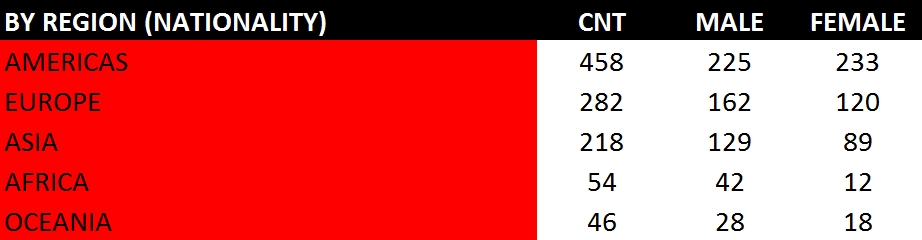
There are 50 men and 50 women who successfully passed the second round. The candidates come from all around the world, namely 39 from the Americas, 31 from Europe, 16 from Asia, 7 from Africa, and 7 from Oceania. The complete list of Mars One Round Three Candidates. Statistics on the candidates can be found here.
The following selection rounds will focus on composing teams that can endure all the hardships of a permanent settlement on Mars. The candidates will receive their first shot at training in the copy of the Mars Outpost on Earth and will demonstrate their suitability to perform well in a team. More information about the selection process can be found here: Mars One Selection Process. Continue reading →
Technology is rapidly morphing and changing, but what about the humans who use it? Numerous research studies as well as reports on various aspects of the connection between technology and our physical, mental, and emotional health are examining the various factors that may impact our lives.
In this essay, the authors explore the ways that technology can impact our lives in various ways. They focus on social media and how an individual used Twitter to document and call out people on bad behavior. Pete, who set up the Twitter account, soon found that over time, his tweets became harsher and harsher. The authors report that quite a few psychologists are trying to figure out how socializing is different online. For instance, when you have a bad day and post about it on social media, you are validated by not just one friend, but many “friends” who tell you that you are all right. This type of mass positive feedback can be addictive and can change the social dynamic. This post created a pretty lively exchange of comments, so be sure to read them, too.
In this article, Golbeck reports on a study by some Canadian researchers published in Personality and Individual Differences which looked at people who purposely disrupt online discussion, so-called trolls. The researchers gave personality tests to over 1,200 people and surveyed their Internet commenting behavior. They found that respondents who scored high for narcissism, Machiavellianism, psychopathy, and sadism also reported that “trolling was their favorite Internet activity.’ Trolls use the Internet to harm other people for their own pleasure.
Rather than focusing on possible negative influences of technology, in this study a group of Dutch researchers examined how technology in the form of a computer-tailored physical activity program can improve long-term health outcomes among adults aged over fifty. “[S]timulating people to become more physically active… can result in better public health and thereby reduce health care costs.”
Calling All Innovators: Apply to Serve the Nation as a Presidential Innovation Fellow
by Ryan Panchadsaram, Garren Givens on February 12, 2015 at 11:00 AM EST
Today, we are very excited to announce that we are on the lookout for more innovators and technologists to serve the nation as Presidential Innovation Fellows.
The Fellowship brings talented, diverse individuals from outside government to team up with top federal innovators to tackle some of our country’s most pressing challenges. Acting as a small team alongside federal agency “co-founders,” Fellows will work quickly and iteratively to turn promising ideas into game-changing solutions.
As always, the Fellows will focus on national priorities, leveraging the best principles and practices of the innovation economy to help create positive impact in the span of months, not years. This is an opportunity to truly transform how government works for the people it serves.
Projects will focus on topics such as:
Education: Fellows will work with myriad agencies to help make education more accessible to more Americans.
Jobs and the economy: Fellows will work on fueling the economy and stimulating job growth through innovation and improved opportunities for entrepreneurs and businesses of all sizes.
Climate change: Fellows will help our country and its communities prepare for the impacts of climate change.
Health and patient care: Fellows will leverage innovation to save lives, provide better access to benefits and programs promoting quality of life.
Fellows selected for this highly competitive program will serve for 12 months as entrepreneurs-in-residence to our federal agencies. Over the course of the Fellowship, individuals work as part of a small team of three to four. These teams of designers, developers, and product managers will participate in two to three “deep dives,” with the goal of “accelerating” initiatives chosen by the Program for their potential impact.
The first step is to apply online. Candidates can apply anytime, throughout the year, and applications will be evaluated on a rolling basis.
We look forward to kicking off another exciting year of projects.
Ryan Panchadsaram is the U.S. Deputy Chief Technology Officer. Garren Givens is Director of the Presidential Innovation Fellows and Deputy Executive Director of 18F.
With all of the hoopla over exoplanet discoveries in recent years, it’s a big surprise that this one did not receive more attention. Kepler-444 is a small star, about 25% smaller than ours, and is 11.2 billion years old. According to measurements made by the 600-million dollar Kepler space telescope, it has five rocky planets ranging in size from Mercury to Venus.
Artist’s conception of Kepler-444, an 11.2-billion-year-old star, and its five orbiting rocky planets. By Tiago Campante/Peter Devine.
The above information is sufficient to generate great excitement. When you realize that the universe is only about 13.6 billion years old, you know that this star and its planets formed in the early days of a very young, only about 2.5 billions years old, universe. Our own star is less than half as old at 4.6 billion years and has an expected lifespan of around 10 billion years. Continue reading →
The New England Patriots have muddled up the Super Bowl in a grand fashion. It might as well be an MIT prank but on a national scale. We haven’t see the like since Caltech (MIT’s famous rival in the prank world) jimmied the Rose Bowl’s card stunts half a century ago. (Personal note: I was a member of the Caltech group of twelve that did that. Also see this LA Times article.)
Denials are not going to change any fan’s mind. If you’re a Patriot fan, you probably don’t think it’s important. If you’re not, then you will believe any evil of the New England dynasty.
Before delving into the science, I should note that reporters have said that the ball deflation was discovered during halftime and rectified. As the final score was 45-7, and the second half score was 28-0, even if every Patriot point in the first, seemingly flawed half were rescinded, the score would still be 28-7 in favor of the Patriots. We are not discussing, therefore, who should play in the Super Bowl. We are instead discussing how balls would have become low in pressure.
As any high school physics teacher will tell you, PV=nRT, the ideal gas law. Okay, that’s gibberish to many, but it’s really very simple. So simple in fact that you can do the calculations yourself with calculator or even readily with paper and pencil. Let’s deconstruct this equation. Continue reading →
With The Imitation Game having academy award nominations, it’s a good movie to consider for science learning. Benedict Cumberbatch and Keira Knightly star in this story of Alan Turing. Turing is famous in computer science for the Turing Machine and the Turing Test. The latter was named by him as “the imitation game.”
A Turing Machine is a concept created by Turing that says that anything computable can be computed by a ridiculously simple machine consisting of a tape of indefinite length that contains only ones and zeroes and a reader that decides what to do upon reading the tape — to move forward or backward and how much. This decision depends on the state of the machine and the number read on the tape. Turing’s machine can, in theory, perform any computation being done today by any computer. You can say that Turing invented the modern computer — in theory anyway.
Alan Mathison Turing at the time of his election to a Fellowship of the Royal Society. Photograph was taken at the Elliott & Fry studio on 29 March 1951.
As Alan Turing sat and thought about computers, he asked himself what is the potential of computing machines in the indefinite future. He decided that it’s possible for a machine, in theory, to mimic human behavior. He then asked how can you tell if the machine truly is behaving as a human. In those days, all communication with machines was by writing or, worse, by looking at lights or blips on a CRT. His test involved writing to a machine and receiving written replies. If, no matter how much you wrote and read, you could not tell whether the replies were coming from a human or a machine, then the machine passed the test, “the imitation game,” and should be considered for all intents and purposes as human. Continue reading →
Dr. Howard Rheingold, Author, Critic, Journalist & Educator
Alan Levine, Pedagogical Technologist, Architect of Open & Connected Learning
Dr. Stella Perez, Sr. VP Communications and Advancement, American Association of Community Colleges
This year, our 20th conference features an ONSITE option to participate in-person at the University of Hawai’i at Manoa campus. There is also an option to participate virtually ONLINE as in previous years.
For further information (including low-cost housing and an optional educational tour), see:
Site licenses for unlimited participation from a campus or system are available. Special rates apply to University of Hawai’i faculty and staff. For more info, contact Sharon Fowler <fowlers@hawaii.edu>.
We look forward to seeing you at TCC 2015.
Warm regards,
Bert Kimura
For the TCC Conference Team
In a faculty brown bag lunch, Molly Sutphen, Associate Director of the UNC Center for Faculty Excellence and author of the seminal book Educating Nurses: A Call for Radical Transformation, delivered a talk on Practical Reasoning at the School of Government. The talk was a nice follow-up to the Teaching Palooza that our faculty organized last summer. Since the School’s focus is on teaching adult learners, enhancing practical reasoning skills is an important objective of my instructional design work.
Molly Sutphen, Associate Director and Teaching and Learning Coordinator, UNC Center for Faculty Excellence
Characteristics of Effective Practical Reasoning
To be able to draw on knowledge from different areas, courses, or types of knowledge and use it
To develop a sense of salience about a situation
To realize the stakes of a situation
To put boundaries around a problem or question
To be able to envision different outcomes
To be able to construct a narrative forward and backward
Assessment and Practical Reasoning
With the pressure of constantly demonstrating impact, assessing the short term learning outcomes of practical reasoning is problematic. “Practitioners may learn, but we don’t know it – what you teach, someone will perhaps not use for another five months – or ten years,” said Dr. Sutphen. She recommends taking “a long view” instead.
Instructional Strategy: Unfolding Cases
Dr. Sutphen introduced unfolding cases as an instructional strategy to teach practical reasoning skills. Unfolding cases are underdetermined (no obvious plan or resolution), scaffolded (controlled amount of information), and orchestrated (prompting specific, relevant questioning). In a plenary exercise, she presented a list of questions to help teachers construct unfolding cases.
What is this a case of?
Where do you want to start and end?
How underdetermined do you want the case to be?
Who are the actors? At which point will they be revealed?
What is the arc of the narrative?
What information will you provide or conceal?
Will you give boundaries or expect them to be discovered?
Further Reading
Benner, P., Sutphen, M., Leonard, V., & Day, L. (2009). Educating nurses: A call for radical transformation (Vol. 15). John Wiley & Sons.
Colby, A., Ehrlich, T., Sullivan, W. M., & Dolle, J. R. (2011). Rethinking undergraduate business education: Liberal learning for the profession (Vol. 20). John Wiley & Sons.
Schwartz, B., & Sharpe, K. (2010). Practical wisdom: The right way to do the right thing. Penguin.
Gherardi, S. (2012). “Docta ignorantia”: Professional Knowing at the Core and at the Margins of a Practice. Journal of Education and Work, 25(1), 15-38.
Mars One is proud to present the winner of the Mars One University Competition: Seed. The Seed team is an important step closer to sending their payload to Mars. The winning payload will fly to the surface of Mars on Mars One’s 2018 unmanned lander mission. Seed was selected by popular vote from an initial 35 university proposals and this is the first time the public has decided which payload receives the extraordinary opportunity to land on Mars.
Photo courtesy of Bryan Versteeg and Mars One.
“We were generally very pleased with the high quality of the university proposals and the amount of effort associated with preparing them,” said Arno Wielders, co-founder and Chief Technical Officer of Mars One. “Seed itself is uniquely inspiring since this would be the first time a plant will be grown on Mars.”
The Winning Team – Seed aims to germinate the first seed on Mars in order to contribute to the development of life support systems and provide a deeper understanding of plant growth on Mars. The payload will consist of an external container, which provides protection from the harsh environment, and interior container, which will hold several seed cassettes. The seeds will stem from the plant Arabidopsis thaliana, which is commonly used in space plant studies. After landing, the seeds inside the cassette will be provided with conditions for germination and seedling growth. The growth will then be recorded using images transmitted back to Earth.
“We are really pleased to be the selected project among so many excellent ideas. We are thrilled to be the first to send life to Mars! This will be a great journey that we hope to share with you all!” said Teresa Araújo, Seed team member.
Seed consists of four bioengineering students from the University of Porto and two PhD students from MIT Portugal and the University of Madrid. The team is supported by Dr. Maria Helena Carvalho, plant researcher at IBMC and Dr. Jack van Loon, from the VU Medical Center, VU-University in Amsterdam, and support scientist at ESTEC-ESA. Seed benefits from scientific and technical support from several advisers, whose expertise range from biological systems to spacecraft development and validation. Read more about Seed here.
An in-depth technical analysis of the winning proposal will be conducted to ensure that the winner has a feasible plan and that their payload can be integrated on the 2018 Mars lander. Mars One and its advisers will contribute to the analysis by thoroughly and critically examining the Seed proposal.
If Seed runs into any issues regarding feasibility or can not stick to the schedule, Mars One will fall back on the runner ups of the university competition. The second and third placed projects are Cyano Knights and Lettuce on Mars.
Mars One is a not-for-profit foundation that will establish permanent human life on Mars. Human settlement on Mars is possible today with existing technologies. Mars One’s mission plan integrates components that are well tested and readily available from industry leaders worldwide. The first footprint on Mars and lives of the crew thereon will captivate and inspire generations. It is this public interest that will help finance this human mission to Mars.
By Veronica Brockschmidt
Student at Kapi’olani Community College
University of Hawai’i
Starting in elementary school, the importance of finding the perfect career for you is introduced with fun little surveys that point you in the direction of possible future jobs based on your interests and selected answers. Kids would get career options like Model, Painter, Teacher, Doctor, etc, and a statistic on salary ranges for each position. In high school, the importance of graduating and attending college is drilled in from day one. By the age of 16 you were expected to know, without a doubt, what you wanted to be when you “grow up.” By the time you actually graduated high school, you needed to know exactly what you wanted to major in and the career you wanted for the rest of your life. That’s some intense pressure, especially for still technically being a kid and not actually accepted into any colleges yet.
You were given more statistics about the financial lives of Americans with college degrees and how much better their lives were than those with only a high school diploma. The implication was that if you go on to finish college, you’d be a millionaire (Kristof), but if you stop now with only your high school diploma, you’ll be stuck at McDonald’s asking your old classmates if they “Want fries with that?” The fear tactic worked. Plus, who doesn’t want to make up to $1,000,000.00 more than someone with just a high school education?
So you do the whole college thing because it’s the new societal norm and you want to make your parents proud. You feel like you have your life together because you’re getting good grades and you have the career major that you truly love and could happily do for the rest of your life. Little do you know that you were severely overpromised on realistic job opportunities and, suddenly, being a college graduate seems like it has nothing to do with how successful you actually are (9gag).
Perhaps it was that, at the time of you declared a major, that industry was hiring a lot of people and that the promise of success even had something to do with your decision. But now that three to five years have passed, those positions have filled up due to the overwhelming flood of qualified applicants who all had the same idea as you. Either way, you, “the successful college graduate,” are somehow unemployed, still eating Top Ramen, and sharing a bedroom to be able to afford rent. Continue reading →
When I was a child, I looked to my parents and grandparents for advice and to learn about the past. I viewed them as wise old owls who had a wealth of knowledge and experience that I could tap into. Disrespecting my parents was never an option, and if I didn’t show respect, they would ground me for weeks or, even worse, break out the back scratcher. What has changed from my generation to this? Has the internet ruined our need to look to elders as knowledge keepers? Has social media eliminated our need for social pleasantries? Has the frown on spanking created an uncrossable barrier for parents and discipline?
To better understand youth, I interviewed my twenty-year-old housemate, John, a young man plagued by the need to disregard others. John is the kind of person who, if you asked how his day went, walks past you without eye contact or acknowledgement of your existence. He acts as though he is royalty and can’t be bothered by the peasants around him, and he always has music blaring through headphones to drown us out. I doubt he would behave so arrogantly if he knew how much he resembles a chicken pecking the ground for food when he bobs his head to the beat. Like I said, he is the epitome of a disrespectful youth. Continue reading →
“Superhabitable” worlds may be common in our galaxy, making ideal homes for extraterrestrial life — Scientific American cover, January 20151.
Years ago, Carl Sagan famously wrote about a scientist’s “baloney detection kit” in The Demon-Haunted World (1995). You can learn all about this storied chapter by searching on the Internet for “baloney detection kit.” His point was that scientists obtain this mental tool kit as a side effect of their training and that we should similarly train everyone.
Scientific American magazine just published an article, “Better than Earth,” which shows us that scientists are not immune from broadcasting baloney themselves at times. The article is really quite good and interesting. Its statements are, as far as we can tell, accurate. Where is the baloney then?
At one point, the article states, “[T]he more closely we scientists study our own planet’s habitability, the less ideal our world appears to be.” The article also faults our own star’s “short” lifetime of about 10 billion years. “By some 1.75 billion years from how, the steadily brightening star will make our world hot enough for the oceans to evaporate, exterminating any simple life lingering on the surface.”
Looks as though we evolved just in time to enjoy our planet for a billion years or so before we are all steamed to death. Slower evolution may not have left enough time for us to exist here.
We circle a G-class star. According to the author, the next step down in star size, “K dwarfs[,] appear to reside in the sweet spot of stellar superhabitability.” K dwarf stars will shine for tens of billions of years, many times longer than our star. However, the author cautions that our planet is too small for conditions suitable for life to exist for that long period of time. Our core would have cooled too much to sustain our magnetic field and plate tectonics, both necessary to life. Continue reading →
According to US News & World Report, “[P]rofessors say they don’t have enough help to use this technology effectively, haven’t seen results from it, and fear that the cost savings administrators keep insisting that technology will bring could mean their own careers are on the line.”
Just take a moment to break this sentence down and understand what’s being asserted here.
Professors don’t have enough help to use the technology. This comment implies that the technologies under consideration do not have an easily used interface. Good technology should not require any but the most rudimentary training that you can receive from, for example, watching a video.
Professors haven’t seen results from it. Some technologies in education do not generate results. They may be used inappropriately for the course. The results may not match what the technologies enhance. Many professors may be working with anecdotal data from others that could be quite unscientific. The fact that you haven’t seen results from some set of technologies does not mean that all technologies are useless in education.
Professors fear losing their jobs to technology. Some technologies in some institutions could be used that way. If the professor provides no added value, then what is that person doing teaching anyway? Almost no students can guide themselves effectively through the educational process. They don’t know enough to make the necessary choices. Educators will not become obsolete soon. Nevertheless, some institutions may reduce faculty in the mistaken idea that technology can replace them. Fear should not be a determining factor in what to do or not to do. Fearing the inevitable is foolish; fearing the impotent is abandoning yourself to fear. Continue reading →
Digital literacy an elementary skill by Ellen Ciurczak in The Clarion-Ledger (11/30/14)
The teachers at Petal Upper Elementary School believe that you can’t start too early teaching students how to acquire a variety of skills using computers, from Internet safety to keyboarding skills.
A valuable lesson on bullying in observer-reporter.com (11/30/14)
Bullying and cyber-bullying are serious problems that many young people have to deal with. Elissa McCracken, Miss Ohio 2012, chose cyberbullying as the issue she would focus on during her term because she was a victim of bullying herself.
You may have noticed recent news about Stephen Hawking predicting the demise of the human race due to the rise of artificial intelligence (AI)1. Others of genius rank, such as Elon Musk and Ray Kurzweil2, have also made this prediction. With “The Theory of Everything” (biopic about Prof. Hawking) in theaters right now, this prediction is resonating across the English-speaking world.
Before digging your shelters or heading for the hills, you should ask, “What is artificial intelligence?” A bit of history may help put this entire subject into perspective. The term was coined in 1955 by John McCarthy, who called it “the science and engineering of making intelligent machines.”3 “When?” you ask. “That’s nearly 60 years ago! Before I was born!” (I actually was born well before then, but statistically you probably weren’t.)
Funny how AI has not taken over the world in the 60 years it’s had so far. Why the sudden worry? Computers are becoming more powerful and less expensive. Computer memory is dirt cheap, speaking historically. This trend of more computer power and more memory shows no signs of abating soon. Could it eventually reach the tipping point where machines are sentient and self-reproducing? Would they then remove the “scourge” of humans from the Earth’s surface? Might the end be less dramatic in that they would render people superfluous? Imagine a world in which all work, including creative work, is done by machines. Who needs Beethoven when you have the Ultra-Composer Mark IV?
This entire discussion circles around to defining machine intelligence and estimating exactly how smart machines might become. Right off the bat, understand that intelligence, as we commonly understand it, has not been seen in machines yet. No one truly knows if it ever will be. To comprehend why, you must have a feeling for the nature of computers and computing. Continue reading →
The film that inspired the empowering real-life movement supported by celebrities such as Miley Cyrus, Lena Dunham, Russell Simmons, Rihanna, Cara Delevingne and many more!
#FREETHENIPPLE
Starring Lina Esco (LOL), Lola Kirke (Gone Girl),
Monique Coleman (High School Musical) and Zach Grenier (“The Good Wife”)
Directed by Lina Esco
SUNDANCE SELECTS WILL RELEASE FREE THE NIPPLE ON
DECEMBER 12, 2014, THEATRICALLY AND ON VOD.
WHAT IS FREE THE NIPPLE: Today, in the USA it is ILLEGAL for a woman to be topless in 37 of the United States of America in some states that includes breastfeeding. In less tolerant places like Louisiana, a woman exposing her nipples can carry a sentence of up to three years in jail and a $2,500 fine. In New York City, in 1992 it became LEGAL for women to be topless in public, but the NYPD continued to arrest women, so we took to the streets with cameras and our cast to fight these Puritanical injustices first hand. By the end the production, Free The Nipple morphed into a “real life” revolution that transcended the bounds of mere entertainment. Famous graffiti artists, mobs of dedicated women, and celebrities from Miley Cyrus to Liv Tyler and Lena Dunham jumped on board and ignited a national media blitz that has transformed into a powerful movement to Free The Nipple in America. Other celebrity supporters include Cara Delevingne, Shepard Fairey, Kendall Jenner, Adrian Grenier, Rihanna, Elizabeth Jagger, Scout Willis, Rumer Willis, Soko, Suki Waterhouse, Kellan Lutz, Dree Hemingway, Russell Simmons.
ABOUT THE FILM: A group of fearless women fight for their right to go topless in public, as they smash societal taboos one bare breast at a time. Based on a true story, this spirited satire follows New York City activists Liv and With, who take their crusade for gender equality from the streets of the urban jungle to the courts. More than just a movie,Free the Nipple has launched an empowering real-life movement, inspiring women across the globe to take back their bodies.
Director: Lina Esco
Writer: Hunter Richards
Producers: Lina Esco, Hunter Richards, Lisa Azuelos, Julien Madon
Co-Producer: Gigi Graff
For more information please visit http://www.freethenipple.com
Amersfoort,1st December 2014 – Mars One is proud to present the ten Mars One University Competition finalists eligible to fly to Mars. One of these ten payloads will receive the once in a lifetime opportunity to fly on Mars One’s first unmanned Lander mission to Mars in 2018. For the first time ever the public will be able to decide which payload receives the extraordinary opportunity to fly to Mars.
The ten remaining projects from an initial 35 submissions were submitted by diverse universities worldwide. In order to get this far, the payload proposals needed to meet all requirements as described by Mars One supplier Lockheed Martin. Mars One community members, social media followers, and the general public will have the opportunity to vote on and select the winning payload. Voting opportunities for the public will be opened in the first weeks of December, 2014. Voting submission will be accepted until December 31st, 2014.
The winning university payload will be announced on January 5th, 2015. The winning payload needs to be feasible and meet the requirements and restrictions as outlined in the Proposal Information Package (PIP) and on-going discussions with Lockheed Martin, who will build the 2018 lander. Additionally, if in any case the winning team can not perform or adjust to additional requirements the runner-up will be chosen instead.
Arno Wielders, Co-founder & CTO of Mars One said, “These ten final projects are unique and creative and we are very happy with the payload proposals these teams have presented. It would be highly interesting to see each and every one of these projects being launched to Mars. Now it is up to the public to decide which project they would like to have on Mars.” Continue reading →
Playing High-Action Video Games May Speed Up Learning, Studies Say by Sarah D. Sparks in Education Week 11/13/14
Sparks reports on a study in the December issue of Human Movement Science that contradicts earlier research which connects extensive video game play to attention-deficit disorders and other impulsiveness disorders. The authors contend that “game playing can improve students’ attention control” and create better learners.
Smartphone addicts: A project-based learning activity by Alexandra Lowe in TESOL blog 11/5/14
Lowe describes how she used the idea of a Smartphone survey to move English language use outside the classroom. In groups students developed and conducted surveys about Smartphone use.
Learning languages is a workout for brains, both young, old by Victoria M. Infivero from Science Daily 11/12/14
Using MRI scans, researchers at Penn State have demonstrated that even the adult brain grows and changes when learning a new language. They are also using “virtual 3-D-like environments with situation-based learning to help the brain make some of those new connections more effectively.”
Report Urges Caution on Approaches Equating Technology in Schools with Personalized Learning by William J. Mathis and Noel Enyedy, from NEPC 11/24/14
This policy brief addresses the increased use of technology in schools and questions its effectiveness. The authors point to a number of factors, including the fact that teaching practices and learning outcomes often have not changed.
The 19th annual international conference AACE E-Learn took place from October 27-30 in the sunny, warm and welcoming climate of the city of New Orleans. The conference attracted 670 participants from 60 different countries who enjoyed four days of workshops, keynotes, presentations, symposia, SIG meetings, posters, and, last but not least, informal discussions and networking opportunities during the session breaks.
Conference infographic by Stefanie Panke.
AACE E-Learn Conference
What sets AACE conferences apart from other events in the educational technology community is the rigorous peer review process in the selection of presentations. Instead of simply submitting an abstract, AACE requires a full manuscript of 6-10 pages. While writing skills do not always and certainly not necessarily translate into great presentations, the quality off contributions is generally high. This also makes the conference proceedings (available in the AACE digital library EditLib) a really great resource for an up-to-date overview of the current state-of-the-art in educational technology. While access to the proceedings is generally restricted to conference participants and subscribers, several papers that were honored with an outstanding paper award are openly accessible:
The best paper awards mirror the diverse spectrum of the conference. E-Learn is a place where educational technology researchers, developers, and practitioners from higher education, K-12, nonprofit and industry sectors meet – brought together by a joint focus on leveraging technology for achieving instructional goals.
My Conference Experience
This conference report is my personal eclectic account of E-Learn 2014. My schedule was packed this year: Not only did I, in a hyperactive mood, choose to deliver three talks, but I also had a symposium and a special interest group meeting to moderate and an executive committee meeting to attend. Luckily, the overall conference atmosphere, the great discussions during the special interest group meeting, and the thoughtful feedback, ideas, encouragement and contributions by numerous conference participants made all of this fun. Continue reading →
CALL FOR PROPOSALS
Please consider submitting a proposal for a paper or general session relating to all aspects of educational technology, including but not limited to e-learning, open education, ICT, online communities, social media, augmented reality, educational gaming, faculty & student support, Web 2.0 tools, international education and mobile learning. We also encourage retrospective presentations, personal experiences, and forecasting the future.
VENUE
For our 20th anniversary celebration, there are two options: (1) ONLINE only or (2) ONSITE. Onsite sessions will run from March 18-19 at the University of Hawaii at Manoa Campus Center, and participants will also have access to all online sessions from March 17-19. All onsite sessions will be streamed to online participants.
For onsite participants: We’re offering an optional educational tour of Kamehameha Schools and a stopover at Kapiolani Community College for lunch and a talk at CELTT (Center for Excellence in Learning, Teaching and Technology). We’ve also arranged for a block of low cost housing options at the East-West Center (Lincoln Hall) and at Ala Moana Hotel.
TCC Hawaii, LearningTimes, & the Learning Design and Technology Department, College of Education, UH-Manoa collaborate to produce this event. Numerous volunteer faculty and staff worldwide provide additional support.
The iPhone 6 Plus arrived via USPS priority mail yesterday, so I’ve had it for a little over a day. My first impression is that it has a completely different look and feel from the iPhone 4, which I reviewed in July 2011. The 4 has a solid industrial feel that’s enhanced by sharply beveled edges. I like the way it looks and feels in my hand. The 6+, in comparison, feels fragile, perhaps because of its thinness and rounded edges. This sense of fragility, however, is gradually fading the more I handle it. My guess is that it will take a few days for a new muscle memory to replace the old.
iPhone 6 Plus: 6.22 x 3.06 x 0.28 inches, 6.07 ounces. iPhone 4: 4.5 x 2.31 x 0.37 inches, 4.8 ounces.
The most critical factor for me is hand fit. It has to feel comfortable. It took a few hours to adjust to the size difference, especially the length, 6.22″ vs 4.5″. The width difference, 3.06″ vs 2.31″, is noticeable, but it’s surprisingly comfortable in my hand. My immediate thought was that the next version of the plus could easily be an inch wider (4″ instead of 3″) and still fit the average-sized hand.
iPhone 6+ and iPhone 4 width: 3.06″ vs 2.31″.
The next critical factor for me is pocketability. It has to fit comfortably in my pants pocket. The 4 fits in any and every pocket. The 6+ fits best in the front pockets. It’s slightly heavier than the 4, 6.07 vs 4.8 ounces, but it actually feels lighter in my pocket. This sensation is probably caused by its dimensions. It’s less dense. Taller, wider, and thinner, the weight is spread out whereas the 4 is concentrated in a smaller area.
iPhone 6+ and iPhone 4 thickness: 0.28″ vs 0.37″.
I take my iPhone with me on walks and use it as a music player with in-ear headphones. The 6+ felt comfortable in my right front pocket. I slipped it in upside down because the 1/8″ headphone jack is on the bottom edge. The +/- volume buttons are in the same place as the 4’s, and I’m able to adjust volume from outside the pocket while walking. Continue reading →
Impacts of MOOCs on Higher Education by Allison Dulin Salisbury, from Inside Higher Ed
Although she comments that they are much criticized, the author focuses on positive outcomes of MOOCs such as the increased awareness by institutions of higher education that the digital age is here to stay. Read the comments, too, because a reader takes her to task for ignoring some data and this sparked a lively discussion.
When Students Get Creative With Tech Tools, Teachers Focus on Skills by Jennifer Carey from MindShift
All students need to learn how to use reading, writing, speaking and listening skills. The skill(s) the teacher wants the students to work with should be central to any lesson, including one infused with technology. Carey reminds readers that focusing on the skills rather than the tools results in effective learning. Digital tools should be used like any other teaching strategy; identify the skills you want your students to learn then decide how they will do it.
Latest games are finally unlocking the key to making learning more fun by Emmanuel Felton from Hechinger Report
Kids learn from games without realizing they are learning. Some educational game developers assert that gaming can go beyond using games to students’ actually designing and building games, using higher order thinking skills as they work collaboratively.
What Are the Most Powerful Uses of Tech for Learning? By Katrina Schwartz from MindShift
In order for technology to be an effective learning tool, the learner first needs access. Then they need the knowledge to go beyond just being a consumer of information to being an active participant in the digital world. Teachers can be and are at the center of this type of deeper and more meaningful learning.
Only a few true nerds, such as myself, will be at all challenged with Big Hero 6. Let me explain.
Big Hero 6 is about four students at San Fransokyo Institute of Technology (SFIT), the younger brother of a fifth, and a robot. These are the “6” in Big Hero 6. The catch here is that these “super heroes” don’t have mystical powers. Their performance boosts come from technologies that they create.
The lead character is Hiro Hamada (Ryan Potter) who is a wild genius youth who enjoys bot fights instead of the serious business of school. His older brother, Tadashi, tries to dissuade him from wasting all of his talent on underground bot fighting and finally breaks through. He gets Hiro hooked on being a student at SFIT. There’s a catch. SFIT is a robotics-oriented school, and you must show your ability to get in. Hiro must demonstrate his capability to the faculty of the school by showing actual robotics.
How he does so and what happens next set the course for the film. There’s just enough scariness and just sufficient levity associated with it to please school-age children. I’ll be taking my grandsons (aged five and seven) to see this movie two days after it opens and will share their reactions with you then.
The robot member of the six is the most unlikely hero you’ll ever meet. Baymax is voiced perfectly by Scott Adsit. He is a healthcare robot, a nurse, who looks like, as the script puts it, a marshmallow. He is white and squishy — inflated actually. He has a large pot belly and walks like a penguin. This robot is the legacy of Tadashi, his ultimate creation.
Besides Hiro and Baymax, the six include Go Go Tomago (Jamie Chung) who is a speed freak, Wasabi (Damon Wayons Jr.) who has terminal OCD and looks like he spends too much time in the gym, Honey Lemon (Genesis Rodriguez) who seems out of place in a robotics school because her expertise is in chemistry, and Fred (T. J. Miller) who just likes to hang out with the smart kids at SFIT. Continue reading →
Interstellar is a great story with excellent acting, especially from Matthew McConaughey and Mackenzie Foy. For me, the three hours felt more like a normal two. Like the characters in the movie, I was asking where the time went.
In the not-to-distant future, maybe 20-30 years, the Earth is in real trouble. All efforts are now focused on food. Climate change has destroyed much of our ability to grow crops. National budgets have even eliminated defense spending.
Cooper, a former NASA test pilot, is now a farmer struggling against ever-increasing problems of drought and blight. He stumbles across strange gravity messages that direct him to the remnants of NASA run by Professor Brand (Michael Caine).
The film revolves around the relationship between Cooper and Murph (Foy and, later, Jessica Chasten, and, even later, Ellen Burstyn). This is the emotional center of the movie and the important love story. Oh, there’s another standard love story as well but one that definitely is not strongly promoted in the story.
Needless to say, there are adventures and sacrifices made, and the intrepid astronauts save the world through a combination of love, luck, and lots of fancy mental gymnastics.
If you’ve seen a trailer, you’ve seen a mountain-size ocean wave approaching people standing in calf-high water. These waves are continual on this odd planet and also are completely unexplained and irrational. What force could have moved so much water — over and over again? This is just the beginning of making this movie exciting while ignoring reality. Continue reading →
The new movie, The Theory of Everything, is about the life of Stephen Hawking from his graduation from Oxford to his becoming famous and then separating from his devoted wife of over a quarter century. Please, everyone, go to this movie. Why? Because it’s a good story, well acted and directed, and because you will be supporting the concept of telling the stories of scientists in movies. We must have more of this.
Stephen has a special resonance with me for strictly non-scientific reasons. We were born in the same year. We both entered prestigious colleges at the same age, 17, and went on to prestigious graduate schools for our doctorates. We were both married in the same year, he to Jane and I to Jayne. Of course, there are innumerable differences to balance these few coincidences. I majored in chemistry, he in physics. I have enjoyed rather good health overall. He is outrageously famous, while I labor in obscurity. And so it goes.
Before getting to the science, I’ll praise Eddie Redmayne for his uncanny portrayal of Stephen Hawking. From the early stumbling to the later crablike fingers and the difficulty in forming words, he nails Hawking in a manner that I never would have believed. Especially moving are the scenes in which he has the twinkle and slight smile showing Hawking’s personal joy at special moments and his puckish sense of humor.
This is a wonderful love story in which personal connection overcomes insurmountable odds. Jane (Wilde) Hawking’s (played by Felicity Jones) indomitable spirit lifts Stephen Hawking to the threshold of his greatness. We see this spirit and unwillingness to give up displayed several times in the movie. The very fact that Jane has three children, the last when Stephen is unable to move from his wheelchair speaks volumes about her. Ms. Jones brings a real sense of what the actual Mrs. Hawking must have felt to many of the scenes in the movie. Continue reading →
Recent news of a drop in iPad sales1 by Apple triggered some thoughts. Reporting that educational sales of iPads are still on the rise prompted more thinking. Then, I found that some of our customers had a very interesting response to our queries about this area.
We deliver our software as HTML5, making updates unnecessary and allowing for the software to run on any platform: iPad, iPhone, Android device, Chromebook, MacBook, MS Surface, Linux desktop, etc. We can readily convert the software to an iOS app and to an Android app. The question we asked is, “Should we?” The answer, at least from schools, was as resounding “No!”
Making predictions is a very risky business, if you care about your credibility. I am going out on a very long limb by making two predictions for the future. Any number of new developments can make these predictions wildly inaccurate or could cement their certainty.
The first prediction is that iPads will continue the decline in sales and eventually level off. There will be some bumps in this path, of course, but the overall process is one of stagnation at best. The article gives some reasons. For example, people are not upgrading their old iPads as quickly as Apple had anticipated. An iPad is not an iPhone and does not engender the mass hysteria with respect to new versions that you see with such a constantly visible status symbol as your cell phone.
Those tablets also don’t have as many preferred uses as many had predicted. Most who can afford an iPad also have a “real” computer that they use for power applications such as word processing. The tablet is mostly used for videos, music, email, texting (when not using the cell phone for that), and so on. In brief, tablets are not supplanting computers in large numbers. Given a computer and a cell phone, with screen size growing apace, the tablet is the “middle child” and is unnecessary to everyday functioning. It’s too large to carry in your pocket and too small for many serious uses.
The above is not to suggest that tablets will vanish, only that they will settle into a niche market until someone radically changes the interface. The touchscreen is magic for young children and some applications. My grandchildren took to them like kids to candy, even at ages 3 and 5. Still, a touchscreen interface can only take you so far. Adding three-finger gestures really doesn’t make it that exciting. The problems lie in two primary areas: screen size and computing power (CPU and memory). The apps for them have been designed to use what’s available. Continue reading →
On October 29, the New York Times published an op-ed by Frank Bruni1 that is based on a new book by Joel Klein (past chancellor of New York City Public Schools) and that has plenty of advice for educators. According to Bruni, Klein tells us that the primary issue in education is teacher quality.
Bruni’s analysis of Klein’s writing is good enough that everyone should read it and read between the lines too. Bruni also had the opportunity to interview Klein and asked some penetrating questions. Here are some bullet points that I have excerpted from the article:
• Stiffen the admission requirements for schools of education.
• Fix education school curricula, including ensuring teachers master their subjects.
• Create a rational incentive system for compensating teachers, a huge problem today.
You can read the article for the details. What does all of this have to do with technology? A great deal, actually, and in two important areas. The first area is teacher training. We can do much in this area, both with simulating teacher classroom experiences and with mastering subject matter. We currently train pilots with simulators before putting them in airplanes. The same thing could be done for teachers to help them more rapidly reach competency with student interaction, discipline, and engagement.
I am only intimately familiar with science education and can say that we have some great tools to advance science teacher understanding of their subjects. Too many science teachers enter classrooms unprepared to teach science for the simple reason that they do not understand the nature of science. It’s sort of like teaching chess without knowing how the pieces move. We can fix that. Continue reading →
Struggling with a cumbersome paper map is difficult and inconvenient, and then it begins to rain. Google Maps is a user-friendly alternative, a technological tool that can be accessed via a computer or a mobile device, compatible with both Android and iOS operating systems. This app offers users a variety of functions, increasing versatility and convenience. It is an innovative and handy tool that assists users in more than just arriving at their desired destination with great ease.
With Google Maps, users can type or say a street address, a point of interest, or a named location into the search bar. Kapi’olani Community College classmate, Kelsey Hardee, says, “Now that I have a moped, I love the voice option so I can be directed hands free!” Google Maps locates the destiantion on a map. From here, users have the option to seek driving, transit, walking, or biking directions. With multiple routes, users can select the one that is most convenient and meets their needs. After selecting their desired route, the application offers directions to the desired destination or an option to hear turn-by-turn navigation instructions, similar to those of a standalone GPS system. Additional features include satellite imagery, allowing users to access a street-view of the area, a particularly useful function that helps to increase visual familiarity of an area.
A recently added feature allows Google Maps users to explore nearby businesses, including eateries, hotels, malls, and other points of interest. This feature is complete with consumer ratings and reviews, business information such as hours and contact information, and driving, walking, biking, or transit directions to visit the point of interest. According to David Pogue of the NY Times, “Google’s points-of-interest database also excels.” While other apps offer a similar feature, many of them actually access Google Maps to provide location and directions. Google Maps is more effective and convenient since it reduces the number of steps in the process. Continue reading →
By Lynn Zimmerman
Associate Editor
Editor, Teacher Education
A few years ago I went to the Rutherford B. Hayes House in Fremont, OH. (In case you are wondering why, I had a friend who worked there at the time.) One of the things that struck me was his standing desk. When I first saw it, I assumed it was a podium for lecturing, but my friend informed me that, no, it was the desk where he often worked. Other than Thomas Wolfe (of Look Homeward Angel fame), who apparently wrote standing at his refrigerator, I had never heard of anyone standing and writing or doing other paperwork. I decided it must just be easier for tall people somehow and did not give it another thought.
Then, a couple of years ago I started having back and neck problems. I spend many hours, like many modern people, sitting in front of a computer for hours on end. After several doctor visits, I started changing the way I worked. The doctor gave me a website that would show me how to properly (ergonomically1) adjust my workspace. She also recommended a timer for my computer that covers your screen for a few minutes every so often. I did not do that, but I did start taking more frequent breaks. I mentally break my work into segments depending on what I am doing. When I reach the bottom of a page, I take a break. When I have completed five PowerPoint slides, I take a break. After I have graded so many pages, I take a break. Sometimes, I’ll just stand up and sit down, but I try to get up and at least walk into another room.
The doctor also showed me some folding shelves that you can mount on the wall at the appropriate height for standing and working on your computer. I didn’t buy one, but I did set up my iPad on a chest high bookshelf. Then, rather than checking my email while I was sitting and working on my laptop, I started checking my email on the iPad so that I would have to stand up and walk over to it and stand as I read and responded to emails.
I still have problems with my neck and hips, but there is a definite improvement. When I am in a situation, such as a hotel room, where I cannot set up my equipment as ergonomically, I can definitely feel a difference. Then I have to be conscious of taking those stand up breaks.
I learned that many famous people, including Ernest Hemingway, Thomas Jefferson, and Charles Dickens, used standing desks. Korbey focuses on a study done by Mark Benden, Associate Professor of Environmental and Occupational Health at Texas A&M Health Science Center. He and his team believe that too much sitting contributes to a variety of problems that children have in school, as well as to obesity. They found that elementary students who stand up more to work burned more calories and were more engaged in learning when they could stand and move around. As an educator, this makes sense to me. Children need to move and twitch and fidget. And, maybe, adults do, too.
By Scott Miyahira
Student at Kapi’olani Community College
University of Hawai’i
We’ve all been there. You’re shopping in the grocery store, sitting in your car, or watching television at home, and a catchy tune floats into your ear. You listen intently and maybe even bob your head to the beat. You’re really getting into this song you’re hearing for the first time, but before you know it, it’s over, and you have no idea what you just heard. Like a sappy romance film cliché, you’ve fallen in love and don’t know if you’ll ever meet again. You ask your friends, but no one seems to know either. You didn’t even get a name…
All melodrama aside, those days are over thanks to SoundHound. For any music lover on the go, it is the best mobile music identification software available.
SoundHound is a free mobile application, universally compatible with iOS, Android, Blackberry, and Windows devices. When you want to know the title, artist, or lyrics of a song, all it takes is a tap on the screen of the SoundHound app and it will identify it for you in as little as three to ten seconds. I am an avid music listener and collector with nearly four thousand tracks on my iPhone alone, and I am constantly looking to add to my collection. However, keeping up with ever-changing music trends and artists can be extremely difficult. SoundHound allows me to quickly identify new songs I hear and like or songs I recognize but can’t identify, thus enabling me to look them up and potentially add them to my ever-expanding library. I must shamefully admit that, for these reasons, SoundHound has become one of the most frequently used apps on my phone, beating out productivity and informational apps. Continue reading →
By John Palmer
Student at Kapi’olani Community College
University of Hawai’i
Living in today’s high-tech world, it’s almost a silly question. Have you ever forgotten the password to your FaceBook login, eBay log-in, WordPress page or your “other” email account? Of course you have. Everyone has, myself included! But what if there was an app, and all you needed to do was remember one password, and it, in turn, would be the key to getting into every other app, website or even bank account you use? Keeper is an app for saving passwords that is a time-saver and highly useful.
Rarely do I download an app or software that I cannot live without, but Keeper is such an application. Why? Keeper remembers everything so I don’t have to. I have used it for many years to remember (and protect) passwords to my bank account, log-ins to websites, even to pay my electric and phone bills. You can completely eliminate the risk of your cookie data being robbed when using it on your PC or MAC since it stores data like a database, as opposed to a web page, which leaves your information open to bots that comb and steal cookie data, making you, that’s right, say it with me people — vulnerable. In fact, the cross-platform compatibility is so great that it works on iPhone, iPod Touch, iPad, even your Kindle or Nook.
The browser version works on Safari, Internet Explorer, Chrome, and Firefox. It also uses world-class encryption technology so you never have to worry about all of your private information being hacked. I’m going to go out on a limb here and predict that if you aren’t already using this great app, next to your social media, email, and phone (and notwithstanding Flappy Bird, but that’s another story), you will without a doubt find yourself using this app often. Continue reading →
The new Hollywood movie, FURY, focuses on tanks, their role, and tank crews in World War II. This 2-hour 14-minute film opens in theaters on Friday, 17 Oct. 2014. It stars Brad Pitt, a sure audience draw, playing the somewhat complex leader of the five-man crew of the FURY, a Sherman tank. If you go to this movie, watch Logan Lerman as Normal Ellison. He almost steals the show.
The movie starts in April 1945, near the end of the European part of World War II. VE (Victory in Europe) day is celebrated here as May 8, 1945. It’s spring, and everything is mud, mud, mud. American troops are in Germany by this time, and the famous Battle of the Bulge ended a few months earlier. German troops are now defending their homeland ferociously.
FURY, a Sherman tank.
The main character of this movie truly is FURY, at least for me, and really did steal the show when I watched. The tank used in the filming was real, supplied by the Tank Museum in Bovington, England, a late-war Sherman with a 76mm gun. That’s the big gun on the turret. The inside shots were done in a specially created set that could open up in several directions for the different shots. The entire set was mounted on a gimbal that could move it for the inside shots where the tank was in motion. If you think that the inside of that tank looks really crowded, you should know that it was made 10% larger than the real thing.
Before discussing tanks in more detail, I should warn potential movie goers that this is a very violent movie with lots of grisly scenes, very grisly, and plenty of profane language in nearly every scene. Interestingly, there is no explicit sex.
For those who don’t mind the above, this is truly a riveting and tense movie. There’s little let up in the tension that begins with the first scene. I found it difficult to turn away from the screen even when the most horrific scenes took place. The characters are interesting but, except for Pitt (playing Wardaddy) and Lerman, they’re not plumbed deeply. Even Wardaddy, who says, “It’s my home” about the tank, never has this aspect explained, except implicitly. We are left to wonder if this attachment came about over time or from a single incident. We also are given no clue as to how he became fluent in German.
One more “character” in the movie is the entire FURY tank crew of five. The examination of the development of this team and its personality helps to make up for not looking more deeply into the individual characters because it’s the team and the tank that count in the end.
My favorite quote, again from Wardaddy, “Ideals are peaceful. History is violent,” sums up the movie. Get ready for a Hollywood ride.
Back to the tanks — we’re still using those old machines today. The first were used in World War I a century ago and were rather primitive. They were little more than mobile armored weapons and personnel protectors to move troops across the no-man’s land between trenches while withstanding the machine gun fire and easily trampling the extensive barbed wire fences for the following ground troops. The WWII tanks were much more powerful and versatile and formed the mainstay of many land operations. In the movie, we see quite a few German officers at the front on horseback. This contrast of horse and tank may be intended to suggest that tanks will soon go the way of the horse.
David ‘Sting’ Rae, center, with the crew on set.
To have a better idea of what the past and present role of the tank is in warfare and what the future may bring, I interviewed David “Sting” Rae, a technical consultant for the movie. Mr. Rae sees a continuing role for tanks in the military. According to Mr. Rae, “The US Marines reinvented the role of the tank in Fallujah during the Iraq conflict where it proved almost decisive in breaking the will of the insurgents and allowing the infantry to take and hold ground.” Continue reading →
At a time when relations between the United States and Russia are cooling – if not cold – an innovative programme of the Eurasia Foundation continues to promote exchanges of professionals from both countries.
The ‘U.S.-Russia Social Expertise Exchange’ (SEE for short) was set up to promote co-operation between civil society leaders from the two countries.
Twelve working groups bring together experts in programme areas that include, for example, child protection, collaborative journalism, gender equity, and ‘rule of law and the community’.
Bonnie Bracey Sutton
My wife, Bonnie Bracey Sutton, is a member of the SEE working group on ‘Education and Youth’, and I had the chance to accompany her to its last meeting, held on 10-11 October in Washington, DC.
The working group hopes to hold a research seminar in March 2015, to appoint two senior and two junior fellows from each country who will take part in exchanges through February and March 2015, and to organize a ‘Cyberfair’ to showcase its projects, perhaps in November next year.
Bonnie had a fellowship from the Eurasia Foundation, which took her to Saint Petersburg and Samara last February, and I paid my own way to travel with her.
Our greatest surprise was to discover that Russia, despite its leadership in areas like space technology, is a poor country. People take home USD 250-300 a month. Of course, prices are lower than in the U.S, so that is not so terrible in terms of purchasing power.
But we never before visited a country where just about everyone with whom we had a serious conversation wanted to know our home address (if you want to get a visa to visit the U.S. you have to supply a U.S. address).
The U.S. Government has said that despite poor political relationships, social and cultural exchanges between the two countries will continue to be funded. We hope so, and we will see what modest support we can provide to contribute to them.
I stayed up past 1:30 this morning to get this shot of the blood red moon over Honolulu. The light from the moon, once eclipsed, was very poor. Most of my earlier shots were turning out completely black with no images. I started at 1/200 sec. and worked all the way down the click stops to 1/3 sec. before I was finally able to get a halfway decent image. I had the aperture open all the way to f5.6 the whole time as I walked the shutter speed down.
Blood red moon over Honolulu on 10/8/14 at 1:28am. Nikon D5100, f5.6, 1/3 sec., ISO 250, 300mm.
I was using a 300mm zoom, too, so the slow shutter was a problem. I tried to steady the camera by lying back in a beach chair on the south balcony and shooting almost straight up, in the narrow bit of sky between the overhang from the apartment above and the railing. The lens has built-in IS (image stabilization), but most of the photos still ended up with visible blurring around the edges. Anyway, I didn’t futz with the colors in Photoshop. This is the actual red of the moon. However, I did brighten the image a bit to bring out more detail.
For college students in general, a 2011 survey found that 75% are part-time. Of these, “Even when given twice as long to complete certificates and degrees, no more than a quarter ever make it to graduation day.”1 Another study in 2012, focusing on community college students, found that 59% are part-time. Of these, 42% work more than 30 hours a week, 37% care for dependents 11 or more hours a week, and 40% take evening or weekend classes.2
In comparison to full-time students, part-timers fail at over twice the rate in completing certificate and degree programs. Here’s a breakdown from the 2011 survey:
Considering their numbers and their low completion rates, it’s a wonder that community colleges continue to do business as usual, with little or no change in practices that date back over half a century.
Thus, I was pleasantly surprised to find, in my college emailbox, an announcement that I’ve been returning to, off and on, for the past few days. It is a call for proposals to address the problem of part-timers. The proposed plan has to either (1) assist part-time students earn 12 credits in an academic year or (2) shorten their time-to-degree. The deadline is close and the form is complicated, so I won’t be submitting a proposal. But I do have some thoughts on this subject.
From a part-time student’s perspective, college is only one of a handful of other responsibilities with higher priorities. S/he has to be able to fit it into her life, and not the other way around. The problem is that colleges are set up for traditional students whose main priority is to complete a program. So, like a square peg, she’s trying to fit into a round hole.
The courses she needs are either filled or offered at a time that’s not convenient for her. Offerings at night or on weekends are slim pickings. Even when she can fit a class in, she finds it difficult to meet deadlines, complete learning activities, or obtain learning assistance. Competing for her time are work and family demands. Furthermore, the commute to campus is all too often time-consuming and, if she drives, the cost of gas and limited parking stalls are an ongoing concern.
The fact that our hypothetical part-timer is among the majority of students who are poorly served should be an incentive to change, from a perspective that’s campus-centered to one that’s student-centered. In other words, colleges ought to be asking, How can we accommodate part-timers with their unique needs?
The title of the 2011 report mentioned above goes to the heart of the problem — “Time Is the Enemy.” The traditional college schedule is the enemy of the part-time student. It’s in one dimension, while part-timers are in another. Put another way, part-timers make up a completely different population that isn’t being served by the colleges as they are now. Put in still another way, part-timers are an open invitation for disruption, for a disruptive approach that will accommodate the needs of a large population of students who are currently being ignored. Continue reading →
Big Hero 6 marks several firsts for Walt Disney Animation Studios (WDAS). It’s their first action animation with six action sequences. Previous animated movies had two or three. It’s the first WDAS movie to use the new Hyperion system that makes light much more real than ever before. The computer has 55,000 cores and resides in four separate locations.
It’s the first WDAS movie to have six major characters, actually twelve if you count their super alter-egos. It’s the first time WDAS has teamed with the XPRIZE Foundation to create a prize for students. If they win, they will be at the premier in Los Angeles on November 7 and walk the red carpet.
However, these are not the breakthroughs that excite me. This is the first time that the producer, Roy Conli, and the directors, Don Hall and Chris Williams, decided at the outset that this movie would be grounded in reality, that the science would be right. If the story group came to them during the four years that elapsed since the idea first was considered with a story idea that broke the rules of nature, they said no.
However, they did not hesitate in pushing the limits of technology. In some scenes, the g forces would have caused blackouts for real people. If you’re willing to overlook these small violations of the laws of nature and enjoy the ways in which the boundaries of technology are tested, you’re in for a treat. My day at WDAS provided me with only a few short sequences, the longest being 16 minutes, but it showed enough to convince me that this movie is breaking new ground.
Teachers, ask your students what they think about soft (and inflatable) robots? Can anyone create microbots in the real world? How can you do that? What about mental control over robots? Could you have plasma gloves or magnesium fire spitting costumes? Can robotics someday make anyone into a super hero? Explore the science.
Of course, there’s a story here and lots of heart. It’s Disney, after all. And, if you love action adventure as well as animated feature movies, this may be your lucky day.
I really like that science overrides fantasy in this movie. I only wish I had been there to point out places where the boundaries were pushed a bit far and make sure that they did so for good reasons.
The technology behind this movie is another story in itself. Never have so many extras appeared in scenes in an animated movie. It has over 500 different types of extra characters who can appear in the thousands when necessary with each doing its own thing. The city of San Fransokyo was modeled on San Francisco using the assessor records for the city so that you can find the plot where any real house sits, although that house may not look exactly like the real one but will look like homes in the neighborhood. Altogether, about 83,000 individual buildings were created in their external entirety for this movie. The underwater sequence that I saw was amazingly realistic. And so it goes. It took a large team, including 90 animators, two years to make this movie.
For me, a former chemistry professor, seeing one character be a chemist (Honey Lemon) with a sort-of Periodic Table emblazoned on her purse was cool. But, the Table is active, and she presses the element buttons to make incredible compounds really quickly that help to conquer the bad guy or save the good guys. While this purse is not very likely, the stuff it makes is very well animated and looks very real.
Once I’ve seen the movie, I hope to return to these pages with a deeper review of the science and technology that we all can discuss.
On Monday, September 22, the XPRIZE Foundation announced the Global Literacy XPRIZE in New York City. This newest XPRIZE may, in some ways, be more ambitious than the previously announced $30 million Google Lunar XPRIZE. It seeks to bring literacy to more than 300 million children who cannot read, write, or do arithmetic.
The XPRIZE Foundation, in the last part of its proposed rules, says, “At XPRIZE, we don’t believe that we have all the answers, but we believe passionately in inspiring and incentivizing people to find solutions to our Grand Challenges… But we want to hear from you… You can email us your feedback at global.learning@xprize.org…” This article summarizes my comments and should stimulate readers to provide theirs. If you have comments for the XPRIZE Foundation, please leave a reply here, in the discussion at the end of this article, for all of our readers to see. Likewise, should you have remarks about my comments, I would love to hear from you. The following comments are my own opinions informed by my own experiences. A good argument may well persuade me to change them. In any event, I look forward to an excellent discussion.
Quickly summarizing the competition: Teams will compete to develop software solutions to learning literacy that can be applied worldwide using Android tablets with nearby servers. Literacy includes reading, writing, and numeracy. The language to be learned will be English. The software will be open source. The software and content, ready for trial in the real world, must be completed within 18 months of selection of the finalists. The overall time frame from announcement to final award is 4-1/2 years. Read the official guidelines for all details.
I’ll begin by praising the XPRIZE Foundation for this bold effort to eliminate illiteracy across the entire globe. Education may well be our most serious problem today because a well educated world (really educated and not just schooled) will address all of our other problems such as clean water, climate change, terrorism, poor nutrition, preventable disease, ocean health, renewable resources, and so on. The Foundation is approaching problems that others ignore or give up on but that must be solved. Their competitions to date have energized entrepreneurs and those with entrepreneurial spirit to attack serious, nearly intractable problems. The technologies being developed are likely to have an impact far removed from the competition in which they are created.
I think that the “Proposed Guidelines, V.1” for this Global Literacy XPRIZE competition, have a number of controversial parts and am highlighting the ones that I believe should be altered. While the comments below are intended to be constructive, they are also definite, blunt, and tough. I feel that they should be if they are to get any attention. The controversial parts I see are: open source, teaching English, writing, and the Android platform. I wrap up with two comments: a contrarian view and literacy as fire.
1. OPEN SOURCE
The rules require that the five finalists, each of whom receives $1 million dollars and a chance at the $10 million grand prize, place their software source code in open source. This requirement is unusual in XPRIZE competitions. I think that it creates problems. Here is what the guidelines say:
An essential component of the Competition design is a commitment not only to open source software solutions, but also to an open source development process. In order to maximize the potential for the growth of this solution beyond XPRIZE, the Finalist Entries will be released under permissive licenses allowing both commercial and non-commercial use.
Software must be released on the Apache License, 2.0. Content and assets must be licensed under the Creative Commons CC BY (4.0) license. In essence, all work must be made available to anyone anywhere for free. Anyone can use the sources to build a copy and load it onto tablets without paying any fee at all. Continue reading →
While this is an unabashed promotion of the upcoming Disney animated feature Big Hero 6, it also is a real XPRIZE for young people. The prize is not millions of dollars but is still really cool.
Six winning students will travel to Los Angeles, walk the red carpet at the film’s premier, go behind the scenes to meet the creative minds at Walt Disney Animation Studios and Walt Disney Imagineering, and join a special “Visioneering” session at XPRIZE headquarters.
Students will enter in either the Junior Division (8-12 years of age) or the Senior Division (13-17 years). They will present their solutions to the world’s biggest challenges. The precise statement is “What one problem would you tackle to change the world? How would you do it? Tell us in a video!” XPRIZE judges will review the submissions and choose twenty finalists. Then, the public and a panel of expert judges will vote to determine the six winners.
Registration opens on Friday, September 19. Have your students put on their thinking caps. You do not have to go to the movie (unless you win). Entry is free. Just create a one-to-three minute video showing how you will use any combination of STEAM (science, technology, engineering, arts, and math) to solve one of the world’s problems. Be creative in defining the problem, in finding a potential solution to the problem, and in presenting your proposed solution.
Clearly, Disney does not require introduction. The XPRIZE Foundation is a matchmaker of sorts. It identifies highly leveraged situations that innovation can solve and that can change the world for the better. It finds sponsors for the challenges it creates around these problems that are not being addressed otherwise for a variety of reasons. Anyone, anywhere can enter. But beware! These are never easy challenges.
I hope that this challenge introduces thousands of young people to the joys of discovery (science) and creation (engineering) while using technology and arts to show that they have great ideas.
I also hope to follow up with an in-depth discussion with the Walt Disney Animation Studios Chief Technology Officer, Andy Hendrickson in the next few weeks.
Many educators seem to be promoting the benefits and even the necessities of teaching computer science courses before high school graduation. I have not seen any of these people suggest which courses to eliminate to make room for this new course. Despite this, many suggest that computer science (mostly translates to computer programming) be a required subject.
I have seen some say that writing software should begin in kindergarten. Others decry its absence from middle schools. Finally, quite a few lobby for adding it to high school curricula. As you might expect, the origin of each is from practitioners in each. Exposure to the basic concepts of computers, what you might call the “nature of computing,” is a good idea, but the rising din of voices telling us to add computer programming classes throughout our public education system should be tempered by reality.
Much of the pressure comes from just a few arguments and assumptions. Most of these are fallacies. I list some below and explain them.
1. There is a huge job shortage and high demand for computer programmers.
This may be the most recurrent theme for those promoting computer programming in schools. There are two problems with this argument. Large businesses, the ones making the most noise, are inflating their numbers to further this bit of misinformation. Also, the numbers do not indicate the level of programming skill required for these jobs.
The reason for the inflation is simple: H1-B visas. By importing computer programmers from other countries, these huge companies can keep costs down in two ways. They pay those H1-B programmers very low wages. You’ll find the workers sharing small two-bedroom houses with as many as ten people in them. Secondly, low wages for the immigrants help to keep wages of our citizens low as well. Continue reading →
By Lynn Zimmerman
Associate Editor
Editor, Teacher Education
In Valerie Strauss’s Washington Post blog, Answer Sheet, guest writer Joanne Yatvin, in “Why Kids Should Choose Their Own Books to Read in School” (8 Sep. 2014), makes an impassioned defense of reading for pleasure. Yatvin is “a one time Principal of the Year in Wisconsin and a past president of the National Council of Teachers of English.” In today’s test-driven school climate, free reading has been replaced with reading that focuses on developing test-taking skills. Yatvin says, “Consumed by the urgency to raise students’ reading scores, policy makers and school officials have forgotten that children learn to read by reading.” She goes on to talk about balanced literacy and the benefits of independent reading.
Reading such as that needed for academic work and test taking definitely has a place in schools. Students develop analytical skills by reading for details. However, reading for pleasure and being able to choose your own reading materials also has a place in the classroom. Pleasure reading, also called extensive reading, promotes learner autonomy; improves general language competence, not just reading skills; helps students develop general knowledge; promotes vocabulary growth; helps improve writing; and motivates students to read more.
These claims are supported by research in literacy and in second language acquisition. One of the strongest proponents of free voluntary reading is Dr. Stephen Krashen who sees the importance of light reading as a bridge to more challenging reading. He also contends that not only does reading improve reading skills, it is also necessary for developing good writing skills. Continue reading →
According to a New York Times article (“The Economic Price of Colleges’ Failures,” 2 Sep. 2014), our colleges and universities are doing a terrible job of educating our youth. The conclusions are academic dynamite.
The article, by Kevin Carey, depends on two books by sociologists Richard Arum and Josipa Roksa: Academically Adrift (Jan. 2011) and Aspiring Adults Adrift (Sep. 2014). According to Carey, Arum and Roksa lean heavily on a test of critical thinking and other skills known as the “Collegiate Learning Assessment” (CLA). For this reason, conclusions depend on the value of this particular test instrument, which some have called into question.
Even if the CLA is flawed, it cannot be totally inaccurate, and the findings should indicate a general direction. According to the article, students who graduated from college “improved less than half of one standard deviation” in the test.
All of that time and all of that money resulted in little benefit to the students. Interestingly, the students themselves did not see it that way. They thought they received a good education. The problem, as the second book pointed out, is that the job market does not agree with their self-assessment. According to Carey, “Because they didn’t acquire vital critical thinking skills, they’re less likely to get a job and more likely to lose the jobs they get than students who received a good education.”
Reading between the lines, some colleges still provide a good education, but a great number do not. Note the emphasis on critical thinking skills that stand in strong contrast to the memory skills that so many courses support. The CLA claims to test critical thinking, analytical reasoning, and communications. Continue reading →
The XPRIZE Foundation is a nonprofit with the purpose of accelerating innovation to solve the world’s most difficult problems. Energy, ocean health, transportation, and space are just a few of the areas that the XPRIZE competitions intend to affect.
If you teach science, you can watch for announcements of new XPRIZEs and use the information to spark the interest of your students in various areas of science and engineering. Have them research the ideas and come up with their own plans for meeting the challenges.
Recent announcements include the Google Lunar XPRIZE, the Tricorder XPRIZE, and the Wendy Schmidt Ocean Health XPRIZE. A quick Internet search will provide you with the details for each, including team selection for those competitions that have progressed to that stage. Millions of dollars are at stake. The Lunar prize has total awards of $30 million.
The Ocean Health XPRIZE will create pH sensor technology to measure ocean acidification across thousands of miles of ocean. You can introduce a great deal of chemical and biological science by investigating this challenge just as though your class were competing.
The Tricorder challenge seeks to make a health sensor like those in the well known Star Trek television series of the 1960s. Ten teams have been selected and are taking ten different approaches to the problem. Just having your classes evaluate each team’s ideas would be a great project. Which will win?
Of interest to those who are not science teachers is the learning category. No prizes have been officially announced yet. Unofficially, the first learning prizes will focus on literacy and will require low-cost and effectiveness to win.
Universal education made possible by technological innovation is a recurrent theme of the Educational Technology and Change Journal. Which areas of technology are already well developed, and which are far behind and must be boosted? The XPRIZE Foundation has a great number of expert advisers to help make those decisions. Will they make the right ones?
Computer games give boost to English. The University of Gothenburg in Science Daily: Success in the world of computer games and a good English vocabulary go hand in hand. A recent study has shown that players who are good at computer games increase their English vocabulary. The study also showed a difference between the genders. Boys spend about twice as much time a week playing computer games as girls. However, girls spend about twice as much time a week on Facebook and other language-related activities.
Tools for achieving oral fluency by Marsha Appling-Nunez in Language Magazine: The author makes suggestions for helping English language learners with their speaking and presentation skills. Glogster is a graphical blog that students can use when doing oral books reports, or other presentations. She also recommends PechaKucha Prezi, which is a method of presenting information using pictures only which requires the speaker to focus on good pronunciation, filler reduction, and vocabulary.
For Public Schools, the Long and Bumpy Road to Going Digital by Kathy Baron in Mindshift: Equipment, software licensing, training. Funding – or lack of it – is the number one issue facing school districts as they convert to the digital learning world.
Preparing Teacher Candidates to Work with English Language Learners in an Online Course Environment by Stephanie Dewing in TEIS News: The author reports on a study she did on the efficacy of an online course for ESL teachers. She found minimal evidence of transformative learning experiences. She proposes several changes in course design to try to produce a context more conducive for transformational learning.
We live in a very large universe. By all accounts, it’s over 14 billion light-years to the edge from here. That’s nearly 10,000 billion billion miles. Our galaxy contains billions of stars. Our universe contains billions of galaxies. Somewhere out in those vast spaces, there must be, or have been, or will be another advanced civilization.
Unfortunately for those yearning to communicate with aliens and fortunately for those who fear alien contact, we are very unlikely — in the extreme — ever to communicate with an alien civilization. Our only real hope lies in violating Einstein’s laws of relativity, and so far they’re as solid as granite.
The vastness of space that makes the existence of aliens, at some time, likely also means that they will be too far away for any meaningful communication. If any are in our galactic neighborhood, they may have broadcast pictures of themselves just as we are doing every day with television, and we may intercept them if we can tease them out of the background noise of quasars, exploding stars, and so on.
Even an image of an intelligent, technologically advanced alien would add enormously to our knowledge of science. Speculation about what an alien would look like may seem like a waste of time, but it can help us if we ever do see one to recognize it.
The topic of what an alien, one with technology, with whom we could, in theory, someday communicate, will look like, act like, and so on has been in science fiction books and movies for many decades. Hollywood tends to reach for the extreme and depict aliens as very frightening. The movie, Alien, is a good example of that trend. Going back very far, there’s It Came from Outer Space.
The science suggests otherwise. Not that real aliens wouldn’t be, well, alien. The likelihood of them passing for one of us is rather remote. If you are teaching science, this concept can begin an excellent and engaging project investigating the possible parameters of alien beings capable of broadcasting images of the themselves. Before heading into the appearance of aliens, consider two separate issues that bear on this topic. Continue reading →
You may have noticed one of the many articles such as this one that cast doubt on the asteroid (or comet) strike that annihilated the dinosaurs. Oh, the asteroid did the job, they say, but it had some help.
Careful examination of North American fossil records strongly suggests that the dinosaur population was under stress from lower than usual herbivore diversity. What say?! There just weren’t as many plant-eating dinosaurs as usual, which means that dinner for the large meat-eaters was a bit harder to come by.
The Earth was undergoing extreme changes 66 million years ago when the great impact took place. Massive volcanic eruptions in what is now India were the result of a collision of the Indian and Asian continental plates. Climate was undergoing change. And dinosaur herbivore diversity was down.
The above was really no big deal. Dinosaurs had been around for well over 100 million years and had survived many environmental challenges. This was just another that would kill off lots of individuals and perhaps a few species. As a whole, the dinosaurs would come roaring back soon enough, however. Continue reading →
What I liked about this summit was that it was representative of various places in the US and very diverse. It was interesting that all of the researchers used terminologies that even I did not know, but I learned during the process.
This seminar was basically on extended-learning projects and outside organizations that aim to further STEM education. The authors call these joint efforts “STEM learning ecosystems,” and they can deepen student understanding and engagement and broaden access to a well-rounded education in science, technology, engineering, and mathematics. I had to get used to the terminology and wondered if people who are interested would be scared away by the eduspeak. I think people at the Summit heard the terms often enough to finally be comfortable with “learning ecosystems.”
I looked online because I still, at the end of the day, did not have a fluid understanding of ecosystem in this context. This is what I found that may be helpful so you don’t have to puzzle the term.
After school programs come in many varieties. Since we were dealing with understanding of a variety of groups, museums, networks and other providers, I thought that the diagram above would aid understanding. Continue reading →
Steven, thanks for the question. Microsoft’s recent offering of SP3 means that the SP2 is no longer a viable purchase option — except for those interested in picking up a bargain. Used, they’re currently going on eBay for about half the original price. However, the differences between the 2 and the 3 are small enough to justify this article update.
For me, the critical variable is weight. The quarter pound difference between the 3 and 2 is negligible. To put this in perspective, it’s the difference between my first-gen iPad and the SP2. They’re both equally heavy — or light, depending on your perspective. The SP3 screen size is touted as a breakthrough, but the 1.4″ difference isn’t that impressive considering the bulk that it adds to the overall size. By desktop and notebook standards, it’s still far too small for serious work for prolonged periods.
The 2160 x 1440 resolution seems enormous compared to the SP2’s 1080 x 1920, but it’s negligible considering the pixels per inch, which is 216 vs. 208. The SP2’s resolution is excellent. I’m using it right now, with the power cover, to write this article. I have it connected to a 32″ 1080P monitor via the SP2’s proprietary HDMI adaptor, and the clarity is equal to my desktop’s. Continue reading →
ETC Mailing List
To receive periodic email announcements about the latest articles and discussions on ETC, send your name and email address to jamess@hawaii.edu
[Note: See chapter 1, Landing. Also see Harry’s Mars One: Exciting Adventure or Hoax?, especially the long-running, extended discussion at the end of the article. See his other Mars related articles in his list of publications. Chapter 2 is being published as submitted, without editing by ETCJ. -Editor]
The four hopeful settlers stare open-eyed at the vista that confronts them. Mars stares back, red-faced and malevolent. They discern nothing friendly or helpful in that stare. Some might see indifference, but they’d be wrong. If ever mankind faced evil, it is here in this impossibly alien and lifeless environment.
Even the dark, sharp-edged rocks strewn across the landscape with apparent reckless abandon seem infused with baleful intent, waiting patiently for countless eons for these soft Earthlings, waiting to cut them and trip them. The surface between the rocks is red, not the red of a poppy or even an Earth sunset, but an intense red that fills the land with emanations of harm. Despite the extreme thinness of the atmosphere, the strangely close horizon does not immediately and sharply turn to the black of space as on the Moon. The red dust of Mars hangs in the sparse air and softens the horizon just enough to give the appearance of red sand reaching up, an almost living thing.
As if sensing the planet’s personality, Chun speaks up, “We have to get that module back so we’re at full strength.”
“You bet!” responds Dawit excitedly, pumping his fist. He is undaunted by the landscape or the problem of the errant module.
“Sure,” says Aleka, “but first we have to put our habitat together.”
“Sorry,” says Chun as she moves into position.
“We all feel the same. All right, we’ve practiced this plenty of times,” says Aleka.
“Seems like thousands,” responds Dawit with a gesture none of the others can see because he’s inside.
“We don’t have all that long before our suits have to be recharged,” warns Balu.
“Right. Let’s rotate and connect,” says Aleka.
“Good thing that missing module connects at the end,” comments Chun.
“The rovers have done a nice job of clearing the site and putting the modules in place,” says Balu.
“I cannot wait to get a plan for the missing module,” comments Dawit over their intercom. Everything is an exciting adventure for Dawit.
While at a recent workshop at the Redlands, CA, headquarters of the Environmental Science Research Institute (ESRI), I heard the most concise definition of geography yet: “What where? Why there? Why care?”
My wife, Bonnie Bracey Sutton, had been accepted for a week-long workshop in ESRI’s T3G Institute. I traveled with her, thinking I was heading for a holiday in Southern California – maybe visit the beach and chill out in wine country.
No such luck. As soon as he saw me, Charlie Fitzpatrick said, “I’ll get you a badge.”
Charlie Fitzpatrick is the K-12 education manager at ESRI. Before joining ESRI in 1992, Charlie taught social studies in grades 7-12 for 15 years.
“T3G” is ESRI’s acronym for “teachers teaching teachers GIS.” So the goal of the workshop was to give a group of some 90 educators the knowledge and hands-on skills to be able to teach other colleagues how to use geographic information system information in their work. Continue reading →
Teachers working in classrooms need ideas and frameworks and support for initiatives beyond the ideas that have been classified as regular education. Sometimes funding is a problem. Powerful partners get you permission to do wonderful things in the classroom.
My first involvement with a network of powerful people, learning ideas and new technologies was with Cilt. You can tell that it was some time ago. We called STEM, SMET. Here is a look at what we started with:
We investigated, learned, shared and promoted ideas. Concord has wonderful free resources to share, and here is a summary:
The Center for Innovative Learning Technologies (CILT) was founded in October 1997 with a grant from the National Science Foundation (NSF) to stimulate the development and study of important, technology-enabled solutions to critical problems in K-14 science, mathematics, engineering, and technology (SMET) learning. Four “theme teams” focused the efforts in areas of highest promise. CILT events, often workshops organized by theme, provided a collaborative forum in which people in the learning science community met to assess the progress of the field, define research agendas, and initiate new collaborations. Many of these collaborations form seed grants funded by CILT. In addition to these successful CILT programs, CILT has generated many resources for the learning science community, including tools, publications, and NetCourses.
In this day and time, people sometimes do not think that meeting people and sharing in conferences is necessary. But the leaders of Cyberinfrastructure have better ideas. They do a conference and put the ideas online. You have a choice. There are pieces of brilliant ideas, presentations and demonstrations, and even poster sessions for you online. Continue reading →
There is reportedly a wealth of research being conducted unto cyberlearning, but there are no clear views about how to translate research results into action in the community context, in particular for schools or informal education.
This emerged from the recent Cyberlearning Summit held in Madison, Wisconsin, on 9-10 June 2014, which brought together some 200 participants — mostly academics, plus some educators, industry representatives and grant makers — to highlight “advances in the design of technology-mediated learning environments, how people learn with technology, and how to use cyberlearning technologies to effectively shed light on learning.”
There was no discussion about quite what cyberlearning is, but it appears to be a fancy name for on-line learning.
The meeting was organized by the Center for Innovative Research in Cyberlearning (CIRCL), funded by the National Science Foundation (NSF), and featured a number of eminently qualified speakers.
Yasmin Kafai, from the University of Pennsylvania, reminded participants of the remark by the late Steve Jobs that “everybody in this country should learn to program a computer, because it teaches you how to think.” Continue reading →
The authors visited thirty-five countries and examined the Internet’s impact in each. The new digital age has a significant impact with both positive and potentially negative outcomes. They discuss both possibilities. They focus on the new level of connectivity that the digital world brings to individuals and nations.
In perspective, connectivity in mankind has always been the yeast that has led to social and collective growth. In early man, the spoken word allowed groups to share sensory experiences and form collective societies. About five thousand years ago, the written word allowed mankind to share experiences across geography and time. Knowledge could be passed from one generation to another and transferred across geographic boundaries. The printing press increased our ways of storing and retrieving experience and documenting the ways man governed himself. Knowledge was stored and retrieved in libraries. Continue reading →
In a press release this evening, Bas Lansdorp, Co-founder and CEO of Mars One, announced an international partnership with multi-award winning producer Darlow Smithson Productions (DSP, an Endemol company) to follow and screen the selection and training of Mars One astronauts.
DSP will be the exclusive worldwide production partner for the Mars One astronaut selection and training program, which will see 705 candidates, shortlisted from over 200,000 who applied, undergo the assessment processes. The candidates, from all walks of life, will be tested as part of a training program run by a panel comprised of scientists, adventurers and astronauts.
With the astronaut selection process already underway, the first installments of DSP’s production are expected to begin broadcasting around the world in early 2015. Further details will be announced. Continue reading →
For at least two centuries, education has been divided up into separate compartments. In most recent educational history, the so-called core compartments or “subjects” have been social studies, English (now known as English language arts or ELA), mathematics, and science. Along side these have been physical education and a number of other artistic or artisan activities such as music, drama, art, and woodworking.
A great number of educators have noticed that this separation has made less and less sense as time has passed. Similar issues exist within these disciplines. For example, my own area of science was divided up long ago into physics (the original natural philosophy encompassing motion, light, and other physical phenomena such as electricity and magnetism), chemistry (changes in matter), and biology (study of living things that was mostly limited to classification in its earliest days). Biology has changed enormously and now no longer depends on classification. Understanding chemistry requires plenty of physics and often heavy-duty mathematics. And so it goes.
If we are to educate our youth, we must break down the artificial barriers between the compartments formed so long ago. They make little sense these days.
For example, mathematics and science are kept separate in our schools, and their teachers are trained separately. Yet, mathematics, as taught in grades K-12, is mostly applied mathematics at its heart. It was created for commerce, engineering, and surveying. Calculus was created for science. These connections are lost in most mathematics courses. Once you’ve learned to count, that is, learned the names of the numbers, the rest follows logically as you begin to figure out the world around you. Were science and math merged into a double-period class, it could make much more sense to students — especially if engineering is included in science, and commerce is included in math. Continue reading →
[Note: Jessica Knott, ETCJ’s Twitter/Facebook editor, has coordinated the publication of this article. -Editor]
Last month The Sloan Consortium’s 7th Emerging Technologies for Online Learning took place in Dallas, Texas. According to the latest Sloan-C View newsletter, there were “more than 700 onsite and 1,000 virtual attendees representing 47 states including DC and 23 countries.”
Saint Leo University provided virtual access to a limited number of instructors, including adjuncts like myself. In my formal request to attend, I made a commitment to “be active on multiple social media platforms and use the symposium hashtag – #et4online – to further engage in live sessions and network with other attendees.” I was fortunate to be selected to attend, and it was this social media commitment that made all the difference in my experience.
Recorded sessions are helpful but don’t provide the energy and interaction of real-time attendance. And there is a lot to be gained from following the social media backchannel of a conference, but formal registration allows for a different level of access to the sessions and other attendees. This article includes a few of my lessons learned as a virtual conference participant.
Prepare to Participate
Are your social media accounts up-to-date? This may be the best place to start. Take a look at the platforms that are being encouraged by the conference organizers and review your profiles before the event starts. If it has been a while since you logged in to an account, it could take some time to review and refresh the information you are providing about yourself. Keep in mind that these profiles serve as your business card in an online networking sense.
Follow the conference itself and the sponsoring organization. In addition to the conference hashtag, this Sloan Consortium event was also active with social media accounts focused specifically on this conference, including Twitter and Facebook. These accounts provided a constant stream of reminders, letting participants know about upcoming sessions, highlighting participants and presenters, and announcing schedule changes.
Set Realistic Expectations
The Sloan symposium offered fewer streamed sessions than onsite sessions, but there were multiple presentation options for each time slot. The streamed sessions took place in Dallas with a live audience and allowed virtual attendees to watch both the presenter and his or her slide presentation simultaneously. Members of the online group were able to interact with each other via text chat and ask questions of the presenter through an online session chairperson who relayed them in real-time. We also connected and exchanged thoughts and resources through our social media accounts.
Take a look at your schedule for the week and identify, in advance, the sessions you would like to attend. Add these sessions to your calendar. I was tripped up when logging into my first session (an hour early), before I realized I needed to calculate time zone differences. The website mentioned this, of course, but sometimes you have to learn on your own, and I instantly connected with other virtual attendees on Twitter who made the same mistake. Continue reading →
The Garland Independent School District (GISD) is located in north-central Texas, adjacent to Dallas. The district encompasses approximately 100 square miles and serves the Dallas suburb cities of Garland, Rowlett, and Sachse. With an enrollment of about 58,000 students, it is the thirteenth-largest school district in the state of Texas.
The GISD has a “district of choice” policy. This policy allows parents to choose where their children will attend school, based on established criteria for ethnic balance. Annually, the district has a one-month selection period for both secondary and elementary schools. Once the selection period ends, the district’s Student Services department begins the process of assigning students to campuses based on building capacity, grade-level capacity, and seat availability. Other criteria, including campus demographic data, are considered before making the final decision on school placement.
To help with student travel and support the district of choice policy, the district’s GIS (geographic information system) department developed a Flex application for distance routing. With this application, officials can determine the location of a student’s home and local schools within the immediate vicinity.
Converting AutoCAD Files to Geospatial Data
Garland maintains 7 high schools, 12 middle schools, 47 elementary schools, and 2 pre-K schools, as well as a number of administrative offices and special use facilities. Managing these facilities for compliance with governing standards, current use, past maintenance data, and potential renovation or remodeling projects became increasingly difficult, and it was decided that an automated system was needed to prepare plans and data for quick and easy access.
For several years, the district used Autodesk’s AutoCAD for facilities management. The district’s AutoCAD facilitator, Kelli Daughtry, was responsible for converting all paper drawings into AutoCAD and maintaining facility floor plans during the district’s $385 million bond program. Approximately four years ago, the facilities department began implementing a GIS to be used in conjunction with AutoCAD. The district retains all facility floor plans in AutoCAD while using GIS to provide easy access to site plans, floor plans, room numbers, and data referenced to them. Continue reading →
Getting What You Pay For? A Look at America’s Top-Ranked Public Universities (ACTA, April 2014) is available for download. Here’s a quote from the 75-page document: “In a 2013 survey of over 300 employers, 93% of the executives responded that critical thinking, clear communication skills, and problem solving ability are more important to them than the undergraduate major. A majority called upon colleges to put more emphasis on writing, science, and mathematics, and over 40% called for greater emphasis on foreign language proficiency” (8). If you’ve been following studies such as this, you’re probably thinking, So what else is new. Seems the year is interchangeable, with the results remaining constant.
In an email conversation earlier this morning re this ACTA report, Harry Keller said, “At least in K-12 education, we should … merge these into a single curriculum that reaches into ELA, math, and science and that uses, as necessary, art, engineering, history, etc.” I agreed with Harry. The separation of subjects to fit schooling is unnatural. In the real world, they’re all part of a whole. Teachers have tried team teaching and interdisciplinary approaches to simulate an integrated approach, but these are always awkward and, IMHO, not sustainable. The integration has to be within the teacher. The implication for schools is flipped teaching — instead of teaching from the inside (classroom) out, they would be teaching from the outside (real world) in. This would also mean a whole new breed of teachers, with significant background in the arts and sciences as well as skill in bringing the different disciplines together in seamless learning activities in a way that’s similar to the project-learning approach.
Engaging College Students in Mental Health Awareness and Suicide Prevention (Kognito and Active Minds)… “a free one-hour webinar to discuss best practices for engaging and training students in gatekeeper skills” and suicide prevention. Scheduled for Wed, Apr 30, 2014, 4:00 PM – 5:00 PM EDT. A second webinar is scheduled for Fri, May 2, 2014, 2:00 PM – 3:00 PM EDT. Hopefully they’ll include a segment on detecting the need for help among students enrolled in online courses.
The Most Challenging Instructional Shifts in the CCSS for English/Language Arts (Education Week)… a free webinar with an emphasis on changing the way students think as well as instruction and administration. “Four of the most challenging shifts” are: Emphasis on Academic Vocabulary, Complex Text, Close Reading, and Greater Emphasis on Informational Text. Scheduled for May 1, 2014, 2 to 3 p.m. ET. As an online teacher, I’ve learned that the ability to read, correctly interpret, remember, and apply textual information is the most important skill for students in online classes.
The 7th SoTL commons conference at Savannah, Georgia, was held from March 26-28, 2014. The annual event is organized by Georgia Southern University. SoTL commons is a small conference; the 2014 edition attracted around 180 participants. The majority of the participants came from small colleges and universities in the southern United States, though the event also had national reach with people from Wisconsin, Louisiana, and the Midwest, as well as a few international attendees from Colombia, South Africa, Sweden, Portugal and Nigeria.
My personal conference highlight was the keynote by Peter Felten, Director of the Center for the Advancement of Teaching and Learning at Elon University. Peter used an amusing and powerful analogy to clarify the question that seems to be a crucial, non-negotiable ingredient of every SoTL gathering: What do we mean by Scholarship of Teaching and Learning?
Peter Felten: “Which mutt is the cutest?” Can you give criteria for cuteness? How about criteria for excellence in SoTL?
He characterized SoTL as a mutt discipline — in contrast to the “best in show approach” of disciplinary research. Just as a show dog will be only appreciated by few experts in the breeding trade, disciplinary research often resides in the ivory tower. SoTL has the advantage of being widely accessible to a broader audience. However, it has to define its boundaries to be (accepted as) a scholarly discipline.
To this end, Peter presented five principles, which offer a heuristic framework to characterize any SoTL project:
The inquiry is focused on student learning.
The research is grounded in context — both scholarly discourse and local, organizational environment.
The approach is methodologically sound.
The project is conducted in partnership with students.
The results are appropriately public.
These principles allow for common ground among SoTL inquiries, can help clarify and demystify SoTL to others and ultimately enhance the influence of SoTL. (For more details, see “Principles of Good Practice in SoTL.”)
The talk spurred a debate among the audience, in particular the absence of “teaching” as a perspective in the first principle. What if you are working with faculty to improve their teaching? Peter argued that ultimately every SoTL project aims at improving student learning and referred to Angelo and Cross (1993), who stated that “learning can — and often does occur without teaching but teaching cannot occur without learning; teaching without learning is just talking” (p.3 — see full text at ERIC).
Nancy Chick
Peter’s thoughts were taken up by Nancy Chick’s keynote address on the following day. She focused on the question “What is methodologically sound research in SoTL?” As editor of Teaching & Learning Inquiry, the new ISSOTL journal launched in spring 2013, Nancy was in a perfect position to highlight methodological aspects. What sets SoTL apart from disciplinary research is the variety of data sources scholars use to trace learning. Although SoTL projects comprise a wide range of theoretical, methodological, and empirical perspectives, it is crucial to find a good fit between research question and data sources. Continue reading →
The conclusion of Pew’s Digital Life in 2025 (3/11/14) report1 is a simple one. In the next eleven years, the internet will become ubiquitous. A few tiny voices disagree, claiming governments will shut it down or balkanize it, turning it into a virtual reflection of the planet’s jigsaw geography. But the overwhelming prediction is the internet will be more of everything2 that we currently associate with it. The 61-page document is devoted to explaining the how and the implications, split between mostly optimism and some pessimism.
Click image to view the full 61-page report.
The ubiquity of the internet is already a reality so projecting more of the same is not surprising. Echoing words and phrases abound throughout the report: pervasive, connected, global connectivity, ubernet, and “world-spanning information fabric known as the Internet of Things.” The phrase “like electricity” is incorporated into the subtitle, and it serves as the starting point for the rest of the discussion: “Information sharing over the Internet will be so effortlessly interwoven into daily life that it will become invisible, flowing like electricity [through our lives].”
This simile lends itself to a vision of humans as altered or transformed3, as wired to participate in an “augmented reality,”4 a reality that is no longer defined by time and geographical boundaries. Perhaps the most profound implication is the irrelevance of national borders in the ubernet. This is how David Hughes puts it:
All 7-plus billion humans on this planet will sooner or later be ‘connected’ to each other and fixed destinations, via the Uber(not inter)Net. That can lead to the diminished power over people’s lives within nation-states. When every person on this planet can reach, and communicate two-way, with every other person on this planet, the power of nation-states to control every human inside its geographic boundaries may start to diminish. Being replaced — over another 50 or more years — by self-organizing, trans-border people-groups. Nations will still have military and police forces, but increasingly these will become less capable of controlling populations.
Again, this trend is already in motion. Today, the fact that websites are hit daily by people from around the world, attracted by mutual interest rather than shared nationality, is a given. No one gives it a second thought. Continue reading →
Online Universities 2.0: Taking Education to the Next Level — Worldwide by Dominik Knoll in Huff Post Impact 3/12/14
The author expresses his opinion that free and accessible university education is just around the corner for anyone who wants it via the Internet. A commenter to the article says that most MOOCs are merely replicating the face-to-face classroom and not using the technology to its fullest extent.
Five Ways that 21st and 20th Century Learning Will Differ by Steven Mintz from Inside Higher Ed 3/5/14
Mintz proposes 5 ways that education is changing. He suggests it will move more toward 100% proficiency and mastery of skills and competencies; based in the science of learning; be data-driven; be personalized; and take advantage of technology in ways that truly enhance the learning experience.
Will classroom technology help English Language Learners? From Reflejos 3/16/14
With advent of Common Core and computer-based testing, schools are increasing online connectivity. Pilar Carmina Gonzalez, a researcher for the Education Development Center, a leading expert on children and technology and a former ESL teacher, says technology will open new avenues of learning for English language Learners (ELL students).
11 key questions on standardized testing for Congress to answer by Valerie Strauss from The Washington Post 3/9/14
The Network for Public Education, which includes among its member education historian Diane Ravitch, has asked congress to look into the what they see as the overuse of standardized tests.
Geographic Information System (GIS) technology has the potential to transform learning, argued long-experienced teacher Bonnie Bracey Sutton at a workshop at the conference of the Society for Information Technology and Teacher Education (SITE), Jacksonville (FL), March 17-21, 2014.
Bonnie Bracey Sutton
Geography is presently a low priority in U.S. school curricula, partly because of the emphasis that the ‘No Child Left Behind’ law places on reading and math. The result is that American children’s awareness of where they live, and where their country is in the world, is at an all-time low.
Yet the ability to know where you are, and where you are going, is crucial in life. And mapping is the way that we record what we know about where we are, and where we are going.
Workshop participant Ray Rose recalled that the earliest maps in America were made by people standing on tall hills and drawing what they saw below them.
There was also discussion about map projections. Most of us know the world from Mercator’s projection, which – as one participant argued – is ‘culturally biased’. Just look, for example, at the size of the African continent on a traditional map, and then compare the size of Africa to other countries or regions.
Other map projections correct this, and provide other perspectives. But as another person commented, “the Mercator projections are what we carry around in our head.”
Bracey Sutton presented a wealth of resources that educators can use, in the classroom or in informal education, to provide children with tools to map their immediate environment, or to explore wider environments, from their community to their state, country or region.
Nowadays we tend to take GIS for granted, for example when using a GPS to guide us to a destination. But for students to understand it they still have to tackle the basics of latitude and longitude.
And there are any number of alternative map projections. See for example the Gall stereographic projection, which long predated the better-known Peters projection.
But the conclusion is that depicting the earth on a flat surface almost inevitably leads to distortions. GIS can help students to understand how they arise, and – sometimes — how to compensate for them.
ESRI ~ A geographic information system (GIS) is a computer-based tool for mapping and analyzing things that exist and events that happen on earth. GIS technology integrates common database operations such as query and statistical analysis with the unique visualization and geographic analysis benefits offered by maps.”
MOOCs for Penn State Credits — A Shift with Radical Implications
Good ideas don’t fade away. They have a habit of sticking around, and in time, they become great ideas. MOOCs are like that. The stumbling block was bucks: “Is there money in this thing?” It took a while, but name brand universities are beginning to see the green. You have to wonder why it took so long since the idea has been around from day one. Regardless, the business model that’s been hiding in plain sight is the multi-track option, and it will soon be featured in Penn State’s MOOC on Coursera, “Presumed Innocent? Social Science and Wrongful Conviction.”1 It will offer two options: free and for credit. Here’s a description: “The course…will be open to University students and the public with two track options. The free track will function much like Penn State’s previous MOOCs, while the for-credit portion will require a heavier workload and offer instructor and TA feedback and assessment on completed work in exchange for a fee less than that for an average college course.”
The fascinating part of this is what appears to be a waiving of standard admission procedures. I haven’t read the details on how this will all work out, but it seems anyone anywhere can register for the credit version, and if successful, earn Penn State credits. The only requirement is a fee that’s described as lower than average for a college course. If this is indeed what’s planned, then they’re setting a precedent that could ultimately change the higher ed landscape. Students will soon be able to earn college credits from top universities around the world from the comfort of their home and for a price that many if not most will be able to afford.
The impact on higher ed will be immense. Colleges and universities will need to open up their policies for granting degrees, and their emphasis will probably shift from primarily instruction to include large scale certification options, and this may mean a realignment of staff, with many leaving the classroom for duty as advisors.
Multimedia Web Skills — A Coming Crisis for Teachers
Paul Beaudoin, in “Six Ways to Be a Better Online Teacher,”2 explains how Shoba Bandi-Rao, an assistant professor at Borough of Manhattan Community College/CUNY, has “her students combine e-text, audio, images and video to create their digital stories.” They use “free software such as Wevideo and Window’s Movie Maker.” According to Bandi-Rao, “They shared their projects in class and had the opportunity to comment and receive feedback from their peers.”
This ability to create video presentations and share them online is the 21st century equivalent of posters and term papers. The question is, are our teachers prepared to demonstrate and teach these skills? If not, how do we get them there?
I believe this trend toward multimedia is a matter of when and not if. In preparation, colleges have two basic options: (1) Build up their IT service departments or (2) encourage and insist on teacher competency. The first is probably where most colleges will end up by default since it’s the path of least decisiveness. But the problem is cost, which will mushroom and quickly become prohibitive. The second, teacher competency, is the most sustainable in the long run. The key is to design and fund plans that will not only reward teachers who become skilled in the use of technology but to actively recruit new faculty who are technically adept.
Anant Agarwal: A Massive Contradiction?
Anant Agarwal, founder and president of edX, continues to push the value of on-campus learning as he touts the power of MOOCs3. For Agarwal, MOOCs are part of a blend, an enhancement for F2F courses. But he also sees MOOCs as vital beyond the campus experience. He says, “We also envision the world shifting toward a continuous education system — one that doesn’t stop after four years of college.” When pressed for examples of invaluable on-campus experiences, he offered two: “Universities provide…a space for students to learn how to work collaboratively with each other and gain those critical soft skills, and close interaction with faculty and senior students on research.”
Agarwal is probably representative of most leaders in higher ed when it comes to MOOCs. They want to have their cake and eat it, too. The fundamental contradiction is between the concept of open and closed. Unfortunately, they don’t blend very well. A closed course with an open module (MOOC) is still a closed course. Similarly, an open course with a closed module is also still closed. In the MOOC game, the only ultimate winner is an open course with no closed modules.
(Note: Earlier this month, we published an announcement of Lynn Zimmerman‘s Jewish Studies and Holocaust Education in Poland [McFarland, 2014]. As a follow-up, I planned to publish an interview with Lynn. However, after reading excerpts, I realized that she had answered all my questions in the introduction of her book. I asked for permission to publish the introduction, and she gracefully consented. Lynn’s focus “is the educational function and value of a Jewish studies program, of teaching young people about the Holocaust, of going to a cultural festival. How effective is each as an educational tool?…Are they perpetuating stereotypes or breaking them down?…How does each reflect current trends in identity politics?…Can these issues be the foundation for teaching about human rights in general?” Lynn’s probing style takes the issues beyond the covers of her book. -Editor)
Introduction by Lynn Zimmerman
Lynn Zimmerman
One evening in 2002 I was listening to This American Life, a public radio program in the United States. A young American woman who was Jewish was talking to Ira Glass, the host, about living in Krakow, Poland. She talked about Polish interest in Jewish culture and the Jewish cultural festival, which has been hosted in Krakow since the early 1990s. This young woman said that she had mixed feelings about the interest in Jewish life and about this festival. She told him that on one hand she was happy that people in Poland were recognizing the contributions of Jews to their culture, history, and society. However, she was also slightly disturbed and even offended by it. She said she felt uncomfortable because at times she felt like she was watching outsiders reenact a romanticized version of culture that no longer existed (Glass, 2002).
Her story piqued my interest. Even though I had been to Krakow several times, I had never been to the festival, partly for the reasons she had mentioned. I thought that it would feel odd going to see other people celebrating a culture that was not theirs and that no longer existed in their country. I have never been to one of the popular American Indian festivals in the United States for the same reason. I had been to Kazimierz, the former Jewish quarter in Krakow, on several occasions, and I felt that I was in a museum or in a place whose past and present did not match. Like this young woman, I felt some discomfort. I knew from reading and talking to others that most of the residents and shop and restaurant owners were not Jewish. However, Judaica and Jewish souvenirs were being sold, and there were several restaurants featuring “Jewish” food.
I did finally attend the festival in 2005. I had similar mixed feelings as the young woman whose story I had heard. The unease started with the Friday Shabbat service at the Tempel Synagogue. This formerly “progressive” synagogue has a women’s balcony so that men and women could sit separately during services, women upstairs and men below in the main sanctuary. This arrangement is more in line today with traditional and Orthodox branches of Judaism, so I assume that the Friday evening service I attended was organized with the requirements of the more orthodox Jews in mind. As a modern Conservative Jewish woman, it was strange to have to sit in the women’s balcony since I am accustomed to egalitarian services in which men and women sit together and participate equally in the services. Not only was being segregated in this way strange for me, the set-up of the balcony was not comfortable. The panel on the front of the women’s balcony in Tempel Synagogue is over a meter high, so although you can hear quite well while sitting, you can see nothing of what is going on down below. To see what is happening in the main sanctuary below, one must stand and look over the rail. Therefore, during the service — and it was a religious service, not a show — there were quite a number of women in the balcony, some sitting, but most standing looking over the rail. Although I was sitting with some Jewish women from the United States, most of the people were Poles who came to see what the service was like. Think about how you would feel if you were attending mass in your church or services in your mosque and there was a group of people there as curiosity-seekers — not just to see the building, but to see what you were doing. It is a disquieting feeling. The other American women I spoke to expressed that same feeling. Not only was I participating in a service in a way that was strange to me, but I also felt as if I was part of a spectacle.
Warsaw Festival of Jewish Culture, “Singer’s Warsaw“; photo by Radeksz, 9/2/09. Click image to enlarge.
Every once in a while, a book comes along that puts a grin on your face, and the more you think about it, the wider your grin becomes. Invasion of the MOOCs: The Promises and Perils of Massive Open Online Courses (Parlor Press, 2014), by Steven D. Krause and Charles Lowe, is such a book. And for all the right reasons.
The sources are right: “Unlike accounts in the mainstream media and educational press, Invasion of the MOOCs is not written from the perspective of removed administrators, would-be education entrepreneurs/venture capitalists, or political pundits. Rather, this collection of essays comes from faculty who developed and taught MOOCs in 2012 and 2013, students who participated in those MOOCs, and academics and observers who have first hand experience with MOOCs and higher education.”
And the price is right. Free. Or you can choose to pay $30.00.
Contents
“Introduction: Building on the Tradition of CCK08” by Charles Lowe
“MOOCology 1.0” by Glenna L. Decker
“Framing Questions about MOOCs and Writing Courses” by James E. Porter
“A MOOC or Not a MOOC: ds106 Questions the Form” by Alan Levine
“Why We Are Thinking About MOOC” by Jeffrey T. Grabill
“The Hidden Costs of MOOCs” by Karen Head
“Coursera: Fifty Ways to Fix the Software (with apologies to Paul Simon)” by Laura Gibbs
“Being Present in a University Writing Course: A Case Against MOOCs” by Bob Samuels
“Another Colonialist Tool?” by Aaron Barlow
“MOOCversations: Commonplaces as Argument” by Jeff Rice
“MOOC Feedback: Pleasing All the People?” by Jeremy Knox, Jen Ross, Christine Sinclair, Hamish Macleod, and Siân Bayne
“More Questions than Answers: Scratching at the Surface of MOOCs in Higher Educatio” by Jacqueline Kauza
“Those Moot MOOCs: My MOOC Experience” by Melissa Syapin
“MOOC Assigned” by Steven D. Krause
“Learning How to Teach … Differently: Extracts from a MOOC Instructor’s Journal” by Denise K. Comer
“MOOC as Threat and Promise” by Edward M. White
“A MOOC With a View: How MOOCs Encourage Us to Reexamine Pedagogical Doxa” by Kay Halasek, Ben McCorkle, Cynthia L. Selfe, Scott Lloyd DeWitt, Susan Delagrange, Jennifer Michaels, and Kaitlin Clinnin
“Putting the U in MOOCs: The Importance of Usability in Course Design” by Heather Noel Young
“’I open at the close’: A Post-MOOC Meta-Happening Reflection and What I’m Going to Do About That” by Elizabeth D. Woodworth
“Here a MOOC, There a MOOC” by Nick Carbone
“Writing and Learning with Feedback Machines” by Alexander Reid
“Learning Many-to-Many: The Best Case for Writing in Digital Environments” by Bill Hart-Davidson
“After the Invasion: What’s Next for MOOCs?” by Steven D. Krause
“What the best and wisest parent wants for his own child, that must the community want for all its children. Any other ideal for our schools is narrow and unlovely; acted upon, it destroys our democracy.” (John Dewey)
Every child deserves an excellent education. This statement is supported by an impressive collection of studies, reports, articles, and comments by national leaders. If you believe that a person’s intellectual capacity is racially, ethnically, or culturally predetermined, you may as well stop reading at this point. If you don’t believe it, then you can’t be in favor of a program that tacitly accepts some schools will be better than others and seeks equity by balancing access instead of raising quality.
If you believe that everyone has the potential for greatness, then you must also want to ensure that every child is nurtured to achieve that greatness. And you should not only want it on moral or ethical grounds; you should also want it on economic grounds. There are many reports on the economic and social benefits of providing equitable access to quality K-12 education. America has some excellent public schools, but that is not enough. America’s future is at risk as long as we continue to allow poor schools to exist.
The news programs and business publications constantly remind us that we are increasingly competing in a global economy. Our ability to compete is directly related to how well we prepare each individual citizen to participate. America’s K-12 public education system is the most important single factor in preparing citizens to compete. The personal costs of a poor education are the first manifestations of the problem of educational inequity. But, as the McKinsey report demonstrates, the issue is much more than a collection of individual, personal costs. The lack of quality education for large numbers of our population has a previously hidden cumulative national cost that is staggering. Continue reading →
Dorothy M. Chun and Mark Warschauer, editors, Language Learning & Technology.
“Using Peer Computer-Mediated Corrective Feedback to Support EFL Learners’ Writing,” by Ali AbuSeileek and Awatif Abualsha’r, is available in Volume 18, Number 1 of Language Learning & Technology. LLT, edited by Dorothy Chun and Mark Warschauer, is a refereed ejournal that disseminates research to foreign and second language educators worldwide on issues related to technology and language education. It is available online, free.
Sign up here to receive your free subscription if you have not already done so. LLT welcomes contributions for future issues. Submission guidelines can be found here.
FEATURE ARTICLES
Fostering Foreign Language Learning Through Technology-Enhanced Intercultural Projects
by Jen Jun Chen & Shu Ching Yang
Using Peer Computer-Mediated Corrective Feedback to Support EFL Learners’ Writing
by Ali AbuSeileek and Awatif Abualsha’r
Direct and Indirect Access to Corpora: An Exploratory Case Study Comparing Students’ Error Correction and Learning Strategy Use in L2 Writing
by Hyunsook Yoon and JungWon Jo
Effects of Captioning on Video Comprehension and Incidental Vocabulary Learning
by Maribel Montero Perez, Elke Peters, Geraldine Clarebout, and Piet Desmet
Ecological Affordance and Anxiety in an Oral Asynchronous Computer-Mediated Environment
by Levi McNeil
Use of Wikis to Promote Collaborative Writing in EF
by Zelilha Aydin and Senem Yildiz
I was trained by NASA. Let me be clear that I personally don’t want to colonize space, but I thought that thinking futuristically was a great idea for children, and science fiction is an interesting topic. We started with Space Science Education.
First, we did the NASA thing, that is, learning and creating mock colonies on the moon, on Mars, and fussing about which would be the better place. The Challenger Center created programs that let us think really hard about landing on the moon. Here is a song we used to sing:
Mission Control, can you hear me? Think of this with kids’ lovely voices, not this one single voice.
Then, NASA had a series of projects: Marsville, then Mars, City Alpha.
I live in Washington, DC, so there is of course the National Air and Space Museum, and we have had programs there, small programs and overnight programs. I love the study of space, astronomy, astrophysics. Now we have Cosmos. I welcome it. In case you missed it, click here for a link to the discussion following the presentation. We have those who debate the issue of how, where, when and why. Continue reading →
General information about the conference is also available at this web site.
The conference fee is $99 USD for individuals prior to April 1. There are also special registration rates for graduate students and a group rate for unlimited participation by an entire campus.
For your information, we will hold a special pre-conference event (Pre-Con) on March 26 from 2:00-3:15 PM Hawaii time. For other time zones see:
This FREE event (RSVP required) will feature presentations about social media in education and an orientation to the conference schedule and activities.
I am still waking up at 4 in the morning. I have not been out of the house. There has been a big snowstorm. I did go to the grocery store, but I have been lazing around. In Samara, we had about four to five meetings a day. We flew back on a 23 hour trip, three hours in Frankfurt, and came home.
Vic treated me to caviar and champagne. For a couple of days after, I cooked. (Hint. You don’t have to cook it.) We had that for two days, but the first day I did cook. Did lamb rib chops, stuffed potatoes and sliced tomatoes, and crashed. I have a terrible cold and have been in bed most days.
Bonnie and Vic, 2nd and 3rd from the right, at Peterhof Palace.
We had a mountain of mail, email and mail to go through, and my bags are still not unpacked. Well, the technology has been unpacked, and I have done a few online meetings. There was a bit of stress in working with 20 somethings, gifted and talented ones who spoke fluent Russian but who did not want to spend any money. They often ate ramen noodles in the hotel. Breakfast was free and huge, so they could survive on little or nothing for dinner.
Russia was not as scary as I was told. The hardest part is the language. I learned some of it, but I was with fluent speakers. Sadly, cab drivers don’t care how well you speak. They are out to get you, so we spent a lot of time in the Metro. Continue reading →
Updated 3/26/14
The Dell Latitude 13 Education Series is scheduled for launch tomorrow, 6 March 2014, at 9am EST. It starts at $539 USD. Non-touch models are available in red and blue. Touch and non-touch models are available in black.
The Dell Latitude 13 Education Series opens 180 degrees, offers an optional touchscreen, and is durable enough to withstand bumps, drops and spills.
The Latitude 13:
has a large 13.3-inch display, powerful processors, and a full-size keyboard
is durable enough to withstand bumps, drops and spills
is subject to military-standard testing
boasts an exclusive fully-sealed keyboard and touchpad for the industry’s best spill protection
has superb scratch resistance with Corning® Gorilla® Glass NBT™ on touchscreens
opens 180 degrees to reduce hinge stress when carried by students in unconventional ways
This is a partial but impressive list of features. Its toughness stands out, but the feature that catches my eye and imagination is the last, the 180-degree screen hinge, which allows you to open and carry it flat, almost like a tablet.
The possibilities for flat laptops (flaptops?) are intriguing. A tablet with a light keyboard that swings down and allows for input with one hand while being held with the other would bridge the laptop-tablet gap. Weight would be a factor, but the Surface Pro 2 proves that a full-blown Windows computer can be squeezed into a tablet, and its optional magnetic keyboard covers demonstrate that keyboards can be very light. The Latitude 13 is an open invitation to designers to explore the potential for flaptops.
Updated 3/26/14
We look at clouds and see data and apps, and we forget that they’re a medium and not just an archive or platform. In the same way, we look at online courses and MOOCs and see courses, forgetting that they’re also a medium. This is an oversight that higher ed can ill afford since the message in this medium is that learning is rising, inexorably and rapidly, from the ground to the clouds.
This is not only a switch in medium from campus to online but a quantum shift in approaches to meeting employer needs in the 21st century. Add Microsoft, EMC Corporation, Adobe, and Amazon to this path less traveled and we suddenly have a freeway.
This is what Apollo Lightspeed’s Balloon is all about. In their November 2013 survey “of approximately 300 IT and technology hiring managers,” they learned that “73 percent have a hard time finding qualified applicants in IT/technology.”1 Reading between the lines, the implication is that colleges aren’t delivering. No one should be surprised. The increasingly rapid pace of change coupled with a titanic academic tradition has left the gates wide open for Balloon and similar services that are sure to follow.
Balloon, launched today, is “an online career skills and learning marketplace featuring many of the world’s leading technology companies and education providers. Balloon addresses the growing gap between career-seekers’ skills and employers’ talent needs by helping users identify customized career paths, understand the knowledge and skills required by employers along that path, and, then learn from the right courses to improve their chances in a competitive labor market.”
Suddenly, with a single stroke, we’re looking past our vaunted colleges and universities toward a swifter, simpler path to jobs and security. In this cloud scenario, higher ed, as is, will continue to play a part, but the outlook for their dominance is deflating.
In the coming months, it will be interesting to see how education leaders respond to this new trend in which employers, employees, job seekers, and students look to balloons for qualified workers, professional development, jobs, and certification.
Jewish Studies and Holocaust Education in Poland (McFarland, 2014), examines how people in Poland learn about Jewish life, culture and history, including the Holocaust. The main text provides background on concepts such as culture, identity and stereotypes, as well as on specific topics such as Holocaust education as curriculum, various educational institutions, and the connection of arts and cultural festivals to identity and culture. It also gives a brief overview of Polish history and Jewish history in Poland, as well as providing insight into how the Holocaust and Jewish life and culture are viewed and taught in present-day Poland. This background material is supported by essays by Poles who have been active in the changes that have taken place in Poland since 1989. A young Jewish-Polish man gives insight into what it is like to grow up in contemporary Poland, and a Jewish-Polish woman who was musical director and conductor of the Jewish choir, Tslil, gives her view of learning through the arts. Essays by Polish scholars active in Holocaust education and curriculum design give past, present and future perspectives of learning about Jewish history and culture.
The author and editor, Lynn W. Zimmerman, is a professor of Education at Purdue University Calumet, Hammond, Indiana, and of Applied Linguistics at Tischner European University, Krakow, Poland. She served as a Peace Corps volunteer in Poland, 1992-1994, and as a Fulbright Scholar, University Wroclaw, Poland, in 2009. She also serves as associate editor on Educational Technology & Change Journal, specializing in teacher education. Click here for a preview of her book.
Animate Your Course Book with Engaging Activities
Submitted by Shelly Terrell on 19 Feb. 2014, British Council
Thirteen out of the 20 ideas for activities for English language learners in this article are dependent on technology. Most of the remaining ideas also have a technology component. Some definitely look worth checking out.
Multilingual MOOCs Expand Reach of U.S. Idea: U.S. Phenomenon Becomes International
By Nick Clunn, Tech Page One, 24 Feb. 2014
Coursera and the Carlos Slim Foundation have joined forces “to deliver more courses in Spanish to Mexico and” throughout Latin American. edX is planning “to use its platform to host a MOOC portal for the Arabic-speaking world” through a partnership with a group in Jordan. This group will offer courses in several languages besides Arabic.
Top 10 Tools for Creating Teaching Materials
From Talk2me English
This English Language Teaching blog for students and teachers was awarded the “Blog Award for Innovative Teaching Ideas” by Teaching English British Council in February 2014. The blog offers a wide variety of tools and tips for the English language learner and teacher. Continue reading →
As if Bas Lansdorp didn’t have enough problems, a group of Muslim imams have issued a fatwa declaring that Muslims cannot volunteer for the one-way trip to Mars. The General Authority of Islamic Affairs and Endowment in the UAE issued the statement, one of many they issue. According to the site, www.awqaf.ae, over 337,000 fatwas were issued last year alone.
With over 1,000 candidates remaining after the initial cut, you can be rather certain that some are Muslim. Will they withdraw in the face of the fatwa? The Kaleej Times tells us that the rationale for the fatwa has to do with risk. After all, the Holy Quran tells us, “Do not kill yourselves or one another.”
It’s extremely unlikely that more than one of the initial crew of four will be Muslim. We cannot read the minds of those issuing the fatwa. Their reasons could be preservation of life or preservation of faith or something else entirely.
Let’s face it, however. Any ancient ritual or observance can run into problems in an expanding universe. These concepts were established when people were ignorant of the full extent of the world and even that there were other worlds out there in space. They had not flown high or delved deep. They were unaware of some continents on Earth and of microscopic life and much more. Continue reading →
Updated 3/26/14
Jennifer Wing1 describes University of Washington professor Matt McGarrity’s public speaking MOOC as “wildly-popular.” Students “post their speeches on Facebook and YouTube, often talking to a camera, alone in a room.” This simple video approach has implications for courses in other fields that require observable performance. In the not too distant future, I’m certain teachers and students will be posting videos of their comments in online discussion forums, adding a dimension that’s missing in text-only forums. Taken a step further, I can imagine how students will routinely submit video versions of their essays and research papers.
Just how important is ICT2 skills? “Technology is now so central to education,” says Michele Koh Morollo3, “that students who are denied it are being actively disadvantaged. Not only will their ICT skills be lower, their language skills and academic performance will suffer relative to their counterparts who do have access to technology.” Morollo’s second point is a warning: “Once a student has left university, no employer is going to look at them unless they have basic ICT skills.”
Interested in creating simple, interactive e-learning content? Meet Oppia, Google’s new open source tool that allows anyone to create basic, free, interactive learning experiences in an easy to use web-based environment.
Google’s approach sounds exciting and is likely to foster open learning and collaborative authoring: “No trial periods, no freemium plans, no advertisements. Writing, editing, or learning from explorations on oppia.org is 100% free of charge! Additionally, all lessons on oppia.org are licensed CC-BY-SA, which means that you are allowed to copy, modify, and reuse lesson content. Want to host an Oppia instance yourself, or make modifications to it? The code behind oppia.org is licensed under the Apache License 2.0.”
The web environment features a gallery with — at this point — a fairly limited number of brief interactive lessons. The content comprises quizzes, images, text and videos. What I like about the lessons that I have seen so far is that they follow an exploratory “storytelling approach.” Starting with a simple scenario, they encourage learners to try and guess, rather than drill and practice, the correct solution.
Here is an example that introduces the concept of declination in latin.
Figuring out the authoring part of Oppia was a lot more challenging. As far as I can tell at this point, one can create new lessons by copying and editing existing content. Lessons, which are called “explorations,” are initially private, that is, they can only be viewed by the author and invited users. Once an author decides to publish, the exploration achieves “beta status” and is retrievable by anyone. To be featured in the lesson gallery, the learning unit has to be approved by moderators.
Unfortunately, the only interactive experience I gained was watching the “Loading” message on the otherwise blank screen for several minutes. On a sunny note, this probably signals a large interest from the educational technology community :-)
Updated 3/3/14, 3/26/14 StarAfrica predicts that “by 2015, Africa will be the land of the MOOCs” (2/28/14). This prediction is interesting, but what caught my attention is the awareness that MOOCs are not only related to but an extension of online learning in general: “Universities around the continent are taking hard deep looks at the way to use online courses for the betterment of their students, of their fellow citizens and of the rest of the world” (emphasis added). Perception is critical. As long as we’re blinded by the Coursera/edX glare, we can’t see the full potential of MOOCs. View them as extensions of online learning less some of the restrictions that have carried over from traditional onground courses and possibilities suddenly loom limitless.
This prediction also confirms disruption theory — that it’s an external force that acts on a different population. Disruption is relative. MOOCs are not disruptive within traditional campus-defined cultures. They’re disruptive when viewed on the outside. Thus, to understand the potential of MOOCs, we ought to be looking outward at how they’re changing the lives of non-traditional students.
“Over the past decade, social media has evolved from being an esoteric jumble of technologies to a set of sites and services that are at the heart of contemporary culture.” In her new book, It’s Complicated, danah boyd, a researcher at Microsoft Research, assistant professor at New York University, and a fellow at Harvard’s Berkman Center, presents the results of her long-term, ethnographic research on how teenagers communicate, engage, immerse and interact in online communities and social networks.
danah boyd
Reading It’s Complicated is remarkably simple. First, access is easy, and if you prefer, instant and free: The publication is available open access online in PDF format or for purchase in various bookstores as print and e-book. Second, the book’s language and structure are both clear and compelling. boyd is an avowed activist and explicitly aims at wide distribution. She seeks to engage a large and diverse audience of scholars, educators, parents and policy makers.
Even if you are not interested in the online life of the American teen, I recommend taking a look at the introductory chapter. It offers a thorough overview of the historical evolution of social media and contemplates cultural and technical aspects of technology. Focusing on four affordances, boyd discusses how social media channels foster — not determine — characteristic use patterns. These affordances are:
persistence: the durability of online expressions and content;
visibility: the potential audience who can bear witness;
spreadability: the ease with which content can be shared; and
searchability: the ability to find content.
“Networked publics are here to stay,”boyd explains. Rather than resisting technology, she urges her readers to allow children to develop the skills and perspective to productively navigate the complicated social media landscape. Given that 73% of adults in the US use online social networking sites (Pew Internet, 2013), boyd has a strong point when she advocates fostering media literacy rather than condemning media use.
The book’s theme — understanding how social media are intricately interwoven into our day-to-day communication behavior and what this means for our cognitive, emotional and social well-being — reminded me of Sherry Turkle‘s Alone Together (2012). Whereas Turkle paints a bleak picture of technology getting in the way of closeness, boyd states that teens use digital channels primarily to connect with friends. As teenagers’ physical meeting spaces are more and more constricted, online networking sites offer the freedom to chat and hang out.
Both authors deploy similar research methods — qualitative, ethnographic field work — and have a thorough background in computer and web technologies. What is intriguing to me is that I find both perspectives interesting, convincing and valuable.
By Lynn Zimmerman
Associate Editor
Editor, Teacher Education
Providence Talks is an early childhood intervention program aimed at increasing early childhood literacy development in Providence, Rhode Island, a city whose school-age population includes 87% of the students on free and reduced-lunch. The purpose of the program is to combine technology and parental coaching to help students from low-income households arrive in kindergarten better prepared for academic success. The objective is to increase the amount of language these children are exposed to. The program is based on “word count” – the number of words a child hears and utters in a day. The children will be equipped with a recording device, and the data obtained will be used to create specific vocabulary building exercises for the parent and child.
The project is using LENA (Language ENvironmental Analysis) technology that will be used to record and analyze children’s word exposure twice a month for 12-16 hours each time. The software, which will analyze the input, is able to distinguish between actual human interactions and background noise such as television. A pilot study conducted by the developers of LENA found that the project can increase children’s word exposure by as much as 55%.
The program proposal was awarded the $5 million grand prize in the 2012-2013 Bloomberg Philanthropies’ Mayors Challenge. This national competition promotes innovative ideas to solve major challenges and improve city life. The pilot program will start with 75 families and increase to 500 families by the end of 2014 and will be conducted in conjunction with Brown University. The goal is to reach 2,000 families.
Although there are some skeptics about the program, including some linguists, the city of Providence is hopeful of its success. Other large cities around the country will be watching this project with interest to see if it is something they can tap into in order to boost literacy among the urban poor nationwide.
To read more about this project, which begins this spring, google “Providence Talks.”
By Jessica Knott
Associate Editor
Editor, Twitter/Facebook
On Friday, February 28, from 1 PM to 5:30 PM EST, TEDxLansingED will be livestreaming not just innovative ideas in education, but innovative ideas in living. While this is a local TED event, the thoughts that will be shared are anything but.
As speaker coordinator, I’ve had the incredible opportunity to get to know our speakers this year, and they have made me think so many times throughout the planning process about what education is and what it can be. I frequently asked them questions expecting an answer, and instead ended up questioning myself. Our speakers question themselves, too, as you’ll hear in this interview with Dr. Jeff Grabill, speaking about the event and his participation.
With this event, we hope to start a conversation, and we hope that conversation extends beyond the black screen of the livestream’s end. We hope that people will look around and see that learning happens all the time — and everywhere. We want people to wonder if the things we “know” are only the things we’ve experienced. We want people to question whether what is “right” is, in fact, wrong, and vice-versa. We want people to take that trip, try that new teaching style, challenge that argument, stick with that problem, ask what’s broken, and wonder about how we come to know what we know.
If you’d like to join us, tune in on Friday. You can also follow along on Twitter by following @TEDxLansing, and by following the hash tag #TEDxLansing. If you’d like to plan your own event, I’d (jlknott@gmail.com) be happy to point you in the right direction. In the meantime, join the conversation. I leave you with a video from our event in 2012, in which Dr. Stephen Thomas discusses the power of using comics to facilitate the learning process.
“Our progress as a nation can be no swifter than our progress in education. The human mind is our fundamental resource.” —John F. Kennedy
No truer words have ever been spoken. A young mind that is stimulated can look with fresh eyes at our problems and find new and creative solutions. Our most critical asset is the mind of our young people. Public schools are the foundation of our nation. That all men are created equal means that all men can be part of the solutions of any problem raised in our society. Yes, some of us have greater talents than others, but as we work together, we all work to better our nation. We must always help the ones who have stumbled and lift them up so that we all go forward together.
Each of us can open closed doors that we hardly knew were closed. The doorway to unlimited potentials must always be the public school doorway. We must be diligent in ensuring that the schoolhouse resources and personnel are the best we can provide. Teachers are our most precious resource needed to develop a prosperous and caring nation.
If we fail our children by under funding our public schools, we are eroding the foundations of our future. A modern technologically well-equipped public school will open the minds of all our children. Well-trained and respected public school teachers are the day-to-day protectors of our future. A dedicated and good teacher can open new horizons for all. Teachers open doors for individuals, communities, states, and the entire nation.
There is no greater joy than to kindle in a searching mind the spirit of truth and knowledge. The greatest gift a teacher can give learners is to open their minds to the truth that one person, working with committed others, can change the world for good.
If you are a teacher and you have done your best, you may not know the greatness that you have sparked in a single learner. A learner you have touched may change the world. Day in and day out you inspire learners to do their very best. To be a teacher is the highest profession in the world today.
Thank you, one and all, for what you do for all of us.
As a former Marine from World War II and Korea, I entered my first year of teaching in 1952. The principal told me that I had been given a challenging class, but as a former Marine, she knew I could handle them. Translated, that meant a class of the more difficult and challenging learners in the school. I was a teacher in a very special private school.
Sixty-five years since I first stepped into a classroom to teach, I have found it a most rewarding career. But more importantly I have come to understand that schools and especially public schools are the very foundation of our American society. I have worked in private schools, public schools, state schools and been a federal education manager.
The foundation of our society is built in our public schools, colleges and universities. Until recently the United States of America dominated the public school programs in the world at elementary, middle, high school and public college levels. Other nations are now beating us in this important aspect of society. For example, college is free in Norway whereas we have created a crushing debt imposed upon many of our graduating college students.
Today there are states and GOP elected officers that have said we should not have public schools paid for by tax dollars. There are many unknowledgeable critics who have said our schools are failing and therefore have cut tax dollars for schools and made it difficult for teachers to earn a living wage.
The United States has struggled to bring everyone into the schoolroom and offer a publicly funded quality education. In 1954, thanks to the Supreme Court ruling, we basically brought all children including blacks into the front door of our schools. In the 1970s, we passed Federal laws that ensured disabled students a desk in public schools.
The GI Bill of Rights after World War II created a nation of highly prepared college educated scientists and professionals that enabled us to create a high standard of living. While the GI Bill benefited many returning veterans, it was more significant in that it was a great benefit to society. It enabled the USA to compete with and excel over other nations. Public education paid for by the government increases potential in individual lives, but most importantly it raises the quality of life for the entire nation. An educated citizenry ensures a high standard of living for all.
Nations that value education are more competitive, are better places to live and are more likely to have long life expectancies for their citizens.
Christa McAuliffe
Teachers are the essential element of all schools. In many ways they are the most important profession in a society. Christa McAuliffe had it right when she said, “I have seen the future . . . I teach.” When a teacher looks in the eyes of a ten year old and sees an accomplished adult and works to bring out the best in that child, we are a stronger nation. When a teacher inspires a learner to dream of going to the stars or discovering a new miracle medicine, then we are a stronger nation.
If we are failing our children in their public schools, we are endangering the American dream. Protect our publicly funded schools so that they are the ladder of class mobility that fulfills the American dream for every child who enters our classrooms.
If you are a teacher hold your head high. You are the dream maker that will mold the foundations of our future society.
[Note: This article is a response to a discussion last week on the ETCJ staff listserv re Providence Talks. -Editor]
Vocabulary can indicate success in schools. English is the most used language in the world and has an estimated one million words. From age two, growing children add 800 to 1000 words a year to their vocabulary. The average kindergartener has a 4000-word vocabulary. However, kindergarteners will range from 2000- to 6000-word vocabularies. In preschool classes, the kids do not appear to be different, but when reading skills are developed, the 6000-word vocabulary learners excel and the 2000-word vocabulary kids are likely to fall behind.
Basic English has 2000 words. If Tom Sawyer were to be printed in Basic English, it would have to be ten times as long. To illustrate this, Basic English has no word for disciple; therefore “Jesus’ disciples” become “twelve fishermen who were good friends and followers at the time Jesus was alive.”
The child who starts school with a limited vocabulary is behind the eight ball to start with.
How can you ensure that your child is going to succeed in school subjects like reading? Research has shown that children whose parents talk with them are more likely to have large vocabularies.
From an early age, parents should read books to and with their children. Parents need to ask questions and to encourage the child to ask questions. Children are fascinated with animation on television. Parents should watch such shows with their children and ask such questions as, “Can an Elephant Fly? Can the roadrunner fall off the cliff and live?” Watching television together and discussing what the child understands and thinks is important.
Children are able to develop sophisticated ideas and to detect truth from fiction if encouraged to think.
Why can’t an elephant fly? She is too big. She has no wings.
Even very young children can play word games like Stinky Pinky. A STINKY PINKY is a smelly little finger. What is an overweight feline? An overweight feline is a FAT CAT. What is a heavenly automobile? A STAR CAR is a heavenly automobile. Little children love these word games. They will take words they have learned in a word game and use it.
Children whose parents take them to the beach, a circus, a museum or zoo and talk about things they see and do have larger vocabularies.
Studies have shown that children with low vocabularies continue to under perform well into middle school years if something is not done to increase their vocabularies.
Again research has shown that parents from any socioeconomic level that talk with their young children are likely to have children with large vocabularies. It is simply the greatest gift you may give your child. It expands their interests and increases their vocabularies.
It was billed as the great evolution versus creationism debate, but it didn’t turn out that way. How could it?
The official topic of the debate was “Is creation a viable model of origins in today’s modern scientific era?” However, the debate seemed to go nowhere near that question.
I must add here that I am a scientist who accepts all of the evidence supporting the age of the Earth and of the universe. Ken Ham is a “young-earth” creationist who believes both have existed for roughly 6,000 years. These creationists have a counterpart in another sort who are willing to put aside the literal idea of a “day” in creation. This debate would have better been served by one of those instead of Mr. Ham.
The debate was filled with slides and loads of data. So it is that the debaters had to rely on certain repetitive themes to avoid putting the audience to sleep. Mr. Ham often referred to the Bible as the word of God, an entity who was there in the beginning and so would know. This theme appealed to the true believers in the audience, which was well over 500,000 including those watching and listening over the Internet feeds.
Bill Nye (the science guy who really is an engineer) hit back with many facts to show that the Earth is lots more than 6,000 years old. His facts mostly showed that it may have been even a million years old, while science has put together, over and over again, evidence of a history of more than four billion years. The “young earth” people made his job too easy.
Ken Ham countered with the argument that figuring out the ages of rocks and fossils is not very exact and even can be very far off. His approach was, in essence, to sow “reasonable doubt” in the evolutionists case about the age of the Earth. But, evolutionists regard the age of the Earth as just another bit of evidence. The real issue for them is the creation of new species through the agency of natural selection.
Even creationists of all stripes accept natural selection just as they do artificial selection, as in breeding plants, dogs, sheep, and so on. Sure, species can change their characteristics, as with the finches in the Galapagos Islands, but they insist that new species cannot arise in this manner. If you agree with the age of the Earth being but 6,000 years, then they have a point. New species are not likely to be seen on such a short time scale, especially if you restrict your analysis to species visible to the naked eye.
Bill Nye had his lines set for his true believers also. He trotted out patriotism. If we don’t teach evolution in schools, then our country will fall behind in global competition. He could be correct here, but evidence supporting his thesis is mainly circumstantial.
All of the above misses the true target of this bit of theater, our schools. Well, except for the last patriotic bit, in passing.
No one, except for a few zealots, really cares what you believe. Nearly everyone cares about our children. Most care about ALL of our children. The debate should have been about what goes on in the science classes of our schools.
You can have different views about this but should at least agree that science classes should teach science, not philosophy or religion. Various brands of creationism, such as “creation science” and “intelligent design,” have sought to sidestep this problem by casting themselves as some sort of science. They’ve also tried to hijack the scientific concept of skepticism.
However, science is about disprovable hypotheses. If you make a statement that cannot be disproved, then you are not discussing science. While some statements involving supernatural forces can be disproved, it’s quite easy to make ones that are not and even to transform the disprovable ones into ones that cannot be disproved.
Any attempt to disprove action by an omnipotent being runs straight into the counter that omnipotent means “can do anything.” How did all of those fossils get buried so deeply? How did those isotopes decay so much? God made them that way to confound us and test our faith. I hope you see the problem here. It doesn’t matter whether this reasoning is correct or wrong. Either way, it’s not science.
So it is that this debate answered nothing. It gave Bill Nye a nice paycheck and Ken Ham a platform upon which to market his creation museum and garner many more visitors and thus make more money. If you follow the money, both won. If you’re a creationist, then you’ll say that Ham won. If not, you will think that Nye won. In that sense, both lost because neither will have gained many new recruits to their side of the debate.
The details don’t matter. Unless the debate cleared up in lots of minds what science is and what science is not, then we all lost.
Evolution, Darwinian evolution (as amended over the decade), is now the central defining tenet of biology, of all biological science. Scientists cannot proceed to design new medicines and find the causes of disease without this central tenet. You can choose to call it a handy model or accept it as true reality. However, denying it is like denying that the Earth circles the Sun. Your models of how the world works will eventually fail.
We must teach our children science in our science classes. We can teach all sorts of philosophical concepts in other places. Evolution is science. Creationism is not.
By Jessica Knott
Associate Editor
Editor, Twitter/Facebook
For a while now, I have had the opportunity to engage with the Sloan Consortium, volunteering at conferences, serving on steering committees, and networking via social media sites with other members and attendees. I have formed valuable relationships and had the opportunity to work on some interesting collaborations. More importantly, I’ve made some really cool friends.
For those looking for learning and engagement opportunities in online learning, the Sloan Consortium has just announced an Advanced Online Teaching Certificate program aimed at helping instructors work with their current online courses and integrate new technologies and teaching practices with an eye toward increased learning effectiveness and satisfaction.
A cohort-based program, this certificate will be offered three times per year, in April, July, and October, with each cohort kicking off at a pre-conference workshop at either the International Symposium on Emerging Technologies for Online Learning in Dallas (April), the Sloan Blended Learning Conference and Workshop in Denver (July), or the Annual Sloan Consortium International Conference on Online Learning in Orlando (October). Attendees will participate in a three-week course in which they develop a course revision plan and create a peer support group followed by three synchronous distance sessions that conclude with peer reviewed final presentations.
Also for April (9-11), take a look at the International Symposium on Emerging Technologies for Online Learning in Dallas (see above). Keynote speaker Jim Groom (@jimgroom) will be on hand discussing his work in a decade of innovative teaching, including ds106 and Reclaim Hosting, and the importance of the open environment in online teaching and learning. Other key speakers include Amy Collier (Stanford) and Jen Ross (University of Edinburgh), who will discuss the current state of online education and what it should be, and Michelle Pacansky-Brock, who will lead a discussion of how we can change students’ minds about using voice comments to increase engagement.
Throughout the conference, as well as at the conclusion, there will be an Unconference experience in which attendees can participate in free-flowing sessions, continuing discussions on themes that interest them. Early bird registration for this conference ends February 10.
What experiences surrounding online learning have you found particularly useful? Learning is everywhere, yet we often focus to a large extent on workshops and conferences. What has really worked for you?
We might disagree with Sugata Mitra’s SOLE, or Self-Organized Learning Environment, on specific points, and we might say that his arguments may be oversimplified, but it’s tough to disagree with the idea that teaching could be boiled down to an intriguing question, a computer with internet access, and an encouraging adult. In this scenario, schools and teachers are absent. Students, naturally motivated to discover the answers for themselves online, are intermittently cheered on by adults, who don’t teach but simply encourage, and this intervention, if you can call it that, could easily be from a distance via untrained but caring adults.
“Sugata Mitra: Build a School in the Cloud” was uploaded to YouTube by TED on 27 Feb. 2013.
More important, though, are the implications, and for me, the one that surfaces at the top is, Can we, educators, imagine a future without traditional schools and teachers? The same can be asked of higher ed, Can we imagine a future without traditional colleges and professors?
And the answer?
Actually, we’ve already begun the imagining, and the early prototypes are completely online courses and, more recently, MOOCs.
The unavoidable realization is that the architecture of knowledge has changed and the media for knowing has leapfrogged schools and teachers into the hands of students of all ages. Students can pursue knowledge on their own or with peers, 24/7, from anywhere. They don’t need to sit obediently in a classroom to be rationed knowledge by a trained adult. They can get all they want by themselves, anywhere — instantly.
Can, though, and will are the issue. I think most will agree that, yes, students “can” learn on their own or with peers, but the problem is “will” they? In fact, the argument repeated most often by educators to justify traditional schooling is that students lack the “will” to learn on their own and, therefore, need teachers as task masters. Left alone, they would play games, socialize, daydream — but they wouldn’t learn. Even if they wanted to learn, they wouldn’t know how. Therefore, classrooms and teachers are vital.
If this is true, then I can’t help but feel that this is an indictment of traditional schooling. Years of regimented schooling has succeeded in creating regimented students who are unable and unwilling to learn on their own. Needless to say, this is contrary to all the stated goals of education.
The ultimate goal of education is independent learners, and Mitra’s gift to educators is the realization that students are intrinsically wired to be independent learners and schools can either nurture and encourage this natural tendency or squelch it in the name of teaching.
The challenge for educators in 2014 is to see if we can’t create learning environments that can facilitate the way students naturally learn in a world where knowledge and knowing are no longer limited to teachers and classrooms.
MOOCs are the first big step away from the spatial limitations of classrooms, and educators the world over are gaga over the experience. I haven’t seen this much excitement about teaching — ever. And the irony is that it’s more about learning than teaching, more about students than teachers. Aware of this unintended consequence, some prominent MOOCers are desperately scrabbling backward to reestablish the importance of teachers and F2F classroom interactions by advocating blended approaches, but the landslide has begun and going back is not an option.
At the end of the first month of 2014, we’re standing on the edge of a vista that staggers the imagination. We can either be paralyzed by fear or awed by the possibilities. Either way, there’s no turning back. The future is now.
By Samuel Lee
Student at Kapi’olani Community College
University of Hawai’i
[Note: This article was written in response to a self-introduction activity in an online Creative Nonfiction college writing class. –Editor]
There is one aspect of expressive writing that I really like the most and that would be the fact that it revolves around you, the writer. I had been attending the University of Hawaii at Manoa for a semester before I transferred to Kapiolani Community College, where I have been for a year thanks to my reconsideration of money, money, money. Although our first assignment seems to be an informal one, I decided to write it as if it were a formal paper because it just didn’t feel right to do an introduction without actually being there in person to explain my favorite pastime.
If I wanted to put a test on brownie points, I would’ve said my favorite pastime is writing. Unfortunately, although I like writing, I don’t prioritize it over my favorite pastime — gaming. Gamer culture over the years has become extremely ambiguous, and the stereotypes that revolve around it these days are extremely confused and sometimes unfocused. This is why I love gaming: it is the one thing in life that I will have the most certainty about, even if the world crumbles before me. Admittedly there are probably even times where I gave up sex for video games. That’s how much I love them.
I play some particular genres more than others and have a strong affiliation with those communities. The first would be fighting games, which I have been a part of since Street Fighter 2 Championship Edition (1992), which was around about two years before I was even born. You might not think it’s possible, except the internet became an entity of my time. When I was around seven years old, I played my first fighting game on a King of Fighters 1994 arcade cabinet in Seoul, Korea, and was immediately hooked by the amount of skill and execution involved. I didn’t know at the time but, for my age, understanding hit boxes and frame advantages and disadvantages was not really normal, and I had a lot of kids older than me crowd around me when I played the game. Twelve years later, I became adept at most relevant fighting games and played at a semi-professional level for retro fighting games.
More recently, I’ve been hooked into a game called DOTA 2, which started off as DOTA, a modification to an already existing real-time strategy game Warcraft 3. When it first came out, it gained a large amount of popularity in a short amount of time along with another game similar to DOTA, League of Legends. LoL took the gaming world by storm, creating an all-new genre. When DOTA 2 came out, a significantly smaller number of people made the transition from LoL to DOTA 2, and I was one of them. That was about six years ago, and I had a blast with it. I had no problem falling in love with the game all over again. Many of my friends, who happen to prefer League of Legends over DOTA 2, are now questioning how much they want to be my friend anymore.
If you ever meet me in person, a good way to identify me without even knowing what I look like is someone who happens to be arguing with his friends about how much we hate each other for liking two different games of the same genre or happens to be the only person playing video games on a nice day outside in a park. Nice meeting you all, and I hope my extensive background on my obsession doesn’t scare everyone into thinking I’m someone not to be associated with. In conclusion, I’d like to add that I think I have a terrible lack of proper writing skills.
It’s funny how things happen. This essay resulted from a pingback. If you, like me, had not heard this term before, then welcome to our new age of Internet media. “Ping” is an old word based on resemblance to a sound. It was certainly used extensively during World War II to designate a sound emitted by sonar that would be bounced back by objects. The time required for the ping to make the round trip gave the distance. The high frequency of the ping meant that the signal was more directional because low frequencies tend to spread more.
More recently, I encountered ping in Internet activities. A Unix utility is called ping, and it sends a signal out to an Internet protocol (IP) address. If the address is active and responsive, you get a signal back. Hackers troll the Internet by sending pings to all possible Internet addresses to find out which are in use. They then may attempt to hack into the servers they find. If you have a server and Internet router, as I do, you may tell the router not to respond to pings and thus make it invisible to such searches.
The word “ping” has expanded and morphed into pingback meaning that you receive notice when someone puts up a link to your site. You then put a link to theirs in your comments section — or not.
My first response was laughter. In 1962, there were a few satellites in orbit and the Apollo program has just begun in response to President Kennedy’s challenge to put men on the Moon by the end of the decade. On the Moon, not Mars!
As I read the article, I found that it was entirely about an April Fools’ Day joke movie produced in the U.K. but released late due to scheduling difficulties, in 1977. So, we have a 1977 movie made as a joke citing people on Mars in 1962. Yet, I found a rather long article about this entire episode on this UFO-oriented site. What could they be thinking? Continue reading →
By Leilani Cohen Math Teacher Frederick Douglass High School Atlanta, GA
This year, to keep things realistic, I chose one New Year’s resolution: to use more technology in my classroom. Luckily, a colleague turned me on to Glean a few days after the start of the year. It’s a new website that hosts educational video lessons from thousands of teachers on YouTube, and I’ve had a blast using it. I’m encouraging my students to use it to become more self-directed learners.
Glean screenshot of video and alternate videos on Pythagorean Theorem.
Here’s a brief description of Glean from their about page:
Hundreds of amazing teachers post educational videos online every day. At Glean, we’ve structured and organized these videos, tagged them by educational standard, and wrapped them in interactive tools (like Q&A and practice exercises). We’ve even built technology to pick the ideal teacher for the student based on his/her learning style and ability.
I have seven tablets in my high school math classroom so we’re not quite a 1:1 yet, but I make sure each student uses a tablet at least once each day. I’ve started adding Glean to the rotation of educational software I have them use.
So far our usage is simple. I choose the most appropriate video given the class topic for the day (say, Pythagorean Theorem) and assign this to each student. After watching the video, if the students are confident in their understanding of the concepts, they can move on to my exercises. If not, they can choose from a dozen or so alternate videos covering the same topic on Glean. Of course, hearing things more than once helps students learn a concept well, but hearing things more than once from a different teacher at a different pace using different visual media, I feel, helps even more.
This is why I’m excited about Glean, which could eventually take the place of Khan Academy in my class. So far feedback has been overwhelmingly positive from my high school students, and I’m excited to see how their usage changes with the product over time!
Bas Lansdorp has announced the selection of the first Mars One candidate pool, selected from over 200,000 applicants. The final four will come from a pool of 1,058 people chosen through a process involving “rigorous simulations, many in team settings, with focus on testing the physical and emotional capabilities of our remaining candidates.”
While the announcement says that over 200,000 applied, it’s unclear that all of those paid the fee and submitted the video. The criteria for selection are given at the site, but few can readily be applied to applicants, many of whom may have lied on their applications.
Only three criteria are quantitatively measurable: 100% visual acuity (correction with lenses allowed), blood pressure below 140/90, and standing height between 157 and 190 cm. (Note: I’m ineligible with a height of 190.5 cm even though I meet the other two criteria here.) Some others are qualitatively measurable: free from drug, alcohol, or tobacco dependency, normal range of motion in all joints, and disease free.
There are some interesting statistics in their announcement. The pool has 44.6% women. The oldest person is age 81 and will be 92 at the estimated time of manned launch. The largest age group is 26-35 at 39% with 18-25 having 34%. The United States has by far the largest number in the pool at 28% with Canada coming in second at 7%. These are followed, in order, by India, Russia, Australia, China, Great Britain, Spain, South Africa, Brazil, Germany, France, and Mexico. In all, 107 countries are represented, 30 with a single person being accepted for round two and 24 with two. This list may be heavily biased by the requirement of English fluency, by the population size, and by the relative wealth of the countries. Continue reading →
By Renee Imes
Student at Kapi’olani Community College
University of Hawai’i
In modern Western civilization, I would venture to say, most of us own a smartphone. They are in essence another appendage, and being without that tether or lifeline could be cause for despair. I wonder though if this device is turning us into a zombie-like society that uses technology to think, instead of our minds.
During the summer of 2005 when I went on my healing cross-country driving, hiking and camping sabbatical, I used a road map. I really loved my maps. The pages were well-worn, dog-eared, and had many coffee stains. I had two maps: one was a Thomas Guide and the other, Rand McNally. My maps had details such as highways, urban roadways, gas stations, landmarks, and major hotels as well as campgrounds and more. I have doubts anyone under the age of 40 has ever used a map such as this. My maps and a couple of tour books were the only tools I had. I did have a cell phone, but this was when the phone was just a phone for calling, not equipped with all the bells and whistles of today’s smartphones. I had it only for emergencies and as a means for family to reach me.
Using the maps made me an interactive participant in my travels. I had to know how to chart out the best routes to get from one city to the next, and from state to state. I had to know my fuel tank and how far a tank of gas would get me, so that meant I had to know how far in miles each gas station was as well as rest areas. Many times I had to quickly create detour routes to avoid construction or weather issues.
Maps also became a social tool. When I was in campsites, gas stations and rest areas, my fellow travelers and I talked at length over our maps. We pointed out routes to take, what to avoid, the best eating establishments for a budget and more. We felt like kindred spirits. Continue reading →
Dewing reports on a study she did with students in an online ESL for Educators course. She was interested in whether the students experienced transformational learning, a change not only in what a person knows but how they know it. She found that, although learning occurred, the course fell short of this goal. She asserts that because convenience and flexibility are the primary reason many students take online courses, attention must be paid to course design so that it meets the needs of students while creating an environment for transformational learning.
Stansbury cautions that flipped classrooms can quickly become run-of-the mill if teachers don’t think outside the box in their planning. She gives several concrete examples of ways that flipped classrooms can live up to their potential.
Mango Languages, a Michigan-based language teaching company, offers programs that are based on popular media, especially movies. Subtitles and interactive learning materials engage the learners in grammar and vocabulary use, as well as commentary and cultural explanations about what they are seeing.
Today’s world holds many distractions for young people, particularly in the digital world. Daniel Goleman, a psychologist and author of Focus: The Hidden Driver of Excellence, is concerned that young people are not developing appropriate neural connections in order to help them develop good focusing skills. He contends that everyone needs to learn to use digital devices smartly, and children, especially, need to develop the capacity to concentrate to use them well.
You’ve probably heard that you learn by making mistakes. The bigger the consequences of your mistake, the more likely you won’t forget.
I used to live in Massachusetts where I built a house with a 400-foot driveway. Where I lived, about 35 miles west of Boston, there was plenty of snow in the winter. At first, I just shoveled the driveway. I was young, foolish, and into doing it yourself. After a particularly snowy year, I gave in and purchased a nice big snowblower.
If you’ve ever used one of these, you know that springtime provides the real challenge. The snow is wet and tends to stick in the chute. You have to dig it out fairly frequently. Just below the chute is the high-speed impeller, a very dangerous bit of the equipment. Snowblowers have a safety device that prevents you from sticking your hand into the chute, but my arms are long enough to defeat that device. I can put my hand into the chute without stopping the impeller and did so many times before the fateful day on which I put my hand in too far.
I had on thick leather mittens, but they didn’t help a bit. Although they were not damaged in the slightest, my middle finger’s last segment was decimated, essentially destroyed. The pain was extreme. My wife drove me to our nearest emergency clinic, about a half-hour away. All the while the pain was escalating. I nearly fainted on the way in and did collapse for a moment on the floor of the elevator. Continue reading →
[Note: This is the last in a three-part series, “PISA Days Are Here Again.” See parts 1 and 2.]
Given that education has become such a critical element of national success, well-being, and identity, you’d think that the discussion about US students’ performance on the latest round of PISA international test scores would be a rational one. Instead, it is something very different, which at times resembles a collective spell that has been cast on the American public. What’s really going on here?
Daniel Goleman, author of Emotional Intelligence (1995).
Daniel Goleman’s book Emotional Intelligence (1995) offers some clues, in particular an appendix that describes the hallmarks of the emotional mind. It’s an interesting exercise to explore how well these hallmarks map with common elements found in articles about PISA gloom-and-doom, especially US Secretary of Education Arne Duncan’s “threat of educational stagnation and complacency” speech.1
1. Quick to the draw: Goleman states that “the emotional mind is far quicker than the rational mind” whose quickness “precludes the deliberate, analytic reflection that is the hallmark of the thinking mind” (p.291). At first glance, that seems to fit the pattern quite well; deliberate, analytic reflection is noticeably absent in the mainstream media articles about the topic. In another sense, though, this characteristic may not fit as well as it seems — more on that a little later. Continue reading →
With all of the misinformation regarding global warming or climate change, it’s hard to deliver convincing information to students. The subject has many aspects. One that receives lots of negative press is the so-called “greenhouse effect.”
The term in a misnomer because the effect of carbon dioxide, methane, and other warming gases is very different than the effect that keeps a greenhouse warm. In the latter case, it’s merely the isolation from the cold air outside of the greenhouse that creates the effect. Glass is a sufficiently good insulator to stop conductive loss of heat and certainly eliminates convective losses. However, it does not block infrared (IR) radiation and keep it from escaping.
To demonstrate this fact, you only have to paint the inside of a small foam cooler black, put a piece of glass over the top, and illuminate it with a heat lamp. A thermometer punched through the side and shielded from the heat lamp with a small piece of cardboard completes this simple experiment. I have done this experiment, and the temperature will not rise.
The atmospheric greenhouse effect is more subtle. John Tyndall discovered the effect and published his findings in 1861, the year the United States Civil War began. His paper makes very interesting reading because it describes how he had to make his own apparatus and the nature of his measurements. Its general availability is only through our technology today. Continue reading →
[Note: This is the second in a three-part series, “PISA Days Are Here Again.” See part 1 and 3.]
The latest round of national self-flagellation generated by the recent announcement of the latest round of PISA international test scores (and neatly packaged by the US Department of Education as “PISA Day”1) has subsided for the most part. Unfortunately, the accompanying memes and their destructive power continue to reverberate through the American psyche, humming a depressingly familiar tune. Let’s listen more closely to what the song sounds like:
PISA Days are here again Time to moan and gnash our teeth again? Do our kids just stink at math again? PISA days are here again…
Upon closer examination, the notion that we can determine much of anything useful about the state of American education or its economic impact through PISA or any other standardized test scores quickly falls apart like a wet answer sheet. As one critique has noted,2 standardized tests are less objective than is commonly believed: they don’t measure actual student achievement; their results are routinely distorted or misapplied for assessment purposes; they encourage students to become “superficial thinkers.” Instead, consider this list of traits from educational critic Gerald Bracey that we presumably want our learners to have: creativity, critical thinking, resilience, motivation, persistence, curiosity, endurance, reliability, enthusiasm, empathy, self-awareness, self-discipline, civic-mindedness, courage, compassion, resourcefulness, sense of beauty, sense of wonder.3 What do they have in common? Standardized tests measure NONE of them.
Still, as a recent New York Times editorial4 bemoaned, don’t PISA results demonstrate that US kids stink — er, “lag behind” in math, and that “even [US] gifted students can’t keep up” with the rest of the world in math and science? There are several answers to this question, including: “No,” “So what?” and “That’s actually a good thing.” One reason is that PISA results purport to represent the achievement of all American 15-year-old students (on a low-stakes, largely meaningless snapshot of an event, but that’s another line of critique). In reality, analyses of math test results that take socioeconomic factors into account have found that US students are doing just fine5 or even scoring near the top.6 Not that the results really matter; as another report noted, the US (or any large country for that matter) doesn’t need all of its students doing math and science at a high level, but rather only a “sufficient number of highly educated workers.”7 So in fact, any STEM workforce shortage could be met (at least in theory) by adopting one of the NYT editorial’s proposed solutions: more focus on boosting achievement of gifted students in math and science (which could, among other things, drag down the US’s overall PISA scores). Indeed, this may be a good thing, for as University of Oregon researcher Yong Zhao has found, countries with high PISA math scores actually score lower on measures of “perceived entrepreneurial capabilities.”8 As Zhao argues in his book World Class Learners: Educating Creative and Entrepreneurial Students,9 teaching students to think like entrepreneurs (resourceful, flexible, creative, and global) is different from preparing students to be homogenous, compliant, and standardized workers for mass employment (and guess what’s excellent preparation for that outcome?). Nevertheless, the chorus bemoaning US PISA test results remains loud:
Altogether shout it now There is no one Who can doubt it now Chinese, Poles & Finns will rout us now PISA days are here again
By Jeremy Scott Burg
Student at Kapi’olani Community College
University of Hawai’i
I’m packing my backpack with pajamas and a change of clothes. It’s a rare sunny Saturday in Scappoose, Oregon. I’m going to a sleepover at my best friend’s house. His name is Jorge. I say “bye” to Mom and hop on my bicycle. There are several miles to Jorge’s house, but I’m used to riding far on my dirt bike. I ride on two-lane country roads until I get to the paved logging road that will take me most of the way to his house. Cars aren’t allowed to use the logging road, and the log trucks are rarely on it, so it’s a nice safe ride for me. After that ends, I’m back on country roads for a short while when I finally arrive at the long gravel road Jorge lives on. Jorge is my Mexican friend I met while we were both attending sixth grade at Peterson Elementary School. During this sleepover, I catch a glimpse of what it is like being the first-born son in an immigrant family.
Scappoose, Oregon
I ride up to Jorge’s driveway. Further down the gravel road is the big dairy farm where Jorge’s dad works. I turn into the driveway when Jorge and his younger brother, Crispin, are coming out of the house. Jorge is a little taller than me with a lean body. His thick jet black hair is cut short on the sides and left longer on top. He says I’m just in time because his mom has asked him to go to the minimart to get some supplies. The cool part is we get to take the car. Jorge is twelve years old and has learned to drive by going back and forth to the dairy farm with his dad, about a mile round-trip. He’s also previously driven to the minimart with his mom and alone. The distance is about seven miles. There isn’t much traffic or police out in the country. Jorge tells Crispin he can’t go with us. We get into his mom’s new Ford Taurus and drive away. When we are far enough away, Jorge pulls a tape of N.W.A. out of his back pocket and puts it in the tape player. We have just morphed into the two coolest twelve year olds, blasting gangsta rap with the windows rolled down. I haven’t even tried driving yet, and here’s Jorge running an errand for his mom with the family car. I feel free. Continue reading →
By Jessica Knott
Associate Editor
Editor, Twitter/Facebook
[Note: This article was first posted in ETCJ’s staff listserv this morning, in response to a discussion on Tamar Lewin’s “After Setbacks, Online Courses Are Rethought” (NY Times, 12/10/13). Lewin’s article was shared in a post by Harry Keller on 12/11/13. -Editor]
I have such a different view of MOOCs. Maybe it’s because I work on them from time to time.1 This e-mail won’t be nearly long enough to get my thoughts out because I’m super short on time. (I know, we all are, so that’s such a lame excuse.) But the analytics on MOOCs and the things that point to problems, such as 4% completion, 80% having degrees — in a way, I kind of see those as opportunities.
We talk about MOOCs as though they’re all one beast. I know it’s unintentional — but we do. Each MOOC is so different. Believe me, I’ve taken 23 of them. I have completed three. Some were so terribly constructed that I could get all of the correct answers to the content and still fail the quizzes. Some were so amazing that I couldn’t stop exploring and lost track of deadlines. Others? Well, others were just there. I’m sure they served their purpose, but they left no impression.
I see MOOCs like museums. You sign up, you go in and see what’s there. What do you want to get out of it? Some people are striving for that certificate. Others, like me, just want to pick up some new skills, or maybe learn some statistical tricks, or learn about scientific theories they’d never have a chance to interact with otherwise — if they had to pay.
More importantly, what *is* success in a MOOC? Is success completion? Or is success learning? Because, according to this conversation, the MOOCs have failed me. But I can tell you, while that’s true for a few of them, they’ve *far* from failed me. The conversation is shifting a little, from completion to potential. MOOCs are this really amazing thing. They can be a whole course experience, or they can be used as course content. They can stand alone, or be integrated.
I just think there is so much to the conversation and potential that can be lost if we look at MOOCs simply as courses or as statistics. Let me be clear. That’s not what I’m saying you’re doing here. I do feel that, sometimes, that’s what researchers tend to do. There is a real shift happening out there, though. It’s very exciting, that is, unless I’m a conference reviewer and reviewing your submission on MOOCs that looks like every other submission on MOOCs. Then you might not find it as exciting.
Ohio State is doing some things really right. Jesse Stommel has some great ideas. And, the standards, which I’m sure you’ve seen: Jim Groom, Alec Couros, Tanya Joosten, George Veletsianos, Amy Collier, etc. I have some blog posts, thought pieces, articles and resources if you’re interested. Let me know (jlknott@gmail.com). If I start sending them, there’s a good chance I’ll never stop.
__________ 1 See MOOC MOOC! The interview (9/11/13) and MOOCulus for Calculus Fun: An Interview with Tom Evans (7/11/13).
All eyes are not on Mars these days even though the recent news will buoy those interested in the red planet. Some significant events have taken place in space flight in the last two months.
Perhaps, one of the biggest is the entry into the commercial space race of Amazon’s Jeff Bezos. His Blue Origin rocket engine has been successfully tested for the first time (NBC article). The November 20 test was a full simulation of blast off and entry into Earth orbit using his hydrogen-fueled rocket engine with 110,000 pounds of thrust. Elon Musk’s SpaceX has a competitor.
Elon Musk, Jeff Bezos, Alan Bond, Bas Lansdorp.
Speaking of SpaceX, they have launched a big commercial satellite into a geostationary orbit, 22,000 miles (36,000 km) into space. The satellite is nearly 7,000 pounds (2,138 kg) and launched on December 3 at a cost that is tens of millions of dollars less than previous similar launches. The Falcon 9 rocket performed flawlessly and is the precursor for the soon-to-come Falcon Heavy rocket that will lift 116,850 pounds (53,000 kg) into Earth orbit and is likely to be the rocket used for the first manned Mars ventures.
NASA has announced the test date for its Orion manned space capsule, September 2014. Ultimately, this capsule is slated to carry humans back to the Moon. This is a larger capsule and with much more computer capability than previous manned capsules.
Another NASA announcement opens up a competition for the commercial International Space Station spaceships. These ships are due to begin transporting crews and supplies in 2017.
These sorts of competitions will lead to faster development of technologies that can make manned missions to Mars feasible. Mars One remains a long shot because of its desire to have people live out a “normal” life there. Despite Bas Lansdorp’s remark that returning people to Mars is more difficult that having them live there, the hurdles to long stays on Mars exceed those to landing and returning. Neither has been done, but the former has more unknowns; the latter mostly requires scaling some technologies and providing fuel for the return journey. While a few ideas for on-Mars fuel production have been made none have been tested outside of a laboratory.
For example, the Alan Bond concept of turning CO2 from the Mars air into CO and O2 has not been attempted with Mars air, which has 1/100th of the pressure of Earth air and some contaminants, such as omnipresent dust, that could cause problems in the real (Mars) world. The Mars Direct idea combining on-board hydrogen with atmospheric CO2 to make methane (CH4) and oxygen has the same issues. Finally, breaking water into hydrogen and oxygen means extracting water from the Mars regolith (dirt). We don’t know exactly where to find water on Mars or how to deal with the many corrosive contaminants in the ground. Until someone tests these ideas on Mars or in a very well simulated Martian environment, we won’t be sure that any will work.
See the Mars One article and spirited discussion for more on the problems of living on Mars for more than a year or so. Even a year will be tough, but should be manageable.
At a news conference today, the Mars One team announced contracts with two vendors for studies and a two-year delay in their schedule. The first launch now is scheduled for 2018 with the launch of the first manned mission in 2025. This puts Mars One closer to the schedules of other announced Mars landings in 2030 or later. This sort of very ambitious project almost always suffers delays, and this may not be the last. Given that much of the technology, although existing in some form, has not been created in the form necessary for the trip to Mars.
Bas Lansdorp on 19 April 2013. Image from video added to YouTube by Raitis Misa on 23 April 2013.
No one has ever landed as large a mass as planned for Mars One on Mars. Even lifting the materials into space may extend into areas not ever reached previously. Planned rockets may be capable, but without detailed plans, it’s hard to evaluate the likelihood of success.
The funding will come from sponsorships, partnerships, and crowdfunding through Indiegogo. The crowdfunding site is already up and has raised over $8,000 of its $400,000 goal in the first hour since the news conference. The crowdfunding will finance the initial studies by Lockheed-Martin and SSTL, who will produce the 2018 lander and communication satellite respectively. Continue reading →
Here’s a statistic and thought from Hope Yen that ought to interest anyone who’s made the connection between poverty and educational achievement: “Fully 20 percent of U.S. adults become rich for parts of their lives, wielding outsize influence on America’s economy and politics. This little-known group may pose the biggest barrier to reducing the nation’s income inequality” (“Rising Riches: 1 in 5 in U.S. Reaches Affluence,” AP/USA Today, 12/6/13).
This massive wall of nouveau riche are, according to Yen, “much more fiscally conservative than other Americans, polling suggests, and less likely to support public programs, such as food stamps or early public education, to help the disadvantaged.”
For the 20%, success may breed contempt — contempt for those who can’t work their way out of poverty. An intriguing question involves the relationship between this hardscrabble group and the nation’s growing affinity for standardized tests. Are the new rich more inclined to support national and international testing? And, more importantly, why?
One of the new rich interviewed by Yen says that much of her income goes toward putting her children through college. She is probably representative of a 20% mindset that views testing and high test scores as the entry pass to degrees and economic success. The tests are a means to an end, and the end is separation, separation from the have-nots.
In this scenario, education begins to mirror the gated communities that attract the new rich, and high scores are passes into our nation’s gated schools and colleges. You want entry? Fine. Score well on standardized tests.
But the real victims are the children and youth who are born into poverty. Theoretically, they can study their way out of their circumstances, but the deck is stacked against them from day one. Ironically, the few who do make it out often become the new gatekeepers of privilege, chanting the mantra, “If I can do it, so can you.”
If the new rich are the force behind the testing movement and if the reason is to maintain and even exaggerate the income divide, then the question is what can be done to reverse this trend or somehow close the gap.
I don’t think there are any easy answers. In fact, as a nation, we may find the premise behind this question embarrassing, exposing an instinct that is more self-serving than charitable.
We have always had examples of schools and teachers that, regardless of their support, were able to inspire and bring out the best in students. My anatomy teacher, Dr. Davis, was a teacher who intuitively inspired students to think and to excel. He was a Presidential Scientist and world renowned authority, but he spent as much time working with an undergraduate student as he did in his post graduate classes.
We have always had these inspiring teachers. The question is, Can technology expand their reach? The question is whether we, as a nation, wish to honor teachers and schools and foster a true love of learning. I am less concerned about a grade for our schools and learners than I am about developing a society that honors learning whether it is through technology or inspired teachers.
If we desire good schools we will have them. Technology can expand the number of children now denied schools worldwide. For the first time, technology has allowed us to dream of schools for every child in the world. Some countries will do well with this dream; others will stumble.
Right now it is difficult to pick the winners and losers.
[Note: This is part of Harry’s series on Mars, which began with “Mars One: Exciting Adventure or Hoax?” (4/8/13). As of 12/8/13, the discussion is still very active and has grown to 585 responses. Many of the comments are of article length, and the breadth and depth of information and participation make the discussion just as if not more valuable than the original article. The article has been tweeted 38 times and mentioned in 284 Facebook posts, and these figures are growing by the day -Editor.]
Mars is in the news again.1 And again. It seems that everyone is going crazy over Mars. The problems of getting to Mars are many and difficult, but that’s not stopping plenty of people from making plans and issuing press releases.
When I think back to my youth, I recall reading my first science fiction novel in a small local library after school in 1953. It was E. E. (Doc) Smith’s story of space travel, one of the Skylark series. At that time, no one had even put a tiny object into orbit.
A mere four years later, Sputnik I was launched, and the world entered the space age for real. Rockets to space were no longer science fiction. The next year, 1958, the United States put Explorer 1 in orbit. It weighed about 31 pounds. Dwight Eisenhower was president then. We were in the middle of the Cold War, and Nikita Kruschev was in charge of the Soviet Union. Both his picture and that of Sputnik I were on the cover of Time magazine the previous year. Indeed, if memory serves, he was the “Man of the Year.”
No one knew how much payload could be put into space. No one knew the effects of prolonged weightlessness on people. The Van Allen radiation belts were discovered and verified by Explorer 1 and Explorer 3 in 1958, raising the issue of radiation in space.
Despite the lack of experience in putting satellites in orbit and the great uncertainties in putting a human in space, the United States not only put men into space but even put them on the Moon just eleven years later. ELEVEN YEARS! Starting from a tiny satellite in orbit, a lunar landing module weighing over 1,000 times as much and holding two people landed on the Moon in that short time.
Those who say that we can’t put people on Mars in 10-15 years don’t remember the magic decade of the 1960s. You have to watch out when you use that word, “can’t.” The Mars Direct program was proposed in the 1970s and was to have people on Mars by 2000. That didn’t happen, and technology has advanced enormously since then. It’s more possible today, and it’s still a very tall undertaking. Continue reading →
[Note: This is the first in a three-part series, “PISA Days Are Here Again.” See part 2 and 3.]
I’ve already written about comparative achievement tests.1 Now that “PISA Days” are here again, thus begins another round of national self-flagellation about the supposedly sorry state of American education based on dubious interpretations of international test scores of questionable credibility and limited value.2 I’m in the midst of a lot of work-related catching up, but I suspect I’ll be pulling together my thoughts about this latest round of PISA-induced moaning and gnashing of teeth over the next week or so.
I don’t think that the NBCNEWS article3 is strong at all — it’s as formulaic as all the others that are sprouting up as predictably as flowers after a desert rain. It quotes sources (e.g., Eric Hanushek) with well-known biases on which they base their living and professional careers. It has the predictable counterargument buried in the middle and ultimately dismissed without much substance, and it concludes that Things Are Bad and Slowly Getting Worse. I’ve already read several of these articles, and I will be surprised to find one for which I don’t already know how the plot ends.
BTW, here’s an angle on such articles that just popped up for me: last night, for unrelated reasons I was re-reading parts of Daniel Goleman’s book Emotional Intelligence (1995), in particular the chapter about “The Hallmark of the Emotional Mind.” Goleman apparently posits that we have an emotional mind as distinct from our analytical one. I haven’t done the mapping yet, but I have a strong suspicion that the current spate of PISA doom articles are based almost entirely on emotional arguments. No one writing these articles is doing any actual analysis of the facts, and if they did, the arguments would fall apart like a house of cards.
Part of me wants to bemoan the fact that so many professionals, including some educators, want to embrace the PISA results so uncritically. But I think the more interesting angle is the fact that we seem to respond, collectively and individually, to emotional arguments. Winning the analytical argument is not enough; one has to win the emotional argument somehow. I’m still figuring out how that happens…
Or, here is one antidote to this madness: Diane Ravitch’s article, which includes an analysis of Keith Baker’s work (which unfortunately costs $$ to access) through which he concludes that “standings in the league tables of international tests are worthless.” I’m in the process of collecting other more rational responses to this latest release of PISA results, from which I hope will emerge a reasoned, analytical summary of what the PISA results mean (or don’t mean). But I remain more intrigued by the question lurking in the background: why do people respond so emotionally and not rationally when it comes to international test score results? More on that in a later post…
[Note: Harry, who holds a BS in chemistry from the California Institute of Techology and a PhD in analytical chemistry from Columbia University, is sharing his first MOOC experience in this series. See part 1, 2, 3 and 4. -Editor]
The End of My First MOOC Journey
As an audit student, my motivation to finish is not great. I have to ask if drop-out rates mean not taking the final exam because I never intended to punish myself that way when I began. I already have a very good doctorate in science and have no incentive to acquire more initials after my name today.
The last two lectures of the course were both quite technical and, once you penetrate the jargon, quite illuminating. They brought me to the state of the art in machine learning: SVM and RBF.
I was introduced to machine learning decades ago and was interested enough to obtain a book on it, the only book available at the time. This book was heavy on theory and not very useful to a practitioner. Machine learning in those days consisted of just one approach, known today as PLA or Perceptron Learning Algorithm. It was adequate for simpler learning situations and was adjusted to work in others but was not really sufficient.
The machine learning universe expanded with the advent of neural networks, a learning concept that sprang from biological work at the time. Neural networks are still used but not very often.
Today, support vector machines (SVM) and radial basis functions (RBF) represent where machine learning lies. The former requires an advanced mathematics known as quadratic regression (QR). The latter only requires matrix manipulation and iterative processing, both readily available with software. Continue reading →
This exact question was presented as New Business Item (NBI) #43 to the delegates of the National Education Association (NEA) Representative Assembly (RA) in terms of “ways to integrate the arts into STEM.” The Vocational, Career, and Technical Educators’ Caucus (of which I am a past-chair) looked into the claims by supporters of the “Put the Arts into STEM” (STEAM) initiative and found that the motion would give an NEA endorsement to massive changes in our courses. We organized an effective response, which defeated the motion among the 9000+ delegates.
The STEAM Initiative advocates claimed that “art is used everywhere in STEM,” from the Fibonacci series in math and nature to the “Harmony of the Spheres” of the solar system orbits, from design in architecture to the “form factor of the iPad in your hands.” We should certainly recognize that this is true in specific historical cases, yet our challenge now is to encourage similar innovations from our students, keeping in mind that such grand new ideas are the exception, not the rule.
The maker of the proposal, Mr. Tom McLaughlin, identified the source of many of their arguments for STEAM as a book by Robert S. and Michele M. Root-Bernstein titled Sparks of Genius: The Thirteen Thinking Tools of the World’s Most Creative People. While the authors clearly support the integration of creative thinking skills with the arts, the inverse does not seem to hold — that students must learn the arts to become creative thinkers. Continue reading →
By Kenji Mori
Student at Kapi’olani Community College
University of Hawai’i
Information Technology has great potential for education. As one college student says, “It allows for a plethora of knowledge to be shared, as well as content that is created by other users to reach a wider audience than would ordinary [SIC] be possible” (Taylor). In recent years, Massive Open Online Courses (MOOCs) have taken advantage of this in order to offer free courses over the Internet. Unlike most online college classes, these courses allow tens or even hundreds of thousands of students around the globe to widen their knowledge. MOOCs have much to offer students. The integration of MOOCs in college courses will lead to a better learning experience.
Recently, when I was introduced to the concept of MOOCs, I created an account on Udacity and edX – two of the leading providers of MOOC content. My eyes lit up as I found courses not only on introductory level subjects but also on more advanced topics such as artificial intelligence and cryptography. These courses are offered by top universities such as Harvard and MIT and conducted by world-renowned professors.
MOOCs generally follow the format of a series of video lectures interspersed with quizzes. They do not derive most of their appeal from the use of innovation. After all, they are not far different from the lectures we see in today’s classrooms. Rather, they are revolutionary in that they make education available in a way thus unprecedented. Free, quality education is being made available to all. According to one national poll, about half of the families in the United States cannot afford college (Allebrand). For them, MOOCs are a godsend. For graduates, MOOCs give the opportunity to become life-long learners. Even for college students, there is much to gain. Continue reading →
Mount Washington College, accredited by the New England Association of Colleges and Schools, is offering Bachelor’s Degrees in Accounting, Business Administration, Business Administration: Management, Business Administration: Marketing, Information Technology. It’s also offering Associate’s Degrees in Accounting, Business Administration, and Information Technology. The following are excerpts from the press release, 11/18/13:
With a tuition structure starting as low as $4,800 per academic year ($2,400 per term), students can complete an IT bachelor’s degree for less than $20,000, making it among the most affordable regionally accredited programs in the United States. Mount Washington College also offers business degree programs within the same highly affordable tuition structure.
Mount Washington College, 3 Sundial Ave, Manchester, NH
Consistent with Mount Washington College’s instructional philosophy, the IT degree program allows students to pace themselves, managing the intensity of work and completion of their degree based on their individual timetable. The curriculum is designed to meet the needs of adult learners who are often balancing a full-time job and raising a family with other scheduling demands and life commitments. Student Mentors are there to help right from the start, serving as a resource to students from the time of admission through graduation. Continue reading →
Pasi Sahlberg1 talked about the Finnish comprehensive public education system at the University of Hawaii at West Oahu on 14 November 2013 (Essoyan2). The system ranks among the highest in the world in PISA (Programme for International Student Assessment) and other international tests. It is free for students from preschool through higher education and is considered a model for the rest of the world.
Pasi Sahlberg at the University of Hawaii at West Oahu on 11/14/13.
Features of the system have been widely covered for years3, so I won’t go into them. What’s worth highlighting in Sahlberg’s talk at West Oahu, however, is his caveat that “‘what works in Finland doesn’t necessarily work someplace else.'” In other words, we can’t and shouldn’t simply port Finnish practices over to the U.S. and hope for the same results.
Sahlberg presented “slides showing that the more unequal the distribution of wealth in a country, the lower the test scores tend to be.” The United States, he said, “has high inequality and relatively low academic performance, while the reverse is true for Finland.” According to Sahlberg, the U.S. is “‘one of the most unequal countries in the developed world. There is a big gap between those who have and don’t have.'” He characterized Finland as a lot more egalitarian. “‘Somehow,'” he said, “‘the equity and excellence go hand in hand'” (Essoyan). Continue reading →
[Note: Harry, who holds a BS in chemistry from the California Institute of Techology and a PhD in analytical chemistry from Columbia University, is sharing his first MOOC experience in this series. See part 1, 2, 3 and 5. -Editor]
November 12, 2013
Week six was not an easy week. Some emergencies took away time I had expected to spend on the course. The material was interesting but difficult. The pace was rapid.
This week, we learned about the crucial issue of overfitting in machine learning and about its cure, regularization. These are not topics for the faint at heart because they go deep into the world of machine learning and involve a great deal of mathematics.
The homework was both hard and easy. Once again, I was tested on my programming ability more than on my understanding of the topics in a few of the questions. I’m not sure how one might create a course on machine learning that did not include writing software because machine learning, by definition, uses computer algorithms.
I find the homework deadlines both useful and frustrating. Were it not for the deadlines, I’d have plenty of higher-priority things to do and probably never get it done. However, I constantly have to deal with being unable to plumb the depths of the material or even complete the homework satisfactorily in the time available. This course certainly does not allow one to proceed at one’s own pace, although it does allow you to set your own schedule within the course calendar.
The mathematics continues to use the full panoply of mathematics symbols and expressions. Do not go near this course without a very good background in advanced mathematics: calculus, set theory, matrix algebra, and more.
I feel that I’m being asked to learn much more than I have to learn. This is supposed to be an introduction to machine learning. I’m rather intimidated by the prospect of an advanced course. Yet, the pearls of learning are there to be gathered, scattered among all of the mathematics, abstruse concepts, and software writing. This is not a mere aggregation of tools. This course provides a sound mathematical footing for every tool provided — if you can hack the math.
I had absolutely no time to even peek at the discussions this week but didn’t really have to because the material was clear enough, and the homework was also clear while being mostly tough. One or two questions were fairly easy to answer, but the rest took some work.
Looking at the answer key, I discovered that I shouldn’t have changed my answer to one of the questions, but I do not understand why. I still think I had the right answer the second time.
The final grade on the MOOC is not in yet, but I’m guaranteed a homework grade of at least a B and a course grade of a C at this point. The next lecture, on validation, looks like it will be one of the most valuable yet. I just wish I knew that I am learning everything well. With this sort of MOOC, that’s a real challenge.
[Update 12/8/13 – Harry submitted the following report on 11/18/13, but I didn’t see it in my mailbox until this morning. My apologies to Harry and to you, the readers. -Editor]
November 18, 2013
The lectures this week were very informative. The homework was another matter entirely. Possibly, I’ve topped out here, but there was a significant issue that should be addressed. Continue reading →
By Jim Riggs
Professor, Advanced Studies in Education
College of Education
CSU Stanislaus
President Emeritus, Columbia College (1997-2007)
For nearly 150 years, the American dream of a better life of economic success and advancement has been found largely through the narrow path of higher education. However, access to traditional higher education has always been limited to the top one-third of the adult population and by all indications will continue to be rationed at this level or less into the foreseeable future. Peter Smith, in his 2010 book, Harnessing America’s Wasted Talent: A New Ecology of Learning, points out that while traditional higher education will continue to serve this segment of the population, educational leaders must find alternative ways that will effectively meet the postsecondary education needs of a much larger segment of the adult population.
Smith is not alone in this thinking. There have been numerous reports in recent years that have also called for greater access, flexibility, credit portability and increasing degree completion for a much larger percentage of the adult population. In addition, many of these reports place a special emphasis on closing the growing achievement gap, which is increasingly leaving Latinos and African-Americans behind other groups when it comes to earning college degrees. Why is this important? There is a strong and growing consensus among policy makers, educators, economists and scholars that, if this country is to remain an economic superpower, a much larger and more diverse segment of the adult population must be better educated.
America’s current workforce is aging and retiring, and 85% of all new jobs now require some college education. A real crisis is rapidly developing — America is finding itself with an escalating gap between the increasingly sophisticated workforce skill demands of the new economy and what the average American worker has to offer. In a 2011 report, The Undereducated American, Georgetown University professors Anthony Carnevale and Stephen Rose provide a strong argument that America will need a dramatic increase in the number of individuals with college degrees within the next decade. This increase in college graduates, according to Carnevale and Rose, is not only needed to help sustain the nation’s economic growth but will also help reverse the 30 year trend of growth in income inequity.
However, with the downturn in the economy over the past six years, we are once again reminded that a college degree alone is not a complete guarantee against economic challenges or underemployment. Economic growth and viability cannot solely depend on education. Nonetheless, according to the Bureau of Labor Statistics, the greatest predictor of personal income and employability for Americans still is, and will continue to be, their level of educational attainment. Continue reading →
STEM (Science, Technology, Engineering, and Mathematics) has taken over from simple, unadorned “science” as the term describing our science classes. Because most of these classes use technology and mathematics already, the major change is the addition of engineering. Many science classes already had some sort of engineering-oriented activities they call projects. The NGSS (Next Generation Science Standards) has increased the emphasis on engineering.
STEM, as a moniker, has had such success that it has resulted in some copycat acronyms. Preeminent among these is STEAM, which adds art to the list. I have absolutely nothing against inserting art into science classes and even support the idea. However, the creeping growth of an acronym does bother me as does the omission of equally important areas of learning for students in science classes.
I also happen to think that that putting technology into the acronym is superfluous. I’d much prefer, for example, thinking as the T in STEM if you have that letter at all.
I have read many spirited discussions about STEAM replacing STEM, and they all seem to originate from teachers of traditional art classes where drawing, painting, and sculpting is taught. What about performance arts? What about music? I have not seen anyone agitating to add those to science classes. Why not?
There’s also the crucial role of history and social science in general to learning. There certainly is much history in science, both the history of science and the historical context. Our children can learn much from this analysis, possibly more than memorizing the names of U.S. Presidents or of the Kings of England along with dates. Why do we not see agitation for SHTEM or HEMST? Not a clever enough acronym? That’s hardly a sufficient excuse. Continue reading →
About three weeks ago, when all I had to go on was reviews, I predicted that the Microsoft Surface Pro 2 (SP2) would be a game changer. I had just put in my order then and was told that shipment would be in mid- or late-December. Thus, I was surprised and happy to learn, in late-October, that it had been shipped for next-day delivery. It arrived on schedule, and in the time it took to remove it from the packaging, plug it in, and turn it on, I knew that the notebook was dead.
Surface Pro 2 with detachable type cover and digital pen.
I’ve had it for about a week and haven’t had time to do more than a few things, but what I’ve seen is impressive. The look and feel reminds me of the original iPad and iPhone4 — which I’m still using. Rock solid and sleek, beautifully engineered. In contrast, the clamshell notebook with its hinged keyboard suddenly seems odd, anachronistic, looking more like yesterday’s typewriter than tomorrow’s computer.
Don’t get me wrong. The SP2, like the original iPad, is far from perfect, and better and less expensive models from Microsoft and competitors will soon be flooding the market. However, it’s more than done its job as a groundbreaker. In short, it’s the first viable full-blown Windows PC in a tablet chassis.
Form factor alone, however, wouldn’t be worth much if the tablet couldn’t perform. The big question for me was — and still is, to some extent — will it perform?
In size, it’s slightly larger than the original iPad and only a half pound heavier. But the difference in terms of sheer power is huge. The SP2 runs the 64-bit version of Windows 8.1, MS Office 2013, and everything else you can run on a notebook or desktop. It has a high-resolution 1080p display and an HDMI port. Plug in a 26″ 1920 x 1080 monitor and you have all the size you’ll need. It has a standard USB 3.0 port and a micro-SD card slot. Plug in an external two-terabyte drive, a CD/DVD player-recorder, a thumb drive, or an SD card for more onground storage. Continue reading →
Introduction: Tom Preskett was a staff writer with ETCJ from 2008-2011, and we make it a point to touch bases with him from time to time. For example, in 2012, he wrote A Londoner’s View of the 2012 Olympics: Live Feed of All Sports at Any Time!. He brings a reflective insider’s view of what it means to be a learning technologist in the most exciting period in the history of the field. The following interview, conducted via email over the last few days, is prompted by his recent move from the London Centre for Leadership in Learning, Institute of Education, to Nord Anglia Education, Oxford.
JS: Tell us about Nord Anglia Education.
TP: Nord Anglia Education is a premium schools organisation. We own 27 schools located in South East Asia, China, Europe, North America and the Middle East. Most of our schools follow a curriculum based on the National Curriculum of England, adapted country by country to meet local culture and conditions.
Tom Preskett, Learning Technologist, Nord Anglia Education.
To support these schools are two online environments. One aimed at the students, the Global Classroom, and one aimed at the teachers, Nord Anglia University. Both are moodle environments although they don’t act like traditional virtual learning environments. Our online environments tie together as each school has a moodle, and authentication carries across the Global Classroom and Nord Anglia University. The ethos is one of High Performance Learning as created by our educational director, Professor Deborah Eyre. You can read all about this in her paper “Room at the Top.”
[Note: Harry, who holds a BS in chemistry from the California Institute of Techology and a PhD in analytical chemistry from Columbia University, is sharing his first MOOC experience in this series. See part 1, 2, 4 and 5. -Editor]
November 2, 2013
The discussions should play a larger role, but I have found them to be unsatisfying. Either they’re about esoterica or trivia. Perhaps, I’m too pragmatic for this course. It’s not just about the course; it’s also about the students. It’s clear that not all students and courses go together.
I think that I’ve already gained the most important insights into machine learning from this course, how to know whether a given situation lends itself to this valuable tool. Completing the course will expand the machine learning options and my depth of understanding of how to use them.
Last week, I didn’t have the time to visit the discussion groups. This week, I don’t feel the necessity but may do so just to see what’s going on.
November 4, 2013
As I work on the fifth homework assignment, I’m not sure whether I’ve become smarter or the homework has become easier. Last week was very hurried, and I stumbled badly. This week went along nicely. There’s still plenty of mathematics, more than you might imagine, but the concepts seem more manageable.
When I began, I only knew a bit about this field from my days as a university professor when a colleague published papers about machine learning used to identify compounds in gas chromatograph tracings and spectroscopy. It was a promising area then.
The Association for the Advancement of Computing in Education (AACE) has launched a Special Interest Group, “Assessing, Designing and Developing E-Learning” (ADD). You do not have to be an AACE member or an attendee of previous AACE conferences to join — though some activities will be tied to the E-Learn 2014 conference to be held in New Orleans from October 27-30, 2014.
Based on the discussion during the SIG meeting on Oct. 23, we have initiated first community activities:
To facilitate SIG projects, discussions, meetings and publications we want to learn more about your background and interests. Please take 10 minutes (or less) and fill out the survey.
We created a LinkedIn group for our SIG members to communicate with each other. Here’s the link to the LinkedIn group – join us there.
Are you a member of the AACE network Academic Experts? Learn more about the SIG.
Our next step is to see what information the survey brings in and share this with our SIG. We are excited about the many possibilities for collaboration and look forward to meeting again at E-Learn 2014 in New Orleans. In the meantime, stay connected through ADD SIG events and activities.
Please feel free to share this information with interested peers.
Curtis Ho and Stefanie Panke
Chairs, ADD (Assessing, Designing & Developing E-Learning)
[Note: Harry, who holds a BS in chemistry from the California Institute of Techology and a PhD in analytical chemistry from Columbia University, is sharing his first MOOC experience in this series. See part 1, 3, 4 and 5. -Editor]
October 19, 2013
The third week of this MOOC unveiled to me a problem with MOOCs. Not every student is a “student.” I am not really a student. I have conflicting priorities that few students have. Sure, some have jobs and family responsibilities. Generally speaking, they can leave their jobs behind when they leave their jobs.
As an entrepreneur, I am “on call” 24/7. I have to “steal” a few hours a week for this MOOC. I have a goal that may help my business — or may not. The MOOC has to be a low priority. I have no way of knowing when I can watch the lectures or do the homework beforehand.
If you cannot set aside a definite and adequate number of hours every week, you may not be able to achieve all you wish with your MOOC.
This has been a very busy week. I already have two full days committed next week. By full, I mean from arising to falling asleep, not a mere 8 or 9 or 10 hours. There will be not a minute for MOOCs.
Last week, I managed 8/10 on my homework due to not paying attention when I encoded my answers as (a) through (e). This week I paid attention to that but did not have time to analyze my answers as fully as I would have liked. Instead of the recommended ten hours spent on homework, I spent about one. My 7/10 on the homework reflected this less deep thinking.
One problem I missed had me determine the largest number of points that can be shattered by a planar triangle learning model. I really thought that I understood this problem but clearly did not. I don’t really have the time to figure out why.
The last problem in the set required finding the growth function for a planar annulus training model. I was able to find the answer quite nicely and got it right.
The good part about this homework is that I did not have to write any software. The two previous homework sets required considerable amounts of programming. You could make a mistake in understanding or in coding. Having two modes of error made the exercises more stressful than usual. Continue reading →
Improving education and instruction, whether it’s online or F2F, is all about the quality of the teacher. It goes without saying that a bad instructor will create a bad environment, in either setting. A great instructor will have a positive impact on students, no matter the environment. So the questions I would add are: What are the characteristics of a strong educator? Are there different characteristics for the online instructor compared to the F2F instructor?
What are the characteristics of a strong educator? Are there different characteristics for the online instructor compared to the F2F instructor?
A good online instructor must be well-organized, must create a solid structure within the CMS, and must be active and involved with the students. A good F2F instructor? Well, it’s similar, right? So what are the differences?
I think it helps to have a strong personality in the F2F environment, and for me, it’s that social interaction that I enjoy the most about teaching. I build rapport with my students, and I think that makes them enjoy class more and, thus, learn more. It sure makes me enjoy my career more.
Can we do that online? Many try, but it’s not quite the same. Then I wonder: So am I selfish? Do I just want to enjoy my work more? Maybe.
I do know without a doubt that teaching online has enhanced my F2F classes. It has improved my organization, my rubrics, my instructions, and much more in the F2F classroom. It’s easy to sit down and talk to someone about a topic or assignment. It’s significantly more challenging to clearly articulate strong discussion topics and assignments when teaching online.
I really enjoy thinking about these questions. I want to be the best educator I can be, no matter where I’m teaching. And I think it’s important for people to know that we can all learn from one another — that there is value in reflecting what we lose or gain in either medium of teaching. I want to keep asking questions like these and those in the article, and I want to get better at what I do without insulting anyone’s teaching or teaching preferences. Let’s simply strive to improve.
I’m one of the 15 million who bought the first generation iPad in 2010-11, and I’m still using it today as a flexible extension of my desktop. I can take it anywhere within my WiFi zone and have instant connection to the web. Press, sweep, and tap, and I have my email. Tap and tap, my favorite websites. Tap and press, I’m done. No desk, no mouse, no keyboard, no waiting around.
Microsoft Surface Pro 2
But it’s not a desktop PC, and it still can’t do some of the basics. It can handle email, both reading and writing, but it can’t multitask very easily. This means that any task that requires grabbing info from one app and using it in another is iffy and requires so many steps that it’s almost not worth doing unless you’re desperate.
My iPad also can’t do standard PC apps such as MS Word and Excel and the gazillion little utilities that I can’t live without, and its ability to handle the vast range of webpage styles is poor, which makes web browsing and research a more miss than hit exercise. There are countless workarounds for mainstream desktop programs and app alternatives for mobile devices that are supposed to render standard websites readable, but these are clunky and offer poor alternatives to the real deals.
My iPad can’t handle images and videos very well, and it balks at most online video formats outside of YouTube. Thus, it’s a great tool for what it can do, but it leaves me on a short tether to my desktop.
I’ve been closely following the 2nd-to-4th generation iPad releases, but I haven’t seen the breakthroughs that I need. I also have an android tablet to keep an eye on what’s happening in that sector, but the issues are similar. Continue reading →
The conference organizers Peter Felten, Jessie Moore and Heidi Ihrig did a remarkable job in bringing together the traditions and values of the SoTL community with innovative ideas and emerging technologies. The conference was preceded by a free online series that featured videos, chats and discussion forums. During the event, participants were able to follow their personalized schedules on their mobile devices using the guidebook conference app. At the same time, plenary presentations did not rely on Twitter-walls for interaction, but used buzz groups and other small group discussion formats to foster in-depth dialogue and deep processing.
Schedule, planner and collective photo album: ISSOTL Guidebook App. Click image to enlarge.
Wednesday, October 2: ‘The 8-track-tape Player of Opening Plenaries’
For me, who like most participants did not book an additional pre-conference workshop or symposium, the conference started at 6:30 pm on Wednesday with the initial plenary session. The purpose of the plenary was to bridge from the online pre-conference to the live event, as the moderator Randy Bass (Georgetown University) jokingly explained: “This is not a task that anybody had to do a few years ago, and this is probably not a task that anyone will have to do a few years from now. We are the 8-track-tape player of opening plenaries.” Continue reading →
Students across the country have already started working on their IWitness Challenge project sponsored by the USC Shoah Foundation – The Institute for Visual History and Education, but there’s still time for youngsters in your community to enter this free online program geared to all secondary-school students.
The deadline to enter the Challenge is Dec. 2, 2013. The winning student, along with their teacher and a family member will be brought to Los Angeles to showcase their work as part of the 20th anniversary activities for the Shoah Foundation, which was founded by director Steven Spielberg in 1994 after making “Schindler’s List.”
The IWitness Challenge (iwitness.usc.edu) connects students with the past in a very personal way that spurs them to take action to improve the future.
With access to many of the Shoah Foundation’s 52,000 testimonies of survivors, liberators and rescuers, students experience history in a way that hits home. Instead of reading facts from textbooks, students feel the emotions and build relationships with those who lived through seemingly impossible situations.
But students do more than watch the testimony. The IWitness Challenge compels them to think, to make smart choices and to create their own project and video from what they’ve learned. By encouraging teachers and students to create their own lesson plans, IWitness allows them to expand on practically any subject they wish to pursue. From civics, government and history to poetry, art and ethics, educators can tailor lessons appropriate for their classrooms. Continue reading →
The first time I bought a laptop I used the default media player program, which is Windows Media Player. Unfortunately, there are some file types that do not work unless you download extra codecs for them. I didn’t want to download extra codecs, so I asked my friends what media player they use. That is when VLC media player was introduced to me. I have been using this program for the past five years, and in my opinion it is one of the best media players around.
VLC Media Player
First, the program is 100 percent free plus the download and install is quick and easy. When you install VLC, you don’t need to download extra codecs. Almost all video and music files such as mp4, mkv, avi, mp3, and ogg are playable as soon as VLC is installed. One classmate, Kai, commented on my post and said that he uses VLC media player to play flash video and matroska video files (Gilding). Another, Leleiohoku, said that she only found one movie that they couldn’t play (Stafford). My point is that VLC plays almost everything.
When you start up the media player, one of the first things you will notice is the interface. Reviews about how simple and attractive it looks are mixed. However, I think it is simple and has the basic functions covered such as a loop and a playlist. What you might not know is that there are some other “hidden” buttons that allow you to record, take a snapshot from a video, and a frame by frame button. I don’t see much use for frame by frame because all it does is stop the video and play it forward one frame at a time. Continue reading →
[Note: Harry, who holds a BS in chemistry from the California Institute of Techology and a PhD in analytical chemistry from Columbia University, has been sharing his first MOOC experience as comments to Jim’s “Technology in Higher Ed: We Ain’t Seen Nothin’ Yet” (10/3/13), but they’ve quickly grown into a series that we’ll be publishing on a loose schedule. See part 2, 3, 4 and 5. -Editor]
October 3, 2013
Future MOOCs may or may not be termed “MOOCs.” Things are reaching the point where small operations may change the world. Just look at the impact that Salman Khan had on education.
The Kepler project in Rwanda is an example of being a bit more creative by taking MOOCs and combining them with in-person teachers to deliver high-quality education. After all, they’re free!
How this resource comes to be used will affect how it evolves.
Another factor will be adaptive learning options and more interactivity.
Opening screen for “Lecture 1: The Learning Problem,” from Caltech Professor Yaser Abu-Mostaf’s free introductory Machine Learning online course (MOOC).
I’m currently taking my first MOOC, given by my alma mater, just to learn something new (machine learning — haha) and learn about MOOCs first-hand. So far, it’s nothing very exciting, but I haven’t bothered with any of the discussion group stuff because I just don’t have time for it. I may not have time to complete the course, but at least I’ll have learned SOMETHING and experienced it.
October 6, 2013
Follow up on my MOOC — I handed in the first homework assignment. I tried to do the last problem (requiring writing software) the hard way (by quantitative analysis) and decided that it would just take too long and settled for an alternative approach (Monte Carlo method), which only took a few minutes to program and run.
Professor Yaser Abu-Mostafa
My first homework grade = 10/10. I took a look at the discussion group after I finished my homework to see what sort of questions and answers were being posted. I guess I’m rather biased from having been a Caltech student and having done essentially all homework solo. I think figuring out how to do it is as important (maybe more so) than doing it. Continue reading →
Human infants come into this world seeing, hearing, smelling, tasting and feeling the sensory world around them. The human culture developed the spoken word so that they could share private sensory experiences publicly. That enabled them to develop communities that built civilizations. About five thousand years ago mankind discovered that they could transform the spoken word into the written word. That enables mankind to transfer experience and knowledge over time and space.
“Albert Einstein . . . felt the development of speech and language was one of mankind’s greatest accomplishments.”
I have been enjoying the thoughts and ideas about a peaceful world by a German Jew. They were written some eighty years ago as he worked at the League of Nations trying to avert World War II. He did not write in English so his original thoughts were in German and subsequently translated into English. He was very thoughtful in his deliberations. Among other things he felt technology would make us so efficient that there would not be enough work to employ everyone. He also felt the development of speech and language was one of mankind’s greatest accomplishments. I have been reading Albert Einstein’s papers of the 1930s.
We know our world through our sensory perceptions. They are the beginnings that are followed by words. There is an inherent desire by humans to communicate one with another. If our sensory perception are disabled we find a way around them to meet our needs to share. If we are deaf we use American Sign Language or lip-read. If we are deaf blind we learn touch signs. Even mentally slow children learn speech and language. Continue reading →
Technology is increasingly dividing the academy, but this is a natural pattern in change. Most HE institutions fail to grasp that disruption is an outside force that creates a whole new population of students. This oversight or denial leaves colleges and universities fighting to defend its traditional practices — but they’re battling a strawman.
The real “enemy,” if you will, is a whole new way (MOOCs) to reach the world’s nontraditional student population. MOOCs aren’t aimed at traditional college students, but many traditional students are exploring the benefits of MOOCs and some institutions are exploring MOOC-like courses for their students.
The leadership in MOOC development and deployment is increasingly shifting to other parts of the world where HE has been a pipe dream for the masses. In the US, it is also shifting, on little cat feet, to small groups or departments in lesser-known colleges and universities with staff who understand and are exploring the potential of MOOCs. These garage and bootstrap operations are where change is being forged, and it will be interesting to see, in the coming months (not years), where this will take us.
We’re only seeing the tip of the iceberg in terms of technology-driven changes to come in HE. On our campuses, we need to take our eyes off the little islands that we call home and look beyond our shores to the vast ocean of possibilities. If we think we’ve witnessed change, we have another think coming. We ain’t seen nothin’ yet!
__________ MOOCs Outside of Mainstream U.S. Higher Ed (updated 10/20/13):
Captioned Films for the Deaf became a Federal law in 1958. Television was a more difficult problem. Open captions on television were opposed by a percentage of the hearing population. Therefore, we had to develop a system that, on the same broadcast, could have captions and a broadcast that was free of the captions. We experimented with the broadcast technology and discovered that we could in fact encode the caption in the broadcast signal and with the proper decoding system have a clear non-captioned broadcast and with the decoder have a captioned program. The FCC approved the system and it works today.
Curb cuts benefit everyone.
Ironically the side effects of captions have made caption television an interesting product. Bars have used it in crowded environments. Doctors and dentists have used it and captions are widely used in hospital rooms. Like so many devices the captioned TV has been used beyond its original purpose. We see many applications of systems devised for the disabled being used by the wider community. The IQ test was originally developed to identify mentally limited children. The typewriter was developed for cerebral palsied individuals. In fact, Alexander Graham Bell was a teacher of deaf children when he developed the telephone. While he was not specifically developing the telephone to aid deaf people, his concern for deaf education provided the background for the telephone.
Many advances in our society have come from work among the disabled that was designed to enable them to more effectively compete in the world.
Today’s advancements with high technology lead us to believe that cochlear implants and optical implants will lessen the limitation of hearing and sight loses.
We know that the human brain can overcome many obstacles. Digital technologies will open many doors in the future. For example, we have the technology today to translate a severe speech problem into understandable speech. If the speaker has consistent speech even if it is not understandable we can use digital technologies to make it understandable.
Wheelchair curb cuts benefit parents with babies in strollers. I had a DC bicycle delivery boy tell me they were for them.
The larger community also uses things that benefit the disabled. Education for the disabled makes them taxpayers rather than tax users. Good programs for the disabled are wise investments for society.
As a teacher there always is one learner you cannot reach. You wonder why since your lesson plans seem in order, the other kids are learning but Suzy is stagnating. I had a girl who should have done well, but she had a hearing loss and was also mildly cerebral palsied. She was not a bad learner but also not really a good learner. I was never satisfied with her progress but also could not point out exactly where she fell short.
Central Institute for the Deaf, St. Louis MO
Forty years afterwards, she wrote me and asked why she failed. She never married, never worked and really never fully participated in the world. I could not answer her question, but it did not surprise me that she never became integrated into society. Almost intuitively I knew she would not make it.
I recently heard from a classmate of hers who had retired from being a school janitor. He was beloved by the teachers and students in his school. Being a janitor does not sound like a wonderful success story, but it does not surprise me that he did his work well and was socially liked by all who came in contact with him. As a kid he was hyperactive and into everything. In fact, he was so into everything people thought of him as a pest. Yet he has contributed to society and been a taxpayer rather than a tax consumer. He is a success story.
I taught multiply disabled students fifty-five years ago. It is interesting to find some of those students on Facebook. Some are very successful with good jobs and families of their own. My former students live all over the nation — even the world. It is nice to be able to find and follow them on Facebook. They are in their seventies so I must be getting a bit older myself.
I was a Scoutmaster as well as a teacher. My first Eagle Scout was a great kid. He was not the smartest, but he was the most compassionate and born leader I ever had. He worked hard to achieve but also wanted everyone else to experience what he was doing. He is close to 80 now and still a leader. He has worked in charities and still wants to help others. He has had a long and happy marriage. He says he has no intention of retiring and still believes he can help others.
Some of my students have children who have gone on to accomplish outstanding things. Central Institute for the Deaf in St. Louis where I taught will be 100 years old in 2014. I look forward to its reunion. In the meantime Facebook brings back memories.
My large family is spread from New Hampshire to Texas and the West Coast. I have been impressed that Facebook helps us follow one another. It would be an interesting study to examine how Facebook engages families and reconnects teachers with students.
They’re billed as SPOCs, or small private online courses, and they’re being led by Harvard and UC-Berkeley. According to Rob Lue1, Harvard’s edX director, “We’re already in a post-Mooc era,”2 and SPOCs are the next generation. Considering the specs on SPOCs, however, SOOC3 — for selective open online course — may be a better fit for what appears to be a strong candidate for nextgen status. The problem with the moniker is that SPOCs aren’t always private.
Rob Lue, Harvard’s edX director.
For example, on the one hand, one of the two new HarvardX SPOCs this fall is GSD1.1x: The Architectural Imaginary. It is closed and private, and available “only to incoming Design School students.” However, it “may be opened up to the broader public at a later date.” On the other hand, HarvardX’s first SPOC, HLS1x: Copyright, in spring 2013, was open and selective: “Law School professor William W. Fisher, III, and his teaching staff chose from 4,100 applicants worldwide to form the 500-student online class.”4
SPOCs are MOOCs with fixed enrollments.5 However, beyond this general characteristic, there are two distinct types: private and selective. The former are, for all practical purposes, indistinguishable from traditional online courses. The real innovation is in the latter — selective. Anyone can apply, but acceptance is selective to limit enrollment. Thus, SOOC is probably a better fit for the Harvard-Berkeley nextgen MOOC.
SOOC numbers are smaller, but they’re still potentially massive in comparison to traditional onground courses. Coughlan describes them as “still free and delivered through the internet, but access is restricted to much smaller numbers, tens or hundreds, rather than tens of thousands.”
The selection factor in SOOCs is a game changer. Selectivity addresses three critical problems that have plagued MOOCs from day one: low levels of active participation, low retention rates, and variable student backgrounds. By limiting enrollment to selected students, SOOCs have the potential to become serious and effective online learning platforms that retain the MOOC’s magic of massive, open, and online.
As the ratio between staff and student numbers diverge, interaction remains an issue and reliance shifts to peer-to-peer support for feedback and guidance. However, when those with insufficient background knowledge, skills, and motivation are factored out, peer support systems may have a strong potential for success. Thus, selectivity may be the second generation answer to the MOOC’s current woes.
SOOCs open up a whole new dimension of possibilities for MOOCs. For example, a variation on selecting students up front may be to allow students to self-select in via performance in the first few weeks of a course. In other words, all students are accepted in the beginning, but only those who participate actively and at a given level — determined by staff or peers using rubrics — will be retained. This would amount to a two-stage enrollment process that’s initially open but becomes progressively selective in the first phase of the course.
Regardless of what they’re called — SPOCs, SOOCs, or something else — incorporating selectivity into the MOOC design is brilliant.
__________ 1 “Robert Lue . . . Director Life Sciences Education and Professor of the Practice in the Molecular and Cellular Biology (MCB) department, directs Harvard’s edX – dubbed HarvardX” (Cathryn Delude, “edX, Transforming the Future of Education,” MCB, 11/29/12).
3 The acronym SOOC has been used by others, e.g., Heather M. Ross in “Instead of a MOOC, How About a SOOC?” (Educatus, 10/29/12) and Michael K. Clifford in “SOOC Challenges MOOC Muddle” (DreamDegree, 7/2/13). For Ross, it stood for small open online course; for Clifford, strategic open online courses.
To the reader: I’ve decided to redo chapter one to incorporate story ideas that wouldn’t have been possible with the original chapter. Please bear with me, and I apologize for the false start. I hope you’ll enjoy this adventure as much as I’m enjoying sharing it with you. Best, Harry.
s the Google Mars shuttle continues its weeks-long deceleration toward its unbelievable destination, the crew of four busily checks the instruments on the attached Citigroup crew module where they have lived and worked for four months. They are so involved in monitoring not only their own module but also the Royal Dutch Shell supply module that they momentarily forget that they’re about to become the first humans ever to set foot on another planet. The shuttle holds the two attached modules like a parent carrying twins in both arms. It may look awkward to those used to air-based flight but creates no impediment to travel in the vacuum of space.
“Final pre-separation check,” snaps Aleka as the about-to-be Martians go through procedures necessary to ensure a clean separation from the shuttle. She glances out of the small thick window and sees the edge of the red planet against the black of space with its countless bright point lights of stars strewn haphazardly across its seemingly infinite reaches as though a child had thrown diamonds and diamond dust on a vast expanse of black velvet.
A few weeks earlier, the entire crew of four was excited to see the small red dot of Mars expand and grow into a shiny red penny in the black, deep expanse of space – nearly 14 billion light-years deep, far beyond human imagination. Now, it fills most of one side of their view. Earth has receded to a pale blue dot, left forever to the billions living there. A new world awaits. Humans will triumph over Mars someday. Aleka has promised herself that this will be that day.
“Check,” says co-pilot Chun. Her engineer’s mind racing with the excitement and the checks she’s performing to ensure a safe entry and landing.
Four years of training guarantee that the anxious crew all know their roles in this landing precisely. The captain, Aleka (Allie), is the only flight-trained pilot on the mission, but all of them have spent countless hours in the landing simulator and can take over if necessary. Redundancy has been the watchword of the Mars mission from the very beginning. For the landing at Amazon base, however, there could be only one crew module. Everything depends on its successful entry into the absurdly thin Mars air, about 1% of the density of that on Earth, followed by the powered descent to the surface. Continue reading →
By Jessica Knott
Associate Editor
Editor, Twitter/Facebook
Rarely does a MOOC strike fear into the heart of its participants. Interestingly, in this case I mean the MOOC itself, not the content. MOOC MOOC, a MOOC about MOOCs (MOOC! Sorry, I just wanted to say it once more, as I didn’t feel I had worked enough instances of the word MOOC into the sentence) offered challenges and learning, exploring the MOOC phenomenon in an interesting, creative way.
MOOC MOOC has been offered three times by Jesse Stommel, Founder and director of Hybrid Pedagogy, and Sean Michael Morris, managing editor and coordinator of Educational Outreach for Hybrid Pedagogy. Jesse is also an assistant professor at University of Wisconsin-Madison and an advocate for lifelong learning and the public digital humanities. Sean calls himself a digital agnostic and a contemplative pedagogue. He is also a creative writer and a former community college English department chair. MOOC MOOC has been offered three times: in August 2012, January 2013, and June 2013.
Please cross your fingers as I conduct this interview, and hope the MOOC MOOC does not eat me alive. Here we go…
1. What is a MOOC MOOC?
JESSE: A MOOC MOOC is a mostly amiable beast. He looks a lot like a cave troll but with altogether more charm and less menace. He’s misunderstood, only mean from a certain angle, but also clever. He eats MOOCs, disruptive innovation, and venture capitalists for breakfast. He has been known to cuddle a Twitter pal on occasion, which usually involves copious amounts of slobber.
Dr. Curtis P. Ho is professor and former chair of the Educational Technology department at the University of Hawai’i at Manoa. His research interests comprise collaborative learning through distance education, instructional design strategies for teaching online, instructional technology standards in teacher education and the integration of technology into the curriculum. Dr. Ho serves on the executive committee for the AACE E-Learn conference (forthcoming in October 2013), where we co-chair a new Special Interest Group on Designing, Developing and Assessing E-Learning. Since we have never met in person (yet), I asked Curtis to comment on six statements related to assessment.
Curtis P. Ho
Statement 1: Authentic assessment is the “silver bullet” for deep, transfer-oriented learning – if only we knew how to do it right.
Curtis: Yes, I like the term “transfer-oriented learning” to define how we need to shape assessment. This is the gold standard for learning outcomes. After all, this is Robert Gagne’s 9th event of his Nine Events of Instruction. The challenge will be to create and implement authentic learning in an online course. How authentic can learning be if we are confining it to a 15-week semester at a distance?
Stefanie: I find David Jonassen’s work on problem solving (i.e., Jonassen 2011) a great starting point to think about the instructional design of assessment.
I am particularly interested in the design of assessment that fosters mastery orientation and offers gratification to performance-oriented learners. How can we make students want to improve and push themselves, and give them opportunities to shine and prove what they can do?
Statement 2: Assessment in online learning needs to move beyond multiple-choice quizzes in PowerPoint modules.
Curtis: I would generally agree. The ideal is to have authentic assessment at all times. However, multiple-choice quizzes may be useful in reinforcing short-term learning, and I see using this for self-check or practice. It may be used to scaffold lower level learning.
By Lynn Zimmerman
Associate Editor
Editor, Teacher Education
In 1994, Steven Spielberg established the Survivors of the Shoah Visual History Foundation, a nonprofit organization whose original mission was to videotape “the testimonies of 50,000 survivors and other witnesses of the Holocaust from around the world for educational purposes before it was too late.” In the years since then the foundation’s mission has changed from just archiving to establishing educational uses for the materials that are archived. The education department has developed “educational programs and products for classroom use by students of all ages.”
This year (2013) is the 20th anniversary of Spielberg’s movie, Schindler’s List, which provided the impetus for the establishment of this foundation. To commemorate this anniversary, an online learning initiative has been set up to engage high school students in a competition that uses IWitness, a website set up for secondary educators and their students. Students participating in IWitness Video Challenge will have access to the 1,300 testimonies available on IWitness and will create their own video-essay.
This project seems to offer opportunities for students and teachers to engage in an assignment that would not be as accessible without modern technology. They can view, copy, and create using multimedia tools to develop a video essay that connects the students with the past and the present. To find out more about IWitness Challenge, I contacted Josh Grossberg of the USC Shoah Foundation – The Institute for Visual History and Education.
LZ: Who do you think will participate?
JG: We certainly hope that all students participate; it is our core belief that one person can make the world a better place and we want to reach as many of them as possible. Although IWitness is still in beta, it has already been accessed by more than 10,000 high-school students and 3,200 educators in 39 countries and all 50 U.S. states.
I picked this book up because, as I have mentioned before, I worry that as a teacher educator I am educating today’s teachers for yesterday’s students. Although Prensky has some interesting insights into today’s and tomorrow’s learners, the concept he is presenting is not new and he admits this. What the book does offer, however, is specific ways in which today’s learner is different and some specific ways in which teachers can address these differences.
Throughout the book, Prensky encourages the teacher to see their students differently, as partners in learning. This concept is very similar to what is known as student-centered learning, problem-based learning, constructivism and many other progressive models that were developed in the 20th century. Prensky asserts that today’s students are not less able than previous generations but that their tolerance and needs have changed, and what and how they learn is different from students in the past. In the introduction, he makes his view very clear: “They want ways of learning that are meaningful to them, ways that make them see — immediately — that the time they are spending in their formal education is valuable, and ways that make good use of the technology they know is their birthright” (p. 3).
For Prensky, this immediacy is one of the keys to understanding today’s students. Technology allows them to participate in real ways in life across the globe, whether in something as serious as the events during the “Arab Spring” of 20111 or as trivial as voting on “American Idol.” He goes on to assert that teachers do not necessarily have to become experts in technology but that they need to re-imagine their pedagogy so that the student themselves take responsibility for their own learning using the technology they are so familiar with and so fond of.
By “real” he means immediately applicable to their lives. This is where technology can come in and make a difference.
As a teacher educator, I know that the notions he presents are not new. However, one of the points Prensky stresses is the difference between “relevant” and “real” — and that caught my eye. I have always been concerned with ensuring my students’ learning is relevant for them and the students they will be teaching. Prensky says that relevance is not enough. By “real” he means immediately applicable to their lives. This is where technology can come in and make a difference. Rather than only reading about historical events and watching videos about them, they can take virtual tours of many places, participating in or even creating simulations.
If a space launch is coming up, they can compute everything from budgets to payloads. They can use Skype to talk to real scientists about real-world problems. They can participate in urban planning projects for the future to help them think about and plan for the future they are going into. While these ideas are not really new to any progressive/constructivist educator, the reminder that students may have ways and means to accomplish tasks that the teacher may not have imagined is worth keeping in mind.
The 10th Annual Teaching and Learning Conference held on August 15 at Elon University (NC) is a regional event that attracts teachers, instructional designers, curriculum specialists, researchers, and students interested in the Scholarship of Teaching and Learning (SoTL). The UNC School of Government instructional support team spent a day of professional development there that proved to be a cornucopia of fresh ideas, concepts and insights.
Morning Plenary Session
R. Michael Paige
The opening keynote featured an inspiringly passionate talk by Michael Paige, Professor Emeritus of International and Intercultural Education at the University of Minnesota. Paige’s keynote raised awareness of the multifaceted and multilayered nature of the concept of intercultural sensitivity. In a nutshell: Every classroom is an intercultural experiment. Learners’ cultural backgrounds, values, and life experiences differ. What does it mean to become intercultural? Diversity and intercultural encounters go beyond different nationalities and include sexual orientations, localities, ethnicities, as well as learning and communication styles. “Who is the role model for us?” asked Paige. “In most societies, this is still really a challenge.” Getting students to transcend ethnocentrism and explore intercultural relations is a demanding pedagogical task. Intercultural sensitivity is not innate but needs to be learned and taught. It is normal for students to be in denial of cultural patterns and to feel more comfortable in monocultural environments. Paige introduced the Intercultural Development Continuum (IDC) as a useful model to help students navigate intercultural experiences.
Concurrent Sessions
After the morning plenary, we split up to attend different sessions: Each of us had a few personal highlights.
Stefanie’s Favorites: Authentic Learning , Motivation, and Big Data
Deandra Little and Paul Anderson
Deandra Little and Paul Anderson from Elon University delivered the next talk I attended. The speakers connected their introduction to the keynote and revealed they both recently moved to North Carolina. They asked the audience, “Well, who else is new?” which led to interesting intercultural discoveries. It turned out that Anderson, academic literacy specialist, had worked as a consultant with the University of Bielefeld (Germany) where I completed my PhD.
Anderson and Little defined authentic assignment as asking students to produce intellectual work (at an appropriate level) that mirrors a typical task that practitioners or scholars in the respective discipline perform. Thus, students are placed in a realistic situation where they use the knowledge and skills they are learning in the course to help someone else outside the classroom – not the instructor. “Think about it from the student’s perspective – you need to write something for someone who already knows more about the subject than you do,” Anderson said, describing the problem of traditional writing assignments. Little explained in more detail their narrative approach towards authentic assignments. The instructors immerse the students in a story in which they use the subject knowledge to help another person or group. This approach comprises seven components: (1) The learning goal of the assignment, (2) the role the student will play, (3) the person (audience) who asks for the student’s assistance, (4) the problem or question, (5) the reason why the audience seeks the student’s help, (6) what the audience will do with the student’s work, and (7) the type of communication (genre) the student will produce to solve the problem. Continue reading →
Mars seems to be everywhere these days. Who will go? How will we go? When will we go?
These questions have yet to be answered. Dennis Tito, a millionaire with Mars instead of stars in his eyes is focusing on a project he terms “Inspiration Mars.” This is not a landing but just a flyby. It’s not a four-person flight but rather a two-person flight by a man and a woman, both past child-bearing age for the reasons of radiation during the 501-day trip.
There’s one very conspicuous hitch in this program, readily admitted by all involved: the date. In order to be efficient, space missions to Mars must take place roughly once every two years, when Earth and Mars are aligned in their orbits. In 2018, there will be a special alignment that occurs infrequently and provides what the Inspiration Mars people call a “exceptionally quick, free-return orbit” that’s available just twice in every fifteen years. The next such launch window is in 2031, according to the Inspiration Mars site. This project has a very tight schedule.
By orbiting Mars at about 100 miles above the surface, the mission will avoid encountering the thin Martian atmosphere and will also use the so-called slingshot effect that takes some momentum from the planet itself to accelerate the spacecraft back to Earth and shorten the return trip considerably. It also reduces the amount of fuel that the craft must carry considerably. Continue reading →
Now that Elon Musk has revealed details of his Hyperloop concept for traveling between cities faster than double the speed of an airplane, it’s time to put his ideas to the test. Will they work? Should we build it?
Such a complex system has no trivial answer. We can consider two important factors, however. Will it work? Does it satisfy the demands of a new technology?
Hyperloop, by Elon Musk, Chairman, Product Architect and CEO, 12 Aug. 2013.
For the second question, the answer comes from considering how technology is supposed to work. When you inject technology into an existing space such as travel (or education for that matter), it should work better, result in faster results, and cost less than what it’s replacing or supplementing. Dan Goldin of NASA put it into really simple terms long ago: Better, Faster, Cheaper.
Hyperloop pod.
How does Elon Musk’s plan stack up? From his own blog, here are his goals for intermediate distance transportation of from a few hundred miles up to around 900 miles when compared to existing system.
Safer
Faster
Lower cost
More convenient
Immune to weather
Sustainably self-powering
Resistant to Earthquakes (he’s in California)
Not disruptive to those along the route
The second two items match nicely. Musk claims that a ticket on the Hyperloop from Los Angeles to San Francisco should cost about $20 one-way. The speed of 700 to 800 mph certainly counts as faster. Is it better too? That depends much on what you consider to be better. The travel pods will hold about 28 people if his design is chosen. They will not be spacious. His drawings suggest a rather cramped environment that could bother claustrophobic passengers, except that this system will be above ground and could have a view. However, the drawings don’t show windows.
Elon Musk in Mission Control at SpaceX. He is a South African-American inventor and entrepreneur, best known for founding SpaceX and for co-founding Tesla Motors and PayPal.
A 350-mile trip might take around a half-hour, long enough to become upset with being in a small closed space with others. The potentially longest trip of 900 miles would require over an hour. All current modes of transportation, planes, trains, automobiles, and boats, have windows that passengers tend to like very much despite the view. Looking out of a window at 30,000 feet or traveling at 70 mph can be disconcerting. However, the power of the desire to see overcomes this problem for most.
A school facility is too expensive to operate only part of the year; therefore the 21st century school is designed to operate year round. The school day or time the school is open is at least twelve hours per day. Staff work on different shifts in order to efficiently use resources. Students attend at times scheduled in conjunction with their parents. Students can also access some instruction from their homes.
Obviously individual students do not attend all the hours the school is available. Students, in fact, attend at different times and different lengths of time in order to have the maximum learning take place.
Students, with the help of the school, schedule family vacations when all the members of the family have common vacation windows. Such vacations can happen at any time of the year. In fact, if a family is vacationing at a historical site such as the Grand Canyon, Washington, DC, Europe or Asia, the school can work with the student and family to document the vacation and share such results in the school library of vacation experiences. If the family is attending the Olympics, the student might even report back to the school events from their viewpoint. For example, my ten-year-old granddaughter attended my wife’s burial in Arlington Cemetery. She produced a slide show on the history of Arlington Cemetery and discussed who could be buried there. Her grandmother had been a Navy Corpsman in World War II. The service included a 21-gun salute and a formal Navy internment. She shared this with her class in Pennsylvania when she returned home. Obviously, family vacations can be extended learning experiences.
The 21st century school contains a range of learning environments that includes classrooms, small team rooms, laboratories, technology centers and digital libraries as well as gyms and sports fields. In addition, schools have camping facilities that can be used year round. Schools have shops where students can create various projects they have designed. School auditoriums are used for community meetings so that the school becomes a center of community activities. Continue reading →
A great many people are agitating for broadband in schools.1 They insist that our young people will not be prepared for the future without it. If you look at these people carefully, you’ll mostly find technophiles and members of companies making online learning products.
[Disclaimer: I am the president of a company that makes an online learning product.]
They are taking the easy way out. Schools have greater needs than broadband Internet access. Eventually they’ll all have it as the broadband wave sweeps our nation. (I’m writing in the U.S.) However, has anyone really assessed the necessity for really high bandwidth, 1 Gbps and above? If so, I haven’t seen it.
Consider what’s really important for schools to have. Number one is good teachers. Broadband has nothing to do with that. Number two is good leader/administrators. Again, no broadband here. Somewhere well down the list is new technology. But, what technology?
To know what the requirements will be, we must have a good crystal ball. We don’t have that so think about what’s available today rather than attempt to predict the future. You can find plenty of interesting online learning options. What are their bandwidth requirements? Leave out non-learning options such as students downloading the latest horror flick or porn movie. Consider only the requirements for learning software.
How many students at one time will be using the Internet for learning? Maybe half. What fraction of the time on the Internet actually involves downloading media? Media are the major bandwidth users. Now, average out the bandwidth for everyone. You’ll probably get a smaller number than you thought you would. Continue reading →






 By Harry Keller





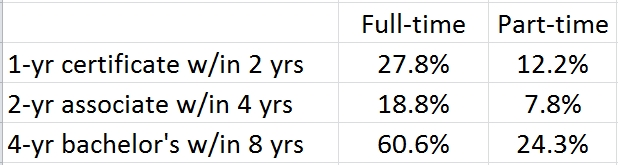











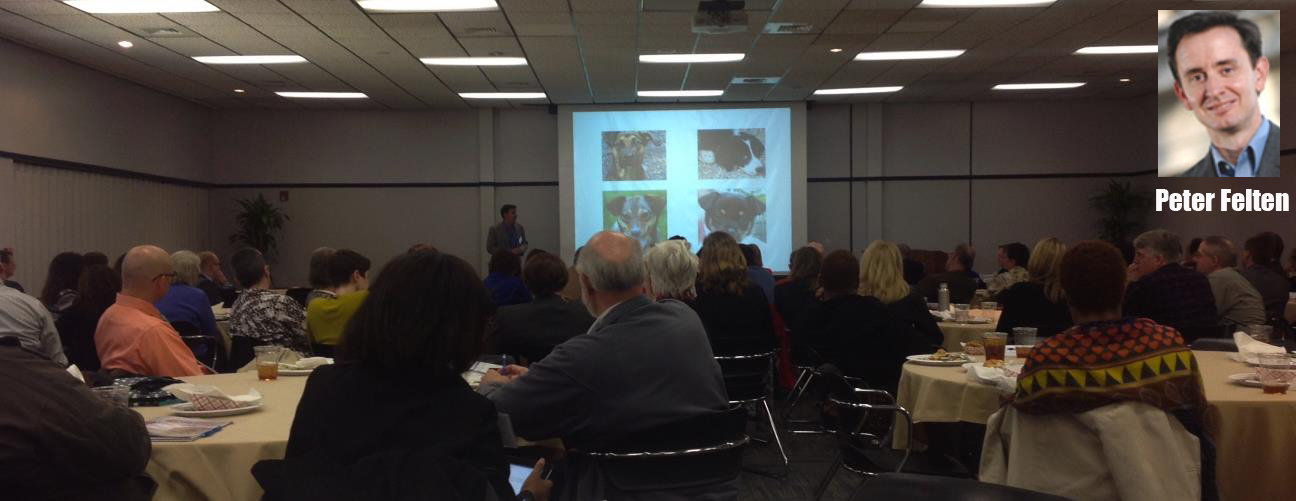













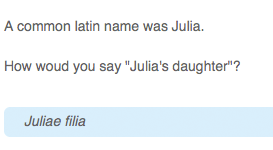


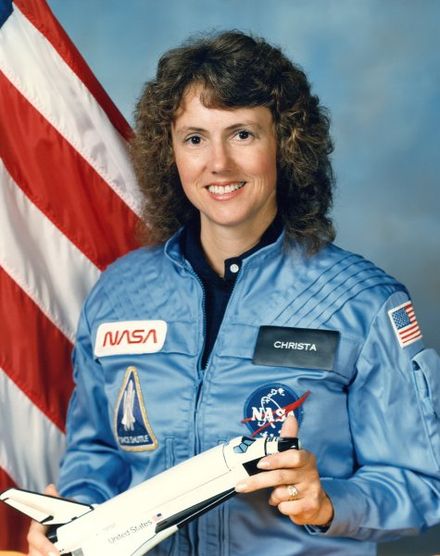





 By Leilani Cohen