By Harry Keller
Former ETCJ Science Editor
& President of SmartScience
When checking out, some of our goods were confiscated! You are only allowed two of any item to prevent hoarding.
Mar 20, 2020 at 3:38 AM: We have food enough for many days right now having gone shopping twice on Wednesday. Why twice? Shelves were bare everywhere.
We will be traveling to our land 95 miles away on Sunday. This trip will involve no interaction with others but will require filling the tank. I expect that traffic will be very light!
I have seen many different figures on mortality rates. In China, Wuhan had over 5%, but the rest of China was 0.7% due to better health facilities and preparation. That’s about five times what the flu does annually. So, it is bad but not THAT bad. What appears to be the greatest threat from this virus is its contagiousness. It seems to transmit more readily than anything we have seen in modern times. The result of rapid transmission will be the overwhelming of health care with consequently higher death rates as we have seen in Italy.
The economic fallout could result in severe problems for the most vulnerable among us.
The economic fallout could result in severe problems for the most vulnerable among us. A recession was looming already. These people could be forced together by circumstances and are among those most likely to perish from the disease. I see no one mentioning this. Continue reading →
COVID-19 is forcing many of us to self-isolate in our homes and apartments, and one of the drawbacks is the reduction or loss of aerobic outdoor walking exercise. We could turn to treadmills, stationary bikes, stair steppers, or other exercise machines, but many of us don’t have them or don’t want them. During our self-imposed isolation, aerobic exercise is still critical to maintaining our health and ability to resist or mitigate the effects of COVID-19 and other viruses. A simple and cost-effective way to work 30-to-60 minutes of walking into our lives is to turn our homes into a walking course.
First, draw or create a mental image of a rough layout of the interior of your home. I live in an apartment, so I’ll use it as an example. For my apartment, there are four long straight-line paths, two short ones (red in the illustration below), and one rectangular path (blue). You may need to rearrange furniture to create these paths.
Second, design a counter-clockwise circuit. The layout of your home as well as types and number of paths will determine the design. Through trial and error, settle on a circuit that’s both easy to remember and lengthy. Illustrated below is a route that takes me about two minutes to complete. Continue reading →
We just received a message (18 March 2020, 12:16 PM) from President David Lassner announcing that our University of Hawaii System will extend its move to online courses for the remainder of the semester. This extension has created a whirlwind discussion on proctoring exams: Procedures? Costs? In response to a Kapiolani Community College online discussion, I submitted the following:
This may be an opportune time to explore essay exams (or projects) that don’t require proctoring. These would be open-book and open web, and time limits could be imposed by controlling start and end times. Since online provides flexibility, students could be allowed to submit their exams within a 24-hour period. This would be a test of mastery rather than speed of recall.
Also, instead of one or two high-stakes exams a semester, an alternative is to require short essay exams four, five, or more times a semester. The exams would be open book, open-web, and unproctored. A time limit could be imposed. Continue reading →
Tech for Learners is a project by the Software & Information Industry Association (SIIA) and their partner organizations to support those involved in education at all levels and from all communities as they scale up capabilities for online learning. For a list of free services, go to https://www.techforlearners.org/find.html
Free offer: Starting immediately and running until August 31, 2020.
Work From Home (WFH) Employees Across Business and Government Organizations of All Sizes Can Now Quickly, Easily and Securely Access Work Computer, and All Associated Data, from Home.
The download is completely anonymous – no personal information of any kind will be collected – to provide the assurance that no sales communications will result during or after the download and use of the software.
All Set-up, Configuration and Tech Support Also Provided Completely Free-of-Charge. DH2i will be making its world-class support team available to answer any questions or provide assistance in the download and/or use of the software during business hours: 9:00 am – 6:00 pm Pacific Time, Monday-Friday – a service that is also being offered completely free-of-charge. Continue reading →
By Lynn Zimmerman
Associate Editor
Editor, Teacher Education
Prologue: Your [Jim] email came at an opportune time [17 March 2020]. I am sitting in a hotel room in Tashkent, Uzbekistan, waiting to see if the Uzbek government is going to give permission for a flight to leave carrying non-essential Americans from Uzbekistan. I’ve been here for two months and was scheduled to leave next week, when the Embassy suddenly contacted me on Sunday evening to tell me to get to Tashkent immediately because the government was closing the borders. At that time, there were four cases of Corona here. Now, it’s sit and wait. Our embassy and some European embassies are in negotiation trying to arrange to get their citizens out. I think conditions at home aren’t all that great, but in a crisis, there’s no place like home.
All of this is to say I was planning to write a piece about my work here with English teachers and online learning when I got home. However, your email prompted this piece [below], which is a little different than I was planning. -Lynn
Distance learning did not begin with the Internet. According to Harting and Erthal (2005), it had its beginnings in the 1700s when a reliable postal service was able to deliver correspondence lessons between teachers and learners. Then the advent of radio and television made another shift in distance learning. In a recent tweet, LoPresti (2020) repeated a story from his 94-year-old grandfather when Chicago schools were canceled because of a polio outbreak. He said that “classes were on the radio – newspaper published when each class would be on for each grade.” Continue reading →
[Note: On 16 March 2020, Satoru embedded an instructional video in a University of Hawaii email list on how to work around a log-in quirk in Zoom. Since the video includes private account numbers, we’re omitting it from this article. Later that day, Helen responded with instructions on adjusting the default settings to avoid this quirk. -Editor]
Unless you are familiar to some extent with the online conference software Zoom, this video [this video has been omitted for security reasons – editor] may not make sense. If that’s the case, please disregard this e-mail. Or if you find what I’m talking about confusing, please don’t pay any attention to this e-mail to avoid further confusion.
Now, unless you log in to your Zoom in a certain way, you won’t get to the meeting room assigned to your permanent Zoom ID. In the attached three-minute video, I did my best to explain how to log in to your permanent Zoom ID meeting room. To the best of my knowledge, this is how you log in. If I’m incorrect, please accept my apologies and delete this e-mail.
[Published 17 March 2020] Satoru Shinagawa is a professor of Japanese at the University of Hawaii, Kapiolani Community College. He has been teaching Japanese online since 1999. His primary focus is on exploring and implementing the latest technology to improve online language teaching.
[Published on 17 March 2020] Helen Torigoe is an instructional designer at the University of Hawaii – Kapiolani Community College. Her areas of professional expertise and interest are educational technology, professional development, curriculum development, and e-learning with an emphasis on online teaching, online learning, blended learning, effective practices, research, web 2.0, web-enhanced teaching and learning.
In these times with schools being closed, teachers and students can go online and access so many resources. Museums and virtual learning experiences have always been my anchor. No school has all of the resources and experts that exist in learning places. When I was a child, I went on Sundays to see new exhibits and movies and to interact with the experts when possible.
As a teacher in a classroom, it was always my intent to involve, to explain, to engage, to involve students in learning that would help them explore other learning options that exist beyond the classroom. Sometimes, we made a classroom museum. Frank Withrow, Earthwatch, and National Geographic taught me to integrate learning places in interactive ways that include STEM subjects (always including art). With today’s crisis, i.e., teachers being forced to do online teaching, I recommend The Ultimate Guide to Virtual Museum Resources, E-Learning, and Online Collections. Continue reading →
The following announcement was shared by Satoru Shinagawa, University of Hawaii – Kapiolani CC professor, via email on 16 March 2020. He has been teaching Japanese online since 1999.
Remote language teaching tool for Free until end of semester
Language education should be accessible to everyone but because of the recent Coronavirus outbreak, many schools are forced to limit their face-to-face classroom time. Sanako offers Free subscription to Sanako Connect – our new remote language classroom solution for schools. Continue reading →
By Harry Keller
Former ETCJ Science Editor
& President of SmartScience
Smart Science® Education Inc. is aware of the incredible strain the recent events are having on all educational institutions.
To assist, we are offering free 90-day access to our 300 Smart Science® Labs for K-12 and higher education science courses. Smart Science® Labs are virtual science labs that closely simulate a hands-on laboratory experience using real experiments.
You will receive free webinar PD to get your staff up and running quickly once you opt into this opportunity to share our online science labs with your science students.
Fill out this form to get Smart Science® Labs now:
[Note: In response to a request from Bert Kimura (3/14/20) for sites that are “curating resources for teaching online (for emergency and on short notice)” for the TCC 2020 website, Ilene responded (3/15/20): “Bert, here’s some! [See list below.] I know there’s better stuff. But here’s some things I’ve seen on discussion lists, Twitter, etc. very recently (but where the heck was that really funny thread I saw from an instructor trying to video conference with her students getting interruptions from her husband and cats — and basically telling other instructors to embrace the goof-ups. She gave extra credit to students who could name all of her cats at the end of an online session or two.” -Editor]
A community getting together to discuss tackling the move to online teaching
From Steve Covello – a suggestion to start your thinking about moving your course online here: The Ed Techie: Martin Weller’s blog on open education, digital scholarship, and over-stretched metaphors – “The COVID-19 online pivot“
For some instructors who have never taught online and are unfamiliar with their college’s LMS (Learning Management System), email may be the simplest and quickest way to move a course online. This approach would eliminate the steep learning curve for both instructors and students who are expected to move F2F courses into LMSs within the next week or so. The advantage of email-only is that everyone has an account, everyone knows how to use email, and students who don’t own a computer can get by with their smartphones1.
This email-only approach will work best with lecture-discussion courses that rely on papers and projects rather than quizzes and exams. For those requiring tests, a simple adjustment would be to require a paper, instead, that’s submitted via email2. For this approach to work, the instructor and students would need to have the email address of every person in class3. Continue reading →
Davin Kubota, after surveying his classes, sent the following announcement to his students in preparation for the University of Hawaii’s move to online instruction for all classes beginning 23 March 2020, the day after spring recess. He also suggests ways to personally cope with the pandemic. -Editor
Based on your survey responses, here is what’s going to go down from March 23 to …? (I’m not sure UH President David Lassner will let us come back to school on April 13 if the coronavirus is still out of control in Hawai’i).
1. GoogleClassroom remains the core source of information and coursework upload.
2. Zoom will be used to accommodate those students who wish to live-conference with me virtually. My online office hours will be scheduled from 10 am to 1 pm Monday through Thursday. I will create signups for Office Hours accordingly. (Discord has too many privacy concerns.)
3. Attendance online will not be taken. You will be responsible for checking GoogleClassroom for applicable lectures and PDFs. Class will be conducted asynchronously rather than synchronously, freeing up your time but making you responsible for doing your work at your own pace and at your own time. Revisions, too, should be addressed at your own pace and with my commentary. (I may decide to remove attendance altogether as a grading criterion. Those of you who showed up regularly until now will likely receive bonuses. I need to check with my department chair to see if I can do this.) Continue reading →
In the morning of March 12, faculty and staff in the University of Hawaii System received news that all classes will be conducted online starting March 23, after the spring recess, to prevent the possible spread of COVID-191. For F2F and blended instructors with some knowledge of Laulima, the System’s Sakai CMS, the move from F2F to online shouldn’t be too difficult. Those with little or no knowledge, however, will face a steep learning curve.
Laulima is a complex Course Management System with powerful tools, which makes it difficult to learn and master. This difficulty is compounded by numerous complicated procedures that are nonintuitive. It is often klunky, confusing, mindnumbing, and unforgiving, but it also provides some invaluable tools for online instruction. For me, the two most valuable are the discussion and email tools.
To substantially reduce the learning curve, I’ve devised a quick and dirty method to move a standard lecture-discussion course2 completely online via Laulima’s discussion and email tools. Both are included as default tools in the left sidebar of the basic course structure. There are many other tools to streamline and enhance instruction, but in this emergency and in the interest of time, the focus is on getting up and running with minimal fuss. Continue reading →
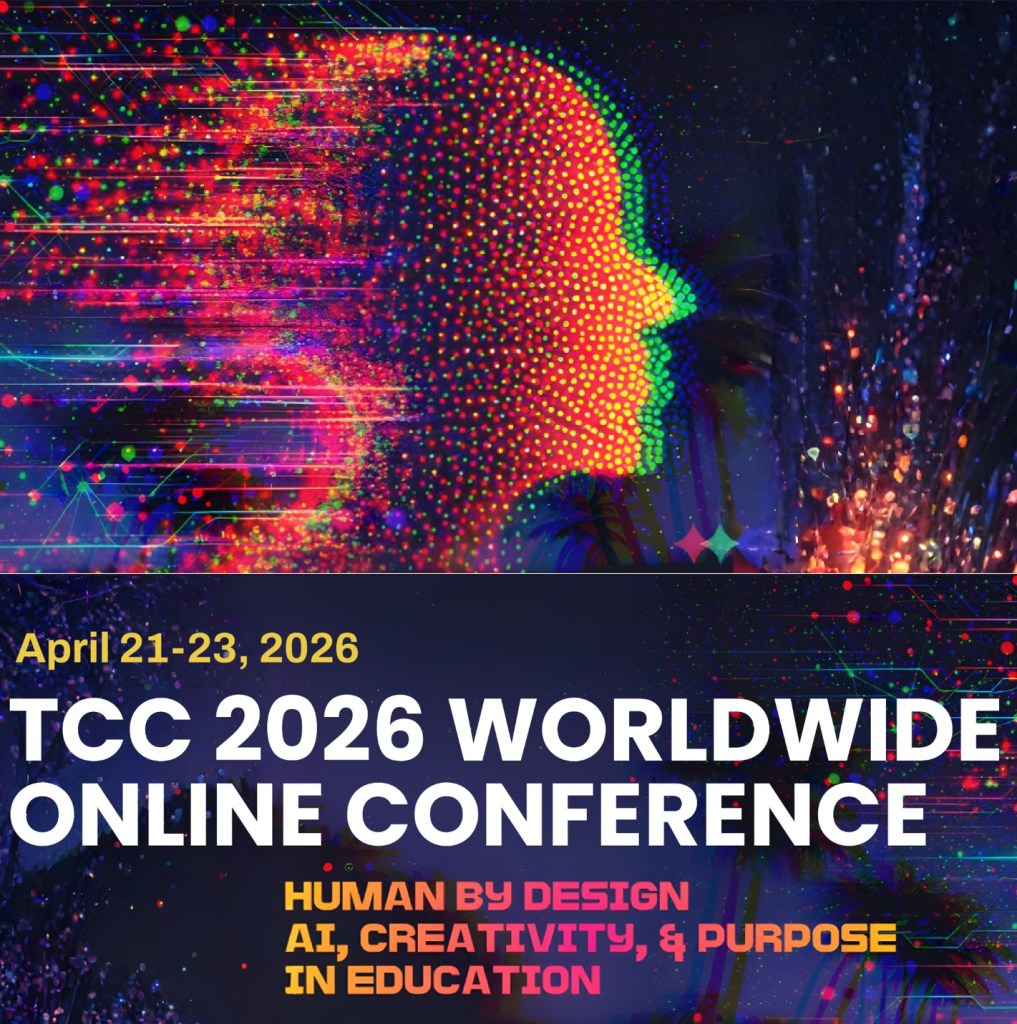
TCC is a three-day, entirely online conference for post-secondary faculty and staff worldwide that features presentations covering a wide range of topics related to educational technology and emerging technologies for teaching and learning.
Individuals participate in real-time sessions from the comfort of their workplace or home using a web browser to connect to individual sessions. All sessions are recorded for on-demand viewing. Continue reading →
By Lynn Zimmerman
Associate Editor
Editor, Teacher Education
In recent years, there has been a proliferation of messaging apps as more people use their phone and other mobile devices to communicate. In his March 19, 2019, article on the Motherboard website, Owen Williams asks, “Why Do We Need So Many Different Messaging Apps?” He poses this and other interesting questions about the variety of messaging apps that are available, who uses them, and how they are used.
I recently became interested in this question because, in the last few months, I’ve had to add What’s App and Telegram to my array of communication choices. I’ve always relied on email to communicate with friends and colleagues, occasionally using my texting function on my phone, Messenger on FaceBook, and Skype for messaging. Once I got my iPhone, this began to change. I started using iMessenger, which was on my phone. However, I couldn’t use it for international contacts, and I had a colleague in Albania who said she used Viber, so I downloaded it to IM with her about our project. Continue reading →
With so many professional services competing for our interest online, I couldn’t remember when, why, or how I signed up for eblasts from ResearchGate (RG), but, last night, as I was pruning my list of incoming email, their subject line caught my eye: “Q&A Highlights for James Shimabukuro.” I moved the cursor from the garbage can icon to the subject line and clicked. This is what I found:
25th Anniversary Special!
TCC Worldwide Online Conference
April 14-16, 2020
Vision 2020
Proposal deadline extended: December 27, 2019 Deadline for accepted papers: December 30, 2019 Proposal deadline: December 20, 2019 Guidelines: http://bit.ly/tcc2020proposal Homepage:tcchawaii.org Hashtag: #tccsilver
Call for Proposals
Faculty and staff are invited to submit a paper or a general session proposal related to learning design and technology such as e-learning, learning communities, digital literacy, social media, online privacy, mobile learning, emerging technologies (AI, AR, VR), gamification, faculty and staff support, and professional development. Continue reading →
The more time I spend with the Raspberry Pi 4, the more I’m convinced that it could stand in for a desktop for many uses. For light users and perhaps for schools and colleges, the savings would be astronomical. I decided to add a small monitor to make the unit less cumbersome and more portable. School and college faculty, techs, and administrators ought to look into this tiny computer as a possible replacement or substitute for expensive desktops for class or lab use. Experiment with it. Can it cover the functions that are needed?
Added a lightweight, portable 1920×1080 HDMI monitor1 and some updates.
Tweaks abound. Enthusiasts and pros are sharing, via YouTube, new and exciting updates and upgrades. Here are a few that I completed in the last hour: Continue reading →
The CanaKit Raspberry Pi 4 Complete Starter Kit arrived yesterday evening. I got it up and running before turning in and did more extensive testing today. My overall early impression is “Wow!” Pi4 has all the earmarks of a desktop disruptor. Its tiny size and outrageousy low price is a dramatic departure from clunky and expensive desktops. I’ve always wondered why desktop computers have changed so little in the last ten to twenty years. Laptops, notebooks, tablets, and other computing devices are shrinking in size and price every year or so, but desktops seem to remain the same.
It was only a matter of time before a breakthrough like the Pi4 would occur. Earlier Pi versions didn’t have enough power to replace desktops. The Pi4 is a tipping point, marking the beginning of an era that might eventually see the decline of today’s major desktop producers as well as Microsoft’s monopoly on operating systems. For approximately $150, I have a desktop that can do almost everything my $1500 desktop can do1.
The Raspberry Pi 4 is the tiny box to the right of the keyboard. I have it set up for two monitors. The screen on the right is running a 1080p YouTube video. The screen on the left is running four apps: a webpage, an email page, a word processor, and a spreadsheet. The keyboard, mouse, and power supply are official Raspberry accessories. The two mini-HDMI and power cable with in-line power button are CanaKit products.
This book is designed for parents and other caregivers to read with children around five years old, kindergarten age. It’s a cautionary tale about the dangers that lurk online, which is a relevant topic for today’s young learners. The book aims to educate young children about the importance of privacy when online, such as not sharing information with strangers. The characters are animals, some representing children, others adults, and the cartoon-like illustrations would probably appeal to a child this age.
A page from Buzzy’s Adventures in Online Privacy.
However, I’m not convinced the book would be effective. It seems to have a dual personality, each of which is directed at a separate audience. The story that is directed at children addresses various issues at their level. It shows young animals on the Internet playing online games and using various apps being approached by strangers obtaining personal information in the guise of friendship. Continue reading →
After nearly ten years, I decided to upgrade my desktop computer. It was being overwhelmed by the multimedia tasks that I’ve been throwing at it. After reviewing the available options, I ended up getting a gaming PC. I’m not a gamer and never have been, but the features that I need happen to be in gaming machines. I got the HP OMEN Obelisk Desktop1 with an Intel Core i7-9700 processor and 16 GB system memory.2 (See the details below.) For serious gamers, this is a modest system.
I completed the purchase online and drove to the store, which is about four miles away. While waiting for the order to be filled, I browsed the keyboard section. I decided it was time to get a new one with backlit keys. The search led me to gaming keyboards, and the best for my needs was the HyperX Alloy FPS Pro mechanical gaming keyboard. It was compact and felt substantial. It didn’t have a numeric keypad. I never use a keypad, so I welcomed the smaller size.
HyperX Alloy FPS Pro mechanical gaming keyboard with backlit keys. All of the photos in this article can be enlarged by left-clicking the photo.
By Harry Keller
Former ETCJ Science Editor
& President of SmartScience
When Jim wrote about 5-1/4″ disks, it triggered a cascade of memories from my half-century of computer experiences. Today, it’s all miniature flash memories.
Seriously, I remember 8″ floppy disks. I had a bunch of them, now long gone to the landfill. I worked in the computer industry before ANY floppy disks existed. Oh, we had removable disks and were careful not to drop them on our toes.
8-inch, 5 1⁄4-inch, and 3 1⁄2-inch floppy disks. Wikipedia photo and caption by George Chernilevsky, 6 June 2009.
It gets worse. I remember working with punched cards — myself! I even edited the binary cards returned to you after a compilation to save time. Woe betide the person who dropped their cards if they were not sequenced. If they were, then you had access to a card sorting machine. Old movies showed them as though THEY were the computer. Ha ha ha. Continue reading →
The message on this tanktop is a reminder of how far we’ve come in a very “short” period of time. I got it as a gift this past Father’s Day and catch myself smiling whenever I wear it.
My first personal computer, in the early-1980s, was a Kaypro 2 that came with two single-sided, double-density 5.25″ floppy drives. For all practical purposes, we needed two drives back then: one for the program and the other for our files. Wikipedia photo by Autopilot, 19 Mar. 2015.
Officially released today, 24 June 2019, is the Raspberry Pi 4 single-board computer that fits in the palm of your hand. It’s made by the Raspberry Pi Foundation, a UK-based charity (nonprofit) that works to put the power of computing and digital making into the hands of people all over the world. They do this so that more people are able to harness the power of computing and digital technologies for work, to solve problems that matter to them, and to express themselves creatively.
The foundation provides low-cost, high-performance computers that people use to learn, solve problems and have fun. They provide outreach and education to help more people access computing and digital making. They develop free resources to help people learn about computing and how to make things with computers, and train educators who can guide other people to learn.
Three years ago, in 2016, four students (one was possibly an instructor) had a discussion on Reddit about an online course offering with a “lecture required” component. The original poster was byu:
Posted byu/[deleted]
[Subject:] Online Classes – Class Component: “Lecture Required”?
Signed up for a couple online classes and under the Class Details section is says Class Components: Lecture Required. The class is definitely listed as an online class, room says online and meeting day/times TBA, so what does this mean? Video lectures? Just making sure I don’t have to physically show up for anything.
TurtleWaffle: It could be a blended class. I had a class like this and we had 5 Saturday class sessions during the semester as well as the online stuff
Rhynocerous: In my expirience it means you have to physically show up at some point possibly for exams.
corner0ffice1: It sounds like a class with both an online lecture and online lab. You always enroll for the lab component, and then tack on the lecture, so SIS is just telling you that you need to enroll in both components. It does not always mean that you have to show up for anything in person. It SHOULD say if you have any on-campus obligations in the course description, but you can also ask the instructor to confirm.
If we took a moment to actually listen to our students, we’d learn that conversations like this pervade the higher ed landscape. In nearly all colleges, “online” is a confusing course label that can mean any number of things that fail to meet student expectations. byu’s “Just making sure I don’t have to physically show up for anything” captures students’ primary concern in selecting an online class.
Implicit in their expectations for an online class is the idea of not being required to “show up” in a specific place at a specific time. For them, online is virtual, a convenience that allows them to engage learning from anywhere at any time. Thus, synchronous meetings are also not part of their online expectations. “Online” ought to be reserved for courses that are completely online and completely asynchronous. Sync requirements are a real problem for students who choose online courses for their anywhere/anytime advantage. Many online administrators and faculty don’t realize that sync requirements are a carryover of F2F into the virtual environment. Requiring students to meet at a specific time is tantamount to requiring them to meet at a specific place.1Continue reading →
In our current discussion on “The Zen in Online Learning” (17 June 2019), Harry Keller says, “Life is about joy. Find your joy, and immerse yourself in it” (19 June 2019). His comment reminded me of Sir Ken Robinson’s TED Talks “Bring on the Learning Revolution!” (Feb 2010).
The transcript is available here. This video runs 21 minutes, but Robinson’s wit and wisdom make it seem much shorter. His message is similar to Harry’s, which is to change our model for education to develop and celebrate each student’s talents, interests, and dreams. Please make the time to watch this video. It was released in 2010, but its message is relevant today.
Also make the time to comment in the forum attached to this article. (If you’ve never posted a comment in ETC, it will be held for approval. I’ll be standing by to speed up the process. Once approved, future comments will be automatically published.) There’s a wide-ranging discussion on the TED site, so in our discussion, I’d suggest focusing on the takeaway for higher ed. What are your thoughts on Robinson’s call for an “organic” revolution? How does this apply to higher ed?
If you’d like to submit a longer comment as a stand-alone piece, email it to me at jamess@hawaii.edu. If this is your first submission, then please append a brief (1-to-3 line) professional bio and snapshot.
When the center monitor in my three-monitor setup failed to turn on this morning, I didn’t panic. It happened before, and reinserting the HDMI connector into the graphics card usually did the trick. So I turned the computer off, crawled under the desk, unplugged the connector, and plugged it back in.
I turned the computer on, but the monitor remained dark. No problem, I thought. Try the same maneuver again. I did, but it still didn’t work. I was beginning to panic a little. I turned it off and checked the back of the monitor to see if the power and HDMI connectors were tight. I unplugged and plugged them back in.
The three-monitor setup for my desktop computer.
I turned the computer on again, but the monitor was still dead. Panic was setting in. I tried the remote control to see if the settings were correct. (This monitor is also a TV set.) Nothing came up on the screen, not even the menu. Continue reading →
Ways to use the Community Reinvestment Act (CRA) to persuade banks to invest in projects to promote digital equity was the central focus of a meeting of the National Collaborative for Digital Equity (NCDE), held in Washington, DC, on 14-15 May 2019.
The meeting was hosted by the National Education Association and brought together some 70 participants from across the country.
The CRA is a federal statute enacted in 1977. It requires the Federal Reserve, the Federal Deposit Insurance Corporation and the Office of the Controller of the Currency (OCC) to encourage financial institutions to help meet the credit needs of the communities in which they do business, especially in low- and moderate-income neighborhoods. Continue reading →
AI in schools – Here’s what we need to considerby Neha Shivhare, The Conversation (7 Mar. 2019)
Regardless of what we want or think, AI will continue to be part of the educational landscape.
In the Times Higher Education (THE) global University Impact Rankings released today, U.S. colleges are woefully underrepresented in the top 25. The University of North Carolina at Chapel Hill is the top U.S. college in the rankings at 24th. The top five are from the Commonwealth realm: (1) University of Auckland, New Zealand, (2) McMaster University, Canada, (3) University of British Columbia, Canada, (3) University of Manchester, United Kingdom, (5) King’s College London, United Kingdom.
THE, which is headquartered in London, publishes “the only global performance tables that assess universities against the United Nations’ Sustainable Development Goals [SDGs]. [It] uses carefully calibrated indicators to provide comprehensive and balanced comparisons across three broad areas: research, outreach, and stewardship. This first edition includes more than 450 universities from 76 countries.” Continue reading →
TCC 2019 (April 16-18) : Call for Participation
Join us! TCC 2019 Worldwide Online Conference
Sustainable Learning, Accessible, Technologies, & Diverse Contexts
April 16-18, 2019 http://2019.tcconlineconference.org/
Keynote and invited plenary sessions
Dr. Charlotte “Lani” Gunawardena, University of New Mexico, USA
Dr.Ohkwa Lee, Chungbuk National University, South Korea
Dr. Matthew Schmidt, University of Cincinnati, USA
Dr. Yoon-Ah Rho, Kookmin University, South Korea
Dr. Hanna Teräs, Tampere University of Applied Sciences, Finland
Dr. George Veletsianos, Royal Roads University, Victoria, Canada
TCC is a three-day, entirely online conference for post-secondary faculty and staff worldwide that features over 100 concurrent sessions covering a wide range of topics related to educational technology, distance learning and emerging technologies for teaching and learning.
Individuals participate in real-time sessions from the comfort of their workplace or home using a web browser to connect to individual sessions. All sessions are recorded for on-demand viewing. View the current schedule of presentations and descriptions. Continue reading →
(March 8, 2019) In anticipation of Women’s History Month, Nobel Media has partnered with Microsoft to highlight the achievements of women who broke new ground in physics, chemistry, and medicine. The result, Women who changed science, is a unique web experience that trains a lens on the inspiring journeys and contributions of female Nobel Prize winners. In a world where 64% of American girls and women can’t name another woman in the sciences*, Nobel Media and Microsoft aim to inspire young women across the world to be the groundbreakers of tomorrow.
Women who changed science launches Friday, March 8th on International Women’s Day. Engage with luminaries like Marie Curie, who harnessed the promise of radioactivity, Rita Levi-Montalcini, who redefined how our bodies work, and Tu Youyou, whose breakthrough malaria treatment has saved millions throughout the world. The web experience brings to life the unique contributions of each laureate while exploring the interconnecting lineage of women in the sciences. Raising awareness of their tremendous impact, the collaboration aims to empower the next generation of scientists.
This unique collaboration with Nobel Media is one of Microsoft’s ongoing initiatives to build inclusion in STEM fields. Microsoft believes that nurturing diverse viewpoints and creating opportunities for everyone to experiment with technology incites innovation and sparks breakthroughs. Women who changed science transforms not only how we experience the odds-defying stories of grit behind the prizewinning discoveries of these laureates, but also emboldens the next generation of young women to change our world.
Teaching with Technology in 2018 by David Nagel in THE Journal
Nagel reports on the results of a survey conducted by THE Journal. It shows that teachers, by and large, have a positive attitude toward the use of technology in education.
The Importance of Teaching Technology to Teachers by Katt Blackwell in Teaching Community (a Monster community)
Blackwell focuses on the National Council of Teachers of English (NCTE) six points related to literacy and technology. These include not only the technology skills needed in the 21st century, but the critical literacy skills that today’s learners need.
How Teachers, Parents and Carers Can Spot and Prevent Online Grooming and Radicalisation by David Wright in Voices Magazine (British Council) Voices Magazine is part of the British Council’s website. It focuses on issues related to “education and culture from around the world.” In this article, Wright talks about Internet safety specifically focusing on how educators and others can identify and prevent radicalization, especially of young people.
As a lead-in to this year’s main conference, TCC 2019 is hosting a FREE special webinar, “Using Silly Media in Teaching & Learning,” featuring Alan Levine, longtime blogger of Cog Dog Blog.
Alan will suggest ways we can augment online teaching with memes by adding images to words, to visualize metaphors and facilitate discussions. As shortform videos, animated GIFs that loop are effective for demonstrating natural processes or illustrating techniques where repetition aids understanding. Learn what your students might accomplish by creating memes and animated GIFs.
Date & time:
Wednesday, March 20, 1400 HAST
1900 CDT, 2000 EDT; Thu Mar 21, 0900 Tokyo, Seoul Other timezones
Access information and a reminder will be sent to you a few days prior to this event. This online session will be held in Adobe Connect. The deadline to RSVP is March 13.
Entries in the International Serious Play Awards competition for digital training and educational games due Feb. 15, 2019.
Serious Play’s 11-year-old award program recognizes outstanding games designed for use for education or training in business, government/military, healthcare, museums, higher ed, K12.
Brief bio from Cambridge English: Scott Thornbury is an established author and series editor of the Cambridge Handbooks for Language Teachers since 2004. He had his first title published in 1997: About Language: Tasks for Teachers of English. He has co-written (with Diana Slade) Conversation: From Description to Pedagogy, in the Cambridge Language Teaching Library (2006) and (with Peter Watkins) The CELTA Course (2007). More recently, he has been focussed on online learning, having overseen the writing of a five-level internet-delivered course in general English. Scott is a regular contributor to the ELT conference circuit and is widely known and respected in the ELT world. He has had involvement Cambridge ESOL accredited teacher training schemes and is an Examiner for the DELTA scheme. He is currently Associate Professor of English Language Studies at their New School University in New York, where he directs and teaches the online MA TESOL program.
21 Online Pronunciation Resources for Teaching and Learning by Lynn Henrichsen. TESOL Connections.
Henrichsen suggests that while there are a wide range of computer-assisted pronunciation teaching (CAPT) websites and apps for the English teacher and learner, not all are created equal. He offers some suggests for assessing the usefulness of websites and gives reviews of 10 sites with his recommendations.
Motivation & Language Learning in Online Contexts by L.W. Zimmerman. OLLReN.
This research review looks at learner motivation in online language learning contexts. The author found that two significant factors are online learning readiness and promoting interaction, factors that would come into play for any learning context, not just language learning.
5 Effective Uses of Mobile Technology in the Classroom by Daniel Adeboye. eLearning Industry.
In the introduction to the article, Adeboye says, “Research has shown that though mobile technology is a great tool in our teaching and learning experience, many who use it only use it to increase efficiency and not necessarily effectiveness. This article provides 5 suggestions of how to effectively use mobile technology in the classroom.”
How mobile technology can benefit learning by Elliot Gowans. ET.
Gowans contends that the familiarity of mobile devices as entertainment devices makes them a natural way to “motivate today’s digital natives through new and innovative ways of learning.”
Don’t forget to register for the first (free) presentation in our 2019 Watermark Knowledge Ambassador Webinar Series, “Leveraging Technology for General Education Learning Outcome Assessment” featuring Hawai’i Pacific University on January 31, 2019, at 3:00pm ET.
Valentina Abordonado
In this webinar, you’ll learn how Hawai’i Pacific University leverages Watermark to engage faculty in the assessment of general education and institutional learning outcomes. Dr. Valentina Abordonado, Assistant Dean for General Education, will detail how their work helps faculty present actionable data, set targets for expected performance, and analyze student achievement of outcomes. Dr. Abordonado will also share how HPU closes the loop at the program level and documents their efforts to continuously improve teaching.
Measuring Up to the Model: A Ranking of State Public Charter School Laws, January 2019, is an annual publication by the National Alliance for Public Charter Schools. Nina Rees is the President and CEO, and Todd Ziebarth, the principal author, is Senior Vice President of State Advocacy and Support.
“From our perspective,” say Rees and Ziebart, “the point of our annual state charter school laws rankings report is to figure out which states are creating the conditions for high-quality charter schools by providing, among other things, flexibility, funding equity, non-district authorizers, facilities support, and accountability.”
Serious Play Conference is coming to the University of Central Florida (UCF) at the downtown Orlando campus Wednesday-Friday, July 24-26, 2019, hosted by the Florida Interactive Entertainment Academy (FIEA). (The Serious Play Conference will also be held at the University of Quebec at Montreal, July 10-12, 2019.)
Get current on the latest use of games and simulations for training, education and research in healthcare, the corporate environment, nonprofit and education. A design track will offer sessions on game and instructional design, technology and assessment. People new to serious games might like our pre-conference session.
We’re looking for speakers who will share their knowledge and experience, offering with take-aways attendees can apply immediately. Sessions are 45 min long for more lecture-based talks and panels and 90 min for participation-designed workshops.
New evidence that technology can contribute to positive learning outcomes in the school classroom emerges from the latest ‘SpeakUp’ survey of Project Tomorrow.
Project Tomorrow is a non-profit organization whose mission is to ensure that today’s students are well-prepared for the future.
SpeakUp is an annual research project that has been carried out since 2003, surveying students, teachers, librarians, principals, administrators and parents.
Its main finding is that “high school students with… access to a laptop or Chromebook are more likely to use those devices to personalize their learning process, to stay organized with their schoolwork and to leverage technology for more enhanced learning experiences than their peers with no access or only sporadic access.”
The importance of levering technology was:
to help students develop college-ready and workplace skills; and
to overcome the barriers that arise because technology resources are not always evenly distributed.
The report also notes that Internet access outside schools is critical, but there is still a digital divide. And only one-quarter of school districts allow students to take their devices home.
Click image to view the 9-page PDF.
It is interesting to see how students who do not have Internet access at home tackle the ‘homework gap’ that this creates. They go to school early, stay late, or use the facilities of libraries or even fast-food outlets. Continue reading →
By John Mark Walker
Open Source & Community Lead for Open edX
“MOOCs are dead.”
That’s quite a statement from the CEO of one of the largest MOOC (massively open online course) platforms in the world. But that’s exactly what edX’s CEO, Anant Agarwal, said in November at the edX Global Forum in Boston.
But the platforms that have powered MOOCs? They’re far from dead. Instead, they’re evolving. MOOC platforms are now being used to power complete programs, which, in the future, may look very different than they do today, thanks to the power of these e-learning systems. Because while the MOOC market may not be growing, online learning is growing rapidly. It’s already an intrinsic part of K-12 and higher education and has also been adopted for commercial purposes, such as customer training, corporate training, and even community building. By 2024, analysts predict it will grow to a more than $200 billion global industry.
The designers of MOOC platforms know they need to change to remain relevant because the one-size-fits-all model doesn’t actually really fit anyone very well. Learning must be interactive and applicable to each individual learner, responding to their needs, level of knowledge, and learning style. In response, these platforms are becoming more collaborative, and not just between teachers and students. Professors need to collaborate with course designers to tailor content and flow; instructors need to communicate with content developers to improve it for the next course. Collaboration and communication among all the stakeholders should be the norm, not the exception, and MOOC platforms are rapidly adding and improving on these capabilities. Continue reading →
TCCfx 2018 is a complimentary 1-day online conference that aims to empower the educational technology community through connection, collaboration, and the generation of innovative ideas for teaching and learning. Through this conference, the UH Manoa Dept. of Learning Design and Technology (LTEC) showcases alumni, current students and faculty, and collaborations with local and global communities.
This year’s theme is “Sustaining Education Through Innovation”; addressing sustainable learning through the integration of new ideas and technology. Program sessions include:
International Collaboration – The Kaiyama Project:
Dr. Wendy Kuntz, Dr. Kelli Goya, Dr. Kenichi Kubota, Dr. Mayumi Kubota, Mary Kimura
LTEC Alumni Panel:
Dr. Mike Travis, Grant Chartrand, Ed Lee
Keynote – Innovation in K-12 Education:
Dr. Miki Tomita, Founder of Education Incubator
Please consider submitting a paper or a general session proposal related to learning, design, and technology such as e-learning, learning communities, digital literacy, social media, online privacy, mobile and emerging technologies, gamification, faculty and staff support, and professional development.
Venue: Participation in this event is entirely online. All sessions will be delivered online in real-time. Sessions will also be recorded for later viewing.
More Info: Bert Kimura <bert@hawaii.edu> or Curtis Ho <curtis@hawaii.edu>
TCC Hawaii, LearningTimes, & the Learning Design and Technology Department, College of Education, UH-Manoa collaborate to produce this event. Numerous volunteer faculty and staff worldwide provide additional support.
This article about UX (User Experience) suggests that user experience and usability are related but not the same. According to the author, UX is about emotional engagement.
This short video from CEOP (Children Exploitation and Online Protection Center, UK) is aimed at teens to help them understand what the lack of online privacy can mean. It also aims at showing this audience that they can and should report anything that makes them uncomfortable or unsafe.
This blog focuses on the buzzword, technology integration, and explains what it is and how you, the teacher, can do it. It explains some of the theory behind technology integration, then offers a number of tools that ESL teachers (and all teachers) can use to augment their instruction.
The major take-home from a Congressional Briefing on School Safety and Technology, a little surprisingly, was that technology does not play a major role in ensuring school safety.
The briefing was arranged by the National Coalition for Technology in Education and Training (NCTET), and was held at the Cannon House Office Building in Washington, DC, on 9 October.
Kathleen Minke
Introducing the meeting, Kathleen Minke — Executive Director of the National Association of School Psychologists — pointed out that schools are an ideal place to promote mental wellness. The main challenge that they face is a shortage of trained staff — school psychologists or counsellors.
The recommended ratio of such staff is 1 per 250 students. Nationwide, the actual level is 1 per 482 students, and in some states the ratio is much worse. Continue reading →
The real history of the Americas has been lost by trivialization and by being omitted from the textbooks. The continued misrepresentation of indigenous peoples in the media and popular culture contributes to continued settler colonization and racism toward indigenous peoples.
Yet the growing movement by the Standing Rock Sioux Nation and hundreds of other indigenous nations to protect their homelands and resources from destruction presents teachers an opportunity to introduce students to lessons based on the environment, government, history, economic, cultural studies and civics.
It is almost the month and day when people celebrate Columbus Day. The D.C. Area Educators for Social Justice, a project of Teaching for Change, offered a workshop on September 10 to provide resources for educators.
The workshop took place at the National Museum of the American Indian, in Washington, DC. It engaged with curriculum and strategies for teaching students about indigenous people’s history and life today.
Sarah Shear
The workshop started with a keynote by Dr. Sarah B. Shear, who is an assistant professor of social studies education at Penn State University, Altoona. She described her research into the way that race and settler colonialism issues are addressed in state standards and textbooks; teacher education; film; and qualitative research methodologies. Continue reading →
We gathered a panel of editors, writers, and professors to generate a comprehensive list of questions for Dr. Rory McCorkle. The panel members were: Stefanie Panke, Bert Kimura, Judith McDaniel, Leigh Dooley, and Harry Keller. Colleges around the world are developing online programs, and an invariable topic is remote test proctoring as an adjunct or alternative to on-campus testing. We hope that our questions and Dr. McCorkle’s responses will shed more light on the issues involved in reviewing and selecting a proctoring service.
Perhaps the most meaningful takeaway for us is the realization that the ultimate quality of the testing process is determined to a large extent by the participating institutions. In short, GIGO. Colleges should determine their needs prior to shopping for a proctoring service. The general services and features in the PSI Bridge™ platform tend to be standard among major providers, and it’s in the details that the critical differences begin to emerge.
Dr. Rory McCorkle
Dr. Rory McCorkle is the Senior Vice President of Certification and Education Services for PSI. He helps PSI clients meet their testing, educational and strategic goals through the suite of services offered by PSI, while leading a team of business development, account management, and consulting professionals. Dr. McCorkle has worked with over 750 testing organizations, including well-known universities and colleges, licensing bodies, and renowned certification programs.
The questions and answers below are roughly grouped into four areas: students, proctors, teachers, and PSI services.
I. STUDENTS
Bert Kimura: How do the services and data collected conform with FERPA and other privacy issues?
Rory McCorkle: PSI Services LLC (PSI) holds privacy and security as a highest priority. We require very limited personally identifiable information (PII) for students and limit access to PII to only those who require access for provision of the services. In practice, we take care to not only be secure, but non-invasive as well. Only a single login is required for users to take their tests, and PSI proctors do not require access of a user’s machine to verify test compliance. All security measures are integrated and automated to ensure proper compliance and client privacy, while simultaneously minimizing security risks and providing a smooth user experience. In addition, PSI offers a proprietary, customizable lock-down browser and self-serve check-in and authentication. PSI complies with major regulations such as FERPA and GDPR. We are also PCI compliant. Our remote proctors receive extensive training on how privacy and privacy regulations are central to their roles, which is coordinated by PSI’s Chief Compliance Officer. Continue reading →
By Gwen Sinclair
Librarian, University of Hawai‘i at Mānoa Library
If you had told me when I was 25 or 30 that I would run my first marathon at age 42, I would have rolled my eyes and asked, “Why would anyone want to do that?” I could not fathom running even 10 miles, much less 26.2. I had been a casual runner for many years, but I’d avoided distance events. Too hard!
I found many reasons to keep running in the watershed year of 2004. For starters, my sister was diagnosed with lymphoma and endured a whole year of grueling chemotherapy. Although I wasn’t close to her, I felt very helpless, and guilty, too, so I signed up to do the Honolulu Marathon as part of Team in Training, the Leukemia & Lymphoma Society’s fundraising program. All you have to do is run a marathon — and raise thousands of dollars for research. It turned out to be harder for me to ask people for money than it was to get up early every weekend for the 16-mile training runs. To my surprise, the donations poured in, which of course put me in the position of absolutely, positively having to finish the marathon in December 2004.
My free time revolved around marathon training, so on Saturday, October 30, 2004, after my husband Steve and I had seen a mediocre movie at the Varsity Theatre, “What the Bleep Do We Know?” I’d gone to bed, planning to get up early the next morning for the usual Sunday training run. Continue reading →
The graduation of the latest cohort of students in the ‘Computers for Kids’ initiative, in Southwest Washington, DC, brings the total number of youngsters who have benefited from the program to 130.
‘Computers for Kids’ started in 2007 as an initiative of the Youth Activities Task Force of the Southwest Neighborhood Assembly (SWNA).
Thelma Jones, who chairs the Task Force, introduced a graduation ceremony at the James Creek Community Center on 4 August 2018.
She reminded the parents, guardians, friends and relatives who attended the event that two sessions of the program were held each year, a winter program of eight one-hour, after-school classes and a summer program of six classes lasting ninety minutes.
The students use the computer lab at the James Creek Community Center to learn the basics of computers and how to use them, and tackle studies in Microsoft Word, Powerpoint, and accessing the Internet to search for visual resources. This group of students also started to study cryptology, using the resources of the Chicago-based ‘CryptoClub’ project. Continue reading →
By Lynn Zimmerman
Associate Editor
Editor, Teacher Education
All across the U.S., school districts invest in a variety of types of technology, and they want to see results from their investment. To integrate technology effectively, educators need a framework to determine if and how technology meets their students’ learning needs and what they may need in the future. Several frameworks for technology use and integration have been developed and are used to promote technology in the classroom. Two common frameworks are SAMR and TPACK.
SAMR
In the SAMR (Substitution, Augmentation, Modification, and Redefinition) framework, substitution and augmentation are defined as ways to replace and enhance existing tools that the teacher might use in a learning task. Modification and redefinition transform a task in a way that would not be possible without technology. Continue reading →
The entrance to the Tham Luang cave did indeed have a prominent warning sign, and the soccer team went past it when they entered. Most of the explored underwater caves in the world have strongly worded signs telling untrained divers to turn around. My guess is that 98% of the divers passing those signs do indeed have the proper qualifications, but a small percentage do not. That small percentage accounts for roughly half of the total cave diving fatalities worldwide in the last couple decades. For that small percentage, the posted danger appears to be more of a lure than a deterrent.
Photo from Marisa Chimprabha’s “Many Worry That Coach May Blame Himself for Ordeal” (The Nation, 5 July 2018).
Eagles Nest sink in Florida provides a couple good examples. The upper basin has 70 feet of (usually) murky water, with a tiny chimney only wide enough for a couple of people to pass at the bottom. That chimney takes you about 30 feet farther down to the huge cave complex below. Eagles Nest is often called the Mount Everest of cave diving, and you are not supposed to enter it without qualifications even beyond cave diving certification. Two days ago, a 20-year old man (boy?) died there freediving (no tanks–just mask and fins) deep into the bottom chamber. He told his companions he was going to set a personal record on that dive. As I write, diving social media are ablaze with comments on the sheer stupidity of that act. Continue reading →
There is growing evidence that immersion in virtual reality can improve learning outcomes for students.
This was the main conclusion from many of the papers presented at the fourth annual conference of the Immersive Learning Research Network (iLRN), which was held at the University of Montana from 25-29 June 2018.
Jonathon Richter, Executive Director of iLRN, introduced the conference as an opportunity to explore “what works” in immersive learning, drawing on high-quality research.
He proposed that the three main components of immersive learning are:
computer science,
gaming studies, and
effective learning outcomes.
The potential impact of successful immersive learning initiatives, he suggested, were good measures, good goals, and good outcomes across disciplines, cultures, and contexts. Continue reading →
By Lynn Zimmerman
Associate Editor
Editor, Teacher Education
The plight and rescue of the 12 boys and their coach from the cave in Thailand shows us once again that being an educator requires more than the enjoyment of working with children and loving the subject you teach. When you look at what an educator might face when working with students, inside and outside the classroom, it becomes evident that teachers, coaches, and school administrators do much more than teach and are expected to play many roles that they may not anticipate and may not be prepared for.
Coach Ekkapol Chantawong with some of his young players.
They may have to comfort a child whose pet died. They have to report signs of child abuse. They have to keep track of their charges when on field trips. They may even have to protect their students from an active shooter on campus. Not every educator wants to fill all these roles. Not every educator can fill these roles. However, when you are the “adult in the room,” what choice do you have? Children’s parents expect and trust that their children will be safe with an educator. The soccer coach, Ekkapol Chantawong, was trusted by the parents of the children in his charge to do the right thing, to protect them until they could be rescued.
There will be many opinions expressed and many questions asked in the coming days about this incident. However, let’s focus on teacher training. How does a teacher training program prepare teachers to handle a variety of situations, including life-threatening ones? Or should they? How do you know the teacher candidates you are preparing could step up if called upon to do so? Should they be expected to? What other resources do teachers need to handle crises, large and small? Let us know what you think.
By Harry Keller
Former ETCJ Science Editor
& President of SmartScience
The first lesson is that you don’t have to be clever or high-tech to solve this sort of problem. The final solution was straightforward, although extremely difficult to implement. It involved existing diving technology. These days, everyone seeks the high-tech or innovative solution first.
You might consider the solution used as being the “brute force” solution. A large number of air tanks had to be assembled along with a large number, around 90 as I’ve read, of highly experienced and capable divers. Divers deployed the air hose essential to survival and ferried food to the trapped soccer team. They set up a line for navigating the more difficult portions of the submerged cave. Some even stayed with the remaining few team members until the last one disappeared into the gloomy waters with his two accompanying divers.
The second lesson is that every cave of any difficulty should have prominent warning signs posted to keep out inexperienced people. What were those team members doing so deep in the cave? I have yet to see an answer to that question. Their foolishness cost one diver his life. It might have cost all 13 their lives, too. I sincerely hope that the publicity accompanying this incident keeps others from running these risks. The coach should have known better.
The third lesson is the importance of organization. I think that those in charge did essentially everything right, although they might have been able to move more rapidly had there not been so much “noise” to filter out. The noise came from the media and a great many well-meaning individuals and organizations. The volunteer divers were the good part. Continue reading →
The whole world watched in fascination as a massive international rescue team worked to pull off an unprecedented rescue of a soccer team trapped in a cave in Thailand. I watched from the perspective of a cave diver, a former journalism instructor, and a diving instructor. One of the talks I have had on and off for the last few years has been to help investigate and write reports on cave diving fatalities for the National Speleological Society, and from that perspective it was refreshing to watch a scenario that ended so happily, for that is not the norm for cave diving incidents.
The result of the rescue was, of course, wonderful, but in reflecting on some of the elements I observed from afar, I believe there was a whole lot that went very well in that situation in addition to the happy ending. I saw a lot of appropriate and professional behavior on the part of a number of parties, and because of it the few bad moments stand out in stark contrast.
In the social media I followed, one of the questions that was raised on several occasions was why there was not more commentary from the true experts on cave rescues around the world. To me, that lack of commentary was a positive highlight. After my ETC article (7/4/18), I was contacted by the BBC and asked to sit for an interview. I declined. I explained that I lacked the expertise to speak on an issue of that complexity—my article about the education aspects was the limit to which I could speak with authority. Continue reading →
By Harry Keller
Former ETCJ Science Editor
& President of SmartScience
Spending two weeks in a cave that has been sealed off by water is no one’s idea of fun. There’s no food but plenty of water. This cave portion appears to be fairly large, large enough to have plenty of air for a long stay, but that air is running out.
Thirteen people, twelve of them children, are stuck and isolated under very dangerous circumstances. They face several perils: oxygen, carbon dioxide, food, and even waste treatment.
Detailed map of the Tham Luang cave system provided by BBC News.
What happens when someone seals you into a box? You use up the oxygen there, turning it one-to-one into carbon dioxide. That’s what all animals do. Even plants do it when there’s no sunlight. It’s called respiration. In that box, you will rapidly drop the oxygen level to below the 16% that we must have to function normally, and that’s 5% below the usual 21% we are used to. Continue reading →
By Lynn Zimmerman
Associate Editor
Editor, Teacher Education
Globally there is a call for learners and workers to develop 21st-century skills. Two common frameworks are from the Organisation for Economic Co-operation and Development (OECD), a group which has members from 35 countries worldwide, and DigComp developed by the European Union (EU).
The OECD states that “[o]ne approach to organizing 21st-century skills focuses on cognitive skills, intrapersonal skills, interpersonal skills, and technical skills (Ananiadou & Claro, 2009 in Geisinger, 2016).” These skills are geared toward the educational context, the work environment, and commerce. Skills such as collaboration, teamwork, and cross-cultural sensitivity are seen as key to participation and problem-solving in the global economy. Underlying all of these skills is a need for digital knowledge and proficiency.
The DigComp frameworks, now presented as DigComp 2.1, focuses on competencies related specifically to technology knowledge and skills for citizens, specifically in the workplace while DigCompEdu (Redecker, 2017) outlines educator-specific digital competences. DigComp 2.1’s eight (8) levels of competence are fitted to Bloom’s taxonomy. These range from remembering, e.g., being able to perform simple digital tasks with guidance, to creating, e.g., resolving complex problems and guiding others in high-level problem solving.
DigCompEdu presents educator-specific digital competences that are organized in six areas. These areas include educators engaging in their own growth by professional development to creating appropriate digital integration activities for their students. Continue reading →
As a certified cave diver, I have followed the ordeal of the Thai soccer club with great interest. As I type, the rescuers are trying to determine the best way to bring them to the surface. No one has an answer at this time, but I have been asked to write about the options from the perspective of a cave diver, an educator in general, and a diving instructor in particular. What I hope to convey to an audience unfamiliar with cave diving is how truly daunting it will be if the decision is made to have the team escape by diving. If the team is going to make an exit by diving, they will need to undergo immediate and intensive training.
Personnel and equipment in the entrance chamber of Tham Luang cave during rescue operations during 26–27 June 2018. Screen capture from NBT news report.
When I teach new divers, I ask about their swimming and snorkeling experiences. What I am looking for is the degree to which they feel comfortable in the water. The greatest enemy to a diver is panic. Students who are accustomed to the normal mishaps of swimming, like accidentally getting water in the mouth or eyes, will usually have no trouble, but for people with little swimming experience, such a minor event can lead to irrational panic. Most of the Thai team members are non-swimmers, and the culture there has a common belief that swimming is extremely dangerous. That starts any training in a serious deficit. Continue reading →
By Gwen Sinclair
Librarian, University of Hawai‘i at Mānoa Library
Because I am a librarian, people often ask me, “Do we still need libraries now that everything is online?” My stock answer goes something like this: “‘Everything’ is not and will not be available online in my lifetime, and even if it were, we would still need libraries.”
The belief that practically everything, from every book ever written to all of the films ever made, has been digitized and is available online for free has taken root in the collective minds of nearly everyone. However, if you dig a little deeper, you will realize that a lot of miracles would have to happen before “everything” could be digitized and posted online.
There are several roadblocks to scanning all of the books, periodicals, archival records, films, videos, audio cassettes, photographs, and ephemera available in libraries and putting them online. First and foremost is funding. A digitization project involves more than simply scanning a set of books and uploading the content. Even with high-speed automated book scanners, humans are still needed to select the books, prepare them for scanning, position them on the scanner, and so forth. Items that have folds or tears must be flattened or mended before they are scanned. Care must be taken not to damage fragile film or magnetic tapes during the digitization process. Photographic prints, negatives, or slides must be positioned precisely, and some post-processing may be necessary to straighten, crop, or clean up images. Continue reading →
By Lynn Zimmerman
Associate Editor
Editor, Teacher Education
What do you tell your online learners?
Most universities and many high schools in the US use online and hybrid courses to teach anything from foreign languages to Physics. People around the world take part in MOOCs, free online courses with hundreds, perhaps thousands of participants. Informal courses are offered online so you can learn to knit or repair a car in the comfort of your own home. Online coursework is everywhere, and there may be the assumption that everyone knows how to “do” it.
However, instructors often find that, just like face-to-face courses, learners’ abilities, needs and motivations vary. The novelty of using technology for learning can soon wear off, so like any coursework, the online offering needs effective pedagogical strategies to provide intrinsic motivation to learn.
Online learning readiness
Let’s consider one factor that some research from the field of online learning has explored, online learning readiness (Cigdem & Ozturk, 2016; Horzuma, Kaymak, & Gungorenc, 2015). I’d like to hear about your experience. How do you prepare your students to learn in the online environment? What have you done that you find effective?
Assumption: because computers and technology are so pervasive, learners know how to use technology for learning.
Research findings: Many people know how to use social media, email, and their smartphones, but may be less sure how to use technology for educational purposes. Some studies have shown a direct correlation between a learner’s familiarity with the learning platform and their ability to use it and their motivation to participate and learn (Cigdem & Ozturk, 2016; Horzuma, Kaymak, & Gungorenc, 2015). Therefore, these researchers propose that the instructor should not assume that learners know how to use the platform and that they understand how to successfully complete assignments. Provide clear instructions on how to use the platform, give clear and direct instructions for assignments, and clear expectations.
By Gina Ribuca
Student, Kapi’olani Community College
University of Hawai’i
There was a lot of controversy surrounding Colin Kaepernick and the NFL last year. Many of us have seen or heard about him silently taking a knee during the national anthem. We have our own views on the issue. Some are not sure what it was about, while others think they know every detail. What did happen after, however, will never be forgotten. Some people called him a traitor while others, a hero. I think he is closer to a hero than a traitor. Sacrificing oneself to make the world a better place is the soul and characteristic of a hero.
Photo by Gina Ribuca, Kaneohe, HI, 4 July 2017.
The first time I saw him kneel, a lot ran through my mind. Social media was sent into a firestorm, and some of the comments were pure evil. “It’s just so easy to hate,” said Arian Foster, a Miami Dolphins player who also knelt before his game (Walker). Social media played a huge role in the truths and falsifications of this story. So many were clicking “share” on anything connected to Kaepernick before knowing the facts. However, not everyone realized that his silent, solitary protest contributed to the beginning of a worldwide movement among professional athletes and actors. Kaepernick decided to use his media platform to take a stand and to be a voice for those who had none. When a country or its people are ill-served by its government, then the people have the right and obligation to protest. Protesting against the government does not make a person a traitor. No, it means s/he has taken a stand for what she believes is right. Continue reading →
By Lynn Zimmerman
Associate Editor
Editor, Teacher Education
Whether you are a K-12 teacher or in higher education, you may want to give TeacherTube a look. Started in 2007 by three veteran educators, TeacherTube aims “to provide an online community for sharing instructional videos.” If you have ever looked for professional development videos or videos for your students on YouTube, you know that you have to look carefully to be sure you’re getting appropriate content.
TeacherTube, which was recently acquired by Salem Web Network, is designed to provide an “educationally focused, safe venue for teachers, schools, and home learners.” Users can upload materials and can comment on them, even flag materials that do not seem appropriate for this venue. TeacherTube staff reviews any flagged materials and makes the decision whether to leave it or delete it.
How does it work? You can find pictures, documents, audios and videos by topic or by collection. Perhaps you need a map of Pensacola, FL, to show your student Spanish street names. Do you need a video that shows the structure of the human ear? Some of the material is self-produced while others link to professionally-produced materials. Although designed mostly for K-12 teachers, educators who do professional development for teachers or teach education courses may find this a useful tool.
For more background information, see their “About Us” page.
English teacher challenges students to plug in to the world by Magdalena Osumi in Japan Times, 28 Jan. 2018:
To help her students step outside of the box of rote language learning, Mio Horio, an English teacher from Japan, is encouraging her students to take a more global approach to learning English. Among other strategies, her students have the opportunity to engage in discussion with other English language students and native English speakers around the world.
Reading and Writing in STEM by Emily A. Thrush, Teresa Dalle, and Angela Thevenot in TESOL Connections, March 2018:
The integration of literacy skills across the curriculum has been a focus in American education in recent years. The authors focus on specific strategies and activities for teaching reading and writing in STEM classes. Continue reading →
Dr. Margaret Nosek, Baylor College of Medicine, Texas, USA
Dr. Weiquan Lu, National University, Singapore
Dr. Jason Lee, Daegu National University of Education, Korea
Dr. Cynthia Calongne, Colorado Technical University, USA
Dr. Susan Manning, Credly, USA
TCC is a three-day, entirely online conference for post-secondary faculty and staff worldwide that features over 100 concurrent sessions covering a wide-range of topics related to educational technology, distance learning and emerging technologies for teaching and learning. Continue reading →
Hawaii high school students again turn to web social media (Facebook, Instagram, email, webpages) to organize state-wide protests against gun violence.
Join us!
TCC 2018 Worldwide Online Conference ~Navigating the Digital Landscape~
April 17-19. http://tcconlineconference.org/
Enjoy keynote and special regional sessions by:
Dr. Margaret Nosek, Baylor College of Medicine, Texas, USA
Dr. Weriquan Lu, National University , Singapore
Dr. Jason Lee, Daegu National University of Education, Korea
Mark Curcher, Tampere University of Applied Sciences, Finland
Dr. Susan Manning, Credly, USA
TCC is a three-day, entirely online conference for post-secondary faculty and staff worldwide with over 100 sessions that cover a wide-range of topics related to distance learning and emerging technologies for teaching and learning. Continue reading →
In conjunction with the national 17-minute school walkout on 14 March 2018 in honor of the 17 shooting victims at Florida’s Marjory Stoneman Douglas High, students in Hawaii planned and executed a state-wide protest for greater gun control. Their media of choice were Twitter — #neveragainhi, #EnoughIsEnoughHI, #MarchforOurLivesHI — and Instagram.
Daniel K. Inouye Elementary School, Schofield Barracks, Hawaii.
Joshua Wong
Socal media in the hands of students is a powerful tool for reform. Joshua Wong Chi-fung (黃之鋒), a Hong Kong high school student in 2011, organized and led protests against government interference in determining school curricula. He and his fellow protesters relied on social media to coordinate and monitor protests in other locations.
The implication for educators is enormous. Publishing is no longer the sole possession of powerful media organizations in the private and public sector. It is in the hands of the people, and the most active users of social media are the young, for whom backchannel communications are increasingly defining what’s real and fake. The question for educators is: How will we integrate social media into our curricula to align instruction with a world that no longer turns solely on traditional media? Continue reading →
As a prelude to this year’s main conference, TCC 2018 is hosting a FREE special webinar featuring Brenda Perea, Director of Educational and Workforce Solutions (Credly).
Brenda Perea will explain best practices from Colorado Community Colleges System’s initial launch of digital credentials in a free Technical Math for Industry. Attendees will learn how 2-year and 4-year institutions can partner with employers to integrate digital credentials into existing curricula and build digital credentials into new courses and programs.
Date & time
Wednesday, March 21, 1400 HAST
1900 CDT, 2000 EDT; Thu Mar 22, 0900 Tokyo, Seoul (Other timezones)
RSVP now for this FREE session! Access information and a reminder will be sent to you a few days prior to this event. This online session will be held in Adobe Connect. The deadline to register is March 18. More info for this event.
REGISTER alsofor the main conference: TCC 2018 Online Conference, 23rd edition, April 17-19, 2018.
This article is noteworthy for a number of reasons, not least of which is the publication medium, IRRODL. It’s online and open access. Perhaps the most significant aspect of this article is its data source: a 2011 course, Change 11 MOOC. Permission was granted by one of the facilitators, George Siemens. According to the authors, Wang et al., “When participants registered into the Change 11 MOOC, they signed an agreement that permitted the use of their data for research purposes…. All of data can be accessed without passwords in the internet.” Siemens and colleagues were modeling a precedent that facilitates research in online learning.
Wang et al. begin with a definition of cMOOC. This is a critical distinction because, theoretically, xMOOCs aren’t MOOCs. MOOC, as originally conceptualized by Siemens and Stephen Downes, is connectivist, i.e., “learning is a connection-building and network-forming process” (Wang et al.). Downes created the cMOOC-xMOOC dichotomy to highlight the cMOOC emphasis on connectivism, which places the bulk of responsibility for learning in the hands of the learners. Continue reading →
In Do Our Kids Really Need to Learn How to Code? (Forbes, 7/6/14), Greg Satell disagrees with tech columnist Kevin Maney’s assertion that in just a few years, young people “will find that coding skills are about as valuable as cursive handwriting.” Satell argues that even if coding as we know it today doesn’t exist, the skills needed to do it will still be there. “There is an underlying logic to the digital world and we must be capable of operating within that logic in order to function in it.”
In Do Your Kids Need to Learn to Code? Yes! But Not for the Reasons You Think (The Huffington Post, 5/29/2015), Grant Hosford discusses several points about coding that illustrate a parent’s concern about what children need to learn to have successful futures. First, he points out that many parents and teachers worry that coding is “an overhyped fad.” He doesn’t believe it is. However, he points out that computer science pedagogy has not really evolved much in 40 years. He then refers to research at MIT and Tufts supporting the idea that “kids as young as 4 years old can learn very sophisticated computer science concepts.” Hosford sees coding as a way for young people to develop critical thinking skills, creative problem solving, and “how to be lifelong learners.”
In Please Don’t Learn to Code (TechCrunch, 5/10/16), Basel Farag claims that treating coding as “a ticket to economic salvation for the masses is dishonest.” He supports his position with three arguments. (1) Focusing on coding can cause the focus to be on finding a ‘right’ answer and away from “the importance of understanding the problem” itself. (2) Because technology changes so quickly, developing can be frustrating and stressful. Developers can’t expect to spend the rest of their careers working with one type of code. They often have to learn new versions or, even, new coding systems entirely, quickly, often “with little guidance.” (3) Getting a really well-paying job as a developer isn’t that easy.
Education is the foundation of democracy. As a society, we Americans knew that once. A unanimous Supreme Court decision in the 1953 Brown v Board of Education said: “Today, education is perhaps the most important function of state and local governments. Compulsory school attendance laws and the great expenditures for education both demonstrate our recognition of the importance of education to our democratic society. It is required in the performance of our most basic public responsibilities…. It is the very foundation of good citizenship.”
Today, we have lost that recognition, lost our certainty that education is a common good that we can all support. A 2017 Gallup poll found that only 36% of Americans have confidence in our public schools. And that is an increase of 10% since 2014. “Government schools” is what some conservatives, like Education Secretary Betsy DeVos’s husband and President Trump, call public schools now.
Where has our common understanding of public education as the foundation of democracy gone? Why have we lost it?
Undermining public education has been a deliberate campaign, not an accident. It’s not as though we just didn’t have enough money to educate all of our children for the common good. When money was short, whether because of recession or other economic events, we chose to lower funds for education. And when there was money available again, we did not raise support for education.
It would be one thing if there were a public discussion about curricula for our schools and universities, if choices about educational directions were being openly advertised and discussed and chosen. This is not what is happening. Continue reading →
Waves are flat today on the East Coast. According to Jeffrey R. Young, edX, founded by MIT and Harvard, is planning to offer a MicroBachelors program as a logical complement to their MicroMasters.1Anant Agarwal, CEO of edX, got it almost right when he said, “Education in five to ten years will become modular, will become omnichannel, and will become lifelong…. Modular is good because it can create new efficiencies and new scaling.”
Where he falls short is in the “omnichannel,” which boils down to required on-campus, F2F attendance. In this bait ‘n’ switch business model, the fully online options are teasers, the wide open end of a funnel that narrows to a tiny trickle at the campus end. Agarwal says, “The idea behind both MicroMasters and MicroBachelors is that they are ‘about putting stuff that can be done online, online.’” The assumption is that online is still a second-rate channel, incapable of delivering the right stuff.
Anant Agarwal, George Siemens, and Stephen Downes.
Young compares this “‘stackable’ credential” program to Arizona State University’s Global Freshman Academy, a joint venture with edX. He describes it as an “attempt to rebrand a concept that was once known as MOOCs, or massive open online courses.” By their own admission, GFA hasn’t been very successful. From the standpoint of these stackable programs, MOOCs are dead. Continue reading →
On the table at the University of Colorado Boulder is a proposal for an online engineering master’s degree program.1 It’s a breakthrough for all the right reasons: It’s being offered as a MOOC, it’s completely online, it’s asynchronous, and it’s unbundling the 3-credit courses and offering them in modules. All four are gold standards for online education, and it’s tough to decide which is the most important. For now, I’d say the unbundling. Breaking traditional semester-length courses into shorter modules is a brilliant move to make the courses doable within the framework of MOOCs. It’s a smaller hill to climb for working nontraditionals, and dropping out means making up only one module instead of an entire semester.
The best wave of the day goes to Richard Koubek, provost of LSU Baton Rouge, who says, “Our vision is LSU, anywhere, anytime, and that physical boundaries would not define the boundaries of this campus.”2 To put some teeth into their vision, LSU recently lured Sasha Thackaberry away from Southern New Hampshire University, where she was assistant vice president for academic technology. SNHU has a hugely successful online program. At LSU, she is associate vice provost for online and distance education. The goal is to grow the online student body from 800 to 30,000 in less than ten years, and Koubek has a radical gameplan. He says, “You’re not going to get there incrementally.” What we’re seeing now in online programs on most college campuses is the stagnation that comes from reliance on the old paradigm of traditional practices that reward blended approaches as the safe bridge to online growth. Koubek understands that continued reliance on F2F practices isn’t going to produce change. He says, “You have to change the paradigm.” Continue reading →
Zaid Shoorbaje asserts that adaptive learning tools can be effective for ELLs (English Language Leaners) as well as for students with disabilities. In Adaptive learning can help students learn English, but few schools are using it (6 Dec. 2017), he cites a study by McGraw-Hill that shows that while teachers understand this, many schools are not implementing it.
In Making Digital Communications Accessible (11 Dec. 2017), published on Edutopia, Anne Obrien offers support for Shoobaje’s assertion of the effectiveness of accessible and adaptive learning tools and provides practical tips for using digital tools creatively in the classroom. While useful for all learners, they are particularly useful for ELLs and students with disabilities.
Brian Fleming makes a case for using adaptive technology in higher education in his article, Adaptive Learning Technology: What It Is, Why It Matters (1 Apr. 2014). He asserts that this type of technology can be useful for all students, but especially in remedial classes.
Zach Posner, in What is adaptive learning anyway? (5 Jan. 2017), explains it as giving “every learner their own personalized course, made specifically for their strengths, weaknesses, goals, and engagement patterns…. a course that [adapts] in real-time to their activity and [adjusts] moment by moment to their performance and interest level.”
Whether creating lessons for social studies or science, designing activities for developing library skills or planning lessons with ELLs (English Language Learners) in mind, authenticity and relevance are key to effective learning. The purpose of authenticity and relevance in learning is that learners are engaging in “real world activities which apply directly to a student’s experience” (Finch & Jefferson. 2013).
According to Ozverir, Vanci and Herrington (2017), “[a]uthentic learning is an instructional approach that provides learners with opportunities to develop knowledge ‘embedded in the social and physical context within which it will be used’ (Herrington et al., 2010, p. 15)” (p. 262).
With this in mind, Stansbury presents her case for using digital storytelling to provide authentic opportunities for ELLs to use English in relevant and meaningful communication in Video of the Week: Amplify Your ELLs’ Voices with Digital Storytelling. Although aimed at teachers working with ELLs, the idea of building on learners’ strengths through digital tools is relevant to any subject area. Be sure to click on the resources link.
The theme for the 23rd Annual TCC Worldwide Online Conference, April 17-19, 2018, is “Navigating the Digital Landscape.” Participation in this event is entirely online. All sessions are delivered online in real-time. Sessions are recorded for later viewing.
Please consider submitting a proposal for a paper or general session related to all aspects of learning, design, and technology, including but not limited to e-learning, online learning communities, collaborative learning, social media, mobile learning, emerging technologies, international education, and professional development.
The proposal submission deadline is December 15, 2017. The submission form is available at http://bit.ly/2018proposal.
For a list of suggested topics and more information, see Call for Proposals.
TCC Hawaii, LearningTimes, & the Learning Design and Technology Department, College of Education, UH-Manoa collaborate to produce this event. Numerous volunteer faculty and staff worldwide provide additional support.
Completion rates for MOOCs are notoriously poor, with a median rate of 12.6%. But there are exceptions. Dr. Satesh Bidaisee’s MOOC, One Health, One Medicine, had a 60% completion rate. Bidaisee is a professor at St. George’s University, Grenada, West Indies. The following is a transcript of our interview from Aug. 7 through Oct. 3, 2017.
ETC: What made you decide to offer this course as a MOOC?
Bidaisee: Chancellor Charles Modica’s vision is to provide access to an SGU education to as many students as possible. Chancellor Modica is the founder of St. George’s University and has spent his life working towards educating a global community of students and alumni. The advent of online technology provides another avenue for SGU to provide educational access to a wider audience.
I am also passionate towards education. A background as a survivor of a motor vehicle accident, a ruptured aneurysm, and testicular cancer have provided sufficient experience to motivate me to contribute to the learning development of others as a purpose in life.
ETC: One of your course objectives is “To demonstrate effective oral skills for communicating with different audiences in the context of human, animal and environmental health.” How do students “demonstrate oral skills”?
Bidaisee: Through live seminar sessions, recorded presentations.
ETC: Can you give us an example?
Bidaisee: Students prepared, presented and recorded oral presentations, which were shared with the course community and peer assessed by colleagues. Diseases such as Lyme Diseases, West Nile Virus, Ebola, etc. were discussed in the context of having applications for human health, animal health and environmental considerations. Continue reading →
My worst grade in high school was in Spanish I. Our teacher was tough, and the pace was blistering. I struggled to learn the vocab, grammar, and odd verb conjugation charts. I found the culture interesting, but the rest of the class was just frustrating and seemingly pointless to my future. Guess what subject I mainly teach now? That’s right – Spanish. What turned my worst grade and most frustrating class into my career?
Getting to see the world outside my little East Tennessee community and building relationships with people who at first seemed so different from me changed the way I saw the world. I was inspired to travel abroad, learn a language, join a local Hispanic church, and live with an undocumented family my last semester of college. Those relationships and experiences made language learning fun and transformed pointless grammar exercises into real-world challenges that unlocked boundaries that separated people.
How can I show them the world when we can’t leave our classroom?
I share my stories with my students and perhaps it inspires some to consider traveling one day, but how can I motivate students right now? How can I show them the world when we can’t leave our classroom? In my opinion, one of the most underused tools in education is videoconferencing. While expensive systems with fancy cameras and monitors can make it seamless, most teachers already have the resources to videoconference. If they have a smartphone, tablet, or computer, then they probably have everything they need!
As a foreign language teacher, I use videoconferencing in my classroom in many different ways. For example, my friend in Nicaragua, Emanuel, converses with my students. My sister shares stories about her semesters abroad in Nicaragua and Honduras. Another friend, Garret, has talked from Germany about his year abroad in Argentina and how it helped him to learn German and get a job with BMW. My students love hearing stories from guest speakers projected in the front of the classroom. They have fun asking questions and always learn something new. Continue reading →
With young minds to inspire and lessons to plan, every moment in your day is valuable. As you prepare to welcome your new students, plan ahead for the year. By tackling organization before classes begin, you’ll ace the back-to-school transition and be ready for what’s next. Check out these tips to save time and stave off stress, and you’ll get the year off to a genius start.
1. Think Beyond Back-to-School
Sounds simple enough, but planning ahead can help you focus on the things that matter most throughout the year. Create a back-to-school checklist for the first month of school and a master calendar with holidays, vacations and important dates such as parent-teacher conferences, field trips, teacher training and early release days. Plan your curriculum around the calendar, and jot down ideas for classroom décor, bulletin boards, and fun activities.
Don’t wait until the sniffles strike to prepare for a substitute. Get a general plan together so things will run smoothly if you’re out sick. Include a few ideas for icebreakers, books for story time, and some games to review previous lessons.
2. Start Out with Strong Parent-Teacher Communication
Building trust with your parents is key to a successful year. Reach out to parents the first week of school to encourage questions and share your preferred method of communication. Invite your room parent for coffee, discuss a plan to accomplish your goals and ideas for the year, and communicate needs such as classroom volunteers.
When creating a wish list of classroom essentials or scheduling parent teacher conferences, forget the chain of reply-all emails. Instead, use an online sign-up service. That way you won’t have to worry about whether parents saw an email and the sign-up can be updated in real time as time slots are taken and lists are filled. Continue reading →
High school students in New Zealand are piloting a virtual reality foreign language app. They can visit other countries and learn languages without leaving New Zealand.
Curtis looks at some of the issues involved in creating translated online materials for English language learners. She focuses on Spanish/English and the difficulties of translation between these two linguistically different languages. Edtech companies are trying a variety of solutions, but even with good translations, there can be problems. Sometimes the level in the translated version may be beyond that of the original English text. Another issue is that some learners may not be literate in Spanish despite being Spanish speakers. Some online platforms have decided that good support in English is more useful than translations that may not be accessible to learners.
Herold reports on a research study conducted by American Association for the Advancement of Science, which found that while high school and college students showed no significant difference, elementary and middle school learners did not perform as well on computer-based tests that did not allow them to “skip, review and change previous responses” as they did on computer-based tests that do allow this and on paper-pencil tests.
Boyle looks at how the conversation about children and technology has shifted from whether children should use it to how they use it. Since the Fred Rogers Center focuses on relationships, Boyle makes the connection to a child’s relationships with technology and with other people.
As technology continues to evolve, it’s not surprising that apps are starting to be incorporated into daily classroom activities. With more than 80,000 apps considered “educational” in Apple’s app store, educators will never have a shortage of applications to use with students while teaching various lessons.
And, while most educators welcome the regular use of applications in classrooms, some educators and even parents are hesitant to leverage technology to support curricula. However, when used in the right way, apps can complement lessons and help teachers. A recent study found that the use of tablets and apps improved both classroom learning and engagement. There are many reasons, and here are three:
Enjoyment
It’s been proven that the release of dopamine has an effect on students’ desire to learn. Dopamine is released when students are engaged in an activity they enjoy. For example, when they play an app that is fun, the released dopamine encourages them to keep learning to maintain the level of enjoyment. When learning feels like a chore, many students lose interest in the lesson. With apps designed as games, learning is no longer a chore but, rather, a fun activity.
In order to avoid apps that are solely for entertainment, I recommend apps that are not distracting to the learning environment. When classroom apps are carefully reviewed, students will have fun and look forward to playing games while learning at the same time.
Diversity
These days, educators are stretched thin. They’re working to provide the best possible classroom learning experiences for children, but the problem is that students learn in different ways. What works best for some children might not work for others. Thus, the introduction of a variety of applications provides different ways for students to learn.
Some students learn best by writing things down. Others, with visual games. Still others, with tactile activities. Because apps are so versatile, they can address various learning styles without the need for educators to print a wide range of worksheets.
Repetition
Repetition is not only a key component of learning, but it reinforces it. Contrary to popular belief, repetition doesn’t have to mean doing the exact same exercises again and again but, rather, engaging in practices that work the same skill group.
On the one hand, while worksheets are a prime practice tool for lessons, they’re typically a “one and done” activity. On the other hand, apps are meant to engage students again and again. Beyond being environmentally friendly, apps provide reinforcement each time they’re played – especially apps that automatically adjust difficulty levels to match ability. Quality apps for the classroom usually incorporate a wide range of activities for different levels, providing fun, new ways for students to grow again and again.
At the end of the day, apps aren’t solely about entertainment. They can be helpful in the classroom, too! When looking for complementary activities to support lesson plans, don’t forget to consider apps and how they can positively enhance the learning environment.
Although this article is not directly about educational technology, it highlights the importance of technology for presenting and disseminating up-to-date, accurate and accessible information to the public.
In this article, Evans describes various ways that teachers can use technology to enhance the learning of English Language Learners. These include uses in differentiation, autonomous and self-directed learning, access to diverse language content, mobility, and multimodal learning.
Drs. Malcolm Brown & Veronica Diaz, Educause Learning Initiative, USA
Dr. Hannah Gerber, Sam Houston State University, Texas, USA
Dr. Kumiko Aoki, Open University of Japan, Tokyo
Dr. Peter Leong, University of Hawaii, Honolulu, USA
Dr. Mikhail Fominykh, Molde University College, Norway
TCC is a three-day, entirely online conference for post-secondary faculty and staff worldwide with over 100 sessions that cover a wide-range of topics related to distance learning and emerging technologies for teaching and learning.
Individuals participate in real-time sessions from the comfort of their workplace or home using a web browser to connect to individual sessions. All sessions are recorded for on-demand viewing.
For the current schedule of presentations and descriptions, see:
There’s fun as comic relief, then there’s fun as passion.
The first is temporary and a diversion. In the classroom, it’s the seventh-inning stretch in a long lecture. The piano stairs (see the video below) falls into this category, a diversion from the dreary commute from one point to another in a big city. The jokes in an otherwise long and boring speech, too, are diversionary, sugar coating for a bland or bitter pill. The assumption is that the speaker has a captive audience that requires some form of relief.
The fun that makes the most sense for education is passion. Think of our personal interests, joys, hobbies. These aren’t haha funny. They’re aha fun. And the interesting thing is, we don’t need comic relief in these pursuits because they’re inherently engaging, absorbing. We lose ourselves in them. In a word, this type of fun is what Dewey calls “educative.”
When we have passion for something, we have an insatiable hunger for all there is to know about it. My son, growing up, wasn’t the best student, but I never worried because I knew he was bright. Even in grade school, he knew all the NBA teams and players and was an expert on MJ and the Bulls and, later, Kobe and his Lakers.
Ahead of this year’s main conference, TCC 2017 is hosting a FREE special webinar, “A New Way of Looking at Apps,” featuring Lucy MacDonald.
Lucy will share experience gained through a MOOC delivered from Ireland to 3000 individuals. She learned about the pedagogy of using apps to benefit student learning. In this session, Lucy will demonstrate how the application, GeoSpike, was presented as a future way of looking at apps.
Date & time: March 15, 2:00 PM HAST (view other times)
Register: To participate, RSVP. Access information will be sent to you a few days prior to the event. This online session will be held in Blackboard Collaborate. Deadline to register, March 9.
Presenter Lucy MacDonald: Technology Institute for Developmental Educators (TIDE), Texas State, San Marcos. Fellow of the Council of Learning Assistance and Developmental Education Associations (CLADEA).
In April 2017, the Online Learning Consortium will host its second OLC Innovate conference in New Orleans, Louisiana. This conference was designed with attendees in mind, working to address the diverse professional development needs of the higher education community. As professional development needs vary from individual to individual, a variety of components were designed to take place within and beside the general conference and are intended to enhance and expand the traditional conference learning experience in meaningful, intentional, and networked ways. A few to explore:
The HBCU Affordable Learning Summit provides a forum for discussion and collaboration around making higher education more affordable for students. Attendees will work collaboratively to develop plans that they can take back and implement at their home institutions.
The Community College Summit is a half-day program facilitating discussion and sharing among faculty and practitioners in the community college space. A shared, iterative document will be created, allowing participants to reflect and create new knowledge.
The Solution Design Summit brings together teams from a variety of institutions to work together with conference attendees on creating interdisciplinary solutions to institutional challenges.
The Innovation Lab offers a hands-on, open space for pedagogical experimentation, design thinking, and experimentation. Demos, reflection exercises, and the inaugural “Whose Design Is It Anyway” competition all offer a fun break for the engaged and often overwhelmed conference mind.
As engagement chair of the OLC Innovate conference, I invite you to reach out to me and share what your favorite conference experience has been. Are you planning to attend OLC Innovate, and are you looking to get involved, volunteer? Or do you need assistance and recommendations? Email me at jlknott@gmail.com
Our teachers are no strangers to technology with laptops, tablets and projection devices infiltrating the classroom. As technology is increasingly relied on in the classroom, teachers and students are as connected as ever to digital devices. It’s been proven that this digital connectivity is one of our most valuable resources in providing high-quality learning experiences for students.
When employed in the right manner, edtech applications can facilitate interactivity, content personalization, immediate feedback, and motivation for students of all ages. Thus, a large majority of teachers confirm that ed tech in the classroom allows for a more hands-on learning experience.
With the current abundance of tablets and smartphones, kids today are constantly inundated with apps and how to use them. A recent reportsuggests that kids are using apps for at least three hours or more each day, which totals six and a half weeks per year. Continue reading →
Papers play a huge part in my online writing and literature courses. As part of our writing process, I require preliminary and final drafts. Of the two, preliminary drafts are the most important from the standpoint of pedagogy and learning. They must be submitted on time for writers to fully engage in the peer review activity, which is the heart of the writing process.
Thus, meeting the deadline is critical. Early this morning, I received an email from one of my better students, warning me that she may be late in submitting her preliminary draft because she’s hit the wall — writer’s block. The deadline is midnight today. I ended up writing a message to her about overcoming this affliction that most writers experience. After sending it, I decided to refine and distribute it to all my classes. After further thought, I decided that this may be useful to some of my colleagues who assign papers and struggle with students who can’t seem to meet deadlines.
If you find this useful, please feel free to use it, in part or in whole. No permission necessary. Some of the details may not work for you, so be sure to revise or delete them. -Jim
******
Our first review draft is due at midnight today. I know, you’re aware of that and don’t need to be reminded. If you’re like many writers, your draft is not done. In fact, for some of you, it’s barely off the ground. You’ve been grappling against that age-old nemesis, writer’s block.
As a writer, I understand exactly where you’re coming from. Believe me, you’re not alone. Writer’s block is a problem for 99% of all writers. Thus, I know that procrastination is not the cause for a late paper. In fact, it is a symptom of writer’s block. Continue reading →
By Lynn Zimmerman
Associate Editor
Editor, Teacher Education
Recently, in “Students Have ‘Dismaying’ Inability to Tell Fake News from Real, Study Finds” (23 Nov. 2016), NPR reported that Stanford University researchers were shocked to learn that students are unable to distinguish real news from fake, ads from articles. The researchers collected and analyzed data from 7,800 middle school, high school and university students. The participants were from 12 states and were asked to evaluate information from various online sources such as tweets and articles.
The researchers’ “surprising” findings highlight that many people assume that young people are technology savvy because they can use their mobile devices and social media with seeming ease. However, their inability to use technology effectively is reflected in the results of this study. The students generally accept what is presented to them without questioning the validity or the bias. They accept it at face value.
I would hazard a guess that if the same study were done with any group of Internet users, the results would be equally as shocking. Rather than assuming that students or any users of technology and social media understand and are analyzing what they are seeing, our concern should be the quality of their digital literacy, their ability to read critically and not just accept everything without question.
The researchers propose that students and all other Internet users should be trained to read like fact checkers. They need to learn to not just read what is on the page but understand what it connects to. However, educators who work with and study technology use suggest that this is not enough.
Nik Peachey
Nik Peachey, for example, in his recent book, Thinking Critically Through Digital Media (2016), talks about how students are generally taught how to work with information through passive engagement. He suggests developing digital literacies, including understanding and analyzing what they are seeing. They need to “assess the validity, credibility and underlying bias of the information they study” and be “given a range of research tools and techniques for reassessing the information and evaluating how it fits within their personal framework of belief systems and values.”
The International Literacy Association also addresses this issue in “Knowing the Difference Between Digital Skills and Digital Literacies, and Teaching Both” (3 Feb. 2016). The author, Maha Bali, points out that teaching digital skills needs to be embedded in authentic contexts so that learners are also becoming digitally literate. She states that “digital literacy is not about the skills of using technologies, but how we use our judgment to maintain awareness of what we are reading and writing, why we are doing it, and whom we are addressing.”
By Lynn Zimmerman
Associate Editor
Editor, Teacher Education
QR codes have always been a mystery to me. They are in a variety of places, and I know that one is supposed to scan them. I even downloaded a QR app to my iPhone. However, until I read Nik Peachey’s “20 + Things You Can Do with QR Codes in Your School” (9/25/15) on Nik’s Learning Technology Blog, I didn’t have a clear idea of what they were and why I’d want to use them in my personal or professional life.
Example of a QR code.
First, I learned that QR stands for “quick response.” The purpose is “to transfer various types of digital content onto a mobile device in seconds without having to type any URLs.” Peachey goes on to explain that to use them in the classroom you need two tools, something to create the code and something to read the code. He provides a couple of links for each and a video about how to create QR codes. He assures the reader that they are easy to use and any teacher will find them transformative in the classroom. That’s quite a claim.
What can teachers, students, and schools do with QR codes? Peachy says that, in the classroom, students can download homework assignments, notes, worksheets, etc. all directly onto their mobile devices. The school can use QR codes to link to welcome videos, photos of events, events and schedules, and newsletters to name a few. In the library or a self-access center, students can link to YouTube videos, digital books, and online activities. He also suggests that a QR code can also be useful for marketing. Put one on brochures and promotional materials. “Create a QR code with a link to a Google map showing the location of the school and add this to marketing materials to help people find the school.”
Finally, Peachey writes that while getting familiar and comfortable with QR codes may take staff and students some time, it will pay off in the end. A few of the benefits he lists are:
Reduced copying and printing costs
Reduced cost of purchasing and storing print materials, as well as cds and dvds
Increased engagement with materials
Creation of a “21st century mobile friendly learning environment”
I am going to try to pay more attention to QR codes around me and see how transformative I find them. What about you? Do you use them? What do you think about Peachey’s claim?
The Malaysian government is taking steps to “make 30 per cent of higher education courses available as massive open online courses (or MOOCs) by 2020” (Financial Review, 2 Oct. 2016). The MOOCs are free, but there’s a fee for assessments that grant credit for courses taken at other universities. From 64 courses in 2015, the number has grown to 300 this year.
The down side, as I see it, is that they’re relying on a single MOOC management system (MMS) — in this case, OpenLearning, which is based in Sydney. This shoehorning of course design and development into a proprietary box is a clear sign that the Malaysian administrators don’t have a clue about MOOCs.
This problem of overreliance on an MMS is endemic in the vast majority of universities that are tiptoeing into MOOCs. It’s the same mindset that tosses all online courses into a single LMS. If this one-size-fits-all approach were applied to F2F courses, professors would be outraged by this brazen violation of academic freedom.
The web is an infinite frontier with limitless resources for creating a wide range of MOOCs. In contrast, boxed platforms being hawked by non- and for-profits such as Coursera, edX, and OpenLearning don’t even begin to scratch the surface of possibilities. Jumping whole hog into one of them is to automatically accept an MMS’s limited views of what a MOOC can be. Continue reading →
Is computer science for everybody? In this blog post, the author reminds us that in today’s world, computer science goes beyond programming for programmers. It is more and more part of our everyday lives. The author asserts, “This is the reason we don’t talk about teaching CS as just teaching ‘programming,’ but rather as a means for students to develop ‘computational thinking’ skills.”
Chinese parents spend quite a bit of money for English lessons for their children, then find out that their children don’t speak English very well. In steps LiuLiShuo, which means “speaking fluently,” an app which incorporates gaming and social media into English learning. While it has its critics, it also has 30 million (yes, million) users.
Audiobooks have been around for quite a while, and their usefulness for struggling readers has been supported by research. With the growth of digital media, audiobooks are becoming even more important as a tool for learners, especially students who have trouble reading. A study by the American Association of Schools Libraries in 2012, which focused on elementary students, found that “audiobooks improved students’ reading scores, increased students’ positive attitudes about their reading ability, and offered students more personal choice in what they read.”
It was just a matter of time, and it’s now finally happening. The online revolution is breaching the walls of K-12 schools. New Zealand Education Minister Hekia Parata is behind an Education Amendment Bill, introduced in Parliament this week, that will make it possible for “school-aged children…to do all their learning online.”1
“The fact of the matter is,” says Parata, “young people now operate in a world where technology and being connected is a norm for them. We want to make sure our legislation going forward provides for those options.” She adds, “Because this is the 21st century we want to make sure New Zealand kids are digitally fluent and they can take advantage of technology.”
Hekia Parata, New Zealand Education Minister, and Karen Sewell, Te Kura board of trustees chair.
Karen Sewell, Te Kura board of trustees chair, strongly supports the amendment. She says, “Students could choose to learn online or face-to-face, or a mix of both, and have access to a much broader range of subjects regardless of the size and type of school they’re attending.”
Needless to say, many in the traditional school establishment are alarmed and up in arms. Angela Roberts, Post-Primary Teachers’ Association (PPTA) president, says, “There are two wildly incorrect assumptions that underpin this idea. One is that online learning can substitute for face-to-face, and the other is that a more competitive market in education is going to lead to better results. Both of these fly in the face of all the evidence.”
The outcome of this bill is yet to be decided, but I’ll be watching its progress closely. At this point in time, whether it passes or not is not as significant as the fact that the process of online reform has begun at the national level in a noteworthy school system.
Vigorous opposition from the status quo is to be expected, but the world is changing rapidly and traditional classroom-based models are becoming increasingly difficult to justify for a school-age population that’s been immersed in technology from birth.
One Health, One Medicine: An Ecosystem Approach was a five-week public health MOOC offered by Dr. Satesh Bidaisee1 at St. George’s University, Grenada, in summer 2016. The course attracted 582 students from all over the world and was especially popular with students from the Caribbean, United States, and even Sub-Saharan Africa and Europe.
Among the 582 who enrolled, participants, or “students who took at least one graded activity in the course,” numbered 98, which is 17% of the total enrolled. Of the 98 participants, 52 completed the course. Completion is defined as achieving “at least a 50% in the course, which required them to get full participation and quiz credit and at least one additional exercise (case or presentation).”
Calculated in this way, the completion rate among participants was 53%, four times the rate in previous years. Of the 50 students who completed the survey, 98% rated their overall experience in the course as good or excellent. To the question “Would you be interested in pursuing a degree from St. Goerge’s University?”, 82% answered yes. Of this number, 30% preferred online courses, 16% preferred on-campus classes, and the remaining 36% had no preference either way.
Dr. Satesh Bidaisee, St. George’s University, Grenada.
ETC: How would you explain the high rate of completion for your MOOC? Bidaisee: The key factors were: (1) A user-friendly online course management system, SGUx, which is built on the EdX platform. (2) Accessible course team. (3) Interactions with students through live seminars, live office hours, discussion blogs, Twitter communication. (3) Case study reviews, peer-review evaluation of student-produced seminars. (4) Focused course topic and content on One Health, One Medicine. Continue reading →
By Lynn Zimmerman
Associate Editor
Editor, Teacher Education
Second language acquisition as a body of research looks at various aspects of learning and teaching languages other than one’s native language. Most people probably think of this as foreign language teaching and learning. Because of the complexity of language learning and teaching, this field of research covers a wide range of issues from the order in which learners acquire grammar and vocabulary in the language they are studying to what the most effective teaching methods and strategies are. As learners and teachers alike seek more effective and efficient ways to teach and learn languages, technology use has grown.
Perhaps technology use for language learning began back when people used record players to listen to and repeat what was on a record. In the 21st century, the opportunities for using technology has grown enormously, ranging from podcasts you can download to interactive activities on the Internet where you can practice all aspects of a language. These activities range from short texts to read and answer questions about to full-length courses taught over the web. With mobile technology, learning apps enable the learner to study anywhere, anytime. Each of these types of technology-assisted language learning comes with its own strengths and challenges for the learner and the developer.
In his blogpost, “How could SLA research inform EdTech?,” Scott Thornby suggests that the developer or user needs to ask some questions based on second language research about how an application may fit into the language learning process to determine its effectiveness for learners’ specific needs. He lays out what he calls 10 “observations” from second language research. Then he formulated questions, related to each observation, which ask how technology can enhance language learning. His questions focus on how adaptive the software is to different types of learners and to an individual learner’s history as well as how it addresses the complexity of the language. Thornby also suggests asking how well it gives opportunities for meaningful input and output as well as how well it provides feedback.
However, in the long run, I think the most important question he poses is “Is the software sufficiently engaging/motivating to increase the likelihood of sustained and repeated use?” After all, no matter how good it is from a pedagogical standpoint, if the software doesn’t engage the learners, it will gather dust on the virtual “shelf” as surely as those records from days past have gathered dust on people’s bookshelves.
Jason developed a disease called idiopathic pulmonary fibrosis from which he never expected to recover. It slowly and literally took his breath away. At the 11th hour, he received a double lung transplant.
“Rather miraculous,” he says. “A year later I have a new site, newsletter and book and feel great, back working full tilt, as inspired as ever.”
When he was huddled around an oxygen machine 24/7, he thought a lot. This book reflects what is important to him about life, learning and technology. Read some of the reviews for his book.
From the Amazon ad: “Dr. Jason Ohler has been telling stories about the future that are rooted in the realities of the past during the entire thirty five years he has been involved in the world of high technology and innovative education. He is a professor emeritus, distinguished president’s professor of educational technology and virtual learning who has won numerous awards for his work. He is author of many books, articles and online resources, and is a speaker, humorist, teacher, media psychologist, cyber researcher and grandpa. He is also a lifelong digital humanist who is well known for the passion, insight and humor that he brings to his presentations, projects and publications.”
By Lynn Zimmerman
Associate Editor
Editor, Teacher Education
A few weeks ago I presented my first webinar, and I have mixed feelings about it. I have participated in them and have felt okay about the experience, but this was not the same. Let me give you the background, and then I am hoping that a bunch of people will jump in and give me fabulous hints and advice about how to do it better next time.
First, the webinar was set up by someone else who was in a different location, and she used Hangouts, which I had never used. I had prepared a PowerPoint with my main talking points, and we uploaded that.
When the webinar began, I could see participant faces and the face of the moderator. I could also see the chat box where participants greeted one another.
When I started my presentation, we put up the PowerPoint, and I literally felt like I was sitting behind a screen talking to an invisible audience. At one point, the moderator said that several people had commented that they couldn’t see the PowerPoint advancing, couldn’t see the comments, etc.
All I could see was my PowerPoint, which appeared to be working just fine.
In response, I started flipping back and forth between the PowerPoint and the Hangouts screen to follow the comments. The longer this went on, the more stressed I got. I ended up hurrying through the rest of the presentation, answered a few questions, and said goodbye.
Those of you have had better experiences in presenting webinars, what advice can you give me? Different platforms? Different presentation models? How could I have made it more interactive? Other tips for conducting an effective webinar? Thanks in advance.
By Lynn Zimmerman
Associate Editor
Editor, Teacher Education
I met Gavin Dudeney at a conference for English teachers in Balti, Moldova, in March 2016. He was keynote speaker and gave two workshops focusing on technology and English teaching. His presentations were engaging and informative, so I thought you’d like to hear from him, too. His ideas are relevant to all classroom teaching, not just English teaching.
LZ: Gavin, please tell us a little about who you are professionally.
Gavin: I’m Director of Technology for a company specializing in the use of technologies in education. I train teachers to use technologies and write books in the same area. I also work in online materials and course design and have a long history and background in language teaching and teacher training.
LZ: What do you think is the most exciting connection between technology and English teaching? Why?
Gavin: I think technology is a natural link between what we do in class and what happens outside of class — and this is particularly true of mobile devices, which give students the chance to bring things in from their “real” lives and use them in class, and take things they have learned in class and use them outside in the real world. Technology should engage, enable and enhance. If it gets in the way then it’s worse than useless.
LZ: I was especially intrigued by some of your ideas about using mobile (cell) phones in the classroom. As I told you at the conference, I feel like I am fighting the wrong battle trying to keep my students’ hands off their phones during class. What suggestions do you have?
Gavin: I think it IS a losing battle, so the secret is to own it instead of ignoring it. By owning it I mean working out how to incorporate mobiles into your teaching in a practical, useful and authentic way and making sure phones are only used under those conditions and are not relied upon for the whole class. In my workshop in Moldova, I gave some practical examples of how to achieve this balance, and some of them can be found here (click on the mLearning tab).
LZ: Thank you for taking the time to answer these questions.
* * *
I recommend looking at the link he provides. I especially like his ideas about using the phone to take and share photos.
A study by ASCD and Overdrive, Inc.,1 is being released today (1 April 2016). Digital Content Goes to School: Trends in K–12 Classroom E-Learning is available for download here. Here are some of the highlights:
1. More than 80 percent of K-12 schools and districts are now using some form of digital content — including eBooks, audiobooks and digital textbooks — in the classroom.
2. Of the 80 percent of respondents who report using digital content in their schools or districts, four out of 10 are using it as part of their curriculum.
3. Devices used for digital content: laptops (75 percent), tablets (62 percent), personal computers (49 percent), and smartphones (17 percent).
4. Contributors to this growth include recognized benefits such as the ability to deliver individualized instruction, allowing students to practice independently, and greater student attention/engagement.
5. As digital content continues to transform the classroom, the concept of a personalized, individualized model of schooling becomes more feasible, according to the report.
6. “Devices bring more knowledge to students’ fingertips than the teacher can give, so the traditional lecture model is no longer applicable. We want content that will engage students and the ability to introduce flipped classrooms with content that students can access at any time, at any place” (Kahle Charles, executive director of curriculum, St. Vrain Valley Schools, Longmont, Colorado).
7. The two issues cited most often were equity concerns about lack of Internet access at home and the fear of teachers not wanting to go digital, including teachers not comfortable or effective with digital learning.
8. Across the board, teachers most desire English/Language Arts (ELA) content in digital format (74 percent), followed by science (62 percent), math (61 percent) and social studies (56 percent).
9. Survey respondents report that digital content currently occupies about one-third of the instructional materials budget and the use of digital content continues to grow.
10. This report is based on a survey of more than 2,000 administrators at the school or district level in the U.S.
__________ 1 Overdrive, Inc., is a provider of eBook and audiobook platforms for schools.
Enjoy keynote and special regional sessions by:
Dr. Jon Dron, Author, Athabasca University, Canada
Drs. Malcolm Brown & Veronica Diaz, Educause Learning Initiative, USA
Dr. Katsuaki Suzuki, Kumamoto University, Japan
Dr. Danilo Baylen, University of West Georgia, USA
Ana Cristina Pratas, United Arab Emirates
TCC is a three-day, entirely online conference for post-secondary faculty and staff worldwide with over 100 sessions that cover a wide-range of topics related to distance learning and emerging technologies for teaching and learning. Individuals participate in real-time sessions from the comfort of their workplace or home using a web browser to connect to individual sessions. All sessions are recorded for on-demand viewing.
Site licenses for unlimited participation from a campus or system are available. Special reduced rates apply to University of Hawai’i faculty and staff. For more info, contact Sharon Fowler .
We look forward to seeing you at TCC 2016.
Warm regards,
– Bert Kimura
For the TCC Conference Team
Leanna Garfield makes the point that the presence of the English language on the Internet is dropping from about 80% in the mid-1990s to about 45% today. She proposes that translation tools and a greater web presence by other languages “could create a more democratic web in the future.”
Other interesting stats: “Chinese, the most widely spoken language, makes up just 2.1% of the internet. The world’s second most widely spoken language, Spanish, encompasses 4.8% of the web. Hindi, spoken by 260 million people, makes up less than 0.1% of the internet.”
McNeal reports on a study, “The Potential for Game-based Learning to Improve Outcomes for Nontraditional Students,” which focused on whether game-based learning helped nontraditional students improve outcomes. One finding of the study is that game-based learning is more effective when it is part of an integrated curriculum, not just as a stand-alone strategy.
Schools in the UK and Australia want to expand kids’ use of computers to go beyond fun and games in the classroom. Michael Resnick, head of Lifelong Kindergarten Group, associated with MIT’s Media Lab, says that “Coding is not just a set of technical skills. It’s a new way of expressing yourself. It’s similar to learning to write — a way for kids to organize, express and share ideas. But instead of putting words into sentences, now they can create animated stories.” He cautions, however, that what schools are doing is too simplistic to the point of being boring. “Many popular apps for teaching programming are structured more like games, with a simple set of instructions to reach a predefined outcome.”
During this session, Diane Singer, from Brandman University, and Susan Manning, from the University of Wisconsin at Stout, will discuss the meaning and processes behind CBE with an eye to how the assessment and recognition of competencies benefit various stakeholders, including business and industry.
Date & time:
March 16, 2:00 PM Hawaii; 6:00 PM Mountain; 8:00 PM Eastern
March 17, 9:00 AM Tokyo & Seoul; 11:00 AM Sydney
RSVP for this FREE session: If you wish to participate, please RSVP. A reminder will be sent a few days prior along with instructions to sign-in: http://bit.ly/tcc2016precon2-rsvp
With technology, experimentation and improvement go hand-in-hand, so we expect to pay a price. In some cases, such as drugs and cars, the cost can be horrendous. In others, such as software applications and operating systems, the cost isn’t as dramatic, but it can be irritating.
The most irritating in my current experience involves WordPress.com. The problem is they’re making changes piecemeal, and after many months, they’re still not done. In the interim, we, the users, are on our own. This means we’re forced to switch between the old and the new interfaces to complete tasks that were once simple and routine. The result is confusion and dozens of additional time-gobbling, mind-boggling steps.
For example, in the new composing interface, I can no longer insert links in text mode. I have to switch back to visual mode to do so. Compounding the problem is that WordPress sometimes seems to hang frozen for a while before switching between the two modes. A similar problem involves categories. In the old interface, I can no longer set categories. To do so, I have to switch to the new.
Very annoying is the photo insertion process. Photos posted via the new interface are no longer clickable for enlarged views. To make them clickable, I need to re-enter the same post via the old. And this is where irritation climbs to a whole new level. There’s no clear or simple way to switch back to the old. Continue reading →
By Judith McDaniel with Tim Fraser-Bumatay, Daniel Herrera, and Ryan Kelly1
Thinking about Heart of Darkness
The questions we were left with at the end of the Othello discussion included one that came up again later in the course. I asked, how do we know what we do not know — or how do we know we have a cultural bias/perspective in order to shed it? We usually don’t, except for our relationship to others and their perspectives — when we can say, Oh, right, I missed that. And I rarely hear students say, Oh, sorry, I was thinking like a white person or thinking like a patriarch. So we need to know the context in order to think intelligently about our own constructed world-views, don’t we?
Daniel Herrera, Ryan Kelly, Tim Fraser-Bumatay, and Judith McDaniel.
Along with the Conrad story, we were reading an article by a professor who advocated banning it as a racist text. Ryan found this account amusing. “While he cites the fact that Heart of Darkness is racist and offensive and because of that he no longer sees the value in teaching it, what resonates from this piece is actually his point that proves the opposite. He describes how marked up his book is and explains how each time he read the novel as a student he found new things to underline. The time, the place, the teacher, and the lens changed, and as each did he was able to look at the novel in a new way and gain a different piece of valuable insight into it’s meaning….”
“For me,” Ryan continued, “this is the true test of a novel’s worth. The reason we reread things in the first place is because we always notice more the second time around. Once we generally understand the plot of a story we can focus on other elements and find deeper meaning, and Heart of Darkness seems to be one of those stories where those deeper meanings are fluid and can change with the times. While it may be true that Conrad was a racist, I don’t think that’s enough to invalidate this text.” Continue reading →
By Judith McDaniel with Tim Fraser-Bumatay, Daniel Herrera, and Ryan Kelly1
The four of us are all teachers in face-to-face classrooms, and we have all needed to have difficult conversations about race with our students in those classes. Some teachers would maintain that it is “better” to have these conversations in person in order to monitor how the students are doing and ease them over the rough spots.
All of us have also been part of an online classroom in which we needed to have those conversations about race and ethnicity as we discussed Shakespeare’s Othello and Conrad’s Heart of Darkness. Is one format — online or in-person — better than the other? While our response won’t be definitive, we can say that our online discussion did succeed in creating an “immediate and vital community of learning” as we insisted in Part 1 of this series. And for each of us, the learning in this class carried over to the face-to-face classes we teach.
Daniel Herrera, Ryan Kelly, Tim Fraser-Bumatay, and Judith McDaniel.
The discussion prompt for the question about Othello asked whether Hall’s portrait of “beauty and the beast of whiteness” gave the reader a path into considering Othello as an Elizabethan might have seen him. Tim’s immediate response was “[Yes,] an in-depth look at style would tread upon the contextual setting of the play’s conception, for if one were to question why Shakespeare chooses words such as ‘beast,’ ‘horse,’ and ‘ram’ to describe Othello, it would inevitably lead to 17th century cultural opinions of Africans.”
Alongside that view of course is the parallel portrait of Othello as the most noble and honorable man in the Duke’s court. When Shakespeare introduces the “Moor” himself, he presents “an intriguing character who breaks from the stigma; he is calm, courteous, and even noble.” Continue reading →
By Hannah Kinsolving
Student, University of Hawai’i at Manoa
For a short time in my first year on this island, I lived in a dorm in Waikiki. The experience was bittersweet. I was miserable in my environment, but I also learned things about myself that ideal situations wouldn’t necessarily have revealed.
I had a small lanai. According to the house rules, we weren’t allowed to leave anything — furniture, clothing, towels, accessories — out there. Still, shortly after moving in, I began to dry my laundry on a rack on the lanai because the laundry room was constantly busy and at least three of the six dryers were regularly labeled with a handwritten “Out of Order” note.
I knew that a resident assistant would eventually come knocking on my door to inform me of my rule violation, so before answering the door I pulled my laundry off the lanai and hid it in the closet. When she asked if I had anything on my lanai, I would dutifully show her my empty lanai. In this way, I avoided all citations and fines concerning unapproved objects on the lanai. It was a small triumph, but a necessary one for my spirit at the time.
My version of squalor began the moment I landed on O’ahu and was taken to my new home. I looked out of the shuttle window in wide-eyed wonder at the streets of Waikiki. Kalakaua Avenue was bursting at the seams at every corner, tourists spilling out into the four-way intersections. Designer shops lined the hand-laid stone sidewalks, and street entertainers loudly announced their feats to the passersby, hoping to attract a crowd that would fill their hats sitting expectantly on the sidewalks. Continue reading →
By Glen Luecke
Student at Kapi’olani Community College
University of Hawai’i
Staring at my reflection in the mirror, I realize I’m comfortable with who I am and, more importantly, where I came from. I didn’t always feel this way. At the age of nine, to quote C.K. Williams, “Weightfully upon me was the world.” I had just started to accept that my father, who had left a few years prior, was not coming back. My mother, burdened with the task of raising four kids, did her best to provide for us. School had become my sanctuary, the one constant that I grew to love.
Over the previous four years I had built up a cadre of trusted friends, and, when needed, I discovered that I could pick up a book and be transported to places that I knew I would never see in person. That changed in 1974 when, in the fourth grade, I was accepted to attend the school on the hill. Not knowing how I would fit in with the privileged few, I tried my best to remain invisible, pretending to belong.
I screwed up. I knew it the moment I heard the crack and felt the snap in my pocket. I kept my anger in check and remained seated, not wanting to draw attention. I slowly lifted my white shirt away from my waist, hoping no one would notice my movement. The dark blue dot stared back at me and began to spread on my khaki pants. A wave of shame started in my gut and slowly crept toward my chest. I reached into my pocket and with two fingers gingerly extracted the broken pen. The tip had snapped and was barely attached by a sliver of sharp plastic. Thick blue ink coated the barrel. I ripped out a piece of folder paper to hide the evidence. The stain on my khakis had grown to the size of a quarter. Continue reading →
Ahead of this year’s main conference, TCC 2016 is hosting a FREE special interactive webinar featuring Dr. Cynthia Calongne (aka LyrLobo).
Make the Future!
~ Create a virtual makerspace ~
During this session, Dr. Calongne explains and discusses makerspaces and how to leverage the maker movement in online education. Share your ideas and creations by sharing your links, favorite tools, and wonderful stories.
Date & time:
February 25, 2:00 PM Hawaii; 5:00 PM Mountain; 7:00 PM Eastern
February 26, 9:00 AM Tokyo & Seoul; 11:00 AM Melbourne, Feb. 26
SAVE this date for the main event!
TCC 2016 Online Conference, 21st edition
April 19-21, 2016
Registration and additional information soon will be available!
By Judith McDaniel with Tim Fraser-Bumatay, Daniel Herrera, and Ryan Kelly1
Is it possible to get a “real education” from an online class? Several years ago a professor from the University of Virginia published an opinion piece about online education in the New York Times and insisted that it was impossible. “You can get knowledge,” he continued, “from an Internet course if you’re highly motivated to learn. But in real courses the students and teachers come together and create an immediate and vital community of learning.”2
I teach literature in a fully online Master’s program. My students enroll from all over the United States and from overseas. Our asynchronous discussion forums give students an opportunity to interact, to be thoughtful in their responses to my discussion prompts and to one another. I find the online classroom to be stimulating, diverse, and creative. It is different from a face-to-face class experience, but it can be different in ways that enhance student learning through the creation of an online community.
Daniel Herrera, Ryan Kelly, and Tim Fraser-Bumatay
I am joined in writing this article by three of the students who have just completed their Masters degree in Literature and Writing in this online program. We have created an article that has two parts. In the first we talk about building community and how that happens, how students from very different backgrounds begin to interact, enjoy one another, challenge one another. In the second part of the article, we recreate some of the conversations we had about difficult subjects and difficult texts. We talked about race extensively when we read Othello and Heart of Darkness. Continue reading →
By Lynn Zimmerman
Associate Editor
Editor, Teacher Education
When is the last time you went to the library? When is the last time you went to check out a book?
Maybe your library offers e-books you can check out on your Kindle or iPad, so you don’t even really need to go. If you haven’t been in a while, you may be in for a surprise.
Since the advent of personal computers and the growth of the Internet, library services have changed and continue to evolve. If you have been in a library recently, you probably noticed that the day of the spinsterish librarian shushing everyone has pretty much disappeared. Modern libraries have quiet corners for those who want to read or study. Continue reading →
The author reports on the result of a study done in Sweden that shows the value of tablets as teaching tools for preschoolers whose first language is not Swedish.
Spain’s Popular Party wants to eliminate dubbing of TV shows and movies and retain original sound-tracks with subtitles in an effort to boost English language learning.
To log in to my Netflix account, I normally don’t need to key in more than the first letter of my email address since I’ve authorized my browser to remember my username and password.
However, about an hour ago, when I tried to log in to Netflix via Internet Explorer, a slightly different pop-up appeared. It asked for my username and password as usual, but when I began to type, it didn’t remember my full name/password. Also, it continued to reject the ones I typed in as errors. After several attempts, I realized that this was not the usual Netflix sign-in page.
It was similar yet oddly different. Suspecting that this might have been a password hijacking virus, I immediately logged out and logged back in to Netflix via Firefox, making sure that I used the correct sign-in page. Once in, I changed my Netflix password.
My browser of choice is Firefox, but I had decided to use IE because of some script-handling problems in Firefox. I don’t recall an experience exactly like this in Firefox. Continue reading →
I was drawn to some of the articles in this special issue1 and found insights that I feel are worth mentioning. One that stands out is in Schuwer et al.’s article,2 in a summary attributed to Fairclough3: “MOOCs are perhaps best understood as ‘imaginary’… a prefiguring of possible and desired realities rather than a unified and coherent domain around which clear boundaries exist.”
Fairclough’s observation takes us a step closer to unravelling the MOOC conundrum. The expanding list of acronyms for different MOOC constructs should tip us to the fact that MOOCs are reifications, figments of our imagination or, more accurately, a specific set of ideas bundled in different ways. In short, MOOCs don’t exist.
By “don’t exist,” I mean they’re not a separate or unique specie. They’re simply a class in the genus online course. Add openness to a traditional online course, and you end up with a MOOC. By “openness,” I mean removing most of the formal trappings that we associate with college courses: capacity limits, traditional registration and pre-requisite requirements, tuition and fees, semester or quarter time frames, required textbooks, and grades and credits.
In other words, MOOCs are projected variations of standard online courses. As such, they represent the outer limits of what online courses could be. The point is that the issue isn’t MOOCs themselves but the innovative features that they present for possible incorporation in online courses.
In this context, Schuwer et al.’s warning that, “in the long run, a threat to MOOCs may manifest, if they are not well-integrated in broader university strategies and do not establish their own role within the university offerings” is only half correct. That is, for the open features of MOOCs to evolve, they must be integrated into existing online course policies and procedures. However, establishing “their own role within the university offerings” may not only be redundant but a costly failure in terms of the growth of 21st century practices. Continue reading →
We are pleased to bring you this special issue of IRRODL, edited by guest editors Markus Deimann and Sebastian Vogt. Deimann and Vogt have chosen a timely topic for scrutiny, that of a European perspective of the past, present, and future state of MOOCs. (Dianne Conrad, IRRODL co-editor)
IRRODL was started by Terry Anderson at Athabasca University (“Canada’s Open University”) and, in my opinion, is one of the better (or best) academic OER publications. Dr. Anderson is a leading researcher in distance learning and has been at it for about 30 years.
You’ve been using a course management system (CMS) for your courses, and it doesn’t matter whether they’re completely online, completely onground, or somewhere in between. The CMS has some advantages, and you’re making use of them. If you’re like me, then you’ve also toyed with the idea of putting quizzes online.
It makes sense. It frees you from the drudgery and loss of class time associated with paper ‘n’ pencil tests. Students can take the quizzes on their own time, 24/7, as long as they complete them by a specified date. You can set it up for mastery learning so they can take it as many times as they need to before the deadline, with only the highest score being recorded.
Scoring is done automatically, instantly, and the scores are recorded in the gradebook automatically, too. Students can log in to check their scores. You can log in, too, to look at their scores. Sounds great – until you actually tried to set up a simple quiz and found the klutziest interface in the world. So you remained with paper ‘n’ pencil or did away with quizzes altogether and replaced them with discussion forums geared to readings.
But the problem of students refusing to complete required readings unless there’s a quiz attached to them persists. The top third of the class will do the readings, but the rest will wing it. It hurts their performance, but they can’t or won’t make the connection. For these students, reading is a means to avoid the pain of flunked tests, not a means to learn, to improve performance.
So I returned to the testing function built into our Sakai CMS. It’d been a few years since I last tried it. Maybe it’d gotten better. But after a few minutes of poking around in it, I found it was just as klunky as ever. After rooting around for a bit in our university’s IT help files looking for a miracle, I found something called Respondus.
Respondus is an app. Our university system provides it free to all faculty. Yours probably does, too. The IT help page provides a click-here trail that leads to the site, followed by a download and set up on your computer’s desktop. Click the new icon, and, voilà, your test and quiz creation woes are over.
Respondus is a relatively simple to use test development app. It allowed me to create a ten-question multiple-choice quiz quickly and, dare I say it, naturally. This is done outside the CMS — which at once explains the ease of use and highlights the shortcomings of CMS environments.
After you’re done, the next step is to get the test into the CMS so your students can take it. The process is logical. You need to convert the quiz into a format (QTI) that Sakai can understand. Respondus does this for you when you click on the button to “Preview & Publish.” It walks you through a few steps and creates a folder where you want it. I chose the desktop. In the folder is the quiz file in the required QTI format. Continue reading →
Last week, I had the pleasure of attending the 5th annual Center for Faculty Excellence (CFE) Faculty Showcase at the University of North Carolina at Chapel Hill. This event is indispensible for those who want to gain a concise overview of emerging trends, proven approaches, best practices and innovative experiments in Carolina. CFE organizes the gathering to offer faculty an opportunity to learn more about specific instructional techniques or technology from their peers. For many attendees, showcase talks are the spark that ignites interest in considering changes for courses they teach. It also serves as a reminder for faculty to make use of the many instructional design and pedagogical consulting services the campus has to offer.
The day provided a chance to hear firsthand about the capabilities of the University’s Makerspaces, how teachers use Google Earth’s Liquid Galaxy display and Lightboard, which is currently being built on campus. What makes the showcase an exceptional learning opportunity for instructional designers is the mix of cutting edge technological innovation and low- or no-tech tips and tricks – be it gender neutral language, better writing assignments, role-play or reflective teaching practices and course evaluation. The showcase event closed with a presentation format I particularly enjoyed: Five-minute-long introductions to a variety of topics and projects with the explicit invitation, “Steal my idea!”
The keynote speaker, Mary Taylor Huber, consultant at the Carnegie Foundation for the Advancement of Teaching, characterized the CFE event as the “greatest illustration possible” for the theme of her talk, “Building an Academic Commons Through SoTL.” Huber stated that the relationship between teaching and the institutional environment has changed noticeably over the past decade. Teaching is increasingly recognized as a valued academic activity in both general public debates and in the scientific communities. “Teaching is on a fast train,” explained Huber, and pointed out several catalysts for change: diversity, technology, new pedagogies (i.e., undergraduate research, service learning), authentic participation and educational research. Throughout the day, many examples of exceptional teaching brought these concepts to life. Continue reading →
Michael Akuchie English Composition Instructor Southern Illinois University Carbondale
Michael Akuchie is studying for an MFA in Creative Writing at Southern Illinois University Carbondale where he also teaches English Composition. He’s a huge fan of video games and won’t stop talking about them.
According to a study released on 27 Oct. 2015, online charter schools are failing in comparisons with traditional and blended schools. The findings are reported in three separate volumes, which are available online as PDF files. The following are links to the introduction, with a brief summary, and the three volumes.
Volume I – Inside Online Charter Schools by Mathematica Policy Research [“Describes the universe of online charter schools, the students they serve, and their operations.”]
Brian Gill, Lucas Walsh, Claire Smither Wulsin, Holly Matulewicz, Veronica Severn, Eric Grau, Amanda Lee, Tess Kerwin
October 2015
Volume II- The Policy Framework for Online Charter Schools by the Center on Reinventing Public Education (CRPE) [“Describes the policy environments of online charter schools and provides recommendations to state policymakers.”]
Rosa Pazhouh, Robin Lake, and Larry Miller
October 2015
Volume III- Online Charter School Study by CREDO (Center for Research on Education Outcomes) at Stanford University [“Describes the achievement effects of online charter schools.”]
James L. Woodworth, Margaret E. Raymond, Kurt Chirbas, Maribel Gonzalez, Yohannes Negassi, Will Snow, Christine Van Donge
2015
The newly founded Higher Education eDesign Association (HEeD) targets higher education instructional designers, multimedia teams and administrators. The group’s vision is to foster networking and collaboration, offer professional development opportunities, support research, and create publication opportunities. On April 7-8, 2016, the first annual HEeD conference will be hosted by George Washington University in Washington.
I spoke to Camille Funk, founder and president of HEeD, about the niche that the organization is trying to fill, the idea behind it and its current initiatives.
Camille Funk, founder and president of Higher Education eDesign Association (HEeD)
Camille, you are director of eDesign Shop at George Washington University. Please describe your current work environment as an instructional designer.
We are a newly organized course production shop. The team consists of four instructional designers, a video producer, videographer, animator, and a team of five student employees. Currently, our shop has two production cycles (six months each) and produces an average of 30 courses a year.
What was your personal journey to the instructional design profession?
I came into the field, as many do, by happenstance. I received a bachelor’s degree in Elementary Education and master’s in International Educational Development. My intent was to pursue educational administration with a global reach. I chose to teach elementary school for a few years in preparation for an administrative role. I then took a position with Brigham Young University, Independent Study, as an administrator. In this role, I was introduced to instructional design. BYU Independent Study had a team of about ten instructional designers and a large multimedia shop to facilitate high-level course design. Continue reading →
Memorize a list of vocabulary words or do a crossword puzzle? Which is more engaging? In “Try this game in your next vocabulary lesson” (Multi Briefs: Exclusive, 14 Oct. 2015), Debra Abrams refers to some recent research that shows the importance of using games and puzzles in the classroom. She goes on to explain a strategy she uses with her English language learners where they identify words they want to learn and create their own crossword puzzles.
In “Getting Started With Game-Based Language Learning” (Edutopia, 16 Oct. 2015), David Dodgson points out that, while GBL (game-based learning) has been receiving quite a bit of attention, little has been written about how it can be used with English language learners. He recommends four resources for GBL with a focus on language learning.
In “New app connects Valley high school students to English learners” (KPHO, 11 Oct. 2015), Erika Flore describes an app that is being used by students at Desert Vista High School to connect with students in other parts of the world to help them learn or improve their English. The Desert High students are volunteers who use a website, mobile app, and/or social media to connect mostly with students in China.
In “New ISU software helps students learn english” (Iowa State Daily, 12 Oct. 2015), Jake Dalbey describes CyWrite, a program “developed by students and professors” that gives specific feedback on writing errors. He explains that this program works better than others like it because the developers started with English linguistics and developed the program around it, unlike most other programs that start with the software and plug linguistic features into it.
By Lynn Zimmerman
Associate Editor
Editor, Teacher Education
In his article “Technology Holds Promise for Students With Poor Vocabulary Skills” (Education Week, 23 July 2015), Steven L. Miller argues that technology offers one solution for creating individualized learning experiences for students to develop better literacy skills.
Miller’s premise is that children, especially from impoverished backgrounds, also come to school with impoverished language skills. He asserts that “children with lower vocabulary skills are often poor readers, so they continue to fall further and further behind in academic language and cognitive skills.”
While Miller’s article offers an effective solution to the problem of building vocabulary and consequently literacy skills, we have to be careful about generalizations regarding students from low-income or poverty situations. He bases his argument on research demonstrating that they hear more negative communication while students from professional families hear more positive and encouraging communications.
However, there is a broader range of research on the impact of poverty on learning, showing that while communication may be one aspect of literacy development, there are other factors such as poor nutrition and inadequate healthcare.
Regardless of the causes, education and educational technology can, as Miller states, help students with poor vocabulary skills. For example, he says:
Using speech-recognition software … students receive one-on-one guidance and real-time feedback from an unbiased listener as they read aloud. Using this approach, students can improve their reading grade level by up to 50 percent more than the students who only receive classroom instruction in the same time period.
This fall, TCC Hawaii, in collaboration with graduate students from Learning Design & Technology (LTEC) at the University of Hawaii College of Education, will sponsor a FREE mini-conference, TCCfx, for graduate students and interested faculty. Undergraduate students are invited to participate as well.
Please share this information with your colleagues or interested students.
TCCfx 2015 is a complimentary mini-online conference that serves as a platform for the growing learning design and technology (LTEC) community. This online conference aims to connect, collaborate, create, and improve teaching and learning in the 21st century by empowering current and prospective LTEC (or educational technology) students and others to prepare for success in their graduate programs and their future professions. Interested educators are invited to attend as well.
MIT’s decision to grant credit for MOOC courses in their supply-chain management master’s program1 is the long awaited breakthrough to the next step in online education. With this move, they’re distancing themselves from the pack, creating a huge vacuum that’s sure to suck the others in.
This decision of a top-tier university to recognize MOOCs as a viable alternative for delivering college credit courses was inevitable. It was going to happen, sooner or later. Given the fact that colleges in the U.S. and around the world have been offering completely online credit courses for years, the only question is, what took so long?
Hats off to the MIT administration and faculty for extending the promise of traditional online courses to MOOCs. MOOCs will cover the first half of the course work required for the master’s, and those who do well and are accepted into the program will then be required to register for the remaining half in on-campus classes. Despite this blended approach, this is a gutsy move in more ways than one. It spotlights the first “O” in MOOC, which is the most critical feature in massive open online courses. It also opens the door to the inevitable next step, a proliferation of full undergraduate and graduate degree programs delivered completely online via MOOCs at a fraction of the cost of MIT’s proposed blended model.2
Once that credibility door is opened by an institution such as MIT, which is among the handful of defacto higher ed leaders in online education, it’s pretty much a foregone conclusion that the entire wall between online and onground will crumble.
We’re probably going to see leapfrogging in the coming weeks and months, with the rest of the field scrambling to one up MIT. The intriguing question is, what forms will credit MOOCs take?
Considering the formless elasticity of MOOCs, options are wide open, limited only by imagination. The most imaginative and creative institutions will, as a first step, take a long hard look at the wealth of possibilities for innovation inherent in the MOOC structure and design courses that will shake up our ages-old model for college courses.
In this last quarter of 2015, we, the world, can begin to look forward to some massive surprises in online college degree options in spring 2016.
__________ 1Jeffrey R. Young, “MIT Master’s Program to Use MOOCs as ‘Admissions Test’” (Chronicle of Higher Education, 7 Oct. 2015). 2This paragraph was expanded on 10/8/15 at 19:13 to clarify the blended nature of the pilot program.
In a video interview, Jonathan Moules1 asks Simon Nelson, CEO of FutureLearn, some tough questions about the current state of MOOCs. Noules’ Moules’ questions caught my attention:
“How much of an issue is it that most of the people signed up for FutureLearn and other online education platforms already have a degree?”
“What’s more important, is it broadening access to millions of people across the planet to education or is it about making money?”
“How do you make money from online education?”
“A criticism of online education has been that a lot of people signing up for these courses don’t complete them. Do you see that as a challenge?”
And I found Nelson’s responses succinct, clear, practical, and informed.
As much as these questions and responses are enlightening, however, I can’t help but feel that they continue to pigeonhole MOOCs as fascinating but peripheral, impractical and ineffective counterparts to standard college courses. As long as this perception persists, MOOCs will remain outside the circle of serious discussion in higher ed, and this alienation will prolong the wait for the next step in course design.
In my mind, MOOCs are much more than a far-out platform for free courses with almost limitless seating capacity. If we can get past the idea that they are a specific course type, built in stone, we can begin to explore the endless possibilities that they represent as a tabula rasa for envisioning the shape of courses to come in the 21st century. In other words, MOOCs have expanded our conception of what a course can be, offering us a whole view that takes into account the latest technological breakthroughs. Continue reading →
CALL FOR PROPOSALS
Please consider submitting a proposal for a paper or general session relating to all aspects of online learning, networking & collaboration, including but not limited to e-learning, open education, ICT, virtual communities, social media, augmented reality, educational gaming, faculty & student support, Web 2.0 tools, international education, mobile learning and professional development.
VENUE
Participation in this conference is entirely online. All sessions will be delivered online in real-time. Sessions will also be recorded for later viewing.
TCC Hawaii, LearningTimes, and the Learning Design and Technology Department, College of Education, UH-Manoa, collaborate to produce this event. Numerous volunteer faculty and staff worldwide provide additional support.
By Harry Keller
Former ETCJ Science Editor and Frequent Contributor
All right, they aren’t the only ones who might have made this error, but they are in the spotlight since they freaked out over a homemade electronic clock. Yes, that’s the one Ahmed Mohamed brought to school. Somehow one or more teachers and some police thought it looked like a bomb.
Now, what’s the most essential part of any bomb? Is it a clock? Nope. How about a circuit board? Not that either. What about a bunch of colored wires? Those are traditional fodder in TV shows. Not a chance. You can make a bomb with just a fuse, a blasting cap, and some dynamite, plastic explosive, or some mixture of oil and fertilizer.
The essential ingredient here is, you guessed it, explosives.
Without something explosive, no bomb. A circuit board hardly qualifies no matter how much electronics are on it. It only takes a moment to look and see the lack of explosives inside of the satchel that Ahmed carried his clock in, I assume to protect it.
What’s really going on here? I see two important issues. The first is the racial profiling that is obvious despite protests from school and law enforcement. The extreme reaction, including handcuffs, would not have happened to a blond kid. His satchel may have been inspected. He may have been questioned. But, it all would have been handled with much more restraint.
Then, there’s the damper that these incidents place on student creativity. Sure, we don’t like students experimenting with anything truly dangerous, especially in schools. This is a case where there was absolutely no danger — no chemicals, no high voltages, nothing explosive, nothing even sharp. The clock was completely benign.
Within reasonable guidelines, students should be encouraged to explore and be creative. Having two grandchildren in elementary school right now, I am very concerned about the future of education. The Next Generation Science Standards (NGSS, sort of a science Common Core) tell us to add more inquiry to our curricula. This reaction is exactly opposite to that spirit.
Our teachers and school administrators are acting as though they fear their own shadows. In this atmosphere, how can creative talent develop, let alone thrive? Must enlightened parents have ongoing battles with schools merely to ensure that their children have the opportunity to realize their potentials?
Now, imagine if Ahmed were taking an online course in engineering instead of the one in his physical high school. He might video his clock functioning and show its various parts through Instagram or YouTube. He could share his step-by-step construction experience, including mistakes, though Twitter and Facebook. The class could gather on Skype to share in real time. There would be no ignorant administrator or teacher to call the cops and no clueless police to terrorize this young student.
I have always believed that physical schools play an important role in helping our children to develop. Now, I’m not so certain.
By Lynn Zimmerman
Associate Editor
Editor, Teacher Education
Research has shown that a key to developing language skills, for the native speaker and for the English language learner, is reading. A home filled with books is a home filled with readers. That was certainly the case in my experience. My first “literacy” memories are the favorite stories that my father, very patiently, told me over and over and over. One of my earliest “reading” memories is going to the library with him and selecting my own book to read, Horton Hears a Who. Of course, I couldn’t read it myself, but it was “my” book. As I became a reader, I started acquiring books, some of them through a children’s book club. I remember how excited I was when “my” book arrived in the mail.
Susan Frey, in “Study Says Reading Aloud to Children, More Than Talking, Builds Literacy” (EdSource, 8 July 2015), focuses on a research project by Dominic Massaro at the University of California. Massaro says that “[r]eading aloud is the best way to help children develop word mastery and grammatical understanding” because the written word tends to follow these conventions more closely than speech. He goes on to say that we tend to be lazy when we speak using simplified forms and vocabulary.
Then, in “Making Reading Your Own” (Language Magazine, Sep. 2015), Todd Brekhus makes the point about the importance of “making literacy more personal to kids.” For the 21st century reader, he encourages the development of a digital library. He points out that one advantage of a digital library is the technological tools that are not available with hard-copy books, including opportunities for collaboration. He supports the use of interactive digital texts with English Language Learners, which can build literacy skills and reader confidence.
How do you use books and digital texts with your students, or even your children?
Researchers, Artists, and Technologies Engage with Local Groups Using Computer Mapping
Citizen science is an increasingly popular activity among a broad cross section of the population. Because the number and variety of opportunities for participation continue to grow, it is appealing to those in a widening range of age and physical ability. Participants have joined diverse scientific monitoring projects, including migratory bird studies and personal weather station observations, as well as provided their unused computer time for interstellar space exploration. Citizen science has even stimulated growth in the ecotourism industry.
“Regardless of their background or level of skill, citizen science provides people with a powerful platform that allows them to get involved in science and their environment,” says Patrick Rickles, research associate for the Extreme Citizen Science (ExCiteS) research group at University College London (UCL). “However, as valuable as this is, these programs often see the citizen as a passive participant that simply collects information and then hands it over to the researcher. At that point, their involvement in the project is considered complete.”
Recognizing the potential for change provided by greater engagement with citizen scientists, Muki Haklay, UCL professor of geographical information science (GISC), and Jerome Lewis, a UCL lecturer of anthropology, formed ExCiteS. This is an interdisciplinary group composed of researchers, artists, and information and communication technology specialists that work with local groups to better engage them in the process of citizen science through participatory action. Continue reading →
By Lynn Zimmerman
Associate Editor
Editor, Teacher Education
With school starting back in many places, teachers are thinking about what they are going to do in the coming year and who their students will be. It is also a good time to think about how you and your students are going to use technology effectively in the classroom.
One question to consider is how you will identify the the “tech-sperts” in your classes. In many classes the real tech-sperts are the students. I don’t know if Kriscia Cabral (Digital Organization Tips and Tricks) coined this phrase, but it certainly fits, and these tech-sperts are a resource that teachers shouldn’t ignore. In Jim’s article, Zen and the Art of IT, he looks at some of the IT knowledge and skills that teachers need. However, Cabral thinks teachers should give over some of the responsibility to students.
First, recognizing that everyone has something to offer removes the burden from the teacher of having to know everything about technology, a field which can change from one day to the next. In her classes Cabral’s students help one another with devices, apps, websites, or whatever other types of technology they need assistance with. Utilizing students’ expertise has several advantages for the teacher and the students, and she asserts that the greater benefits are for the students.
Because different students are knowledgeable about different aspects of technology, everyone has a chance to be the tech-spert about something. This ability to help and support one another builds confidence in individual students as well as a collaborative environment among all students in the class.
What experiences have you had with using your students’ knowledge and expertise about technology as a classroom resource?
By Lynn Zimmerman
Associate Editor
Editor, Teacher Education
A couple days ago, I heard a report on BBC News at WUNC about the connection between higher education and the job market in the UK. A recent report showed that almost 60% of college graduates were not able to find jobs in their field or even at their level of education. Some analysts are saying a university education is worthless and a waste of money, so they are advocating a return to apprenticeships.
However, the speaker said that he thinks that university education needs to be better aligned with what’s going on in the workforce. He also asserted that the workforce needs to be more open-minded about the skills they are looking for. He used the example that if you are going to be a biochemist, you need to learn certain knowledge and skills. However, for other bio-tech jobs, many of the skills one learns in any STEM program can give the employee the necessary basic skill set, which they can then refine on the job.
When I worked at a high school here in the US, I was part of a workforce readiness initiative for high school students. A representative from the local phone company told us to send them applicants who can read and write and be on time and they can do the rest with their in-house training. At the time, I thought that was a little simplistic, and I still do, but there is some truth in what he says.
This story also made me think about technology and education as well as MOOCs, other educational delivery systems, and the cost of education. First, I want to make it clear that I think there is more to university education than “skills training.” I think the university is a place to expand our awareness, have the opportunity to explore issues, and learn to think, really think. However, I also believe that higher education needs to take a step back and re-think how it is educating.
One area that should be addressed is the current model of students taking two years of basic courses, English, math, science, etc., before they can start their major courses. If high schools are doing their job, students should have this basic knowledge before entering the university. If they don’t then, perhaps, these deficits can be addressed with online competency-based courses that students take along with their major courses.
There are several advantages to this idea. First, students learn the skills they need, but save time and money. Second, these courses can help teach mastery skills as they are developing or refining competencies, such as writing skills and critical thinking. Then in major courses, students can integrate these skills into their acquisition of abstract theory and concrete knowledge needed to develop what they need to find jobs and be successful in their chosen careers.
What are your thoughts about this issue? Have you experienced this type of model (blend of online competency-based basic courses and major courses) or another model that helps better prepare students for the 21st century workforce while assuring them a quality education?
Troubleshooting is the most critical tech skill for 21st century teachers. Integrating tech into instruction invites “Trouble,” with a capital “T” no less. But it’s “good” trouble, the kind that extends our students’ reach into the world of web-based information and communications.
Technology is the proverbial can of worms, problems that mount as usage increases and deepens. Again, these are “good” problems, problems that come with the new territory that technology has opened up.
There’s no escaping the need to troubleshoot, or problem-solve. Teachers have to embrace the messiness that technology represents. They have to be willing to get their hands dirty, to pop the hood of hardware and software to see what the problem is, to futz with the parts to fix it, often with students looking over their shoulder and getting their hands dirty, too.
I’m not talking about repairing hardware or debugging software, although these are possibilities down the road. I’m talking about basic user-oriented skills such as setting up LMS and social media (SM) accounts, designing and developing course websites and resources, navigating the virtual learning environment, posting and commenting, participating in and moderating online forums, customizing settings, maintaining links, developing and maintaining static and interactive course webpages, integrating apps and SM such as Twitter and blogs into the teaching and learning process; intermediate skills such as coding in basic HTML to provide additional functions in apps, developing graphics and videos to facilitate learning, troubleshooting hardware and software usage and compatibility issues; and advanced skills such as continuously adapting hard and soft as well as traditional and new technology in innovative ways to enhance instruction and learning.
It’s important to stress that troubleshooting isn’t an exception, a one-time thing. It’s the norm in the world of instructional tech. It is an integral part of the process, which is continuous, dynamic, organic. When — not if — teachers run into problems, they should be able to fix them on their own. This ability to troubleshoot independently is critical because it gives them the skills they need to help their students, who will raise not only similar but a wider range of problems at a frequency that increases exponentially with class size. Referring most or all of these problems to IT specialists is simply out of the question. Instruction would never get off the starting line block.
It’s also important to note that technology is a “we” thing in the online or blended classroom, which means troubleshooting is a communal process. Everyone is at once a learner and a teacher, and the roles shift from moment to moment, from tech to tech. Thus, the ability to work collaboratively with colleagues, support staff, students, and others is essential.
A teacher who can’t or won’t troubleshoot will never be able to use tech in instruction. Total reliance on IT specialists to solve every tech problem is simply unsustainable.
But the good news is that once a teacher experiences the high that comes with getting under the hood and attacking a problem, s/he is on the road to becoming a DYOT (Do Your Own Tech) junkie. For a DYOTer, a problem is an invitation to learn, and with every mastery comes increased confidence and daring in trying out other technology.
By Lynn Zimmerman
Associate Editor
Editor, Teacher Education
With school getting ready to start back in many places, it seems like a good time to review how and why you use technology in the classroom. Educators in the 21st century work with technology in one form or another every day. Most are comfortable with some but not all types of technology.
Dian Schaffhauser, in THE Journal, reported on a national survey given to “teachers, administrators and tech leaders to tell us how technology energizes their classrooms.” Her article, “5 Essential Multimedia Skills Every Educator Must Master,” addresses the top five skills that were identified by educators. Besides “Troubleshooting Your Own Tech” and “Embracing Curiosity,” using videos and podcasts for the flipped classroom was one of the “instructional tools [that] could increase student interest and participation in class.”
Another skill that she focused on was knowing how to use the equipment in your classroom. She quotes Cameron Mount, an English instructor at Brookdale Community College (NJ): “Just about everything available in the room to use should be used. Variation in modes of instruction is not just a good idea; it’s practically compulsory in the day of the [individualized education program] and multimodal learning.”
The final skill addressed was how to use presentation software effectively. Although tools such as PowerPoint have been around a long time, many presenters still do not use them effectively. You have probably been victim to “death by PowerPoint” on various occasions. However, just transferring bad slides over to Prezi isn’t going to help.
Presentations need to be planned carefully, just as one would any other teaching tool and strategy. I confess, I was dismayed that effective presentations is still such an issue that this one made the top five. However, having sat through a presentation recently in which the presenter mumbled his way through the copious text on his slides, I shouldn’t have been surprised.
What about you? How do you use technology effectively? Where do you need to make some improvements?
Among the organizations working to ensure better access for minority students to science, technology and math studies across the United States is the association Latinos in Science and Technology (LISTA).
LISTA’s latest initiative was a day-long meeting, an “Emerging Tech Leadership Summit,” held in North Bergen, New Jersey, on 22 July. It brought together Latinos and Latinas engaged in technology and business leaders from around the New York tri-state area and their associates.
Click image to enlarge.
Professor Jorge Schement, from New Jersey-based Rutgers University, set the scene.
He pointed out that the U.S. population is diversifying rapidly. Of the Latinos in the country, 66% have their origins in Mexico. Continue reading →
By Lynn Zimmerman
Associate Editor
Editor, Teacher Education
When I arrived in Albania to teach future English teachers at a university, I wanted to use online resources to stay connected with my students like I do in the US. After trying several different free learning management platforms, I decided to set us up on FaceBook. Most of my students already have FaceBook accounts, and they were used to using it. Although things did not work exactly as I had planned, it did form a basis for online communication among the students and with me.
My intention was that “our” FaceBook page would be a place for English-only communication about issues related to English and English teaching. I linked to the American English website and the British Council so we’d get their feeds. I asked the students to do the same when they find relevant links.
What actually has happened is that the site has functioned primarily as a social networking page for the students with daily posts of selfies and a lot of comments in Albanian. At first, I was upset by this because it did not meet my expectations. However, as time has gone by, I have accepted the social aspect of this and how it has created a sense of community among the students in a different way. I do use it to post class-related information and to link to “professional” resources, and they do occasionally post in English. However, the next time I do something like this with a group of students, I want to try to create more of a learning environment.
Eryk Bagshaw’s article “Social media is teaching the world English“1 about using social media to offer “snack-size” English language lessons gave me some ideas about how to do this. This Australian initiative has found that users respond positively when offered small bits of English – a few idioms, a few uses of modal verbs, difficult spellings, etc. Bagshaw says, “It is all about giving people context to hang that learned language on.” He also wrote about how the BBC uses Twitter to connect English learning and current events and mentioned that creating a community is a part of the service and part of the appeal of using social media in this way. “You can get instant feedback from other users a world away, they collaborate, correct, rework. That is how you learn and that is really exciting.”
As a teacher, I recognize the importance of building community among learners. Therefore, I intend to take what I learned from my experience in Albania and what I learned from Bagshaw’s article and think about how I can change my expectations about social media use for a group of students so that it functions as a more effective learning tool, as well as for community-building .
I would like to hear others experiences with using social media in learning environments. What has worked? What hasn’t?
In the discussion on “MOOCs and Traditional Online Courses Are on a Collision Path,” Ray Rose (onlinelearningevangelist) and Harry Keller are having a fascinating exchange on the problem of captioning in MOOC videos. A cost-effective solution is autocaptioning, but the outlook at this time for developing an effective tool isn’t very good.
Their discussion fascinates in more ways than one. For example, it raises the issue of problem-solving in the online environment. What is the best approach?
For problems in technology, we naturally gravitate toward technological solutions, for example, a program that automatically translates speech to text and displays it as captions.
The cost for developing such a program, however, may be prohibitive, and the wide variation in human speech even within a single dialect makes the task extremely difficult.
But high tech problems don’t necessarily exclude low-tech solutions that are leveraged by technology. Put another way, the latest technology could generate innovative approaches that rely on old-fashioned human power, creating cost-effective solutions that blend the old with the new.
For example, Duke’s Sally Kornbluth,1 discussing the problem of formative evaluations in MOOCs, says, “If you’re wondering how you can possibly read 400,000 essays, you can have 400,000 students read one another’s essays.” Her point is that “there’s a lot of unexplored power that can be harnessed.” We just need to open our eyes to a much wider range of possibilities — and the possibilities could easily include human resources such as classmates empowered by networking technology.
The rap against peer feedback models, however, is that they’re unreliable, but ongoing research is proving that they can be and are being improved.
We have to keep in mind, though, that peer feedback is really just one of many other forms of evaluation provided by people other than teachers. For example, Sebastian Thrun,2 for his Udacity nanodegree on Android programming, takes the idea of peer evaluators and leverages it to include experts who aren’t part of the formal instructional staff. He has created a “network of 300 global code reviewers” who provide feedback to students.
The genius of this business model is that it’s self-sustaining while providing a profit for Udacity. Students pay $200 a month, reviewers’ pay is covered by this amount, students rate the quality of the feedback they receive, and reviewer income is determined by the evaluations they receive from students.
According to Thrun, “The best-earning global code reviewer makes more than 17,000 bucks a month. I compare this to the typical part-time teacher in the U.S. who teaches at a college — they make about $2,000 a month.”
This model could be applied to other problems (see Harry Keller’s comment) such as captioning. For example, MOOC developers could put out an international call for transcribers who are willing to provide captioning services. Since captions are aimed primarily at learners with disabilities, candidates could be volunteers or paid through philanthropic and public funds. A rating system could be attached to the videos, providing both student feedback on the quality of the captions and a means to control for quality.
The pool for captioners, when geographic location is factored out, is potentially huge. It could include high school and college students earning service credits, retirees, homebound adults, military personnel, and select prisoners.
We tend to think of technology as cold and impersonal, but it really doesn’t have to be. Technology could easily be a means to expand and deepen human interaction, providing a way for people to collaborate, one-on-one, with others.
In everyone’s bucket list, under the heading “Education,” is “Attend an elite college.” Until recently, however, this item has remained unchecked for the vast majority. According to Jonathan Wai, “Only about 2% to 5% of all US undergraduates went to … elite schools.”1
Thanks to MOOCs, the economic and scholastic barriers are going down. And thanks to Natalie Morin,2 students in the U.S. and the world over don’t have to look far for elite offerings. Among the 31 in her list are:
Harvard (“Science and Cooking; Tangible Things: Discovering History Through Artworks, Artifacts, Scientific Specimens; Poetry in America: The Civil War and Its Aftermath”); MIT (“Introduction to Computer Science and Programming; Circuits and Electronics; Molecular Biology; User Innovation: A Path to Entrepreneurship; Introductory Physics: Classical Mechanics”); Princeton (“Computer Architecture; Effective Altruism; Imagining Other Earths; Paradoxes of War; Reinventing the Piano; Bitcoin and Cryptocurrency Technology”);
Yale (“America’s Unwritten Constitution; Capital Punishment: Race, Poverty, & Disadvantage; Introduction to Classical Music; Moral Foundations of Politics”); Stanford (“Planning for a Sustainable Future with Wind, Water and the Sun; Behind and Beyond Big Data; Careers in Media Technology; Environmental Risk and Resilience; Online Certificate Program in Novel Writing; Adventures in Writing”); Columbia (“The Civil War and Reconstruction 1850-1861; The Civil War and Reconstruction 1861-1865; The Civil War and Reconstruction 1865-1890”); University of Pennsylvania (“An Introduction to Corporate Finance; The Global Business of Sports; Modern & Contemporary American Poetry; Introduction to Key Constitutional Concepts and Supreme Court Cases”);
University of Chicago (“Asset Pricing; Internet Giants; Global Warming; Understanding the Brain; Critical Issues in Urban Education”); Dartmouth (“Introduction to Italian Opera; Introduction to Environmental Science; The Engineering Structures Around Us”); Cornell (“The Ethics of Eating; American Capitalism: A History; The Computing Technology: Inside Your Smartphone; Introduction to Global Hospitality Management”);
Johns Hopkins (“Psychological First Aid; Confronting Gender Based Violence: Global Lessons with Case Studies from India; Major Depression in the Population: A Public Health Approach”); Northwestern (“Teaching the Violin and Viola: Creating a Healthy Foundation; Career 911: Your Future Job in Medicine and Healthcare; Understanding Media by Understanding Google”); Berkeley (“The Science of Happiness; Biology for Voters; Electronic Interfaces: Bridging the Physical and Digital Worlds”);
Wellesley (“Shakespeare: On the Page and in Performance; Introduction to Global Sociology; Was Alexander Great? The Life, Leadership and Legacies of History’s Greatest Warrior; Introduction to Human Evolution”); Georgetown (“The Divine Comedy: Dante’s Journey to Freedom; Globalization’s Winners and Losers: Challenges for Developed and Developing Countries; Terrorism and Counterterrorism”).
MOOCs are free and completely online, they’re open to everyone, and the registration process is simple. You’re free to plug in when and where you want for as long as you want, and if you decide to complete the course, you could earn a certificate. In some cases, a certificate requires a small fee.
Developers are beginning to design a second generation of MOOCs, or MOOC2, that can be taken for credit toward college degrees. For example, see “edX-ASU Global Freshman Academy: Will It Work?” As these evolve, the distinction between online courses locked into traditional structures and MOOCs will gradually disappear.
A key obstacle to the growth of MOOC2 has been pricing. MOOCs that cost as much as traditional onground courses are simply out of reach for nontraditional students who make up the bulk of participants. However, a recent trend toward drastically lowering the cost of traditional courses in completely online degree programs is underway at Texas Tech and other universities. A critical element in this business model is the removal of out-of-state tuition, the final barrier to the expansion of online programs.
MOOCs and traditional online courses are on a collision path, and the impact will change the face of higher education forever, obliterating the class and geographic barriers that have limited access to elite colleges. The promise of online, from the very beginning, has always been access, and here, in the middle of 2015, the promise is gaining traction.
Catherine Cook School just hosted the first annual IDEA:TE (Innovation, Design, Engineering and Art: Transforming Education) conference June 23-26. The School’s Director of Innovation, JD Pirtle, talks about best practices for encouraging teachers to integrate technology into everyday classroom practices.
Please explain the purpose and some of the highlights of the IDEA:TE conference.
JD Pirtle, Director of Innovation, Catherine Cook School
The impetus behind the IDEA:TE Conference came after having dozens of conversations with educators at many other schools here in Chicago, and with educators nationwide. Many of these teachers, librarians, technology coordinators, and administrators had been tapped by their heads of school to create and staff “Maker” labs or innovation hubs. Not only did these educators lack the expertise necessary to run and maintain the many machines and opportunities that an innovation lab necessarily includes, they were struggling with creating engaging and effective curriculum utilizing emerging and traditional technology. In response to this, I initiated the IDEA:TE conference to provide hands-on workshops led by experts in a variety of disciplines, such as 3D printing, computer programming, and textile arts, who come from teaching backgrounds ranging from elementary schools to graduate school.
It was enthralling to see such a diverse group of educators learning together. Rather than sitting through days packed with lectures, attendees were actively involved. From making interactive, laser-cut Arduino powered tea-lights to hand-sewn laptop cases, these educators had intense, hands-on experiences that are replicable in their own classrooms.
Attendees at IDEA:TE create hand-sewn laptop cases in the textile arts workshop.
Workshop presenter and Catherine Cook 1st grade teacher Kate Herron demos ScratchJr for an IDEA:TE attendee.
A 3D printed ring designed by an IDEA:TE attendee.
From recording and editing music and audio, to sewing wearable technologies, and even creating furniture using laser cutters and 3D printers, Catherine Cook School integrates a diverse set of technologies. Can you share some best practices from different classrooms?
In our innovative work with students and faculty, we engage almost exclusively in project-based learning. There is no “tech time” or pulling students out of the classroom for tech class. Each aspect of Catherine Cook’s IDEA (Innovation, Design, Engineering, and Art) program, which begins in preschool, is woven into the curriculum and is cross-disciplinary. Continue reading →
Marie Mérouze is the founder and CEO of Marbotic, an IoT startup focusing on the creating of connected devices for children. Marbotic has two flagship products: Smart Letters and Smart Numbers.
Marie has her Masters in Engineering from Ecole Centrale Paris, an engineering graduate institution. She worked at an E-Learning company for children for ten years before founding her own company.
The University of Hong Kong,1 following the popular flip trend, is taking tentative first steps toward incorporating MOOCs into their on-campus courses. (See my earlier article on blended MOOCs.) Like its counterparts in the U.S., HKU’s MOOCs are closed for their on-campus students but simultaneously open for outsiders. In other words, they remain tethered to traditional courses for F2F students and free for distant students.
Noteworthy is HKU’s discovery that MOOC forums, unlike online forums attached to onground classes, “are extremely lively.” One of the professors attributes this disparity to the comfort of anonymity and is looking into extending the anonymity option to on-campus students.
Another explanation may be that F2F meetings simply render online forums moot. Off-campus MOOC students, lacking this option, turn to the forums for their sole means of interaction.
Yet another explanation is that the open end of MOOCs is disruptive, attracting a completely different population of students. For example, HKU MOOCs — dubbed HKUx to reflect its association with edX — attracted 10,000 to 12,000 “students from 173 countries,” and “more than 10 per cent were over 50 years old, and the median age was 29.” This population, although varying widely in characteristics, shares a common problem that sets them apart: They’re unable, for whatever reason, to attend F2F classes. For want of a better term, they are nontraditional students.
The implication is that HKUx and similar MOOCs are both closed and open at the same time, serving two distinct populations with very different purposes.
In the coming months and years, it’ll be interesting to see if HKUx professors will realize that, from the perspective of on-campus students, their MOOCs are essentially blended courses. It is only from the perspective of distant students that they appear to be MOOCs.
The fact that two very different populations can coexist in MOOCs opens up a lot of possibilities. First and foremost is that the success of MOOC practices for nontraditionals could gradually loosen the tether to F2F classes for traditionals, transforming blended courses into true MOOCs or, at the least, completely online courses. The primary obstacle to this scenario is the fear that interactions inevitably suffer in online forums. The success of HKU’s MOOC forums, however, belies this fear.
Another possibility is that tradition will outweigh the potential advantages of MOOCs and keep them anchored to on-campus classrooms, sustaining the blended model for who knows how long.
In the end, traditional students will probably tip the scale away from blended to MOOC when they realize that online learning is just as if not better than F2F for a number of reasons, including the freedom of anytime-anywhere engagement. When — and not if — this happens, the longstanding policy of withholding college credit for MOOC courses will be on the line.
By Lynn Zimmerman
Associate Editor
Editor, Teacher Education
You may be familiar with US News & World Report’s (USNWR) best college rankings, a resource that many people use for basic information about universities and colleges in the US. Like many media outlets, USNWR has established a presence on the Internet and features a number of blogs for matters related to education. Among these is one that focuses on education and the international student, the International Student Counsel. This blog is aimed at international students and their parents and provides advice about many aspects of education in the US, such as things to look for when researching universities, choosing a major, passing the TOEFL, and how to pay for college.
I think the topic of international students in the US is worth revisiting for two reasons. First, the fact that there is a blog devoted to these issues in a major media outlet demonstrates that there is an audience for this type of information. According to a November 17, 2014, post, the Number of International College Students Continues to Climb in the US, and they and their parents have a need to know what kinds of issues may arise. Second, I think this blog is a resource that educators in the US should be aware of. If you haven’t had any international students yet, you probably will at some point.
Many articles about international students focus on what the student needs to do to adjust, but as important is for American educators to think about how they can help make the transition easier for their students. Does the international relations orientation include information about the university’s Learning Management System (LMS) — not just instructions on how to log on but demonstrations on how most professors and students use it? Does the professor assume all the students will know where to find class information or does he or she inform students of the class expectations regarding LMS use?
A few simple steps taken by educators at the beginning of the semester can alert international students to questions that they may need to ask and prevent issues from arising.
At Indian Institute of Technology Bombay, three courses will be blended with MOOCs,1 adding yet another variation to the alphabet MOOCs — bMOOC.2 The MOOCs are required, and MOOC performance affects course grades. They’re adding flip into the mix by devoting interactive F2F class time to topics covered online. This innovation is in response to the shortage of qualified faculty in higher ed.
* * *
Community colleges devote huge chunks of their budget to remedial learning, and a sizable amount of the cost is in constructing and maintaining onground facilities such as learning centers, labs, classrooms, and staff offices. An alternative that may be long overdue is to shift remedial learning online via online courses and MOOCs. In a study last month, Furqan Nazeeri, Jared Moore, and Nathan Benjamin3 suggest that “Offering remedial courses online rather than on campus has the potential to provide time and cost savings” (p. 6).
This is just one of the implications they discuss. Their approach is interesting. They lump MOOCs into the larger category of online courses. This is both accurate and insightful. However, it’s a source of confusion throughout the report when it’s not clear whether the reference is to MOOCs or for-credit online courses or both.
Their division of online courses into four models — For-Credit, Research, Pre-Matriculation and Post-Graduation — is typical of the confusion. This scheme seems appropriate for MOOCs but not for online versions of traditional courses. Even for MOOCs, the categories are more inclusive than exclusive, blurring the distinctions. For this study, perhaps MOOCs and online courses based on traditional course parameters should have been treated as separate models.
* * *
Lance Izumi4 advocates “Nevada’s recently enacted nearly universal education savings account (ESA) program.” This is how it works: “For parents earning above the low-income level, the state will deposit funds totaling 90 percent of the average statewide support per pupil, or roughly $5,100, into an individual education savings account for each child.” The amount rises to 100 percent and $5,700 for low-income parents. “Parents can withdraw funds from their ESAs to pay for a variety of educational services, such as private school tuition, distance-learning online programs, and tutoring.”
Sounds like a good idea, until it smacks into the brick wall of reality, in this case, the high cost of private schools.5 Still, with wise management, diligence, and luck, parents could find affordable alternative schools or even home-school their children with the money.
Considering the rest of the nation, Nevada’s $5,700 cost per pupil figure seems low. According to Allie Bidwell, “Nationwide, states spent an average of $10,667 per student in the 2011-12 school year – a 2.8 percent drop from the $10,975 they spent in 2010-11, according to a report from the National Center for Education Statistics.”6
This article reviews a newly published book1 which focuses on a research project conducted in the UAE. Ten female students were tracked for one semester as they engaged in conversations with native speakers of English in a chat room setting. The researchers found that the students developed speaking, writing and vocabulary skills. They identified one cause as “the relatively risk-free context of real time but not face-to-face interaction” provided by the technology.
Curran asks: With clear evidence that more and more people are using the minuscule symbols, what does it mean for the future of the English language and should we be worried?
He cites several research studies and scholars who have examined the use of emojis, research which supports how they accompany language and also cultural differences in their usage. He also confirms that he sees no cause for worry.
Hermann identifies issues that arise when schools and school districts make decisions about expenditures for technology for the upcoming school year and the impact technology has on English Language Learners (ELLs). He points out that while good practice should be behind all such choices and purchases, the specific needs of ELLs who require additional instructional supports, such as various visual aids and redundant information, must be addressed.
Many parents in China want their children to start learning English as early as possible. The ABCmouse English Language Learning app, designed for 3-8 year olds, was developed with very young language learners in mind.
John Wasko, a former Peace Corps volunteer in Samoa, is president of American Pacific University in Pago Pago, American Samoa. Part of the university’s mission is to help foreign students develop academic English language skills and cultural competence so they can successfully complete study at colleges and universities in the US. Mr. Wasko commented that “too many foreign students come to the US unprepared to face an American classroom.” A commitment to using “21st century digital learning tools and resources” helps students accomplish their language and cultural competencies.
John Wasko
LZ: What are some of the social media online resources you use that have been effective?
JW: The most popular chat rooms in Asia and Southeast Asia are Wechat, QQ and IMO. I use them all to teach the kids English. First, they have automatic translators built in. Secondly you can share audio files for pronunciation. Third they have live video chat. You can talk and see the student in real time. Fourth they work great on mobile. There are even more chat sites specific to different countries. Zalo, for example is specific to Vietnam.
LZ: How do you use these resources in your teaching?
JW: I am now improving my teaching strategies by developing text modules and practical scenarios. Each builds on others to develop more complex sentence structures, vocabulary, contextual speech, jargon and slang. Using Google images in concert with text and audio messaging helps a lot and can be done on the fly.
LZ: Is there anything else you’d like to say?
JW: Here is the great thing. You don’t need any special set up or call center or anything like that. Just a smartphone. I use an iPhone 4. Works great. If we can develop mobile techniques to help these students, every university will knock on their door.
Harry Keller raises some hot issues in his comment on “Attrition in MOOCs: Is It a Problem or an Advantage?” The good news is that most are attributable to course design, which exposes a critical difference between traditional and blended courses, on the one hand, and online courses and MOOCs, on the other. In contrast to a series of teacher-led onground classes, an online course is more like a pattern of codes in a complex software program.
As such, it shares a trait common to all programs, and that’s bugs. In other words, it’s a perpetual work in progress. It’s never completely free of bugs. In fact, you don’t know what the bugs are until users expose them or bring them up. To make matters even worse, some of the bugs are intermittent, lying dormant for weeks or months and suddenly popping up when least expected.
This is where debugging in the form of creativity and problem solving enters the picture. In short, setting up an online course is just the beginning of a long-term commitment to debugging and improving the “code” until the course does what it’s supposed to. It’s not a matter of a semester or two but years, and the process is open-ended, never ending.
This means that abandoning a MOOC or online course because it fails in the first go around is like expecting a software program to work perfectly the first time it’s used. It’s never going to happen.
A great online course is great because it’s always evolving even after many years. It never stops growing and changing. By the same token, a poorly designed course can only get better IF the debugging is effective. Thus, teachers, students, and administrators really need to be patient and give the process a chance to evolve. Continue reading →
Dana Ruggiero warns us that “Students no longer receive their education directly from a person standing in the front of a lectern and the learning experience may now take place virtually or across augmented realities…. Faculty should take proactive steps to address potentially triggering material that they set students to watch or read online, prior to a meltdown occurring.”1 She provides insights into how to integrate trigger warnings into assignments and lectures, e.g., via eblasts and in-line messages.
* * *
If you’re a teacher concerned about your students’ writing or a student searching for a way to upgrade your basic writing skills, here’s a MOOC that might address your needs. English Grammar and Style is an “eight-week course… starting on July 26 [on] how to apply grammar and syntax to ‘produce coherent, economical, and compelling writing.'”2 It’s being offered by the University of Queensland via edX. Last year, it attracted 50,000 students. Thus far, it has attracted 10,000. MOOCs are free, and students can take them in conjunction with their regular classes. They can log in at a time and from a place that’s convenient for them.
* * *
Michele Molnar, reporting from ISTE 2015, shared results from a study “released… by the Education Technology Industry Network of the Software & Information Industry Association.” Molnar says, “In general, the study found that the most critical unmet needs for K-12 educators are: Continuous access to adequate bandwidth[;] Access to the level of technology resources common to other professionals[;] Training in technology that is available to other professionals.”3 The dirty little secret in K-12 schooling is that precious little of our education technology dollars trickle down to teachers, who are asked to do more with less every year as the gap between technology and the profession widens. The question everyone ought to be asking is, Where are the tech dollars going?
By Lynn Zimmerman
Associate Editor
Editor, Teacher Education
Katie Paciga, PhD, is an Assistant Professor of Education at Columbia College Chicago. She teaches courses in Language Development, Children’s Media and Technology, and Early Reading and Writing Methods. Her area of specialization is emergent/early digital literacy development. I interviewed Katie about her views on technology and literacy education for young learners.
LZ: What do you think is the most exciting connection between technology and literacy? Why?
KP: So, the way I see it, there is incredible cultural relevance to the whole connection between technology and literacy. That’s really the most important point. Scientists will continue to debate over the value-added (or not added) because we have evolved. While that debate happens, though, most people are using technology as a tool for communication — to consume information, to create new texts, and to communicate messages. The ways we carry out these actions have changed in the past decade in very significant ways. I suppose you could argue that technology has been impacting the ways we communicate from the time of the evolution of the first writing tool to the telephone, radio, printing press, television, and now the computer and Internet. Humans have always communicated, but today there are new vocabulary terms to describe how we communicate and the tools that we use to do so are different as well.
Dr. Katie Paciga
There are always new technological developments, so our strategies for consuming information, creating new messages, and connecting with other people to communicate our messages need to adapt and evolve fairly quickly. To be literate in a technologically advanced society we need to be able to ask good questions, execute searches, evaluate resources, comprehend material we choose to read, and then synthesize information across MANY resources. I guess, in some ways, we have always had to do this to advance knowledge, but the volume of resources and the reliability of the information children (and adults) encounter daily as they seek answers to their questions is much more diverse than it was just two or three decades ago.
Composition can often require a new language (i.e., computer code) if we are to contribute to creating new texts — contributing our own messages to the world. In addition, we need to be persuasive to get our messages heard in society where search engine optimized content gets communicated more readily than material that is not as clickable, shareable, etc. Visual content has become more prominent in texts, too.
The ways we connect to share our messages with one another have also changed with Facetime, Skype, Facebook, Twitter, Instagram, Snapchat, Vine, and the other forms of web-chat and social media. In this way our students’ messages (and sometimes images) are out there for a much wider audience than those in the immediate community. Continue reading →
It’s hard to fault research into MOOCs since there are so many more questions than answers. Thus, I was drawn to the news that MIT researchers have developed “a dropout-prediction model trained on data from one offering of a course [that] can help predict which students will stop out of the next offering.”1 Still, I find myself questioning the purpose, which is to reduce the high attrition rates associated with MOOCs. The assumption is that 90% or more stopout is a problem that needs solving.
I’m not convinced that it is. It may be for traditional onground college courses where dropouts impact revenue, but it may not be for massive open online courses where most students are more like window shoppers than serious customers. MOOCs are an open invitation for anyone and everyone on the planet to come in, look around, and sample for free with no pressure to buy. Students can participate from anywhere at anytime during the day, so commuting or traveling to a specific location at a certain time is not an issue. Thus, the investment of time and money is almost nil.
MOOCs are risk free and convenient, and this is their nature and their attraction. The option to engage as one pleases or stopout at any time are strengths rather than weaknesses or problems to be solved. In short, traditional courses and MOOCs are fundamentally different, and attrition may be a problem for one but an advantage for the other.
In the context of massive enrollment, ten percent retention isn’t necessarily a bad thing when it means 100 out of 1,000 or 500 out of 5,000. Thus, MOOCs could be considered successful despite — and maybe even because of — their attrition numbers.
The question of why students step out is worthwhile and should provide useful results, but the purpose should be to improve instructional design to retain students intent on completing the course and not just to reduce attrition. These ends appear to be similar, but they’re not. The issue isn’t retention for retention’s sake but course design that’s optimized for serious students.
What matters is the attrition of students who are serious about completing a MOOC. In this population, what is the retention rate? What are the causes of stopouts? How can these problems be addressed?
We have a lot to learn about MOOCs, and one of the basic problems is figuring out what the right questions are. All too often, our questions reflect our preconceptions of what MOOCs are instead of what they really are. If we see them in the same light as traditional onground courses, then we’ll apply the same standards. If we see them in a different light, then we’ll begin the search for standards that are appropriate.
By Lynn Zimmerman
Associate Editor
Editor, Teacher Education
One advantage of the digital age is that it is easy to save anything. As individuals we save emails, documents, pictures, videos, many more files than we really need on our computers, on remote devices, most recently in the Cloud. We may be more or less organized with our “filing” system so that our digital records are at our fingertips, or not.
For teachers and students alike this ability to store and easily share files can be time-saving and create different ways of interacting with materials and with each other. As we use and save these files, we often assume that they are safe and will be around forever. The same goes for materials we access daily from a variety of websites.
However, imagine that you are responsible not only for your own digital records but for those of an organization, such as a library, museum or a municipal archive. How do you conserve and administer large-scale archives and repositories? How do you provide easy access of these materials to others? Luckily, there are trained professionals who handle the input and output of these large sources of digital information. Their knowledge about archiving and preservation can provide models which can be used in everyday life.
Recently, UNC Chapel Hill, one of the leaders in digital preservation, held the DigCCurr Institute to provide a space for digital curation professionals from around the world to share their ideas and learn about the issues and how to handle some of the challenges of large-scale digital preservation. You can learn more about it at: DigCCurr Institute 2015 Draws Digital Curation Professionals from Across the Country and the World
Virginia leads the way to completely online public high school diplomas.1 “Virtual Virginia, the commonwealth’s online high school program, is poised to recruit as many as 100 students to pilot the state’s first full-time online diploma program.” The really good news is that the state is jumping into the virtual with eyes wide open. They’re “set to operate within the program’s existing $4.6 million budget.” They’re also aware that, at this point in time, “the online format suits some students more than others.” They’ve done the homework and learned that “those most likely to succeed in an online school tend to be self-motivated, self-directed students, and their learning style is suited to an environment that involves discussion through posts on message boards.”
It’ll be interesting to watch Virtual Virginia develop in the coming months and years. They’re opening a massive door that remains locked for most school systems in the country. The qualities for success online — self-motivation, self-direction, and active engagement in discussions — are perfectly aligned with those for success in MOOCs and the growing number of affordable online college offerings, which means an open door to college courses and the possibility of earning college credits while still in high school.
The possibilities for learning online are endless, and I wouldn’t be surprised if the last vestiges of classroom walls are eventually removed, allowing students to earn high school and college credits via widely available open learning resources such as MOOCs.
The potential for online resource sharing with high school systems in other states (and other countries) is also real, providing an infinitely richer array of courses, interactive opportunities, and experiences. In other words, geographical isolation will become less an issue, and in the early going, it may be a blessing in disguise, hastening the migration to online options. The challenge for administrators and teachers will be to maintain an open attitude toward schooling. Continue reading →
Nick Carbone‘s “#worthassigning: Five Online Essays by Charles Moran,”1 a touching and enlightening tribute to a pioneering leader in writing and ed tech, is #worthreading. Here are a few excerpts from the article:
Moran: “How the teacher uses a given teaching environment depends upon the character of that environment, of course, but it also depends upon who that teacher is.”
This is a timeless reminder that a teacher-proof, one-size-fits-all model for teaching with technology runs against the grain of what we know about successful teaching.
Moran: “I begin to resent, too, the amount of new work I seem to have to do. For instance, I’ve had to go all the way to my office to get to my computer to put together a writing exercise for the class, print multiple copies on blue paper, and cut the pages in half to distribute to the class. I wrote, ‘All this cutting and copying is time- and resource-consuming!'”
Moran wrote this in the context of technology at the time, and it underscores the importance of perspective in using technology in teaching. When the effort leads to less efficiency by increasing tedium and cost, then we need to step back and re-examine our priorities. This caveat, however, needs to be weighed against perceived long-term benefits. Is the current inefficiency a trial-and-error penalty for greater efficiency in the future?
Moran: “Technology seems to be leading us forward to new forms of writing, but, as used by standardized testing programs, backward to the five-paragraph theme.”
Moran has a way of hooking into the big issues in ed tech, and this is an example. Standardized testing serves a useful purpose, but that purpose can be a huge obstacle to critical reform. If we, educators, allow it to lead our practice, then we lose sight of other purposes that are equally and, arguably, far more important.
Moran: “Among our goals as writing teachers are these: help students discover and use their voices; help them take risks with their writing; help them master the grammar, usage, mechanics, and styles of written English.”
As teachers, we’re consumed by learning objectives, and in our quest for the kinds of objective data that computers are so good at gathering and crunching, we forget that measurability is a primitive gauge and that we really don’t know how to measure the higher order variables in writing such as the importance of one’s genuine voice in developing writing skills and the value of courage in exploring new forms of expression. Overreliance on competencies that can be easily measured ignores the critical importance of competencies that we can’t even begin to identify let alone measure.
Carbone: “It focuses on what is lost when one goes back to not using the technology after coming to rely on it, and so it reverses the anxiety many faculty feel when they start to use technology. Charlie does a great job of making a simple brick and mortar classroom feel strange.”
Carbone, in commenting on one of Moran’s essays, reminds us that the cat’s out of the bag. Once we’ve stepped into a new medium, returning to the old is out of the question. Our world of teaching is forever changing, and we have no choice but to keep moving with the flow.
__________ 1Odds and Ends, 24 June 2015. I received this tip from Bert Kimura (email, 25 June 2015).
By Lynn Zimmerman
Associate Editor
Editor, Teacher Education
Zanizibar, like a number of developing countries, sees English as one of the keys to increased economic development, in their case through tourism. However, sometimes the question has to be asked: At what cost? One group of high school students in Zanzibar turned to technology to answer that question.
In “Teens Make Film in Broken English to Explain Why They’ll Fail English,”1 Gregory Warner at NPR reported on Present Tense,2 a short film in which three high school students use digital storytelling to examine whether all classes, such as science, math, social studies, etc., should be taught only in English. The young filmmakers talk about the move from all-Swahili education in their primary school years to an all-English education often taught by teachers who have little competence in the language themselves. In their award-winning film, the young filmmakers argue that instead of giving them an edge with improved language skills, they are learning almost nothing at all, neither English nor the content they need.
It is not clear whether a change was made due to this film, but the government in Zanzibar has decided to change the all-English policy and return to using Swahili as “the language of instruction in government schools” and returning English to the status of a foreign language class.
__________ 1 25 June 2015. 2 The story on the NPR website also has a link to the film.
I really wanted to get excited about this Global Freshman Academy (GFA) idea of completing first-year college courses via MOOCs. It presses all the right buttons. You don’t need to go through the tedious process of applying, submitting transcripts, waiting for a letter of acceptance, etc. And it’s free, in the finest MOOC tradition. That is, if you don’t want college credit. For credit, you pay $200 per credit. Not cheap, but affordable. But it gets even better. You “only pay when you know you have passed the course.”1
But clicking into the details quickly reveals some shortcomings. First, the link to the How It Works video doesn’t work.2 However, the Try the GFA Orientation Course button, directly below, does. In the “About this course” section, clicking on the See more button takes you to a Q&A list, where you finally find some answers to basic questions.
To take the orientation course, you need to click on the Enroll Now button, which takes you to the Create an account page. I didn’t register, but the process seems simple and quick. You have the option to create an account via your FaceBook or Google accounts.
As it stands, the GFA is really just a single course, Introduction to Solar Systems Astronomy, which “is now open for enrollment, and starts in August 2015. Two additional courses will be offered starting fall 2015, with the remaining courses scheduled to be released within the next 24 months.” I’ll let you decide whether this lives up to the hype of a global program that “reimagines the freshman year experience” and “creates a new path to a college degree.” Even after all the courses are in place, there’s no guarantee that the aggregate will form a typical freshman year experience that will allow students to move directly into their second year.
Costs are a bit fuzzy. You have to pay an upfront $45 fee to enroll in the “Verified Track,” required “to ensure you are eligible for credit once the course is over.” And this, I assume, is in addition to the $200 per credit if you decide to go that route. I’m also wondering if the verified track registration is just a ploy for the usual tedious college application process. Furthermore, it’s unclear whether the $45 fee is required for every course and not a one-time fee, but the implication is that you need to pay the $45 upfront for every course to reserve the option to convert to credit. Again, I’ll let you to decide if this is or isn’t a variation on the old bait-and-switch. Continue reading →
Phil McRae is among the very few in education who see a problem in hyping blended learning, “where students’ face-to-face education is blended with Internet resources or online courses,” as innovative. He says, “As this broad definition illustrates, it would be difficult to find any use of technology in education that does not easily fit into this boundary.”1 This is not to say that all uses of technology in schools aren’t innovative. Some are. But simply adding web content or activities to classes that are primarily F2F isn’t necessarily new or effective.
Still, the biggest problem with blended approaches, innovative or not, isn’t so much its effectiveness but its impact on completely online courses. For many educators, blended is synonymous with online when it reaches a tipping point, measured in a ratio between F2F and online requirements. When a certain percentage — roughly 80% — of the course work is online, then the class is placed in the same category as fully online courses.
This seemingly innocuous perception is arguably the greatest impediment to the development of completely online courses and programs. The F2F imperative, whether 20 percent or 1 percent, instantly eliminates the possibility of disruption that defines online learning. In other words, the door for nontraditional students who cannot, for whatever reason, attend classes on campus remains closed. Continue reading →
Devon Haynie, in “10 Most Inexpensive Online Bachelor’s Programs for Out-of-State Students,”1 provides signs that higher ed has reached a milestone in the quest for a business model for online degrees that makes sense for the population that needs it most — students and families of students who simply can’t afford today’s high cost of a bachelor’s degree.
For students from low-income families, the bottom line is tuition that can be paid through minimum-wage part-time jobs. In other words, can they earn enough working 20-30 hours a week to pay their tuition?
In a time when tuition is rising instead of falling, online technology has been the light at the end of a very long tunnel. But until now, that light has remained distant and dim, receding rather than growing closer, with colleges viewing technology as added value to onground traditional courses and calling the mix “blended” while driving the cost of education even higher.
To further stymie the growth of online courses, they make them as unattractive as possible, continuing to charge online students the same fees as their onground counterparts even when they don’t use the same resources. To further stick it to online programs, out-of-state fees are also charged, effectively shutting out the potentially large disruptive population of nontraditional and low-income students.
But all of that is changing. At last.
For example, Mary, a hypothetical student who lives at home with her parents and works 20 hours a week at the counter of a fast-food restaurant in Wai’anae, Hawaii, can now earn enough to pay her tuition at Texas Tech University, where she’s working toward a bachelor’s in Special Education and Teaching. The cost per credit hour is $213, and she needs 120 credits to graduate. The total cost for four years is $25,560, which breaks down to $6,390 a year or $3,195 a semester. Continue reading →
As MOOCs proliferate, an inevitable byproduct is MOOC review services such as Class Central and CourseTalk.1 The problem, however, is that their results probably have limited generalizability. In an interview a few days ago, Justin Reich2 reminds us that “the people who respond to surveys about their experience are different than people who take the courses broadly.”3
* * *
Kadenze is a new MOOC platform for art courses. Stanford and Princeton are listed among their partners. “According to a company co-founder, Perry R. Cook, an emeritus professor at Princeton, the platform will be ‘multimedia rich’ and allow students to create online portfolios, upload music files and scanned art, watch videos, and participate in discussion forums.”4 The list of features is impressive, but the need for packaged services such as these highlights the glaring weakness of online instruction in general — the lack of media savvy among most professors in the academic disciplines.
In the current best practice model, online courses are divided into two dimensions: content and delivery. The professor provides the content, and the instructional technology department provides the delivery. This approach is a stopgap, and ultimately unsustainable. It’s the equivalent of hiring a professor to produce content for a course and a second professor to deliver it. But it’s even worse considering it involves IT staff and resources. The cost quickly approaches the prohibitive, and the vast majority of cash-strapped colleges will either back off or provide low-maintenance CMS platforms, which guarantee cookie-cutter courses that are uniformly bland and unimaginative. Continue reading →
Young points out that when the Internet first began, 80% of the content was in English. That figure has now dropped to 30%, and out of the 6,000 or so languages in existence, 10 of them make up 82% of all Internet content. These figures prompted her to ask some questions: Does the language you speak online matter? How is your Internet experience different if your first language is not one of those 10? How does language shape your access to information and your ability to communicate globally?
Young asserts that it definitely does make a difference. Just as language in day-to-day life can shape your connections with others and your common interests, the Internet does the same. People often communicate with those who speak the same language, sharing ideas and information that is common for their language group. Research has even shown that bilingual users behave differently on different platforms in their two different languages.
The author makes many other points about the inequality of information, who is represented, and how some groups are represented by others. She also looks at ways to bridge the divide and explores which languages will survive online.
Why should this issue be of interest to us as educators? Young tells us that “[i]n 2011 the UN declared access to the internet as a basic human right.” However, not everyone has equal access, whether due to inadequate infrastructure or the lack of linguistic diversity on the web. We should think about what we and our students are missing if our access is limited by language.
(Published 12 June 2018) Gwen Sinclair
Librarian
Government Documents & Maps Department
University of Hawai‘i at Mānoa Library
She holds master’s degrees in Library Science and Geography from UHM and is an adjunct faculty member in the UHM Library and Information Science Program. Her publications reflect her interest in government documents and federal property in Hawai‘i.
Updated 6/14/15
When was the last time you stepped into a college library? If you’re like most, that time is somewhere in the distant past, and this is true even if your work takes you or keeps you on campus. Just as the textbook was the portal to knowledge for a course, the library was once the portal to primary sources of information for all courses. That is, before the advent of smartphones, tablets, notebooks, and the internet.
The first thing you notice when you enter is the absence of rows and rows of bookshelves. Instead, the space is filled with computer workstations (above), study tables and carrels (see photos below).
Today, all the limitations that we attribute to a hardcopy textbook are reflected in the library. In a world of mobile anytime-anywhere communications and access to information, the library is looking more like a phone booth, a movie theater, a Blockbuster, or, more tellingly, a Borders. Just as the tiny businesses that sprouted along highways faded away when freeways bypassed them, the library is fast becoming a victim of the cyberway, the electronic equivalent of an extreme autobahn.
The library is a study center.
In essence, the smartphone that students carry in their pockets and bags has become the interactive portal to not just library information but to nearly all information. This fact alone probably says more about the future of libraries and, by extension, college campuses than all the articles and books ever written about the impact of technology on higher education. Continue reading →
By Lynn Zimmerman
Associate Editor
Editor, Teacher Education
International students in the United States, whether they are native English-speakers or English Speakers of Other Languages (ESOL), face some unique challenges when attending American universities. Jiongcheng “Arthur” Xu, in “Five Ways to Prepare for Freshman Year at a U.S. College,” encourages incoming freshmen who are international students to take advantage of technology to prepare themselves for their experience. I think two of his ideas are especially relevant for all international students whether they are coming to the US or going elsewhere.
His first suggestion is to practice writing. He rightly points out that the US educational system relies heavily on reading and writing, whether it is traditional classwork or communicating with classmates through FaceBook and texting. Recently, I was at a conference in Croatia, and one young woman shared her experience as an international student who had never used a classroom management system.
She did not realize at first that her instructors expected her to take some responsibility for her learning by logging on regularly and accessing course materials, reading and corresponding either through the site or through email with the instructor and fellow students, and participating in online discussions. Not only is the online learning environment a different paradigm than many international students are accustomed to, but each of these activities requires different writing skills and not always the 5-paragraph essay that students of English are often taught.
Another suggestion that he made was to find university lectures in English online and watch them. Not only will they improve their listening and note-taking skills, they will get an idea of how professors in the US conduct a class. I would also recommend that they try to find recordings of classes in which there is interaction among students. One of the skills that a language learner may need to learn is how much information to give and how long to talk before yielding the floor to another speaker. I have found that sometimes when international students have finally gotten up the nerve to participate in a class, they do not understand the unspoken rules of turn-taking and quantity of speech that is appropriate in certain situations.
What has your experience been with using technology for college preparation, either as an international student or as a teacher of international students?
What is creativity? A typical definition might be “the ability to create new things using your imagination.” Using the word “create” in the definition seems to remove some of the definition, however. Merely changing “create” to “produce” may be more satisfying.
Whichever definition you prefer, it’s clear that imagination is involved as is making something new on the face of the planet, at least new to the creator. Much more important than the what of creativity is the how. How do you become more creative?
Being in a creative job (making new online science lessons that are truly different), having a creative avocation (writing fiction and non-fiction), and having been in creative professions previously for a long time (first scientist and then software engineer), I have some thoughts. Many ideas about being creative have been explained by very many people before. There are endless suggestions ranging from meditation to travel.
To all of these, I’ll add one idea. It’s not a new one, but then none truly are. I happen to like this idea because it fits with my concepts of what a scientist, such as myself, must be able to do. It’s an important part of scientific thinking and of many professions that must see something where others do not. Continue reading →
Amersfoort, 27th May 2015 – Mars One is proud to introduce Inside 360; a series of in-depth articles that present an inside look into the details and feasibility of the Mars One mission. The first article can be found on Mars Exchange. Subsequent articles will be added periodically.
Mars One has taken the first crucial steps in the process of establishing the first human settlement on Mars. In order to address the questions and concerns that have been raised, Inside 360 will foremost provide an in-depth explanation of the individual phases of the mission. Mars One is continuously improving their mission plans based on advice from advisers and suppliers, and Inside 360 will offer the rationale behind decisions made. The ongoing series will additionally feature interviews with Mars One team members and external experts about the different aspects of the mission.
Click image to enlarge.
“Mars One is still in the early stages of organizing this human mission to Mars,” said Bas Lansdorp, co-founder and CEO of Mars One. “We are looking forward to sharing our developments as well as the studies completed by our suppliers. This way, the aerospace community can share their feedback and we can implement suggestions that improve our mission design.”
Astronaut Selection: Inside 360 will describe the Mars One astronaut selection process and include an interview with Mars One’s Chief Medical Officer, Norbert Kraft, M.D., discussing the selection criteria. Dr. Kraft has researched crew composition for long duration space missions at NASA and has also worked for the Japanese Space Agency and collaborated with the Russian Space Agency. Continue reading →
Diets provide a great opportunity to exercise critical thinking. Pick any diet and pick it apart. Do this as a mental exercise or, if you teach, with your classes. Chances are that many of your students’ parents have dieted or are dieting. In this article, I am picking on the currently trendy Paleo diet.
The Paleo diet persists. I have a strange theory about diets. The first part is that people don’t like to diet. They like to eat whatever they choose. I suspect that this is especially true of libertarians. The second part is that many people see their food as a health problem and would like to change their eating patterns.
Many years ago, the Grapefruit Diet was very popular. This was great for people who loved grapefruit but not so much for those who found them too sour or too messy. Then, there was the problem that grapefruits are like the proverbial Chinese dinner that left you hungry shortly after finishing it. “Have another piece of grapefruit” just doesn’t work for most people.
Skeleton and restoration model of Neanderthal (La Ferrassie 1). Exhibit in the National Museum of Nature and Science, Tokyo, Japan.
Anyway, my theory is that diets are successful not if they work but rather when they cater to people’s desires. If you could get away with an ice cream diet, you’d have the world doing it because “everyone likes ice cream.” I haven’t yet seen a broccoli diet even though it would probably work better than grapefruit. Continue reading →
By Lynn Zimmerman
Associate Editor
Editor, Teacher Education
Recently, I was at an education conference in Croatia, and one of the presentations was about using geographic information systems (GIS) and global positioning systems (GPS) technology as teaching tools. The presenters proposed that this technology can be integrated in a variety of ways to create interdisciplinary lessons and projects that are technology-based. Students can learn with the GIS and GPS rather than just learn about it so that they can become producers of knowledge about the physical world around them and not just consumers of information.
One of the connections the presenters made was to the sport of orienteering to promote the development of map-reading skills and navigation. Even though orienteering is usually done low-tech with a compass and a map, higher levels of technology can create a different experience for participants.
“Field-Map birdie” by Claudiusmm – Own work. Licensed under Public Domain via Wikimedia Commons.
Of particular interest for me as a teacher of English as Foreign Language are the ways this type of technology can be used to create authentic (real-life) reading, writing, speaking and listening activities for students. The presenters made a specific point that students’ real life knowledge about nature gained with this technology can easily be represented through the medium of digital story telling, which itself integrates reading, writing, and speaking and uses critical thinking skills as students plan and develop their project.
If anyone has had experience with these types of projects, I’d like to hear about them. Post a comment to this article or email me at zimmerma@purduecal.edu
Yet another “robot” movie has appeared, and another Terminator movie is scheduled for release. It’s the robots who should be saying, “I’ll be back.”
Having already written on robots and artificial intelligence, writing about the latest opus, Ex Machina, may seem anticlimactic. This movie certainly has some excellent optics. Just four characters make up the speaking parts. One more is important to the plot, and only ten are listed in the credits. This is a small movie when measured by personalities on screen. The special effects that make Ava look mechanical are almost astounding and, along with the scenery and sets, make this a large movie.
The premise that a lone genius can create an artificial intelligence that passes muster as capable of human thought is an enoromus stretch. That he also can fit it all into a human framework that can walk bipedally and can perform other human-like actions is beyond imagining. You really must suspend disbelief to watch this movie and seek its philosophical underpinnings.
In the end, it’s the same old story that we’ve seen since Mary Shelly wrote Frankenstein. Man should not play god, and creating new life is extremely dangerous. The movie plays on the morality of choosing to be god and on people’s fears of the unknown, especially when created by a “mad scientist.” Continue reading →
Universities seek alternatives to expensive textbooks by Leslie Corbly in Deseret News National 4/25/15
With the increasing cost of textbooks, schools are adopting policies to allow open source textbooks that can be offered free online to students. Research shows that interactive digital texts not only cut costs but improve student engagement.
Some bilinguals use emoticons more when chatting in non-native language in Science Daily 2/17/15
The use of the emoticon (which many people love to hate) by language learners was studied by a research team and compared to the use of nonverbal communication and found a correlation ;-)
New Tablet-Based Interactive ELL Test in Language Magazine 2/20/15
This new tablet-based assessment, which can provide data about ELLs, raises the question about how much information we want a private company to have about our students and whether and how it should be disseminated. These issues are not addressed in the article.
Teachers Mixed on Common Core, Support Blended Learning by Dian Schaffhauser in The Journal 2/9/15
A poll conducted by the Association of American Educators showed that more than 90% of teachers in the US report that they use technology in the classroom and that 67% of them are in favor of blended learning and that students should be required to take at least one online course before graduation. I assume they are talking about high school.
Technology changing teacher’s role in Science Daily 2/16/15
In what should come as no surprise to anyone, a recent Finnish-Swiss-Belgian study showed that “the use of technology changes the role of the teacher from a traditional knowledge provider rather into a facilitator guiding the students’ learning processes and engaging in joint problem-solving with the students. In addition, technology offers a range of new types of learning possibilities.”





 By Harry Keller

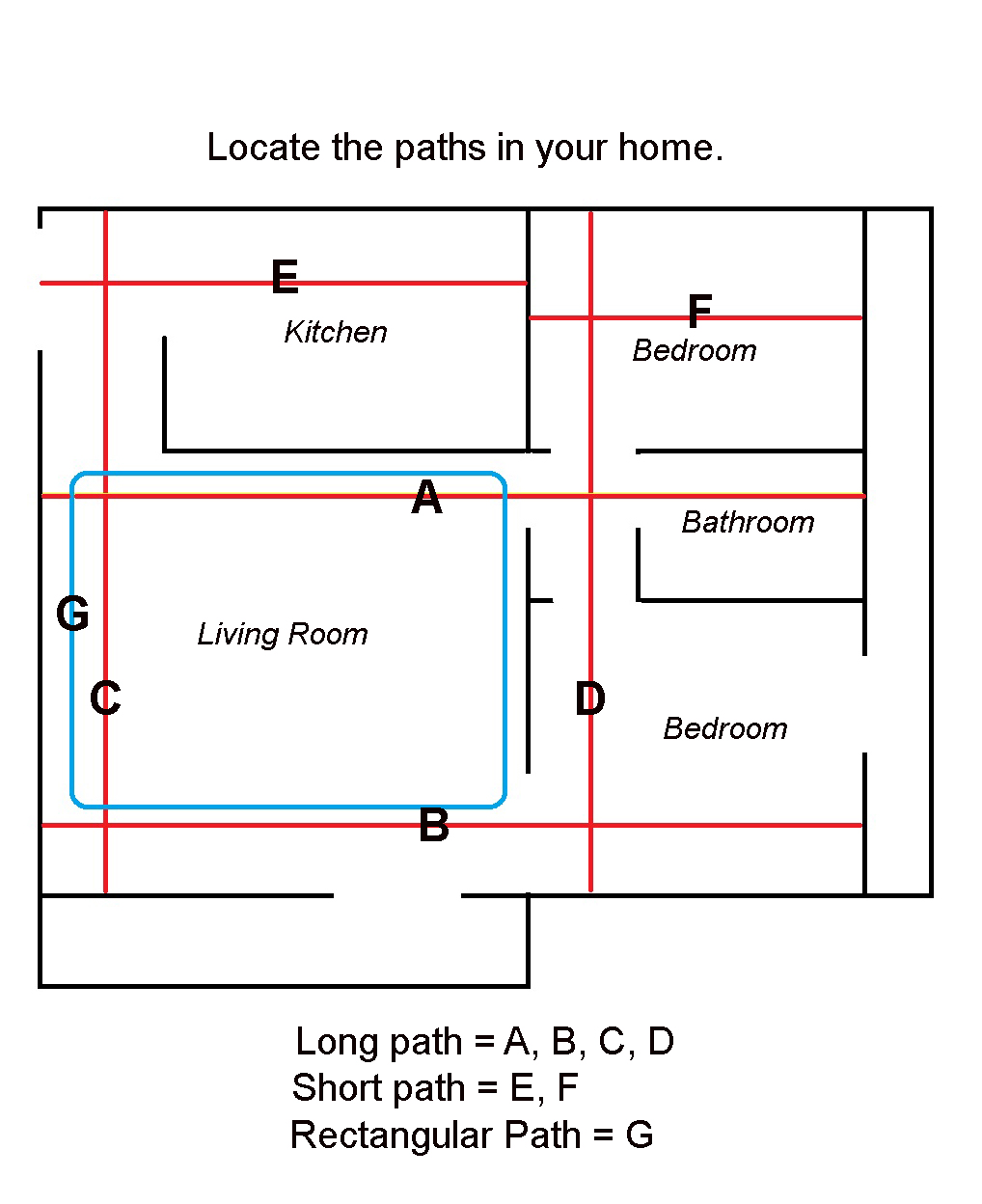





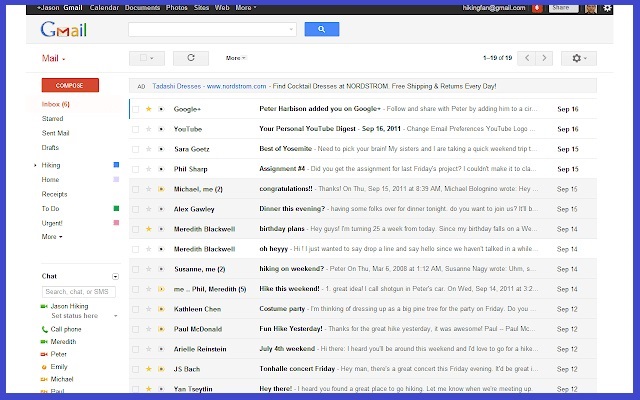





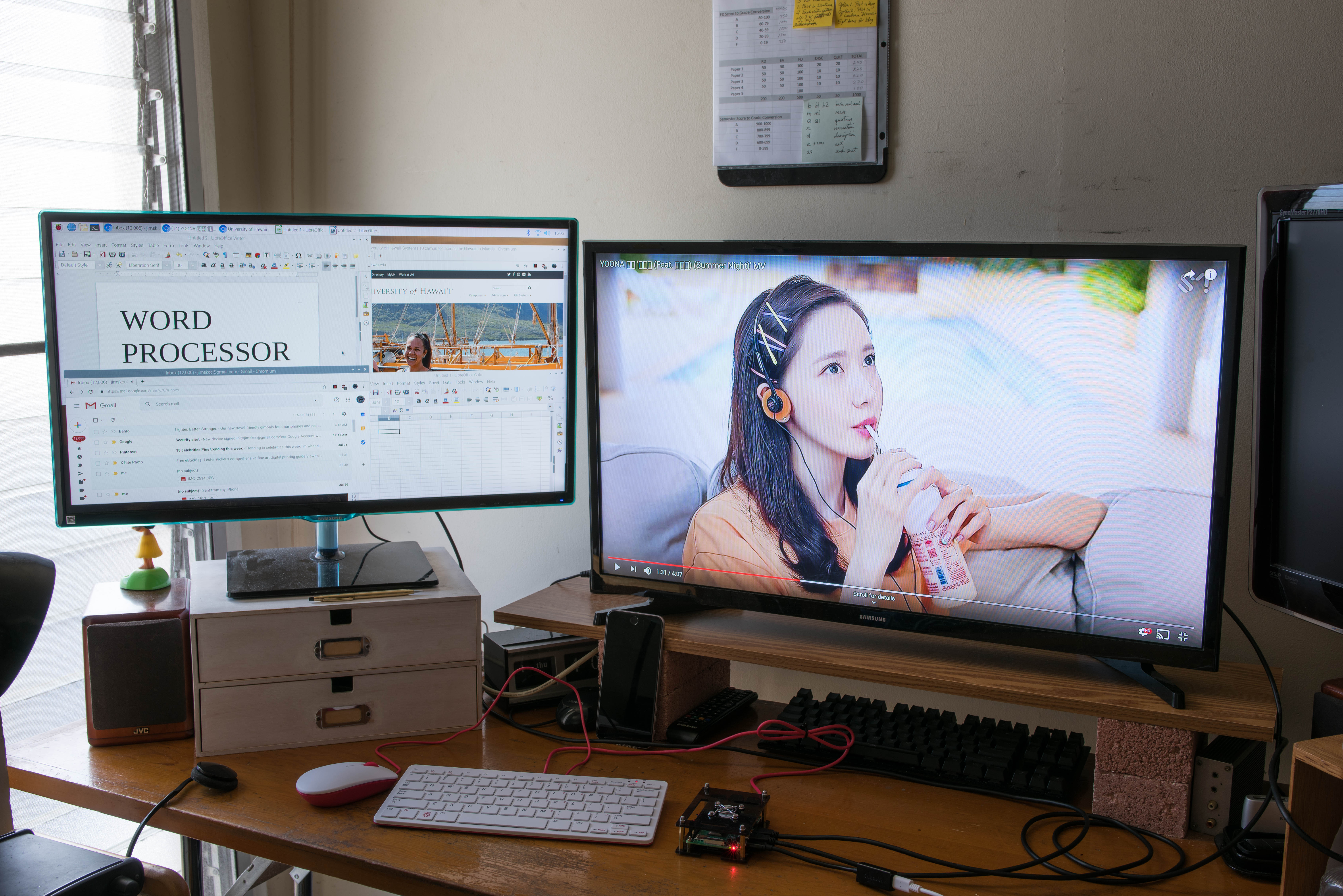
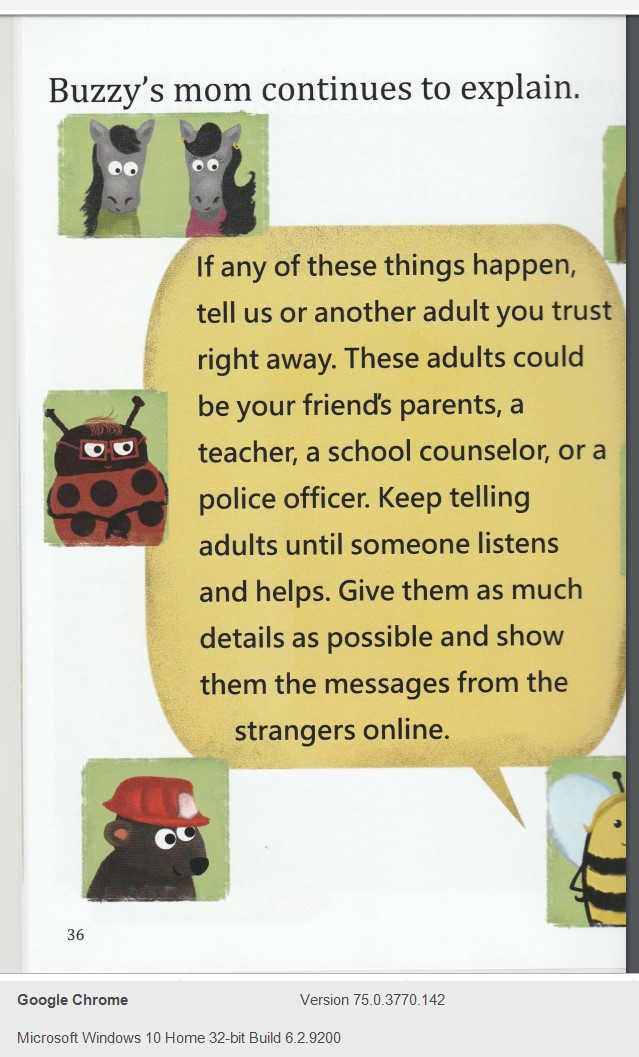


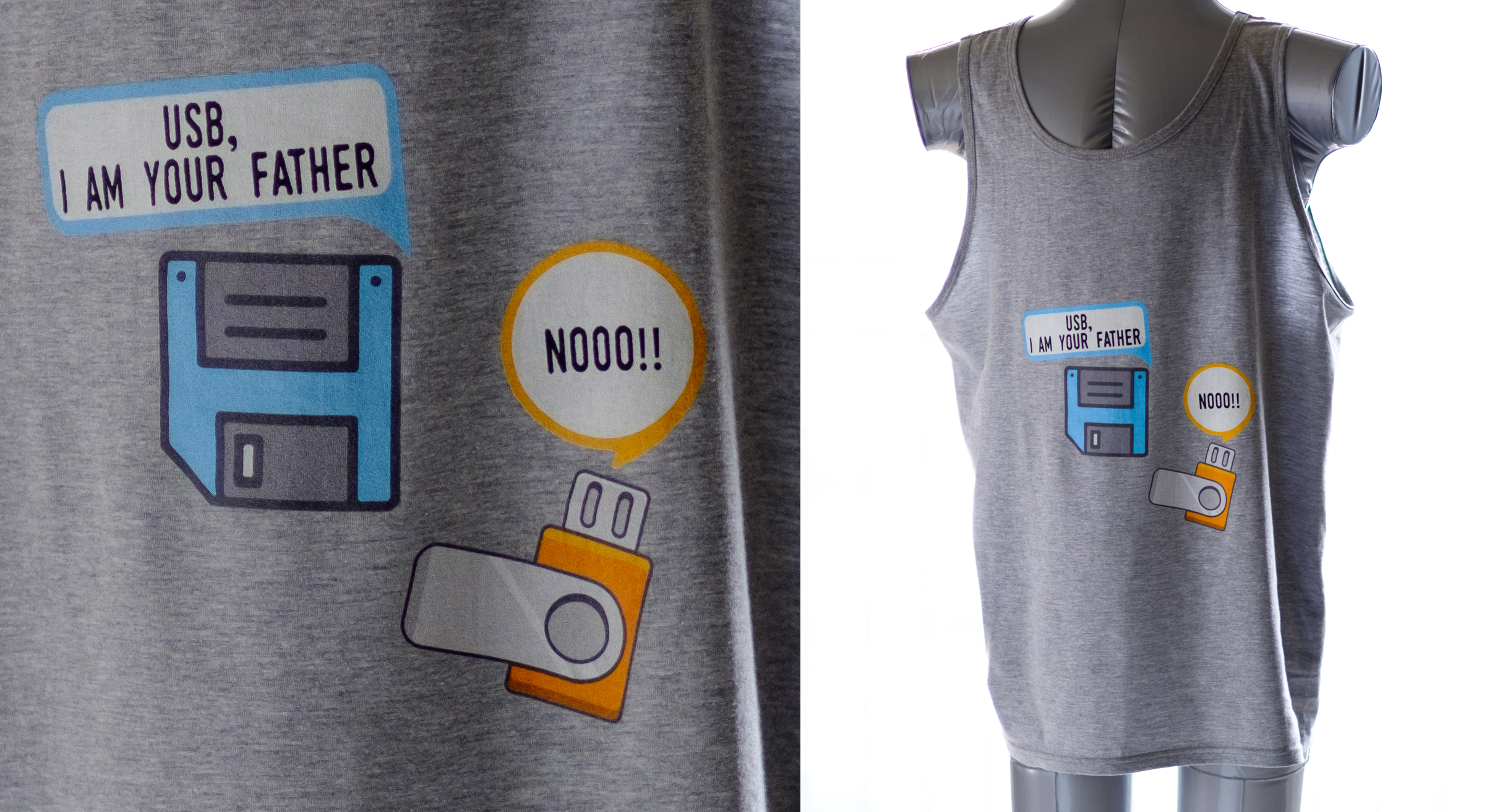








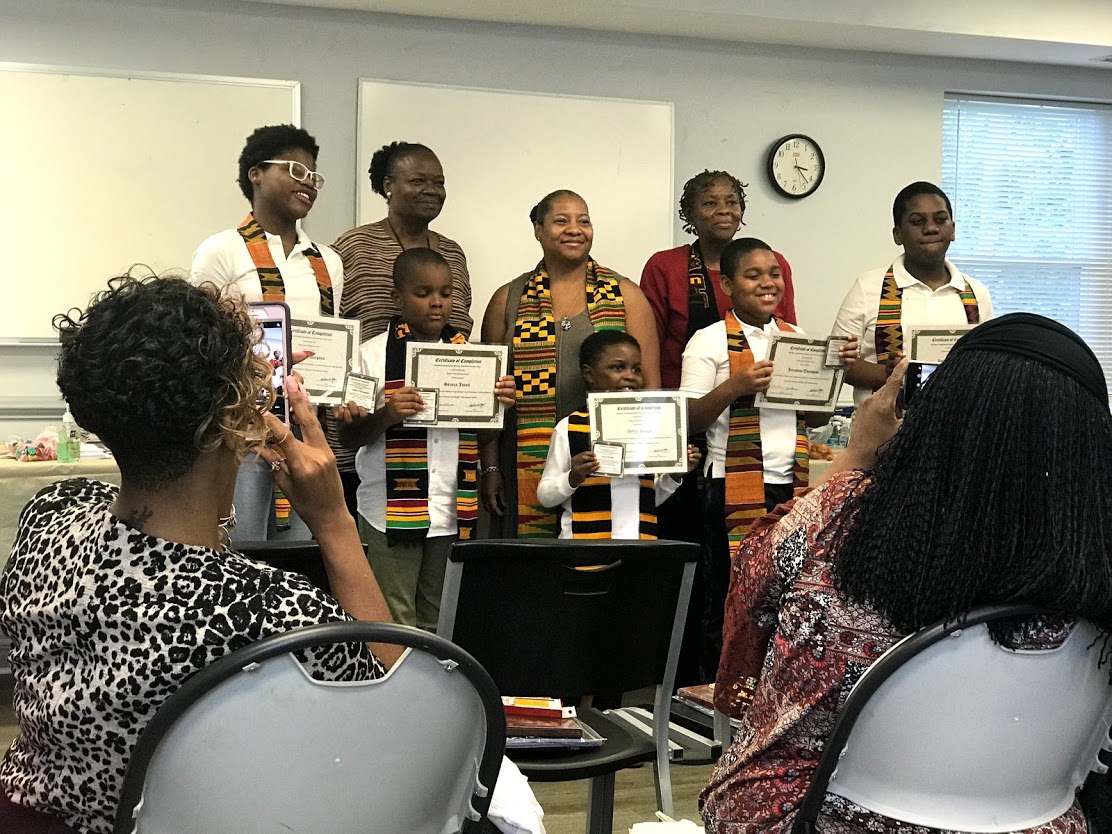





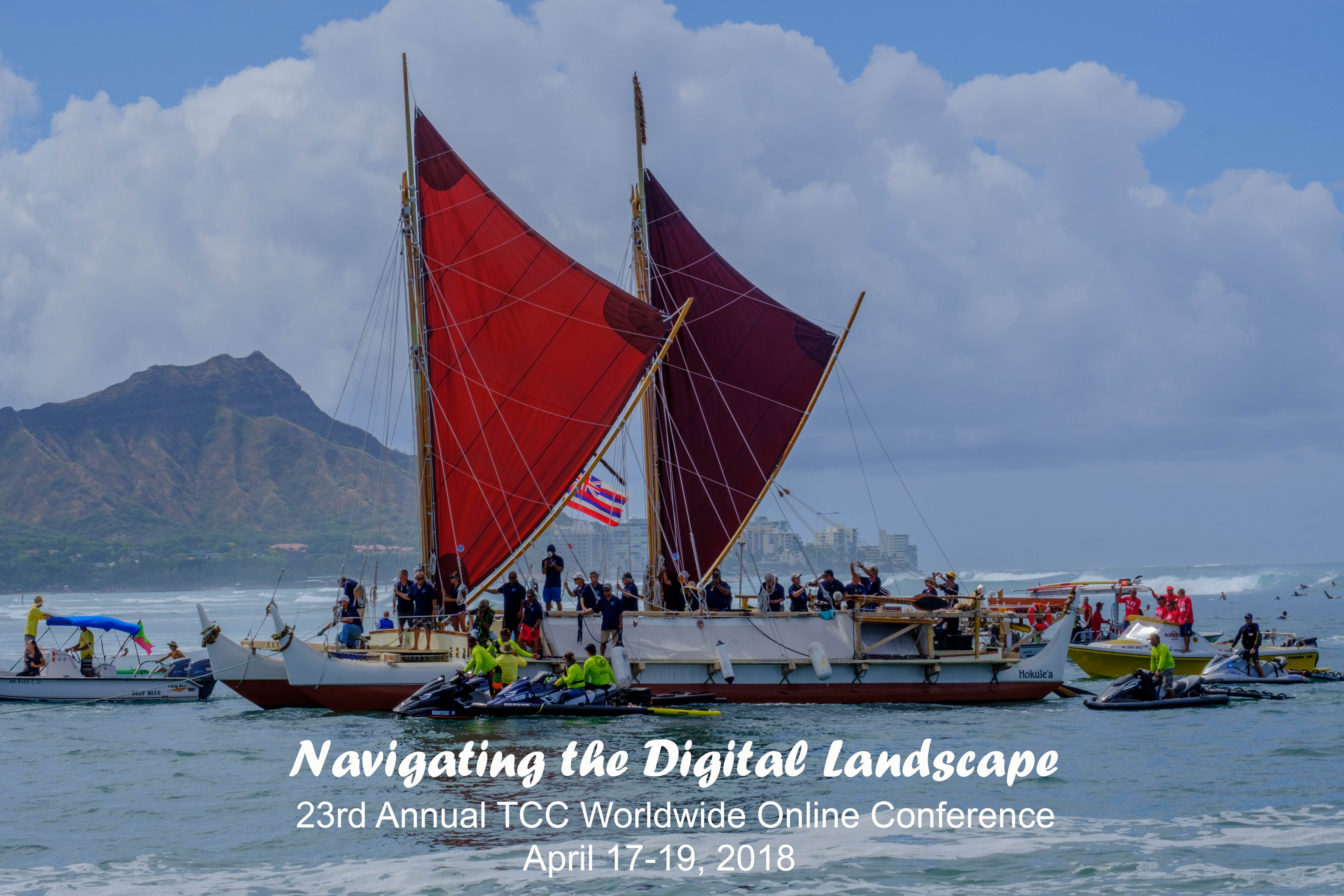


 By Angel Rutledge