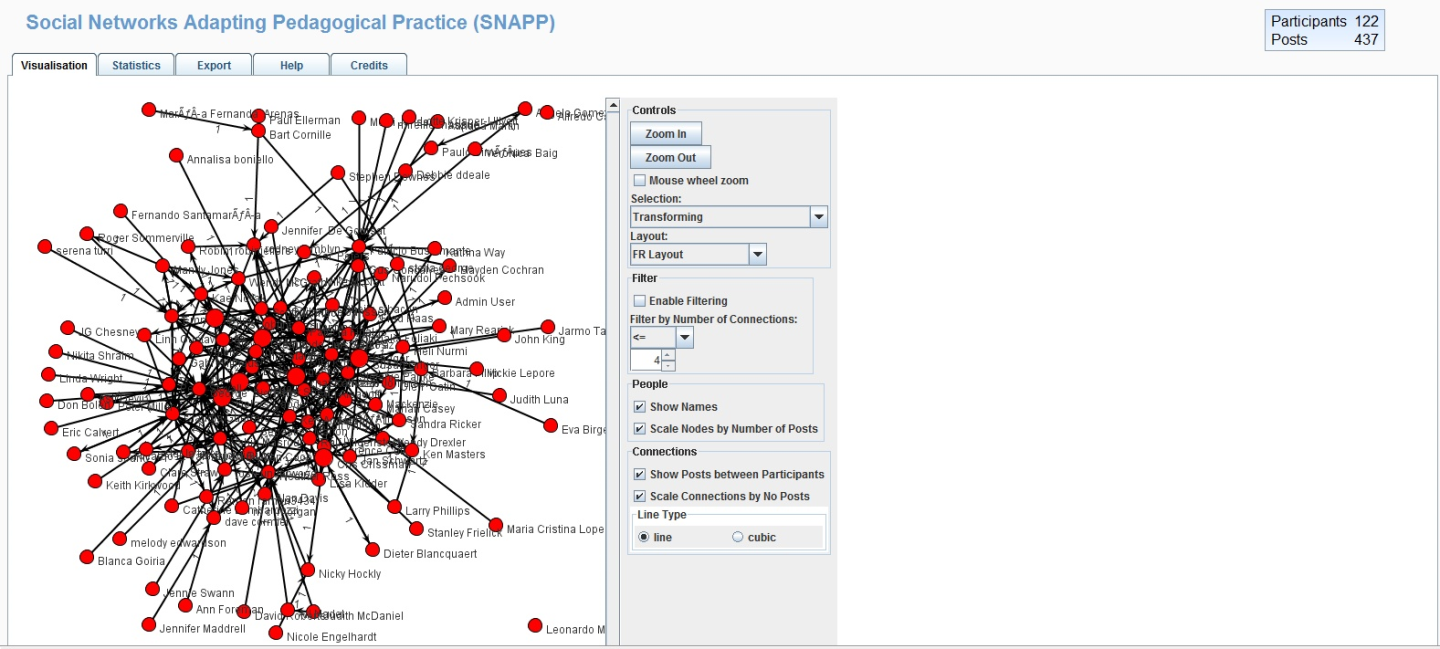
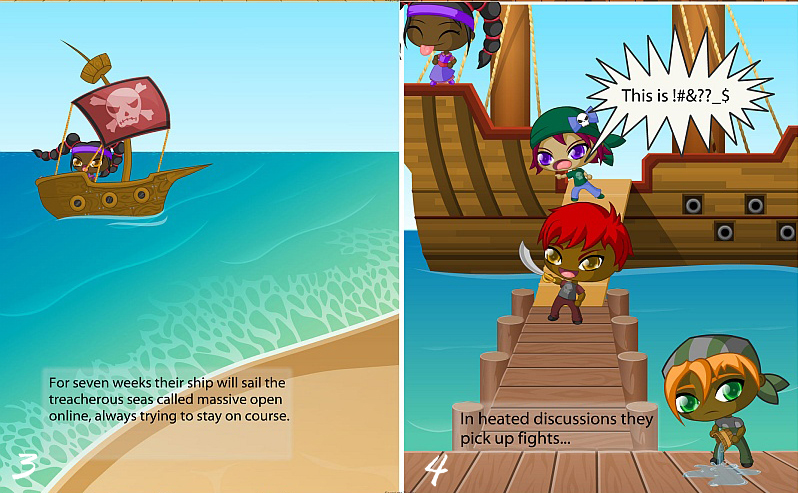
Mathematics is an essential part of the computer science and digital games curriculum. In order to gain employment in the gaming industry, the applicant must have a strong background in physics, calculus, algebra, and other math courses. In Ontario, Canada, where the gaming industry is currently booming, there are not enough students graduating with the appropriate skills and technical background. Canada currently employs over 15,000 people in the billion-dollar industry with over 300 gaming studios nationwide [1]. There are many jobs to be filled but not enough qualified people. This all relates to the “math problem” that plagues much of North America.
The problem can be traced all the way back to early childhood education. University students avoid math courses because they did not take enough math credits in high school. High school students don’t take math courses beyond the minimum requirements because they are either too difficult or not interesting. Elementary school students avoid math because it is simply not fun. Mathematics is not the only subject that students avoid. However, mathematics is very important in many aspects of life, and it is critical in the computer science field and in the gaming industry. Continue reading →
[Note: Frank was the program manager for the U.S. Department of Education’s television series, including Sesame Street, Footsteps, a series on child growth and development for parents, and The Voyage of the Mimi, a multimedia elementary science and mathematics series. He also directed bilingual television programming that included Hispanic, French, Native American, Asian, and Afro-American themes. All programs included captions. -Editor]
During the Carter administration the U.S. Department of Education issued a request for proposals for an upper elementary school multiple-media television series that featured science and mathematics. In addition to the television component, the product was to include books and computer programs in a comprehensive multiple-media package.
Bankstreet College received the award with veteran Samuel Y. Gibbon, Jr. as the executive producer. Two seasons of the series were produced with 26 programs altogether. Each series included a disabled character chosen not for their disability but for their expertise. The first season had a deaf woman that was a communication expert, and the second had a one-legged female scuba diver. The series began to air on PBS in the 1980s. Each program had a dramatic story section and a scientific documentary section that reinforced the storyline. We estimated that more than 60% of the elementary schools in the US used these materials. Continue reading →
In his e-G8 presentation, “Fostering Innovation: How to Build the Future,” Lawrence Lessig asks, “What unites all of these [Netscape, Hotmail, Google, Napster, Youtube, Skype, Facebook, Twitter] innovations?” His answer: “They were all done by kids, dropouts, and non-Americans. Outsiders.”
Well, Lessig pushes the facts just a bit. Facebook was done by a student who ended up dropping out. Microsoft was, too, and is not an Internet business.
Nevertheless, he has a point. The mentality of those who do innovations tends to be the “outsider” mentality, the person who distrusts authority and resists regimentation.
The Internet has opened up the opportunity for such people on a more worldwide basis so we see more non-Americans. Kids, at least those in reasonably well-off households, have more time to experiment with ideas and don’t have the demands of making a living or raising a family. Younger people are more likely to challenge our preconceptions as well. Continue reading →
“Any sufficiently advanced technology is indistinguishable from magic.” -Arthur C. Clarke, British science fiction author, 1917–2008.
What our children and we think of as common parts of our daily lives were once developed for other purposes. The good part of the human race has always sought ways to help the disabled among us lead more productive lives. The concept of IQs was developed as a way to better understand the mentally challenged among us. The typewriter was originally developed to assist Cerebral Palsied people write. Alexander Graham Bell was a teacher of deaf children when he developed the telephone. His wife, Mabel Hubbard Bell, a deaf woman, was a major funder of early aviation. She funded almost everyone that wanted to fly across the Atlantic Ocean with the exception of Charles Lindbergh.
In modern times Raymond Kurzweil developed OCRs in creating a reading machine for blind people. OCRs have opened up a wide range of new technological devices as well as given blind people unlimited access to the printed world. Ray Charles, an early user of his reading machine, said he could read his own mail and bills and not have to have another person read his most private correspondence. Continue reading →
Lawrence Lessig, a professor at Harvard Law School, was the featured speaker at “Plenary V: Fostering Innovation: How to Build the Future.” The video below was uploaded to YouTube by eg8 on May 25, 2011. The focus of this panel was entrepreneurship, but Lessig’s talk has tremendous implications for educators if we substitute “schools” for “modern democratic government.” In this altered scenario, the counterparts for “incumbents,” or “special interests,” the movers and shakers in the private sector, are the tradition-bound schools. In both cases, the environment is unfriendly to “outsider innovation.”
Lessig’s presentation begins at the 2:05 mark and ends at 12:30.
Lessig points to Netscape, Hotmail, ICQ, Google, Napster, Youtube, Skype, Facebook, and Twitter and asks, “What unites all of these innovations?” His answer is a wake-up call: “They were all done by kids, dropouts, and non-Americans. Outsiders.” Lessig explains that “the internet is … a platform… an architecture with consequences.” One of the consequences is that it invites outsider innovations. The problem is that outsider innovations threaten the incumbent, e.g., “Skype threatens telephone companies. Youtube threatens television companies.” Continue reading →
Humans developed oral aural speech and language to share publicly their private sensory experiences. In the beginning of civilization there was the WORD. About 5000 years ago humans developed a stable form of speech and language. The written form of language was made possible by the creation of a phonetic alphabet. They stored experiences and knowledge in libraries and could transport this information over space and time, handing it down from one generation to the next in scrolls and books. Then they developed the printing press, which made books more accessible.
Perhaps two of the most significant changes came with the development of wearable glasses and the electric light that vastly expanded the time a person could devote to reading. These factors remain critical even in today’s digital world. Wearable glasses on the personal level allow people to read their entire lives. The printing press and inexpensive books and the electric light enable modern schools to be developed. Teachers working with students with textbooks can impart the knowledge of all mankind from generations past to new generations. Continue reading →
Rupert Murdoch has taken on education for the benefit of the world and also for profit — as his recent hires and acquisitions attest. What he says in his speech is not at all diluted, in my mind, by this profit motive, which he left out entirely.
He said, “If we had a gold mine on our property, we’d do whatever it takes to get that gold out of the ground.” This metaphor is obvious, and we ignore it at our peril.
To me, the most telling thing he said was, “The key is the software that will engage students and help teach them concepts and learn to think for themselves.” The “think for themselves” is especially important to the future.
As we might have said 50 years ago, a computer is just a doorstop without decent software. Education has suffered from the software that was provided for it, by and large. Too many schools turned computers into instruments for learning “keyboarding.” Too many classes used computers as substitutes for other simpler technologies and adopted office software for the classroom. That software is not targeted to education by any stretch of the imagination, and it took considerable imagination of some teachers to make it do good things for their classes. But not every teacher was so talented.
Rupert Murdoch, chairman and CEO of News Corporation, presented “Digital’s Next Frontier: Education” at the e-G8 Forum, “The Internet: Accelerating Growth,” which was held in Paris, May 24-25, 2011.
The actual talk begins at the 2:28 mark, and the entire video runs for 23 minutes. From Murdoch’s perspective, the world’s children are human capital. However, our educational systems are broken and wasting our children’s potential. Schools represent “a colossal failure of imagination,” and one of the reasons is their inability to keep pace with change.
The greatest change of all is the digital revolution, which frees people from the “tyranny of time and distance,” and it’s occurring in every field except one — education. He says that a time traveler from the mid-19th century would find that schools today haven’t changed much. The classroom is still defined by a teacher with a book and a blackboard.
I continue to be fascinated with the education of disabled children and the impact of technology. A simple example of technology and the employment of disabled learners is the fast food market’s cash register. A mentally limited individual can be accurate by simply entering the cash register through pictures of items on the menu. Such registers calculate the cost, enter the money, and spit out the correct change. The only skill is the ability to use the pictographic keyboard of the cash register.
All infants join the collective society by learning the coding systems of communications. That is, through speech and language. By the time the average child enters first grade, he or she will have a 4000-word vocabulary. However, the range will be between 2000 and 6000 words. The range is partially determined by how much the parent talks with the child. The child with a 6000-word vocabulary will do well in our modern schools.
There are many acceptable producers and creators of learning materials. There are a few rare geniuses that can conceive of and develop extraordinary learning products. Samuel Y. Gibbon, Jr. is among the top creators of high quality digital resources. He pioneered in work on Captain Kangaroo, Sesame Street, The Electric Company, 3-2-1 Contact and The Voyage of the Mimi. In the 1980s we envisioned that multiple media programs would include television, books, and computer programs. In fact, we believed and still believe that coordinated computer programs can be embedded in the television signal.
Peter G. Marston as Captain Clement Tyler Granville in The Voyage of the Mimi
Sam, as the executive director of The Voyage of the Mimi, designed, developed and produced the series featuring twelve-year-old Ben Affleck as C. T. Granville. The program featured fifteen minutes of drama and fifteen minutes of documentary science that supported the dramatic actions. A book accompanied the television series, and computer programs supported the science and mathematics. Continue reading →
I just spent an hour viewing a YouTube video, “Plenary III – Future Net: What’s Next?” It’s part of the e-G8 Forum, “The Internet: Accelerating Growth,” which was held in Paris May 24-25, 2011.
The video was uploaded by e-G8 on May 24, 2011. The moderator is David Rowan, editor of Wired UK. Panelists are Peter Chou, CEO, HTC; Paul Hermelin, CEO, Capgemini; Danny Hillis, Co-Chairman and CTO, Applied Minds; Paul Jacobs, Chairman and CEO, Qualcomm; Craig Mundie, Chief Research and Strategy Officer, Microsoft; and Michel de Rosen, CEO, Eutelsat.
The session is divided into two parts. In the first, each member is asked to briefly talk about a technology trend that will impact our lives in the next five years. The second is devoted to questions and answers between the host and the panelists. Following is a brief summary of each person’s focus in the first part. Continue reading →
Since the late 1980s, distance learning programs have demonstrated that technology delivered education can be effective and bring learning to students in isolated and remote areas. Programs such as the old federal Star Schools Program brought highly qualified teachers to areas that cannot afford experts in subjects such as mathematics, science, and foreign languages.
From television to satellites to computers and Internet, distance learning offers high quality learning experiences. In the best of all worlds, a highly qualified personal tutor might offer the learner the best possible learning opportunity. Unfortunately, this is not an option nor is even the construction of classrooms and the training of a reasonably qualified cadre of teachers an option in many parts of the world.
Technology can and must bridge this gap for many of the worlds 120,000,000 children without a teacher or a classroom. Distance learning is affordable and available. We cannot allow the world’s children to grow up in ignorance. We cannot allow children to learn more about AK-47s than they know about reading and mathematics. We cannot allow children to know more about war than they know about peace. Children will learn whatever we do. The question is, will we provide them a healthy environment of learning that is scientifically accurate and socially healthy? Continue reading →
(Author’s note: this article is an adaptation of a recent blog piece on my web site.)
Is “UnCollege” a bold new approach to one’s education? A colleague recently told me about the UnCollege web site and the related manifesto. I’ll take a closer look later, but my first reaction is: been there, done that; still have the T-shirt in my rag pile though….
Reading this manifesto was a stroll down memory lane, recalling the similar movement in the 1970s and the critics who proliferated then. I did not see anything in this manifesto that I have not seen before, although maybe I’ll find a new nugget or two upon closer examination. (Nice collection of past critical quotes though, although where’s the Vonnegut quote about how my teachers could have ridden with Jesse James for all the time they stole from me?). Coyne and Hebert’s book, This Way Out, covered this ground for its time back in the mid-1970s, as did Ronald Gross’s The Lifelong Learner.
Despite the wonders of the Internet and digital technologies, the shortcomings of this approach are essentially the same now as they were then:
The “academic deviance” approach, like Anya Kamenetz’s, is a DIY (Do-It-Yourself) approach; the problem is that most people don’t want to be DIY with their education any more than they want to be DIY with their car repair, home building, etc. Everyone’s an autodidact to some extent — that is, they can teach themselves things on their own — but academic autodidacts who can do their entire education on their own are a far rarer species. The manifesto may move a few to action, but it lacks a driver to move masses of learners to action. Continue reading →
[Note: This article is from a private email sent by Bonnie on May 28. -Editor]
I am going to play this weekend. Rolling Thunder means that we have an invasion of motorcycles and terrible traffic.
I have opened a Diigo account, Ray [Rose] sent me a thing for some other account, and I have the game piece to work on.
I spent a Memorial Day in Hawaii. My mother wanted to see Pearl Harbor. She cried, along with some older servicemen, almost the whole time, holding my hand as if she were the little girl and I, the mother. I never knew it, but during WWII, her job was to send the missing in action and death certificates from the Naval Annex.
Memorial Day was started by Confederate Army relatives in the area of Petersburg. Recently I went to the Confederate Army Cemetery. My friend, Mano, from India, took me there. It was an interesting trip. It is the cemetery on a hill overlooking Richmond, Virginia.
Some people were startled to see a group of “colored” people touring the cemetery. It was like slipping into a time warp.
Also I had never seen Monument Row. Things have changed for the better I think.
Research now shows that people who remain active are less likely to have Alzheimer diseases. One interesting report indicates that people who Google every day are warding off the disease. However, there is another compelling question, and that is, What constitutes creativity at any age? The digital world offers us new mindsets, new ways to examine and know our world on Earth and to explore the universe.
The mysteries of the universe are open to us to explore as the Hubble telescope brings us visions from the distant past. Ironically, in our classrooms or homes, the pictures of NASA probes come to us in living color. We take these pictures and decode their meanings. We now can detect planets around distant stars, and we must ask, Is there life outside Earth? If so, what is the nature of that life?
As we explore space and dream of a habitat on Mars, we still have unsolved problems on Earth. We have the knowledge to feed the hungry of the world, but 1.02 billion people go to bed hungry each night. There are 125 million children without a teacher or a classroom. Technology can and must open the doors of learning and knowledge for those children. Who will create the systems that reach into the minds of these millions of children and free them with access to the world’s knowledge? Children are our future.
I have always considered Judah L. Schwartz a true pioneer in the field of learning technologies. He had the ability to look at the world through the new and different lens of the computer. He looked at the ethical and philosophical issues arising from the use of technology in education. His research interests include the use of the digital world to improve the teaching and learning of math and science. He designed the Geometric Supposer series of software and What Do You Do with a Broken Calculator? and other alternative software programs.
He is currently Professor of the Practice and Research Professor of Physics and Astronomy at Tufts University; he is also Emeritus Professor of Engineering Science and Education at MIT and Emeritus Professor of Education at the Harvard Graduate School of Education.
Judah L. Schwartz
He is a remarkable pioneer in our field because he saw technology as a way of looking at mathematics in very new and alternative ways. His software asks the learner to think over and over again, “What if?” What if I change this value. What happens? The computer allows for infinite changes and explorations of these alternative operations. He likes to say the Ptolemy observations of the solar system were accurate. There was just one thing wrong with them and that was they were basically incorrect. Continue reading →
There’s only one major trend in education, and that’s digital. The digital meter is all that really matters, and it’s running faster every second. The increments are in degrees of digitization. This process is transforming not only the classroom but the business of schooling. Paper and file cabinets are disappearing, just as books, bookshelves, and printers are. Increasingly, information is created, stored, and shared digitally. Landlines and faxes are being replaced by digital communications via computers and the internet.
Increasingly, offices are becoming dead zones. Educators are communicating more than ever before, but they’re no longer doing it from their offices. For example, students and colleagues are communicating with them via email and social media, and the interactions are no longer limited to weekdays, 8-to-4, in offices. The office is simply no match for 24-7, anytime, anywhere communications.
This digital sea change is not an isolated trend. It’s pervasive, happening everywhere on this planet, all at once. There’s no denying that there are and will be pockets that remain analog, like the payphone booth you sometimes see in an old neighborhood or out of the way location or an IBM selectric typewriter in a forgotten workroom or, even more rare, a desktop computer with disc drives and CRT monitor, connected to a printer with fanfold paper. Newspapers and TV news are going digital, too, just as books, movies, music, and sports are. Continue reading →
“If my mind can conceive it, and my heart can believe it, I know I can achieve it.” -Jesse Jackson
In the late 1980s when I worked for the US Department of Education, I dreamed of an interactive, participatory multimedia television series. It would be a weekly series that established a problem the first four days of the week and then viewers would submit solutions on Friday. This was before YouTube or Facebook. If I were writing the proposal today, I would have many more exciting technology-based possibilities.
A segment of the series might focus on establishing a Mars habitat. Major problems to be solved are (1) developing protection against radiation, (2) creating an adequate water supply, (3) growing food, (4) disposing waste, (5) learning to live together for long periods in a confined space, and (6) supplying ample energy for the habitat.
The first four days, the program would provide a storyline that gives the learners background information about the possible solutions. Students using a package of visuals, including avatars, would develop a video for their solution. Each class can then place it on YouTube for others to view. Other learners can provide comments and advice on Facebook. Continue reading →
Andrew was a loner who lived in his own world with very little interactions with other children in either the dormitory or the classroom. He was a tall, skinny, awkward kid. He had a talent for drawing. He created a whole world of his own in his drawings. In fact, his most expressive communication came through his drawings.
When he was about twelve or thirteen he began drawing elaborate cartoons including his own language. His most elaborate efforts were of a semi-Roman type of society. He spent hours drawing these detailed cartoons of his imaginary world. He had observed the mechanical aspect of the buildings that made up the school campus, and in some of his drawings he had elaborate electrical and plumbing systems.
Andrew was not a good student, but he did like words. He was not an athletic or outdoors fellow. He did not like to go to the Boy Scout camp. One camping trip I heard him conjugating verbs. I am not going to camp, I will not got to camp, I shall not go to camp, etc. in the back of the bus on the way to camp. We were a little late getting to the campsite and pitching our tents. Consequently, it was dark by the time the boys started their fires and began cooking their meals. I was excited because Andrew was one of the first to sit down and start eating. However, when I approached him I realized he had not been able to start his campfire and was eating his food raw. Continue reading →
By Claude Almansi
Editor, Accessibility Issues
ETCJ Associate Administrator
Vernier is providing 30 grants to ten elementary or middle schools, ten high schools, and ten college or university departments to honor the important work science educators do every day. Each grant awardee will receive $10,000 worth of Vernier technology equipment of their choosing. (…)
The contest opens March 9, 2011, and applications are due by June 1, 2011, with winners announced by September 15, 2011 (…)
One day my superintendent called and asked if I had invited JFK to be our commencement speaker. Why he would suspect me of inviting the President I do not know. I had no idea what he was talking about. He said, “Find out who did,” and hung up. I talked with the class officers, and, oh yes, Albert James, the secretary treasurer, wrote the president. Albert was a kid who, at thirteen, had a beard heavier than Richard Nixon’s. He was the kid whose dormitory mates could send out to the local store to buy a six-pack and no one would ask for an ID. From preschool to high school, his teachers had noted that he was an underachiever not living up to his potential.
In his last year he discovered science fairs. He entered and won the local and went on to the state where he came in second. His fame led his classmates to elect him secretary treasurer. As such, he thought President Kennedy would make a wonderful commencement speaker. He knew enough to go to the superintendent’s office and obtain letterhead stationery and wrote a letter to the President asking him to speak. JFK had already made a commitment to speak at a nearby college and the White House said if we scheduled our commencement to coincide, the President would consider speaking. Wow! Albert thought this was nothing out of the ordinary. Unfortunately, the President was shot in Dallas and we never finalized the arrangement. Continue reading →
I appreciate the comments on this sort of article (Liz Dwyer’s “Why Twitter Is a Teacher’s Best Tool,” 5.21.11) about as much as the article itself. One teacher (rossmau) commented that Twitter is less useful than her stapler. Another (Michelleg1) was effusive in her praise of Twitter.
I find Jessica’s question much more engaging than just talking about Twitter, which has its value and its drawbacks.
Many have noted that schools, as an institution, tend to resist change. Some decry that tendency as even troglodytic. It certainly frustrates me from time to time.
However, if you think about it, schools provides a critical service for our children for a dozen or more years of their lives. Were it subject to every whim of education theory, the results would likely be unpleasant at best. I’ve seen a few education fads come and go.
My favorite fad is “New Math.” Wow! Some still cling to it today, but it was totally discredited years ago. In science education (and others I think), we see “back to basics” as a fad that trades places with social relevancy. Each gets stretched to its limit resulting in an overreaction in the other direction. So, one day, it’s all about learning the fundamentals of science. Another day, it’s all about relating science to your community, to your nation, to the world as in global warming. It’s not that these things are bad. They’re just not in balance. Continue reading →
Today, I stumbled upon a blog post, “Why Twitter Is a Teacher’s Best Friend,” by Liz Dwyer. While I find Dwyer’s stances on the professional development and networking power of Twitter to be valid and refreshing, I was concerned by the line “Not all teachers have totally embraced Twitter. Some are a little tech-phobic.”
To me, integrating technology to its fullest potential involves finding true solutions. In my own teaching, Twitter is used only in very specific circumstances. Yet, I am not tech-phobic. I hesitate to embrace the proclamation that eschewing a technology makes one tech-phobic, yet many tech blogs seem to follow this bent.
How do you feel? How do you define “technophobia”? How do you make your technology decisions when it comes to information sharing, teaching objectives and networking?
I found this article to be a refreshing perspective in many ways and find it opens the door to an interesting discussion on our perspectives in the tech world and how we view those who adopt technology at slower rates. What do you think?
I have hired and supervised a number of teachers in my career. I always ask myself, Are the people I am interviewing so interesting that I would like to spend an evening with them over dinner? Can they relate to their students and not just the subject matter?
One of the most remarkable people I hired as a teacher for multiply disabled students was Dorothy. She had just lost her husband. She was an excellent pianist and could have earned a living as a musician. She had been in love and engaged to marry a European from Holland before World War II broke out. She had lost all contact with him during the war. He was a member of the underground. He wired her as soon as he was able to after the war was over and indicated that he still wanted to marry her if she had not married. She said yes, and he came to the USA as fast as he could. He ended up as an executive in Shell Oil Company, and they lived around the world, often dining with heads of state and corporate leaders. They had no children.
She met my first criteria of being someone that I found fascinating as a dinner partner. Her educational background was exemplary, coming from Smith College with all A’s.
I worked in residential schools in the early part of my career. In addition to my classroom teaching, I taught wood working shop at night and on Saturdays. Every time Dale saw me he asked when he could take shop. You had to be at least nine years old before you could come to shop. Dale was one of the kids that the teachers did not like, and the house parents dreaded having him in their dormitory.
He wasn’t bad. He was just a pest. If you could possibly do something wrong, Dale was able to stumble into it. If you went on a field trip on a city bus and had to transfer, somehow Dale lost his transfer. If you stopped for an ice cream cone, Dale somehow managed to drop his cone before he finished it. Dale also had a misshapen head. It looked like someone stepped on it and left it off center.
The time finally arrived when he was old enough to come to shop. He was in seventh heaven. I had the young boys that year make three-legged foot stools. They turned the legs on the lathe and made kidney-shaped seats that they covered.
When Alexander Graham Bell tried to market his new telephone in England, government ministers told him that England would never need telephones. They would always have a supply of messenger boys. When I grew up in the 1930s, a long distance telephone call was only used for a birth or death of a family member. In World War II, long distance phone calls were used by servicemen to contact loved ones back home.
Today I have a friend with cancer who is being treated by the National Institutes of Health. She has her own blog where she documents the progress of her treatment for family and friends. I live on the East Coast, and many of my family members live on the West Coast. With Facebook, I am more in touch with the family than ever before. Sometimes I get more information about purple hair and body piercing by the younger members than I want to know. So far I have not received an announcement of tattoos. I have not checked my email this morning.
Young people and adults have privately financed the personal and corporate infrastructure of iPhones, iPads and iPods that make this vast social network possible.
The challenge for teachers is how to use these new resources for learning. We must develop rules for usage, but social media should never be banned from the classroom.
Project-Based Learning or PBL seems to bundle some of the noisiest buzzwords into a single package, making it a convenient general model for best practice. But I have to confess that I seldom use the term because it’s so slippery. Every time I think I have a grip on it, it oozes away. Now that I have a few days before the start of summer session, I thought I’d try to get a firmer grip on it.
I did the usual googling, and Edutopia rose to the surface. I liked their site because it simplified, simplified, simplified the idea. In other words, it left out the philosophical history and pseudo-theoretical pedigree that’s top-heavy with Dewey, Piaget and the like. In a brief document titled “Why Teach with Project-Based Learning?: Providing Students With a Well-Rounded Classroom Experience” (28 Feb. 2008), I got what seemed like all the pieces to the puzzle.
Using the mouse, I cut away the excess verbiage to isolate the key elements, and this is what I ended up with. Through PBL, students:
experience “active and engaged learning”
“explore real-world problems and challenges”
develop “cross-curriculum skills”
work “in small collaborative groups”
engage in “team-based and independent work”
“obtain a deeper knowledge of the subjects they’re studying”
“are more likely to retain the knowledge gained through this approach”
“develop confidence and self-direction”
“hone their organizational and research skills”
“develop better communication with their peers and adults”
“often work within their community”
“are evaluated on the basis of their projects, rather than on the comparatively narrow rubrics defined by exams, essays, and written reports”
feel that “project-based work is often more meaningful to them. They quickly see how academic work can connect to real-life issues — and may even be inspired to pursue a career or engage in activism that relates to the project they developed.”
have “greater flexibility [in] project learning”
“might be evaluated on presentations to a community audience they have assiduously prepared for, informative tours of a local historical site based on their recently acquired expertise, or screening of a scripted film they have painstakingly produced.”
learn that this is “an effective way to integrate technology into [their learning]. A typical project can easily accommodate computers and the Internet, as well as interactive whiteboards, global-positioning-system (GPS) devices, digital still cameras, video cameras, and associated editing equipment.
In the USA every child is entitled to a free and appropriate education regardless of ethnic background, disabling condition or socioeconomic level. In the last part of the 20th Century, federal legislation ensured that all disabled children had a right to a free and appropriate public education. The contributions of disabled people in America has been tremendous, from Thomas Edison, Franklin Roosevelt, Stephen Hawking to Ray Charles, Stevie Wonder and Helen Keller, disabled people have enriched our society. Deaf people, blind people, cerebral palsied people and mentally challenged people have enriched our lives though their accomplishments.
Many of these young people have done well in regular classrooms with average learners. Others have had to have special programs and may from time to time be in separate classes or even individual tutoring. Learning comes through our sensory input, especially our sight and hearing. However the human mind is a marvelous thing that can compensate for distortions in our sensory inputs. Think with me for a moment about how we might reach a deaf blind infant. True, there are cochlear implants that might give the child a form of hearing. There have been experiments with ocular implants, but these have not been practical to date. How then will a deaf blind infant know his or her world? They must know their world primarily through the sense of touch, taste and smell. Unlike sight and hearing, touch, taste and smell are near senses.
Separate but equal?
It never was.
In education, we still have a long way to go.
In technology, are we there yet?
It is nearly exactly sixty years after the U.S. Supreme Court ruled in Brown v. Board of Education that the doctrine of “separate but equal” has no place in the field of public education. The promise of an equal education remains unmet for too many of the nation’s students of color and Native students. Inner city schools are crumbling and losing educational leaders. Rural schools are often technology challenged as well as economically challenged. The new ideas and wonderful examples of best practices are not a part of these schools’ learning landscapes.
How long will this go on?
In my early school days, like many Southern students I went to school with Hispanics, Dark Italians, Native Americans, and Black students. We were all called colored. The nuns had us capitalize “Black” and names of minority groups to give them importance, to show their importance. There were a few Chinese students, but they were allowed to go to other schools. We did not know why. We accepted it. Change was coming, they said.
There was a confusion about race. There always has been. I still have the bad habit of capitalizing any minority name. However, there has never been an illusion about the economic differences in communities and what that means for students of color.
Today I want to reflect on some teaching I did on Tueday, 17th May at the Institute of Education (IOE). It was called 21st Century Learning: Using Web 2.0 Tools. I usually call this session Web2.0Learning, but our marketing people didn’t like that and renamed it. This was the first time I’ve been on the LCLL core events calendar so this was quite a big deal. By the way, the LCLL – London Centre for Leadership in Learning – is where I work in the IOE.
Web2.0Learning is a day’s training that I conceived a couple of years ago to teach educators about the various types of tools freely available ‘out there’ on the internet. I describe them as ‘outside your VLE’ tools. I’ve now delivered it five times mostly at the Chartered Institute of Marketing, and I’ve always found it a rewarding experience. Part of the satisfaction comes from the fact that it’s inspired and dictated by what I read, learn and reflect about in my personal learning on the blogosphere. It’s more of a personal interest than a work chore. Also, it allows me to be creative as I seek to make sense of the different tools and software I encounter and distill it down into coherent messages.
In the middle of the night, I thought about how a student’s educational life might play out in the next ten to twenty years. Endeavour’s launch was magnificent. We will step foot on Mars someday.
James Josiah Coleman was born on February 9, 2000, in Lanham, Maryland, just outside the Goddard NASA space center. You might even say he was a space baby. His father was a communications expert at NASA, and his aunt was a NASA astronaut. His crib had plastic shuttles hanging over it, and his first toys were NASA models. As a youngster he knew the statistics about all the shuttle flights, especially the ones his aunt flew on. His mother was a PhD research scientist at the Greenbelt Department of Agriculture Research Center. He had a younger sister named Casey.
Photo credit NASA/Jim Grossmann
He was known by his friends as “JJ” and was considered a nerd because even as a small kid he was obsessed with NASA data. He knew everything about Mars and dreamed of going there. Early on as a child he learned to speak Russian because his aunt Cathy spoke Russian as a member of the International Space Station crew. JJ had a talent for speaking other languages and also began to learn Chinese when he was in grade school. He did this by taking a Chinese course on line where he spoke with native Chinese speakers weekly via SKYPE. Continue reading →
[Note: An earlier version of this article was published in Frank’s personal blog. -Editor]
Our current educational system was designed for an agrarian society where books allowed us to store and retrieve information. Before books, young people were taught through apprenticeships with master workers or scholars. Books allowed us to train and teach children in classrooms and schools with libraries of the world’s knowledge and skills. This meant that the learners had to be convened in classrooms.
With today’s digital world, the classroom is not as critical as it was in a book based learning system. Today, information stored digitally can be retrieved 24/7. Moreover lessons can originate anywhere in the world. If, for example, I want to study Chinese, I can have lessons from China delivered via my computer and I can practice my Chinese via SKYPE with two-way audio-visual conversations with a native speaker.
Distant learning allows us to deliver high quality lessons to the most remote parts of the world as was demonstrated by the Star Schools Program. Early childhood education is now delivered via Sesame Street to 140 countries around the world. This does not mean that we no longer need school buildings or human teachers. It means that those classrooms will be organized differently and that the teachers will be mentors that guide teams of learners as they solve problems and produce projects.
Assessment of a learner’s progress will be based upon (1) projects completed, (2) effectiveness in team work, and (3) creativity. Schools will be open year round. Students will work in teams with clear individual learning plans that define their goals and objectives. Certain skills and background will be tailor made to meet individual needs. That is, sufficient literacy and mathematics skills will be expected, and required remedial work will be provided on an individual basis until basic proficiency is achieved. Continue reading →
Introduction: On May 12 and 13, I had the opportunity to interview Jessica Knott, a PhD student in Higher, Adult and Lifelong Education (HALE) at Michigan State University. She is also an instructional designer with TechSmith Corporation’s Camtasia Relay team. She serves as ETCJ’s editor on Twitter and writes a column, “ETC, Twitter and Me.”
Jim Shimabukuro: I just logged in to the TEDxLansing website. Please tell us about the event and, more specifically, about your live online course.
Jessica Knott: I’m super fortunate to live in a vibrant city filled with doers, and TEDxLansing is kind of an embodiment of that. I’ve been on the core planning committee for the past two years and am consistently amazed at the big ideas and bright spots that are unearthed in the state of Michigan, which is consistently looked upon as bleak. TEDx events are local, and highlight what can be as well as what is. They’re incredible.
Lansing (or, East Lansing, rather) also happens to be the home of Michigan State University, where I am a PhD student in Higher, Adult and Lifelong Education (HALE). I focus on distance learning and instructor presence, and how organizational changes and the shifting landscape of higher education affects how we communicate with our students. EAD 315 is offered to HALE students and gives them the opportunity to create and teach an online or in-person course in student leadership theory and development. However, it’s more than just a workshop or seminar. This class is a challenge in every way. Students with no teaching experience are mentored through the process from start to finish, and students who already know the ropes have some freedom to explore and try new things, while creating a solid, challenging course for students requiring a four credit summer course. This is my second year teaching it, and I’ve already learned a lot about my teaching style and working with undergraduate students. Continue reading →
[Author’s note: this article elaborates on an idea described in a previous article.]
Anyone who truly believes the common wisdom that our education system is “broken,” “failing,” and needs “fixing” should try answering these questions:
When did it break?
Who broke it?
Was it working just fine before that?
What did it look like then?
If it’s now “failing,” when in the past was it succeeding?
What did that look like, and what happened to change that?
When you ask these questions, the reality becomes apparent: education has never worked fine for everyone. It has always worked for some and not well at all for many others. The current system needs some repair work here and there, but to say that the entire education system is broken or failing and needs fixing to achieve “success” is at best misguided; at worst, it’s misleading, even pernicious nonsense.
This is so for three important reasons:
First, saying that education is “broken” and “failing” opens the door to would-be “fixers” of education who offer handy “solutions” that bring neither resolution nor success. Children’s author Richard Scarry created a character who helps us understand how this works. Mr. Fixit is “fix-it” incarnate — but as millions of children worldwide wisely know, Mr. Fixit has, shall we say, an inflated sense of his capabilities. He can fix some simple things, but most of his fixes go awry: a once-leaky boat that won’t ever leak (or float) again, a vacuum cleaner that only works on the ceiling, a talking doll that says “Dadda” instead of “Mamma.” Would-be “fixers” of education produce results that are similarly dubious and often a lot more expensive. Continue reading →
DVD players have advanced so far that they’re beginning to take over functions that we normally associate with home PCs. For example, I bought a Sony BDP-BX37 unit for a little over $90 a few days ago. With an ethernet connection to a cable router, I can now bring many web resources to the widescreen, high-definition (HD) TV.
Except for newscasts from time to time and special documentaries, I seldom watch TV programs. Instead, I use the TV primarily for viewing DVDs. Thus, when my old, pre-Blu-ray DVD player finally died, I went shopping. I was amazed at the wide range of models, price drop, and value for the buck. I was especially impressed with the LAN (local area network) capability and USB port.
When I got the unit home, I couldn’t wait to try it out. I inserted the cables — HDMI to the TV and ethernet from the router. I also plugged a keyboard into the front panel USB port. The onscreen setup went smoothly, prompting me through a few simple steps.
My first test was YouTube, to explore the unit’s web capability. At the YouTube screen, I used the keyboard (instead of the buttons on the remote) to type in a search term. I selected videos at random from the ones that emerged. They played without a problem. The default viewing frame is very small, about 20% of the screen. Clicking on the remote’s center button (in the circular direction controls) zooms in to full-screen mode. In full-screen, results are generally poor with standard low-resolution videos. Those with higher definition are fair to very good. Continue reading →
I know how lucky I am. Chris Dede was a mentor. Before he taught at Harvard, he was a professor at George Mason University. Back then, he sometimes visited my classroom, bringing students with him, and sometimes I got to be a part of his classes.
Chris was one of the mentors in the Christa McAuliffe NFIE (National Foundation for the Improvement of Education) program, and he worked with five of us, representing various diversity components: Native American, international, digital divide, supercomputing, and futuristic education. We were groomed to help classroom teachers and had frequent meetings with these experts, who shared resources, ideas, and thoughts with us.
The NFIE was funded by the NEA from member contributions on behalf of the astronaut who died in the shuttle accident. It is a private foundation within the NEA. Chris was my knight in shining armor in the NIIAC (National Information Infrastructure Advisory Council). I could present ideas to teachers, but I was just a teacher. Chris had a PhD. They listened to him, though they may have been amused by the things I said. He was my resource for the duration of the time I was on the council. Continue reading →
The first is: “The Internet sort of gets rid of a layer of supervisors.”
Supervision is a problem that teachers rarely if ever broach — and for good reason. Criticize it, and they’re out of a job. Supervision can be both good and bad. When it’s good, it’s empowering. That is, it supports the teacher’s efforts to realize her instructional goals through her preferred approaches. It keeps the teacher in charge of her pedagogy. Yet, along with that freedom comes the responsibility to meet school-wide objectives. The teacher is treated as a professional, highly trained and capable of making her own decisions about how best to achieve goals and objectives.
Supervision, when it’s bad, is overbearing, invasive, counterproductive, and ultimately dehumanizing. The assumption is, to put it bluntly, teachers are stupid and lazy. They need to be told what to do, how to do it, and when to do it. They need constant watching and prodding. The teacher is viewed as a technician or, worse, a machine, a component that needs to be programed, plugged in to a classroom, and periodically serviced and updated. From the supervisor’s perspective, the best teachers are those who are easily programed and maintained. Continue reading →
[Note: On May 1, Bonnie Bracey Sutton, ETCJ editor on policy issues, posted a link to Dave Eggers and Ninive Clements Calegari’s NY Times op-ed, “The High Cost of Low Teacher Salaries” (April 30), in the journal’s private listserv for possible discussion. On May 2, John Sener, ETCJ writer, posted a version of the following article in the discussion. -Editor]
I almost wish this article had been titled “The High Cost of Low Teacher Respect” because the issue is about more than just low salaries, as the actual article demonstrates. It is good to see teacher advocates fighting back directly with a “put your money where your mouth is” argument, though. You want results like Finland, South Korea, Singapore? Do what they do. Linda Darling-Hammond has been making a similar argument recently. Unfortunately, the argument presented in this article is weakened by a number of flaws:
The current prevailing ideology in American educational reform is that the “free market” (more accurately termed the “rigged market,” but that’s another conversation) can do things more efficiently. This article really doesn’t address that argument. In part, it’s because it’s so hard to counter a free market ideology that operates on the level of belief (as opposed to actual results), and it’s exceedingly hard to disprove a belief. Continue reading →
For a number of years, our undergraduate teacher education program at Purdue University Calumet offered an educational technology course, early in the program sequence, which taught technology skills in isolation. That is to say, students were taught how to use certain technology tools that would be useful for them as teachers, but the projects they designed were for an “imaginary” audience of students that they would teach at some point in the future. Over time, this course morphed from teaching computer basics, such as the Office Suite, to using technology and programs designed specifically for teachers, such as Kidspiration and Web Quests. As technology has evolved, so have the ideas for how to implement them in the classroom at the K-12 as well as the university levels. Research on educational technology design has shown that to be most effective the integration of pedagogy and technology must reflect integrated goals.
Emily Hixon
Recently, our approach to teaching the undergraduate educational technology course changed again. It is now being offered later in the program in conjunction with the methods block of courses. I asked Emily Hixon, Assistant Professor of Educational Psychology and Instructional Technology, to give us some insight into the new course that she has developed, which teaches our pre-service teachers to integrate technology into a real-world teaching situation. Continue reading →
By Claude Almansi
Editor, Accessibility Issues
ETCJ Associate Administrator
On April 18, 2011, Lawrence Lessig gave a lecture entitled “The Architecture of Access to Scientific Knowledge: Just How Badly We Have Messed This Up” at CERN in Geneva, CH (see announcement). He has now uploaded the video of this lecture at youtube.com/watch?v=2me7hptVGzI, with the following description:
Lecture at CERN, Geneva, Switzerland, 18 April 2011: A new talk about open access to academic or scientific information, with a bit of commentary about YouTube Copyright School.
In view of the interest of this lecture for researchers and educators, I have started a subtitling page for it at Universal Subtitles: universalsubtitles.org/videos/jD5TB2eebD5d. If you are interested in collaborating in this subtitling, here are a few practical indications:
At some point in the process of change, the talk becomes the walk and the medium is the message. In education, we’re finally getting there.
For the longest time, the vast majority of conferences on the latest Internet technologies have been held in face-to-face or onground venues in large cities. Teachers have only one way to participate, and that is to travel to the conference site. There, as they have for the past twenty years or more, they gather in auditoriums and listen to experts on leading edge technologies and strategies for using them in blended or online classrooms. Ironically, the experts, who gush about the latest social media such as Twitter, Facebook, and blogs, use notebooks, PowerPoint, and handouts in their lectures, and the participants, by and large, take notes as they have for the last century and a half.
No one thinks it strange that information about the latest online media is presented in a medium that Socrates would have found familiar. The disconnect between medium and message makes sense when the gap between innovation and practice is wide and the majority in the audience are on one side and presenters, on the other. Continue reading →
Last week I taught a session (with a couple of colleagues) called “Structuring an Online Course: Guidance and Example.” My contribution to this session was a Prezi presentation.
What I’ve attempted to do is group together different sections of the process with a view to helping educators organise their thinking on this issue. The hard part of this is knowing what to leave out. I see this as a work in process because I hope to get clearer about the issues and the relationships as I gain more experience. The point of this practically focused framework is to help a higher education (HE) institution in 2011. (I work at the excellent Institute of Education.) The point is that many academics need help with the basics – basics that aren’t well defined or universally agreed upon. By “basics” I mean the key decisions that need to be made, the main structural decisions to take.
Click the image to go to the presentation, and click the arrow to view it.
Some may disagree with the phrases used in the structure, but the point is to provide a framework from which to work. Of course, it needs context. I work with individuals to give this context. However, I’m interested in the academic staff who aren’t banging down my door to have these conversations and are only at this particular session. It’s something for them to take away. I want to make the maximium impact I can – an impact that covers the foundations of what they need to know. If this is all the time I get with them, then I don’t want to waste it focusing on a small piece of the pie before they have had a chance to see the whole and how the different slices fit into it. Continue reading →
After viewing Shigeru Miyagawa‘s “StarFestival: A Return to Japan,” Bonnie Bracey Sutton, said, “This work is so important to the understanding of people as people…. It is brilliant sharing of culture” [1]. (Click here for the ETCJ announcement of “StarFestival.”) I agree. Shigeru’s interactive multimedia presentation is brilliant because it speaks to us at many different levels in many different ways, and all of them are important.
When most people see minorities, they see “different” but often don’t fully understand or appreciate that difference. “StarFestival” addresses this issue as an offering in MIT’s Visualizing Cultures series, founded in 2002 by MIT professors John Dower and Shigeru, which “weds images and scholarly commentary in innovative ways to illuminate social and cultural history.” The series “represents a substantive offshoot of MIT’s OpenCourseWare,” and Shigeru “was a member of the committee that first developed this groundbreaking project, which has inspired counterpart initiatives on the Web worldwide.” Continue reading →
Bonnie Bracey Sutton, on March 26, 2011, emailed her friend, Shigeru Miyagawa, and asked about the possibility of sharing some of his curriculum work. Shigeru heads MIT’s Foreign Languages & Literatures; he is also Professor of Linguist ics and Kochi-Manjiro Professor of Japanese Language and Culture; chair, MIT OpenCourseWare Faculty Advisory Committee; co-director with John Dower, Visualizing Cultures.
At your suggestion, we put up the online version of StarFestival — in a hurry. StarFestival, or Tanabata in Japanese, is celebrated all over Japan, but my hometown of Hiratsuka, where this story is based, and Sendai, the city hit by the recent earthquake and tsunami, are the two major cities for the festival. As you know, StarFestival is about reconstruction after a calamity, in our case, the U.S. bombing of Japan. George Takei is the voice of the show.
When you log in to “StarFestival: A Return to Japan,” the setup will remind you of an interactive game. In the opening screen (below), you would click on the PDA, on the ground, to get started. The caption reads: “Playback the Professor’s personal memos, conversations, and ‘you-are-there’ videos recorded onto his PDA (above) as he rediscovers his hometown, the coastal village of Hiratsuka. Follow the path of his four-day journey culminating in the celebration of ‘Tanabata,’ the Star Festival.”
By Claude Almansi
Editor, Accessibility Issues
ETCJ Associate Administrator
[Note: This announcement is from a post (6 Apr. 2011) by Elizabeth Stark in the A2k listserv.]
The Berkman Center at Harvard University and Stanford Law School are pleased to announce a new initiative in which we invite the world to submit their ‘Ideas for a Better Internet.’ We are seeking out brief proposals from anyone with ideas as to how to improve the Internet. Students at Harvard and Stanford will work through early next year to implement the ideas selected. Interested parties should submit their ideas at http://bit.ly/i4bicfp by Friday, April 15. Please spread the word far and wide, and follow us on Twitter at http://twitter.com/Ideas4BetterNet.
—————————————————————————————— Ideas For A Better Internet
The Berkman Center for Internet & Society at Harvard University and Stanford Law School are pleased to announce ‘Ideas for a Better Internet,’ a joint initiative aimed at fostering innovation around the most pressing issues currently facing the Internet. We invite anyone — interested individuals, scholars, entrepreneurs, organizations, and others with great ideas — to submit a proposal. Continue reading →
[Note: This is an expanded version of an article that Allan first published in his Facebook page. Bonnie Bracey Sutton, ETCJ editor for policy issues, invited Allan to submit this article. -Editor]
The problems with America’s K-12 public education system are not caused or exacerbated by the presence of teachers’ unions and won’t be solved by allowing more charter schools. The best way to improve America’s K-12 public schools, despite some recent vitriolic blaming, is to transform the present schools. Recently the OECD (Organisation for Economic Co-operation and Development) published the results of the 2009 PISA exams. For anyone who is not familiar with PISA, the OECD self-definition is:
The Programme for International Student Assessment (PISA) is an internationally standardised assessment that was jointly developed by participating economies and administered to15-year-olds in schools. [1]
We’ve all heard how poorly our 15-year-olds are doing in comparison with the rest of our competitor countries across the world on the PISA exams (17th in reading, 23rd in science, and 30th in math). Union detractors immediately jump on the poor test results to promote their agenda that includes the need to remove bad teachers and the stifling effect unions have in that process. It is a part of the larger effort to get rid of public sector unions altogether. The union detractors fail to look beyond the test scores and explore the detailed analysis that the OECD provides. Let’s look at all of the information and the conclusions that it leads to. Continue reading →
(Last updated 7/23/17 03:55PM) By Claude Almansi
Editor, Accessibility Issues
ETCJ Associate Administrator
[Note added 4.5.11: My apologies to Claude and our readers. I accidentally released this article a few days ago before it was ready, and in doing so I caused quite a confusion. Claude’s erudition in a wide range of fields is legend in ETCJ, and her sense of irony and humor as well as wit, combined with her passion in standing up for her beliefs, make her one of the most entertaining, enlightening, and popular writers on our staff. In asking her to expand on this piece, my intent was to make her works even more accessible to readers who may not share her level of expertise. -Editor]
Note: The first version of this text was only a brief note about the odd disappearance after a few hours of an article describing the interest the German tax authorities are taking in the affairs of the Swiss branch of IFPI (International Federation of the Phonographic Industry), more particularly in the relations between the Swiss IFPI and IPGate.
However, Jim Shimabukuro, our chief editor, rightly pointed out that this note was difficult to follow in its concision. So this is an expanded version, with more about the background of that disappeared article, and something about the educational relevance of this matter. My former title does not fit this revised version, so I have changed it; but as the draft has already been indexed by search engines, I kept its original URL.
Apologies to those of you who thought that this piece had been deleted, maybe due to pressure exerted by IFPI: I only set it on “private” while I was editing it. Thanks to Franklin Trankett who e-mailed me about possible misinterpretations of its temporary disappearance.
For several semesters my undergraduate students have participated in online discussions with students from other countries. My students are education majors, and most speak English as their first language. Those who are not native English speakers have sufficient proficiency in the language to be successful college students in the US.
I have collected data about the activities in the form of questionnaires and have saved the discussions themselves for analysis. Recently I attended a linguistics conference, and while it is not my field, I decided that I wanted to take advantage of the wealth of linguistic data that I had. I chose to analyze one very narrow slice of the discussions, phatic expressions in the form of greetings and closings. One of the research questions I was trying to answer was: Can phatic expressions give an indication of whether the participants regard an online discussion as writing or speaking? My conclusion was that the students seem to approach these activities as informal writing activities. At the end of my presentation, I asked for questions and comments.
One person’s comments and questions prompted me to write this piece: Why should I try to classify it as either? Why not just recognize it as a third type of writing which is specific to this medium? I am still trying to wrap my head around this concept. I am what Prensky refers to as a digital immigrant, and I think my perspective and mindset is coming into play here.
To me, there is a distinct difference between oral and written communication. However, in today’s digital world, perhaps these distinctions are becoming blurred or are changing. Perhaps people who are developing their communication skills through digital media see online discussions as another way of communicating that is a distinct form or genre of writing. I’d like to hear other people’s thoughts on this notion.
Trust is a story about a young girl who gets involved with an online sexual predator. The movie is a fictionalized account of a true story. Like many “true story” movies, this situation is not typical. Research of actual arrests has documented that these kinds of incidents are very rare.
Unfortunately, the movie has the potential of spinning a significant amount of unwarranted fear about the risks young people face online, as well as ill-advised approaches to “protect” them. Research related to online risks consistently demonstrates that the overwhelming majority of teens make safe choices online and know how to avoid or respond to these kinds of situations.
There are two major concerns associated with the Techno-Panic this movie is likely to spawn:
This movie could stimulate the distribution of inaccurate fear-based messaging around the risks associated with online predation. Risk prevention professionals know that seeking to transmit fear-based messaging and simplistic rules are ineffective approaches to prevent risk behavior.
This movie could generate a significant amount of fear about online sexual predators, which could create barriers to the integration of web 2.0 technologies in schools, which is so important in the transition to 21st century learning.
The 2010 National Educational Technology Plan says “…technology is at the core of virtually every aspect of our daily lives and work…. Whether the domain is English language arts, mathematics, sciences, social studies, history, art, or music, 21st-century competencies and such expertise as critical thinking, complex problem solving, collaboration, and multimedia communication should be woven into all content areas.”
The US has, since the late 1990s, been trying to describe what a 21st Century education should look like. Futurists are trying to divine the skills that will be needed for jobs that do not yet exist, employing technologies that have not yet been invented. However, a careful look around can allow us to see many areas that have been virtually unnoticed by those who are focused on 21st Century Skills.
Supercomputing – sometimes called high performance computing – is not a new technology concept, but the supercomputers of 25 years ago were about as powerful as a cell phone is today, and likewise the supercomputers of today will be no better than a laptop of 10 to 15 years from now. As the world of the biggest and fastest computers has evolved and these computers have become increasingly available to industry, government, and academia, they are being used in ways that influence everyday life, from the cars we drive, to the food in our cupboards, to the movies we enjoy.
Introduction: “Dr. Henry Neeman is the Director of the OU Supercomputing Center for Education & Research and an adjunct assistant professor in the School of Computer Science at the University of Oklahoma. . . . In addition to his own teaching and research, Dr. Neeman collaborates with dozens of research groups, applying High Performance Computing techniques in fields such as numerical weather prediction, bioinformatics and genomics, data mining, high energy physics, astronomy, nanotechnology, petroleum reservoir management, river basin modeling and engineering optimization. . . . Dr. Neeman’s research interests include high performance computing, scientific computing, parallel and distributed computing and computer science education” (Oklahoma Supercomputing Symposium 2011).
ETCJ: In plain English, what is Supercomputing (SC)?
Henry Neeman: Supercomputing is the biggest, fastest computing in the world right this minute, and likewise a supercomputer is one of the biggest, fastest computers right this minute. The reason we say “right this minute” is that computers are always getting bigger and faster, so if something is a supercomputer today, it won’t be a supercomputer a few years from now. In fact, the biggest fastest supercomputer of 15 years ago would be a laptop today, and the biggest fastest computer of 25 years ago would be a cell phone today. Here’s an example: In 2002, OU got our first big cluster supercomputer. It could do slightly over a trillion calculations per second, which made it one of the fastest supercomputers in the world. It took up 132 square feet of floor space, weighed 5 tons, and cost almost a million dollars. Today, that same computing speed can be had in two graphics cards — and next year, it’ll be less than one. Continue reading →
I’m not an administrator and can’t speak to the efficacy of those measurements, but I am an online instructor who is very concerned with the quality of online course design and with the quality content of the courses we design.
I quickly pulled up the scorecard to see whether or not it could be useful to me. I ignored the sections on Institutional and Technology Support. Important, yes, but my concerns are more with the logic of a course design, with the involvement of students in what they are learning, and with my ability to assess that learning.
I don’t know what I was expecting, but not this:
1. Guidelines regarding minimum standards are used for course development, design, and delivery of online education.
We can use guidelines or not, but if the standard is too low or incoherent, the course will not be very good. I had hoped to see those guidelines specified. Continue reading →
In a recent speech, President Barack Obama referred to our country as currently facing a “Sputnik moment.” He called for more innovation in education and more emphasis on STEM (science, technology, engineering, and mathematics – a currently popular buzz word) education. Secretary of Education Arne Duncan has been creating competitions for better education between states and between school districts. One of the emphases he’s put into these is science education.
What does all of this whoopla really mean? What are the real stakes? Why should the average citizen care? Start with education in general and understand its import.
Education is the soul of a society.
I put that single sentence in a paragraph alone because it’s so important. Today’s citizens function as they do and contribute what they do to our society due to the education they’ve received. I don’t merely mean their formal education but all educational experiences including at home, in religious establishments, on television, in magazines, and, in modern times, from the Internet. Over millenia, education has been the responsibility of the elders toward the new generations. While other species may train their young, we have the unique ability to build upon the knowledge passed on to us. With the invention of writing, that ability multiplied manyfold. Continue reading →
At the Aligning the Ubiquitous Campus Conference 7.0 (Nov. 17-19, 2010, Wyndham Conference Center and Hotel, Plainsboro, New Jersey), three Brookdale Community College (Lincroft, New Jersey) staff members made a presentation that should have had a seismic impact of at least 9.0 on the higher ed community. I wish I had been there — or at least had the chance to review the transcript or the recordings, if there were any. Instead, all I have is the preview,* but that’s enough to rock my world.
[Update from Aimée Su, manager of NJEDge Conference 2010: Click here to see the Brookdale video, and here for other videos from the conference. (email 3.29.11)]
The three are Greg Liano, Associate Professor, Mathematics, Ben Broder, Director of Technical Services, and Patricia Kahn, Executive Director Information Technology Services, and the title of their presentation was “Cloud Computing at Brookdale Community College — The Solution to a Multitude of Challenges.” I’m not sure if their intent was to present their solution as a model for change, but it serves this purpose very well. In the following list, I added the text in bold to emphasize the phases of change:
I am a teacher, and information is what I usually share. In America we have beautiful people in the media with no content knowledge. I call them “minute models.” They read content without knowing what in the world they are talking about.
I have been to five conferences at ground level this month and then some — and I do not include workshops. Thus, I have relevant information, unlike a lot of what we read in the press. The reports from the press are clearly beautifully written, but the information is often WRONG or critical information is not reported. The press does not tackle the most important information, but perhaps people who live in a technology bubble do not understand this.
“Ensuring high-speed broadband access for all students is a critical national issue and foundational to realizing our education reform and improvement goals.”
The map shows that as many as two-thirds of schools surveyed provide Internet connection speeds of 25 Mbps or less to their students, faculty, and staff. . . . For educational broadband to offer optimal impact on technology use and comprehension, as well as on overall learning, schools need to offer connection speeds of between 50 Mbps and 100 Mbps.
“The National Broadband Map shows there are still too many people and community institutions lacking the level of broadband service needed to fully participate in the Internet economy.”
Significant improvements in broadband access are critical in rural and remote areas, “where opportunities for a wider variety of courses, especially in science, are fewer.”
“Students everywhere need access to rich educational tools and resources; teachers need access for professional development and to engage in professional learning communities; administrators need high-speed broadband access to conduct online assessments and to access data for effective decision-making.”
In “What Is Your Mental Model for 21st Century Education?,” William Zaggle asks, “What is your mental model of the way technology ought to fit into the teaching and learning process?” In my model, there are two competing models. In one, the emphasis is on the school. In the other, on the student. I think we can roughly divide most educators into one or the other.
Click the image to zoom in.
In the school-centered model, planning begins with the realities of the school. Technology is retrofitted into the school or the school is enlarged to accommodate technology. The student is then interfaced with the technology. In this model, “student-centered” simply means that students are factored into a school-based equation. Continue reading →
The concept of mental models has been around for a while now. It seems to have matured especially in the area of computer science and engineering where modeling is necessary for the design and construction of devices. Having a firm mental picture of how something works and relates to the external world is crucial in maximizing its performance. Yet mental models apply to more than just technology (Jonassen & Henning, 1999) and are crucial in understanding how we function and interact with the world around us. For example, they could be very useful to educators today who are struggling to find a way to adopt or adapt ICT into their schools and colleges.
Mental models provide an internal framework for managing knowledge and describe how we know what we know. Many of us, as educators, understand how important it is to connect to students’ analogical learning and reasoning through structure-mapping (Gentner & Gentner, 1983). But actually getting down to how someone visualizes the operation of a complex system is difficult. There are no brain viewers that instantly map the way someone is piecing together an idea. This is, of course, complicated by the fact that everyone’s system is always more or less different from others’. Continue reading →
“So we know that I’m not the most politically correct person so don’t take this offensively.”
So begins the infamous video. I don’t know the young lady personally and so cannot comment on her specifically, but I would like to take a moment to dissect that sentence because I think it reveals a lot about parts of our culture in general, and I believe it shows why incidents like this, within social media, can provide a positive value for our society.
By saying people know she is “not the most politically correct person,” she is essentially saying that she frequently makes comments like this. She then says that the fact she does means that people should not be offended by it. That last part makes no sense at first glance. For example, if I frequently burgle houses, does that mean you should not be upset if I burgle yours? However, I feel the true reasoning behind that statement can be understood by an analysis of the phrase “politically correct.”
As the term is used, it means more than merely conforming to socially accepted norms of speech in reference to certain sensitive topics. People who use the term do not do so neutrally. They deride those who use politically correct language, and they pride themselves for not being politically correct. The implication is important: politically correct people hide the truth — what they really believe — behind a mask of political correctness. People who are offended by straightforward talk are too sensitive and afraid to face that truth. The full implication of the term is that society in general feels a certain way about certain topics but is prevented from speaking freely about it because of a politically-based need to conform to an unreasonable code of conduct. Continue reading →
As educators interested in the impact of web media on students and learning, we had to be alarmed and, perhaps, a bit intrigued by all the attention surrounding the video (click here for the transcript), by UCLA junior Alexandra Wallace, which was posted in YouTube on 11 Mar. 2011. In her own words, this started as “an attempt to produce a humorous YouTube video.”* But moments after it was posted, she began receiving threatening messages and realized, too late, the serious consequences of her actions.
I saw the video and took it for what Ms. Wallace intended — an attempt at humor that’s slightly over the edge. I saw neither hate nor malice in it. In fact, like many observers, I thought the real hate flew in the opposite direction, toward Ms. Wallace. I’m concerned about her and her family’s welfare and safety and hope that cooler heads will prevail. Continue reading →
Upon further consideration, I’ve decided to join the crowd and embrace the common wisdom about PISA, SAT, and other standardized test results. What changed my mind was when I realized how awesomely powerful the principles that drive the acceptance of these results really are. You see, simply by applying them, I can prove to you that I am a better basketball player than Michael Jordan.
Don’t laugh. I have the test results. Some time ago I saw something online somewhere which showed MJ participating in a friendly free throw shooting contest. He made 16 out of 20. Pretty good, but I figured I could do better. So I went out to my local gym and practiced and practiced and practiced until, finally, I achieved my aim: I made 18 out of 20! There was a witness who could vouch for me. I’ll send you the video if you like. (Or you could do what most people do with PISA scores and simply take my word for it.) Continue reading →
Didactic Strategies and Technologies for Education Incorporating Advancements
Paolo M. Pumilia-Gnarini, Elena Favaron and Luigi Guerra Editors
A project promoted by http://lascuolachefunziona.it, with the scientific support of the Educational Technologies Research Group, Faculty of Educational Sciences, University of Bologna.
To be published by http://www.igi-global.com
I’ve been reading the ETCJ discussion about the “Net Generation” and whether or not they’re really any different from other generations and wondering why Mark Bullen is spending so much energy trying to prove that they’re not different and claiming otherwise is “dangerous.”
The discussion began a few days ago when Jan Schwartz introduced readers to a webinar by Bullen, Separating Fact from Fiction in the Digital Generation (19 Jan. 2011), and in her article, she credits him for saving her from the “danger” of proliferating the myth about the “Net Generation.” With all this talk about “danger,” I decided I had to make time for the webinar.
If I had to place myself in a generation, I’d have to say I’m in the TV generation. I was in grade school when TV antennas began sprouting on roofs in the neighborhood. That was the ’50s, and that tiny glowing window to the world was magic. For the first time, I had visual access to the world that film and printed material could only hint at. Overnight, the world shrank to the size of a base pad in our living room. Continue reading →
The Victorian era writer John Ruskin once observed that the fantastic creatures from Greek mythology were all created from different parts of familiar animals, with nothing in them created by the imagination. The modern era writer Woody Allen, noting the same thing, proposed his own mythical creatures, one of which had the head of a certified public accountant. The conclusion Ruskin drew was that humans are incapable of imagining something they have never actually experienced, and the best they can do is patch together new arrangements of that with which they are already familiar.
I believe this is one of the most important reasons that it is so hard for the teaching of thinking skills to take hold in education. Teachers and curriculum designers who were never asked to think in their own educations cannot imagine how to include it in their own teaching. More importantly, they have no idea how to assess it.
This was made painfully clear when I was asked to intervene in the unsatisfactory development process for an online world history course. Despite the fact that the developer had been given clear directions that thinking skills were to be a focus in the course, there was no thinking to be found so far. All assessments were fact-based multiple choice. The developer seemed not to understand what was wrong with that, and she eventually produced what she thought was wanted. For example, she had a short answer question in which students were to write out what the Phoenicians believed about something, as if putting a fact in words required more thought than identifying it on a list of multiple choice items. Continue reading →
In January this year I participated in a webinar offered by IT Sligo (Ireland) titled, Separating Fact from Fiction in the Digital Generation. The webinar leader was Mark Bullen from the British Columbia Institute of Technology (which meant the webinar was at a reasonable hour for the west coast of the U.S.). It was an eye opener for me because I had been sucked in by the popular books, Teaching Digital Natives: Partnering for Real Learning (2010), by Marc Prensky and Grown Up Digital: How the Net Generation Is Changing Your World (2008) by Don Tapscott.
I have a tendency to grab on to these types of books, and if everything sounds logical I go with it. I guess that would be okay if I didn’t pass the information on to others as if it were the whole truth and nothing but the truth. In my industry, career education, elearning is still very new, and in some cases nonexistent, so that’s the danger in passing on information that is, at best, suspect. Fortunately, that did not happen — but only because I watched that webinar! Continue reading →
By Claude Almansi
Editor, Accessibility Issues
ETCJ Associate Administrator
Note: This post arises from my personal experience with one “free” online course for teachers provided by an Italian nonprofit association. Hopefully, other similar offers are managed with more care. However, in case not all of them are, here goes, as a cautionary tale.
Didasca’s course about “Google Apps Education”
Last year, the Italian Didasca association launched its first free online course for teachers about Google Apps for Education. If you know how to use an office suite to produce content, doing so with Google Docs or its version for schools, Google Apps, is a no-brainer. However, using such collaborative online tools with minor students presents some specific issues, in particular privacy issues, which I assumed the Didasca course covered.
My previous article described my struggle to decide whether or not we really need a core curriculum.
While writing that post, I had an interesting discussion with a colleague about how colleges and universities offering cybersecurity education are struggling to deal with the proliferation of multiple standards such as CNSS, DoD 8570, and DHS’s “IT Security Essential Body of Knowledge” among others.
This issue also illustrates some of the shortcomings of trying to define a core curriculum. Various constituencies need different knowledge “cores” which reflect their particular needs and interests. Standards become outdated and need replacing over time, but the needed changes are often slow in coming even in a vitally important field such as cybersecurity, partly because the knowledge itself is changing so fast.
Even so, we agreed that determining a knowledge core which is common to all the relevant standards in cybersecurity education would enable colleges and universities to develop programs which meet those multiple standards. They could create different specializations to meet different standards’ “core” requirements. (To our knowledge, there are efforts underway to do this, but it does not currently exist.) This won’t eliminate all problems; some standards may have conflicting requirements. But it would certainly make things easier. Continue reading →
I’ve talked previously about the principle of offering practical advice. This is referring to the level of abstraction you employ when talking about the design of the learning experience. My gut feeling is that, because researchers are often employed in Learning Technology positions, the tendency is to be too abstract. This is a completely anecdotal assertion.
Aside from this, what are the qualities I need to possess to have the maximum positive impact? By positive I mean giving people a good understanding of key issues with regard to LTs and allowing them to make informed decisions on their appropriate use. Here’s a list of qualities that I think are important:
Good communication/good teaching:
I’m realising more and more that being a good communicator and teacher is priority number one for this job. I need to be able to communicate my message in a variety of forums and a variety of contexts. I need to be able to communicate well and where possible teach well so that I make maximum advantage of each opportunity. I’ve been reading a lot recently on what it means to give practical advice on LTs, particularly with regard to designing a whole course. I think an important principle is making order out of simple but disparate concepts and ideas. It’s very common for discussion to flit around lots of different issues so if you can give order, structure and context for all of this then that’s really useful. Continue reading →
Jessica Knott, in “The Open Source LMS: Look Out, Big Kids,” asks, “What trends are you seeing on your campus? Are you more likely to use a centrally supported learning management system or strike out on your own and teach from a blog?” For the first question, my answer is “More of the same LMS-based approach. Nothing new.” For the second, my answer is “A mixed approach” — combining open web social networking applications such as blogs with a few LMS applications.
Today, when we think of completely online college classes, we think LMS (learning management system). Period. End of discussion.
Then we wonder why there’s so little innovation occurring in these classes, why so many innovative college teachers have tried and abandoned online classes and returned to blended, and why online offerings are growing at such a slow rate.
The reason is simple – at least from my perspective. Compared to the blended classroom, the LMS-based online classroom is stale and sterile. Like little boxes on the hillside, they all look just the same. Boring. Continue reading →
I am struggling to settle on an answer, to be honest – you might say I’m lacking a certain “esprit de core” in terms of being an advocate for a core curriculum.
It’s pretty clear that I am not the only one struggling with this issue. In
“Eight Ways to Get Higher Education into Shape” (Washington Post, 20 Feb. 2011), higher education correspondent Daniel de Vise identified “reviving the core curriculum” as one of “eight ways to get higher education into shape.”
But de Vise’s rationale for the value of this “big idea” is pretty muddled. For instance, he seems to be confusing “core” with “required,” as in this comment: “The core may be making a modest comeback. A growing number of colleges are building required courses and texts into new first-year experience programs, senior “capstone” projects, honors colleges and other school-within-a-school initiatives.” Continue reading →
Introduction: Parry Aftab, J.D., is the executive director of WiredSafety, a site where victims can receive one-on-one assistance when they have been bullied online. She is the author of a number of books on Internet safety, including A Parent’s Guideto the Internet (1997) and The Parent’s Guide to Protecting Your Children in Cyberspace (2000).
ETCJ: What is cyberbullying? How is it different from traditional bullying?
Parry Aftab: Cyberbullying is “any cyber-communication or publication posted or sent by a minor online, by instant message, e-mail, website, diary site, online profile, interactive game, handheld device, cellphone, game device, digital camera or video, webcam or use of any interactive digital device that is intended to frighten, embarrass, harass, hurt, set up, cause harm to, extort, or otherwise target another minor” (WiredSafety).
My short definition of “cyberbullying” is: “When a minor uses technology as a weapon to intentionally target and hurt another minor, it’s ‘cyberbullying’” (WiredSafety).
With one exception, all cyberbullying must be intentional. It requires that the cyberbully intends to do harm to or annoy their target. (In the one exception to this rule, the student is careless and hurts another’s feelings by accident. This is called “inadvertent cyberbullying” because the target feels victimized even if it is not the other student’s intention. Since it often leads to retaliation and traditional cyberbullying, it is considered one of the four main types of cyberbullying.) Continue reading →
As a supporter of the “edupunk” movement and a former learning management system (LMS) administrator, I am interested in LMS development, support, and use. In the past month, two blog posts in particular (the first consisting of two parts) have caught my attention, and I wanted to share them, for others who find themselves in the same boat as I, with an eye toward the future of online teaching tools and philosophy.
The first blog post, “The Evolving LMS Market, Parts I and II,” was written by Michael Feldstein and looks closely at the shifting market shares in the LMS space, based upon data from the Campus Computing Project’s annual survey. Feldstein delves into several interesting paradigm shifts, especially the market share gains that we’re seeing in open source learning management systems. Perhaps the biggest takeaway I find in this post is this gain, especially the ANGEL plateau following the Blackboard acquisition announcement. What are customers, educators and the learning community speaking out against? Is it the corporation or the product? Is it the support or their dwindling voice in the development process? Is open source simply seen as being more affordable? This blog post offers much to think about, from the teaching and learning perspective as well as the administration and IT perspective. Continue reading →
This story is from Cory Doctorow’s new collection, “With a Little Help”. Visit craphound.com/walh to buy the whole audio book on CD, a paperback copy in one of 4 covers, or a super-limited hard cover.
This story, and the whole text of “With a Little Help”, are licensed under a Creative Commons Attribution, Share Alike, Non Commercial license.
Copy it, share it, remix it. As Woody Guthrie said: “This song is copyrighted in the US under a seal of copyright number 154085 for a period of 28 years, and anyone caught singing it without our permission will be a mighty good friend of ourn, because we don’t give a dern. Publish it, write it, sing it, swing to it, yodel it. We wrote it , that’s all we wanted to do.” (From the intro to all the recorded readings of the stories collected in Cory Doctorow’s “With a Little Help,” 2010)
Dandelion business model
From C. Doctorow: "Think Like a Dandelion". BoingBoing. Under a BY-NC Creative Commons License
Science fiction has often used human interaction with the all-knowing computer as a plot device. Generally, computers have been portrayed in the genre as either evil masters of the world or the benevolent caretakers of the human race. These stories immediately came to mind when I read the NY Times story that Academic Earth linked to on its Facebook page. It examines the notion of the thinking computer that completely takes the place of the human teacher.
The article, “Online Courses, Still Lacking That Third Dimension,”* written by Randall Stross, was published on February 5, 2011. He states, “WHEN colleges and universities finally decide to make full use of the Internet, most professors will lose their jobs… A genuine online course would be nothing but the software and would handle all the grading, too. No living, breathing instructor would be needed for oversight.” He then goes on to explain how at this point in time this type of totally computer-run course is not generally feasible in most programs. He also goes on to explain how certain types of courses may lend themselves to such a model, while others do not. Continue reading →
As a scientist, you’d think I’d really be in favor of science fairs. A recent article by Amy Harmon in the New York Times (“It May Be a Sputnik Moment, but Science Fairs Are Lagging,”* 4 Feb. 2011), among others, laments the decline of science fair competitors. The Los Angeles County science fair, it says, has dropped to 185 participating schools, down from 244 a decade ago.
Teachers who support these event, who organize them, find venues, recruit judges, and so on do so without pay and may spend hundreds of hours preparing them. I should know because I did the same thing for the Department of Energy’s New England Regional Science Bowl. So I definitely intend no disrespect to these motivated and hard-working teachers when I say that the value of these events is marginal. Too many science fair projects are done partly or mostly by parents. Too many show a lack of understanding of what science is. A few remarkable projects demonstrate incredible dedication and creativity for the young people who do them. Continue reading →
By Guy Inaba
Educational Support Specialist
Kapi’olani Community College Library
[Editor’s note: One of the drawbacks of teaching completely online is that I seldom have an opportunity to drop in on Guy Inaba at our college library. He’s one of those who’s always at least three steps ahead of everyone else when it comes to advances in technology. I never leave our informal sessions without learning something new. In his first ETCJ article, Guy shares an email exchange that we had recently. -js]
On Jan. 11, 2011, at 12:31 PM, I emailed Jim Shimabukuro about a workshop presentation that we had worked on. I signed off with “Power of digital media – Nice!”
On Jan. 14 at 10:19 AM, Jim replied: Speaking of tech — I remember your introducing me to flash drives years ago. Yesterday, I picked up an 8GB flash drive for under $20 at Don Quijote.
On Jan. 19 at 6:11 PM, I replied: Hi Jimmy. Just got some interesting info from CES (2011 International Consumer Electronics Show) — Victorinox Swiss Army will put it out in a few months. Click on the pictures for the various styles. Don’t have a price on these but nice design for the tech person. Tech is really moving forward. -Guy Continue reading →
Eric Gorski, in “Students Not Learning a Lot in College, Tracking Study Finds” (denverpost.com, 1.19.11), reviews Richard Arum and Josipa Roksa’s study, Academically Adrift: Limited Learning on College Campuses (University of Chicago Press, 1.15.11). From the perspective of a K-12 educator who has done some work at the post secondary level, this study brings to mind a number of scattered thoughts that I will hopefully bring together at the end of this article.
Let’s start with a key quote from the review:
The research of more than 2,300 undergraduates found 45 percent of students show no significant improvement in the key measures of critical thinking, complex reasoning and writing by the end of their sophomore years.
One problem is that students just aren’t asked to do much, according to findings in a new book, “Academically Adrift: Limited Learning on College Campuses.” Half of students did not take a single course requiring 20 pages of writing during their prior semester, and one-third did not take a single course requiring even 40 pages of reading per week.
I don’t see anything in this review that I would not have predicted based on my experiences decades ago while working as graduate teaching assistant in a major competitive university. While I was there, the chancellor emphasized that the faculty was to focus our time on research, not teaching. Teaching was something to do in one’s spare time. The required reading lists for courses generally focused the research area of the teacher and often had little to do with the title of the course.
This is the start of the second week of instruction, and already the online classroom trolls are spreading their fear and panic among unsuspecting classmates. As a group, educators tend to think of trolls as infectious agents that prowl professional discussion forums. We seldom think of them as a problem in the completely online class. But they’re there, and all we need to do is look for the symptoms.
The most common e-student troll is one who posts misinformation about class activities and policies. The perpetrator can be male or female, but in this example, let’s say it’s a male. He posts an emotional message in a forum, claiming that the directions for completing learning activities are confusing and misleading and cites misinformation to support his claim. Before the instructor can respond or even after s/he does, a large number of students react with panicky posts and comments as well as email to the instructor. In short order, the class is in chaos with fear and panic spreading like wildfire.
Ironically, before the panicky post, all the students were in the process of completing the activity without any problems. They understood what needed to be done and were doing it. All it took was the one flaming message to create instant pandemonium. The fact that this can happen says something about the online learning environment. It’s vulnerable to trolling.
T.H.E. Journal has an article by David Nagel, “California Schools Pilot iPad Algebra Curriculum” (8 Sep. 2010), about a textbook publisher running an experimental effort using 400 iPads in four California school districts .
The publisher’s CEO trumpets that this “signals the beginning of a new era in curriculum development, where the goal is not just providing world-class content, but also delivering it in a variety of ways so that students and teachers can individualize the learning experience. We believe this pilot will provide the nation with a glimpse into the future of education.”
Maybe. Delving a bit more deeply into the article, you find that the iPad apps “provide feedback on practice questions, allow students to take notes and save them for later use, give students access to video-based lessons, and provide guided instruction. It also offers tracking tools focused on student comprehension, as well as real-time reporting tools for teachers.” Continue reading →
An article in the New York Times (Sharon Otterman’s “60 First Graders, 4 Teachers, One Loud New Way to Learn,” 10 Jan. 2011), explains how a school in Crown Heights, Brooklyn, has changed how learning takes place.
I specialize in science education, not in general learning theory. Yet, I’ve been advocating something like this for years. It’s nice to see someone actually doing it instead of just giving it lip service.
The concept is simple but not so easy to do well. It has two parts. I’ve often wondered why today’s teachers aren’t more like apprentices who work under the tutelege of a master in an actual work setting. That’s why putting three novice teachers in a classroom with a master teacher sounds like such a great idea to me. The master teacher splits time between teaching students and teaching teachers. I believe it’s much better than the usual “sink or swim” approach to learning to teach. I’d expect that you’ll have better teacher retention under this system too. Continue reading →
At the 2011 International CES, January 6-9, Las Vegas Convention Center, don’t miss Kids@Play and MommyTech, Saturday, January 08, 2011. Here’s a blurb that describes the event:
Play with the new toys and new tech designed to address the specific needs of kids and their families. Kids@Play explores the world of gear-toting digital kids who will become tomorrow’s digital citizens. We’ll reveal the latest games, toys and educational products certain to engage the most discriminating kids: from toddler to teen. MommyTech looks at how digital technology helps Moms do what they do every day: the impossible!
I was struck by this header in Sarah Kessler’s “The Case for the Virtual Classroom” (Mashable, 1.3.11): “The Internet Empowers Self-Motivated Learners.” This is a good way of putting something that is blindingly obvious. But is it therefore not good for learners who are not so self-motivated?
The internet is well suited to learners who are completely self-regulated, aggregating learning resources from a variety of sources, seeking out their own channels of support and collaboration. There has never been a better time to manage your own learning experience. Continue reading →
Tom Preskett’s article, There’s Blended Learning and There’s Blended Learning!, made two points in particular that started me thinking about group dynamics and how this plays out in face-to-face, hybrid, and online classes. First he said that in one model of hybrid courses “The course is explained, participants get to know each other, and bonds are formed.” Then later he commented: “Give a student in 2010 the alternative and F2F wins most of the time.”
I think that forming bonds is one of the necessary elements for success in hybrid and online courses, and this ability to form bonds is related to students’ preference, or not, for face-to-face. In some cases, the course’s success does not depend on whether the students form bonds – an introductory chemistry course of 300 students being lectured to in an auditorium comes to mind. However, for a course that is conducted seminar-style or in which the goal is for students to work collaboratively, creating bonds can be critical to success. Continue reading →
One vexing challenge to engaging Americans in governance has been finding new models and tools for the next generation of citizen consultation. We want to take advantage of the latest technology to: 1) enable government officials to circulate notice of opportunities to participate in public consultations to members of the public with expertise on a topic; and 2) provide those citizen experts with a mechanism to provide useful, relevant, and manageable feedback to government officials.
That is why the White House Open Government Initiative and the General Services Administration, working closely with the Office of Management and Budget’s Office of Performance and Personnel Management, are today launching a public consultation (through January 7, 2011) to obtain input on a design concept for a government-wide software tool and process to elicit expert public participation. In addition to making government more open
It appears the bulk (about 60%) of the influence on children’s education does not occur in schools. It occurs elsewhere. Diane Ravitch, in “The Myth of Charter Schools“[1] (New York Review, 11 Nov. 2010), says that, according to studies, “teachers statistically account for around 10–20 percent of achievement outcomes.” She adds, while “teachers are the most important factor within schools,” other factors outside of school have a greater impact on learning.
Ravitch says that, according to economist Dan Goldhaber, “about 60 percent of achievement is explained by nonschool factors, such as family income. . . . Teachers can have a profound effect on students, but it would be foolish to believe that teachers alone can undo the damage caused by poverty and its associated burdens.” Continue reading →
After watching a young relative use the iPad, I had to think hard. This child can’t really read, but he used it to negotiate a story for himself.
Even more interesting was watching him learn to use a digital camera, looking into the lens and taking pictures of his eye and so on.
Amazing that he can take pictures and access an iPad to have it tell him a story. He still likes to have stories told to him (he likes being held) and sometimes enjoys passively looking at something on television. But his passion is for interactivity.
Bruce Newman, in “Rise of the iKids: Schools Test iPads in Classrooms“* (MercuryNews, 12.14.10), says that “iPads — the Apple of almost every adolescent’s eye — are being provided to students at several Bay Area public and private schools this year, including Hillbrook, which claims to be the only K-8 school in America using tablet computers in class and sending them home. This has led to a lot of 12-year-olds swanning around the wooded hillside campus, talking to their iPads” (MercuryNews, 12.14.10).
Our children are growing up digital and wired. Some schools are beginning to accommodate them. How will this new generation impact our nation’s schools and colleges? What do you think?
In the aftermath of the recent PISA test reports, the common belief is (1) the scores bode ill for the US’s future in the global economy and (2) the answer to better scores is innovative instructional technology. What do our ETCJ readers think?
Marion Herbert, in “The United States Receives Average Rankings from PISA“* (District Administration, 15 Dec. 2010), underscores the relationship between PISA test results and America’s future in the global economy. She echoes U.S. Secretary of Education Arne Duncan, who says:
Being average in reading and science — and below average in math — is not nearly good enough in a knowledge economy where scientific and technological literacy is so central to sustaining innovation and international competitiveness. The results are especially troubling because PISA assesses applied knowledge and the higher-order thinking skills critical to success in the information age. (7 Dec. 2010)
Central to the popular response to the test results is the belief that instructional technology will need to play a key role in America’s comeback. Herbert says, “Reactions to the PISA results have generally spouted the same message — the United States needs to raise the bar with education innovation to create college-and-career-ready students who can better compete in a global economy.”
Blended learning has lots of different definitions. In addition, there are the different balances struck between face-to-face (F2F) and online elements. I’ve reflected previously (in The ‘Open Mode’ – A Step Toward Completely Online) about different student attitudes in approaching blended vs. purely online learning. In the two models below, I will examine how the structure of a blended course, in the context of higher education in the UK, can have an impact on effectiveness.
Model 1. The course begins with a F2F day or two – often the preferred term here is “residential.” The course is explained, participants get to know each other, and bonds are formed. Importantly, the online environment is introduced with hands on practice if necessary. More importantly, the educator shows commitment to facilitation of any online activities involving communication or collaboration. The rest of the course is taught online with perhaps another F2F event at the end. So the only organised way students can interact or collaborate is by engaging in the online activities. Continue reading →
Since 2002, the annual Horizon report identifies emerging technologies likely to have a large impact on teaching and learning. In 2010, the project advisory board, comprising international scholars, educators, policy leaders and industry representatives, described “open content” as a key trend, expected to reach mainstream within the next twelve months (p. 6).
In fall 2010, UNESCO launched online forums on OER-related topics, the discussion centered on the challenge of “Taking OER Beyond the OER Community.” As another initiative, the “European Consultative Group on Open Educational Practices” developed a roadmap towards quality management in OER. As these examples show, the idea of educational material freely and openly accessible on the Web attracts substantial attention.
One major reason why the concept of open educational resources has gained such prominence is the everyday experience of informal and incidental online learning shared by practitioners and researchers alike. Easy-to-use tools and wide access to networks result in informal learning becoming more visible as a part of learning in general. We use the World Wide Web as a convenient part of our everyday information infrastructure – in private contexts, for scientific purposes, in schools and universities, and at the workplace. Search engines and directories are often the starting point for navigating the Web. But where do users end up in their quest for easily accessible yet valuable content? At this point, OER comes into play, describing the open access to information for learning purposes. Continue reading →
Recently, my university – Purdue University Calumet in Hammond, Indiana – installed media technology stations in the last two classrooms on campus that lacked them. As it happens, these were the two classrooms in which I have taught most of my classes for the last few years. However, I was not without technology. I was able to place an order at the beginning of each semester for a cart to be delivered each class period. It came with a computer with Internet access, a DVD player, and a projector.
The cart served its purpose, although it did take up space in the middle of the classroom and was rather noisy. Therefore, I am happy to have a stationary setup in the classroom now. It contains the aforementioned equipment as well as a document camera, which I have found very handy. However, my classroom in the US is not what I want to talk about here. I mention it because I want to contrast this technology with what I experienced in Haiti recently. Continue reading →
On Dec 8, 2010, I received the following e-mail, entitled “Alert!”, at my gmail address, apparently from “GMAIL <onlineupdatealert@gmail.com>”:
Dear Email Client,
There was a failed attempt to login into your account from a blacklisted IP. Kindly login below http://www.gmail.com
It looked suspiciously phishy so I checked the source – click here to see the source.
The full header indicates that the sender might be spoofed, the chunk of code suggests a web bug that verifies that the message has been viewed, hence that the receiver’s address is valid and spammable, and the last two lines show that what appears to be the URL of the legit gmail login page actually links to a well-made duplicate: http://www.4dsystems.com.au/flashimg/gmail/signon.html. Continue reading →
By virtue of their ability to link entries to authors and dates, weblogs are the ideal space for handling, networking, and archiving individual views that have the potential to impact larger communities. Educational researchers and practitioners have pointed out that weblogs may have great influence in instructional design: “Blogging has the potential to be a transformational technology for teaching and learning” (Williams & Jacobs, 2004). An impressive body of research and case studies has become available on the phenomenon of “edublogging,” the use of weblogs in educational contexts.
The purpose of the annual Edublog awards is to promote and demonstrate the educational values of social media. The 2010 edition of the “Eddies” marks the seventh year of Edublog Awards. The nomination lists provide various ideas on how social media is used in different educational contexts, with a range of different learners. The Edublog Awards consists of three stages: nomination, voting, and award ceremony. Anyone can nominate blogs – but self-nominations are excluded. Continue reading →
Young people use them. That’s a reason they use the hoodie – to conceal their cell phone use. The problem is that the schools don’t appear to want them on campus and don’t appreciate their educational potential. There’s often a sign at the entrance: “This is NOT a cell phone zone.”
I’m old, that is, years ago, I got into trouble for just using and having a landline to hook my computer into the internet. The principal used to lock that phone in a safe to keep me from using it. How far we have come.
Chris Dede and the FCC chairman think they will help to vault the digital divide. Will they? Maya Cohen is conducting an online discussion to answer this question: “Cell Phones at School: Should They Be Allowed?”
My question to ETCJ readers is, How can we, as teachers, incorporate cell phones into our curricula? Please share your strategies and ideas. It seems such a waste to ignore or even ban this extremely portable, anytime-anywhere communication medium.
Stephen Downes’s column in The Huffington Post has become a routine stop for me. His topics and comments are always probing the edge of ideas, inviting us to look over there, and from there, back to where we were. His latest, “The Role of the Educator” (5 Dec. 2010), doesn’t disappoint. If the role of educator is changing, then what is it becoming? What are the possibilities? Downes comes up with a staggering list of 23 roles, yet it’s obvious that this is just the beginning of a list that stretches to infinity.
And, as usual, he makes me think.
Yes, we definitely need to begin to explore all the developing roles of educators because the breadth and depth of our visions will determine the course of our schools and colleges. Perhaps the strongest influence on curricula and pedagogy is our conception of the teacher’s role, i.e., form follows function, and if we believe that the instructor’s function is to lead or guide a group of students, then much of the form of teaching and learning has been predetermined. Continue reading →
‘Operation in Our Sites II’ – Out of Sight for the Blind was about the inaccessibility for the blind and for people with print disabilities, of the notices added to the sites that were seized by ICE in the last week of November: because accessibility is what I write about here, normally and because this crass violation of the very first principle of accessibility was so odd, from a US government’s agency, that it suggested a hoax or a parody.
However, make no mistakes these seizures concern us all, and particularly educators. As Hartwig Thomas pointed out in US-Attacke auf das System der Domänen-Namen (my translation):
…One consequence [of the seizures] is that average users must now learn about the concepts of IP addresses and domain names, in order to keep control of what happens with them (…).
Pisa 2009 Results focuses on reading as well as math and science. The report consists of six separate volumes. Volume VI, Students on Line: Reading and Using Digital Information, will be published in June 2011. It “explores students’ use of information technologies to learn.” Continue reading →
There are some great models for a new kind of assessment, at least in science. While attending the Turning Technologies Higher Education User Conference on the Harvard Campus in October, I was treated to a lecture by Harvard Physicist Dr. Eric Mazur on the concepts of interactive teaching and “dynamic assessment,” a term that originated, I believe, in the work of the Russian psychologist Lev Vygotsky, specifically Mind in Society: Development of Higher Psychological Processes (1978).
I was inspired by Dr. Mazur’s creative ways of testing students’ mental models rather than rote knowledge and his use of “conceptual” questions and discussions that require students to exercise the “skeptical, critical, and scientific thinking skills” our species developed as early hominids. By presenting mental “problems” in small doses and testing students dynamically, gradually increasing the level and complexity of the problem to keep students within their “zone of proximal development,” as defined by Vygotsky, his students learn to develop their own mental models of the problem and form their own questions rather than just learn someone else’s answers to the questions.
The current discussion about the deployment of broadband fascinates me. It does because, in my work, I go from a place where every kind of connection is possible to a place where there is no cell phone service and no broadband and where the use of the Internet is limited.
I might also add that the media markets are very compromised in what they offer in various regions, but that is a whole different story. Or is it?
In many places I visit, the supporting education community has little information that allows it to trust the use of the Internet so, even if there is Internet access, it is blocked for safety reasons. My work is hard but fun, trying to convince those who think technology is a pain that there are some parts of it that they don’t want to be without.
Today is a busy day for groups to share their visions. They are trying to get your attention for their viewpoints. What is your take? How do you see the implementation of technology? What is the right course of action to take for all? What will transform education? Did the Digital Learning Council get it right? I’d love to hear your thoughts. Please post them as comments.
One of the reasons that online course discussions fail is the lack of an assessment system that not only accurately scores quality student participation but actually encourages high quality participation.
Some courses actually do not grade student discussions. I am not sure why, but I suspect it is because instructors similarly fail to grade face to face discussions and somehow see it as an inappropriate interference in the students’ free expression. It is possible that it can become exactly that, but that is only with poorly designed systems. If there is one thing that I have learned about the difference between online education and face to face instruction is that in online, if you aren’t grading it, they aren’t doing it. In face to face, your mere physical observation of their participation (or lack of it) is perceived to be a form of assessment that encourages participation. That physical observation is missing in online discussions.
The most common ways of grading discussions are the most destructive. If you really want to have a dull, meaningless discussion, make the number of posts the primary factor in assessment. In general, whenever you have a scoring criterion that places a primacy on quantity over quality, you will usually get quantity without quality. Ask for three posts per student, and you will get three posts per student, with the content of each being something like “post one,” “post two,” and “post three.” You will get many an “I agree” or “I disagree” post that adds nothing to the discussion. In almost all rubric creation, I do everything I can to avoid having actual numbers. Continue reading →
In “Information Overload, Then and Now” (Chronicle of Higher Education, 28 November 2010), Ann Blair comments on the history and future of information overload. We all feel it from time to time. My undergraduate experience took this problem to new levels as I navigated from English literature to world history to engineering drawing to physics to chemistry and to calculus every week. It was like drinking from the proverbial firehose.
Prof. Blair (Harvard University, History) has put this topic into historical perspective. The article is interesting and undoubtedly is intended to interest people in reading the book. However, I was struck by the last sentence.
Many of our technologies will no doubt rapidly seem obsolete, but, we can hope, not human attention and judgment, which should continue to be the central components of thoughtful information management.
I received two messages from this sentence. She points out that human judgment will not soon be supplanted by computers. I concur. For me, she implies much more, that we must ensure that students learn good thinking skills. Technology can both help and hurt this process. Of course, these two faces of technology have been around at least since spears could help obtain food and hurt other people. Continue reading →
Class Differences: Online Education in the United States, 2010* (Babson Survey Research Group, November 2010) is the eighth report on online education by Babson Survey Research Group for the Sloan Foundation. The authors are I. Elaine Allen and Jeff Seaman from Babson Survey Research Group, Babson College. In this review, I present excerpts from the report followed by a brief comment.
The following questions and excerpts are direct quotes from the report:
How Many Students are Learning Online?
For the seventh consecutive year the number of students taking at least one online course continued to expand at a rate far in excess of the growth of overall higher education enrollments. The most recent estimate, for fall 2009, shows an increase of twenty-one percent over fall 2008 to a total of 5.6 million online students. The growth from 1.6 million students taking at least one online course in fall 2002 to the 5.6 million for fall 2009 translates into a compound annual growth rate of nineteen percent for this time period. For comparison, the overall higher education student body has grown at an annual rate of less than two percent during this same period – from 16.6 million in fall 2002 to 19.0 million for fall 2009. (8) Continue reading →
Earlier today, Judith McDaniel, ETCJ editor of web-based course design, emailed me a link to Julie Zhuo’s op-ed in the NY Times, “Where Anonymity Breeds Contempt“* (29 November 2010). Zhuo’s article is about trolling, and she defines it “as the act of posting inflammatory, derogatory or provocative messages in public forums.”
Zhuo claims that studies prove “anonymity increases unethical behavior.” She also mentions a term for this behavior, “the online disinhibition effect.” (The embedded links are provided by Zhuo.) She suggests that site administrators “do their part by rethinking the systems they have in place for user commentary so as to discourage — or disallow — anonymity.”
Here in ETCJ, we don’t allow anonymous comments, and this safeguard has been quite effective. But, as Zhuo says, “Many commenters write things that are rude or inflammatory under their real names.” To prevent non-anonymous trolling, she suggests a number of measures, including a rating system for commenters, careful monitoring of posts, and a process for reporting trolls. Continue reading →
Larry Cuban, in “How One Science Teacher Integrates Laptops into Lessons” (11.25.10), describes how a high school biology teacher, Carol Donnelly (pseudonym), has incorporated laptops and the web to create a hybrid mix that’s exciting and effective. I thought this example might stimulate discussion on how others are using a wide range of instructional technology, including social networking applications such as student blogs, to enrich hybrid practices.
The following excerpts on Donnelly’s strategies are from Cuban:
[Donnelly’s students] watch animations of photosynthesis that she had loaded on their machines earlier. A pop-up quiz appeared after the animations.
A lesson on the plasma (or cell) membrane . . . took three days. She included exercises that came from Kerpoof multimedia software that had students draw and label parts of the plasma membrane.
Donnelly also has her students blogging. With a laptop camera, students liven up their blog page with photos they take of themselves and others. She reads the blogs and comments but gives no grades on entries.
[Her students tap into] other teachers’ lessons, videos, and websites [permitting them] to dig deeper into content than their text.
[Donnelly:] “When I asked students to compare the features of a cell to anything they wanted—the high school, family, friends, sports team, etc.—they created stories, took photos off the web, did an Imovie and a Keynote presentation. I was surprised and pleased. I had not expected all of that to be done in one class period.”
In her weeks 4-6 report on PLENK2010, Stefanie Panke mentions a decline in active participation. In her final report covering weeks 7-10, she closes with a summary on what she has learned. In that summary, she quotes from a thread begun by Chris Jobling, who asks: “Am I alone in feeling that this course has gone through a development that seems like a frontier town in the American gold rush? Intense excitement and rapid growth at the start. Ghost town and tumble weeds at the end” (“Not with a bang but with a whimper,” 16 Nov. 2010, 08:50; Webcite).
The ensuing discussion is fascinating, and I found three comments especially so for the insights they offer about the drop off in activity and the course as a whole. They were posted by Jobling, Bruce Jones, and Larry Phillips. Continue reading →
I ended my last report from PLENK 2010, the “Personal Learning Environments Networks and Knowledge” course, with the revelation that teaching several classes this semester and being a student in a massive open online course (MOOC) at the same time provided me with some challenges to “manage and balance” – an important competence for the informal learner. The closing line in that report, “my next PLENK review might take a little while,” proved prophetic. This summary of the last four weeks of PLENK is at the same time a resumé of my overall learning experience since last Friday’s web conference was the final curtain for the class.
Week 7: Help for the Information Hoarder!
Week seven dealt with tool choices within one’s personal learning environment. Should I try out this new mind mapping software or not? How many different environments can one person use? What level of diversity is helping or hindering my students’ knowledge creation process? Albeit the official motto was “Tools – What Exists, What Is Being Built?”, my attention in the reading material and web conference was centered on an article by Maria Andersen, “The World Is My School: Welcome to the Era of Personalized Learning.” Andersen is a math professor at Muskegon Community College (Michigan) and an education technology specialist. Her topic was information overflow, created within our personal learning networks, and how we need new tools that enforce not only information retrieval but information reflection. She says: Continue reading →
“Where ignorance is bliss, ’tis folly to be wise.” —Thomas Gray
One night more than 50 years ago, my father took his children out to look up at a great wonder — a star moving slowly across the sky. To this seven-year-old, the words “Sputnik” and “satellite” were meaningless, and I had no idea how profoundly they would affect my life.
In a cold-war induced panic, the United States began a massive approach to elevate our knowledge in what we now call the STEM areas. America had been jolted into the belief that national prosperity — even survival — demanded a population knowledgeable in science, technology, engineering, and math. In a few years that program reached me, and I was directed into an “honors” science and math path that ended with my taking every science class in my high school, including AP chemistry, as well as going all the way through calculus before heading off to college. That story may be a surprise to those who knew me as an English teacher, but the change in focus was due more to politics (the Vietnam War) and to a really bad Calculus II teacher in college than to any shortcomings in the national focus on science and math. Continue reading →
Part of the problem in the ongoing dialogue on the effectiveness of completely online instruction is that much of the talk is just that, talk. This absence of concrete examples may be at the bottom of some of the misunderstandings in discussions.
In fact, there are real-life successful models, and EBUS Academy in British Columbia is one. It’s a public elementary (K-7) and secondary (junior, 8-9; senior, 10-12) school that’s free to BC students and completely online. (They also have a program for adult students.) The beauty of this model is its simplicity. Unlike many systems that seem to have been thrown together piecemeal, this one appears to have been planned from the ground up.
Furthermore, the language on the website is geared to real people, not to other educators. In everyday language that’s mercifully free of educationese, the staff provides just the information one needs to understand what EBUS is all about and, if interested, how to participate. Continue reading →
Sacramento State is a prime example of the state of online education in our nation’s colleges. Confused.
In “Online Education Now in Demand, Report Says” (State Hornet, Nov. 9-10, 2010), Laila Barakat reviews a recent legislative analyst’s report on California Community Colleges and state universities and interviews staff at Sac State. I haven’t read the report so the quotes (direct and indirect), below, that are related to it are Barakat’s impressions.
According to the report, “distance education” is the same as “online,” and “hybrid” is something totally different. Furthermore, the “demand for high-quality and accessible distance education” courses is “great.”
The advantage of online instruction is the access it provides students to courses they wouldn’t be able to take because of schedule conflicts. Additionally, they allow “campuses to increase instruction and enrollment without building additional classrooms and parking structures, and create ‘virtual’ academic departments that are taught by faculty from more than one campus.” Continue reading →
Jay Mathews wrote a challenging column, “Even Our Best Kids Lag in Math — Middle Schools to Blame,” in the Washington Post Online (11.10.10). In it, he discusses a study by Eric A. Hanushek and Paul E. Peterson, of Stanford’s Hoover Institution, and Ludger Woessmann, an economist from the University of Munich. The article suggests that our students learn very little science and math in middle school and that we should raise our middle school science and math standards. Mathews also suggests that middle school math and science teaching may have to be improved as well.
Middle school (grades 6-8, ages roughly 11-13) is an important transitional period in young people’s lives. Because of problems with discipline and just getting students to pay attention, efforts to create substantive learning in math and science have slackened according to Mathews.
His evidence comes from PISA, the Program for International Student Assessment. Whereas students from the best scoring countries attain an accomplished level of 20% or more on the assessment, only 6% of U.S. students reach this level. Even if you only consider white students and at least one college-educated parent, the rate remains low at 10.3%. Almost all educators agree that this rate bodes ill for our future. Continue reading →
The U.S. Department of Education, Office of Educational Technology, released the National Education Technology Plan, Transforming American Education: Learning Powered by Technology, on November 9, 2010. The plan is presented as “A Model of Learning Powered by Technology,” which is divided into five “essential areas”: Learning: Engage and Empower, Assessment: Measure What Matters, Teaching: Prepare and Connect, Infrastructure: Access and Enable, Productivity: Redesign and Transform. Excerpts from each of these areas are presented below to provide a general overview of the model.
After a quick review of the executive summary, I was left with a number of questions: Does this plan, this model, provide the vision that the U.S. needs to strengthen its educational systems? Is it based on an accurate assessment and projection of the state of technology in the world and in education? Does it logically and clearly point the way to the best possible use of technology in education? Following the excerpts, I present some of my preliminary reactions to these questions. Continue reading →
In 2004, Duke University gave out 1600 iPods to incoming freshmen to experiment with the educational value of podcasting. Students and teachers soon were facing a mobile content distribution problem. This gave birth to the idea of applying the distribution logic of the Apple iTunes music store to educational material: The same infrastructure that was already used to provide download opportunities for albums and tracks could easily cover lectures and sessions. This was the start of “Project Indigo,” a collaboration of Apple with Duke, Brown, Stanford, Michigan, and Wisconsin. As a result, in 2007, Apple officially launched iTunes U, a distribution system for educational content with the compelling slogan “Learn anything, anytime, anywhere.”
Three years later , Richard Teversham, Director of Education Mobility and Content at Apple Europe, London, announces, “Today is a momentous day for us all,” opening the iTunes U 2010 conference. The 170 attendees from 16 countries (mainly Europe, but also India and the US) gathered at the Hilton Parc Hotel in Munich to discuss educational use cases and institutional strategies for iTunes U. The conference started on the evening of the 13th with a welcome reception at the Pinakothek der Moderne, a museum that presents art, architecture and design and offers one of the world’s greatest collections of works from the 20th and 21st century. The location was well chosen to serve as a metaphor for Apple’s curational aspirations. iTunes U, indeed, has gained undeniable momentum: 800 institutions from 26 countries provide content on the educational repository, which so far comprises 350,000 assets and has recently passed the 300 million download mark. Continue reading →
On 3 November 2010, on the ETCJ listserv, I shared an email message from Steve Eskow on the subject of “The Open Courseware Movement.” He included a link to D.D. Guttenplan’s article in the NY Times, “For Exposure, Universities Put Courses on the Web” (11.1.10). Steve’s question: “Jim, have we done much with this idea?” Responses from editors and writers followed quickly: Claude Almansi, a few hours later; Jessica Knott, Jan Schwartz, and Robert Plants, early the next morning.
Here’s the full text of Claude’s message (11.3.10 at 11:59 AM). I’m reproducing it here because it’s filled with useful and fascinating links and info:
[Note: The original article, “Reschooling Society and the Promise of ee-Learning: An Interview with Steve Eskow,” appeared in Innovate, August-September 2007. In this updated version, Steve responds to additional questions submitted by Jim Shimabukuro, ETCJ editor. The new material appears in bold italics. The bio at the beginning of the original article has been omitted in this update. For a glimpse of Steve’s current bio, click on his photo. -js]
[Note by Chad Trevitte:] As guest editor of this special issue of Innovate, Eskow granted me an insightful interview in which we discussed ee-learning, its relevance to various theories of learning, and the promise it holds for revitalizing educational practice in the academy.
Chad Trevitte [CT]: Perhaps the best place for us to begin is to discuss your understanding of ee-learning as a distinctive mode of pedagogy. How would you define the term?
Steve Eskow [SE]:The term is a hybrid one that brings together two kinds of e-learning. What I’ll call “e-learning1” is electronic learning, in which the new communication technologies such as the computer, cell phone, or television provide the scene of instruction. The computer can house and move anywhere all the older media — the book, for example — as well as all the media and methods associated with traditional pedagogy: the lecture, the recitation, the discussion, or the tutorial. MIT is putting its laboratories online and making them available to students around the world; the British Open University is making its courses available. And simulations and the new game pedagogies begin to bring new teaching methods to the instructional scene. Continue reading →
John, your picture is all too accurate. Grim but accurate.
We’re ETC: the last word in the trilogy is “Change.”
Perhaps we need to spend more time and thought on “Change”: how to encourage it, which approaches discourage it, which approaches are almost certain to fail?
Is the change picture as bleak as you paint it? There are computers in the schools, there are online courses and online schools: are these evidence of movement in new directions?
One small hunch about the resistance you describe:
I note that many reformers, advocates of large changes, seem certain of the failures of the present system and the superiority of their proposed changes – certain before the evidence is in.
Might this style of critique and advocacy tend to generate the posture of defence of the present and rejection of the new?
Do we agents of change need to be more humble, more tentative, less certain that we have the keys to a better future?
Would we create more support for our work if it could be framed as research, as the search for new and better directions, rather than proposed as utopias already found?
The annual convention of the Dive Equipment and Marketing Association (DEMA) will be held in mid-November, and at that meeting a new kind of hybrid online education program will be announced. It contains aspects of distance education that have never been tried before. In the interest of full disclosure, I should make it clear that I have been a part of this project from the start.
Back in the 1990s, when my principal job was instructional reform, I can say without a doubt that the biggest opposition I faced came from history teachers. I was trying to persuade teachers to focus instruction on getting students to use higher order thinking skills, to analyze data, to use information the same way a professional in that field would. When I made presentations on this topic, the strongest opposition usually came from history teachers, who insisted students could not do any of those things until they had memorized enough information to be able to do such analyses and projects. I vividly recall a teacher almost pounding a desk and repeating over and over, with increasing anger, how important it was for students to know the details of the Dred Scott case.
After that frustrating session, I went into several AP English classes, filled with brilliant students who had completed American History only a few months before, and I asked them who Dred Scott was. Not a single one knew. When I presented that information to the same history teachers the next day, they were absolutely unmoved. Learning history meant memorizing dates, events, and names, and that was all there was to it. The fact that students might forget it all a few weeks after the final exam was unimportant.
MCNC [Microelectronics Center of North Carolina] will host its 2010 NCREN [North Carolina Research and Education Network] Community Day celebration on Nov. 18 and Nov. 19 at the N.C. School of Science and Mathematics (NCSSM) in Durham. Online registration is available until Nov. 12.
MCNC is the company and NCREN is the network, our flagship product.
MCNC is an independent, non-profit organization that employs advanced networking technologies and systems to continuously improve learning and collaboration throughout North Carolina’s K20 education community.
The North Carolina Research and Education Network (NCREN) is a highly reliable, cost-efficient network. NCREN is one of the nation’s first and one of the world’s leading statewide regional optical networks.
This year’s theme of Enhancing the Learning Experience will paint a vision for North Carolina’s future where opportunities are unlimited through technology and collaboration.
Indeed, the culture in which our children are raised is increasingly a culture of presentation, a corporate culture in which appearance is often more important than reality.
Turkle uses Power Point as illustration: a program that can take a jumble of notions and notes and simulate coherence.
As a case in point, I submit the following “Framework for 21st Century Learning” from the Partnership for 21st Century Skills site. The letters A, B, and C as well as red circles have been added to facilitate my comments. Continue reading →
Lately, I’ve had a hard time keeping up with and documenting my attendance at PLENK2010, mainly because I missed several Web meetings and found it difficult to follow the discussion. Looking at the discussion forums, I sense that this is a common experience. Recurring reasons for passive participation or dropping out altogether are the lack of structure and the feeling that “it’s all been said.”
Dolors Capdet explained: “I think the vast majority of those registered do not know how to get involved in the course because they feel that they cannot bring anything new and, therefore, they assume the role of spectator” (MOOC discussion October 2010). Another participant complained: “When I responded to comments posted by fellow participants, the replies that I got back shut down dialogue rather than opened it up. I did not receive one response that made me want to reply to the same conversation again.” However, as a reply to this posting, Sheila received many hints, pointers and opportunities to debate.
Despite the dwindling participation, the past three weeks were arguably the most interesting part of the course, exploring the theoretical background for personal learning environments, sharing experiences in evaluating the learning process in a PLE, and trying to define digital literacies for learning with PLEs. Continue reading →
Why is it that so many of the games labeled as good for learning are also no fun to play? And how about all those games marketed as being educational when they’re really very thin on content and building thinking skills?
The short answer to both is that we’re asking a lot for game to be both fun and educational, not to mention available on many platforms and affordable to a wide audience.
In “Moving Learning Games Forward: Obstacles, Opportunities, & Openness” (The Education Arcade, MIT 2009), Eric Klopfer, Scott Osterweil, and Katie Salen outline many of the reasons why educational games and software fail. In their view, social and cultural attitudes towards games and the perceived lack of seriousness of gaming amongst the educational community are significant obstacles. Moreover, the time and costs of development are major deterrents to game publishers who are uncertain about the strength of the market for educational titles. Game developers often target the consumer entertainment market since there are fewer barriers to adoption and a wider and more lucrative market. Also, until there is a shift in attitudes and policies within educational institutions towards games, it is unlikely that we will see many excellent products on the market. Continue reading →
Imagine the impact on consumer sales if “adequate” replaced words like “ultimate,” “good,” or “best” in the taglines of top selling brands. Now consider the widely publicized expectation of our public education system that all schools must attain “adequate yearly progress.” By definition, adequate is average or acceptable. Certainly neither is the most aspiring adjective.
Successful Fortune 500 companies do not include “acceptable” in their mission statements. Coaches do not encourage a team to be “average” before the big game. Instead, to promote a message of quality that is not conveyed with the lackluster “adequate,” they use phrases such as “exceed expectations” and “set the bar high.”
When did adequate become good enough for our educational system? What impact is this mindset having? And most importantly, how do we break free from this low expectation? Continue reading →
In my previous article, “Are Low Returns the Norm for Online Student Evaluations?” (10.7.10), I asked several questions about return rates of online student evaluations. Two people responded, a lower return rate than I hoped for. However, both offered some information that I decided to work into another article addressing these issues in more depth.
As I reported then, my institution piloted a commercial online student evaluation system for evaluating faculty and courses in spring 2010. Five instructors participated, collecting feedback for nine courses. The classes were taught face-to-face and online. The response rate on the online evaluations was 44%. I also have spoken with other faculty who have used various online evaluation systems, including Blackboard, our Learning Management System, which students are accustomed to using. They reported that about 50% of the students who are asked to complete online evaluations do so. That has been my experience as well. Continue reading →
I’m glad that the recent Washington Post article, “How to Fix Our Schools: A Manifesto by Joel Klein, Michelle Rhee and Other Education Leaders” (10.10.10), was written since it captures current thinking about schools which has been bothering me for a long time: if schools need “fixing,” when did they break? Who broke them, and were they working just fine before that? If they’re now “failing,” when in the past were they succeeding, and what happened to change that?
Asked this way, of course, the reality reveals itself: schools have never worked fine for every child. They have always worked for some, and not well at all for many others. They need massive improvement, not “fixing.”
The distinction is crucial: saying schools need “fixing” opens the door to all sorts of handy “solutions” to fix what’s “broken” or “failing.” Saying schools need improving at least offers the possibility of seeking approaches which recognize the situation in all its complexity.
[Note: This article was first presented as a talk at the annual conference of the Hawaii Telecommunications Association, “Transformation for Next-Generation,” 6 October 2010. -js]
“Next Generation” means “technology” to you. It means “people” to me. So what do you get when you cross your technology with my people? Let’s see.
Two of the theories I use to make what I hope are useful statements about the future are age-cohort analysis and a more sophisticated version of Marshall McLuhan’s famous statement, “We shape our tools and thereafter our tools shape us.” Nothing changed my life more than cheap and abundant oil, the automobile, the jet plane, air-conditioning, space satellites, electronic communication technologies, and bottomless consumer debt. So I constantly am interested in what new technologies are on the drawing board and especially what technologies are about to be rolled out of factories into a Wal-Mart nearby.
Age-cohort analysis is another theory/method I use. It is based on the fact that people born and growing up during the same time span, and in the same cultural space, share ideas and beliefs about the world which are very different from the ideas and beliefs held by members of age cohorts only a few years older or younger than they are.
Thus, when an age cohort with one “worldview” retires and leaves positions of political and economic power, and a new age cohort with a very different “worldview” comes in, the world changes because, holding different beliefs, the actions and policies of the newer cohort differ substantially from those of the older cohorts. Continue reading →
We talk often about preparing for the 21st century, but the discussion hasn’t even started in many schools. The latest PCAST (President’s Council of Advisors on Science and Technology) meeting addressed some of these concerns. What do our readers, leaders, and educators think about the crisis in K-12 computer science?
At our faculty senate meeting this month, a member presented data she had collected from a new online student evaluation system that was piloted in spring 2010. Students use this system to evaluate faculty and courses. Five instructors participated, collecting feedback in nine courses. The one statistic that struck me most forcefully was the 44% response rate. In my experience and that of other faculty I have talked to, about 50% of the students who are asked to complete online evaluations do so.
My colleague’s report dismayed me. For faculty at my university who are promotion/tenure track, student evaluations are a critical part of their documentation. In my department, they are also a critical part of the annual review process. Therefore, I am compelled, when I teach face-to-face and hybrid classes, to give my students paper-pencil evaluations to complete so that I have a higher rate of return. My university (and I) would like to move toward online evaluations, but until higher rates can be guaranteed faculty will be reluctant to use them.
Does anyone out there have research that indicates these low return rates for online evaluations are the norm? What reasons have been identified for students’ lack of response? I know that there are “tips” for how to improve rates. Which ones have you found to be the most effective?
I often wonder if it is possible to transition to online schools without some amount of blending. Certainly there are some wonderful fully online schools that have managed to slip the surly bounds of earth and learn how to dance in the skies. They came from a place where old expectations were not possible and a new understanding was simply required. I think they were just the leading end of the legacy door stop, and easily fit under the door. The remainder however is doing its job well, keeping the door of the past from closing. As expected, their old perspectives have yet to catch up with their current reality.
If a law came down that said all of K-12 school would be taught online starting tomorrow, what would happen? Who would watch the kids while both mom and dad went to work? What would become of school bus companies and bus drivers? Where would we spend the billions that go today to support the brick and mortar, face to face legacy? Beyond the economic turmoil, the instant transition without blending first would cause a strange combination of new technology and old expectations. At least for a while. Gone would be an Icon of our past, nearly as dear as our vinyl records. Gone would be the hallowed school grounds of our alma mater, our nourishing mother. But how would many of the existing school organizations make the instant transition? Continue reading →
I am about to hit the road again, so I don’t have a lot of time, but I will just say the article drives me crazy.
This school instituted a number of educational reforms. A couple are spelled out clearly, especially the idea of the emphasis on reading, writing, and ‘rithmetic in all classes. Another reform spelled out clearly is the elimination of basics classes. These reforms are nothing new — they have been around for decades.
If you look at the famed success of Garfield High School in Los Angeles, the Stand and Deliver school I have mentioned in recent columns [1, 2], you will see that both concepts were at the heart of their reforms. These reforms — and others — have been shown to work before. The problem is that they are rarely tried for a number of reasons, one of which I will highlight here. Continue reading →
How do we fix K-12 education in the United States? Will Race to the Top contests do it? Will Investing in Innovation Funds make the crucial difference? Can the Gates and Broad foundations buy great education in this country? Should we break down all large schools into small ones?
An article by Sam Dillon in the New York Times, “4,100 Students Prove ‘Small is Better’ Rule Wrong,” suggests otherwise. The article focuses our attention on the largest high school in Massachusetts, Brockton High School. Its principal, Dr. Susan Szachowicz, brought together a small group of willing teachers to see if they could do anything to fix this really broken school.
The detailed numbers have been omitted from the article, which claims that the school had abysmal scores in 1999. Then, they acted. The 2001 scores were still below acceptable levels but far above the 1999 scores. By 2008, Brockton High was in the top 10% statewide in English test scores and remains there. Continue reading →
[Note: On Sep. 30, Harry Keller, ETCJ science education editor, shared Sam Dillon’s “4,100 Students Prove ‘Small Is Better’ Rule Wrong” (NY Times, 9.27.10) in the journal’s staff listserv. A discussion followed, and Bonnie responded with an article. -js]
I used to fly into Las Vegas when I was on the Clark County School Board review team. They instituted some Gates initiatives in big, beautiful schools that were county wide. That’s a tall order because Clark County is one of the largest school systems in the country.
They had to build two schools as transportation costs and the limited number of hours in the day defeated them. The kids wanted to do PE and organized sports in their area schools. (The multicultural kids did not sign up.) The schools opened very, very early, and students were there by seven to participate in team sports and that kind of thing.
We were working with experts from all over the country, but Gates seemed to hold the strings for what we could and couldn’t do based on the fact that he provided the money. We used knowledge network maps, and the feeder elementary schools were theme based.
Mehmet Firat, a Ph.D. student at Anadolu University, Turkey, is gathering metaphors for “university”. This is great per se, and pertinent to several recent discussions on ETC Journal about the role of universities in education.
Mehmet Firiat and his colleagues are still wishing to gather more replies. I am impatient to read their report once they get and analyze them: This is an interesting way to conjure up a multi-subjective image of university. Continue reading →
The third week of the massive open online course PLENK2010 centered around emerging technological trends and their impact on personal learning environments. The names for this “next Web” are manifold: Web 3.0, extended Web, Web eX, or X Web. It comprises themes like augmented reality, semantic web, location-based services, mobile computing and learning analytics (e.g., networks analysis).
A vizualisation of the discussion in a first week’s PLENK forum with SNAPP
Steve Eskow takes a run at Dave Cormier, attracts my ire, and ignites a raft of comments. And it is worth stating again that the blog is not a formal essay, you are not expected to put the entire background of your (and others’) thought into a literature review preceding your few paragraphs, and attacking a post for what’s missing, rather than what’s there, is cheap criticism. “It is easy to extract one paragraph and present it without that context as overly sweeping generalization. It is a freshman mistake to do so.”
I read a great deal of Montaigne in my younger years and for a while I too was enamored of quoting Montaigne in order to show that someone’s great ideas had already been thought of by someone else. Then I grew up.
Unfortunately, Attwell’s good intentions are based on statements that are inexplicably confusing. For example, he says, “The move towards Blended Learning was driven by pedagogy and not by a retreat from Technology Enhanced Learning.”
What, exactly, does this mean? One has to wonder if Attwell actually understands the terms that he uses to purportedly set things straight. In fact, “blended learning” and “technology enhanced learning” are one and the same, so is he saying that the move toward blended learning was not driven by a retreat from blended learning? Furthermore, “pedagogy” simply means instructional strategy, so is Attwell saying that the move toward blended learning was driven by instructional strategy? If yes, then what does this mean? Continue reading →
I work with people in alternative health care and career type schools. Hybrid education is excellent in these fields where some of the more kinesthetic skills cannot yet be taught online. I say “yet” because who knows what will be possible in the future?
I teach a practice management class in an acupuncture school and it is a hybrid course. No hands on components (as in skill development with needling) are taught, but the nature of the practice is such that the students like having some face to face time because that is how they will be functioning with clients or patients when they graduate. We meet the first week or two in the classroom (I give them the choice at the end of the first meeting), usually one week in the middle, and then again on the final week. That’s 3-4 times out of a 10-week quarter. Continue reading →
A cranky, minority opinion on the Dave Cormier (“Twenty-six Centuries of Skills” 9.23.10) and Aaron Eyler (“Ignore the Test” 9-21.10) essays, and perhaps a cranky expression of annoyance at the ubiquitous and protean notion of “21st century skills,” which increasingly seems like an empty bottle that each user fills with his own educational cliches.
Here is the first paragraph of the Cormier article:
In the past several years I’ve been very fond of saying that moving into the 21 century has very much been a return to our roots. We are finding words like ‘tribe’ and ‘community’ ringing through the din of post-war individualism and we are turning to each other with words of trust and collaboration. Some of us are starting to see the established (and, pre-internet, necessary) forms of identifying reliability, competence, insight and creativity as outdated and difficult to work with. We are looking to the whole identity of a person, to the ways in which they have built the work and network they have as method of vetting the people we wish to work and innovate with. We are less interested in degrees, in ‘certificates’, as, for many of us in technology or education, these degrees do not actually mean very much. These are not new things… they are very old things… very old words, coming back to us.
“Our roots”? Not mine! What is “post-war individualism”? Are we really turning to each other with words of of trust and collaboration? Have reliability, competence, insight and creativity changed their meanings post-internet? Are we now really looking to “the whole identity of a person”?
Are we really less interested in degrees?
And so on . . .
Is this kind of gentle and empty generalizing now acceptable in Freshman English?
Recently I have arrived at the opinion that developing a viable distance learning offering is the way to go for higher education (HE). Much of the e-learning I’ve been involved in has concentrated on developing blended learning where there was previously just face-to-face. This is largely like banging your head against a brick wall. This policy is often seen as a safer, less ambitious step along the learning technologies route.
THIS IS WRONG!
It’s wrong because most of the time the educators and the students don’t really want to use technology. They’ll do a bit for the administration, but for learning, no way. It’s a face-to-face course. Why tamper with it. I am of the opinion that this is misguided, but it’s not a battle worth fighting (for now). Fighting this resentment is unnecessary. Continue reading →
Reporting on the activities and discussions within the Massive Open Online Course, Plenk2010, has become considerably more challenging since my first introduction of the course’s structure and concept. One reason is that the discussion forums of week one have been tremendously busy, producing a total of 427 postings. In many, if not all, the participants are blurring the theme of week one (general aspects and definitions) and week two (personal learning environments vs. learning management systems). An example is the side-debate that has spun around the problem of plagiarism and fake identities for the evaluation and grading of open learning activities.
My niece’s daughter is now 10-years old, and she has reached the age where music instruction in school graduates to real band instruments. She was excited when she went in to meet with the music director and be assigned to an instrument. She wanted to play the saxophone, as her mother did. Alas, it was not to be. The band director looked at this tiny slip of a girl and decided that her mouth shape was not right for the saxophone, but it was perfect for the euphonium, and it just so happened he needed a euphonium player in the band. And so her musical dreams were dashed, and she will instead struggle with an instrument as big as she is, an instrument she will not possibly continue to play as an adult.
It reminded me of my son, who also wanted to play the saxophone. Unfortunately, by the time he went in for his appointment with the music director, the students with the earlier appointments had already filled the band’s need for saxophone players, and so my son was assigned to the clarinet, an instrument he hated. At least his music instructor was honest about his need for a clarinet player trumping my son’s need to play the instrument he wanted, unlike the instructor who invented the ridiculous story of my niece’s daughter having the perfect mouth shape for the euphonium. Continue reading →
Thanks to Jan Schwartz’s Learnings from a MOOC I decided to register for PLENK2010, and thanks to Stefanie Panke’s PLENK 2010: Just Like ‘Watching Football’ I started participating. For me, this experience embodies some of the concerns, confusion, and challenges that people have who want to be technology savvy but are not quite sure about how to get there. It also brings to light how teaching and learning can really become more student-centered through the use of the e-learning environment. Both of these issues, affective issues and e-learning pedagogy, are important to consider in the evolution of technology as a part of educational design.
I started exploring the PLENK2010 site a few days ago, and I have mixed feelings about the experience. There is a lot of uncertainty (for me) in the process which will shape my participation. First of all, there are many people participating as one big group, which I find chaotic. My style is to work alone or with a small group of people with whom I feel comfortable. One of my first tasks, therefore, is to find my comfort zone. Continue reading →
I like video games and introduced my son to them with Wizardry I a very long time ago. For 20 or more years, I’ve been looking at ways to make videos games work in classrooms. So have many others. The recent New York Times article, “Learning by Playing,” explores some recent developments in schools.
This concept, gaming in classrooms, has many facets. Is the game a first-person shooter game (Doom), a resource management game (Railroad Tycoon, various Sim games), a role-playing game, or even massively multiple-player online role playing game (MMORPG, e.g., World of Warcraft)? Or is it a purely educational game? Do students learn more than just eye-hand coordination from games? Is gaming an appropriate use of classroom time? Does the answer change with the students’ age? Are games ready for prime time, and, if not, when will they be? Continue reading →
This week marked the start of PLENK 2010, a seven week online course on personal learning networks (PLNs) and personal learning environments (PLEs). The “Massive Open Online Course“ (MOOC) is sponsored and organized by the Technology Enhanced Knowledge Research Institute (TEKRI) of the Canadian Athabasca University. George Siemens (TEKRI), Stephen Downes (National Research Council of Canada), Dave Cormier (University of Prince Edward Island), and Rita Kop (National Research Council of Canada) serve as facilitators. In addition, several invited speakers will attend the weekly live sessions. More than 1300 participants have registered in the Moodle platform so far.
I think, in many respects, his criticism was right on the money and needed. The gist of his comments pointed out that the organization advocates the teaching of thinking skills devoid of content. The idea is not new, and there is sufficient research discrediting that approach. He pointed to Diane Ravitch, Daniel Willingham, E.D. Hirsch, and Jay Matthews as some of the more recent writers and researchers critical of the organization for the same reasons. He noted that the Common Core initiative was doing a much more effective job by infusing 21st century thinking and learning into its current content standards.
In fall 2008, I participated in a semester long MOOC — Massive Open Online Course — through the University of Manitoba. The name of the course was Connectivism and Connected Knowledge; Stephen Downes and George Seimens facilitated it. Of the over 2000 enrollees from all over the world, I think fewer than 30 took it for credit. It was one of the most fascinating educational experiences I’ve ever had, and by the way it was free. For those interested, there is a short explanatory slide deck.
I admit to being primarily a lurker in the early part of this course because I had no idea what connectivism and connected knowledge meant, but by the end of the course I had a pretty good idea. A lurker in this instance is similar to an auditor in a face-to-face class; she is there to soak it all up, but not really to participate. There were published readings each week, but most of the learning came from other participants. We posted on Twitter, blogs, wikis, social bookmarks, and Moodle, which was the “home” platform for the course. There were even some discussions happening in Second Life. (Yes, eventually I started to participate.) In addition there was a once a week synchronous discussion on Elluminate. Continue reading →
Sorry, but I do not share others’ enthusiasm for Prensky’s approach. The idea to distribute 55 million tarballs is extremely expensive and highly impractical as Steve Eskow’s post illustrates. In fact, such an effort would be seen as a “Trojan horse” attempt to impose federal control over education, and face broad resistance as a result.
His other specific ideas are nice but hardly original — in fact, no doubt they are being done by hundreds, in some cases thousands, of teachers and thousands, perhaps millions, of students.
The real issue for me is: why do 55 million schoolchildren have to be involved in this? Yes, the BP spill affects everyone; so do thousands of other issues. Wouldn’t sending out 55 million tarballs deprive teachers of the opportunity to experiment and innovate, which Prensky purports to advocate? Please note carefully: Prensky did NOT say, “develop a program to send out tarballs to every teacher who requests one.” No, instead he proposed a blanket “solution” for everybody. The distinction is crucial, and not merely rhetorical, as it reflects an ultimately authoritarian approach to moving forward. Continue reading →
If one looks carefully at the last 60 years of educational history, isn’t it possible to conclude that the ideology of education as a science and engineering as the development of the tools to implement the findings of educational science and measure its results have indeed found their way into mainstream practice and that Charters and Anderson (see Zaggle’s article) were successful as prophets and preachers?
Schools and colleges have instructional “designers.” They insist on teaching faculty to begin such “design” by listing their “measurable objectives” (“objectives” have to be “measurable”).
“Assessment” is now a commonplace of educational jargon. And “assessment ” often – usually – means such “objective” techniques as multiple choice questions.
Is it possible to argue that the attempt to create a science and engineering approach to education have done little good and much harm?
[Note: In an email exchange a few hours later re his comment above, Steve said, “Jim, your note prompted me to look for and, surprise, find my copy of a 1962 book by Raymond E. Callahan, Education and the Cult of Efficiency. See if you can find a copy somewhere. Chapter 2 is titled “Reform-Conscious America Discovers the Efficiency Expert,” and it is all about the importation of Taylor’s “Scientific Management” into the American classroom. Steve. -js]
ETCJ: Dr. Idit Harel Caperton, thank you for making the time to talk with us about Globaloria. Your research at the MIT Media Lab and association with Seymour Papert, as well as numerous awards, have made you a legend in the field of educational technology.
The awards include the 1991 Outstanding Book Award by the American Education Research Association and being honored, in 2002, by MIT and the Network of Educators in Science and Technology “for devotion, innovation, and imagination in science and technology on behalf of children and youth around the world.”
Dr. Idit Harel Caperton
As founder and president of the World Wide Workshop Foundation, you and your team have, since 2006, been pioneering Globaloria, a program to promote digital literacy, especially in areas and with populations that are underserved by current technology. You’ve defined digital literacy as the ability “to use… social media tools as both a reader and writer — that is, as someone who contributes as well as observes.” Continue reading →
Jim, this summary statement of yours cuts to the heart of the matter:
…“cramming” the latest disruptive technology (e.g., free, user friendly, yet powerful non-enterprise social networking media) into traditional classroom structures won’t work.
If you are right, some of our writers here who are searching for ways to “blend” learning, to bring the new technologies into the classroom, or somehow attach them to a classroom-organized curriculum and pedagogy, are part of the resistance-to-change movement, although they would bristle at this idea.
Although we are seemingly all apostles of the new ICT, we are really of at least two camps, the Blenders, who think the new technologies and the old classroom can coexist, and the Leavers, who think the new technologies will compound our educational problems until we face up to this clash of technologies issue.
Is there some way we can focus attention on this issue as the overriding one?
At my college, two of the gutsiest innovations I’ve ever seen involved administrators. These happened a few years ago, but they still resonate with me. In the first case, he decided to abandon the daily hardcopy announcements that filled our wooden mailboxes. Most of them went directly from our boxes to the trashcan anyway so this was a physical relief for many. From the appointed day, the announcements would be distributed via email.
There was an uproar. “What about those of us who don’t use our email accounts?” or “What about those of us who don’t like to do our reading on computer screens?” and my favorite: “What about those of us who archive them for future reference?” Indeed, as new faculty, we were all issued a two-hole punch and a clipboard with two long metal forks (which looked like huge paper clips standing on end, with one end embedded in the board) that held the announcements via the punched holes. Most of us didn’t know what to do with these, and they quickly gathered dust in out of the way nooks. Continue reading →
It appears to me that educational engineering is still the missing element in the realization of many key innovations in education. The compulsion of educators to observe ritual is not yet balanced by those trained to employ a process for innovation and convert research into practical applications. Having taught basic engineering creativity and ingenuity as well as innovation skills early in my career at Texas A&M University, I quickly put the two together, leading to the creation of an educational software company in 1986 dedicated to building tools for teachers.
What I have learned after 23 years of experience is that trained educational engineers would have a welcomed place in our global quest for real innovation and real transformational opportunities. Continue reading →
What is technological literacy? Why should you even care?
It seems that technological literacy is one of the latest buzz phrases in education, but how many have bothered to provide a clear definition? From what I’ve seen, many people simply choose their own definitions based on their personal ideas of what the words “technology” and “literacy” mean.
First off, technology has a meaning that varies with time and place. At one time, slate blackboards and chalk were the latest technology in classrooms. They transformed teaching. Today, you could argue that LCD projectors are part of classroom technology along with a host of other gadgets. Outside of the classroom, the range of technology grows to unmanageable proportions and even includes clothes washers.
Let’s take technology, for this discussion, to mean technology in the classroom and require that it have an important computer component. Interactive white boards and iPads will fall into this range as will all sorts of computer software. Continue reading →
The problem with innovation is that we don’t see it unless it suddenly stops or disappears. You might say that its importance in our lives is indirectly proportional to its visibility. The more important it is, the less visible it is. It simply becomes a part of our lives, like the air we breathe and the earth we walk on, and we take it for granted. But remove it, and we’re suddenly painfully aware of our dependence on it.
A few examples will do: electricity, indoor plumbing, freeways, cars, the toilet, cable TV, broadband, wi-fi, passenger and cargo jets, container ships, oil tankers, cell phones, GPS, the internet, computers, super markets, malls, Starbucks, eBay, Facebook, Twitter, etc.
These are truly dramatic innovations, and they changed the world and our lives, but they pale in comparison to the greatest, the one that trumps them all by a margin so wide that it, too, is invisible — our triumph over time and space. It’s crept so softly and slowly into our lives that we didn’t notice it. It just happened, like the rising tide or the turning from spring to summer. Continue reading →
By Robert Plants
Editor, Schools for the 21st Century
I opened my newspaper this morning to an article titled “ACT Scores Dropping but More Students Are Prepared for College.” I asked myself how is this possible when other reports say that schools and teachers are not preparing students for future learning.
But I’m getting off my topic, which is the research-based finding that “more than 90% of the variation in student gain scores is due to the variation in student-level factors that are not under the control of the teacher.”
Another interesting note from those who have evaluated value-added methods and particularly the one used in LA is that there is opportunity for as much as 26% error in teacher ratings. If you want to put it another way, 26% is a large labeling error to make regarding someone’s chosen vocation. It sort of opens one to litigation in my mind.
Yesterday, Robert Plants, one of our editors, shared Anthony Cody’s “This Is How a Tipping Point Feels” (Teacher Magazine, 8.15.10) with all ETCJ writers and editors. Cody bemoans the Obama administration’s heavy-handed approach to education reform. He sees mounting opposition to top-down decision-making and exclusive reliance on “tough standards and high-stakes tests” and wonders if the pendulum is about ready to swing the other way. He asks, “What do you think? Are we approaching a tipping point? How can we make it so?” Two of our editors, Harry Keller in “Time to Push the Ed Reform Pendulum Sideways” and Bonnie Bracey Sutton in “The Teacher’s Voice Is Missing,” have responded. To see Bonnie’s article, click on “Read more” at the bottom of this article. -js
Anthony Cody writes in Education Week about education reaching a tipping point. He makes an analogy with a pendulum. The “tipping point” for a pendulum is where it changes direction, the point of maximum acceleration and minimum velocity. He points out that we’ve been moving steadily away from the progressive social approach of the ’70s toward test-driven accountability and “pre-digested curriculum.”
Putting aside the fact that all schools and classrooms have not joined equally in either movement, there’s a real problem with the pendulum analogy. It assumes a linear movement, back and forth repeatedly. If you look carefully, you’ll see that we’ve had previous swings with various names such as “Back to Basics” and “Relevancy.” In my own brief time on the planet, I’ve seen a couple of these swings. You don’t have to read very much to discover that these ideas have been around for a while. Continue reading →
John makes several excellent points. The one that resonates with me focuses on technologists, whatever they are. Because I began working with computers when they used vacuum tubes and have been constantly doing so since, I used to be really up on computer technology. But the field has expanded horizontally to the point where no one can know everything anymore. An example: I just discovered that the Barnes & Noble Nook e-reader has two screens, one with e-ink and one with color LCD.
Because we have no standards or certificates for technologists, anyone could be one. One school I worked with had an ex-firefighter as one. He took a Cisco course (really an indoctrination) and so was an “expert technologist.” Continue reading →
It’s common to hear the argument “We need to use social media in learning because that what the kids are doing.” This statement has merit, but there’s a lot that’s packed into it, and this can sometimes cause confusion.
The sentiment is correct in that there is a desire to engage with school age students on their terms. However, often this gets wrapped up in intentions for more learner centred and collaborative pedagogical stances. That’s fine (if that’s what you want), but it’s important to make a distinction between the medium and the pedagogy. However, the affordance of social media clearly leans towards collaborative uses. Continue reading →
I think there is a reason that not many administrators become leaders in the use of technology in education – they don’t have time to keep up with the dizzying changes that are taking place in that area.
When I was first involved with technology while in the instructional services division of my school district, I was often jokingly referred to as “our computer geek.” What a laugh! I was an instructional theory specialist who was forced down a road to the use of technology through a series of accidents in my assignments. I saw the potential of online education and tried to be a leader in having that potential realized, but I was no technology geek, and I was embarrassed by my lack of knowledge when put in the presence of those who really knew how this stuff worked. Continue reading →
As I read about solutions for addressing our nation’s educational problems, I am prompted to ask, Who’s on first in the race toward the best answer?
This question echoes Abbott and Costello’s “Who’s on First” routine. It is worth listening to if you don’t remember it or haven’t heard it.
My dad was a teacher. He used to say that if education were an airplane, it would never get off the ground because everyone aboard would think they knew enough to fly it. His point was that the arguments in the cockpit would ensure that the plane would never leave the runway.
I’m not trying to make fun of anyone, and I’m not picking on the President. But I am talking about the media and about us, educators. The bottom line is that discussions about education aren’t funny, especially when you think about all the nuances of the problems that make them extremely difficult to solve. Continue reading →
[Note: On Aug. 7, 2010, in an ETCJ listerv discussion, and two days later, in a personal email, Bert commented on the subject of requests for permission to republish ETCJ articles. The following article combines both those sources. -js]
With regard to the republishing question, I don’t see any problem with doing so as long as the “republisher” understands ETCJ‘s chosen Creative Commons* policy.
I see this discussion as an opportunity to update the information in ETCJ’s policy statement since CC licenses have been updated. Provide a link to the “License Deed”** rather than the “Legal Code” since it is more understandable and less intimidating. (Click here to go to the CC site.)
I strongly feel that information should be freely accessible and reusable, and in the bigger picture, will be of greater value to society and, in particular, to educators globally. I also feel that attribution is necessary and credit needs to be given to the author or creator, for better or for worse. CC is an excellent vehicle for doing this. Continue reading →
Green computing is generally thought of as the “study and practice of efficient and eco-friendly computing resources.” Helping the environment by decreasing energy use and at the same time reducing associated costs seems a no-brainer. Want to learn about green computing and what you can do on a personal level to promote it? Would you like customized information about green computing delivered free to your desktop? Two delivery vehicles for the Internet information highway are Google Alerts and Twilert Twitter tweets (say that fast three times). Use them to get daily e-mail messages with gleanings from the Internet. Continue reading →
“This alone tells us that teacher as sole source of info is no longer viable.” –Jim
When I participated in the creation of the teaching standards of performance for our school district, I ran into some interesting research regarding the common teaching styles of teachers with different levels of academic preparation. The results were probably counterintuitive to most people. Teachers with strong academic preparation in their subject areas were most likely to focus their instruction on thinking skills and project-based learning. Teachers with the weakest academic preparation tended to focus instruction on rote fact retention, with themselves as the primary sources of information.
The research did not not attempt to explain why that was true. Because it was a phenomenon I had observed myself over the years, I had a theory of my own. I believed there were two factors at work. Continue reading →
Eric Sheninger is the principal of New Milford High School (New Jersey). But he’s more than that. Much, much more. He’s a shining example of the new face of leadership. In “Building Momentum” (A Principal’s Reflections, 8.6.10), he shares his thoughts on what it means to be an educational leader in the 21st century.
The one factor that differentiates Sheninger from the vast majority of his colleagues is that he has personally stepped into the virtual world to envision the future of education. He says, “I stress the fact that this phenomenon [social media] is not going away and is a major component in the lives of today’s society.” This perspective from rather than into social networks is unique, and the insights that it provides challenge mainstream thought. Continue reading →
A couple days ago, Agriculture Secretary Tom Vilsack announced the USDA’s second round of funding to extend broadband access to America’s underserved rural and distant areas.
I’d like to hear what ETCJ readers, writers, and editors think of this initiative. What are the implications? Is it enough to make a difference in these areas? How will this affect teaching, learning, and the economy now that the residents will be able to raise their “electronic” hand? Will schools benefit? Who benefits most? To post a comment, click on the title of this article and scroll down to the composing window.
Here’s the opening of The White House press release:
WASHINGTON – Agriculture Secretary Tom Vilsack today announced the funding of 126 new Recovery Act broadband infrastructure projects that will create jobs and provide rural residents in 38 states and Native American tribal areas access to improved service. Broadband access plays a critical role in expanding economic, health care, educational and public safety services in underserved rural communities. Today’s announcement is part of the second round of USDA broadband funding through the Recovery Act. Read more >>
IADIS, a professional organization that engages in activities fostering the information society, organizes each year a multitude of conferences worldwide in the field of e-learning, information and computational science, human computer interaction, e-health and e-commerce. It was my pleasure this year to attend IADIS e-learning 2010, held from July 26-29 in Freiburg, Germany. In one of the session breaks, I had the opportunity to talk to the program chairs Prof. Maggie McPherson from the University of Leeds and Prof. José Miguel Baptista Nunes from the University of Sheffield. Both Miguel and Maggie have been involved with IADIS for many years and have been organizing the e-learning conference since 2007. The interview material complements my own eclectic view based on four conference days, 25 sessions, and approximately 100 talks.
By Jim Shimabukuro
Editor
Earlier this evening, I googled “post-school era” and all the hits were related to after high school topics. All except one. I clicked on it and found myself at Yahoo! Answers, a website where anyone can post a question and anyone can post an answer.
Based on the vague dating, the question was posted “2 months ago” by someone calling her-/himself “tell the truth on Net”:
Post-School era: Are formal scholling still needed in Internet-age. Free 24/7/365
Note: users can use Free internet at school / library / home 24/7/365 and pay almost nothing.
How can K-12 schools or local communuity college have more information used by a 1-billion people 24/7/365.
There isn’t any argument that education in America needs to be improved. Politicians on all sides of the spectrum agree. The discussion is not about whether it should happen but how it should happen. Is the Race for the Top the way to go? I do not think so. It DEMANDS that states raise the cap on how many charter schools they have. There are excellent charter schools and there are terrible charter schools. Just as there are terrible public schools and excellent public schools.
This may sound a bit scattered so forgive me in advance. When Obama became President, I was excited to see who he would name to his cabinet post on education. When he named Arne Duncan, I almost immediately closed the book on my hopes for real educational change. I lived in Chicago during the time Obama was a rising star, and I can tell you that the city’s public schools were not that spiffy. I believe it was during this time that a scandal arose over the discovery of hundreds of computers that were stored but never ended up in schools. These were bought using the old E-Rate program. So Mr. Duncan to me is no better than any other big city education bureaucrat — a bad choice. Continue reading →
In a recent article, I said that education reform begins with people changing their fundamental beliefs about student ability. I said that if you believe students do not have the ability to succeed, then the fair and just path is to help them get through school by bringing school down to their level. If you instead believe, as I do, that these students do have the ability to succeed, then the fair and just path is to use instructional approaches that bring them up to high standards of performance. Here is a true story that may illustrate the problem. Continue reading →
When you think about the various options for using technology in teaching and learning, there is a stark contrast between those that come from the Web 2.0 movement, which are often free and easy to use, and those that come from the commercial software companies, which are often expensive and cumbersome. Overall, you can also draw a pedagogical dividing line between these two areas — acquisition or participation.
Acquisition is all about preserving what we have, transmitting the knowledge in the way we have done in formal education. I’m talking here about web conferencing systems, Learner Management Systems (I mean the core products, not the added-on interactive stuff), lecture capture systems. They are complex, bandwidth heavy, and usually accompanied by a manual or require expensive training and support. Continue reading →
The “Framework” document rightly calls for using proven effective methods of instruction. In recent columns and comments, I have written about this very topic. There have been enough examples of schools that have turned around and made great strides in achievement for us to know what those proven methods are. The mystery is this: Why aren’t those methods used in more than occasional instances?
The reason is that there is a conspiracy toward mediocrity, and using proven methods of excellence shatters that conspiracy, and anyone with the audacity to use these methods faces the wrath of all other members of that conspiracy. Continue reading →
[Updated 8.2.10 – links added: “A Blueprint for Reform: The Reauthorization of the Elementary and Secondary Education Act”; “In the News: More Opposition to Duncan’s Reform Policies: Defending Obama’s Education Agenda”; “Our Communities Left Behind: An Analysis of the Administration’s School Turnaround Policies.” -bbs/js]
The problem that President Obama is having should be addressed. I think he is between a rock and a hard place in his efforts to change the face of education. What do you, our ETCJ readers, writers, and editors, think he should do?
To post your comment, click on the title of this article and scroll down to the comment box. To start the discussion, here are a few documents that you might want to read:
Valerie Strauss, “Obama, Education, Snooki, Civil Rights and Bryan Bass” (The Answer Sheet, Washington Post, 30 July 2010): The president’s “terribly misguided $4.35 billion competitive grant program is, apparently, more important than health care reform, the economic recovery program, improving the student loan program, increasing Pell Grant payouts, and, well, anything else he has accomplished since becoming president.” Continue reading →
In the United States the box is often 20′ by 30′, 600 square feet. It is furnished with 30 tablet arm chairs that encourage the sitting students to write. In front of the box there may be a lectern, which encourages the standing instructor to say things which the students can write.
There are other boxes in the building. One is called the “lecture hall.” The “campus” is a collection of such boxes, boxes of different sizes and configurations which allow and encourage variations in the kind of speaking and writing that goes on within them.
Some of the boxes have the new communication technologies. It is the dream of innovating teachers and administrators and educational agencies that these new tools can “blend” with the old tools of talk and books and thus transform education.







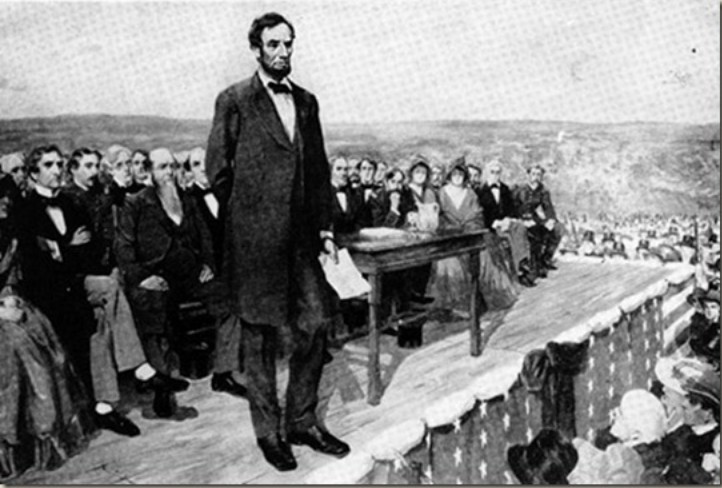

















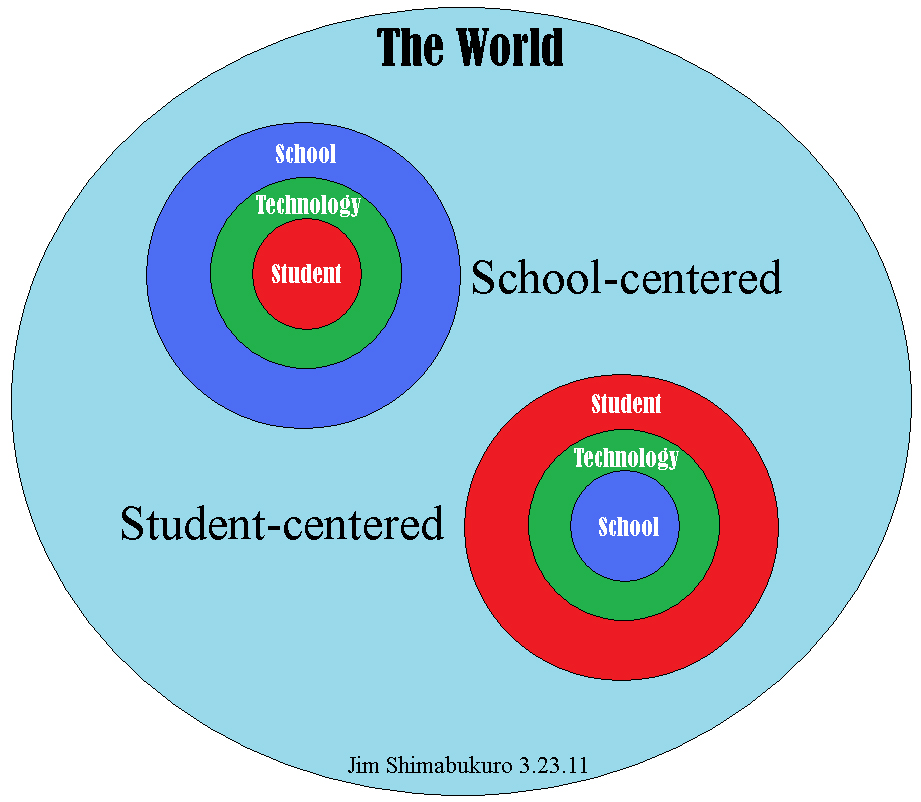















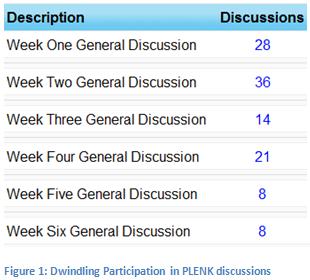


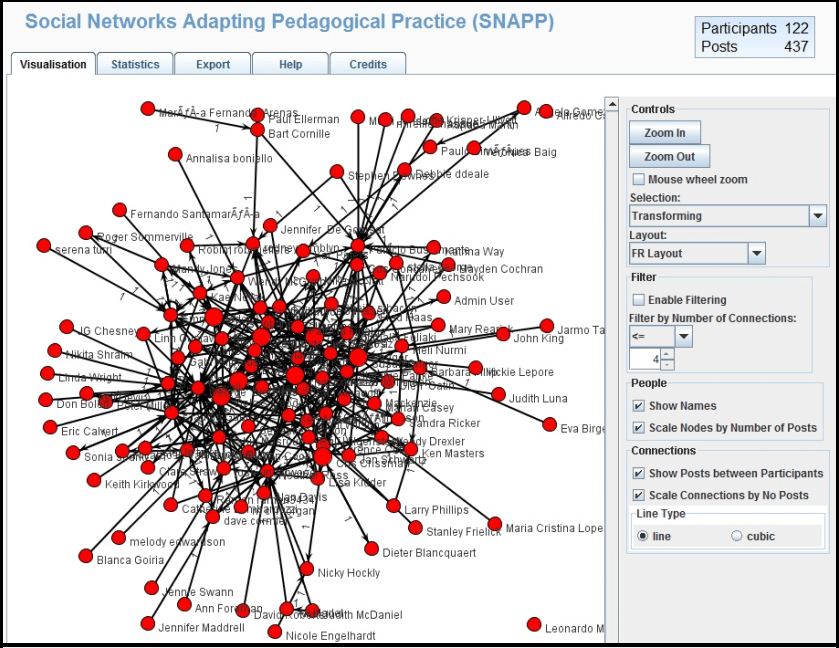
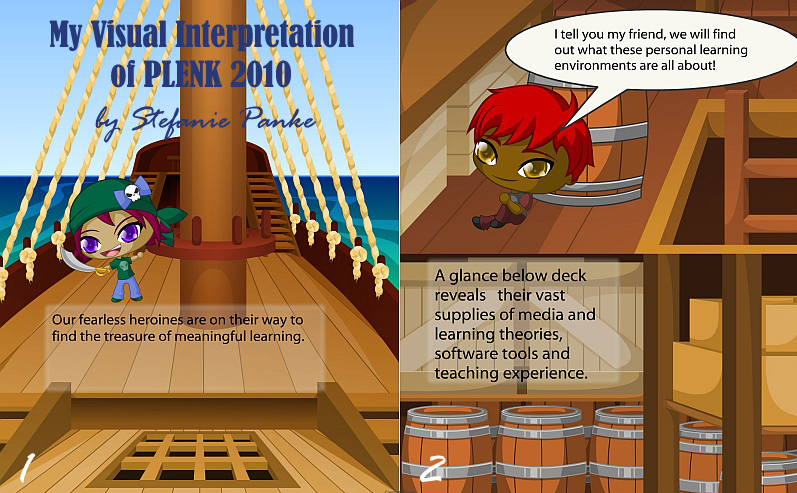






 Valerie Strauss, “